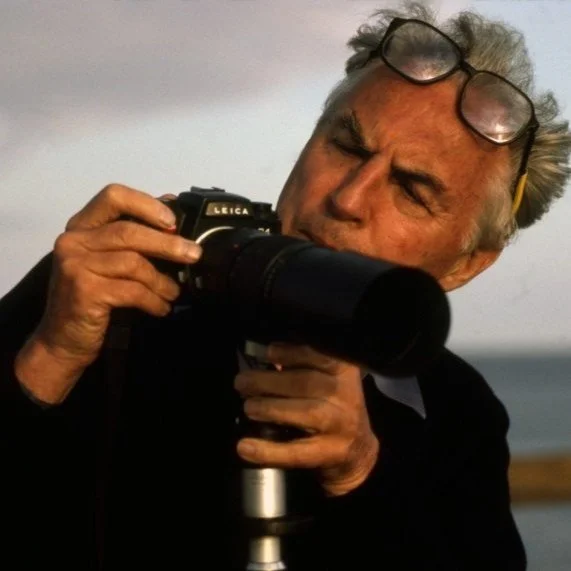
AT A GLANCE
- Known for
- Poetic color photographs of New York in the 1950s, reflections and blurred motion
- Worked in
- Black and white at first; color, mostly Kodachrome, from the early 1950s
- Camera
- 35mm Leica; a Rolleiflex in his early years
- Also
- Member of Magnum Photos from 1949 and its president from 1959; author of The Creation (1971)
- Start with
- Ernst Haas: New York in Color, 1952–1962 (Prestel, 2020)
- Links
Ernst Haas (1921–1986) was an Austrian-born photographer who helped turn color photography into an art. A member of Magnum Photos from 1949, he became famous with a 24-page color essay on New York in Life magazine in 1953. In 1962 the Museum of Modern Art in New York gave him its first solo exhibition of color photographs.
The story
In 1947, Austrian prisoners of war were coming home to Vienna. At the South Station, families waited for the men, or at least for news of them. Ernst Haas, a young photographer in his mid-twenties, was there with his camera. His pictures of the homecoming ran in the magazine Heute and then in Life. Life offered him a staff job. He said no. “What I want is to stay free, so that I can carry out my ideas,” he wrote to the magazine.
In 1949 Robert Capa invited him to join Magnum instead, and the agency let him work as a freelancer. For years his pictures were black and white. Later he called the war and the bitter years after it “the gray years.”
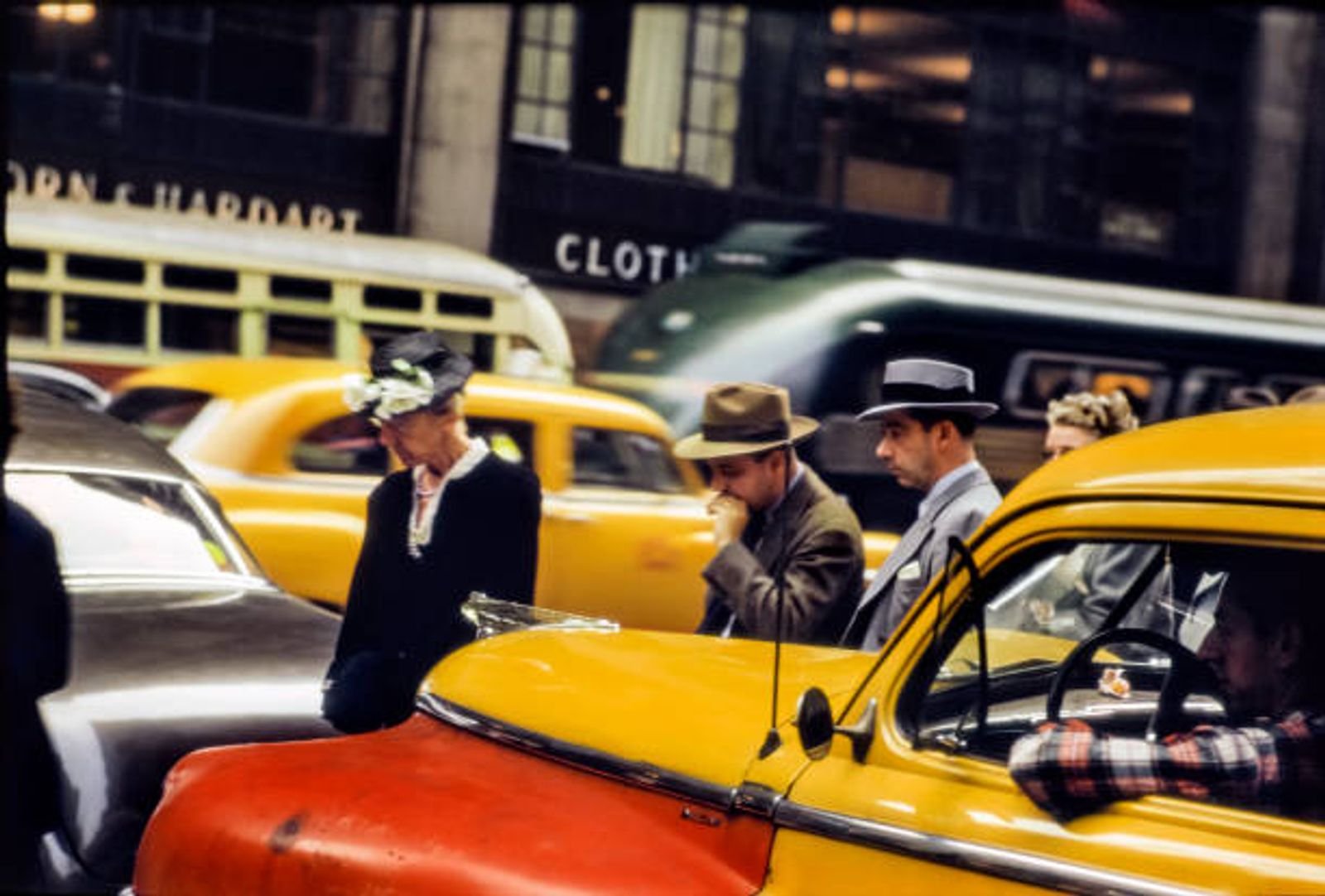
In the early 1950s he made New York his home. “I loved its pulse. I loved the directness of its people,” he wrote. He wanted to work in color. Life turned down his first idea, a color story about the Grand Canyon. So he turned to the city around him.
Shop windows and glass towers became his subject. In Twin City, Third Avenue, made in 1952, buildings on Third Avenue meet in the reflection of a shop window, and the Chrysler Building rises on the right.
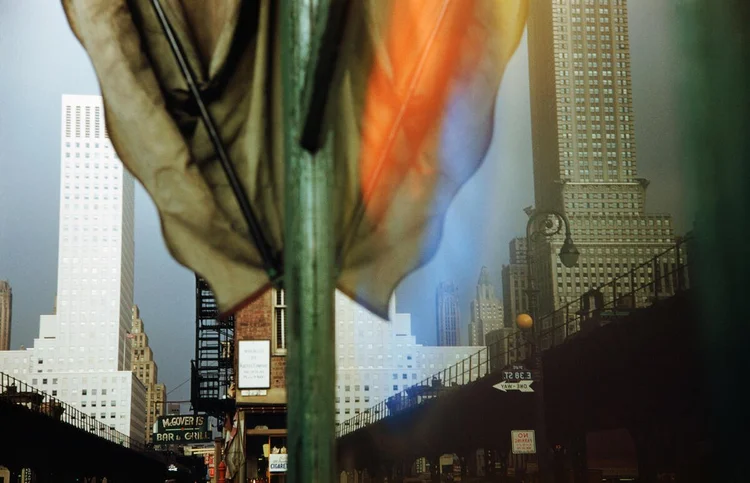
After about two months he brought Life around 130 color photographs. In September 1953 the magazine printed them over 24 pages, in two issues. Life had never given a color story that much space. “The gray times were over,” Haas wrote. “As at the beginning of a new spring, I wanted to celebrate in color the new times, filled with new hope.”
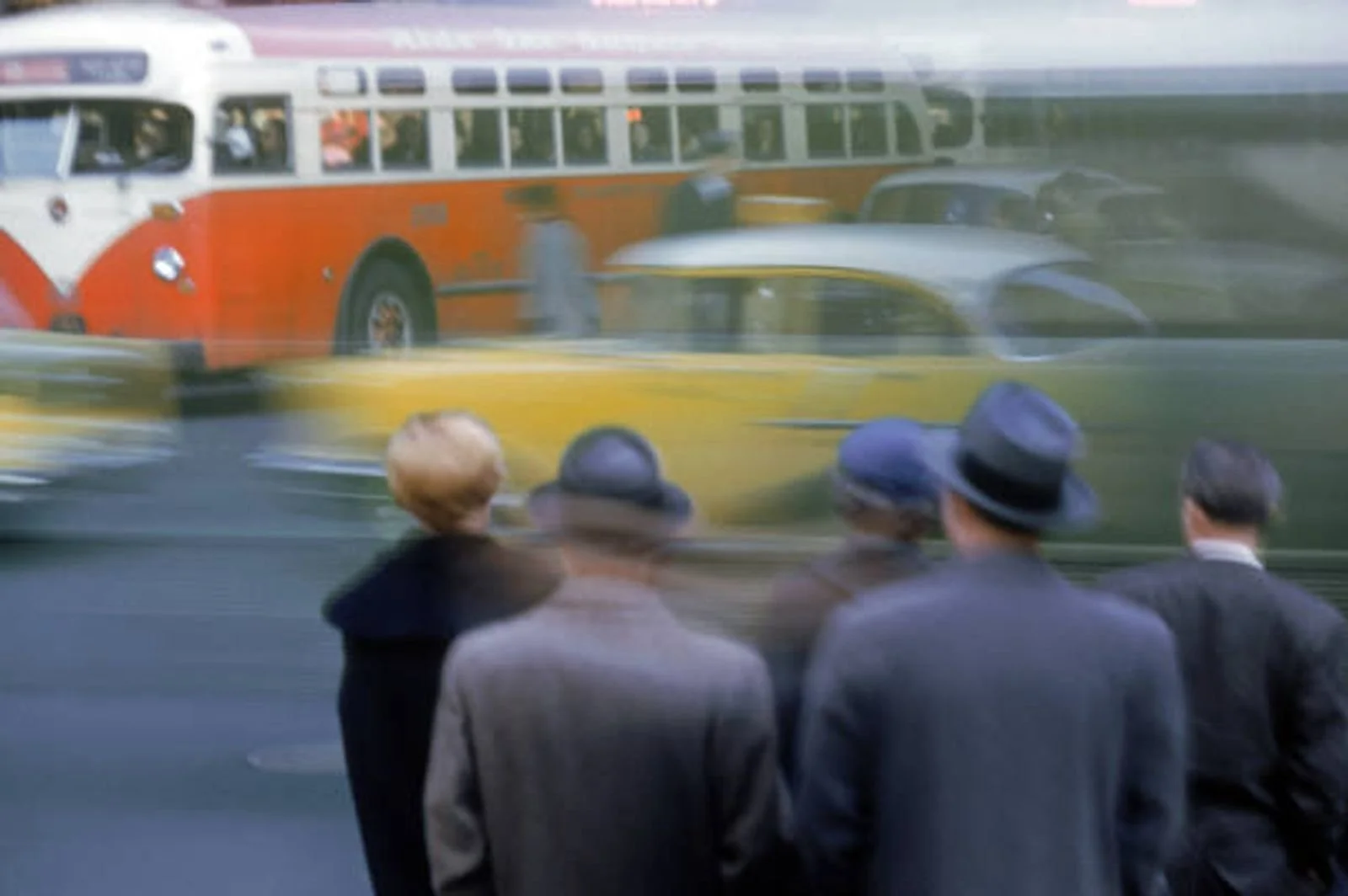
Later he used slow shutter speeds, so that bullfights, rodeos and city crowds turned into streams of color. In 1962 the Museum of Modern Art showed a decade of his color work. It was the museum’s first solo show of a photographer working in color.
The young man who refused a staff job kept his freedom all his life, and he spent much of it on color. “Color is joy,” he once said. “One does not think joy. One is carried by it.”
The work


- 1921Born in Vienna, Austria
- 1946Gets his first camera, a Rolleiflex
- 1947Photographs prisoners of war coming home to Vienna
- 1949Joins Magnum Photos at Robert Capa’s invitation
- 1953Life prints his 24-page color essay on New York
- 1959Becomes president of Magnum
- 1962First solo color show at the Museum of Modern Art
- 1971Publishes The Creation
- 1986Dies in New York, the year he receives the Hasselblad Award
Lessons
Stay free. He turned down a staff job at Life so he could keep giving himself his own assignments.
Use what is near. When Life said no to the Grand Canyon, he found his color story in the streets of New York.
Let the picture move. Reflections in glass and slow shutter speeds turned ordinary scenes into color and motion.
Try this: walk one street for an hour and photograph only reflections, in shop windows, puddles and car doors. Then come back at dusk and try a slow shutter speed on the moving crowd.
Gear
Haas liked to travel light, often with just a simple soft bag for his equipment.
Twin-lens reflex camera: his first camera was a Rolleiflex, which he got on the black market in Vienna in 1946.
35mm Leica camera: he started working with a Leica in 1949. In time he gave up the Rolleiflex and used Leica cameras for the rest of his life.
Kodachrome slide film: the color film he used for most of his work, from the New York pictures of the 1950s onward.
Books
The Creation (Viking Press, 1971). His best-known book. Haas arranged his color photographs of nature in flowing sequences that follow the Book of Genesis: the elements, the seasons and the creatures. The wide, oblong format was new for its time. It was printed in many languages and sold more than 350,000 copies, which makes it one of the most successful photography books ever. A revised edition followed in 1983. A good book for anyone who loves nature, color and the rhythm of a well-made sequence.
Ernst Haas: New York in Color, 1952–1962 (Prestel, 2020). A 208-page book with 175 color pictures, text by the curator Phillip Prodger and a foreword by Alex Haas, the photographer’s son. It is the first book to focus only on his New York color work of the 1950s and early 1960s, with classic pictures and many that were found later in the archive. It shows how he used Kodachrome to catch the energy of the city. The best place to start.
Ernst Haas: Color Correction (Steidl, 2011). Texts by William A. Ewing and Phillip Prodger, with 163 color plates. Ewing searched about 200,000 of Haas’s pictures in the Getty archive in London and found many personal photographs that Haas had never printed or published. Ewing calls them more edgy, loose and open than his famous work. A book for readers who already know the classic Haas and want to see another side of him.
In America (Viking Press, 1975). A large color portrait of the United States, published before the Bicentennial in 1976, with an introduction by Haas about how his view of America changed. It brings together the best of his magazine work, from Los Angeles billboards and New York skyscrapers to the canyons of the West and the foggy coast of Maine. For readers who want to see how a European eye looked at America.
In his words
“I want to be open to everything in this world, and I am even willing to unlearn.”
“Important is the end result of your work: the opus. Therefore, I want to be remembered much more by a total vision than a few perfect single pictures.”
“I never really wanted to be a photographer.”





Quisque iaculis facilisis lacinia. Mauris euismod pellentesque tellus sit amet mollis.