
Newsha Tavakolian
Newsha Tavakolian is an Iranian photographer and Magnum Photos member, born in Tehran in 1981. Her book And They Laughed at Me (Kehrer Verlag, 2026) revisits the photographs she once rejected.

Shingo Kanagawa
Shingo Kanagawa is a Japanese photographer born in Kyoto in 1981. His book A Bright Room (Fugensha, 2024) follows the years he shared a home with three housemates.
Kentaro Kumon
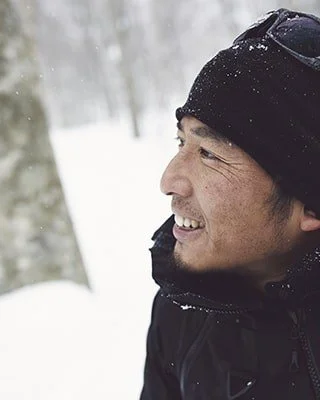
Kentaro Kumon (公文健太郎) is a Japanese photographer born in 1981. He works for magazines, books and advertising, and alongside commissions he makes his own long-term projects. Until 2011 he mostly photographed abroad. The Great East Japan Earthquake and tsunami changed that: visiting the devastated areas of Tohoku, he realised he could not grasp what had been swept away and wanted to know the country he lived in. Since then much of his work has followed rural Japan and the landscapes shaped by the people who live and work there. He received the New Face Award from the Photographic Society of Japan in 2012.
His books include Tagayasuhito (Heibonsha, 2016), Koyomi Gawa (Heibonsha, 2019), Hikari no Chikei (Heibonsha, 2020), Nemurushima: The Sleeping Island (Kehrer, 2022) and Bara no hana-saku ie (Heibonsha, 2025). Bara no hana-saku ie is about the former Kondo Residence in Tokyo’s Asagaya district, which Kumon photographed in 2007, two years before it was destroyed by fire. He often stays in a place for a long time and talks with the people there before he photographs. In his earlier interview with About Photography, he spoke about learning to look until nothing seems ordinary.
Still Ground (Fugensha, 2026) brings together about fifteen years of photographs of agricultural landscapes across Japan. He made them on 35mm film, travelling from region to region and following the seasons. The title comes from a poem by Sansei Yamao, and the book was edited and designed by Hideyuki Saito, with an essay by Ryuta Imafuku. Its 261 photographs are interrupted by sheets of thin paper carrying short notes from his conversations with farmers. Kumon describes his approach as becoming a scarecrow in the field: laughing with the farmers, then stepping a little apart to watch.