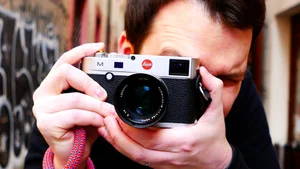
Welcome to this edition of [book spotlight]. Today, we look at Advice for Young Artists, by Alec Soth (published by MACK). We'd love to read your comments below about these insights and ideas behind the artist's work.
Between 2022 and 2024, Alec Soth visited 25 undergraduate art programs across the United States.
Advice for Young Artists, published by MACK in 2024, is made from the work he made during those visits. The book combines portraits of students, staged scenes, interiors and still lifes with handwritten Post-it notes. Some notes give advice. Others stop in the middle of a sentence. Soth also appears in several of the pictures himself.
He began photographing the students with his 8x10 large format camera, then changed his approach. He was afraid the pictures would become too sentimental. The book is fully digital and short, at 72 pages.
In our live conversation, Soth explains why every new project still feels like starting over, how he lets a project change direction, and why he trusts specific advice more than general advice. He also talks about humor in photography, Magnum as a group of authors, and the high school art teacher who first showed him how to look through a frame.
“You have what I want,” Soth says about young artists. “The gold is what they have, which is that something’s new and exciting.”
The Book
Advice for Young Artists
MACK · 2024 · 72 pages
Between 2022 and 2024, Alec Soth visited 25 undergraduate art programs across the United States. Advice for Young Artists collects the work he made there.
The photographs range from formal pictures that recall the classroom to looser, more personal ones. Staged scenes, found objects and portraits sit next to short quotes and unfinished thoughts written on Post-it notes. Soth appears among the students in several pictures.
MACK says the book was inspired by Walker Evans’s late Polaroids. Like Soth’s earlier Broken Manual, it borrows the form of an instruction book. It was published twenty years after his first book.
Soth designed the book himself and finished it with MACK. It ends with an interview and a picture of an exhibition model showing the photographs from the book.
You’ve been creating for decades and inspiring so many young artists along the way. How has your understanding of what it means to be an artist evolved over time?
That’s a hard question. It’s a good one, but it’s hard. Part of the spirit behind this book is that sometimes I feel like I’ve learned nothing. That isn’t quite it. It’s more that everything feels the same: the same problems, the same struggles. That’s probably not really true, but it feels that way.
From the point of view of an intern or a young person, I must have the answers. I almost never do. I have to go and figure it out, just like everyone else.
I remember going on a road trip once with some other Magnum photographers and realizing that they didn’t know what they were doing either. I sometimes feel like a fraud, like I should know the answers, but I don’t. What I’ve learned is that I have to start over each time. I have to learn it again and figure it out again.
Yesterday I photographed a family friend. He’s a realtor and needed some portraits, and he always dog-sits for us, so I said yes. I did a good job, and I thought, oh, in all these decades I have learned something. I can do something I’ve never done before, realtor portraits, and do it well. So I’ve learned technical things and tricks. But when it comes to art and making art, it’s always starting over.
Is this how you imagined it would be when you started out in photography?
No. Even now I’ll think, okay, I’ve solved this problem, or I’ve published this book, so I’ve figured it out. Then I start something new, and it’s like, God, I have to figure it out all over again. I fool myself into thinking I know what I’m doing, and I don’t.
And no, I never imagined it would be like this. On the one hand, it’s far better than anything I dreamed of. On the other hand, it’s simply not what I pictured.
You mentioned in your video that your high school art teacher influenced your path. What was the turning point when you realized that photography was your medium?
That didn’t happen until much later. It’s funny, I always remember that high school art teacher. We were supposed to be learning photography, but he took us outside with a mat board that had a window cut into it, and we just looked at things through it. I thought that was wonderful. Then we did some actual photography, and it didn’t really interest me. It wasn’t until about five years later that I found photography.
The big realization was that I wasn’t a studio artist. That was the fundamental thing. For some reason, I had to be out in the world to make work. It didn’t have to be photography. It could have been building a sculpture.
In fact, that’s how it started: I built sculptures and then photographed them. Even when I was making Sleeping by the Mississippi, I still thought that way. If I moved furniture or set up a picture a little, which a documentary photographer is not supposed to do, it was because I wasn’t thinking like a documentary photographer. I was thinking like a sculptor.
I have a little sense of why that is, and it’s almost how I define myself. I’m a photographer, but I do other things too. For some reason, the work needs to go out into the world. I need to go out.
Getting back to what you said about what you’re not supposed to do in documentary work. Do you see your photography as documentary, fine art, or something of your own?
I don’t really think of it as documentary work. I see it as a spectrum. At one end is what we call fine art, and at the other end is what we call documentary. I fall in different places along that spectrum, depending on the project.
Something like Songbook is a little closer to the documentary side. When I work on assignment for a magazine, in the realm of journalism, that falls more on the documentary side too. So it depends. It’s not unlike a writer who writes fiction one day, nonfiction the next, and sometimes something in between. Or think of a filmmaker like Werner Herzog. He sits in different places on that spectrum depending on what he’s doing.


Out of curiosity, what’s the ratio for a Magnum photographer like you between personal work and commissioned work?
I’m not sure. The industry changes so much that it’s hard to know how other people are surviving. But I think of Magnum mostly as a group of authors rather than a group of journalists. They are authors, and what they create falls in different places on that spectrum. In the last thirty years or so, there has probably been more personal work, but it has always existed within Magnum.
Is being in Magnum beneficial in terms of getting jobs?
It’s complicated, because Magnum is a cooperative and the photographers are its owners. So saying “they give us jobs” sounds strange, because we are “they.” But yes, part of Magnum is an agency, with agents who find you work. That’s one part of it, and there are other parts too.
I was thinking more about cooperation and interaction. You joined around 2008, I think?
Yes, I think that’s when I became a full member. I had been involved before that.
When you joined, there were already established and very well-known names around you. Now you’re the established photographer when younger members join. Is there a tradition of sharing ideas or working on things together?
Yes. What’s interesting is that this process repeats itself over and over. The children become the parents, and the parents become the grandparents. It’s fascinating. Then one day you wake up and you’re one of them. I remember getting in and looking at photographers like Alex Webb.

Who was your hero back then? Were the people the reason you joined? Did you want to be in the same cooperative as Martin Parr or Alex Webb?
For me, it wasn’t quite like that. I came from more of a fine art background, so I hadn’t been dreaming about Magnum for years. But I found myself in a position where I realized I needed to be a working photographer. Someone suggested Magnum. It seemed crazy, but I thought, okay, I’ll give it a try. Of course I admired many of its photographers, but I didn’t grow up dreaming of being a Magnum photographer.
It was interesting when I got in, because the people I looked up to were the elders, and sometimes they weren’t that much older than me. It’s funny, because now I can sometimes see the same thing in younger Magnum photographers. They look at me that way. The movement of time is interesting.
But yes, we do share ideas. We brainstorm regularly. A lot of it is business, but sometimes it’s creative: projects we do together and collaborative work.
Do you have something like a Discord or a Facebook group where members just talk?
No, it doesn’t work like that. It has to be more formal. There are a million different kinds of meetings within Magnum. I’m on the board, for example. When you first join, you’re on the edge of things, and it’s fun. Later you have responsibilities, and suddenly I have all these board meetings. We also organize things by region and so on.
What’s really interesting is someone like Susan Meiselas, who is a hero of mine now. She’s the most amazing woman. She’s so good at connecting with every generation within Magnum, and she keeps a spirit of newness. I really look up to that. I can’t be exactly like her, but I want a piece of it. That connects to the book and to everything else: keeping your eyes open, staying fresh and not getting jaded.
Let’s talk about the book. You mentioned that it started as a completely different project. When a project shifts direction midway, how do you decide whether to follow the change or stay with the original idea?
I’ve gotten pretty good at this. One thing I do is try not to talk about a new project, so it doesn’t harden too early. If I start telling my studio manager or my wife all about a new idea, it becomes a real thing. If it only lives in my imagination, I feel freer to change it. So I try to protect that. Even after I’ve made work for it, I try to stay flexible and open.
When a shift happens, I try to be really in tune with it. It sounds corny, but it’s a gut feeling. You sense that you’re being drawn in a direction, and you follow it. It’s very similar to how I photograph. I have a mission, but I stay open, and when something catches my eye, I feel compelled to drive down that road and see where it takes me.
This is specific to this way of working. You couldn’t work like this as a big-budget filmmaker. It would be impossible. So I try to build a structure that allows change. After a certain point, the project reaches a place where I know: this is my project, and I know what I need to do now. There are still turns, but they happen within a certain space. Maybe that’s a skill I’ve learned over the years: how to trust my intuition and let things change.
Does that happen often?
It seems to happen with every personal project. It usually can’t happen when money and other people are involved, or at least it’s very hard. But I think that’s part of the thrill. It’s like a treasure hunt. You go down different roads, and that feeling of discovery fuels the work.
Advice For Young Artists - YouTube Video
The book starts with a blank nameplate and the question “Who is this book for?” You play with the idea of whether it’s meant for young artists or for yourself. Could you share more about your intentions while making it?
It’s for both. The question of who your work is for, and why you’re doing it, is an interesting one. Within Magnum, you meet photographers who document war and conflict, and with some of them you realize they’re doing it for themselves. They need to do it. They need to go into a war zone. A big part of it is for themselves. I try to be honest with myself about that, because a big part of my work is for me too.
That said, of course I have ambitions for it. I want it to have an audience and to be received in a certain way. A while ago I met a man in New York who really touched me. He was about my age, and he told me Advice for Young Artists was his favorite book of mine. I had never heard that before, and I believed him. I could tell the book had spoken to him, and I thought, wow, that’s fantastic.
So I hope the book is for other people too, but the main motivation is myself.
In the book, you include Post-it notes with fragments of advice and thoughts that feel unfinished and ironic, like the note saying “patient,” which is left blank. How do irony and humor play a role in your work?
Humor especially, because irony can sound so cold. Humor is very important to me. It’s how I deal with the world outside of art. One thing that bothered me about how work like Sleeping by the Mississippi was received is that its tone seemed to lack humor. That’s fine, and I’m happy to make that kind of book, but I want to make other books too.
Sorry about all the analogies, I do this constantly, but think of a filmmaker. They can make a serious drama, then a comedy, or a drama with some comedy in it. Humor is so fundamental to who I am that I want to express it in my work. That isn’t always easy in photography. For whatever reason, photography has a very somber quality, unless you’re someone like Martin Parr. So I’m often looking for ways to bring humor in. Sometimes that happens in the photographs, but design and text have also been ways to do it. Flash is another one, and I’ve used it that way before.

Maybe it’s just my perspective, but the cover image of Sleeping by the Mississippi, the guy holding the airplanes, I wouldn’t call it funny, but it’s humorous. It made me smile.
Yes, absolutely. What’s interesting about that picture is that it’s obviously my best-known photograph, and I’ve always been glad it was that one, because it does have humor and a little lightness. It’s serious, but also funny. That’s a relief to me.
I do think there is humor in Sleeping by the Mississippi. I just brought more of it into later work. Because that book is what I’m best known for, people connect me with that kind of seriousness. That’s why, as I said in the video, I started this work with an 8x10 camera and then felt there was a danger of it becoming too sentimental. If I photographed this subject with that camera, I was afraid it would look too holier-than-thou. I made A Pound of Pictures with a large format camera, but it didn’t have that quality because of the approach I took. So yes, humor is important.


And what were you aiming to express with the Post-it notes?
The work was meant to express my own neuroticism in some ways: my own mind at work, not finishing thoughts. I wanted that process to be part of the work. The pictures I appear in were one way to do it. The Post-its were another way to add a bit of my own consciousness. I also knew they were a little confusing, and I liked that.
There was a design side too, these little bursts of color. For the rhythm of the book, I liked having moments of punctuation that aren’t photographic and change the pace. So I use them in all sorts of ways.
I designed the book myself and then worked with MACK to finish it. The whole time I’m making work, I put things into PDFs, try out sequences and look for different strategies.
You even said you considered including physical Post-it notes, but decided against it.
Yes. A decision like that is interesting, because you’re working with a publisher and a designer, and there are many factors. One is cost. I didn’t want the book to be wildly expensive. I also wanted it to feel tactile, but I didn’t want it to become the kind of artist’s book that’s all about opening and touching things. You still want people to look at the pictures, so I was a little wary of that.
A Pound of Pictures has loose photographs inside it. That physical element was perfect, and I loved it. I was afraid that physical Post-its would repeat that idea in a weaker way.


I was talking with your colleague Bieke Depoorter about her book Agata. The pages are folded together and you’re supposed to tear them open. I told her I never did, because it felt like ruining the book. She said that people outside photography usually have no problem opening it, while photography people don’t want to touch it or destroy it.
That’s fascinating. I went through that book with my teenage daughter, and we opened every page together. She isn’t a photographer, so she had no problem with it. It worked so well for her, and I loved it too.
But something like that carries a big risk. Book collectors may never open the pages, and then they almost don’t understand the book at all. Those design decisions are hugely important. I probably didn’t talk about that enough in my video either.
Bieke is a great example of a Magnum photographer who works in different ways. She’s younger than me, but she joined very early and has been in Magnum for a long time now. I’ve learned so much from her over the years.
She was one of the youngest, right?
I don’t think she was the youngest. Donovan Wylie was the youngest ever to join. But she was very young. I have huge respect for her. She’s one of the great ones.
In the book there is the theme of escape and the desire for freedom, which you talked about in the video. It connects to your earlier work like Broken Manual. How has this theme changed in your work over time? Do young and older artists see freedom differently?
Yes, I think something changes. When you first discover photography, especially in the American tradition of road trip photography, there’s the open road. It’s such a cliché, but you just head out.
Now I’ve been on hundreds of road trips. I’ve gone this way, that way and the other way. It’s a very different experience. So my understanding of freedom, and the feeling of it, is quite different now. That’s largely what I was addressing: how do you find that feeling again, and how do you reach it when it can’t happen the same way?
You described the process of the book as intuitive and talked about rhythm and visual harmony. How do you select and combine photographs, and how do you build a cohesive narrative?
Part of the problem is that “narrative” is a tricky word. To me it suggests a story with a beginning, a middle and an end. Photography rarely works that way. It can, but it rarely does. That’s why I often say it’s more like poetry than storytelling. It’s fragmentary, and much of it is about rhythm and feeling.
When I first imagine a project, I often think it will have the structure of a story. Then, as with everything else, I have to open up and let myself feel the shape it wants to take. Even Sleeping by the Mississippi was like that. The Mississippi runs from north to south, so it’s very linear, and you could arrange the pictures exactly that way. But I realized early on that it didn’t have to be like that. There’s no rule that says it must be linear, so I made it only roughly north to south.
With each book, I have to find a structure, but an open one that lets me improvise and be musical about how I arrange things.
With Advice for Young Artists, I knew part of the structure would be its length. For several reasons, it needed to be a short book. I often start with a certain number of pictures, because that gives me part of the structure. Then I work out how I want to begin, how I want to shake up the structure along the way to keep the viewer interested, and how I want to end.
The book ends with an interview, so it ends with text. There are also a couple of very self-referential pictures. One shows a maquette of an exhibition space with the actual pictures from the book inside it, so it becomes very meta at the end. And it begins, as we discussed, with the Post-it and a blocked doorway. In the middle, I look for disruptions, but there is also a structure of portraits, interiors and still lifes. Some pictures are very complicated, with lots of color and objects, and others are very simple, with no color at all. Some of those choices are almost musical.
But isn’t this your longest book? You have the advice about including as many pictures as your age, so I supposed your latest book would be the longest.
No, that’s not true. That rule is also bullshit. (laughs) No, no, no. A Pound of Pictures has a lot more pictures.
So was that a rule you adopted later, or is it just a joke?
It’s a joke. But I do think I’m moving towards fewer pictures in some ways. I Know How Furiously Your Heart Is Beating has very few. I don’t know the exact number, but I’d guess around 35 or 40. No, I don’t really believe in that rule. I struggle with books that have too many pictures. That’s a bias of mine.

You mentioned feeling like “a teenager for old age” and described the book as complicated because it deals with youthfulness while you yourself don’t feel young. You’ve said, “I’m not old yet, but it’s right there.” Looking back, do you feel you were able to reconnect with that beginner within through this project?
Not entirely, and not all the time, but I had moments of it. Moments when I was fully playing, not self-conscious, laughing, having fun and experimenting. I was able to reach those moments, and that really is the goal.
It’s interesting, because I’m starting something new now, and I’m feeling that real newness and play again. I know I learned things from the last project. This feels the way I felt in the studio at school, playing and feeling alive. So it was very useful, and yes, I did reconnect. I also think I avoided a kind of stagnation that could have set in, even with that project. If I had photographed it with an 8x10 and made nice portraits of art students, I could have entered a stagnant period. So I dodged something, which is good.
So this approach does differ from your earlier work.
For sure. It does, but it’s related. That’s something I always hope for: that I can change stylistically while something still connects the work. A through line between the projects.
And is that through line a newfound freedom, or more a return to the simpler joy of photography?
I think it’s the joy. What I’m looking for is the joy, that feeling of discovery and play. That’s what it’s all about. It’s the gold of art-making, and I keep looking for new ways to get to it. Whether it has value for other people is something else. A million factors decide whether something connects with an audience. But it doesn’t do me much good to worry about that too much. I have to tap into the pure joy of making and then see what happens.
At the end of the book you ask yourself, “What do I really want?” How would you answer that question now, after the book’s release?
Great question. I want to answer it seriously. I think it’s closely connected to what we were just talking about. I told you about the man who was deeply affected by the book. Something else happened too: my high school art teacher wrote to me. I didn’t send him the video, but he saw it, he was very moved, and he sent me a beautiful note. That meant a lot.
But what I really want is that feeling of being fully immersed and excited about making. That’s what I want most of all. Yes, I want to be an educator, help other people, acknowledge those who came before me and be a good citizen. But mainly I want to play and be immersed.
That’s nice. Has this changed over time? Is it your current stage in photography?
I think it’s my current stage, but I can see that I’ve felt this way at other points too. Take Little Brown Mushroom, this thing I have. I’m not sure exactly what it is, but I often describe it as a sandbox: a place to play and collaborate with other people, in a way that isn’t about money. So I think there’s a through line of reconnecting with that pure spirit of making, and I can see it in different bodies of work.
When I think about giving advice to young artists, the thing I often think is: you have what I want. You have the newness I want, so cherish it. They want the success, the recognition and the acknowledgement that I may have. But the gold is what they have, which is that everything is new and exciting.
So what would be your advice to young artists who want to get to where you are?
Well, that’s a different thing. My advice is to cherish that newness. But, as I said in the video, you can’t really give that advice. It’s meaningless. You can’t tell a teenager to be patient and enjoy their youth. It’s pointless to them.
Advice is so full of clichés that it’s almost useless. When it comes to success, people say things like “stay true to yourself.” It’s all just words, and it doesn’t mean much. So I think the best advice is usually very, very specific. That’s what I tried to do in that text piece, with advice like having the same number of pictures in your book as your age. Of course it’s absurd, but I like very specific advice. That’s useful. “Be patient, it takes time” is not very helpful.


So something specific. Let’s say a young artist asks you how to take better photos. Or even more specifically, imagine your younger self asking you now: I’m taking photos, but I’m not satisfied with them, with the quality or how they look, and I’m not where I want to be. What advice would you give me?
The funny thing is, that’s why my teaching strategy in workshops always includes one-on-one time. I need to understand exactly what kind of work someone is making and why. Then I can get into the details. Taking a good picture isn’t hard. A monkey can take a good picture. It’s not very complicated. What’s challenging is taking a picture that has meaning to you. So you have to figure out what has meaning to you and what you value. It becomes almost like a therapy session. Good pictures are one thing, but to make good work, you have to do that internal work.
So it’s impossible to speak in general terms about how to take a good picture. I still don’t know, even today.
But good work still consists of single pictures, right? At that atomic level, the general advice would be to practice, take 10,000 photos, and you’ll get better over time.
Yes, there’s that, for sure. One interesting thing about photography, compared with being a violinist, for example, is that yes, it takes time, you need to understand your tools, and you need patience. But it isn’t that complicated. One reason I preferred it to painting was that I felt painting would take ten years of technical training before I could even get to the subject matter. In some ways, you can move faster in photography.
Great pictures are interesting. They’re so mysterious. To me, they’re anomalies. I make a body of work, and hopefully there’s a great picture in it, or a couple, or a few good ones that take on a life of their own outside the project. But the number of variables behind that is beyond my understanding, and it includes the way pictures interact with the world. Take the picture of Charles, the man with the airplanes. I think it’s a good picture. But it was also used as the poster for the Whitney Biennial, it was reproduced in the press, and it took on different lives. All of that affects how it’s seen as a photograph.
How many negatives did you take? Was it just one?
Not many, but not just one. Interestingly, there’s a horizontal version. I made three or four frames, something like that, and one of them is clearly better.
To use a music analogy again, think of a pop song. There are billions of pop songs, and every once in a while one becomes the song. Is it because it was played on the radio over and over? There are many reasons. It can be a special song, but it also depends on how it fit into the culture at that moment. So much of that is out of our control.
If I were a musician, I would try to make a great album and hope that, magically, it would contain a couple of unbelievable songs. That’s what you hope for. But it isn’t my ambition to go out and make the greatest picture of all time today. I can’t work that way. I have to go out, make a project and hope those things happen.
When I get past the technical side and can take solid images, how do I move on? Some photographers struggle to find their own style. Is it even important to have one? What advice would you give them?
Here’s some advice I’ve given that might be useful. When you’re starting out, try lots of different kinds of photography. Do sports photography, do nudes, do nature photography. Try all of it. Then really listen to yourself. That’s the inner work. Be honest about what you truly loved doing. You might admire nature photographers, but deep down you may have felt most like yourself when you were shooting sports. Listen to that. That’s what I meant when I talked about realizing I wasn’t a studio artist and needed to go out into the world. I had to listen to that and stay true to it.
As for style, I think style is a dangerous word, because it’s almost like a filter you screw onto your lens. Your voice is not your style. You need to find your voice and hope it has stylistic qualities that make it appealing. I think everyone needs to find their own voice.
Is the danger that a style starts limiting you, in what you photograph or in the edit? Let’s say I become known for a certain style and then take a different kind of picture. Has it ever happened to you that you took a picture and thought, this looks like a Martin Parr, I can’t publish it?
Sure, absolutely. When I was starting out, my big goal was to feel free and build a structure in which I could photograph anything: landscapes, still lifes, portraits and so on. And I did that. Yet I still felt boxed in, because I used a large format camera and was known for photographing America. Suddenly there were limits on what I felt I could do.
Eventually I thought, well, whatever. I felt more pressure about it at the beginning. My second book, Niagara, followed a similar way of working. After that, I tried to free myself a little. That doesn’t mean I don’t love working with a large format camera in America. I love it. I just want to feel free to work in other ways too.
There’s also a picture you made digitally with a remote, right? In Advice for Young Artists, the “self-portrait” of the girl holding the cable release.
Yes, that was a bit of play. Songbook was all digital, and this book is all digital too. Advice for Young Artists is aggressively digital. It’s sharper than sharp, and I wanted to give myself over to that completely.
When we talk about freedom, there are no rules. If you are an artist, you are free. You can do that thing. Whether people respond to it is another question, but you are free. In my personal work, I try to find that freedom while doing the work I actually want to make. I don’t pursue freedom for its own sake. I want to make the work I want to make. Is that advice for young artists? Maybe. But again, it’s shallow advice, like saying “stay true to yourself.” I don’t think it really helps.


You’ve also started including yourself in the pictures. When you talk in analogies, it reminds me of Quentin Tarantino always appearing in his films. Is this something you will keep doing in future projects?
I don’t know. I’ve done it before. I appear in A Pound of Pictures, and I appear in Niagara in a sneaky way. It isn’t something I plan. What interests me is my presence in the work and acknowledging it somehow. I often mention Robert Frank’s picture of his hotel window in Butte, Montana. We don’t see his reflection in the glass, but you feel his presence. Or think of Koudelka holding out the watch.
Josef Koudelka
That’s actually just a few hundred meters from my place.
That’s funny. Yes, exactly. That picture is the presence of the author. If I were a nonfiction writer, I would probably acknowledge my presence in the story and write something like “today I interviewed so-and-so.” I’d be comfortable working that way. So even when I’m not visible in the picture, I want the viewer to know that I acknowledge my presence.
And it’s funny about that picture, because Koudelka said it wasn’t supposed to be a real picture. He was just marking the time of the shoot. It’s like a reference picture, right?
So apply that to our conversation about what makes a great picture. It’s one of the legendary photographs of all time, and it was a reference picture. The same goes for anonymous pictures. So many of the greatest news photographs, like the Abu Ghraib pictures, were never meant to be great pictures. Context changes everything.
Josef Koudelka is also a great example of freedom in photography. His whole life revolves around photography.
Sure, absolutely. He built his life around it. He’s an interesting figure for many reasons. He made so many incredible pictures. How would you ever teach someone to make pictures that great? I don’t know. They’re just extraordinary. But later he also felt free to make panoramic pictures and work in a completely different way, which meant leaving his style behind. I think a lot of people weren’t satisfied with that, but it’s what he needed to do, and I admire him greatly for it.


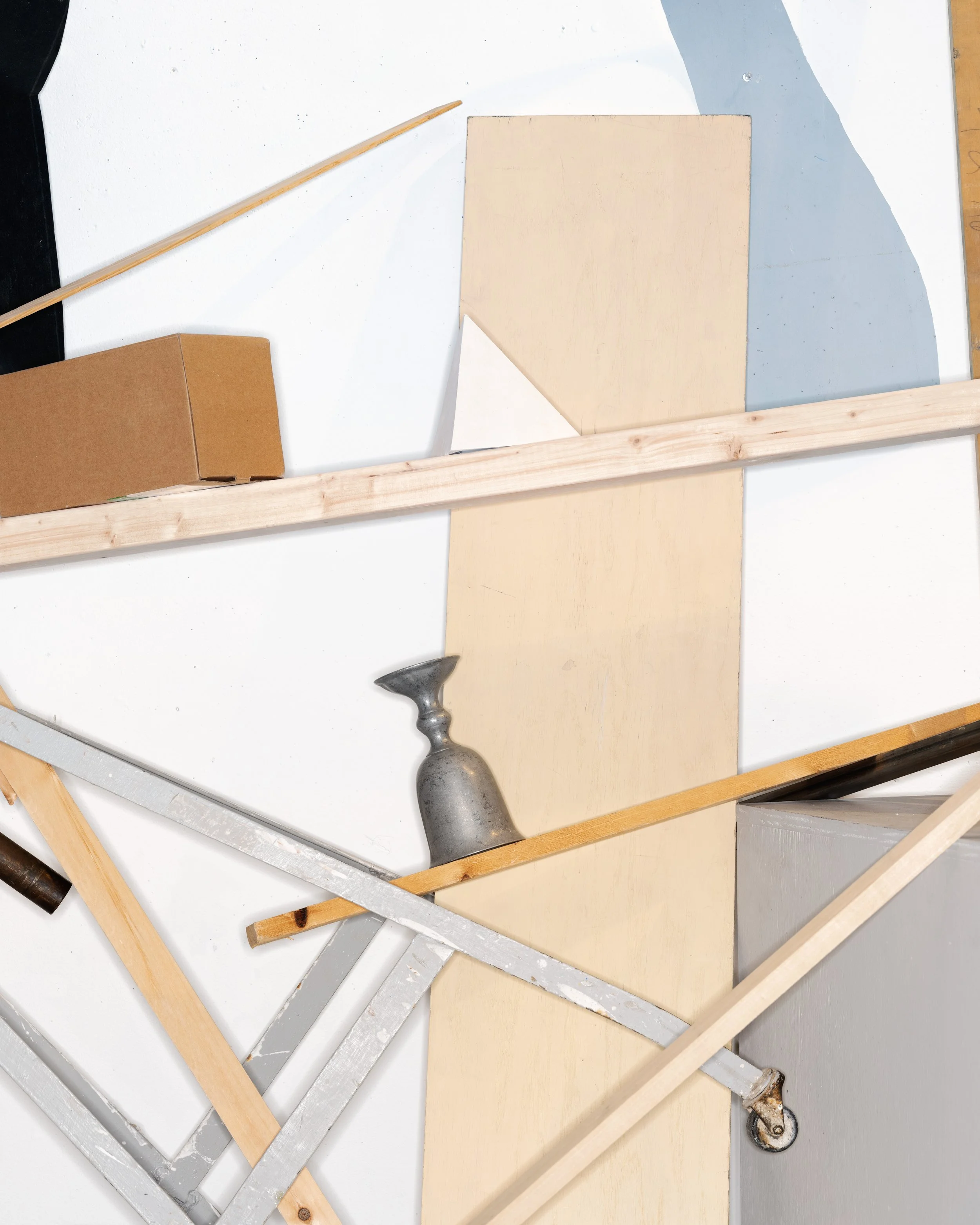


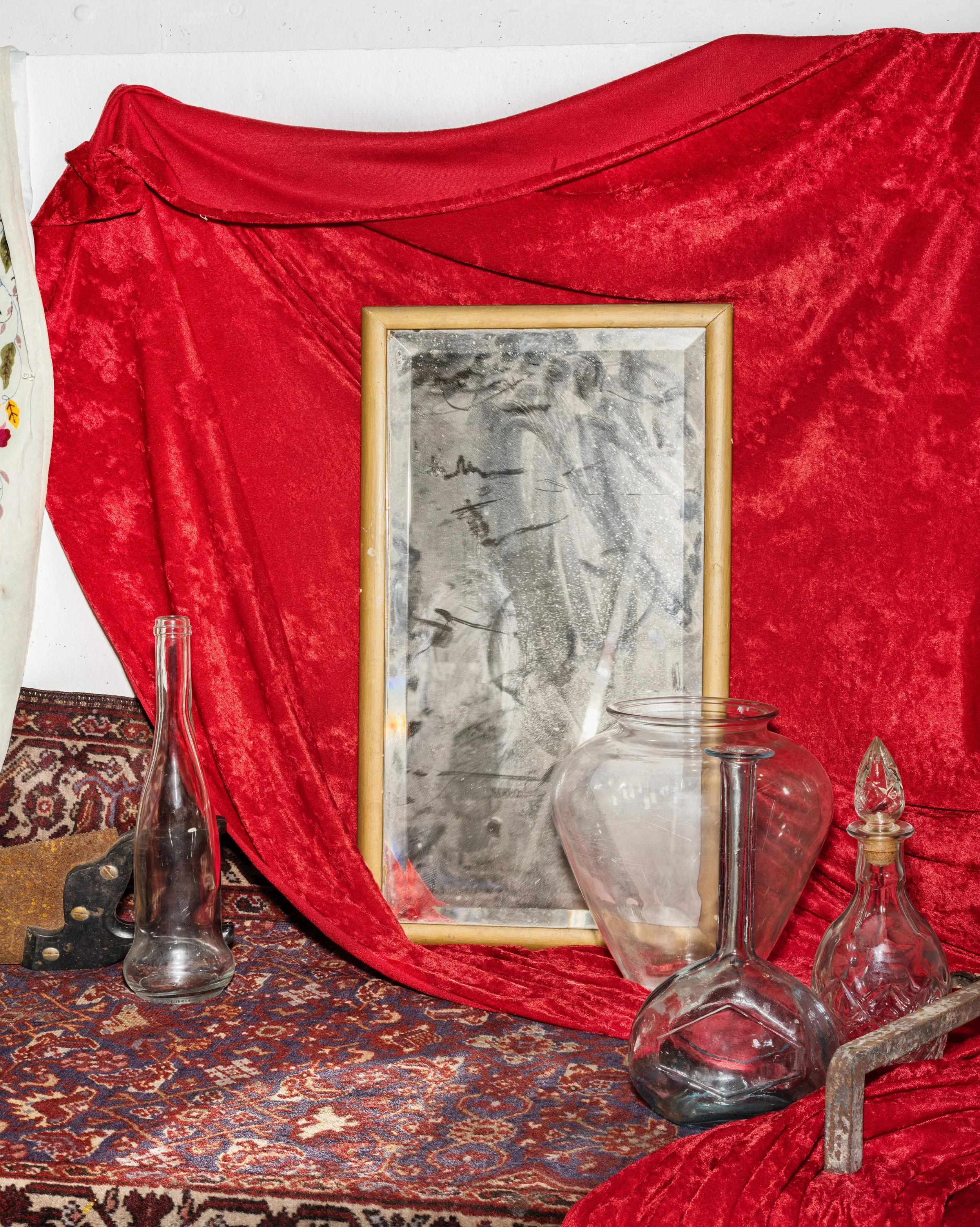


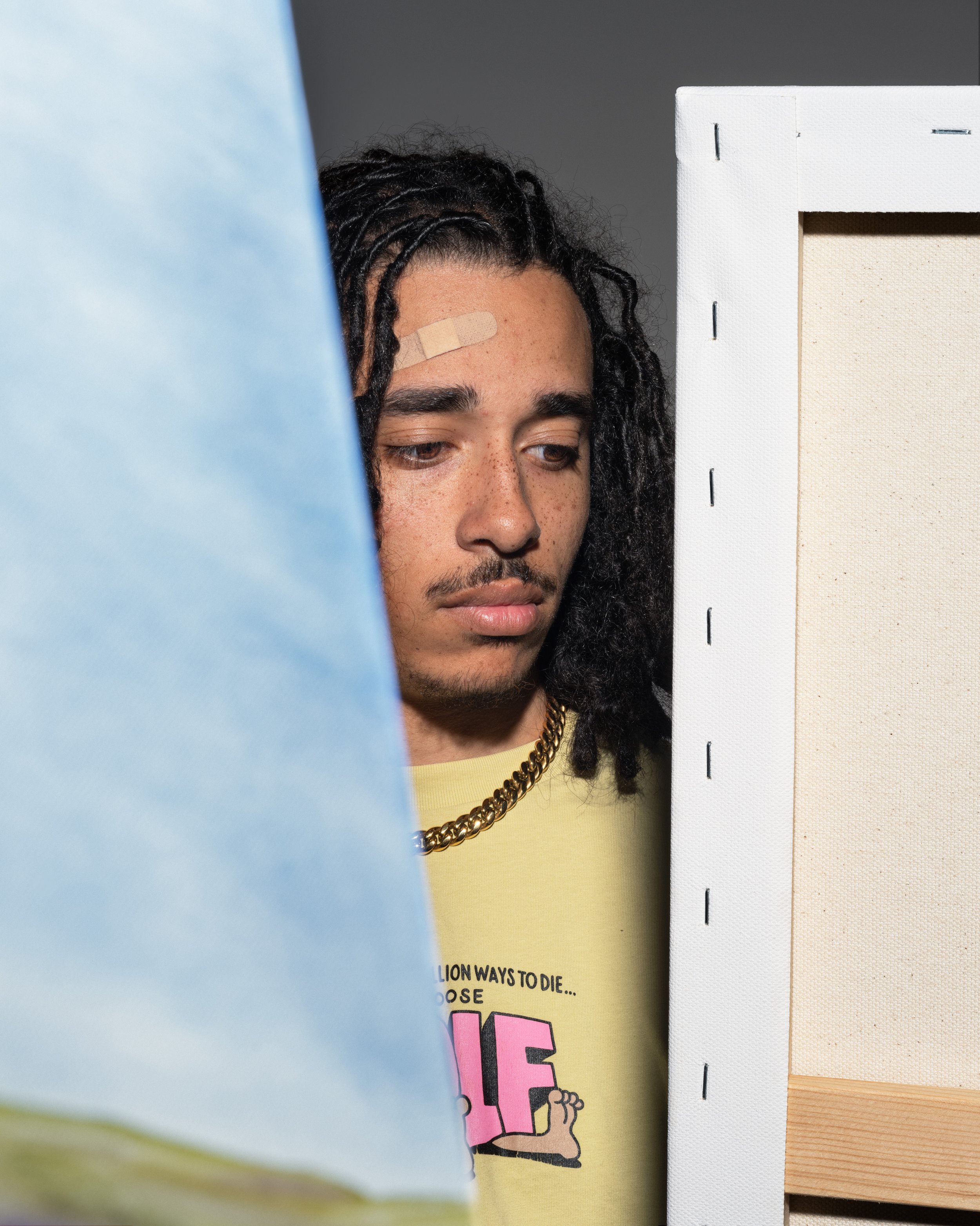


Okay, perfect. Thank you so much, this was fun. I really appreciate your time.
There you go. Alright, thanks so much.
Your insights were fascinating, and I think readers will really connect with them. Thank you again, and I hope we can talk again sometime!
Absolutely. Take care.
We'd love to read your comments below, sharing your thoughts and insights on the artist's work. Looking forward to welcoming you back for our next [book spotlight]. See you then!