Welcome to this edition of Photo Essays. Today, we look at the series Documentary Photography and Philosophy, by JM Simpson. We'd love to read your comments below about these insights and ideas behind the artist's work.
JM Simpson’s photographs of homelessness begin with a conversation.
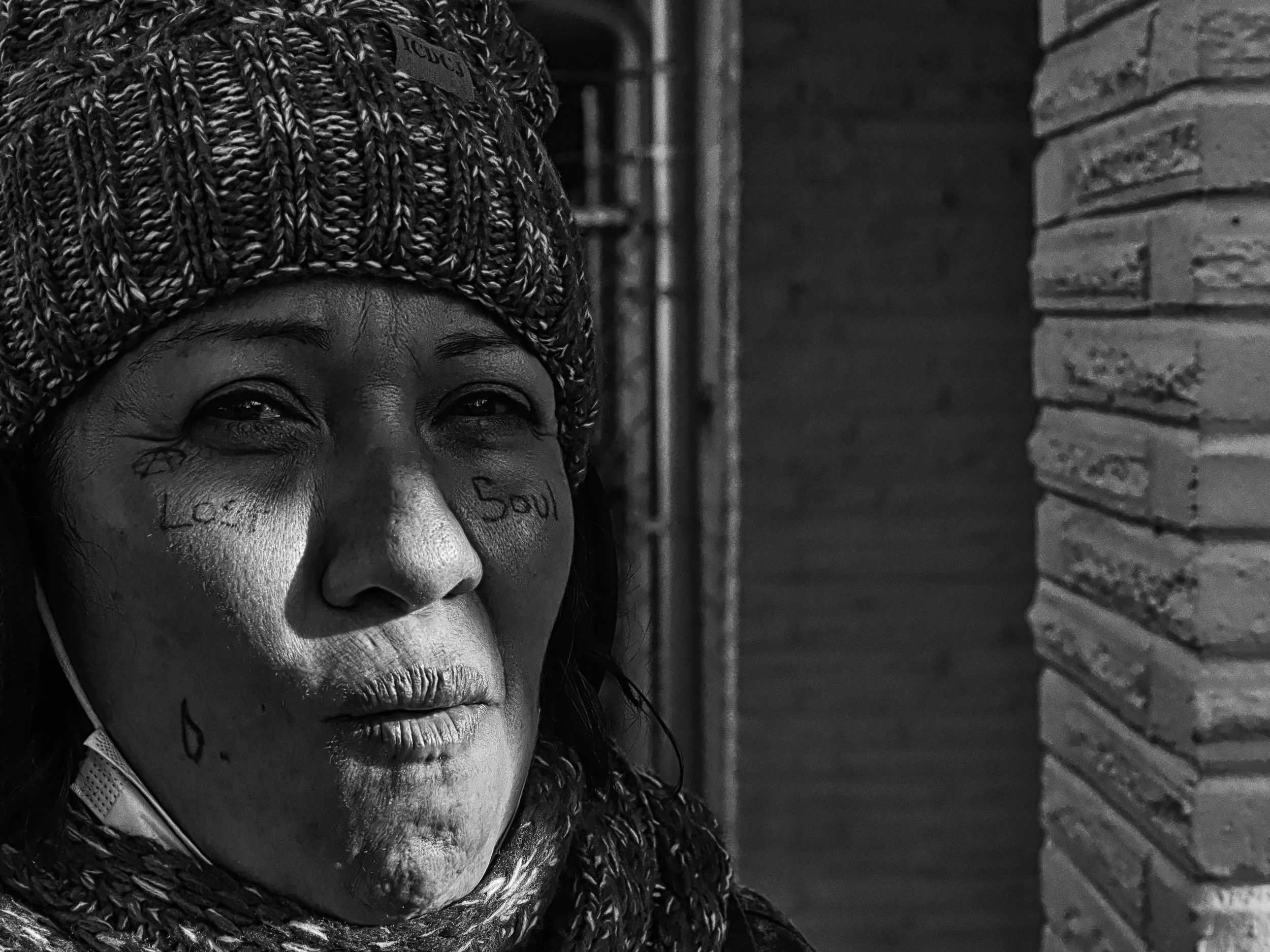
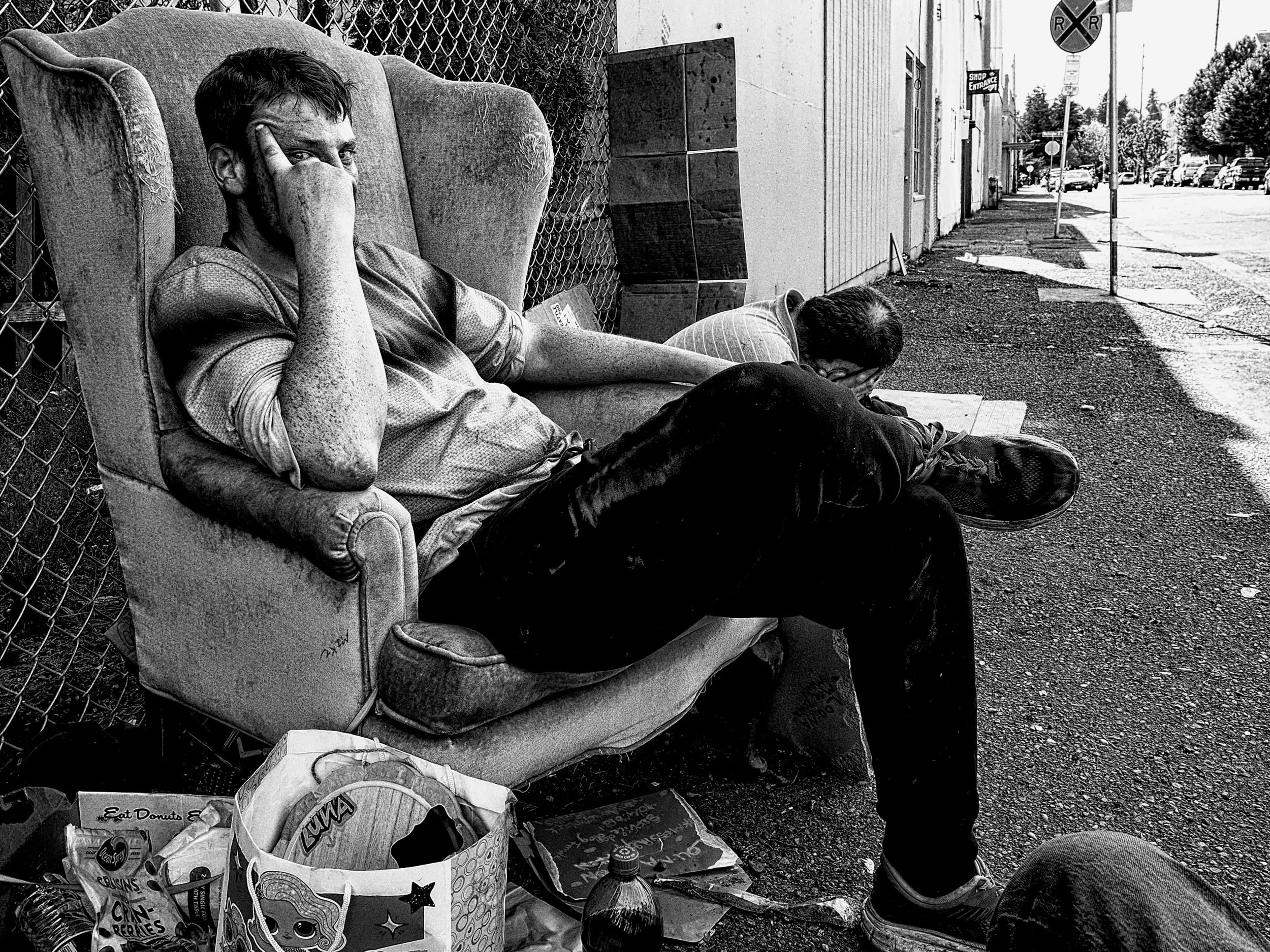
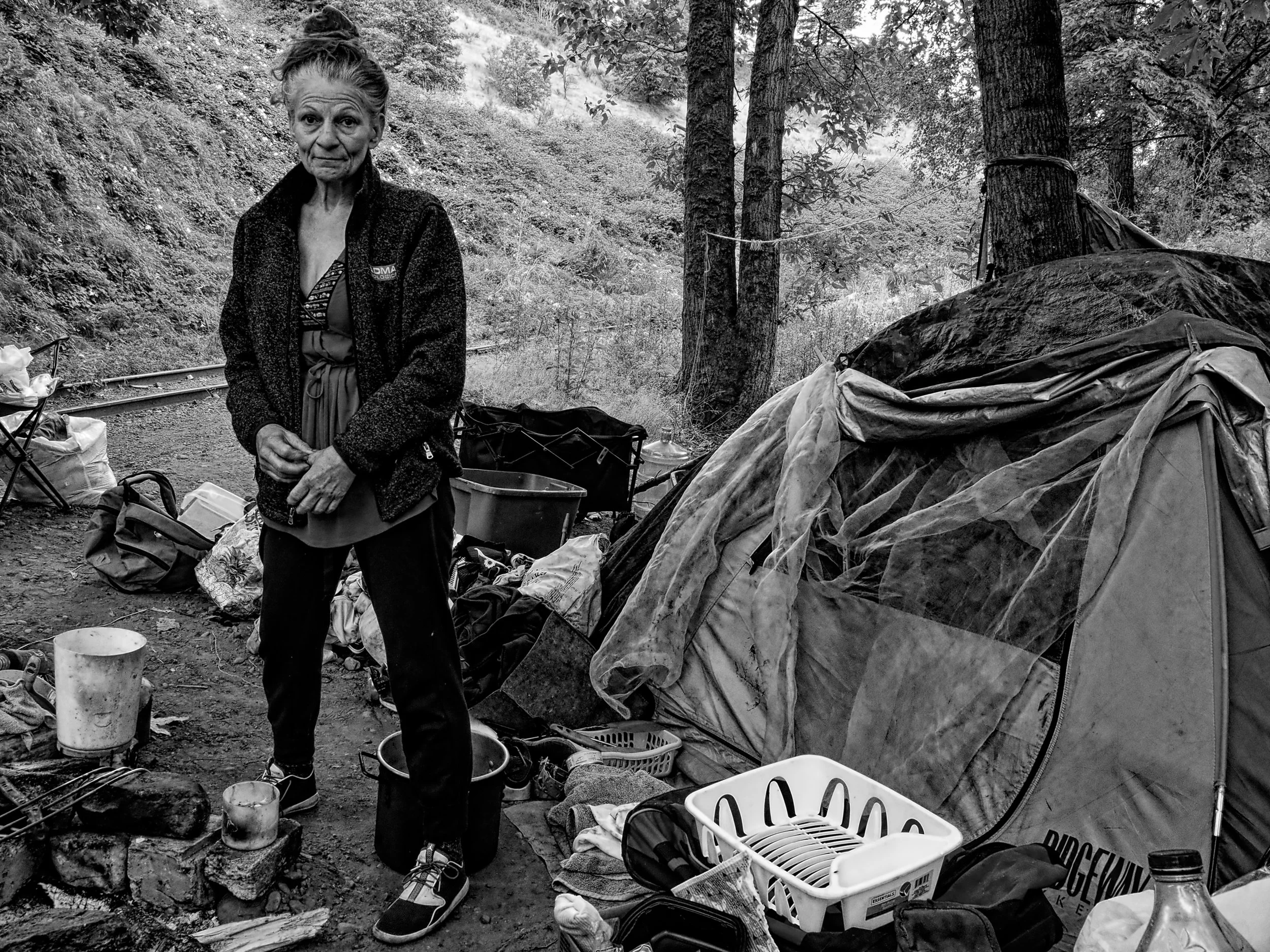
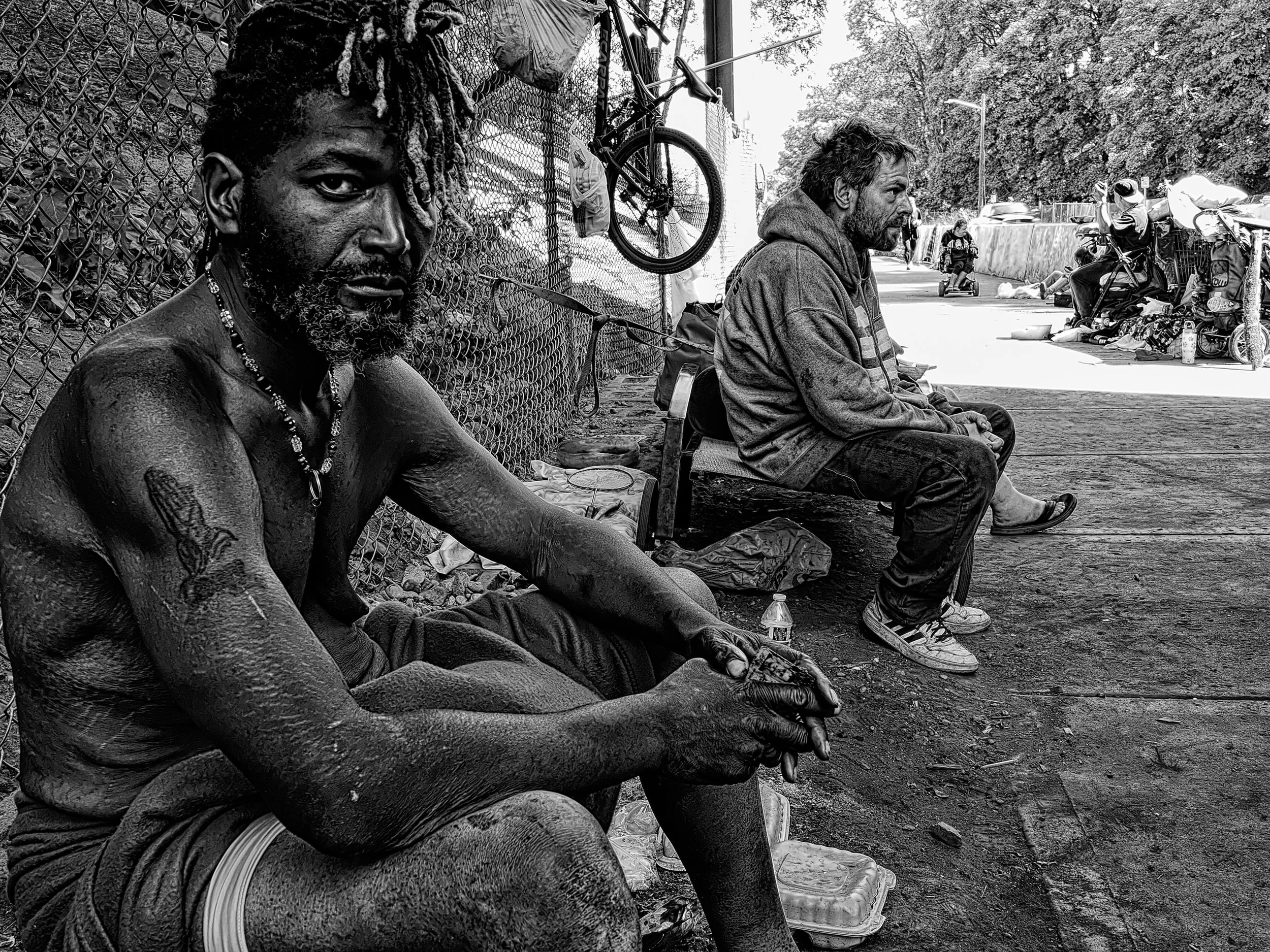
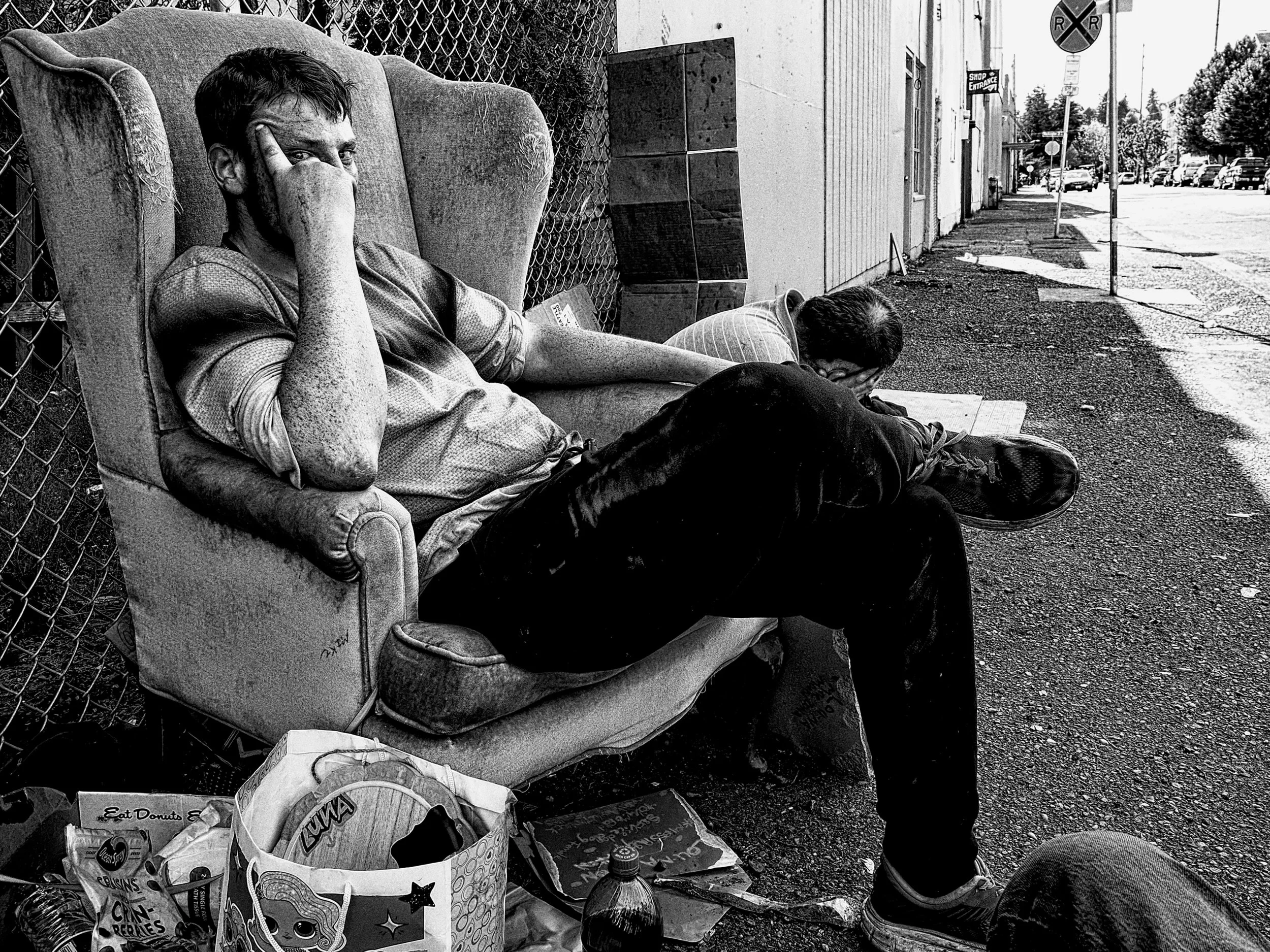
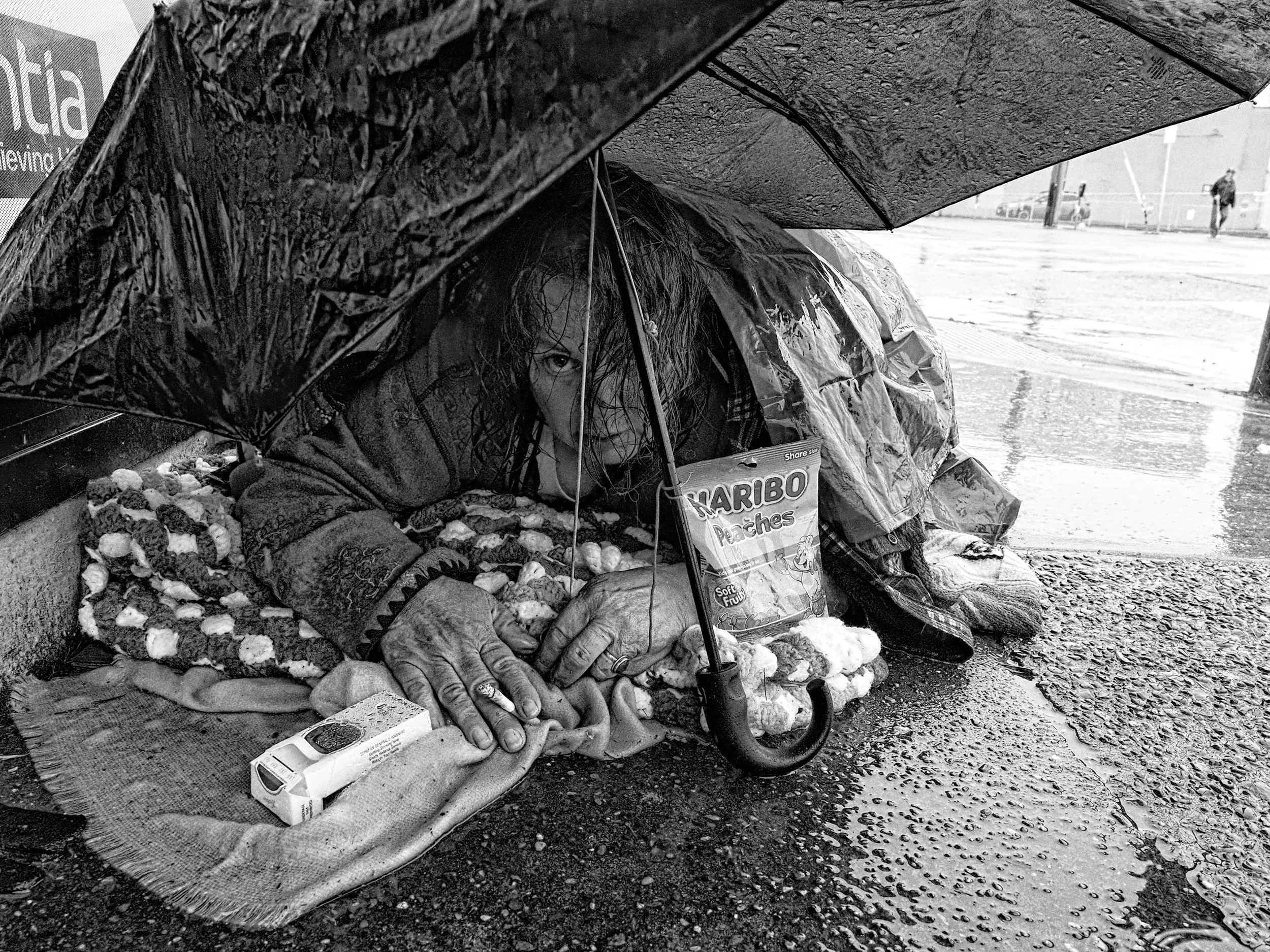
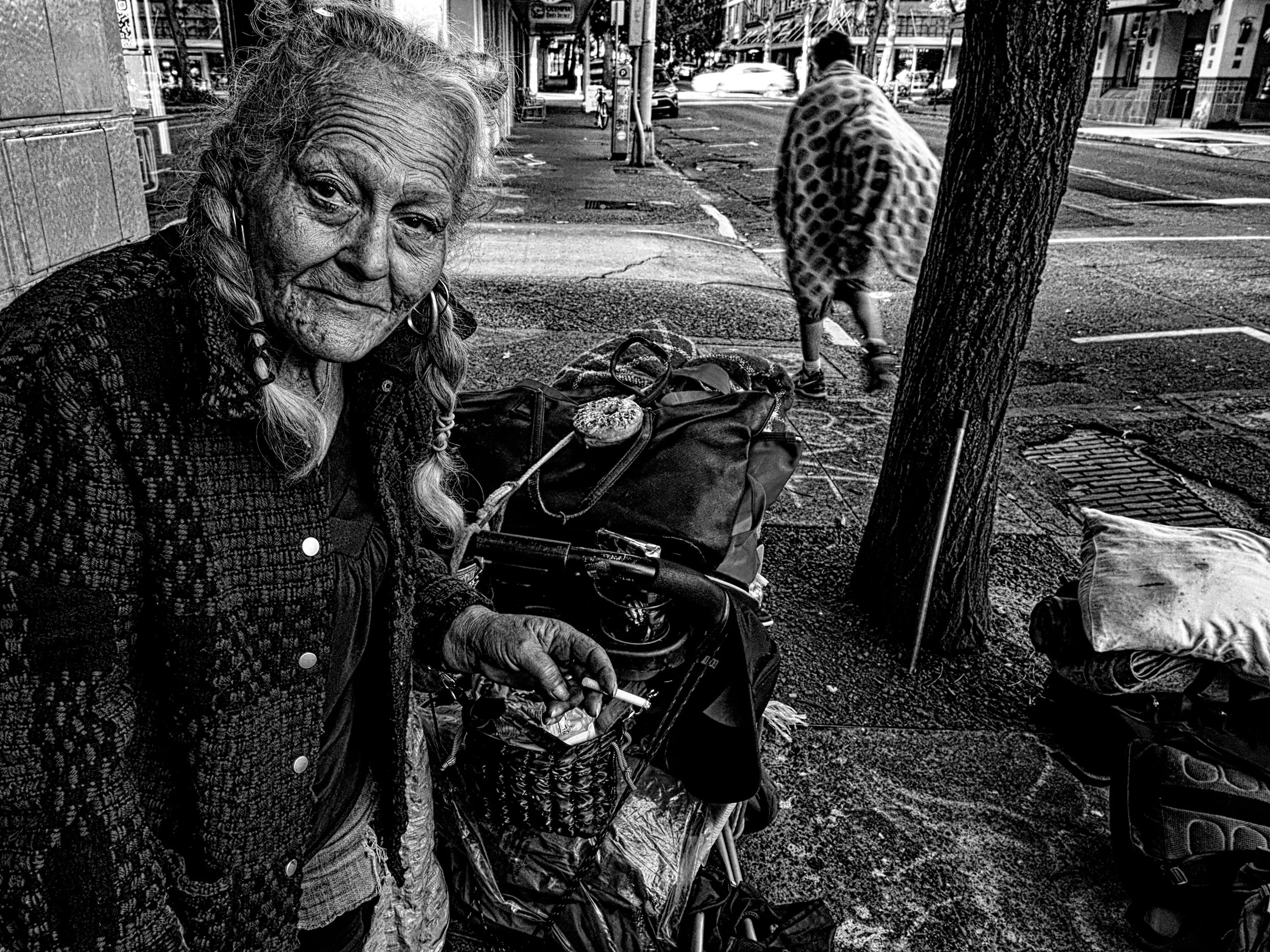
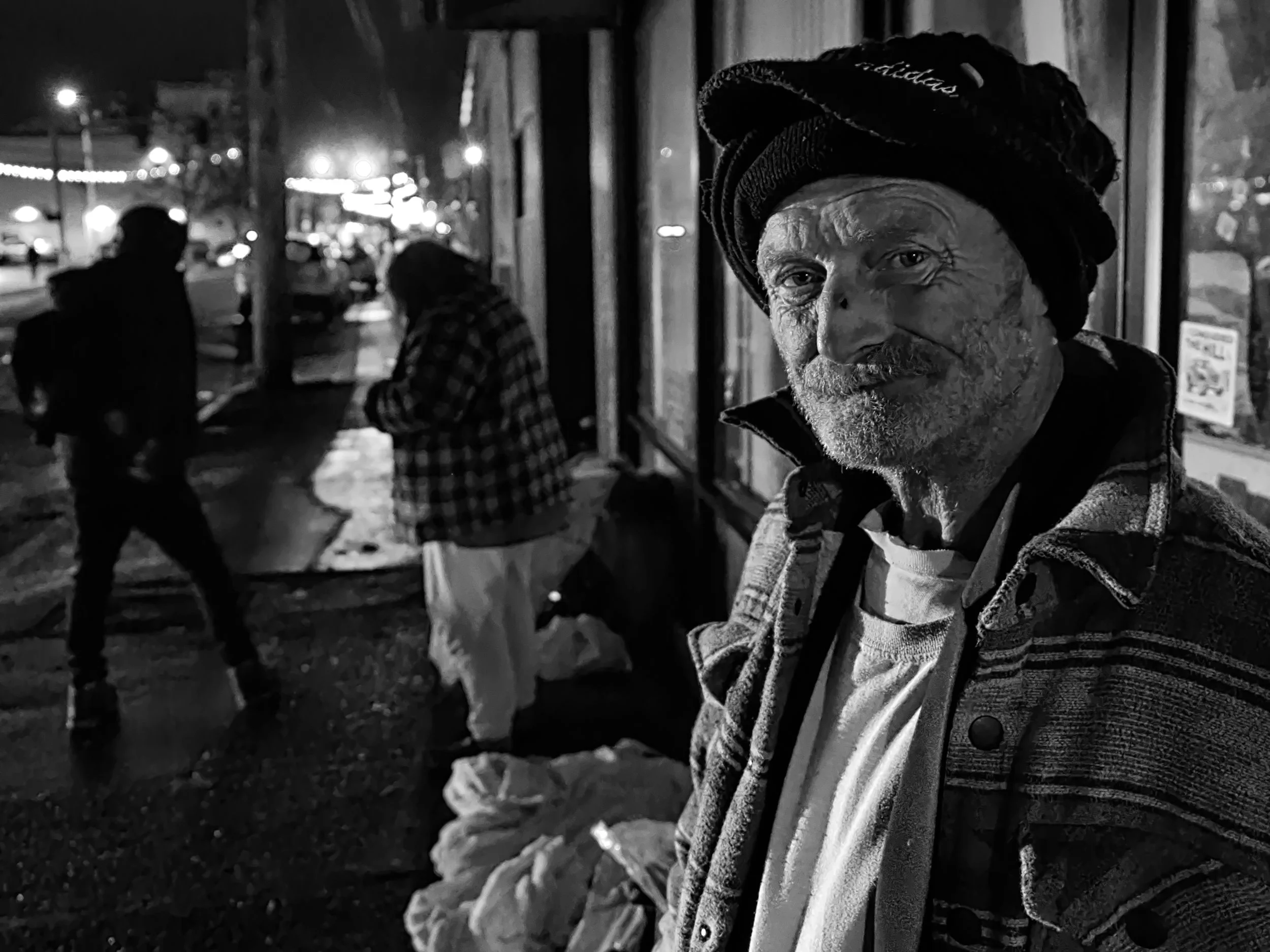
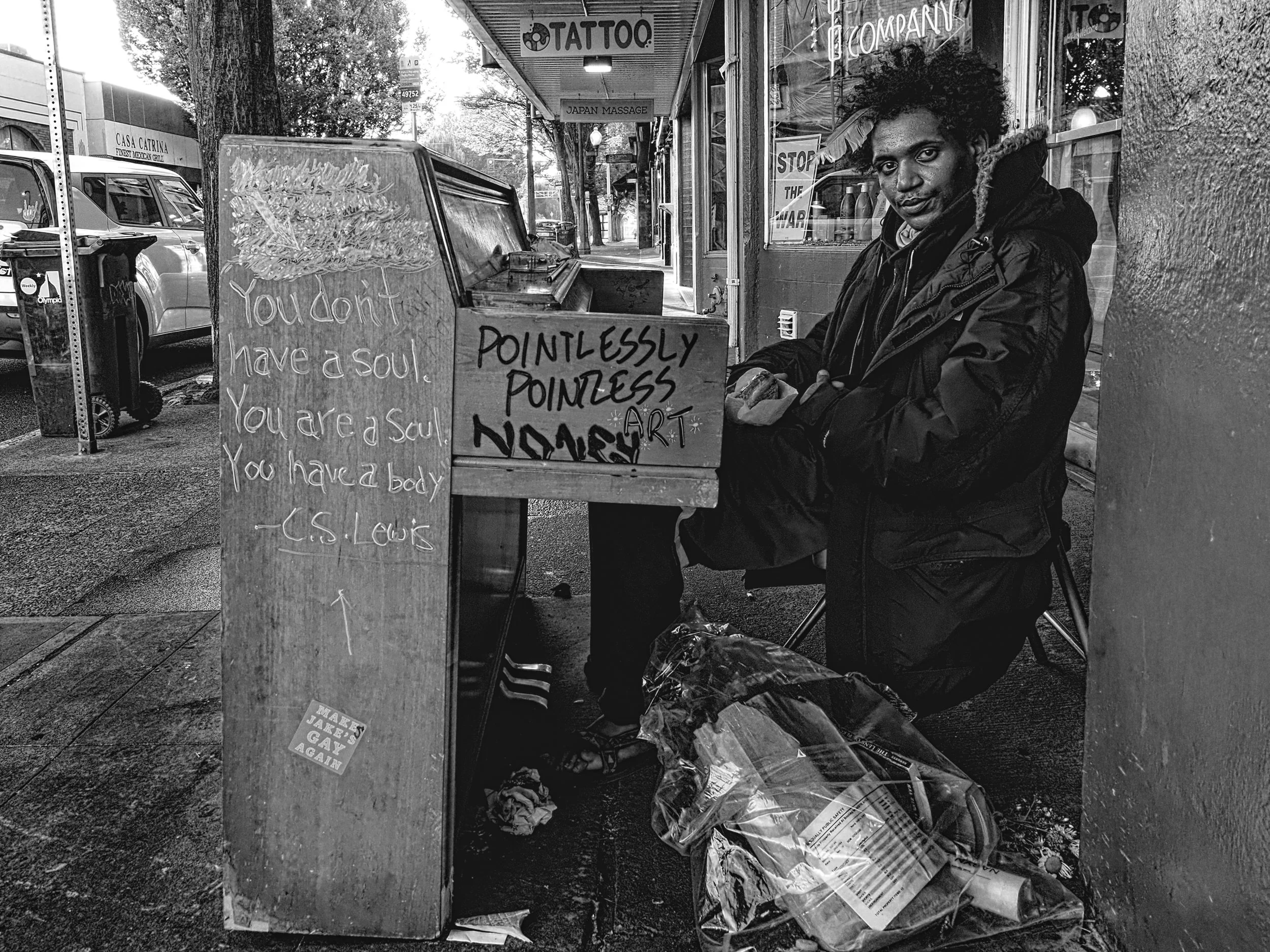
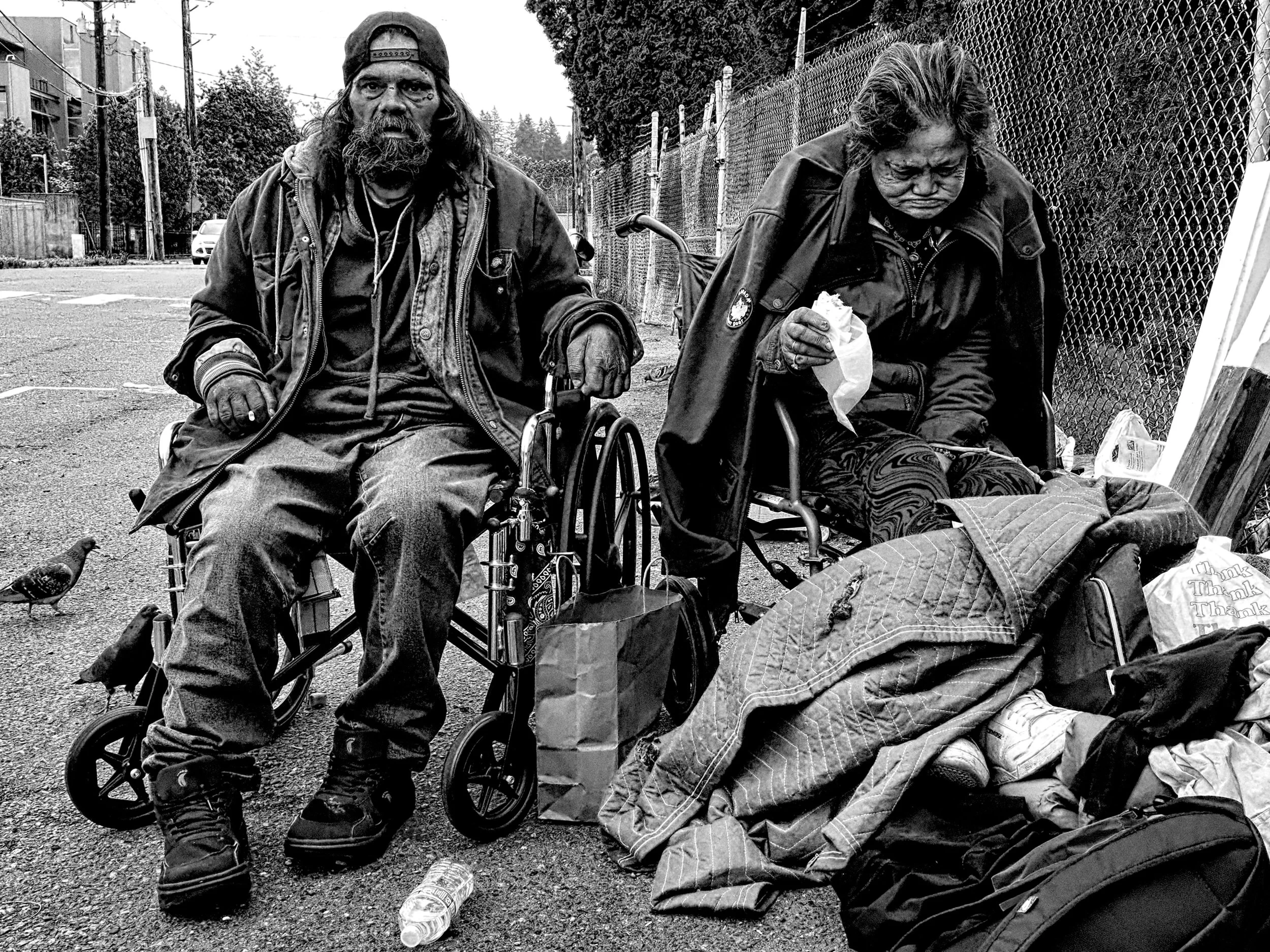
Before asking permission to photograph someone, he talks with them and listens. His work has taken him to Tacoma, Seattle, Boston and San Francisco, where he photographs people living without housing. He wants viewers to recognize the people looking back from these photographs as fellow human beings who deserve a home.
A different conversation changed how he understood his photographs.
After a presentation at Amherst College, philosopher Paul Schofield compared Simpson’s photography to philosophy. Simpson had never considered his work in those terms. The comment led him to explore “recognition”: what it means to acknowledge another person, and how a photograph might make that connection possible.
Simpson explains how he builds trust before raising the camera, why he keeps distracting surroundings in the frame, and when he decides against taking a photograph. His answers give photographers specific choices to consider when showing someone’s vulnerability without humiliating them.
The Project
Documentary Photography and Philosophy
I think there is a connection between documentary photography and philosophy.
A definition of philosophy is that it is the critical examination and analysis of the grounds and concepts of expressing fundamental beliefs. It has three major humanistic concerns, argues philosopher and essayist James Holt: “How the world hangs together, how our beliefs can be justified, and how to live.” There is a symmetry to these concerns, as they are composed of syllogisms and lucid thought.
On the other hand, photography, the writing with light, is the art of producing images through the action of radiant energy landing on a sensitive surface such as film or an optical sensor. Along with this come ISO, depth of field and shutter speed. But more specific to documentary photographers, their photography tells a story that connects with a viewer’s emotions. Documentary photography is an imprecise act, often composed of imperfections in pursuit of content.
These two disciplines seem disparate; however, Holt’s three humanistic concerns strongly parallel a documentary photographer’s attempts to visually speak to and about the human condition.
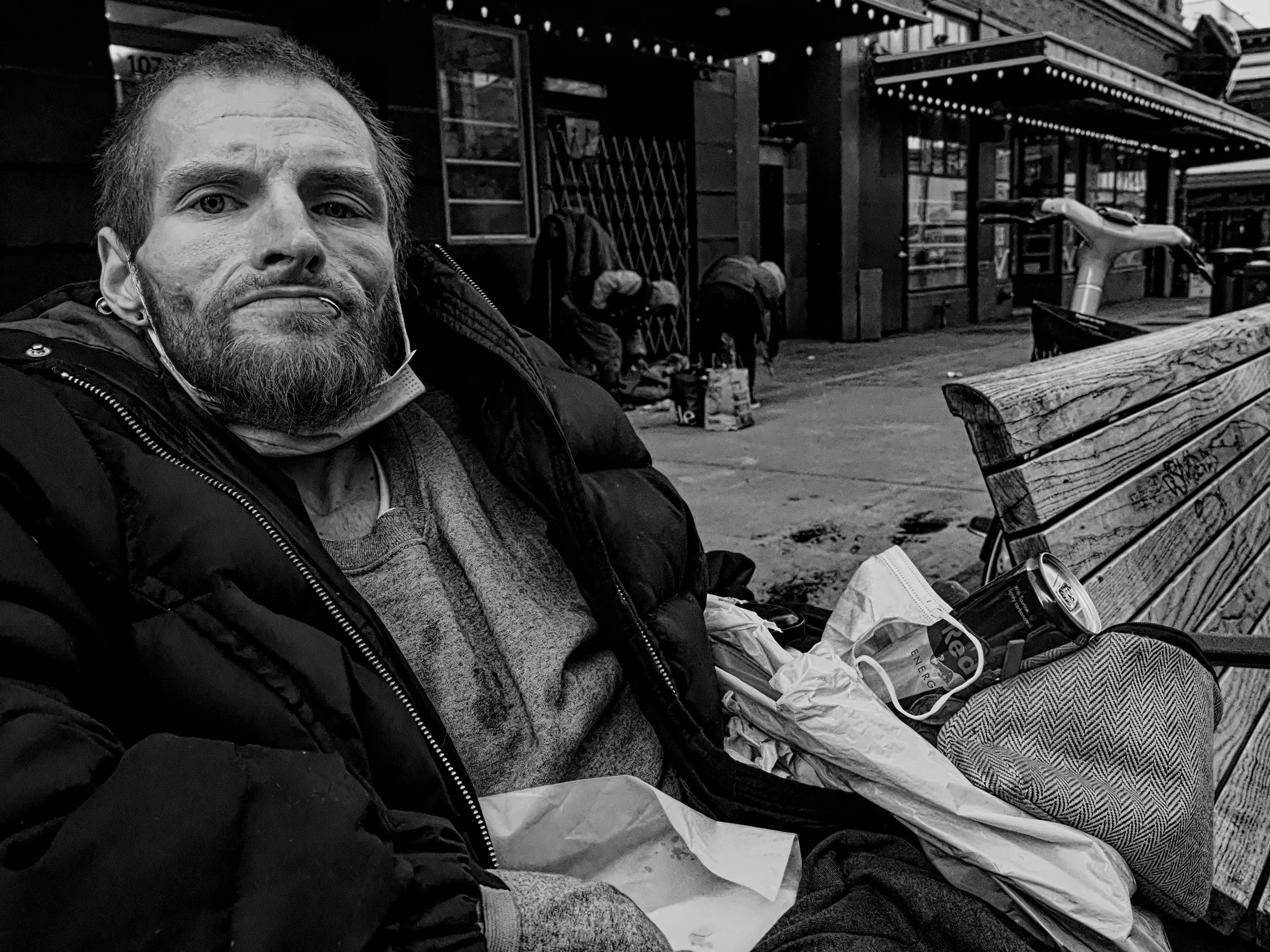
Specifically, this occurs when the viewer looks into the eyes of (makes direct contact with) the person(s) in a photograph. Philosophers call this “recognition” or “second-personal acknowledgment.” Discussions concerning this concept delve into ethics, social theory and personal identity; they are often intertwined with discussions on human relationships, identity, and the recognition of self.
What philosophers call “recognition” appears to be very much in line with what documentary photographers attempt to do with their images of and about their fellow human beings: it is about making a connection, about being in the moment, about appealing to both the mind and the heart.
This connection should occur in documentary photography in order to address the societal scourge of homelessness. To turn Holt’s quote upside down, homelessness is not how the world is to hang together, it is not how our beliefs are to be justified, and it most certainly is not the way a segment of any population should live.
About JM Simpson: For almost four years, he has talked and walked with respect amongst homeless individuals in Tacoma and Seattle, WA, Boston, MA and San Francisco, CA in order to take one or two photographs of them. “Homelessness is a moral wrong,” he once said. “My work is designed to hammer home the point that these human beings are not to be marginalized out of existence. It’s not a difficult concept to understand.”
JM Simpson
Philosophy: You taught history for many years. How did you first see a link between big ideas from philosophy and the photos you take on the street?
Good question. I had been invited by Amherst College’s Center for Humanistic Inquiry to present some of my photographic work along with philosopher Paul Schofield of Bates College. During a discussion after the presentation, Dr. Schofield made a passing, and complimentary, comment about my photography being akin to philosophy. I had never thought of my work in this regard; hence, I began to “see” it in a different light. In further thinking about this, my research led me to philosopher James Holt’s work, his definition of philosophy and how it works. The connection between documentary photography and philosophy is, at least to my way of thinking, a unique and moving way to look at photographing the homeless. In a sense, it’s how “the world hangs together.”
Imperfections: You write that documentary photography is often full of imperfections. Is there a photo you love even though it is not perfect? What makes it special to you?
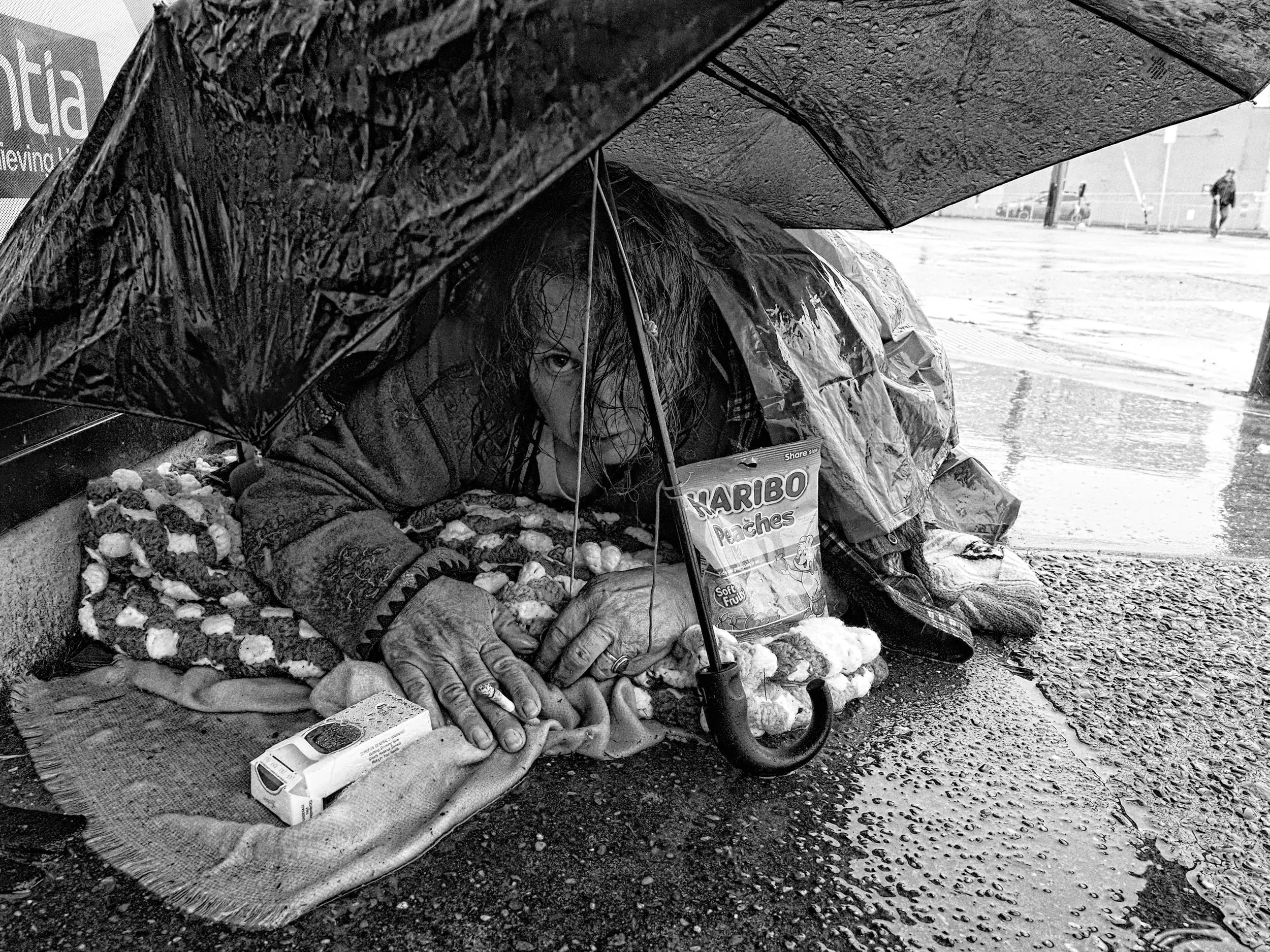
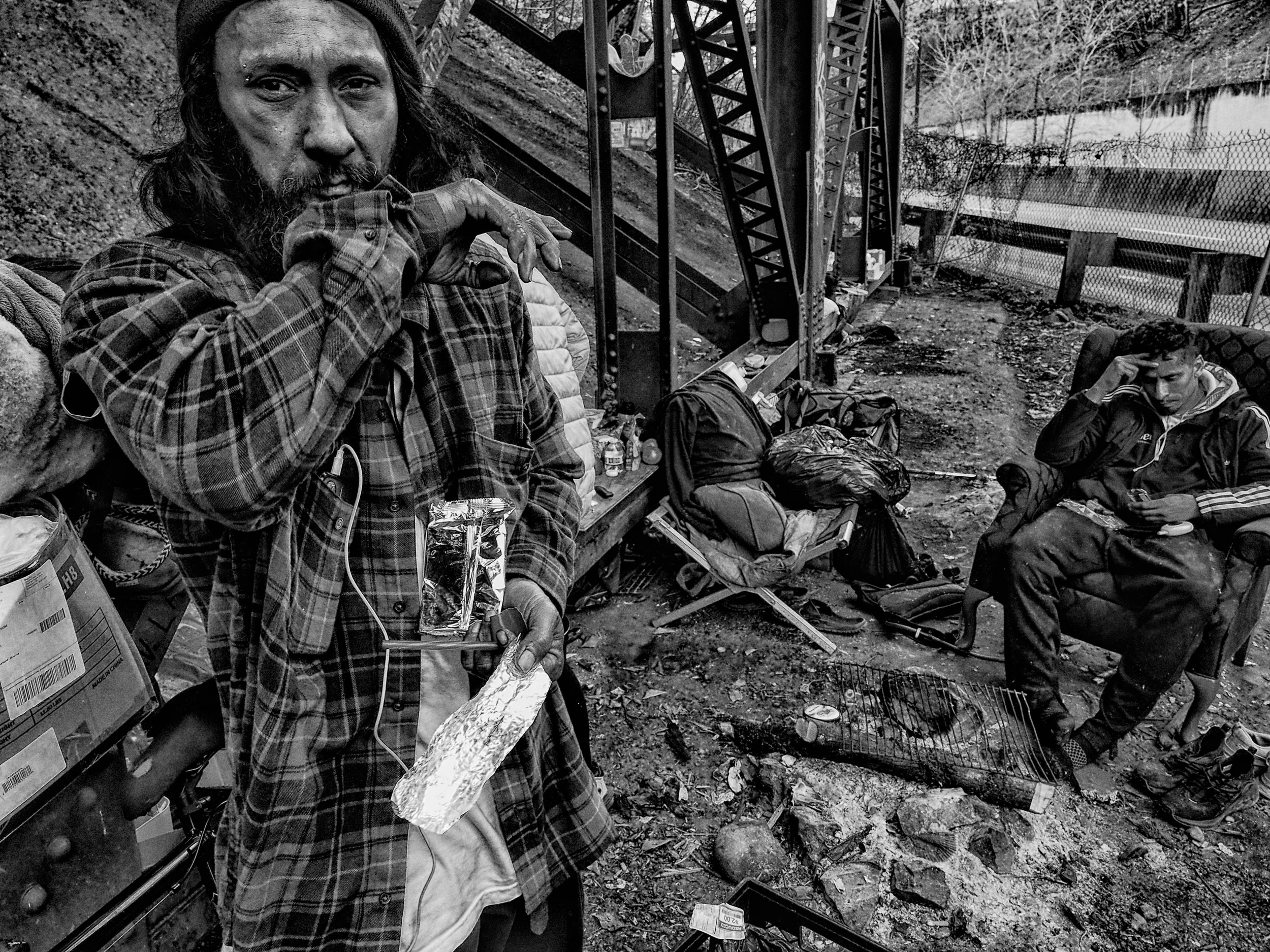
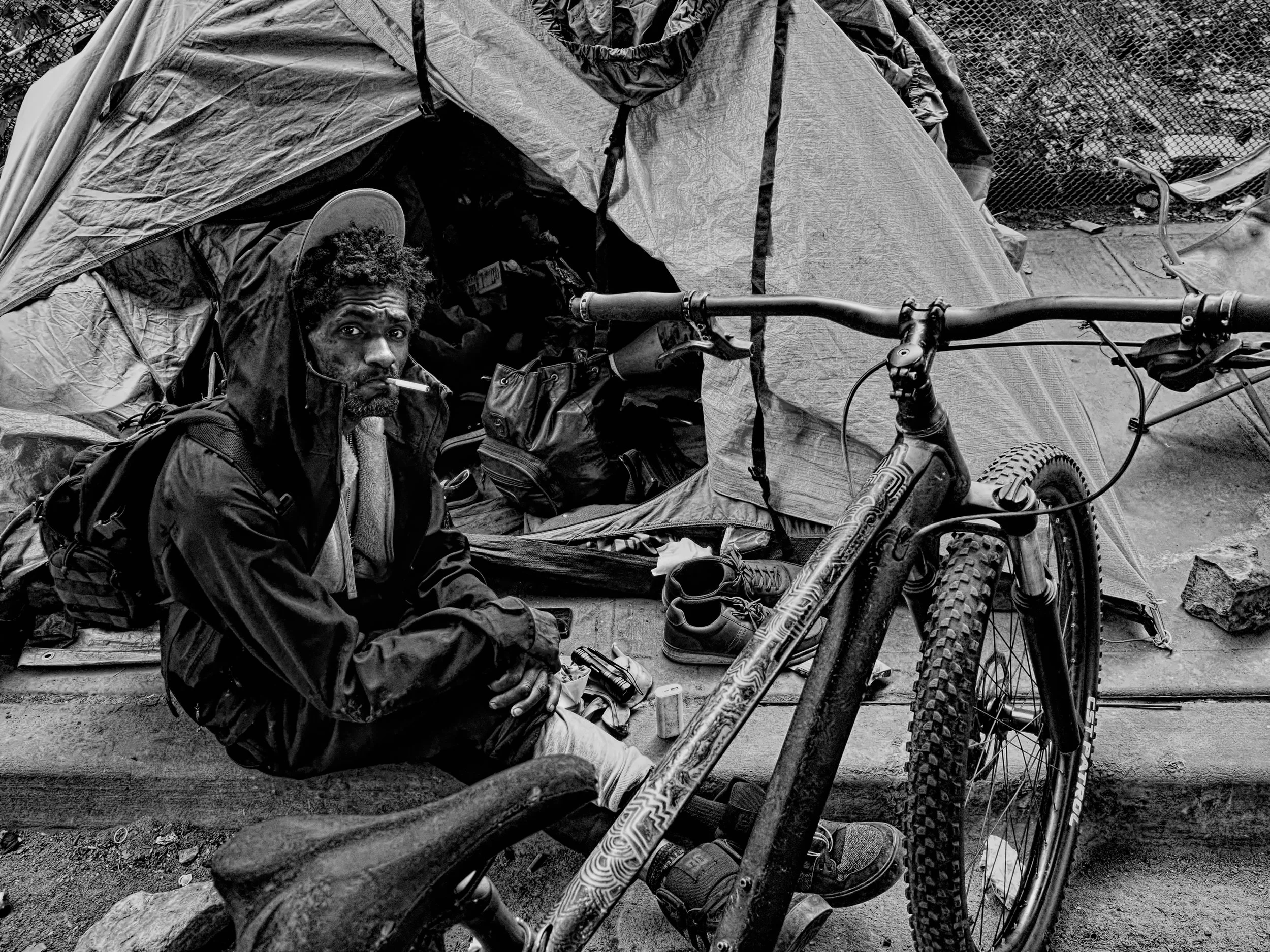
To be clear, when I speak of documentary photography being at times full of imperfections, it is not an admission of being careless about taking the best photograph possible. Take the best damn photograph that you can. Rather, it is an acknowledgment that the physical situation(s) in which I find myself may be full of distractions that in many situations would diminish a photograph’s message. However, in photographing unhoused individuals, I find that those distractions often add a sense of strength to the photograph and the person(s) therein. Put differently, the very situations in which I photograph my subjects are wildly imperfect: they are homeless.
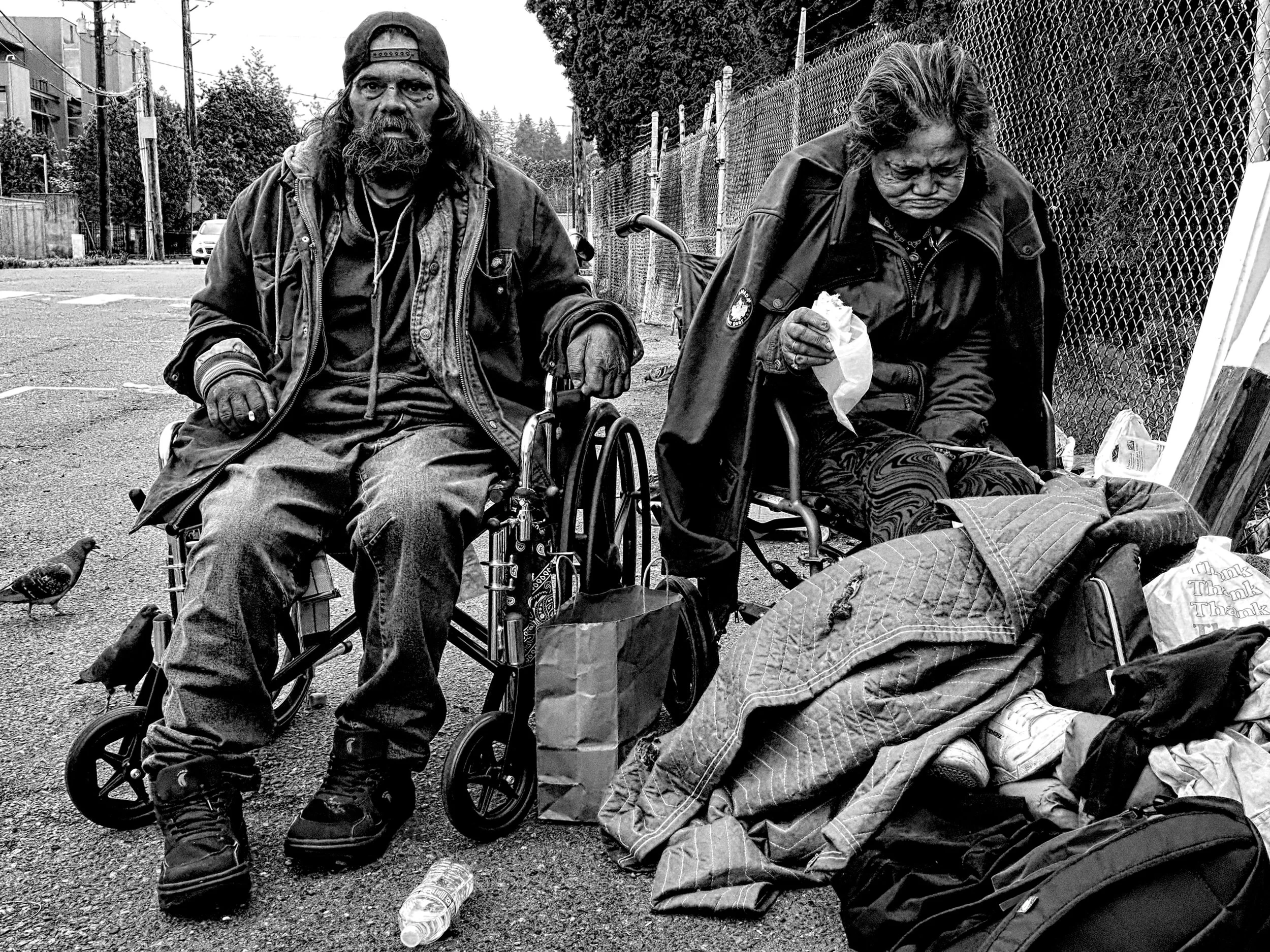
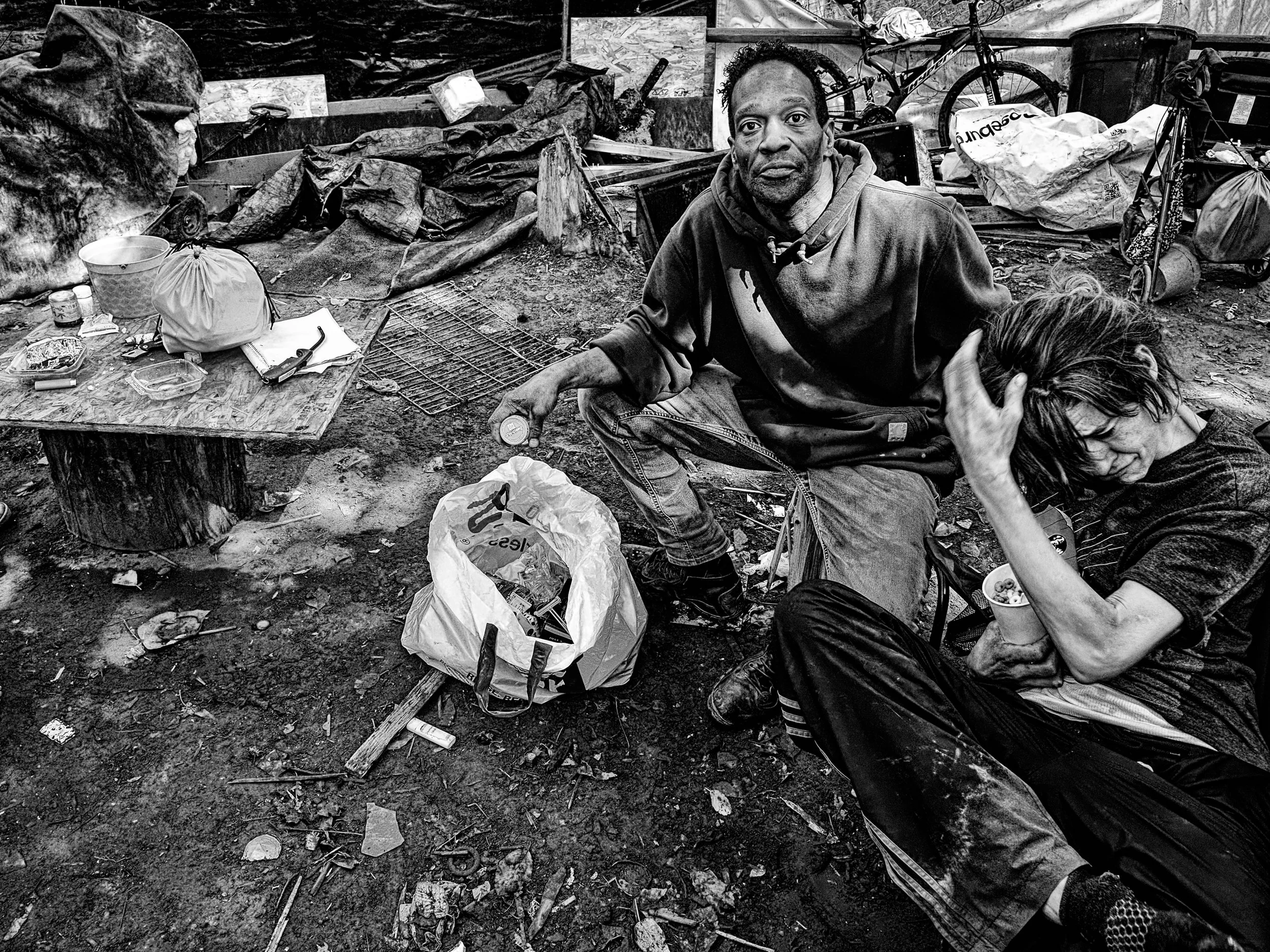
And while I think all of the 15 photographs I submitted hit hard, if I had to choose one that I favor over the others, it would be the one titled “Desperation.” It not only speaks to the “imperfections” (e.g., part of a bicycle tire growing on the right side of Phillip’s head), it also speaks to the sheer desperation he feels as he cares for Rae, a woman with significant mental health challenges. While capturing what I think is the “decisive moment” of Phillip’s desperate attempts to help Rae, the photograph also shows the conditions in which some of the homeless I’ve encountered live.
Getting back to imperfections: Is there a point where showing the disorder around someone stops adding truthful context and starts reducing that person to their homelessness? How do you recognize that line?
Excellent questions. I make a distinction (a line?) between what is “truthful” and what is “honest.” I work with a camera to honestly show what I see without deception (or AI). In other words, I only seek to be honest in my work. I say this because I think “truth” relates to the objective accuracy of the photograph, and as Susan Sontag pointed out in her book On Photography, truth can be manipulated. Context is important, and I don’t think it necessarily reduces a homeless person to their homelessness when they are already homeless in a society that seems to ignore or marginalize them. To sum up, I work to honestly present photographs of fellow human beings in need, no matter what the context.
Recognition: Philosophers call it “recognition” when we truly see another person. What does that moment feel like for you, standing behind the camera, when someone looks straight back at you?
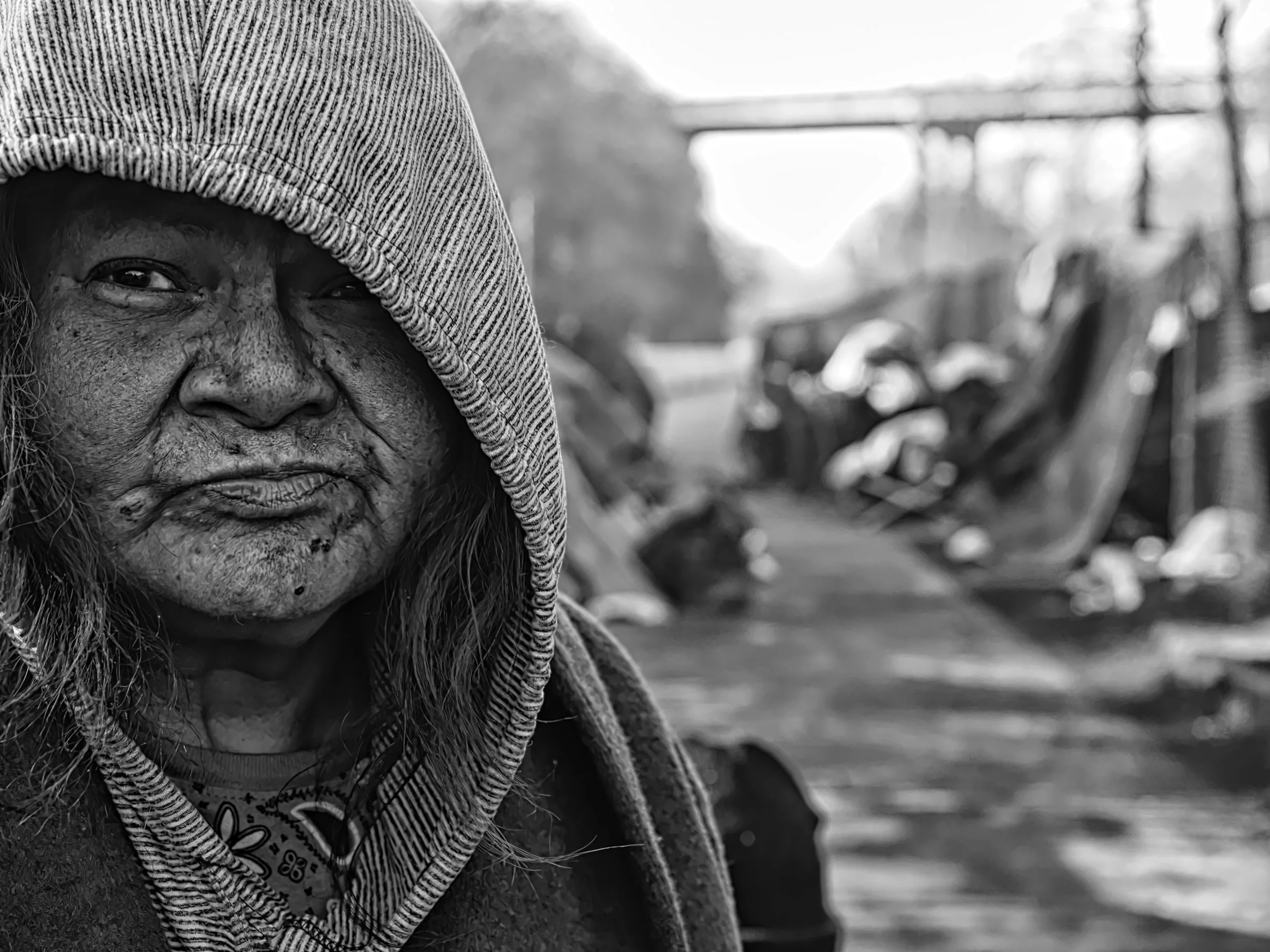
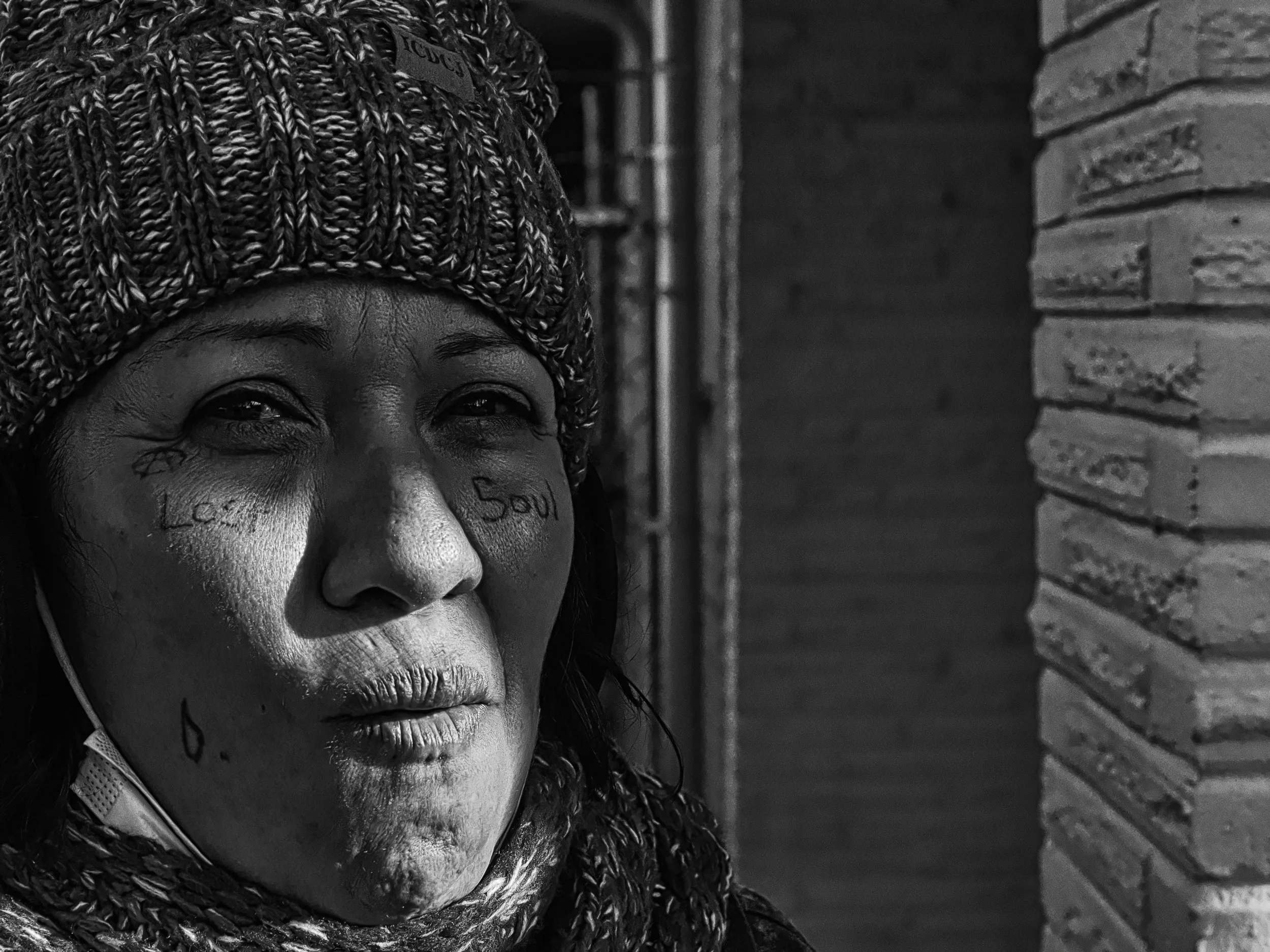
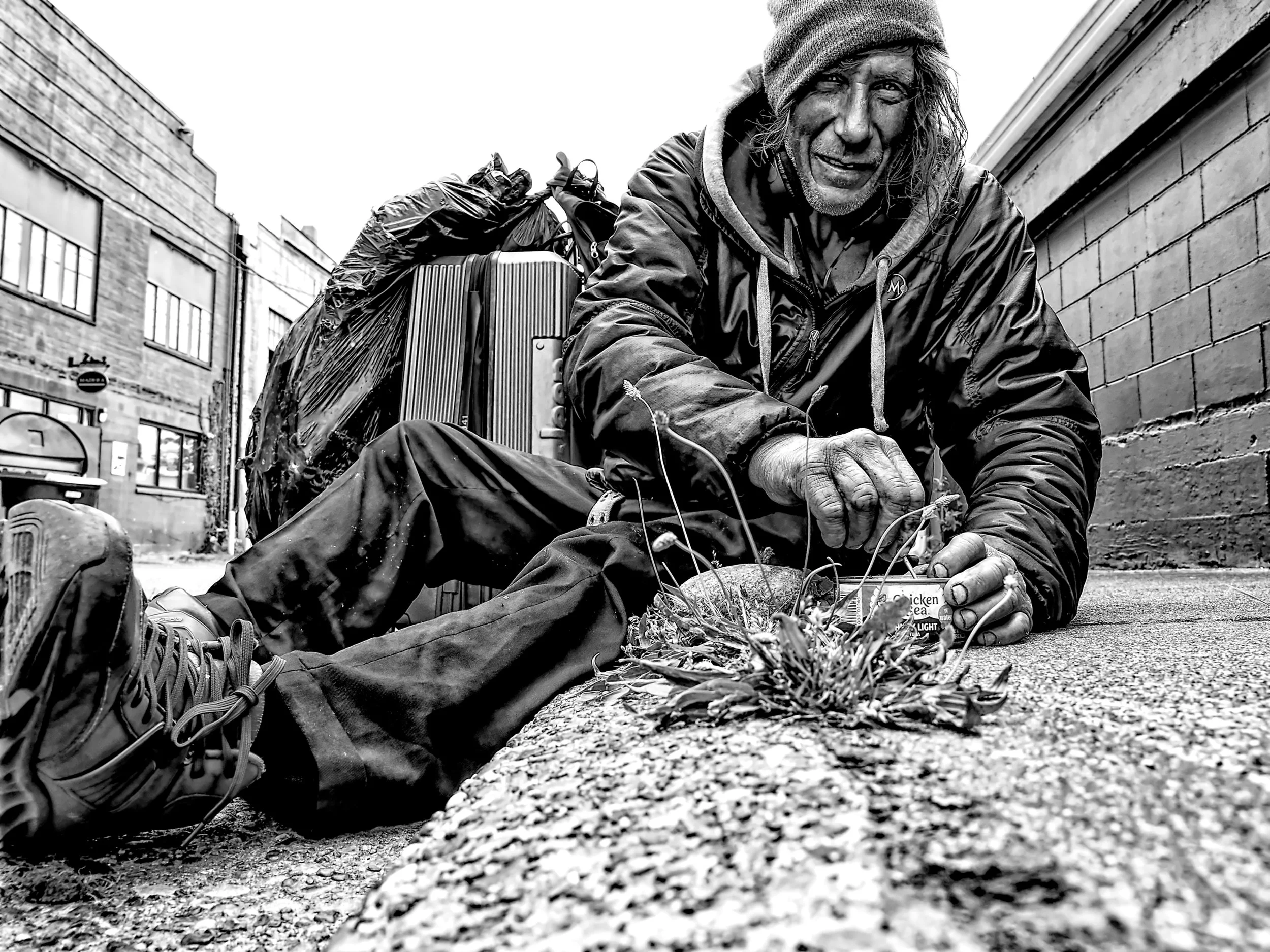
So what does truly seeing another person mean? It is more than just seeing them as you see the words you are now reading. Rather, the recognition I am referring to is when I “sense” the homeless persons I encounter, but only after I have talked with and listened to the person I would like to photograph. It is at that point that I think I have earned that unhoused person’s trust and permission to photograph, which in turn leads to the direct look into the camera.
Getting back to recognition: Has there been a time when you talked with someone, earned their permission, raised the camera, and then decided not to take the photograph? What stopped you?
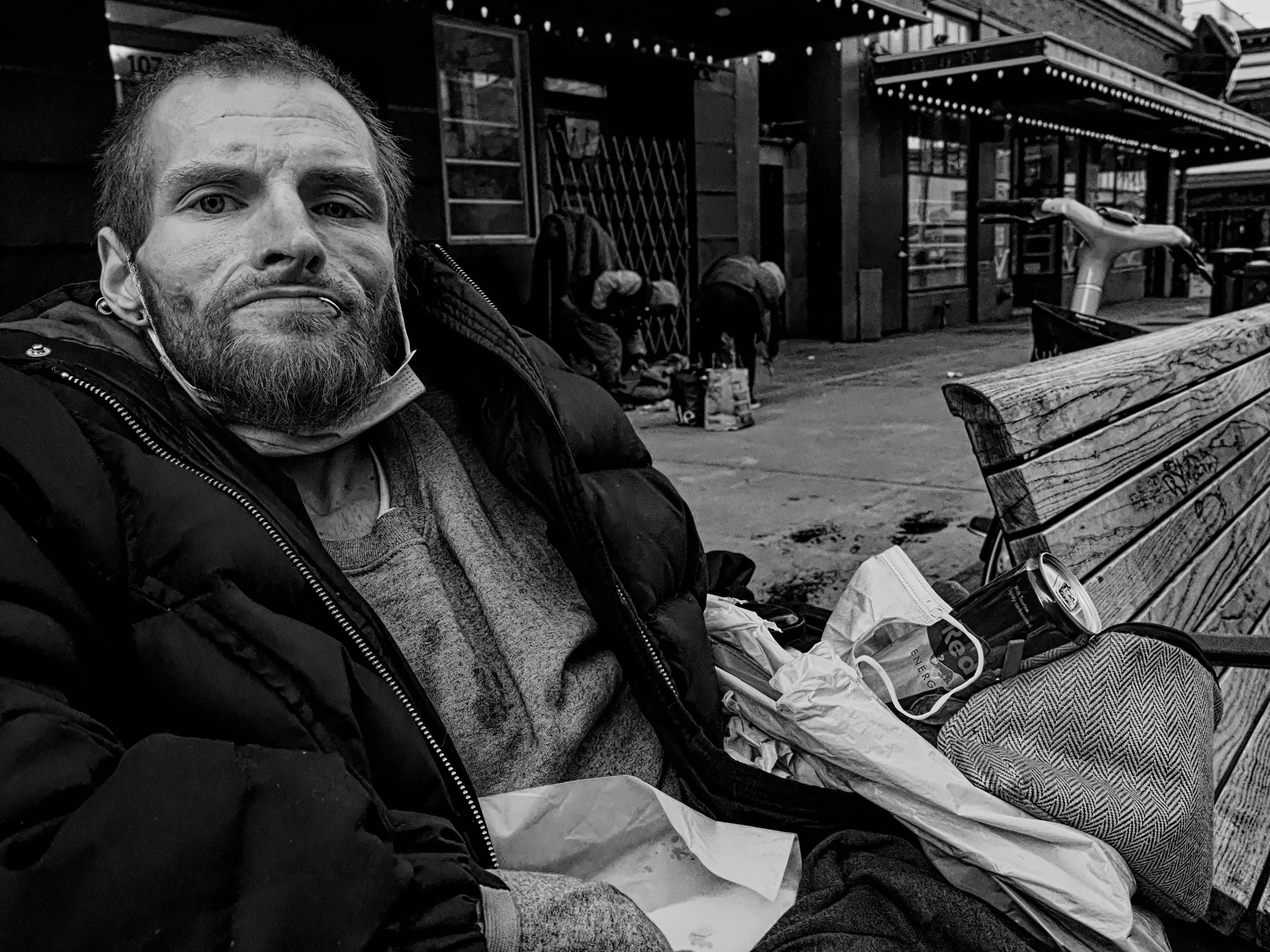
Yes. I will not take a photograph that I think will embarrass or humiliate a homeless individual. This rarely happens; however, on several occasions it has. Having said this, your next question comes into play. If a homeless person has given me permission to photograph them, and if there is a look of vulnerability or revelation, then yes, I will take the photograph. I do not write these words lightly, but I think that one point of my photography is to make you feel that vulnerability, to hammer home the point that these are fellow humans who struggle to survive in a country that has more than enough resources to help them. As I see it, my work is, as Don McCullin once said, “to hurt you” in the way that the homeless hurt.
Cities: Your work now takes you to Tacoma, Seattle, Boston and San Francisco. Do people living on the street feel different from city to city? Do they react to your camera in different ways?
Homelessness is homelessness is homelessness. It feels the same wherever I go. As implied above, I talk with and listen to a homeless individual or individuals before I ask permission to take a photograph or two. The point here is to show respect to fellow human beings, and they exist in every city I’ve visited. There is no difference. Homelessness is homelessness is homelessness.
Taking action: Last time, you said you hope powerful people will act on housing. What about readers who have no power? If they feel that recognition when they look at your photos, what is one small thing they could do the next day?
Excellent query. I assume that many of those who see these photographs are photographers, and I hope that some may be moved to join in documenting the scourge of homelessness in an effort to bring more attention to it. For those who view my work but may not want to engage in this type of documentary photography, the small thing that I would ask is that you not look away from the homeless. Many of them just want to hear a kind word or see a kind gesture. If so moved (and I know it sounds rather quaint in our AI-riddled society), write a letter to the editor of your newspaper, or say something at your place of business or church or synagogue or mosque about starting a program to help the homeless in your city or town.
I realize that what I am saying is not always easy; then again, it never will be easy. A choice must be made: act or don’t act. As Aristotle pointed out, we are what we do.
Getting back to where the photographs appear: You don’t want your photographs simply displayed on a personal website. Has there been a publication or context you turned down because you felt it would change the purpose of the photographs or use the people in them in the wrong way?
The short answer is no. But… my work has been turned down because I did not have a “social media presence.” And I have been “scolded” by the editor and publisher of a well-established documentary photography platform, who told me that photographs of the homeless are “old news.” To be fair, I have since been published on that platform, because I thought my photographs would change that person’s mind. They did. Now, back to your question: to date, none of the publications I’ve worked with have used my photographs in a manner that I thought wrong.
We'd love to read your comments below, sharing your thoughts and insights on the artist's work. Looking forward to welcoming you back for our next photo essay. See you then!
