Here are five photographs, from war and disaster to quiet daily work. Can you name the photographers who took them?
Under each picture, tap "Who took this photograph?" and choose one of three names. If you get stuck, open the hint. After you choose, you will see the answer and the story behind the photograph.
Get all five right and a reward is waiting at the end.
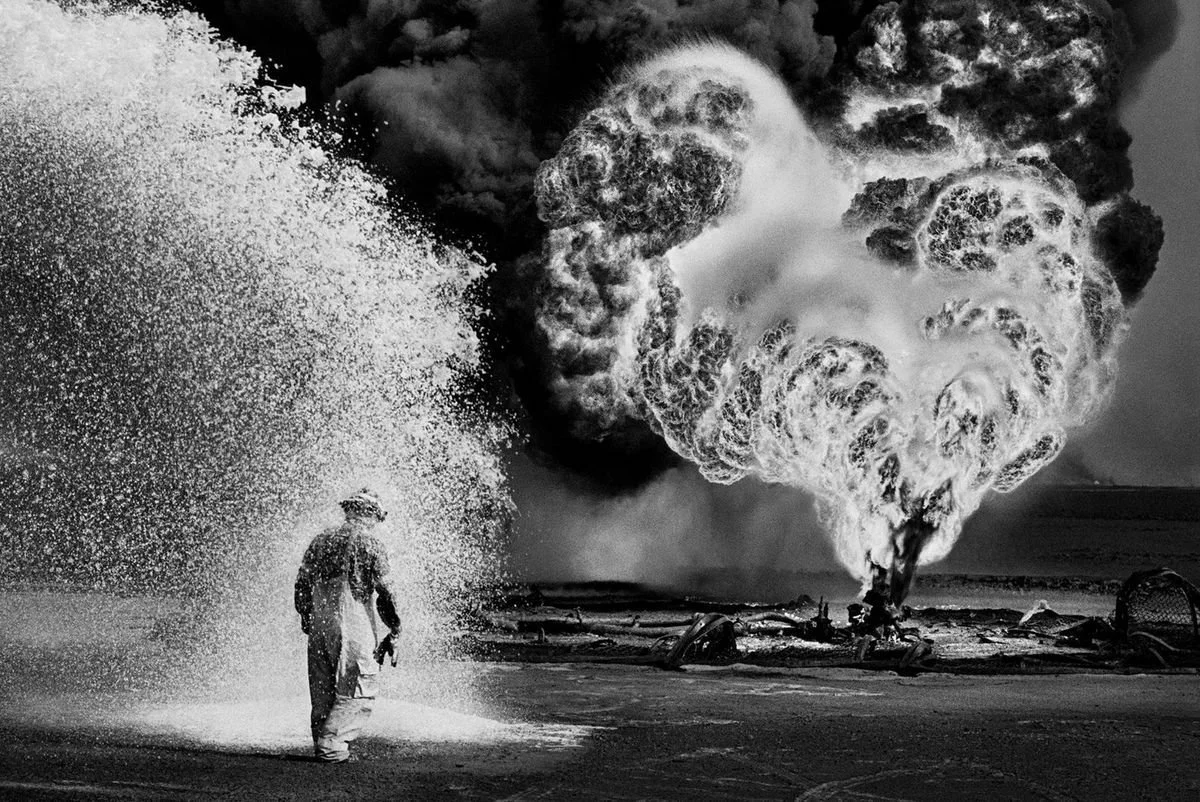
HintThe heat was so strong that his smallest lens warped. He stayed close to the firefighters to make this work.
Kuwait, 1991
Sebastião Salgado (1944–2025) was a Brazilian photographer who trained as an economist. For fifty years he worked on long black-and-white projects about workers, migrants, untouched nature and the peoples of the Amazon.
Retreating Iraqi troops set fire to oil wells in Kuwait in early 1991. Salgado photographed the burning fields. The work became known as A Desert on Fire. Source: smarthistory.org
Did you know? He proposed the story himself to Kathy Ryan, photo editor of The New York Times Magazine. The pictures first ran there in 1991. Source: vice.com

HintBefore he goes into the field, he studies a project for at least six months. He builds the story at home like a film and plans the pictures he needs.
The Chernobyl nuclear power plant as seen from Pripyat. Pripyat, Chernobyl exclusion zone, 2019
Mittica first went to Chernobyl in 2002 and kept going back. His book Chernobyl (GOST Books, 2024) shows the people who live and work there, not only ruins. Source: aboutphotography.blog
Did you know? In the most contaminated places he often has only minutes, or one or two hours at most. So he works fast, like a news photographer. Source: aboutphotography.blog
“There is no such thing as objective photography, nor should there be.” Source: aboutphotography.blog
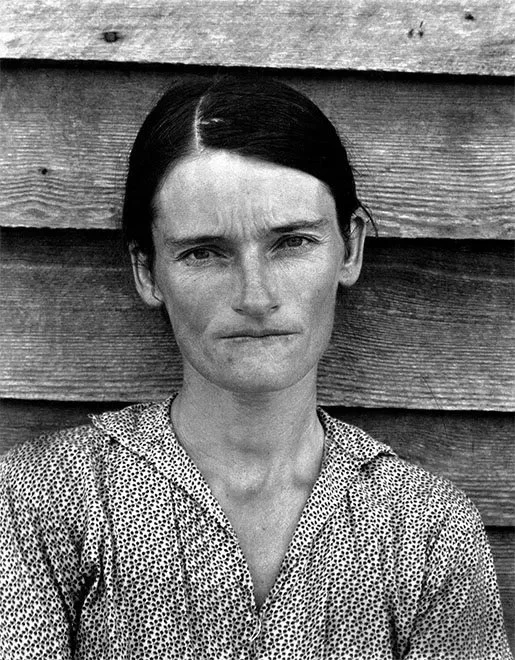
HintHe made four similar portraits of her against the same wall. Small changes in her face led him to pick different ones for two different publications.
Allie Mae Burroughs, Wife of a Cotton Sharecropper, Hale County, Alabama, 1936
Walker Evans (1903–1975) was an American photographer known for clear, direct pictures of American life during the Great Depression. His photographs of three farm families in Alabama appeared in Let Us Now Praise Famous Men (1941), made with the writer James Agee.
Evans and James Agee stayed at the Burroughs family cabin in August 1936. Evans took four portraits of Allie Mae Burroughs with different expressions. Source: metmuseum.org
Did you know? He took leave from a government photo project to travel with a writer on a magazine assignment. The magazine rejected the writer's long text, and it became a book instead. Source: metmuseum.org
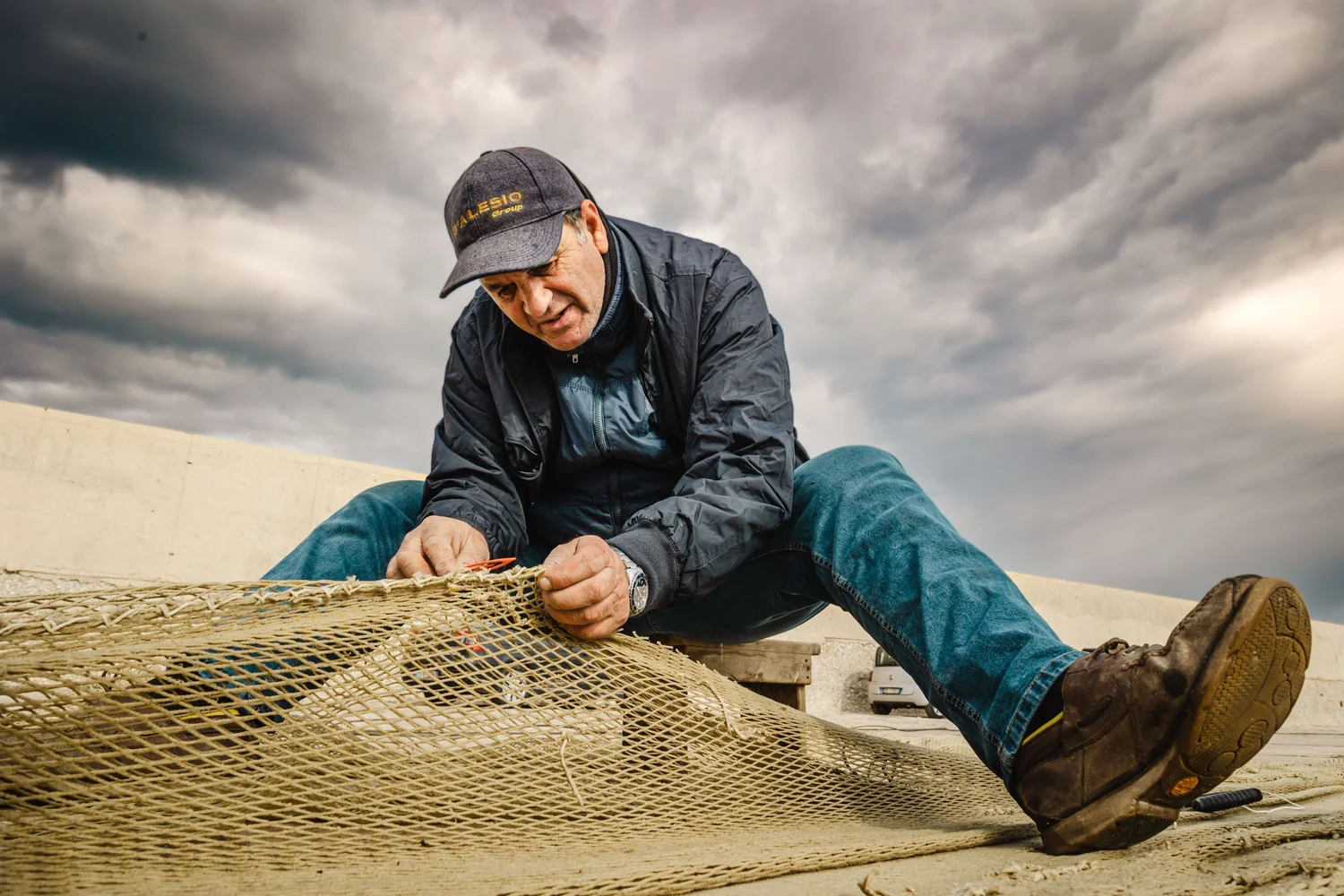
HintIt took him two years to be allowed on the boat. He felt seasick at first, but in the end the crew stopped noticing him.
From The Last Fishermen (Gli ultimi pescatori), Mola di Bari
Pansa has worked since 2022 on the fishermen of Mola di Bari, his hometown. On shore, fishermen mend the nets by hand, as they learned over decades. Source: aboutphotography.blog
Did you know? Bottom trawl nets can catch stones, bombs, or even human remains from the seabed. The damage is mended in port, or at sea if the work must go on. Source: aboutphotography.blog
“At a certain point I simply became invisible.” Source: aboutphotography.blog
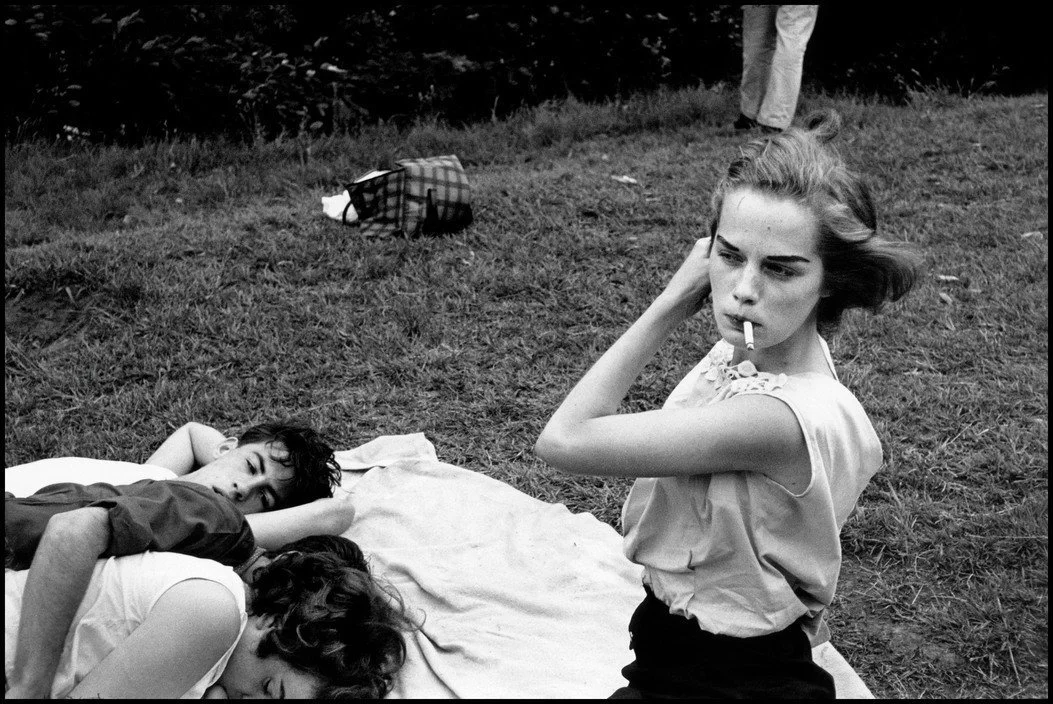
HintHe met a Magnum co-founder while serving in the army in Paris. He became a full member of the agency in 1958.
Brooklyn Gang, 1959
Bruce Davidson (born 1933) is an American photographer who joined Magnum Photos in 1958. He is known for long, close projects with people on the edges of society, from a circus clown and a Brooklyn gang to one block in East Harlem and the New York subway.
In 1959 Davidson spent time with a group of Brooklyn teenagers called the Jokers. He followed them on street corners and on trips to Coney Island. He shot with a 35mm Leica. Source: menil.org
Did you know? He was 25 and worked on it through spring and summer. At first the teenagers were mostly uninterested in him. Later he wrote that they let him see their fear, depression and anger. Source: magnumphotos.com
“These photographs are not about gangs, they're really about being a teenager.” Source: menil.org
