Welcome to another captivating photo essay, this time by Joe Pansa We'd love to hear your thoughts. Feel free to comment below and, if you're interested, share your photo essay with us. Your perspectives add valuable dimensions to our collective exploration.
These fishermen are witnessing the end of their world.
This story is about a fishing community in southern Italy that is slowly disappearing. Their work is becoming impossible because of exhaustion, low income, and strict regulations. Many of them already know there will be no next generation to replace them. What is being lost is not only a job, but a way of living passed down for decades.
Joe Pansa spent two years gaining access to their lives at sea.
He grew up in this town and returned again and again to earn their trust. It took two years before he was finally allowed onto their boat. Once there, he photographed their work, their pauses, and their silent moments. His essay shows what happens when work, identity, and tradition disappear together.
The Project: GLI ULTIMI PESCATORI - THE LAST FISHERMEN
This long-term photographic project documents the lives of the fishermen of Mola di Bari, my hometown, portraying a profession and way of life that are steadily disappearing. Deeply rooted in the town’s identity, artisanal fishing today survives on the margins, threatened by economic pressures, environmental changes, and the break of generational continuity. Through this work, I aim to preserve the dignity, resilience, and humanity of those who continue to face the sea despite uncertainty and decline.
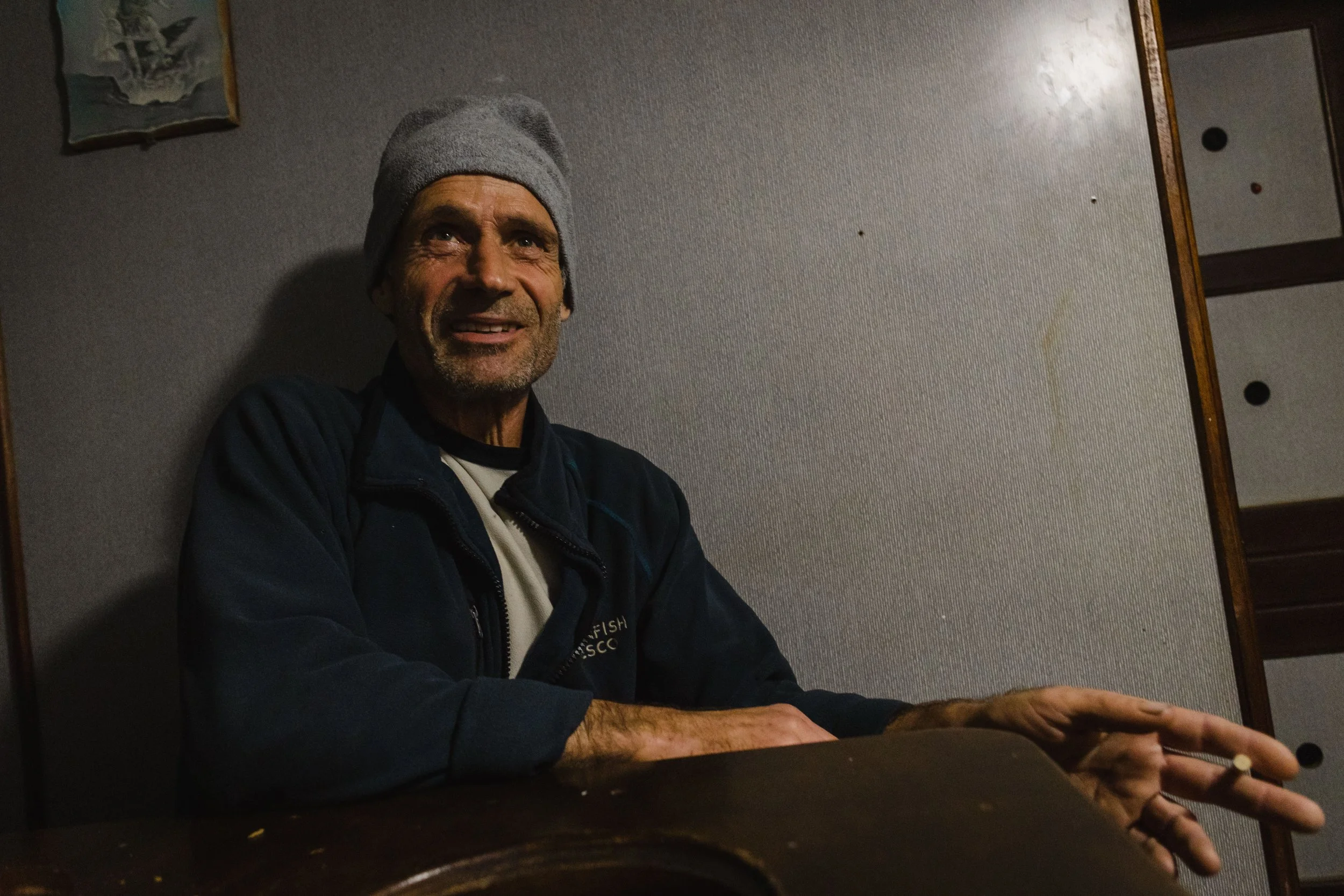
I have been developing this project since 2022, spending extended periods alongside the fishermen, sharing their routines, and building trust. Gaining access to their boats and private spaces required patience, empathy, and mutual respect. This closeness allowed me to document not only the physical labour of fishing but also the emotional depth of these men’s relationship with the sea, moments of solitude, camaraderie among crews, and quiet reflection.
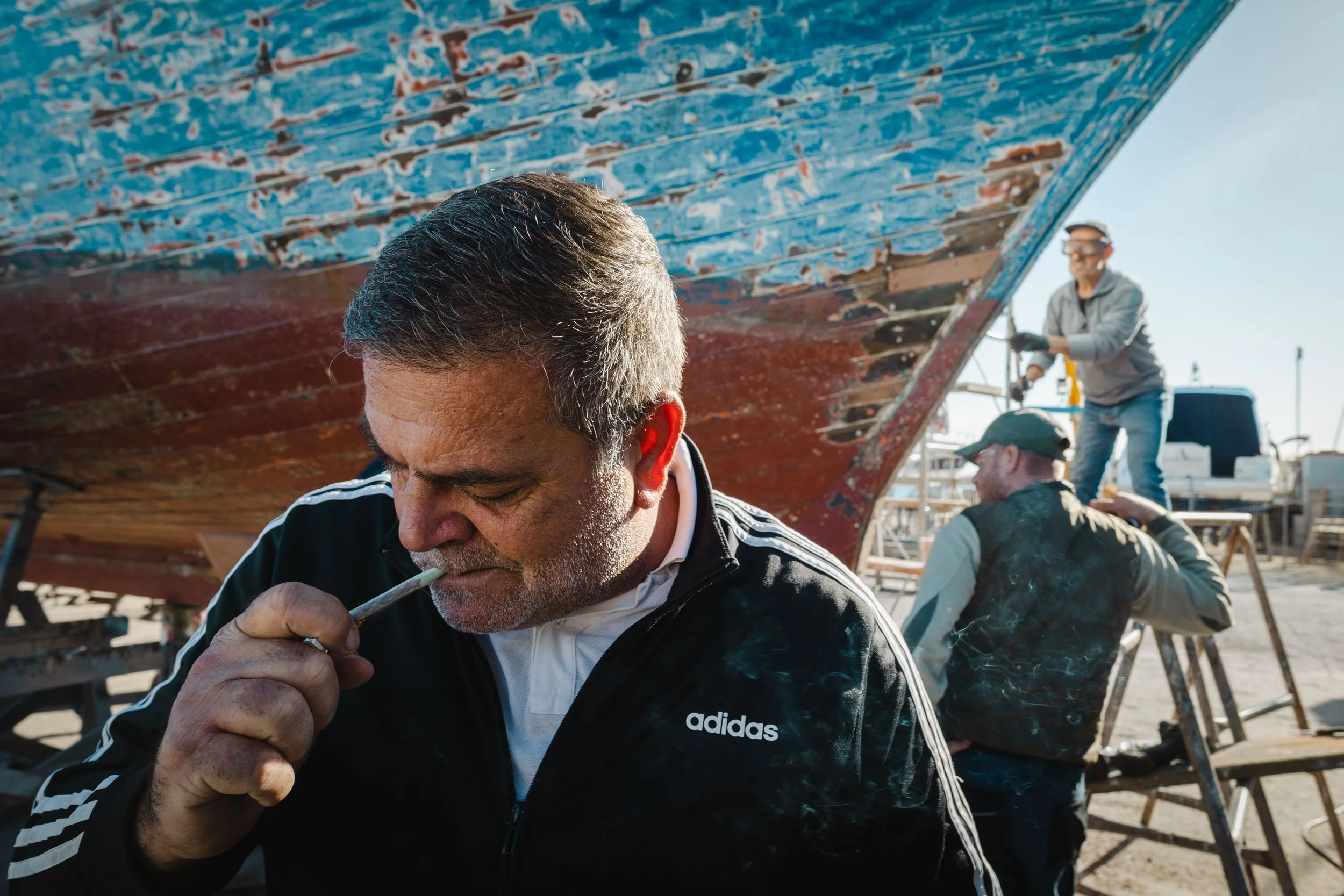
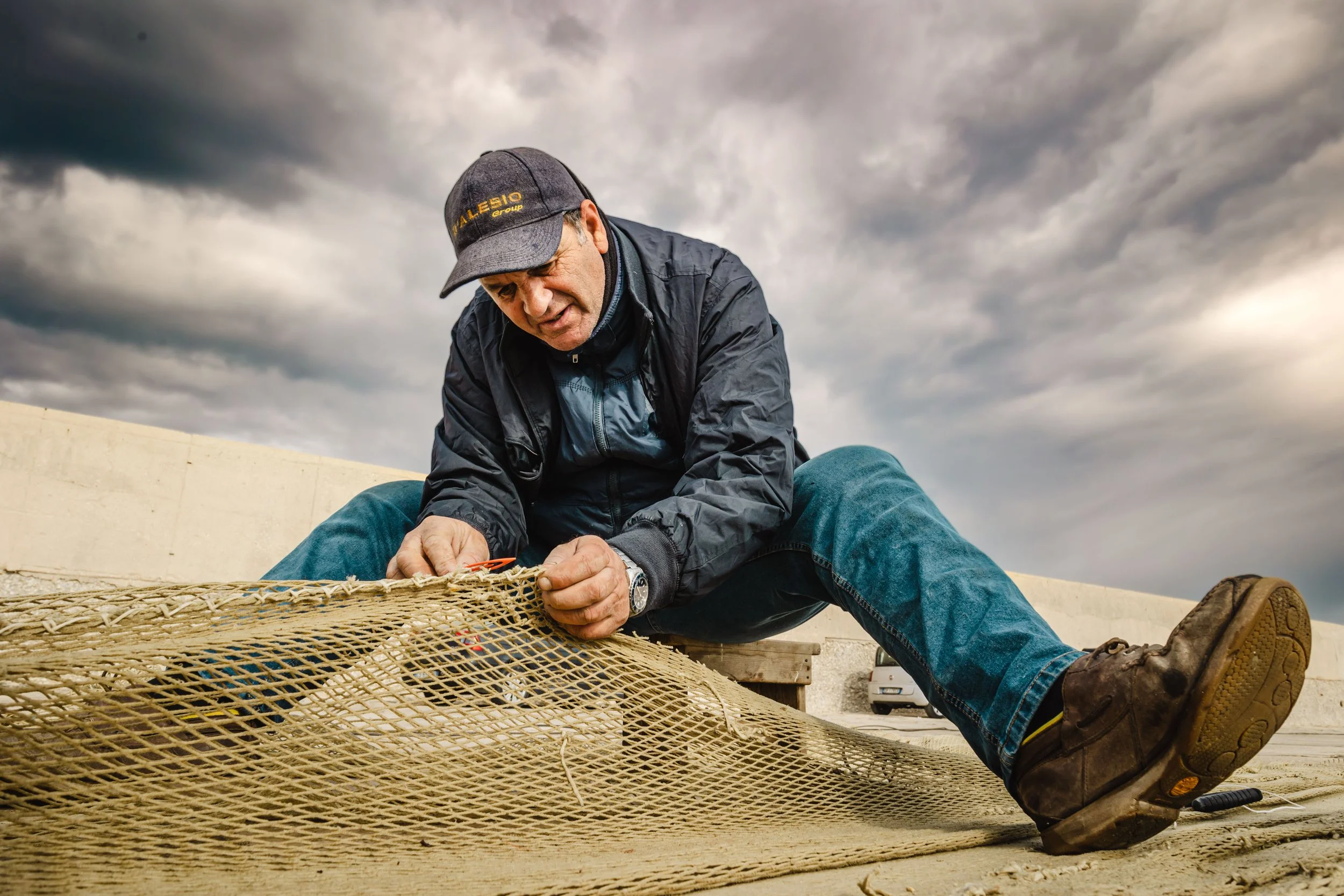
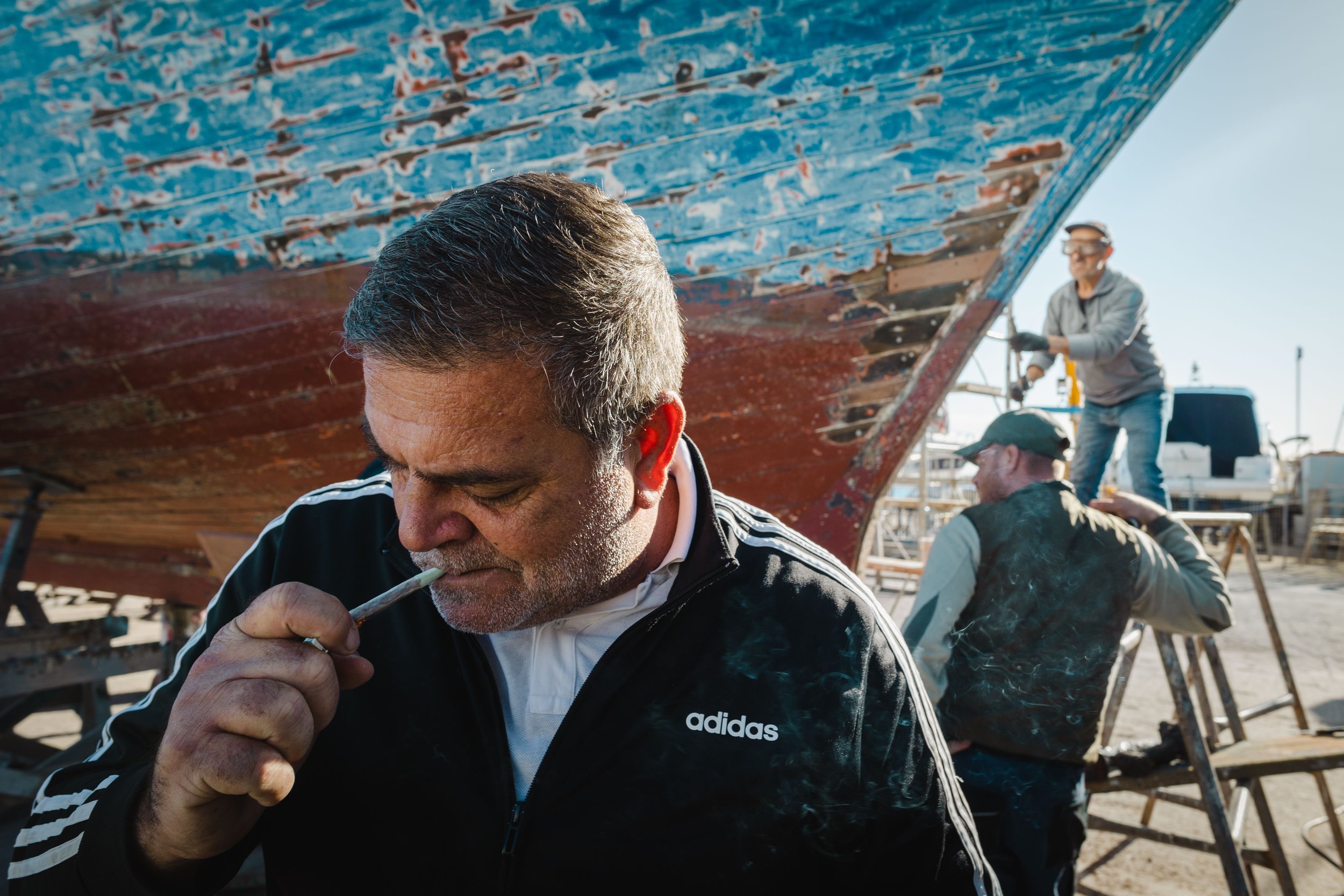
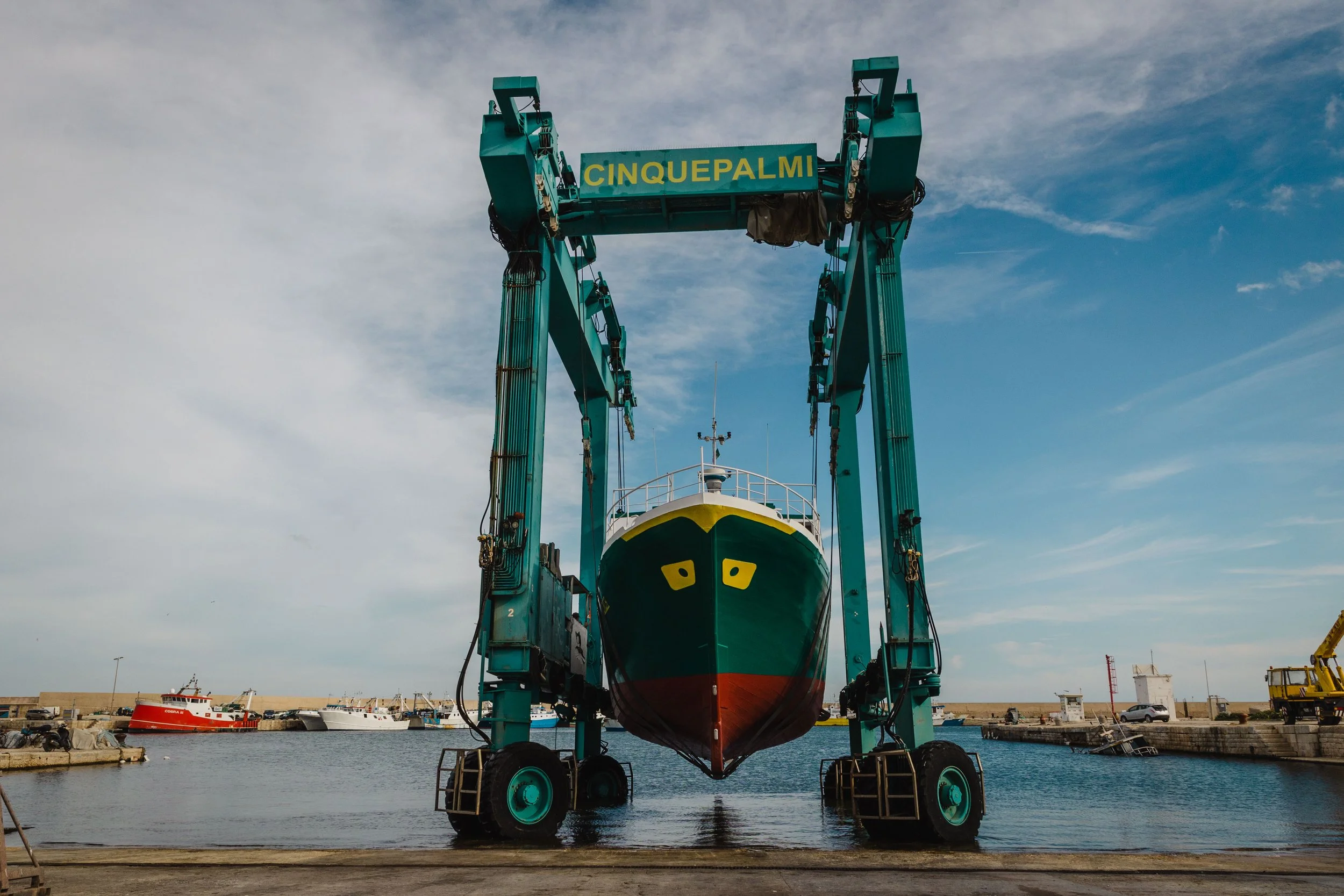
The story begins in the shipyard, where the fishing boat Orca is repaired and prepared for another season at sea. Onshore, fishermen mend nets by hand, repeating gestures learned over decades, while retired fishers continue repairing nets, preserving skills few still master.
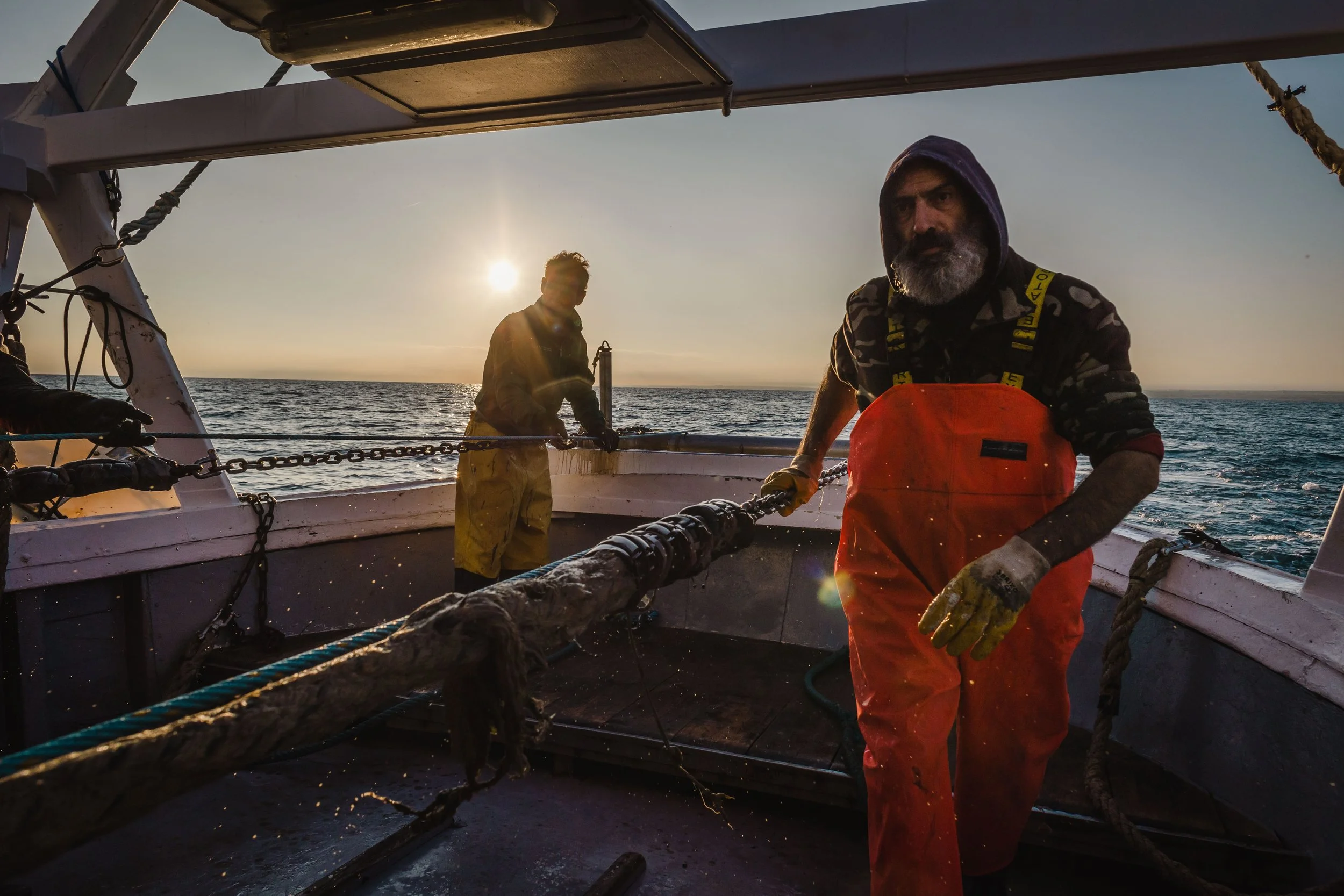
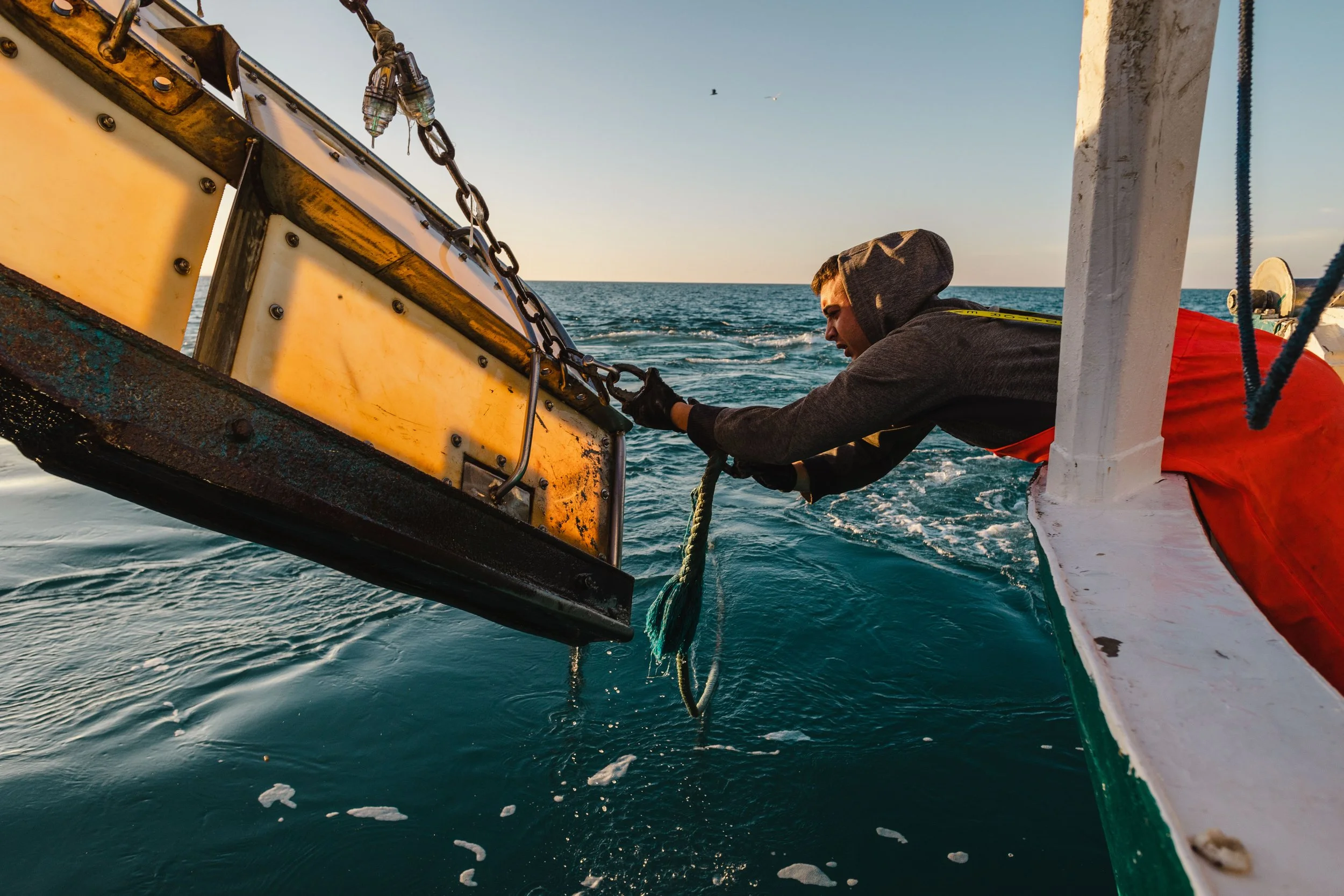
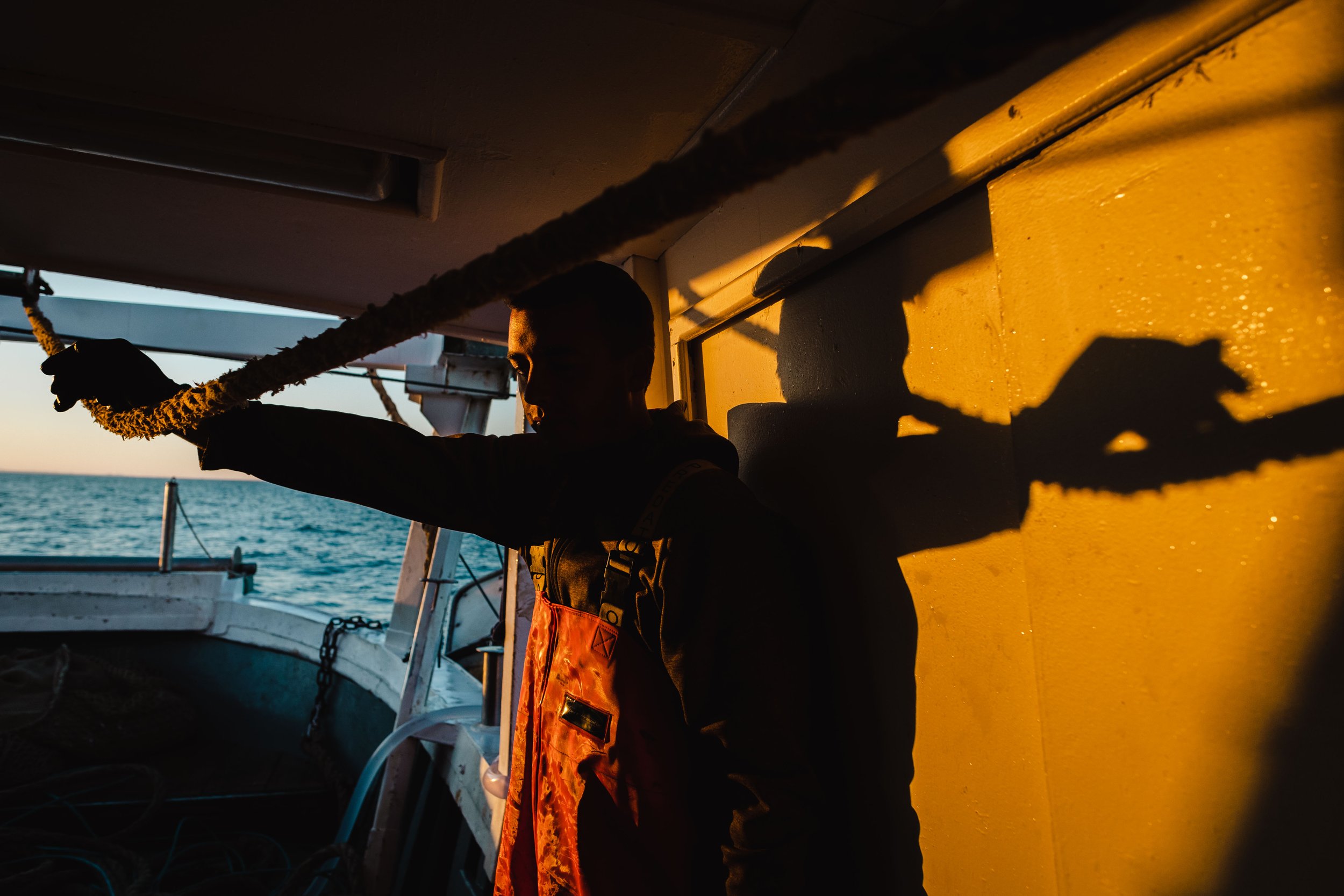
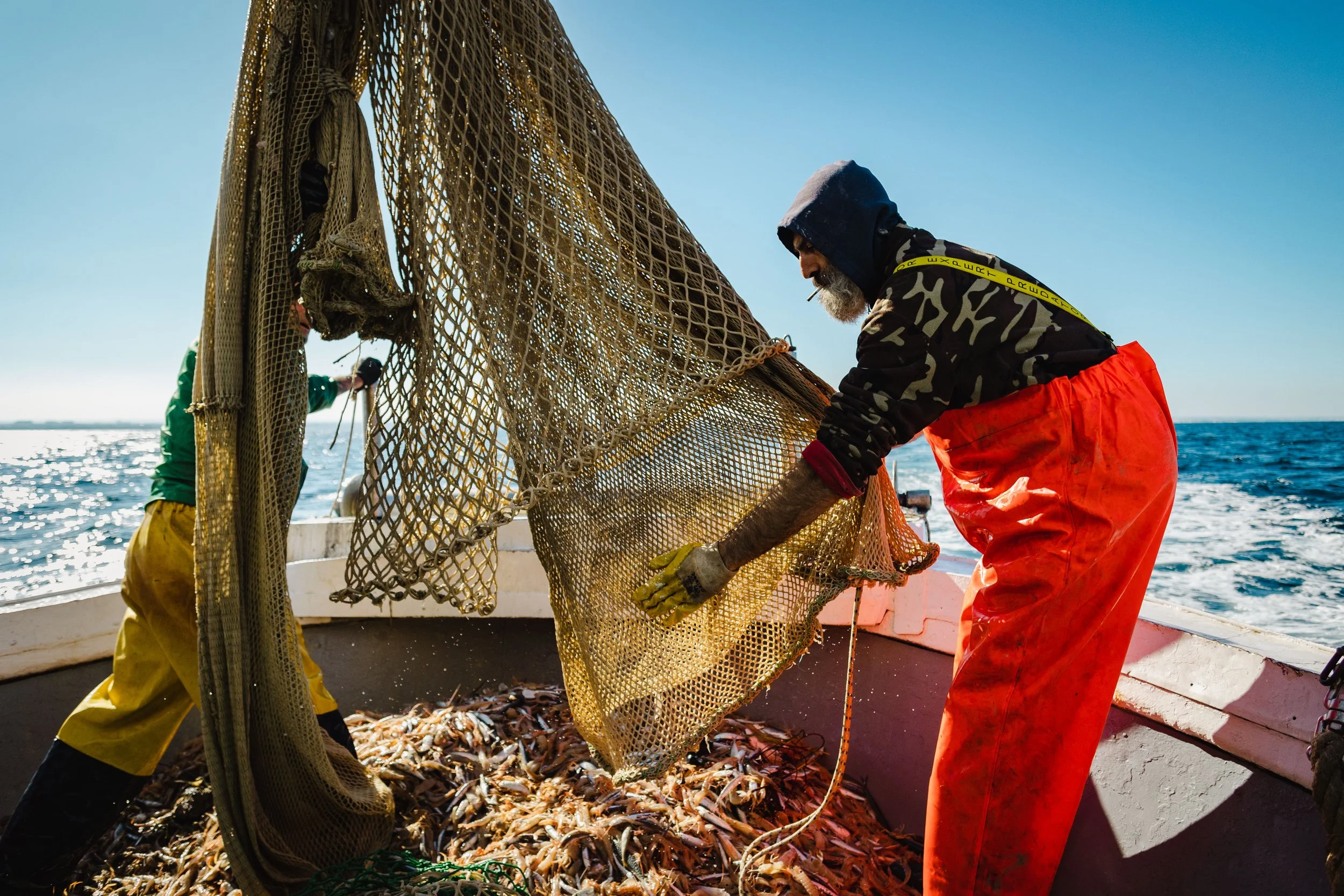
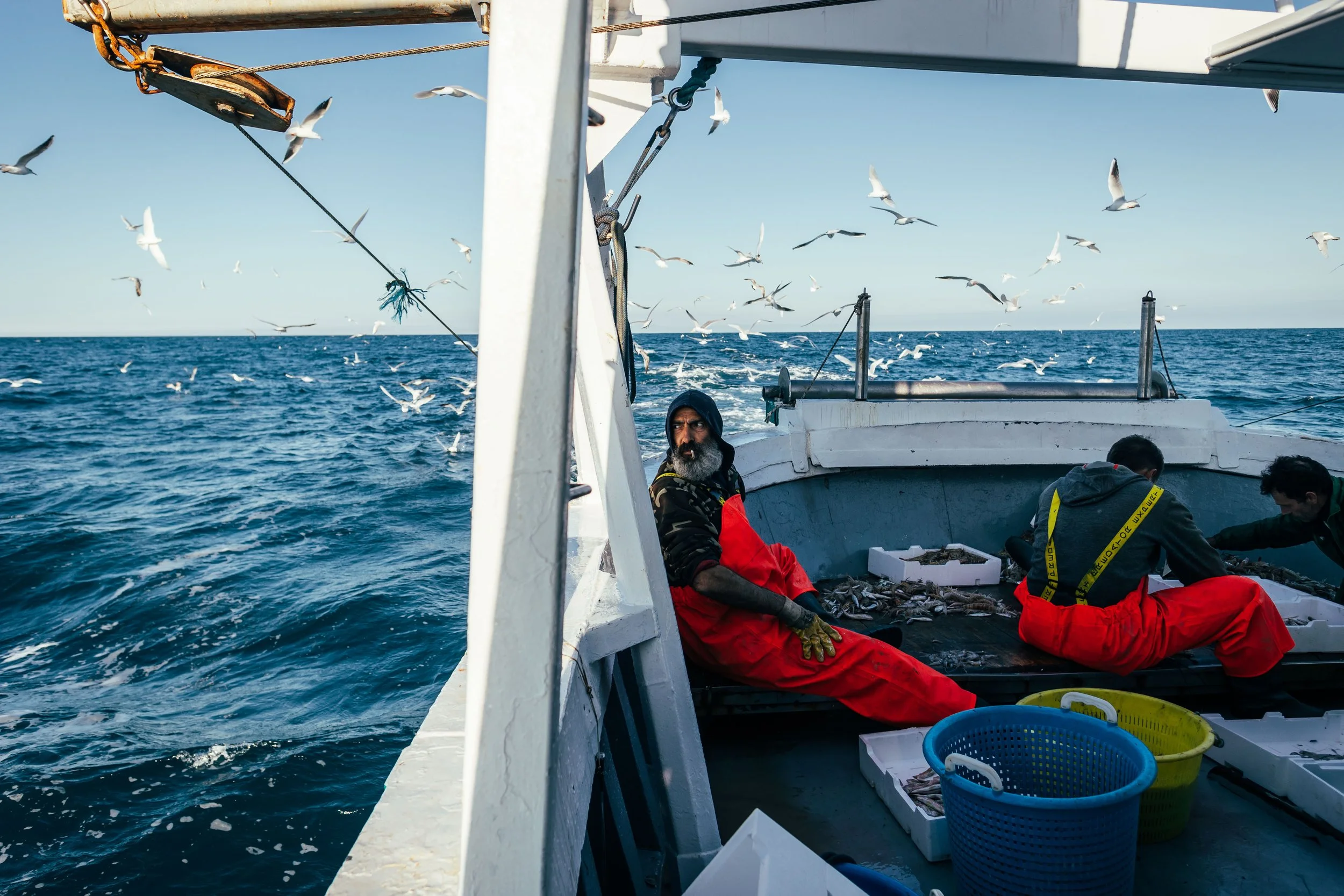
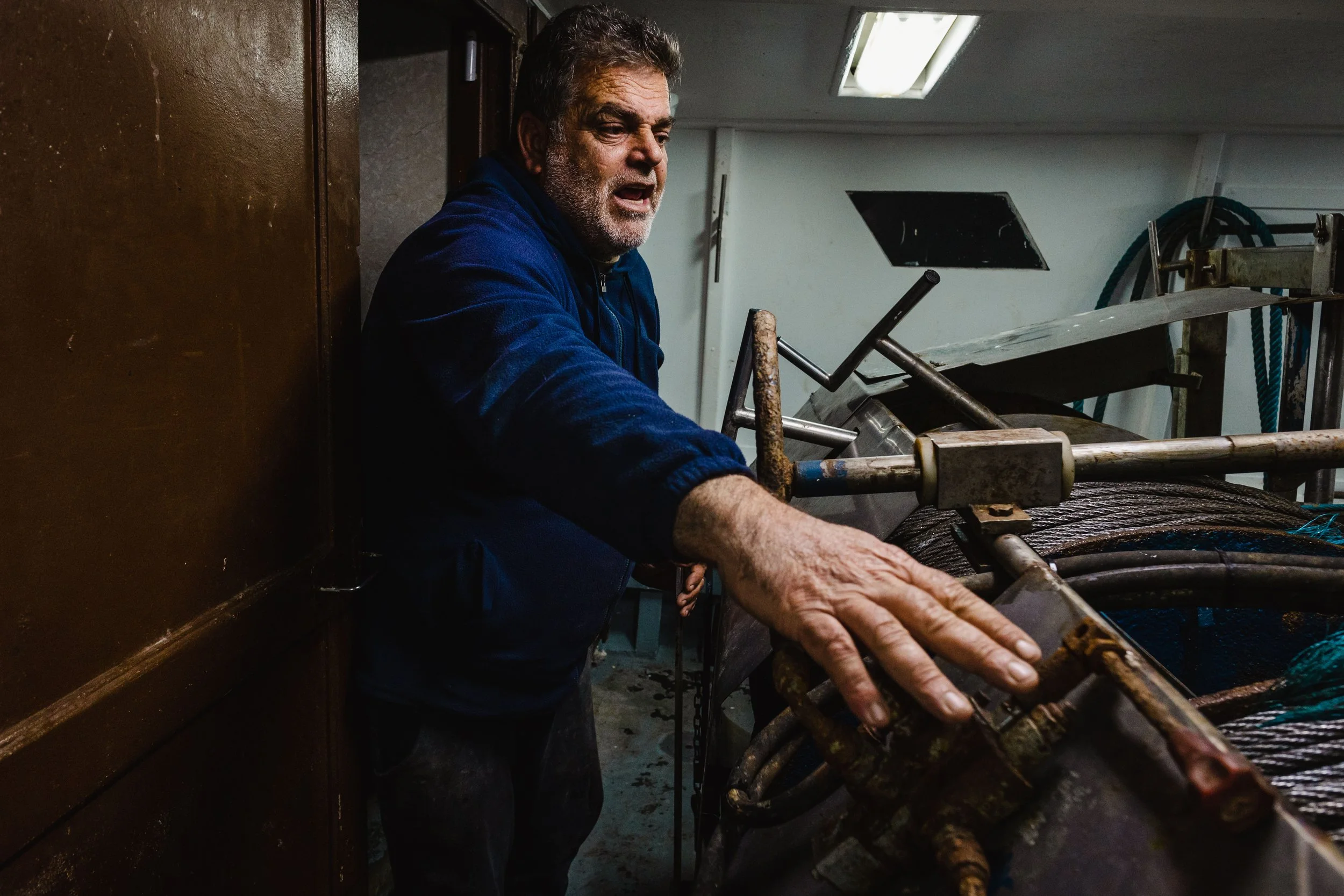
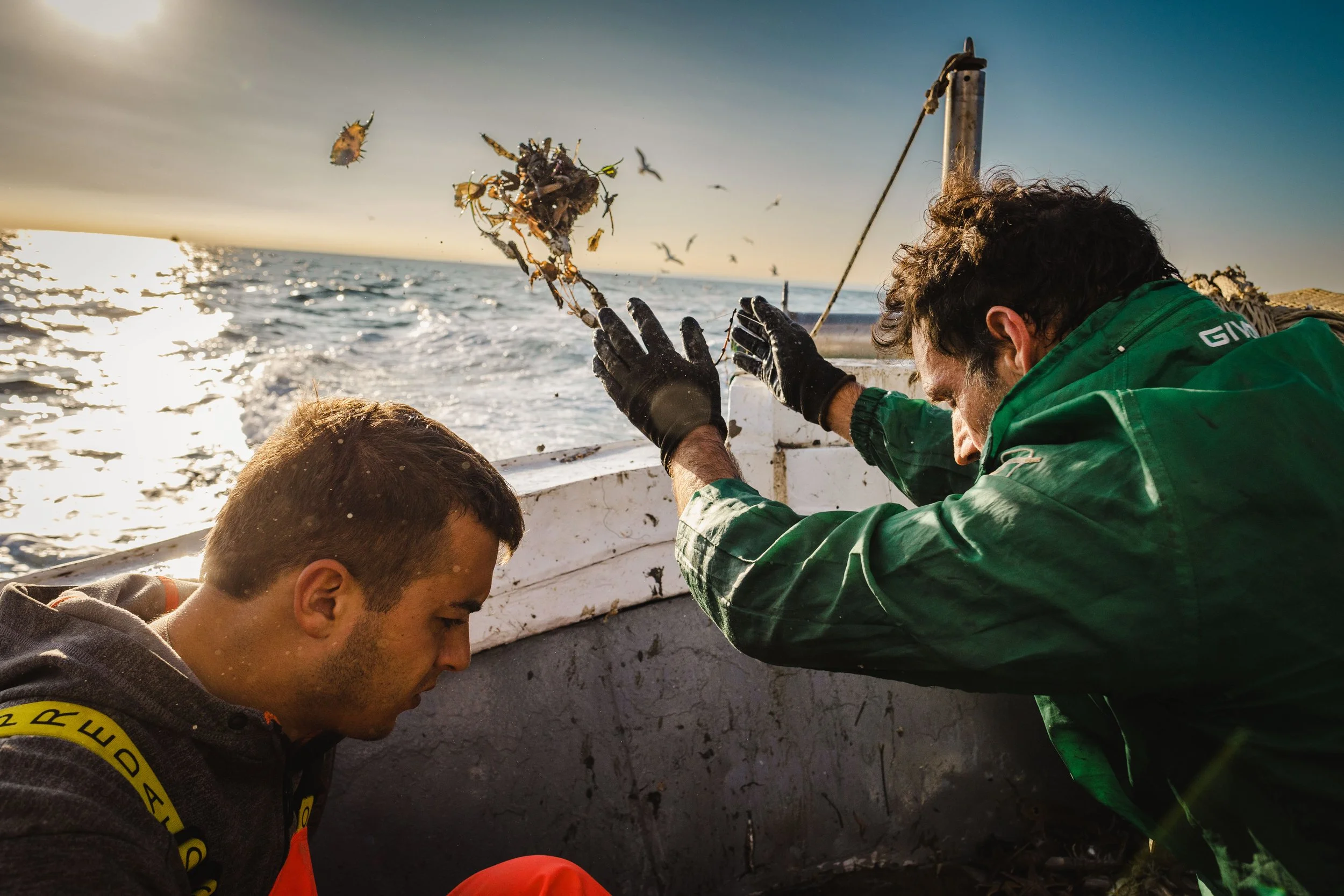
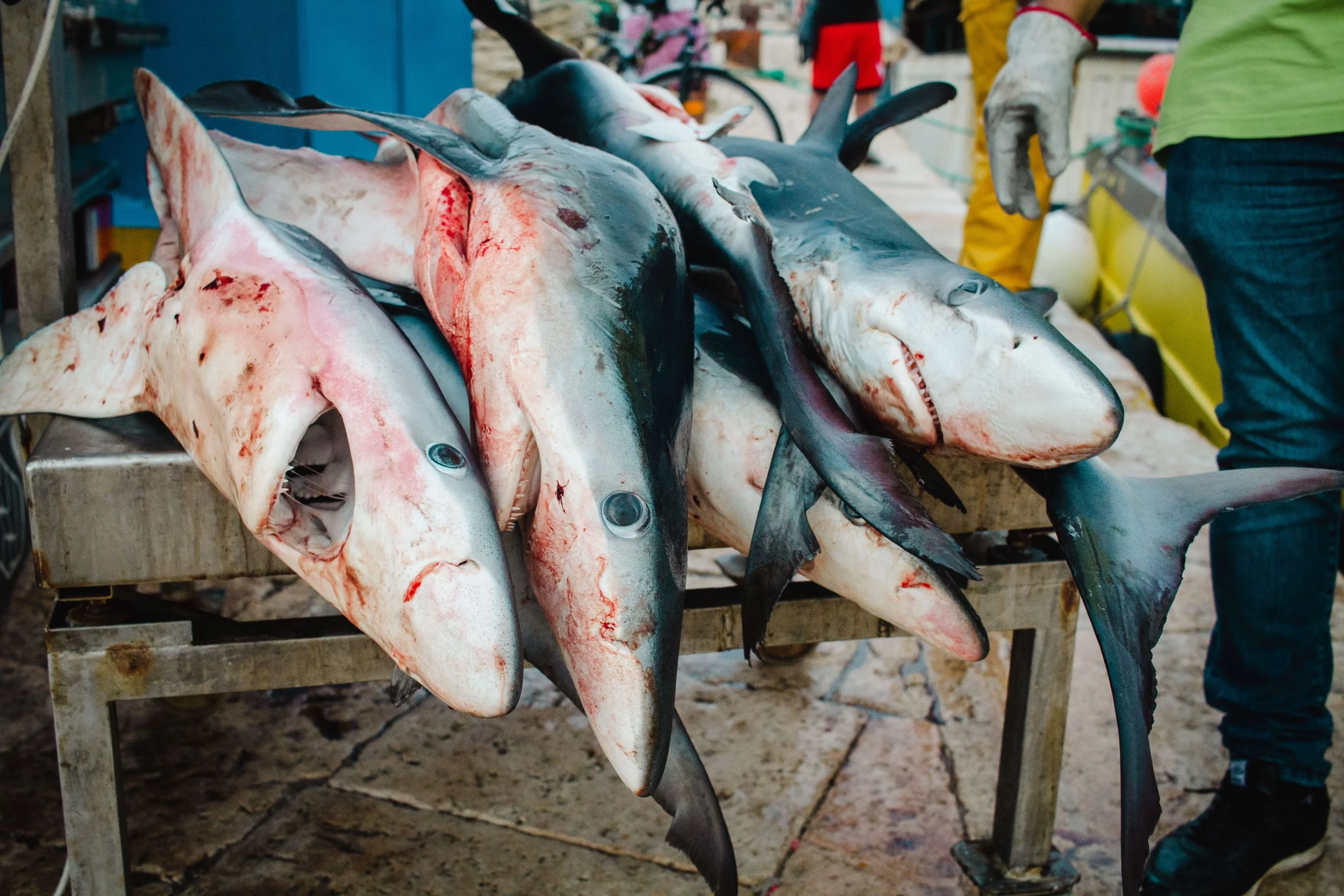
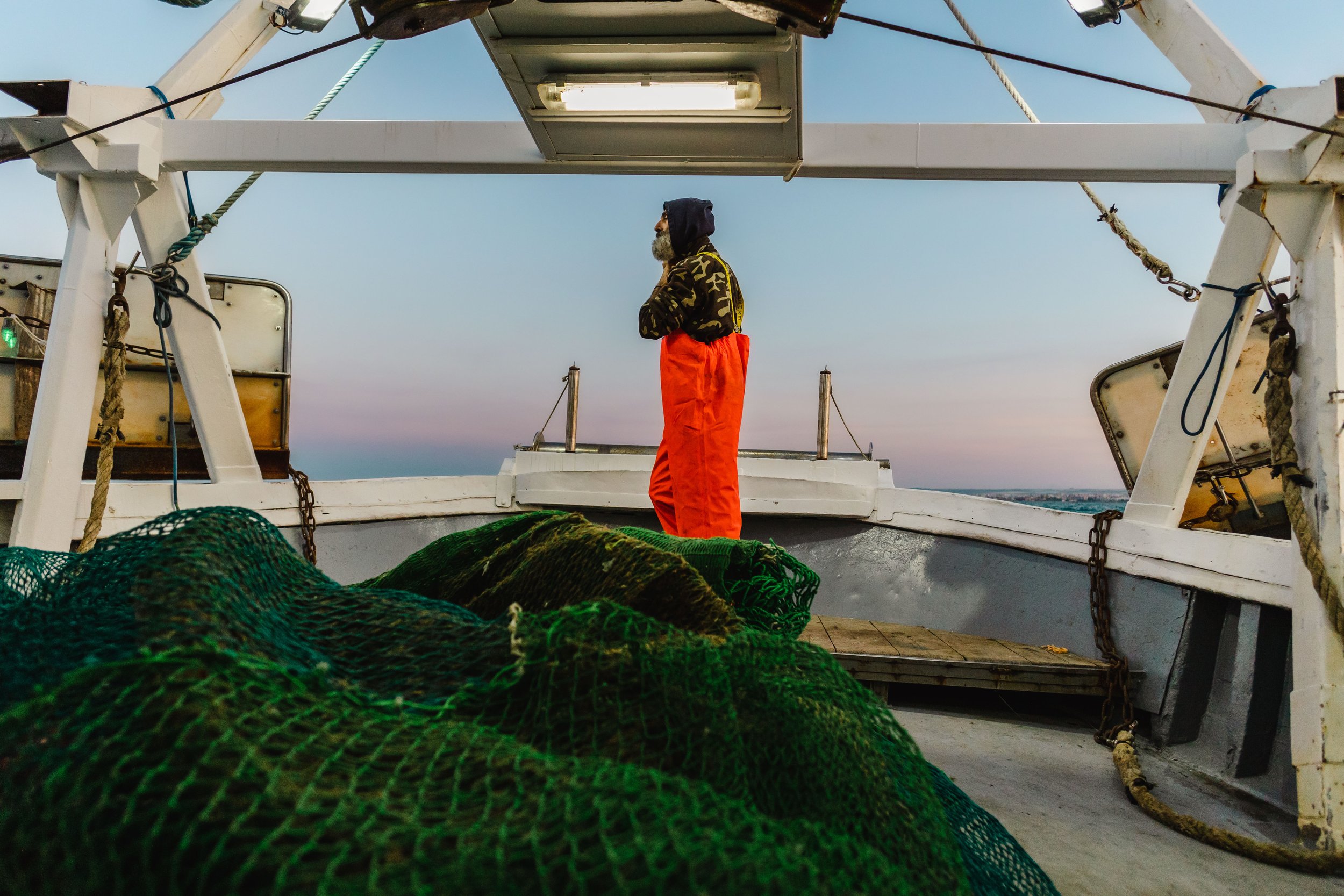
At sea, the crew deploys the nets at dawn, carefully handling steel cables and releasing the trawl doors that keep the nets open underwater. The catch is retrieved, washed, and sorted by species and size, while unwanted material is discarded. During brief pauses, the crew observes other boats and circling gulls, reflecting the rhythm and social dynamics of life on the sea.
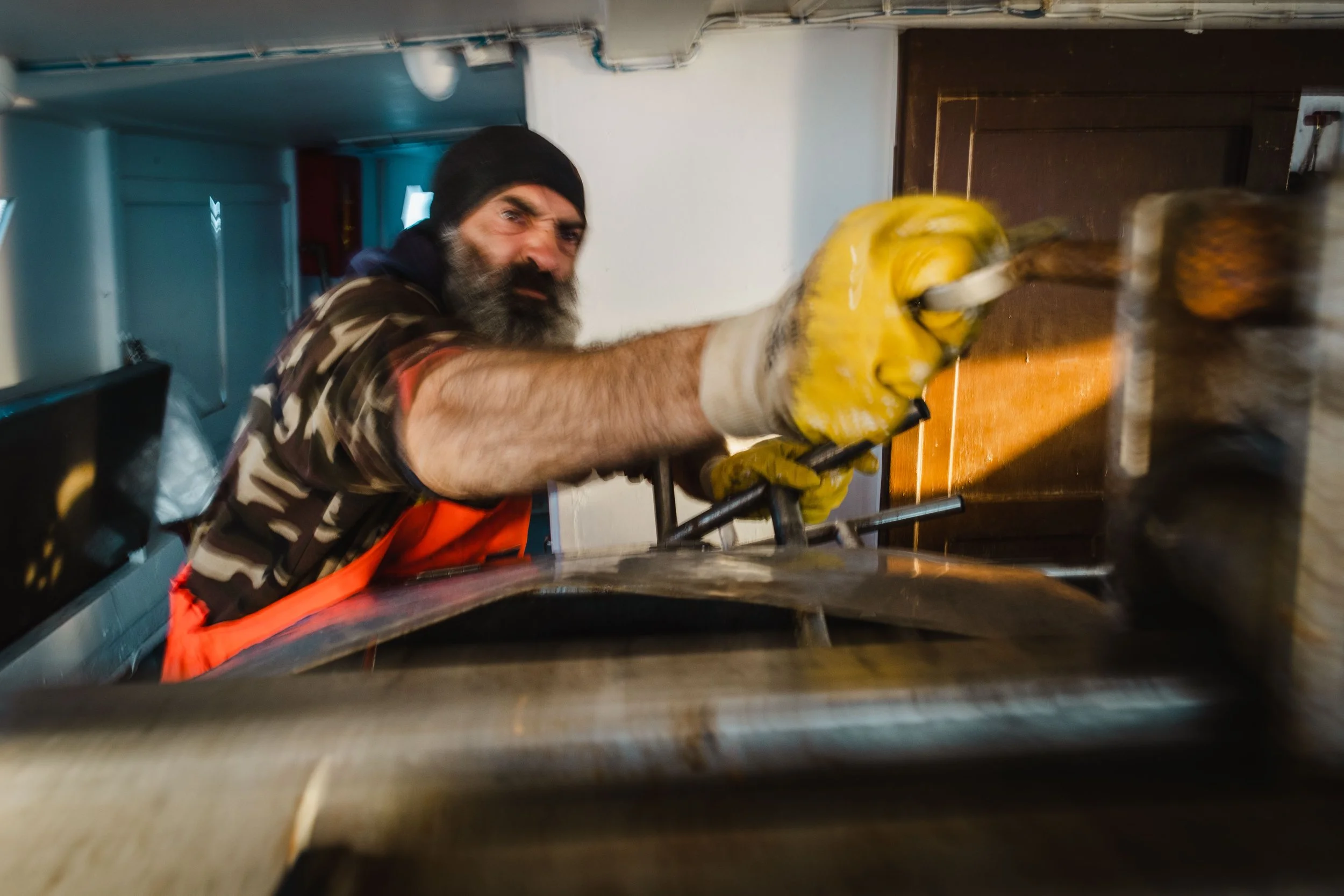
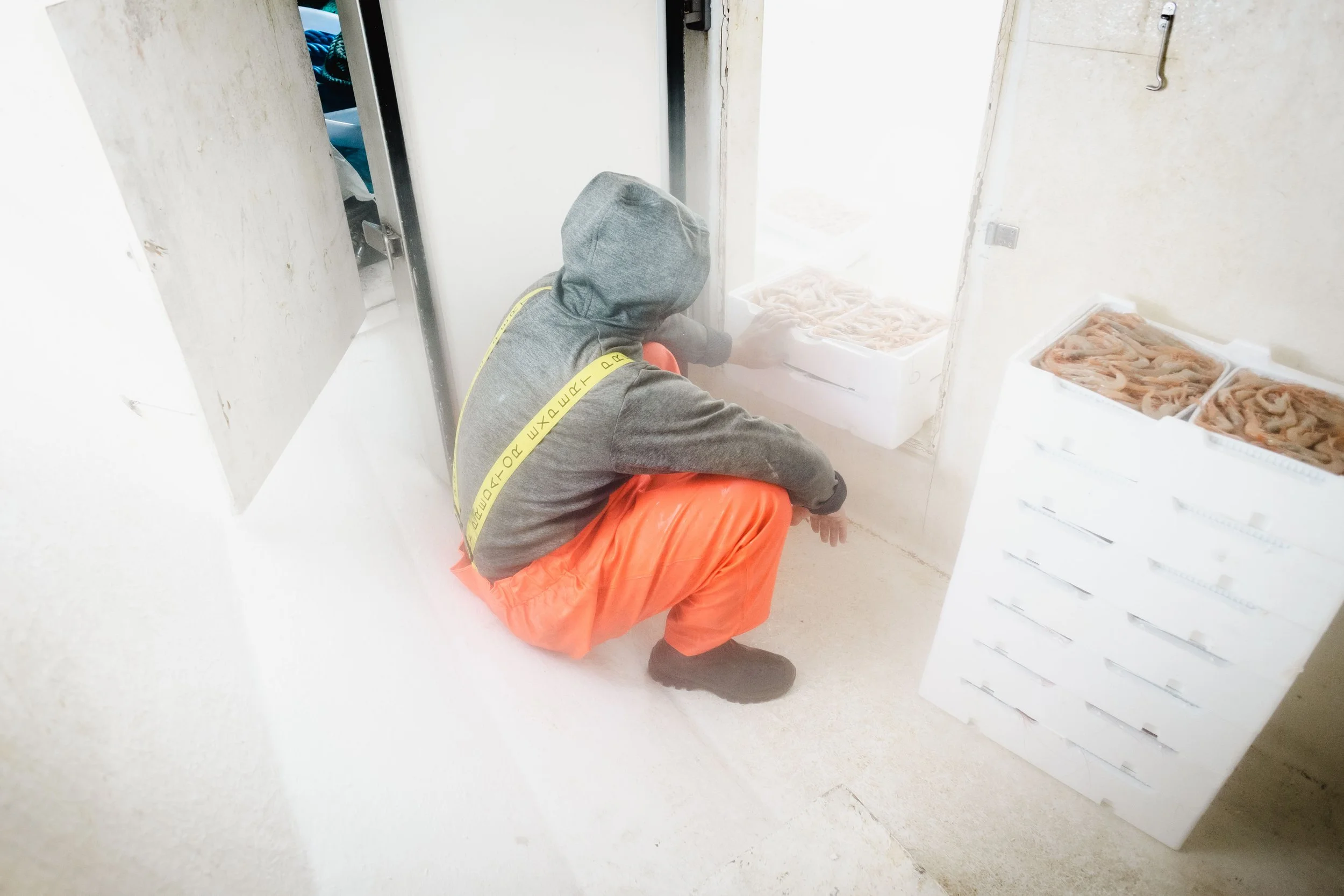
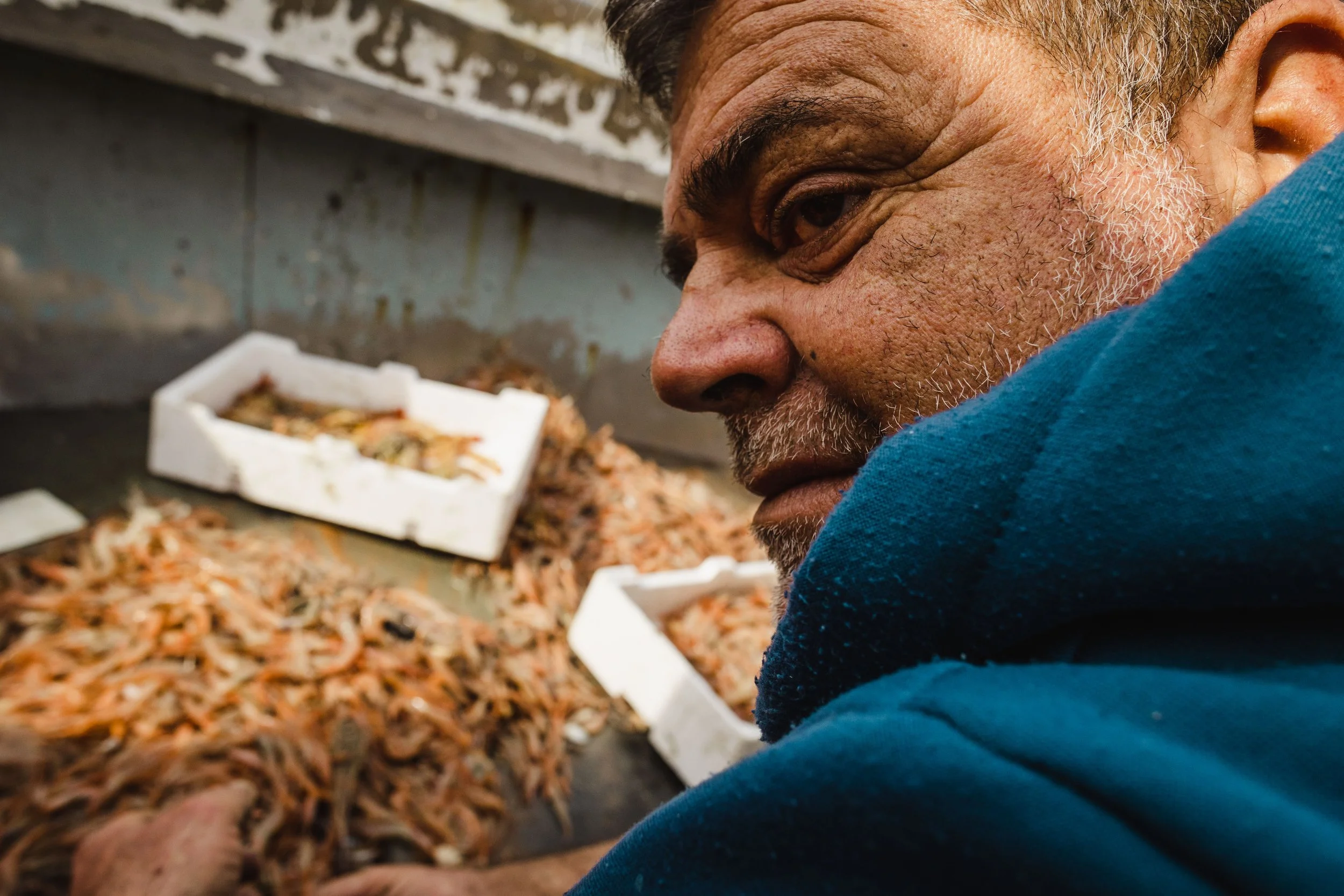
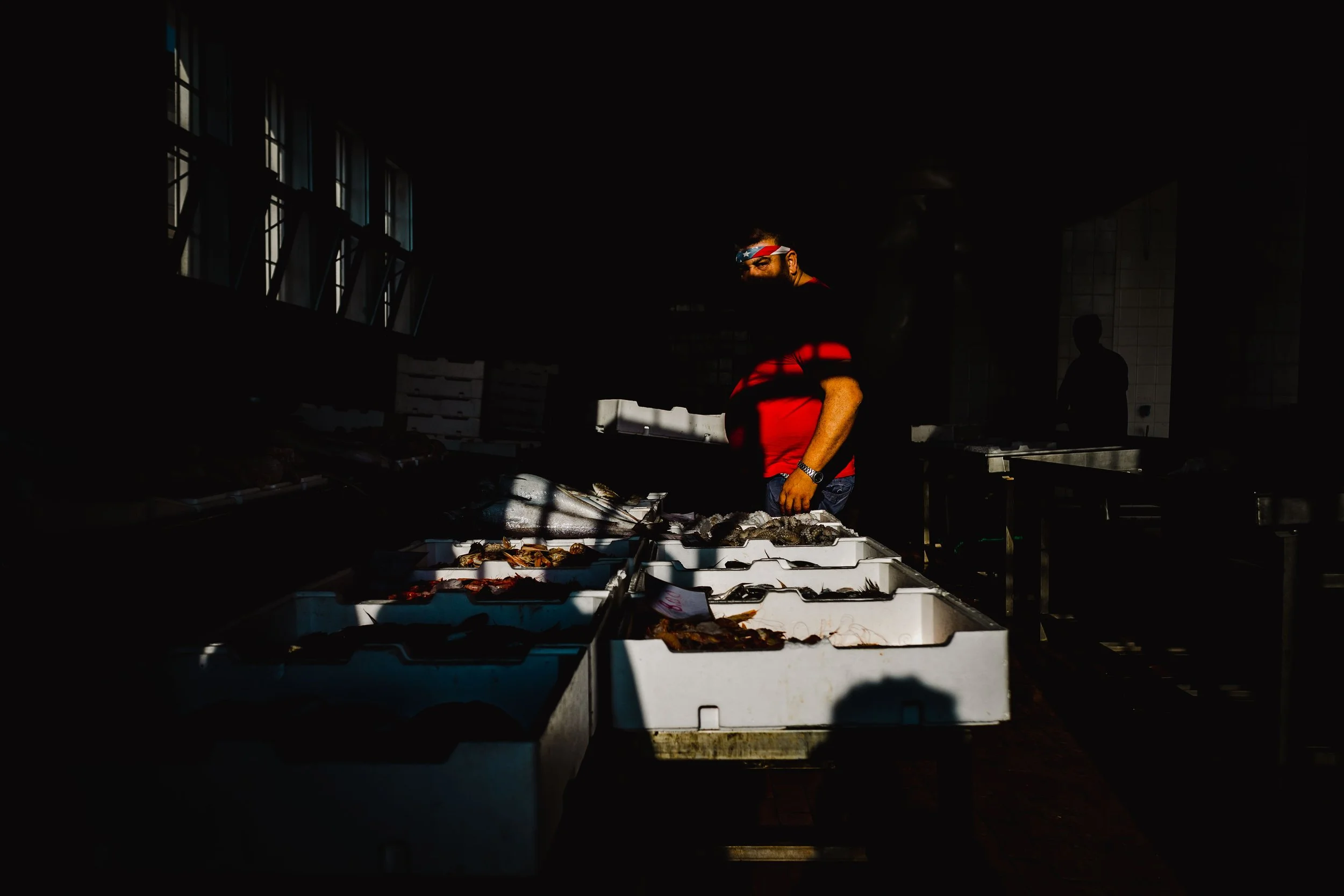
Once back on shore, the catch is placed in specialised crates and immediately transferred to the blast chiller to preserve freshness. Fishmongers sell the seafood at the market, providing the community with daily catches. The daily life of Mola di Bari, both at sea and on land, reveals a delicate ecosystem of labour, knowledge, and tradition.
Beyond fishing as a livelihood, this reportage explores a disappearing cultural heritage. The fishermen depicted here carry forward knowledge, gestures, and values passed down through generations, standing as witnesses to the end of an era. This project is part of a broader investigation into the social and cultural transformation of Mola di Bari over the last twenty years. Through these images, I aim to preserve memory and honour a vanishing world before it disappears entirely.
You spent extended time with the fishermen to build trust and access their world. Can you share a specific moment when you felt they truly accepted you as part of their daily routine? What changed in how they acted around your camera?
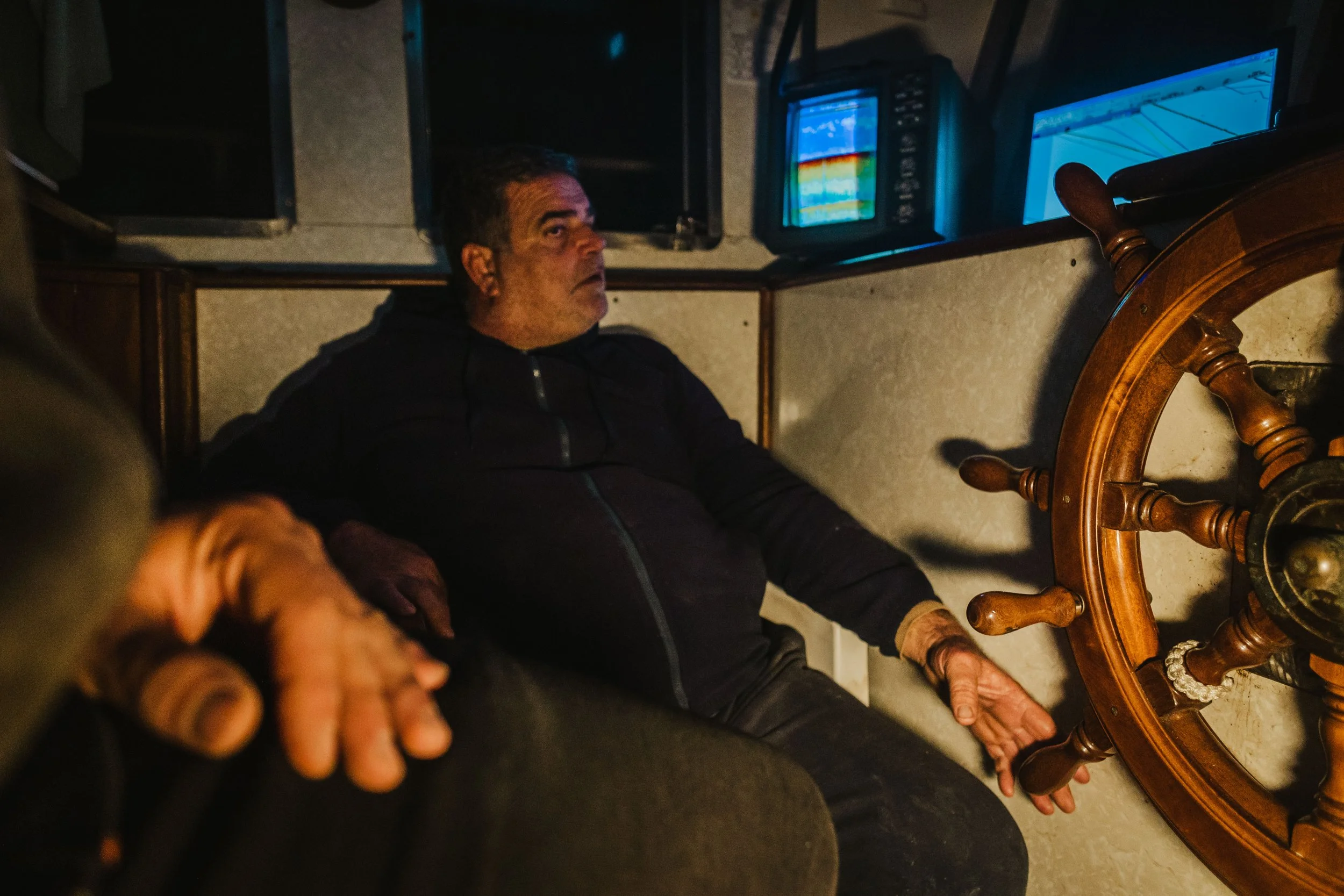
It took me two years before I was finally able to go aboard the fishing boat to photograph how they work. For them, the boat represents more their home than their workplace, and it remains inviolable to outsiders. Being allowed on board as an external person was extremely difficult, even though the boat’s engineer was a childhood friend of mine. When we finally set the day I could join them, I was extremely happy because I knew I could complete my reportage with the images I was still missing. I stayed on board for two and a half days. On the first day I felt terrible because I suffered from severe seasickness, even though I had been on many boats before. They told me it would be different, and it was. I had to lie down every twenty minutes. From the second day on, I felt better, even though I was still a bit sick, but it was manageable. At a certain point I simply became invisible. Once they got used to my presence, I was finally able to photograph the true reality of their work and their behaviour.
You mention the fishermen carry forward knowledge and skills passed down through generations. What surprised you most about their traditional techniques? Are younger people in Mola di Bari still learning these methods?
I am referring in particular to the mending of the nets. With bottom trawling, the nets drag along the seabed. Sometimes they catch objects, human bodies, parts of human bodies, bombs, stones, or anything else. This damages the nets, which then have to be repaired back in port, or even directly at sea if the net is damaged before the end of the hauls that still need to be completed.
The project explores a fishing community facing economic pressures and environmental changes. How do the fishermen themselves talk about the future of their profession? Do they believe the next generation will continue this way of life?
They say that this profession will soon disappear. Partly because it is extremely hard work, and today no one wants to do it anymore. At the same time, they also consider the Italian and European governments responsible, as regulations are becoming increasingly restrictive, with fishing bans and stricter rules, for example, the continuous reduction of net mesh size. Until some time ago, they were allowed to fish with smaller mesh nets, which are now forbidden. In short, on one side this job is disappearing because it is too demanding, on the other it is disappearing because it no longer provides the income it once did, and for many people the effort is no longer worth the return.
Your images show both the hard physical work and the quiet moments of reflection among the crews. How did you balance documenting the labour of fishing with capturing the emotional and social sides of their lives?
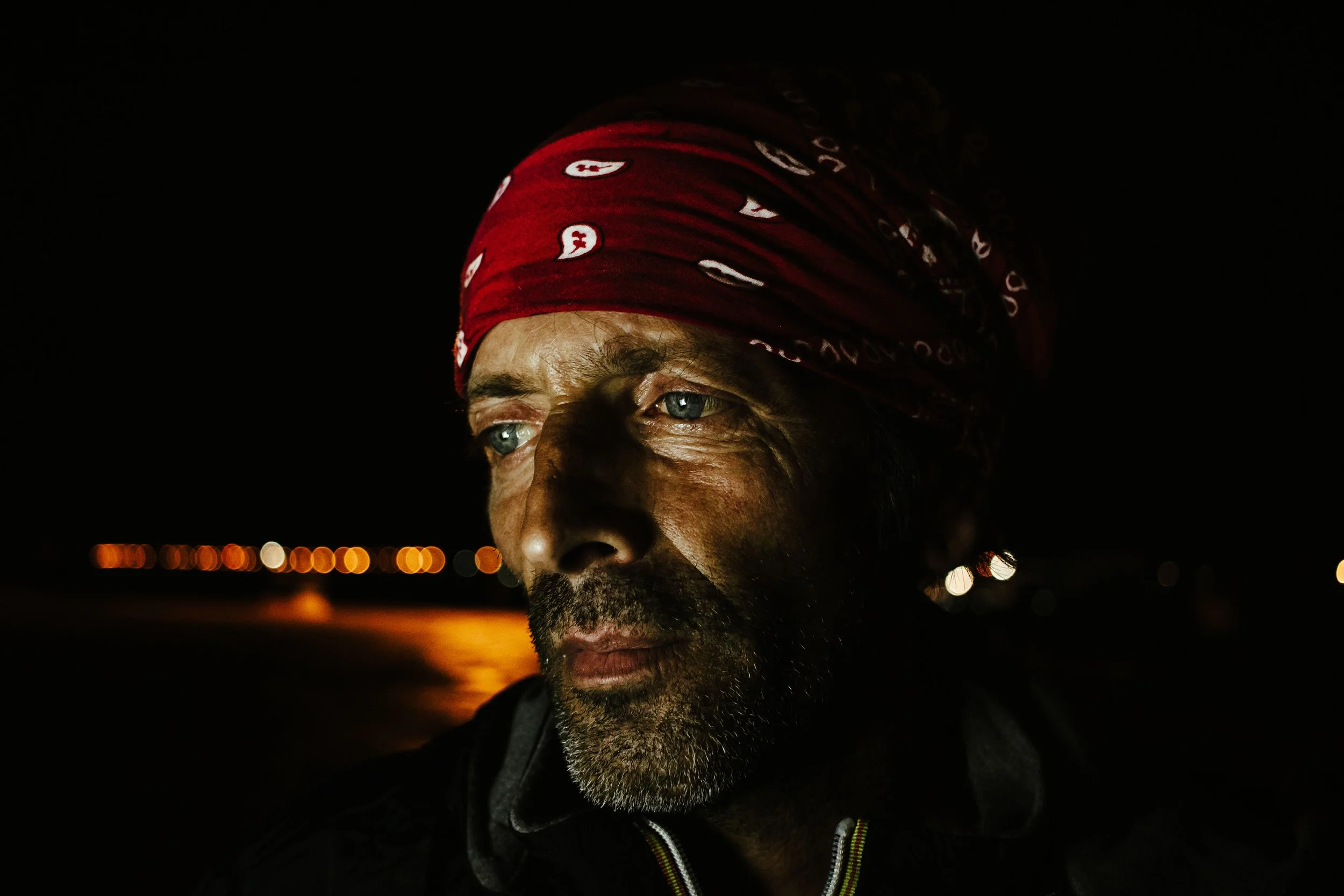
I love photographing the soul of people. It may sound banal, but the true skill of a photographer lies in entering into empathy with their subjects and trying to capture those moments when emotion is pure and clearly visible in their gestures and on their faces. I love capturing subtleties, and I committed myself fully to this. Simply telling a story in sequence is not enough, it would feel cold. Life has to be visible on their faces.
You describe this work as part of a broader investigation into the transformation of Mola di Bari over twenty years. Beyond fishing, what other changes have you witnessed in the town during your project? How does the disappearing fishing culture connect to these larger shifts?
I have always photographed my hometown, even though I spent a long time in different countries for education, work, and other reasons. Every time I returned, I perceived the changes more strongly because I experienced them in fragments rather than gradually. The biggest transformations are not related only to fishing. The entire world of craftsmanship and textiles has completely disappeared, nothing remains. What struck me most is that everything connected to human manual labour is disappearing, or rather is being made to disappear, through a shift in the social paradigm from “doing” to “not doing.” This has led, and will continue to lead, to consequences in every aspect of people’s lives and society, both internally and externally. It is a blow to the heart, and unfortunately it is happening everywhere in Italy and seems unstoppable.


Michael Behlen photographed water that would not stay still. For three years, he returned to Millerton Lake in California’s Central Valley, making all the photographs during storms, when the reservoir became harder to read. Picture Story