Welcome to this edition of [book spotlight]. Today, we uncover the layers of 'The Cities We Need,' by Gabrielle Bendiner-Viani (published by The MIT Press). We'd love to read your comments below about these insights and ideas behind the artist's work.
Everyday places quietly hold our neighborhoods together.
They are the donut shop, the barber, the church basement, the small park bench. If you live in a city, care about community, or photograph street life, this is for you. In this interview, Gabrielle Bendiner-Viani explains why she calls this work “placework,” and why it matters now. You will leave with a clearer way to notice, document, and protect the places you usually walk past.
Most people think cities are shaped by big projects.
But daily life is shaped by small routines and the places that make those routines possible. Gabrielle spent years collecting “guided tours” from residents, following their real paths and listening to what each stop means. This gives you practical ideas for your own walking practice, interviewing approach, and long-term project focus. The promise is simple: after this, you will see your neighborhood differently, and you will know what to photograph next.
The Book
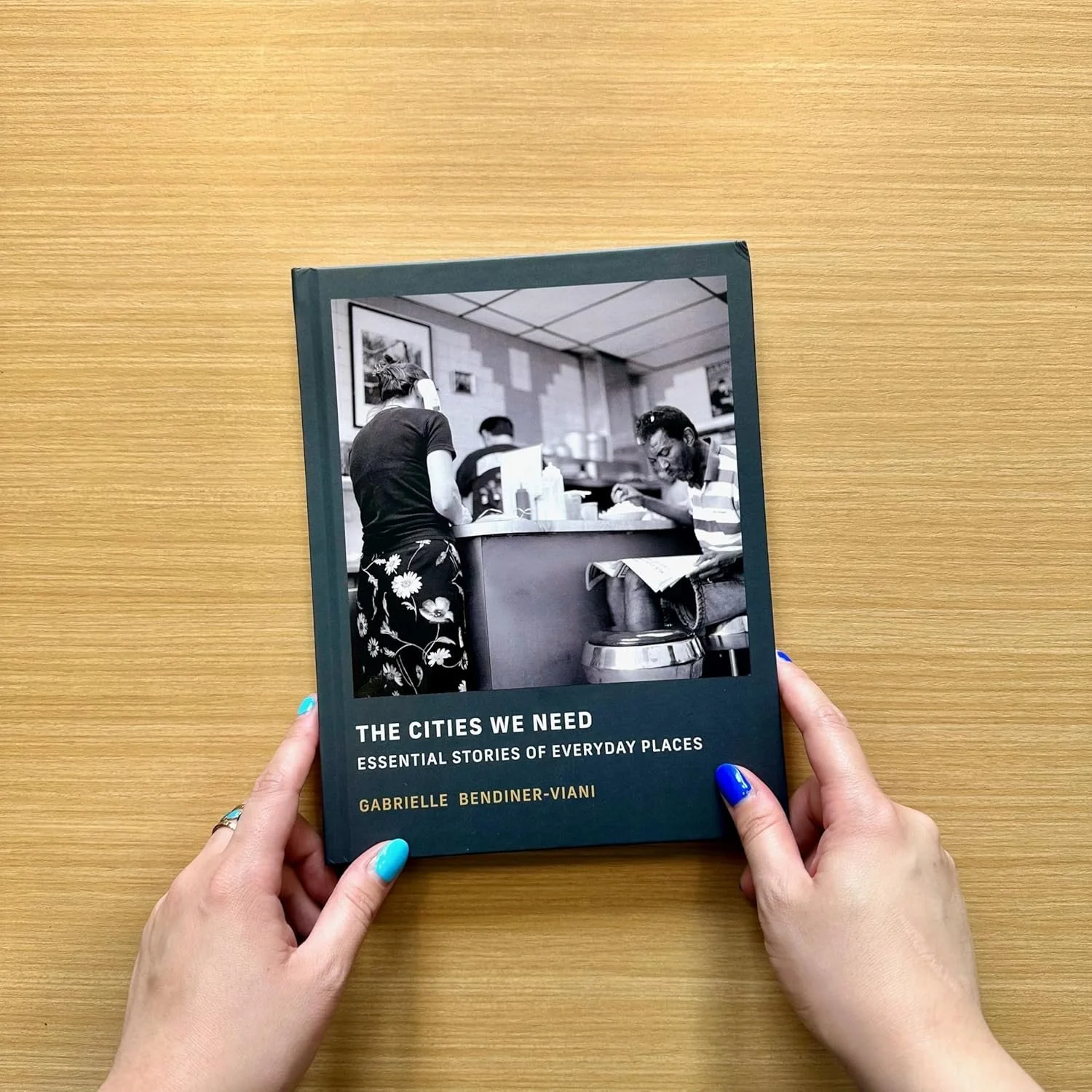
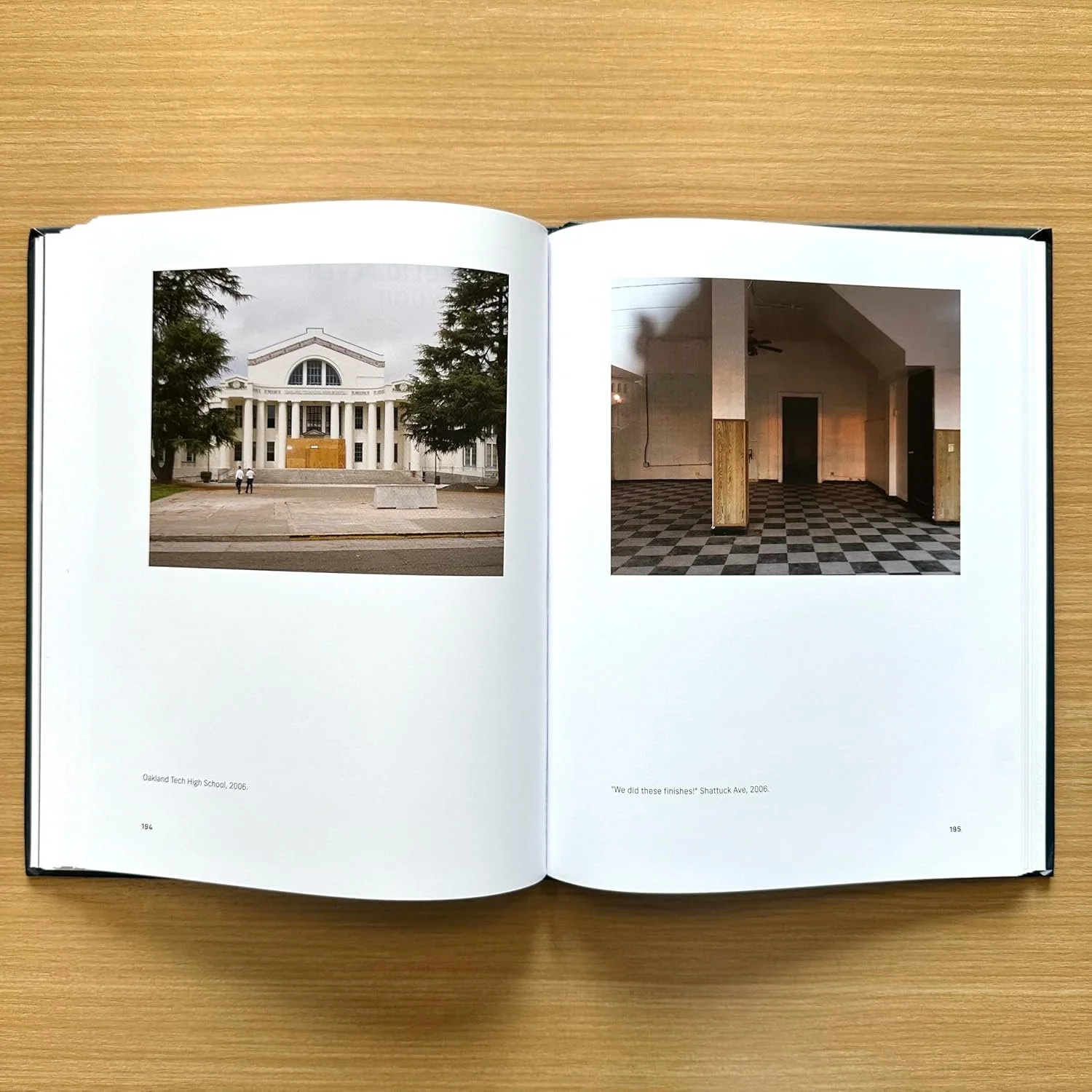
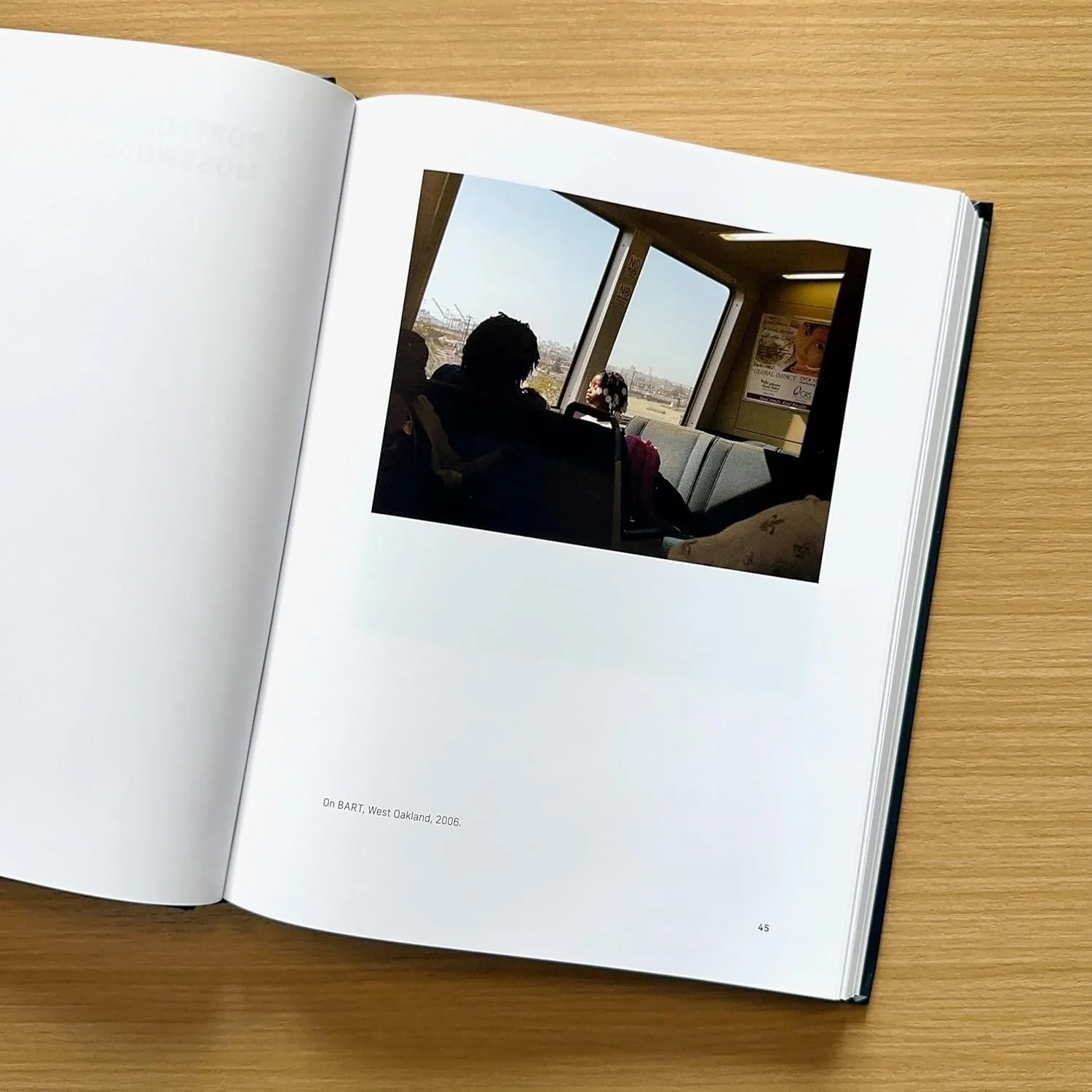
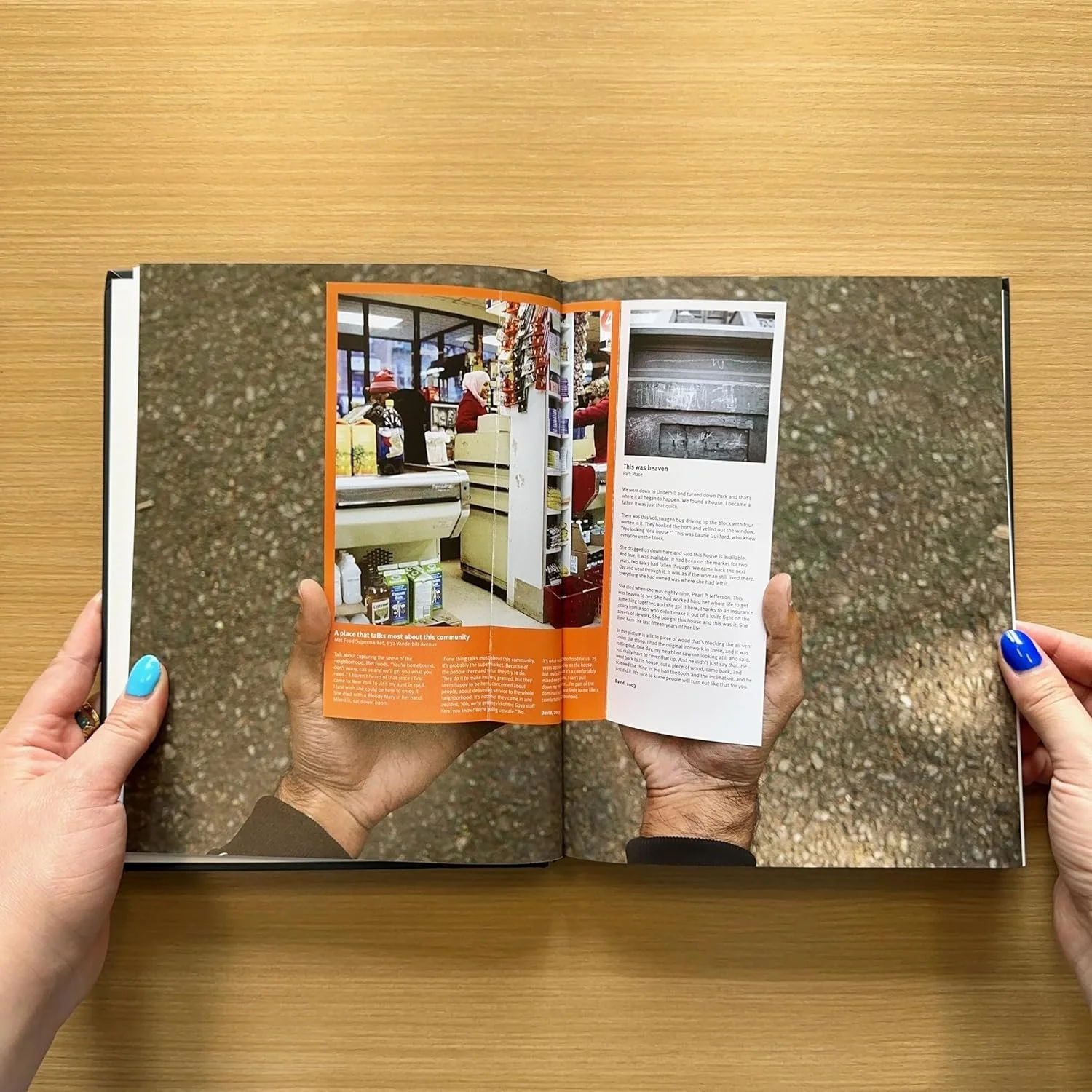
The Cities We Need: Essential Stories of Everyday Places by Gabrielle Bendiner-Viani (The MIT Press) blends photographs and writing shaped by resident-led “guided tours” through Brooklyn and Oakland. The book introduces her idea of “placework,” the quiet social labor done by everyday spaces like diners, churches, small shops, and street corners that helps people feel belonging and keeps communities functioning. It also looks at what happens when these places are threatened by displacement, development pressure, and the aftershocks of recent years. (The MIT Press, Amazon)
Project Genesis: What inspired you to spend two decades photographing everyday places like diners and donut shops in Brooklyn and Oakland?
For many years, I have been asking people to take me on tours of their neighborhoods in London, Buenos Aires, New York’s Lower East Side, rural Pennsylvania, Los Angeles, and of course, Oakland, and Brooklyn. This is because I've always been interested in what I don’t know, what I can’t see. I wanted to photograph neighborhoods, but I wanted to understand the perspective of people who lived in them. I also knew how strongly I felt about my own city, what I thought was important, and how upset it made me when people got it wrong. I knew the extractive, colonial uses to which both anthropology and photography had been put, and I wanted to do something more than to categorize or look from the outside.
The places people have taken me to in their everyday neighborhoods are often banal, but the stories they tell about them are transcendent. I wanted to figure out how to photograph these ordinary, not to say boring, places, without nostalgia, while valuing and honoring them, a real visual challenge.
Everyday places and their stories have never ceased to interest and surprise me, keeping me at this work for so long. And what these places have revealed about our senses of self, our senses of community, our ability to be part of a larger functional society seems truly essential.
Guided Tours: How did you find residents willing to take you on neighborhood tours, and what did you learn from following their chosen routes?
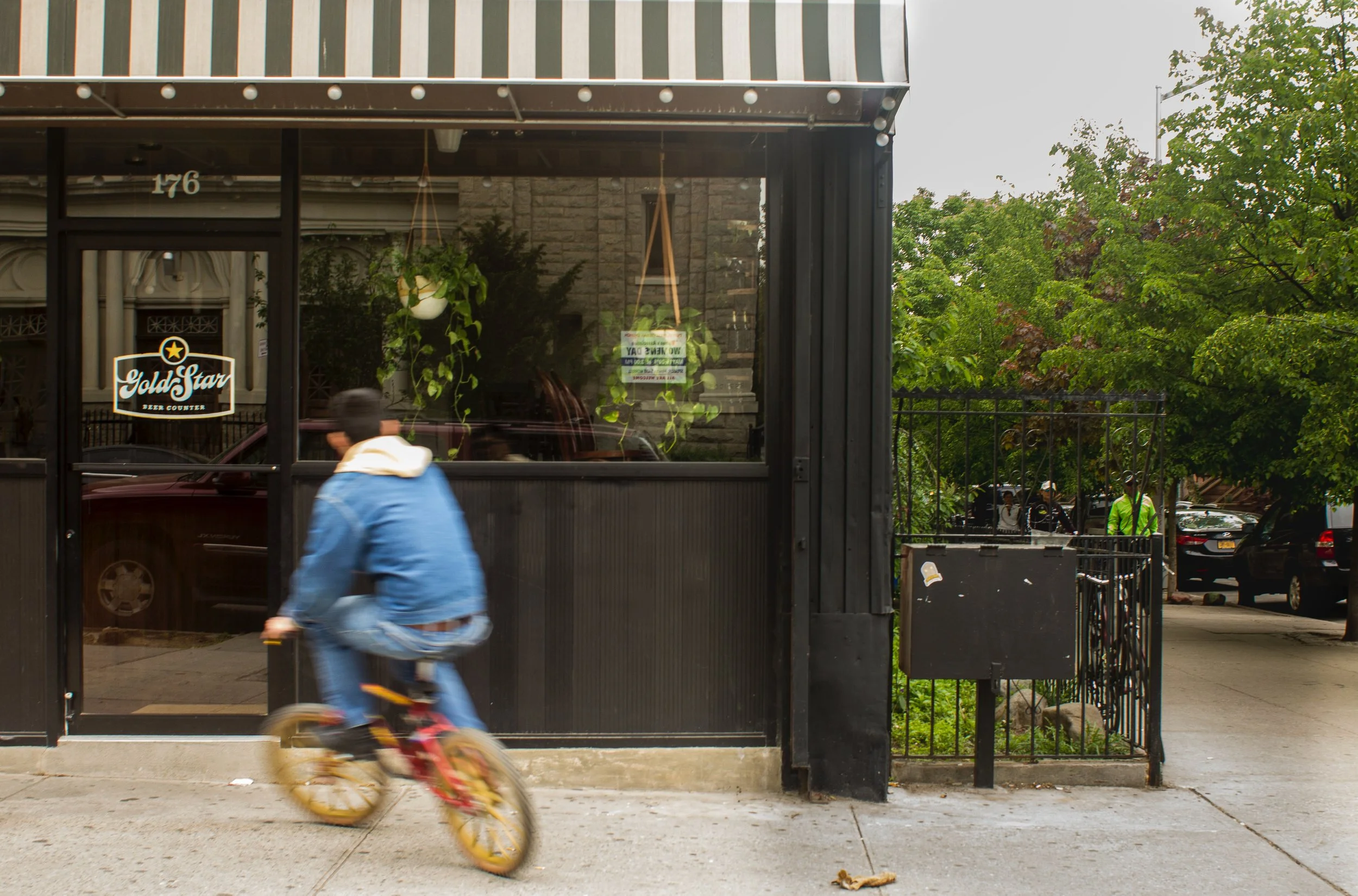
The Cities We Need grows from the tours that residents gave me in Mosswood, a neighborhood in Oakland, California and Prospect Heights, a neighborhood in Brooklyn, New York. I lived in each of these neighborhoods, and I asked my neighbors for their tours. They then suggested others who might be interested. I asked people at the local organizations and businesses I frequented, at my diner and my supermarket. I reached out to members of the community who I didn't think were yet represented in the group of people who’d taken me on tours in each neighborhood. For example, if I realized no one who’d given me a tour was part of a local church, or local block organization, I’d figure out how to get in touch and ask whether a member of their community would be interested.
Some people I asked said no, but most, even though they’d never done anything like this, said yes. And when someone said, OK, but it’ll be short, that’s when I knew to plan on being together all afternoon. We all have so much to share about our everyday lives, and so few places to share it. Often when people got going, they realized they didn’t want to stop.
I never set parameters for where we should go, so each person’s tour, and their perceptions of the boundaries of “their neighborhood" were different. And, because I’m interested in stories told while moving through place, new stories would come up as we walked or drove, passed by places of significance, or ran into people.
Photographic Approach: What camera techniques did you use to capture the feeling of belonging, and what you call placework, that people experience in these ordinary places?
I wanted people to be able to see themselves inside the pictures. I spent a lot of time thinking about how to make photographs that respected and made space for the stories that people had told me about them. Sometimes I photographed spaces with people in them, at other times in photographed places without people, so the viewer could project themselves into that space, or could imagine what had just passed out of the frame.
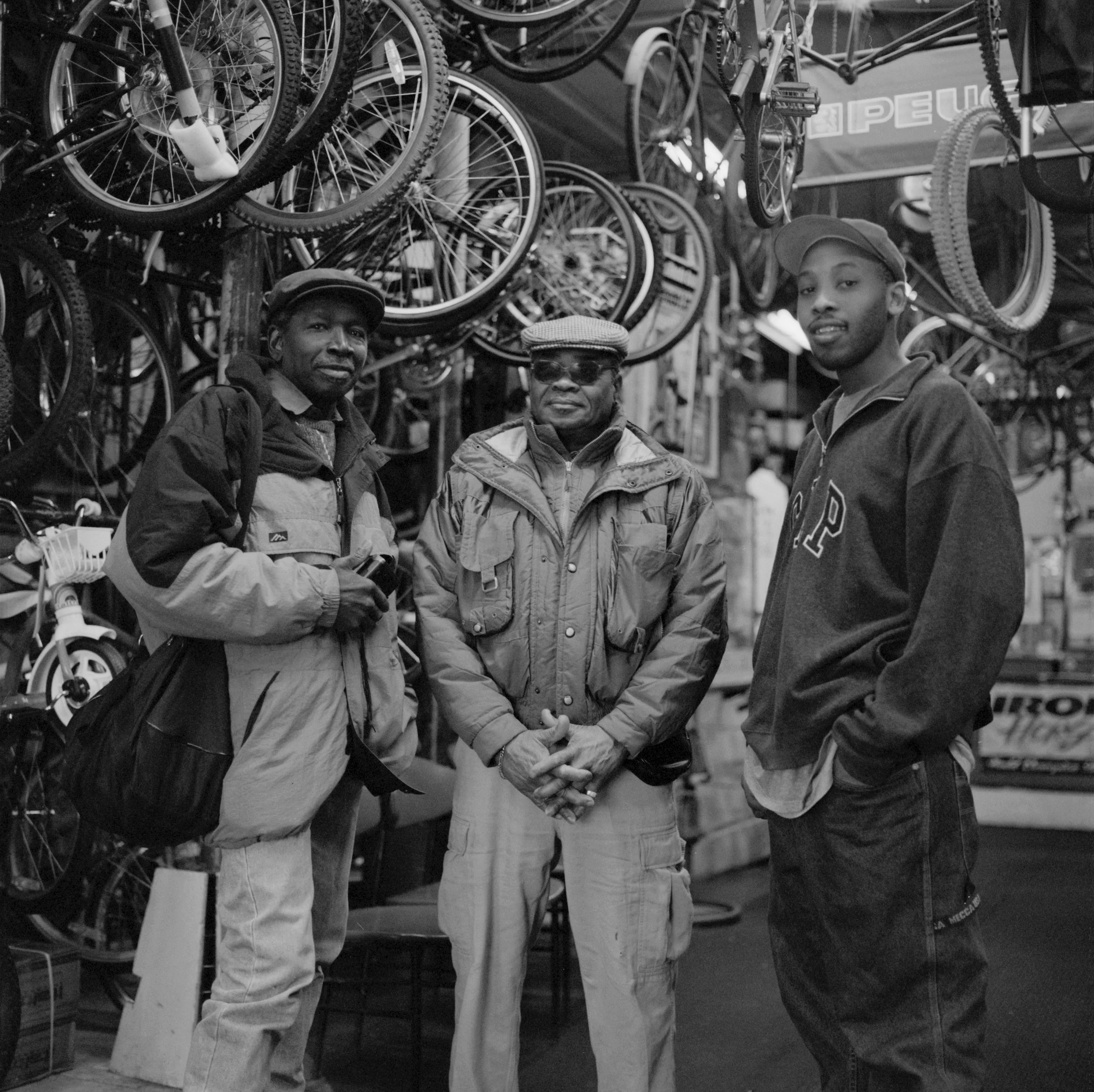
When making images of all my tour guides’ places, I tried to be with the place, not just in it – a great phrase that Lucy Lippard uses. I sometimes photographed on our tours, but more of the images were made when I went back to each person’s places on my own, when I could focus and move as slowly as I liked. As I photographed, I thought of the stories I’d been told, and about the bodies that had moved through these spaces.
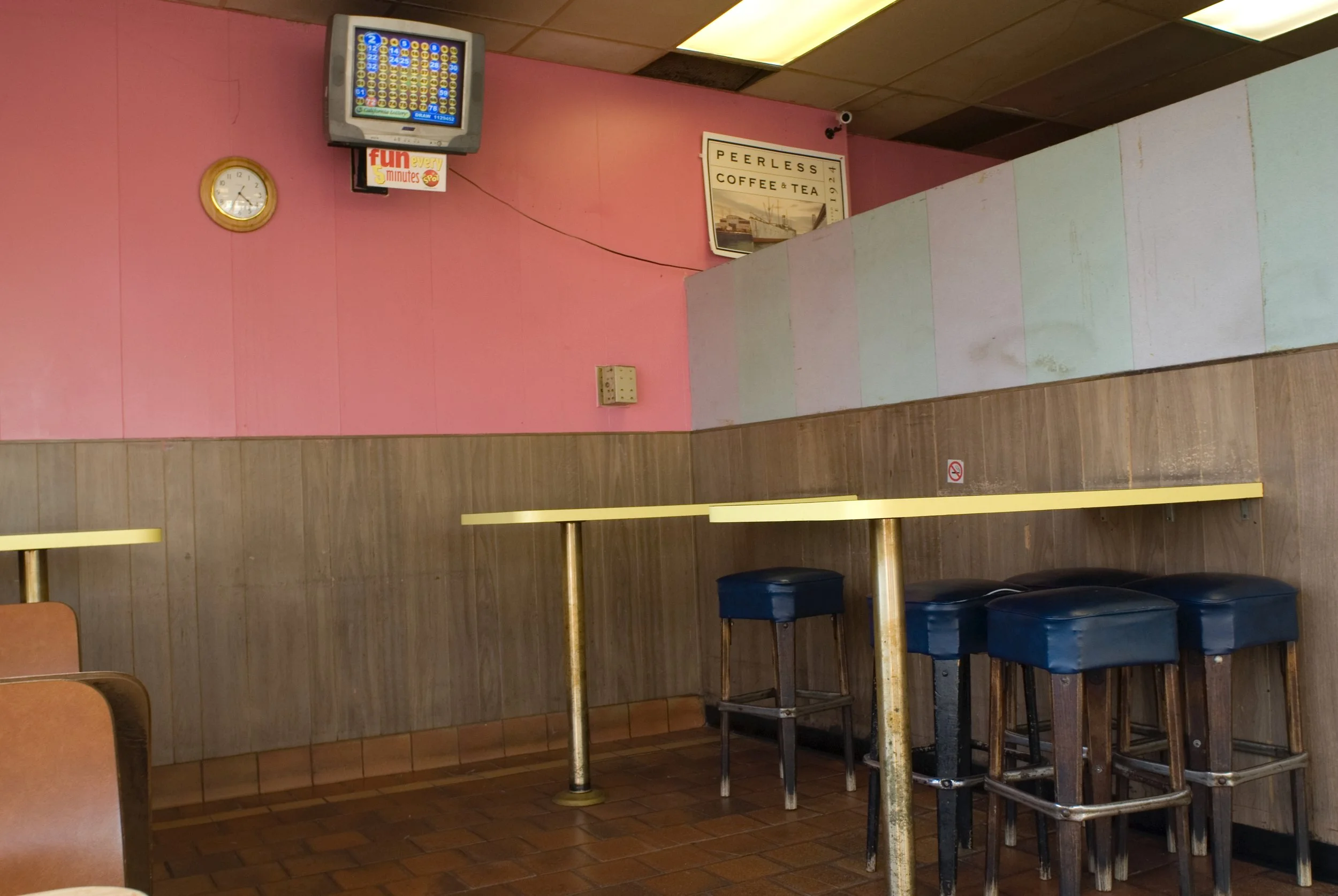
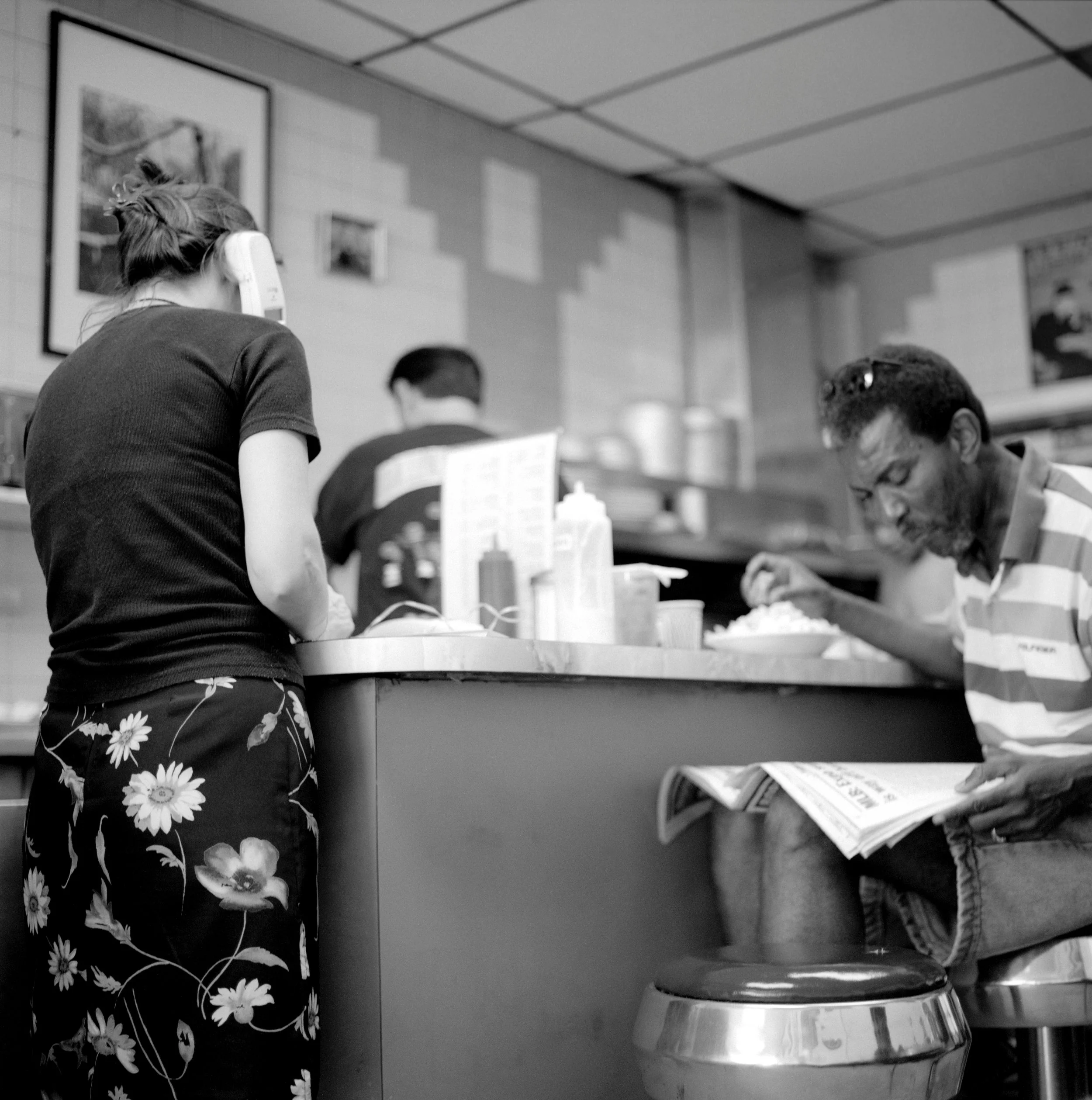
I spent time in the places, I sat in the booths, I felt how these spaces felt in my body. When I made the book’s cover picture – of a diner called ‘George’s Donuts’ – I photographed the life of the counter, from the perspective of a customer seated at one of the tables. As part of this embodied way of photographing, I often used a medium format film camera held at waist level, or sat on a table, rather than having the camera in front of my face.
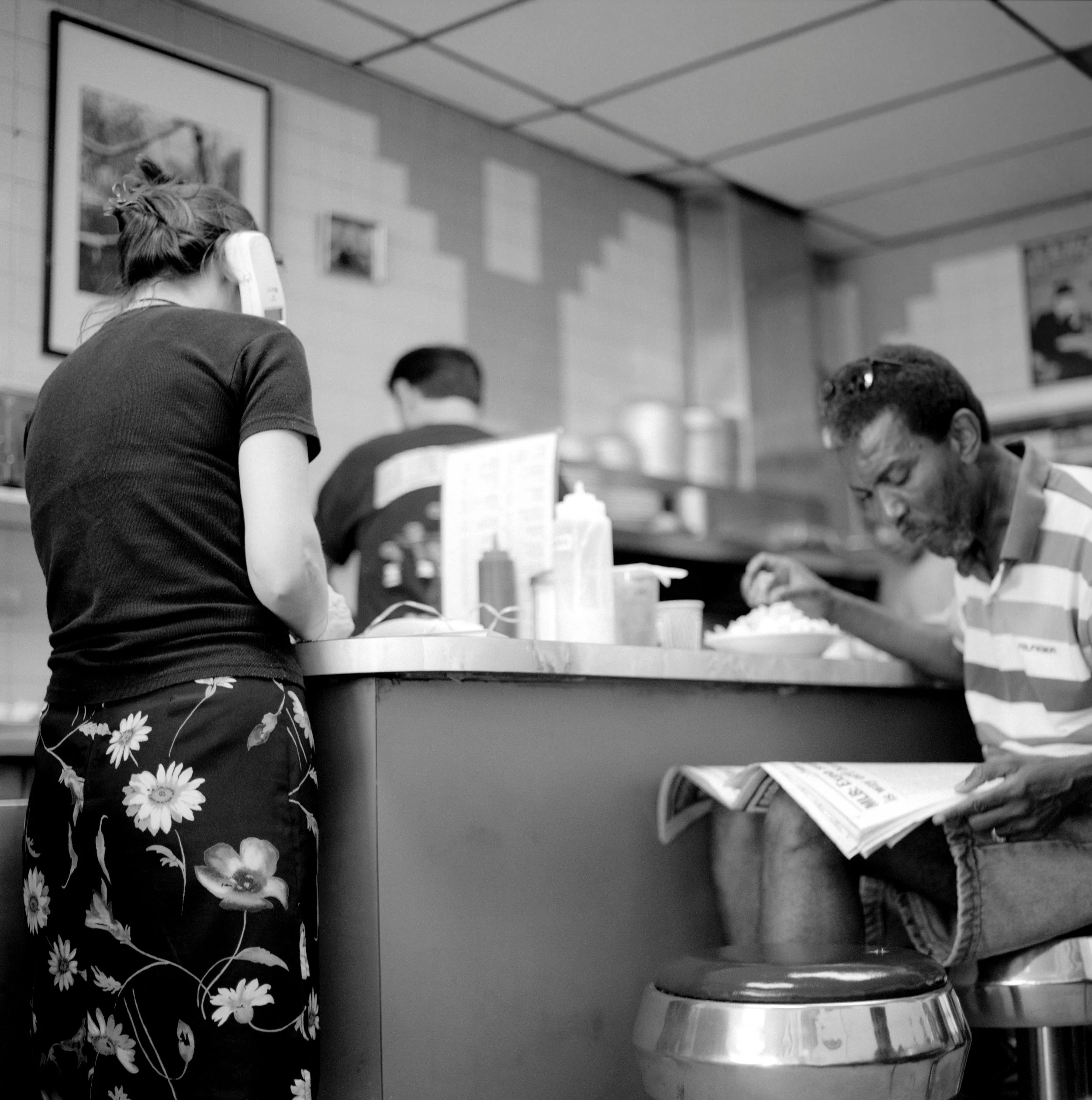
Visual vs Written: Your book combines photographs with prose - how do you decide when an image tells the story better than words?
I am both a writer and a photographer and I also have a great deal of respect for the words of the people who took me on their tours. In the book, I wanted to make space for each of these three. I considered the words as but one entry point for a reader; the photographs are just as much a way to dive in. Some people feel welcomed by words, others by pictures. I designed the book so that you could read the words and images together, holding equal weight - the words not captioning the images, the images not illustrating the words. But I also imagined the book as one you could read solely through its eight photographic portfolios, or one you could read through the words alone.
The way that photographs can tell a story differently than words is both part of the book and part of the project. After people took me on their tours, I would return to all the places they’d taken me to, and make photographs of their places. Then, I’d print and bring those photographs back to my tour guides for another interview, using the images as a way to share with them what I’d heard, what I saw in their places. Having their worlds brought back to them in this way created a jolt of a new perspective that helped us talk about the everyday in more depth. People turned the photographs over, sorted and re-sorted them, talked about them, picked the ones they liked, chose the ones they wanted to take home. We talked about which pictures “felt” right – often bringing up all kinds of things we couldn’t talk about when we walked.
You said people would look at the photos of their places and pick which ones to take home. What surprised you most about the photos they chose, and did seeing their choices ever make you look at those places in a new way?
I don't know that I was surprised by which ones they chose to take home, although I loved and was surprised by how excited people were to take them home. Sometimes people treasured photos because they saw something in them that I hadn’t even known was there, which was often enlightening for me. People very often reveled in the fact that their places looked beautiful in the photos, even when they said that those places didn’t always feel beautiful to experience; they loved seeing them cared for that way.
Every conversation over the photographs made me look at the places in a new way. When someone liked a photograph, but said it didn’t feel quite “right”, this often taught me a lot about how people’s bodies moved through space. For example, one person told me that the place they’d shown me had been most important to them in childhood, so the way they pictured it in their mind’s eye was actually from lower down. Sometimes I would rephotograph with these insights in mind. Other photographs spurred people to tell different stories than they had when we walked; sometimes these were darker, sadder, more difficult stories that sitting with the photographs, rather than moving along the street, provided space and slowness, and safety to tell. Every single one of these conversations changed how I saw these particular places – but they also changed how I saw all places.
Gentrification Documentation: What challenges did you face photographing places that were disappearing or changing due to development while you were working on the project?
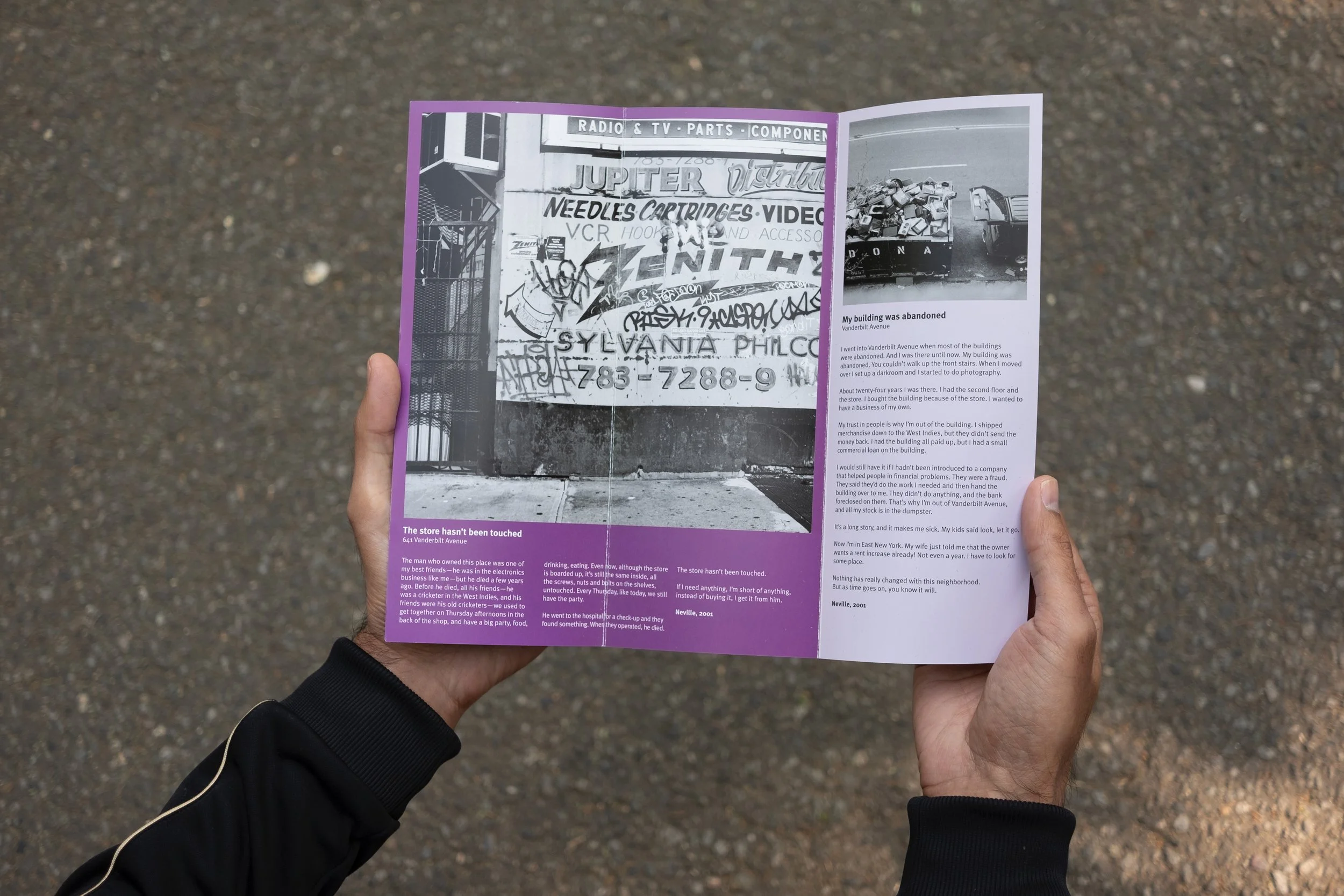
Gentrification became a much bigger part of the project as the years went on. In particular, when I returned to Brooklyn in 2014 after years away, I was shocked by the changes. I realized I could use the collection of photographs I’d made a decade earlier to help people talk about what had been, and still could be, lost. I started the public art and dialogue project, Intersection | Prospect Heights, to bring the photographs from ten years previous into a very changed neighborhood, to spark and make space for conversations about what places mean to people and what’s at stake, as changes were happening in real time. The participatory walks that I created as part of this project used the neighborhood “guidebooks” that I’d made, so we could stand in front of radically changed locations, while looking at images, and reading aloud stories, of them from the not too distant past.
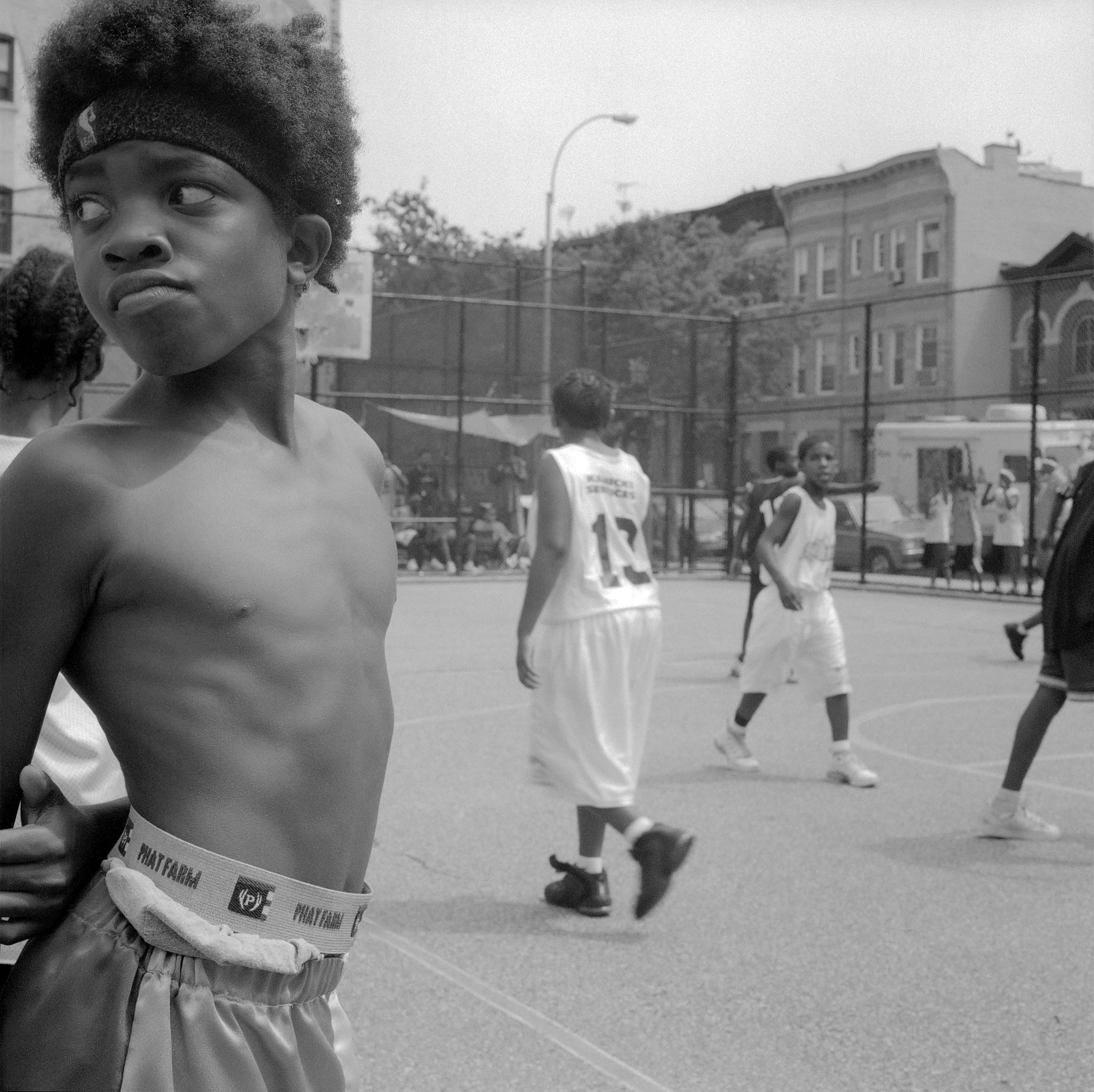
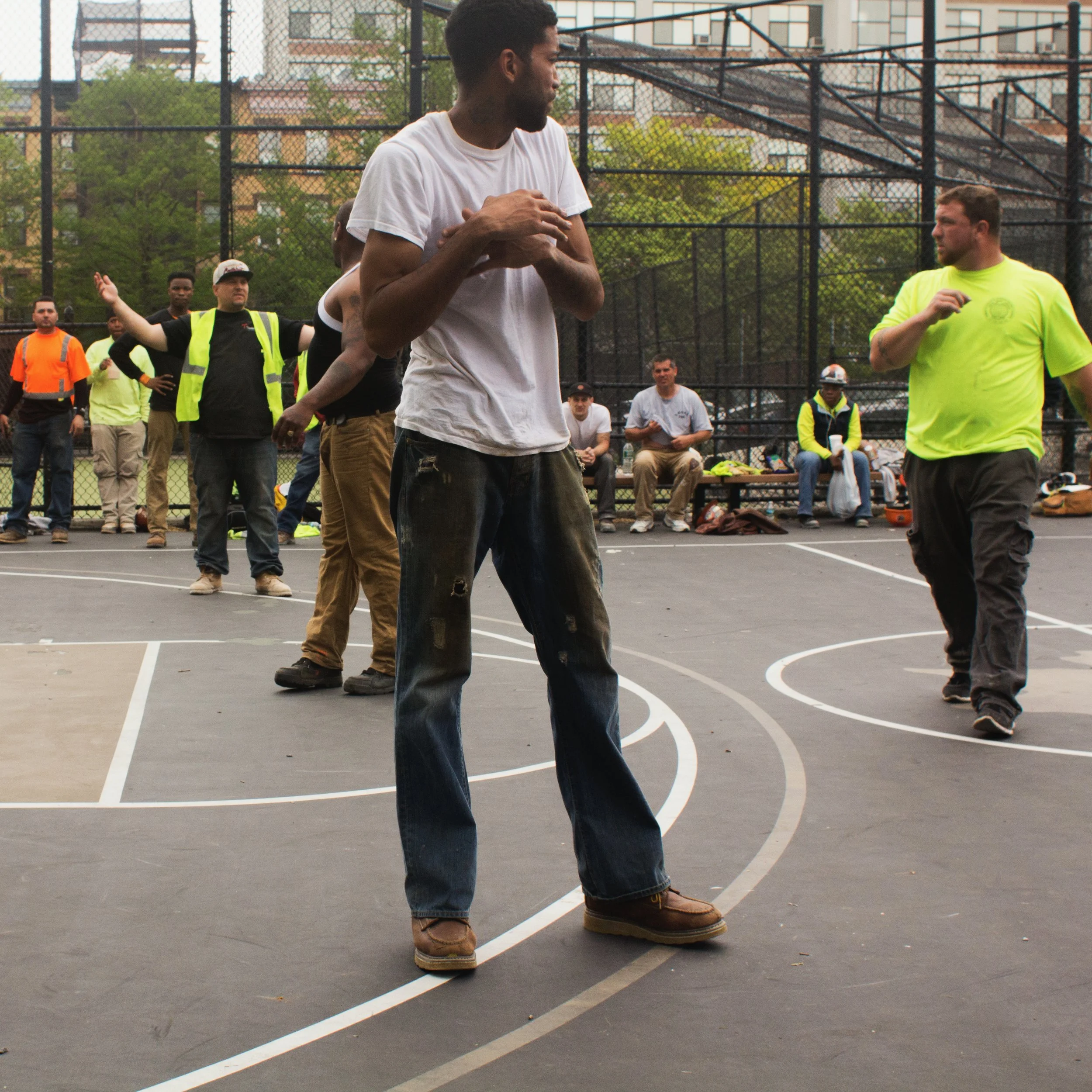
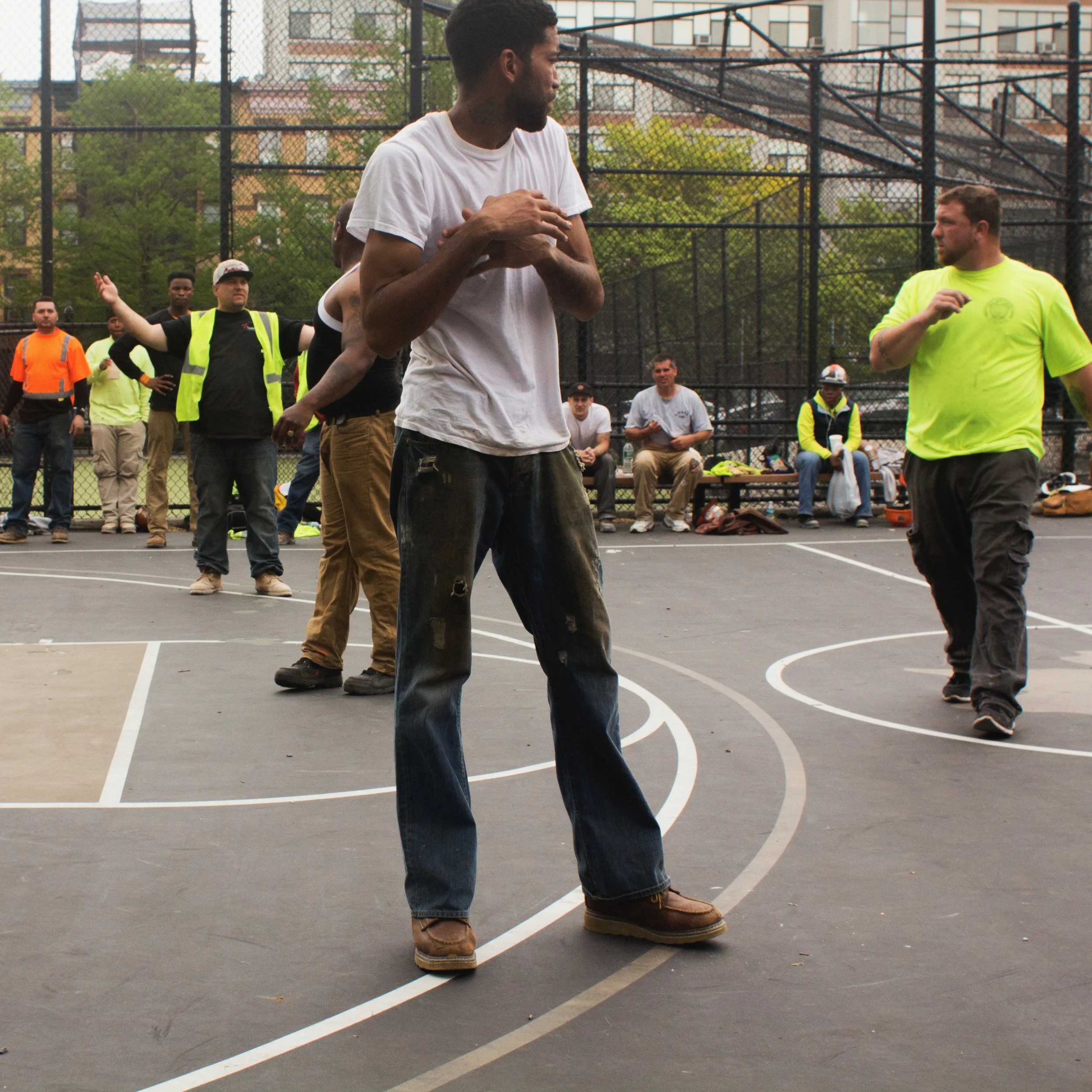
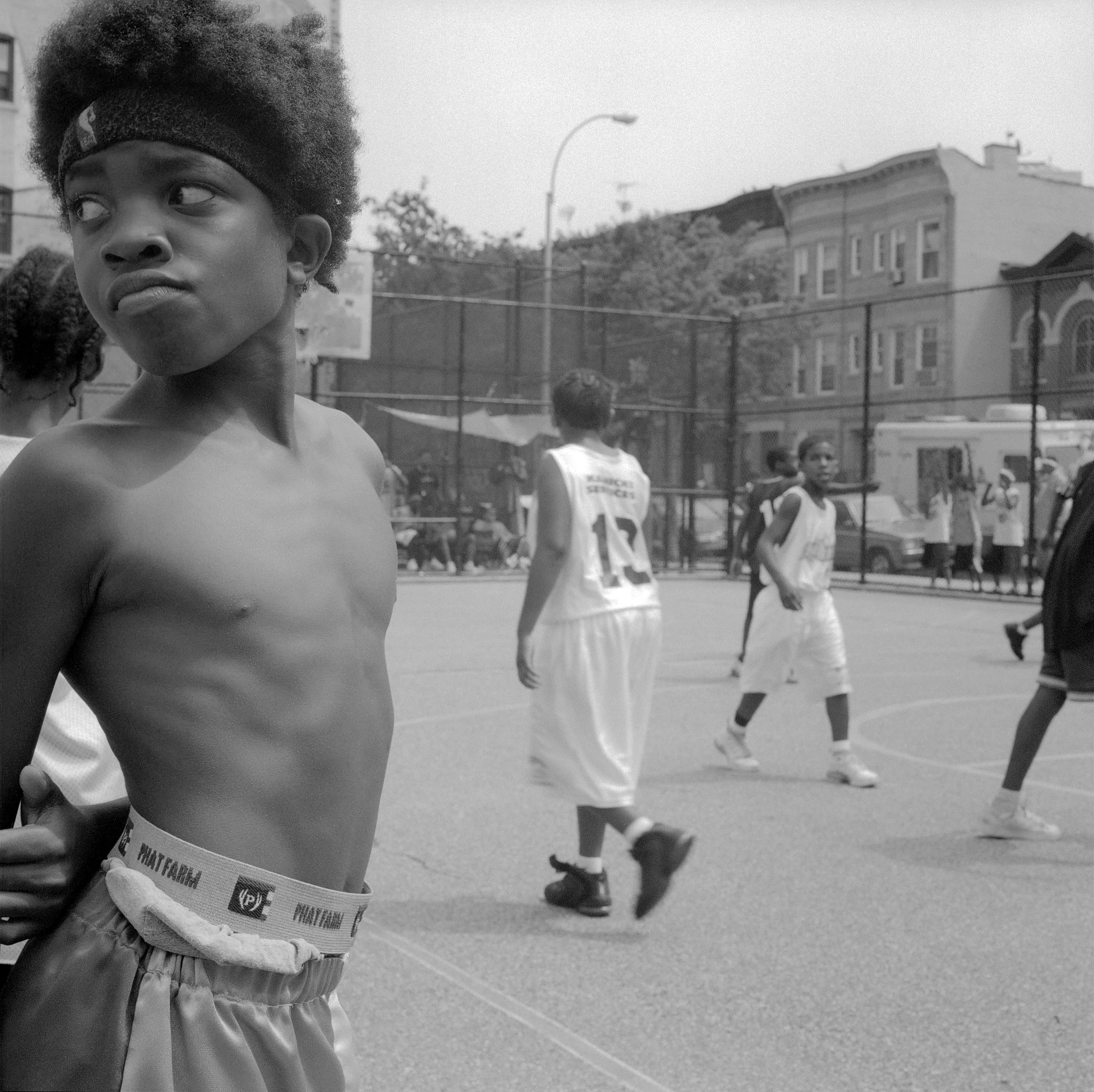
As I developed that project, I did a small amount of re-photography, especially where the biggest changes had happened. One of these spots was the construction site for the giant development that was rising at the edge of this Brooklyn neighborhood, a luxury development that was spurring gentrification and after twenty years still hasn’t built the percentage of affordable housing units it promised. One afternoon in 2015, I was walking past the basketball court where in 2001 I had photographed young kids playing in a local tournament, and was stopped in my tracks. The court was packed with construction workers on their break playing ball, so of course I made a new picture. Including these two images of the basketball court in one of the Intersection installations made many of the issues viscerally clear.
That basketball court photo with construction workers sounds really strong.: When you were standing there watching them play where kids used to play, what made you think "this is the photo that shows what gentrification really means"?
To be honest, I didn't begrudge these men their game as a break from a hard job. Yet, because I knew that what they would go back to building after that game would never be accessible to those kids who had played on this court, this use of their playspace felt like a symbol of a larger usurpation. The construction itself had already displaced so many people in the larger neighborhood in those intervening years; through noise and disruption, and the knock-on effects of greatly increased residential and commercial rents in the surrounding area, spurred by an imagined future of these buildings’ well-heeled residents. This giant development had originally been met with deep community opposition but had been sold to people as something that would bring basketball to the neighborhood (via an NBA arena with exorbitant ticket prices) and would bring a percentage of affordable apartments amongst the luxury ones. Yet, now more than twenty years since that development was first proposed, those affordable units are nowhere near completed, and could never benefit the kids on that court in 2001. This story is striking, but not uncommon; it’s emblematic of what happens when we see cities and housing as investments, rather than as homes for people to support their well-being.
Two Cities: How did you approach photographing Brooklyn and Oakland differently, and what visual similarities did you find in how people relate to their neighborhoods?
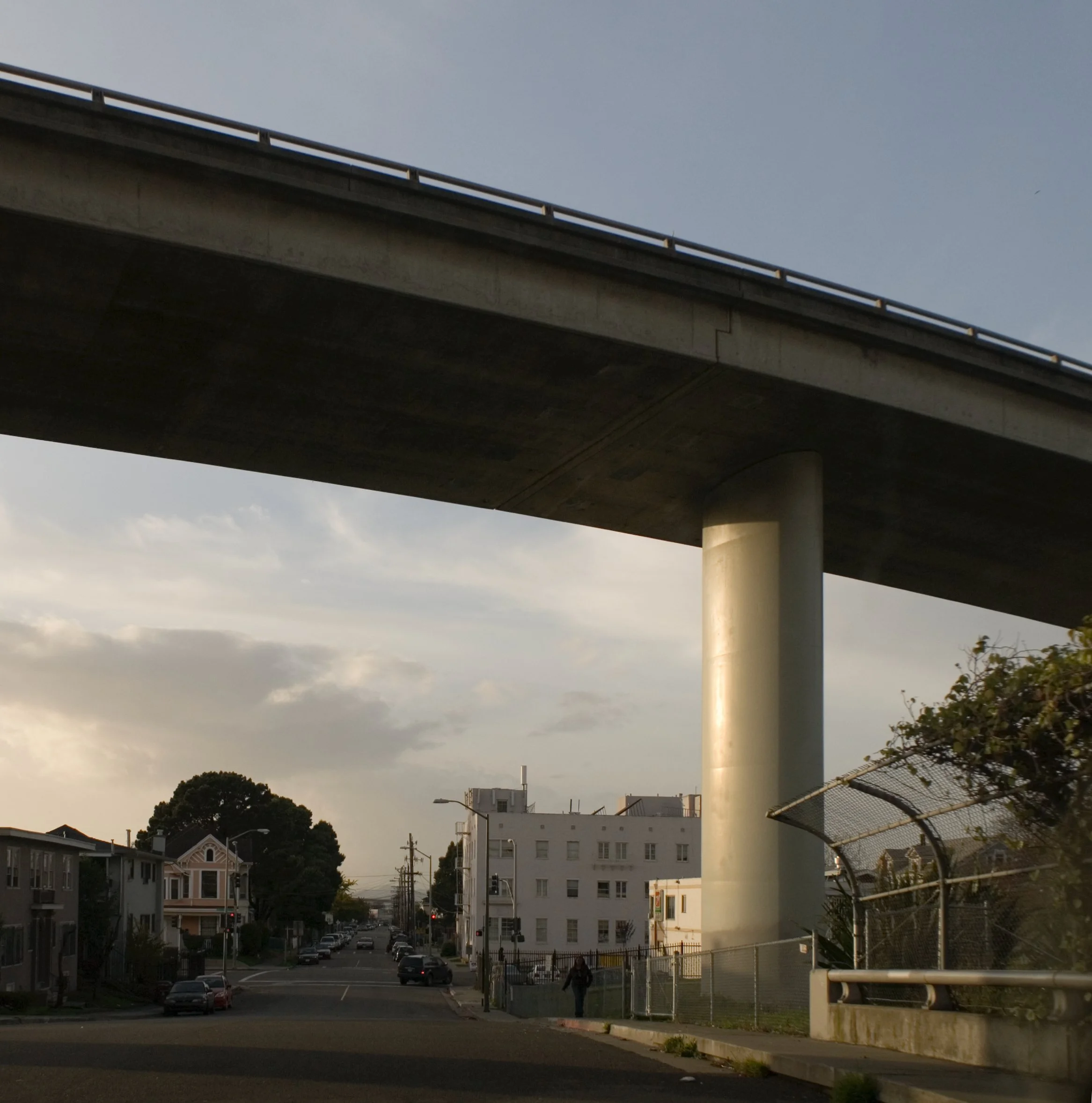
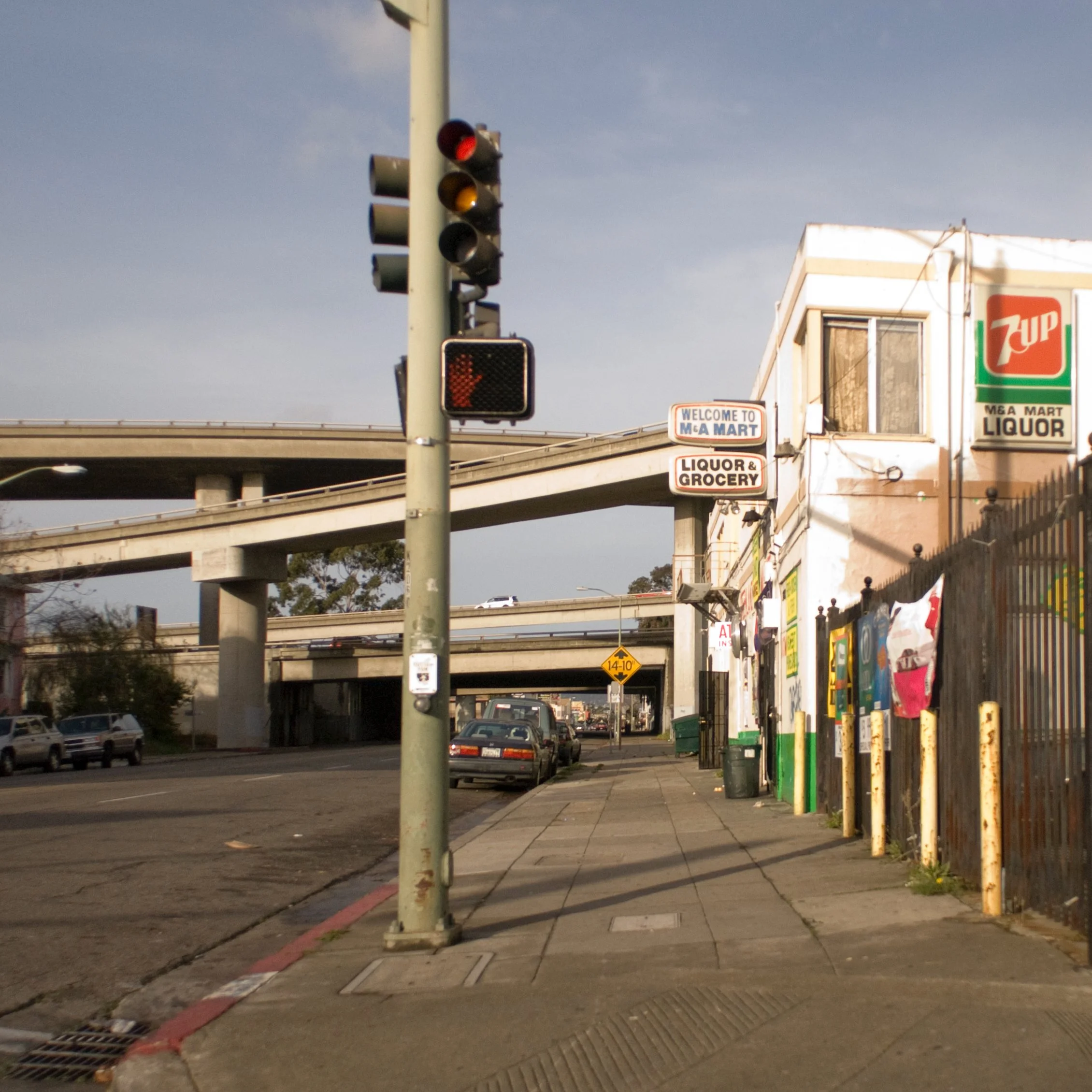
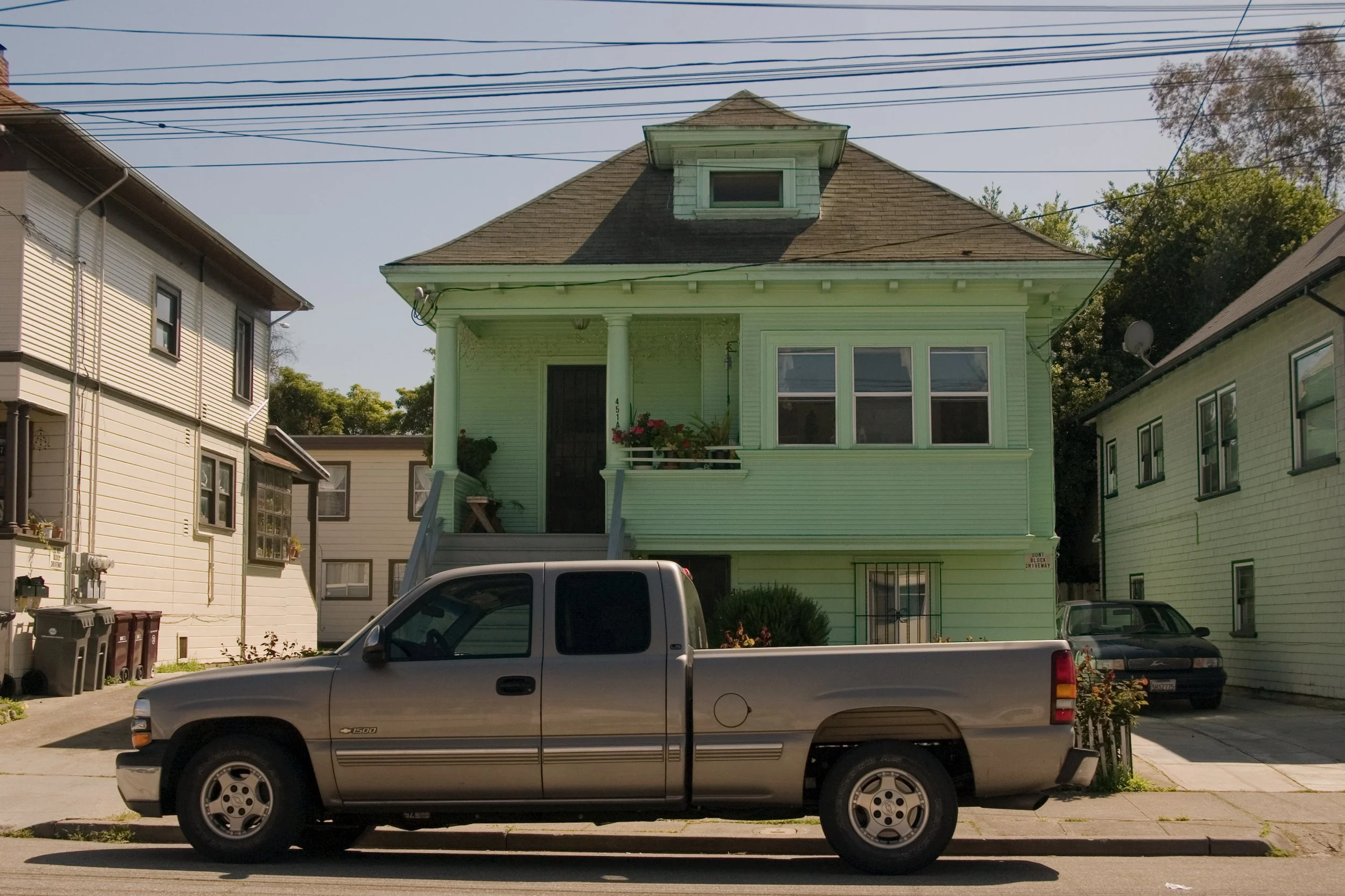
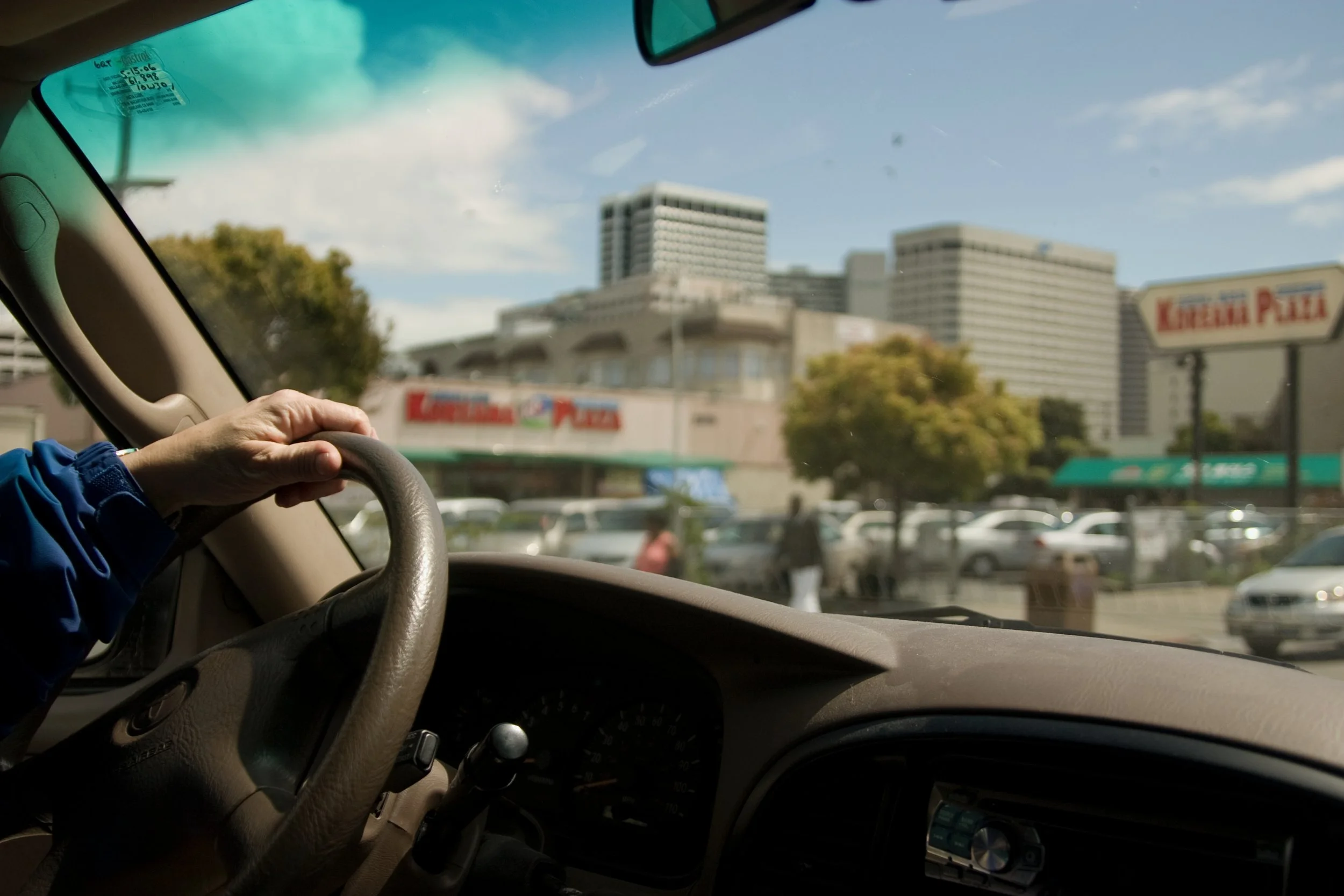
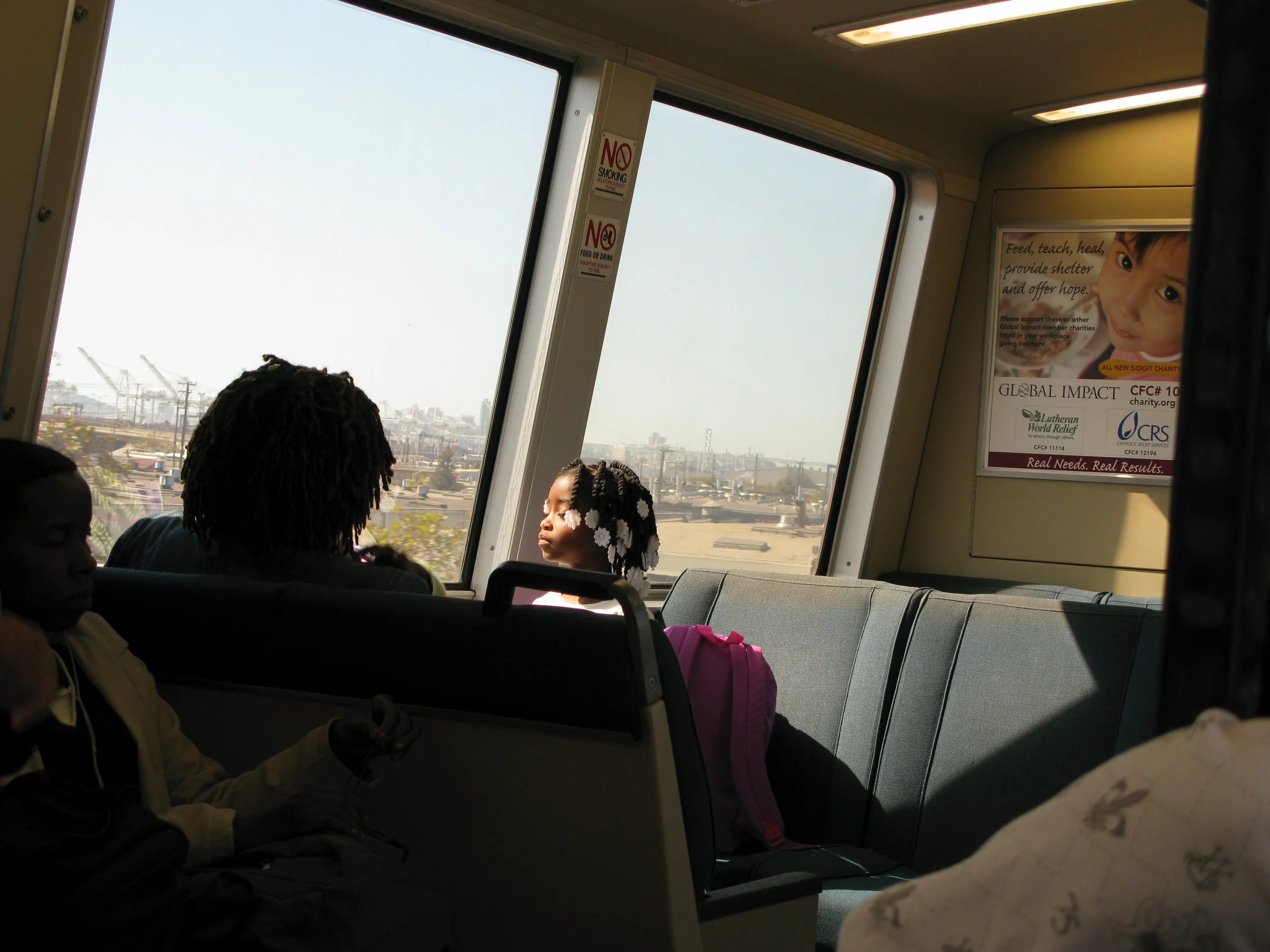
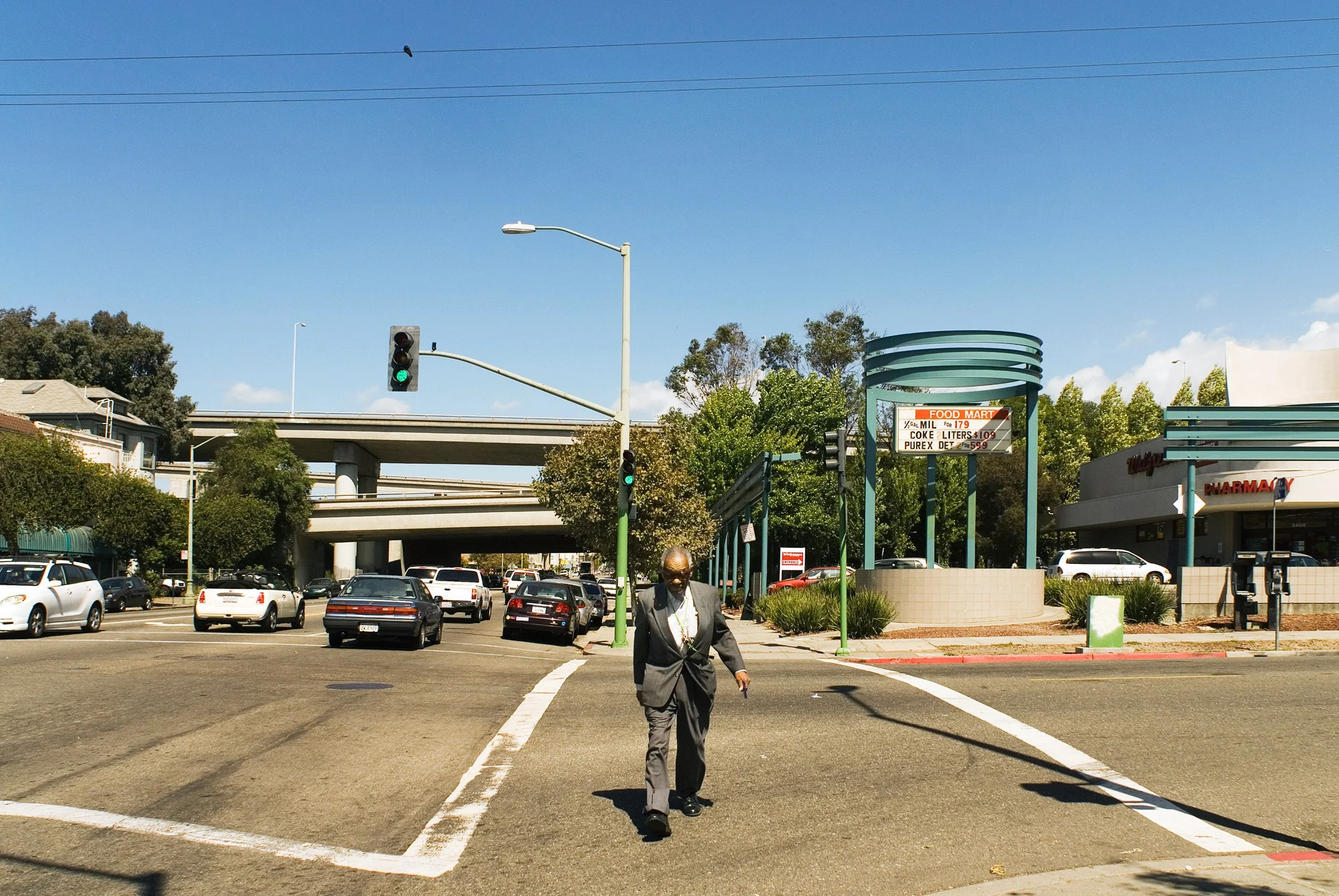
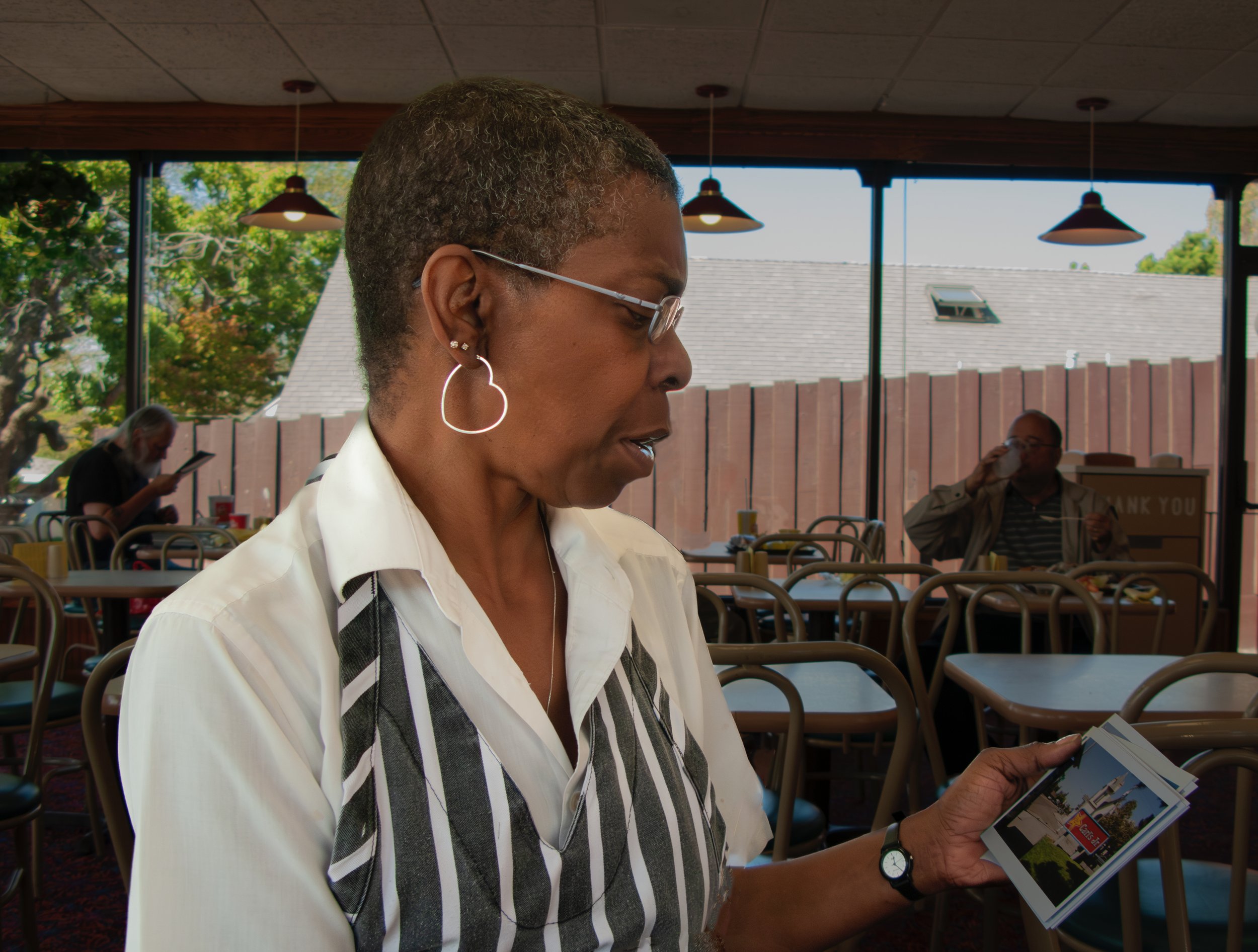
These two places look extremely different, and the way that you move through them is different. In Prospect Heights, where all my tour guides walked, I made photographs by walking. I even looked closely at the places where people put their feet, as in the doorstep of the storefront Baptist church one of my tour guides attended, to understand the unnoticed spaces people’s bodies moved through. In Oakland, where some people walked and some drove, I photographed as a walker (sometimes the only one on the street!) but also as a person driving through in a car. Sometimes these images were made while my tour guides were at the wheel and sometimes alone. The similarities between the neighbourhoods were really found in the interiors of places, and even more so in what people needed their places to do for them – to be open enough that they felt a sense of belonging, that they could feel comfortable in their own skins, that they could just be. They all needed places that let them feel comfortable with strangers.
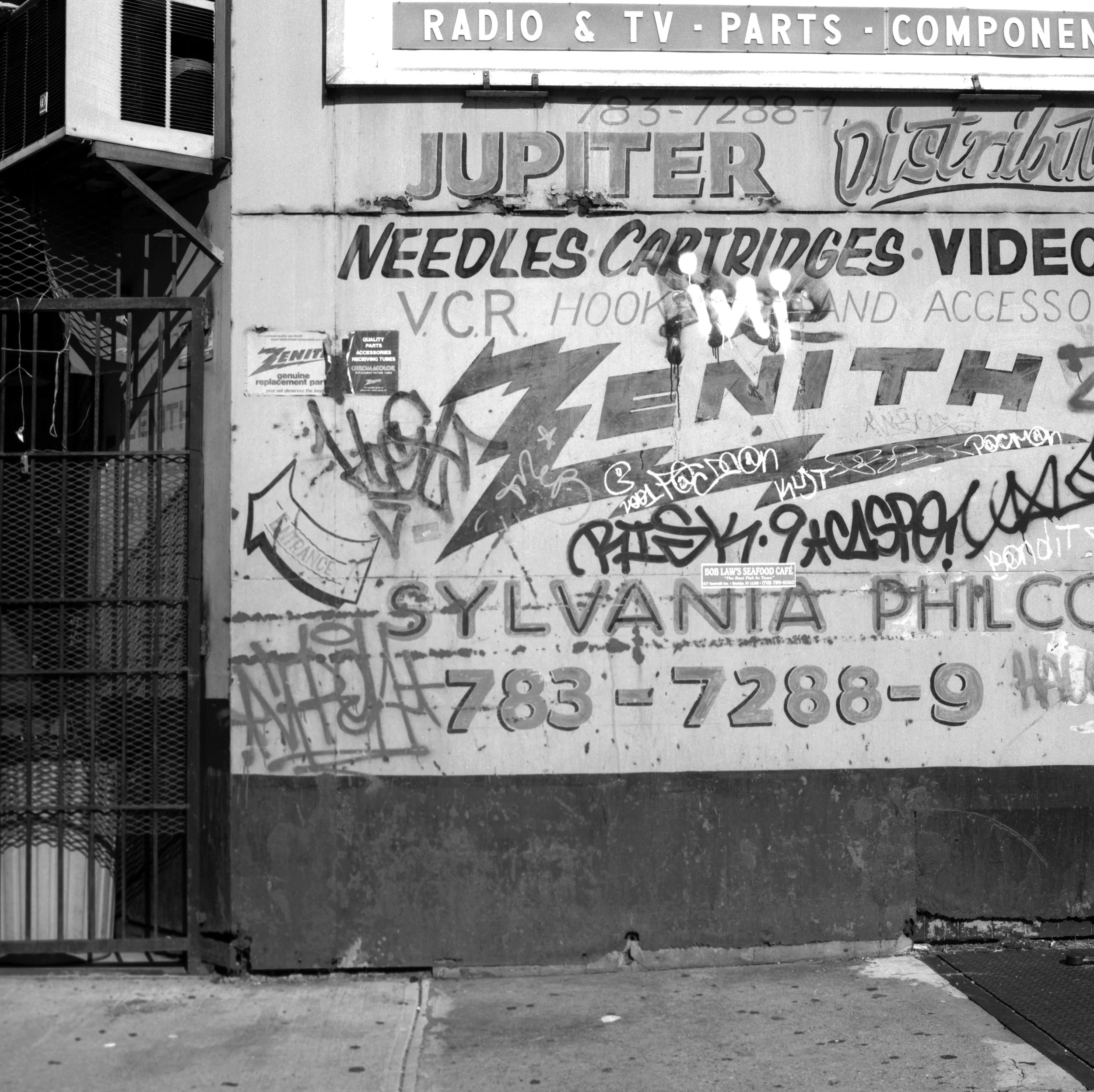
The way these places look also determined the photographic technologies I used. In both places, I shot both black-and-white and colour film, and also shot colour digital, depending on the subject and time of day. It’s funny because the black-and-white can now make people feel like these pictures are older than they actually are. People have also pointed out that both the photographs and the things in them, corded phones, newspapers, are deeply analogue.
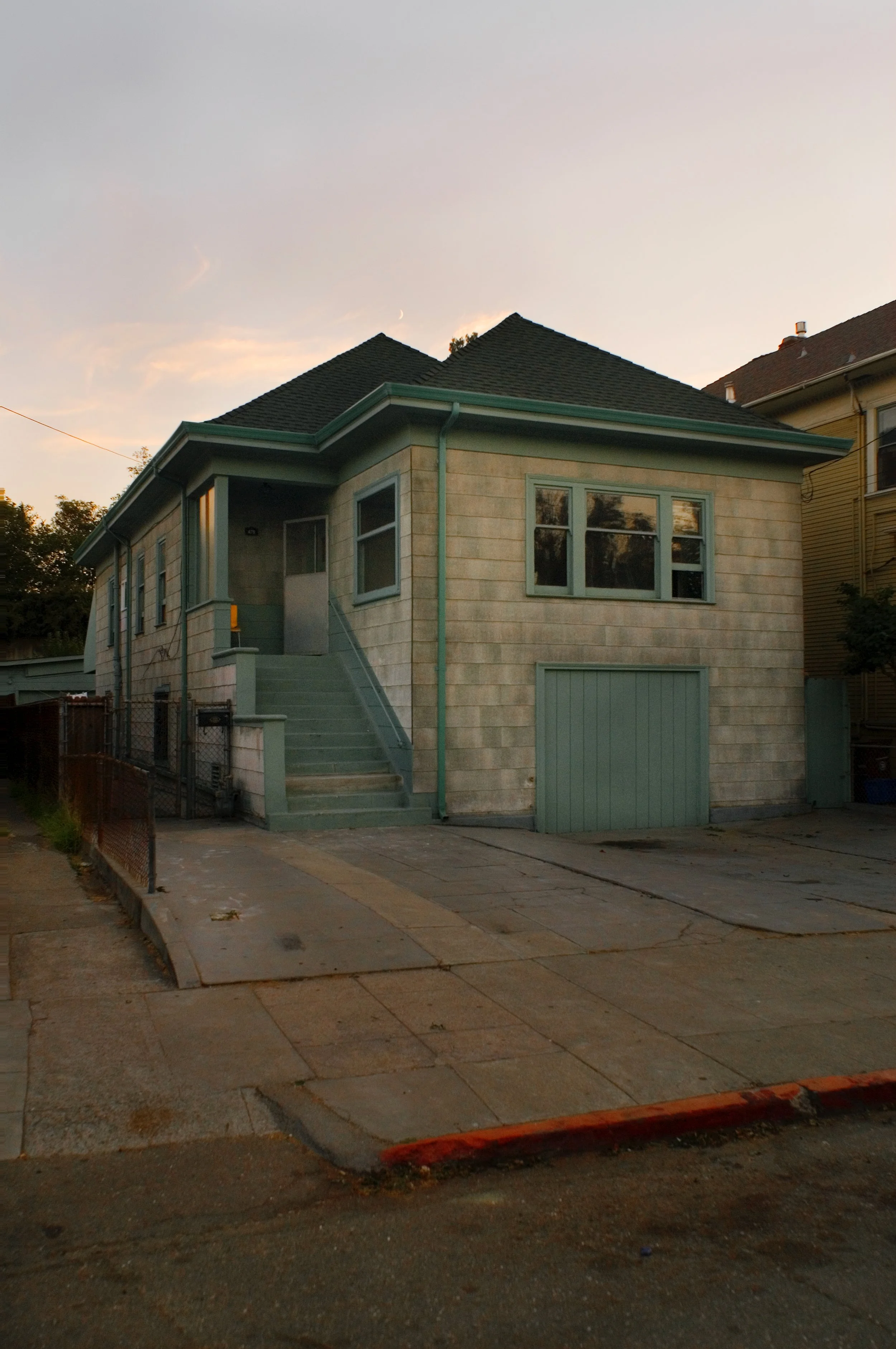
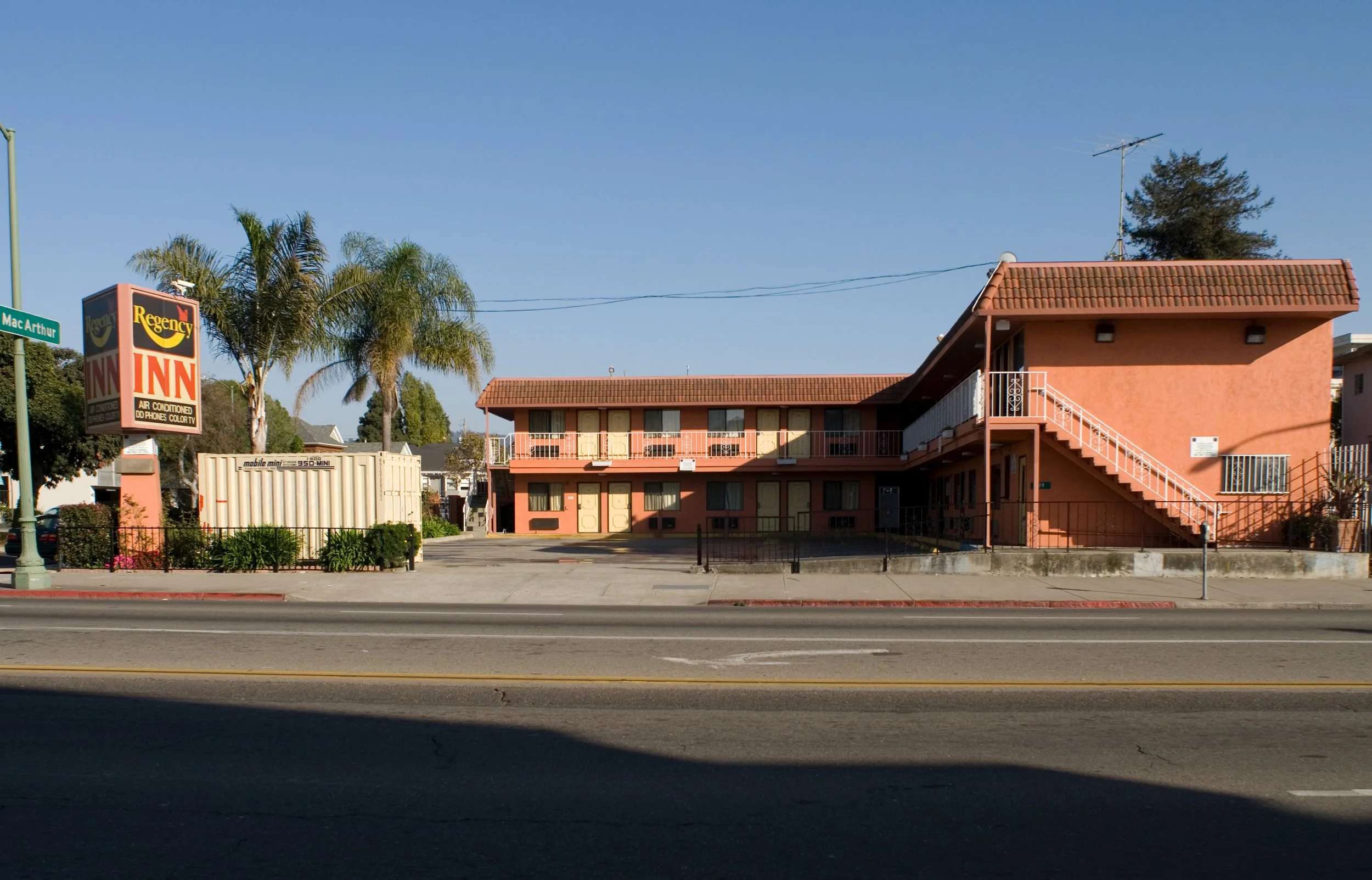
I used color as a choice rather than as a default. For example, the beautiful light in Oakland made me want to make color photographs; if John Szarkowski argued for color photography like William Eggleston’s and Helen Levitt’s which sees the world ‘as though the blue and the sky were one thing’, in Oakland I photographed in color because the pink and the motel were one.
COVID Impact: How did the pandemic change your understanding of everyday places while you were finishing the book, and did it affect which photographs you chose to include?
I wouldn’t say that COVID shifted what images I decided to include – those choices were determined by the sequencing of the photographic essays and the way the images related to each other, the strength of the images themselves, the stories that went with them, and any number of other visual decisions.
That said, COVID was quite central to the making of this book. COVID and the experiences of lockdown, and the intense loneliness of that time – which to some extent has stayed with us – helped me understand why this work should be a book. It helped me see what was at stake, what these images and stories and ideas could teach us about everydayness and our capacity to see ourselves as a society. The experiences of the pandemic helped me understand why making this book mattered and what it could contribute today.
After twenty years of this work in so many cities, what do you hope people will do after reading your book? When someone finishes looking at your photos and stories, what do you want them to think about the next time they walk past their neighborhood coffee shop or church?
The book is a love letter to both Brooklyn and Oakland, but it is even more so about transforming people’s understanding of their everyday places wherever they live – just as doing this work transformed my understanding of these two neighbourhoods, and every other neighbourhood I’ve since experienced. From this book, I’d like people to recognise a few things: first, the way that familiar places can have different layers of meaning for different people; and second, the depth of importance of the work those places do for our capacity to be ourselves, to be a community, to be a functional society. Finally, I’d like people to realise how much these places need supporting and protecting, and that regular people can and should play an active role in this. This means spending locally, but also advocating for parks and libraries, as well as for the small businesses and the cultural organisations that make places meaningful. These are often in very precarious rental situations, and susceptible to the fast-rising rents of rapidly gentrifying neighbourhoods. It’s important to realise what we have and why it matters, before it’s gone. I hope people will see how vital it is that we support those places that do the kind of placework that my tour guides taught us about – those places that help us feel free, feel we belong, learn our ethics, make space for us to chat with strangers, and in so doing help us see that we’re connected to something larger, to something shared, to something essential. Cities (and towns!) full of these places – those are the cities we need.
To discover more about this intriguing body of work and how you can acquire your own copy, you can find and purchase the book here. (The MIT Press, Amazon)
More photography books?
We'd love to read your comments below, sharing your thoughts and insights on the artist's work. Looking forward to welcoming you back for our next [book spotlight]. See you then!
Color entered Janelle Lynch’s photographs through painting. In Another Way of Looking at Love, she photographed plants and trees on her property in the Catskills. Photography Book Spotlight