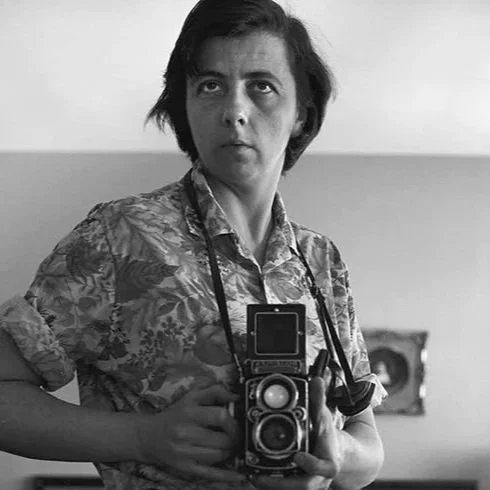
AT A GLANCE
- Known for
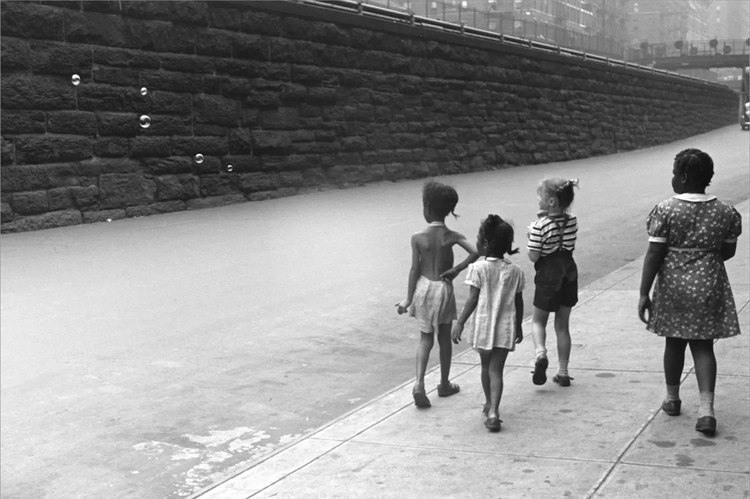
- Children at play on the streets of New York, such as the soap bubbles picture (c. 1945); photographs of children’s chalk drawings
- Worked in
- Black and white; color from 1959
- Camera
- A Leica, bought used in 1936, with a right-angle viewfinder
- Also
- First solo show at MoMA, 1943; Guggenheim Fellowships, 1959 and 1960; films In the Street and The Quiet One
- Start with
- A Way of Seeing (Horizon Press, 1965)
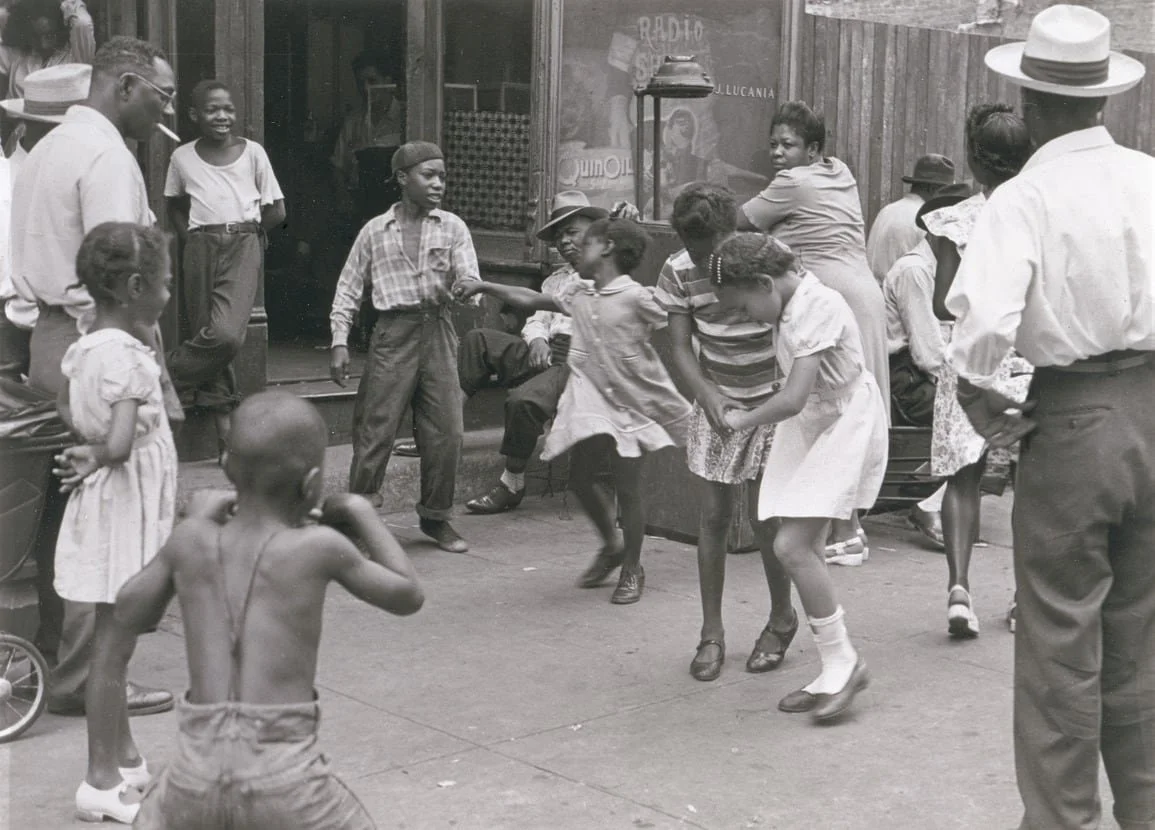
Helen Levitt (1913–2009) was an American photographer who spent her life photographing the streets of New York. Her pictures of children playing in the late 1930s and 1940s are among the best-loved images in street photography. From 1959 she also worked in color, long before most street photographers did.
The story
Late in 2001, the radio journalist Melissa Block visited Helen Levitt for NPR. Levitt lived in a small Greenwich Village apartment, up four flights of stairs, with a yellow tabby cat called Binky. She did not much like talking about her work. Block asked about one of her best-known pictures: four children turning to watch soap bubbles drift across the street. What did she capture there? “Just what you see,” Levitt answered.
Levitt was born in Brooklyn in 1913. She left high school without finishing and, at 18, went to work in a portrait studio in the Bronx. Then she saw the photographs of Henri Cartier-Bresson. “I saw pictures of Cartier-Bresson, and realized that photography could be an art, and that made me ambitious,” she said. In 1936 she bought a used Leica.
On the street, she wanted to stay unseen. Around 1938 Walker Evans advised her to use a right-angle viewfinder. With it she could look one way and take the picture the other. Most of all she worked in Spanish Harlem, where people lived their lives outside, on the stoops and in the street. From 1937 she also photographed the chalk drawings that children left on walls and sidewalks. In 1943 the Museum of Modern Art gave her a first solo show, Photographs of Children.
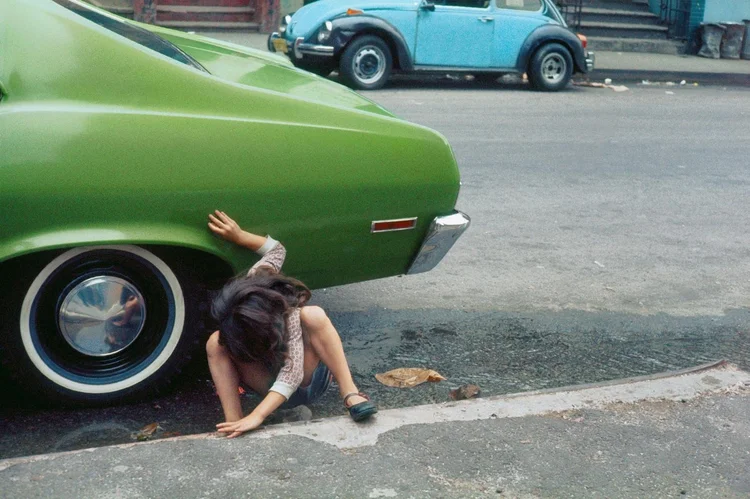
Color came later. A Guggenheim Fellowship in 1959 let her work with color slides. But in 1970 a burglar took most of her early color pictures from her apartment, and she had to start again. She did. In the 1970s and 1980s she made bright, quick pictures like the girl bending down by a green car in New York, 1980.
During that 2001 visit, Block saw boxes of prints stacked in the apartment. One was labeled “nothing good.” Another said “here and there.” Levitt would not open it. “You can’t see it, because I’m unsure about it,” she said. A few years later the book Here and There came out. She never explained her pictures. She let them speak instead. “Since I’m inarticulate, I can express myself with images.”
The work


- 1913Born on 31 August in Brooklyn, New York
- 1936Buys a used Leica
- 1937Begins photographing children’s chalk drawings
- 1941Photographs in Mexico City
- 1943First solo show, Photographs of Children, at MoMA
- 1959Guggenheim Fellowship for color work
- 1965A Way of Seeing is published, with James Agee
- 1970Most of her early color slides are stolen
- 2009Dies on 29 March in New York
Lessons
Go where life happens. Levitt worked in neighborhoods where people spent their days outside, on stoops and in the street.
Stay out of the way. A right-angle viewfinder let her photograph without people noticing the camera.
Start again when you must. After most of her early color slides were stolen in 1970, she went back out and made new ones.
Try this: find one street where children play or people sit outside. Go back on three different days at the same hour. Do not ask anyone to pose. Wait for one small moment of play and keep only that frame.
Gear
35mm rangefinder camera: she bought a used Leica in 1936 and used it for her street work for decades.
Right-angle viewfinder: a small attachment she called a winkelsucher. Walker Evans advised her to use one around 1938. It let her face one way while photographing in another.
Color slide film: with a Guggenheim Fellowship in 1959 she began to work in color, first with slides. Later she made dye transfer prints.
Around 1938 she also borrowed Walker Evans’s 4x5 view camera and tripod for a series of portraits of children. In the 1990s, when the Leica became too heavy for her, she changed to a small automatic Contax.
Books
A Way of Seeing (Horizon Press, New York, 1965). Her classic book of New York street pictures from the 1940s, with an essay by her friend James Agee. Levitt put it together in the late 1940s, but it came out only in 1965, ten years after Agee died. It was published again, with changes, during her lifetime, including by Duke University Press in 1989. In 2020 Walther König and Film Documents published a new edition overseen by her former assistant Marvin Hoshino: 120 pages, all 50 original photographs plus a few more, in the original compact size. The best first book for anyone who loves street photography.
Slide Show: The Color Photographs of Helen Levitt (powerHouse Books, New York, 2005). A book of 109 color photographs with a text by John Szarkowski, the former head of photography at the Museum of Modern Art. It includes the eight pictures that survive from her 1959–60 color work, after the 1970 burglary. More than half of the photographs had never been shown or published before. A good book for anyone who thinks of her only as a black-and-white photographer.
Helen Levitt (Kehrer Verlag, Heidelberg, 2018). Made for the retrospective at the Albertina in Vienna (2018–2019). Edited by Walter Moser, with texts by Duncan Forbes, Astrid Mahler, Walter Moser, Christina Natlacen and Bert Rebhandl. On 232 pages it shows about 130 of her works, in black and white and in color. A wide modern overview of her whole career, with fresh essays.
Here and There (powerHouse Books, New York, 2004). A black-and-white book of more than eighty little-known photographs taken over six decades. It grew from a box of prints in her apartment marked “here and there,” which she did not yet want to show in 2001. A quieter book for readers who already know her famous pictures.
In her words
“Attached to my camera, I had a little device that fit on the Leica camera that they called a winkelsucher, which meant that you could look one way and take the picture the other.”
“It was a very good neighborhood for taking pictures in those days, because that was before television.”







Photography is full of choices, but few spark more debate than color vs. black-and-white. Both have their champions and their power. Through the lens of Helen Levitt’s Spider Girl, Let’s explore how this debate shaped her work—and why it still matters today. Story Behind The Photograph