I took a wrong turn in 2017. Nine years later, It became my most important work: The HOOK.
Welcome to this edition of [book spotlight]. Today, we uncover the layers of 'The Hook,' by Lisa Cutler (published by Kehrer Verlag). We'd love to read your comments below about these insights and ideas behind the artist's work.
This book began with being completely lost.
Lisa Cutler took a wrong turn in Brooklyn and decided not to correct it. Instead of searching for direction, she returned every week and kept photographing. Over time, getting lost became the method behind The Hook. The book shows how wandering can turn into a clear photographic idea.
This interview is for photographers who feel pressure to plan everything.
Lisa talks openly about working without a map, without people, and without control. She photographed Red Hook for over two years while the neighborhood kept changing. Buildings disappeared, streets shifted, and memory could not be trusted. What she learned is that paying attention can matter more than knowing where you are.
The Book
The Hook by Lisa Cutler, published by Kehrer Verlag, is a photographic journey through Red Hook, Brooklyn, made between 2017 and 2019. The project began by accident, when Cutler took a wrong turn leaving a subway station and decided to return again and again without a map. Over more than two years, she photographed a post-industrial neighborhood in constant change, focusing on geometry, color, texture, and traces of human life rather than people themselves. Shot in flat, quiet light and without staging or cleanup, the work documents a place suspended between disappearance and renewal, where buildings vanish, memory fails, and order is rebuilt inside the photographic frame. (Kehrer Verlag, Amazon)
Project Discovery: You found Red Hook by accident when you made a wrong turn at the subway station in 2017. How did this chance discovery shape your two-year relationship with the neighborhood?
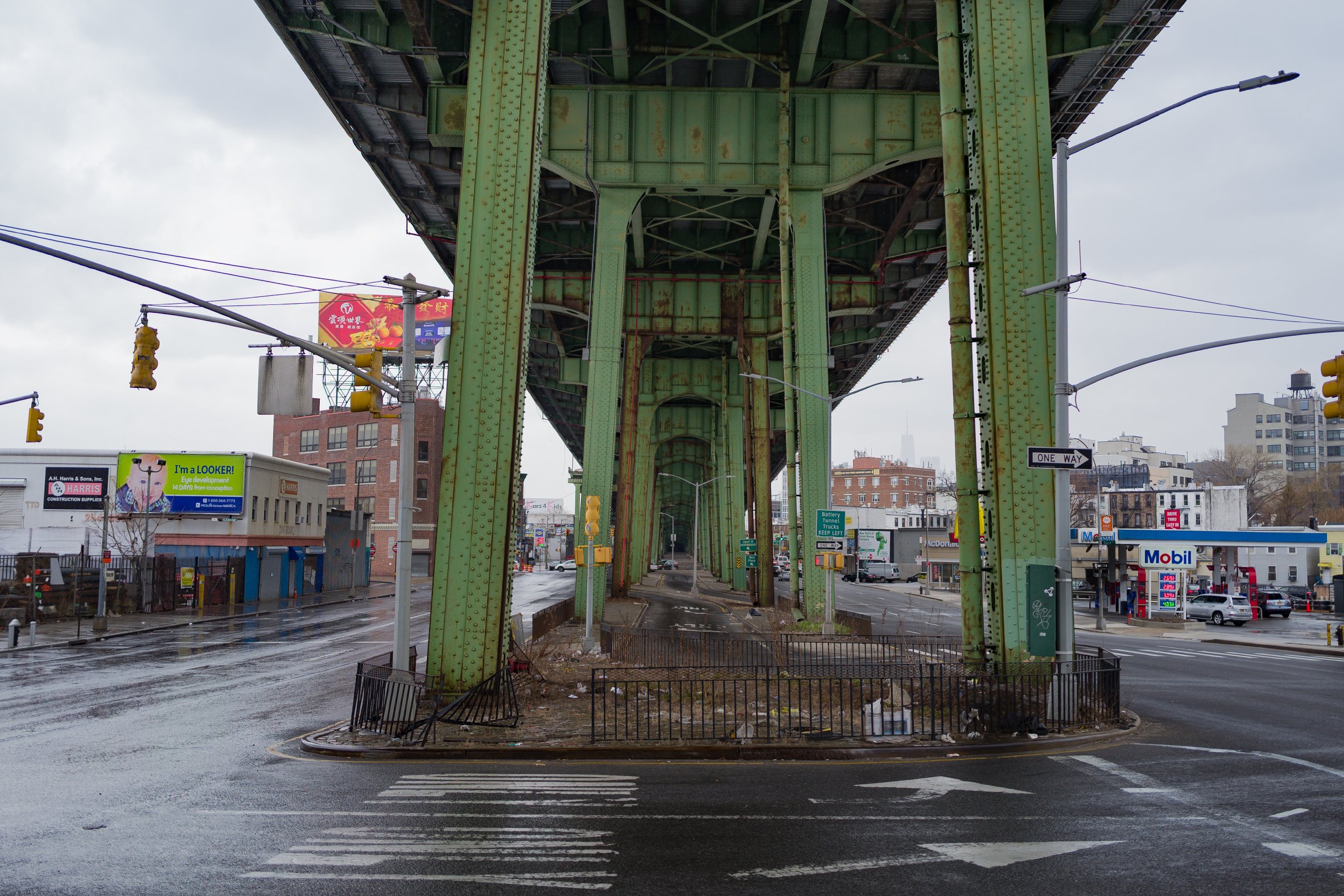
Being lost in Red Hook, Brooklyn, on a early Sunday morning in October 2017 was the inspiration for my book, The Hook. I took a wrong turn getting off the subway at then Smith Street station in Gowanus, Brooklyn, and meandered under the towering Gowanus Expressway. I instinctively knew that I wasn’t in the Gowanus anymore.
I had never been lost before. There was something both scary and exhilarating about it. The longer I walked, the more I knew that I had no idea where I was. It was too early in the morning for anyone to be on the streets. I decided that I’d like to embrace the feeling of being lost. I questioned myself, how long could I continue this experiment? The answer was easy. Just take the same turn when you get off the subway. Return to the area at the same time of day every week and continue until I eventually discover my location.
I became immersed in an exciting visual wonderland. Wanderlust is a great description of my journey. At every turn something magical and beautiful appeared before my eyes.
Geometric Approach: Your work uses vertical and horizontal lines to bring order to visual chaos. How do you decide where to place these geometric elements in your frame?
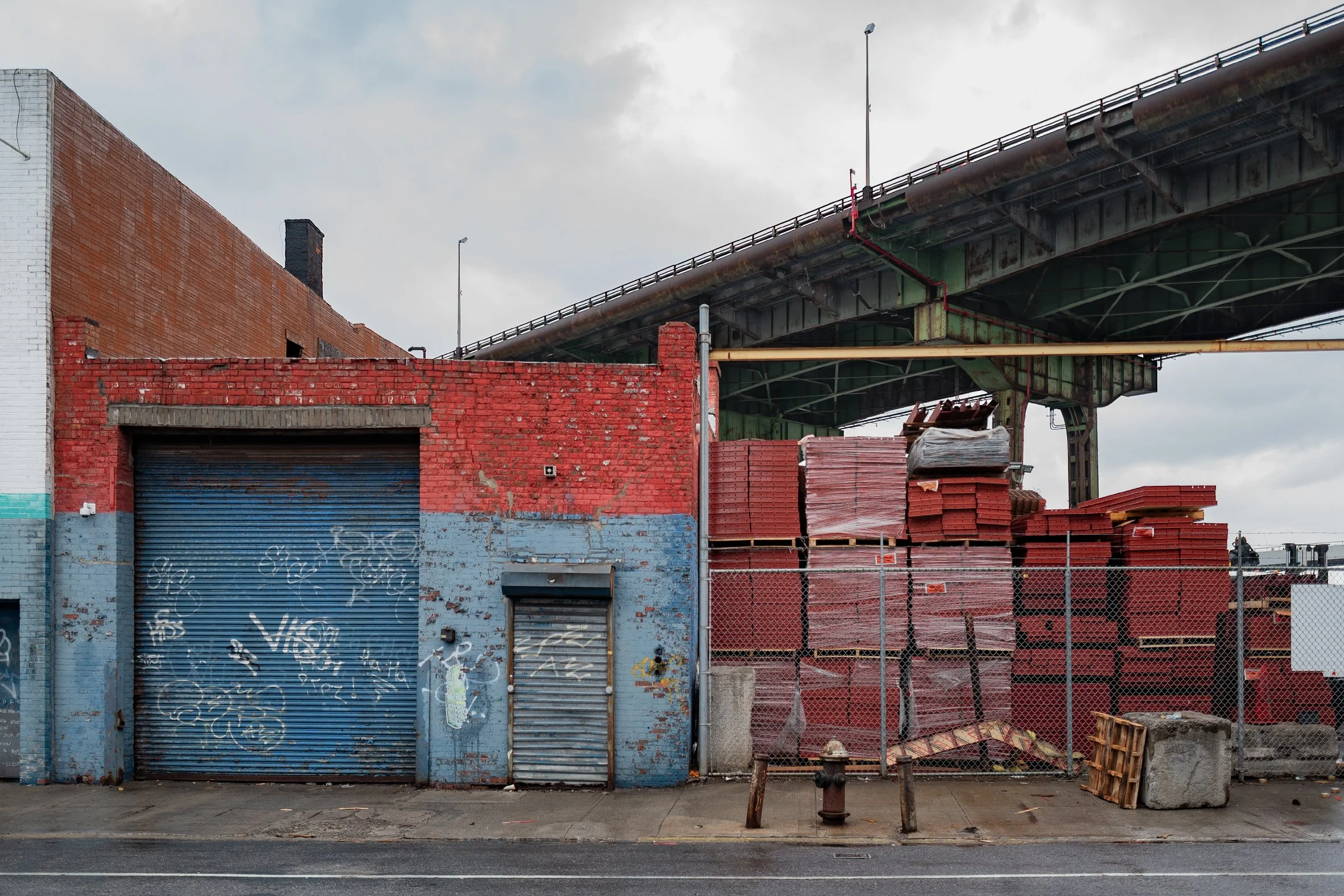
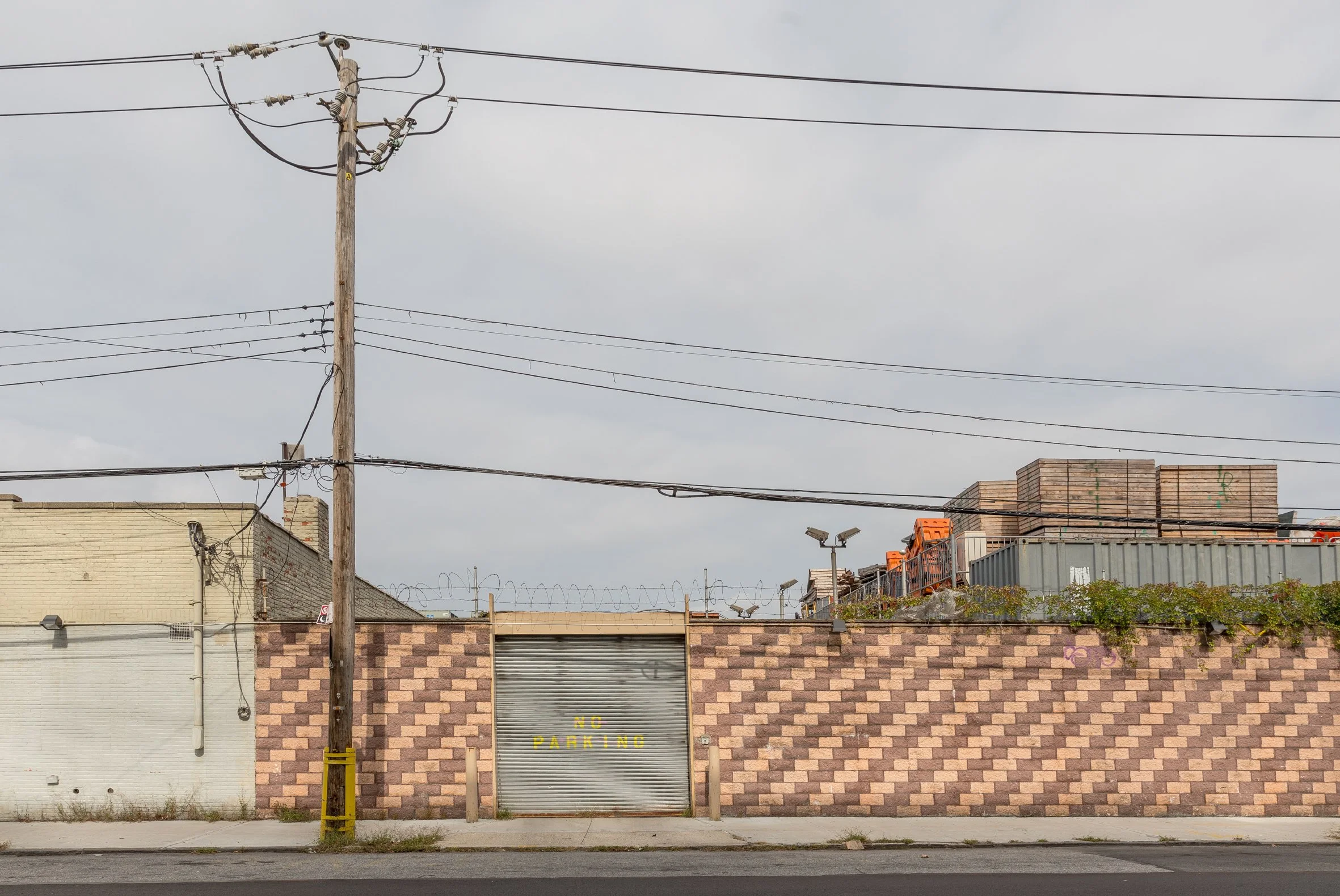
All of the elements of art, Line, Shape, Color, Space and Texture guide my eye while framing a subject. My style is straight forward and formal. I attempt to bring about a certain level of re-stabilizing through a formal use of the photographic frame, vertical and horizontal lines juxtaposed and layered upon the physical and visual chaos that I see before me. I don’t impede my frame with distractions. Like Lewis Baltz once said, “ my work illuminates symmetry” and is devoid of emotion.
Photography Without People: The neighborhood feels empty of people in your photos, yet their presence is still felt. How do you show human life without showing humans?
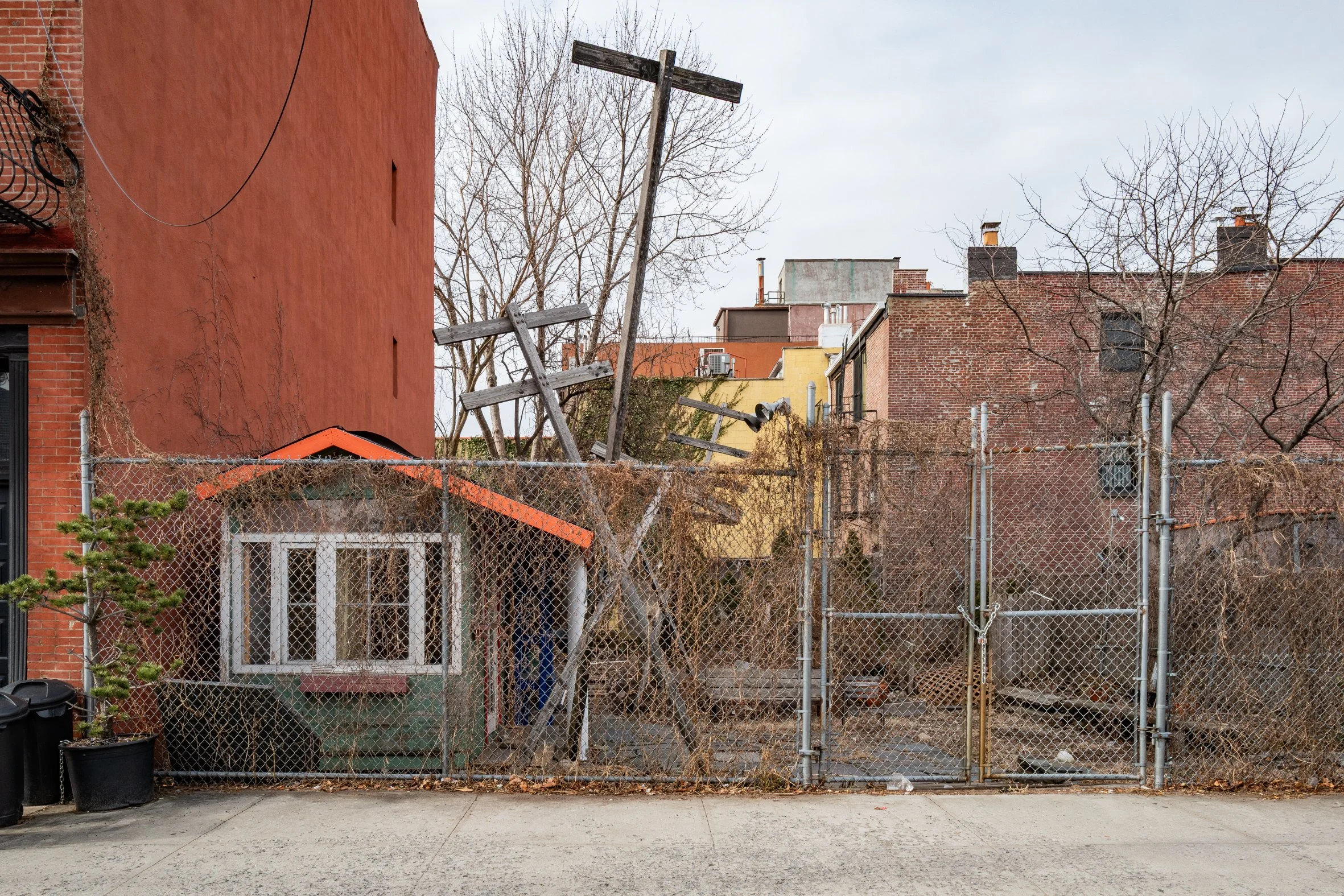
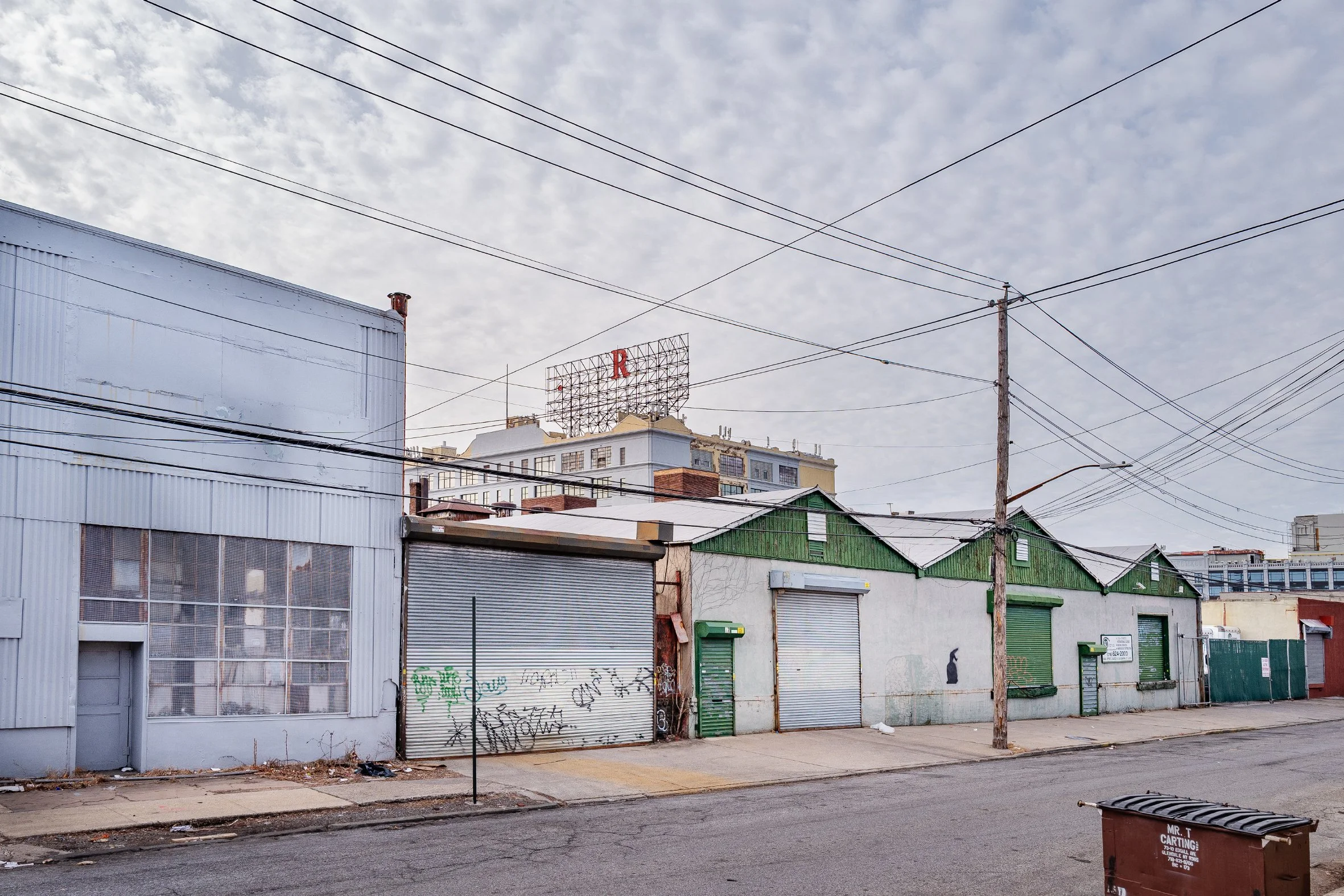
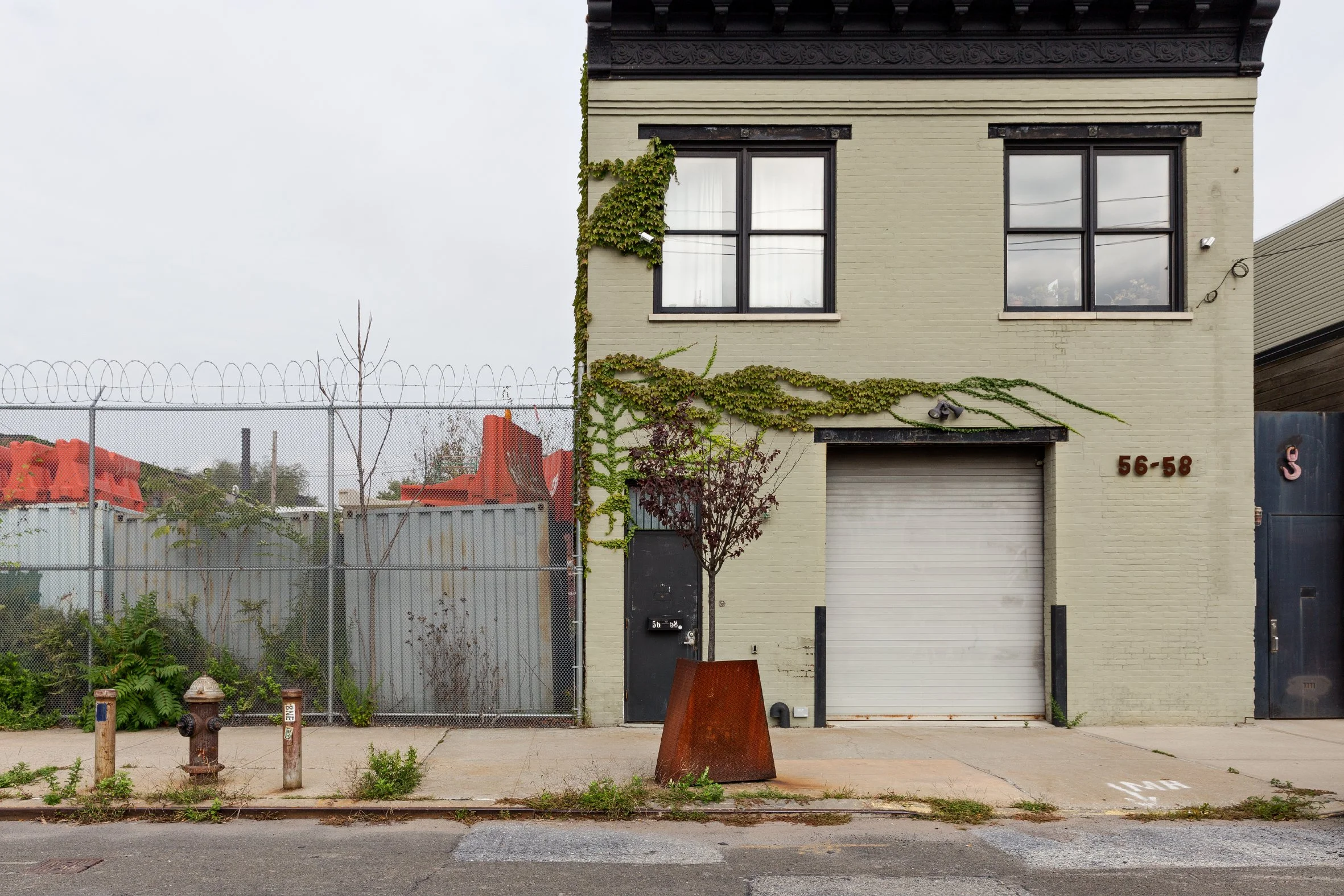
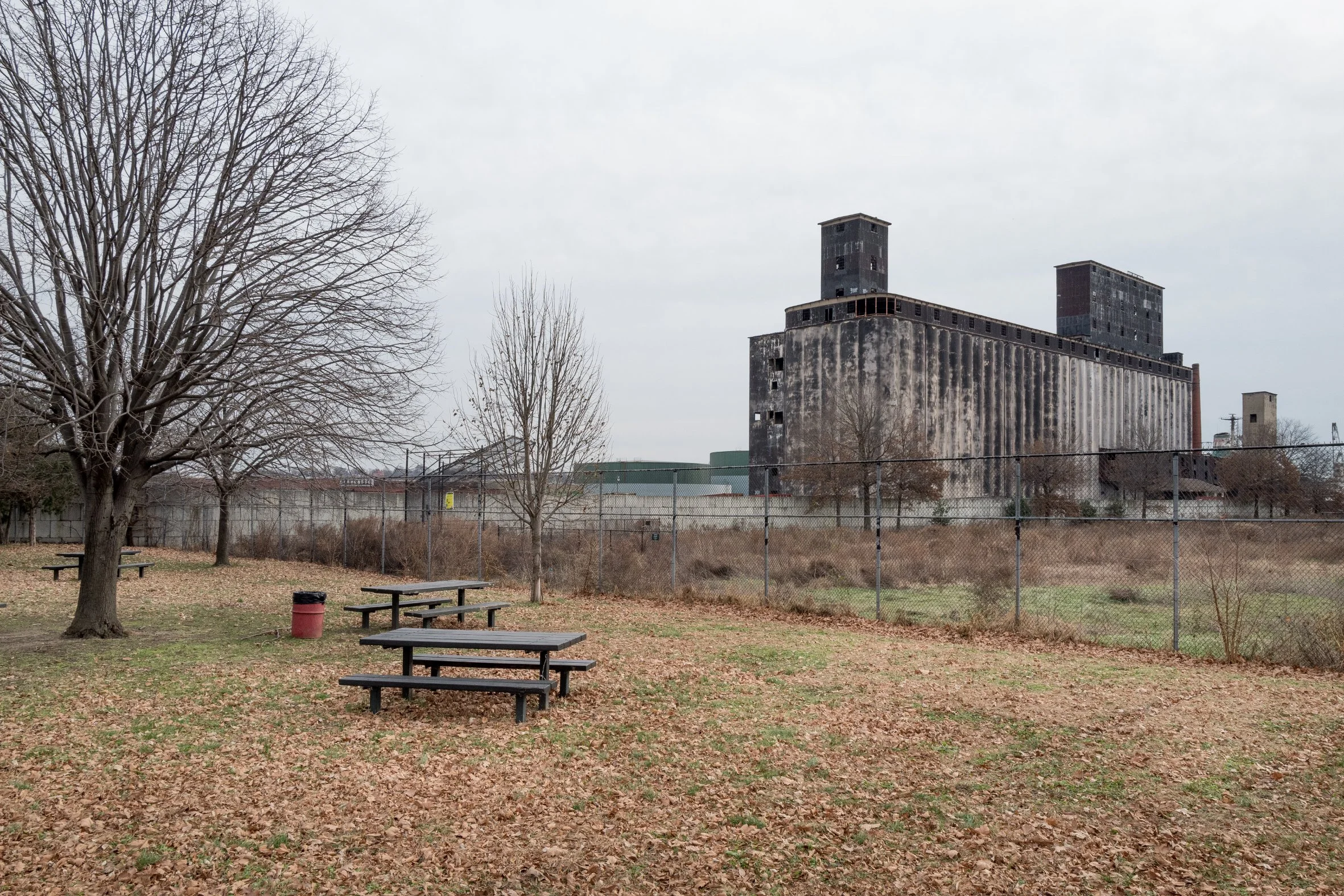
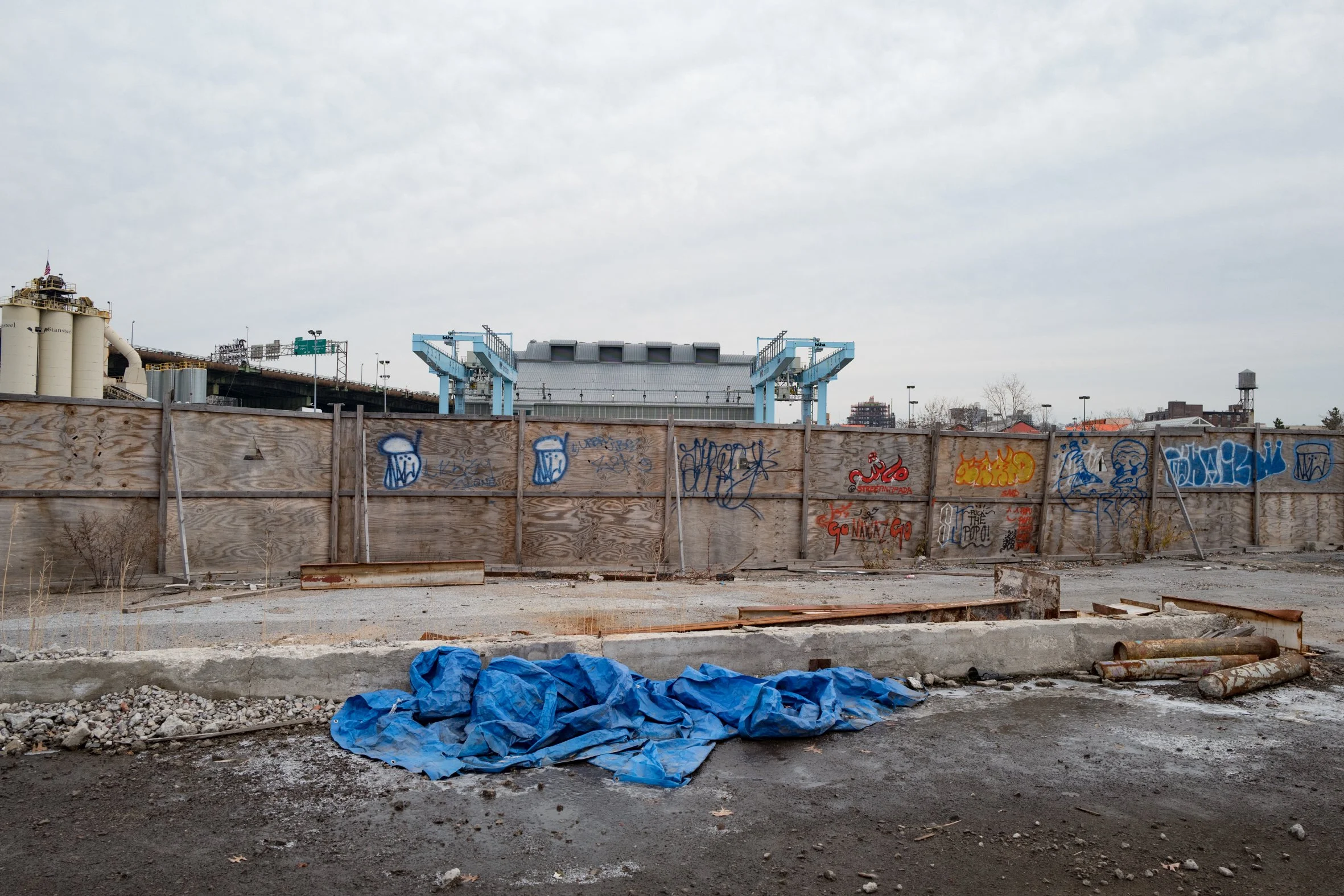
Although there aren’t any people in my images, I try to capture traces of life. The excitement of the project developed because there were no people on the street while I was there. A lot of my images show traces of life through art and graffiti. Then there’s a grouping of chairs and a table left on the sidewalks. The image makes one imagine and conjure up the meaning of this vignette. Is it garbage or an intimate outdoor seating area? There’s a photograph of Sunnys’ bar which has been serving in Red Hook since the 1890’s. The picture tells a story of its age by the water damaged countertops and peeling paint worn from over 100 years of use. Each picture tells its own story. We see store windows taped to protect from storm damage. There are overgrown ball fields that make one think of why this might be. There were so many clues that needed to be unraveled through my wandering. Then, about three weeks into my travels, I discovered my location by walking straight up to the Queen Mary sitting proud on Van Brundt Street. Of course, I’m in Red Hook, the home port of the Queen Mary.
Changing Landscape: You mention that what was there one week would be gone the next. How did you handle photographing a place that was constantly changing?
It was difficult to keep track of the ever-changing landscape. On my first day of taking pictures, I realised that I wanted to have a record of where I was walking. I always carry a little notebook with me. I started drawing the streets and street names while I wandered. On that first day, I wandered down a street of fantastic old Victorian warehouses in various states of decay. I wanted to return the following week to take more photos of this location. I returned the following week and followed my little hand-drawn map. No matter how much I tried, I couldn’t find the street that I had been on during the previous week. Buildings and streets seemed to have disappeared. It was often very confusing to be walking towards a specific building and not being able to find it.
It took me a year to realise why I couldn’t find this street of warehouses. As I was looking through my photo files, I stumbled upon an image that was just a piece of the warehouse that I had been looking for. That building and all the streets behind it had been torn down within a week of when I had first stumbled upon them. This made my adventure even more exciting. I was photographing a world that was partially disappearing.
Influences: You were inspired by Lewis Baltz, Robert Adams, and Walker Evans. What specific lessons from these photographers guided your work in Red Hook?
We often see the inspiration in the works of artists and photographers from the artists who came before them. I’ve learned a lot from Walker Evans, Robert Adams, Lewis Baltz, and others. Ive learned to trust my instincts and not try to make something out of an image that it isn’t there. I used to look at my work and say that my framing seems simple. Should I be doing something different? When I look at the work of these three photographers, I see similarities to my work.There is honesty, accessibility, and straight forwardness.There is no embellishment or impeding their frame with distractions. I don’t question my work but rather honor it in telling my story.
Authentic Documentation: You say you photograph each scene exactly as you find it, including trash. Why is showing things without changes important to your photography?
When I photograph, I see things in a very specific way that translates to how I frame each image. I try not to jazz an image up. I’m more concerned with authenticity. Generally, that authenticity comes from a considered approach. What made me stop and look? How do I see it? How do I want you, the viewer, to see my image? In Red Hook, it was particularly important for me to be mindful of the truthfulness of each image. The Hook is a story of exploration and discovery. It wouldn’t be authentic unless I captured the simplicity of each step along the way. There is honesty in my photography.
Color and Light: How do you use color and light to show the character of Red Hook's post-industrial landscape?
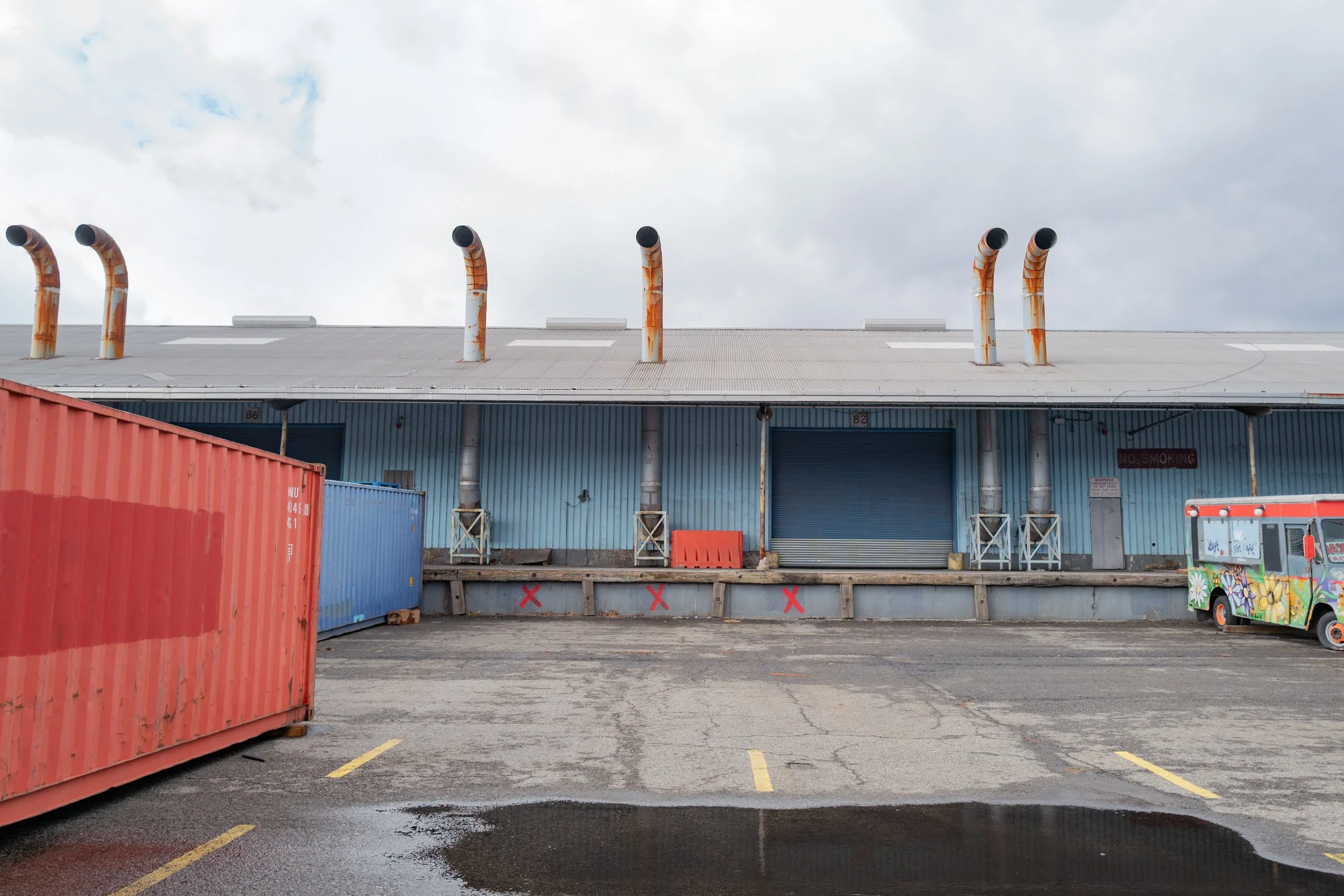
Most mornings when I visited Red Hook, it was usually cloudy, rainy, or snowing, rarely sunny. The flat light eliminated unwanted shadows and illuminated the colour, texture, and detail of the buildings. The colours of antiquity were enhanced by the flat light. I shot with the then-new Leica Q. The camera captured a lot of surprising detail in my images. That first evening, when I was home and looking over my files, I was happily surprised by the exceptional detail and colours that I captured with the Leica. I continued using the Q for the rest of the series.
Historical Layers: Red Hook has changed from a busy seaport to an abandoned area and now faces gentrification. How do your photos show these different time periods?
There are so many references to the changing times in Red Hook. My pictures were taken from 2017 and 2019.
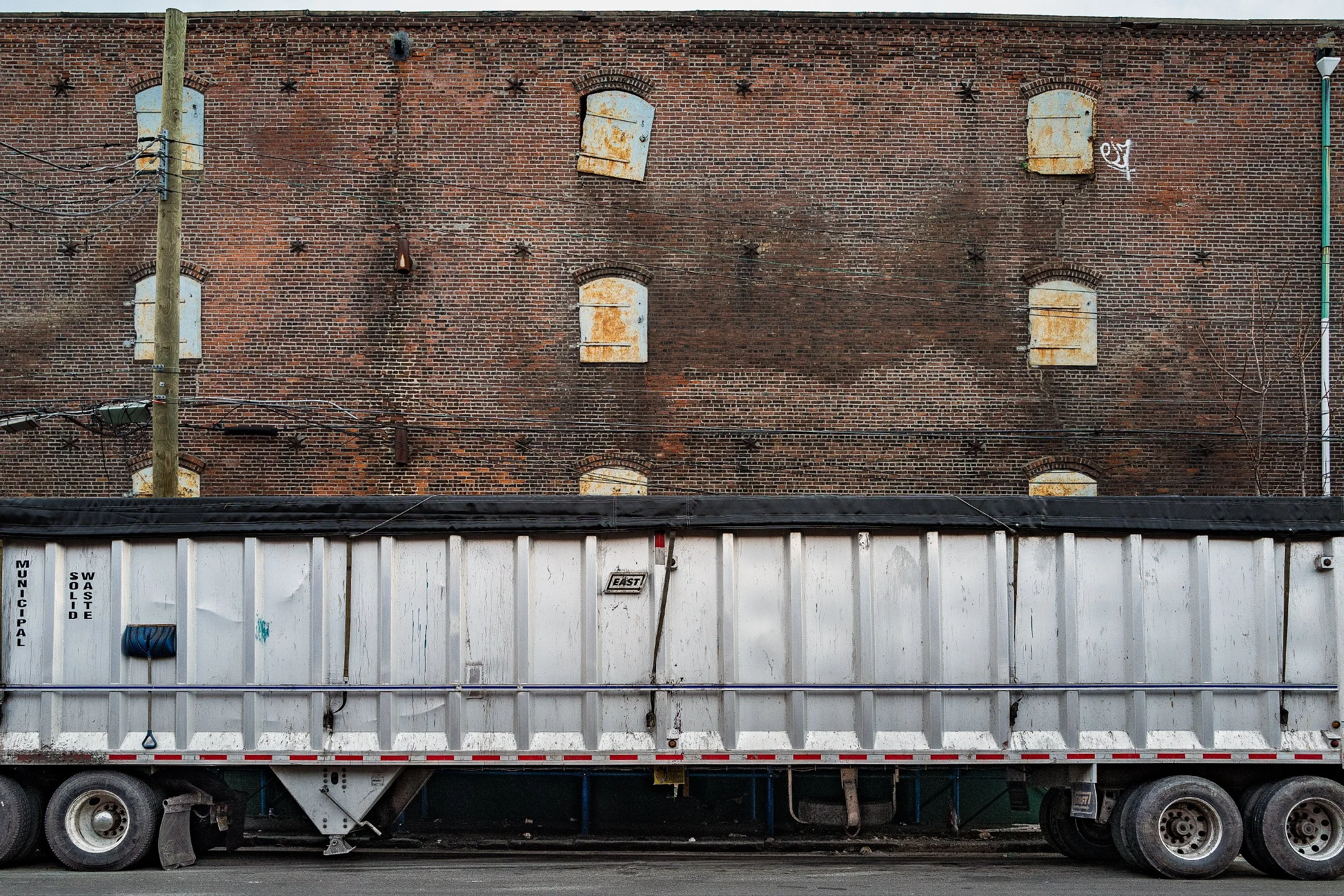
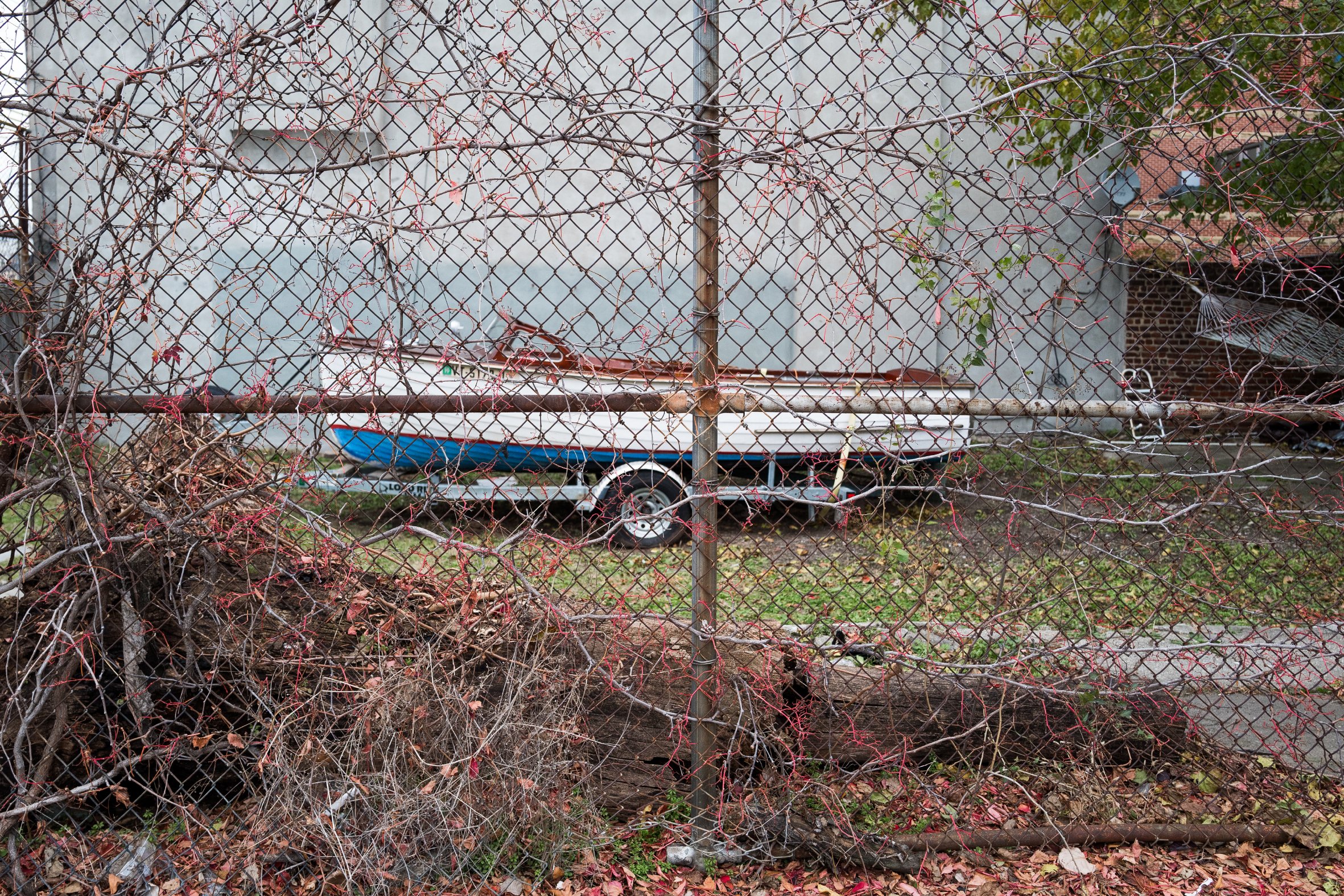
Modernity juxtaposed with historic images helps to show the transition. One example is an image called “Falling Windows” where a shiny new 16-wheeler stands before an early 19th-century warehouse with blue copper windows falling from it. Modern buildings peek up behind graffitied walls and vine-covered fences. Then there is the faint appearance of the names of defunct factories that appear on the sides of buildings, speaking of a time long ago. A barbed-wire fence of a construction site abuts a newly renovated home. Everything in Red Hook is in a state of flux.
The Red Hook seaport was once bustling with stevedores and cargo ships travelling the world. Today the seaport boasts modern warehouses, party boats, and the Queen Mary sitting on Van Brundt Street.
Missing Landmarks: You compare Red Hook's missing tall buildings to how New York felt after the Trade Towers disappeared. How does photography help you deal with spaces where important things are missing? (Not missing tall building)
In my book, I talk about how disappearing landmarks contributed to my experience of being lost. Each week I would return to Red Hook with a notion to visit places that I had photographed the week before. My memory and a little notebook were my guide. However, often neither my memory nor my little notebook would help me find my way. From week to week, buildings and entire neighbourhoods would disappear. I felt satisfaction that I managed to capture an image one week, but disappointed that when I returned I couldn’t continue my work.
I compare my journey through Red Hook to the loss of the World Trade Centre after 9/11. After 9/11, while walking in NYC, the image of the trade centre was still etched in my brain. I could be walking down a street that in the past had the trade centre in my view. But after it was gone, so did the reliability of my memory; am I in the right place? In Red Hook, with things disappearing every week, I often distrusted my memory. I continued to wander to try to make sense of it.
To discover more about this intriguing body of work and how you can acquire your own copy, you can find and purchase the book here. (Kehrer Verlag, Amazon)
More photography books?
We'd love to read your comments below, sharing your thoughts and insights on the artist's work. Looking forward to welcoming you back for our next [book spotlight]. See you then!
Robin de Puy could no longer make this project alone. She first photographed Randy in Ely, Nevada, during a 2015 road trip and kept returning to him for more than ten years. Interviews