AT A GLANCE
- Known for
- Street and night photographs of New York, especially around Times Square, 1946–1951, such as Twins, New York (1948)
- Worked in
- Black and white
- Camera
- A Leica for the street; 16mm movie cameras in the 1960s
- Also
- Fashion and magazine work for Junior Bazaar, Harper’s Bazaar, Flair, Glamour, Mademoiselle, Vogue and Life
- Start with
- Louis Faurer (Steidl, 2016)
Louis Faurer (1916–2001) was an American photographer from Philadelphia who made his best-known pictures on the streets of New York between 1946 and 1951. He earned his living with fashion and magazine work and photographed the city, often at dusk and at night, for himself. A close friend of Robert Frank, he is often called a photographer’s photographer.
The story
In 1948 Edward Steichen of the Museum of Modern Art put the young Louis Faurer into his exhibition In and Out of Focus. He also gave him an order. “Boy,” he boomed, “go out and photograph and put the prints on my desk.” His fist hit the glass top of the desk. Faurer later wrote that it seemed a miracle the glass did not break.
Faurer grew up in South Philadelphia, the son of Polish immigrants. At 13 he sent drawings to Walt Disney, who offered to consider him for a job in California. It seemed too far away. From 1934 to 1937 he drew caricatures on the beach at Atlantic City. In 1937 he bought his first camera from the photographer Ben Somoroff and began to photograph on Market Street. The early books of the Farm Security Administration became his “bible.” He admired the work of Walker Evans most of all.
In 1947 Lillian Bassman of Junior Bazaar hired him. At the Bazaar studio he met Robert Frank, just arrived from Switzerland, who let him stay in his loft with nine cats. Evans looked at his photographs and warned him: “don’t become contaminated.”
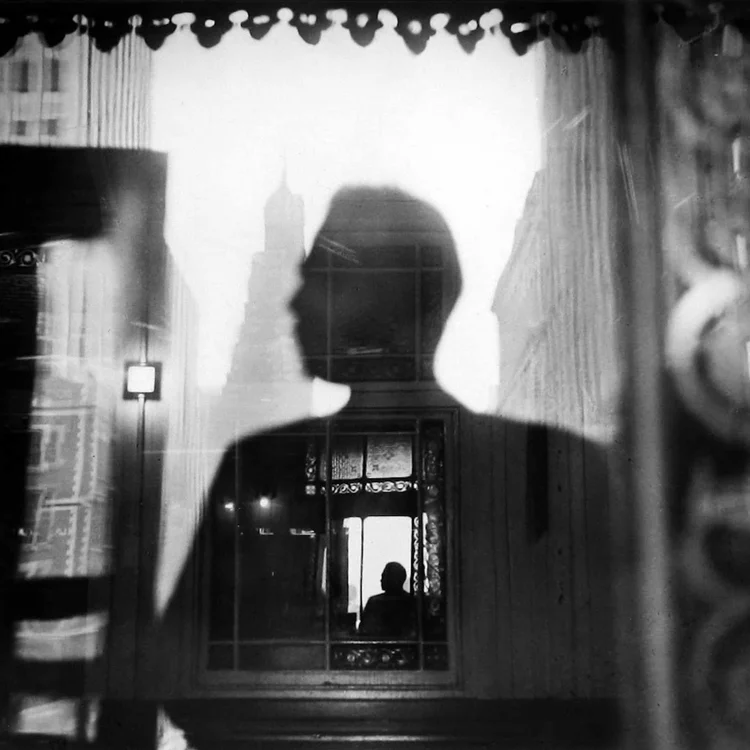
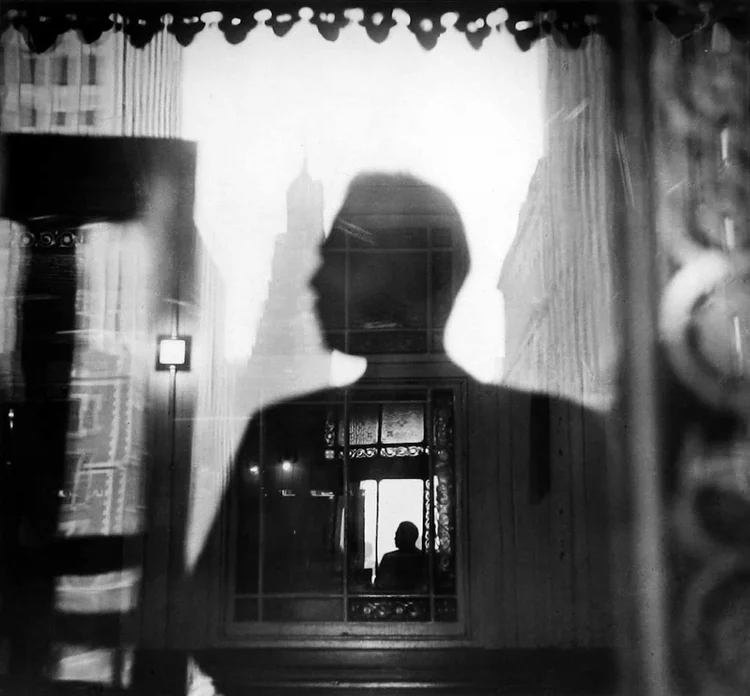
Still, the streets pulled harder than fashion. From 1946 to 1951 he photographed almost daily, and the dusk light led him to Times Square. At night he printed in Frank’s darkroom. Sometimes he was in the frame himself, as a reflection. On the Third Avenue El he made a self-portrait in a window, his dark profile laid over the city.
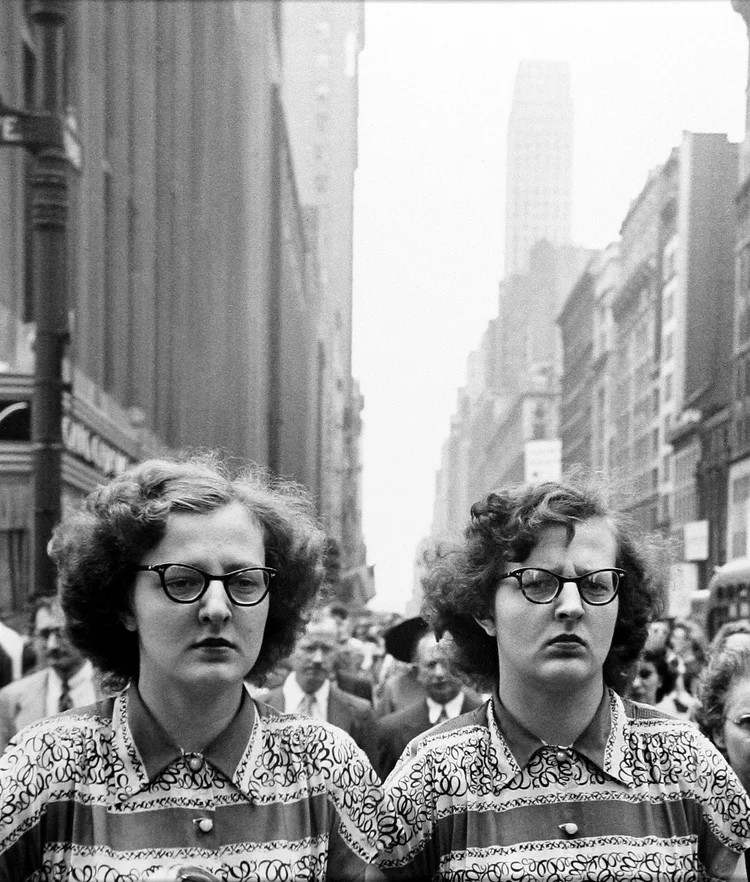
In 1948 he found two young women with the same hair, glasses and patterned blouse: Twins, New York.
Magazines paid the bills, from Flair to Vogue. He never had the means to make a book of his own pictures. In 1968 he left for Europe, and in 1974 he came back. In 1977 Marlborough Gallery showed his work. In 1984 a car hit him on a New York street, and he never photographed again. He died in 2001.
Steichen called him “a seeker and finder of magic.” The young man who saw a miracle in an unbroken desk kept finding small miracles in the street. “As long as I’m amazed and astonished, as long as I feel that events, messages, expressions and movements are all shot through with the miraculous, I’ll feel filled with the certainty I need to keep going,” he said.
The work


- 1916Born on 28 August in Philadelphia
- 1937Buys his first camera and starts photographing on Market Street
- 1947Hired by Junior Bazaar in New York; meets Robert Frank
- 1948Shown in Steichen’s In and Out of Focus at MoMA
- 1955Included in The Family of Man at MoMA
- 1959First solo show, at Limelight Gallery, New York
- 1977Solo show at Marlborough Gallery, New York
- 1984Badly hurt by a car in New York; stops photographing
- 2001Dies on 2 March in New York
Lessons
Follow the light. Dusk light led him to Times Square. From 1946 to 1951 he went back almost every day.
Let paid work support your own work. Magazine assignments for Life, Hearst and Condé Nast let him keep photographing the streets.
Finish the picture in the darkroom. He was a gifted printer and worked with blur, grain and negatives laid on top of each other.
Try this: go to one busy street at dusk, five evenings in a row. Photograph through shop windows and look for reflections, including your own. At home, pick one frame where the reflection and the street become one picture.
Gear
35mm rangefinder camera: he wrote that in the 1950s and 1960s he carried a 16mm movie camera in the street just as he carried a Leica.
16mm movie camera: in the mid and late 1960s he filmed New York streets by hand with Arriflex and Beaulieu cameras. The films were never shown commercially.
He bought his first camera in 1937 from the photographer Ben Somoroff. The model is not recorded in the sources we checked.
Books
Louis Faurer (Steidl, 2016). Made with the Fondation Henri Cartier-Bresson in Paris for its 2016 exhibition, the first show of his work in France since 1992. The book has 208 pages and about 100 photographs, from Philadelphia in the late 1930s to the New York streets of the late 1940s and 1950s. It has a foreword by Agnès Sire, an essay by Susan Kismaric, and two original texts, one by Faurer himself and one by Walter Hopps. It is the easiest book to find today and a good first look at his work.
Louis Faurer (Merrell with the Museum of Fine Arts, Houston, 2002). Written by curator Anne Wilkes Tucker, with Lisa Hostetler and Kathleen V. Jameson, for the retrospective that opened in Houston in 2002 and travelled to four more museums, ending in Philadelphia in 2003. It has 208 pages, an essay by Tucker and one by Hostetler on Faurer and film noir. It also brings back fashion pictures from Harper’s Bazaar and Vogue that had not been printed since they first ran in the magazines. The most complete study of his life and work.
Louis Faurer: Photographs from Philadelphia and New York, 1937–1973 (University of Maryland Art Gallery, 1981). A slim catalogue of 53 pages, edited by Edith A. Tonelli and John Gossage for his exhibition at the University of Maryland in 1981. It includes a text by Walter Hopps and Faurer’s own account of his career, with the stories of Disney, Walker Evans, Robert Frank and Times Square. A rare book now, but important for collectors and for anyone who wants Faurer’s own words.
Louis Faurer (Photo Poche, Centre national de la photographie, Paris, 1992). A small paperback of 124 pages in the French Photo Poche series, with an introduction by Martin Harrison and notes on the pictures by Stuart Alexander. It was made for his exhibition at the Centre national de la photographie in 1992. A cheap, pocket-size way to see his New York street photographs.

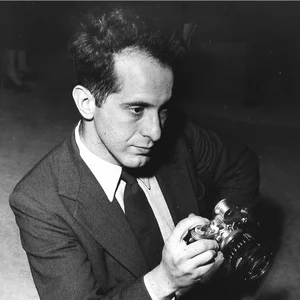

Photography Gear
Some of the gear he used includes:
• Kodak Vollenda 35mm Camera: His first camera, acquired in 1937, which initiated his journey into photography.
• Leica Rangefinder Cameras: Known for their compact size and quiet operation, these cameras were ideal for candid street photography, allowing Faurer to capture spontaneous moments discreetly.
• Arriflex 16mm Camera: Used during his exploration into filmmaking in the 1960s, enabling him to capture dynamic street scenes with ease.
• Beaulieu 16mm Camera: Another camera employed for his film projects, valued for its portability and versatility in capturing candid moments.
Books
Louis Faurer’s work is encapsulated in the monograph titled “Louis Faurer”(Amazon), published by Steidl in collaboration with the Fondation Henri Cartier-Bresson in 2016.
This publication presents a comprehensive collection of Faurer’s street photography from the 1940s and 1950s, focusing on the streets of New York City. The book includes approximately 100 images that showcase his ability to capture candid moments of urban life, emphasizing themes of solitude and introspection within the bustling city environment. Faurer’s use of natural light, reflections, and high-contrast compositions is evident throughout the collection, offering insights into his techniques and artistic vision.
For practicing photographers, this monograph serves as a valuable resource by illustrating how Faurer employed various photographic techniques to convey emotion and narrative. His work demonstrates the effective use of natural lighting and reflections to create mood and atmosphere, as well as the importance of capturing candid moments to tell compelling stories. Additionally, the book provides context through essays and interviews, shedding light on Faurer’s approach and the historical backdrop of his work.
Quotes
• “Original art emanates in the mind… and lessens society’s confusion from self-indulgence, avarice, and greed to trust, hope, and love.”
• “I have an intense desire to record life as I see it, as I feel it.”
Legacy and Influence
Louis Faurer’s work remains a significant contribution to American postwar street photography. His photographs from New York and Philadelphia serve as historical records of mid-20th-century urban life. Though he did not achieve widespread recognition during his most active years, his work gained broader attention in the 1990s. Faurer is now regarded as a key figure in 20th-century American photography, particularly for his focus on personal, often overlooked moments in public settings.