What is landscape photography?
Landscape photography shows the land and the places where people live. Its subjects include mountains, coasts, forests and deserts, but also farms, roads, suburbs, dams and mines. Some landscape photographers look for wilderness. Others show how people have changed the land.
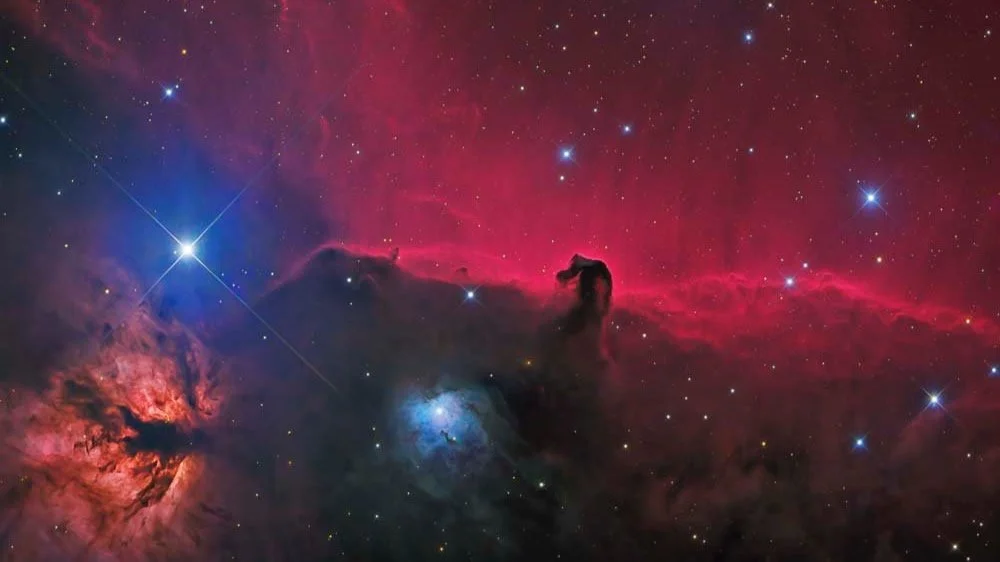
The genre is close to several others. Night landscapes overlap with astrophotography, views from above with aerial photography, and landscapes with animals with wildlife photography.
Main approaches
Wilderness landscape. Wide views of mountains, rivers and national parks, often in dramatic light. Ansel Adams is the best-known example.
The altered landscape. Plain, neutral pictures of suburbs, parking lots and industrial sites. This approach became widely known after the exhibition New Topographics in 1975, with photographers such as Robert Adams and Stephen Shore.
Industrial landscape. Large views of mines, quarries, oil fields and factories. The Canadian photographer Edward Burtynsky (born 1955) is known for large-format pictures of such places, for example the series Manufactured Landscapes and the Anthropocene project (2014 to 2018).
Quiet and night landscape. Simple compositions, long exposures and often black and white. Michael Kenna often works at dawn or at night. He has photographed Japan since his first trip there in 1987.

by David Muench
History
In the 1850s, the French photographer Gustave Le Gray made seascapes from two negatives: one for the sea and one for the sky. He printed them together so that both parts of the picture kept their detail. This method is called combination printing.
In the United States, early landscape photography was tied to exploration and to the first national parks. Carleton Watkins photographed Yosemite Valley in 1861 with a mammoth-plate camera that used glass plates of 18 × 22 inches. His pictures were shown to members of Congress, and they are often credited with helping persuade Abraham Lincoln to sign the Yosemite Grant in 1864, which protected the valley.
William Henry Jackson was the photographer of the Hayden Geological Survey of 1871. His photographs of Yellowstone helped convince Congress to create Yellowstone, the first U.S. national park, in March 1872. Timothy O’Sullivan worked on two other government surveys of the West: under Clarence King from 1867 to 1869 and under George Wheeler from 1871 to 1874.
In the 20th century, Ansel Adams became the central figure of the genre. In 1927 he made Monolith, the Face of Half Dome, using a dark red filter to darken the sky. In 1932 he showed his work in the first exhibition of Group f/64 in San Francisco, together with Edward Weston and others. The group wanted sharp prints with a full range of tones, instead of the soft, painterly look of pictorialism. With Fred Archer, Adams developed the Zone System, a method that links exposure, film development and printing. He was also active in the Sierra Club. His book and his testimony before Congress supported the campaign that made Kings Canyon a national park in 1940.
In 1975 the exhibition “New Topographics: Photographs of a Man-Altered Landscape” opened at the George Eastman House in Rochester, New York. It showed ten photographers, among them Robert Adams, Lewis Baltz, Stephen Shore and Bernd and Hilla Becher. Their pictures of tract houses, parking lots and industrial buildings looked plain on purpose. Many visitors disliked the show at first. Today historians count it among the most important photography exhibitions of the 20th century.
Later photographers continued both directions. In 2004 Sebastião Salgado began Genesis, eight years of work in more than 30 places where nature was still untouched. The book was published in 2013. Edward Burtynsky, by contrast, has spent decades photographing land changed by industry.
Techniques
Light. Many landscape photographers work in the hour after sunrise and the hour before sunset, when the light is low and warm, or in the blue hour after sunset. Cloudy days suit forests and waterfalls, because the light is soft and even.
Depth of field. To keep both the foreground and the distance sharp, photographers use a small aperture and focus at the hyperfocal distance. When that is not enough, focus stacking combines several frames focused at different distances.
Long exposure. A neutral density filter lets in less light, so the shutter can stay open for seconds or minutes. Moving water and clouds then look smooth.
Bright skies. A bright sky and a dark foreground can be balanced with a graduated filter, or by bracketing several exposures and merging them later.
Polarizing filter. It reduces reflections on water and wet leaves and can make a blue sky darker.
How to start
Any camera works, including a phone. A wide-angle lens shows space and a strong foreground. A telephoto lens picks out details and makes distant hills look closer together. A tripod helps in low light and for long exposures.
Many landscape photographers return to the same place again and again, in different seasons and weather. Before you go, check the weather and the rules of the place. Stay on paths and leave nothing behind.
Books to start with
Ansel Adams: 400 Photographs (Little, Brown, 2007), edited by Andrea G. Stillman. A survey of Adams’s whole career in chronological order.
Robert Adams, The New West (first published in 1974; new edition Aperture, 2008). Photographs of the new suburbs along the Colorado Front Range.
Sebastião Salgado: Genesis (Taschen, 2013). The book of Salgado’s eight-year project about untouched places.

by Sebastião Salgado
Legacy
Landscape photography has changed how people see nature and the use of land. Photographs by Watkins and Jackson supported the first protected parks in the United States. Ansel Adams received the Presidential Medal of Freedom in 1980, in part for his work for conservation. New Topographics turned attention to ordinary, built places, and many photographers still work in that tradition.
Discover landscape photographers · Landscape photography in the Photopedia Dictionary
Last updated: November 2026