AT A GLANCE
- Known for
- Quiet black and white landscapes, often made at dawn or at night with long exposures; nearly four decades of work in Japan
- Works in
- Black and white film, square format, gelatin silver prints made by hand
- Camera
- Hasselblad medium format since 1987; 35mm before that
- Also
- Helped Ruth Bernhard with her printing for over ten years; more than 60 books
- Awards
- Imogen Cunningham Award (1981) · Chevalier of the Order of Arts and Letters, France (2000)
- Start with
- Forms of Japan (Prestel, 2022)
- Links
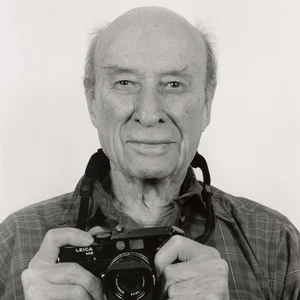
Michael Kenna (born 1953) is a British landscape photographer. He was born in Widnes, an industrial town in the north-west of England, and moved to San Francisco in 1977. Today he lives in Seattle. Kenna works in black and white film, often at dawn or at night, with exposures that can last up to ten hours. His quiet pictures of Japan, England, France and China leave out people but keep their traces. Since his first trip in 1987, Japan has come to feel like home to him. We interviewed him about his book Japan / A Love Story.
The story
It was the middle of the night in Tokyo. In 1987, Michael Kenna walked through the orange lit streets of the Meguro district, wide awake with jet lag. All the shops were closed. Yet piles of goods lay on the pavements in front of the shutters, and nobody seemed worried about theft. He had come for his first exhibition and book in Japan.
Years later, the same lesson came back in a sharper form. In a public park in Kumamoto, on the island of Kyushu, Kenna left his Hasselblad on a bench. The lens, the film back and the light meter were there too. He noticed only hours later, after driving many miles to another place. Kenna was horrified, but his guide was calm. The guide was right. Someone had handed everything to a park attendant, and the camera was waiting for him. “These were some early lessons about what respect means in Japan,” Kenna told us.
The year 1987 changed his way of seeing in another way too. That year he bought his first Hasselblad, with a viewfinder you look down into from above. For fifteen years he had looked through a 35mm camera, and his pictures had become a bit predictable. Now everything in the viewfinder was back to front, and at first it was very hard to work. But he began to try new things. He put the camera on the ground, held it just above water and propped it against walls. His pictures became square and more graphic.
Until 2000, his visits to Japan were mostly to cities, for openings and book signings. From 2001 he went deeper into the landscape: around Mount Fuji, Lake Biwa, the Japan Sea coast, then Shikoku, Kyushu and Hokkaido. For more than twenty years he has tried to return to Hokkaido every winter.
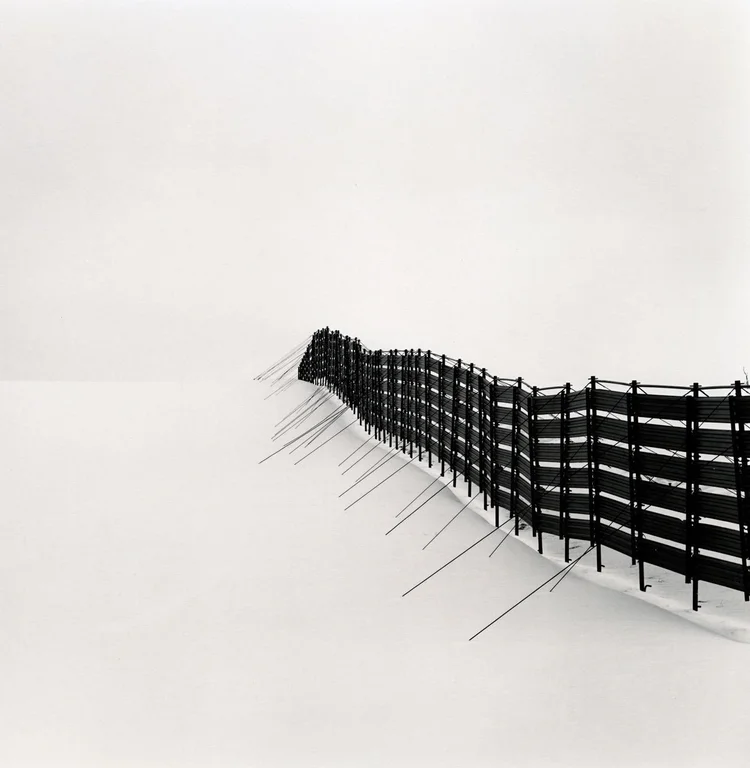
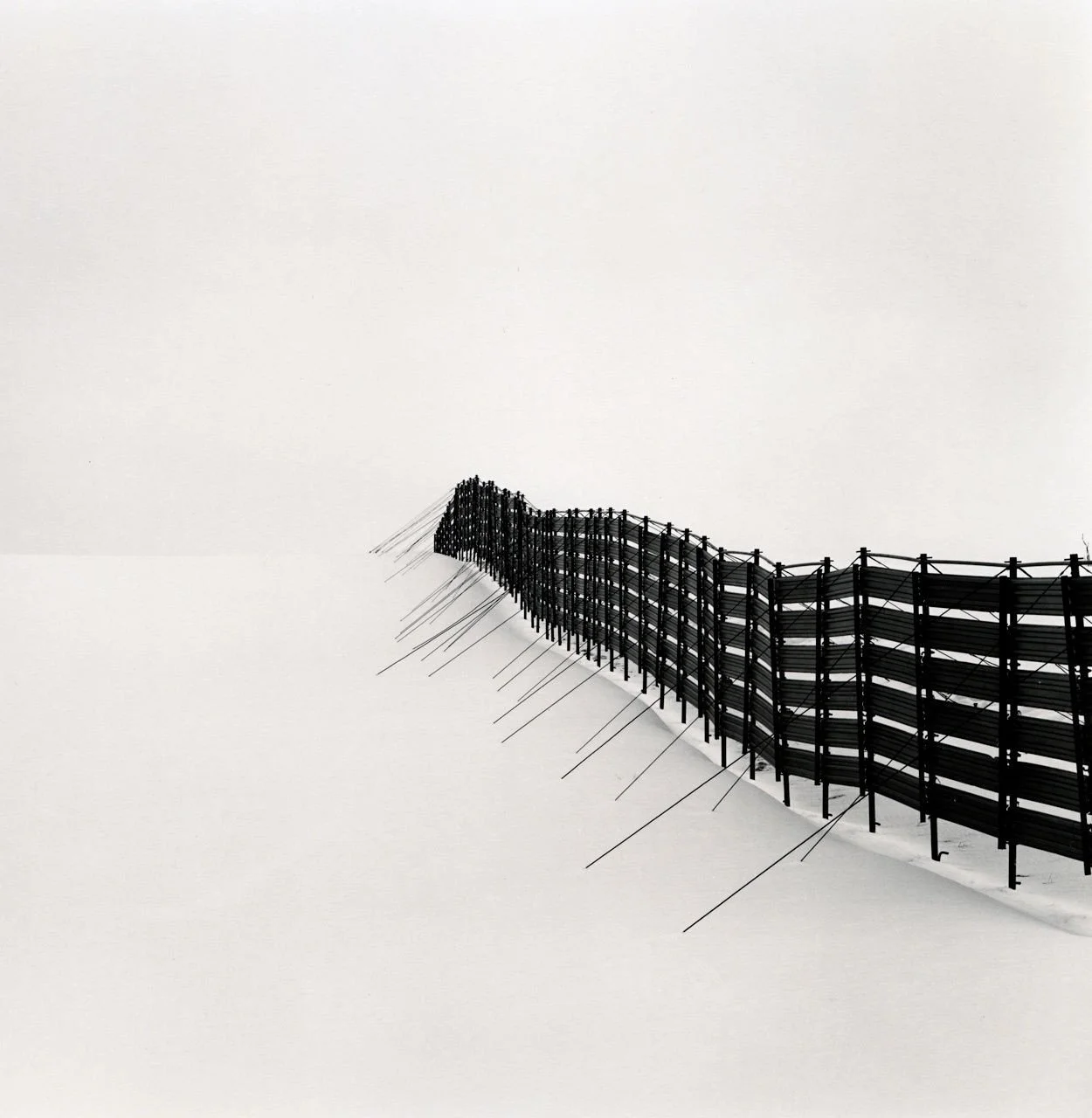
On one of those trips, driving alone, he saw a fence climbing a snow-covered hillside. He stopped by the road and photographed it. Later a truck driver had to tow his car out of the snowy field where he had parked. He has come back to that hillside almost every year since. Snow fences in Teshikaga appear in many of his pictures, as in Prolonged Snow Fence, Teshikaga, Hokkaido, Japan, from 2007.
He does not try to plan these moments. As he told us: “After fifty years of photographing, my conclusion is that one needs to relinquish the notion of control and accept any and all surprises.”
The work
Kenna was born in 1953 in Widnes, Lancashire, into a working-class Irish Catholic family. As a boy he wanted to become a priest. From 1964 to 1972 he attended St Joseph's College, Upholland, a Catholic seminary school. Every night there was the Magnum Silentium, the great silence, with no talking for about ten hours. He later said that this may have prepared him for slow, patient analog work. After a year at the Banbury School of Art, he studied photography at the London College of Printing and graduated with distinction in 1976.
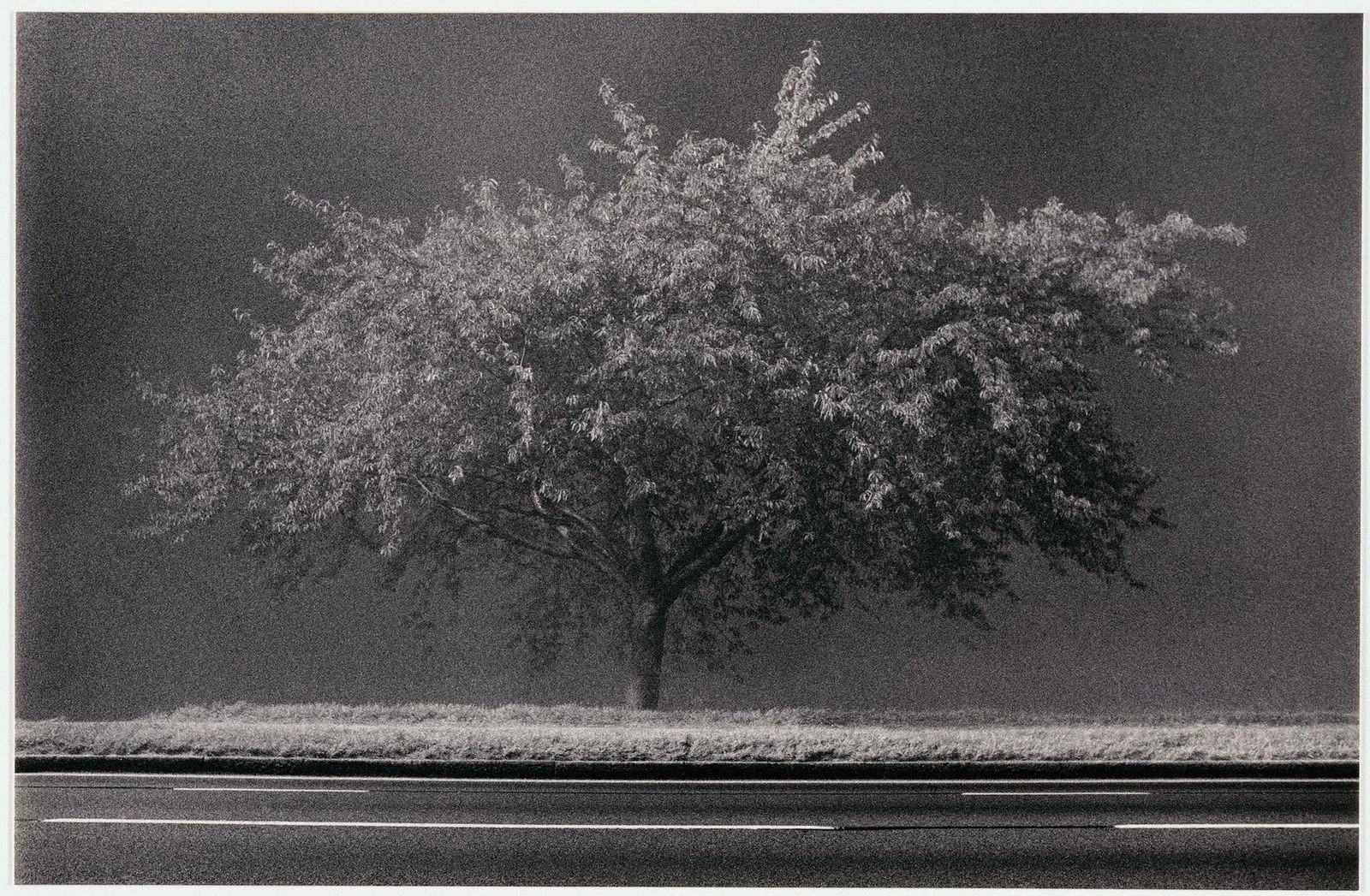
A show changed his direction. In 1975 he saw The Land at the Victoria and Albert Museum, an exhibition directed by Bill Brandt. Kenna names Brandt as a major influence, together with Atget, Emerson, Sudek, Callahan, Sheeler, Stieglitz and Ruth Bernhard. He first earned his living with commercial work and photographed landscapes on his own time. Roadside Tree, Richmond, Surrey, from 1983, comes from these English years. Between 1983 and 1986 he also photographed the old mills and canals of Lancashire and Yorkshire, where he grew up.
In 1977 Kenna moved to San Francisco. There he met the photographer Ruth Bernhard, and for over ten years he helped her with printing. She was very strict about quality, and he learned a great deal from her. Later he moved to Portland, Oregon, and then to Seattle. Printing has stayed at the heart of his work. His silver gelatin prints are handmade, hand-retouched, signed and numbered.
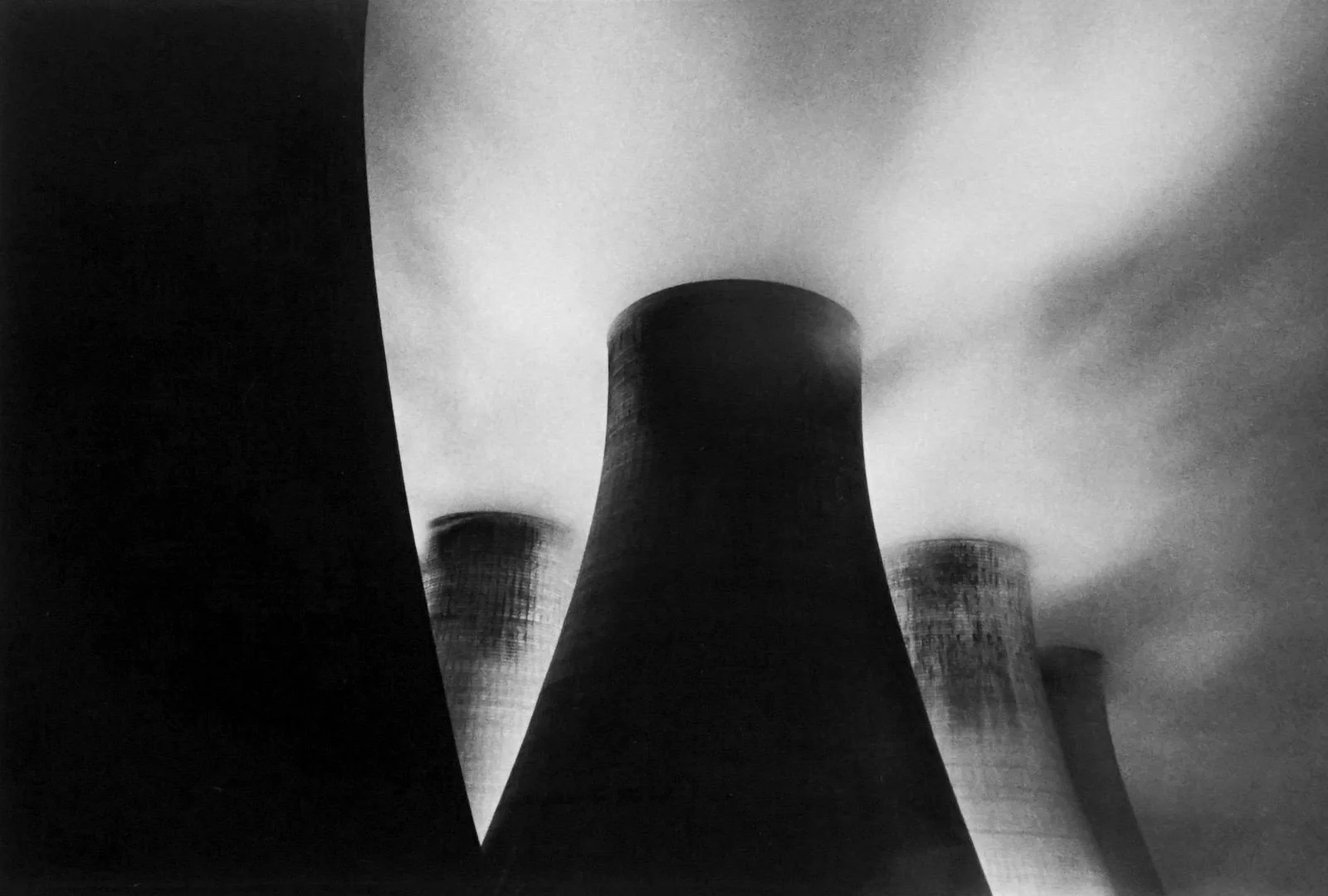
He works in long projects that can take seven or eight years, and he often keeps going after they seem finished. One of them is the Ratcliffe Power Station in Nottinghamshire, seen in Ratcliffe Power Station, Study 17, Nottinghamshire, from 1985. Others are The Rouge, the gardens of André Le Nôtre in France and Mont St Michel. His photographs of the Nazi concentration camps took more than ten years. They were shown in 2000, and he donated them to France.
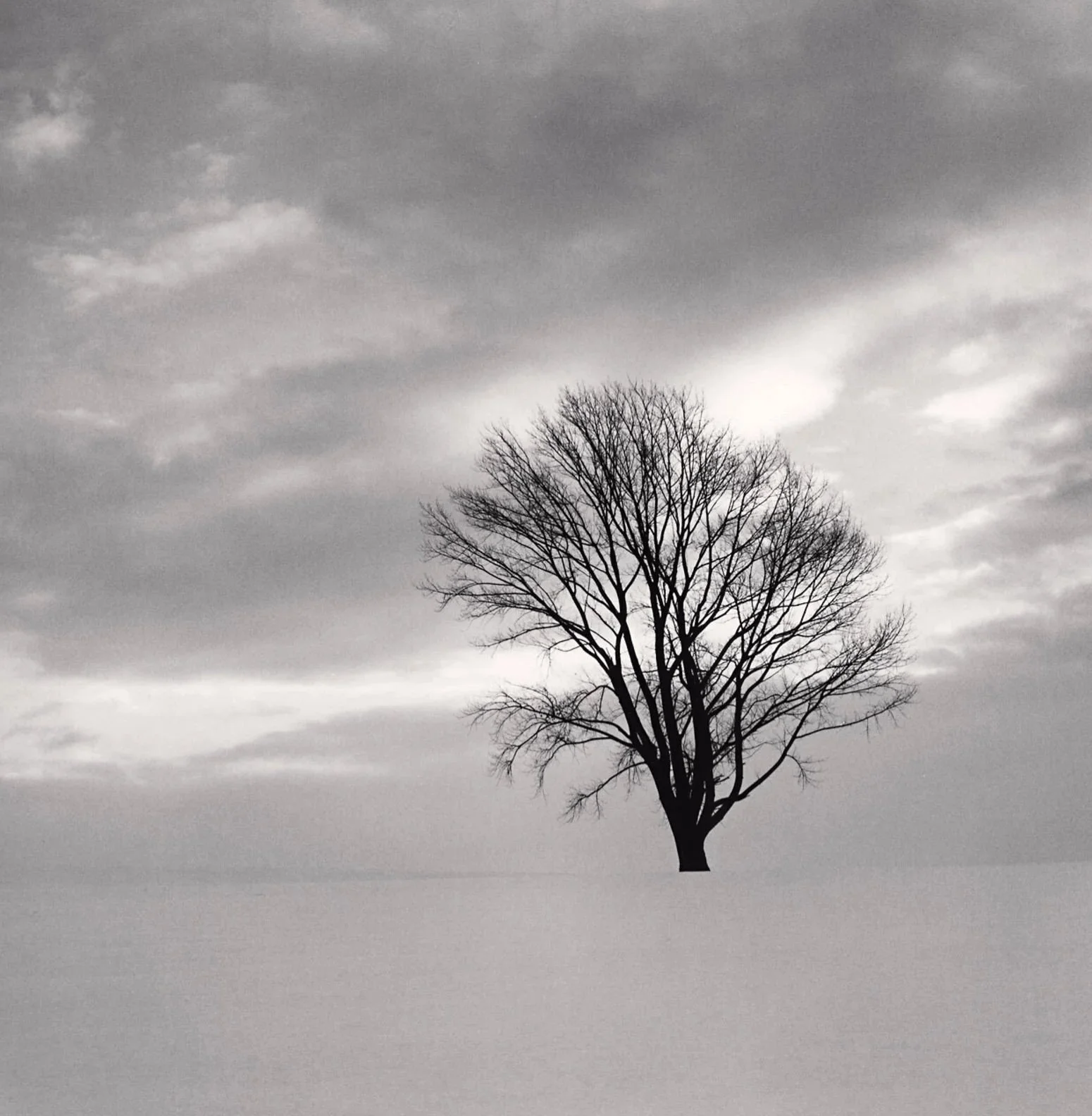
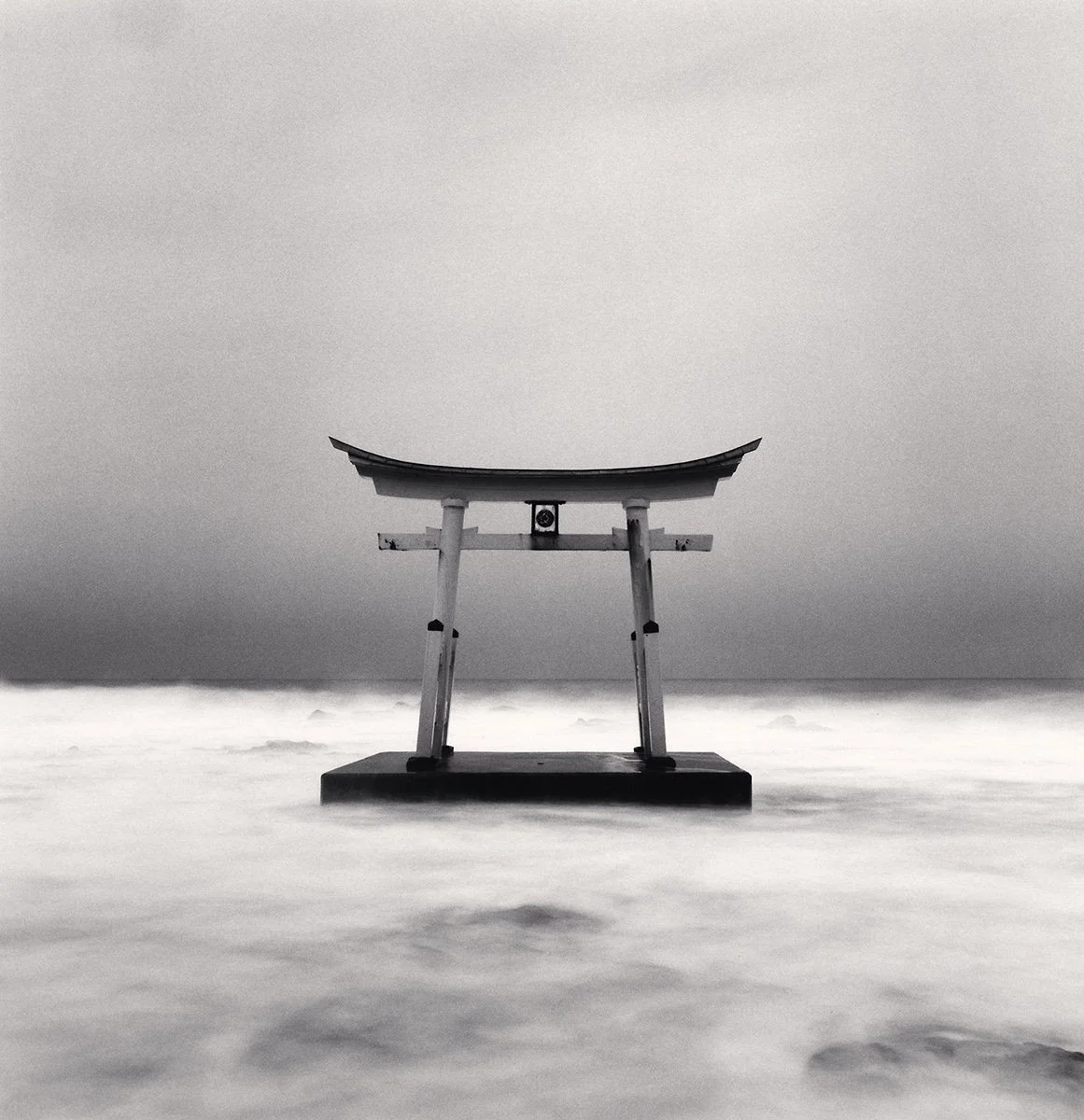
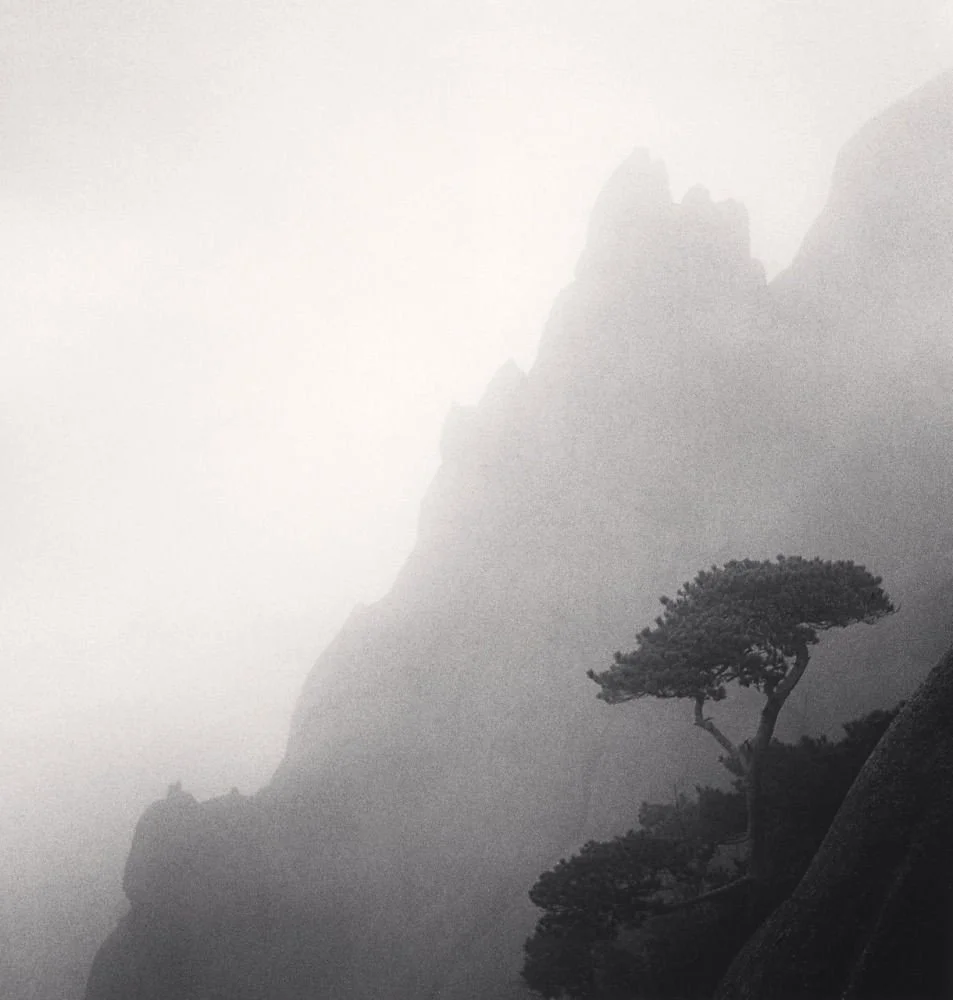
In Asia he found new chapters. In Hokkaido he made pictures such as Philosopher’s Tree, Study 7, Biei, Hokkaido, Japan, from 2009, and Torii Gate, Study 3, Shosanbetsu, Hokkaido, Japan, from 2014. In China he photographed the mountains of Huangshan, as in Huangshan Mountains, Study 23, Anhui, China, from 2009. People are almost never in his pictures, but their traces are: a fence, a gate, a pier, a power station. The Bibliothèque nationale de France showed his work in 2009. His prints are in collections such as the National Gallery of Art in Washington, the Victoria and Albert Museum in London, the San Francisco Museum of Modern Art and the Museum of Decorative Arts in Prague.
- 1953Born in Widnes, Lancashire, England
- 1964Enters St Joseph's College, Upholland, a Catholic seminary school, where he stays until 1972
- 1976Graduates with distinction in photography from the London College of Printing
- 1977Moves to San Francisco; later helps Ruth Bernhard with her printing for over ten years
- 1981Receives the Imogen Cunningham Award
- 1987First exhibition and book in Tokyo; buys his first Hasselblad
- 2000Shows his photographs of the Nazi concentration camps and donates them to France; named Chevalier of the Order of Arts and Letters
- 2009Exhibition at the Bibliothèque nationale de France in Paris
- 2024Japan / A Love Story, with 100 photographs from nearly four decades, is published by Nazraeli Press
Lessons
Go back to the same place. Kenna has returned to Hokkaido almost every winter for more than twenty years. He says the same hillside fence is different every time: the snow, the light and the forms all change.
Let the place lead. He rarely prepares much before a location. He walks, explores and waits, and he compares photographing to meeting a person and starting a conversation. Some of his best pictures came from places he first thought were dull.
Change your tool to see again. After fifteen years with 35mm, his pictures felt predictable. The square Hasselblad, with its back to front viewfinder, forced him to try low angles, reflections and simpler forms.
Try this: choose one simple place near your home, such as a fence, a tree or a post in a field. Photograph it on five different days, at dawn or in the evening, from the same spot. Use a square crop. Then put the five pictures side by side and look at what changed.
Gear
Kenna is a film photographer and has stayed with the analog process for decades. This is what the sources say about his tools.
Hasselblad medium format camera: he bought his first one in 1987, the year of his first trip to Japan. Its square format and waist-level viewfinder changed how he composed.
35mm film camera: for about fifteen years before 1987 he worked with a 35mm viewfinder. His Northern England pictures from 1983 to 1986 were made this way.
Black and white film: he works in black and white and makes his own silver gelatin prints. In his early years he also tried infrared film and plastic cameras. The sources do not name a film brand.
Books
Japan / A Love Story (Nazraeli Press, 2024). This monograph from Nazraeli Press brings together 100 black and white photographs of the Japanese landscape, many published for the first time. The essay is by the Japanese critic Kohtaro Iizawa. The book is printed in duotone and bound in linen and silk, and it came out with a touring exhibition in Tokyo, Los Angeles and London. It is the best book for anyone who wants to see how his love for Japan grew from 1987 to today.
Forms of Japan (Prestel, 2022). This large Prestel book holds 240 black and white images of Japan made over almost 30 years. It was designed by Yvonne Meyer-Lohr and is organized into five chapters: Sea, Land, Trees, Spirit and Sky. Many photographs are paired with classic haiku by Basho, Buson, Issa and others. It is a calm, generous overview for readers who like to look slowly, and a good first book on his work.
Northern England 1983-1986 (Nazraeli Press, 2021). During the 2020 lockdown, Kenna went back to old negatives from the region where he grew up. This Nazraeli Press book shows 75 plates of mills, canals, streets and seaside towns in Lancashire and Yorkshire, with an introduction by Dr. Ian B. Glover. The pictures are earlier than his square format work and show a darker, more graphic side. It is for readers interested in his roots and in the industrial north of England.
In his words
“I fell in love with Japan quickly, quietly, and irresistibly.”
“I have never been very interested in trying to reproduce copies of what I see.”
“I think the whole analog process exudes calm. For me, it’s a meditational journey.”
“Yet, each time I revisit, I find that it is different.”
“After fifty years of photographing, my conclusion is that one needs to relinquish the notion of control and accept any and all surprises.”