AT A GLANCE
- Known for
- American Prospects (1987), color pictures of the United States such as McLean, Virginia, December 1978, and the books On This Site and Walking the High Line
- Works in
- Color photography. Early prints were dye transfer prints, later work was printed as C-prints and archival inkjet prints
- Camera
- 8x10 view camera on a tripod, used for American Prospects
- Taught
- Sarah Lawrence College, where he holds the Noble Foundation Chair in Art and Cultural History
- Awards
- Two Guggenheim Fellowships (1978 and 1982) · Grand Prize, Higashikawa International Photo Festival (1985) · Rome Prize (1990 to 1991) · Citigroup Photography Prize (2004) · Montgomery Fellowship, Dartmouth (2013)
- Start with
- American Prospects (Steidl, 2023)
- Links
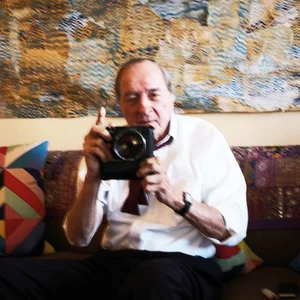
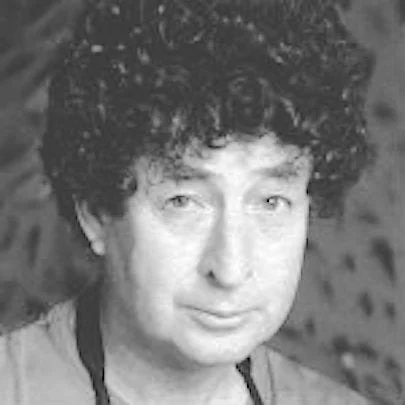
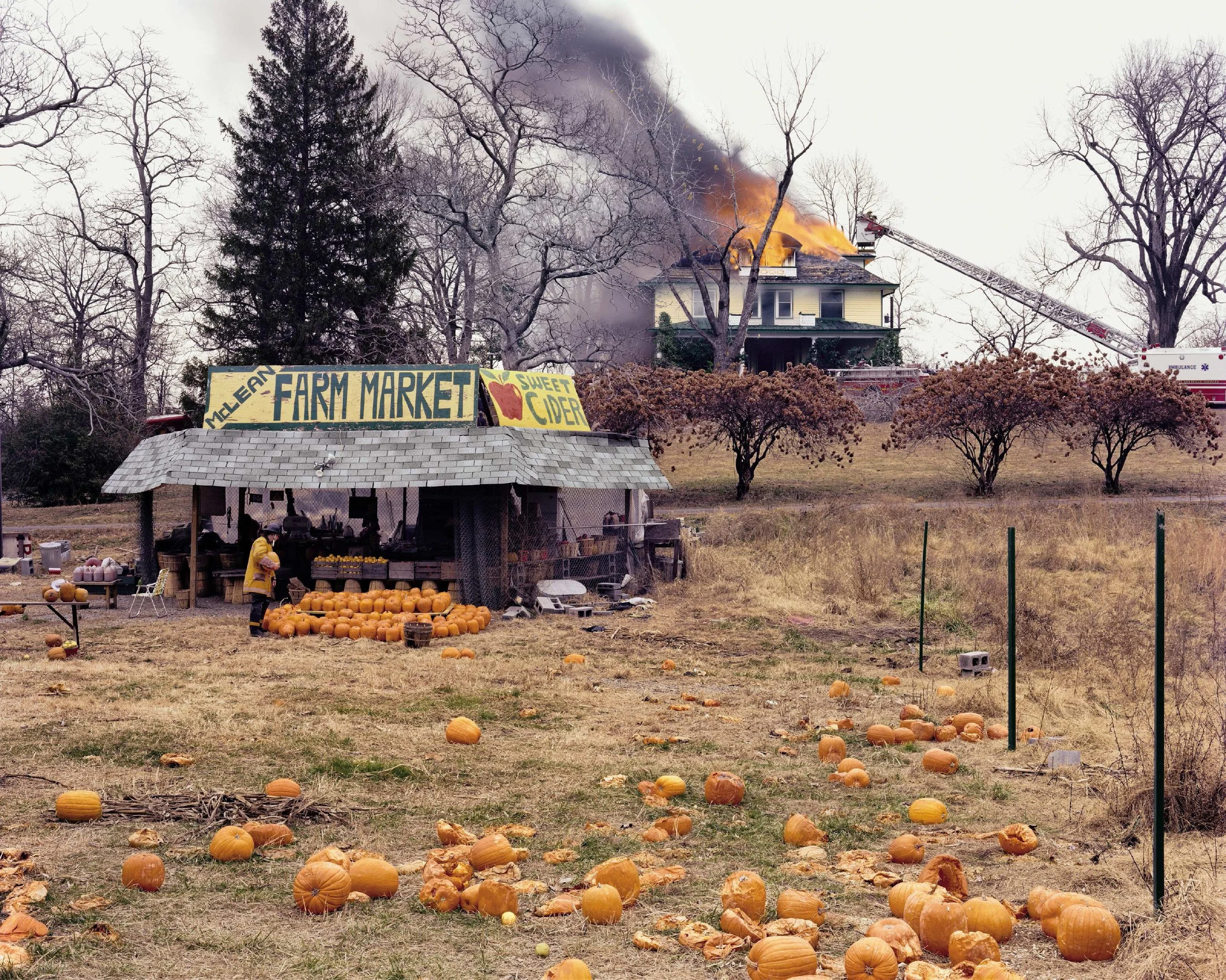
Joel Sternfeld (born 1944) is an American photographer. He was born in New York and is known for his color pictures of the United States. His book American Prospects (1987) grew out of road trips across the country with a large view camera. It includes McLean, Virginia, December 1978, a picture of a fireman shopping for pumpkins while a house burns behind him. Later he made On This Site, Sweet Earth and Walking the High Line.
The story
It was 120 degrees in Rancho Mirage, California, and the power was out. Joel Sternfeld had a Volkswagen with no air conditioning and film that did not like heat. So he walked into the local firehouse, which had an emergency generator and air conditioning, and asked if he could keep his film there for the day.
The firemen said yes. They even photocopied maps to show him where the “good damage” was. A flash flood had hit the town in 1979.
When he came back late that night, they asked if he had seen the Trans Am down the ravine. He had not. They put him on top of the fire truck “like a little kid” and drove out with the lights flashing and a searchlight on the scene. He was honest about how he felt. “I still didn’t know what was so wonderful about it, but I thought, if they’re excited, I better be excited.”
But the place was a disaster zone, and he needed permission to work there. He spent three hours at a payphone trying to reach the head of the Salvation Army. Permission came around midnight or one in the morning. He slept for about four hours in the van, in a supermarket parking lot, and got up at five.
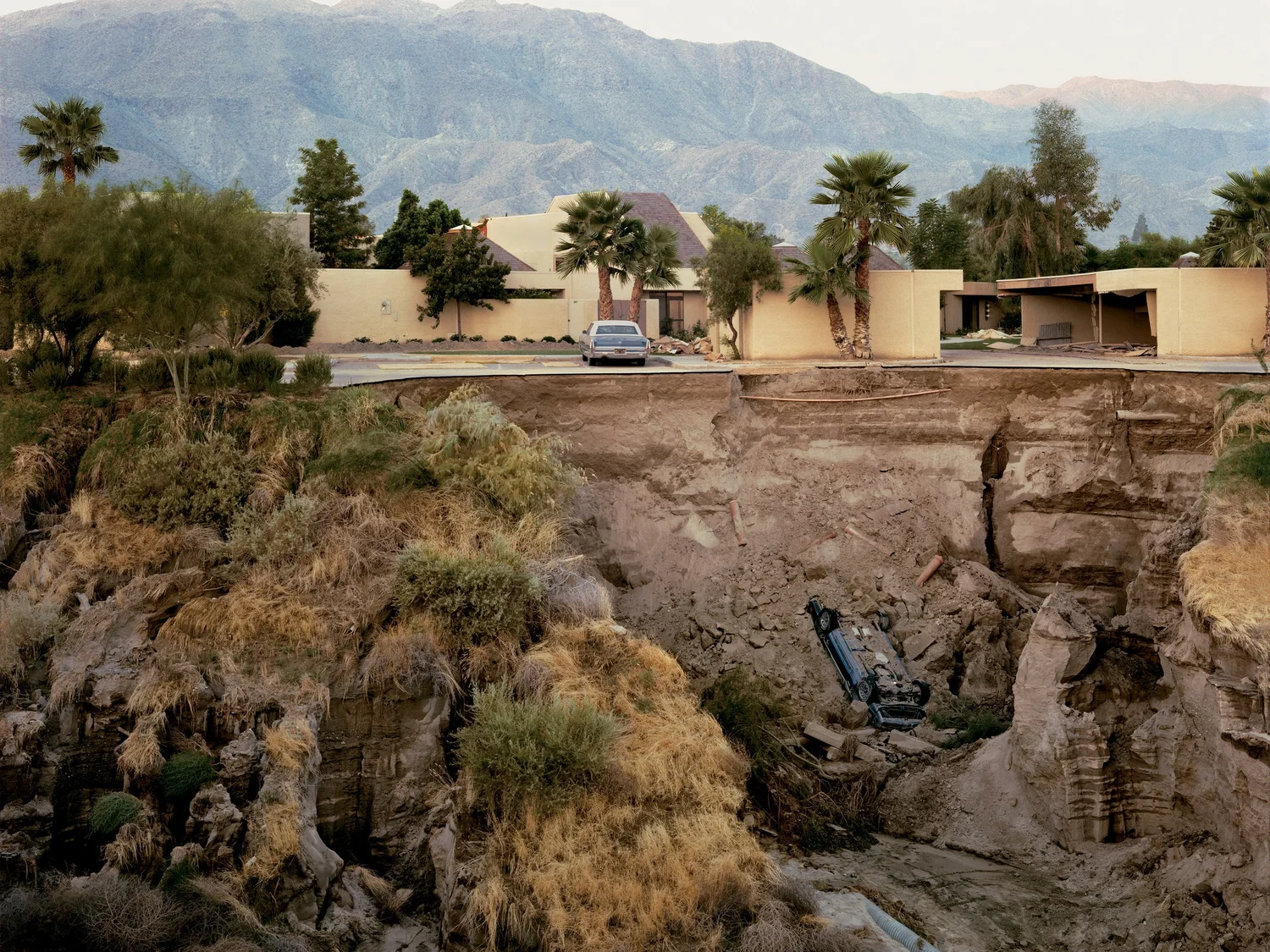
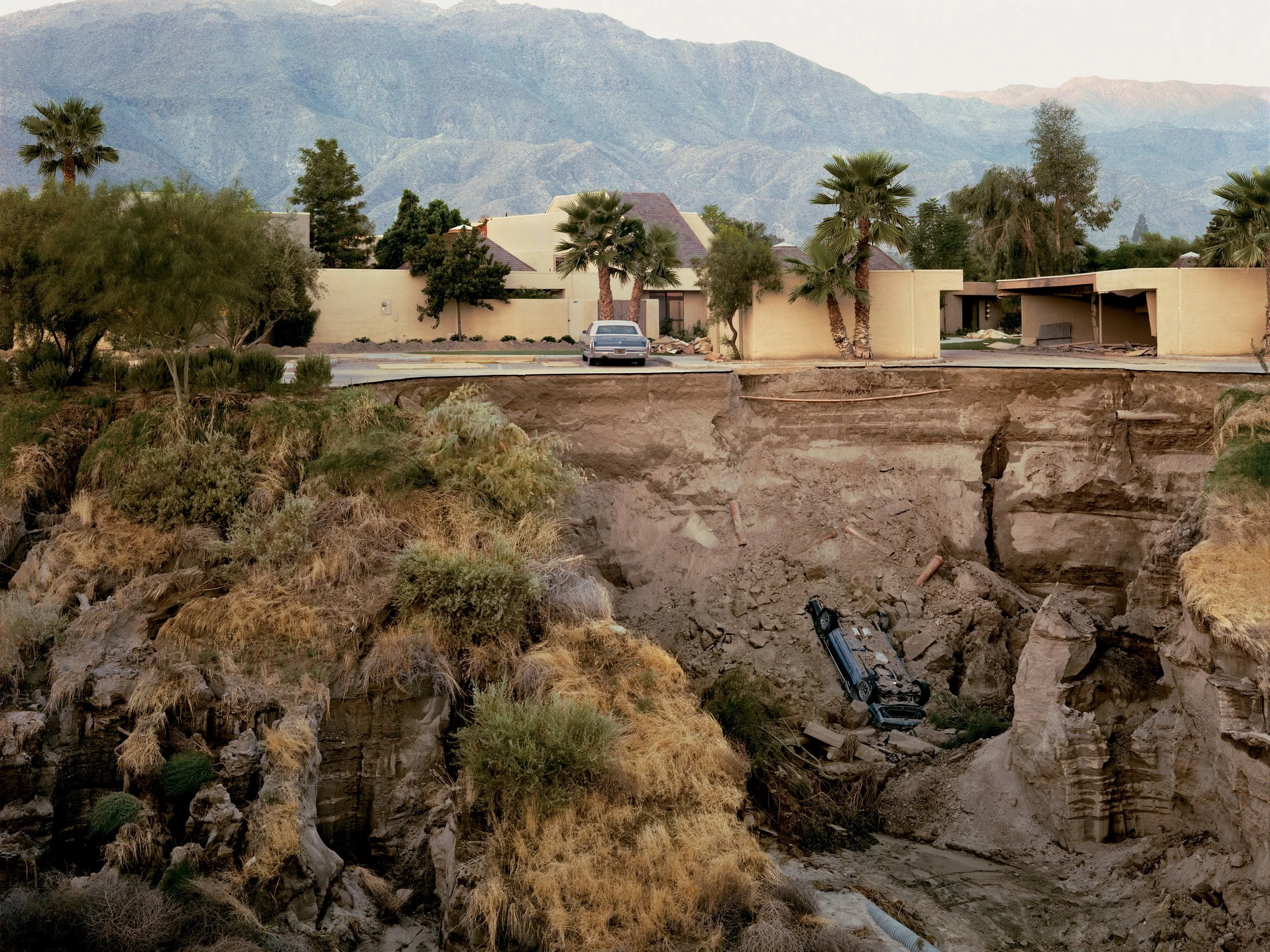
He set up before sunrise. Look closely at the picture and you can see the sun just coming over the mountains. He needed to be there before that, he said, to get “equal density in the lighting and in the color of the scene.”
Why was he there at all? In 1978 Sternfeld had won a Guggenheim Fellowship. With it he planned a trip through the seasons. “I decided I was going to travel with the seasons: start in New England, come south through the Appalachians, cross the southern tier of the United States into the winter, and follow the spring north on the West Coast.” He drove a beat-up Volkswagen and worked with an 8x10 view camera. In that first year he could afford only two negatives a day.
Some scenes were stranger than a flood. In December 1978, in McLean, Virginia, he photographed a helmeted fireman shopping for pumpkins at a farm market while a two-story house burned behind him. It was a controlled burn, a training exercise for local firefighters, on a farm due to be torn down for housing. Sternfeld gave the picture only a place and a date. Some viewers thought of Nero. The Hood Museum’s director has said that the photograph “has troubled and perplexed almost everyone who has seen it.”
The pictures from these trips became American Prospects, published in 1987. Sternfeld said what he wanted to show. “It’s been very fashionable to focus on the weakness and the banality of America, but what I wanted to say is that it’s also a very exciting and fascinating place.”
The work
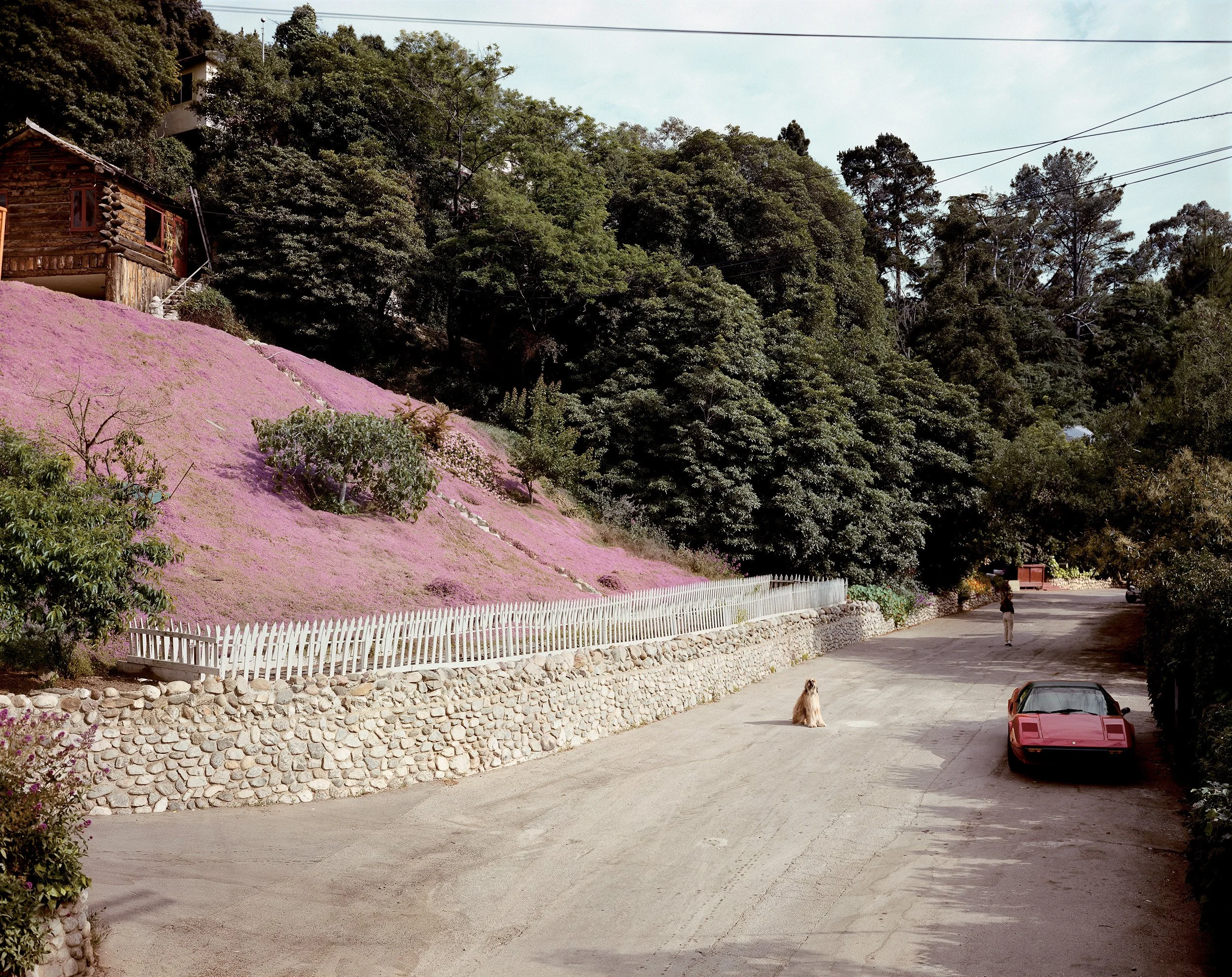
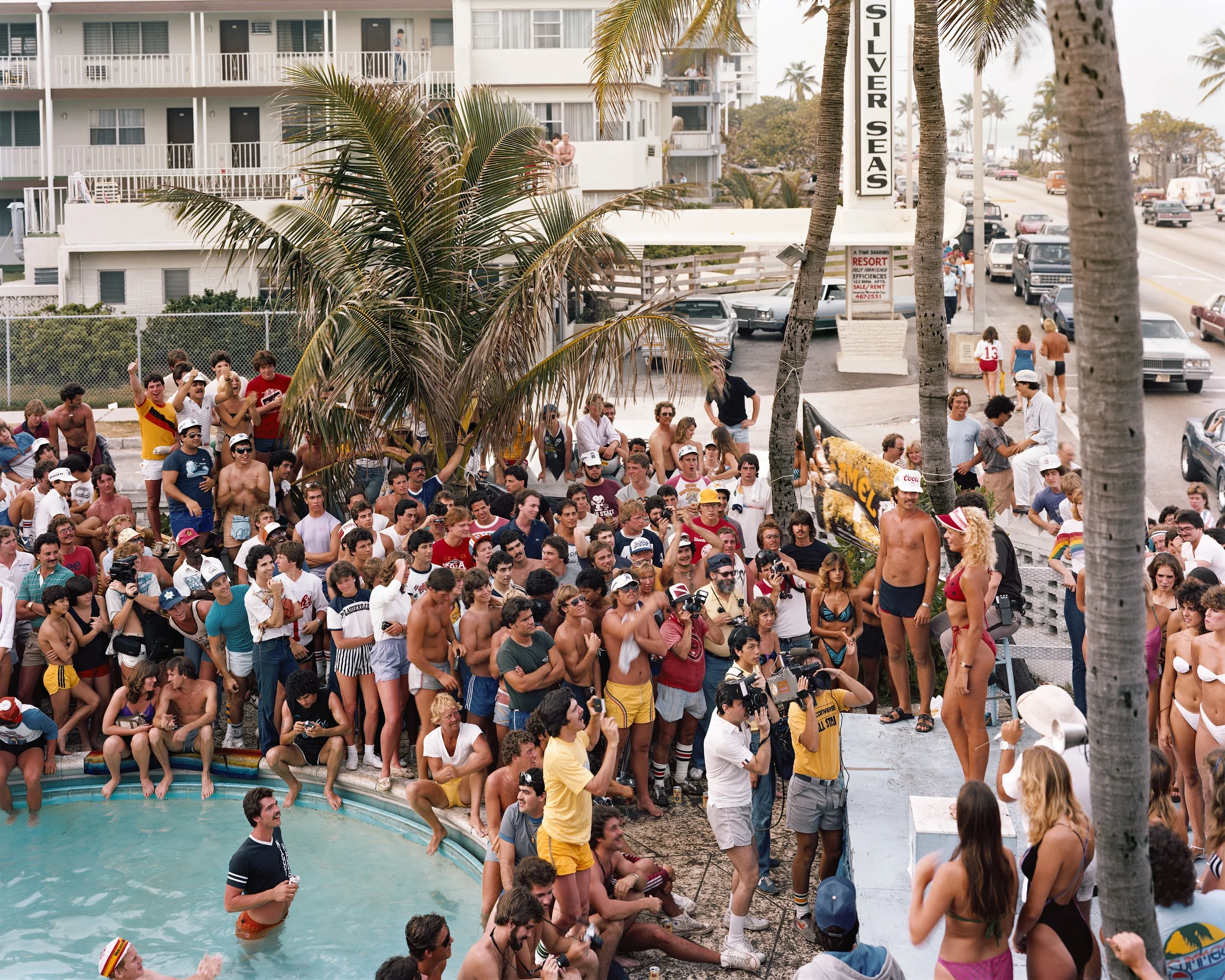
Sternfeld began with street pictures. His first body of work, First Pictures, was made between 1971 and 1976, when he approached people in streets, squares, bars and restaurants. Color mattered to him from the start. He studied the color theory of Josef Albers. In American Prospects, made from 1978 on, color and a large camera let him show every detail of a scene. Pictures from those years include McLean, Virginia, December 1978, After a Flash Flood, Rancho Mirage, California, 1979, Rustic Canyon, Santa Monica, California, May 1979 and Bikini Contest, Fort Lauderdale, Florida, March 1983. A companion project, Stranger Passing, looks at the American people.
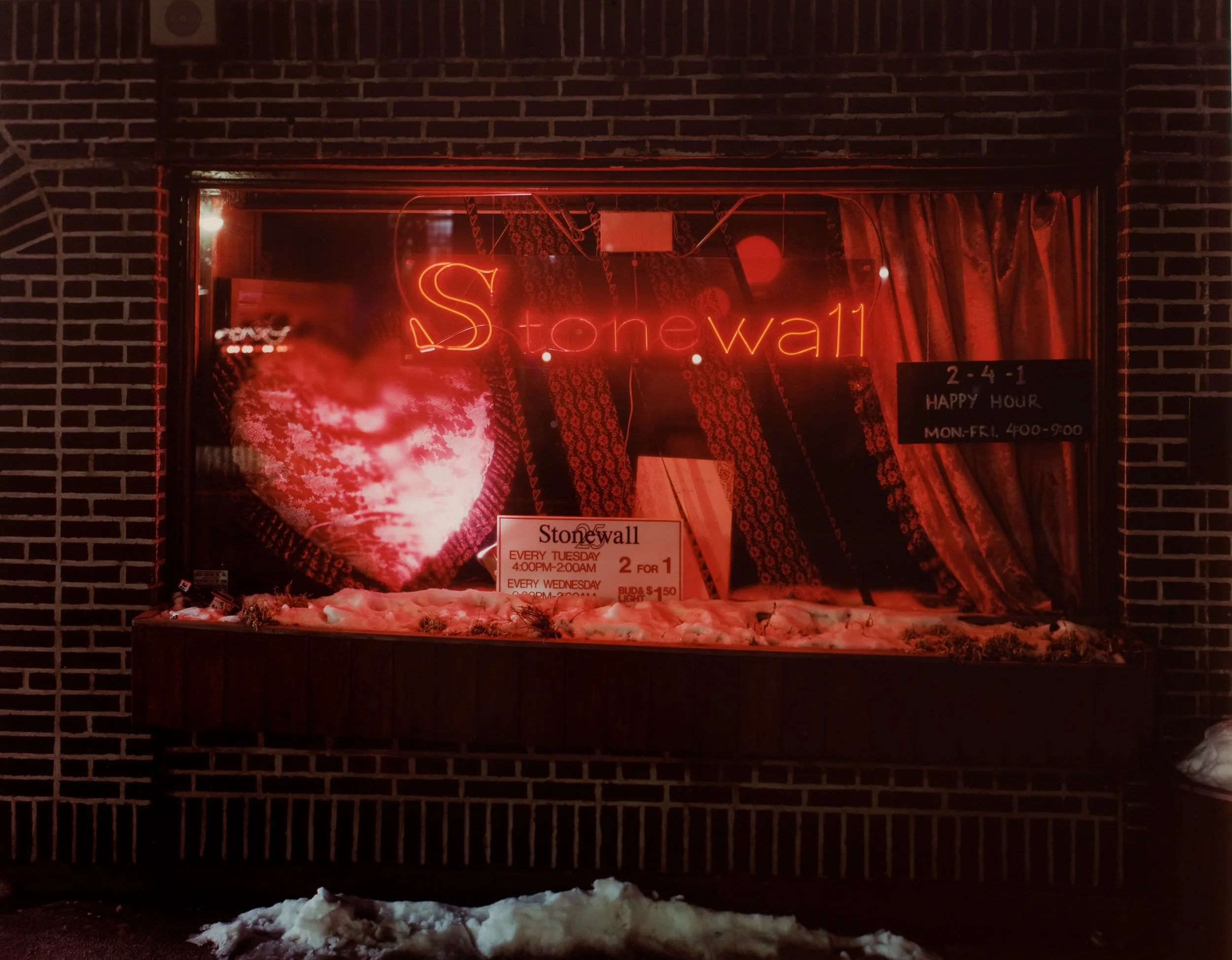
In On This Site (1996) he went to places where crimes had happened and added a short text to each picture, so that the viewer knows the history of the spot. One example is The Stonewall Inn, 53 Christopher Street, New York, February 1994. The Art Institute of Chicago explains that the place was the scene of a police raid on 28 June 1969, which led to the Stonewall Rebellion. Walking the High Line followed in 2001. Sternfeld spent more than a year walking the unused elevated railway in New York, and a book of his pictures was rushed into print when the city considered taking it down. The line became a public park.
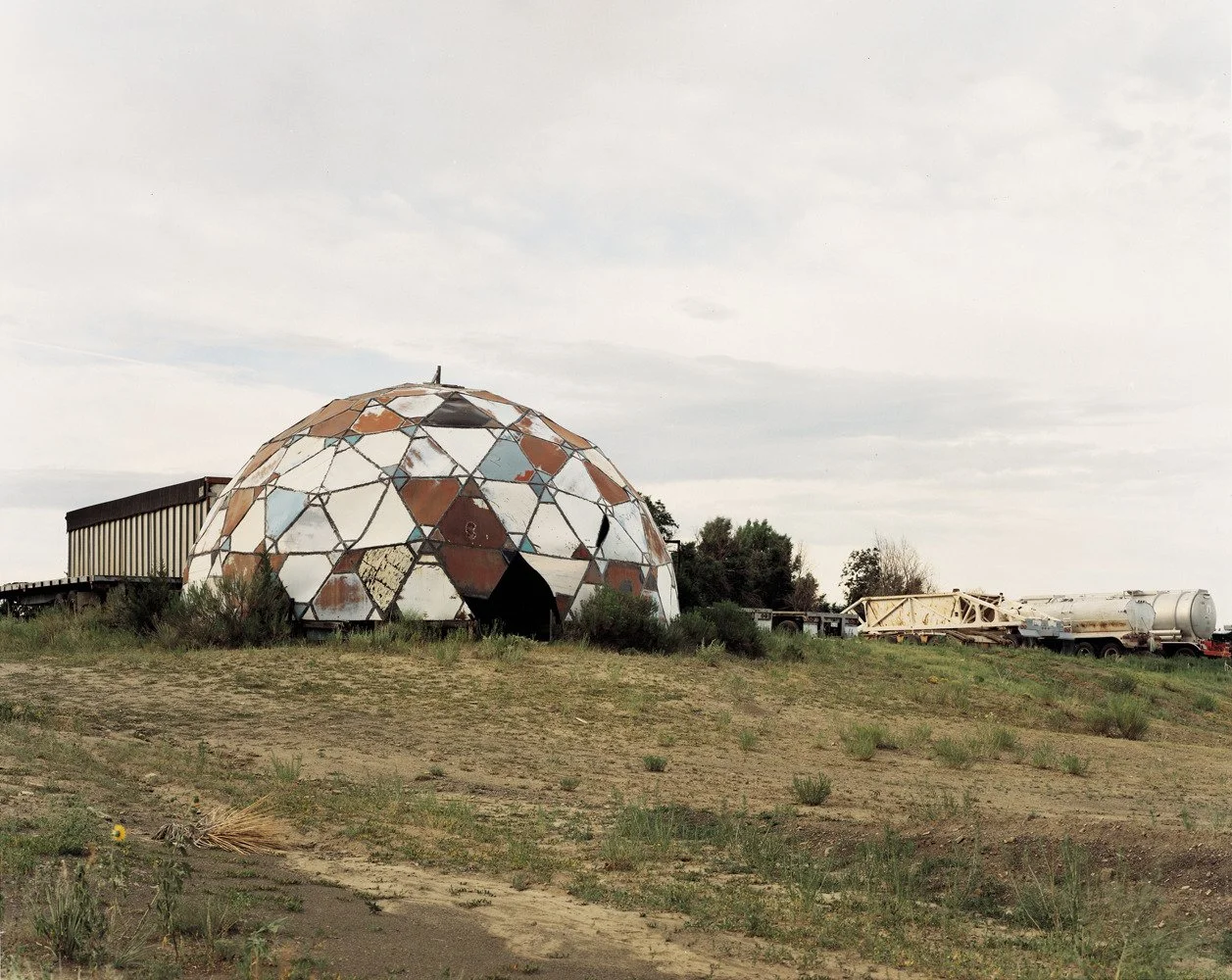
In Sweet Earth: Experimental Utopias in America (2006) he turned to communities that tried to live in new ways. Ruins of Drop City, Trinidad, Colorado, August 1995 belongs to this series. Sternfeld teaches at Sarah Lawrence College. His work was shown at the Albertina in Vienna in 2023 and 2024, and at the Hall Art Foundation in Vermont in 2025.
- 1944Born in New York
- 1965Graduates from Dartmouth College
- 1971Begins his first body of work, First Pictures, street photographs made until 1976
- 1978Receives his first Guggenheim Fellowship and starts the road trips with an 8x10 camera
- 1987Publishes American Prospects, with a major show at the Museum of Fine Arts, Houston
- 1996Publishes On This Site, photographs of places where crimes happened
- 2001Walking the High Line, photographs of the unused elevated railway in New York
- 2013Spends a summer at Dartmouth as a Montgomery Fellow
- 2025Shows American Prospects and Walking the High Line at the Hall Art Foundation in Reading, Vermont
Lessons
Plan before you press the shutter. Sternfeld could pay for only two 8x10 negatives a day, so he had to know in advance what he wanted to say. He described this as planning the year by ideas, not by pictures.
Be ready to use what is around you. In Rancho Mirage the firemen kept his film cool, showed him the damage and took him to the ravine. Sternfeld said yes to the help, then did the slow work of getting permission and being there at first light.
Let color do work. Sternfeld said that we see the world in color all the time, so black and white is more abstract. A photographer in color has to build some abstraction in, he said. In McLean, orange links the fireman, the pumpkins and the flames.
Try this: choose one place you can reach twice. Go once in the middle of the day and once very early. Take one careful photograph each time, and think first about the colors you want. Then give each picture only a place and a date as a title, show them to a friend, and ask what they think is happening.
Gear
Sternfeld’s equipment is described in only a few sources. These items are documented.
8x10 view camera: For American Prospects he worked with an 8x10 view camera mounted on a tripod. He said that 8x10 is not known as a camera that can show action, yet he used it for scenes with people moving.
Heavy tripod: On one shoot in 1979 he hurried along a road with about thirty pounds of equipment in a backpack and a big, heavy tripod in his hands. He says he often slept in the van.
Dye transfer prints: Early prints of American Prospects pictures such as McLean, Virginia, December 1978 are dye transfer prints, a color print process known for rich color.
Books
American Prospects (Steidl, 2023). This is a new edition of Sternfeld’s first book, which first appeared in 1987. It has an essay by Andy Grundberg and 108 pages, with 52 in color. It returns to the original format and adds pictures not seen before. It is the best first book for anyone who wants to know his work.
On This Site (Steidl, 2012). This book collects photographs of places in the United States where well-known crimes happened. Each picture comes with a text by Sternfeld that tells what took place there. It is for readers who like to think about what a photograph can and cannot tell us.
Walking the High Line (Steidl, revised edition 2023). The first edition came out in 2001. The revised edition has 72 pages and 55 images, nine of them new, and an updated timeline. It follows the abandoned railway across the seasons before it became a park. It is for anyone who likes city pictures and stories of change.
Sweet Earth: Experimental Utopias in America (Steidl, 2006). Sternfeld chose sixty utopian communities, from the past and the present. Each has a photograph and a short text about its history or organization. It is for readers who are curious about how people have tried to live differently.
In his words
“I knew that I was a landscapist at heart.”
“I decided I was going to travel with the seasons: start in New England, come south through the Appalachians, cross the southern tier of the United States into the winter, and follow the spring north on the West Coast.”
“8x10 has not been known as a camera that can depict action.”
“Black-and-white photography is instantly and inherently abstract, whereas the photograph in color is not.”
“It’s been very fashionable to focus on the weakness and the banality of America, but what I wanted to say is that it’s also a very exciting and fascinating place.”