AT A GLANCE
- Known for
- English life in the 1930s, London at night and in the Blitz, and strange, sculptural nudes
- Works in
- Black and white film, gelatin silver prints, strong contrast made in the darkroom
- Camera
- Rolleiflex for documentary work; an old wide-angle Kodak from 1945 for the nudes; later a Hasselblad Superwide
- Also
- Portraits of writers and artists; landscapes for Literary Britain (1951); books such as The English at Home (1936) and Shadow of Light (1966)
- Shows
- MoMA retrospective (1969) · V&A retrospective (2004) · MoMA, Shadow and Light (2013)
- Start with
- Bill Brandt: Shadow and Light (The Museum of Modern Art, 2013)
- Links
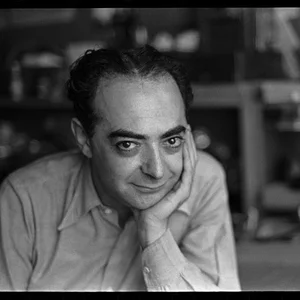
Bill Brandt was born Hermann Wilhelm Brandt in Hamburg, Germany, in 1904. After years of illness in Switzerland, he learned photography in a studio in Vienna and then in Paris, near Man Ray. In 1934 he settled in London, the city he would call home for the rest of his life. There he photographed the English at home, the poor towns of the North, London at night and people sheltering from bombs during the war. After 1945 he turned to portraits, landscapes and a famous series of nudes made with a wide-angle camera. The Victoria and Albert Museum calls him one of the most influential British photographers of the 20th century. He died in London in 1983.
The story
Man Ray was often out. In 1930 a young man called Bill Brandt worked as an informal apprentice in the American artist's studio in Paris. Many years later Brandt told Man Ray what he did in those quiet hours: “You went out so often that I did not learn much from you directly. But what I did was go through all the drawers and files that I would not have dared touch when you were in the studio. So I learnt a great deal when you were not there.”
Brandt came to the camera slowly. His family ran a shipping and banking business in Hamburg, where he was born in 1904. As a young man he had tuberculosis and spent more than four years in Swiss sanatoria, the last of them in Davos. Physical activity was forbidden there, so he read, watched films and tried out a camera. In 1927 he went to Vienna. The educator Eugenie Schwarzwald suggested photography to him, and he became an apprentice in the portrait studio of Grete Kolliner.
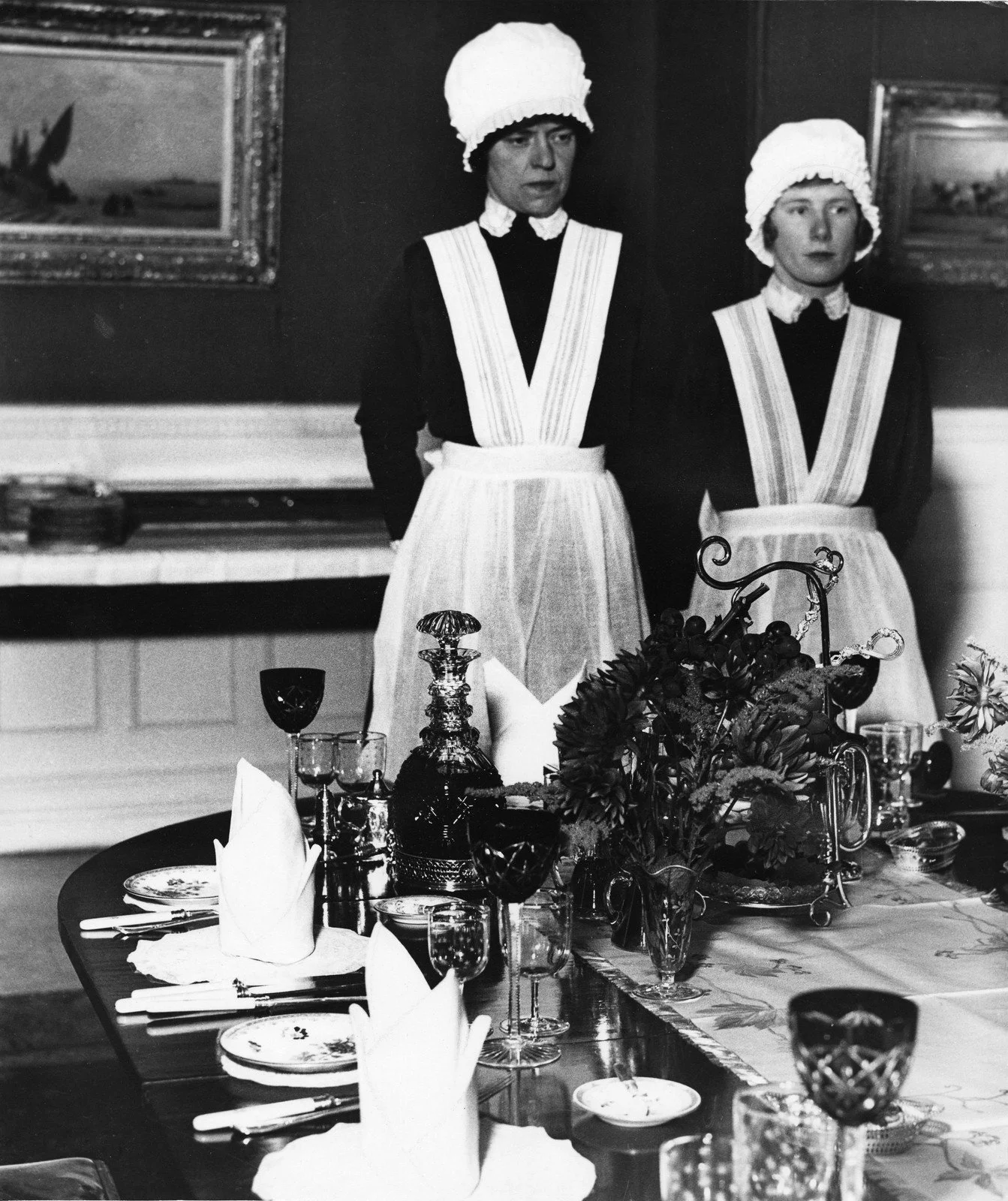
Paris gave him more than Man Ray's drawers. There he discovered the pictures of Eugène Atget and the films of the Surrealists. Then, in April 1934, he moved to London. His family's English relatives gave him a way into their homes. His favourite subject was his uncle's parlourmaid, known to the family as Pratt, and he photographed her again and again. From these years comes Parlourmaid and Under-Parlourmaid Ready to Serve Dinner, made around 1934.
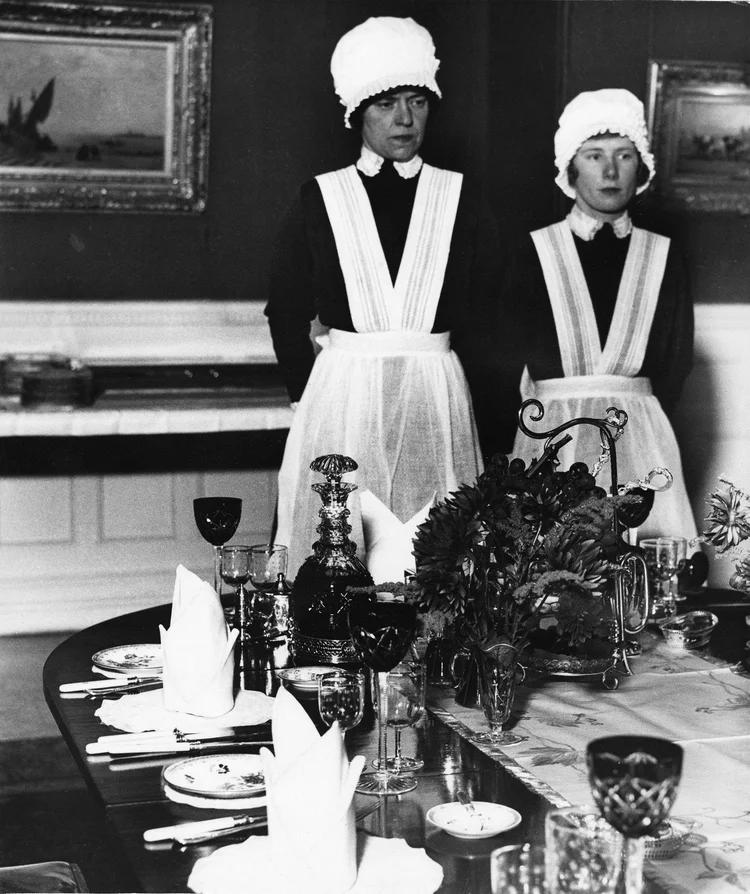
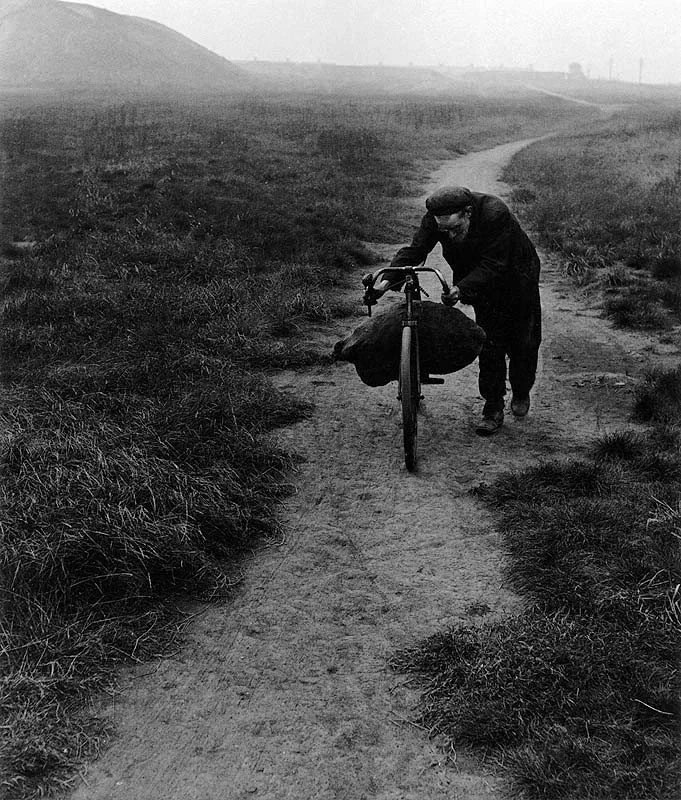
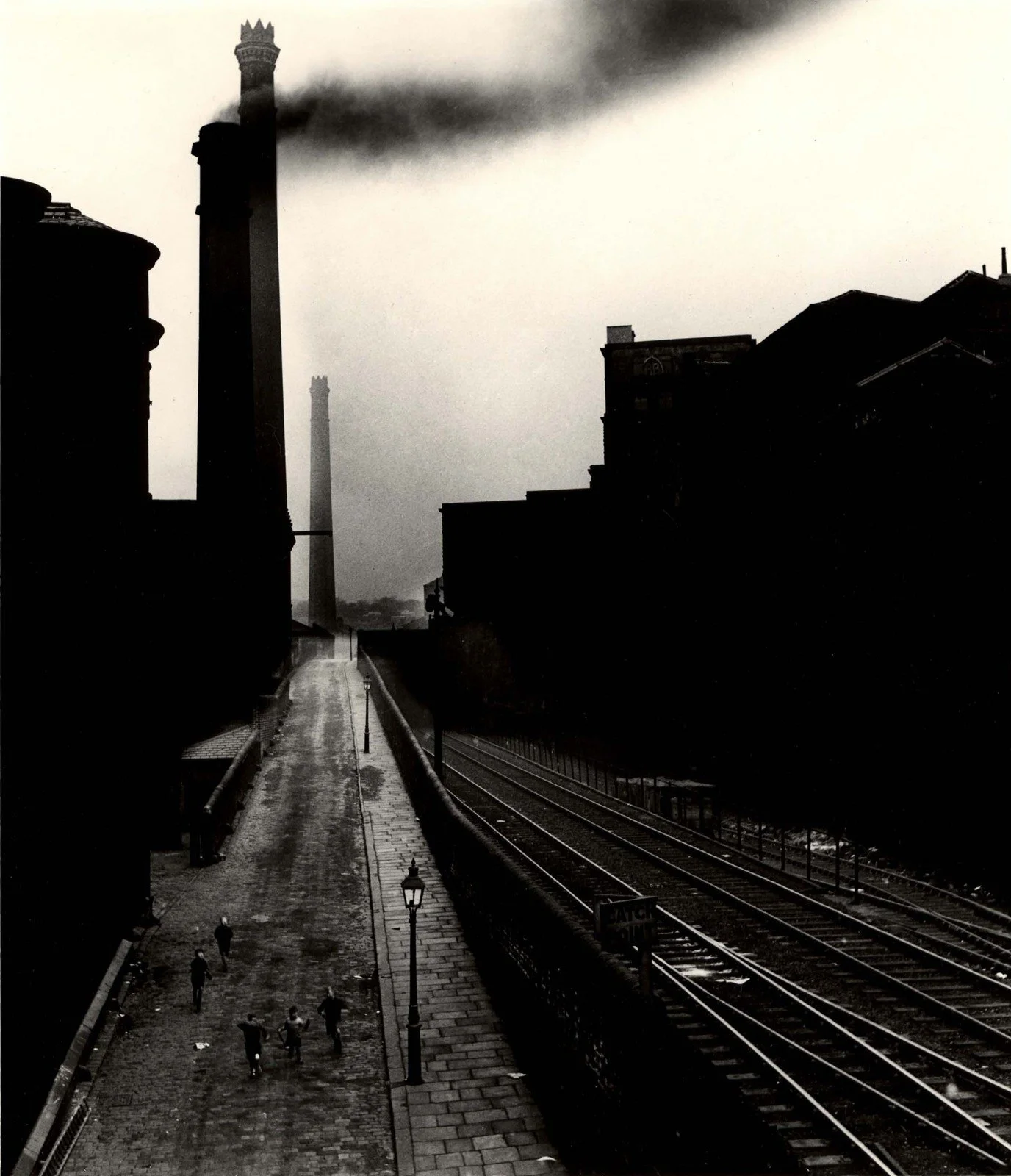
In February 1936 these pictures of English life became his first book, The English at Home. But dining rooms and racecourses were only one side of the country. In 1937 he travelled to the industrial towns of Northern England, which the Depression had hit hard. No magazine had sent him, and he left no note about why he went. Coal-Searcher Going Home to Jarrow and Halifax both come from that year. Many of these pictures stayed unpublished for more than ten years.
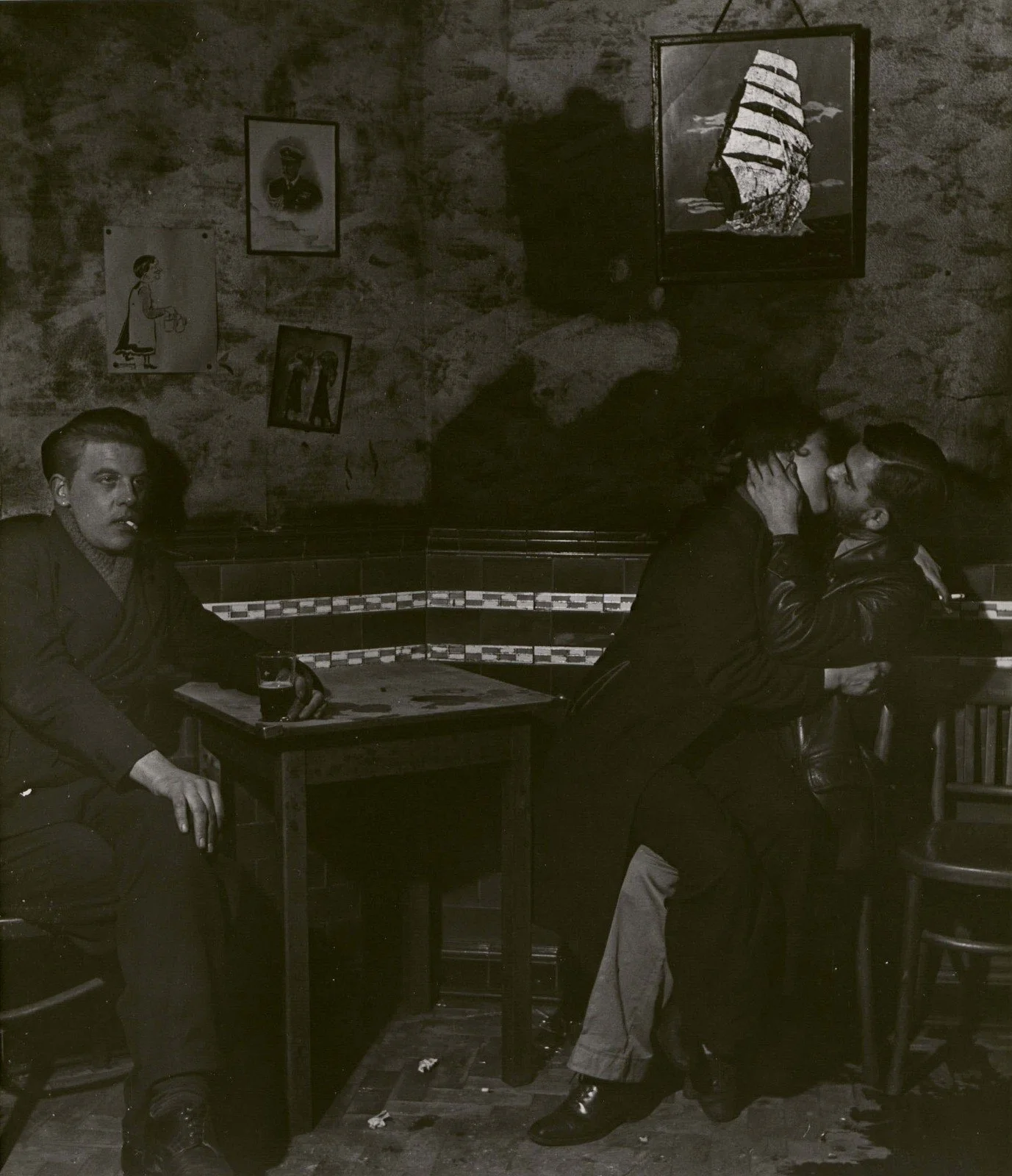
Then the war came to London. The magazine Lilliput printed his pictures of the city in the Blackout in December 1939. In November 1940 the Ministry of Information asked him to photograph the improvised shelters of the Blitz. He worked in Tube stations, wine cellars, shop basements and crypts, wherever Londoners hid from the bombs. His wartime work was much more varied than these two series. Most of it was made for Lilliput, Picture Post and Harper's Bazaar. From about 1942 comes In the Public Bar at Charlie Brown’s, Limehouse.
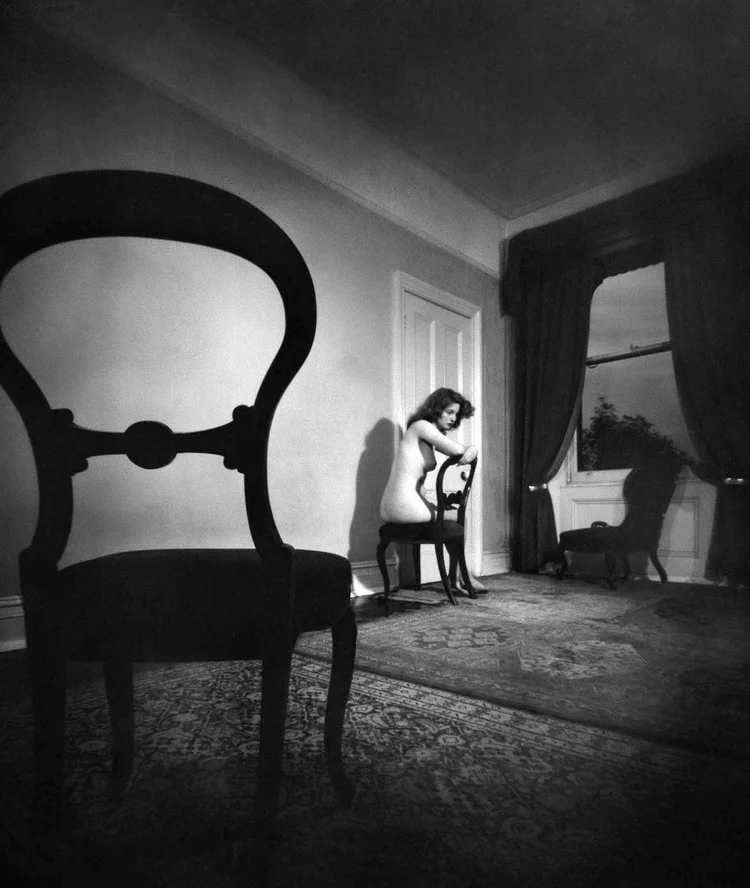
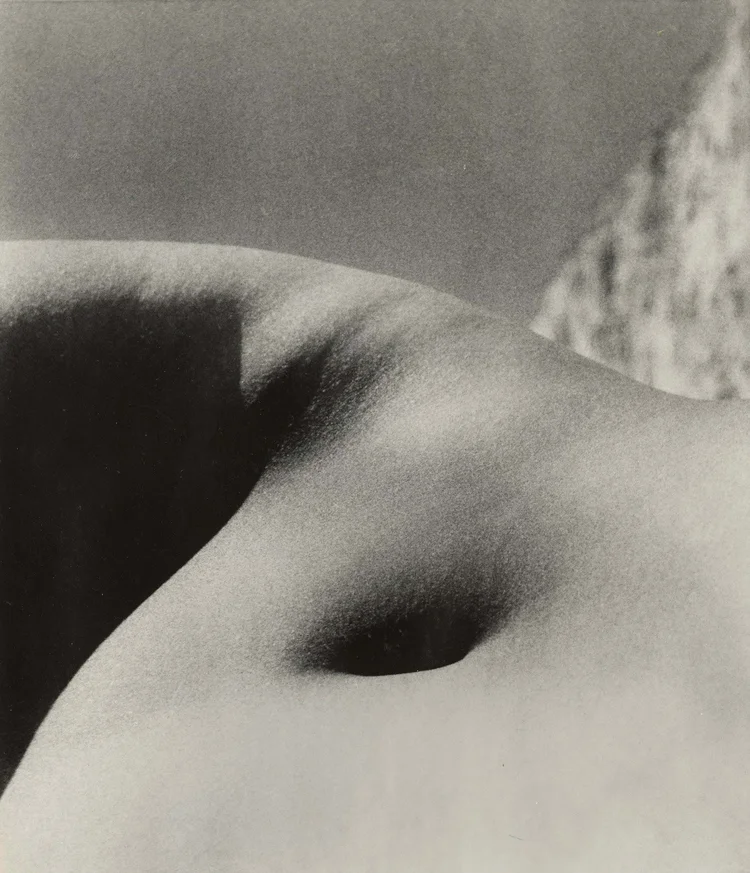
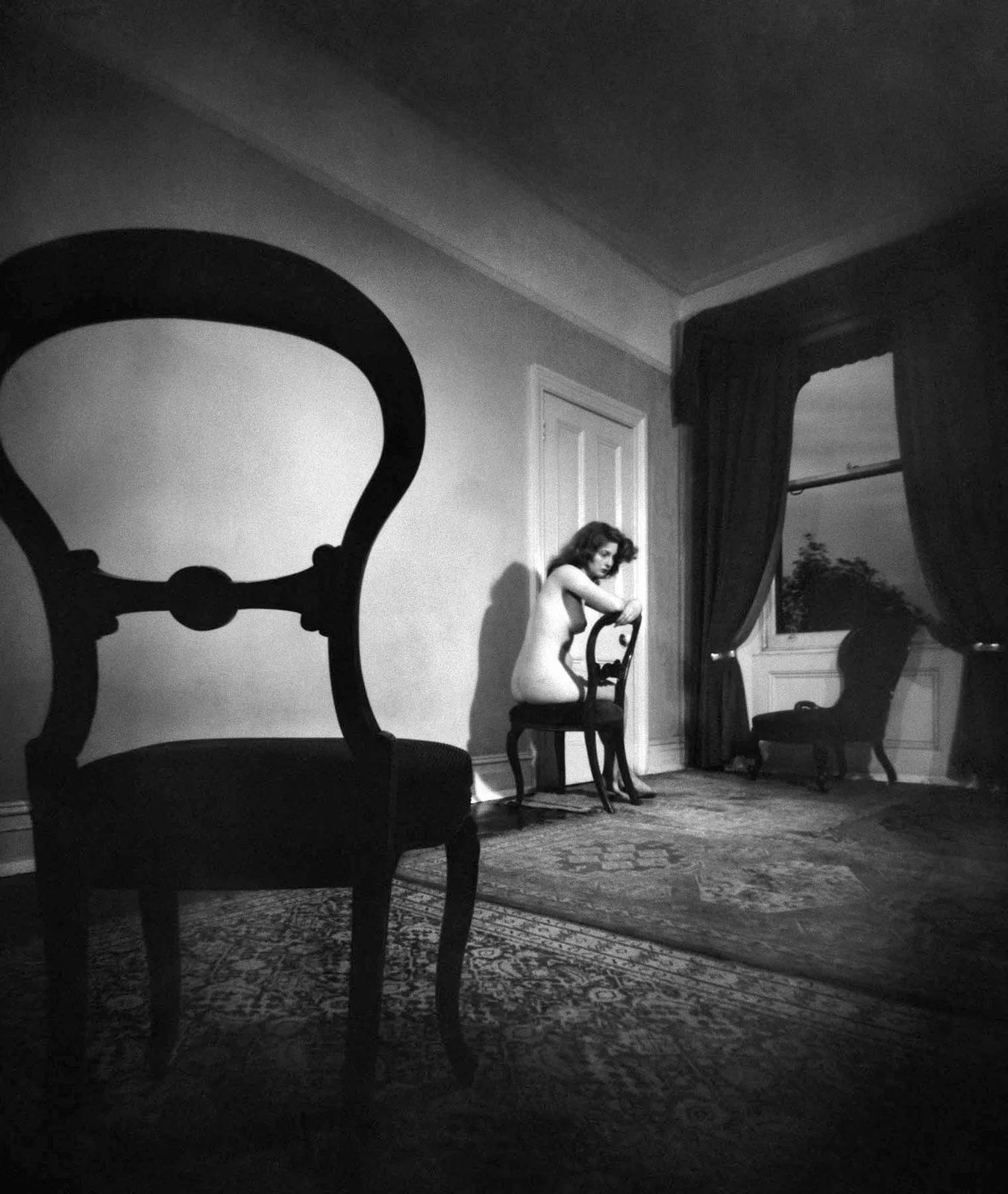
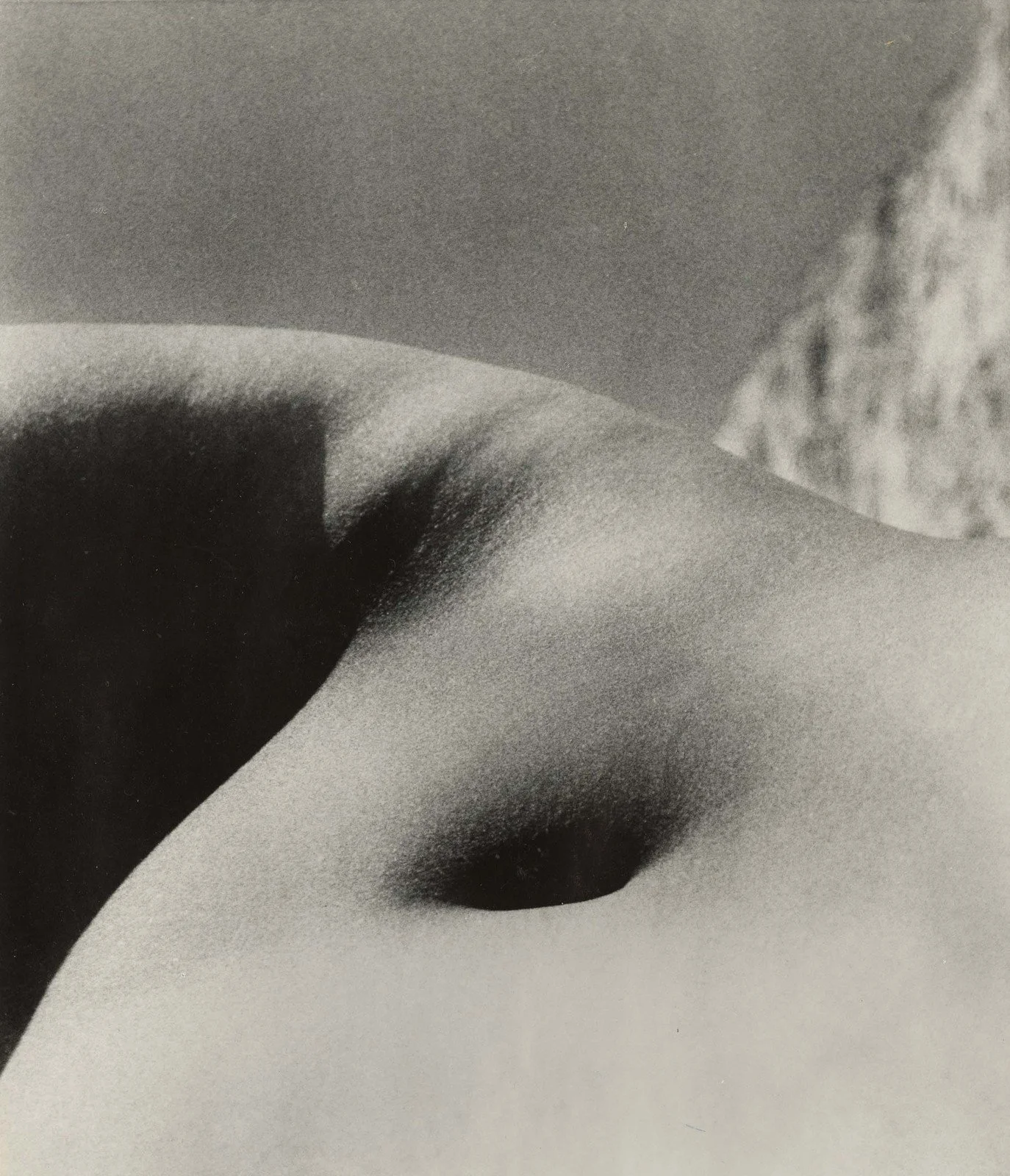
In 1945 something small changed his work. In a second-hand shop in Covent Garden he bought an old Kodak camera. It had been made so that untrained police staff could photograph crime scenes, and its lens was very wide. With it, he wrote, he could “see like a mouse, a fish or a fly.” He first placed his models in quiet Victorian rooms, as in Nude, Campden Hill, London, 1947. Then he moved closer, and the bodies became strange shapes. In the late 1950s he took the nudes to the rocky beaches of England and France, as in Nude, East Sussex Coast, 1960. The series became the book Perspective of Nudes in 1961.
Through all these changes one idea stayed with him. In Camera in London (1948) he wrote about what pictures can give us: “We are most of us too busy, too worried, too intent on proving ourselves right, too obsessed with ideas, to stand and stare.”
The work
Brandt had no single subject and no single style. The Museum of Modern Art describes a career of about fifty years that moved from social life in the 1930s to portraits, landscapes and nudes. In the late 1940s he wrote that he could forget photography almost completely when he was not working and never carried a camera except on an assignment.
Many of his early scenes were set up. Family and friends often acted out social roles for him, and his brother Rolf and sister-in-law Ester appear in his early books. In the darkroom he cropped under the enlarger and made the contrast strong. Sometimes he combined parts of two negatives in one print. His early prints are very dark, with muted tones. In later years he printed his pictures again in a harder, more forceful way, and he often worked on the prints with brush and wash.
Night was one of his great themes. For the shelter pictures he used artificial light in crowded rooms, but on the empty streets of the Blackout he worked by moonlight. After the war he photographed landscapes linked to English writers for the book Literary Britain (1951). The National Building Record asked him to photograph England's cathedrals and major monuments. He also made many portraits of writers and artists, and the Victoria and Albert Museum commissioned some of them.
A friendship shaped his eye. He met the Paris night photographer Brassaï in 1934, and the two stayed friends for life. From 1949 Brandt lived in flats at Airlie Gardens on Campden Hill in London. His darkroom was there, and he made some of his nudes in its high rooms. In 1966 he summed up his work in the book Shadow of Light. Three years later John Szarkowski gave him a retrospective at the Museum of Modern Art in New York. He died in London on 20 December 1983.
- 1904Born Hermann Wilhelm Brandt in Hamburg, Germany
- 1927Starts as an apprentice in Grete Kolliner's portrait studio in Vienna
- 1930Moves to Paris and works in the studio of Man Ray
- 1934Settles in London
- 1936Publishes his first book, The English at Home
- 1937Photographs the industrial towns of Northern England
- 1940Photographs Blitz shelters for the Ministry of Information
- 1945Buys an old wide-angle Kodak camera and begins his nudes
- 1983Dies in London
Lessons
Learn from the work, not only from the teacher. Brandt said he learned little from Man Ray directly. He learned by going through the drawers and files of the studio when Man Ray was out.
Wait for the picture you know is there. For landscapes he waited for the right season, the right weather and the right time of day or night.
Let a new tool change how you see. An old police camera with a very wide lens gave him a new view of the human body. It showed the world in a way the eye could not see.
Try this: choose one familiar room at dusk. Put your widest lens very close to an object or a hand, so that it fills most of the frame. Make ten pictures, each from a lower or closer place than the last. Then print or view them in strong black and white.
Gear
Brandt did not stay with one camera. The sources name three.
Rolleiflex: the camera he used for his documentary photographs, according to the Victoria and Albert Museum.
Kodak wide-angle camera: a mahogany and brass plate camera with Zeiss Protar lenses, bought second-hand in 1945. It was made for police work, and he used it for his nudes.
Hasselblad with Superwide lens: the camera he used later, again for very wide views.
Books
Bill Brandt: Shadow and Light (The Museum of Modern Art, 2013). Curator Sarah Hermanson Meister wrote this book for the 2013 exhibition at MoMA. It follows his whole career in themed chapters, from London in the thirties and Northern England to the war years, portraits, landscapes and nudes. It also lists his magazine stories and explains how he retouched his prints. A good first book for anyone who wants the full picture.
The English at Home (B. T. Batsford, 1936). His first book, with an introduction by Raymond Mortimer. It shows English life across the social classes, from rich homes to working people. Brandt arranged many scenes with family and friends. For readers who want to see where his work began.
Perspective of Nudes (The Bodley Head, 1961). The book of his wide-angle nudes, with a preface by Lawrence Durrell and an introduction by Chapman Mortimer. The pictures date from 1945 on and are arranged in six loose groups. For readers interested in the nude and in experimental photography.
Shadow of Light (The Bodley Head, 1966). Brandt's own first look back at his work from 1931 on, with an introduction by Cyril Connolly and notes by Marjorie Beckett. He organized the book by theme, and later retrospectives kept his chapters. A revised edition appeared in 1977. For readers who want his own selection of his best pictures.
In his words
“I found atmosphere to be the spell that charged the commonplace with beauty. And I am still not sure what atmosphere is.”
“Photography is not a sport. It has no rules. Everything must be dared and tried.”
“When I have found a landscape which I want to photograph, I wait for the right season, the right weather, and the right time of day or night, to get the picture which I know to be there.”
“Night photography is often a very leisurely way of taking pictures. The main thing you need is patience.”
“We are most of us too busy, too worried, too intent on proving ourselves right, too obsessed with ideas, to stand and stare.”