AT A GLANCE
- Known for
- House of Bondage (1967), the book that showed life under apartheid to the world, and for his later pictures of Black life in the United States
- Works in
- Documentary and street photography in South Africa, the United States and Sweden
- Also
- Worked for Drum magazine and The New York Times · received funding from the Ford Foundation and Time-Life · worked with the Tiofoto collective in Sweden · briefly associated with Magnum Photos
- Start with
- Ernest Cole: House of Bondage (Aperture, 2022)
- Links
Ernest Cole (1940 to 1990) was a South African photographer. He was born in Eersterust, a township of Pretoria, and worked for Drum magazine as a young man. He is best known for House of Bondage (1967), a book of photographs that shows how apartheid shaped daily life: in schools, on trains, in homes and in the mines. He left South Africa in 1966 and never returned. After a long time when his negatives were thought lost, more than 60,000 of them were found in a bank vault in Stockholm in 2017.
The story
On 10 September 1966, Ernest Cole arrived in New York. He was 26. He had left South Africa on 9 May, travelling through France and England, and he had his prints with him. In New York he went to Magnum Photos and showed them his work.
The people at Magnum were so impressed that they helped to arrange a publishing deal with The Ridge Press. The Ridge Press then sold the publishing rights to Random House. But getting out of South Africa had not been simple. There he was classified as black. SAHO writes that he got round the Race Classification Board by changing his name from Kole to Cole and being reclassified as Coloured. That gave him more privileges, and soon he was able to leave.
The road to that day began in Eersterust, where he was born on 21 March 1940. As a boy he was given a camera by a Roman Catholic priest. Later he said, “I quit school in 1957 rather than go along with the ‘bantu’ education for servitude which had become more strict than before.” In 1958 he asked Jürgen Schadeberg for a job at Drum magazine, and Schadeberg took him on as his assistant.
House of Bondage came out in 1967. It was banned in South Africa, although a few copies were smuggled in. Aperture describes the book as showing apartheid’s violence in everyday life, including its effect on miners, police, hospitals and schools.
In 1968 the South African government banned him for life and took away his passport. From 1969 to 1971 he spent a lot of time in Sweden, where he worked with the Tiofoto collective and showed his pictures. From 1972 his life fell into disarray, and he stopped working as a photographer and lost control of his negatives. He died in New York in 1990, aged 49, a few days after Nelson Mandela was released from prison.
Then, in 2017, a Swedish bank contacted his nephew, Leslie Matlaisane, and asked whether he wanted to collect about 60,000 negatives from safety deposit boxes. The negatives had been missing for more than 40 years. His family received them, and the Ernest Cole Family Trust was set up. Cole had put his view of apartheid into one sentence in his book. “Three-hundred years of white supremacy in South Africa has placed us in bondage, stripped us of our dignity, robbed us of our self-esteem and surrounded us with hate.”
The work
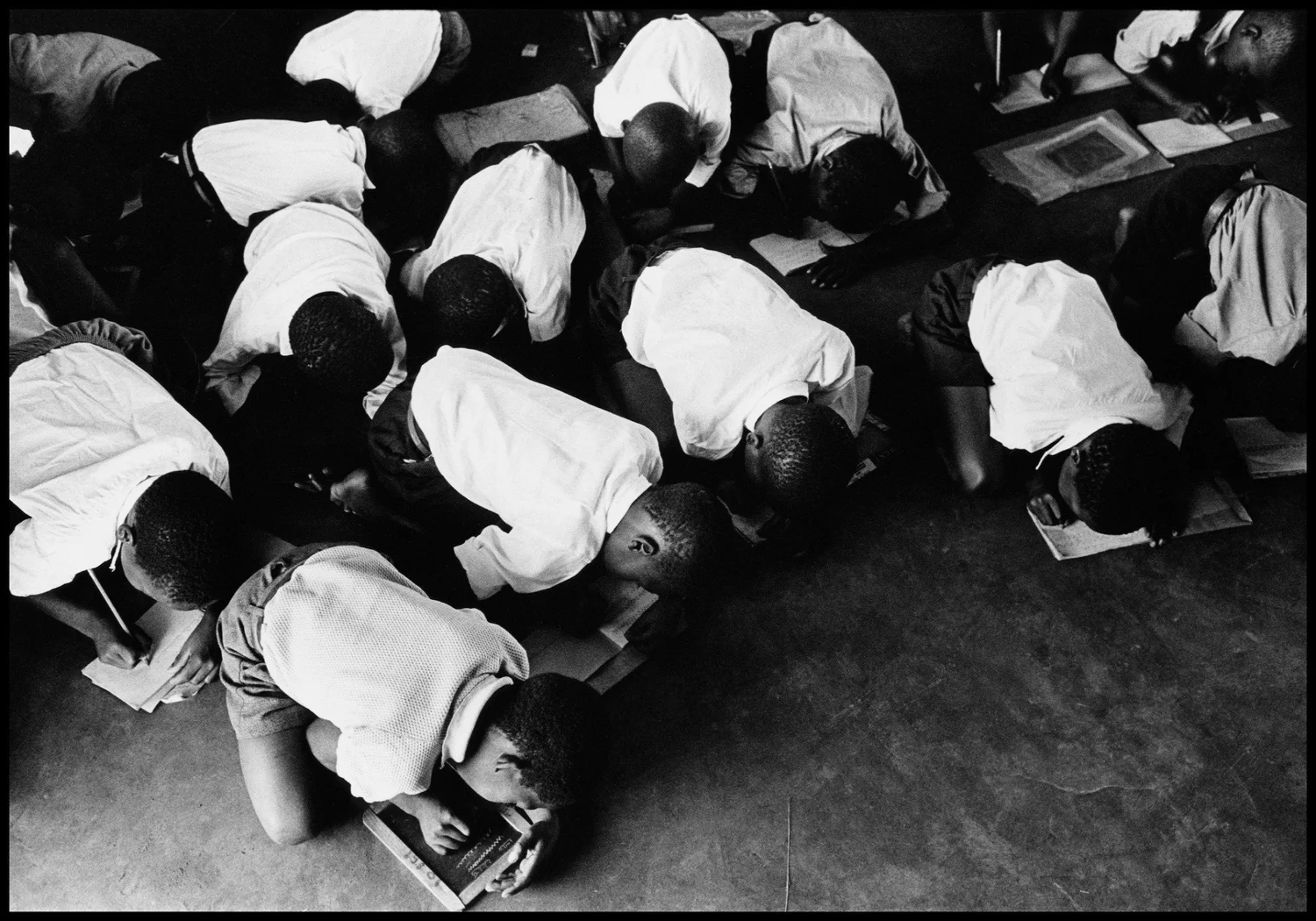
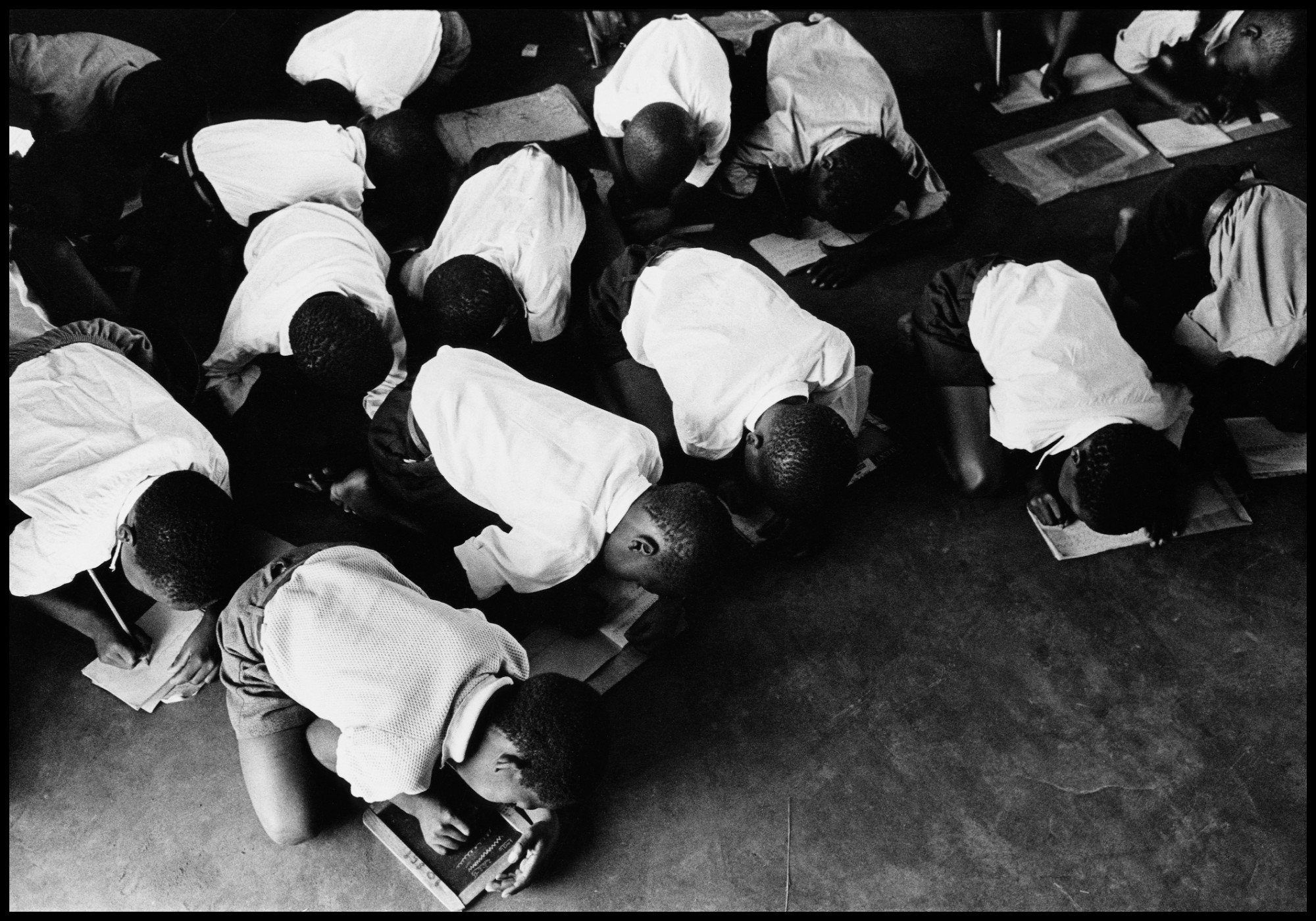
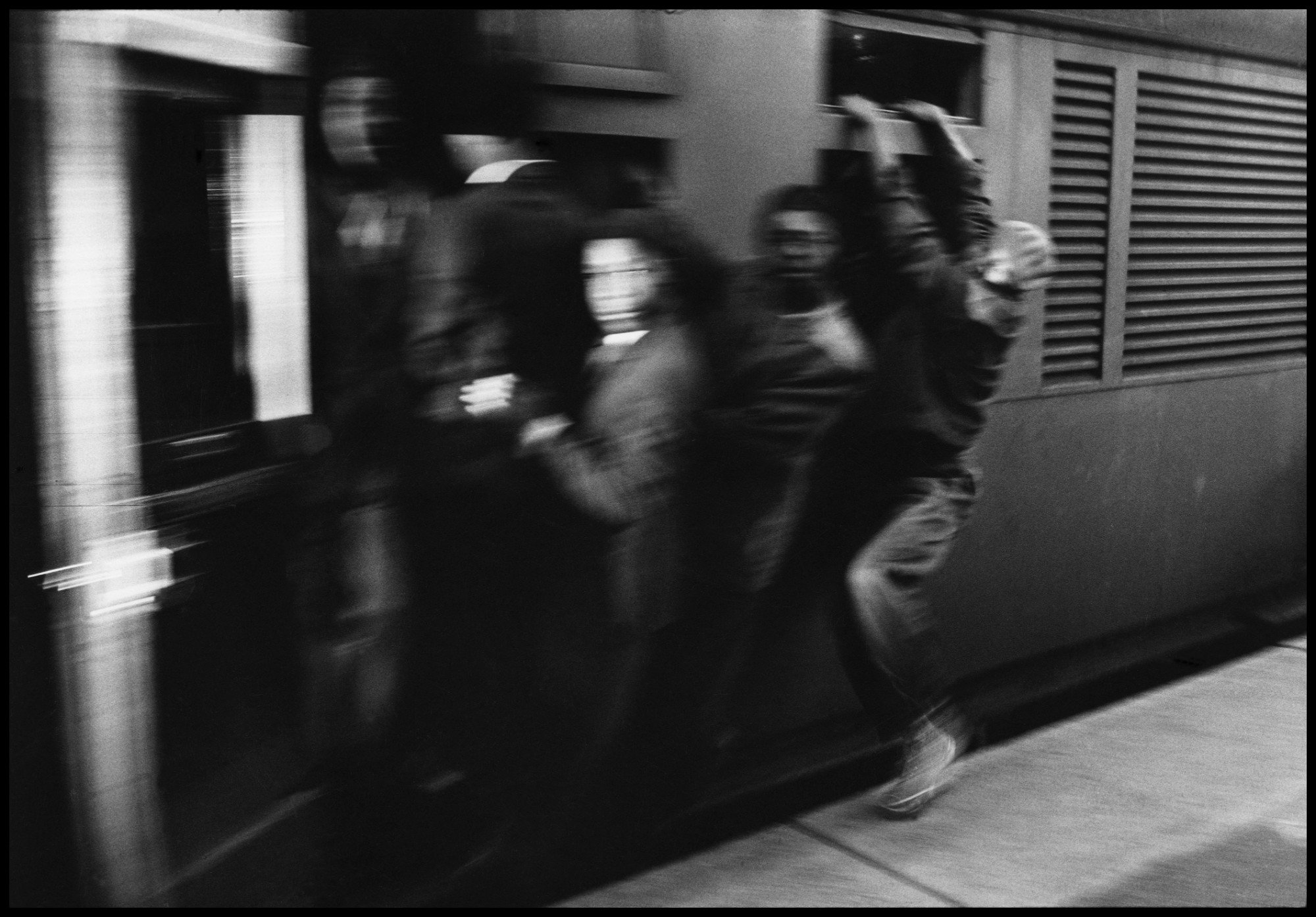
House of Bondage is built from scenes of everyday life, not from big events. In Students kneel on floor to write, South Africa, 1960, children bend over the floor of a classroom. Magnum’s caption adds that the government was casual about furnishing schools for blacks. In The train accelerates with its load of clinging passengers, South Africa, 1960, a moving train is a blur of people holding on. The caption says they ride like this through rain and cold. Magnum’s archive gives the year 1960 for these pictures.
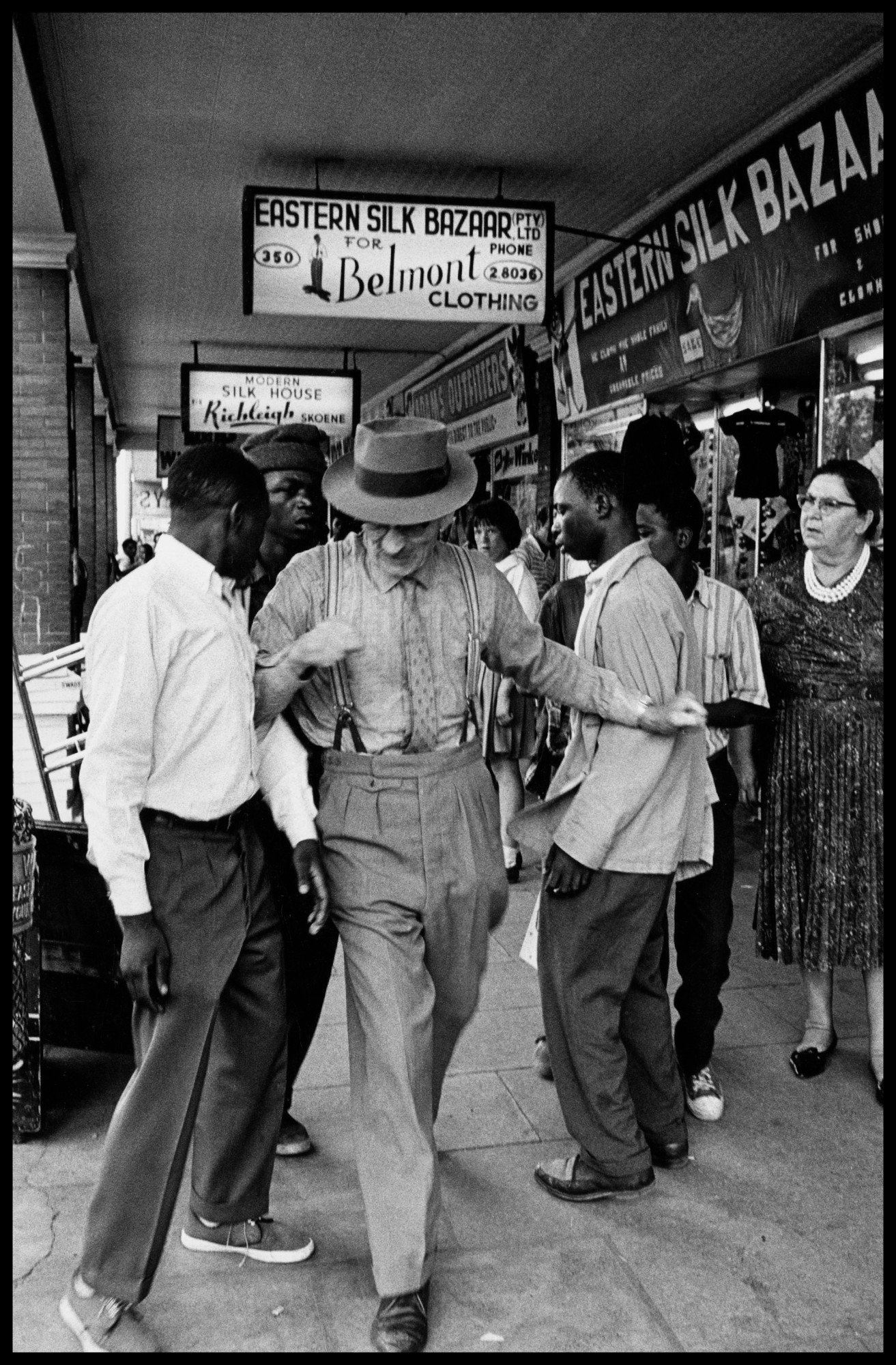
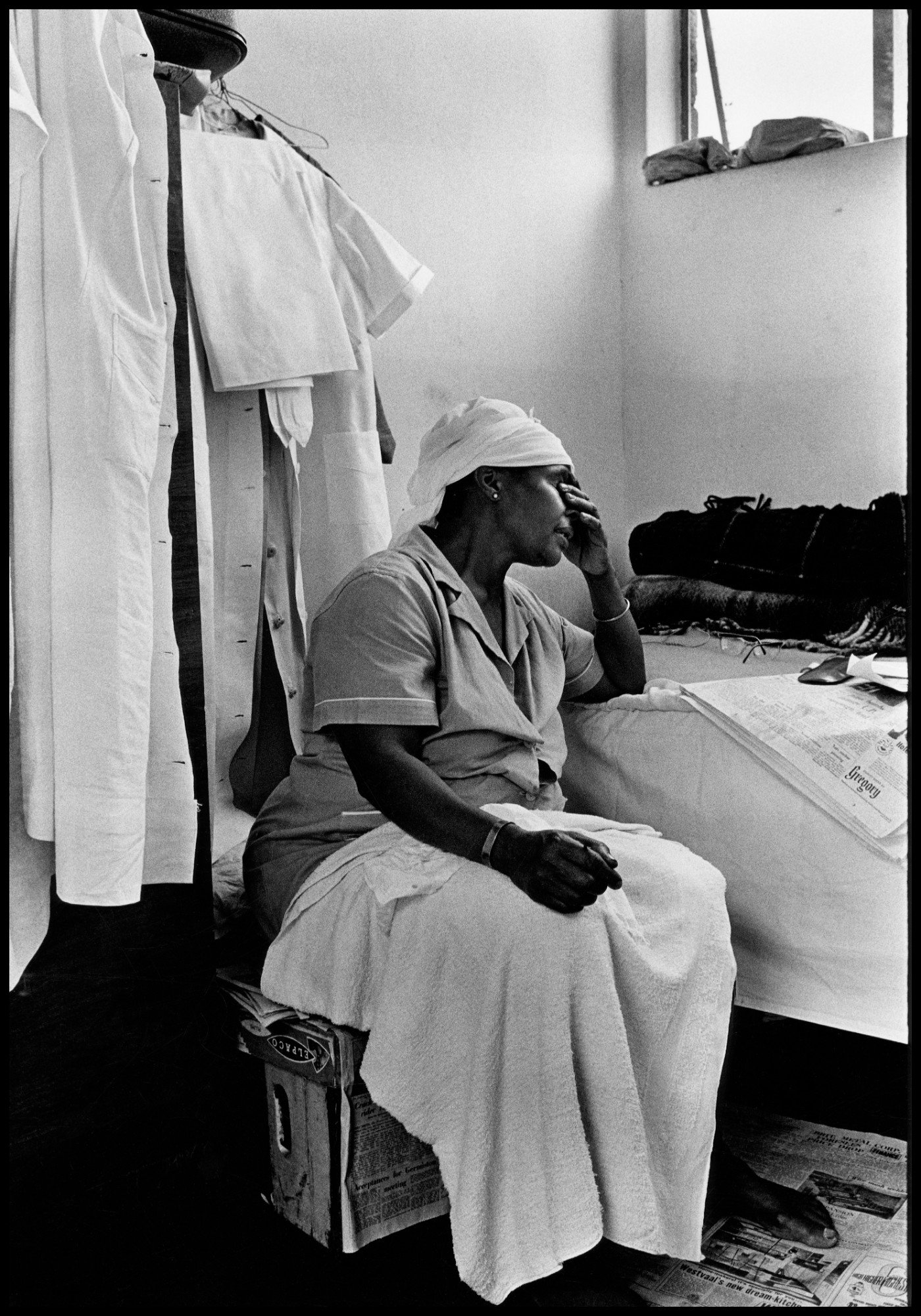
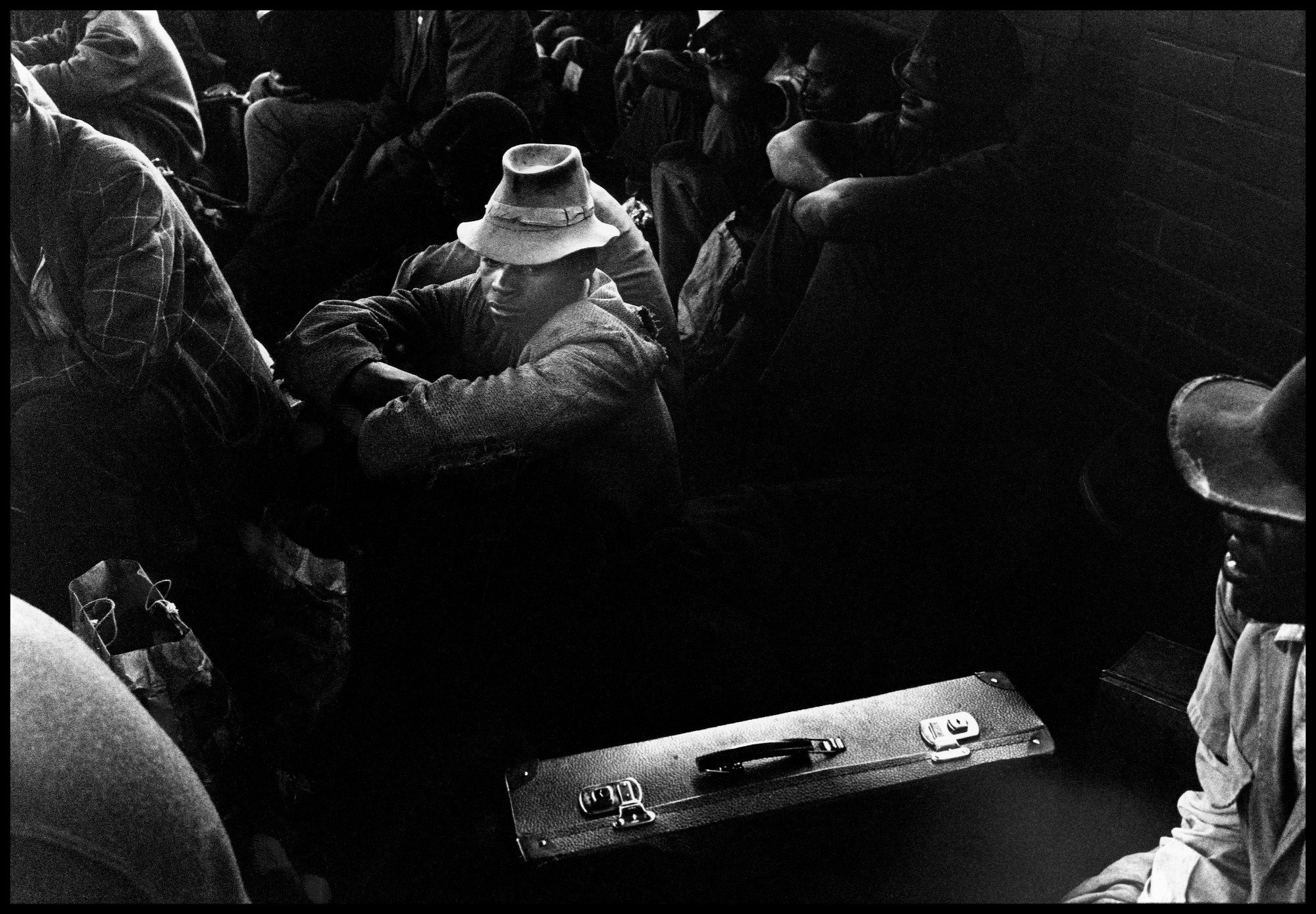
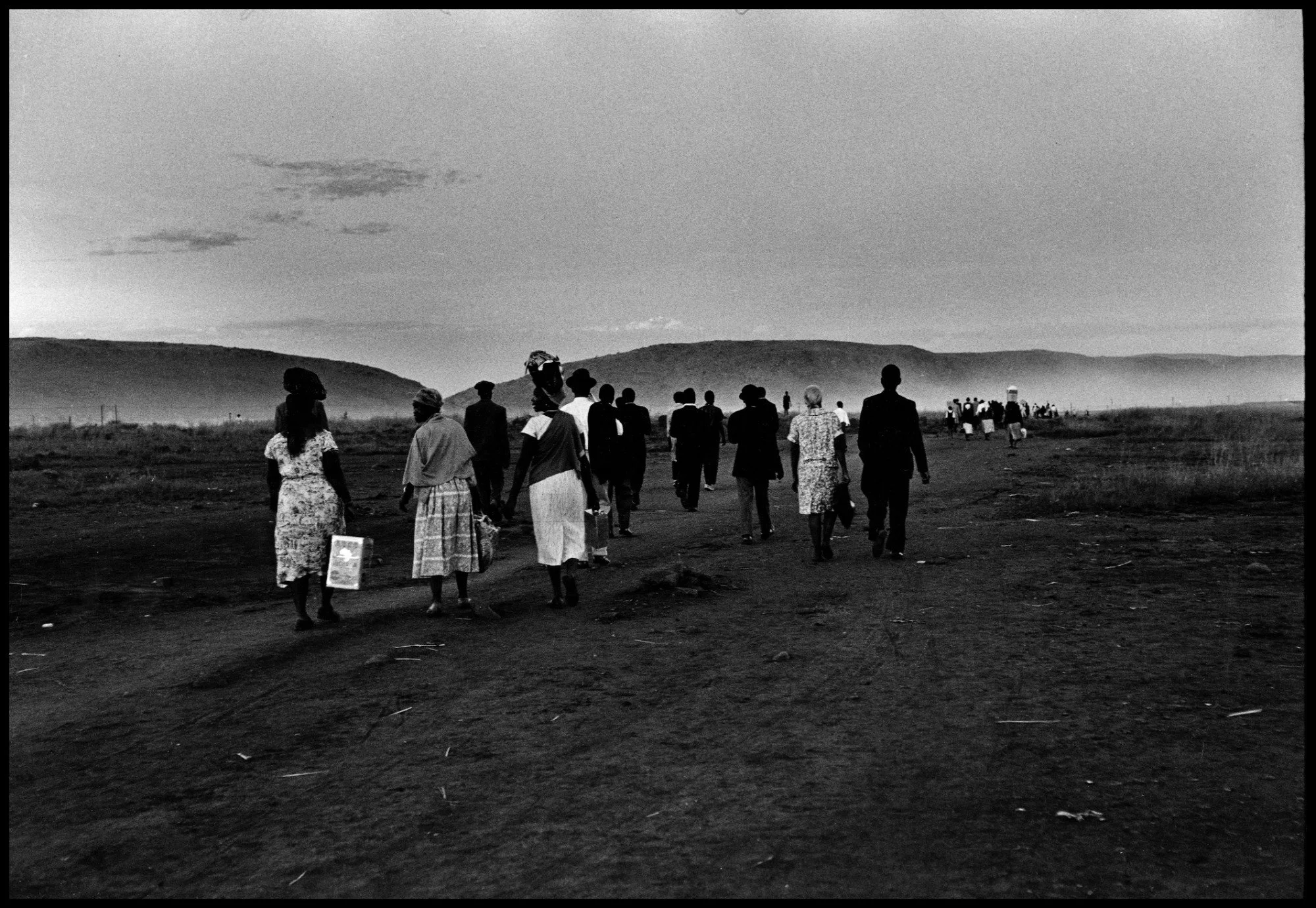
The book also looks at work and money. After processing, they wait at railroad station for transportation to mine, South Africa, 1960 shows men waiting for their transport to the mines. The caption notes an identity tag on the wrist of one man. Living in her kaya out back, South Africa, 1960 shows a servant sitting in the small room behind a white family’s home. Jürgen Schadeberg said that Cole was brave enough to smuggle his camera into the tightly controlled mining compounds and to take pictures of pass arrests with his camera hidden in a paper bag. A white pocket being picked, South Africa, 1960 is a street scene on a pavement in a town. People returning after a long day’s work and a train ride from Pretoria, Mamelodi, South Africa, 1960 follows workers walking home. The people of Eersterust, where Cole was born, were moved to Mamelodi, and Magnum also holds a picture of that move.
In the United States, Cole received a Ford Foundation grant and worked on projects about Black family life in the rural South and in the cities. He photographed in New York, including Harlem, and in Black communities in cities and rural areas across the country, also around the time of the killing of Martin Luther King Jr. in 1968. Few of these pictures were published while he lived. Aperture published many of them as The True America in 2024. A documentary by Raoul Peck, Ernest Cole: Lost and Found, uses Cole’s own writings.
- 1940Born on 21 March in Eersterust, Pretoria
- 1958Joins Drum magazine as an assistant to Jürgen Schadeberg
- 1966Leaves South Africa on 9 May and reaches New York on 10 September
- 1967House of Bondage is published and banned in South Africa
- 1968The South African government bans him for life and takes his passport
- 1969Begins regular visits to Sweden and works with the Tiofoto collective
- 1972Stops working as a photographer and loses control of his negatives
- 1990Dies in New York, aged 49
In his words
“Three-hundred years of white supremacy in South Africa has placed us in bondage, stripped us of our dignity, robbed us of our self-esteem and surrounded us with hate.”
“The essential cruelty of the situation is not that all blacks are virtuous and all whites villainous, but that the whites are conditioned not to see anything wrong in the injustices they impose on their black neighbors.”
“I quit school in 1957 rather than go along with the ‘bantu’ education for servitude which had become more strict than before.”
“it wasn’t any better: there was no freedom”
Gear
Cole’s camera, lens and film are not firmly documented. What is clear is how he carried his work.
Prints and negatives: In 1966 Cole left South Africa with prints of his apartheid project. Decades later, more than 60,000 negatives were found in a Stockholm bank vault. Good storage kept his work alive.
Books
Ernest Cole: House of Bondage (Aperture, 2022). This is the new edition of Cole’s 1967 book. It has 232 pages and 227 images. It adds a chapter of unpublished work from the recovered negatives and a chapter called Black Ingenuity. Mongane Wally Serote, Oluremi C. Onabanjo and James Sanders contribute new texts. It is the best first book for a new reader.
Ernest Cole: The True America (Aperture, 2024). This book shows Cole’s photographs of Black life in the United States in the late 1960s and early 1970s. It has 312 pages and 275 images. Contributors include Raoul Peck, James Sanders and Leslie M. Wilson. It is for readers who want to see what he made after he left South Africa.
Ernest Cole: Photographer (Hasselblad Foundation, 2011). Magnum describes this book as a follow-up to House of Bondage, produced by the Hasselblad Foundation in 2011. It appeared long after Cole’s death. It is for readers who want more of his work than the first book.