AT A GLANCE
- Known for
- The painter on the Eiffel Tower (1953), the young woman with a flower at the Pentagon (1967), and forty years of pictures of China
- Works in
- Black and white photo stories for magazines such as Life, Paris Match, Geo, National Geographic and Stern; many books
- Camera
- A Vest Pocket Kodak at 14, then his father's Leica; still a 35mm film camera at 86
- Agency
- Magnum Photos, associate from 1953 and full member from 1955; he left in 1979
- Awards
- Overseas Press Club Award (1966 and 1970) · Leica Lifetime Achievement Award (2001) · Sony World Photography Awards lifetime award (2009) · Prix Nadar (2012)
- Start with
- Marc Riboud: 50 Years of Photography (Flammarion, 2004)
- Links
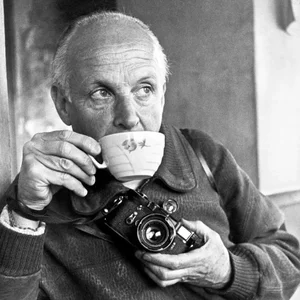
Marc Riboud (1923–2016) was a French photojournalist and a member of Magnum Photos. He grew up near Lyon and first worked as an engineer. In 1953 his picture of a painter on the Eiffel Tower appeared in Life, and Henri Cartier-Bresson and Robert Capa invited him to join Magnum. After that he travelled for more than sixty years. He was one of the first Western photographers to work in China after 1949, and he went back there again and again. His photograph of a young woman holding a flower in front of soldiers at the Pentagon in 1967 became one of the best known images of the protest against the Vietnam War.
The story
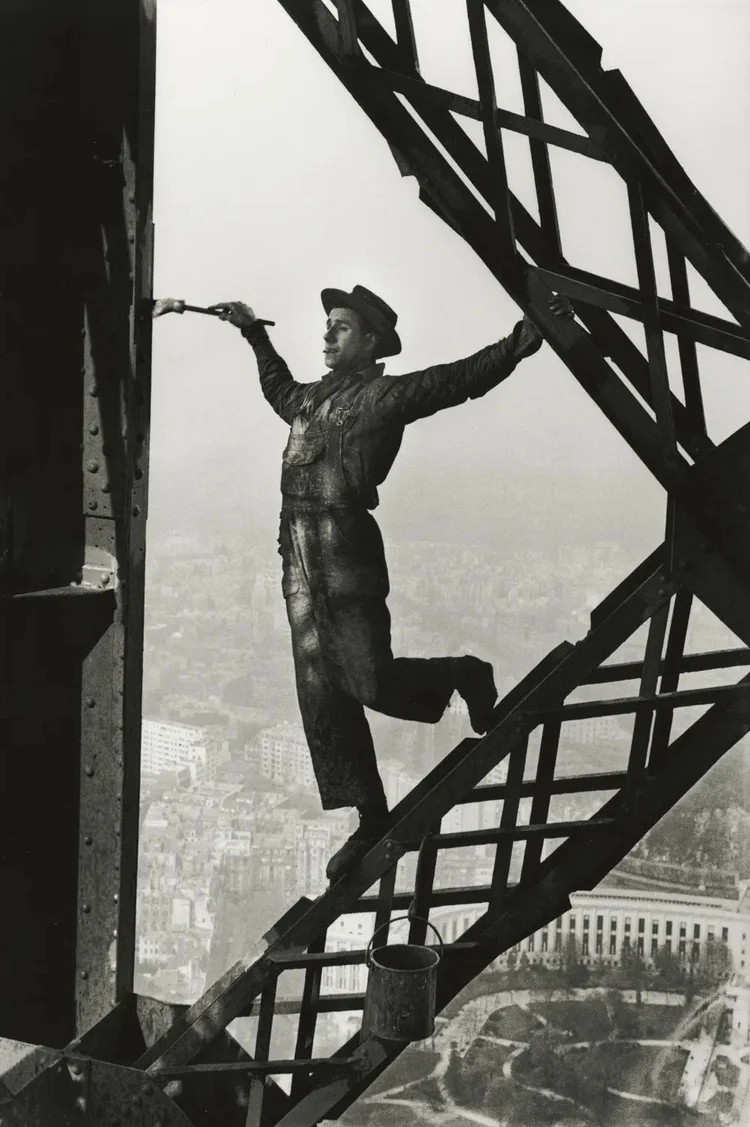
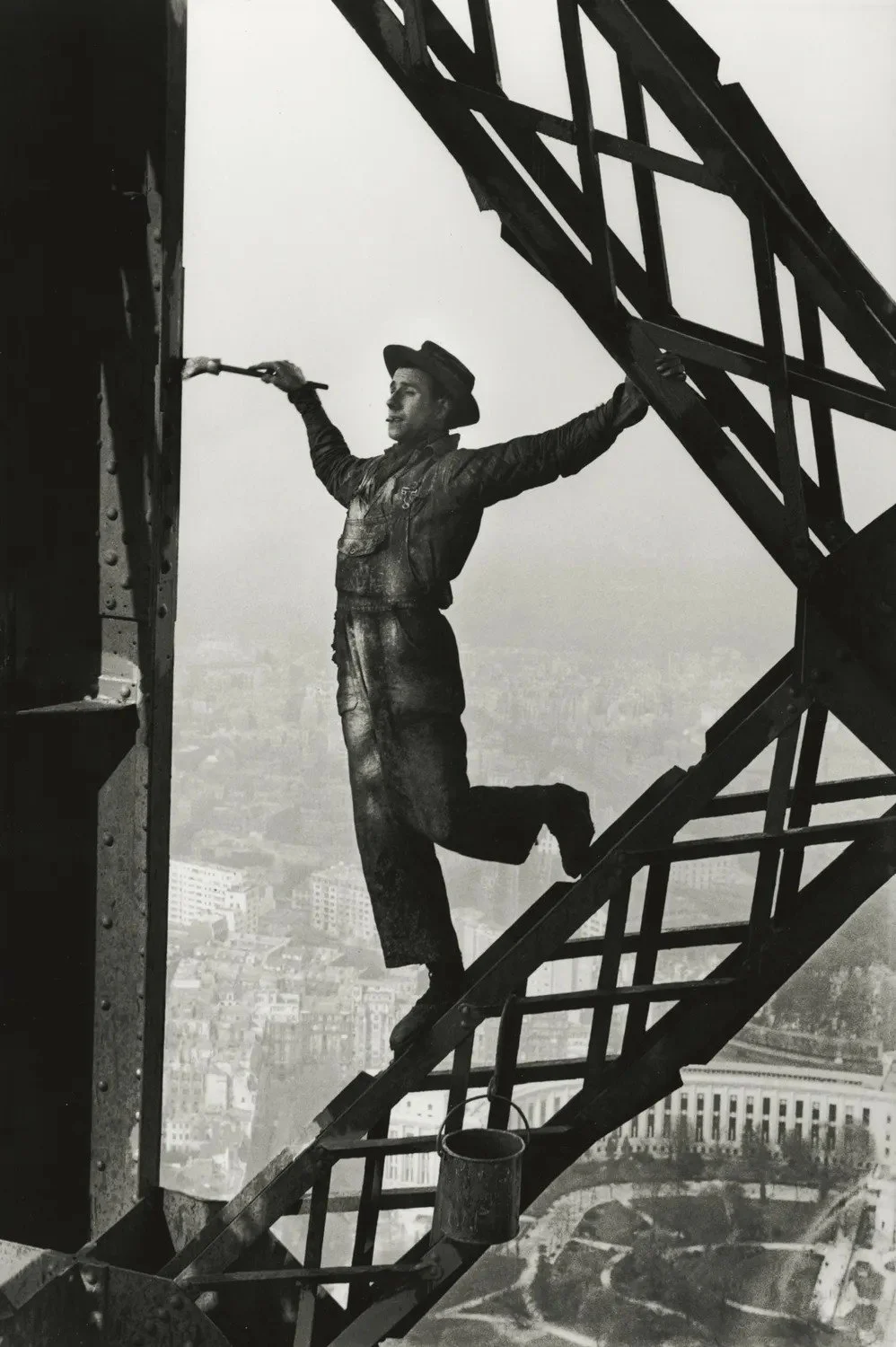
In 1953 a young Frenchman stood on a staircase of the Eiffel Tower, high above the seventh arrondissement of Paris. A painter called Zazou was working on the iron beams. He stood on one foot, held the tower with one hand and reached out with his brush. Marc Riboud was afraid of heights. Each time Zazou leaned out, Riboud closed his eyes. Still, he got the picture. It was his first assignment, and Robert Capa had set it up for him. Riboud sold the photographs to Life magazine. It was his first publication, and it made his name.
Nothing in his early life pointed to this. He was born on 24 June 1923 into a large family in Lyon, the fifth of seven children. As a boy he was very shy and found it hard to express himself. For his fourteenth birthday his father gave him a small Vest Pocket Kodak. His father told him: “although you might not know how to express yourself, perhaps you will learn how to look at things”. In 1937 Marc took his first pictures at the Exposition Universelle in Paris. Later his father left him a Leica. During the war Marc joined the Resistance, and in 1944 he fought in the Vercors. After the war he studied engineering in Lyon and worked in factories there. But in 1951 he left that safe job and moved to Paris to try his luck as a freelance photographer.
His brother Paul had married a sister of Henri Cartier-Bresson. So Marc met the great photographer, who liked his pictures. Cartier-Bresson told him which museums and galleries to visit. Capa told him to learn English. Riboud later said of Cartier-Bresson: “You'd have to be a saint to live with him”, but he also called his advice inspirational. After the Eiffel Tower pictures, the two founders invited him to join Magnum. He became an associate in 1953 and a full member in 1955.
In 1954 he spent a year in London. He made good pictures there, but he still kept his distance from people. So he decided to fight his shyness by going far away. George Rodger, another Magnum founder, sold him a specially fitted Land Rover. Riboud drove it overland through the Middle East and Afghanistan to India and stayed there for about a year. On the last day of 1956 he crossed into China from Hong Kong. He was one of the first Western reporters allowed into the country after the revolution of 1949. His long road east ended in Japan, which gave him his first book, Women of Japan.
China stayed with him for the rest of his life. He went back in 1965 and photographed the start of the Cultural Revolution. He also photographed Mao and Zhou Enlai, but he showed them as ordinary people. He did not praise them, and he did not attack them. “I am not an analyst,” he said. “I just collect impressions.” In the 1960s he also covered Algeria, Cuba and the Soviet Union. In 1968 and 1969 he was one of the few photographers who worked in both South and North Vietnam.
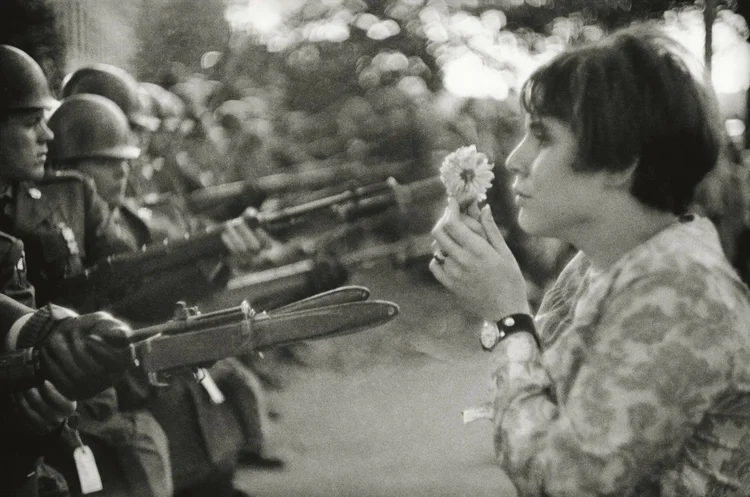
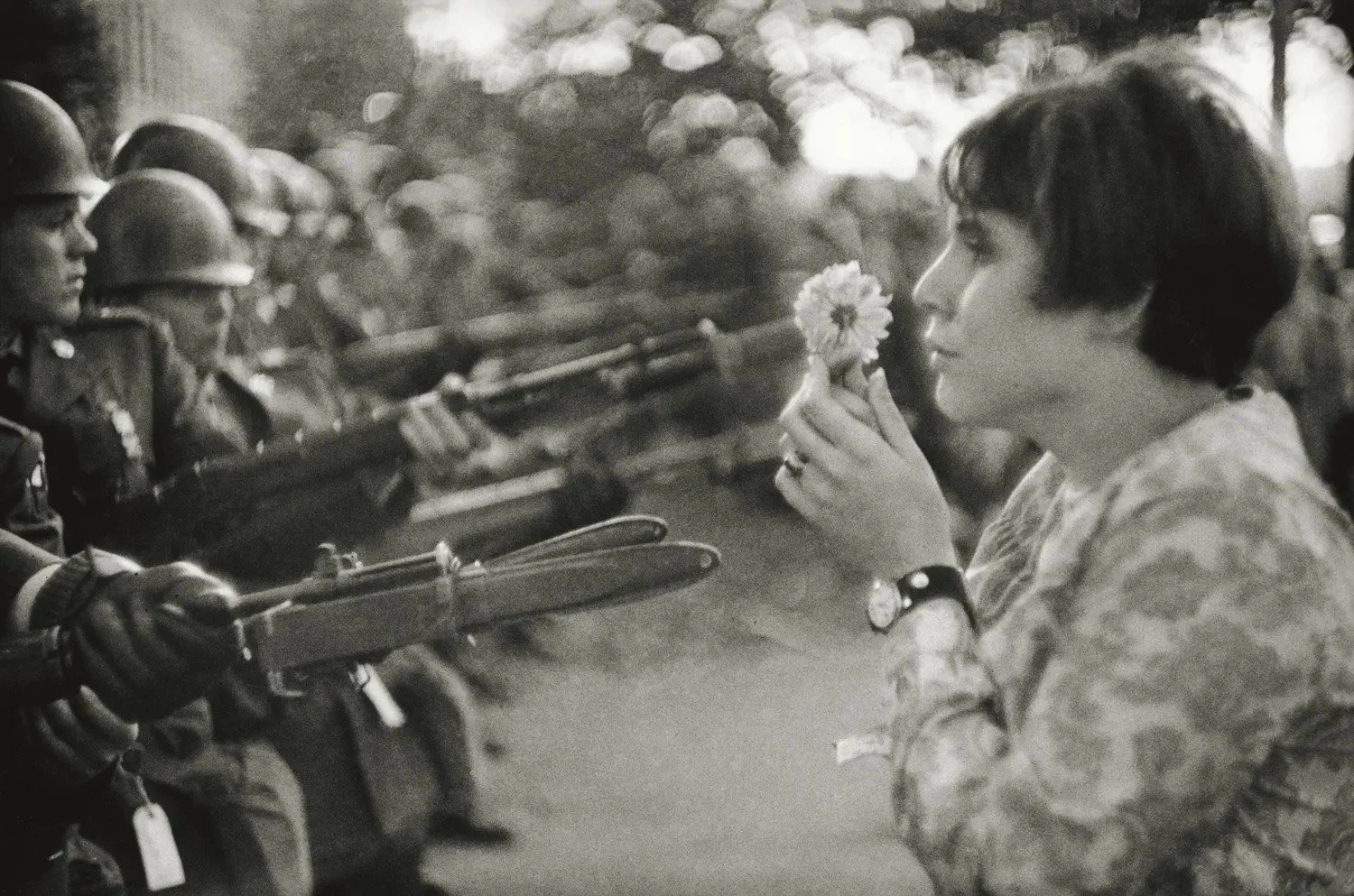
On 21 October 1967 he was in Washington, at a huge march for peace in Vietnam. Thousands of young people came close to the Pentagon. Riboud was running out of film as night fell. On the very last frame of his last roll, he caught Jan Rose Kasmir, 17 years old, holding a flower in front of a row of bayonets. “The very last photo was the best,” he wrote later. More than thirty years later, a French newspaper found her. In February 2004 Riboud photographed her again, at a protest against the Iraq war in London.
He kept travelling until illness stopped him. In 2011 he gave 192 original prints to the Centre Pompidou in Paris. He died in Paris on 30 August 2016, aged 93. He never believed that a picture could change everything. As he put it: “photography must not try to be persuasive. It cannot change the world, but it can show the world, especially when it is changing.”
The work
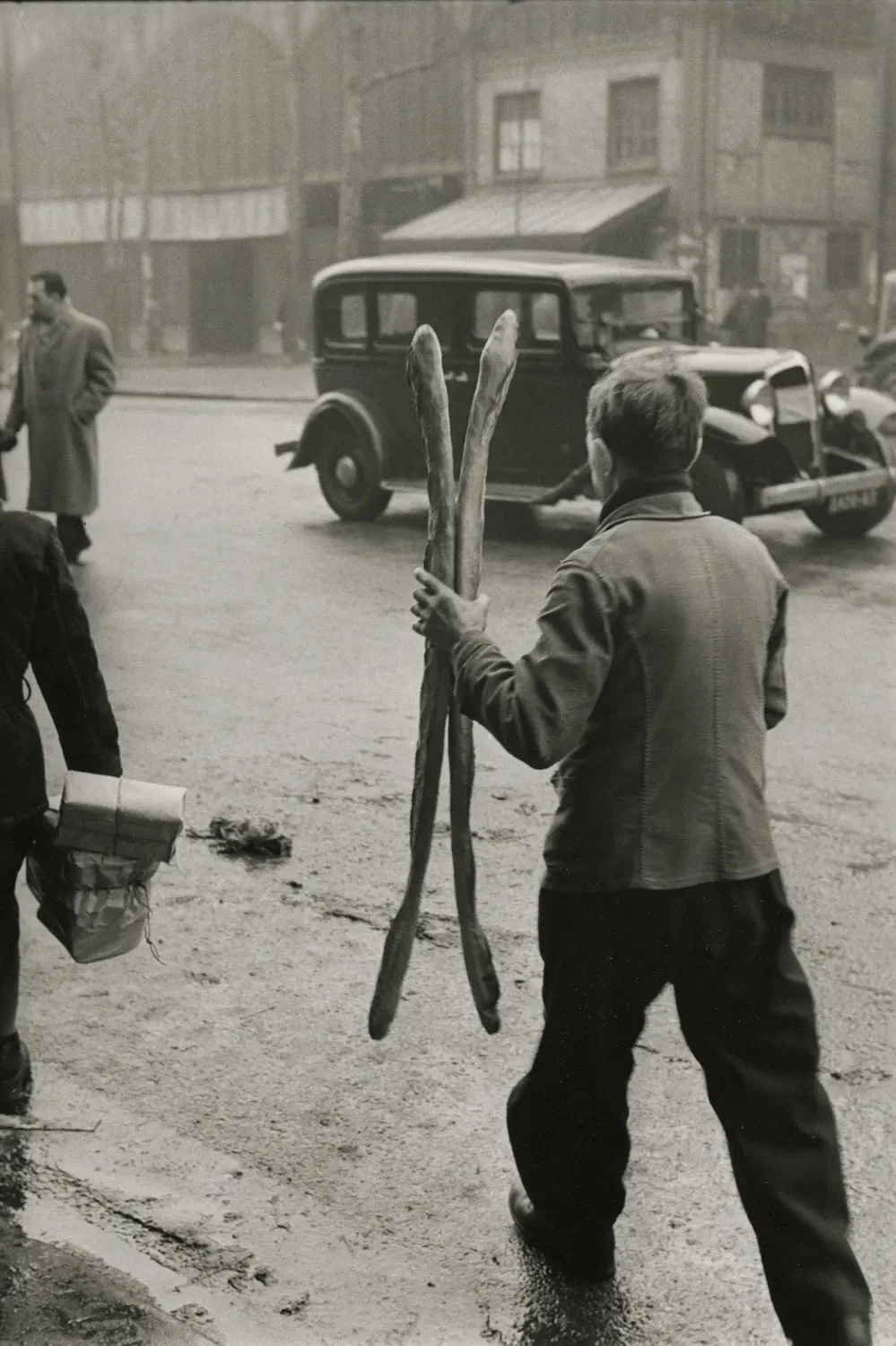
Riboud's best known pictures look simple, but they are built with care. Painter on the Eiffel Tower, Paris (1953) puts a small man against the open sky, with the city far below. The painter seems to dance on the steel. In the same year Two Baguettes, Paris (1953) shows a boy crossing a street with two long loaves of bread in his hand, next to an old car. Both pictures are about everyday life, but both feel light and full of movement.
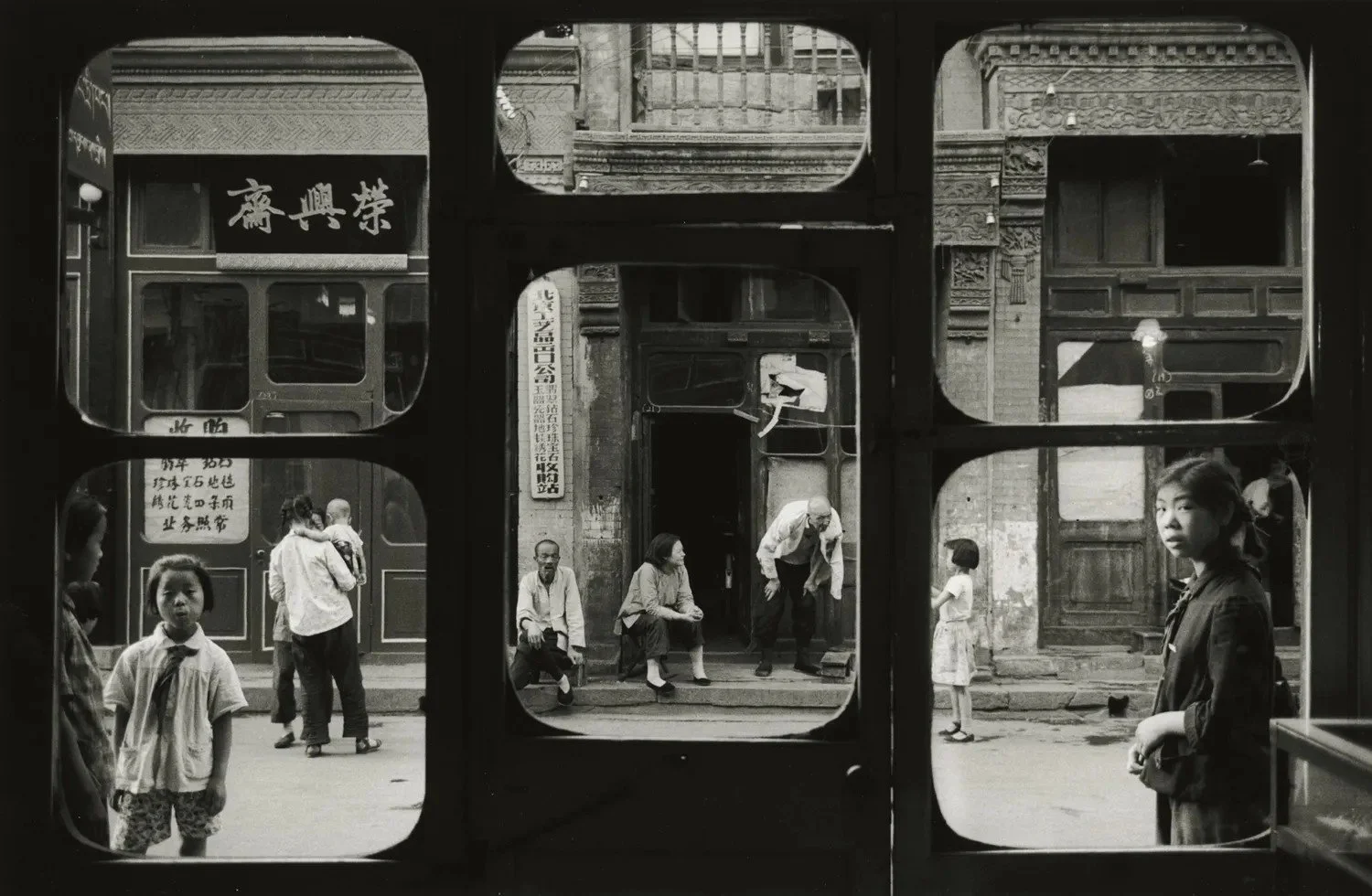
In China he often used frames inside the frame. Liu Li Chang, Beijing (1965) is taken through a window with many panes. In each pane we see a different small scene of the street. Riboud said of his way of working that “a camera is easy to use, but proper use of the eyes requires a long, long apprenticeship often capped with great pleasure.”
His most famous picture is about one face. Confrontation between a flower and the bayonets of soldiers guarding the Pentagon during the March for Peace in Vietnam, Washington, D.C. (1967) shows a young woman looking at the soldiers, a flower in her hands. The bayonets come in from the side of the frame. Riboud later said: “I had the feeling the soldiers were more afraid of her than she was of the bayonets.”
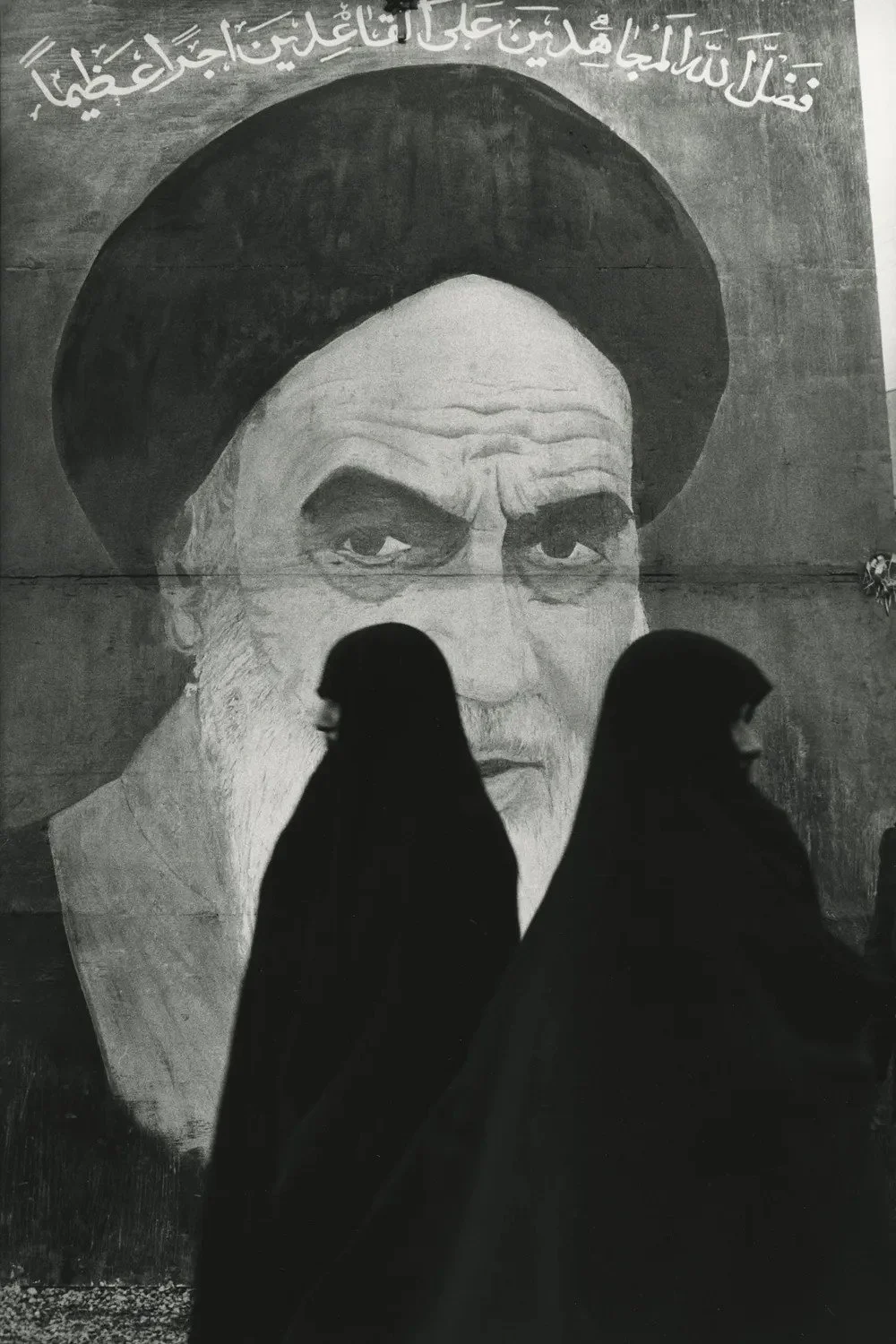
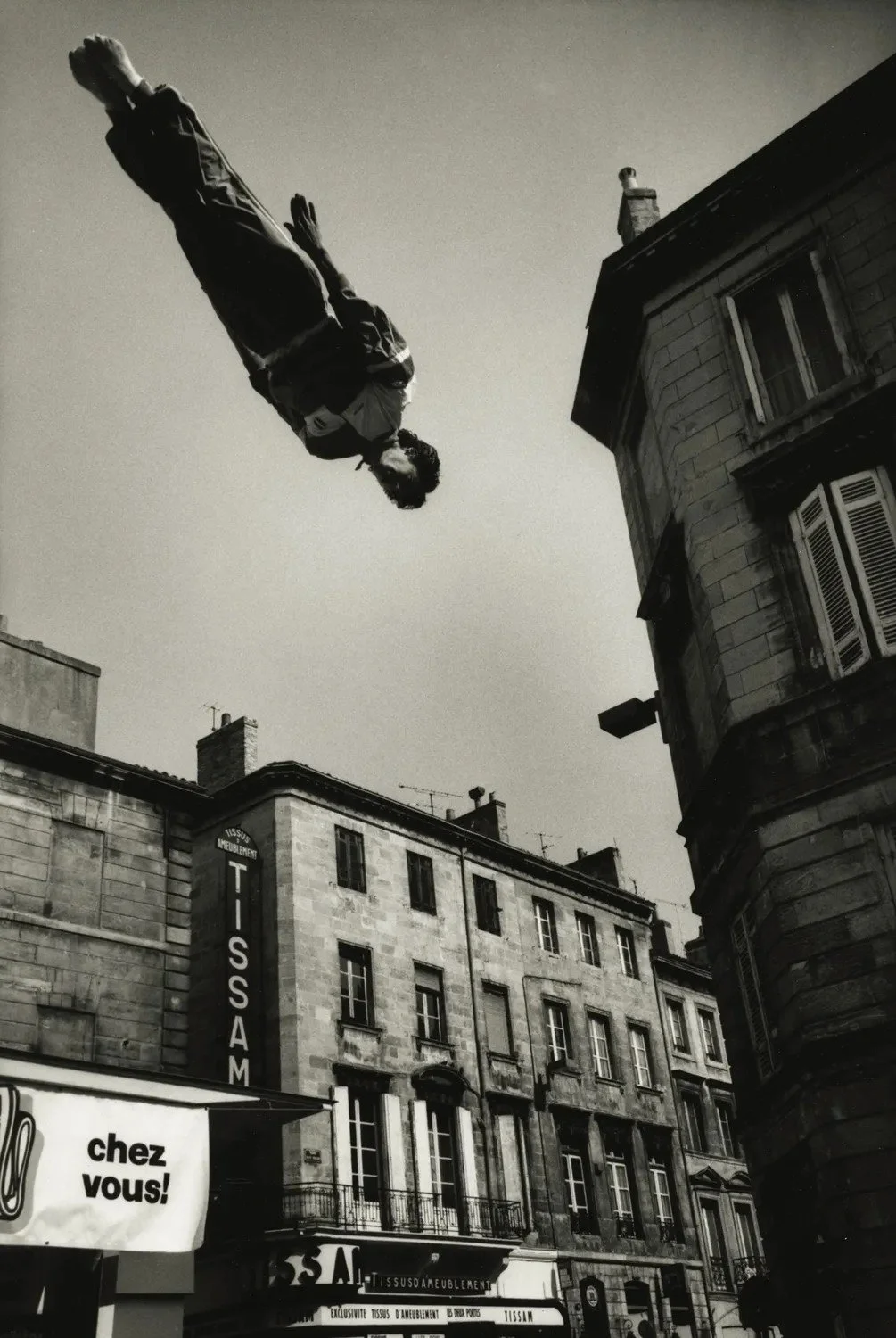
Later work kept the same sharp eye. In Khomeini Poster, Tehran (1979), two women in black stand in front of a giant painted face. In Trampoline, Bordeaux, France (1987), a man seems to fly high above the roofs of a city street.
- 1923Born on 24 June in Saint-Genis-Laval, near Lyon
- 1937Takes his first pictures at the Exposition Universelle in Paris with a Vest Pocket Kodak
- 1944Fights with the Resistance in the Vercors
- 1953His painter on the Eiffel Tower appears in Life; he joins Magnum
- 1956Drives overland to India and, on the last day of the year, crosses into China
- 1967Photographs a young woman with a flower at the Pentagon in Washington
- 1968Works in both South and North Vietnam
- 2011Gives 192 original prints to the Centre Pompidou in Paris
- 2016Dies in Paris
Lessons
Use the camera to beat your shyness. Riboud was a very shy man. He chose to travel far away so that he would have to go close to people.
Stay a long time. He went back to China for about forty years. Slow, repeated visits let him see a country change.
Keep shooting until the end. At the Pentagon in 1967 the best picture was the last frame on his last roll of film.
Try this: Go back to the same street or market five times in one month. Take pictures each time, and do not stop when you think you have the shot. At the end, lay out all the pictures by date and look at what changed.
Gear
Riboud did not talk much about equipment. The sources name only a few cameras.
Vest Pocket Kodak: his father gave him this small folding camera for his fourteenth birthday, and he used it for his first pictures in 1937.
Leica rangefinder: his father left him a Leica, and it became the tool of his working life.
35mm film camera: at 86, in 2010, he still carried a 35mm film camera.
Books
Marc Riboud: 50 Years of Photography (Flammarion, 2004). Flammarion published this large overview in 2004, in French and English. The texts are by Annick Cojean, Robert Delpire, Catherine Chaine and Riboud himself. It covers his work from the 1950s on, from Paris to Asia. It is the best first book for anyone who wants to see his whole career.
Visions of China: Photographs by Marc Riboud 1957-1980 (Pantheon, 1981). Pantheon published this book in 1981, with texts by Orville Schell and Riboud. It brings together more than twenty years of his pictures of China. It is for readers who want to see China change through one patient eye.
The Three Banners of China (Collier-Macmillan, 1966). This was his second book, published in 1966, with texts by Han Suyin and Riboud. It shows his pictures from China in 1965, at the start of the Cultural Revolution. It is a good book for collectors and for readers interested in the history of China.
Into the Orient (Xavier Barral, 2012). Xavier Barral published this book in 2012, with texts by Riboud and Catherine Chaine. It follows his long journeys in the East. In 2012 it won the Prix Nadar, a French prize for photo books. It suits readers who love travel photography and well made books.
In his words
“Photography must not try to be persuasive. It cannot change the world, but it can show the world, especially when it is changing.”
“A camera is easy to use, but proper use of the eyes requires a long, long apprenticeship often capped with great pleasure.”
“I am not an analyst. I just collect impressions.”
“I had the feeling the soldiers were more afraid of her than she was of the bayonets.”
“I have a small penchant for the Eiffel Tower.”