AT A GLANCE
- Known for
- Children of Europe for UNICEF (1948), the Spanish Civil War, and warm portraits of film stars, writers and ordinary people
- Works in
- Black and white photo stories for magazines such as Regards, Vu, Ce Soir and LIFE
- Camera
- A 35mm camera, his first in 1932; a Rolleiflex for We Went Back (1947)
- Agency
- Founding member of Magnum Photos (1947) · president of Magnum from 1954 until his death
- Also
- Wrote Magnum’s by-laws · photo interpreter in the US Army during the Second World War
- Start with
- David Seymour (Chim) (Phaidon, 2006)
- Links
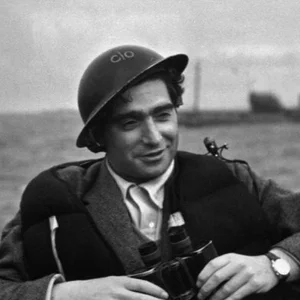
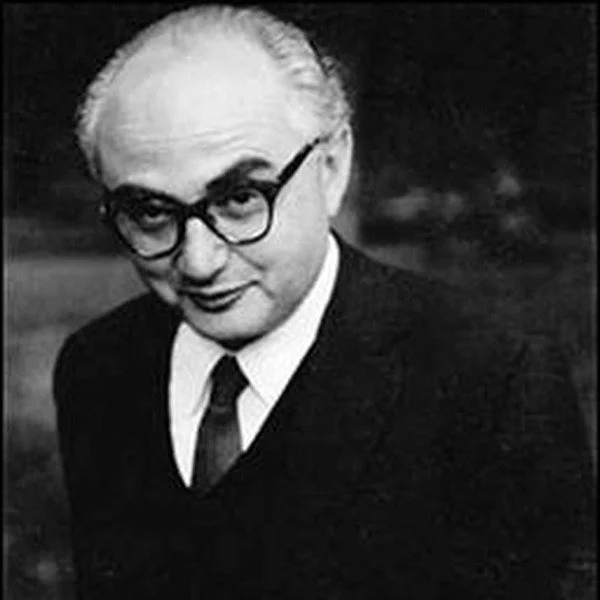
David Seymour (1911–1956), known as Chim, was a Polish-born photojournalist and one of the founders of Magnum Photos. He made his name in the Spanish Civil War. After the Second World War he travelled through Europe for UNICEF and photographed children who had lost their homes, their families and their health. Later he photographed Italy, the young State of Israel and many famous people. He led Magnum after Robert Capa died, and he was killed near the Suez Canal in 1956.
The story
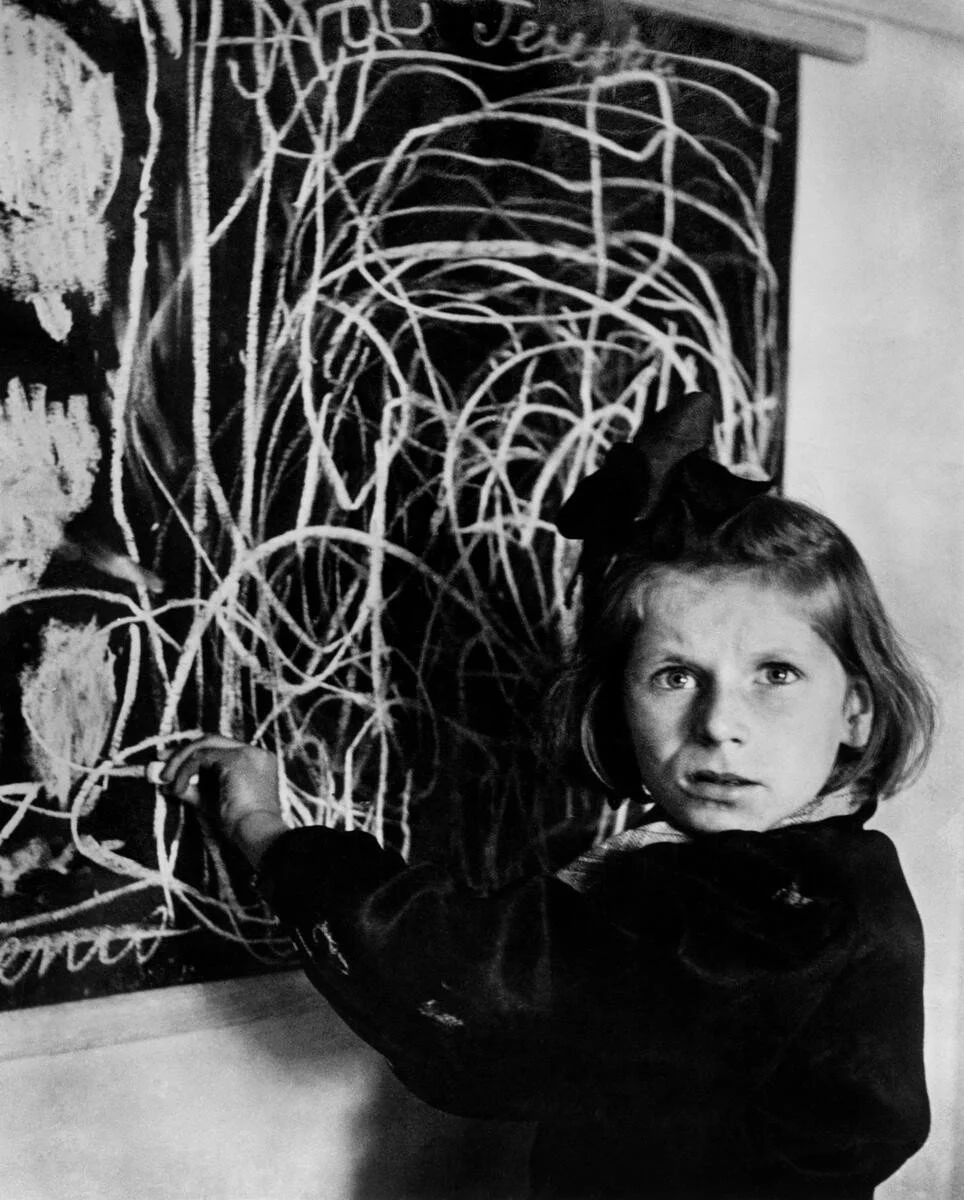
In 1948, in a school for disturbed children in Warsaw, a small girl named Tereska stood at a blackboard. Someone had asked her to draw her home. She drew a tangle of white chalk lines that showed no house at all. Then she turned and looked straight into the camera of David Seymour. Tereska had survived a German concentration camp. The man behind the camera had only recently learned that the Nazis had killed his own parents.
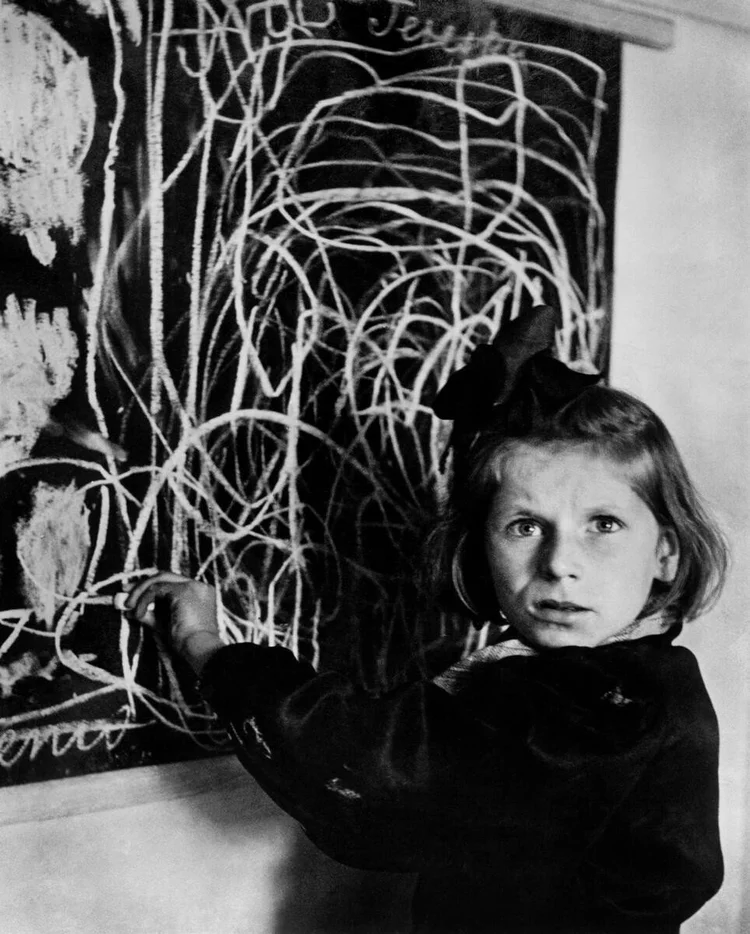
Seymour, called Chim, was there for UNICEF. In March 1948 the new agency made him a special consultant and sent him to photograph the children who had survived the war. He drove through five countries for six months: Austria, Greece, Italy, Hungary and Poland. He took a small fee of $2,600 instead of his usual $100 a day, and he shot 257 rolls of film. LIFE published the Tereska picture on 27 December 1948, in a 14-page story that asked readers to give money to help the children of Europe.
His own childhood had been broken by war too. Dawid Szymin was born in Warsaw in 1911, into a family that published books in Yiddish and Hebrew. When the First World War began, the family moved to Russia, and it came back to Warsaw in 1919. In 1929 he went to Leipzig to study printing, and in 1931 he moved to Paris to study at the Sorbonne. A family friend, David Rappaport of the Rap agency, gave him his first 35mm camera in 1932. A year later he wrote to his childhood sweetheart, Emma: “I am a reporter, or more precisely, a photo reporter.” He signed his pictures “Chim”, a short form of his family name. In 1934 he met Henri Cartier-Bresson, and Chim introduced him to a young Hungarian called Robert Capa. Soon the three friends were sharing Chim’s studio and darkroom.
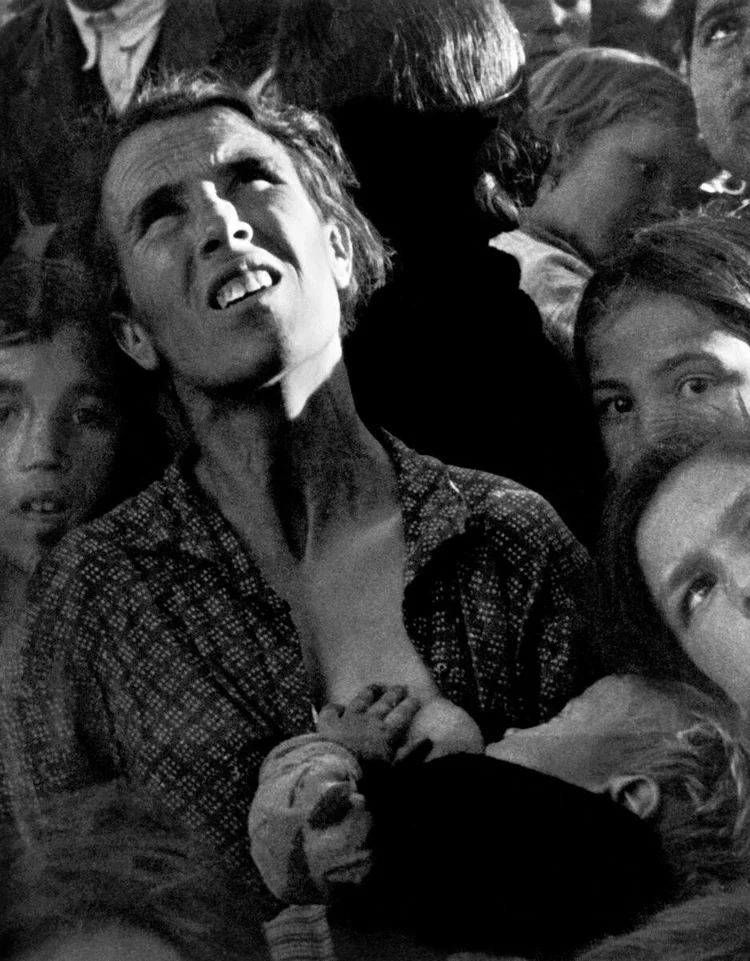
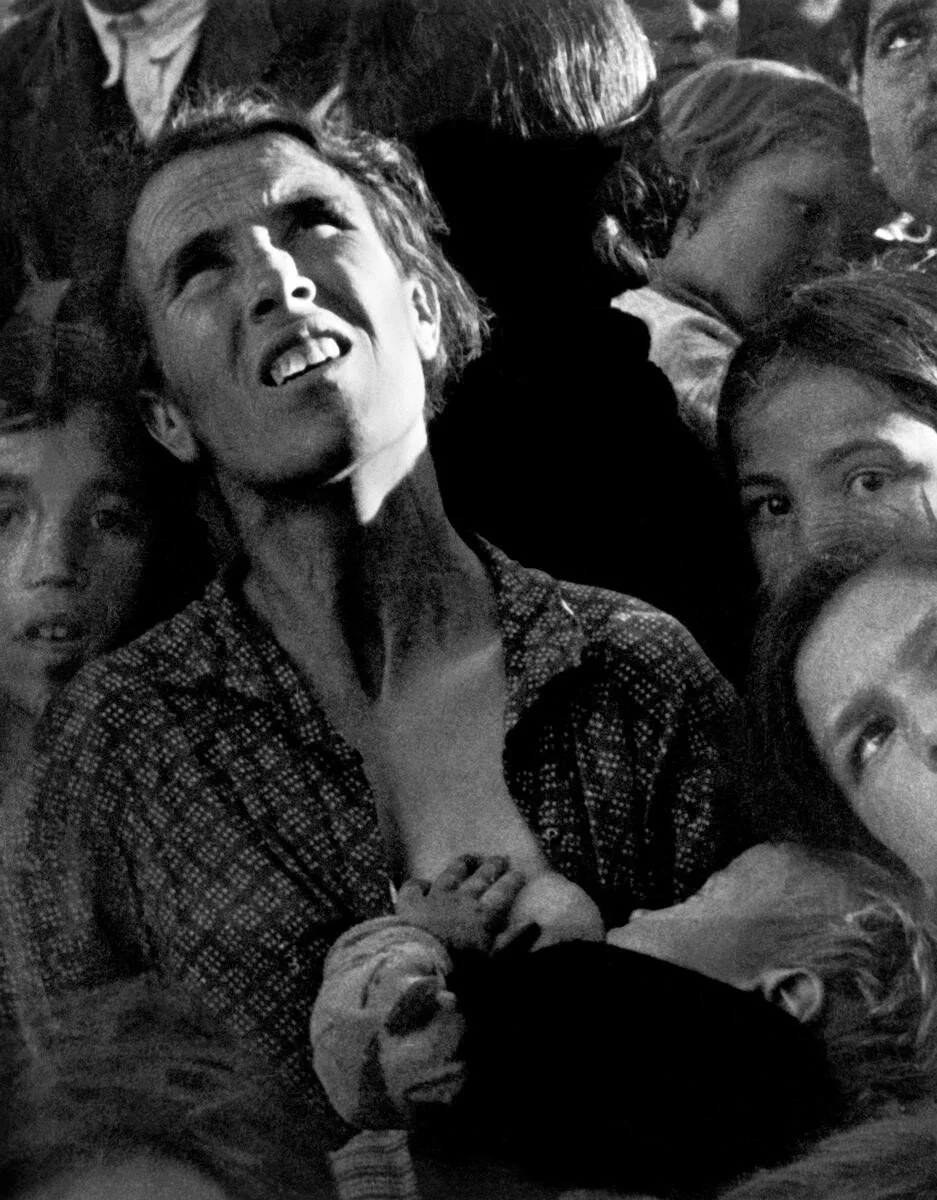
In the spring of 1936, the weekly magazine Regards sent Chim to Spain as its special correspondent. He photographed the Civil War until the Republicans lost. His picture of a woman nursing her baby at a land reform meeting became one of the best known images of that war. In early 1939 he sailed with 1,600 Spanish refugees to Mexico. Soon after he landed, the Second World War began. As a Jew and a socialist he could not safely go back to Europe, so he went to New York instead. He arrived with no papers and no job, and he found work in a photo lab. In October 1942 he joined the US Army, and in 1944 he became a photo interpreter. By then he had a new name: David Robert Seymour.
In 1947 he founded Magnum Photos with Capa, Cartier-Bresson, George Rodger and William Vandivert. Cartier-Bresson later said that without Chim, Magnum would not have existed, because Chim wrote its rules. Next came the UNICEF trip and Tereska. In 1949 he moved to Rome. He made about 2,500 pictures for a book on the Vatican. With his friend, the writer Carlo Levi, he photographed poor villagers learning to read. He made several trips to the young State of Israel. He also photographed film stars such as Ingrid Bergman, Audrey Hepburn and Sophia Loren, and writers and thinkers such as Bernard Berenson.
Then came 1954. Werner Bischof died in an accident in Peru, and nine days later Capa was killed by a landmine in Indochina. Chim wrote to his colleagues: “We have to go on, keep together, and avoid the stunning effects of our sorrow.” He became president of Magnum and helped it grow again. In October 1956 he was in Greece when war broke out around the Suez Canal. On 10 November 1956 he and the Paris Match photographer Jean Roy drove to photograph an exchange of prisoners near Al Qantara. Egyptian soldiers opened fire, and both men were killed. Chim was 44. Only days before, he had written to a friend: “At first sight I feel we cannot stay out of world events if we are to grow as a group in world photography.”
The work
Chim worked close to people. Magnum writes that he often invited the people he photographed to look straight at him, and this is why his pictures feel so human. Tereska, a child in a residence for disturbed children. She drew a picture of "home" on the blackboard (1948) shows this best. The girl does not smile. She simply looks back at us, and the chalk lines behind her say what words cannot.
His Spanish pictures are about ordinary people, not battles. In Woman nursing a baby at a land reform meeting near Badajoz (1936), a mother holds her baby at her breast and looks up at a speaker we cannot see. The crowd presses around her. The picture is both tender and political.
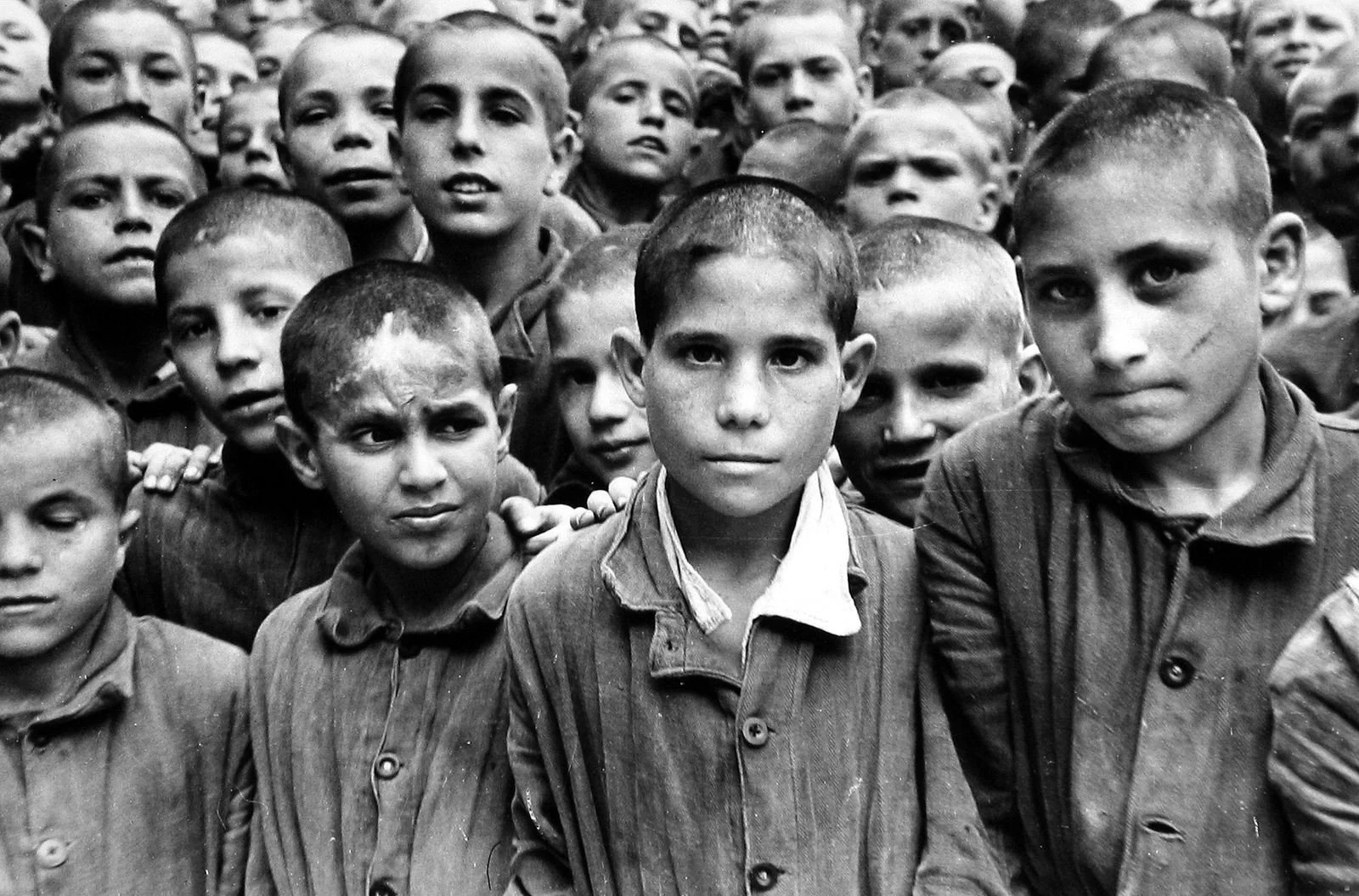
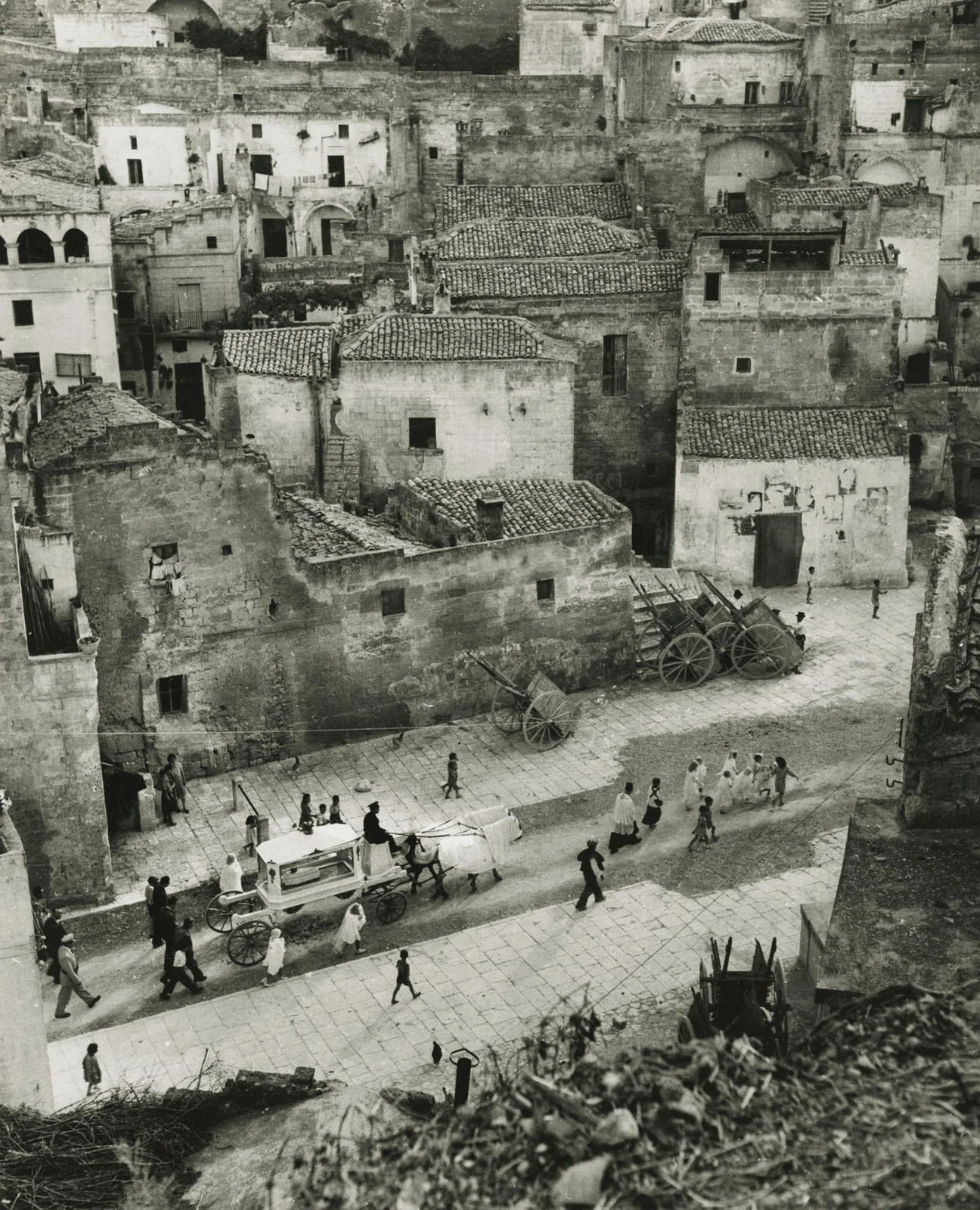
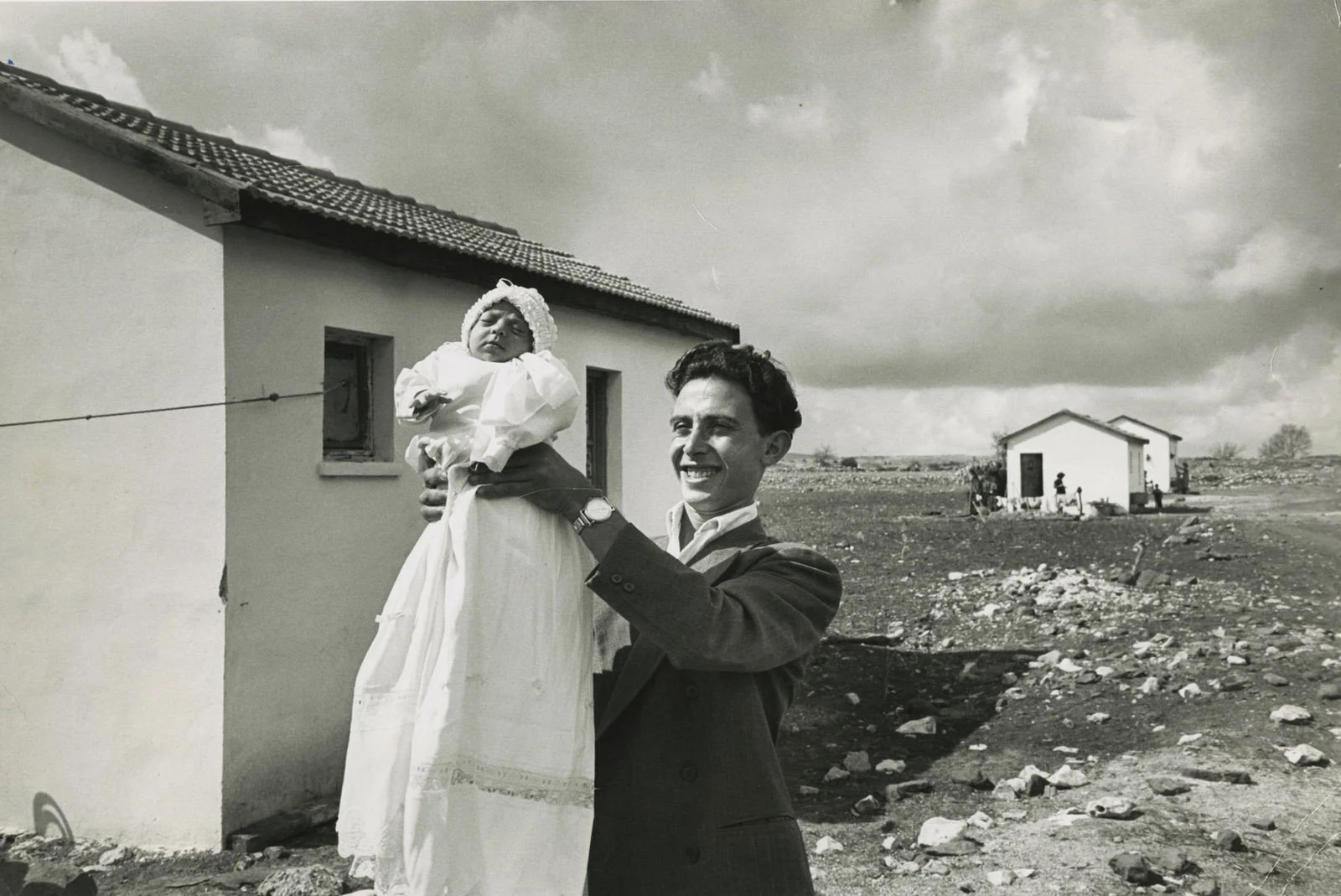
The UNICEF trip gave him many more faces. Boys in Albergo dei Poveri Reformatory, Naples, Italy (1948) is a wall of shaved heads and serious eyes, with one boy’s face marked by a scar. Funeral Procession for Child, Matera, Italy (1948) looks down on a small white coffin carried through the rocky streets of an old hill town. In Israel his mood is lighter. First Child Born in Settlement, Alma, Israel (1951) shows a young father, Eliezer Trito, lifting his baby daughter Miriam high and laughing in front of a new white house.
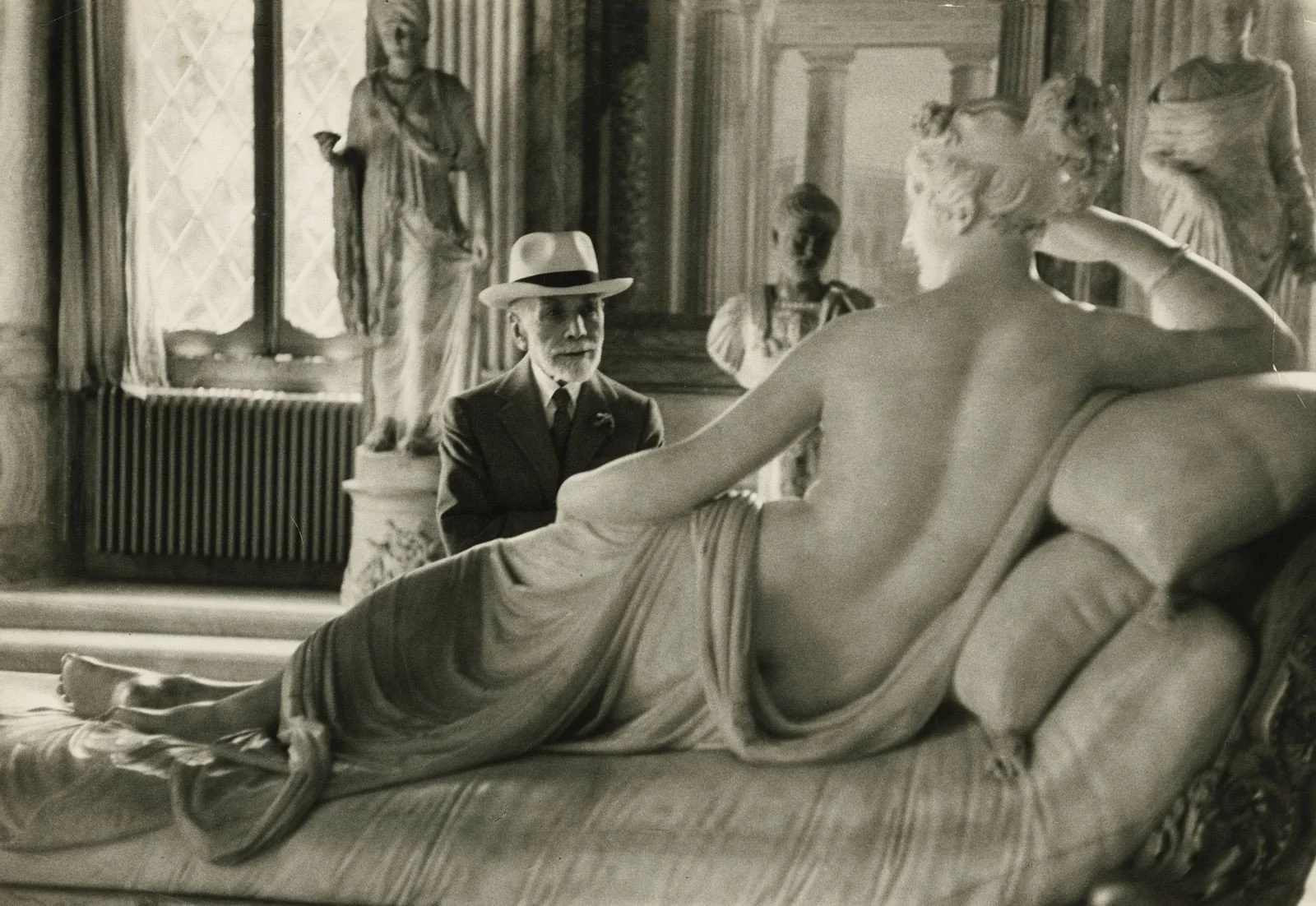
He brought the same care to famous people. In Bernard Berenson, Rome (1955), the old art historian sits in a hat in a museum hall, half hidden behind a marble statue of a reclining woman. The picture is funny, gentle and full of respect at the same time.
- 1911Born Dawid Szymin in Warsaw, Poland
- 1932Gets his first 35mm camera in Paris from David Rappaport of the Rap agency
- 1936Goes to Spain for the magazine Regards to cover the Civil War
- 1939Sails with Spanish refugees to Mexico, then moves to New York
- 1942Joins the US Army; from 1944 he works as a photo interpreter
- 1947Co-founds Magnum Photos with Capa, Cartier-Bresson, Rodger and Vandivert
- 1948Photographs Europe’s war children for UNICEF, including Tereska in Warsaw
- 1954Becomes president of Magnum after the deaths of Capa and Bischof
- 1956Dies near Al Qantara, by the Suez Canal, Egypt
Lessons
Let people look back at you. Chim often invited the people he photographed to look straight into his lens. Tereska’s eyes are the reason her picture still hurts to look at.
Give a big story your full time. For UNICEF he worked for six months for a small fee and shot 257 rolls of film. He stayed long enough to see children suffer and also play again.
Write your own captions. Chim wrote his own short captions, like the one about Elefteria and her first shoes. A few plain sentences can tell the viewer what the picture alone cannot.
Try this: ask one person you know to stand in a place that matters to them, like their kitchen, their workplace or their street. Talk with them first. Then ask them to look straight into your lens and make ten frames. Choose the best one and write a three-sentence caption for it: who, where, and one small true thing that happened.
Gear
Chim did not talk much about his tools, and few sources name them. Here is what the sources say.
35mm camera: in 1932 David Rappaport, founder of the Rap agency, gave him his first 35mm camera in Paris. The model is not named in the sources.
Rolleiflex: Magnum writes that his 1947 story We Went Back, about the places of war in Europe, was made in carefully composed Rolleiflex pictures, some in colour.
Books
David Seymour (Chim) (Phaidon, 2006). This small book was published by Phaidon in 2006, with a text by Tom Beck. It covers his whole career, from unrest in France in the 1930s to the UNICEF children and famous sitters like Bernard Berenson. The full-page pictures are well printed. It is the best first book for anyone who is new to Chim.
CHIM: Children of War (Umbrage, 2013). The photography historian Carole Naggar edited this book for Umbrage in 2013. She went through Chim’s contact sheets from the UNICEF trip and found many pictures that had never been published. It shows children in Germany, Austria, Greece, Italy, Hungary and Poland after the war. It is for readers who want to go deep into his most important project.
David ‘Chim’ Seymour: Searching for the Light. 1911–1956 (De Gruyter Oldenbourg, 2022). This is the first full biography of Chim, written by Carole Naggar and published by De Gruyter Oldenbourg in 2022. It follows his life from Poland and Paris to Spain, the war years, the UNICEF children, Italy and Israel, up to his death at Suez. It also has more than a hundred reproductions of his pictures. It is for readers who want the whole story of the man behind the camera.
In his words
“As you know I am not working on the reproductions (lithographs) anymore, I am a reporter, or more precisely, a photo reporter.”
“For a long time four-year old Elefteria just stared at the new shoes. Finally, her grandmother was allowed to put them on her feet. Then the ice was broken. Elefteria ran through the village, laughing with delight. Her happiness was absolutely perfect.”
“We have to go on, keep together, and avoid the stunning effects of our sorrow.”
“At first sight I feel we cannot stay out of world events if we are to grow as a group in world photography.”