AT A GLANCE
- Known for
- Studio portraits made in Bamako from 1948 to the early 1960s, with patterned backdrops, props and carefully chosen poses
- Works in
- Black and white, large-format negatives, contact prints made without an enlarger
- Camera
- First camera: a Kodak Brownie Flash (1935) · later a large-format camera
- Also
- Official photographer of the Malian government in the early 1960s · more than 10,000 negatives survive
- Honour
- The Grand Prix of the Bamako Rencontres is named the Seydou Keïta Award
- Start with
- Seydou Keïta: Photographs, Bamako, Mali 1948 to 1963 (Steidl, 2011)
- Links
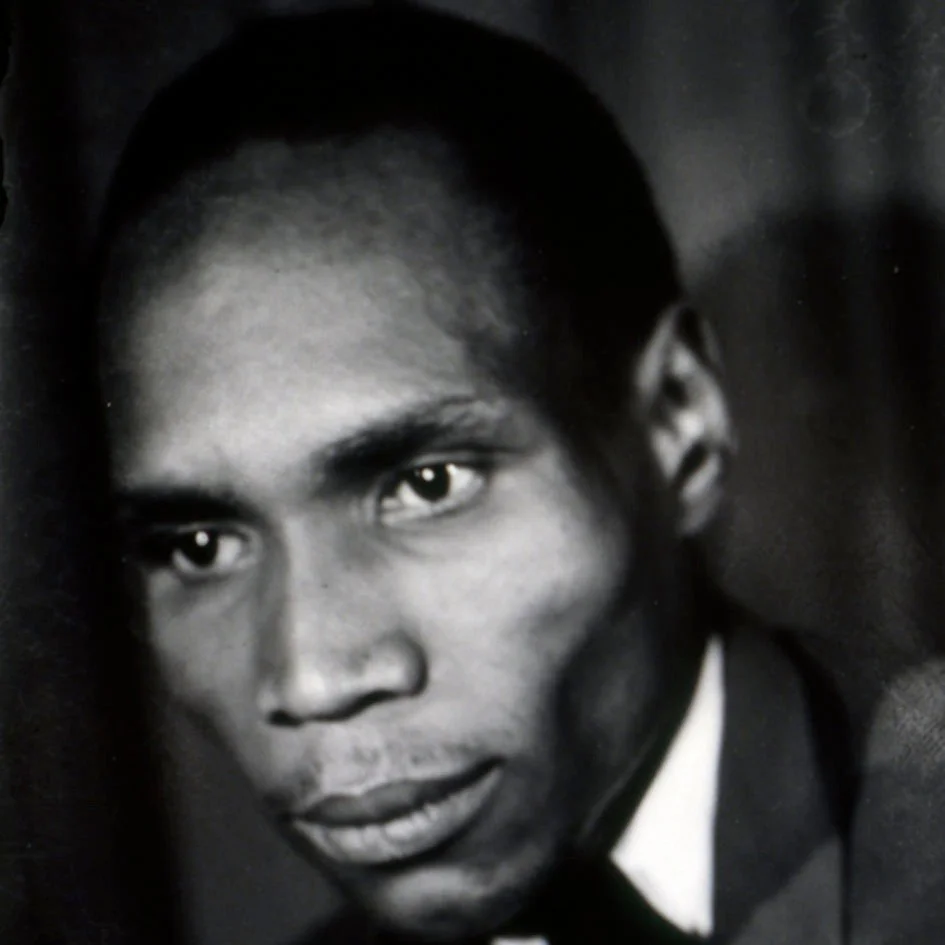
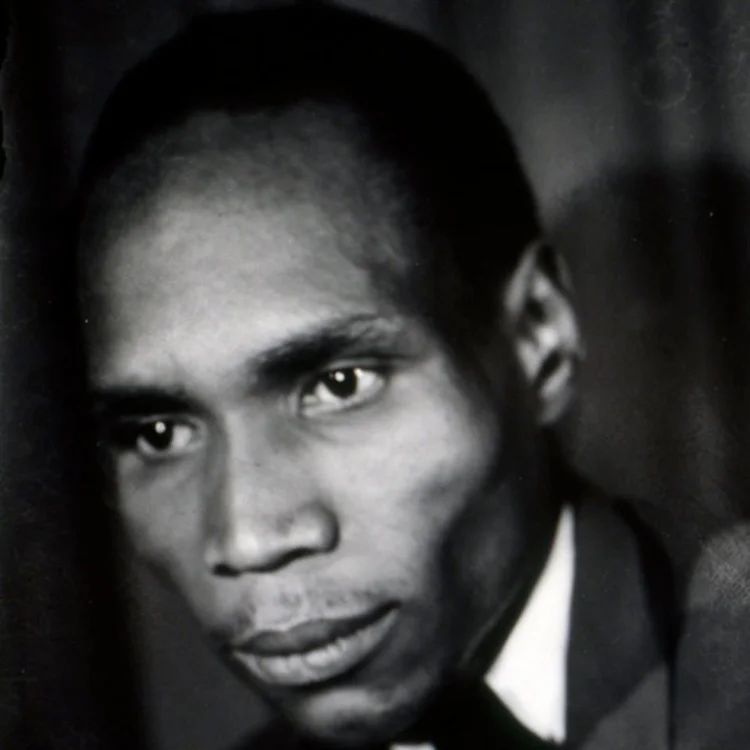
Seydou Keïta (about 1921 to 2001) was a photographer from Bamako, Mali. From 1948 he ran one of the best-known portrait studios in the city. His pictures show his clients in patterned fabrics, European clothes and with props such as bicycles and scooters. His archive of more than 10,000 negatives came to light in the early 1990s, and he is now seen as a master of portrait photography.
The story
In 1935 an uncle gave Seydou Keïta a camera. It was a Kodak Brownie Flash, which the uncle had bought on a trip to Senegal. Magnin-A says this gift launched his career as a photographer.
Keïta was then learning his father’s trade, carpentry. But he was mostly self-taught as a photographer. As a teenager he learned to shoot and to print. He photographed family, friends and his father’s clients, and then set up an open-air studio in a yard where he rented a room. In 1948 he opened his own studio in Bamako.
Film and paper cost money. So each client got one pose, and Keïta took one shot. That meant the pose had to be right the first time. He put it this way: “It’s easy to take a photo, but what really made a difference was that I always knew how to find the right position, and I was never wrong.”
People came in large numbers. “The whole Bamako came to be photographed in my studio: civil servants, businessmen, politicians,” he said. Some clients chose a pose from a picture they liked. In his words, they told him, “I want my picture to be like that one, you see? That’s what I want.” Sometimes it did not suit them, and then he suggested something that looked better.
He kept a stock of props and backdrops. Caption Magazine notes that he lent European clothing and accessories, and that clients also brought things they had bought to be photographed with. He stamped “Photo Keïta Seydou” on the back of his prints and sent assistants to find customers at the market and the train station. By 1952 the studio was a successful business.
Then times changed. Mali became independent in 1960, and the new socialist government made Keïta its official photographer. He closed his studio soon after and stayed active until he retired in 1977. By then his equipment had been stolen, and the old studio became a garage.
The pictures survived. In 1991 some of them were shown in New York without his name. In 1992 the photographers Bernard Descamps and Françoise Huguier and the gallery owner André Magnin travelled to Bamako to find him. His first solo show took place at the Fondation Cartier in Paris in 1994. Keïta died in Paris in 2001. Looking back on his portraits, he said: “The final photo was really beautiful. That’s why I call it Art.”
The work
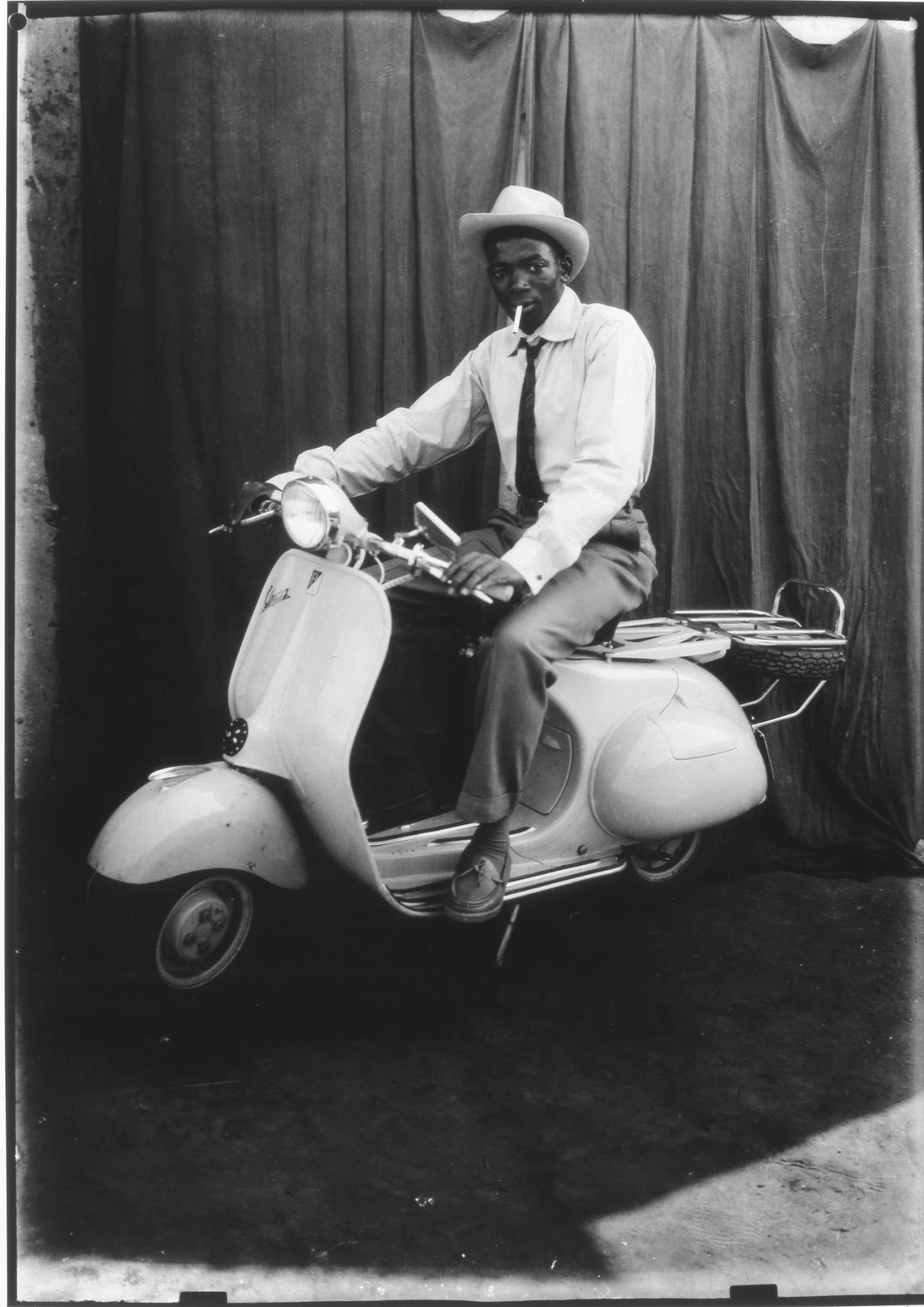
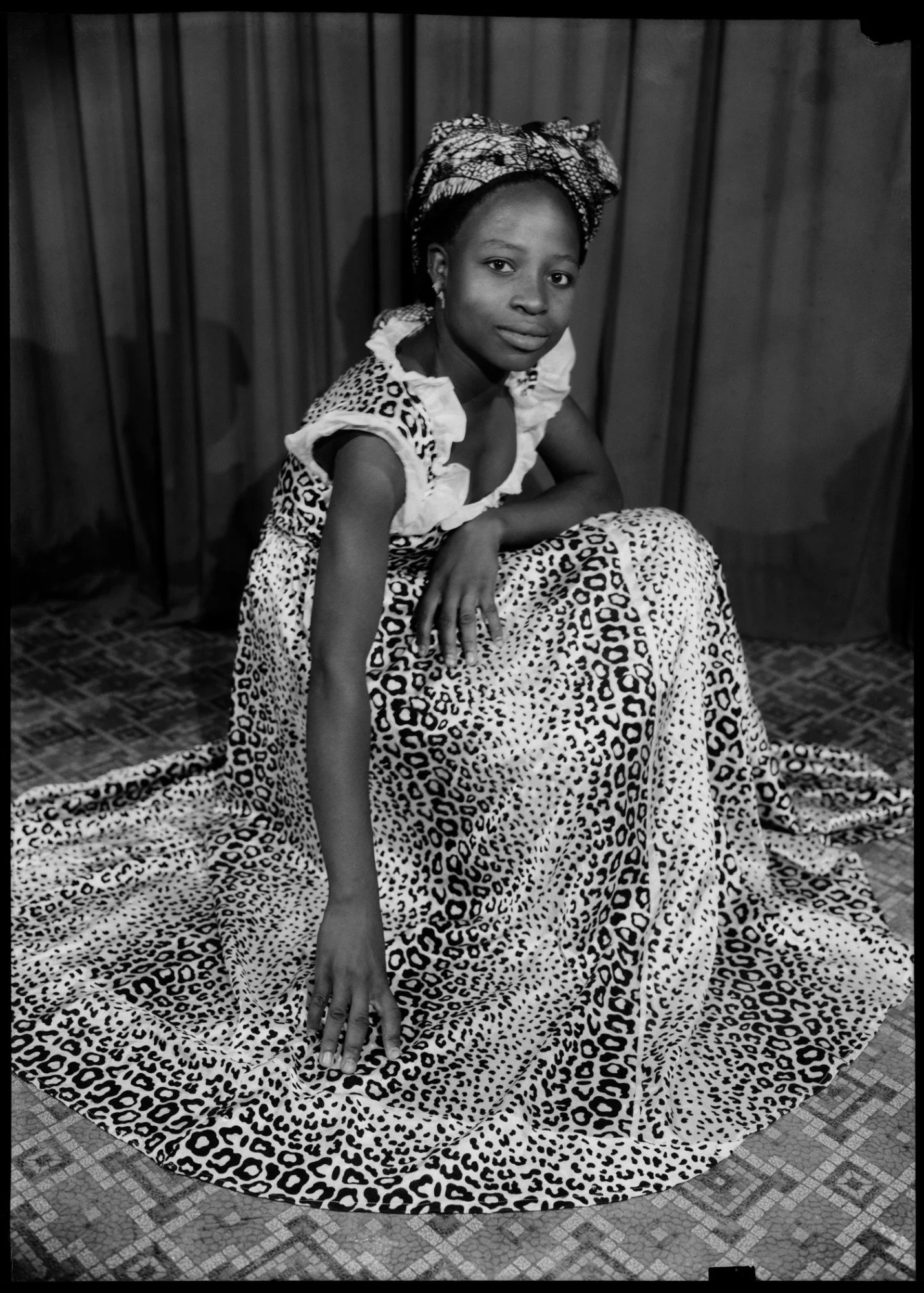
Keïta’s portraits balance a formal look with a feeling of closeness. In Untitled (02403-MA.KE.347), 1954-1960, a man in a hat and tie sits on a scooter in front of a dark drape. In Untitled (05330), 1954-1960, a young woman sits among the folds of a long patterned dress. Magnin-A says he furnished his studio with backdrops, costumes, Vespas and luxury cars, and renewed them every few years. That later helped others to date his pictures.
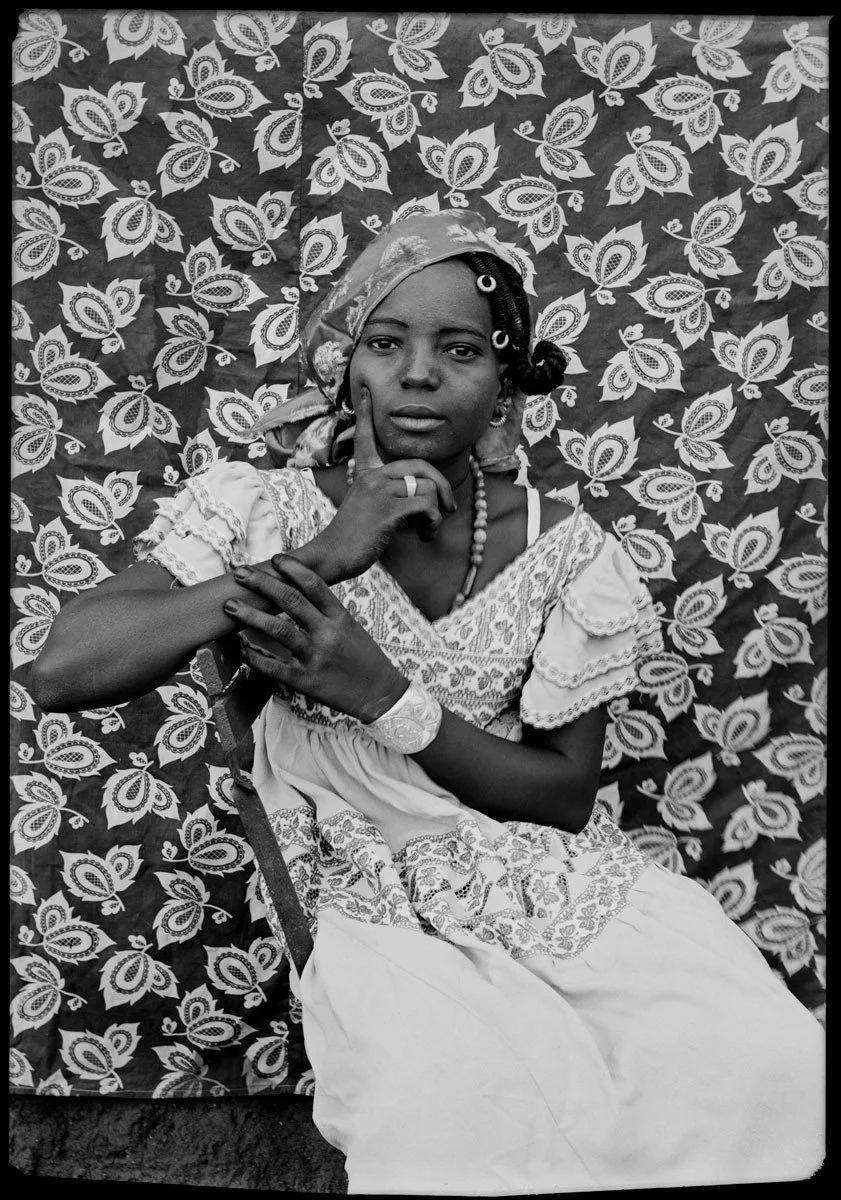
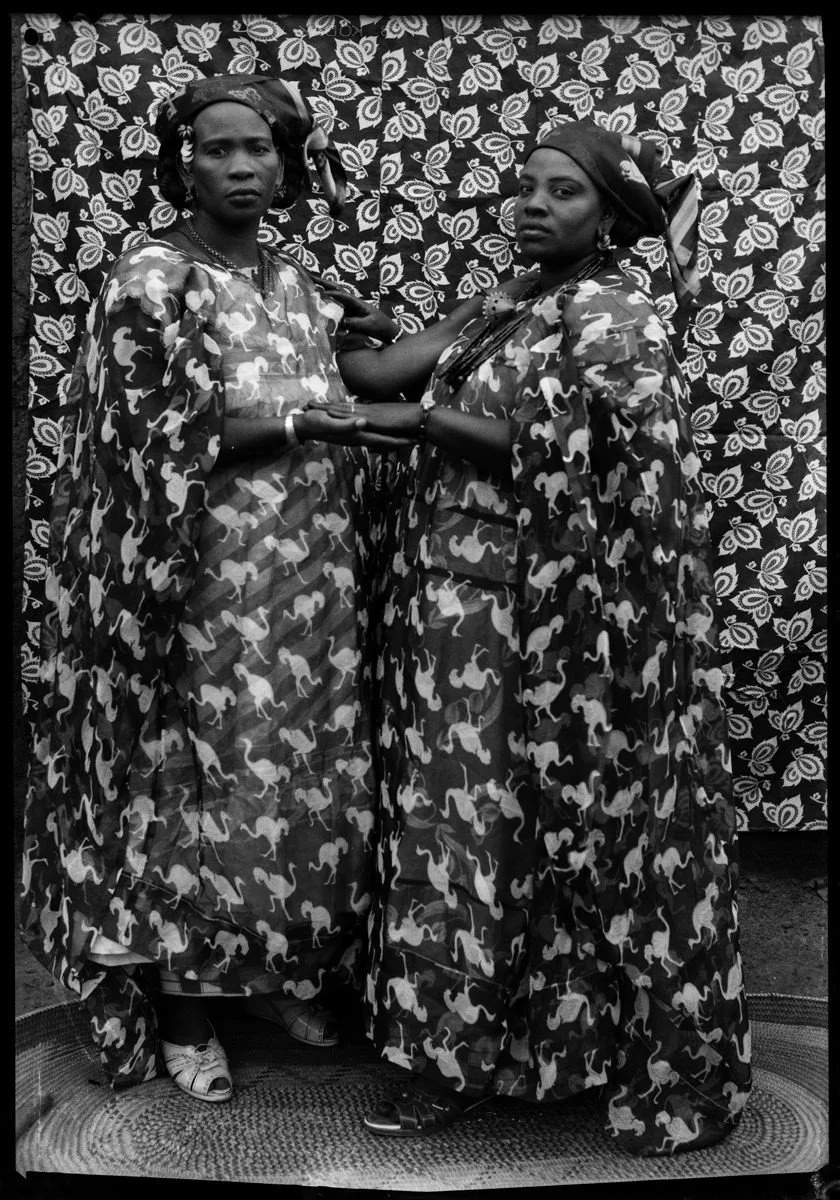
Backdrops matter a great deal. In Untitled (00126-MA.KE.001), 1956-1959, a woman rests her chin on her hand in front of a leaf-pattern cloth. In Untitled (01096-MA.KE.158), 1956-1959, two women in matching patterned robes stand close together. Caption Magazine notes his low point of view and angular compositions, which bring out the confident faces and relaxed poses of his clients.
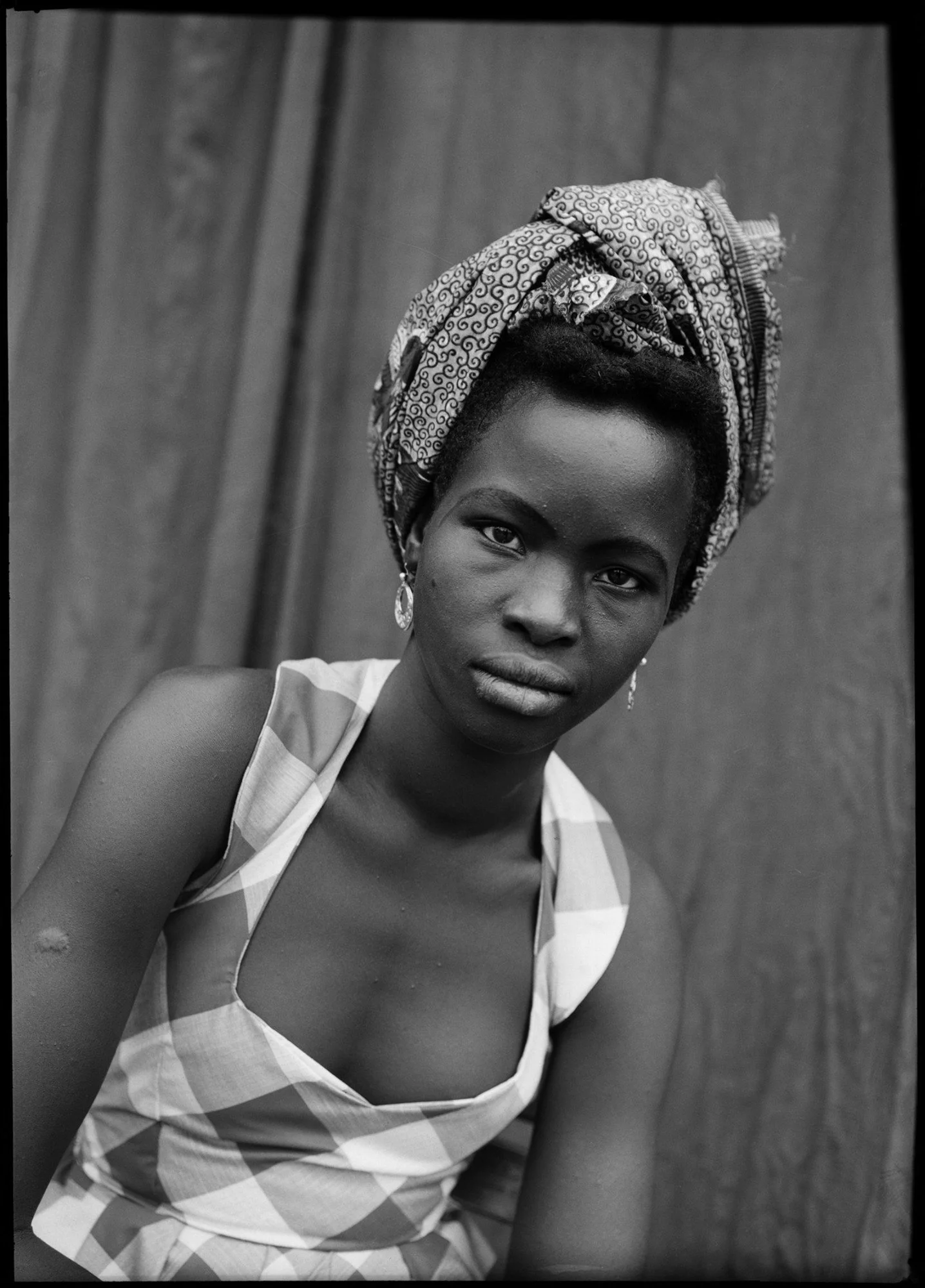
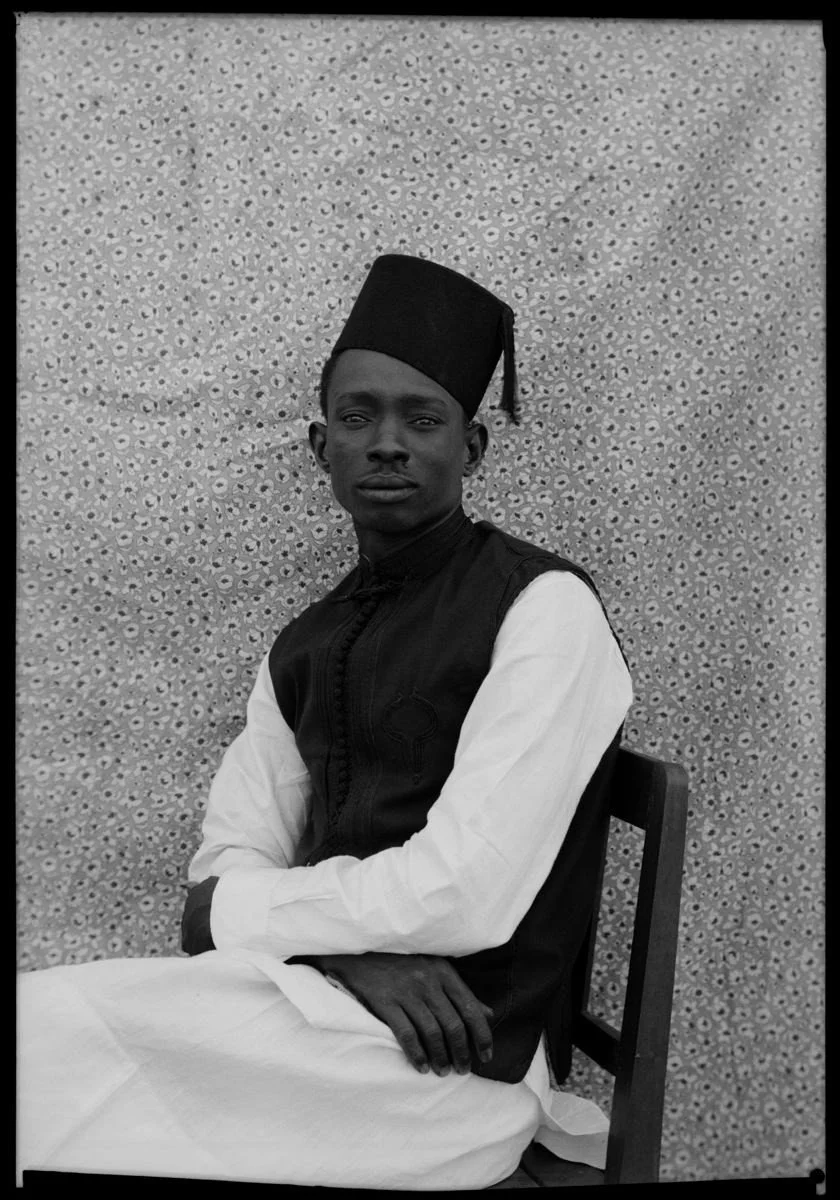
He photographed single people, families and professional groups. Untitled (00089-MA.KE.044), 1952-1955 and Untitled (01085-MA.KE.311), 1958-1959 show how simple a Keïta portrait can be: one sitter, one look at the camera. Today his work is held by museums such as MoMA and the Metropolitan Museum of Art in New York. In 2025 the Brooklyn Museum opened Seydou Keïta: A Tactile Lens, an exhibition of nearly 280 works.
- c. 1921Born in Bamako, in what was then French colonial territory, now Mali
- 1935Gets his first camera, a Kodak Brownie Flash, from an uncle
- 1948Opens his own portrait studio in Bamako
- 1962The new socialist government appoints him its official photographer
- 1977Retires from the studio
- 1992Descamps, Huguier and Magnin travel to Bamako to find him
- 1994First solo exhibition, at the Fondation Cartier in Paris
- 2001Dies in Paris
In his words
“It’s easy to take a photo, but what really made a difference was that I always knew how to find the right position, and I was never wrong.”
“I was capable of making someone look really good.”
“Being taken in picture was a big deal. It was about giving the best image of oneself.”
“The whole Bamako came to be photographed in my studio: civil servants, businessmen, politicians”
“The final photo was really beautiful. That’s why I call it Art.”
Gear
The sources name two kinds of camera, but no lens or film. These are the documented parts of his way of working.
Kodak Brownie Flash: His first camera, a gift from his uncle in 1935. The uncle had bought it on a trip to Senegal.
Large-format camera: Keïta later bought a large-format camera. The big negative gave very good detail and allowed high-quality contact prints without an enlarger.
Backdrops and props: Patterned cloths, costumes, Vespas and cars were part of the studio. He renewed them every few years.
Books
Seydou Keïta: Photographs, Bamako, Mali 1948 to 1963 (Steidl, 2011). This Steidl book is listed in the estate’s bibliography as a major publication of his studio work from 1948 to 1963. It is a good first book for seeing the portraits at length. It is for readers who want pictures more than text.
Seydou Keïta (Scalo, 1997). This monograph was edited by André Magnin and has 287 pages and 207 reproductions. It was the first large book on Keïta’s work. It is for collectors and readers who want a full overview.
You Look Beautiful Like That: The Portrait Photographs of Seydou Keïta and Malick Sidibé (Harvard University Art Museums and Yale University Press, 2001). Michelle Lamunière wrote this book in English about two great photographers of Bamako. It puts Keïta next to Malick Sidibé. It is for readers who want to understand the setting and the history.
Seydou Keïta: A Tactile Lens (Published with the Brooklyn Museum). This catalogue goes with the Brooklyn Museum show of 2025. According to the museum, it has a new biographical essay by Catherine E. McKinley, based on interviews with Keïta’s heirs, and other texts. It is for readers who want the newest research.