AT A GLANCE
- Known for
- People of the 20th Century: a portrait of German society in more than 600 pictures, sorted by work, class and age
- Works in
- Black and white, glass plate negatives, gelatin silver prints
- Camera
- Large format camera with glass negatives and long exposures; he did not use the new Leica
- Also
- Antlitz der Zeit (1929), with an introduction by Alfred Döblin; three pictures in The Family of Man (1955)
- Awards
- Federal Cross of Merit (1960) · Culture Prize of the German Photographic Society (1961)
- Start with
- August Sander: People of the 20th Century (Aperture, 2022)
August Sander was a German portrait photographer, born in Herdorf in 1876. For about forty years he worked on one great project, People of the 20th Century. In it he photographed farmers, bakers, bricklayers, artists, boxers and circus people, and he sorted them by their work and place in society. The Nazis banned his first book, and his son Erich died in prison. Still, Sander saved much of his archive. Today his calm, direct portraits count among the most important photographs of the twentieth century. He died in Cologne in 1964.
The story
The camera belonged to someone else. In the 1890s, as a teenager, August Sander worked at a mine near his home village of Herdorf. When a company photographer came to work there, young Sander helped to carry his equipment. He also looked through the camera. His son Gunther later said that the view “transfixed him – and not just for that instant.”
Sander was the son of a mining carpenter, one of eight children. An uncle helped him get his first camera in 1892, and he built a darkroom and began to teach himself. As a soldier in Trier he assisted a photographer. Afterwards he worked in studios in Berlin, Leipzig, Dresden and other cities. In 1901 he joined a photo studio in Linz, Austria, and soon he ran it himself.
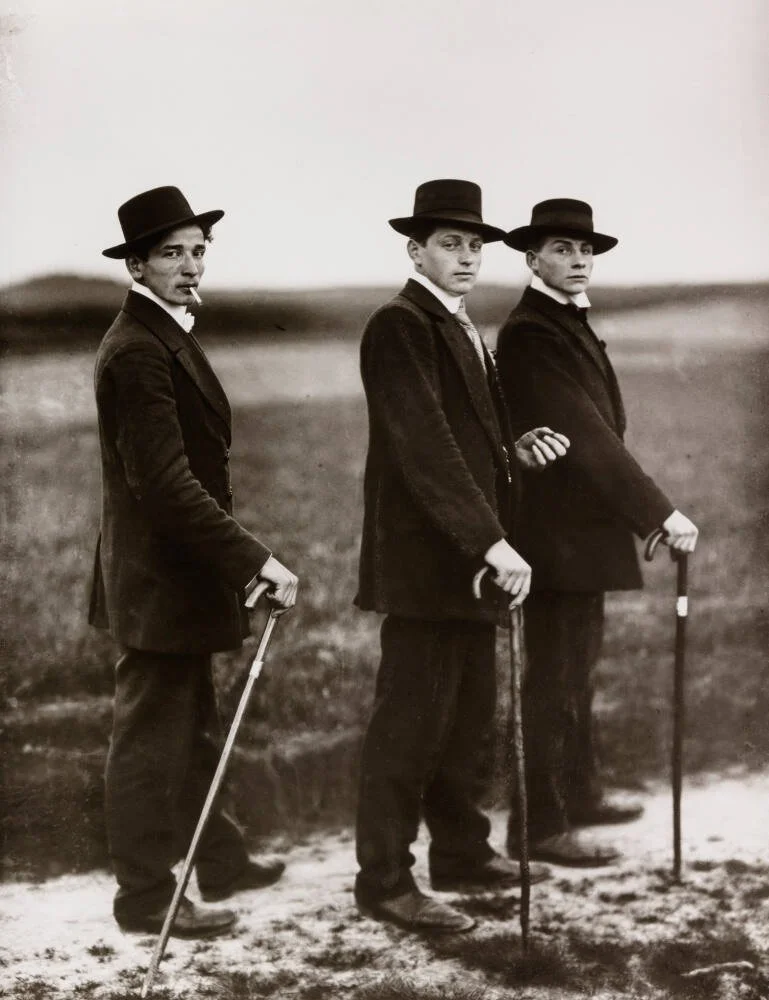
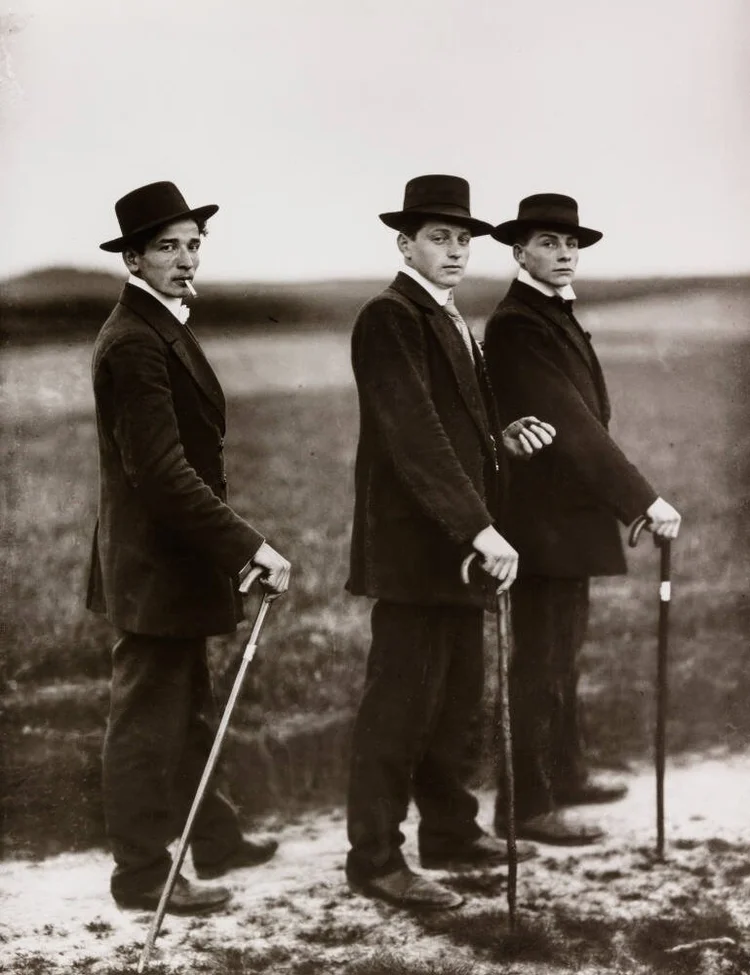
In 1910 he moved with his family to Cologne and opened a studio in the Lindenthal district. To find new customers, he travelled with his camera through the villages of the Westerwald, a rural region not far from his home village. There he photographed farmers and their families. One picture from 1914 shows young peasants on their way to a dance. These village portraits became the first stone of his life's work.
But the First World War took him away from the studio. From 1914 to 1918 he served in the army, and his wife Anna kept the business going.
After the war Sander made friends with the painters Franz Wilhelm Seiwert and Heinrich Hoerle, leaders of a left wing artists' group, the Cologne Progressives. Therefore his old village portraits found a bigger frame. The plan was to show the whole of society, person by person and type by type. In November 1927 he showed about 100 portraits at the Kölnischer Kunstverein. Two years later came his first book, Antlitz der Zeit, with 60 pictures. The writer Alfred Döblin wrote the introduction.
Then the Nazis came to power. They took the book out of the shops and destroyed its printing plates. In 1934 his son Erich, a member of a socialist party, was sentenced to ten years in prison. He died there in 1944. Sander moved his most important negatives to the small Westerwald village of Kuchhausen, and about 10,000 of them survived the war.
Years before, in the text for his 1927 show, he had explained why he worked this way: “So allow me to be honest and tell the truth about our age and its people.”
The work
People of the 20th Century is a collection of portraits arranged like a book of society. Sander sorted the pictures into small portfolios and then into seven groups: The Farmer, The Skilled Tradesman, The Woman, Classes and Professions, The Artists, The City and The Last People. The full reconstruction holds 619 photographs. He never finished it and kept changing it until his death.
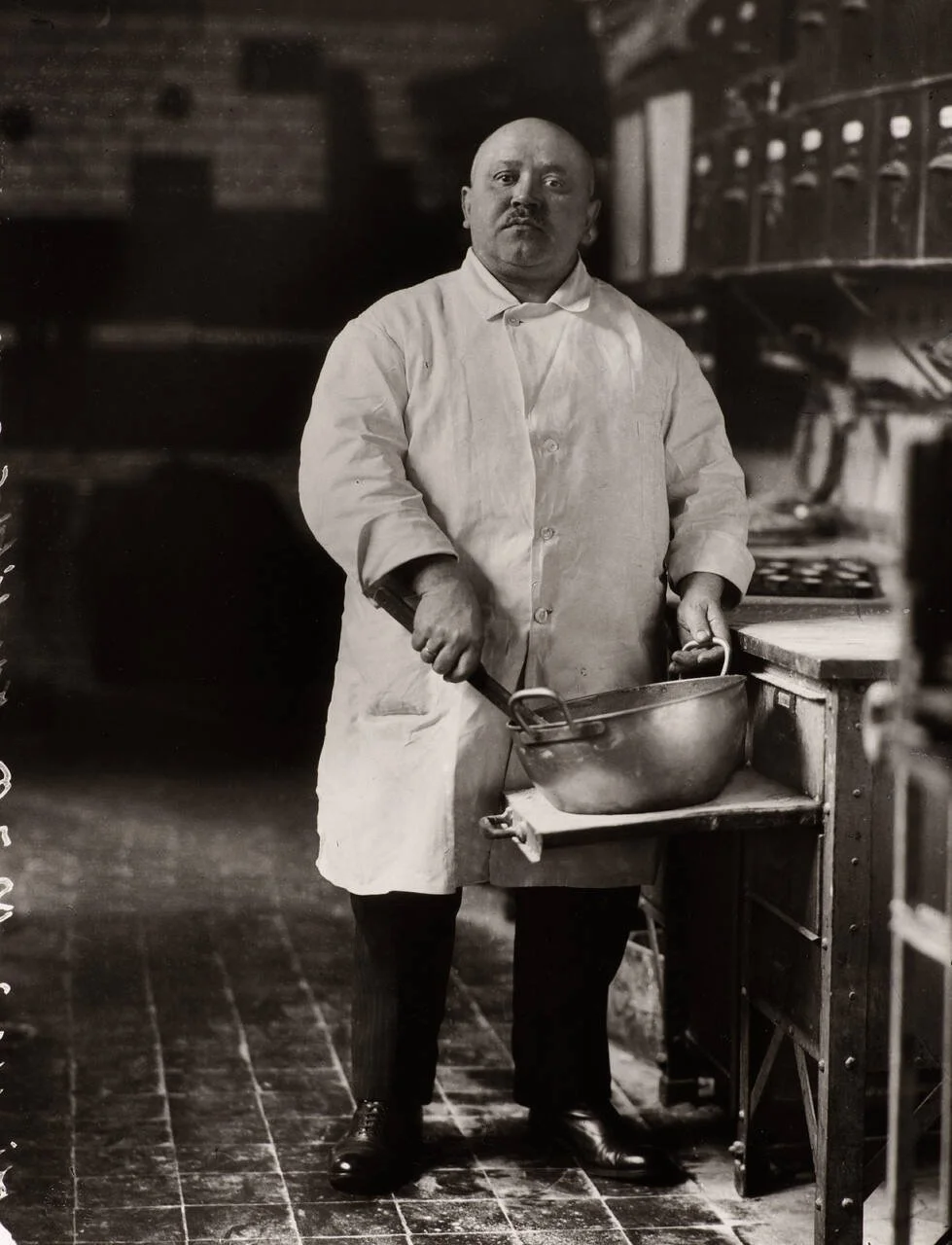
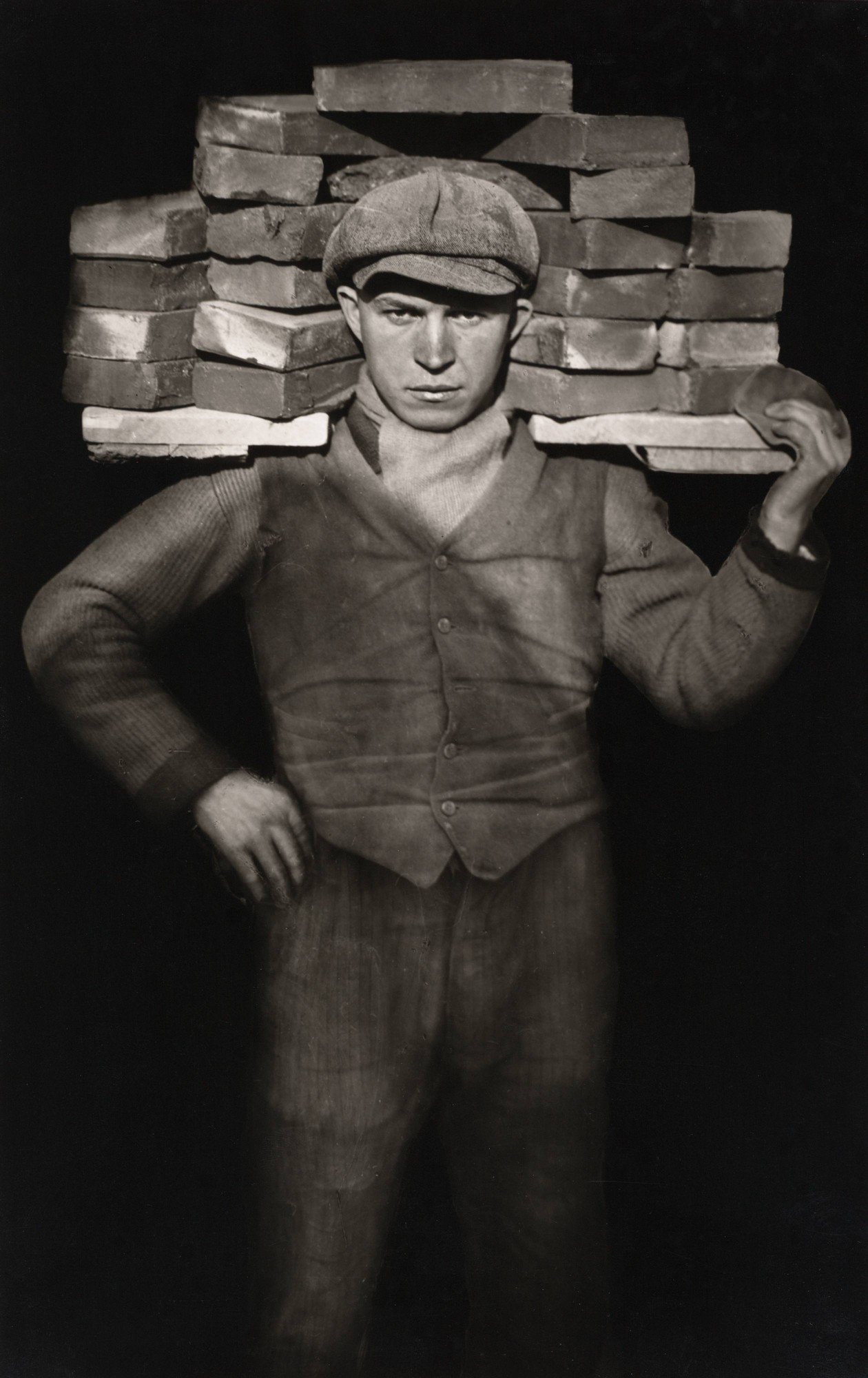
Most people stand or sit calmly and look straight at the camera. Many are shown with the tools or clothes of their work. Pastry Cook Franz Bremer, Cologne, from 1928, stands in a bakery kitchen with a large mixing bowl. Bricklayer, also from 1928, carries a load of bricks on his shoulders. The titles name the job more often than the person, so the faces speak for themselves.
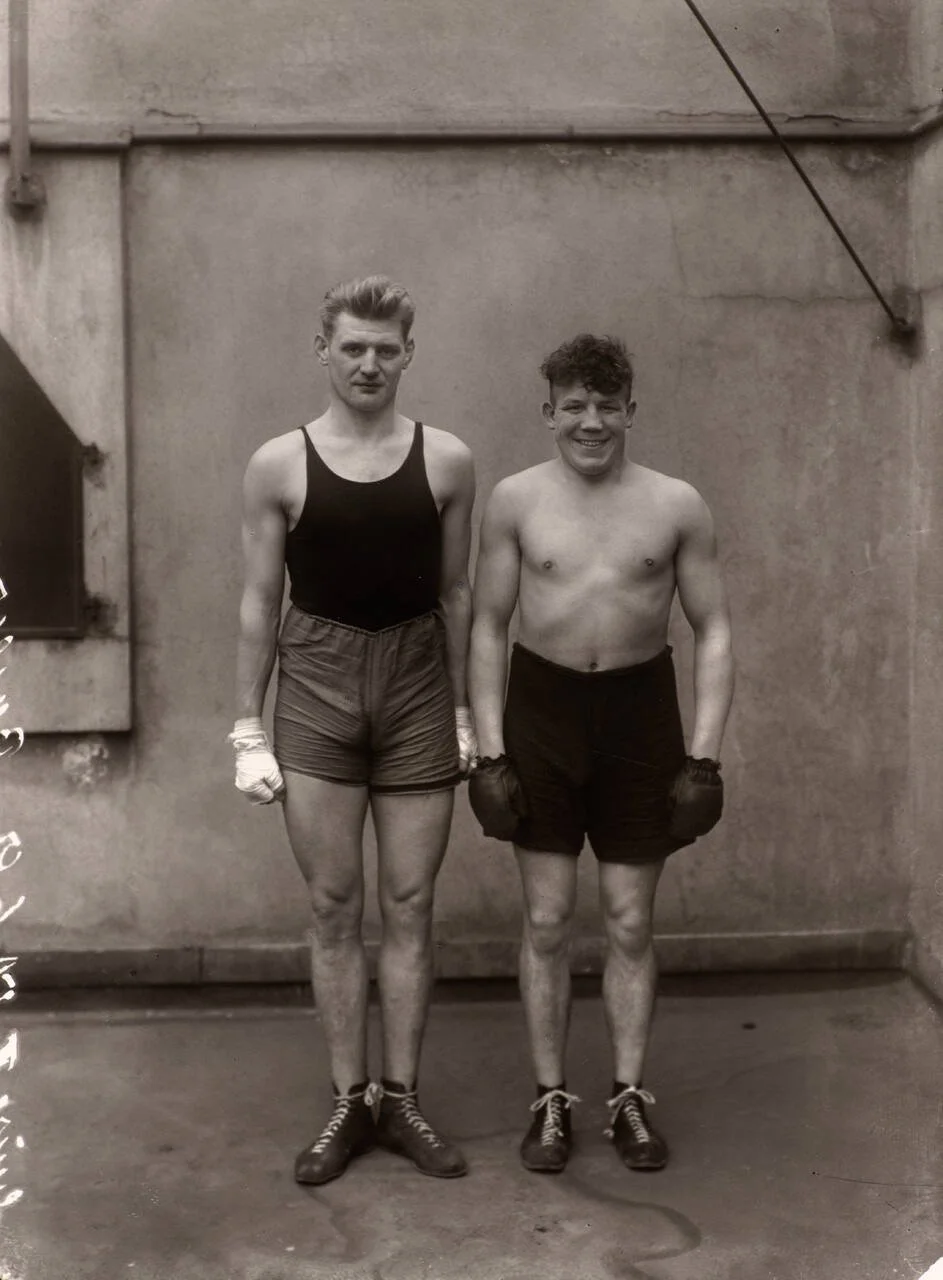
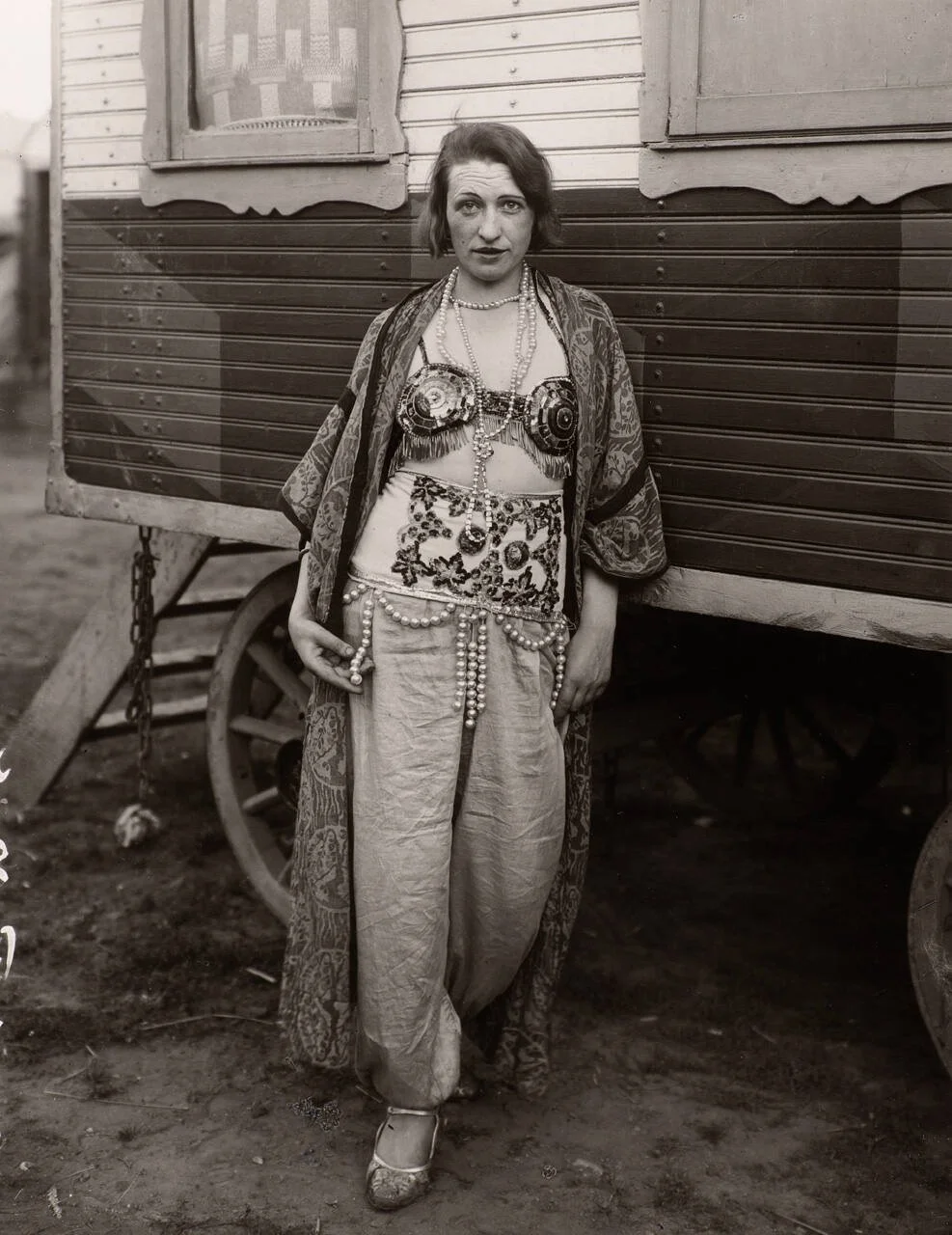
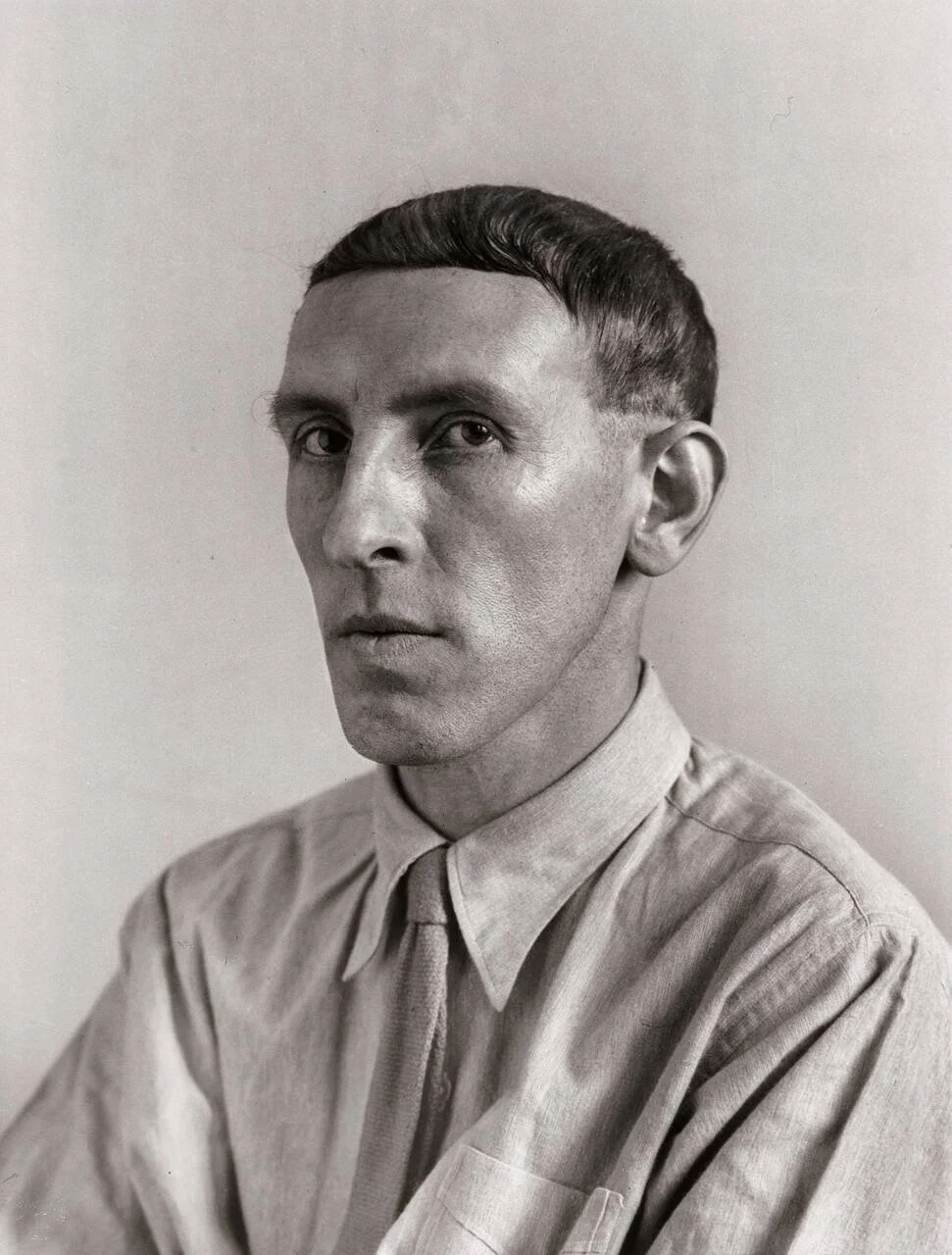
His circle of artists is a big part of the work. His friend the painter Heinrich Hoerle appears in a 1928 portrait. Sander also photographed musicians, actors and travelling performers, as in Circus Artiste, Koln, from 1926, and athletes, as in The Boxers: Hein Hesse & Paul Roderstein, Cologne, from 1928.
From 1922 he printed on modern smooth photo paper and left behind the soft, painterly look of older art photography. In the Nazi years he turned more to landscapes, with small books on the Eifel, the Mosel and other regions. Edward Steichen visited him in 1953 and chose his work for The Family of Man at the Museum of Modern Art in 1955. Today the August Sander Archive in Cologne keeps more than 4,500 original prints and about 11,000 glass negatives. Museums name Walker Evans, Dorothea Lange, Diane Arbus and Bernd and Hilla Becher among the photographers who owe a debt to him.
- 1876Born in Herdorf, Germany
- 1892Gets his first camera with help from an uncle
- 1901Starts work at a photo studio in Linz, Austria
- 1910Moves with his family to Cologne
- 1927Shows about 100 portraits at the Kölnischer Kunstverein
- 1929Publishes Antlitz der Zeit, introduced by Alfred Döblin
- 1934His son Erich is sentenced to ten years in prison
- 1955Three of his pictures appear in The Family of Man
- 1964Dies in Cologne
Lessons
Start with the people you know. Sander's great project began with farmers in the Westerwald, a rural region close to the village where he grew up.
Let the face do the talking. He used plain backgrounds, long exposures and simple titles like Bricklayer. Nothing pulls the eye away from the person.
Think in series. One portrait is a person. Hundreds of portraits, sorted with care, became a picture of a whole country and its time.
Try this: choose one street or one village and photograph twelve people who work there: a baker, a driver, a teacher, a cleaner. Use the same distance and the same calm light for all of them. Ask each person to look straight into the lens. Give every picture only the job as a title, then lay the twelve prints out in a grid.
Gear
Sander kept to old and slow tools, even when faster cameras came along. This is what the sources say.
Large format camera: he stayed with a large format camera and did not use the newly invented Leica.
Glass plate negatives: he worked on glass negatives with long exposure times, which kept the fine detail of every face.
Books
August Sander: People of the 20th Century (Aperture, 2022). This one volume edition has 808 pages and all 619 photographs of the project. It brings together the reproductions and main texts of the old seven volume edition and the scholarship of its study volume. Gabriele Conrath-Scholl and Susanne Lange, both linked to the August Sander Archive in Cologne, are the editors. It is the best single book for anyone who wants the full work.
Antlitz der Zeit (Schirmer/Mosel, 2019). A new edition of Sander's first book from 1929, with its 60 portraits. Die Photographische Sammlung/SK Stiftung Kultur edited it, Gabriele Conrath-Scholl and Claudia Schubert compiled it, and it keeps Alfred Döblin's introduction. The text is in German only. It suits readers who want to see the small book that the Nazis later banned.
August Sander: People of the 20th Century (seven volumes) (Harry N. Abrams, 2002). The large seven volume edition, in German, English and French, with all 619 works and Sander's own notes from his prints and negatives. Susanne Lange, Gabriele Conrath-Scholl and Gerd Sander, the photographer's grandson, put it together. It came with a major museum show. Today it is out of print and costly, so it is for collectors and libraries.
In his words
“So allow me to be honest and tell the truth about our age and its people.”
“I hate nothing more than sugary photographs with tricks, poses and effects.”
“In order to see truth we must be able to tolerate it, and above all we should pass it down to our fellow men and to posterity, whether it is in our favor or not.”
“If I, as a normal person, can be so immodest as to see things as they are and not as they should or could be, please forgive me, but I cannot do otherwise.”
“The portrait is your mirror. It’s you.”