AT A GLANCE
- Known for
- Ordeal by Roses (1961 to 1962), a portrait series of the writer Yukio Mishima, and Kamaitachi (1965 to 1968), made with the butoh dancer Tatsumi Hijikata
- Works in
- High-contrast black and white, staged and often layered pictures of people, dancers and writers; some color in later work
- Also
- Co-founder of the photographers' group Vivo · made the short film Navel and A-Bomb (1960) · curated a big show of Western masters for Japan (1968) · teacher of Daido Moriyama
- Directed
- Kiyosato Museum of Photographic Arts, from 1995
- Awards
- Medal with Purple Ribbon (1998) · Royal Photographic Society 150th anniversary medal (2003) · Order of the Rising Sun (2007) · Person of Cultural Merit (2010)
- Start with
- Eikoh Hosoe (MACK, 2021)
- Links
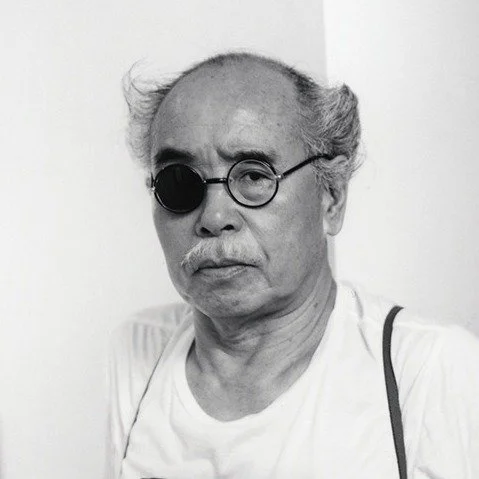
Eikoh Hosoe (1933 to 2024) was a Japanese photographer. He was born in Yonezawa and became a leading figure of postwar Japanese photography. He is best known for Ordeal by Roses, a series of portraits of the writer Yukio Mishima, and for Kamaitachi, made with the dancer Tatsumi Hijikata. His pictures are dark, dramatic and full of body and movement.
The story
It was an afternoon in September 1961. Eikoh Hosoe sat in a taxi with an editor, on the way to the house of the writer Yukio Mishima. The publisher Kodansha had asked him to photograph Mishima for the cover of a book of essays. Hosoe was in his twenties. He had never met the man.
On the veranda, Mishima sat half-naked in dark glasses, sunbathing in a white garden chair. He told Hosoe that he loved his pictures of the dancer Tatsumi Hijikata. “Yes, I am your subject matter. Photograph me however you please, Mr. Hosoe,” he said, as Hosoe remembered it later.
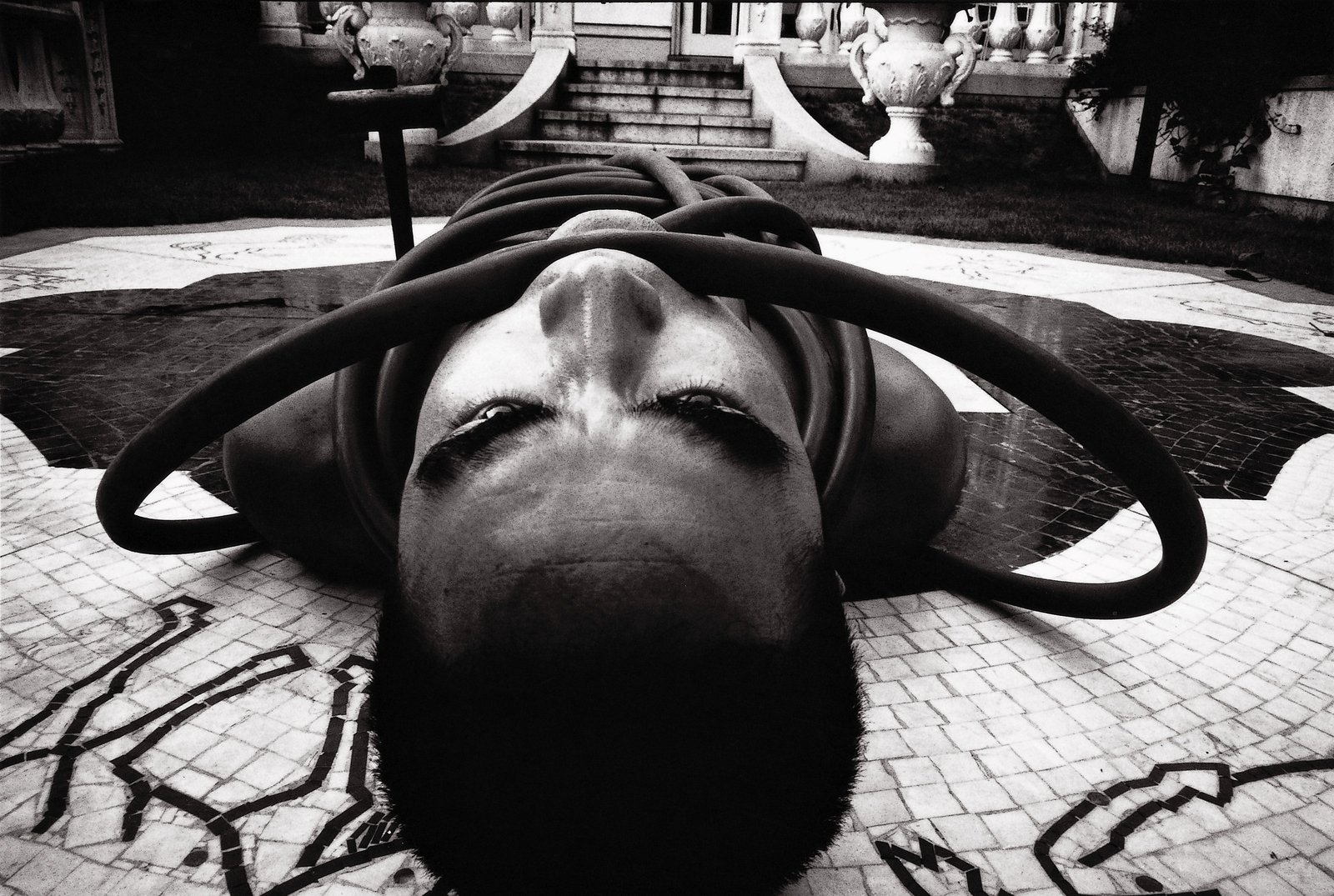
Outside, Mishima’s father happened to be watering the garden. So Hosoe took the hose and wrapped it around Mishima’s whole body. He kept him standing on a mosaic zodiac in the middle of the lawn and shot from a ladder above. “Keep looking at my lens very intensely, Mr. Mishima!” Mishima asked why he had been photographed like this. “This is the destruction of a myth,” Hosoe replied.
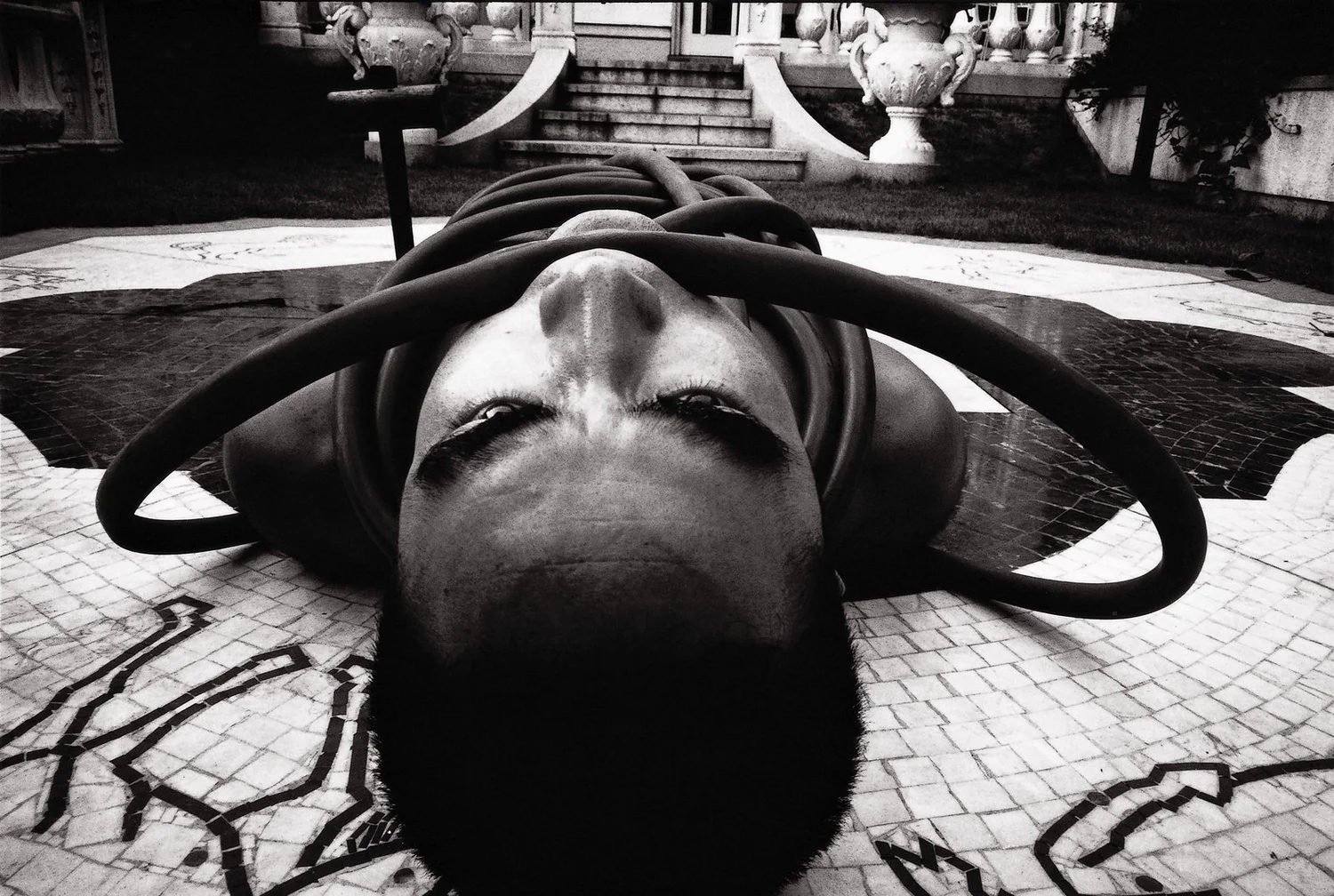
Afterward, Hosoe worried. He thought he had gone too far, and he told his assistant Daido Moriyama that Mishima might be annoyed. But two days later the editor called. Mishima was very pleased.
So Hosoe asked to photograph him again. Mishima answered, “When is the next session, Mr. Hosoe?” In the end there were ten sessions, until the summer of 1962. Hosoe came to see the work as a subjective documentary about life and death, with a rose as a symbol of beauty and thorns. The book came out in 1963 as Killed by Roses.
In 1970 Mishima asked to change the English title to Ordeal by Roses. Hosoe did not see the need at first, but he agreed, and says he likes the new title very much. On 25 November 1970 Mishima died by ritual suicide. Hosoe looked back on the work in his own words. “Ba-ra-kei, or Ordeal by Roses, became a requiem to Yukio Mishima, a man of genius and sincerity.”
The work
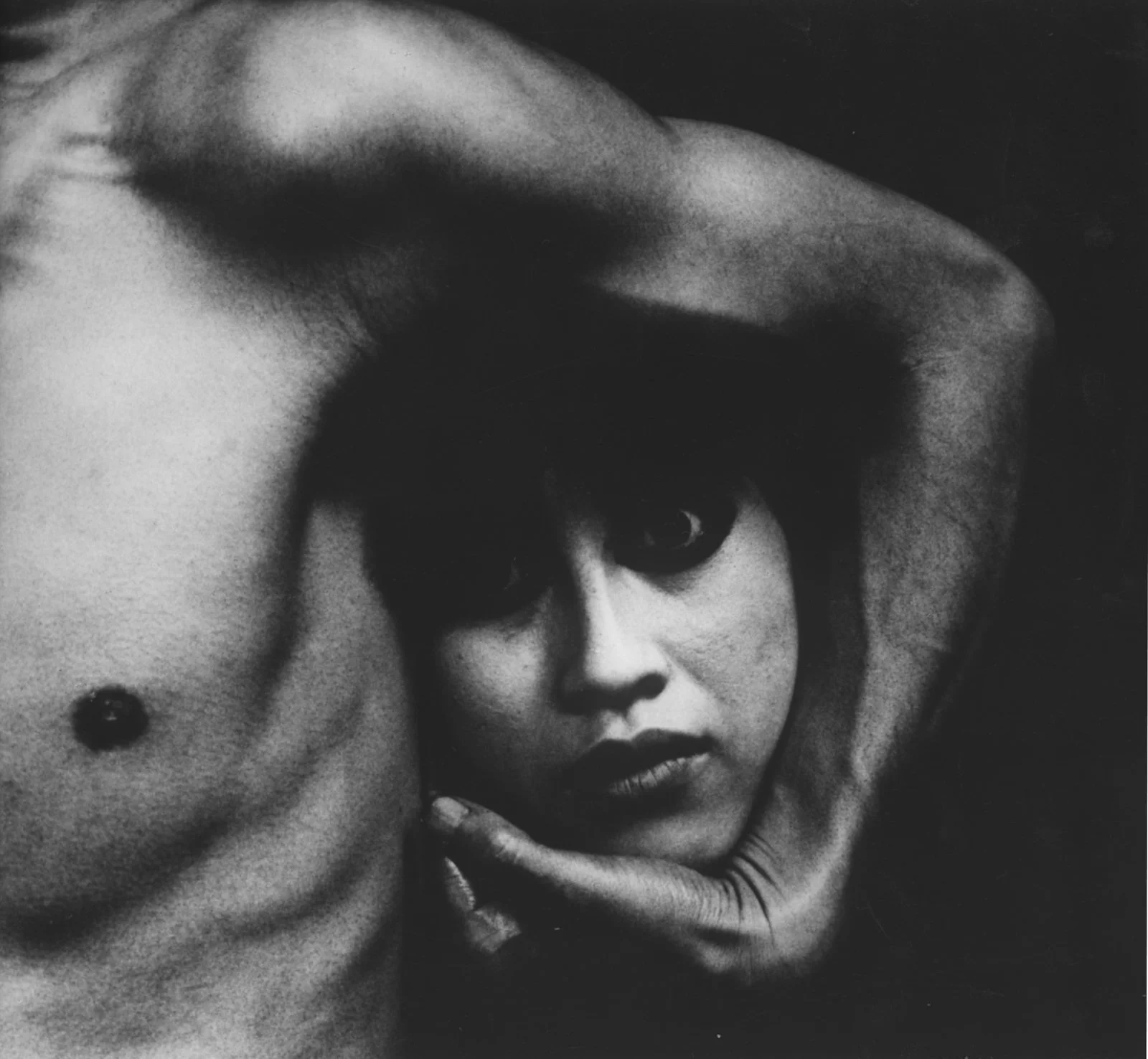
Hosoe’s first major series was Man and Woman, made in 1959 and 1960 with Hijikata, who created the dance form butoh. Artforum describes highly stylized pictures of bodies that look both abstract and erotic. In Man and Woman #20, 1960, an arm and a hand frame a face. The series led Mishima to Hosoe in the first place.
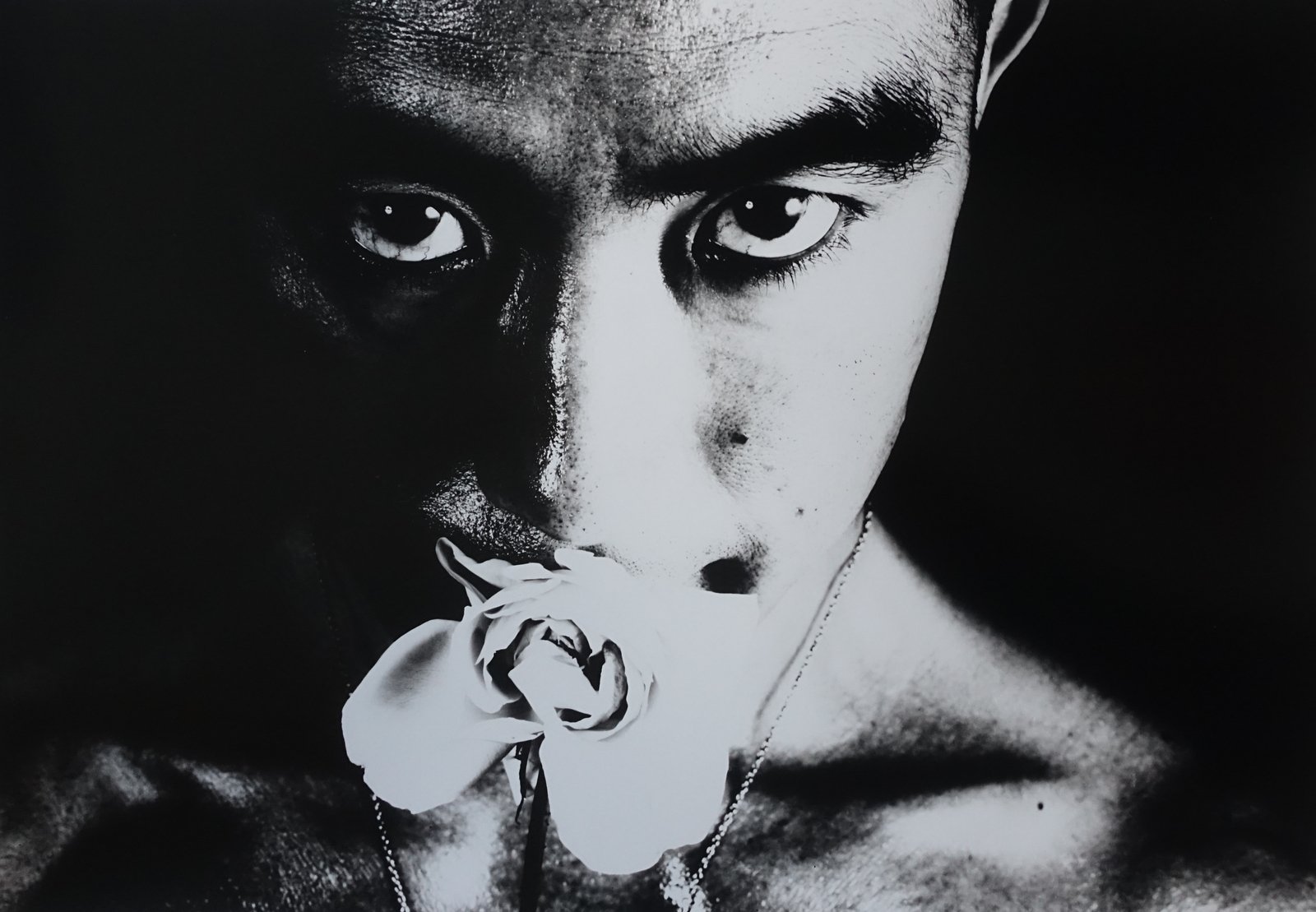
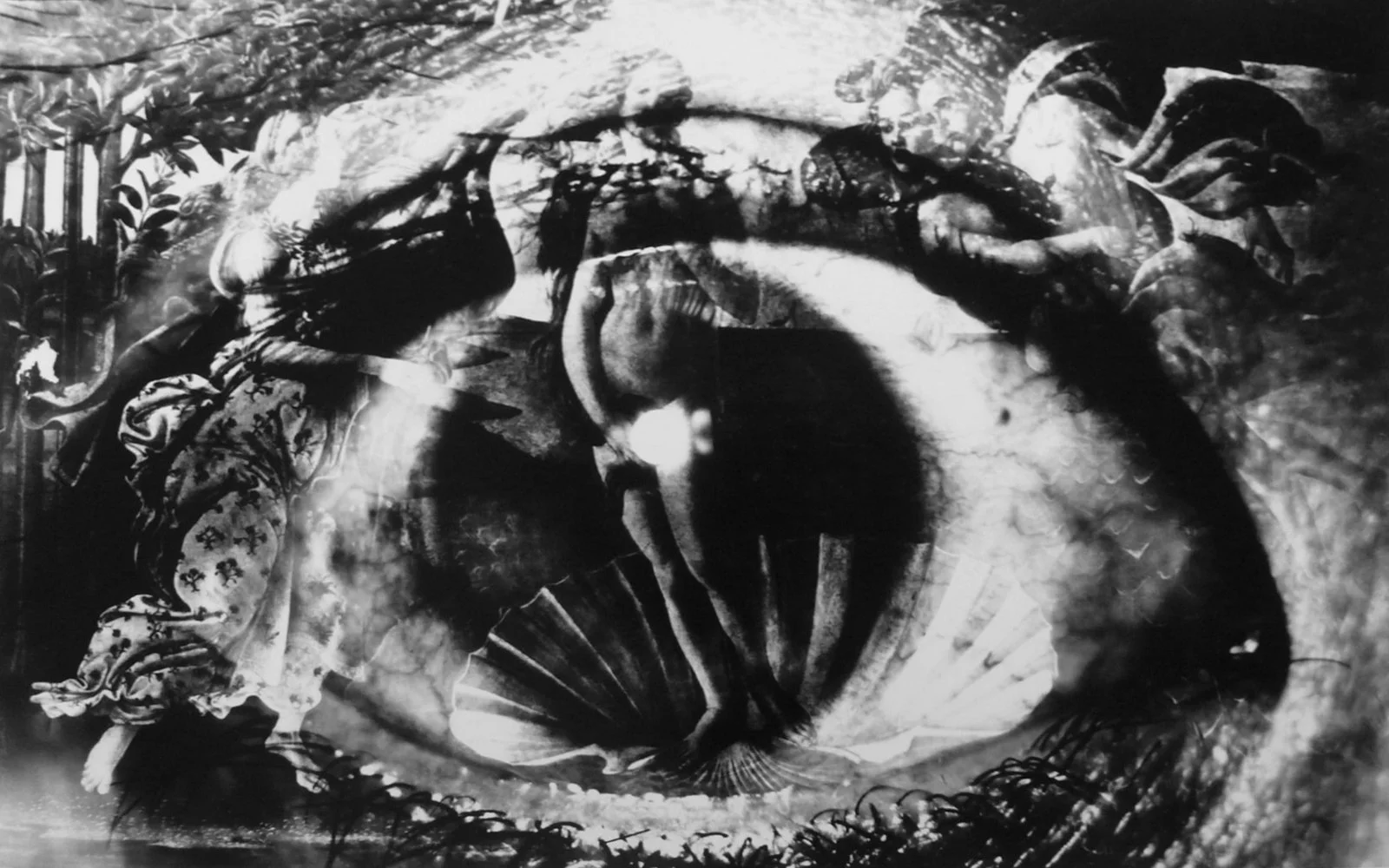
The Mishima work, Ordeal by Roses, was layered and theatrical. SFMOMA notes that Hosoe set the writer in his rich home and mixed in elements from Italian Renaissance paintings, with high contrast and heavy grain. In Ordeal by Roses #32, 1961, Mishima stares straight into the lens. In Ordeal by Roses #19, 1961, pictures are layered inside a large eye.
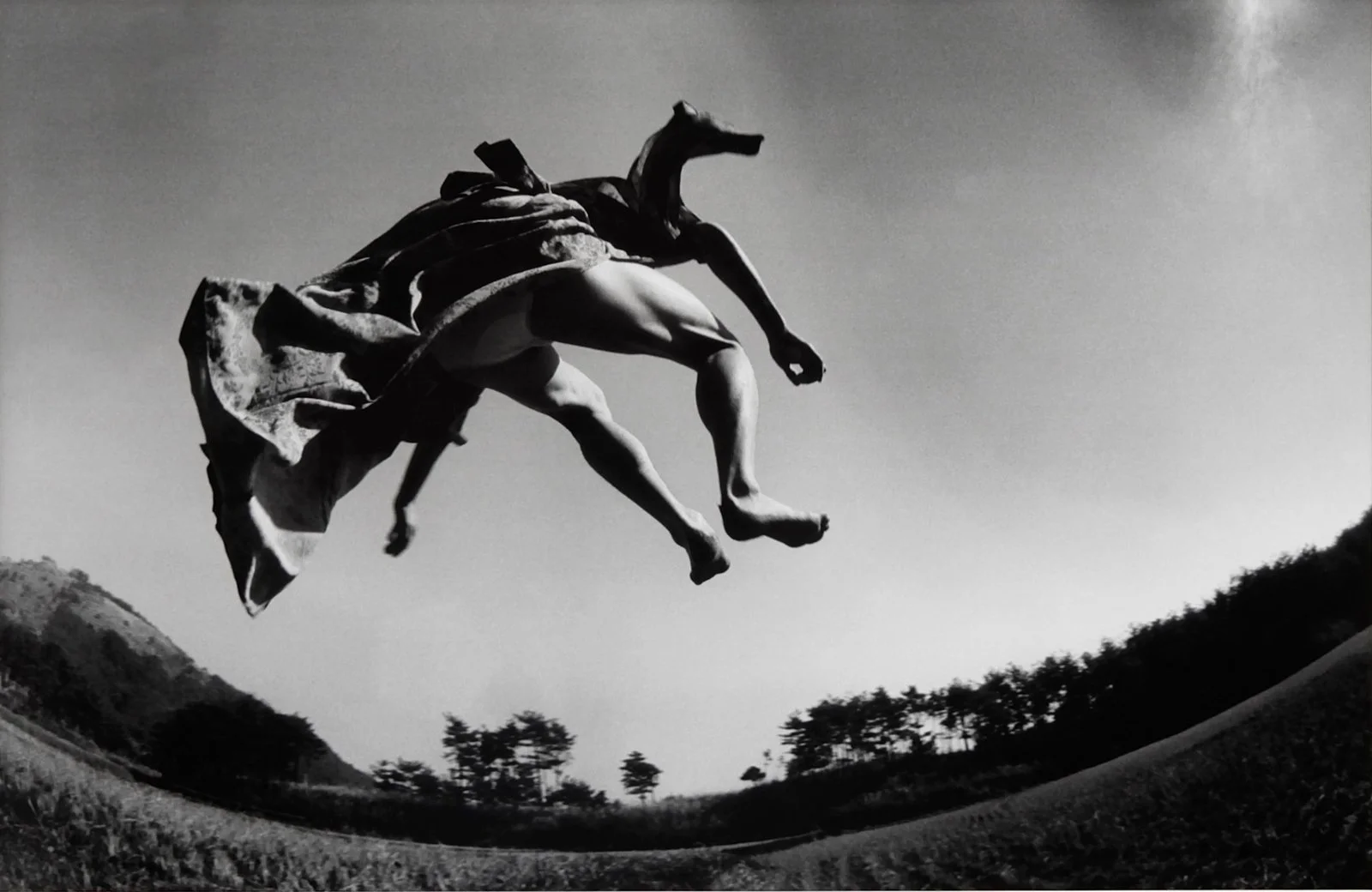
Kamaitachi came from a childhood memory. When Tokyo was firebombed in 1944, the eleven-year-old Hosoe was sent to a village in the northeast, where people told of a weasel demon who haunts the rice fields. In 1965 he went back to the region with Hijikata, who played the demon among the villagers. The book appeared in 1969. In Kamaitachi #39, 1968, a figure seems to hang in the air above open land.
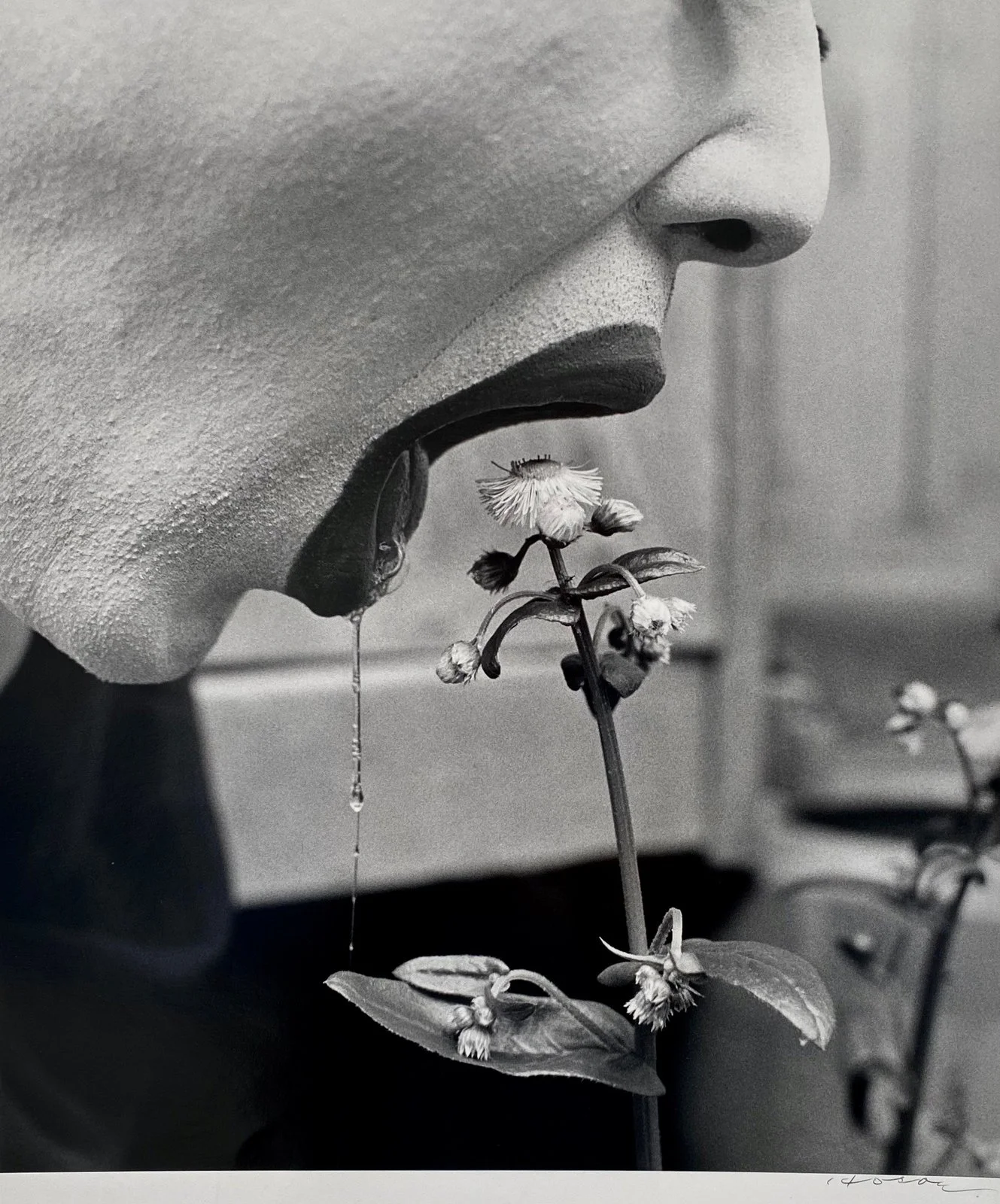
Later he made Embrace (1971), with nude forms in tense relationships, and color work such as the Ukiyo-e Projection series (2003). SFMOMA also mentions a lesser-known series about a cross-dresser in Tokyo, made in the 1970s and published only in 2012. Simon (Lips), 1971 is a close, quiet picture of a face with a flower. Hosoe also taught, curated, and built bridges to photographers abroad, and from 1995 he directed the Kiyosato Museum of Photographic Arts.
- 1933Born Toshihiro Hosoe in Yonezawa, Yamagata
- 1951Wins first prize in a photo contest with a picture of a girl on a military base
- 1954Graduates from the Tokyo College of Photography and takes the name Eikoh
- 1959Co-founds the photographers' group Vivo
- 1961Photographs Yukio Mishima for the first time
- 1965Goes to a village in Tohoku with Tatsumi Hijikata to begin Kamaitachi
- 1968Brings the Eastman House show Great Photographers of the World to Japan
- 1995Becomes director of the Kiyosato Museum of Photographic Arts
- 2024Dies in Tokyo
In his words
“To me photography can be simultaneously both a record and a mirror or window of self-expression.”
“The camera is generally assumed to be unable to depict that which is not visible to the eye. And yet the photographer who wields it well can depict what lies unseen in his memory.”
“I wanted to destroy the preconceived ideas about Mishima’s image in order to create a new Mishima.”
“I had never seen such ferocious dancing.”
“Ba-ra-kei, or Ordeal by Roses, became a requiem to Yukio Mishima, a man of genius and sincerity.”
Photography, Reconsidered follows questions like this through the work of other photographers.
Gear
No camera, lens or film of Hosoe is stated by two sources, so none is listed here. These two things are documented.
High-contrast black and white look: Artforum calls his pictures high-contrast black and white, and SFMOMA says the Mishima portraits used high contrast and often heavy grain.
A high viewpoint: For the first Mishima session Hosoe says he held his camera from a ladder above his subject.
Books
Eikoh Hosoe (MACK, 2021). This large book was edited by the curator Yasufumi Nakamori, under Hosoe’s direction. It has 400 pages with the main series, collaborations with writers, dancers and artists, and two new essays. It also reprints older essays, among them texts by Yukio Mishima and Shuzo Takiguchi. It is the best first book for anyone who wants the whole career.
Eikoh Hosoe: Ba-Ra-Kei, Ordeal by Roses (Aperture, 2005). This is the Aperture edition of the Mishima series, with a preface by Mishima himself. It shows how Mishima gave Hosoe full artistic direction. It is for readers who want the famous series in book form.
Kamaitachi (Aperture, 2005). Aperture re-created the 1969 book with the photographer. Each page is a gatefold that opens to one black and white picture. The book follows Hijikata among villagers and rice fields in Tohoku. It is for those who love photobooks as objects.
Eikoh Hosoe (Masters of Photography) (Aperture, 2005). A small 96-page book with 81 reproductions. It gives a short overview of his work and opens with his own words on photography as a record and a mirror. It is for readers who want a low-cost start.