AT A GLANCE
- Known for
- Grainy, blurred, high-contrast black and white pictures of Japanese streets, above all Tokyo’s Shinjuku
- Works in
- Mostly black and white; also colour, Polaroid and silkscreen on canvas
- Camera
- A small compact camera, his everyday tool in the street
- Also
- Provoke magazine (1969); his own magazine Record, started 1972 and relaunched 2006
- Awards
- Mainichi Art Award (2003) · ICP Infinity Award for Lifetime Achievement (2012) · Hasselblad Award (2019)
- Start with
- Daido Moriyama: How I Take Photographs (Laurence King, 2019)
- Links
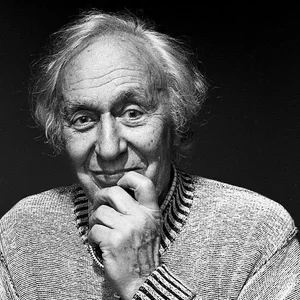
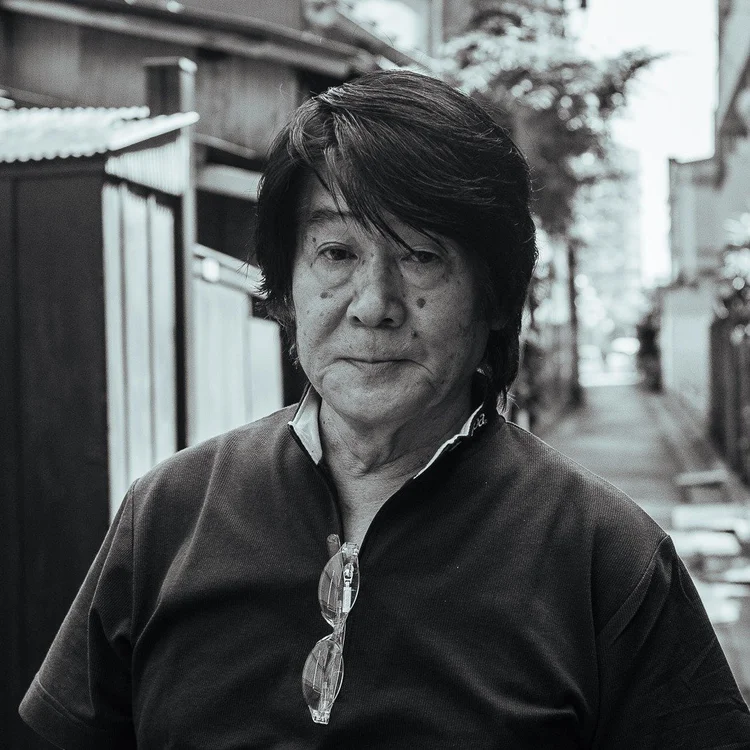
Daido Moriyama (born 1938) is a Japanese photographer. For more than sixty years he has walked the streets of Tokyo and other cities with a small camera. His black and white pictures are grainy, blurred and full of hard contrast. He came out of the circle of the Japanese magazine Provoke, and he is one of the most celebrated photographers of postwar Japan.
The story
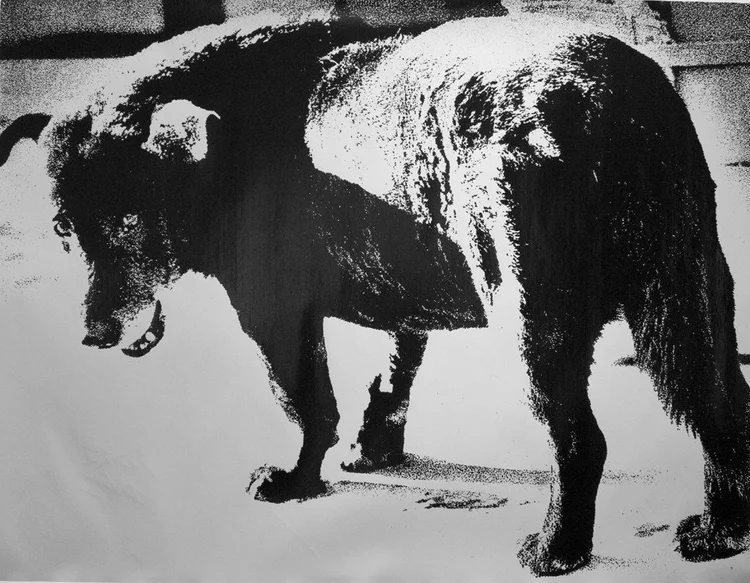
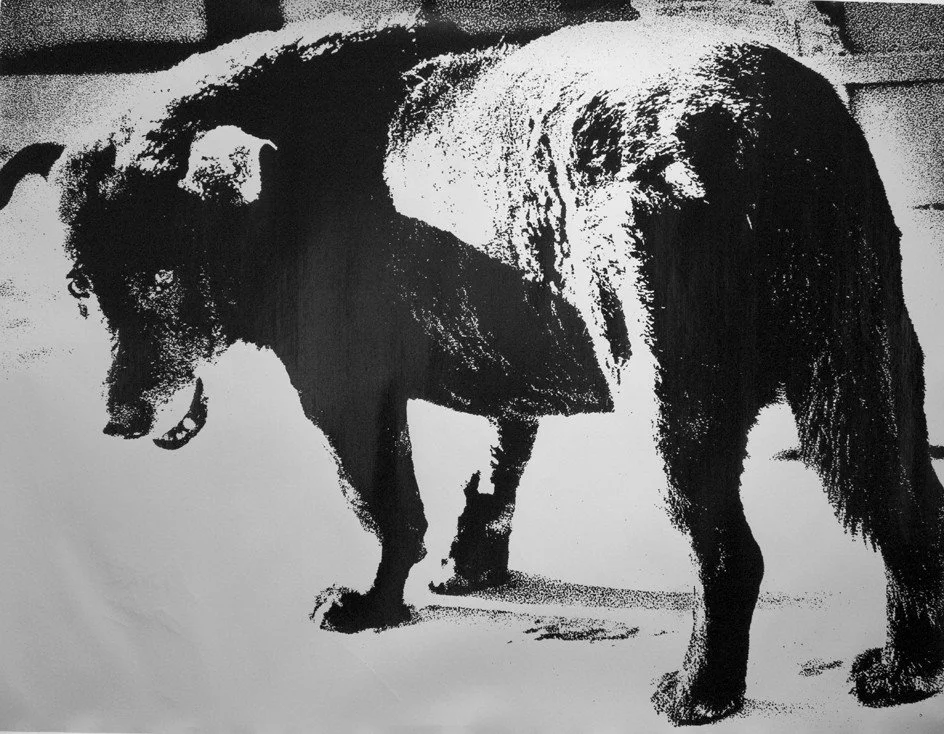
One morning in 1971, Daido Moriyama was close to his hotel in Misawa, a town in Aomori in the north of Japan. An American military base stood in the town. He had come there to take pictures for a magazine series in Asahi Camera called Travels in Search of Something. Near the hotel, he photographed a stray dog.
That single frame became his most famous image. Over the years, many people began to read the wandering dog as a portrait of the photographer himself, always walking, always looking for the next scene. Moriyama put it into his book Hunter in 1972, and it came back again and again in later books and prints.
The road to Misawa started in Osaka. Moriyama was born in 1938 in Ikeda, near the city. In 1959 he joined the studio of photographer Takeji Iwamiya as an apprentice. Two years later he moved to Tokyo to join the photographers’ group VIVO, but the group was about to break up. So he took another path: Eikoh Hosoe took him on as an assistant, and Moriyama helped with Hosoe’s series Ordeal by Roses.
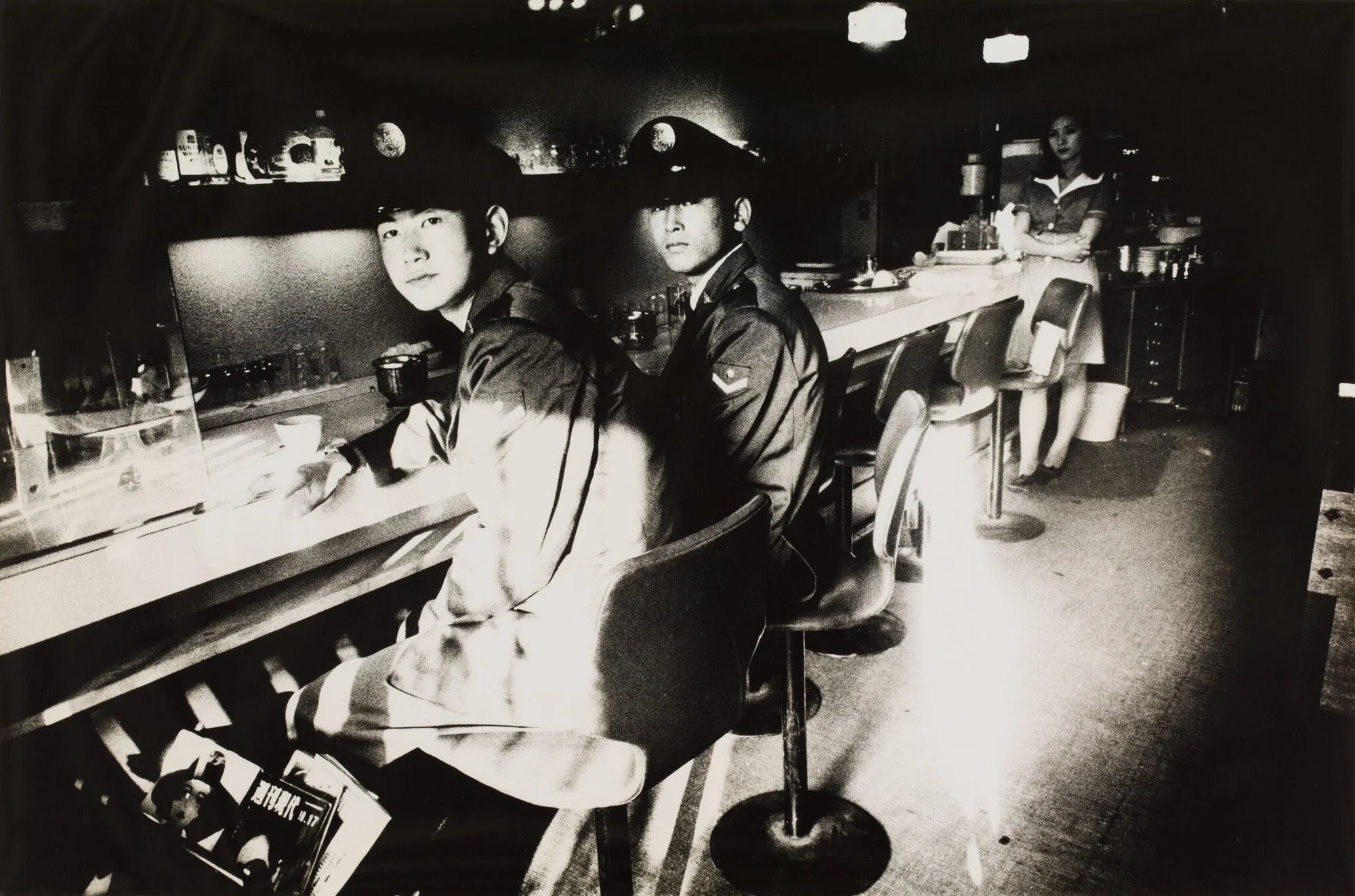
In 1964 Moriyama began to work on his own. He often photographed around the American base in Yokosuka, and in these years his friendship with the photographer Takuma Nakahira began. In 1968 he published his first book, Japan: A Photo Theater, with a text by Shuji Terayama. Its pictures showed popular entertainment and Terayama’s experimental theatre.
Through Nakahira, Moriyama joined the small and radical magazine Provoke. Its photographers made pictures that were grainy, blurry and out of focus, a style known in Japanese as are, bure, boke. In 1972 he published two key books, Hunter and Farewell Photography. Farewell Photography went furthest: many frames are so blurred and cropped that the subject is hard to recognise.
But the pace was hard to keep. By the mid-1970s Moriyama went through a time of personal instability. He travelled to the countryside, and later came a long quiet period. In 1982 he returned with the book Light and Shadow, which has a new, clear light.
Since then he has kept on walking, most of all in Shinjuku, his favourite part of Tokyo. He has explained what he is looking for: “For me cities are enormous bodies of people’s desires and as I search for my own desires within them I slice into time, seeing the moment.”
The work
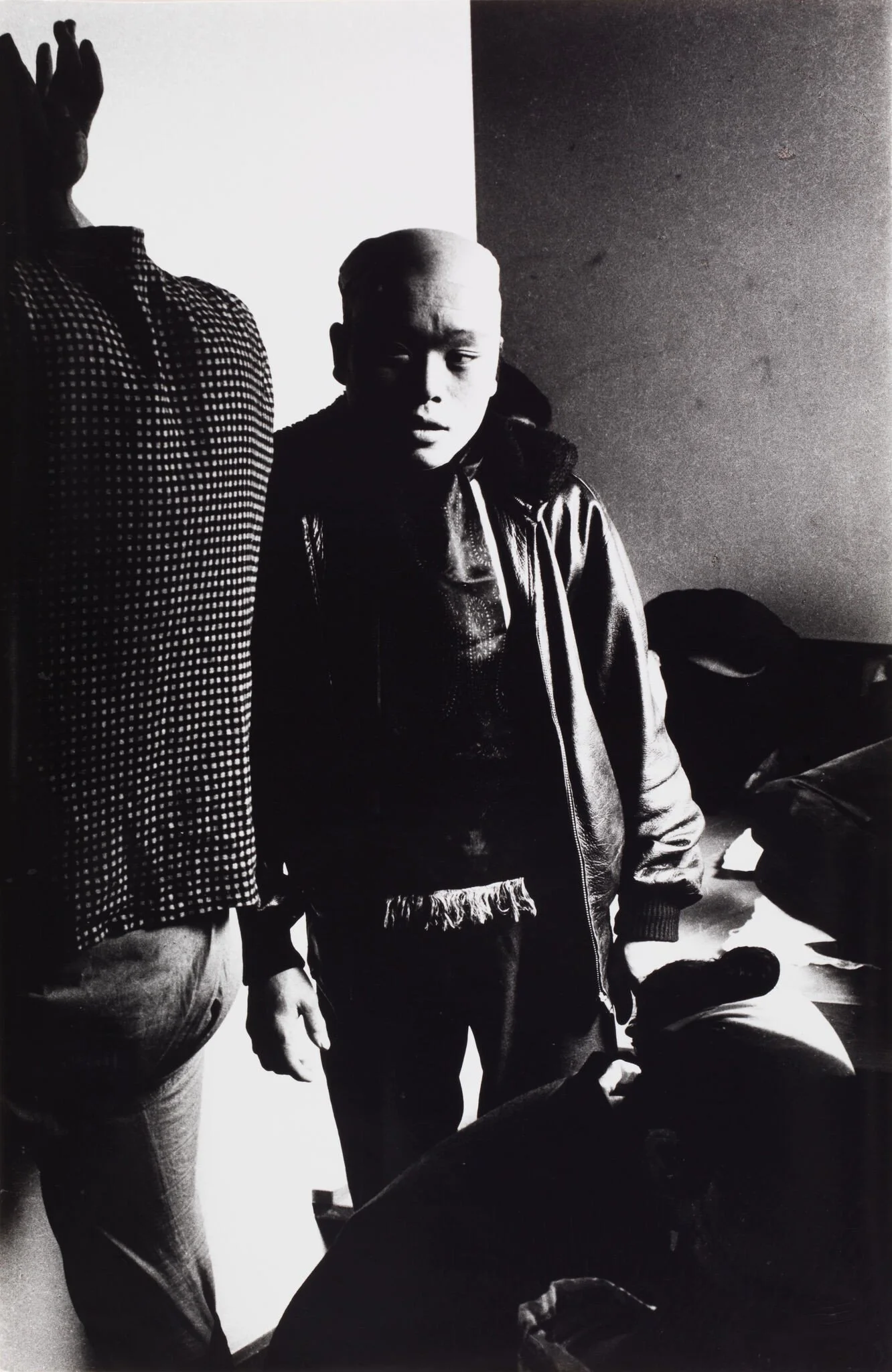
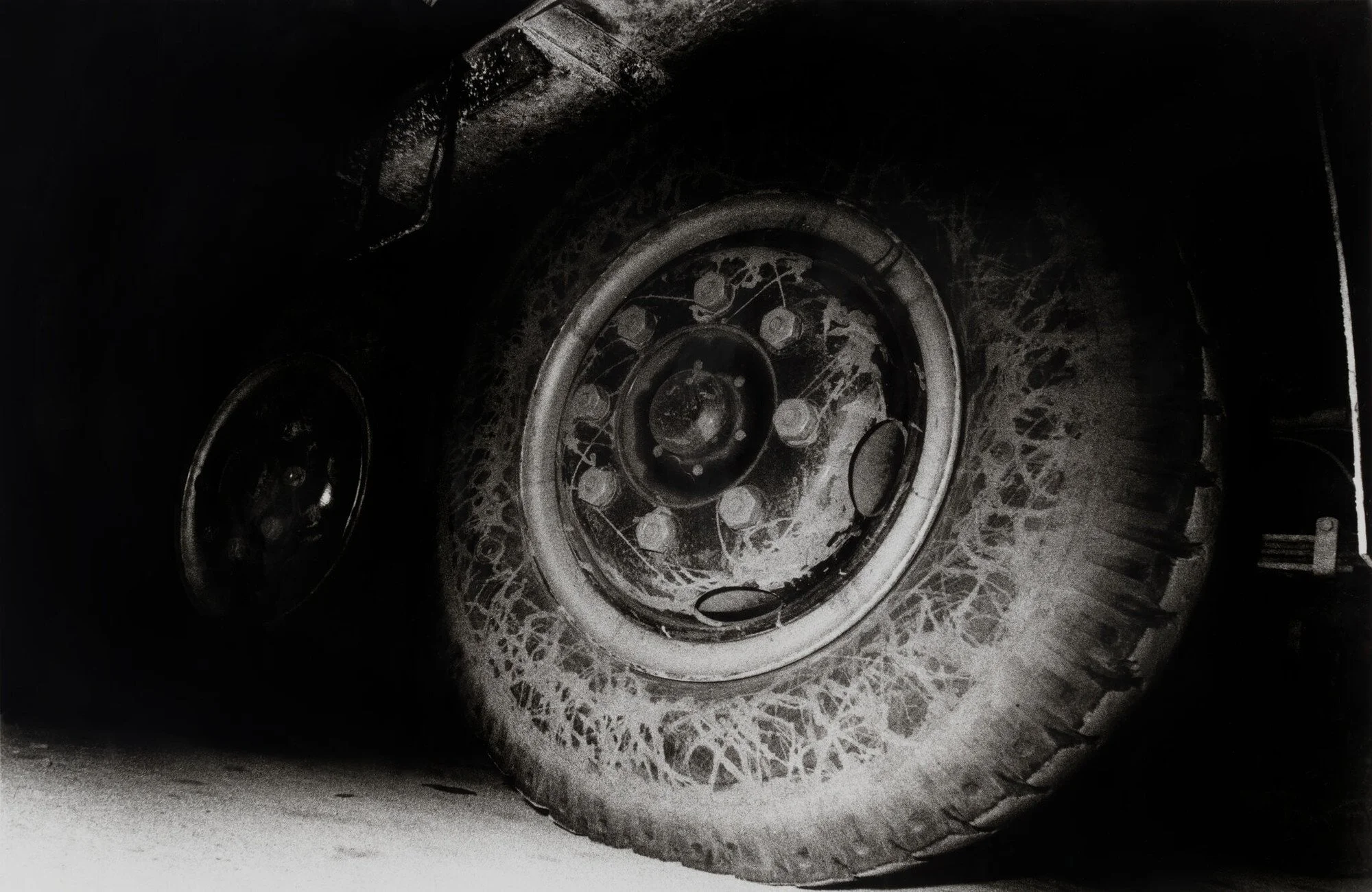
Moriyama’s early pictures grew out of strong examples. He saw the raw New York photographs of William Klein and the work of Andy Warhol. Tate later traced the influence of Klein’s 1956 New York book through Moriyama’s pictures of Tokyo. He also loved Jack Kerouac’s On the Road, and from 1968 he travelled along Japan’s new highways, often shooting through car windows. Pictures such as NATIONAL HIGHWAY 1 AT DAWN (1968) come from these trips. Japan Theater (1966) shows an actor in a tight cap, lit hard against a white wall. KARIUDO (Hunter), from 1968, belongs to the same restless years.
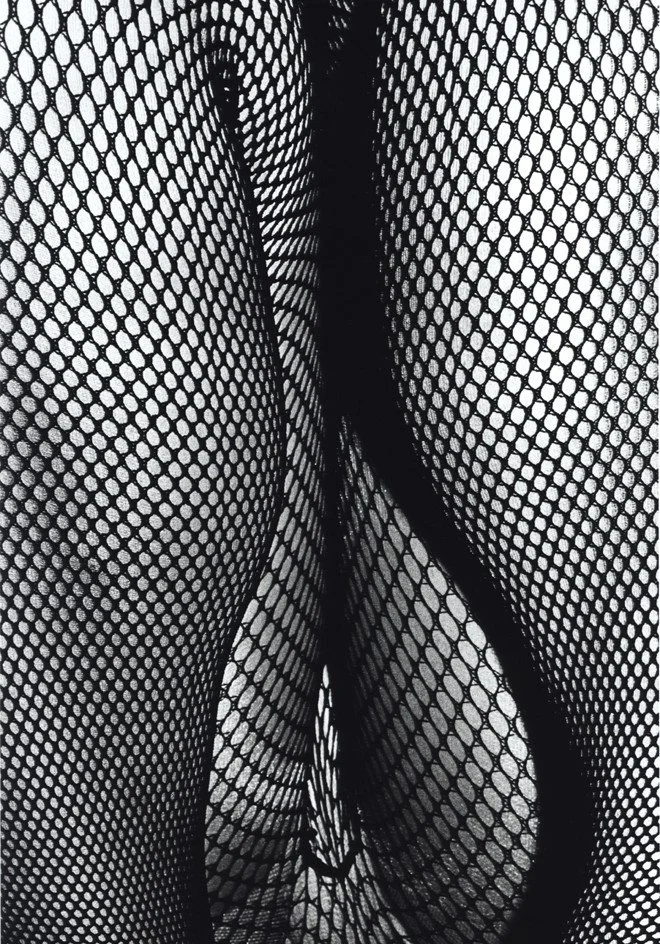
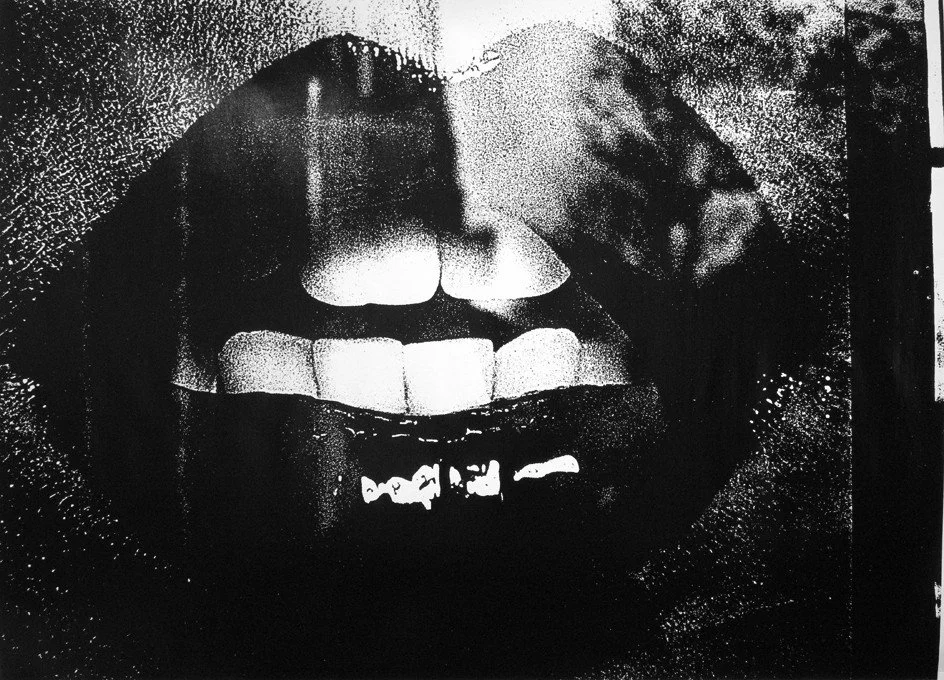
His work goes far beyond the 1970s. How to Create a Beautiful Picture 6: Tights in Shimotakaido (1987) fills the frame with fishnet tights. Lips (1989) and his famous dog also exist as large silkscreens on canvas. In 1972 he started his own small magazine, Kiroku (Record). He relaunched it in 2006, and it has become a kind of diary in parts, filled with Tokyo, Osaka, New York and other cities.
Big museums have shown his work. SFMOMA opened the retrospective Daido Moriyama: Stray Dog in 1999. The Fondation Cartier in Paris showed him in 2003 and again with Daido Tokyo in 2016. In 2012 Tate Modern put his work next to William Klein’s, and in 2019 he received the Hasselblad Award.
- 1938Born on 10 October in Ikeda, Osaka
- 1961Moves to Tokyo and becomes an assistant to Eikoh Hosoe
- 1968Publishes his first book, Japan: A Photo Theater
- 1971Photographs a stray dog in Misawa and visits New York for the first time
- 1972Publishes Hunter and Farewell Photography and starts his magazine Record
- 1999SFMOMA opens the retrospective Daido Moriyama: Stray Dog
- 2012Shows with William Klein at Tate Modern and receives the ICP Infinity Award
- 2019Receives the Hasselblad Award in Gothenburg
Lessons
Carry a small camera. Moriyama says he always uses a compact camera. It is easy to shoot with, and in the street it does not make people uneasy.
Keep walking and keep shooting. Tate describes him as a photographer who never stops shooting. On walks he often pauses, looks around and presses the shutter again and again, sometimes holding the camera at chest height.
Make your own publication. In 1972 he started Record, a small magazine of his own pictures. Relaunched in 2006, it works like a diary that he keeps adding to.
Try this: take a small camera or your phone on a one-hour walk through the busiest street near you. Do not plan. Shoot whatever pulls at you, and try a few frames from chest height. At home, choose sixteen pictures and lay them out as one small magazine, like an issue of Record.
Gear
Moriyama does not make a big story of his tools. What the sources say is simple.
Compact camera: in a Tate film he says he never uses a large camera, only a compact one, because it is easy and people in the street stay relaxed.
Ricoh GR III: in 2019 Ricoh published his series Daido Moriyama Photographs Ginza with the GR III on its official GR site.
Books
Daido Moriyama: How I Take Photographs (Laurence King, 2019). Written by Takeshi Nakamoto in close work with Moriyama, who walked with him on many photo trips. It follows Moriyama through Tokyo places such as Ginza and Haneda Airport and explains his methods, his cameras and his journeys. A small, friendly book for anyone who wants to try street photography.
Daido Moriyama: Stray Dog (San Francisco Museum of Modern Art, 1999). The catalogue of the first exhibition to survey his work, organised by SFMOMA curator Sandra S. Phillips. The exhibition showed nearly two hundred black and white photographs and travelled to New York, Winterthur, Essen and other cities. A good book for readers who want the full early story in one place.
Japan: A Photo Theater (Muromachi Shobo, 1968). His first book, with a text by the playwright Shuji Terayama. It shows popular entertainment and actors from small and experimental theatres. A revised version came out with Shinchosha in 1995. For readers who want to see where his style began.
Farewell Photography (Shashin Hyoronsha, 1972). His most radical book. Many pictures are blurred and cut so close that the subject almost disappears, and the introduction is a conversation with his friend Takuma Nakahira. A book for readers who want to see how far photography can be pushed.
In his words
“I have always felt that the world is an erotic place. As I walk through it my senses are reaching out and I am drawn to all sorts of things.”
“For me cities are enormous bodies of people’s desires and as I search for my own desires within them I slice into time, seeing the moment.”
“I don’t use a large camera. Instead I always use a compact camera. I mainly photograph in the street and this doesn’t make people feel uncomfortable.”
“Chaotic everyday existence is what I think Japan is all about.”