AT A GLANCE
- Known for
- Staged, film-like photographs of small American towns, often at twilight
- Works in
- Large digital pigment prints built from many exposures; colour, and black and white in Eveningside
- Camera
- 8x10 camera, locked in one position for the whole shoot
- Taught
- Director of graduate studies in photography, Yale School of Art
- Awards
- Skowhegan Medal for Photography · National Endowment for the Arts Visual Artists Fellowship · Aaron Siskind Foundation Fellowship
- Start with
- Gregory Crewdson (Prestel, 2024)
- Links
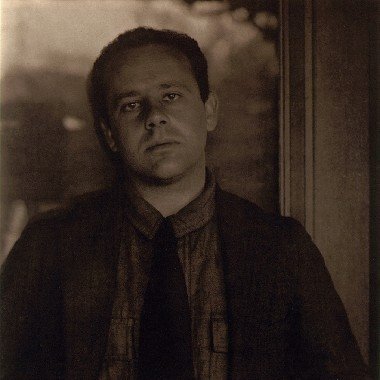
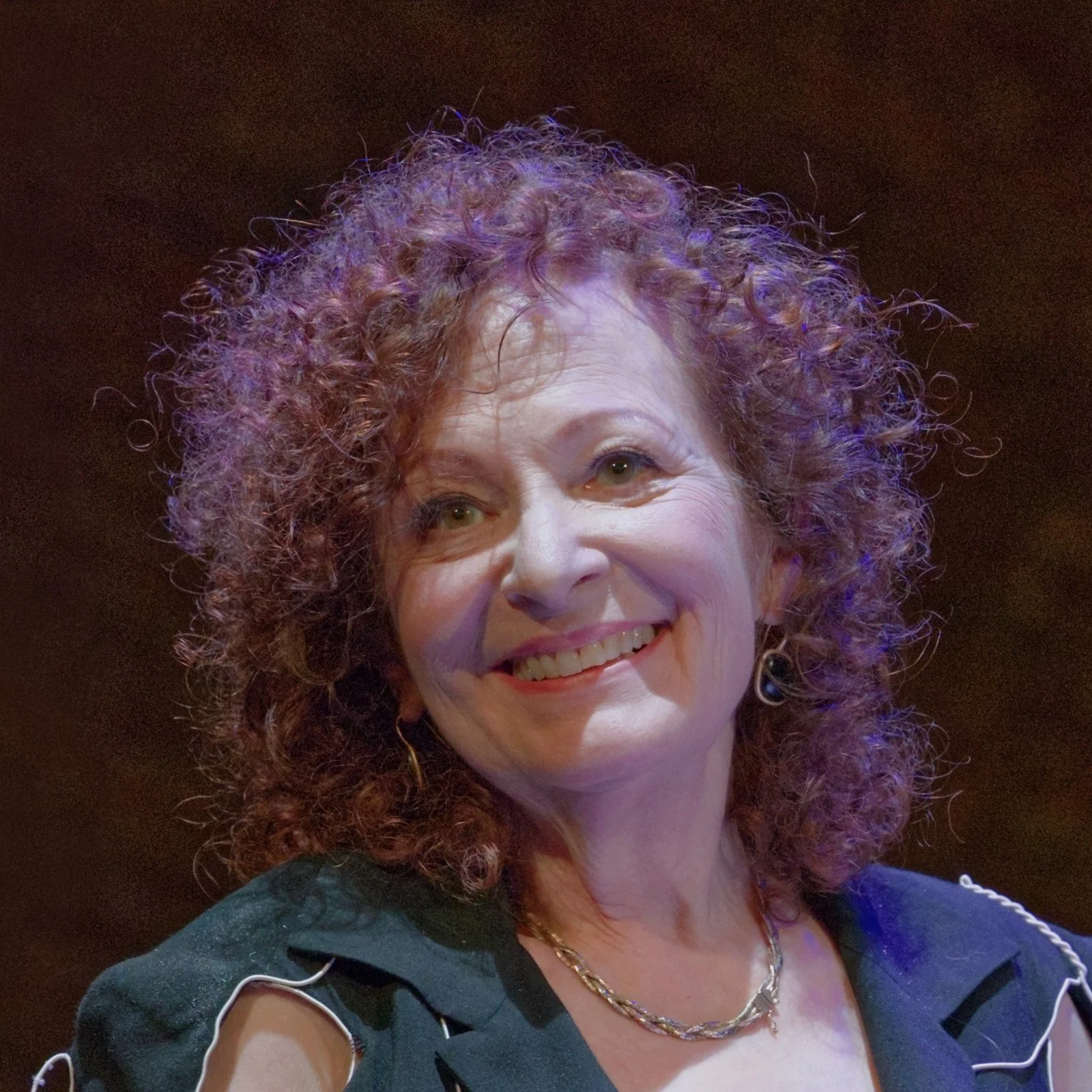
Gregory Crewdson (born 1962) is an American photographer. He makes single photographs the way other people make films. Each picture starts with months of planning, then a crew, lights, actors and sets. The results show quiet streets and houses in small towns of western Massachusetts. Everything looks normal, but something feels strange. He also teaches photography at the Yale School of Art.
The story
Gregory Crewdson was ten years old when his father, a psychiatrist, took him to the Diane Arbus retrospective at the Museum of Modern Art in New York. He still remembers it. “That was the first time I was aware of the power and psychological complexity of photographs,” he told us.
The family lived in Brooklyn. His father saw patients in an office inside their home. “The fact that his office was in our house always suggested some sense of the furtive or the secret,” Crewdson told Smithsonian magazine. Private lives behind closed doors would later fill his pictures.
But first came school, and school was hard. Crewdson is dyslexic, so reading and tests were a struggle. In college he took his first photography class, and something clicked. “When I made my first picture it made sense to me.” At the same time he took classes in film theory. From the very start, he wanted to bring the language of cinema into a still photograph.
He studied at SUNY Purchase and then at the Yale School of Art. For his final project at Yale he photographed people at home in Lee, Massachusetts, a small town near his family's summer house. David Lynch's film Blue Velvet, which came out in 1986, was a big model for him. Almost all his later work would be made in the same region.
Therefore the pictures kept growing. For Twilight, made from 1998 to 2002, a crew of about sixty people took part. Cinematographer Richard Sands began to handle the technical side of the shots, and he still does. Beneath the Roses, from 2003 to 2008, used more than a hundred specialists. Crewdson combined forty to fifty negatives into one final picture.
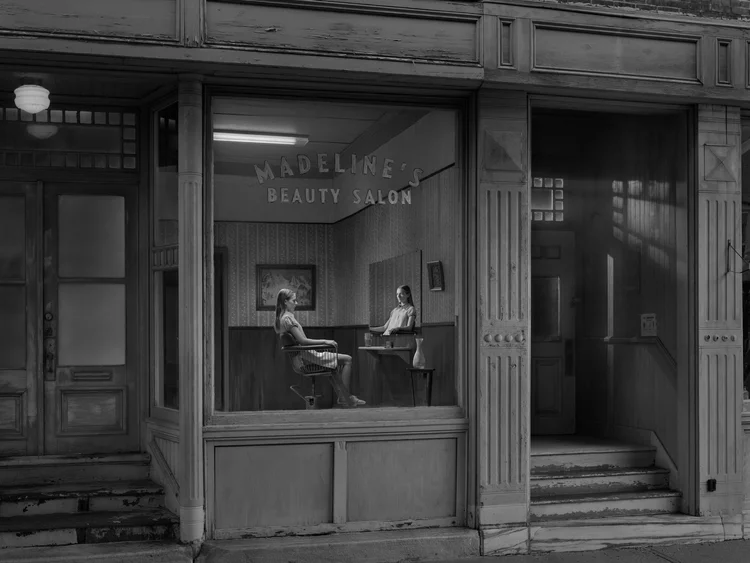
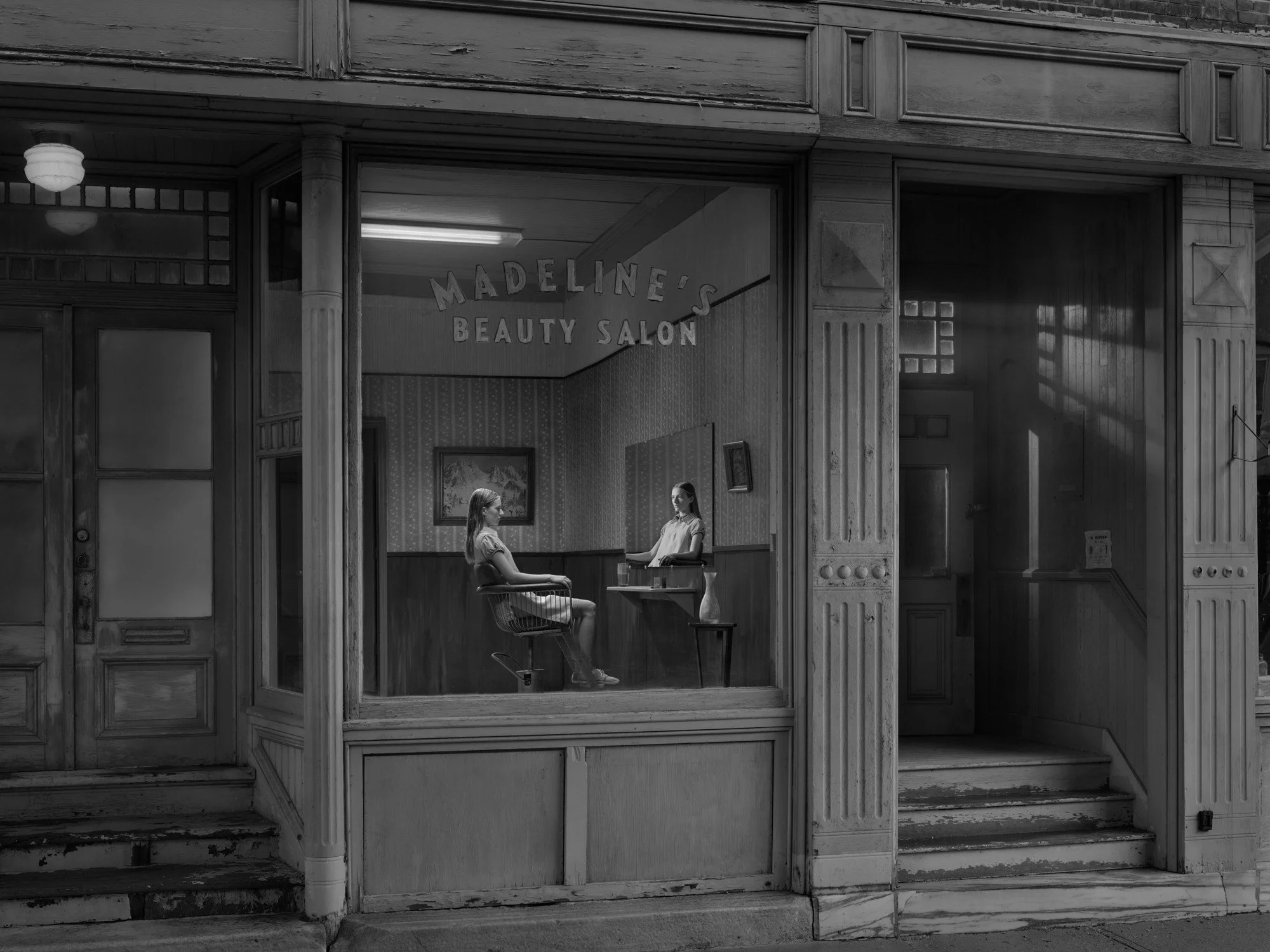
Years later, in his black and white series Eveningside, he saw an empty storefront and imagined a hairdresser's shop inside. His team built the whole salon: the sign, the ceiling, the mirror. He named it Madeline's, after Alfred Hitchcock's film Vertigo. Two women sat inside, a customer and a hairdresser. But the hairdresser “just didn't look right in the frame,” so he removed her later in post-production. The face in the mirror is not a real reflection either. It is the same woman, photographed again after she turned toward the camera.
Even he does not know the full story of his pictures, and he likes it that way. “I don't want resolution. I want mystery.”
The work
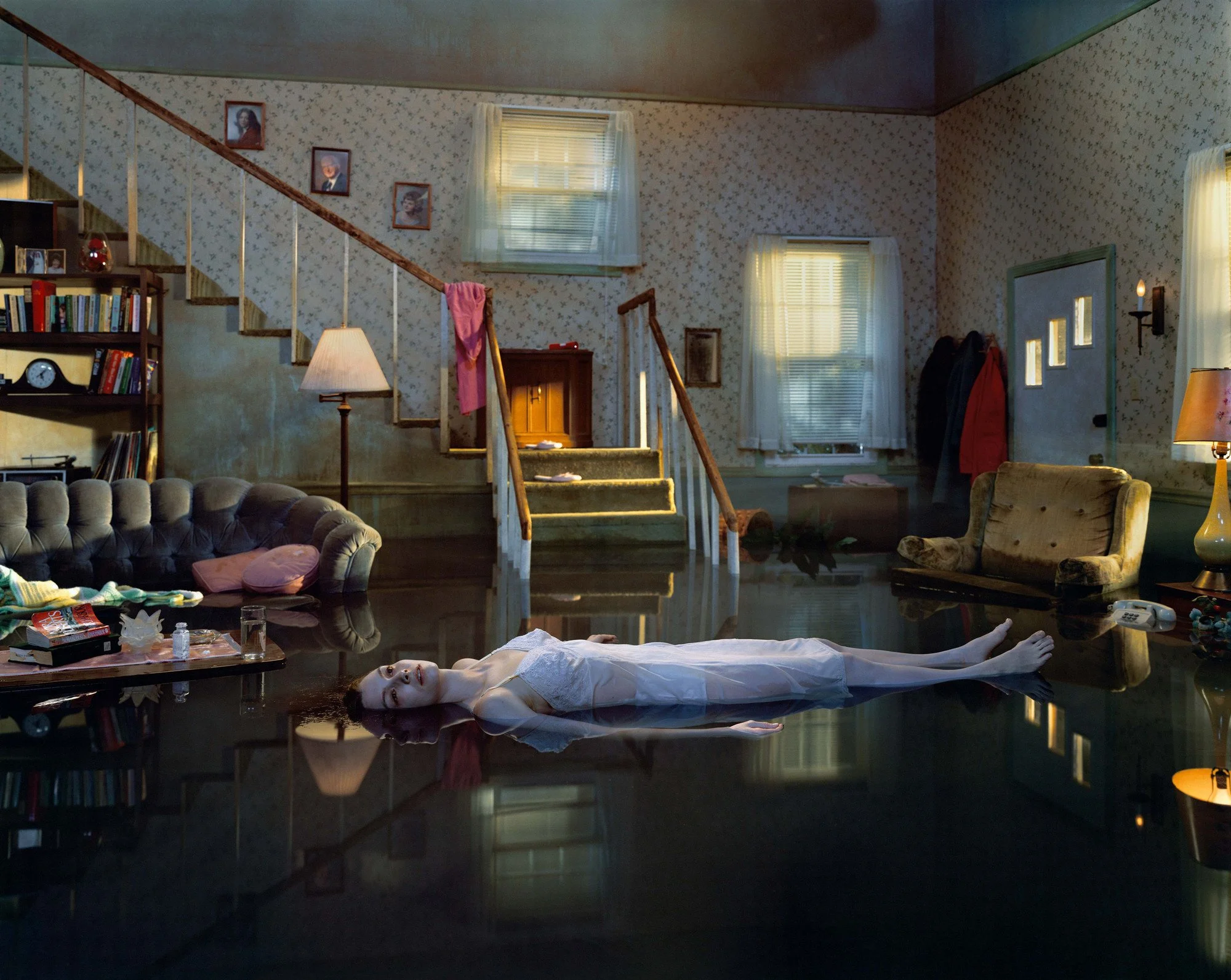
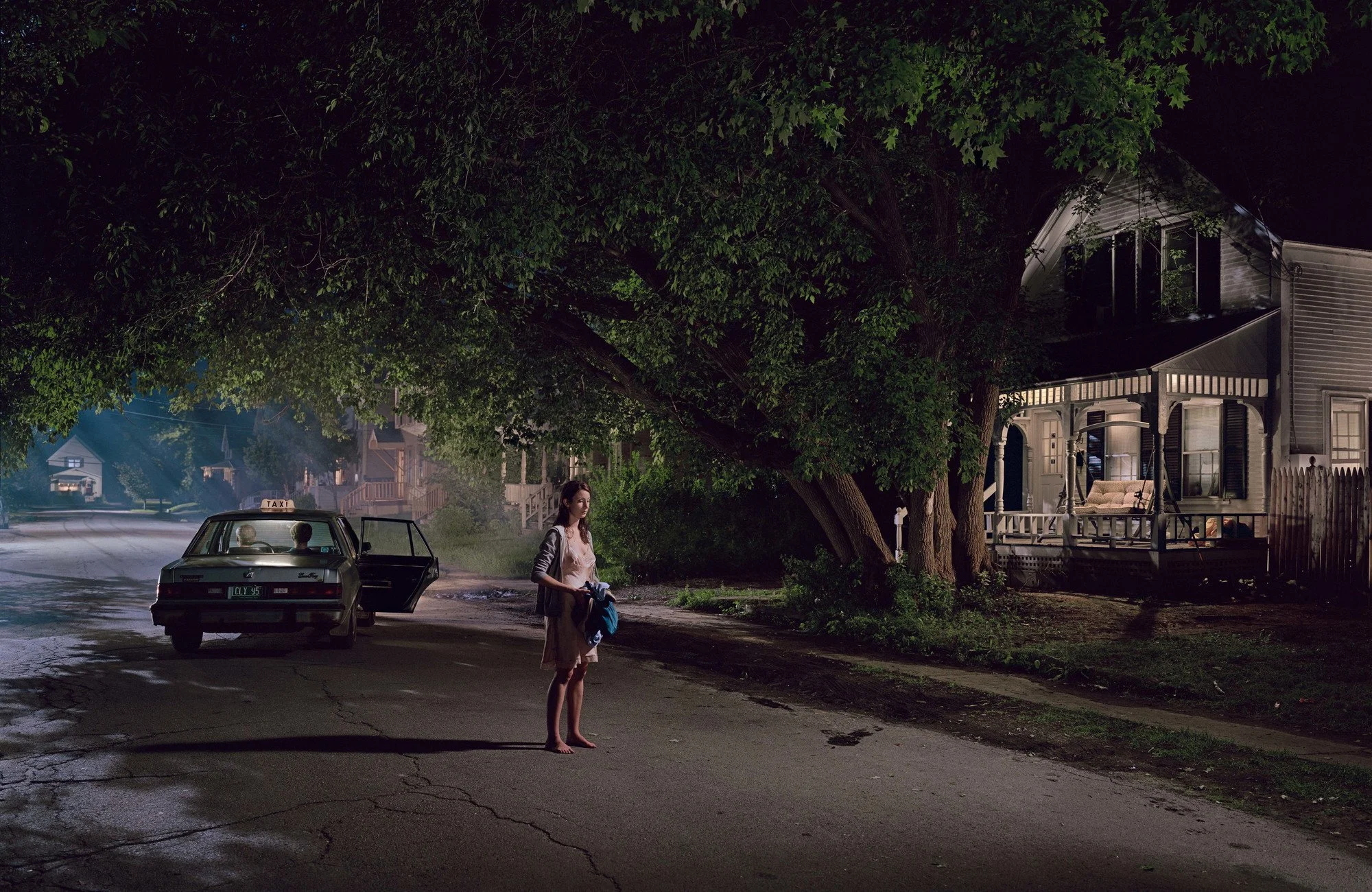
Crewdson works in series. In Natural Wonder (1991 to 1997) he built small models in his studio, inspired by museum dioramas. Hover (1996 to 1997) was shot in black and white from above, with the help of a crane. Twilight brought his best-known motifs: open cars, windows, mirrors and strange light at dusk, as in Untitled (Ophelia). Beneath the Roses, with pictures like Untitled (Maple Street), was his most complex project, and it became the subject of the 2012 documentary Gregory Crewdson: Brief Encounters by Ben Shapiro.
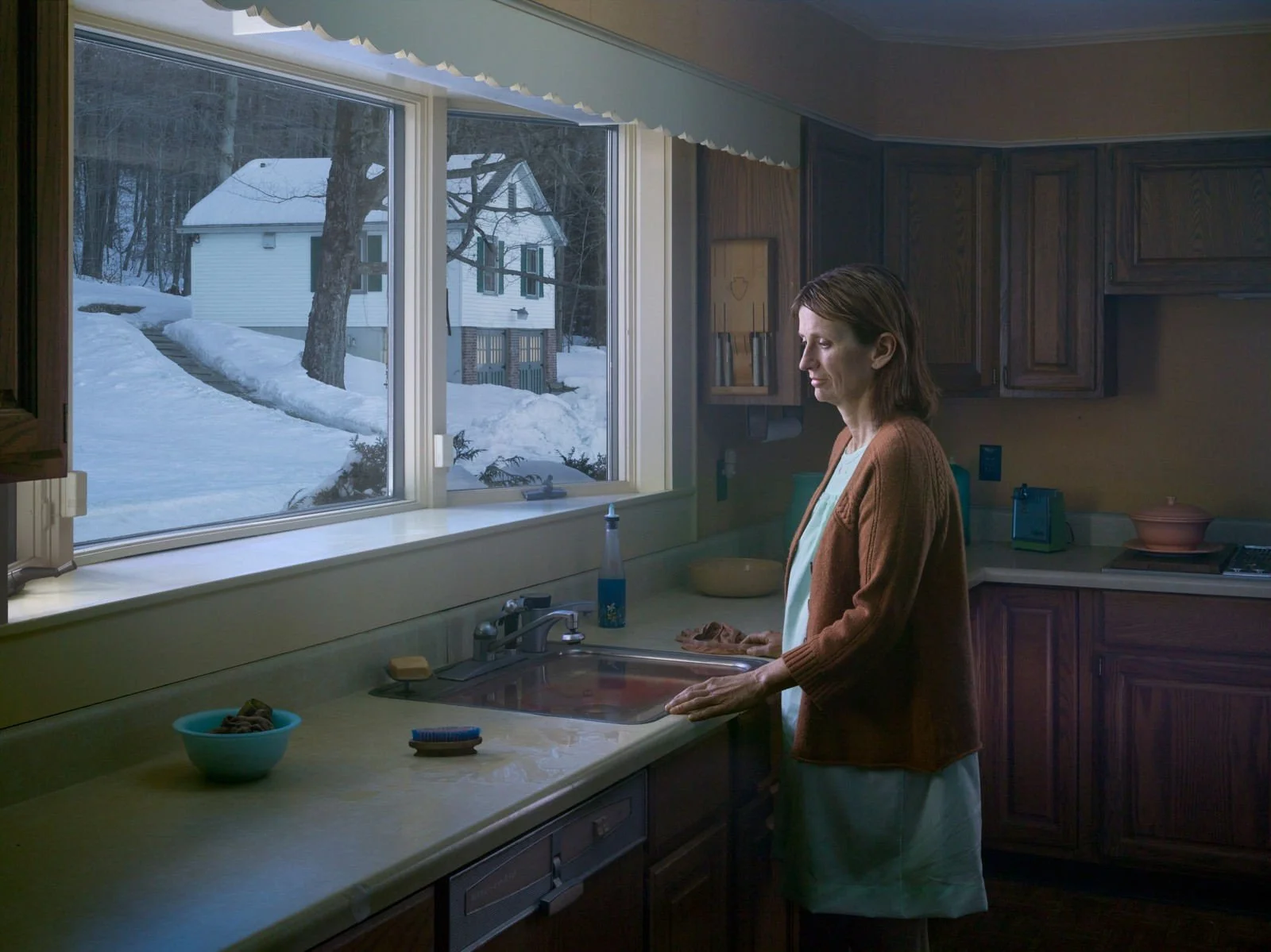
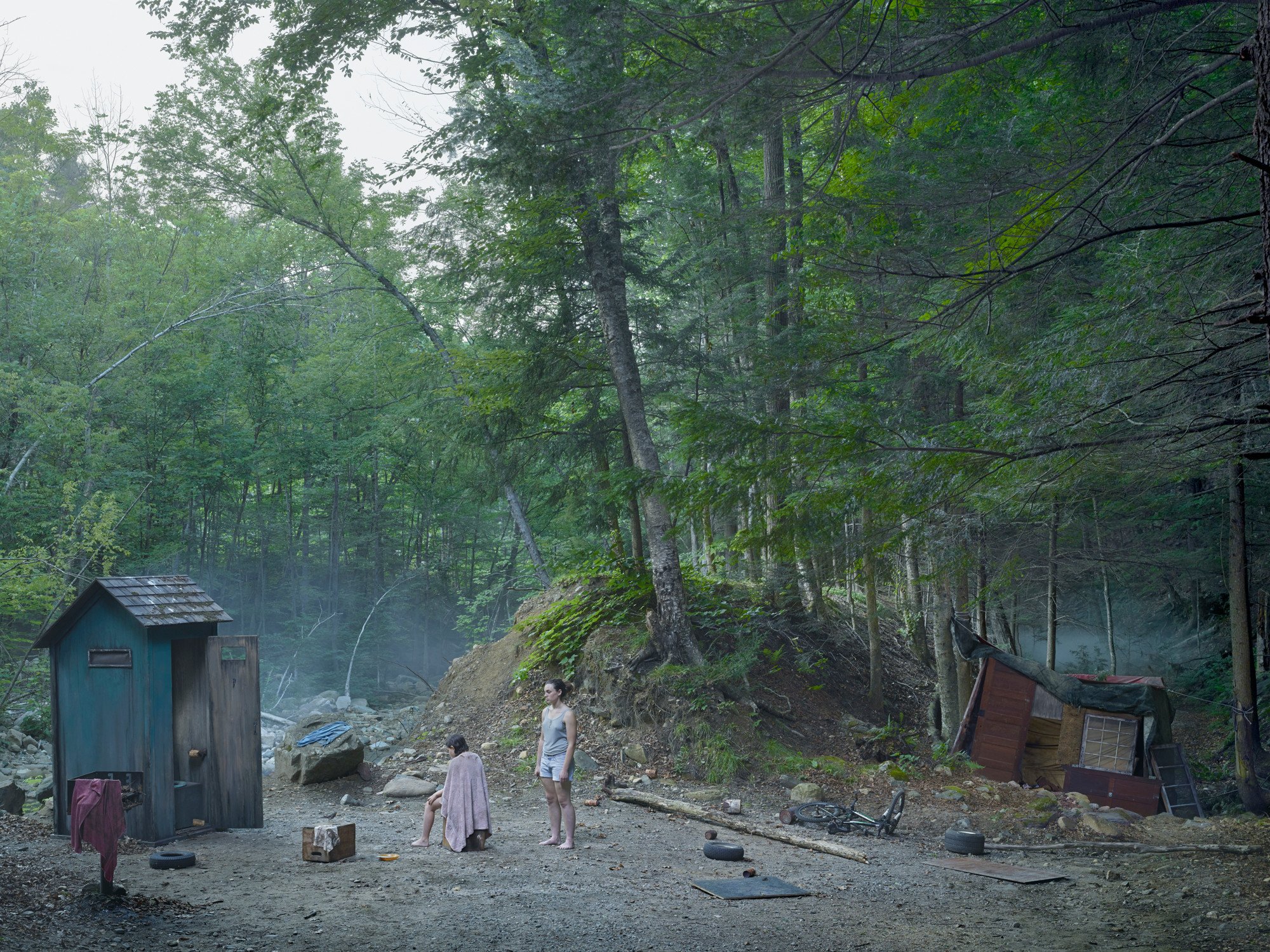
Then came a change. In 2009 he made Sanctuary at the old film studios of Cinecittà in Rome, with a small team and no actors. Cathedral of the Pines (2013 to 2014) followed a period of personal and artistic crisis. He made it in the forests near Becket, Massachusetts, where he has lived since 2010. For the first time, family and friends were his models, and he used real houses and little artificial light. Woman at Sink and The Haircut come from this series.
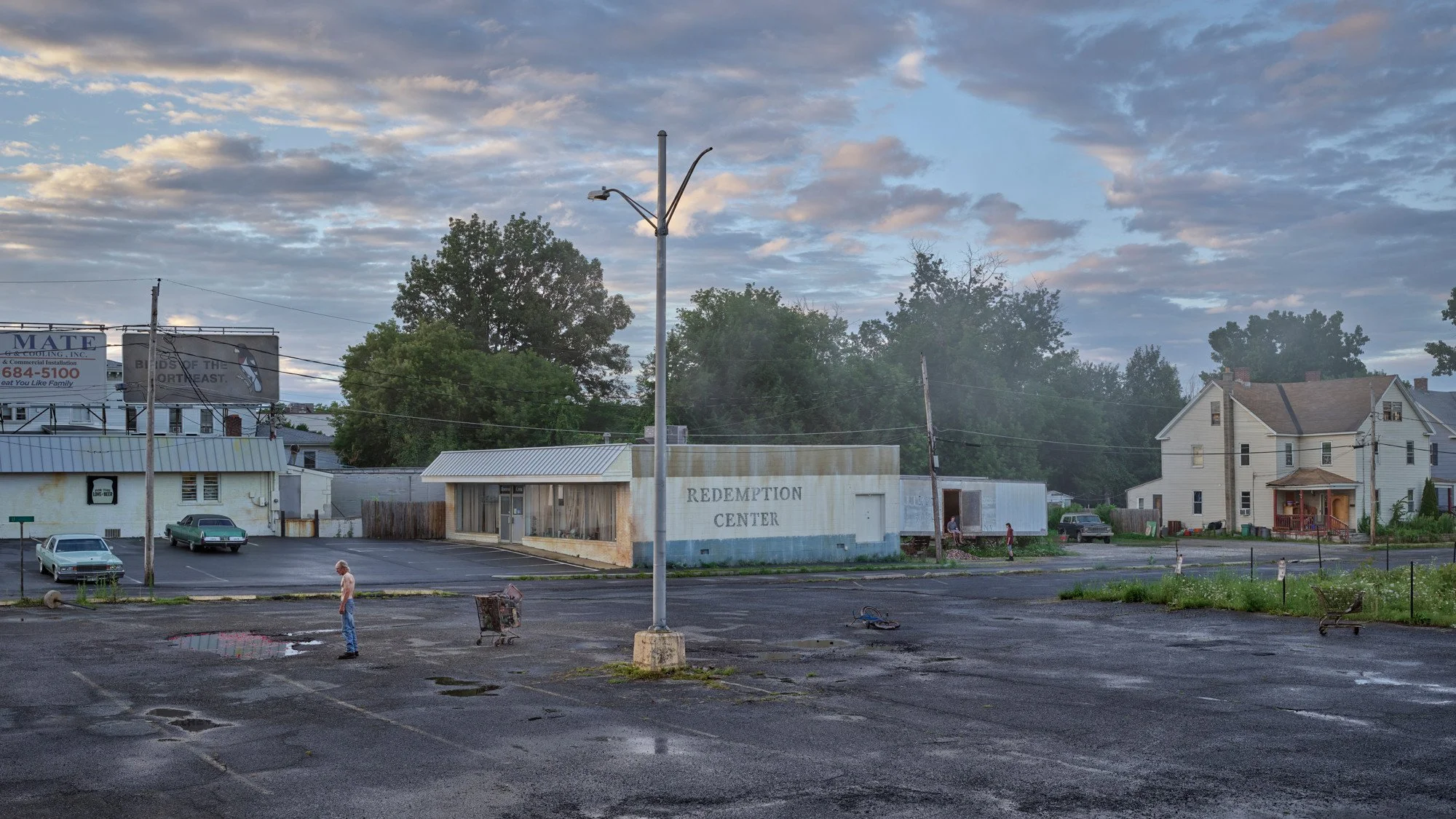
An Eclipse of Moths (2018 to 2019) was set in Pittsfield, Massachusetts, a town hit hard when its big factory closed. Redemption Center belongs to it. Eveningside (2021 to 2022) closes this trilogy, in black and white light inspired by film noir. In 2024 the Albertina in Vienna showed his first full retrospective, with nine series from more than three decades.
Every picture still begins the same way. He drives around for months looking for places that feel “ordinary but outside of time.” Then, on set, the camera does not move at all. The team shoots many exposures, often more than a hundred, from daylight into darkness, and later puts the best parts together.
- 1962Born in Brooklyn, New York
- 1985Graduates from SUNY Purchase
- 1988Earns his MFA at the Yale School of Art; his final project is shot in Lee, Massachusetts
- 1998Starts Twilight, working with a film crew for the first time on this scale
- 2003Starts Beneath the Roses, his most elaborate series, with more than a hundred specialists
- 2012The documentary Gregory Crewdson: Brief Encounters by Ben Shapiro is released
- 2016Cathedral of the Pines opens at Gagosian in New York, with a book by Aperture
- 2022Eveningside opens at the Gallerie d'Italia in Turin
- 2024First full retrospective at the Albertina in Vienna
Lessons
Start with the place. Crewdson drives around for months before a shoot. He looks for places that feel ordinary but outside of time, and the story comes from the place.
Write the picture down. With his partner he writes a short description of each picture: only what is in front of the camera, no plot and no dialogue. On set, that text becomes the guide for everyone.
Use frames inside the frame. Windows, doorways and mirrors appear again and again in his work. They isolate one person and remind the viewer that they are looking at a picture.
Try this: find a window or doorway near your home and ask a friend to stand inside it. Put your camera on a tripod and do not move it. Shoot from late daylight until dark, one frame every few minutes. Then compare the frames and see how the light changes the story.
Gear
Crewdson rarely talks about brands. What the sources say is about how the camera is used, not which model.
8x10 large format camera: a 2007 photo from SUNY Purchase shows him setting up a shot with his 8x10 camera on location in Pittsfield, Massachusetts.
Heavy tripod: on set the camera is locked down and never moves, so many separate exposures can later be combined into one picture.
Books
Gregory Crewdson (Prestel, 2024). The catalogue of the first full retrospective, at the Albertina in Vienna, edited by curator Walter Moser. It covers nine series, from Early Work to Eveningside, with more than 300 photographs and production stills. Essays come from filmmaker David Fincher, Walter Moser and novelist Emily St. John Mandel. The best single book for anyone who wants the whole story.
Twilight (Abrams, 2002). The book of his best-known series, with a text by novelist Rick Moody. It shows the staged scenes at dusk, where strange events break into everyday life. A good choice for readers who know one or two of his pictures and want the series behind them.
Beneath the Roses (Abrams, 2008). The large book of his most elaborate series, with an essay by fiction writer Russell Banks. Next to the photographs it shows production stills, lighting charts, sketches and plans. Ideal for photographers who want to see how such a picture is made.
Cathedral of the Pines (Aperture, 2016). Published by Aperture with an essay by art historian Alexander Nemerov. It holds the 31 photographs made in and around Becket, Massachusetts, in quieter daylight and with family and friends as models. A good book for readers who prefer his more personal work.
In his words
“I think at the heart of it, I'm a storyteller.”
“I don't want resolution. I want mystery.”
“Photography is about framing. So every part of it begins and ends with the frame.”
“Just be truthful to yourself. Understand that all you have is your particular vision of the world. So you have to nurture that.”
“Every artist confronts failure as part of the condition of being an artist.”