What is fine art photography?
Fine art photography is photography made mainly as art: for exhibitions, museums, collectors and photobooks, rather than for news, advertising or a client. The photographer’s idea comes first. The same subject, a landscape or a portrait, can be documentary in one context and fine art in another. What differs is the intention and the way the work is shown.
Main approaches
Straight photography. Sharp, carefully printed pictures of real things, valued for form and tone. Edward Weston’s peppers and shells of the late 1920s and 1930s are classic examples.
Experimental and surrealist. Man Ray made photograms, which he called rayographs, by placing objects directly on photographic paper. See photogram.
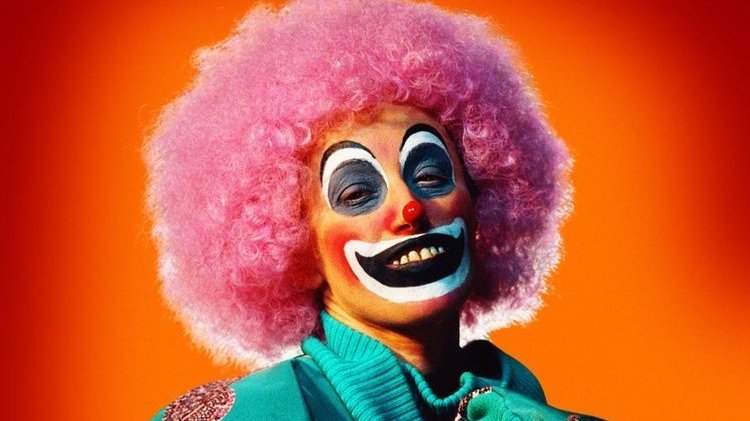
Staged and constructed. Scenes built for the camera. Cindy Sherman photographed herself as different film characters, and Gregory Crewdson stages large, film-like scenes in small American towns.
Large-format color and the Düsseldorf School. Very large color prints made for gallery walls. Andreas Gursky studied with Bernd Becher at the Kunstakademie Düsseldorf from 1981 to 1987.
Personal and family work. Sally Mann photographed her children and the American South with large-format cameras.

by Cindy Sherman
History
From the start, some photographers wanted their work to be seen as art. In Victorian England, Oscar Rejlander and Henry Peach Robinson combined several negatives to make staged, painting-like pictures. Around 1890 pictorialism spread internationally: soft focus, textured papers and hand-worked prints that looked like etchings or charcoal drawings.
In New York, Alfred Stieglitz founded the Photo-Secession in February 1902 with Edward Steichen and others. From 1903 to 1917 he published the journal Camera Work and ran the Little Galleries of the Photo-Secession, later called 291. In the last issues of Camera Work, in 1916 and 1917, he presented Paul Strand’s sharp, modern pictures. This marked the turn from pictorialism to straight photography, which Group f/64 continued in California in the 1930s.
Museums slowly began to collect photography. The Museum of Modern Art in New York founded its department of photography in 1940. From the 1970s, color photography and conceptual art entered galleries, and in the 1980s photographers such as Sherman and the students of the Bechers in Düsseldorf made photographs at the scale of paintings. In 2011 a print of Gursky’s Rhein II (1999) sold at Christie’s New York for 4.3 million dollars, then a record price for a photograph.
Techniques
A clear idea. Fine art work usually grows from a question or a theme, explored over many pictures. Editing and sequencing are as important as making single images.
Print and presentation. Size, paper, framing and edition all change how a picture is read. Many photographers sell prints in limited editions.
Process. Some work with film and darkroom prints, others with digital capture and inkjet prints, and some with historical processes such as cyanotype or platinum printing.
How to start
Look at a lot of work in museums, galleries and photobooks. Choose one subject you care about and photograph it for months, not days. Print your pictures, put them on a wall and edit them into a small series. Show the series to other photographers and ask for honest feedback.
Books to start with
Alfred Stieglitz: Camera Work (Taschen), edited by Pam Roberts. All the plates from Stieglitz’s journal (1903 to 1917).
Cindy Sherman: The Complete Untitled Film Stills (Museum of Modern Art). Sherman’s black-and-white series made between 1977 and 1980.
Edward Weston, Edward Weston: 125 Photographs (Aperture). A short introduction to Weston’s still lifes, nudes and landscapes.

by Edward Weston
Legacy
Fine art photography won photography its place in museums and the art market. Today photographs are part of almost every contemporary art collection, and the borders between fine art, documentary and commercial work are open: many photographers move between them.
Discover fine art photographers · Fine art photography in the Photopedia Dictionary
Last updated: November 2026