AT A GLANCE
- Known for
- Rayographs (photographs made without a camera), Le Violon d’Ingres, solarized portraits, portraits of artists and writers in Paris
- Worked in
- Black and white; he was also a painter, made objects and avant-garde films
- Camera
- Few reliable details about his cameras; his rayographs were made with no camera at all
- Also
- Part of New York Dada with Marcel Duchamp; central figure of Dada and Surrealism in Paris; films Le Retour à la raison (1923) and Emak Bakia (1926); autobiography Self Portrait (1963)
- Start with
- Self Portrait (Penguin Modern Classics, 2012)
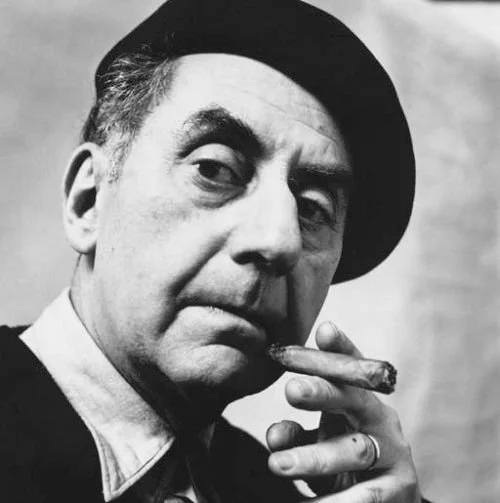
Man Ray (1890–1976) was an American artist who spent most of his working life in Paris. He came to photography as a painter and became a key figure of Dada and Surrealism. He is best known for his rayographs, pictures made without a camera, and for portraits of the artists and writers around him.
The story
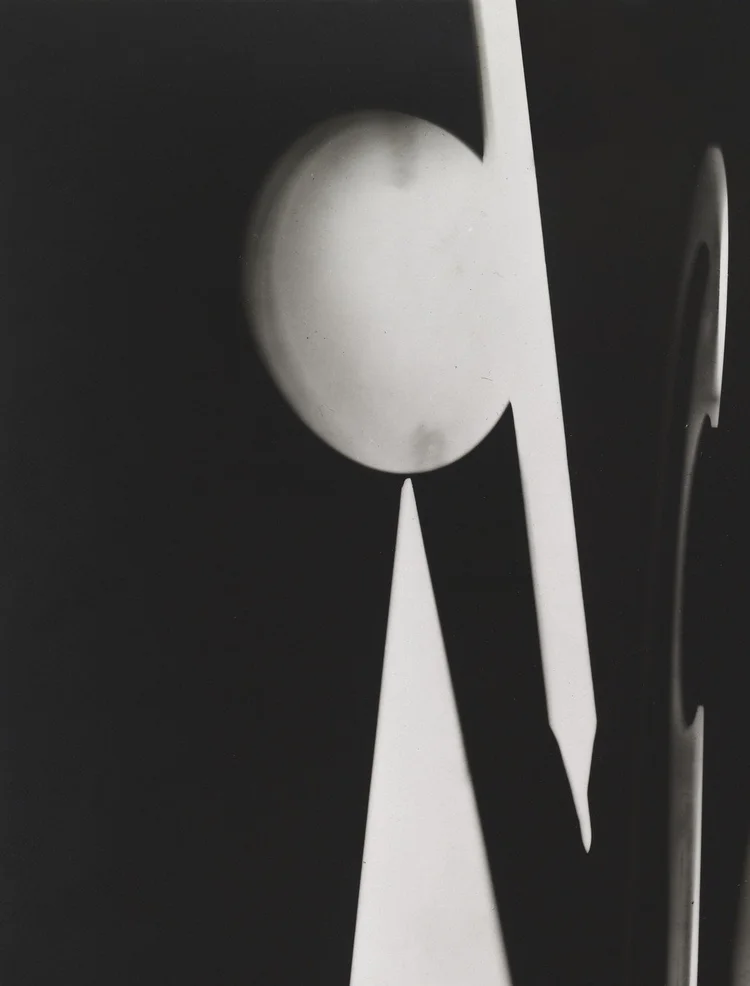
One night in the winter of 1921, Man Ray was working late in his darkroom. It was a bathroom in a hotel in Montparnasse, Paris. He was printing fashion pictures he had made earlier that day. By mistake, a sheet of unexposed paper had slipped into the developing tray. He placed a small glass funnel, a measuring glass and a thermometer on the wet paper. Then he turned on the light. “Before my eyes an image began to form,” he later wrote, “not quite a simple silhouette of the objects as in a straight photograph.”
Photography had not been his plan. Born Emmanuel Radnitzky in Philadelphia in 1890, he grew up in New York and wanted to paint. In 1915, while preparing his first solo show of paintings, he bought a camera. It was only meant to record his canvases for dealers and friends. The same year he met Marcel Duchamp, who became a friend for life. In 1921 he followed Duchamp to Paris.
But in Paris it was the camera that paid the bills. Portraits of artists and writers, and fashion work, gave him a steady income. So the darkroom became his daily workplace, and that is where the accident happened.
He named the new pictures rayographs, after himself. “They looked startlingly new and mysterious,” he wrote. The Dada poet Tristan Tzara called them pure Dada creations. In 1922 twelve rayographs appeared in a portfolio, Les Champs délicieux, with an introduction by Tzara.
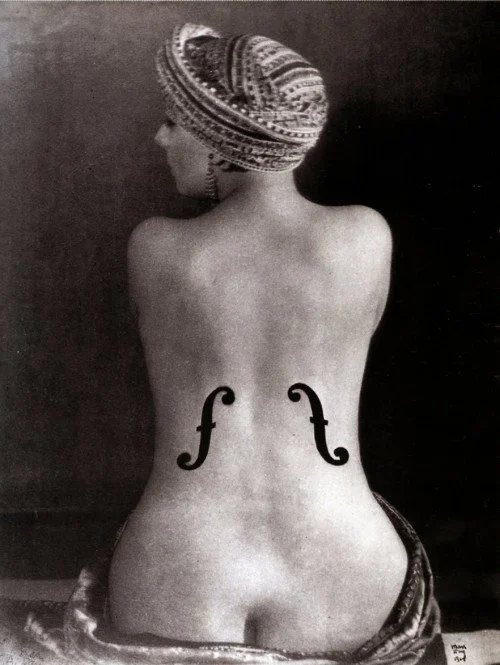
The same freedom went into his camera work. In 1924 he photographed Kiki de Montparnasse, his companion for most of the 1920s, from behind, in a turban. The pose recalls a bather painted by Ingres. Then he painted the f-holes of a violin onto the print and photographed it again. In French, a violon d’Ingres is a hobby, because the painter Ingres also played the violin. Le Violon d’Ingres first appeared in the magazine Littérature in June 1924. In 2022 one print sold at Christie’s for $12.4 million, then a record for a photograph at auction.
The painter who bought a camera to copy his canvases had found something else. A few months after that night in the darkroom, in April 1922, he wrote to his patron Ferdinand Howald: “I have finally freed myself from the sticky medium of paint, and am working directly with light itself.”
The work


- 1890Born Emmanuel Radnitzky in Philadelphia, 27 August
- 1915First solo show at the Daniel Gallery, New York; meets Marcel Duchamp and starts to photograph
- 1921Moves to Paris
- 1922Publishes Les Champs délicieux, a portfolio of twelve rayographs
- 1924Le Violon d’Ingres appears in the magazine Littérature
- 1929Lee Miller becomes his assistant; together they work on solarization
- 1940Leaves Paris after the German invasion and settles in Hollywood
- 1951Returns to Paris
- 1976Dies in Paris, 18 November
Lessons
Keep the accident. A sheet of paper in the wrong tray became a new kind of picture. He did not throw it away.
Use what is near you. His first rayographs were made with a funnel, a measuring glass and a thermometer from his own darkroom.
Work on the print, too. For Le Violon d’Ingres he painted on a print and photographed it again. The picture was finished after the shoot.
Try this: get a pack of sun-print (cyanotype) paper. Place three ordinary objects from your kitchen on it in sunlight, and make one of them glass. Look at how the glass bends the light compared with the solid objects.
Gear
Man Ray wrote much about ideas and people, but we found no reliable source naming his cameras. So here we list the methods we know he used.
Photographic paper: for his rayographs he placed objects on or near light-sensitive paper and exposed it to light. No camera was used.
Darkroom: his first Paris darkroom was a hotel bathroom in Montparnasse. From 1929 he worked on solarization there with his assistant Lee Miller.
Books
Self Portrait (Little, Brown, 1963; Penguin Modern Classics, 2012). Man Ray’s autobiography, in his own words. He tells the story of his childhood wish to be an artist, his years in New York and his long life in Paris, and his friendships with Matisse, Hemingway, Picasso, Joyce and many others. The night the first rayograph appeared is described here. The Penguin paperback has 416 pages. The best place to start for anyone who wants to hear his voice.
Man Ray: Photographs (Thames & Hudson; paperback 1987). A large-format book of 256 pages. It goes from his early photographs of his own paintings to his portraits of artists and writers in Paris. It shows his work with light, including cliché-verres, rayographs and solarizations, and less familiar portraits of people like Virginia Woolf and Antonin Artaud. Most of the pictures come from the collection of Lucien Treillard, who worked with the artist for many years. Good for readers who want to see a wide range of his photographs.
Man Ray: Writings on Art (Getty Publications, 2016). Edited by Jennifer Mundy. A collection of Man Ray’s own writings about art, in English. For readers who already know the pictures and want to understand how he thought about painting, photography and his place between them.
In his words
“They looked startlingly new and mysterious.”