Content note: this story contains a photograph of a starving child and mentions suicide.
Welcome to this edition of Photography Stories. Today, we look at the story behind the photograph by Kevin Carter, known as The Vulture and the Little Girl, made in Ayod, Sudan in 1993. We’d love to read your comments below.
(This is the story behind the photograph.)
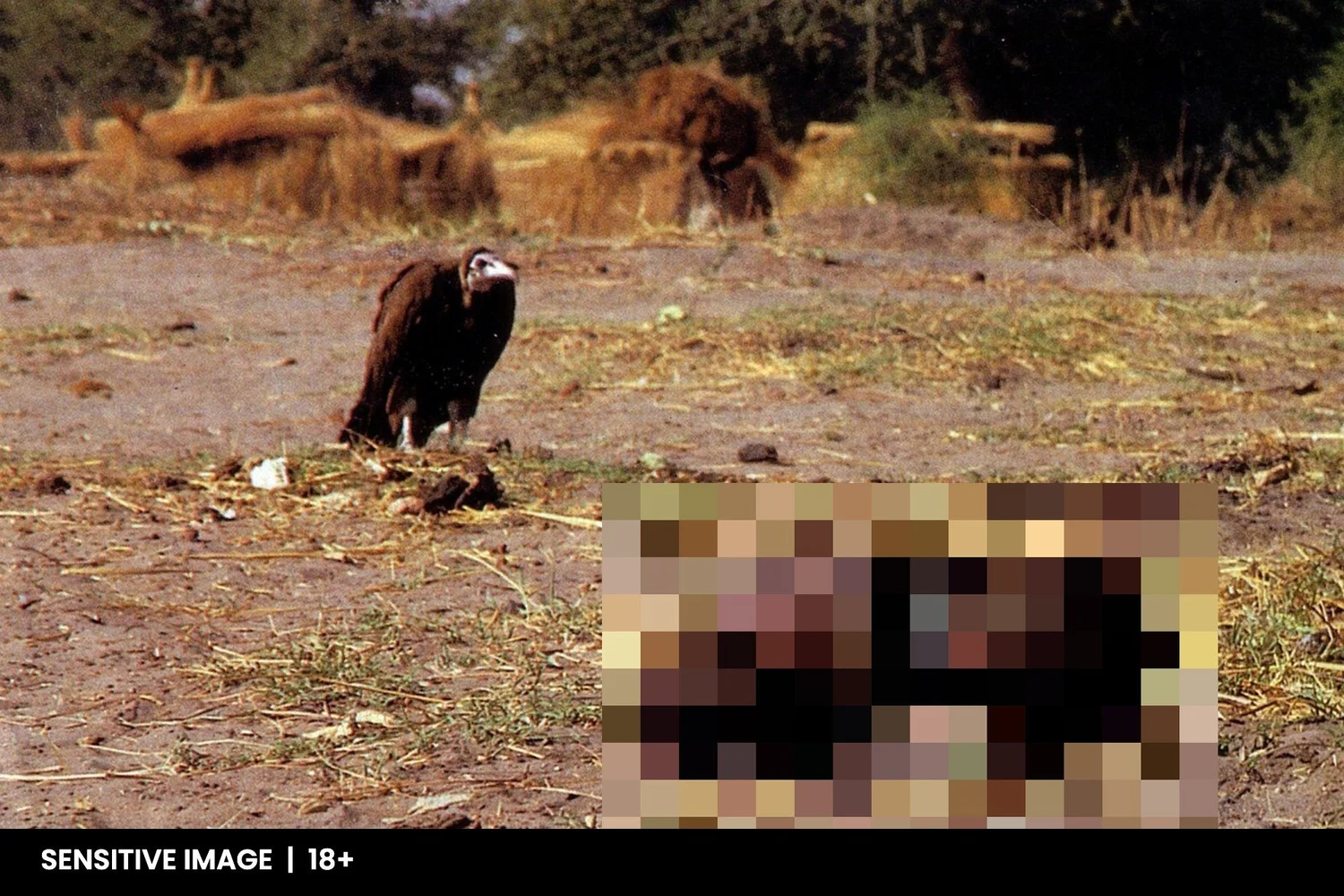
Kevin Carter waited about twenty minutes for a vulture to spread its wings.
It did not. In front of the bird, a starving child was bent over on the ground. Carter took his photographs, chased the vulture away and sat down under a tree.
The New York Times published the picture on 26 March 1993.
Readers wanted to know one thing: what happened to the child?
The newspaper could not tell them. The photograph won the Pulitzer Prize a year later, and many people asked why the photographer had not helped. The child’s name became known only in 2011.
This story follows the day in Ayod, the publication, the prize, and what later reporting found out about the child.
A flight to southern Sudan
In March 1993, southern Sudan (today South Sudan) was in famine and civil war. Kevin Carter, a freelance photographer from Johannesburg, flew there with his friend and fellow photographer João Silva. They had been invited by Rob Hadley of Operation Lifeline Sudan, a United Nations relief programme.
The plane landed in Ayod, a village with a feeding centre.
The child and the vulture
Near the feeding centre, Carter saw a small child who had stopped on the way and was bent over on the ground. He later told Silva that he was photographing the child when he changed his angle and saw a vulture right behind.
He waited about twenty minutes, hoping the bird would spread its wings. It did not. He took his photographs and chased the vulture away. Then he sat under a tree, smoked and cried.
Silva later remembered the hours after: “He was depressed afterward... He kept saying he wanted to hug his daughter.”
“It is not known whether she reached the center”
The New York Times ran the picture on 26 March 1993. Many readers asked what happened to the child. On 30 March, the paper printed an editors’ note:
“The photographer reports that she recovered enough to resume her trek after the vulture was chased away. It is not known whether she reached the center.”
Not everyone accepted that. The St. Petersburg Times in Florida wrote: “The man adjusting his lens to take just the right frame of her suffering, might just as well be a predator, another vulture on the scene.”
The Pulitzer Prize
In April 1994, Carter learned that he had won the Pulitzer Prize for Feature Photography. The citation reads: “For a picture first published in The New York Times of a starving Sudanese girl who collapsed on her way to a feeding center while a vulture waited nearby.”
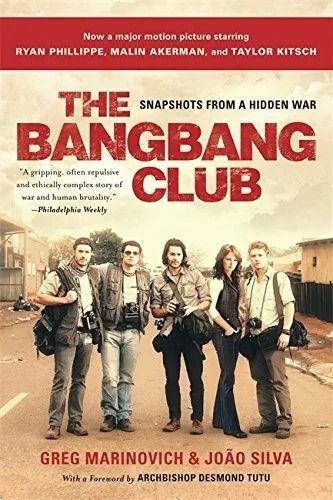
Carter had spent years photographing violence in South Africa. With Silva, Greg Marinovich and Ken Oosterbroek, he belonged to a group of photographers who became known as the Bang-Bang Club. On 18 April 1994, Oosterbroek was killed in Thokoza.
July 1994
Kevin Carter died by suicide in Johannesburg on 27 July 1994. He was 33.
The child was a boy
For years, nobody knew who the child was. In 2011, the Spanish newspaper El Mundo reported that the child was a boy, Kong Nyong. According to the report, he was cared for at the feeding centre and survived the famine. He died years later of a fever, reportedly around 2007.
Today the picture is known as The Vulture and the Little Girl, or Struggling Girl.
The Book
The Bang-Bang Club: Snapshots from a Hidden War
Basic Books · 2011 · 296 pages · By Greg Marinovich and João Silva · Foreword by Desmond Tutu
Two members of the Bang-Bang Club tell the story of the four photographers, including Kevin Carter and his trip to Sudan with João Silva.
The book was made into the film The Bang Bang Club (2010).
More stories:

Hoover is a rescued vulture at Elmwood Park Zoo. Midway through Claire Rosen’s photo session, she left her perch and landed on the photographer’s head.