AT A GLANCE
- Known for
- The 1960s books Five Girls and Cowboy Kate & Other Stories, and montage made in the camera
- Worked in
- Black and white for the famous 1960s books; later many projects with layered, multiple images
- Camera
- Hasselblad and Rolleiflex early on; from 1970 a Pentax 6x7
- Also
- Prix Nadar for Cowboy Kate (1964); fifteen calendars for Pentax
- Start with
- Cowboy Kate & Other Stories: Director's Cut (Rizzoli, 2006)
- Links
Sam Haskins (1926–2009) was a South African-born British photographer. His 1960s books Five Girls and Cowboy Kate & Other Stories changed how photographers saw the nude and still influence fashion photography today. He liked to call himself a graphic artist who used photography as his medium.
The story
After the Second World War, a young South African came to study at the College of Printing in London. His name was Sam Haskins. In the reading room of the Victoria and Albert Museum he found Graphis, a design magazine edited by Walter Herdeg. Inside was the work of Irving Penn. In that moment, as the National Portrait Gallery in Canberra later told his story, a whole new universe opened up for him.
It was a long way from home. Haskins was born in 1926 in Kroonstad, a railway town in South Africa, where his father inspected goods for the railways. As a teenager he trained with a travelling circus and was offered work as a trapeze catcher. Instead he studied art at Johannesburg Technical College, then photography part time. In 1949 he moved to London, where food was still rationed.
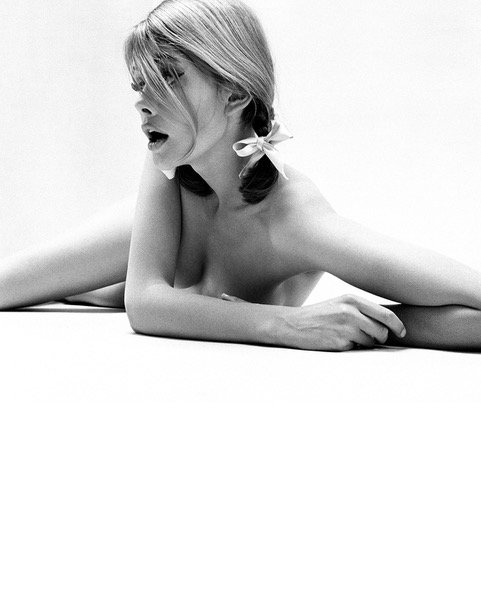
But he did not stay. In 1953 he started work as an advertising photographer in Johannesburg, in what was probably the first modern freelance advertising studio in Africa. He shot still life, factories, fashion and views from the air. Books became his escape from the rules of commercial work. The first, Five Girls, came out in 1962. It showed five young women, clothed and nude, in a playful and proud way that felt new.
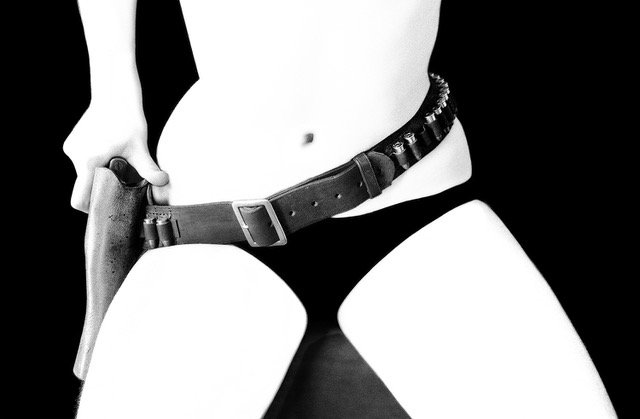
So he went further. Cowboy Kate & Other Stories (1964) told the tale of a gun-carrying young woman in the Old West, using the props of Hollywood Westerns. It won the Prix Nadar in France. Copies were smuggled into East Germany and passed from hand to hand. Over the years it sold almost one million copies. All of this was made in Johannesburg. Haskins only moved to London in 1968.
The pages of Graphis never left him. He kept building pictures from layers, putting one image over another in the camera. In 1984 the city of Bologna invited him to photograph it, and the result was the book Sam Haskins a Bologna. In one picture, a city bus passes in front of old painted saints.
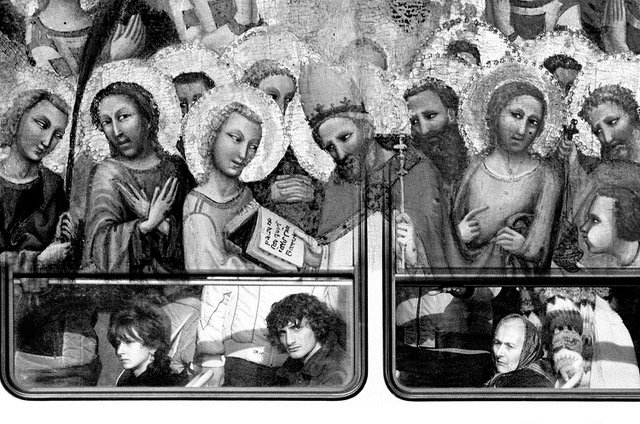
The student who found a new world in a design magazine ended up seeing whole cities as layered pages. “Bologna is a montage maker’s dream,” he wrote. “Layer upon transparent layer of cultural history is still clearly visible... it is a living montage.”
The work


- 1926Born on November 11 in Kroonstad, South Africa
- 1949Goes to London to study at the London School of Printing and Graphic Arts
- 1953Starts as an advertising photographer in Johannesburg
- 1962Publishes his first book, Five Girls
- 1964Cowboy Kate & Other Stories wins the Prix Nadar
- 1968Moves to London and opens a studio off the King’s Road
- 1984Publishes Sam Haskins a Bologna
- 2002Moves to Australia with his wife Alida
- 2009Dies on November 26 at home in Bowral, Australia
Lessons
Feed your eye outside photography. A design magazine in a museum reading room changed his path. He thought of himself as a graphic artist first.
Make your own projects. His books were an escape from advertising work. They became the work he is remembered for.
Think in layers and pages. He combined images in the camera and planned his books as double-page spreads.
Try this: make a small photo story of ten pages with one friend as the main character. Plan it as five double-page spreads, and on at least one spread put two pictures together so they say something neither says alone.
Gear
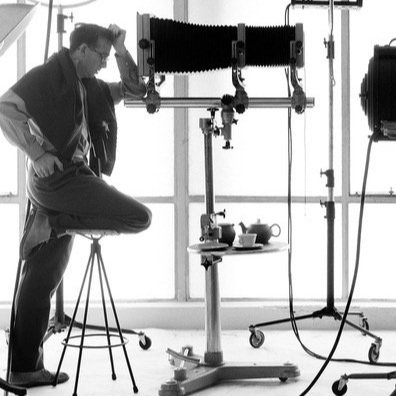
Haskins used medium-format cameras for most of his career.
Medium-format camera: his earlier medium-format work and his first slide show were made with Hasselblad and Rolleiflex cameras, on 6x6 cm film.
Pentax 6x7: he collected his first one in Tokyo in 1970 and stayed with the 6x7 and Asahi lenses for decades. He also made fifteen calendars for Pentax.
For Cowboy Kate he made the grain stronger in the darkroom prints, which became part of the book’s look.
Books
Cowboy Kate & Other Stories: Director's Cut (Rizzoli, 2006). A large 192-page hardcover that brings back his 1960s classics about forty years after they first appeared. Haskins revised the selection himself and added new and never-published photographs. At its heart is Cowboy Kate, the story of a young woman in the Old West told in pictures, the book that won the Prix Nadar in 1964 and sold almost a million copies. The easiest way today to see the work that made his name.
Five Girls (Crown, New York, and Bodley Head, London, 1962). His first book. It shows five young women, some clothed and some nude, photographed in a light and playful way during a break from his advertising work. Haskins cropped the images and designed each one for the page. The first edition was printed in gravure and has a technical section in which he explains his methods. For anyone interested in the history of the nude and of the photobook.
African Image (Bodley Head, London, and Thomas Crowell, New York, 1967). A tribute to sub-Saharan Africa: its landscapes, wildlife, people, and above all its tribal art and craft. Haskins is said to have worn out two Volvo cars on dirt roads while making it. The photographer Andreas Feininger called it graphically the most powerful book he knew, and it won a silver medal at the International Art Book Competition in Jerusalem in 1969. A book for readers who know only his nudes.
Fashion Etcetera (The Haskins Press, 2009). His eighth book and the first to look at his whole career, made in partnership with the designer Tommy Hilfiger. It gathers five decades of fashion, advertising and personal work, and was his first new book in more than twenty years. It launched with an exhibition at Milk Gallery in New York in September 2009, a few weeks before his death. A standard edition and a special edition were made.