AT A GLANCE
- Known for
- Soft, bright photographs of small everyday things, and the fire landscapes of Ametsuchi
- Works in
- Color
- Camera
- Rolleiflex (6x6 square); a 4x5 large-format camera for Ametsuchi
- Also
- More than 20 photobooks; Kimura Ihei Award (2002)
- Start with
- Illuminance (Aperture, 2011)
- Links
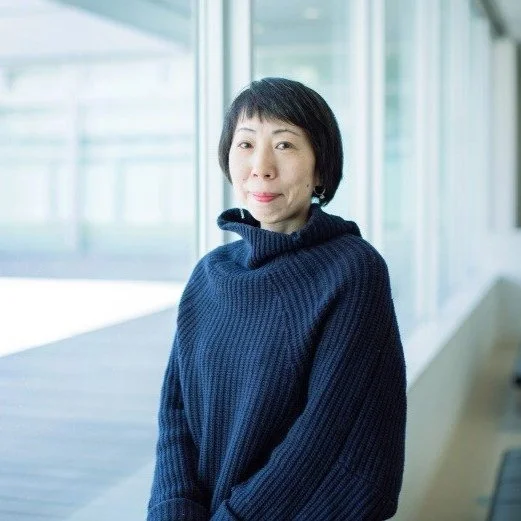
Rinko Kawauchi (born 1972) is a Japanese photographer known for soft, bright color photographs of small everyday things. Her first three books came out on the same day in 2001. Since then she has published more than 20 photobooks, among them Illuminance, Ametsuchi and Halo.
The story
One Sunday morning, Rinko Kawauchi was watching television, still half asleep. Suddenly a picture from an old dream was on the screen. “I was surprised to suddenly see the image from that dream reappear,” she wrote. In the dream there had been “many people and horses together in a green meadow before a large mountain.” The place on the screen was called Aso, in the south of Japan.
Every March, farmers in Aso set fire to the grassland. It is a very old custom. Without the burning, as she later explained, “a field would turn into woods.” She had wanted to see a ritual like this for a long time. So in March 2008 she travelled there.
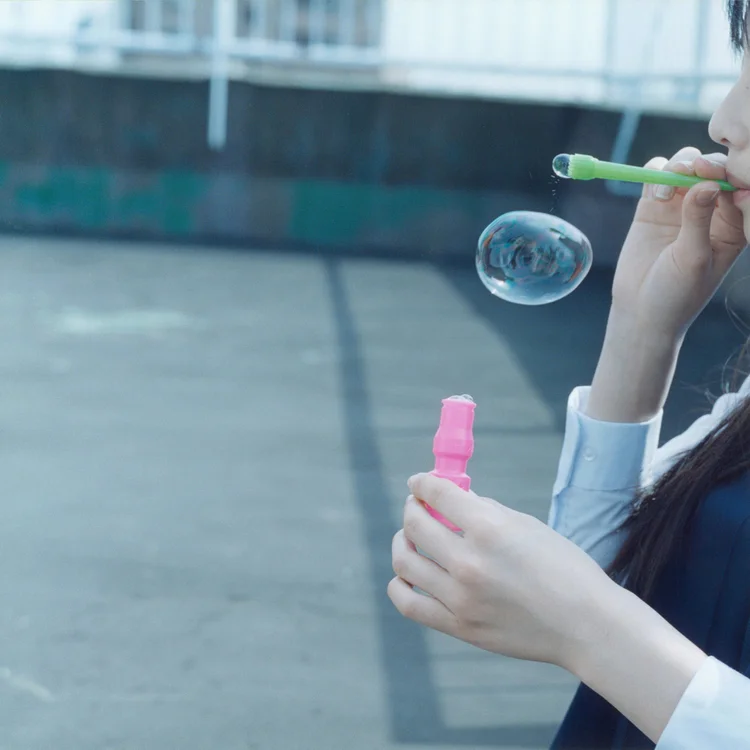
Until then her pictures had been small and quiet. Born in Shiga in 1972, she started taking photographs at 19, while studying graphic design. In 2001 the Tokyo publisher Little More released three of her books at once: Utatane, Hanabi and Hanako. Carp, clouds, a fried egg, a butterfly. Almost every frame was square, made with a Rolleiflex.
But Aso did not look like the dream. There was no green meadow. It was cloudy and cold, and there were no tourists. Then the fields began to burn. “I was seized by the illusion that I myself had burned up,” she wrote. Afterwards it felt “that I had been reborn anew.”
So she kept going back, for five years and in every season. For this work the Rolleiflex stayed at home, and a large 4x5 camera took its place. Fire in the fields now sits next to stars, prayers and tiny people in wide landscapes. Aperture published the pictures in 2013 as Ametsuchi, a title made of the words for heaven and earth.
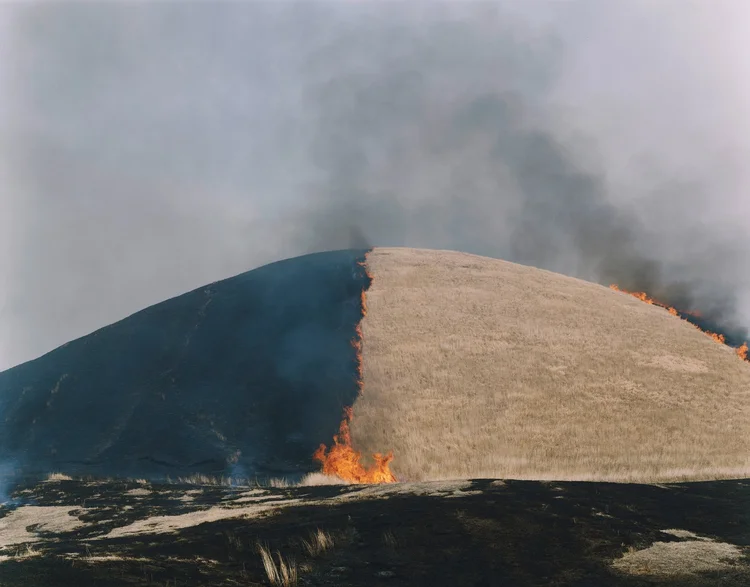
A dream, a TV programme and an old farming ritual. At first they seem to have nothing in common. “There is an invisible point of tangency between seemingly unrelated things,” she wrote.
The work


- 1972Born in Shiga, Japan
- 1993Graduates from Seian University of Art and Design
- 1997Wins the Grand Prix of the Hitotsubo exhibition at Guardian Garden, Tokyo
- 2001Utatane, Hanabi and Hanako published on the same day
- 2002Receives the Kimura Ihei Award
- 2008First visit to Aso to see the field burning
- 2009ICP Infinity Award for Art
- 2013Ametsuchi published by Aperture
- 2023Solo exhibition M/E at the Shiga Museum of Art
Lessons
Shoot first, think later. She follows her intuition when she photographs. Only afterwards does she become the editor and give the work its meaning.
Look for pairs. When she starts a book, she prints everything she has recently taken and lays the prints out on the floor to find pictures that belong together.
Let the subject choose the tools. For the wide fire landscapes of Ametsuchi she left her square Rolleiflex and worked with a 4x5 camera.
Try this: print 30 of your recent photos small. Lay them on the floor and find five pairs that seem to talk to each other.
Gear
She has said little about specific models, but the formats she uses are well documented.
Rolleiflex: a 6x6 medium-format camera and her favourite. It is why most of her pictures are square. She likes the feeling of it in her hand and the sound of the shutter.
Compact cameras: she also uses small compact cameras for some subjects.
4x5 large-format camera: used for Ametsuchi, her first series made with this bigger, slower camera.
Digital camera: she first worked digitally after an invitation to the Brighton Photo Biennial in 2010. With it came her first non-square photographs.
Books
Utatane (Little More, 2001). Her debut, published on the same day as Hanabi and Hanako. The title means a light doze, the state between sleep and waking. The 132-page softcover is full of ordinary things seen in soft light: carp, clouds, fried eggs, a butterfly, and also a dead dove, a quiet reminder of mortality. Martin Parr and Gerry Badger included it in The Photobook: A History, Volume 2. A good book for anyone who wants to see how small, everyday subjects can carry a whole book.
Illuminance (Aperture, 2011). A clothbound book with Japanese binding that gathers previously unpublished pictures from about 15 years of work, loosely held together by light. There are no captions or titles, so the sequence does the talking. It comes with the essay Weightless Light by curator David Chandler. It was her first book published outside Japan and was nominated for the Deutsche Börse Photography Prize. The best place to start.
Ametsuchi (Aperture, 2013). Eighty pages and 40 color plates from her years at Aso: the yearly field burning, night skies, tiny figures in wide landscapes, and religious rituals. The title, meaning heaven and earth, comes from an old Japanese chant. Designer Hans Gremmen used a special binding that is closed at the top, so a hidden parallel world appears inside the folded pages, with some images in inverted colors. For readers who want to see her move from small moments to big themes.
Halo (Aperture, 2017). A dark hardcover of 96 pages with 48 color pictures on matt black pages. It brings together three bodies of work: sacred fires lit on a beach in Izumo, Japan, to welcome the gods; a 500-year-old New Year tradition in Hebei, China, where molten iron is thrown against a wall like fireworks; and thousands of starlings flying together over the English coast in winter. She has said the book is about the relationship between nature and the man-made.
In her words
“I remember being saved a lot by small things and events when I was little.”
“Part of why I make photographs is to confirm my existence.”
“I'm not trying to prove any theories through photography; I simply want to think about them.”