AT A GLANCE
- Known for
- Muhammad Ali in Chicago (1966) and the young people on the East River on 9/11 (2001)
- Worked in
- Black and white and color
- Camera
- A Leica MP, bought at 19; later also Nikon or Canon zooms, and digital from 2002
- Also
- Stern correspondent in East Berlin and New York, president of Magnum Photos 2003–2006, TV documentaries
- Start with
- Wanderlust (teNeues, 2014)
- Links
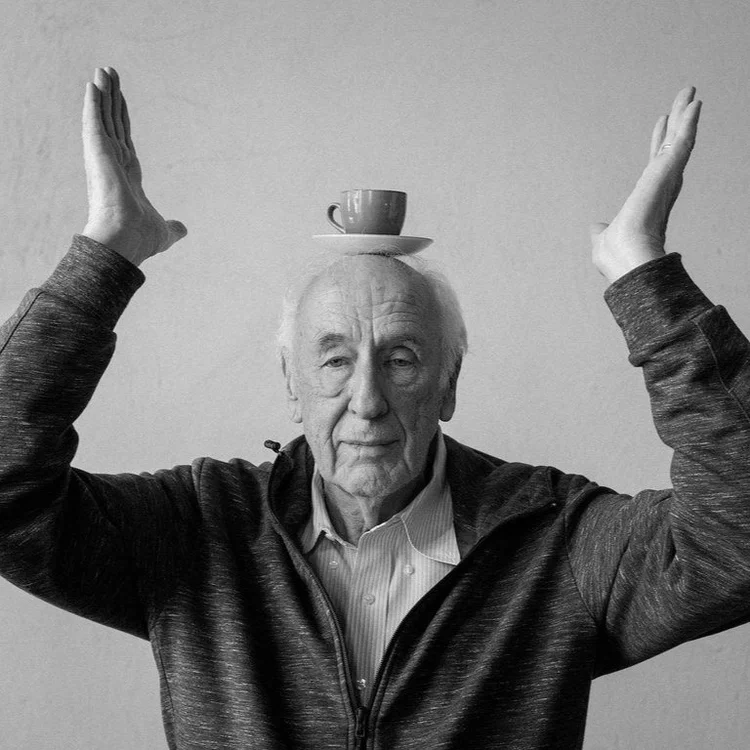
Thomas Hoepker (1936–2024) was a German photojournalist from Munich and a member of Magnum Photos, which he led as president from 2003 to 2006. For many years he worked for Stern, in East Berlin and later in New York. He is remembered for his pictures of Muhammad Ali and for one of the best-known photographs of 9/11.
The story
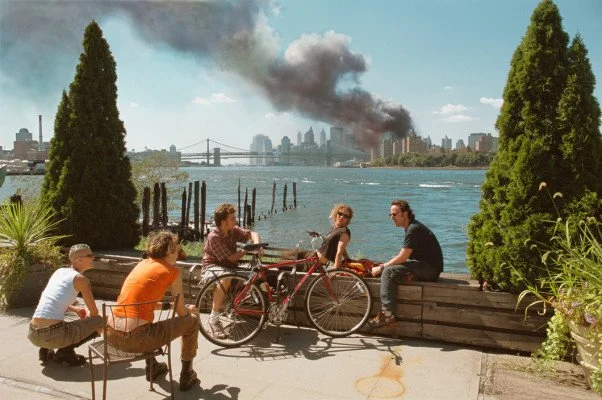
On the morning of 11 September 2001, the subway in New York had stopped. Thomas Hoepker took out his car and tried to get to southern Manhattan. He drove through Queens and Brooklyn along the East River, stopping now and then to photograph the smoke on the horizon. In Williamsburg, out of the corner of his eye, he saw flowers, cypress trees and a group of young people sitting in the bright sun. Behind them rose a thick, dark plume of smoke. He got out of the car, shot three frames and drove on.
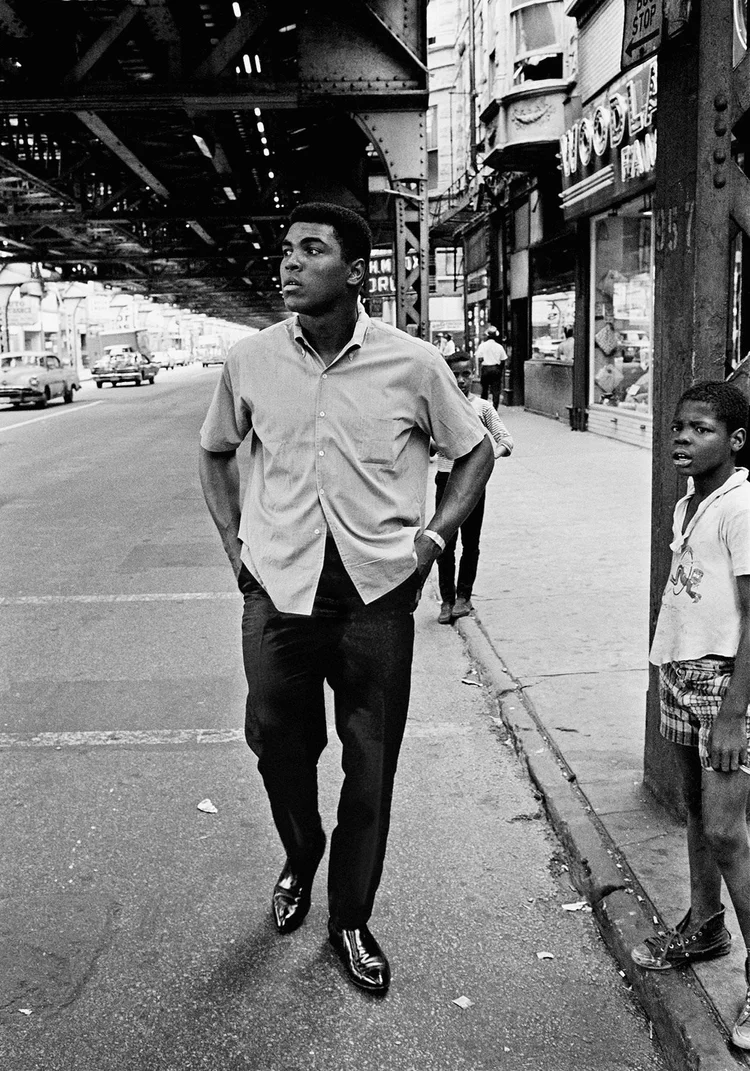
He was 65 and had been a photojournalist for more than forty years. He started at 14, with an old plate camera from his grandfather. In 1964 he joined Stern magazine. Two years later he and his wife, the journalist Eva Windmöller, followed Muhammad Ali around Chicago. “After a while we became part of the furniture, and he didn’t notice us anymore. We were simply there. Impossible today,” he said.
But the Brooklyn picture did not feel right to him. The next day Magnum decided to make a book about the attacks. He chose three of his own pictures from the Manhattan Bridge and put the Williamsburg frames in the “B” box of rejected images. He found the picture “ambiguous and confusing.” For the book, Magnum used a similar scene by his colleague Alex Webb.
Four and a half years later, he was going through his archive for a retrospective in his hometown, Munich. The color slide from Brooklyn “suddenly seemed to jump at me.” It went on the wall and on the cover of the catalogue. In 2006 it appeared in David Friend’s book Watching the World Change, and a column by Frank Rich in the New York Times started a loud debate. Two of the people in the picture wrote to Slate. They had been in shock, they said, and were talking about the attacks. Hoepker himself had asked whether a snapshot can mislead, because it leaves out the seconds before and after.
The three frames he took in passing became one of the best-known pictures of that day. What made him hide it was the same thing that made people look. “I think the image has touched many people exactly because it remains fuzzy and ambiguous in all its sun-drenched sharpness,” he wrote.
The work


- 1936Born on 10 June in Munich
- 1963Three-month road trip across the US for Kristall
- 1964Joins Stern; Magnum starts to distribute his pictures
- 1966Follows Muhammad Ali in Chicago and London
- 1976Moves to New York as a Stern correspondent
- 1989Becomes the first German full member of Magnum
- 2001Photographs young people by the East River on 9/11
- 2003Elected president of Magnum Photos, until 2006
- 2024Dies on 10 July in Santiago, Chile
Lessons
Become part of the furniture. With Ali in Chicago he simply stayed around, at the gym, with friends, at lunch, until Ali stopped noticing him.
Look again later. He rejected his 9/11 picture in 2001 and saw its power only years later, when he went through his archive.
Your archive is never finished. During the pandemic he and Christine Kruchen scanned his first negatives and found 10,000 frames from Italy. They became the book Italia.
Try this: open your pictures from five years ago. Pick one frame you rejected at the time. Ask yourself what it shows now that you could not see then.
Gear
Plate camera: his grandfather gave him an old plate camera for his fourteenth birthday, and he began to experiment.
Leica MP: he bought it at 19 with the money from his first picture sales. With it he photographed Italy in the late 1950s.
35mm SLR with zoom lenses: from the 1970s he used Nikon or Canon cameras with zooms, and kept the Leica for wide-angle pictures.
In 2002 he moved to digital SLR cameras.
Books
Wanderlust (teNeues, 2014). A large hardcover of 304 pages, subtitled 60 Years of Images by Thomas Hoepker. It is a wide retrospective of his work as a photojournalist: the Cold War, the fall of the Berlin Wall and 9/11, but also everyday life in many countries, in black and white and in color. A Collector’s Edition was also made. The best single book if you want to see the whole range of his work.
Big Champ (Peperoni Books, 2015). A book of 144 pages in a large format, 32 x 24 cm, with texts by Hoepker himself. It follows Muhammad Ali from 1960 to the years after his Parkinson’s diagnosis, with many rarely seen pictures of Ali in private and in public outside the ring. His own sayings run through the book, and it touches on his link to the Nation of Islam and the fight against segregation. A smaller first version, Champ, came out in 2012 (Peperoni, 96 pages). For anyone who loves Ali or wants to learn how to photograph a famous person up close.
The Way It Was: Road Trips USA (Steidl, 2022). Edited by Freddy Langer, 192 pages. In 1963 the magazine Kristall sent the 27-year-old Hoepker across America for three months. The stories ran in five issues of the magazine. The book brings these pictures back, in black and white and in color: big cities, small towns and the roads in between. It came out in the same year as the film Dear Memories, about his last road trip. Good for anyone who likes the American road and Robert Frank’s The Americans.
Italia (Buchkunst Berlin, 2023). A cloth-bound book of 200 pages with 124 black-and-white photographs from his trips to Italy between 1956 and 1959, made with his Leica MP. It shows Rome, Florence, Siena, Venice and Naples, and the south, including Calabria and Sicily. The pictures were chosen from more than 10,000 negatives that he and Christine Kruchen found during the pandemic. Edited by Christine Kruchen, Thomas Gust and Ana Druga, with an essay by Raúl Morales Barcia. His very first work, and a lovely look at Italy in the 1950s.
In his words
“I am not an artist. I am an image maker.”





Explore the captivating tale of Gordon Parks' "American Gothic," an image that defied conventions and challenged societal norms, embodying the spirit of resilience in the face of adversity.