AT A GLANCE
- Known for
- Afghan Girl, and decades of color photographs from India, Afghanistan and across Asia
- Works in
- Color. Kodachrome slide film for about 30 years, digital since 2005
- Camera
- Nikon for many years; Leica SL system since 2019, mostly with a 24–90mm zoom
- Also
- Robert Capa Gold Medal (1980); member of Magnum Photos since 1986
- Start with
- The Iconic Photographs (Phaidon, 2011)
- Links
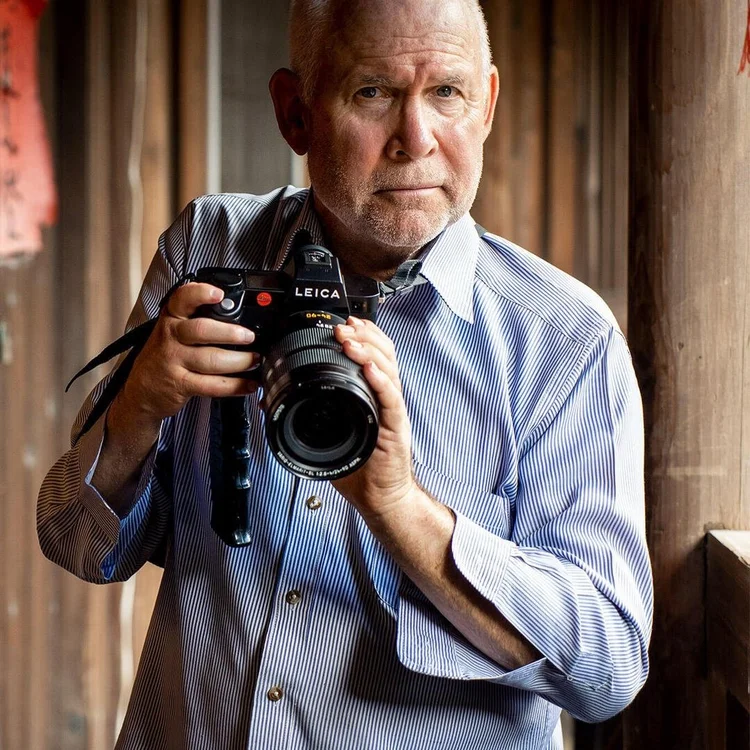
Steve McCurry (born 1950) is an American photographer known for his color portraits and his long work in Asia. His portrait Afghan Girl was on the cover of National Geographic in June 1985. He has been a member of Magnum Photos since 1986.
The story
In December 1984, Steve McCurry was in Pakistan on assignment for National Geographic. At Nasir Bagh, a refugee camp near Peshawar, he heard children laughing inside a large tent. It was a school for girls. “I noticed this one little girl with these incredible eyes, and I instantly knew that this was really the only picture I wanted to take,” he said.
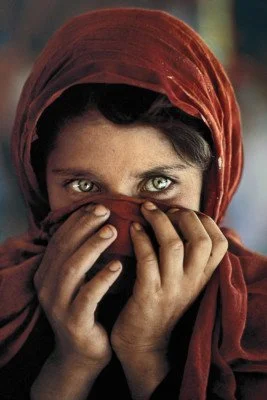
She seemed shy, so he came to her last. At first she covered her face with her hands. “You should let him photograph you because it’s important for the world to know our story,” the teacher told her, as McCurry remembers it. The girl lowered her hands and looked straight into the lens. Nobody had ever photographed her before. He took a few frames, and then she got up and walked away.
Getting to that tent had taken years. Born in Philadelphia in 1950, McCurry studied theatre arts at Penn State. At 27 he quit his newspaper job and went to India. In 1979, just before the Soviet invasion, he put on Afghan clothes and crossed illegally from Pakistan into Afghanistan. He came back out on foot, with his film sewn into his clothes. Those pictures won him the Robert Capa Gold Medal. “I got completely caught up in the story,” he said.
In 1984 there was no screen to check. Almost two months passed before he saw the developed film. Two versions went to the editor. When the editor saw the girl looking into the camera, “he really leapt to his feet and said, there’s our next cover.” Afghan Girl ran on the cover in June 1985. It also led to his place at Magnum.
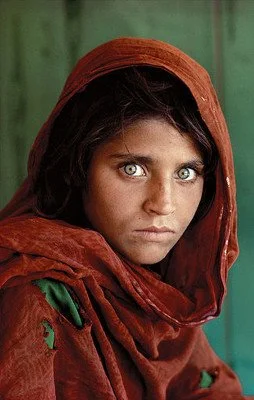
For 17 years, nobody knew her name. In 2002 McCurry went back to Pakistan with a National Geographic team. When she walked into the room, McCurry thought: this is her. Her name was Sharbat Gula. An eye doctor compared her irises with the old photograph, and they matched. “She’s had a hard life,” he said. “So many here share her story.”
In that school tent, a girl first hid her face and then chose to show it. Eye contact is still at the heart of his portraits. “I try to make eye contact when I take a portrait,” he says, “as it seems to allow you to understand the person, to see their story written on their face.”
The work


- 1950Born in Philadelphia, Pennsylvania
- 1978Leaves newspaper work and goes to India as a freelancer
- 1979Crosses into Afghanistan in disguise, just before the Soviet invasion
- 1980Wins the Robert Capa Gold Medal for his Afghanistan reporting
- 1984Photographs Sharbat Gula near Peshawar, Pakistan
- 1986Joins Magnum Photos
- 2002Finds Sharbat Gula again with a National Geographic team
- 2010Shoots the last roll of Kodachrome ever made
- 2019Moves from Nikon to the Leica SL system
Lessons
Wait for the moment. In a blue lane in Jodhpur he waited until a boy, in his words, “practically flew through the passageway.”
Give people time. He stays with people until they trust him and forget the camera. Only then does he make the portrait.
Travel light. Today he works with one camera body and one zoom lens. He carries no bag, only cards and batteries in a pocket.
Try this: spend one hour in one street or square. Stay until people stop noticing your camera. Then ask one person for a portrait and make eye contact.
Gear
For most of his career McCurry shot color slide film, above all Kodachrome. He moved to digital in 2005, because it was easier to edit and send pictures from the field.
35mm film SLR: Afghan Girl was made in 1984 on Kodachrome, with a Nikon FM2 and a 105mm Nikkor lens, according to Digital Camera World.
Kodachrome slide film: “This was the only way I shot for decades,” he said. When Kodak stopped making it, he was given the last roll off the production line. It was developed in 2010 at Dwayne’s Photo in Parsons, Kansas.
Leica SL2: he moved from Nikon to the Leica SL system in 2019, starting with the SL2. He uses the Vario-Elmarit-SL 24–90mm f/2.8–4 for about 95% of his work.
Books
The Iconic Photographs (Phaidon, 2011). First published as a large, limited edition with 165 of his best-known pictures from about 30 years of travel. The photographs run one after another, as full pages or double spreads, with no text between them. Longer captions and small thumbnails are at the back. Inside are children, pilgrims and farmers, temples, crowded streets and mountains. Phaidon later made a smaller standard edition of 272 pages. The best single book to see why his color work is so well known.
Untold: The Stories Behind the Photographs (Phaidon, 2013). A 264-page book that follows 14 of his big assignments, with more than 100 color plates. Each chapter adds his own notes and things he kept from the road, such as train tickets, passport pages and travel plans, plus new essays. Chapters include trains in India (1983), the monsoon (1984), Kuwait after the Gulf War (1991), Yemen (1999), Tibet (2000–2006), 11 September 2001 and the Hazara people of Afghanistan (2007). It also tells how Afghan Girl almost did not make the cover. For readers who want the stories, not technique.
India (Phaidon, 2015). His photographs from more than three decades in India, with an introduction by the writer and historian William Dalrymple. The pictures date from 1983 to recent years, from the trains and monsoon of the 1980s to street life in Mumbai. McCurry called the book “a personal journey, a diary.” A good choice for anyone who loves travel photography and India.
Afghanistan (Taschen, 2017). A 256-page book of his work in Afghanistan over almost 40 years. It opens with black-and-white pictures of mujahideen fighters from his early trips. The color pages show a boy selling oranges from a car, women in bright burqas, girls juggling in a park and soldiers with the Hindu Kush behind them. For readers who want to see the country beyond the one famous portrait.