AT A GLANCE
- Known for
- Pictures of London in the Blitz, the first pictures from Bergen-Belsen after its liberation, and the Nuba people of Sudan
- Works in
- Black and white photo stories for LIFE; colour on Kodachrome film for National Geographic; books
- Camera
- A Leica rangefinder, which he used with the Nuba in 1949
- Agency
- Founding member of Magnum Photos (1947) · earlier Black Star (1938) and LIFE (war years)
- Awards
- First Prize, Peace in the World exhibition, Moscow (1985) · Honorary Fellow of the Royal Photographic Society (1993)
- Start with
- Humanity and Inhumanity: The Photographic Journey of George Rodger (Phaidon, 1994)
- Links
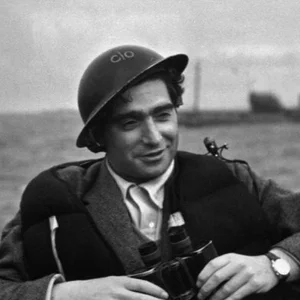
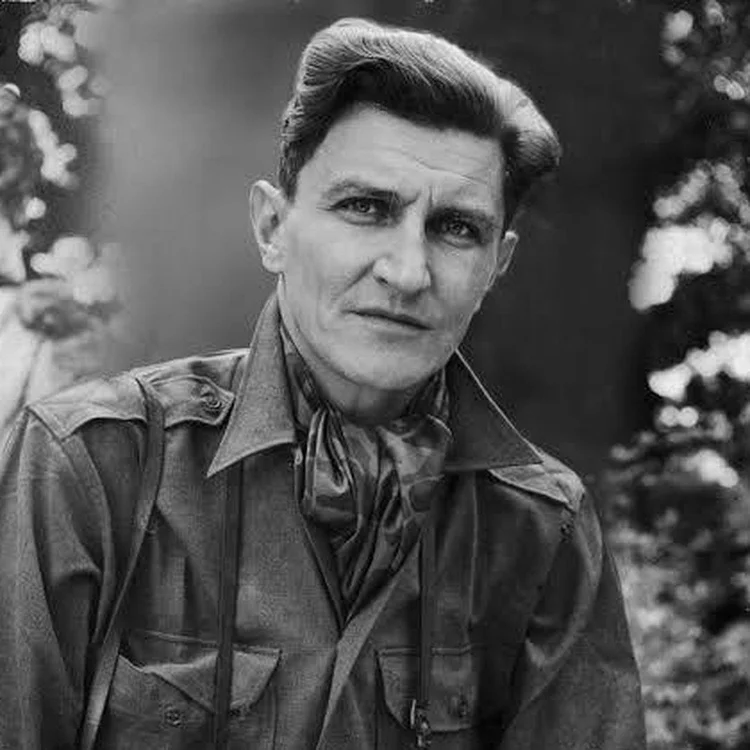
George Rodger (1908–1995) was a British photojournalist and one of the founders of Magnum Photos. He taught himself photography. During the Second World War he photographed the Blitz and the war fronts for LIFE magazine. In April 1945 he was the first photographer to enter the Bergen-Belsen concentration camp. After that he never photographed war again. For more than thirty years he travelled through Africa instead, and his pictures of the Nuba people of Sudan are among the best known of his work.
The story
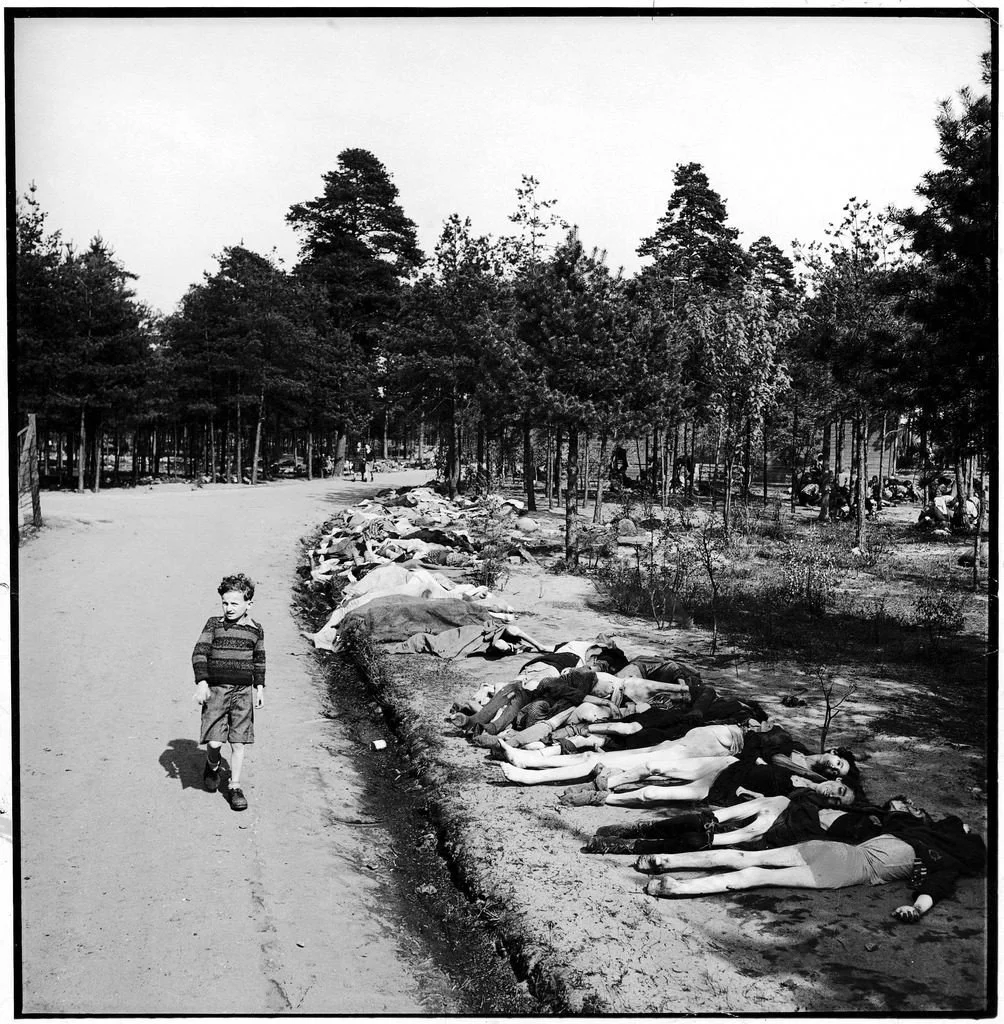
In April 1945, George Rodger rode into the Bergen-Belsen concentration camp with the British 11th Armoured Division. He was a LIFE war correspondent, and he was the first photographer to get there. Inside he found piles of dead bodies and starving, dying people. His typed captions, dated 20 April 1945, are short and plain. One of them reads: “This man was talking to me when he fell dead beside me.” Another picture shows a German boy walking down a dirt road. Along the road lie the bodies of hundreds of prisoners.
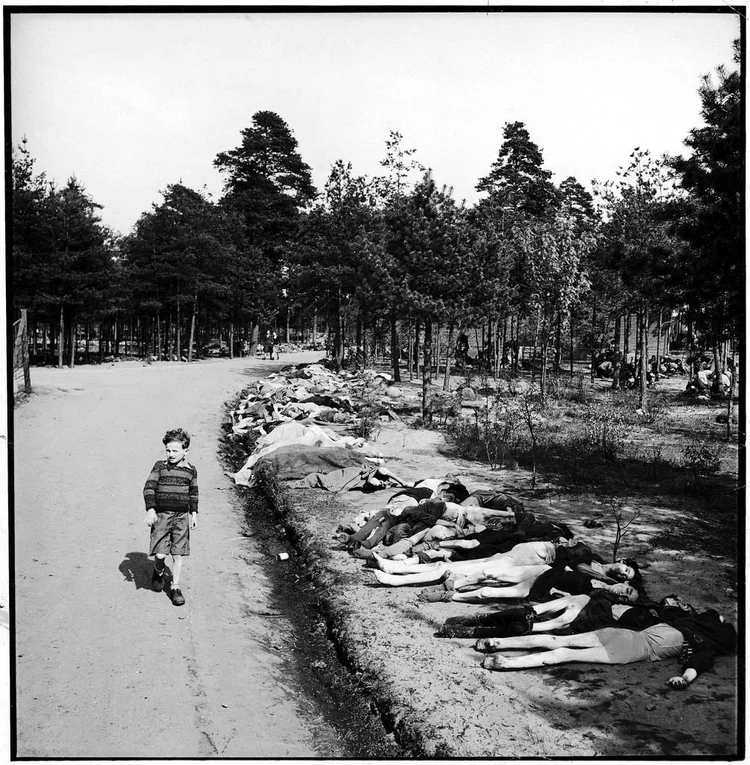
Then something shocked him about himself. He was trying to work out how to photograph the dead. Later he remembered: “I suddenly thought, ‘My God, what’s happened to me?’” He had been looking for nice compositions in front of the dead. Some of the Belsen pictures appeared in LIFE and Time. But Rodger made a decision. He would never photograph war again, and he kept to it.
He had come a long way to that moment. Born in 1908 in Hale, Cheshire, he went to school at St Bees in Cumbria. From 1926 to 1929 he served in the British Merchant Navy. After that he did odd jobs abroad, in places like Boston and New York, as a mechanic, a wool sorter and a fruit farmer. In those years he taught himself photography. Back in Britain in 1936, he became a photographer for the BBC magazine The Listener. In 1938 he worked briefly for the Black Star agency. Then the war came. His pictures of London in the Blitz caught the eye of LIFE, and the magazine made him a war correspondent. He followed the Free French in West Africa and photographed the war in Eritrea, Abyssinia and the Western Desert. He went to Iran and Burma. In Italy in 1943 he met Robert Capa, and the two became close friends. He won 18 campaign medals and followed the liberation of France, Belgium and Holland. And then he reached Belsen.
In May 1945 he photographed the German surrender at Lüneburg for Time and LIFE. After that he left LIFE. He set off on a journey of 28,000 miles through Africa and the Middle East. This time he looked at animals, rituals and people who lived close to nature. In 1947 he was invited to found a new agency, Magnum, with Robert Capa, Henri Cartier-Bresson, David Seymour and William Vandivert. They wanted to keep the rights to their own pictures. The plan was that each founder would cover one part of the world. Rodger got Africa.
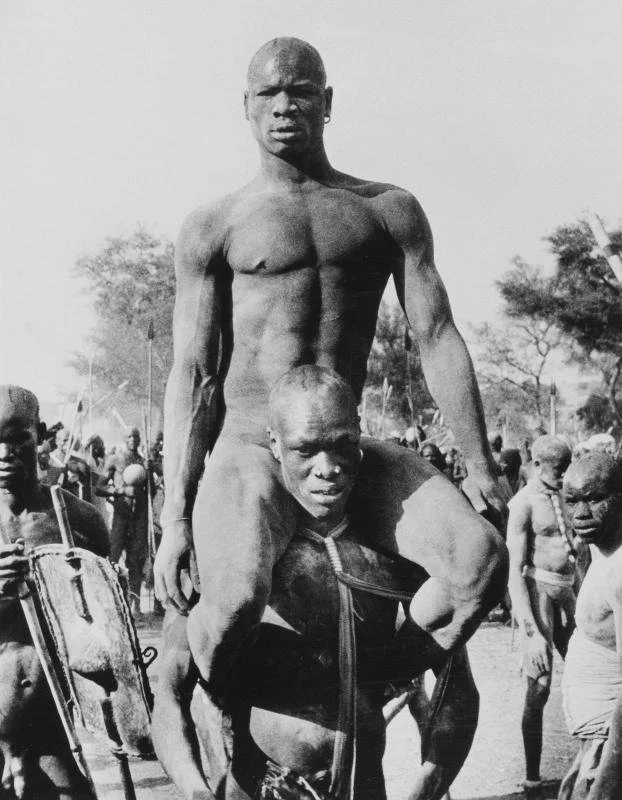
His next big trip went from Cape Town to Cairo. In 1949 the Sudanese government let him photograph the Nuba in the mountains of Kordofan. He was the first Western photographer allowed to do so. He was also the first photographer to see Korongo Nuba wrestling and the bracelet fights of the Kau-Nyaro. He worked with a Leica rangefinder and wrote detailed notes. National Geographic wanted colour, so he also shot Kodachrome. His light meter broke almost at once, but the colour pictures still worked. They appeared in National Geographic in 1951. Years later he wrote that the Nuba were “so much more hospitable, chivalrous and gracious than many of us who live in the ‘Dark Continents’ outside Africa.”
Africa stayed at the centre of his life for more than thirty years. In 1957 he and his wife Jinx drove a Land Rover called Mzuri about 4,000 miles across the Algerian Sahara. In 1959 he settled in England. In 1978 an Arts Council grant took him back to Africa, to the peoples he had met thirty years before. The Belsen pictures stayed hidden in a drawer for about 44 years. In the late 1980s the BBC asked him about them for a film on Magnum. This time he agreed to talk, so that people would know what had happened. In 1993 the Royal Photographic Society made him an Honorary Fellow. He died in Kent on 24 July 1995. His advice to photographers was: “You must feel an affinity for what you are photographing. You must be part of it, and yet remain sufficiently detached to see it objectively.”
The work
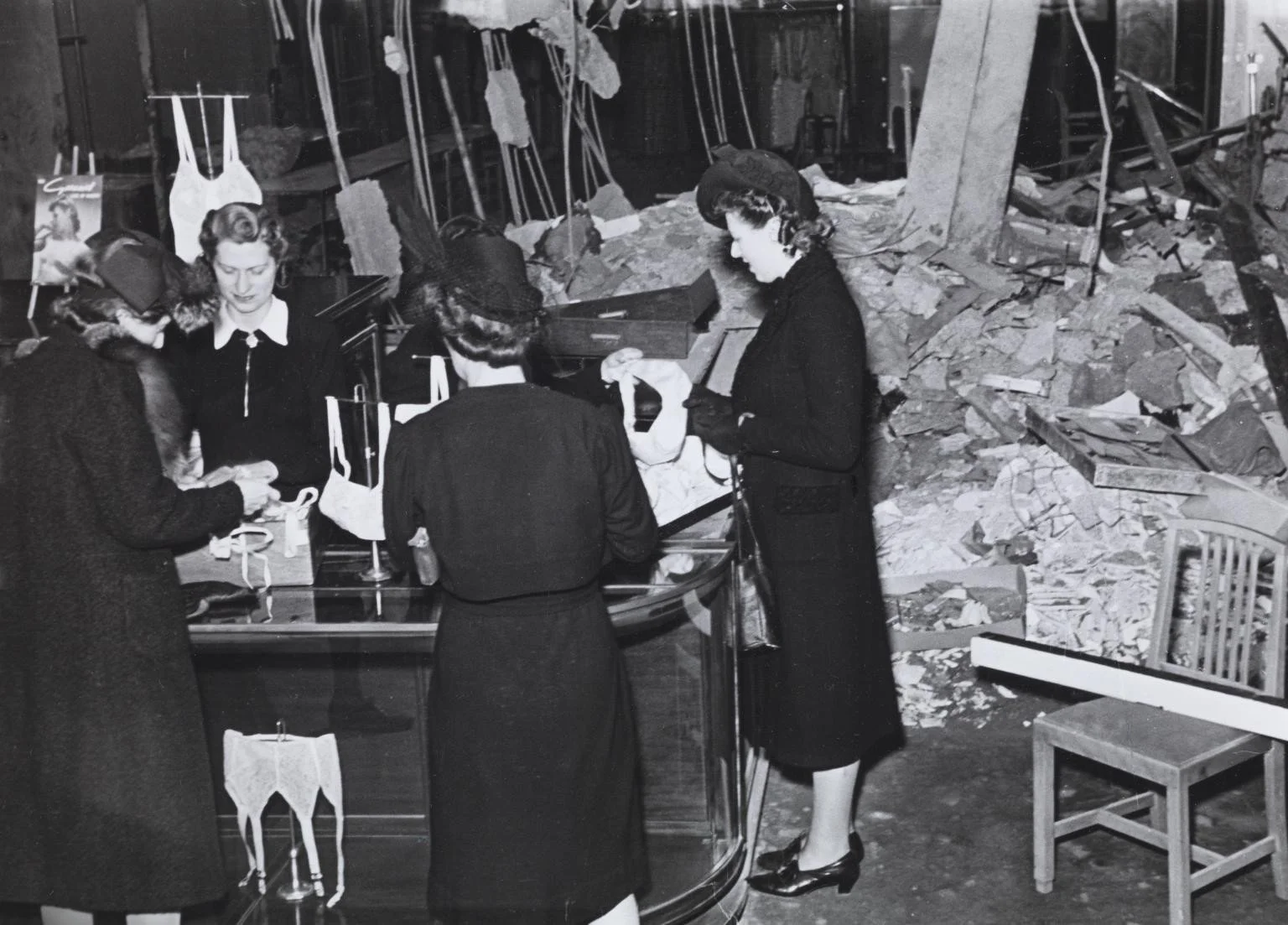
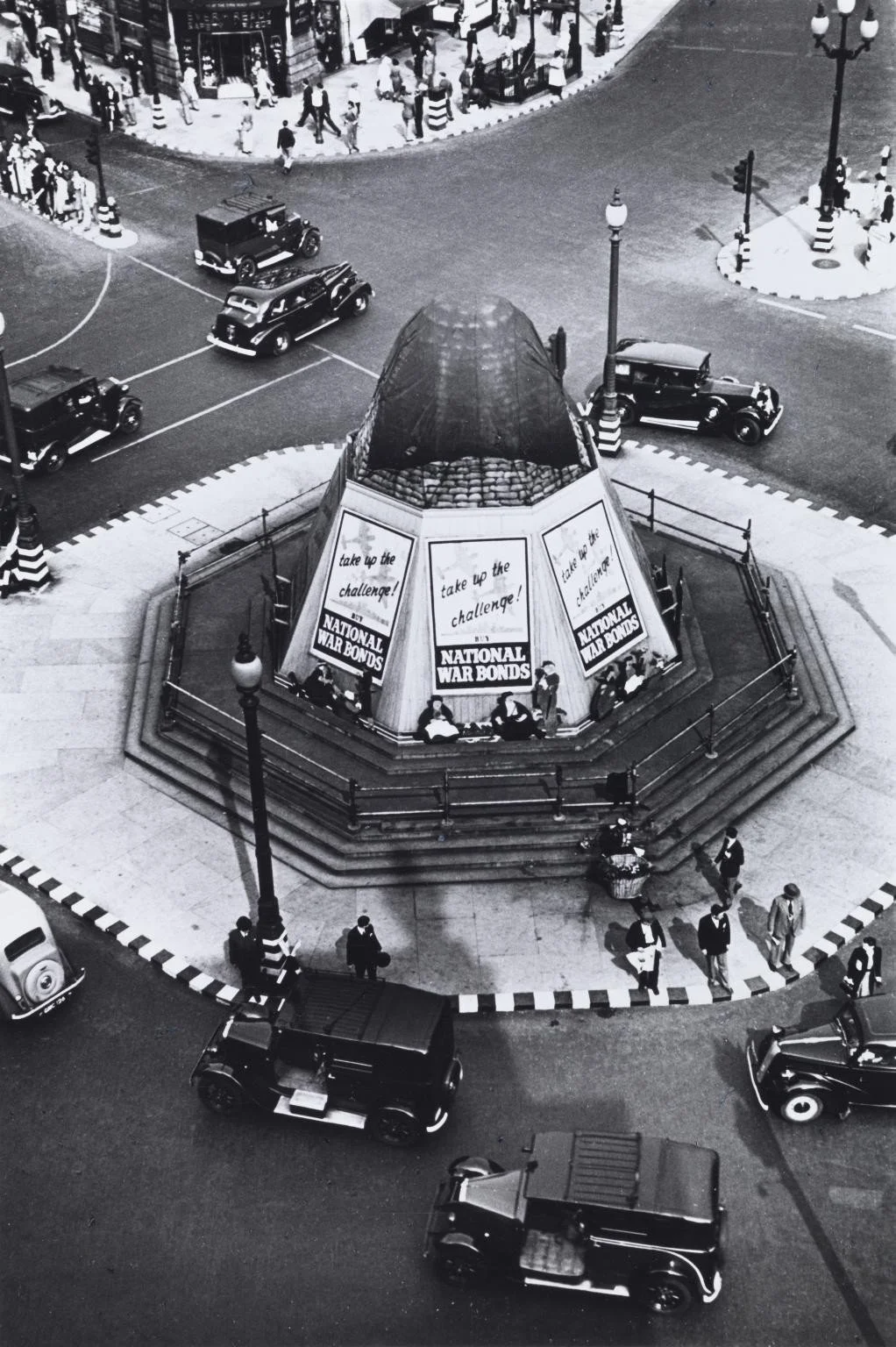
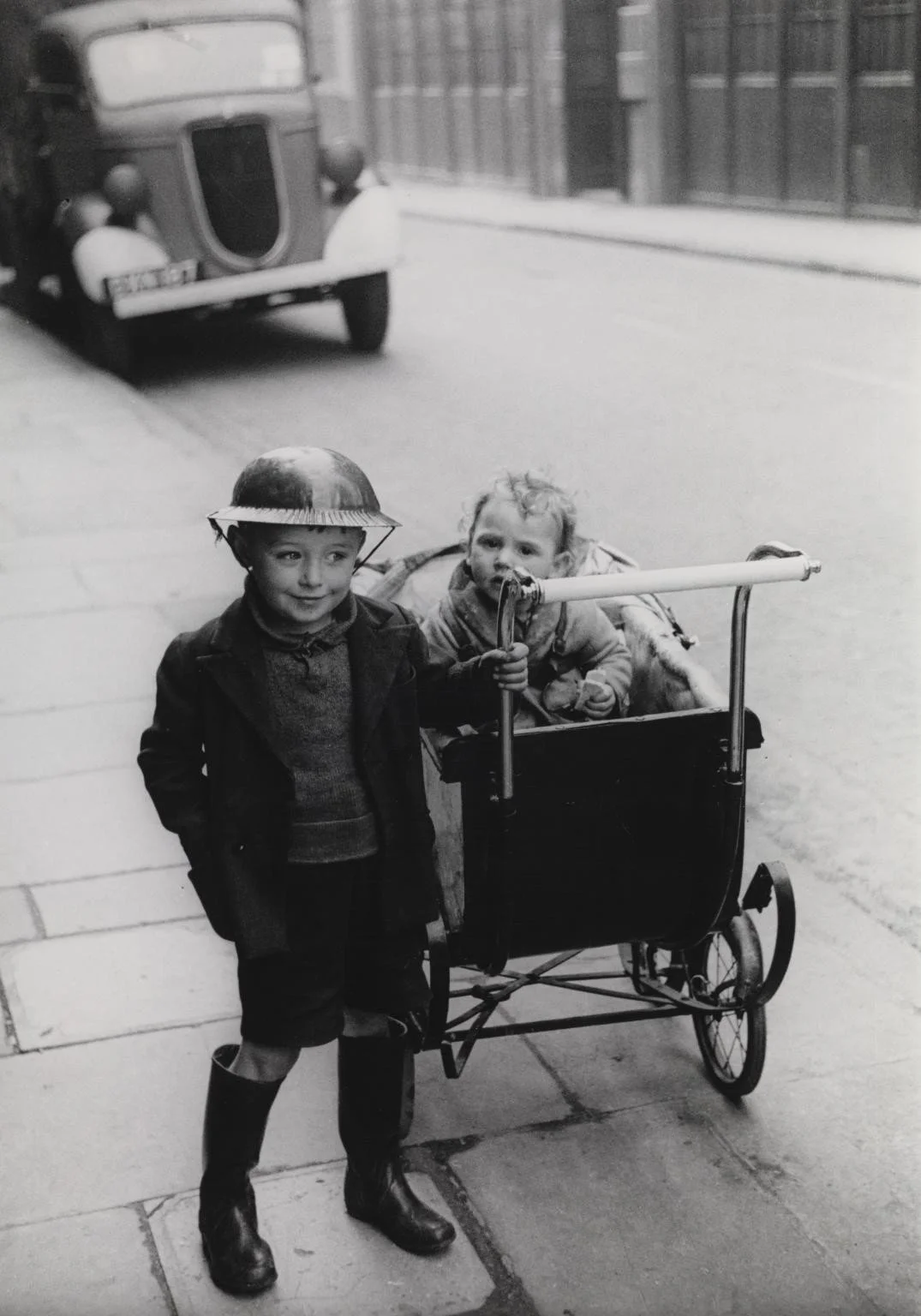
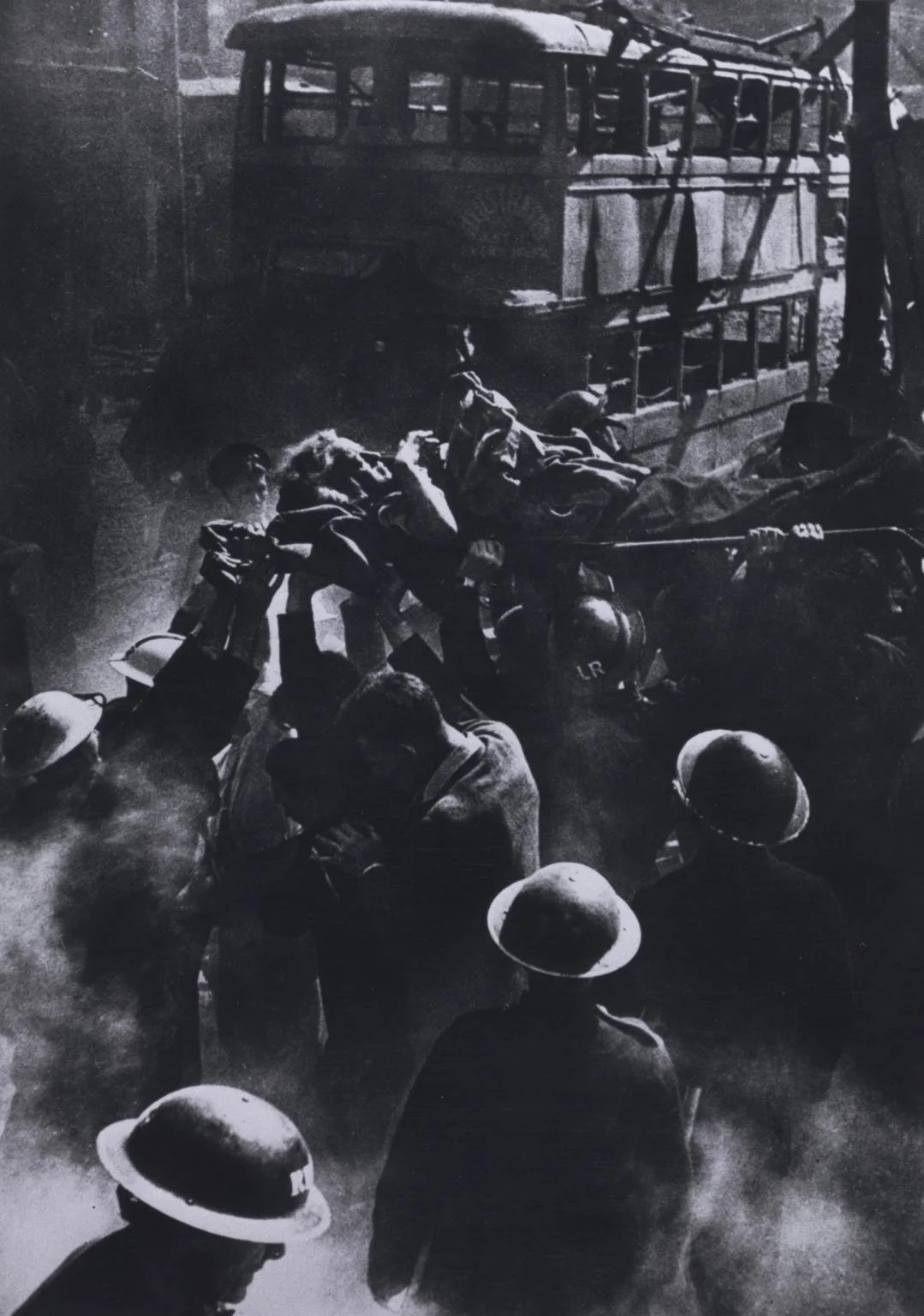
Rodger’s London pictures from 1940 show daily life going on under the bombs. In John Lewis’ Department Store on Oxford Street, London, carries on trading from an improvised counter after an air raid (October 1940), women serve customers at a small counter in front of a wall of rubble. Statue of Eros protected against bomb damage, Picadilly Circus (October 1940) looks down from above on the famous statue, boxed in for safety, with cars and people moving around it. Seen on the street in the East End of London (1940) is a small, warm picture of a boy in a steel helmet next to a pram. The war followed the city to the end: A V2 bomb fell on Waterloo Bridge, London (1944) shows the damage after a later attack.
The Belsen pictures are the opposite of these calm scenes. German boy walking down a dirt road lined with the corpses of hundreds of prisoners who have died of starvation near Bergen extermination camp (1945) puts a child walking past the dead into one frame. Pictures like this helped show the world what the camps really were.
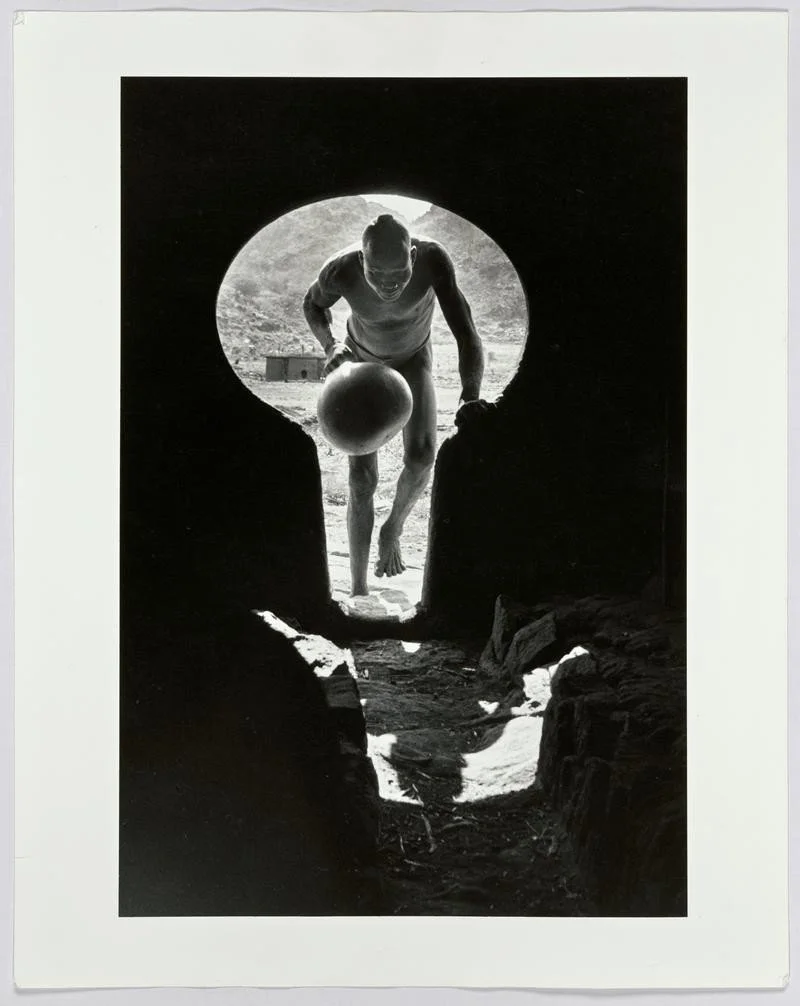
In Africa his work became slower and closer. A nuba tribesman enters the keyhole entrance to his home. Kordofan, Southern Sudan (1949) is shot from inside a Nuba house. The dark wall frames a bright doorway shaped like a keyhole, and a man steps in through it. Rodger collected the Nuba pictures in his book Village of the Nubas (Delpire, 1955). His colour pictures of the Nuba and the Latuka stayed almost unseen until 2017, when Prestel published them as a book.
- 1908Born in Hale, Cheshire, England
- 1926Joins the British Merchant Navy and sails for three years
- 1936Becomes a photographer for the BBC magazine The Listener
- 1940Photographs the Blitz in London; LIFE makes him a war correspondent
- 1943Meets Robert Capa in Italy; they become close friends
- 1945First photographer to enter Bergen-Belsen; decides never to photograph war again
- 1947Co-founds Magnum Photos with Capa, Cartier-Bresson, Seymour and Vandivert
- 1949Photographs the Nuba in Kordofan, Sudan; National Geographic publishes them in 1951
- 1995Dies in Kent, England
Lessons
Notice when your eye goes cold. At Belsen, Rodger caught himself looking for nice compositions among the dead. He did not ignore that feeling. He changed his whole working life because of it.
Stay long enough to be close. With the Nuba he did not take a few pictures and leave. He recorded their lives with detailed texts and pictures in colour and black and white, and the pictures show real closeness.
Write down what you see. With the Nuba, Rodger wrote detailed texts next to his pictures, and his war years were later published from his diaries. His words still help us understand his pictures today.
Try this: choose one event near you, like a market day, a local match or a family party. Stay for the whole event, not just the best moment. After each few frames, write one line in a notebook: who, where, what happened. At home, put your best five pictures next to your notes and see what the words add.
Gear
Rodger rarely spoke about his tools, and few sources name them. Here is what Magnum and CNN report about his work with the Nuba in 1949.
Leica rangefinder: Magnum writes that he caught the fast action of Nuba wrestling and bracelet fighting with his Leica rangefinder.
Kodachrome film: National Geographic asked for colour, so he shot the Nuba on Kodachrome. His light meter broke almost at once, and he had to judge the light himself.
Books
Humanity and Inhumanity: The Photographic Journey of George Rodger (Phaidon, 1994). This large survey was published by Phaidon in 1994 and again in 1999, with a text by Bruce Bernard. Its title names the two sides of Rodger’s life: the horror he saw in the war and the people he met in Africa. It is the best book for anyone who wants one volume on his whole career.
The Blitz: The Photography of George Rodger (Viking, 1990). Viking published this book in 1990, and Penguin brought it out in the United States. Magnum calls it a unique record of life in England during 1940. It collects his pictures of London and Coventry under the bombs, the work that first brought him to LIFE. It is a good book for readers who love street life and British history.
Nuba & Latuka: The Colour Photographs (Prestel, 2017). Prestel published Rodger’s colour pictures from Sudan in 2017, with an essay by the photographer and writer Aaron Schuman. The pictures were made on Kodachrome in 1948 and 1949 for National Geographic and stayed almost unseen for decades. It shows the Nuba and Latuka in soft colour, with body paint, jewellery and ceremonies. It is for readers who already know his black and white Nuba pictures and want to see them in a new light.
George Rodger: An Adventure in Photography, 1908-1995 (Syracuse University Press, 2003). This is a biography by the writer Carole Naggar, with 256 pages and 31 black and white pictures. It tells his life from the merchant navy through the war, Belsen and Africa, and looks at the ethics of war photography. Henri Cartier-Bresson and Eve Arnold both praised it. It is for readers who want the man behind the pictures.
In his words
“You must feel an affinity for what you are photographing. You must be part of it, and yet remain sufficiently detached to see it objectively. Like watching from the audience a play you already know by heart.”
“My God, what’s happened to me? This is the end … all this absolute horror… [and me] thinking of nothing but lovely compositions.”
“When we came to leave the Nuba Jebels (mountains) we took with us only memories of a people … so much more hospitable, chivalrous and gracious than many of us who live in the ‘Dark Continents’ outside Africa.”