AT A GLANCE
- Known for
- A Llama in Times Square, portraits of artists and passers-by, the Mask Series with Saul Steinberg and pictures from the set of The Misfits
- Works in
- Black and white photo stories and books; colour on Kodachrome slides
- Camera
- Leica rangefinders; on her 1956 trip to Iran she carried three Leica M3s
- Agency
- Magnum Photos: editor from 1949, photographer from 1953, full member from 1955
- Awards
- Austrian State Prize for Photography (1991) · Gold Medal of Honour of the City of Vienna (1998)
- Start with
- Inge Morath: Magnum Legacy (Prestel, 2018)
- Links
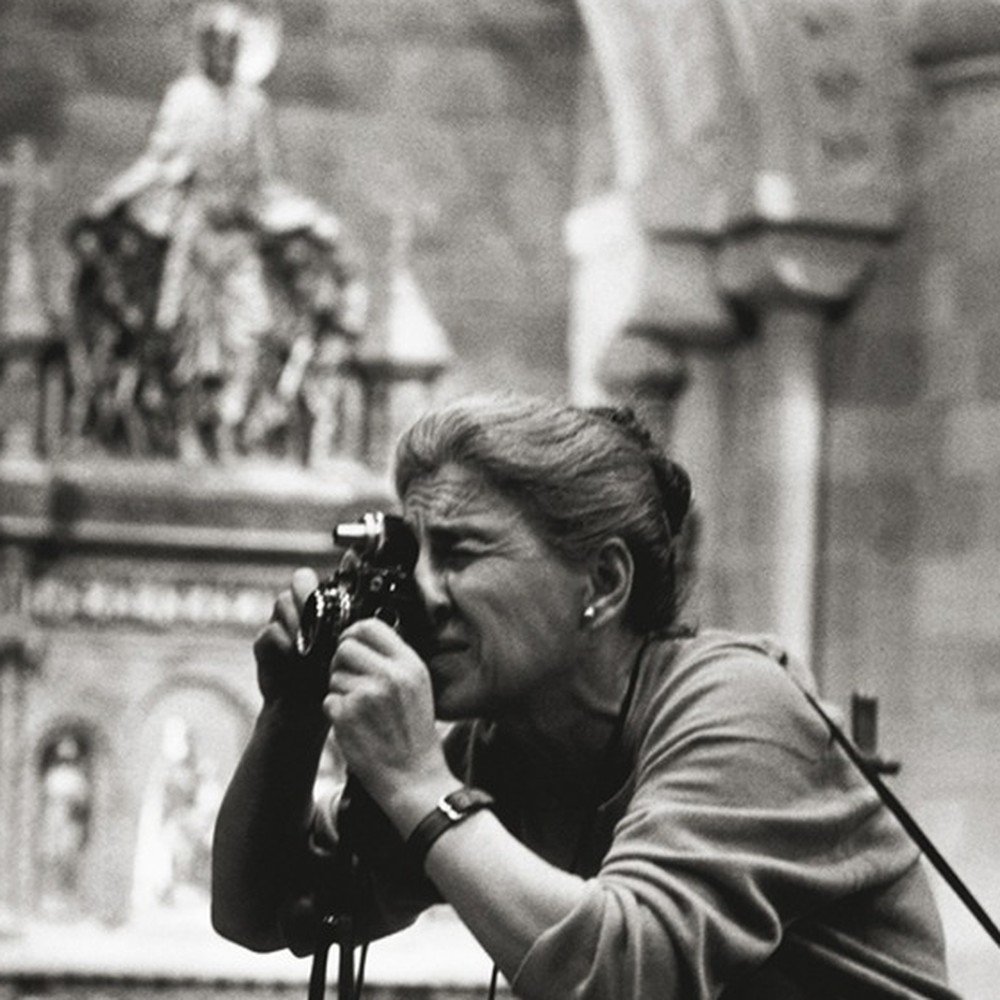
Inge Morath (1923–2002) was an Austrian-American photographer and one of the first women members of Magnum Photos. She came to photography only in her late twenties, after years as a translator, journalist and picture editor. Then she never stopped. She photographed artists, writers and film stars, but also people she met on the street. She travelled in Europe, the Middle East, Russia and China, and she spoke the language of most places she visited. Her best known picture shows a llama looking out of a car window in Times Square.
The story
In 1951 Inge Morath was in Venice. Since 1949 she had worked at Magnum Photos in Paris, but as an editor, not as a photographer. On this trip she started to take pictures herself. She later wrote: “It was instantly clear to me that from now on I would be a photographer.” And then: “As I continued to photograph I became quite joyous.”
The road to that moment had been long. Ingeborg Mörath was born in Graz, Austria, in 1923. Her parents were scientists, and the family moved between laboratories and universities in Europe. They lived in Darmstadt and then in Berlin. In 1937 she saw the Nazi exhibition of “Degenerate Art”. She fell in love with a painting by Franz Marc, but she had to keep quiet about it. At Berlin University she studied languages. Near the end of the war she had to work in a factory in Tempelhof. During a bombing raid she fled on foot to Austria.
After the war she worked as a translator and journalist. In 1948 she joined Heute, a magazine published in Munich, and became its Austrian editor. In Vienna she met the photographer Ernst Haas. She wrote the texts for his pictures. In 1949 Robert Capa invited them both to the new Magnum agency in Paris. Her job was to look at the contact sheets that came into the office, among them the sheets of Henri Cartier-Bresson. “I think that in studying his way of photographing I learned how to photograph myself, before I ever took a camera into my hand,” she wrote.
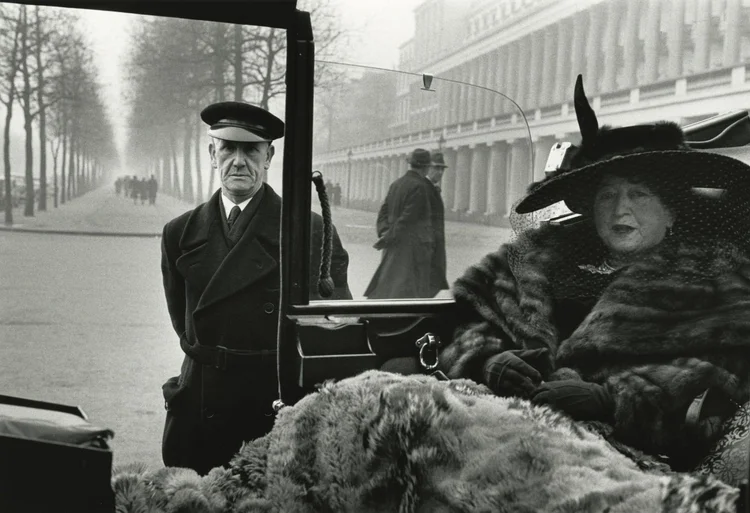
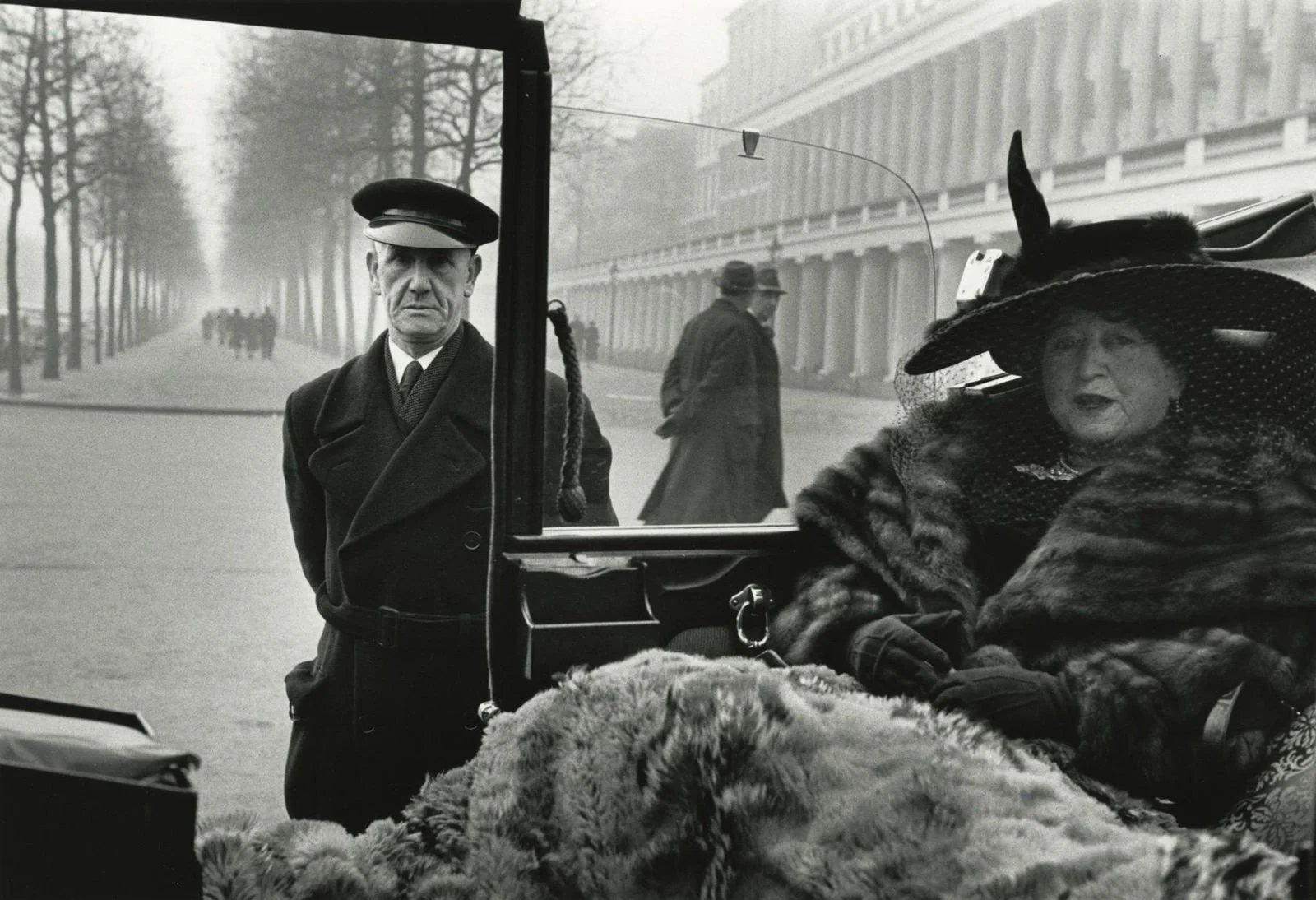
So after Venice she knew what she wanted. In London she worked for Simon Guttman, an editor at Picture Post. At first she was only his secretary. Then he let her photograph. She sold her first pictures under a made-up name, Egni Tharom: her own name spelled backwards. In 1953 she showed Capa her first big story, about the worker priests of Paris. He asked her to join Magnum as a photographer. One of her first jobs took her back to London, to Soho and Mayfair. There she made the portrait of Mrs. Evelyn Nash, still one of her best known pictures.
In 1953 and 1954, on Capa's advice, she worked as a researcher and assistant to Cartier-Bresson. They had long talks on their travels. In 1955 Magnum made her a full member. That year she also published her first book, about Spain, with the writer Dominique Aubier. A book about Iran followed in 1958. Both were made with the publisher Robert Delpire.
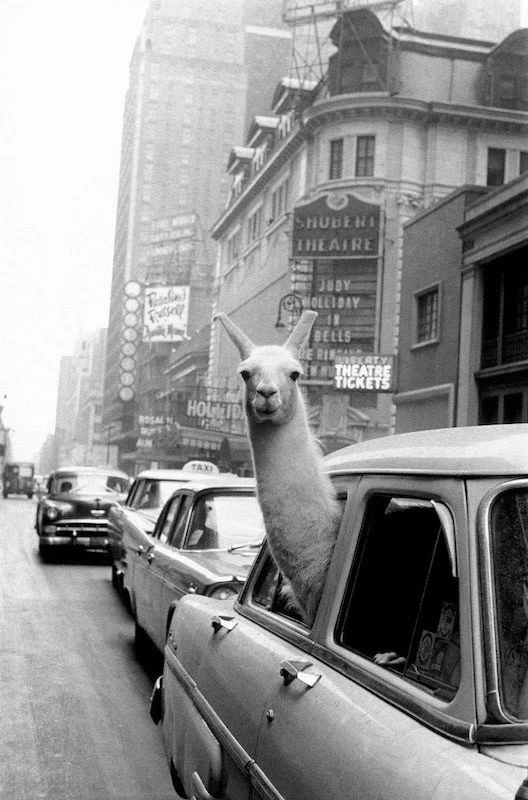
Her most famous picture also started with a magazine job. In New York she got to know a group of television animals and their trainers. One of them was Linda the Llama. Snapshots dated 1956 already show Morath with the llama and its trainers. LIFE ran the story on 2 December 1957. Morath's own caption says the llama was riding home from a TV show and taking “a relaxed and long-necked look” at Broadway. The picture looks like luck. Her contact sheets show it was planned with care.
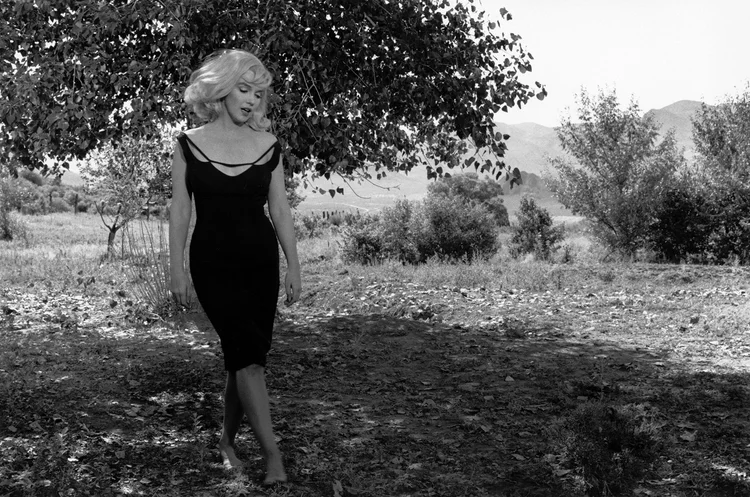
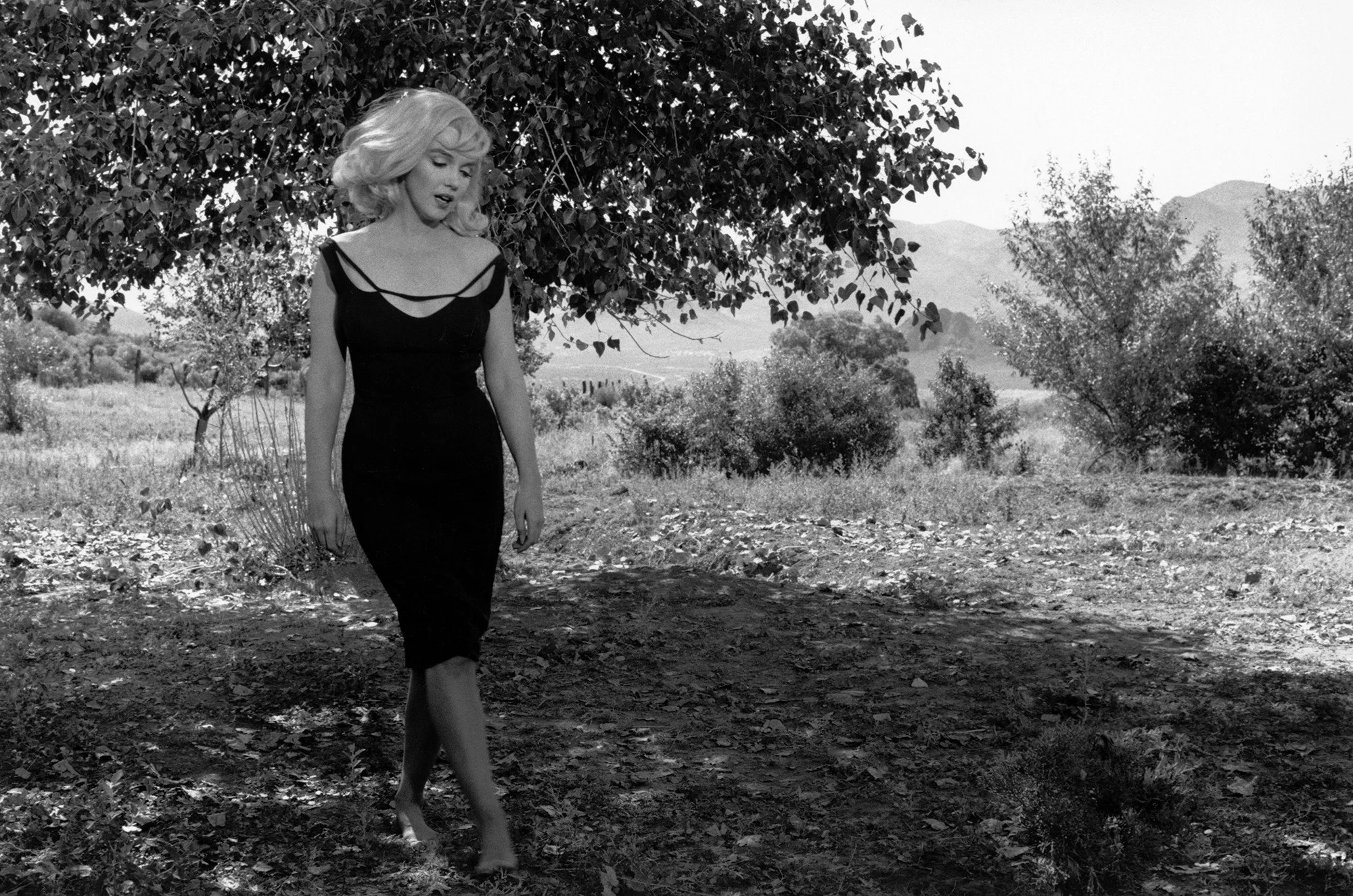
She also photographed on film sets, often for the director John Huston. In 1960, on the set of The Unforgiven in Mexico, she went with Huston and friends on a duck hunt. Through her telephoto lens she saw that the actor Audie Murphy and a friend had turned over their boat. She swam out and pulled both men to the shore. Later that year Magnum covered The Misfits, with Marilyn Monroe and Clark Gable. Morath and Cartier-Bresson drove there together, eighteen days across America to Reno. The screenplay was by Arthur Miller. Morath met him on the set, and they married on 17 February 1962.
She settled in New York and Connecticut. With Miller she made books about Russia, about their life in the country, and about China. For China she learned Mandarin. She kept travelling and kept writing diaries and letters. In her last years she went back to the borderlands of Styria and Slovenia, where her family came from. Inge Morath died in New York City on 30 January 2002. Magnum still quotes one line of hers: “To take pictures had become a necessity and I did not want to forgo it for anything.”
The work
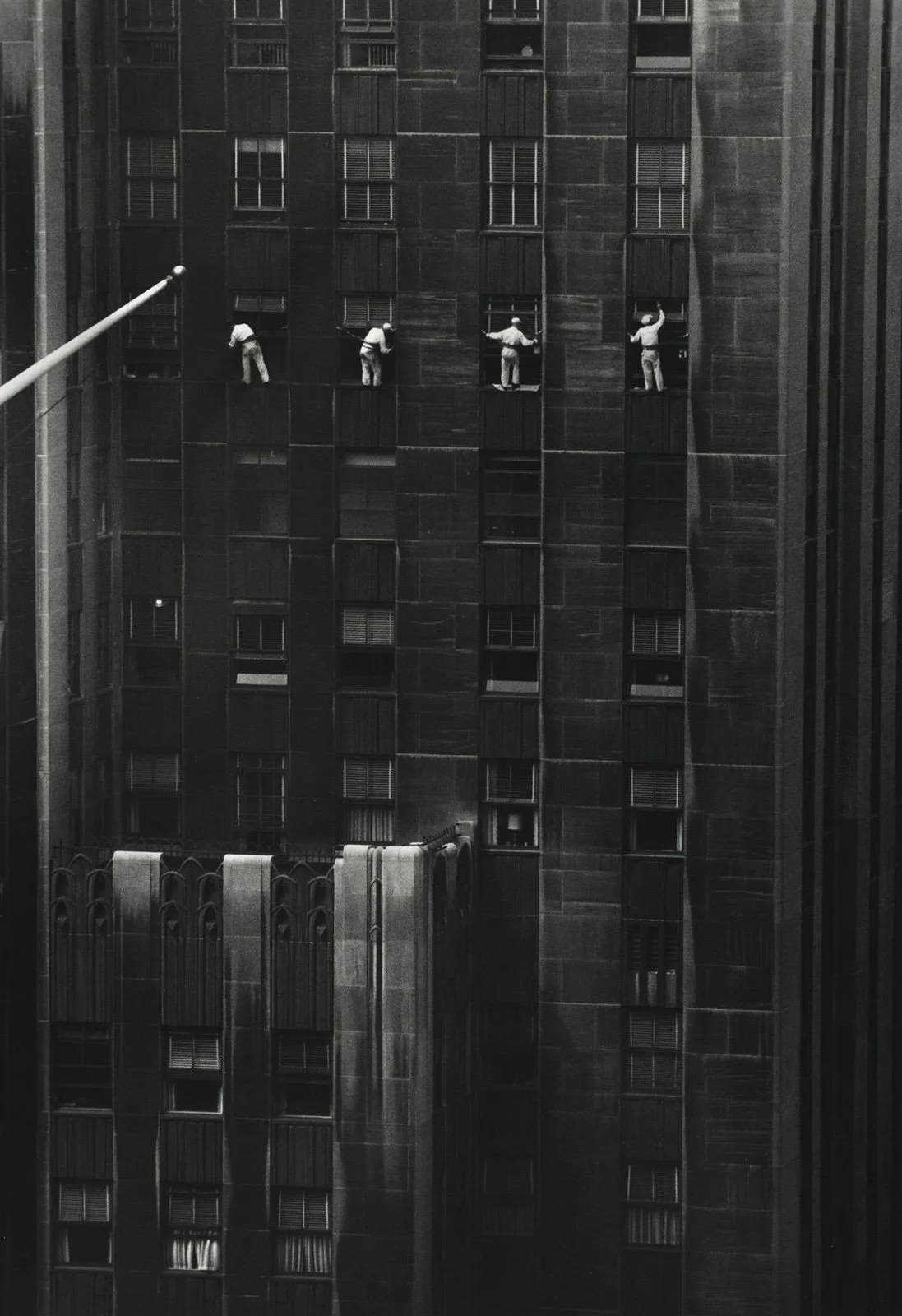
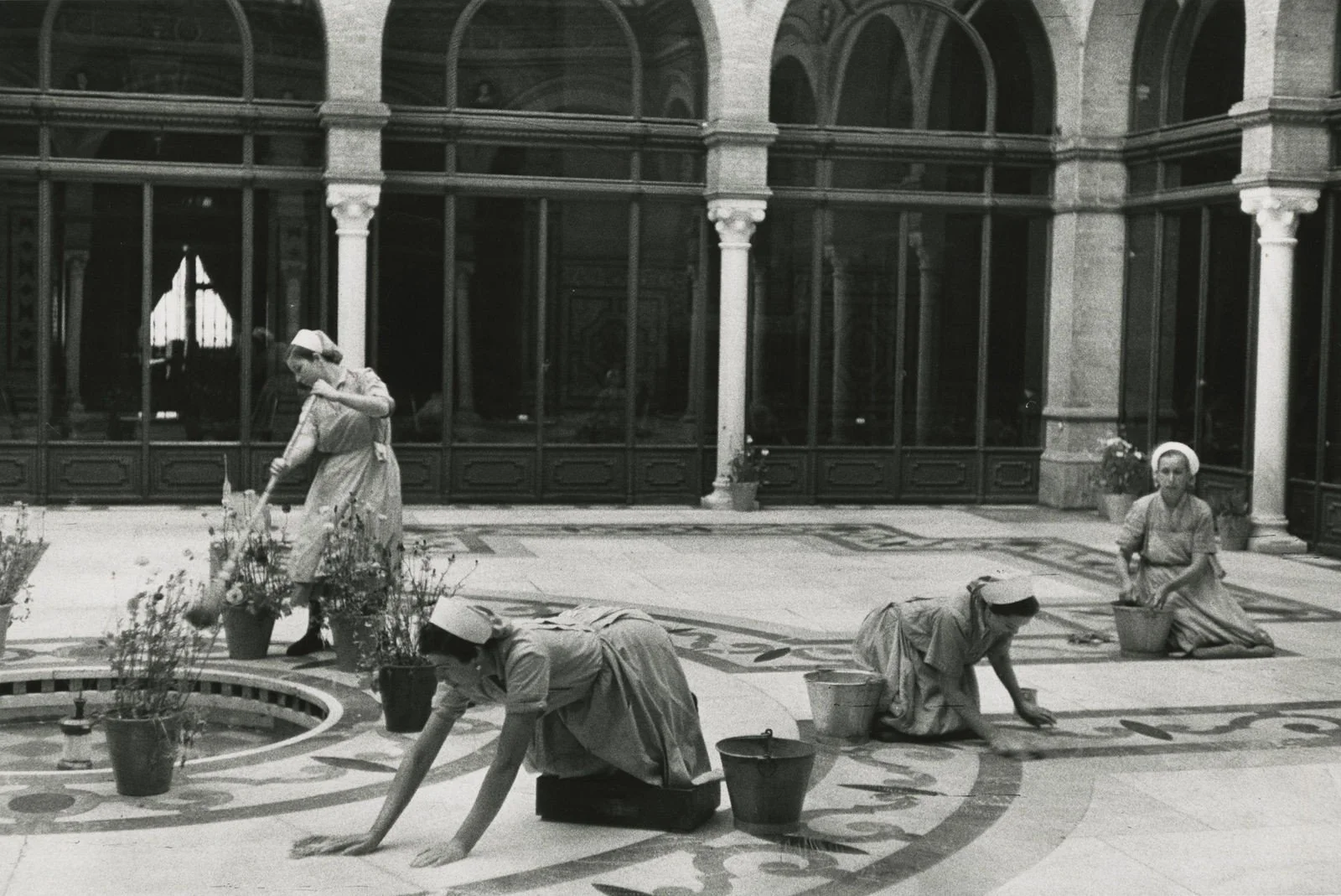
Morath was at ease almost anywhere. Some of her most important work is portraits: famous people, but also passers-by. In New York she photographed the city and the people who kept it running, as in Window Washers, 48th Street, New York (1958). In Spain she photographed daily life, as in Hotel Alfonso XIII, Sevilla (1954), where women clean the floor of a hotel courtyard. Critics often mention a playful, slightly surreal touch in her early pictures. She herself linked it to her talks with Cartier-Bresson.
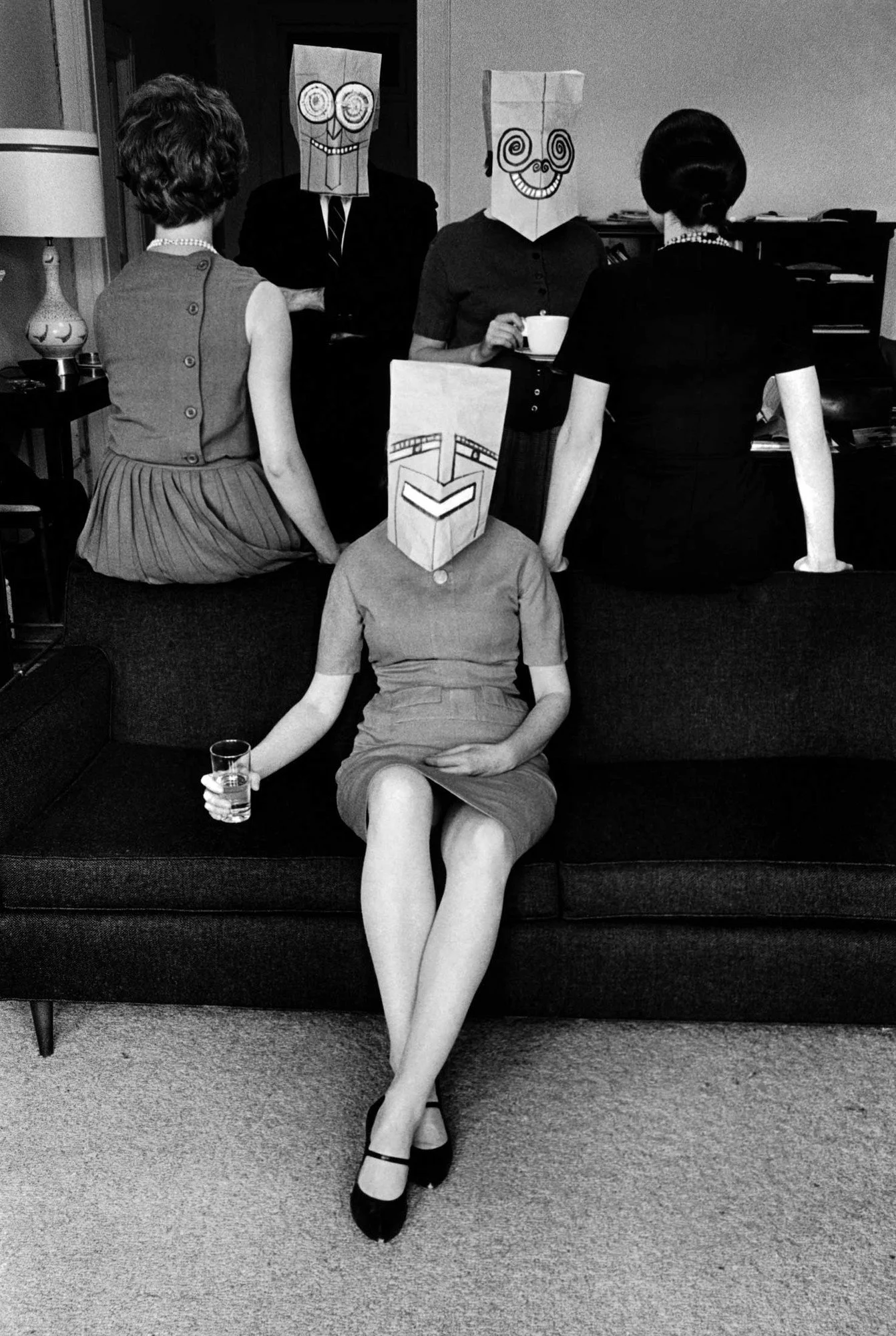
Her film work shows the same calm eye. On the set of The Misfits she photographed Marilyn Monroe, who, she said, had “a shimmery, mother-of-pearl quality totally her own.” In 1958 she met the artist Saul Steinberg. When she came to his home to make a portrait, he opened the door in a mask made from a paper bag. Over several years they made a whole series together, with people posing in Steinberg's masks. Untitled (from the Mask Series with Saul Steinberg), 1962, is one of them.
She also photographed places where people had lived: Boris Pasternak's home, Pushkin's library, Chekhov's house, artists' studios. Before a big trip she studied the language, art and books of the country. The writer Philip Roth called her “a tender intruder with an invisible camera.” Colour was part of her work from the start. Her archive holds about 55,000 colour slides, most of them Kodachrome. In her lifetime she published more than thirty books.
- 1923Born in Graz, Austria
- 1949Joins the new Magnum agency in Paris as an editor
- 1951Starts to photograph, first in Venice, then in London
- 1955Becomes a full member of Magnum; publishes her first book, on Spain
- 1957LIFE publishes her llama story; the Times Square picture becomes her best known work
- 1960Drives across America with Cartier-Bresson to photograph The Misfits
- 1962Marries Arthur Miller and settles in New York and Connecticut
- 1978Makes the first of many trips to China
- 2002Dies in New York City
Lessons
Learn from contact sheets. Before she owned a camera, Morath studied Cartier-Bresson's contact sheets at Magnum. She said this is how she learned to photograph.
Do your homework first. Before a big trip she studied the language, art and books of the country. For China she learned Mandarin.
Get to know your subject. The llama picture looks like a lucky moment. In fact she spent a long time with the animals and their trainers before she made it.
Try this: choose one subject near you: a market stall, a neighbour, a café. Visit it three times without a camera and learn something about it. On the fourth visit, shoot a full roll or 36 frames. Print a contact sheet and mark the one frame you would show.
Gear
Morath did not write much about her tools, but her papers tell us a few things.
Leica rangefinder: in her early years she owned only one camera, a second-hand Leica. Her working papers for Iran in 1956 list three Leica M3s, a Polaroid Land Camera and nine lenses.
Kodachrome slide film: she shot colour from the 1950s on. Her archive holds about 55,000 slides, most of them Kodachrome. Later she used separate camera bodies for colour and for black and white.
Books
Inge Morath: Magnum Legacy (Prestel, 2018). Part of Prestel's Magnum Legacy series. The text is by the historian Linda Gordon, with a foreword by Andrew Lewin. It follows Morath's life and work from her early years in Europe to her late projects. A good first book for anyone new to her.
Inge Morath: The Road to Reno (Steidl, 2006). Edited by John Jacob, with texts by Lucy Raven and Arthur Miller. It follows Morath's eighteen-day drive with Cartier-Bresson from New York to Reno in 1960, and her pictures from the set of The Misfits. Excerpts from her journal and caption books sit next to the photographs. For readers who like road trips, film history and early colour.
Inge Morath: First Color (Steidl, 2009). Edited by John Jacob, with an introduction by Mary Panzer. It shows Morath's colour work from her first years as a photographer, much of it found again in her archive after her death. For readers who know her black and white pictures and want to see another side of her.
Saul Steinberg: Masquerade (Viking Studio, 2000). The book of the Mask Series she made with Saul Steinberg in the late 1950s and early 1960s, with text by Morath. Her foundation calls it perhaps the best known of her many books. A playful book for anyone who loves portraits, art and humour.
In her words
“To take pictures had become a necessity and I did not want to forgo it for anything.”
“It was instantly clear to me that from now on I would be a photographer.”
“I think that in studying his way of photographing I learned how to photograph myself, before I ever took a camera into my hand.”
“As I continued to photograph I became quite joyous. I knew that I could express the things I wanted to say by giving them form through my eyes.”
“Marilyn Monroe was marvelous to look at; there was a shimmery, mother-of-pearl quality totally her own.”