AT A GLANCE
- Known for
- Quiet, carefully built color pictures made over 33 years for National Geographic, such as Pears, Moscow (1983) and Branding, Buffalo, Montana (1985)
- Works in
- Color photography; film in his National Geographic years, digital today
- Camera
- Today a Fujifilm X-H2 with a 16-80mm zoom; he prefers normal focal lengths of about 28-70mm
- Taught
- Photography workshops for more than 30 years, including Santa Fe Workshops and Maine Media Workshops
- Awards
- Lifetime Achievement Award, The Photo Society (2024) · International Photography Hall of Fame (2024) · Honorary Doctor of Letters, University of Toledo
- Start with
- The Life of a Photograph (National Geographic, 2008)
- Links
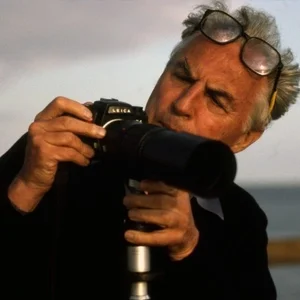
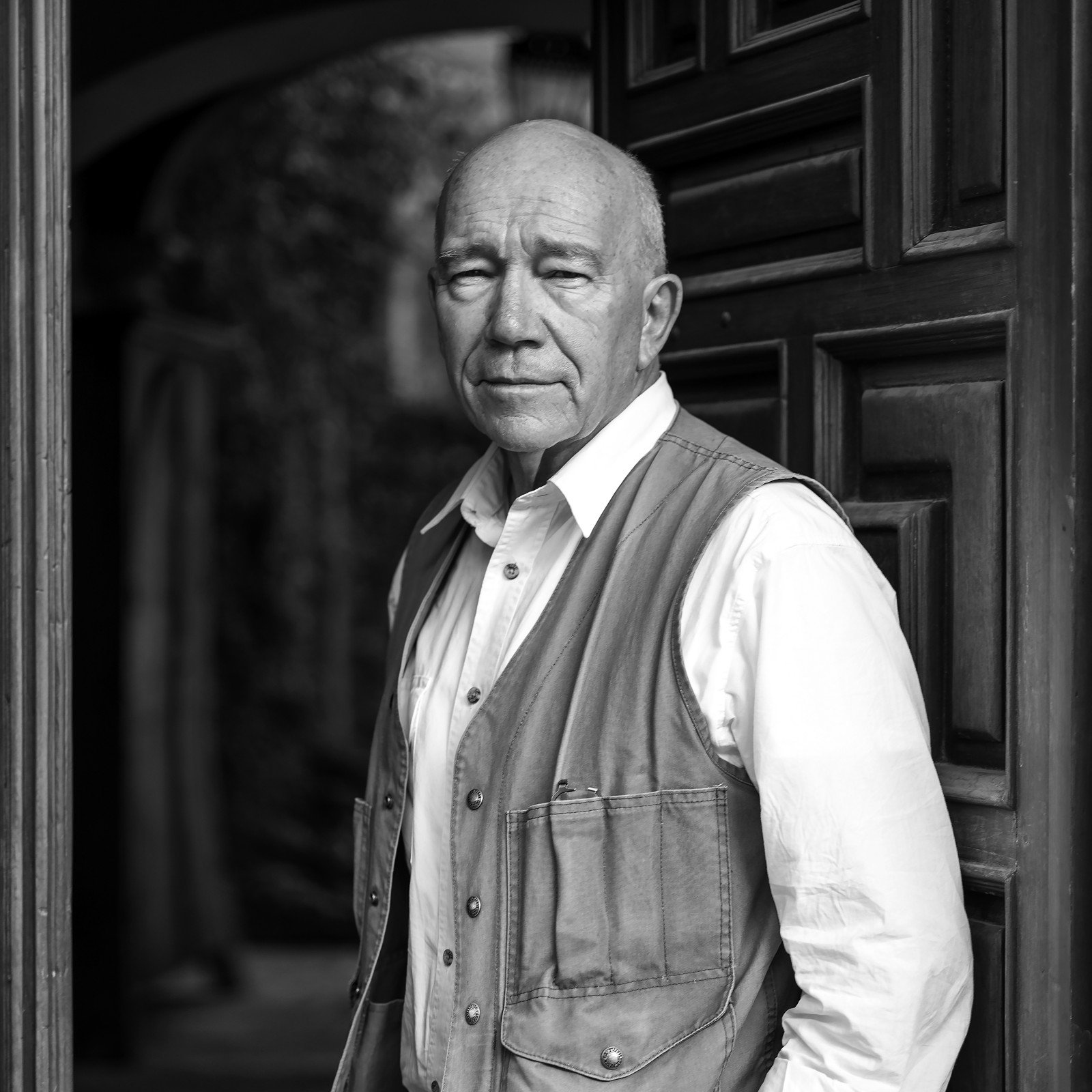
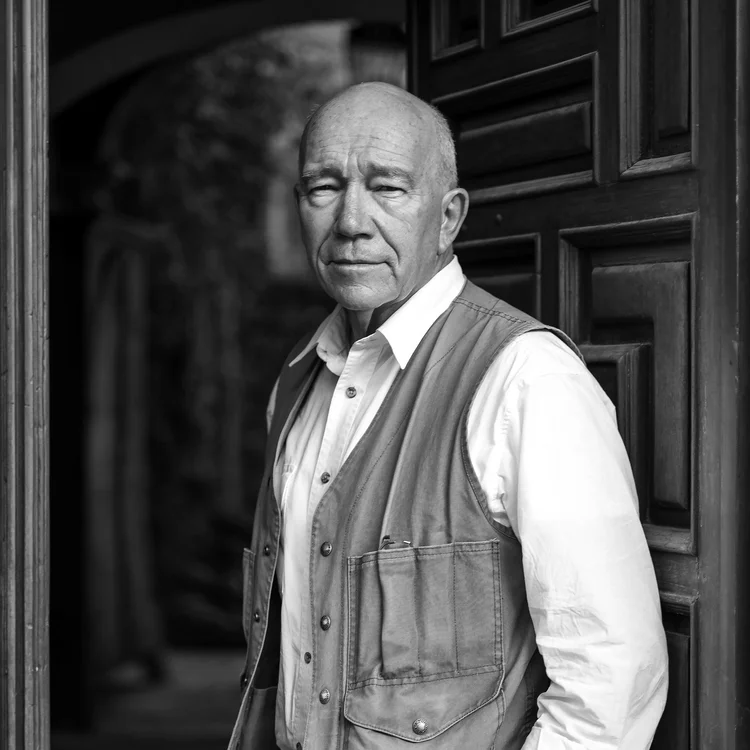
Sam Abell (born 1945) is an American documentary photographer. For 33 years he traveled on assignment for National Geographic, from Newfoundland and Japan to Australia, Ireland and the ranches of Montana. His pictures are calm and carefully composed, and his color is easy to recognize. He calls his method “compose and wait”. Abell is also a writer, an author of several books and a long-time teacher of photography workshops. In 2024 he was inducted into the International Photography Hall of Fame.
The story
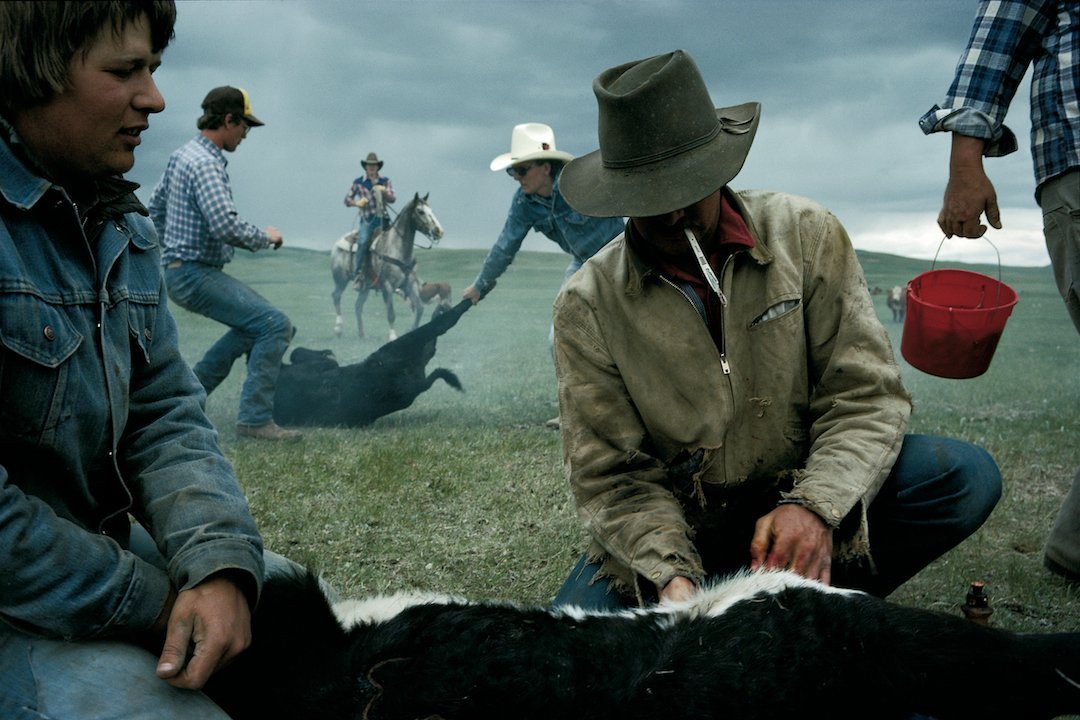
Montana, 1985. Near Buffalo, cowboys were at work at a branding. Sam Abell looked first at the land behind them. Far away, a cowboy sat on his horse, just above the horizon. Close to the camera, another cowboy held a surgical knife in his teeth. At the edge of the frame was a red bucket.
Abell built the picture from the back to the front: the landscape first, then the cowboy in front, then everything in between. The horizon mattered most. If it had cut through the head of the distant horse, he says, he would never have shown the picture. He was in Montana for a National Geographic story on Charles M. Russell, the cowboy artist. That work took him about a year and some 25,000 pictures.
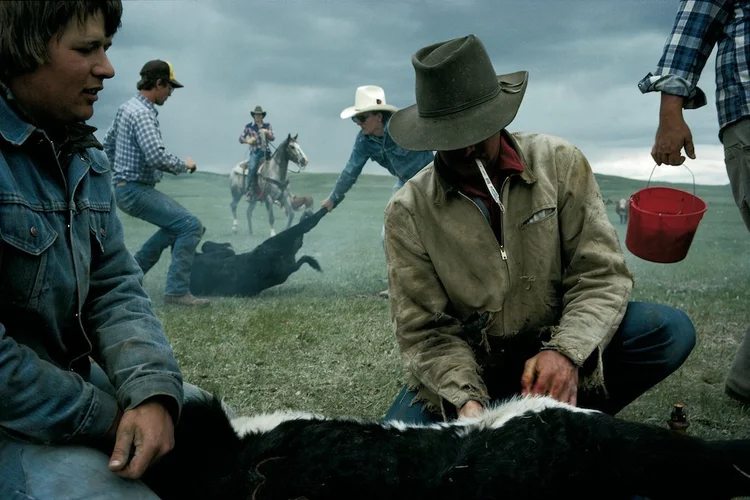
But the magazine did not use the picture in the Russell story. So Abell published it himself, in his book Stay This Moment and wherever else he could. Many years later, National Geographic named it one of the 50 greatest pictures ever made for the magazine. Today a section of it runs along the spine of each box of the Sam Abell Library.
The method behind it began at home. When Sam was 14, his father told him to settle on a composition and wait for a subject to come and bring the scene to life. Abell still teaches it that way. In his own words: “When people come to the workshops, they’re consumed with seeking the subject, and I teach seeking the setting.”
The work
Abell grew up in Sylvania, Ohio, in a family of teachers. His father taught geography and started a camera club at his high school. Together they had a small darkroom in the fruit cellar, and on camera outings they went to circuses, quarries and train stations with their cameras. At the University of Kentucky, Abell edited and photographed the 1967 Kentuckian yearbook. That summer he became an intern at National Geographic. His box of color slides got lost in the mail, so he had only black and white prints at the interview. The director of photography, Robert Gilka, took him anyway. Asked why, Gilka later answered with one word: “Potential.”
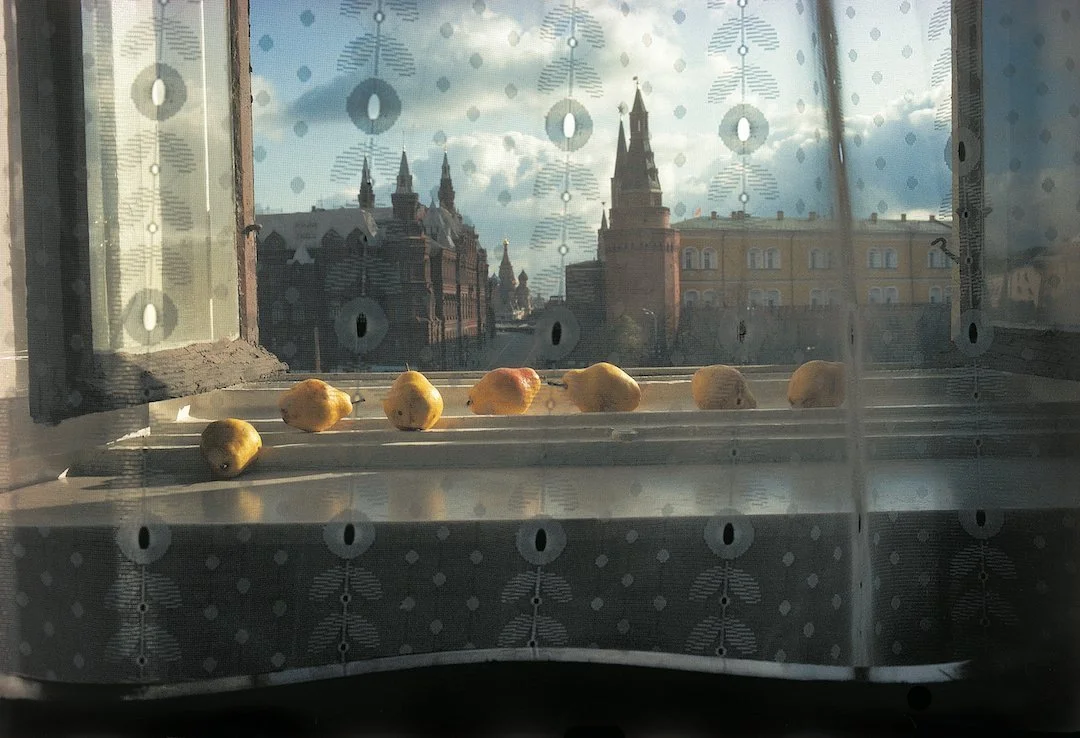
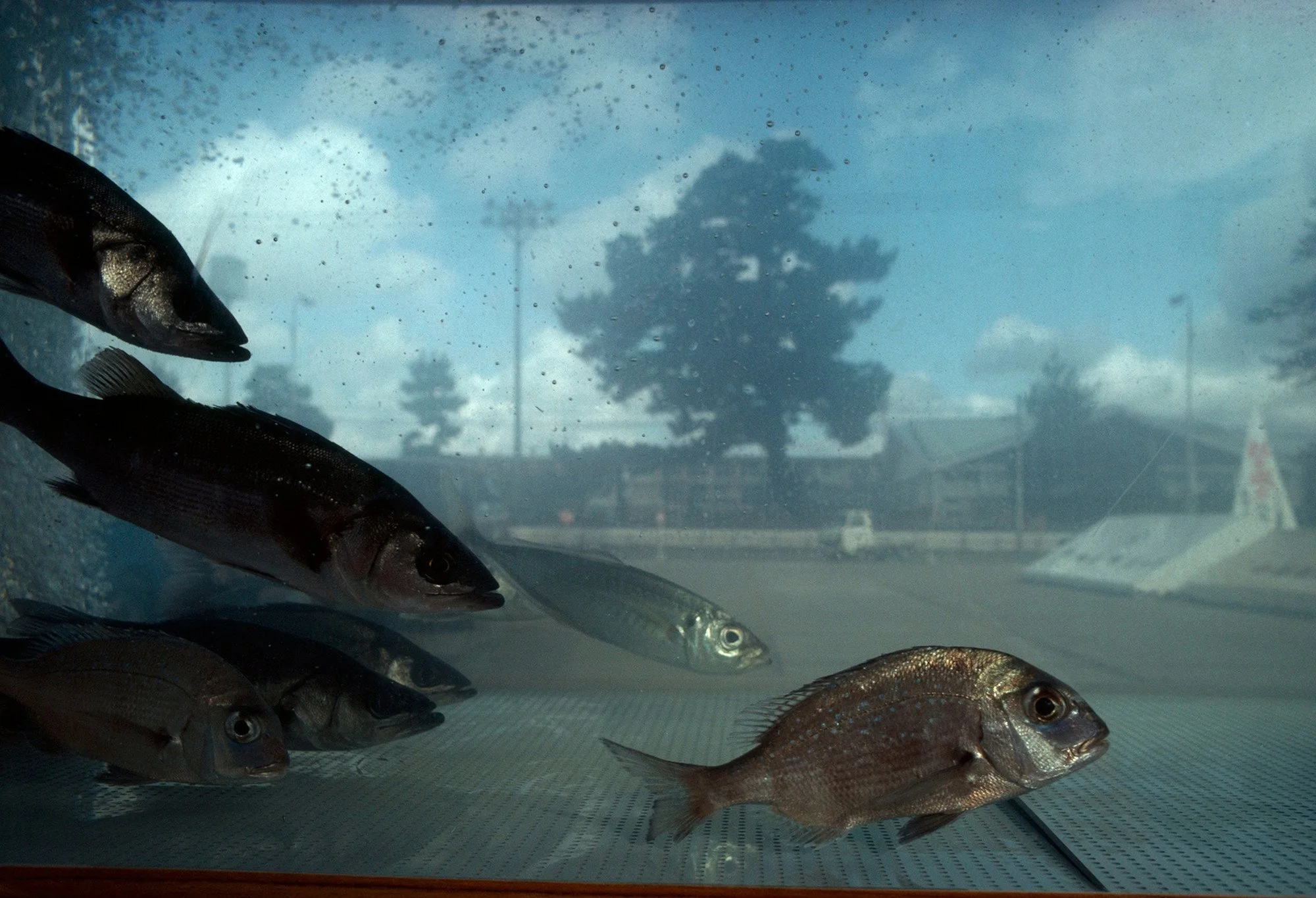
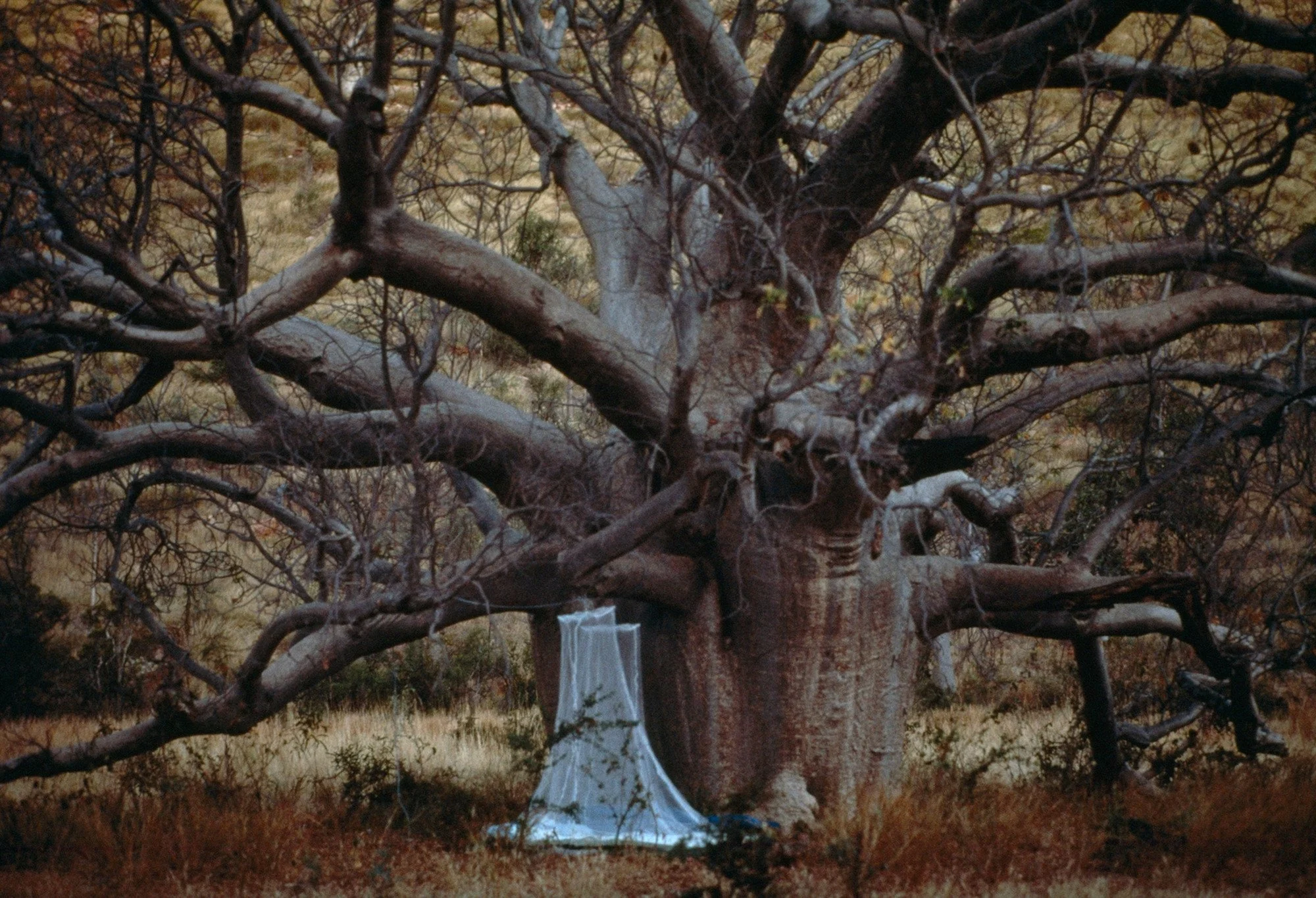
From then on Abell lived what he calls the photographic life. His first assignment was Newfoundland. In 1980 he spent five weeks in Hagi, a small city in Japan, and made A fish aquarium in Hagi, Japan, by shooting through the glass of a fish tank so the water, the sky and the landscape became one scene. In Moscow in 1983 he photographed pears ripening on a windowsill, with the Kremlin behind a lace curtain. The writer Teju Cole later called it a famous picture. Australia became his favorite place. He did two cover stories and two books there. One picture from that time is Boab tree with swags of mosquito netting in Western Australia, 1989.
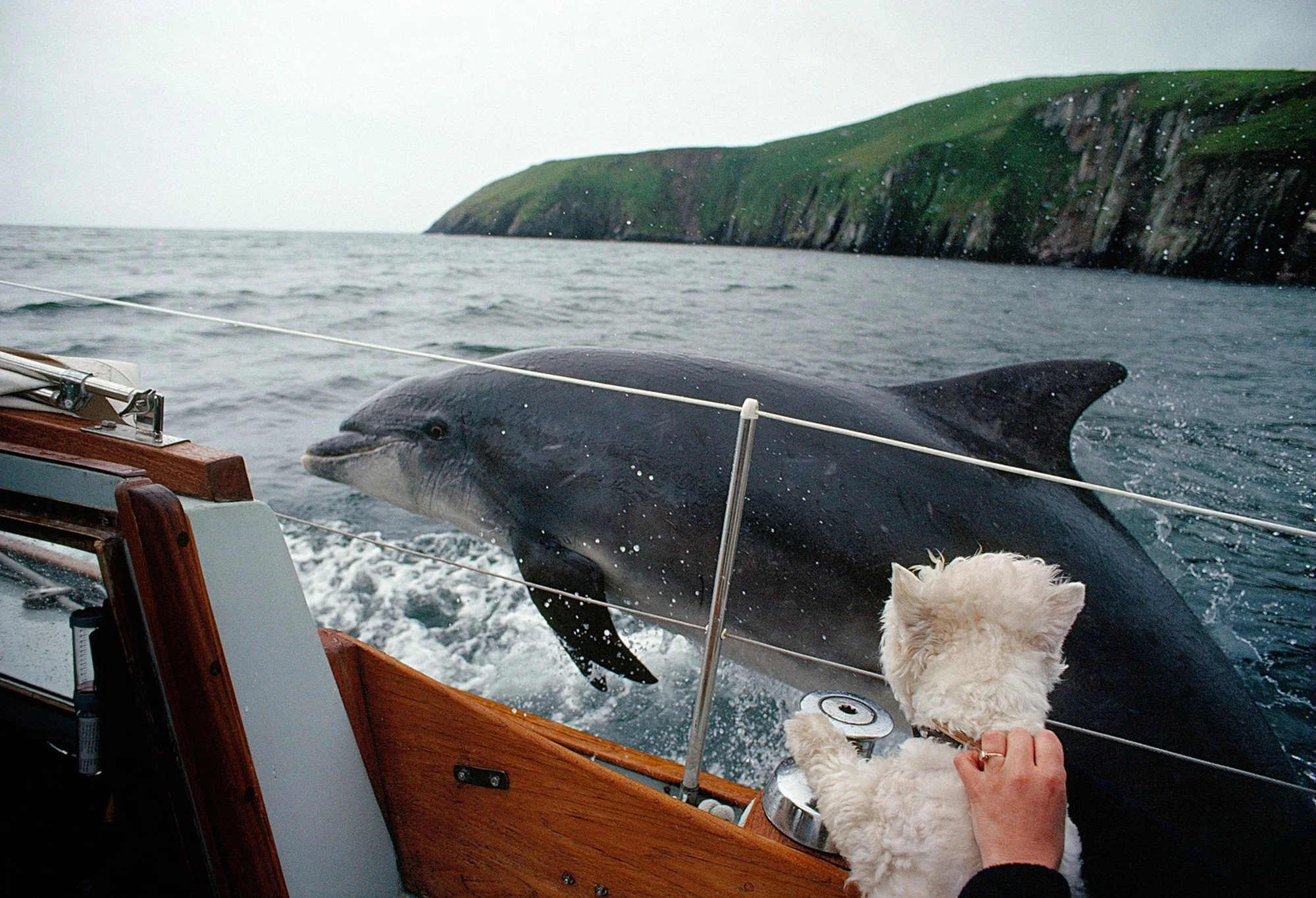
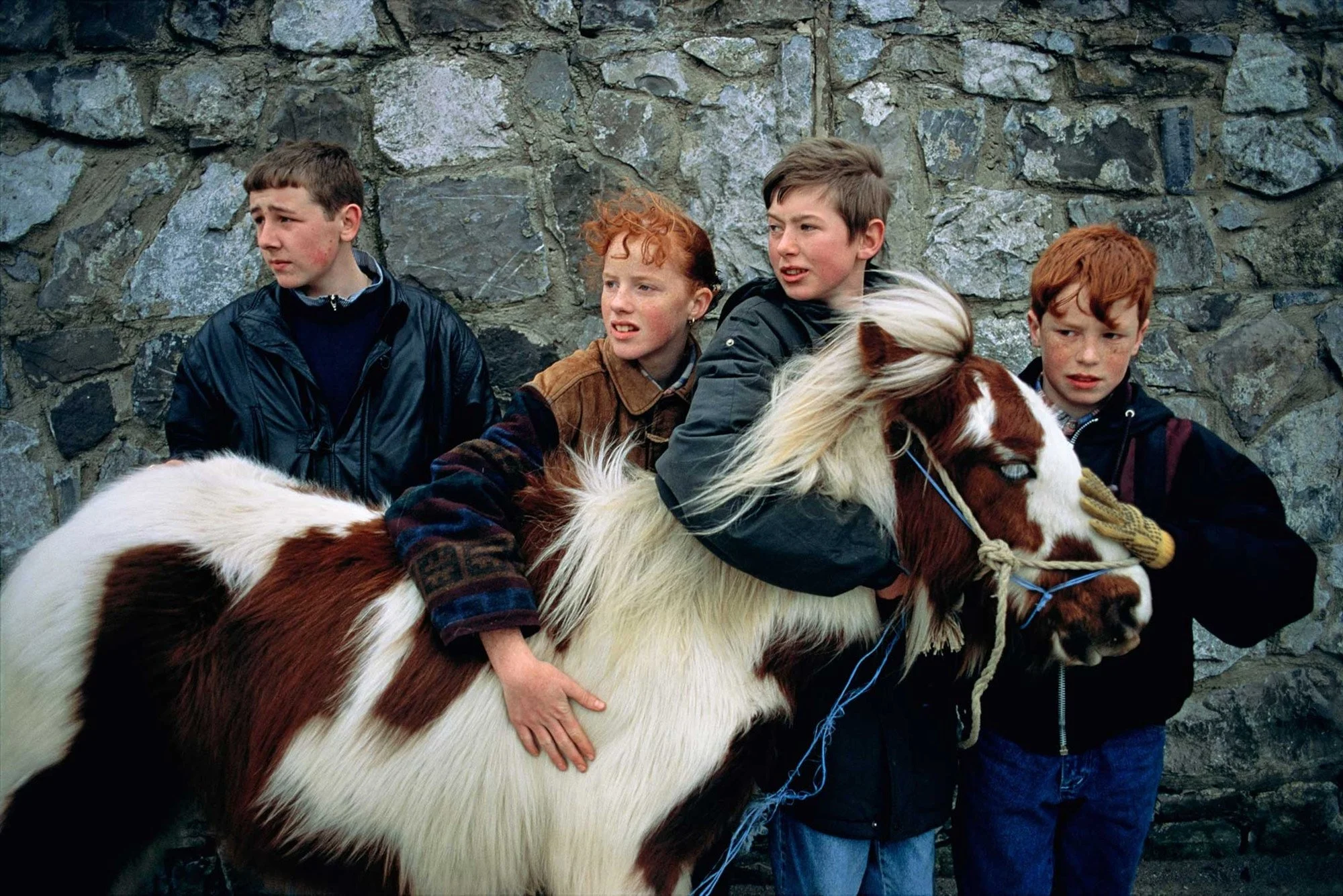
In 1994 he covered Ireland. In his first week in Dublin he was mugged and his camera was stolen. Still, in Dingle Bay he crouched in a boat, framed a terrier with the coast behind it, and waited until a wild dolphin named Fungie rose from the sea. A picture of Lee Johnson with his pony Gypsy in Dublin became the cover of the September 1994 issue. He also made books on the Pacific Crest Trail, on Lewis and Clark (with the historian Stephen Ambrose) and on Leo Tolstoy. His last assignment was the Japanese Imperial Palace.
Abell left the magazine in 2001 and kept photographing. Since then he has turned to everyday America: big box stores, smokers on ledges, new highways. He has taught workshops for more than 30 years and lives with his wife in an old farmhouse in central Virginia.
- 1945Born in Sylvania, Ohio
- 1967Summer intern at National Geographic, hired by Robert Gilka
- 1970Starts working for National Geographic as a photographer
- 1974Photographs the Pacific Crest Trail and meets his future wife there
- 1980Spends five weeks in Hagi, his first close contact with Japan
- 1985Photographs ranch life in Montana for a story on Charles M. Russell
- 1990Solo exhibition and book Stay This Moment at the International Center of Photography
- 2001Ends 33 years of travel on assignment for National Geographic
- 2024Lifetime Achievement Award from The Photo Society and induction into the International Photography Hall of Fame
Lessons
Find the setting first. Abell composes from the back to the front. He chooses the background and the frame, and only then lets a subject walk in.
Compose, then wait. In Hagi he kept the same frame of a fish tank and made many exposures until the fish lined up. In Dingle Bay he held his frame until the dolphin appeared.
Treat snapshots seriously. He gives every picture, even a snapshot, the same thought about composition. Strong snapshots, he says, lead to stronger photographs.
Try this: choose one spot with a clear background and some layers, such as a window, a doorway or a street corner. Compose the frame carefully and do not move it. Wait at least 20 minutes and take a picture only when someone or something enters and completes the scene. Then look at the frames side by side and pick the one with the most life.
Gear
Abell keeps his kit small. He shoots almost always in P mode and adjusts only the exposure compensation, so he can think about the composition and the moment, not the camera.
Fujifilm X-H2: his camera today, as he told Fstoppers in 2026.
Fujinon XF16-80mm F4 R OIS WR: his one zoom lens. He prefers normal focal lengths of about 28-70mm that do not distort what the eye sees.
Peak Design Everyday Backpack 20L: the bag he says fits his needs better than any other. Inside he also carries a nonfiction book about the place he is going to.
Books
Stay This Moment: The Photographs of Sam Abell (Lickle Publishing, 1990). His first big monograph, with an introduction by Robert E. Gilka, the National Geographic director of photography who hired him. It came out with his solo exhibition at the International Center of Photography in New York. The color pictures come from his magazine assignments, including the Montana cowboys. Long out of print, it is a book for collectors and for anyone who wants to see his early work.
Seeing Gardens (National Geographic, 2000). A personal book about looking for gardens while on assignment around the world, with photographs and text by Abell. It includes the pears in Moscow and views from Hagi in Japan. It is the first part of a trilogy. A gentle book for readers who love quiet, composed color.
Sam Abell: The Photographic Life (Rizzoli, 2002). A large retrospective with texts by Abell and Leah Bendavid-Val. It mixes his best-loved pictures with stories from his life and his ideas about photography. About 260 pages. Good for readers who want both the pictures and his way of thinking.
The Life of a Photograph (National Geographic, 2008). About 200 photographs from 40 years of fieldwork, written by Abell himself. Many pictures appear in series, so you can see how he set the scene, composed and waited for the final frame. It closes the trilogy that began with Seeing Gardens. The best book to start with, especially for photographers who want to learn.
In his words
“Photography, for me, was writing in action.”
“I think of myself as a writer who photographs.”
“I’ve become devoted to that practice of seeing a scene and rigorously composing it and then waiting for something to animate it.”
“Consider your childhood. We are creatures of our upbringing.”
“When people come to the workshops, they’re consumed with seeking the subject, and I teach seeking the setting.”