AT A GLANCE
- Known for
- Sharp close-ups of peppers, shells and cabbages; nudes; the dunes at Oceano and the rocks of Point Lobos
- Worked in
- Black and white, almost always as contact prints; some color (Kodachrome) near the end of his career
- Camera
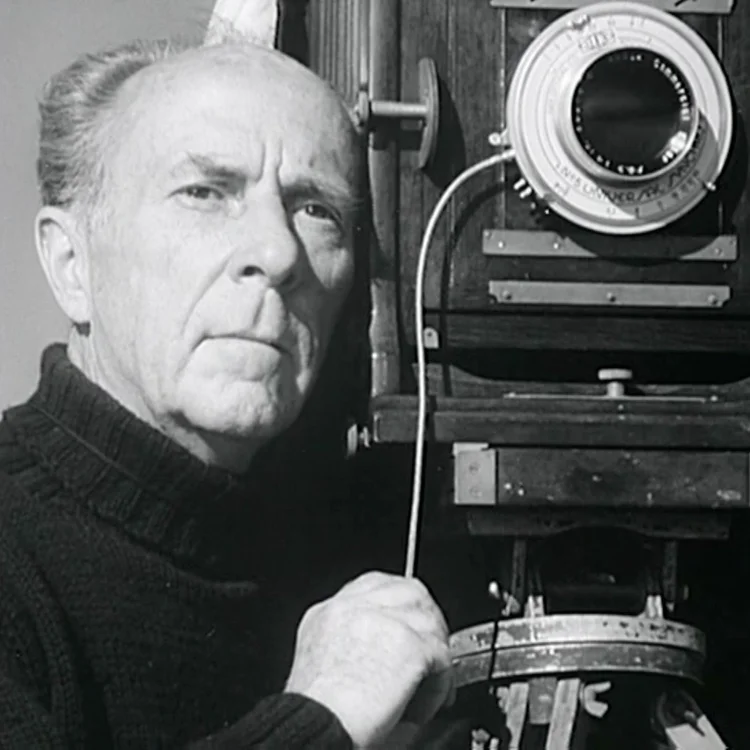
- 8x10 view camera; a Graflex for portraits
- Also
- Co-founder of Group f/64 (1932); first photographer to receive a Guggenheim Fellowship (1937); kept detailed Daybooks
- Start with
- Edward Weston (Taschen, 2008)
- Links
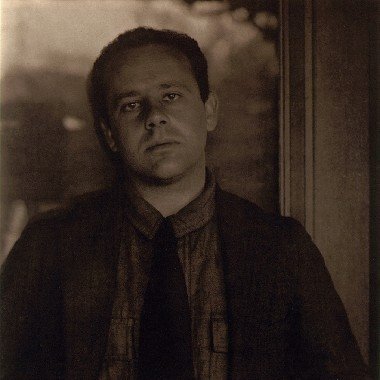
Edward Weston (1886–1958) was an American photographer and one of the founders of Group f/64. He is known for sharp, simple pictures of peppers, shells, cabbages, nudes and the California coast. In 1937 he became the first photographer to receive a Guggenheim Fellowship.
The story
In the summer of 1930, in Carmel, California, Sonya Noskowiak brought home a pepper. She was Edward Weston’s partner and pupil at the time. The pepper kept him “keyed up all week”, he wrote in his Daybook on 1 August. He made eight negatives of it, all from the same viewpoint. One exposure ran for 50 minutes. Then the town’s fire siren went off, and the fire truck and every car in town drove past. “The old porch trembles, my wobbly old camera wobbled, the pepper shimmied, and I developed a moved negative,” he wrote.
Weston was 44 and had been photographing for most of his life. His father gave him his first camera, a Kodak Bull’s-Eye No. 2, in 1902, while the boy was on holiday on a farm in Michigan. Later he ran a portrait studio in Tropico, now part of Glendale, and won prizes for soft-focus pictures. In 1922, at a steel works in Ohio, he made hard, precise images instead. Mexico followed, and then, from 1927, close-ups of shells, peppers, onions and cabbages.
So the failed negatives did not stop him. He tried morning sun through muslin. “Better!” he noted. On 3 August he tested a new idea with a smaller pepper: he put it inside a tin funnel lying on its side. The funnel gave a clean background and threw “reflected light to important contours.” He still had the pepper that had cost him a week of work. It had not gone to the kitchen yet. He placed it in the funnel and made an exposure of six minutes. “I have a great negative, by far the best!” he wrote.
The picture we know as Pepper No. 30 came out of these few days. Weston made at least 25 prints of it before 1936. It was also the last year he photographed peppers.
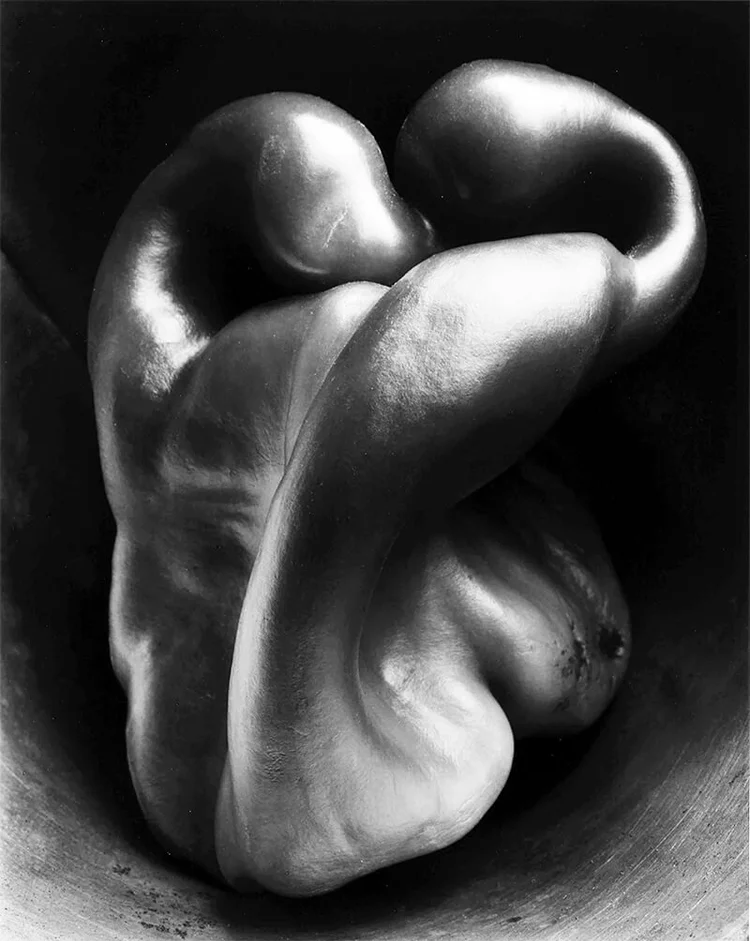
On 8 August he printed his favorite negative. It had been quick to make, he wrote, but only after a week of effort. And not only a week. “Twenty-eight years of effort, starting with a youth on a farm in Michigan … have gone into the making of this pepper, which I consider a peak of achievement.”
The work


- 1886Born in Highland Park, Illinois
- 1902Gets his first camera, a Kodak Bull’s-Eye No. 2, from his father
- 1923Moves to Mexico City with Tina Modotti
- 1930Makes Pepper No. 30 in Carmel
- 1932Co-founds Group f/64 with Ansel Adams and others
- 1937First photographer to receive a Guggenheim Fellowship
- 1946Retrospective at the Museum of Modern Art, New York
- 1948Makes his last photographs; Parkinson’s disease stops his work
- 1958Dies at home in Carmel, California
Lessons
Try again, and again. He made eight negatives of one pepper from the same viewpoint, and he was still not satisfied.
Change the setting, not the subject. A simple tin funnel fixed both the light and the background.
Look close at ordinary things. Peppers, cabbages and shells from daily life became his best-known pictures.
Try this: choose one vegetable or fruit and photograph it every day for a week in window light. Change only one thing each day, like the background or the direction of the light. Keep the best frame.
Gear
Weston wrote about his equipment in his Daybooks, so we know more than usual about his tools.
8x10 view camera: his main camera. Pepper No. 30 was made on an 8x10 Ansco view camera with a Zeiss 21 cm lens. His grandson Kim Weston says he made his own very small lens stops for close-up work.
Graflex camera: he bought a Graflex in 1933 and used it for portraits.
Contact printing frame: he made contact prints, so every print is the same size as its negative.
Books
Edward Weston (Taschen, 2008). Edited by Manfred Heiting, with an essay by Terence Pitts, then director of the Center for Creative Photography in Tucson, which holds Weston’s archive. About 180 photographs from the 1920s to the 1940s on 190 pages, including the Point Lobos trees, the dunes at Oceano and the nudes. A compact and affordable first book for anyone new to his work.
The Daybooks of Edward Weston (George Eastman House and Horizon Press, 1961 and 1966; later reissued by Aperture). Edited by Nancy Newhall in two volumes, Mexico and California. Written over about fifteen years, the journals record his thoughts on life and art, his hopes, his love affairs and honest judgments of his own pictures. The whole story of Pepper No. 30 is here, day by day. Essential reading for anyone who wants to know how he thought and worked.
Edward Weston: The Flame of Recognition (Aperture, 1971; first published in 1965 as Edward Weston, Photographer). An Aperture monograph edited by Nancy Newhall, with a preface by Ansel Adams. It pairs his photographs with short excerpts from the Daybooks and his letters, on 104 pages. A slim book that lets you see the pictures and read his own words side by side.
Edward Weston: Forms of Passion (Harry N. Abrams, 1995). A large survey of 367 pages with more than 300 photographs, edited by Gilles Mora. Essays by Mora, Terence Pitts, Trudy Wilner Stack, Theodore E. Stebbins Jr. and Alan Trachtenberg. It follows his whole career, from the portrait studio in California through Mexico to the work he is best known for. For readers who want the full picture.