Night Walks in Tama New Town: Sakaguchi Tomoyuki’s GOING HOME
Welcome to this edition of [book spotlight]. Today, we uncover the layers of 'GOING HOME,' by Sakaguchi Tomoyuki (published by Sokyusha, sold by by shashasha). We'd love to read your comments below about these insights and ideas behind the artist's work.
Every night, Sakaguchi Tomoyuki waited at empty intersections.
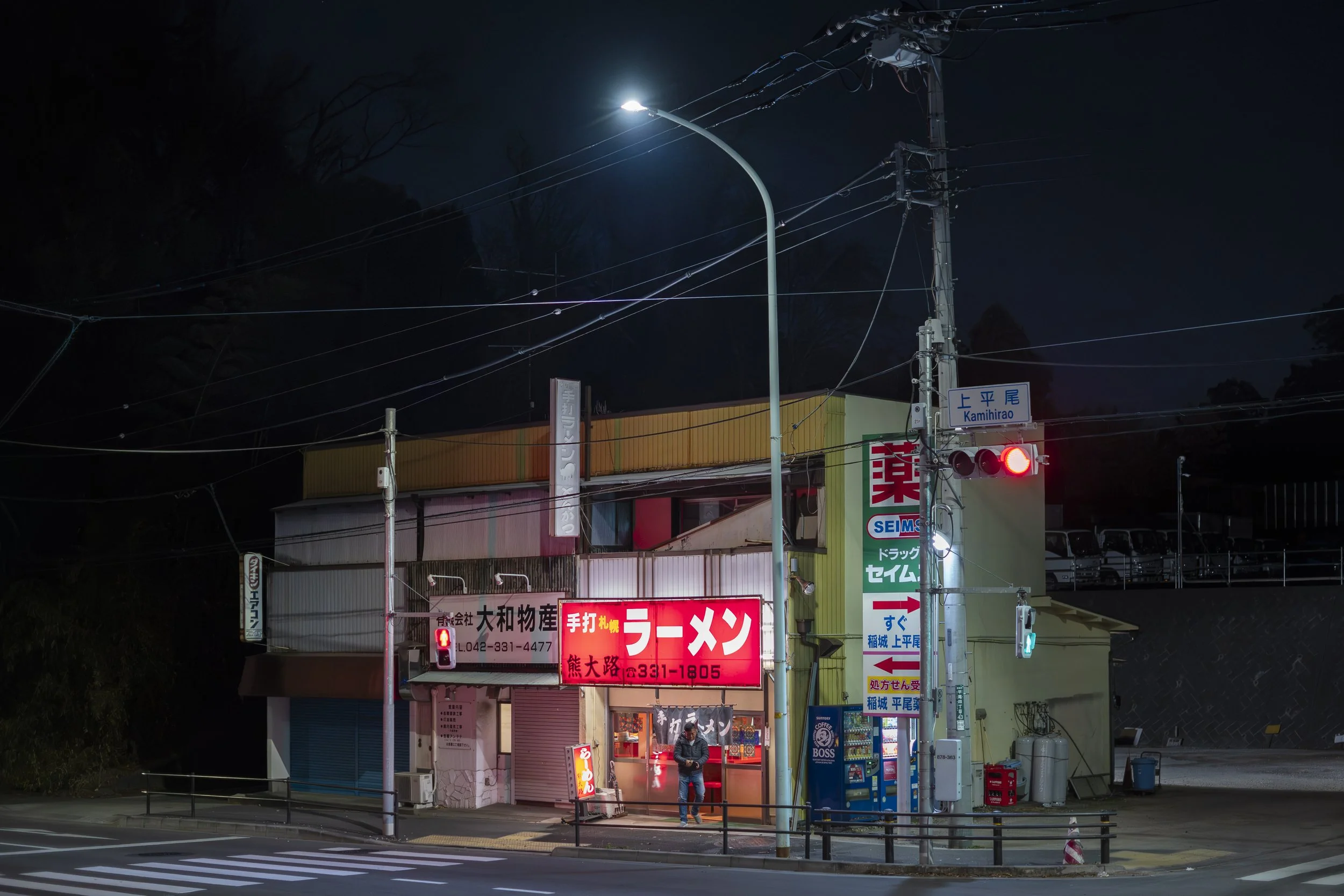
He stood there with a tripod, often for hours, in the quiet streets of Tama New Town. What began as a simple routine slowly became a long-term project about suburbia, night, and distance between people. This way of working led to GOING HOME, a photobook that looks at modern living through artificial light and silence.
In this interview, Sakaguchi explains how this project slowly took shape.
Before GOING HOME, he photographed the same places without people, but this time he decided to include small human figures inside large, planned environments built over several decades. He talks about waiting at intersections, shooting at very high ISO, and using AI noise reduction, and explains how these choices became essential to the final form of the work.
The Book
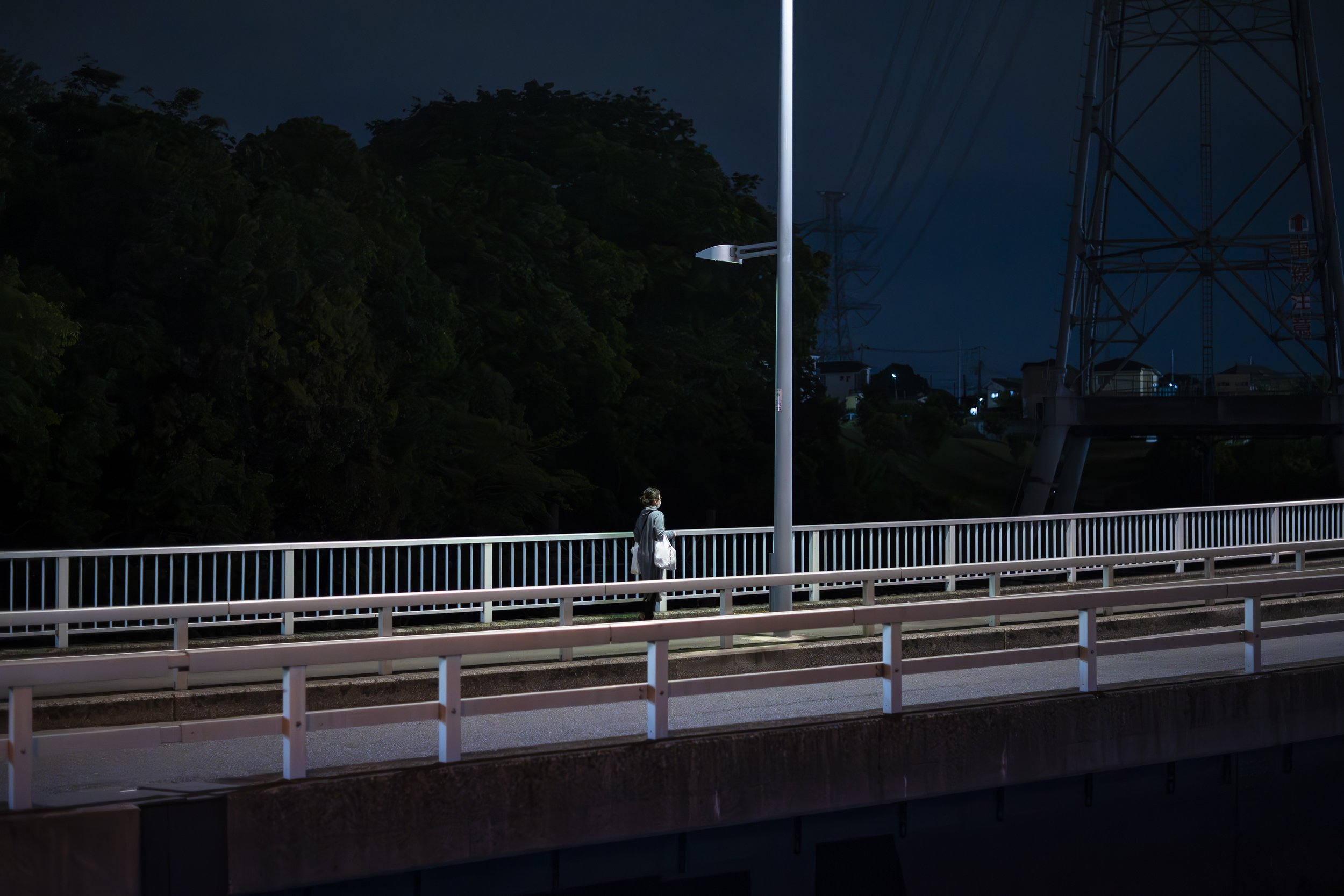
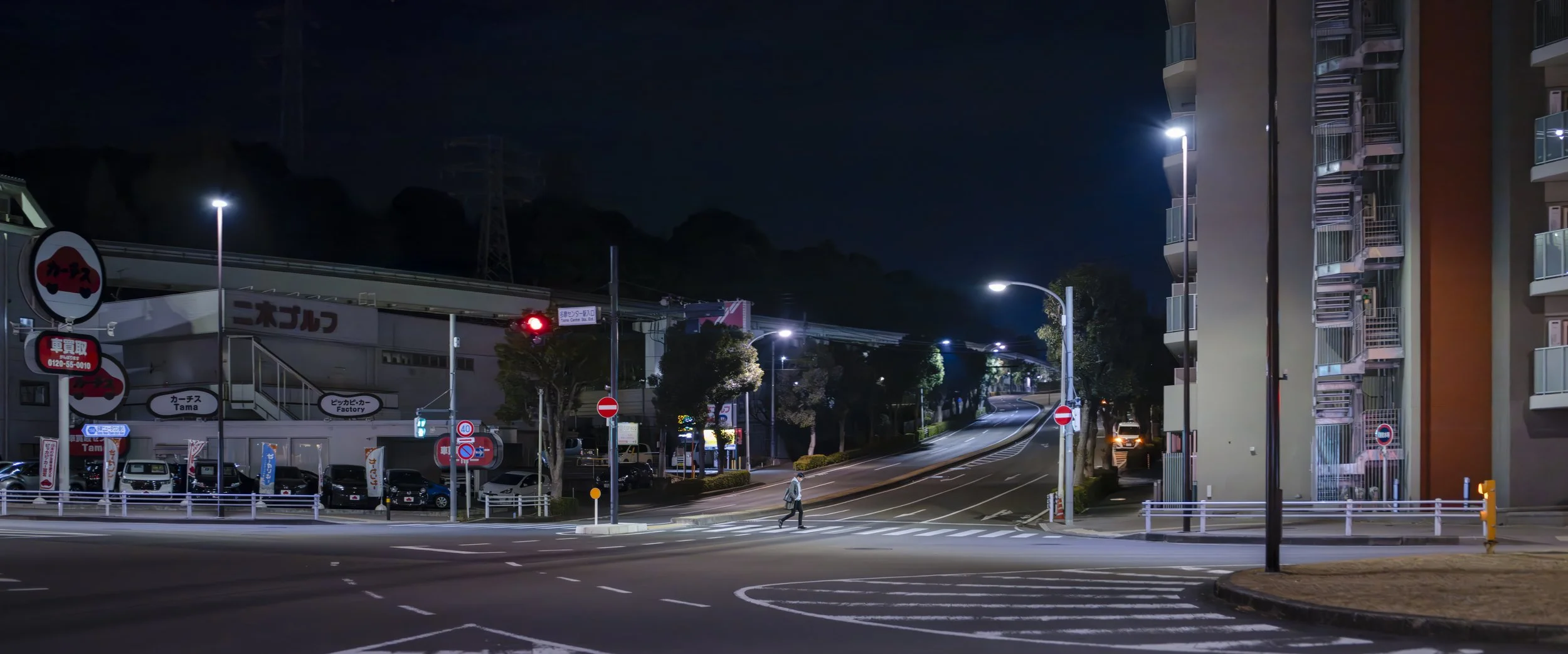
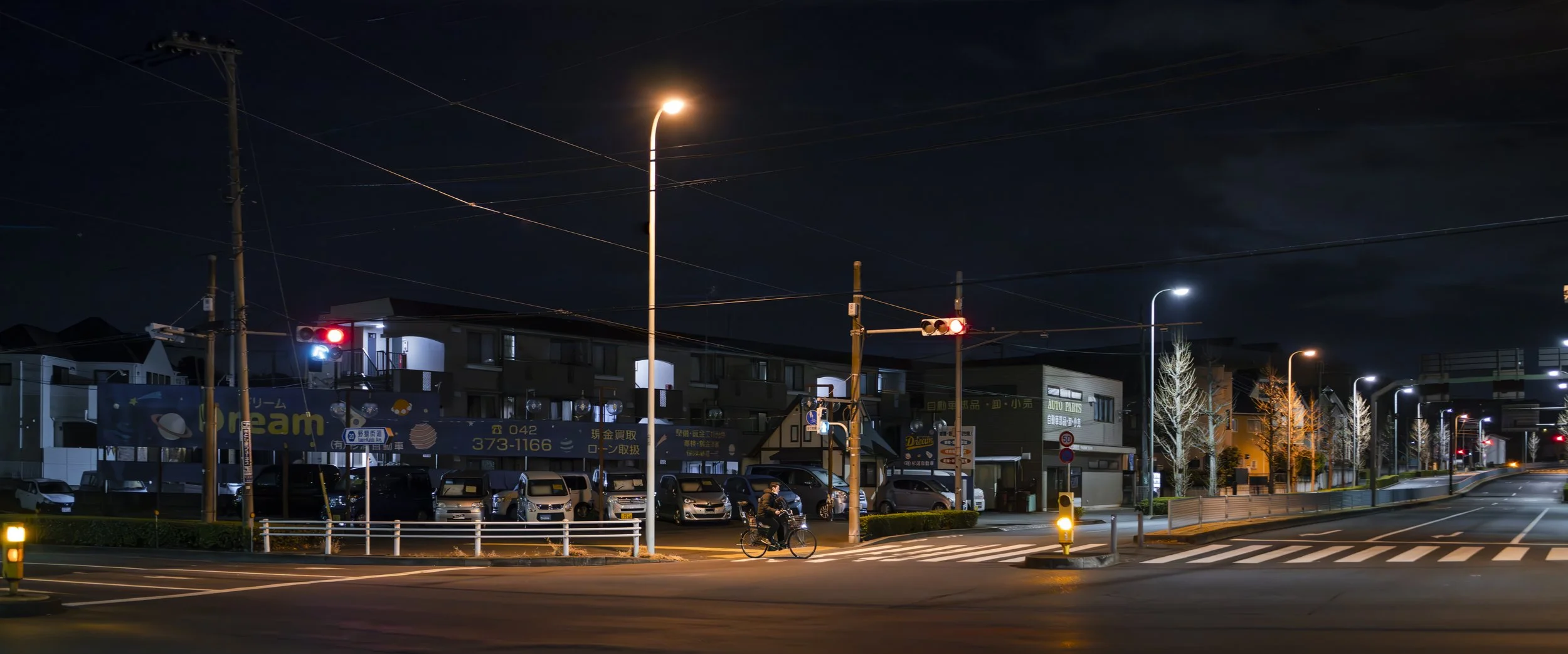
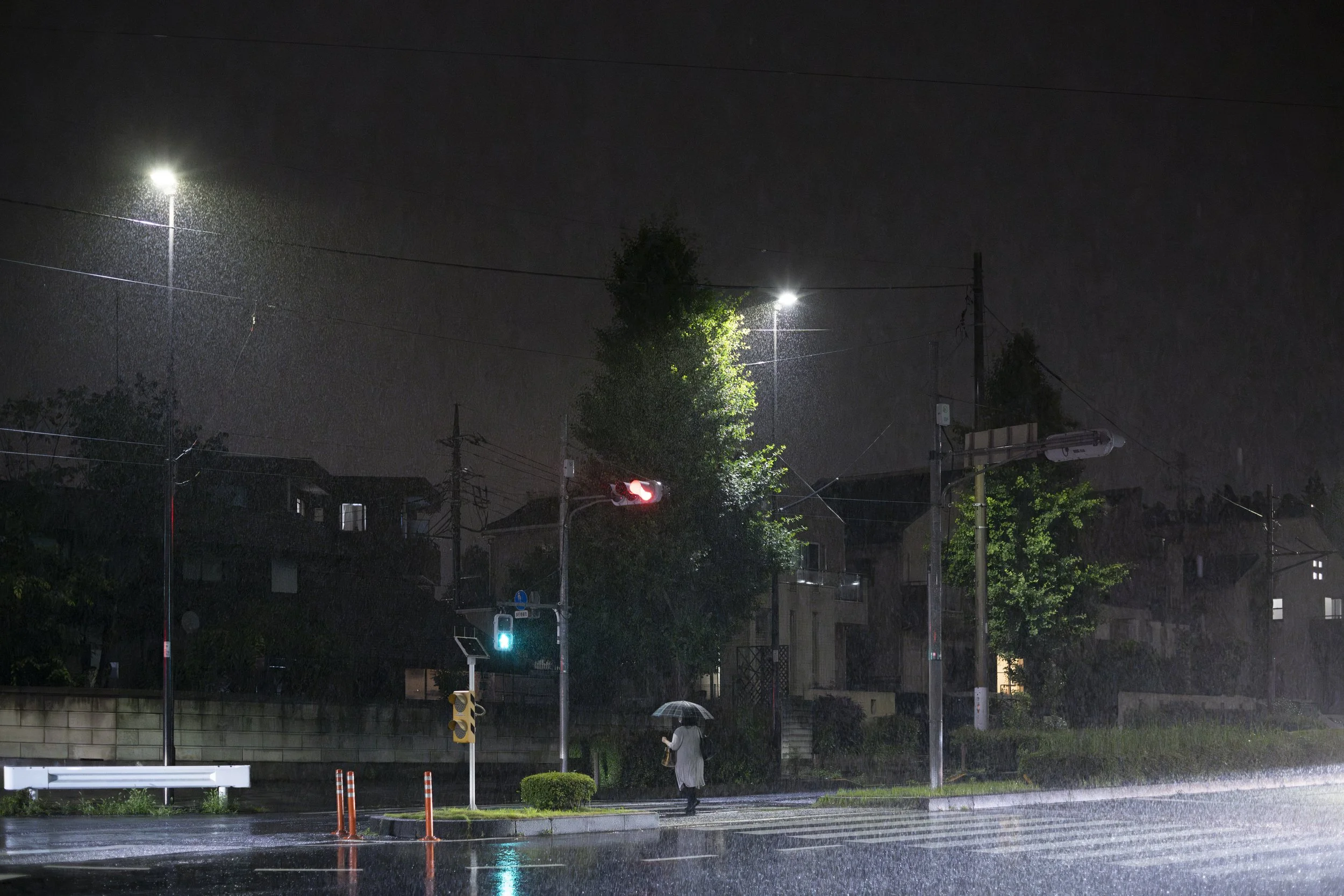
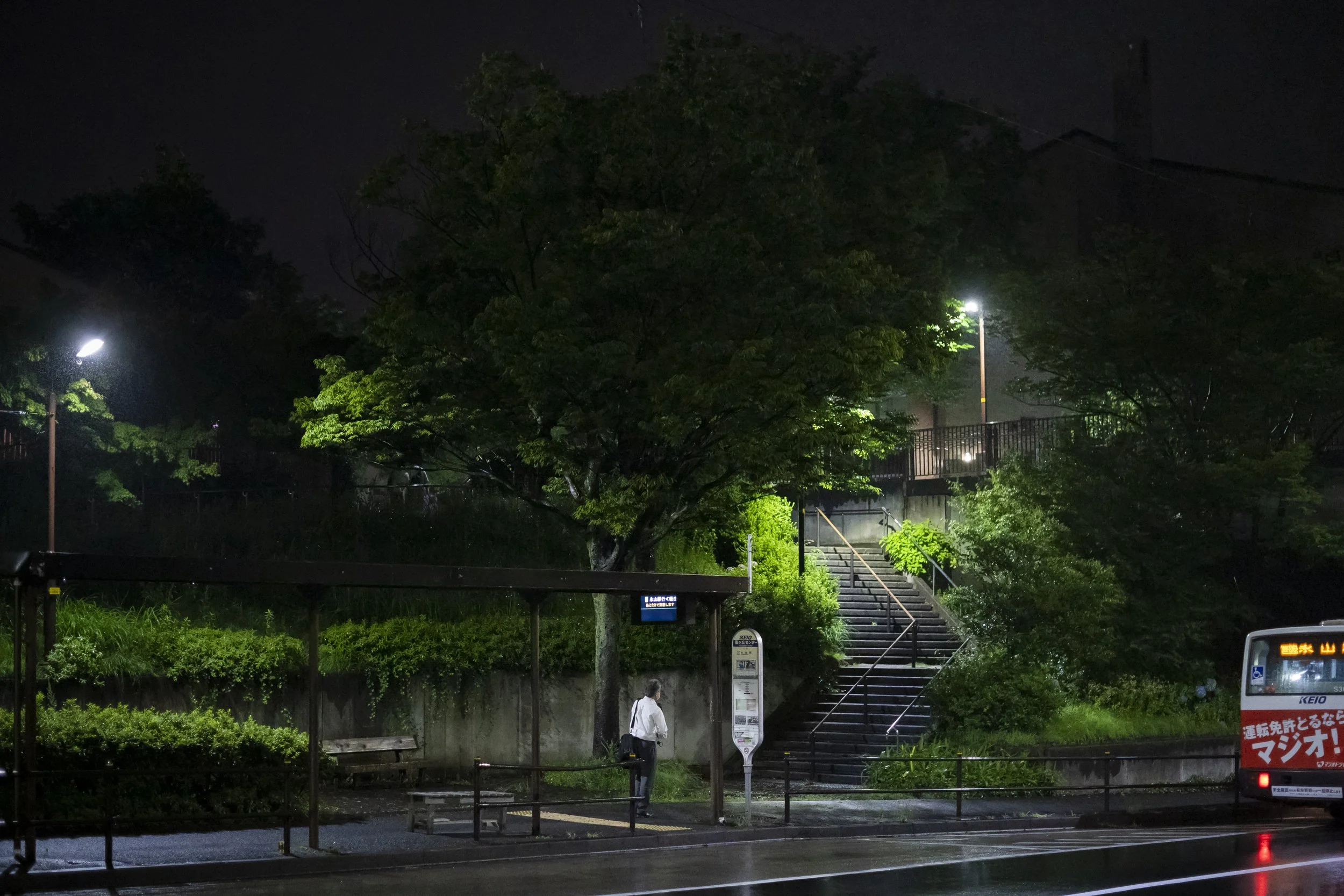
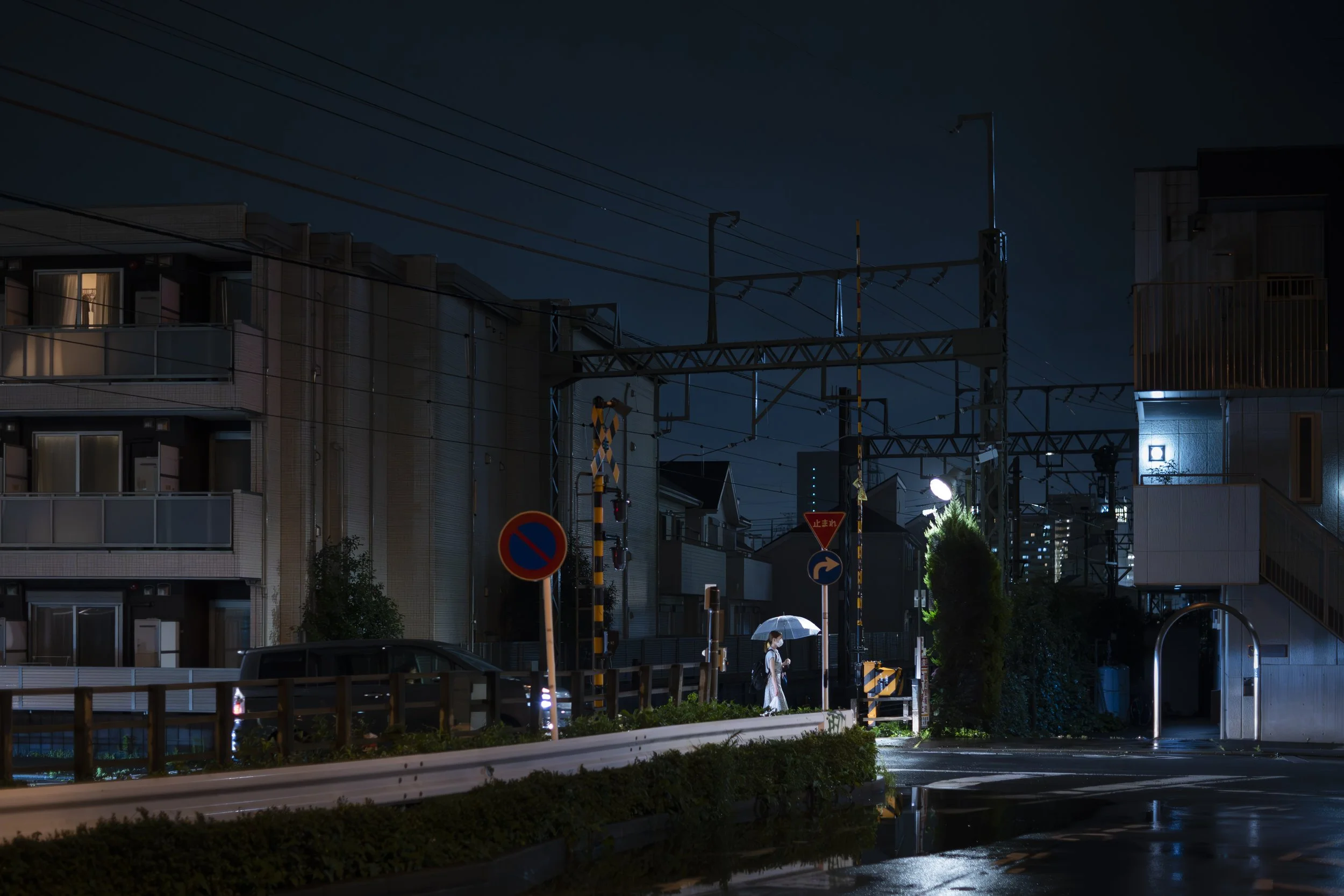
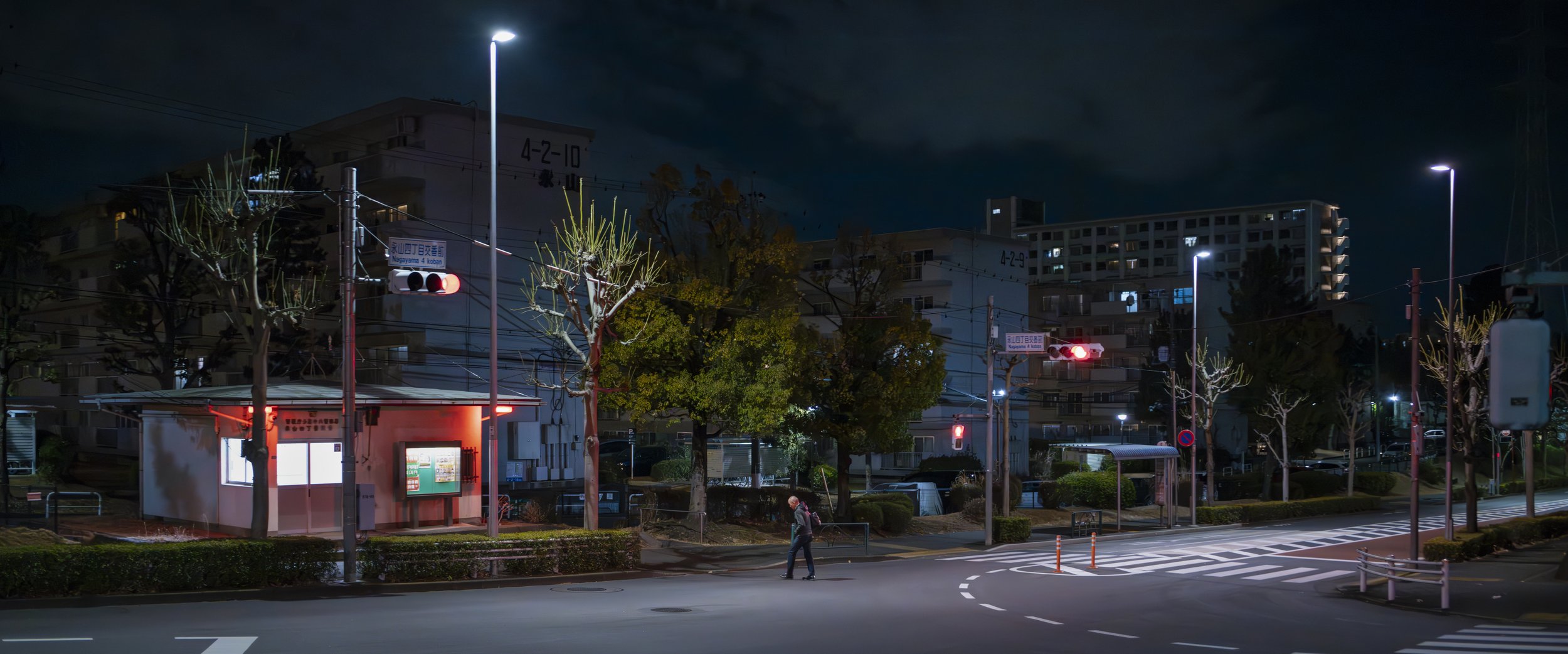
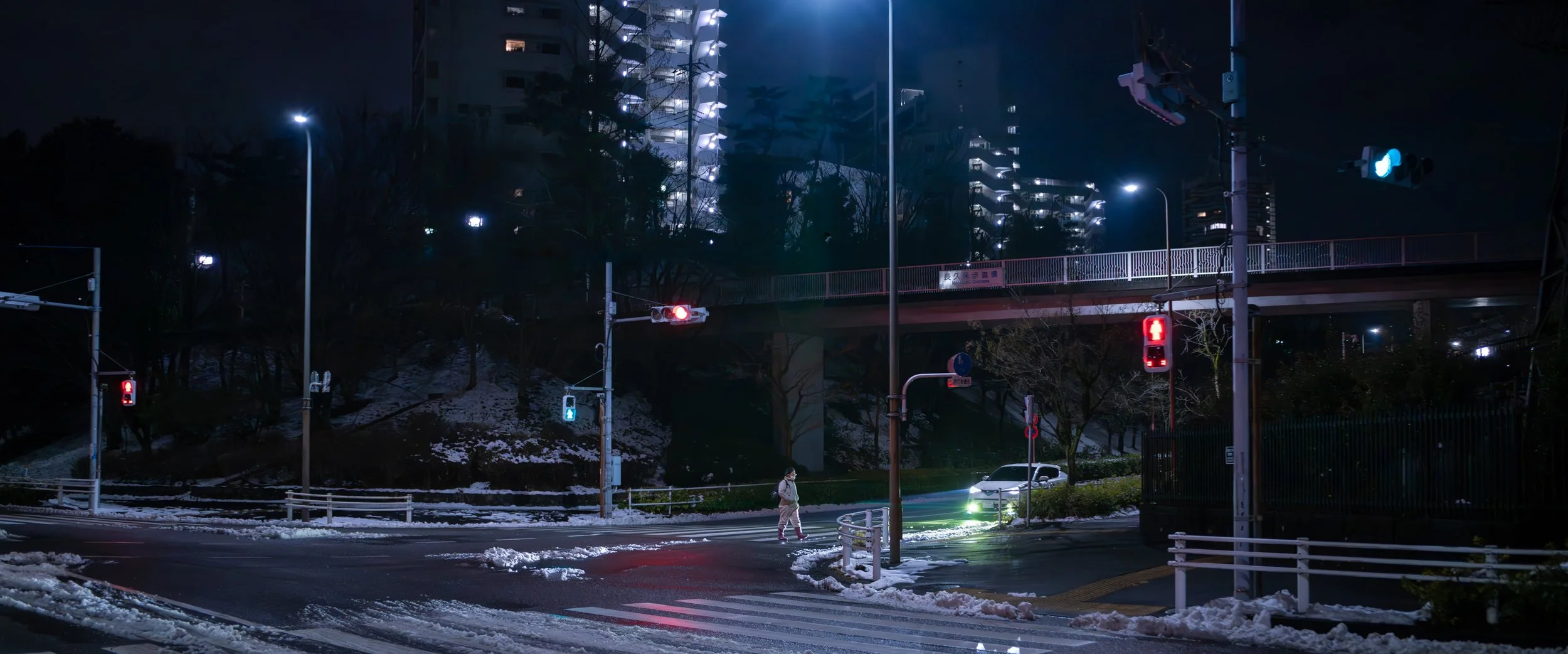
GOING HOME is a photobook by Japanese photographer Sakaguchi Tomoyuki that presents people at night in the planned suburb of Tama New Town outside Tokyo. The images show solitary figures under synthetic light in wide, quiet streets, creating a sense of the familiar and strange at the same time. Shot over several years and processed with high sensitivity and AI noise reduction, the work makes the ordinary suburb feel almost unreal, like a staged world where the idea of “home” becomes uncertain. With 60 pages and 45 photographs in English and Japanese, GOING HOME continues Sakaguchi’s long exploration of night, space, and the life between them. (Sokyusha ,shashasha, Amazon JP)
Exhibition
Sakaguchi Tomoyuki’s GOING HOME will be exhibited at Nikon Salon Shinjuku from January 6–19, 2026 (10:30 a.m. – 6:30 p.m., closed Sundays).
28F Shinjuku L Tower, 1-6-1 Nishi-Shinjuku, Tokyo.
Details: https://nij.nikon.com/activity/exhibition/thegallery/events/2026/20260106_ns.html
Project Start: Why photograph people at night in Tama New Town, and why include figures in “GOING HOME” when “HOME” had none?
I began photographing my own neighbourhood at night in 2002. Before that, I used to carry heavy equipment into central Tokyo to shoot skyscrapers, locations completely separate from my private life and therefore “appropriate” as places to make work. I believed that photographic work had to come from extraordinary environments.
But whenever I stepped out of my house at night, I found myself staring at the wall of the house across the street, the utility pole beside it, the entrance of the neighbour’s home, the asphalt of the residential road. I had always dismissed these everyday surroundings as too ordinary to be photographed. Then I realised that if I observed them quietly at night, they started to appear extraordinary.
One night, after everyone in the neighbourhood had gone to sleep, I quietly set up a tripod and photographed the house across from my apartment, the wall, the old utility pole, and the neatly arranged potted plants tended by the elderly woman who lived there.
That single exposure made everything clear to me: this was the work I was meant to make. From that night on, I stopped going into the city and instead patrolled the backstreets around my home with a camera and tripod. To avoid missing any alleys, I even bought a small GPS device; this was before smartphones existed. I would return home at dawn, immediately import the images, retouch them, and upload them to my website.
Later, I moved to a newly built suburban area and expanded the range of my nightly patrols by bicycle. This eventually became my photobook HOME, which allowed a wider audience to encounter my work.
After a few years, I had photographed every reachable area and felt the need for a change. I moved once more, this time to Tama New Town, a vast planned residential area whose development began the same year I was born. Older districts face issues such as solitary deaths among elderly residents, while new districts continue to expand and welcome young families.
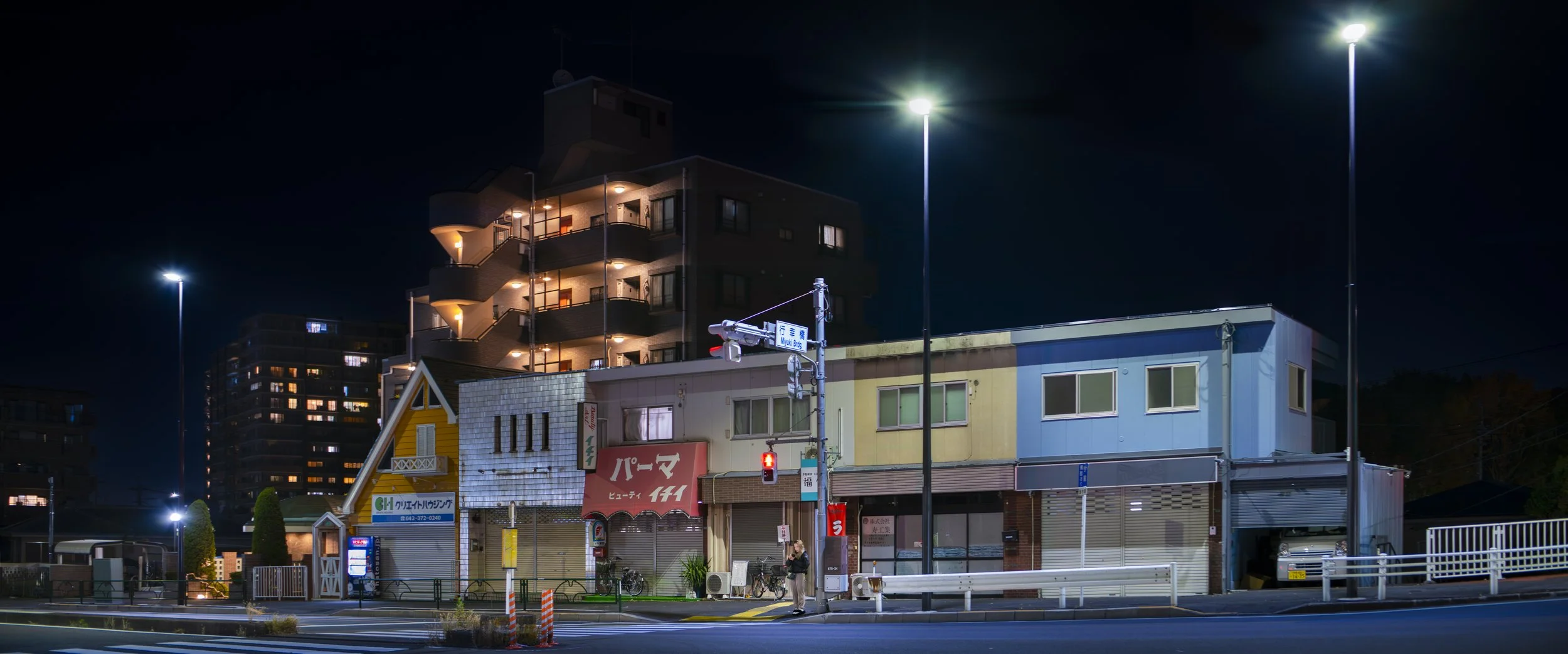
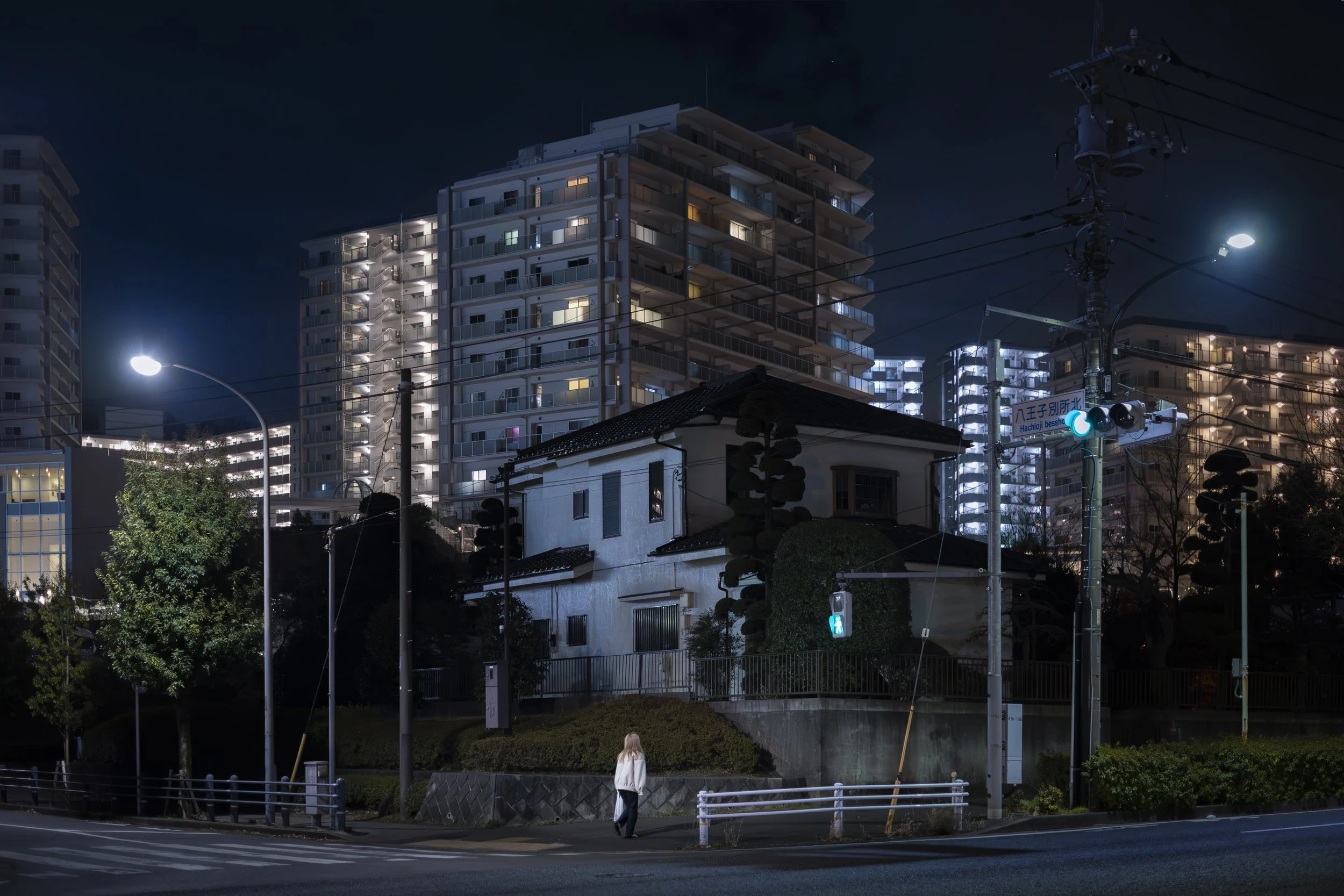
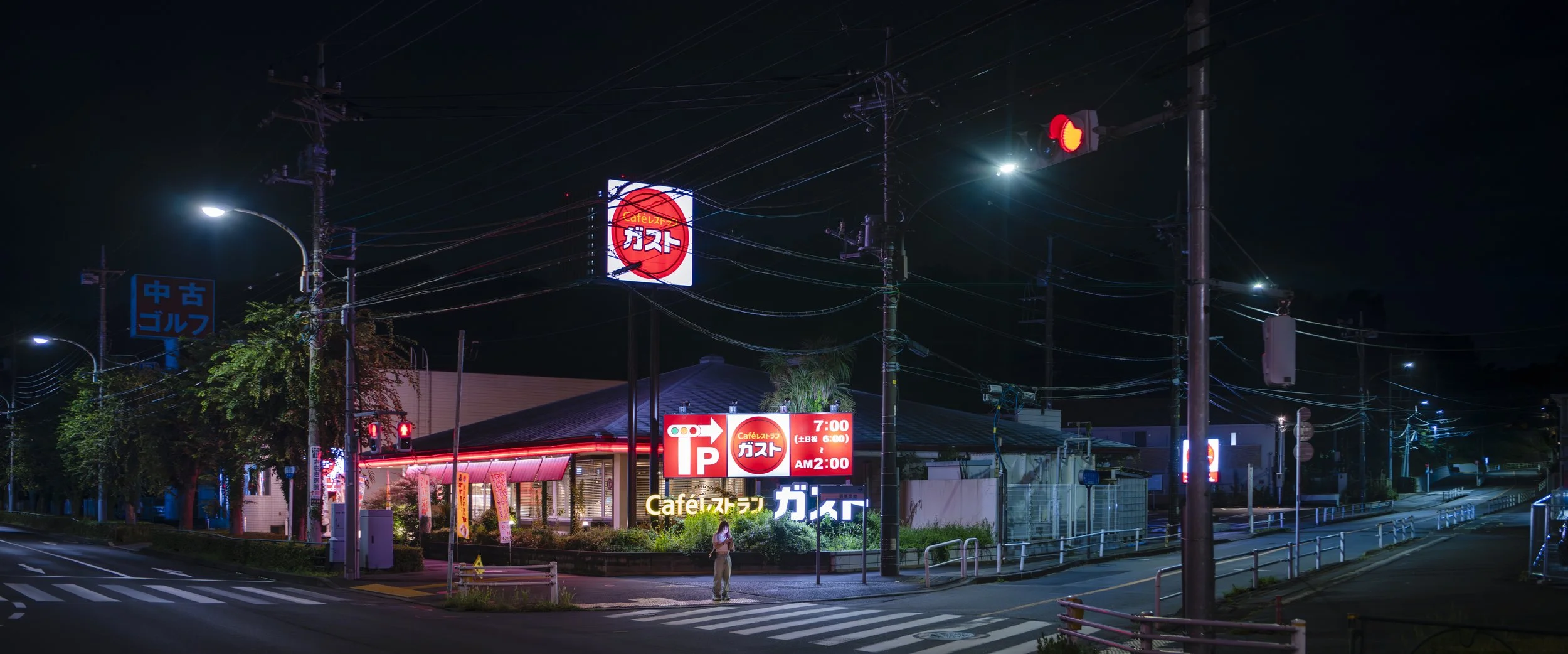
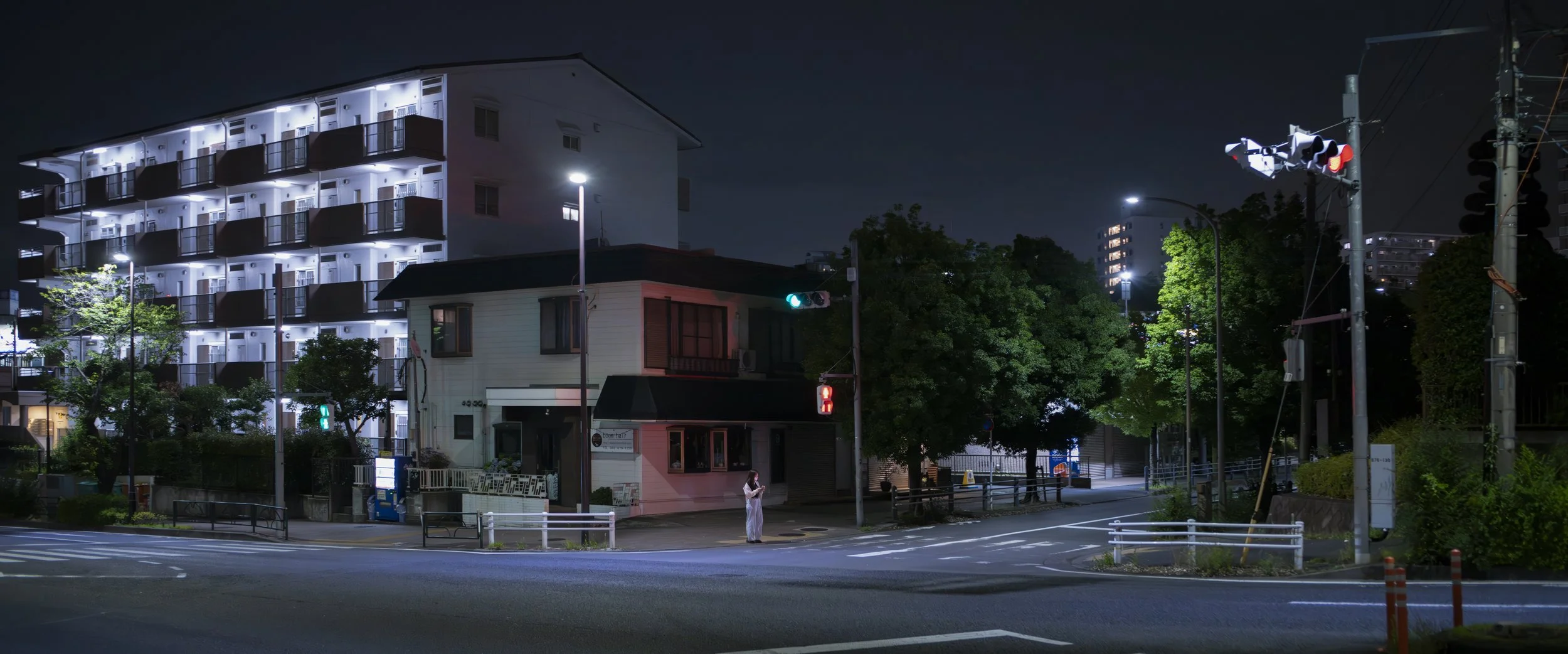
My latest work, GOING HOME, is set in this evolving landscape. Unlike HOME, where I avoided people entirely, this time I chose to treat the residents as “mob-like protagonists,” small figures surrounded by the architecture of the New Town. I also shifted my method: instead of walking through narrow alleys, I now travel by small scooter and set up the tripod at large intersections on main roads. The fundamental practice of patrolling at night, however, remains unchanged.
Digital Aesthetic & AI Technology: Why pursue an artificial look, and how does AI noise reduction affect the mood?
With today’s digital cameras, I can shoot at extremely high ISOs, over ISO 10,000, at fast shutter speeds. This makes it possible to photograph people illuminated only by streetlights. When I made HOME, every exposure was 30 seconds. In GOING HOME, I can shoot at 1/125 or even 1/8 second, which allows me to capture not only people waiting at traffic lights but also people walking.
Even so, ultra-high ISO still produces heavy digital noise. Recent AI-based noise-reduction tools allow me to transform those gritty files into something suitable for a photobook or exhibition. In that sense, the project depends heavily on current technology.
If I apply the AI noise reduction too strongly, the photographic texture disappears and the image becomes extremely smooth, almost like flat digital paint. When pushed too far, it loses tension and becomes too illustrative. I adjust it to the point where the photograph still retains a fragile trace of realism, while drifting towards the artificiality of CG environments or anime background art.
For this project, I embrace that artificiality. When I look at a person crossing an intersection, it sometimes feels as if they’re stepping into a photorealistic virtual game world.
Light and Colour: What camera settings create the unusual colour palette?
People often ask about the colours, but I don’t use any special settings. Anyone can try this, even with a smartphone. At night, different types of streetlights, LEDs, mercury vapour lamps, and others, mix their colour temperatures. If you correct the buildings to look natural, the sky shifts in the opposite direction. On a road lit by mercury lamps, everything turns green; if you correct that, the unlit areas shift towards magenta.
The strange colours in my photographs come directly from that mixture of artificial lights.
Location Choice: Why is Tama New Town ideal for expressing loneliness and artificiality?
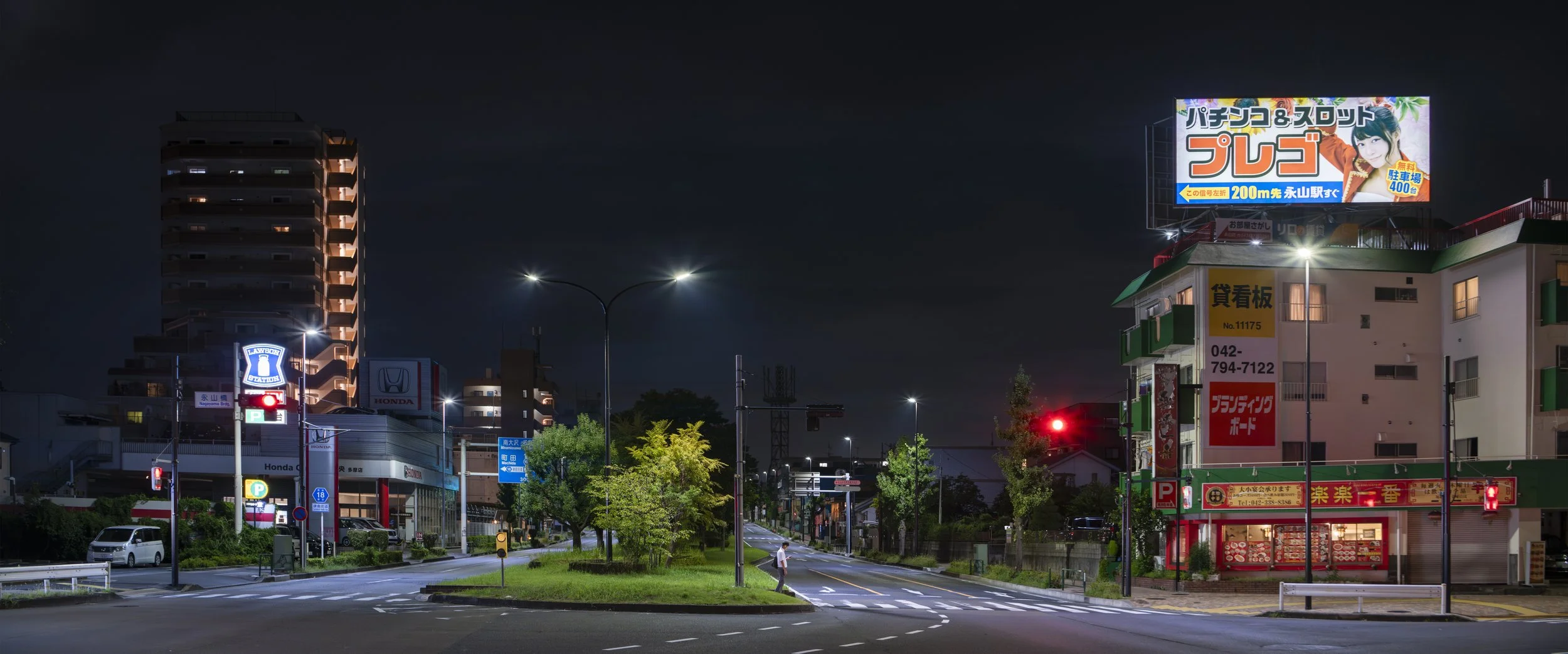
Tama New Town is a large-scale planned environment. Although some privately developed areas are mixed in, each district strongly reflects the architectural trends of its era, from 1970s apartment complexes to the newest residential blocks of the 2020s. These layers create a kind of chronological gradient.
Under artificial light at night, these different eras feel stitched together like the constructed environments of a video game. Walking through the area gives me the sensation of logging into a virtual map where reality and unreality overlap.
Composition: Why are people so small in the frame, and how do you decide their placement?
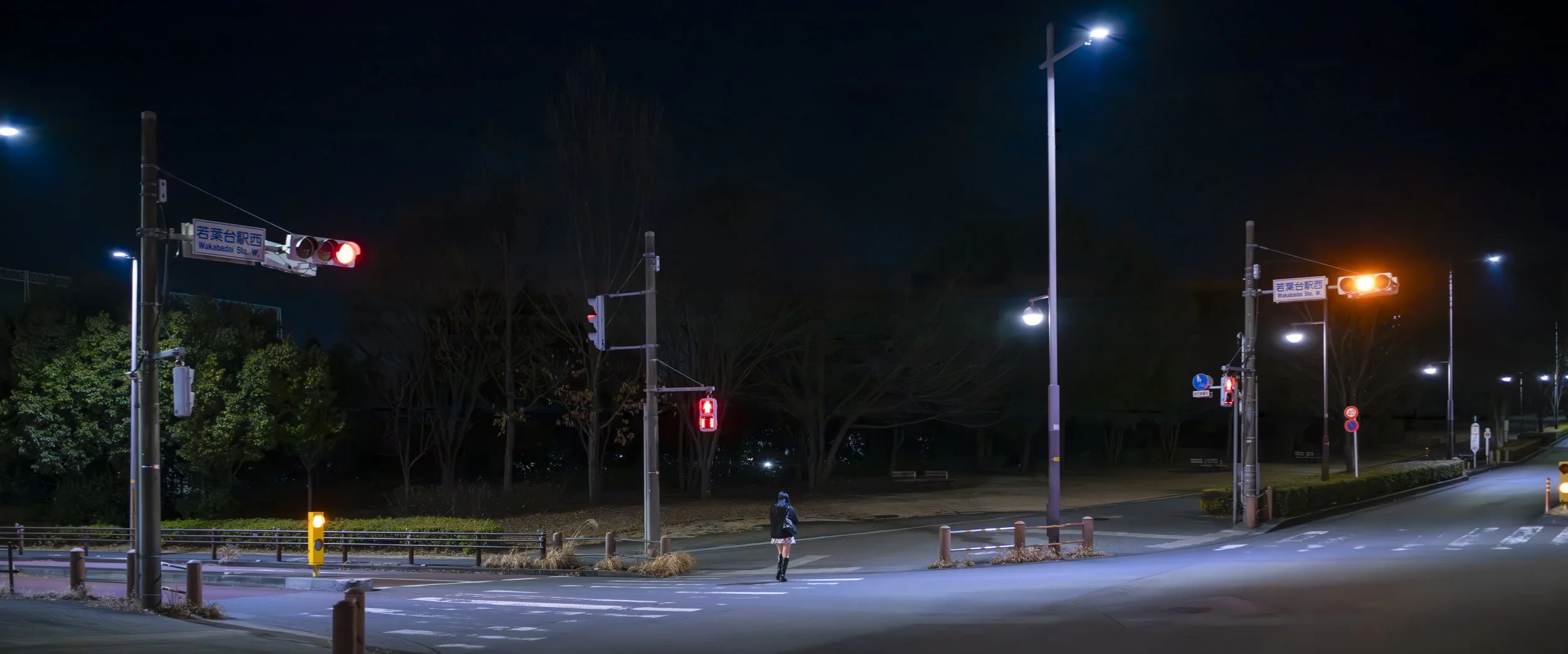
With a few exceptions, I place the figure in the centre of the frame. Later in the project, I used lenses capable of panoramic formats, which made this rule even more deliberate.
I also keep enough distance so that the person’s face is not clearly identifiable. Large intersections naturally create that scale. In today’s climate, where concerns over portrait rights have increased, this distance feels appropriate. I myself have become more drawn to anonymous figures rather than intimate street-snap portraits.
There’s also an influence from open-world RPGs, which I often play. The small, centred figure is a visual metaphor for that gaming experience. While photographing, I sometimes feel as if the people moving through the intersection are avatars, each with its own “skin”, being controlled by unseen players.
The shooting process also mirrors game exploration: Tama New Town is vast yet bounded, like a map. I move through it at night, and when I find an intersection with the right potential, I set up the tripod and wait.
Finding Subjects: How do you encounter people in such empty late-night settings?
Once I set up the tripod and compose the frame, I simply wait for someone to pass through the centre. I wait an hour, sometimes two. If no one comes, I move on to the next intersection and wait again. But at a certain hour, the town empties completely. When it reaches that point, the night’s session ends.
More photography books?
We'd love to read your comments below, sharing your thoughts and insights on the artist's work. Looking forward to welcoming you back for our next [book spotlight]. See you then!
Color entered Janelle Lynch’s photographs through painting. In Another Way of Looking at Love, she photographed plants and trees on her property in the Catskills. Photography Book Spotlight