Art vs Pornography: Buku Sarkar on Consent, Control, and the Female Gaze
Welcome to another captivating photo essay, this time by Buku Sarkar We'd love to hear your thoughts. Feel free to comment below and, if you're interested, share your photo essay with us. Your perspectives add valuable dimensions to our collective exploration.
Where does art end and pornography begin in photography?
This question sits at the center of Buku Sarkar’s photo essay Art vs Pornography. In both the essay and the interview, she looks closely at images that feel erotic, artistic, and uncomfortable at the same time. She does not offer clear answers, but instead explains how intention, gaze, and power shape how these photographs are read. The result is a conversation that challenges easy labels and forces the viewer to stay with the tension.
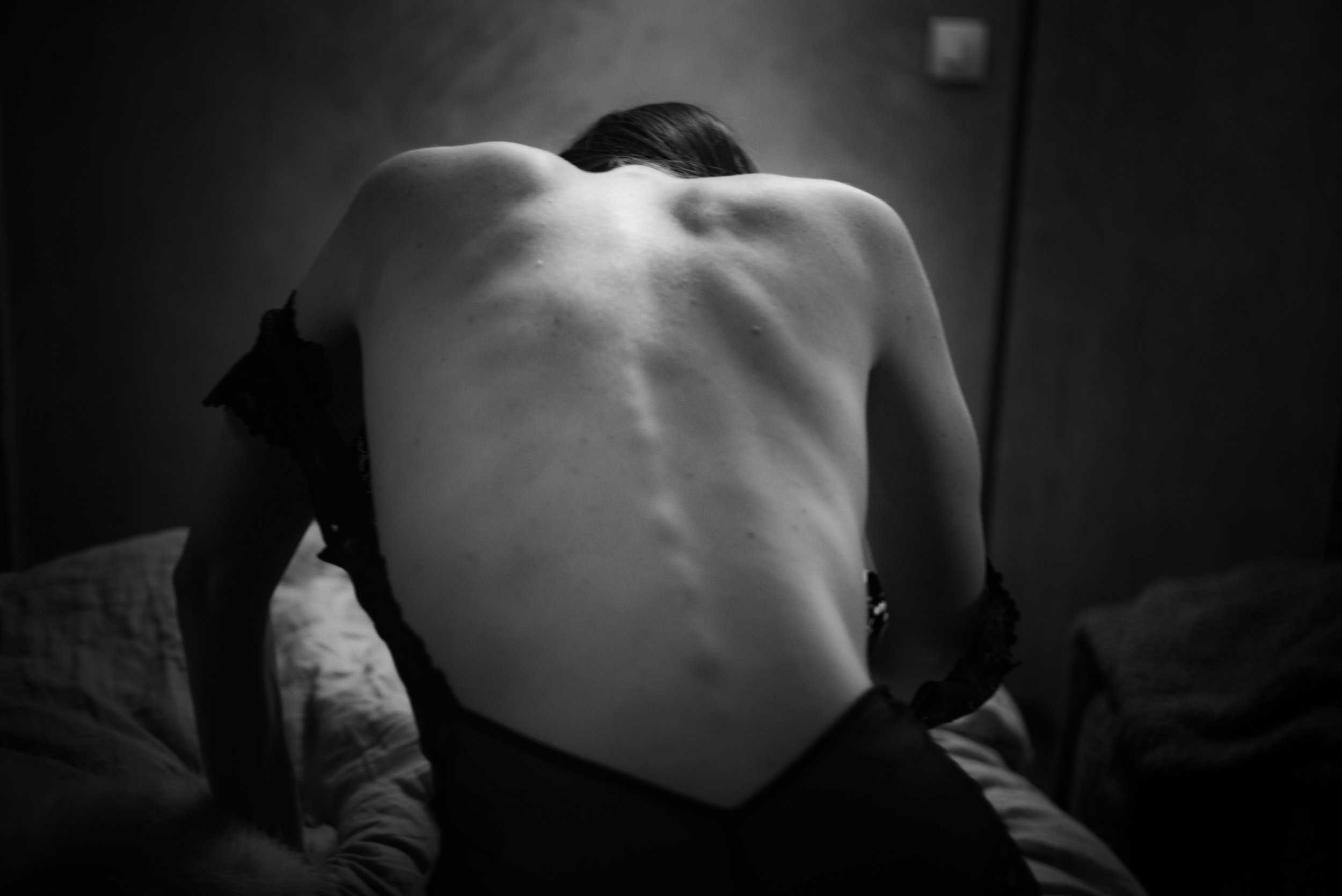
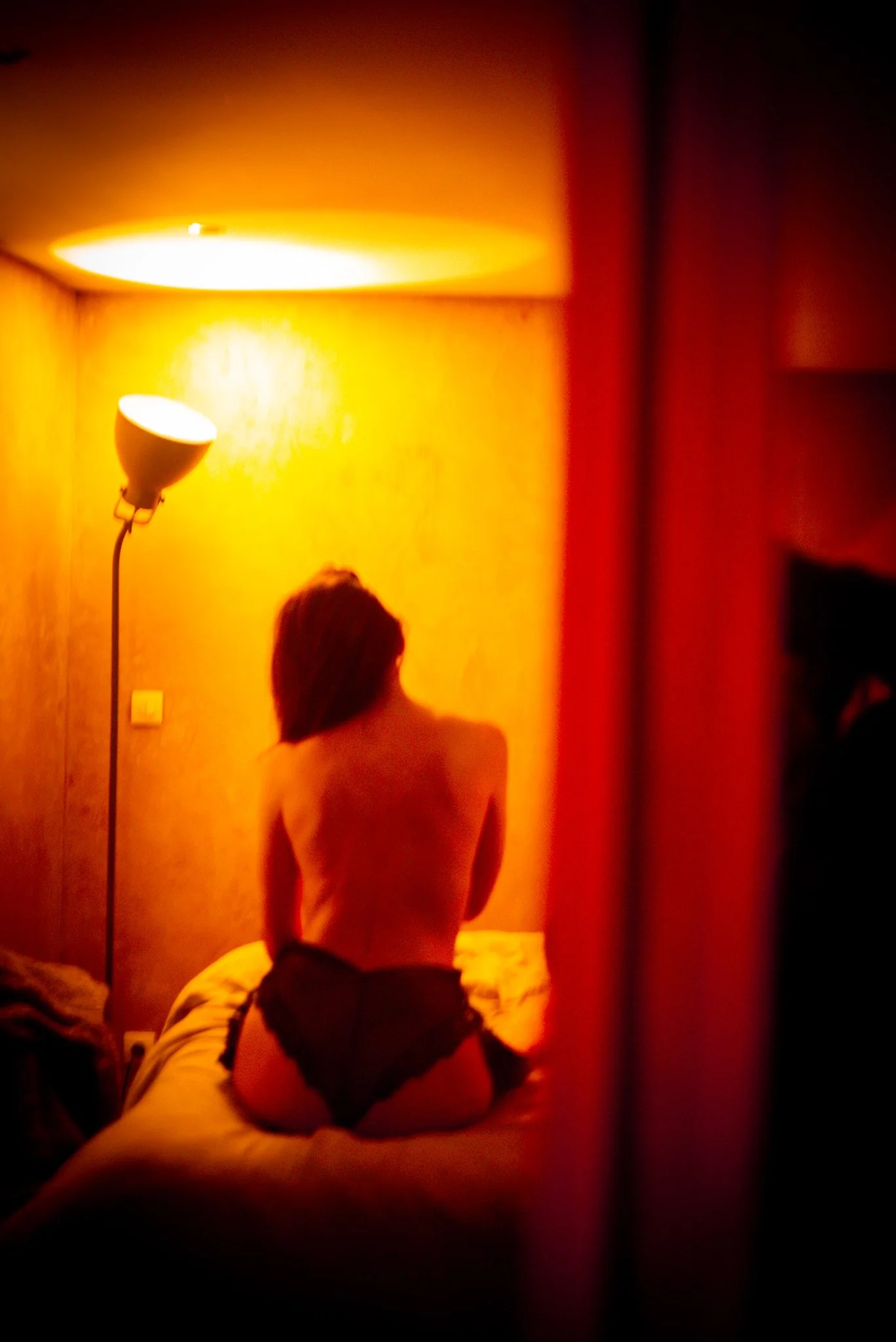
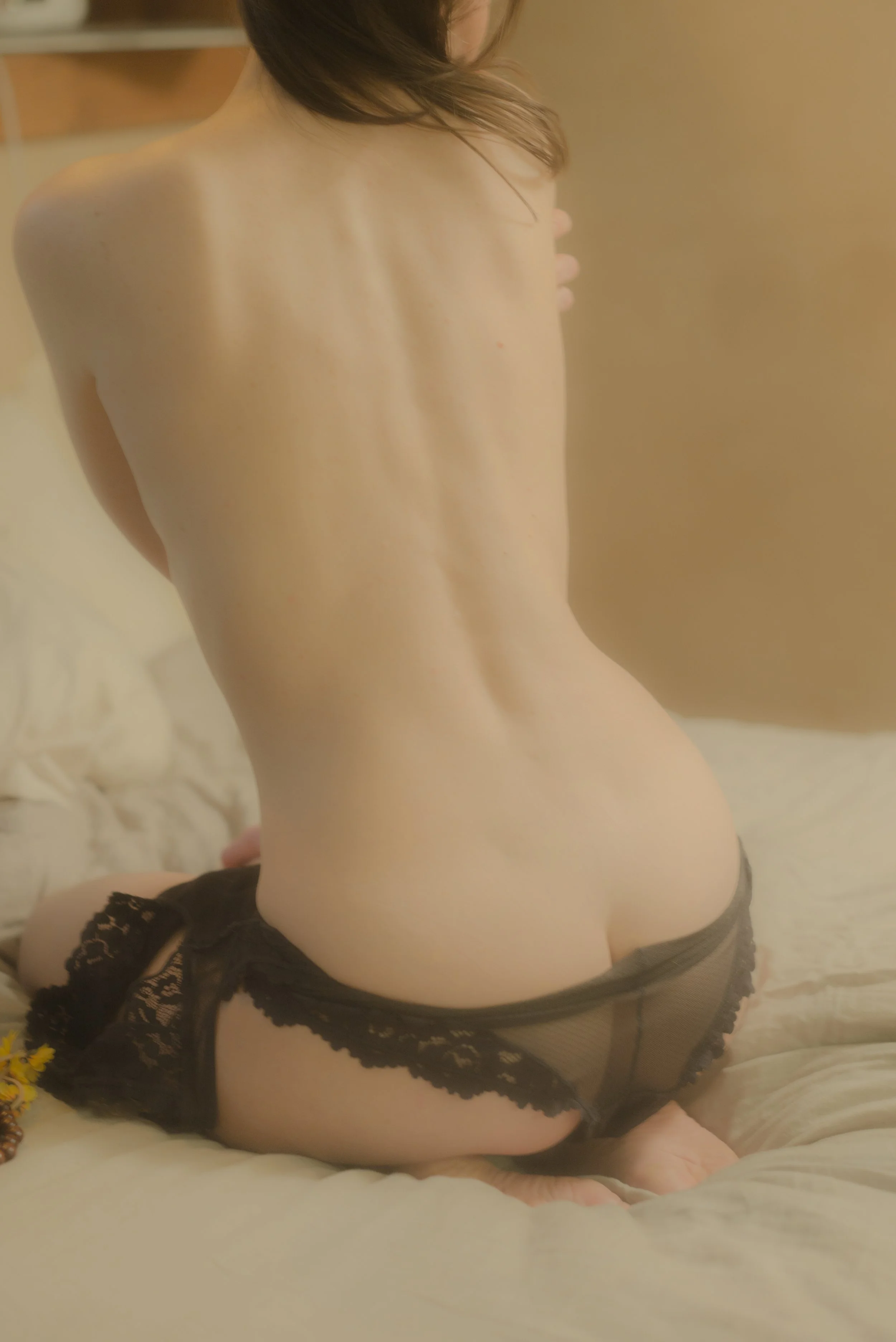
Some of the photographs in this project can easily be mistaken for pornographic images.
That confusion is not accidental and Sarkar openly admits she struggles with it herself. As a woman photographing other women who choose their own poses and clothing, she questions whether authorship really changes how images are judged. The interview expands on this by discussing consent, control, cultural context, and why empowerment can still look troubling. Together, the essay and the interview show that the line between art and pornography is not fixed, and that asking the question may matter more than answering it.
Buku Sarkar
Art vs Pornography, photo essay
Once again, my current photography project has me thinking about the naked in the nude: how we observe the nude in art, in film, in television. And mostly what has been bothering me is the question: What is the difference between art and pornography? Is it the artist intent? Or is it the viewers observations?
From John Berger’s Ways of Seeing:
The prize is to be owned by a judge - that is to say to be available for him. Charles the Second commissioned a secret painting from Lely. It is a highly typical image of the tradition. Nominally it might be a Venus and Cupid. In fact it is a portrait of one of the King's mistresses, Nell Gwynne. It shows her passively looking at the spectator staring at her naked.
This nakedness is not, however, an expression of her own feelings; it is a sign of her submission to the owner's feelings or demands. (The owner of both woman and painting.) The painting, when the King showed it to others, demonstrated this submission and his guests envied him.
It is worth noticing that in other non-European traditions - in Indian art, Persian art, African art, Pre Columbian art - nakedness is never supine in this way. And if, in these traditions, the theme of a work is sexual attraction, it is likely to show active sexual love as between two people, the woman as active as the man, the actions of each absorbing the other.
To add to what Berger writes, if you look at this passage from The Birth of Kumara by Kalidasa, you can see how unrestrained and free the Indian culture were in the ancient times. And I’m sure everyone by now has seen some carving from the Ajanta and Ellora Caves.
This is a passage where Rati laments the death of her husband. It’s ironic that you can find such texts in western literature now but no longer in Indian.
Berger continues:
We can now begin to see the difference between nakedness and nudity in the European tradition. In his book on The Nude Kenneth Clark maintains that to be naked is simply to be without clothes, whereas the nude is a form of art. According to him, a nude is not the starting point of a painting, but a way of seeing which the painting achieves. To some degree, this is true - although the way of seeing 'a nude' is not necessarily confined to art: there are also nude photographs, nude poses, nude gestures. What is true is that the nude is always conventionalized - and the authority for its conventions derives from a certain tradition of art.
To be naked is to be oneself.
To be nude is to be seen naked by others and yet not recognized for oneself.
A naked body has to be seen as an object in order to become a nude. (The sight of it as an object stimulates the use of it as an object.) Nakedness reveals itself. Nudity is placed on display.
To be naked is to be without disguise.
To be on display is to have the surface of one's own skin, the hairs of one's own body, turned into a disguise which, in that situation, can never be discarded. The nude is condemned to never being naked. Nudity is a form of dress.
Ann Eaten in her article What’s Wrong with the (female)Nude says: Many feminists will argue that fundamentally pornography as well as nude art, specifically European female nudes both demean the female and makes her inferior to the male.
But she also goes on to say that the primary difference between female nude in art and that in pornography is the element of aesthetics. Many of the paintings that Berger and Eaton discussing their articles (primary European canonical art) display a sense of skill and creativity and beauty that somehow exempt it from being judged morally.
She says, unlike pornographic art, the Canna Nickel works that she and Berger discuss make sexual inequality, not just sexy but beautiful; lend sex an authority that gives these work of art a special authority and makes them immune to political scrutiny.
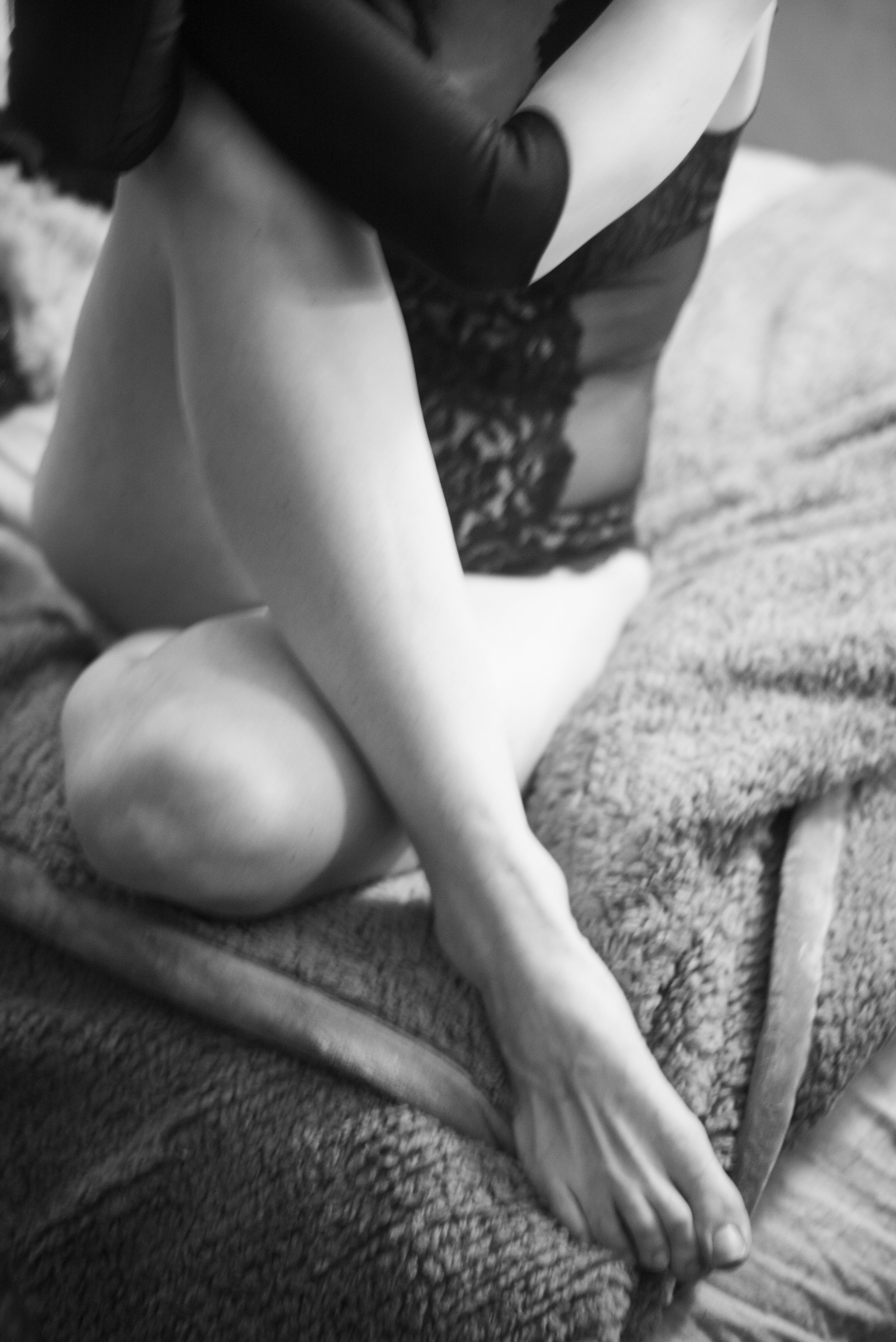
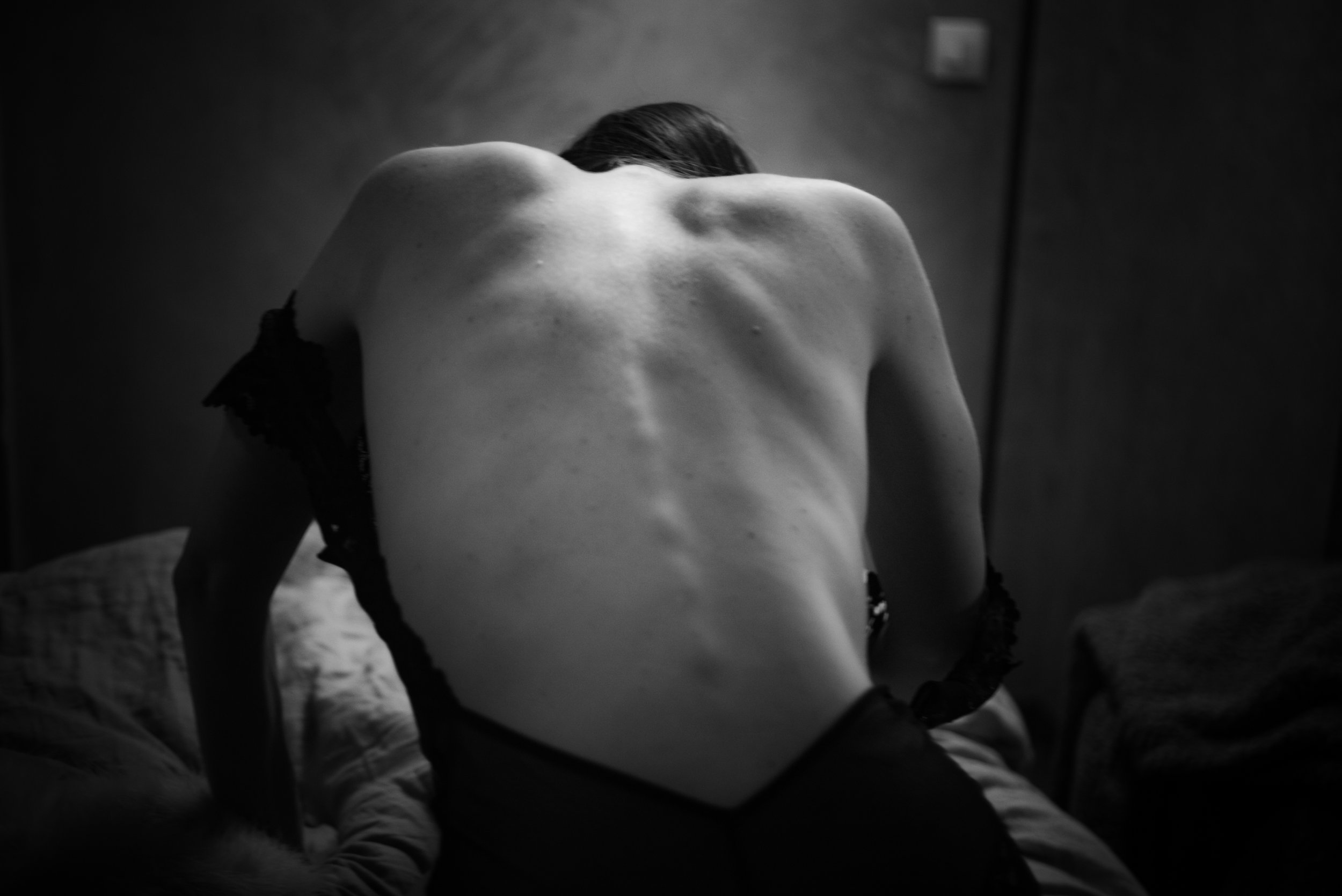
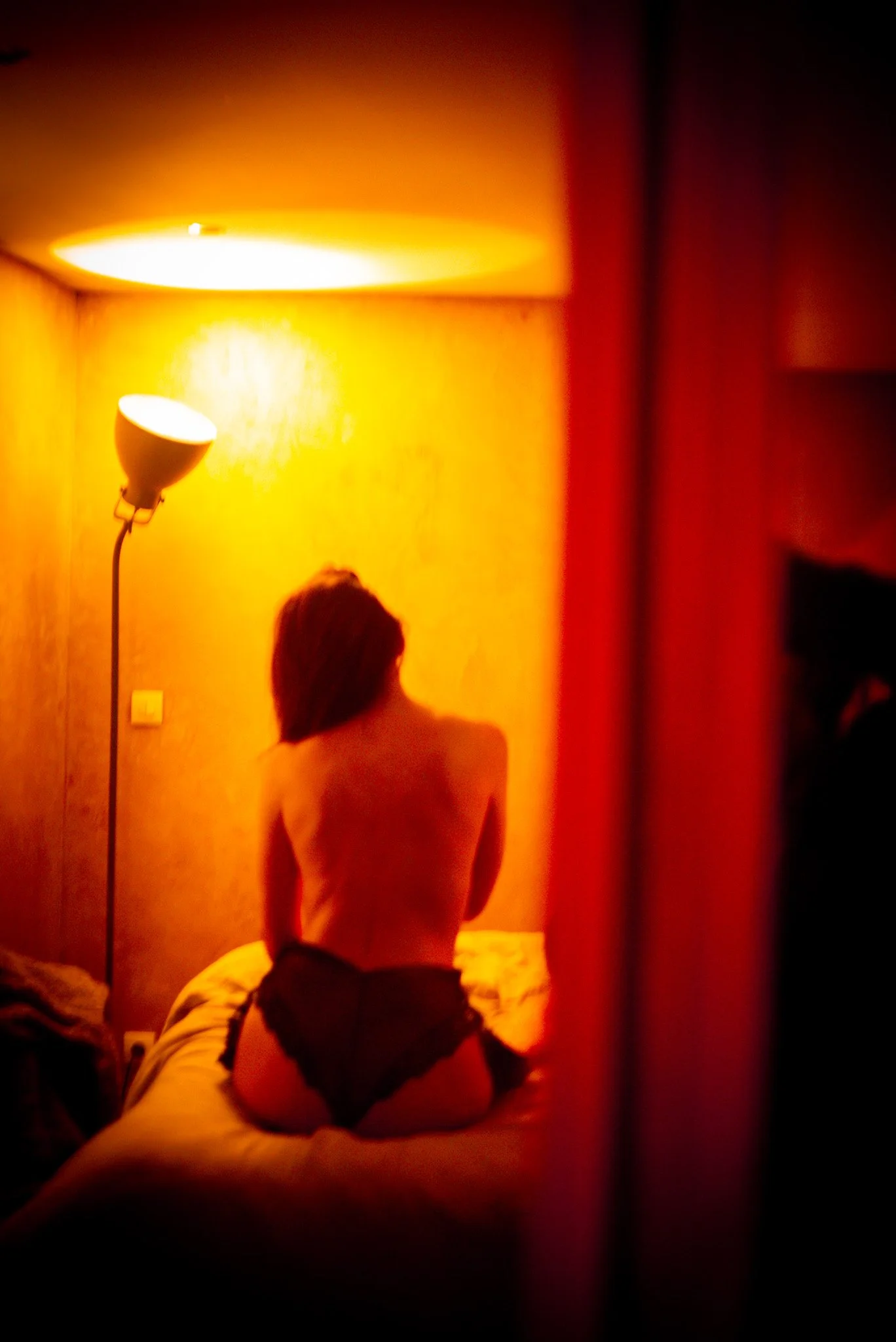
At any rate, I look at some of the pictures that I’ve taken and I’m not sure I can tell the difference. I can tell what my intent was, but if I put one of my images next to one from, say, a Playboy magazine, I’m not sure what the difference would be. I am not trying to create a sense of inequality in the female, in fact I was trying to do the opposite by giving them the power of dictating how they want to be seen. If you look at some of these images here, much of the choreography and style was not chosen by me the photographer but rather by the model herself. She chose what to wear. She chose to bare her back. And it by no means means that she feels inferior herself. In fact, the reason she decided to take part in this project was to overcome a sense of inferiority that was instilled in her from childhood.
Art vs Pornography?
I don’t know what the answer to this question is. I do not think there is a clear answer. One thing is for sure that feminism thinks that female nudes albeit not all of them creates an inequality between the man and the woman. And now I’m in a conundrum because some of my photographs have a pornographic feel whereas I set out to empower women.
You say the models choose their own poses and clothes. Can you describe what actually happens during a photoshoot? Who decides what and when?
Before any shoot, I always meet with the participant first, for coffee, usually. We talk, and I ask them why they want to participate in this series. Often, it leads to very private reflections on their past. We then settle on a day for the shoot, and I always request that they bring with them anything they wish to wear in front of the lens.
This is usually where I'm surprised because I typically think they will bring a shawl or some such, and they end up getting a sexy negligee. So this gives me an idea of where they want to venture, and this is very important for them to decide. Not me. Some have just walked in and taken off clothes. Some remain fully clothed. And all of that is fine. There are so many incredibly creative ways to capture a female form. In fact, I tell them usually to keep most of their clothes on. It's easy to take a picture of a naked body. I'm more interested in conceptual photography.
You wrote that you can't always tell the difference between your photos and ones from magazines like Playboy. What do other people say when they see your work? Do different people see different things?
Well, anyone who is educated in photography can tell immediately. But the average person, say childhood friends or family on Facebook, did think that I was sort of going mad when I started posting my self-portrait images from Containment Diaries. But now, after all these years, they know there's a grander purpose.
On Instagram, one still gets rude comments from men, typically Indian men, but that's social media. You just delete and move on.
I wrote another essay where I explain how I take the self-portraits. There is one image of me lying face down on the bed, my feet and butt clearly visible. People initially think it's a provocative image, but actually, it was the first self-portrait I took, and I was just dressed the way I was at that time, in a tank top and underwear, and I thought, well, what does one do in a self-portrait (given that I've never taken selfies), so I thought, I'll just do what I always do, faint. So it was actually an image of me fainting on the bed.
You talk about how Indian and other non-European art shows women as active and equal, not passive. Do you try to show this in your photos? How do you do it?
Very much, and I think most of the women who have come to participate come for very specific reasons, so they are never passive. They are there to explore some part of themselves. This is something I explain in the Open Call posts, so I'm always prepared for some intense discussion and then just to allow the magic to happen and let the participant unfold the way he/she wishes. It's so incredible how different it is every single time.
One model joined your project to feel better about herself after difficult childhood experiences. What was it like to photograph her? Did working with her change how you think about your project?
Well, I was hesitant with her. I thought she wouldn't want to show much of her body, so I started the shoot with her fully clothed till she took out the most sparse, barely concealing lingerie out of her bag. And I thought, Oh, alright. That's where she wants to explore...
You end by saying you're confused because some photos look pornographic even though you wanted to empower women. Maybe this confusion is actually important? Does not having a clear answer help your work in some way?
What's interesting is actually that if men took these images, they would be called on for objectifying women and so on. But I am a female photographer photographing another female. I have, of late, been reflecting a lot on what that means, if much at all. How culpable am I as those male models because I too have been raised with the same stereotypes as them, to be honest?
So after each shoot now, I write a short essay about it, to think about what really happened. What kind of a gaze was it, etc.? Yes, this confusion is unavoidable. And one would be abnormal not to feel the confusion. And part of art is to tackle that confusion. There are no answers really. It's just how one navigates certain questions.

Michael Behlen photographed water that would not stay still. For three years, he returned to Millerton Lake in California’s Central Valley, making all the photographs during storms, when the reservoir became harder to read. Picture Story