AT A GLANCE
- Known for
- The Ballad of Sexual Dependency: a color diary of her friends, lovers and chosen family, shown as a slideshow with music
- Works in
- Color slides, slideshows with soundtracks, prints, film
- Camera
- Polaroids at school as a teenager; later color slide film shown on a Kodak carousel projector
- Also
- Slideshows The Other Side, Sisters, Saints, and Sibyls and Memory Lost; founder of the activist group P.A.I.N. (2017)
- Awards
- Commandeur des Arts et des Lettres (2006) · Hasselblad Award (2007) · Edward MacDowell Award (2012)
- Start with
- The Ballad of Sexual Dependency (Aperture, 1986)
Nan Goldin (born 1953) is an American photographer and artist. For more than fifty years she has photographed her own life: her friends, her lovers and the family she made for herself. Her best known work, The Ballad of Sexual Dependency, began as a slideshow in New York clubs and became a book in 1986. She shows most of her work as slideshows with music, which she calls films made of still pictures. The Hasselblad Foundation, giving her its award in 2007, called her one of the most significant photographers of our time.
The story
Boston, the early 1970s. Nan Goldin spent her first night at The Other Side, a drag queen bar. She was eighteen. Later she wrote that from that first night she came to life. Within a few months she had moved in with her friend Ivy and another friend.
Every night the friends went to the bar. Goldin called it “our haven and our headquarters.” She photographed them every day, in black and white, because she wanted to show them how beautiful they were. These pictures were her first body of work, and in 1973 they had their first show, at Project, Inc. in Cambridge.
Then she went to art school, at the School of the Museum of Fine Arts in Boston. But during a stay in Provincetown she had no darkroom, so she could not make prints. She showed her pictures as slides instead. That is how her slideshows began.
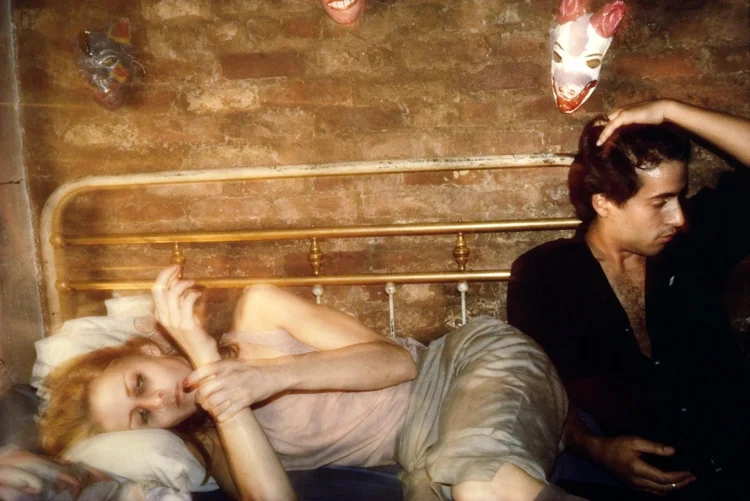
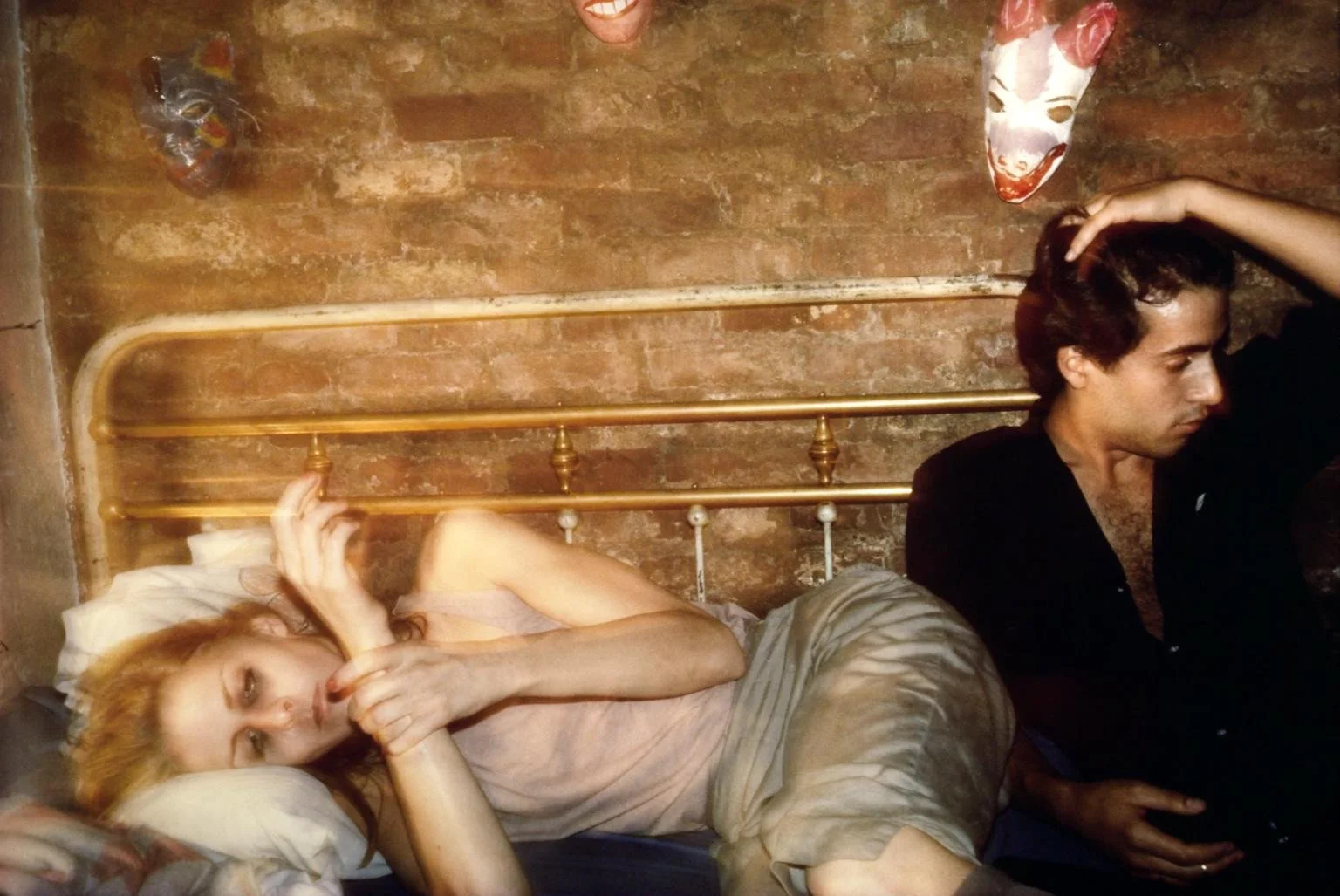
In 1978 she moved to New York. She photographed her friends in clubs, bars, underground cinemas and at her home on the Bowery, in strong color. Pictures like Greer and Robert on the bed, NYC, from 1982, grew into one long slideshow: The Ballad of Sexual Dependency. Its name comes from a song in The Threepenny Opera by Bertolt Brecht and Kurt Weill.
At first she showed it at parties and in nightclubs, changing the order of the slides as she went. Then it went into the Times Square Show in 1980 and the Whitney Biennial in 1985. Aperture published it as a book in 1986. The slideshow kept changing, and she has never shown the same version twice.
She has explained the form in one short line: “My slideshows are films made up of stills.”
The work
Goldin was born in Washington, D.C., in 1953. When she was eleven, her older sister Barbara died by suicide. Many years later Goldin told this story in the slideshow Sisters, Saints, and Sibyls. As a teenager she went to Satya Community School in Lincoln, Massachusetts, a free school where students could choose their lessons. Teachers from MIT secured a donation of Polaroids for the school, and there she found her voice in photography. Her classmate David Armstrong became one of her first subjects and a lifelong friend.
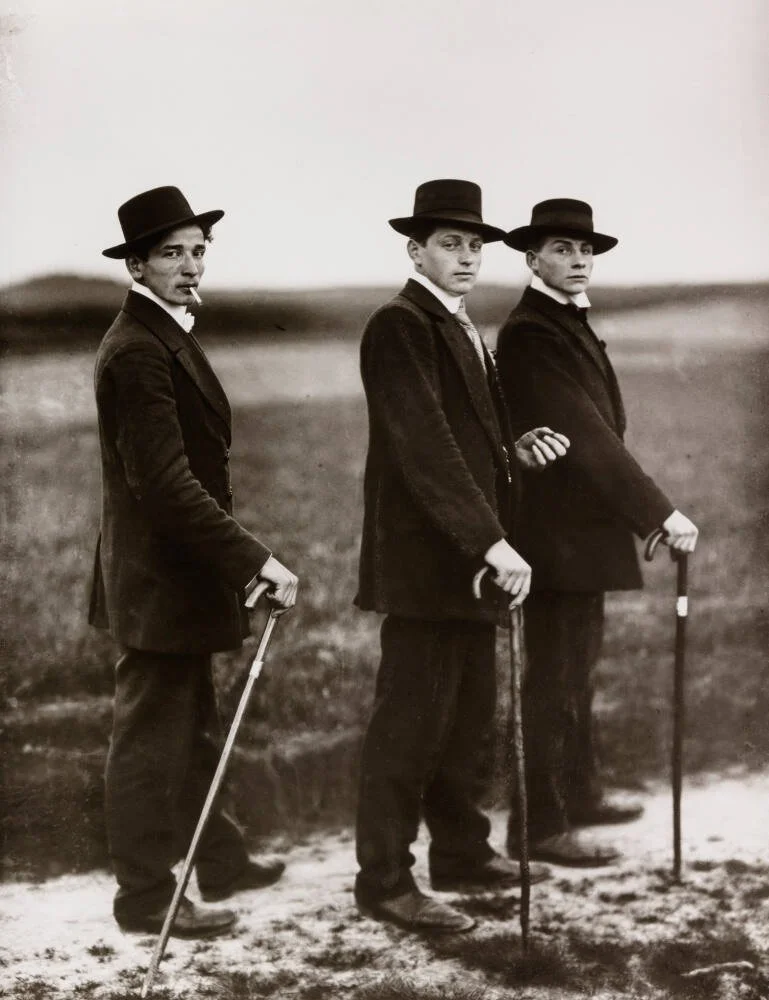
Film mattered to her from the start. She and her friends went to the movies almost every day. When she took her first photography course at nineteen, she discovered Diane Arbus, Larry Clark, Weegee and August Sander. Before that, she said, the glamour of Hollywood and the fashion pictures of Guy Bourdin and Louise Dahl-Wolfe had shaped her eye.
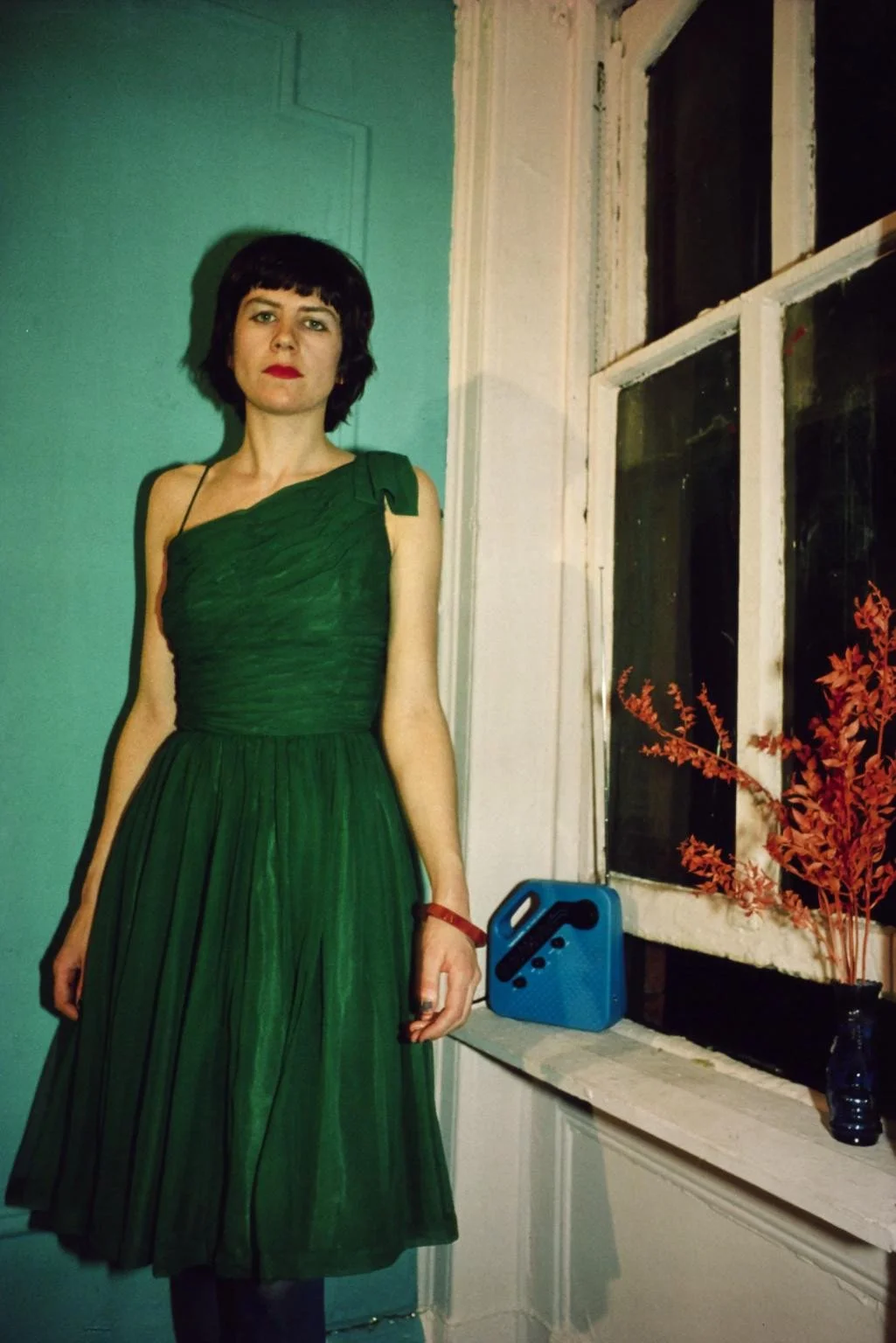
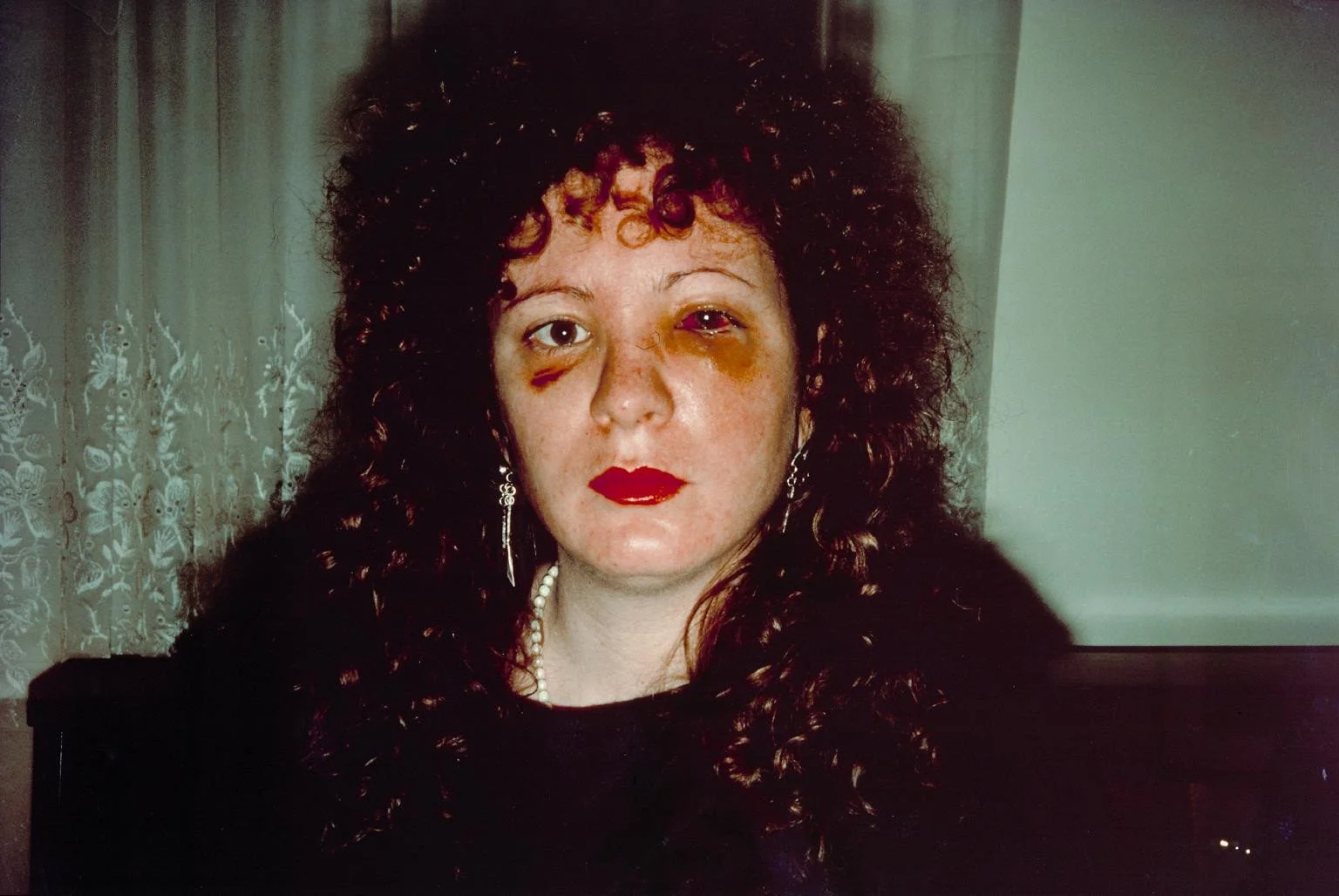
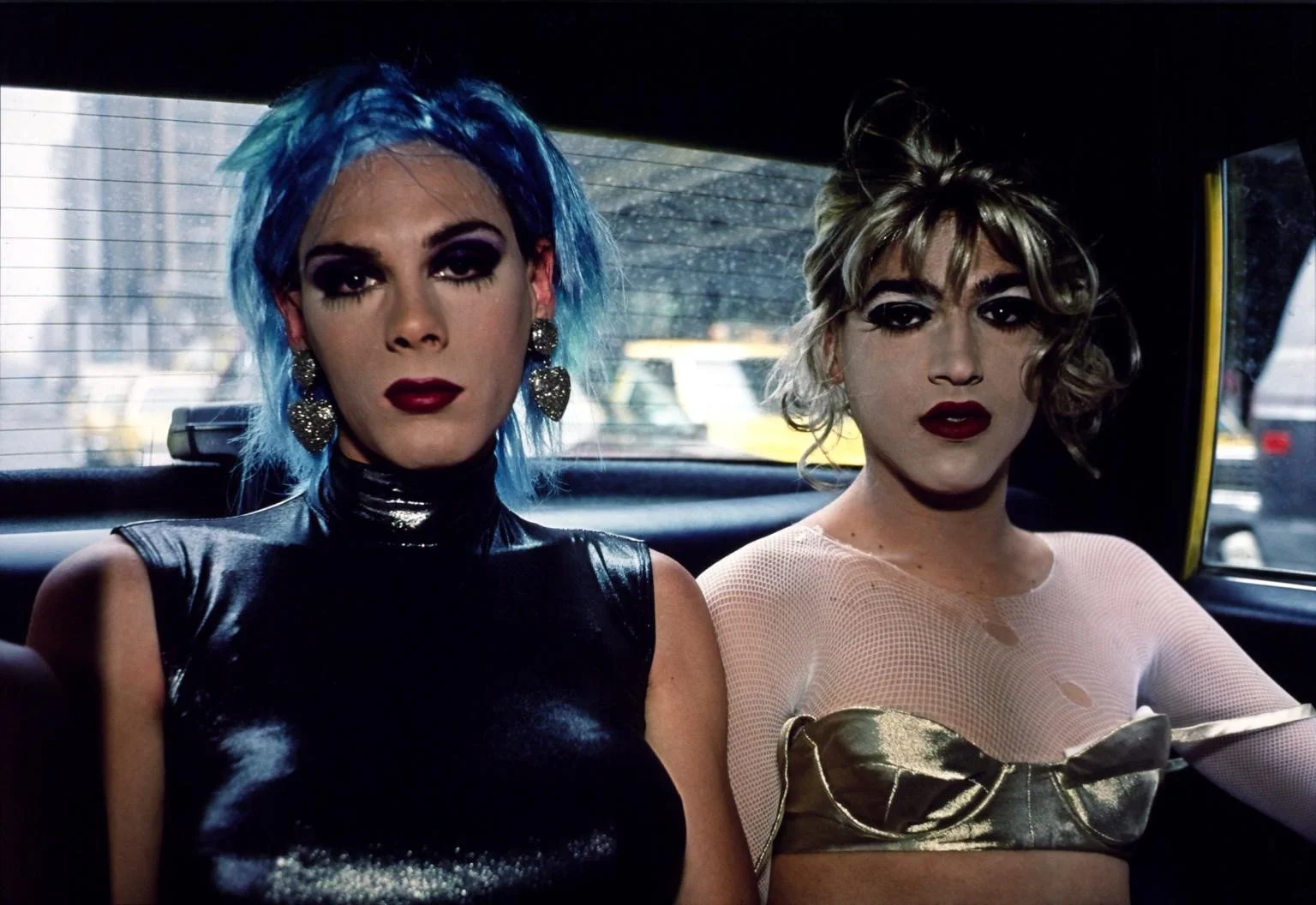
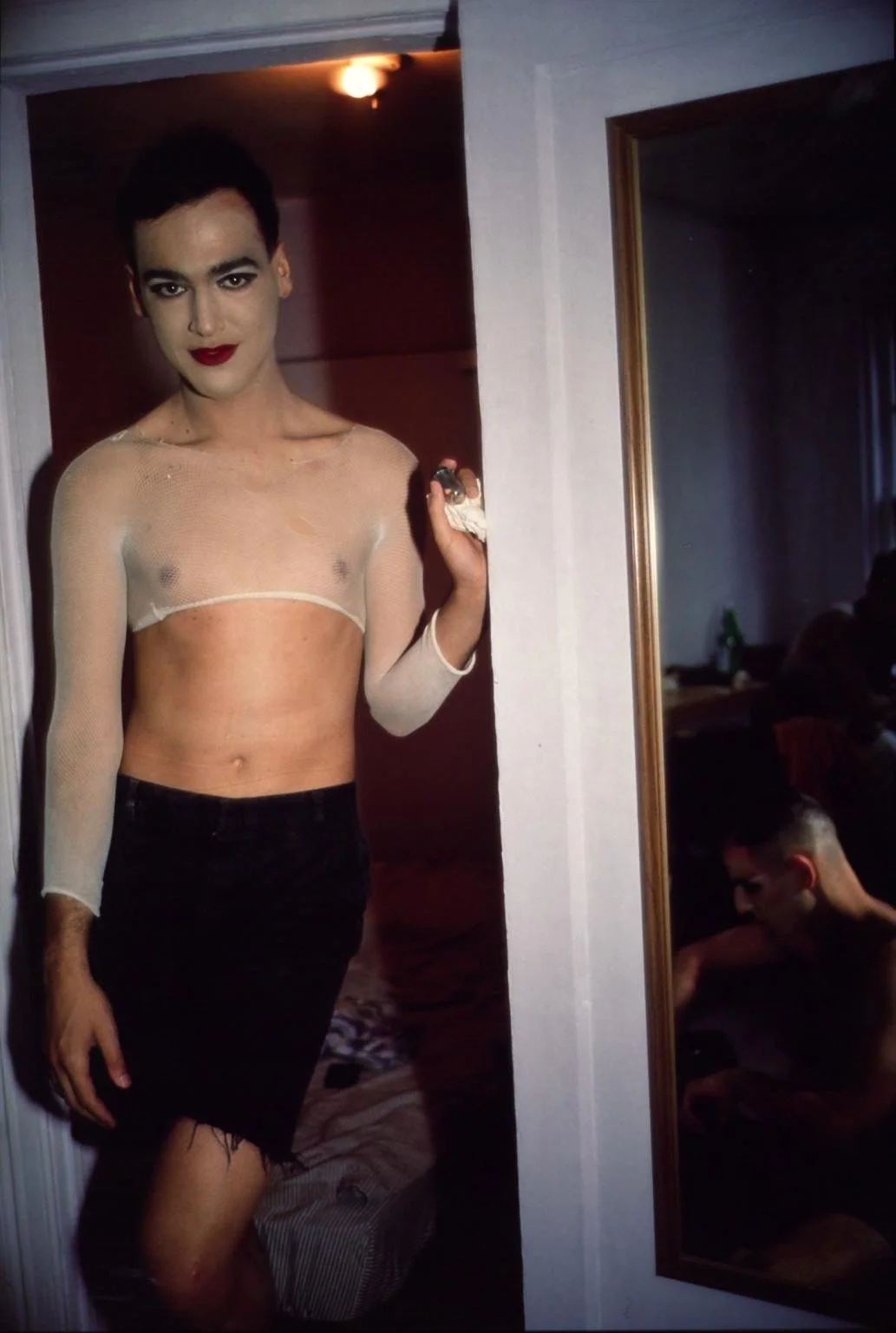
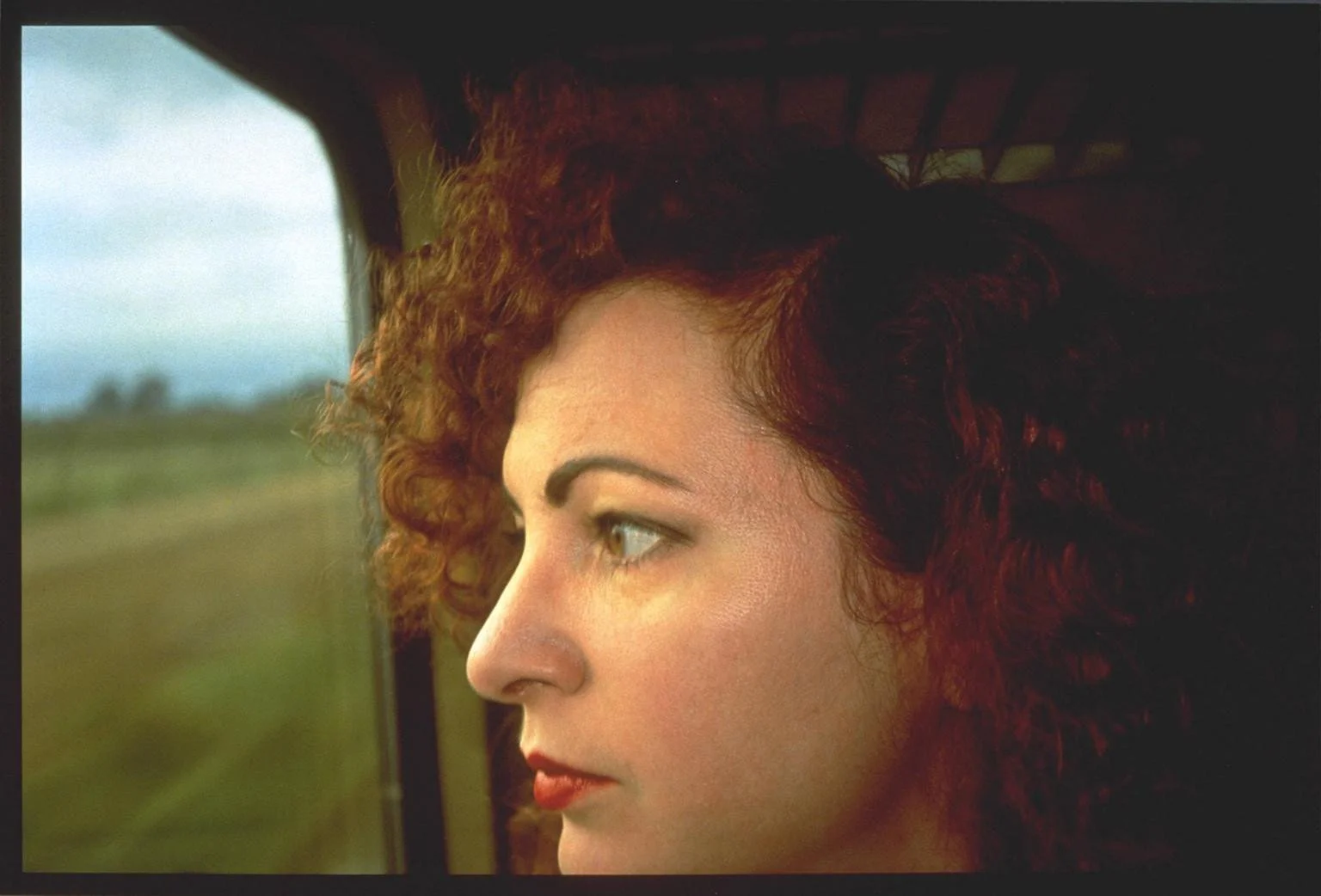
Her method is simple to describe and hard to copy. She does not choose people in order to photograph them. She photographs the people she lives with, as in Vivienne in the green dress, NYC, 1980. She also turned the camera on herself, in pictures such as Nan one month after being battered, 1984, and Self-Portrait on the train, Germany, 1992. In the 1990s she photographed friends from the drag and trans scene again, in Misty and Jimmy Paulette in a taxi, NYC, 1991, and Jimmy Paulette and Tabboo! undressing, NYC, 1991.
In the late 1980s, AIDS took many of her friends. Goldin joined groups such as ACT UP and Visual AIDS, and in 1989 she organized the exhibition Witnesses: Against Our Vanishing at Artists Space in New York. The Ballad is dedicated to the people her community lost. In 1996 the Whitney Museum of American Art gave her a retrospective, I'll Be Your Mirror.
Her later slideshows go deeper into memory and pain. Memory Lost (2019 to 2021) is about drug addiction and withdrawal, which she has spoken about openly. In 2017 she formed the group P.A.I.N. (Prescription Addiction Intervention Now), which pushed museums to face their ties to money from the Sackler family. Laura Poitras made a film about her life and this work, All the Beauty and the Bloodshed, which won the Golden Lion in Venice in 2022. The same year her retrospective This Will Not End Well opened at Moderna Museet in Stockholm and then travelled to Amsterdam, Berlin, Milan and Paris. She lives and works in New York and Paris.
- 1953Born in Washington, D.C.
- 1972Moves in with drag queen friends in Boston and starts photographing them
- 1978Moves to New York and begins The Ballad of Sexual Dependency
- 1980Shows her slideshow in the Times Square Show in New York
- 1986Aperture publishes The Ballad of Sexual Dependency as a book
- 1989Organizes the AIDS exhibition Witnesses: Against Our Vanishing at Artists Space
- 1996Retrospective I'll Be Your Mirror at the Whitney Museum of American Art
- 2007Receives the Hasselblad Award in Gothenburg
- 2022Retrospective This Will Not End Well opens in Stockholm; the film about her life wins the Golden Lion in Venice
Lessons
Photograph the people you love. Goldin does not pick subjects from the street. Her pictures come from friendships and relationships, often lasting decades.
Let the edit tell the story. The Ballad grew to nearly 700 slides. For Goldin, the order, the rhythm and the music matter as much as any single picture.
Keep a diary with your camera. She called The Ballad the diary she let people read. Small daily moments, kept for years, became a portrait of a whole community.
Try this: for one month, photograph only the people close to you, on ordinary days. Then choose thirty pictures and put them in order as a slideshow. Add one song you all know. Show it to the people in the pictures first and listen to what they say.
Gear
Goldin rarely speaks about camera models. What the sources say is about her process more than her equipment.
Polaroid camera: teachers from MIT secured a donation of Polaroids for her school, and these were her first tools as a teenager.
Color slide film: with no darkroom at art school she began working with slides, and slides became the base of her slideshows.
Kodak Carousel slide projector: she first showed her work by putting slides into a Kodak carousel on the Lower East Side, with the projector sometimes breaking down mid-show.
Books
The Ballad of Sexual Dependency (Aperture, 1986). Aperture first published this book in 1986, and it is still in print. It holds more than one hundred color photographs of Goldin's friends and lovers, with her own text about memory. It is the book version of her famous slideshow. Start here if you want to understand Goldin and the idea of a photographic diary.
The Other Side (Steidl, 2019). An expanded version of the book first published in 1993, with a new introduction by Goldin and texts and interviews with the people in the pictures, including Bea Rogers, Sunny Suits and Joey Gabriel. It runs from her black and white pictures of drag queens in 1970s Boston to later portraits of trans friends in New York, Berlin and Bangkok. About 130 photographs, in color and black and white. A good book for readers interested in portraits made with love and in queer history.
This Will Not End Well (Steidl and Moderna Museet, 2023). The catalogue of her big retrospective, edited by Teresa Hahr and Fredrik Liew. It is the first book about Goldin as a filmmaker and shows her slideshows image by image, on black pages, in their real order. Twenty texts by writers such as Vince Aletti, Darryl Pinckney, Eileen Myles and Patrick Radden Keefe go with the pictures. For readers who already know her photographs and want to see how she builds stories.
In her words
“I don’t choose people in order to photograph them; I take photos straight from my life. These photos come from relationships, not from observation.”
“My slideshows are films made up of stills.”
“I was eighteen and felt like I was a queen too.”
“This is a book about beauty. And about love for my friends.”
“The point is about making cinematic work out of still images, and the editing is where I feel my intelligence lies.”