AT A GLANCE
- Known for
- Long black-and-white projects: Workers, Genesis, Amazônia
- Worked in
- Black and white
- Camera
- 35mm and medium-format film, later Canon digital
- Also
- Replanting the Atlantic Forest with Instituto Terra
- Start with
- Genesis (Taschen, 2013)
- Links
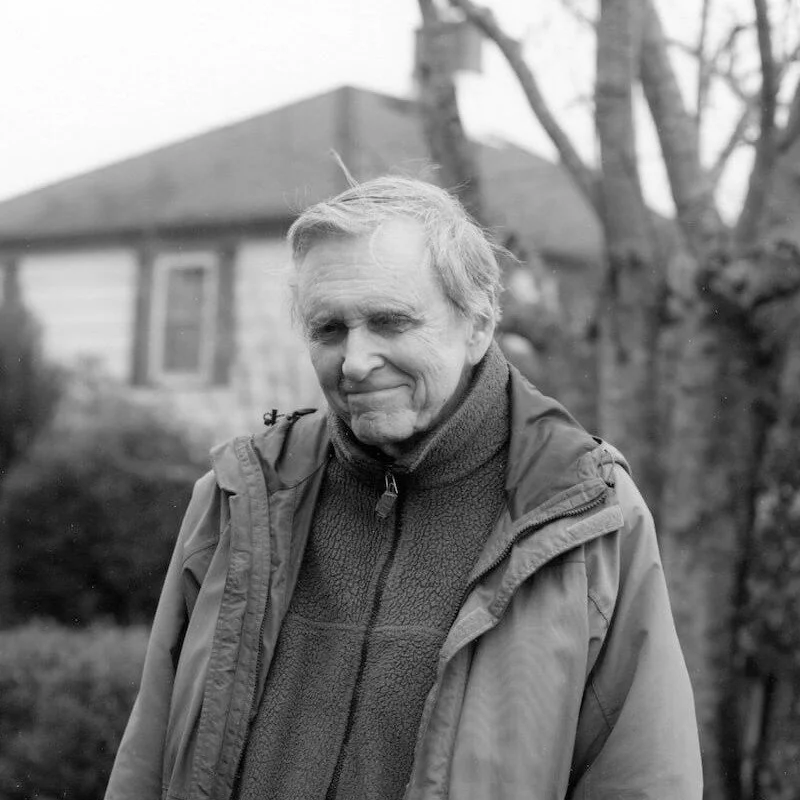
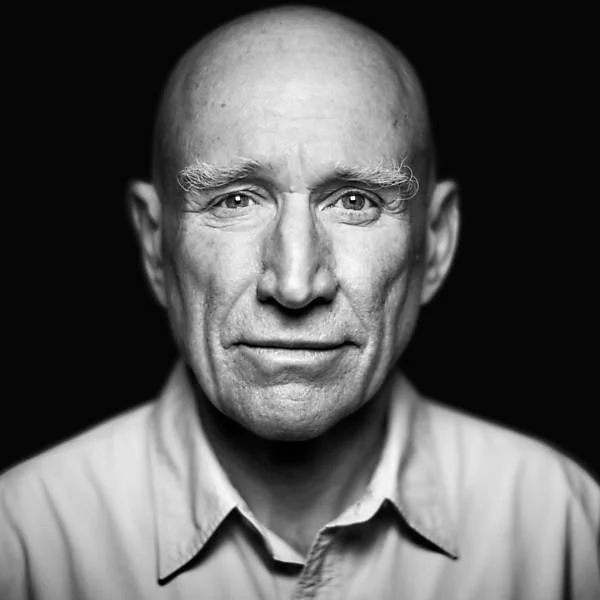
Sebastião Salgado (1944–2025) was a Brazilian photographer who trained as an economist. For fifty years he worked on long black-and-white projects about workers, migrants, untouched nature and the peoples of the Amazon. With his wife Lélia Wanick Salgado, he also brought a dead family farm back to forest.
The story
At 27, Sebastião Salgado was an economist in London, at the International Coffee Organization. His wife Lélia had bought a small Pentax for her architecture course. Before a work trip to Africa, he borrowed it. “I can remember even now the smell of this camera: a Pentax Spotmatic II,” he said in 2024. “When I looked for the first time through the viewfinder, I understood exactly that my life had changed.”
It happened fast. “Four days later I had an obsession; a fortnight later, a camera of my own,” he recalled. “Within a month I had a darkroom.” Later he turned down a job at the World Bank. In 1973, in Paris, he became a full-time photographer. He worked with the Sygma and Gamma agencies, and in 1979 he joined Magnum Photos.
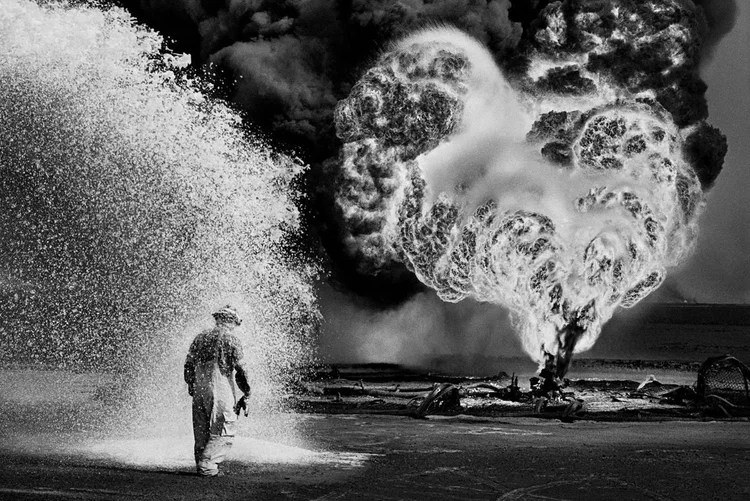
Instead of quick news stories, he chose projects that took years. He spent 18 months on famine in the Sahel. For Workers, he photographed manual labour around the world. “I wanted to photograph these things before they were gone,” he said. In Kuwait in 1991, he followed the firefighters who fought the burning oil wells.
But the work had a cost. In 1994 he was in Rwanda during the genocide. “I came out of the Rwanda genocide sick,” he said. He felt he was almost done with photography.
So he went home. The family farm near Aimorés, in Minas Gerais, had lost its forest. The soil was worn out and the streams had dried up. In 1998 he and Lélia founded Instituto Terra, and in 1999 they began to replant. Over the years they planted more than 2.5 million seedlings of almost 300 tree species. “My body was dying and this land healed me,” he later said.
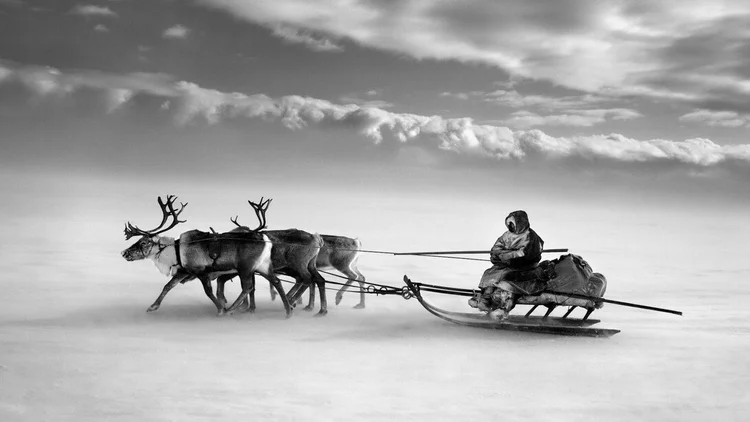
With the trees came “a huge wish to photograph again.” In 2004 he began Genesis, an eight-year journey to more than 30 places where nature was still untouched, from the Arctic to the Amazon. After that, he made 48 trips to the Amazon over six years for Amazônia.
Lélia edited and designed his books and curated his exhibitions. Salgado died in Paris on 23 May 2025, at 81. The camera he once borrowed from her took him around the world, and finally back to the land where he was born. “The big trip was inside myself,” he said, “to discover that I, also, am biodiversity.”
The work


- 1944Born on 8 February in Aimorés, Minas Gerais, Brazil
- 1969Leaves Brazil with Lélia and settles in France
- 1973Becomes a full-time photographer in Paris
- 1979Joins Magnum Photos
- 1993Publishes Workers
- 1998Founds Instituto Terra with Lélia
- 2013Genesis book and touring exhibition
- 2021Publishes Amazônia
- 2025Dies on 23 May in Paris
Lessons
Think in years, not days. Genesis took eight years and Amazônia six. Long projects let him go deep into one subject.
Live with the people you photograph. About the gold miners of Serra Pelada he said: “I know every one of those miners, I've lived among them.”
Know when to stop. After Rwanda he put the camera down. Replanting the farm gave him the strength to start again.
Try this: choose one subject you can return to all year, like a tree, a street or a small farm. Photograph it once a month in black and white. At the end of the year, look at the twelve frames together.
Gear
Pentax Spotmatic II: his first camera. Lélia bought it for her architecture studies, and he borrowed it in the early 1970s.
Black-and-white film: for decades he shot Kodak Tri-X in 35mm and in the medium format 6x4.5.
Canon digital cameras: during Genesis he moved to digital, partly because airport X-ray checks were damaging his film. He used a Canon EOS-1D X in the Amazon and called it “the perfect camera.”
Even with digital files, he did not edit on a screen. His contact sheets were printed on paper, and he looked at them with a magnifying glass.
Books
Genesis (Taschen, 2013). The book of his eight-year Genesis project, edited and designed by Lélia Wanick Salgado. The 520 pages hold black-and-white photographs of places where nature still rules, in five chapters: Planet South, Sanctuaries, Africa, Northern Spaces, and Amazonia and Pantanal. You see glaciers, deserts, animals and peoples who live in old ways. It is the best place to start, and a strong book for anyone who loves landscape and nature photography.
Workers: An Archaeology of the Industrial Age (Aperture, 1993). His great tribute to manual labour, made at a time when machines were starting to replace people. The 400 pages are organised in six parts: agriculture, food, mining, industry, oil and construction. Long captions give the history and facts behind each story, from the Serra Pelada gold mine in Brazil to the burning oil fields of Kuwait. A key book for anyone interested in documentary photography.
Amazônia (Taschen, 2021). Edited by Lélia Wanick Salgado, this 528-page book comes from six years of travel in the Brazilian Amazon. It shows forests, rivers, mountains and storms seen from above, and the daily life of about a dozen Indigenous peoples, among them the Yanomami, Asháninka and Zo'é: family life, hunting and fishing, body painting, shamans, dances and rituals. A book for readers who care about nature and the people who protect it.
Gold (Taschen, 2019). The complete Serra Pelada series, made in 1986 at the huge open-pit gold mine in the state of Pará, Brazil. The photographs show miners climbing up and down the walls of a pit dug by hand. The 208 pages include a foreword by Salgado and an essay by the writer Alan Riding. A good choice if you want to see one of his most famous stories in full.