AT A GLANCE
- Known for
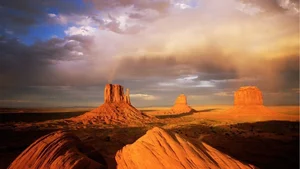
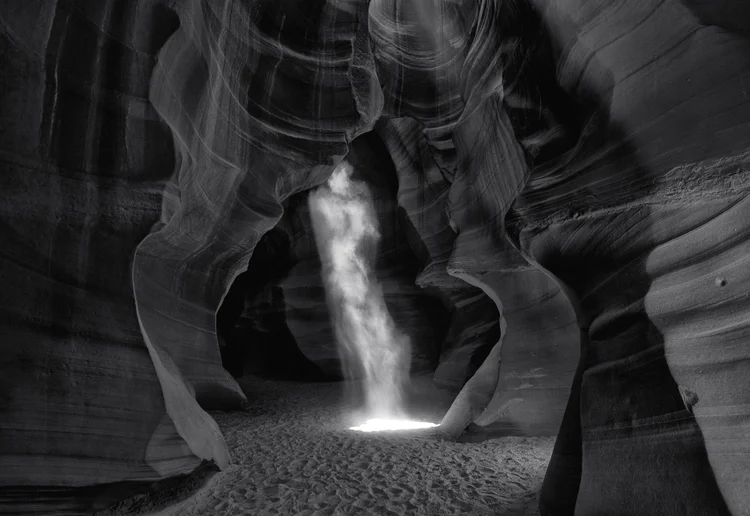
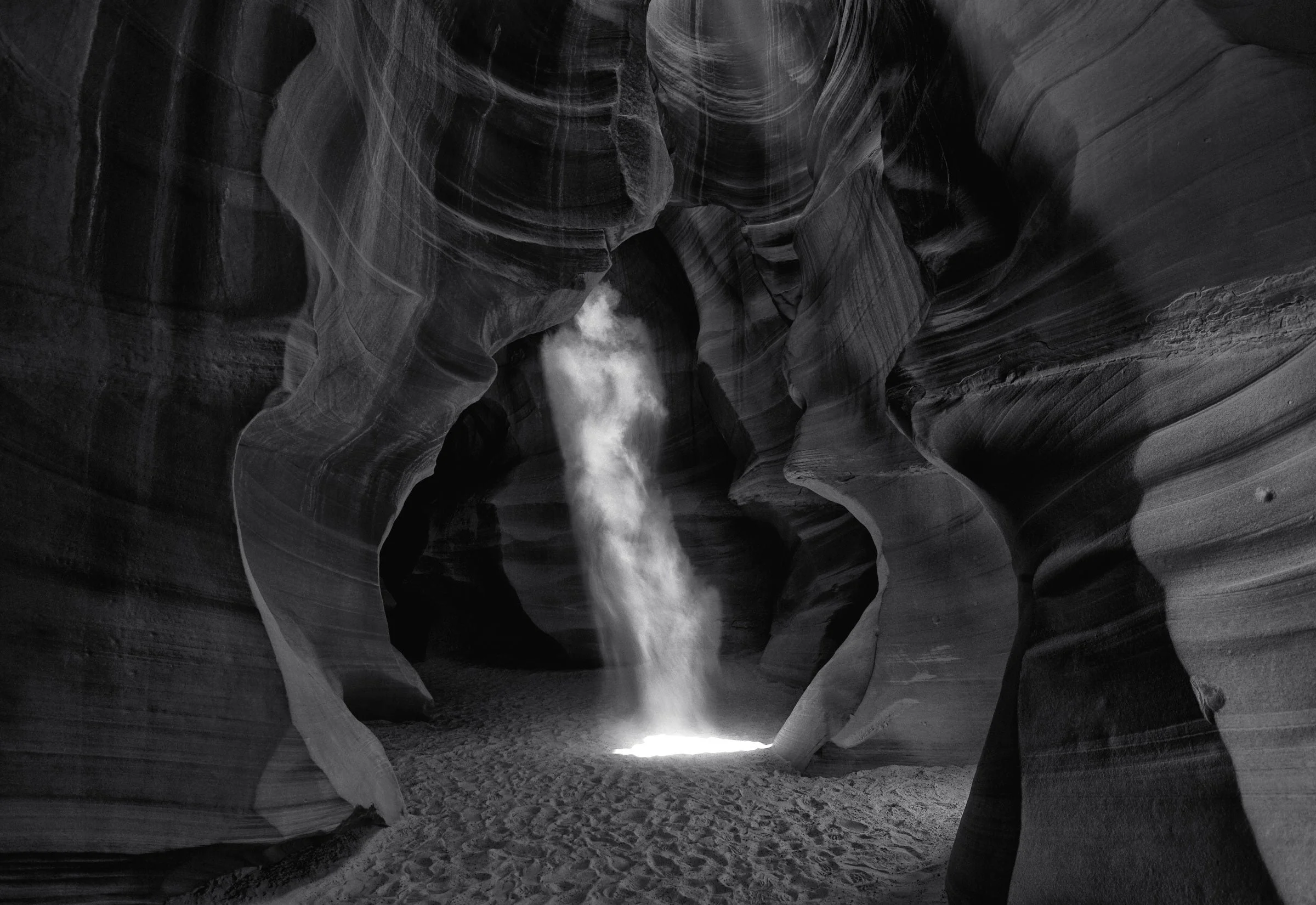
- Large, colorful panoramic landscapes, and his Antelope Canyon pictures Ghost and Phantom
- Works in
- Mostly color; some black and white
- Camera
- Linhof Technorama 617 panoramic film camera; Phase One and Nikon digital cameras
- Also
- Self-taught; sells limited-edition prints in his own galleries; hosted From the Edge with Peter Lik (2011)
- Start with
- Spirit of America (Peter Lik Publishing, 2003)
- Links
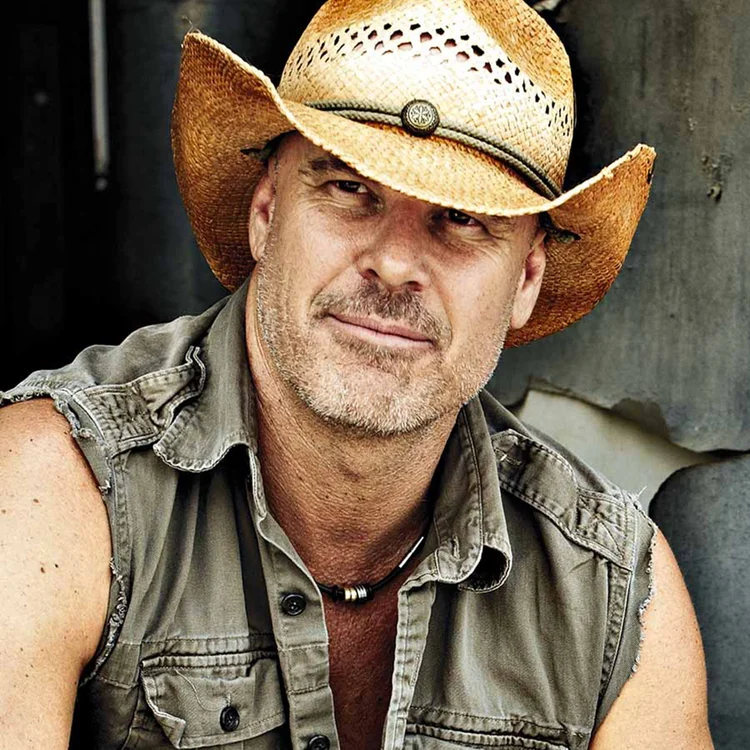
Peter Lik (born 1959) is an Australian-born landscape photographer who lives and works in Las Vegas. He is known for large, bright panoramic prints of canyons, coasts and cities, which he sells in his own galleries. He taught himself photography and publishes his own books.
The story
In Melbourne in the 1960s, a boy got a present for his eighth birthday. It was a Kodak Brownie box camera. His parents were Czech and had come to Australia after the Second World War. The boy took the camera into the family garden and photographed a spider web. It was Peter Lik’s first picture.
For years there was little money for photography. He had no formal training and learned mostly by trial and error. He worked as a salesman, and later as a photographer for the Queensland tourism office. In 1984 he went to the United States for the first time and toured for a year in an old van. In Alaska he discovered the panoramic camera. The wide format changed his work, and in the same year he sold his first photograph, to a calendar company in San Francisco, for 50 dollars.
So he kept going back. Over many years he photographed all 50 states for a project called Spirit of America. He drove about 80,000 kilometres and used 1,000 rolls of film. He called it the “biggest challenge” of his life. In 1994 he moved to Las Vegas. He opened his first gallery in Cairns in 1997, and his first American gallery in Lahaina, Maui, in 2003.
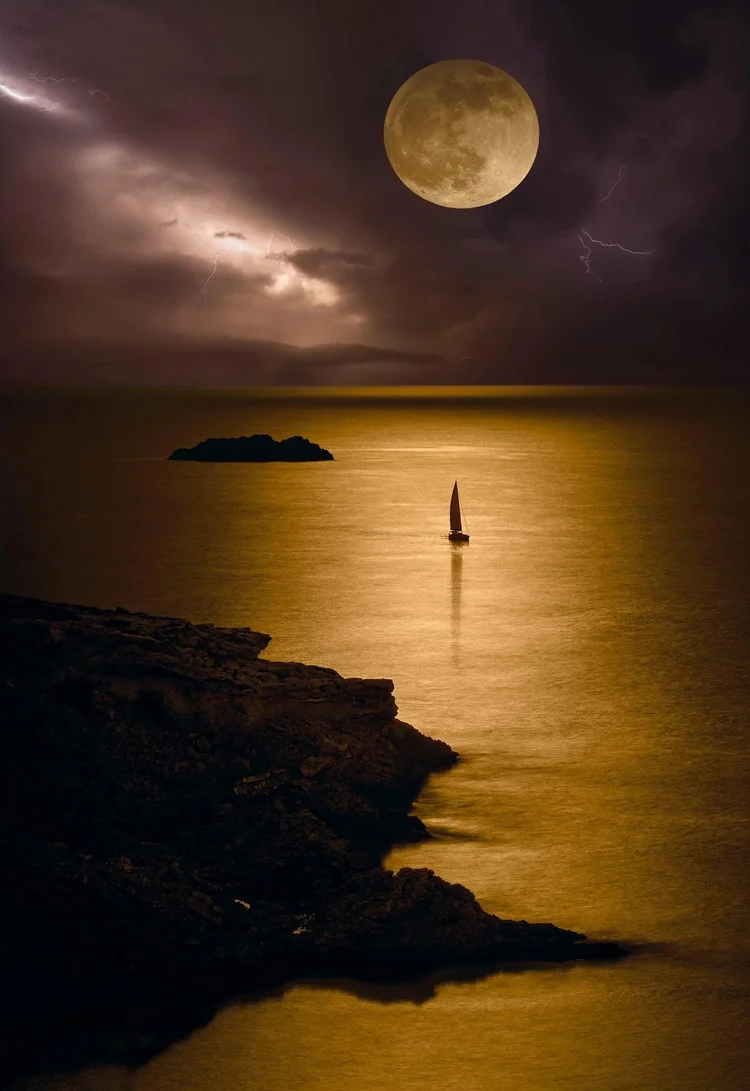
His way of working is slow. On a summer evening in Ibiza, he set up his tripod on the edge of a cliff and waited for a full moon. A thunderstorm was coming in over the sea. The moon rose through the clouds, lightning flashed, and a single sailboat crossed the moonlight. To make The Perfect Storm, he used three lenses and several exposures. Seconds later the boat was gone.
But success also brought questions. In 2014 he said a black-and-white picture of Antelope Canyon had sold for 6.5 million US dollars to a private buyer. The buyer’s lawyer said the buyer was real, but the sale has never been independently verified. Still, he went on to open more than a dozen galleries across the United States.
Decades after the spider web, he is still looking for the next picture. In 2014 he was asked which of his images was his favourite. “I haven’t taken it yet,” he said.
The work


- 1959Born in Melbourne, Australia, to Czech parents
- 1984First trip to the United States; discovers the panoramic camera in Alaska
- 1994Moves to Las Vegas
- 1997Publishes his first book and opens his first gallery, in Cairns
- 2003Publishes Spirit of America; opens his first US gallery, in Lahaina, Maui
- 2011Ghost is shown at the Smithsonian; From the Edge with Peter Lik premieres on The Weather Channel
- 2014Says Phantom sold for 6.5 million US dollars; the sale is not independently verified
- 2015Lifetime Achievement Award from Professional Photographers of America
- 2026Opens a gallery at 689 Fifth Avenue in New York
Lessons
Wait for the light. For a night picture of a lavender field in France, he waited six days for the right weather. Then the camera stayed in one place for 12 hours.
Find your format. Seeing a panoramic camera in Alaska in 1984 changed his work. Wide panoramic prints are still at the center of his work.
Teach yourself. He never studied photography. He learned mostly by trial and error.
Try this: put your camera on a tripod before sunset and do not move it. Make one exposure in the last warm light and another after dark. Then compare the two, the way Lik waited in one spot from sunset into the night in Valensole, France.
Gear
Box camera: his first camera was a Kodak Brownie, a present from his parents for his eighth birthday.
Panoramic film camera: he shoots panoramas on film with a Linhof Technorama 617, using Fuji film.
Digital cameras: for digital work he uses Phase One and Nikon cameras.
Most of his prints are made on FujiFlex silver halide paper, which he says gives the pictures more glow. For some night scenes, like Midnight Falls at Big Sur, he has used a star tracker and several long exposures.
Books
Spirit of America (Peter Lik Publishing, Cairns, 2003). The result of his long project to photograph all 50 states of the USA. According to ABC News, he drove about 80,000 kilometres and used 1,000 rolls of film for it, and he called it the biggest challenge of his life. The book has 191 pages of landscapes from deserts and mountains to coasts and cities. A good first book for anyone who wants to see the wide, colorful style that made him known in America.
Equation of Time (self-published, 2015). His largest book, and closer to an object than a normal book. It has 525 pages and weighs 106 pounds (about 48 kg). The pictures were chosen from more than one million frames made over more than 30 years, and 206 of them run 40 inches (about one metre) across. It is printed on Stora Enso fine art paper. A smaller Travel Edition has 648 pages and 55 photographs that are not in the full edition. For collectors and devoted fans.
New York (self-published, 2015). A 272-page hardcover with 151 photographs that had not been published before. Here he turns from nature to the city: bridges, the Chrysler and Empire State Buildings, and abandoned tunnels under the streets. For readers who want to see how a landscape photographer looks at architecture and city light.
Australia: Images of a Timeless Land (Wilderness Press, Cairns, 1997). His first book, published through his own company in the same year he opened his first gallery in Cairns. It shows landscapes from his home country, where he first learned to photograph nature. A 2003 edition from Peter Lik’s Wilderness Press has 192 pages. For readers interested in his early panoramic work.
In his words
“Hiking out over the smoldering lava, I began to sense my own mortality. I just tucked the fear in and kept moving.”