A Boxing Coach Reminded Darren Vargas of the Grandfather He Had Lost
Welcome to this edition of [book spotlight]. Today, we uncover the layers of 'Moretón,' by Darren Vargas (published by Rocket Science Studio). We'd love to read your comments below about these insights and ideas behind the artist's work.
Lee Espinoza reminded Darren Vargas of his late grandfather.
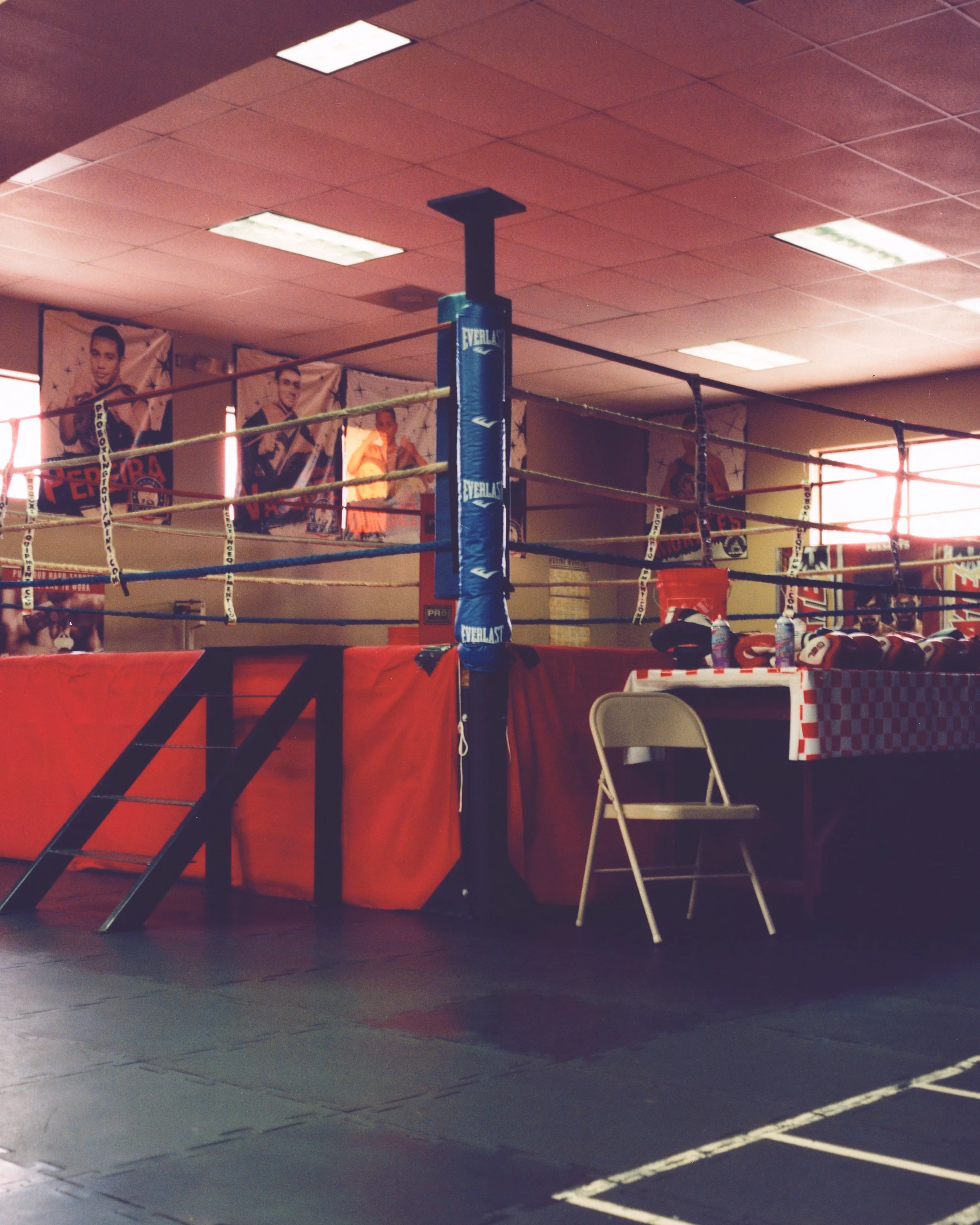
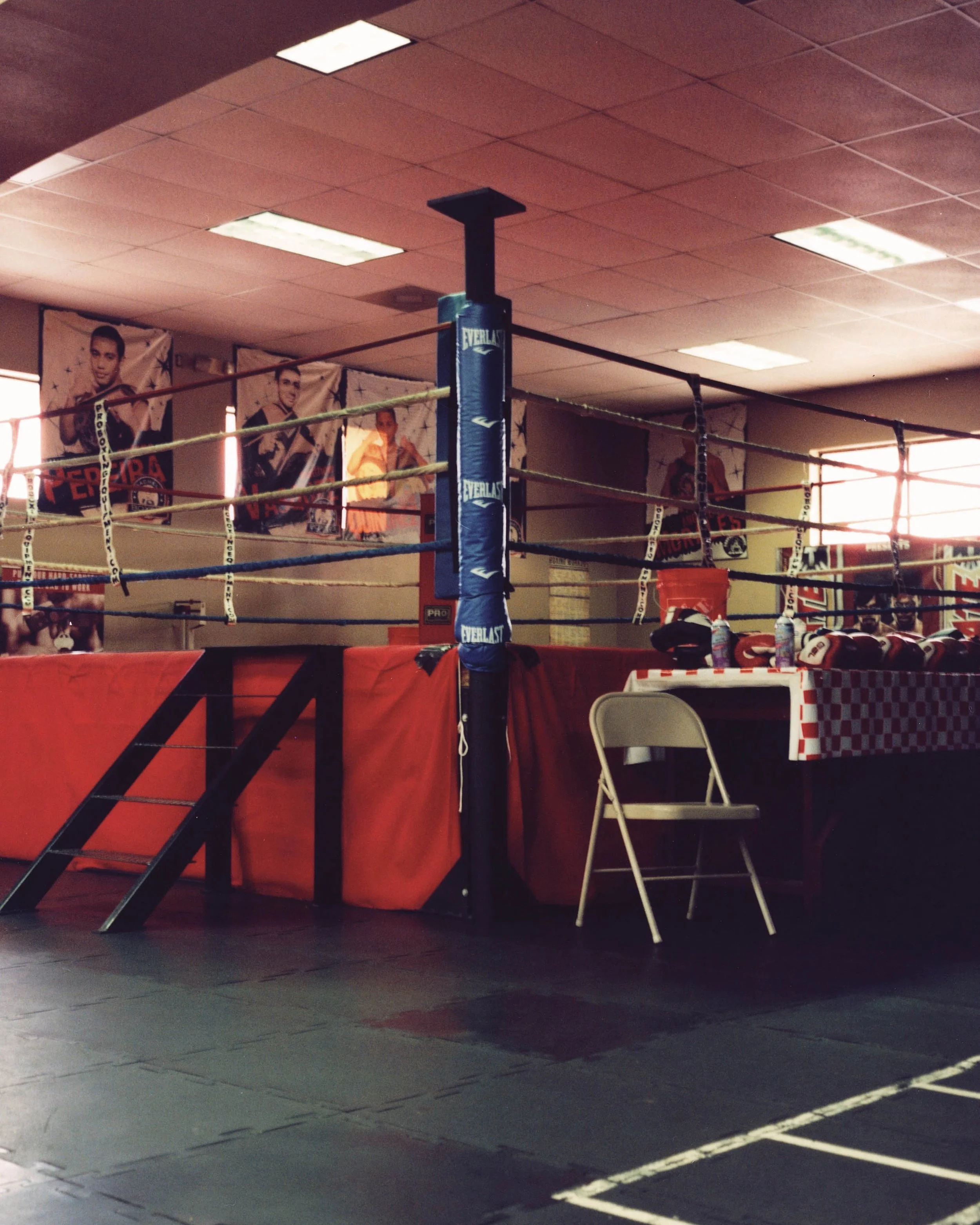
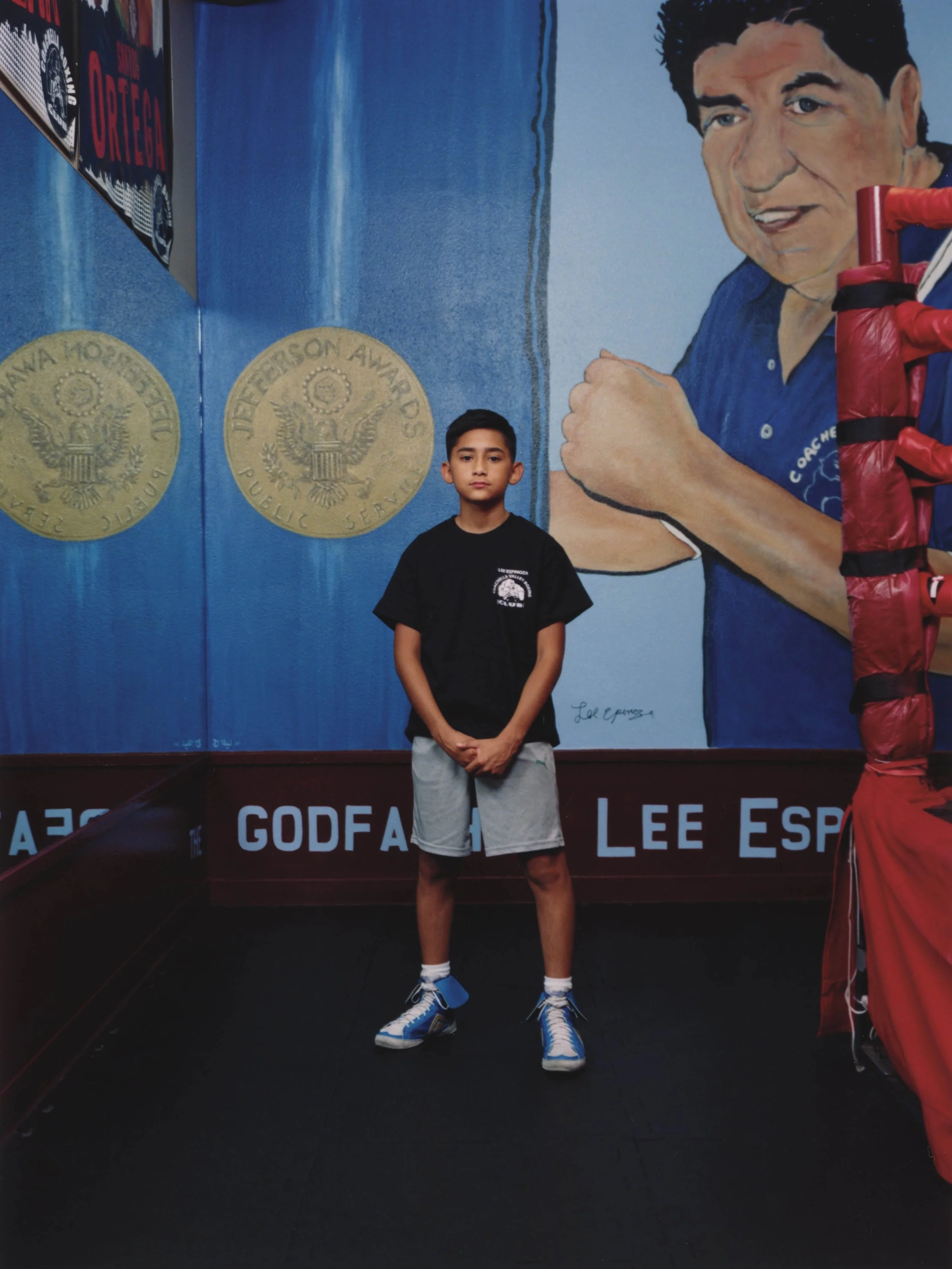
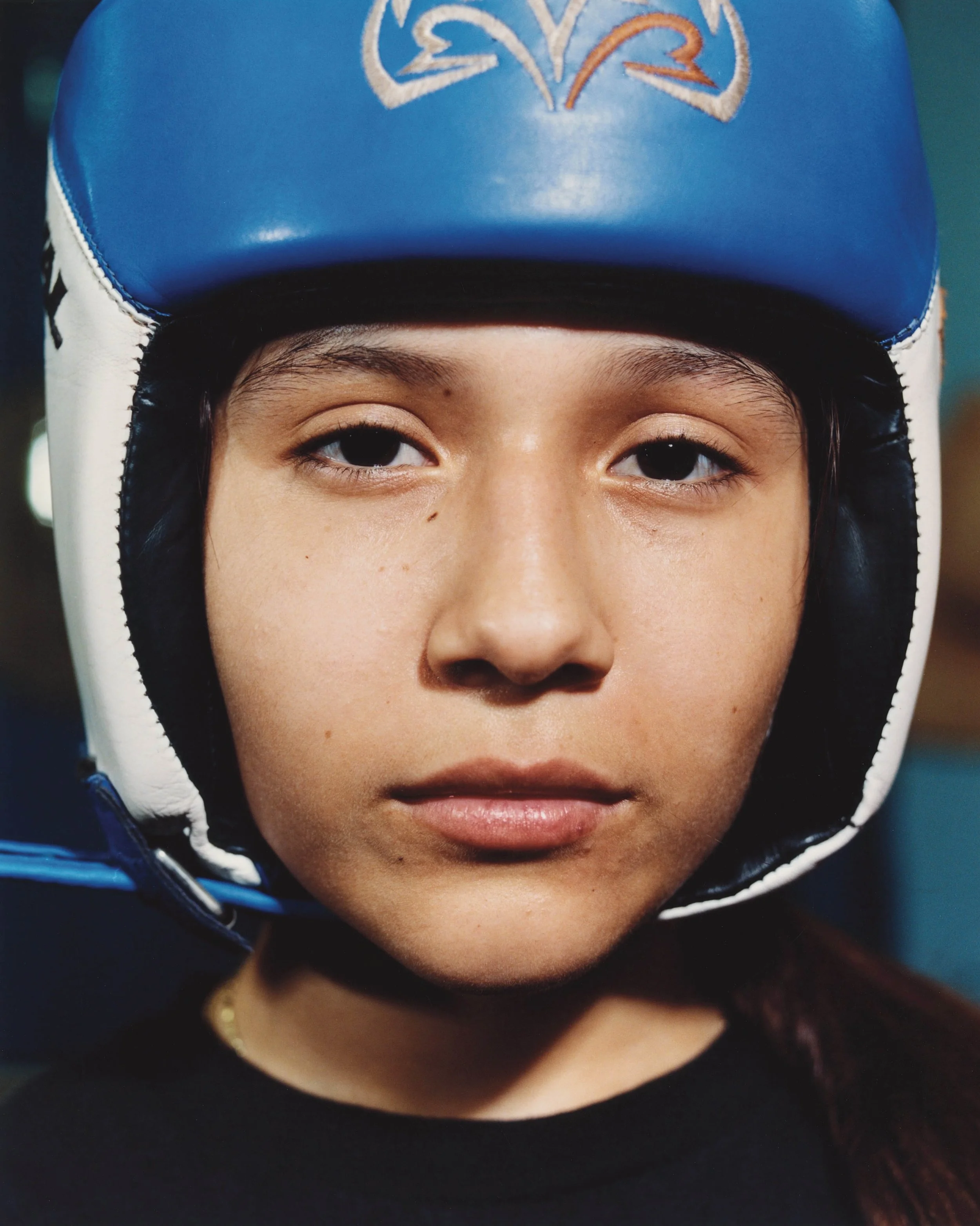
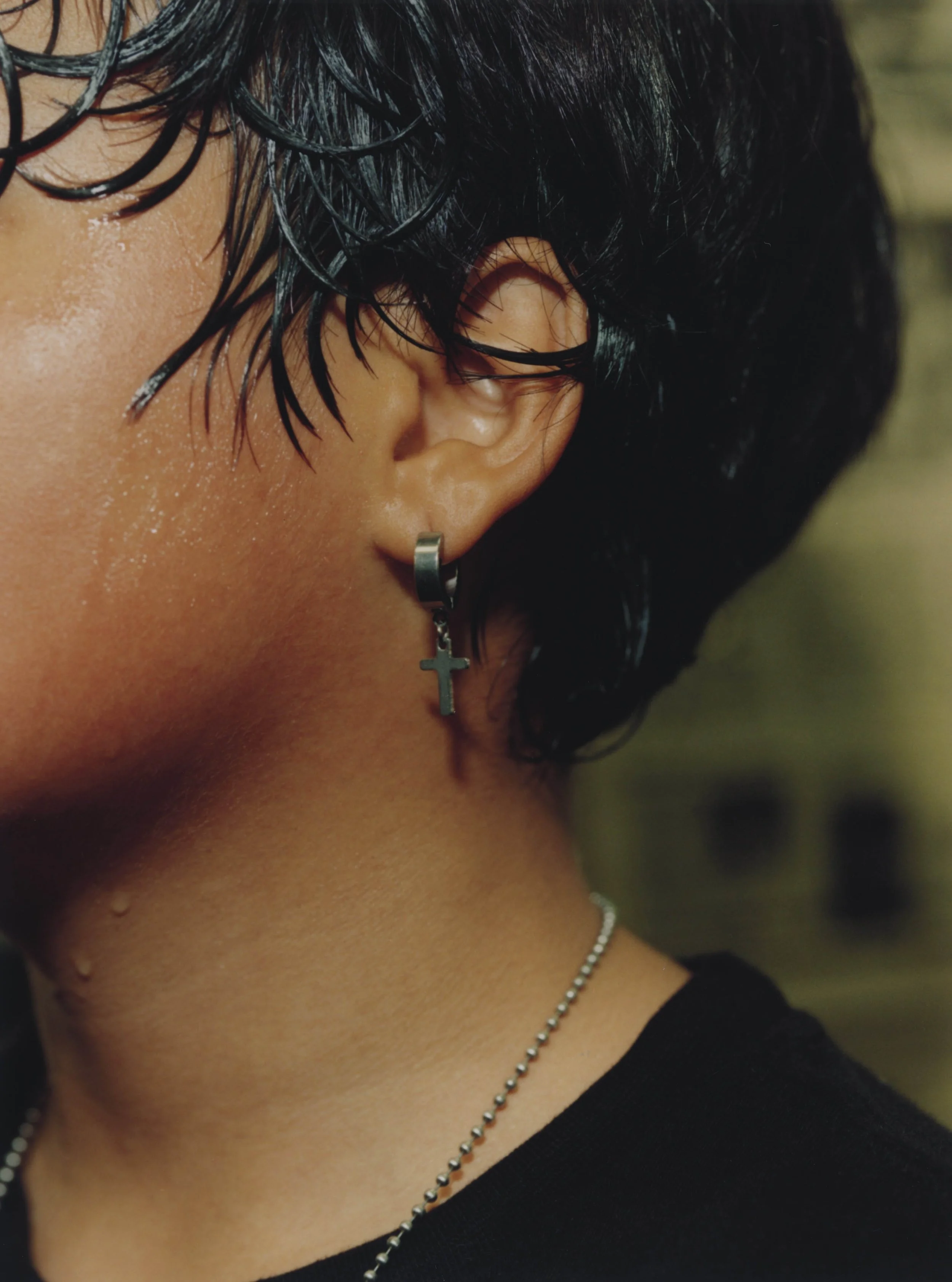
The photographer met the boxing coach in 2025, five years after his grandfather Esmael died. Lee’s generosity brought back memories of the care Esmael had given Vargas and his brother. His photobook Moretón brings together portraits and photographs of the Coachella Valley boxing club and surrounding desert, where Vargas spent summers as a child.
At the gym, Vargas found a community he wished he had growing up.
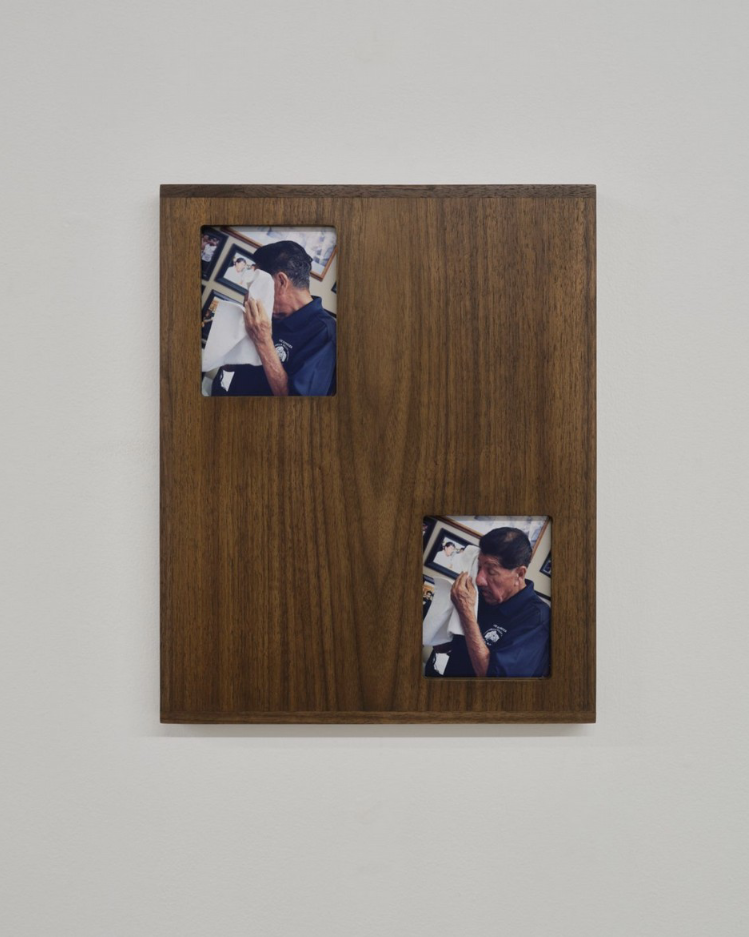
Having moved between cities after his parents divorced, he knew the effort of always trying to feel included. Lee’s gym felt like a place where everyone was equal. Vargas photographed the pauses between training, people packing away gloves, and Lee wiping sweat from his face, paying attention to the people who gave the place its character.
Vargas explains how he reviewed his book for gaps, too much emphasis on one person, and boxing images that made the sequence feel too aggressive. His editing process offers concrete questions to ask of your own work: what is missing, what takes up too much space, and when does a finished book feel like a complete chapter of an ongoing project?
The Book
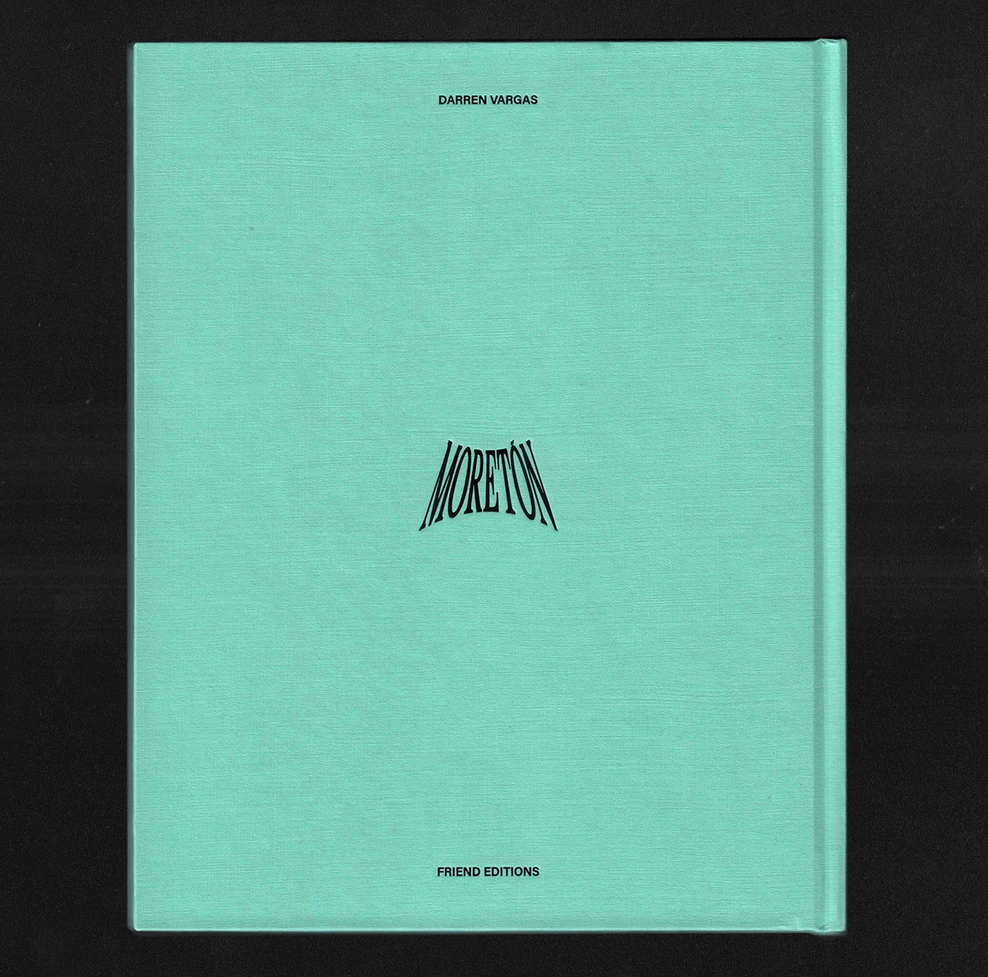
Moretón takes its title from the Spanish word for bruise. For Darren Vargas, the word connects the physical marks of boxing with old wounds that can become tender again when a memory returns. The book follows Lee Espinoza and the people who train at his Coachella Valley Boxing Club, with photographs of the desert placing life inside the gym within its wider surroundings. (Friend Editions)
Project genesis: Your grandfather Esmael passed away in 2020, and in 2025 you met Lee Espinoza through a boxer named Jocelyn Camarillo who trained at his gym. What was it about that first meeting with Lee that made you want to start photographing him?
The first time I met Lee, I felt so much energy from him. His enthusiasm and the stories he shared, with a lot of excitement, about the gym and his experiences. It was intoxicating, to say the least. To be at his age and still so excited about life and what there is left to do. That in itself was not the driving force behind me making photos of him and the gym, but I felt there was a lot there to document. A living journal of just this small experience I have had there, which ended up growing into something so much more special to me.
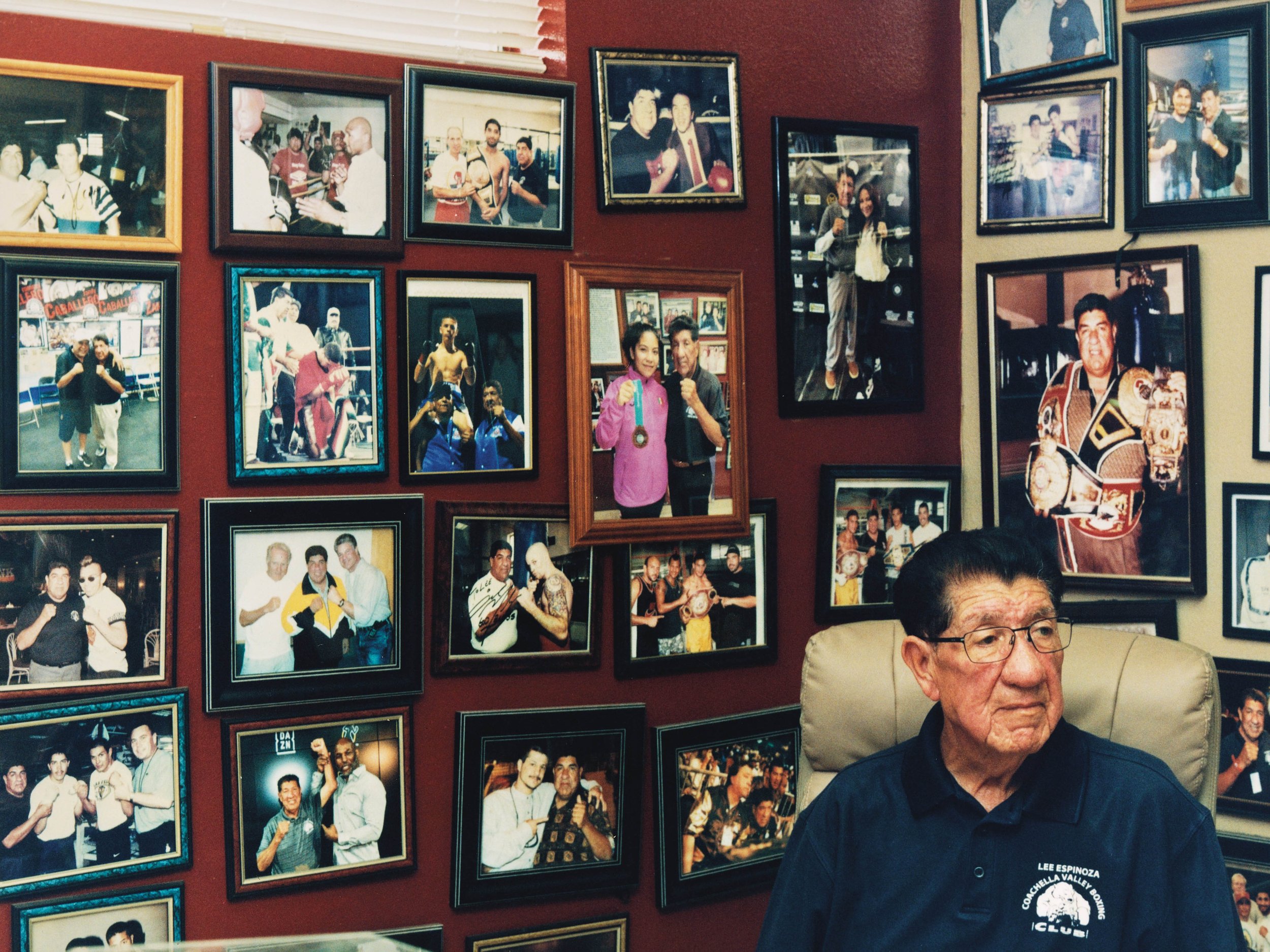
Darren Vargas, Lee Espinoza, Office, 2025 © Darren Vargas.jpg
Finding the story: You have said Moretón is not really about boxing, but about finding a sense of place, self, and forgiveness. How did you make sure your photos told that deeper story instead of just showing the sport?
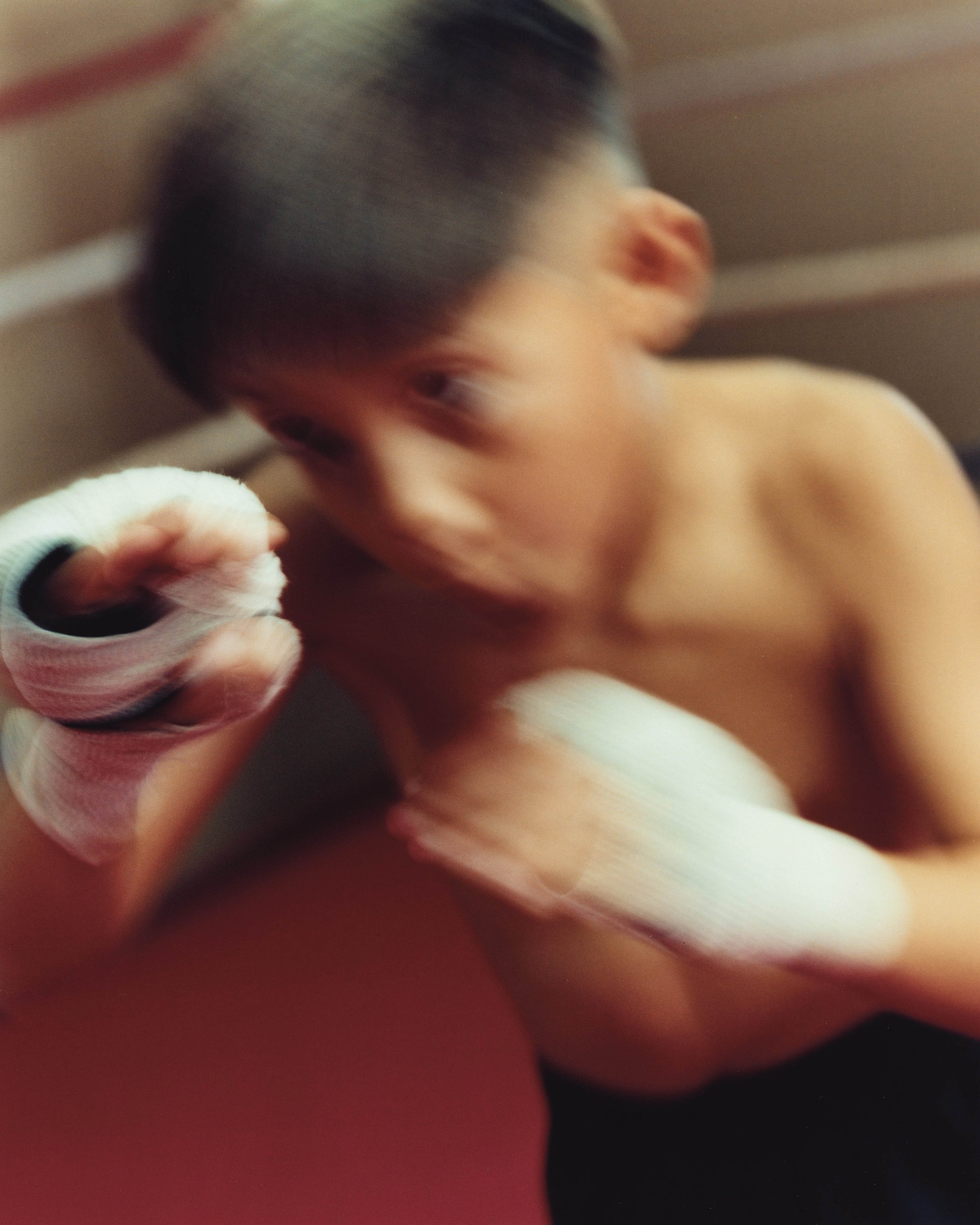
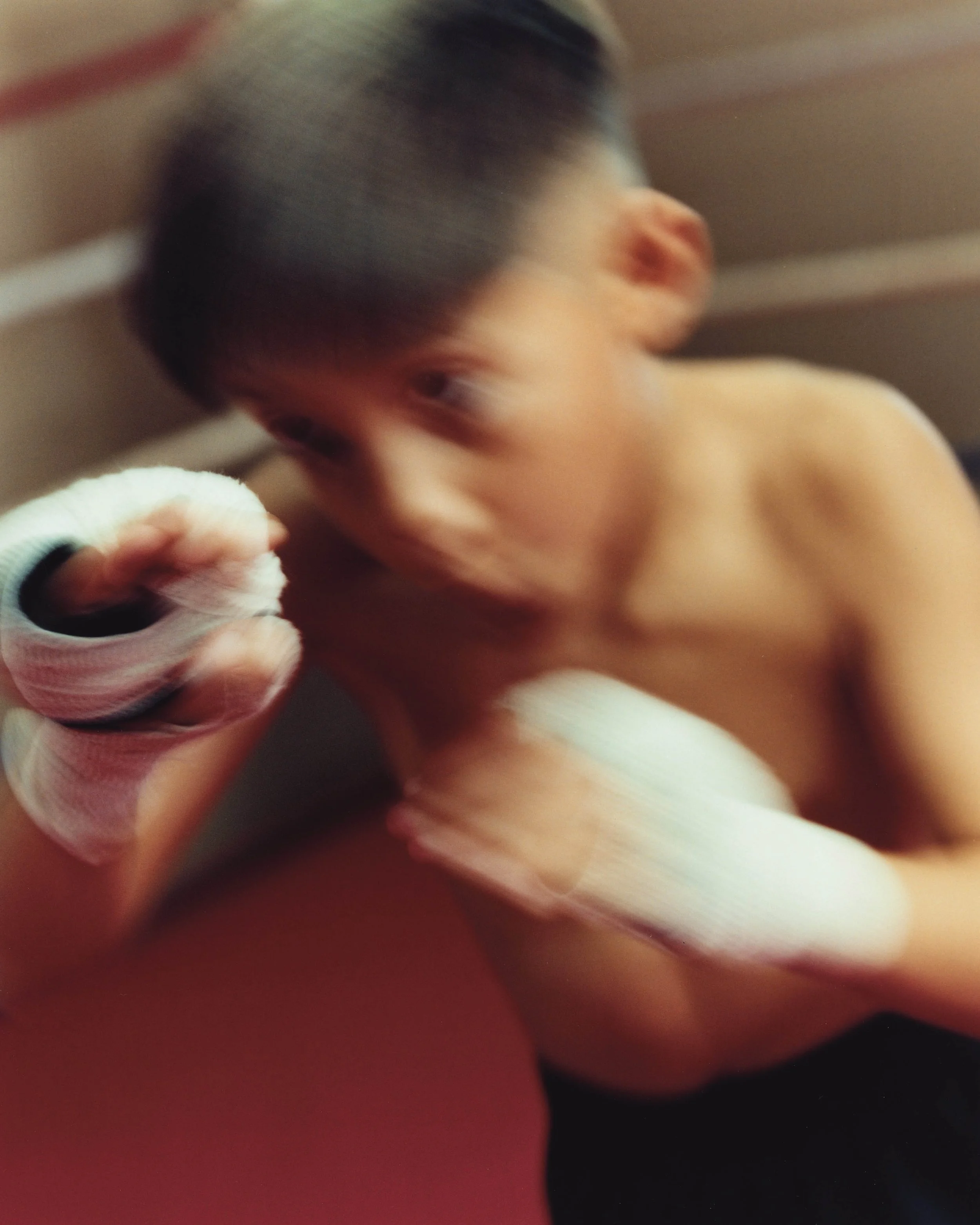
It was really difficult to find that balance. The first few weeks there really became centered around what it is to even exist in that place with a camera and not a lot of great outdoor light. It took a while to adjust and figure out the best ways to approach the story. But after a while, I realized it was not just about the sport. Although innately tied to it, it was about this group of people that chose to go there, that chose to participate and take part in the wisdom and experience that is shared across the trainers and Lee. In those brief moments of pausing from training, the breaks from sparring, the wiping of the sweat or packing up the gloves, those moments became more about that specific person rather than a boxer.
Darren Vargas, El Polito and His Family, 2025 © Darren Vargas
The defining image: Can you describe one photograph where you noticed something before you raised the camera that made you realize this is actually what the project is about?
The faces. The faces of the community that would come in. An expression of subtle excitement followed by sweat and sometimes blood, depending on how hard they were sparring. I could not narrow it down to one image, but if I had to, it would have been the diptych photos of Lee wiping sweat off his eyes and forehead after a short training session. It is such a representation of work. Building up to a moment. You do not need to ask how hard someone trained, you can see it. The photos framed behind him, all memories of hard work. The dedication. The commitment. It is beyond boxing, it is a universal language that we can all understand to some degree.
From commercial to personal: You started shooting seriously after being laid off from a job in graphic design and photo editing in 2022. What carried over from that background, and what did you have to unlearn when the work became this personal?
I started really shooting and pursuing photography in 2022. It was actually after getting laid off from a job as a graphic designer and photo editor for almost eight years. I loved photography, but not in the way I do now. It is such a different appreciation for it, in almost a really corny way. It has become so sacred that I cannot find myself just making work to share, a lot of the time I keep it for myself. When I started thinking about photography after I lost that job, it was really from the perspective of documenting my child and partner. Not just candidly, but also methodically. Scenes from our home. Commercial and editorial came after, so I think over the years I have just become better at being a fly on the wall. If anything, documenting has become more of my style, and that has been helpful in the commercial and editorial space rather than the other way around. So this intimate take on the images, and these tight portraits, did not feel new. It felt like photographing my partner and daughter in a way. Thinking about it now, losing that job was the best thing to ever happen to me.
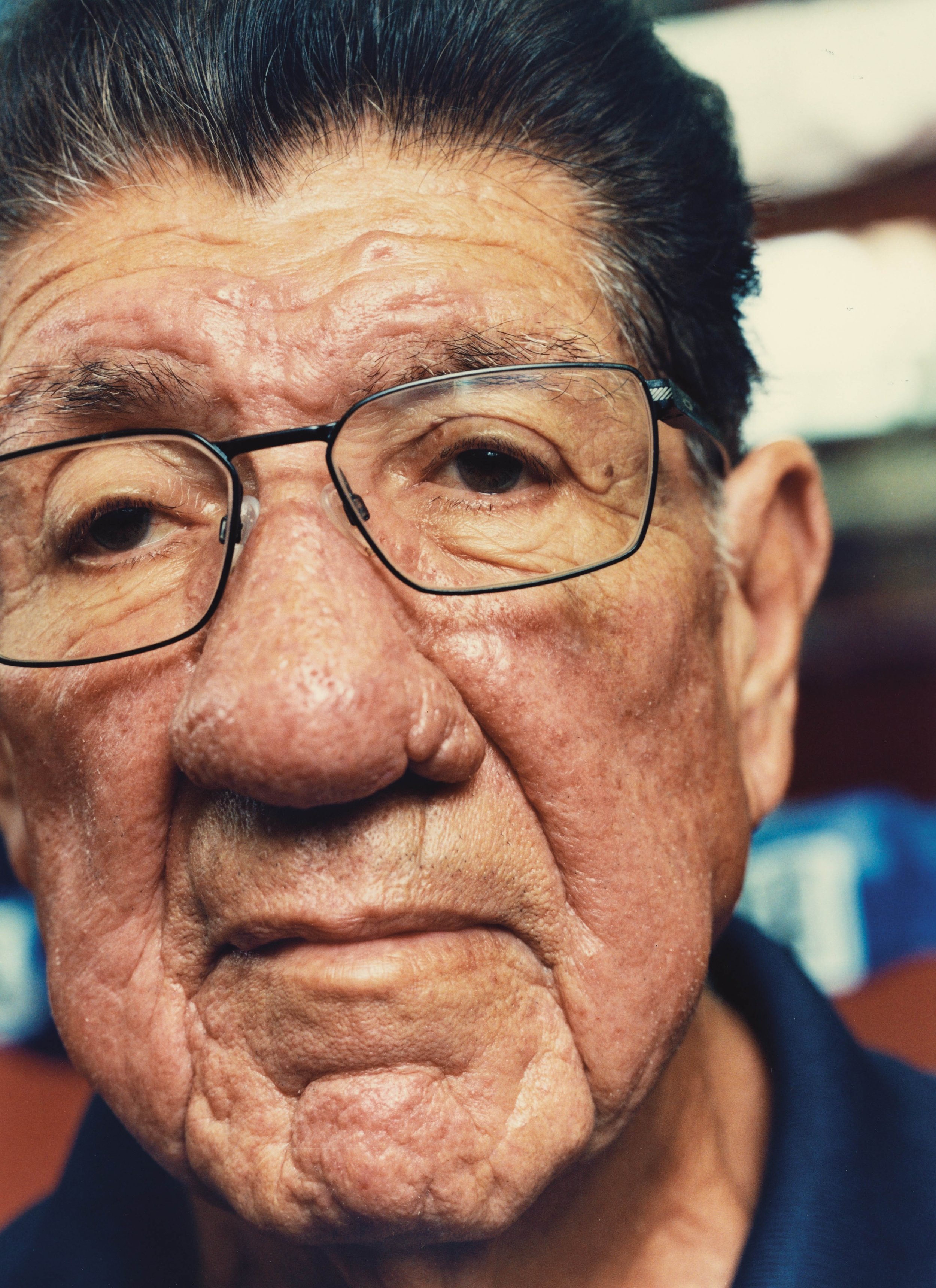
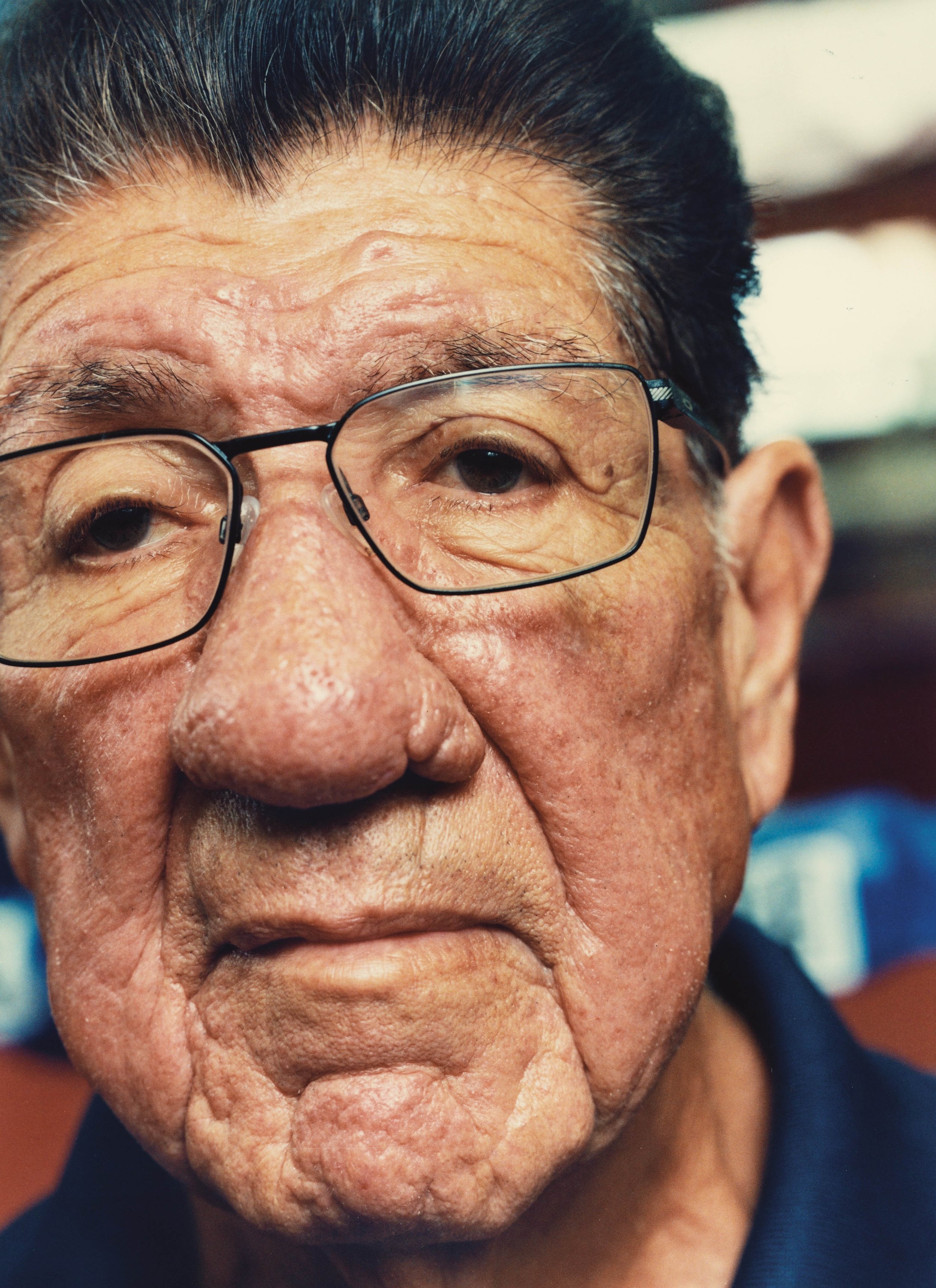
Reading a face: In your portraits of Lee, his wrinkles and hands seem to carry the whole story. What do you look for in a person's face or hands when you want a photo to hold that much history?
For me, an impactful image expresses their story. It is not just about the age or their physical features, but how they got there. To me it is also a sort of badge of honor, to live so long with so many stories and so many years on your hands and face. It is earned. That reminded me a lot of my grandfather. Hopefully one day I can have those characteristics and be able to share a story worth hearing, like Lee.
Working in the gym: The Lee Espinoza Coachella Valley Boxing Club is a small, busy space full of old posters, trophies, and banners on the walls. How did you handle shooting in a cluttered real place like that without losing focus on your subject?
It may have looked cluttered, but it felt like every print, photo, newspaper clipping, and interview was in the exact right place it needed to be in. It felt complete. My favorite song is by Radiohead, called “Everything In Its Right Place.” The song is about finding calm in the midst of anxiety and burnout, and it is a great representation of how I felt throughout this project, in my life and work, creating with my own anxiety and burnout, but then finding Lee and his gym, which was this center point of clarity and calmness. To me, the place was not disorganized or cluttered, everything had its purpose, and it is all a part of the story as much as Lee is.
Personal history in the work: You grew up moving between cities like Los Angeles, Riverside, Visalia, and Fresno after your parents divorced. How did that experience of always restarting shape the way you saw Lee's community and the kids at the gym?
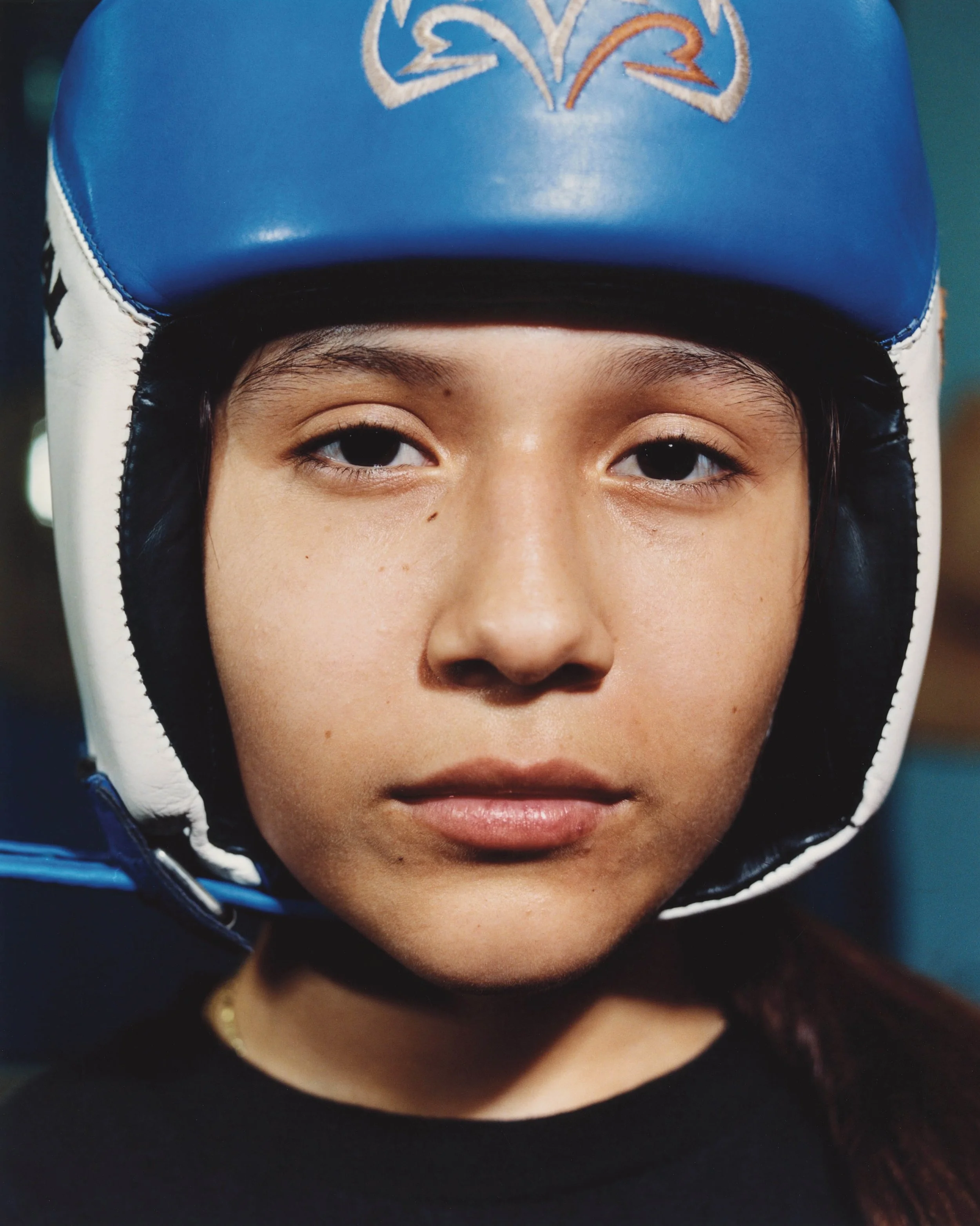
It made me wish that I had a place like that to go to as a teenager. I felt like maybe if I had some anchor, I could have stayed out of the trouble I would find myself in. Do not get me wrong, I was lucky enough to have great friendships and bonds, but the constant fight to feel included, or not feel overlooked, was exhausting. The gym felt like a place where everyone was on the same playing field. No matter where you come from or where you are going. Everyone is equal.
The desert as memory: You spent summers as a kid in the Coachella Valley with Esmael and Jessie, near the roadside dinosaurs Dinny and Mr Rex. How did that childhood memory of the desert influence how you photographed the light and landscape in this project?
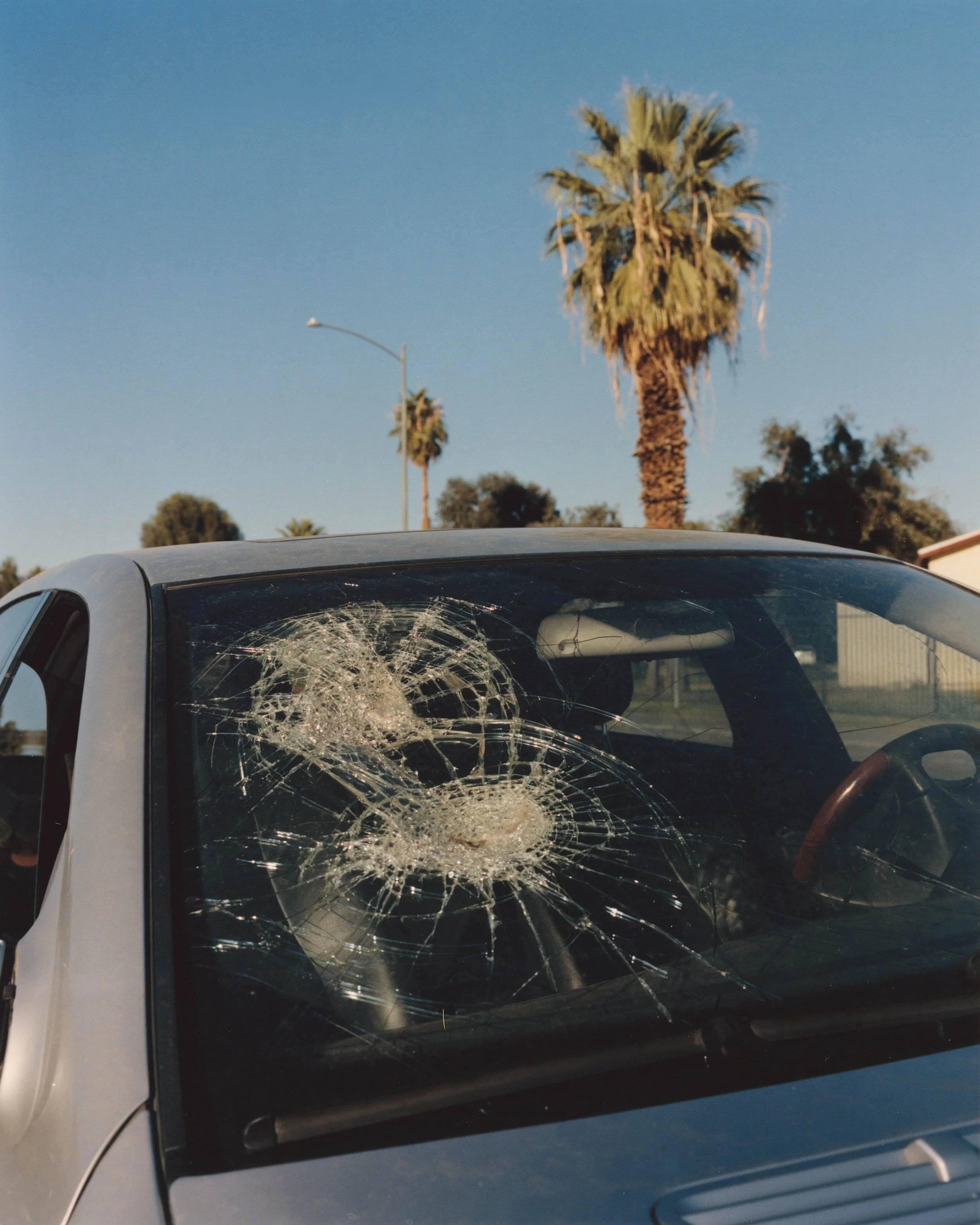
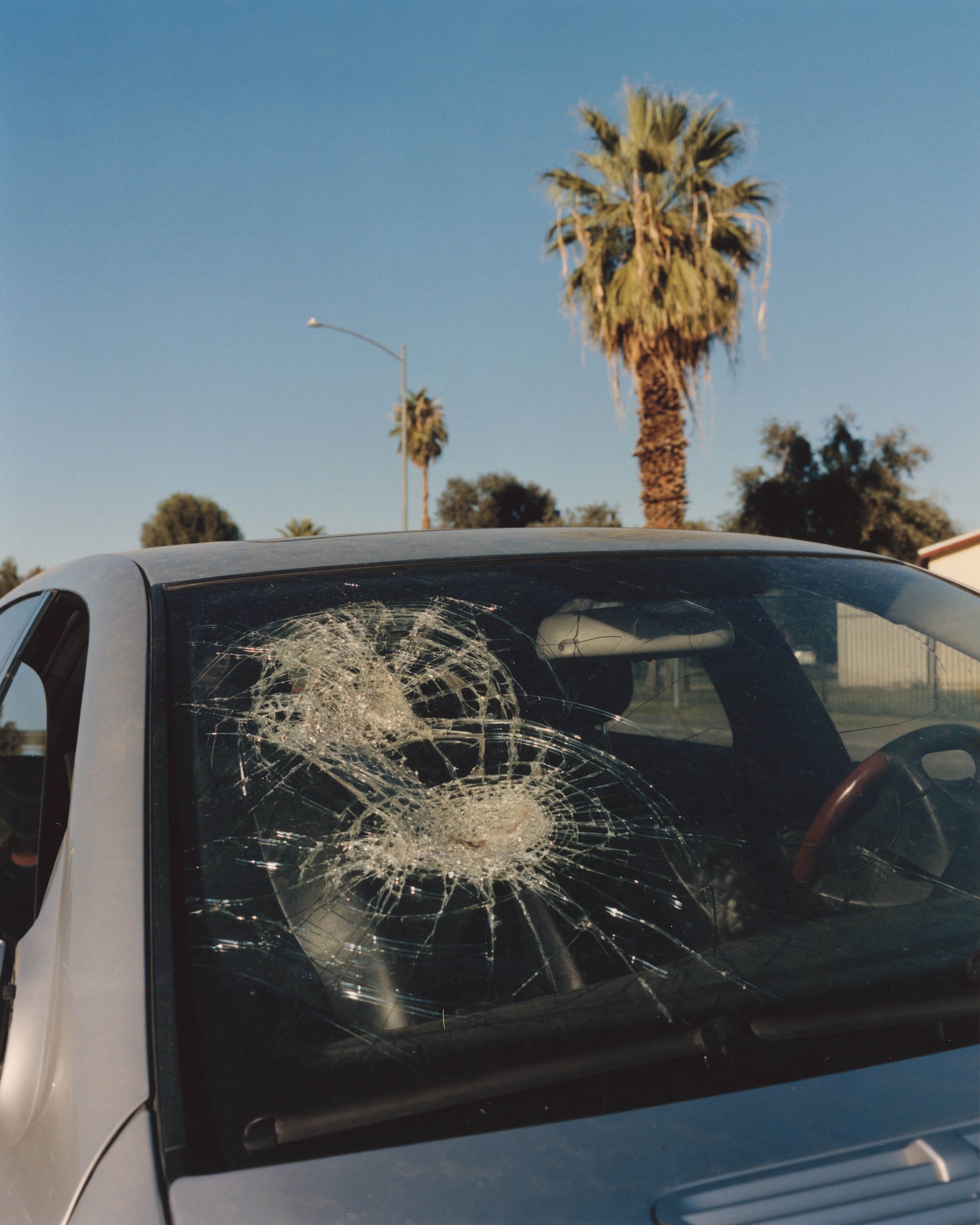
For the environmental works, I wanted to make it feel hot. The summers are intense there. And even in the gym, the temperature gets up there for sure. But also, some of the most beautiful sunsets happen there. The colors are unreal. All of that helped me shape what I imagined in my head for those images, but sometimes there are photographs that relate to the subject matter in other ways, like the broken car window with the palm tree in the background. It can be representative of the environment, but also its connection to the aggression in the gym, even though friendly.
Editing the story: You shot enough material to fill a 98 page book. What helped you decide which images made the final edit and which ones did not fit the story you wanted to tell?
I had a lot of great help from a lot of incredible photographers who I am lucky enough to call friends. They have also put out their fair share of some of my favorite photobooks, so I knew I was seeking guidance from some of the best, for sure. It was hard to narrow down, and this project is not one that will just end because this version of the book is done. It is going to be ongoing, and although narrowing down work can be really tough, the hope is that you can deliver something that is the best version of that current state and still tell the story you want to with those choices.
Taking feedback: You had a group of trusted photographers help you edit the book. What was the most important piece of feedback you disagreed with at first, and did it change the book?
I am so lucky to have a group of people I trust so much. Egos in this space are real, so it is hard to really trust someone's opinion or outlook, especially on an important project like this for me. But I think I got really lucky. The critical moments came when my peers would say, “this is not close to being done yet.” At first it is kind of like, I have spent so much time, it feels done, but then you spend more time on it. You start to look at the work and put yourself in the outside perspective. What can I do better? What should be added? What can make this great story even better? I constantly run through those questions and demand myself to become more accountable toward my work.
Knowing when to stop: You have said the book is finished but the project is not. How did you know you had enough to close this version of the work while still knowing there was more left to photograph?
I mean, I definitely do not feel like it is enough. But that is the challenge as an artist and storyteller. There is always more to do, always more to practice, always more to shoot. It can be never ending, but I think it is important to remember that the story is bigger than the person making it. It is nice to have that documentation and hold onto it for years, but it felt more important to share the story, Lee, the gym, the community. After running my final sequence, I could see the story I was trying to tell. The places that felt like they had gaps would be examined. When it was too aggressive, I would examine again. When it felt too highlighted on one person or on boxing, I would examine. And once it felt tighter, I could again reassess and give myself time to think before revising, until I knew, “okay, this feels like a chapter completed.”
The title: Moretón means bruise in Spanish. When did that word start to feel like the right title for this project, and what does it mean to you now that the book is finished?
I was born with a birthmark in my eye and a dark circle around my eye. About nine out of ten times I get asked if I got into a fight. This has been something that has come up since I was a teenager. It somehow felt aligned with the story, in a physical sense but also a metaphorical one. Time will adjust those things and take it back to normal again. Sometimes we forget these wounds that we have, that suddenly rupture from a memory or an event that reminds us of that. Then over time they just close back up and are left tender, like a bruise. The word just felt right.
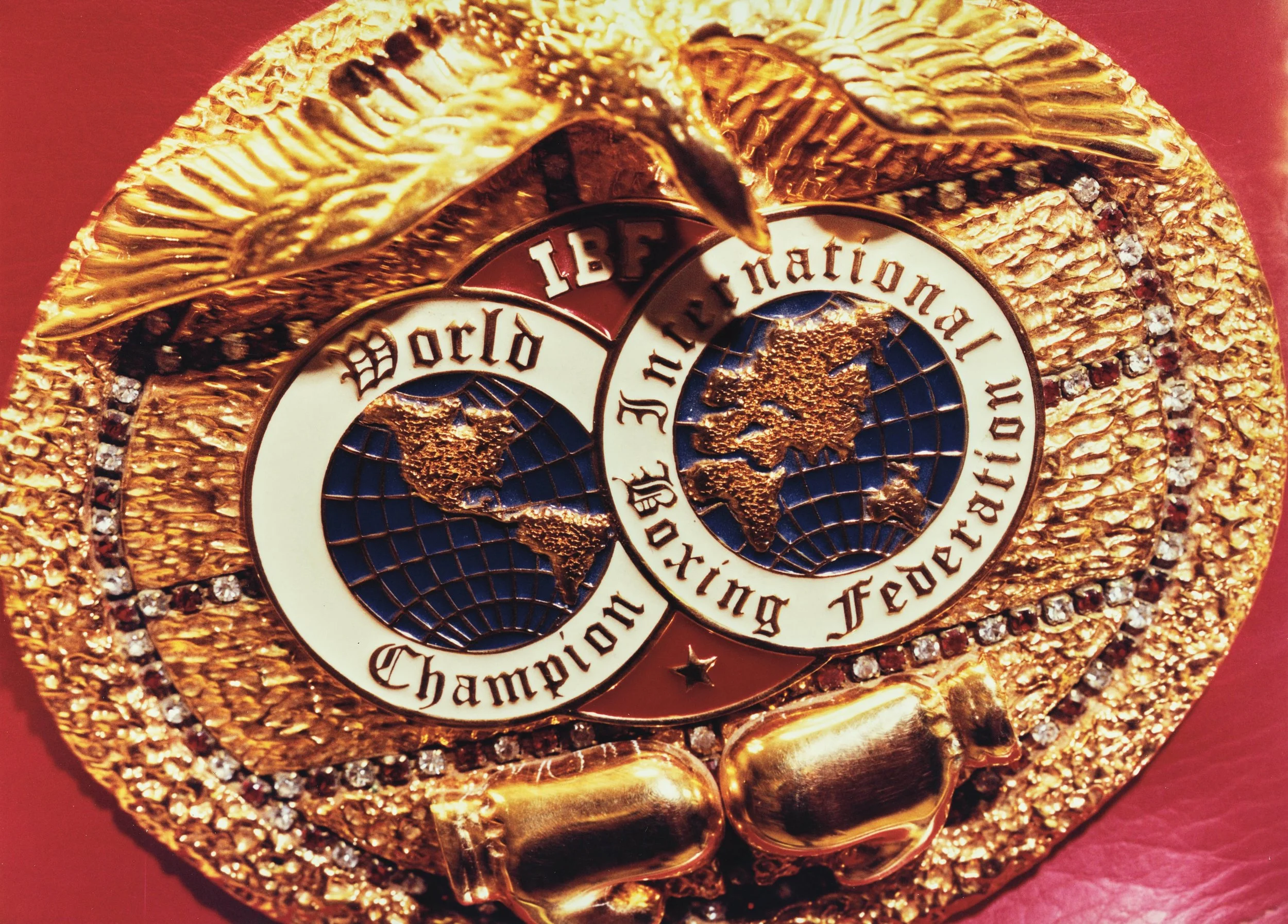
Giving back: A part of every book sale goes back to the Lee Espinoza Coachella Valley Boxing Club, and Lee has spent his life giving without expecting anything in return. How has spending time around that kind of generosity changed the way you think about your own work as a photographer?
I have a complicated relationship with my photography when it comes to documentation, especially in a place that is so intimate and special. And maybe I am too hard on myself at times, but I feel such a responsibility to handle it with care. Lee definitely showed me what it is to be selfless. In that short amount of time I spent with him, compared to the decades he has been doing this, it definitely opened my perspective on what it is to give. Not so much defining it to me, but another version of that. It is something that I remember my grandfather doing with my brother and I. Even though he was this sort of father figure, he still did not “owe” us anything. It was all decisions he made that benefited us and instilled this drive that I carry with me now.

To discover more about this intriguing body of work and how you can acquire your own copy, you can find and purchase the book here. (Friend Editions)
More photography books?
We'd love to read your comments below, sharing your thoughts and insights on the artist's work. Looking forward to welcoming you back for our next [book spotlight]. See you then!
Lee Espinoza reminded Darren Vargas of his late grandfather. The photographer met the boxing coach in 2025, five years after his grandfather Esmael died. Photography Book Spotlight