How Far Can You Change a War Photograph Before It Stops Being About What Happened?
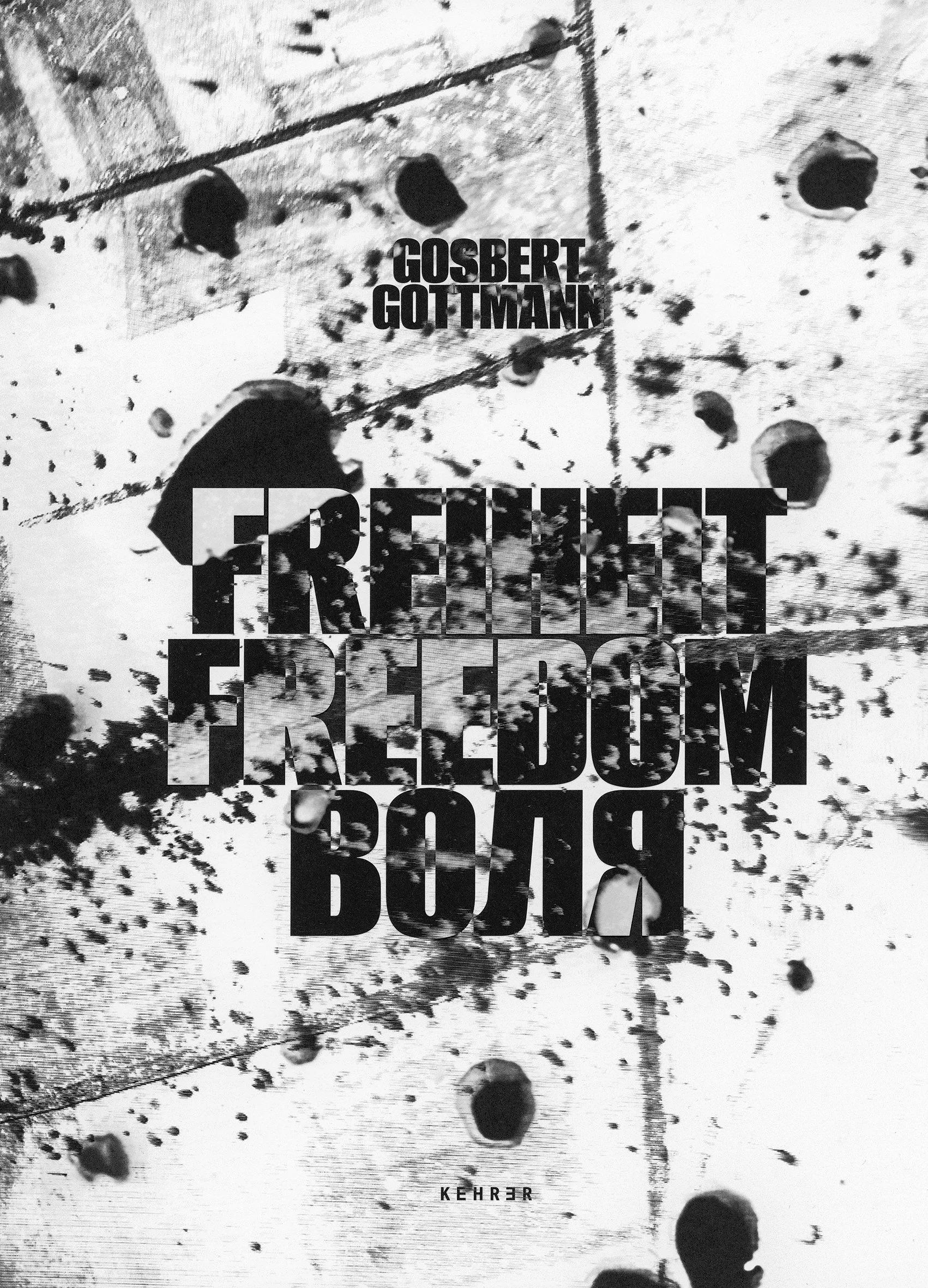
Welcome to this edition of [book spotlight]. Today, we uncover the layers of 'Freiheit Freedom Воля,' by Gosbert Gottmann (published by Kehrer Verlag). We'd love to read your comments below about these insights and ideas behind the artist's work.
Gosbert Gottmann wanted war photographs that resisted easy reading.
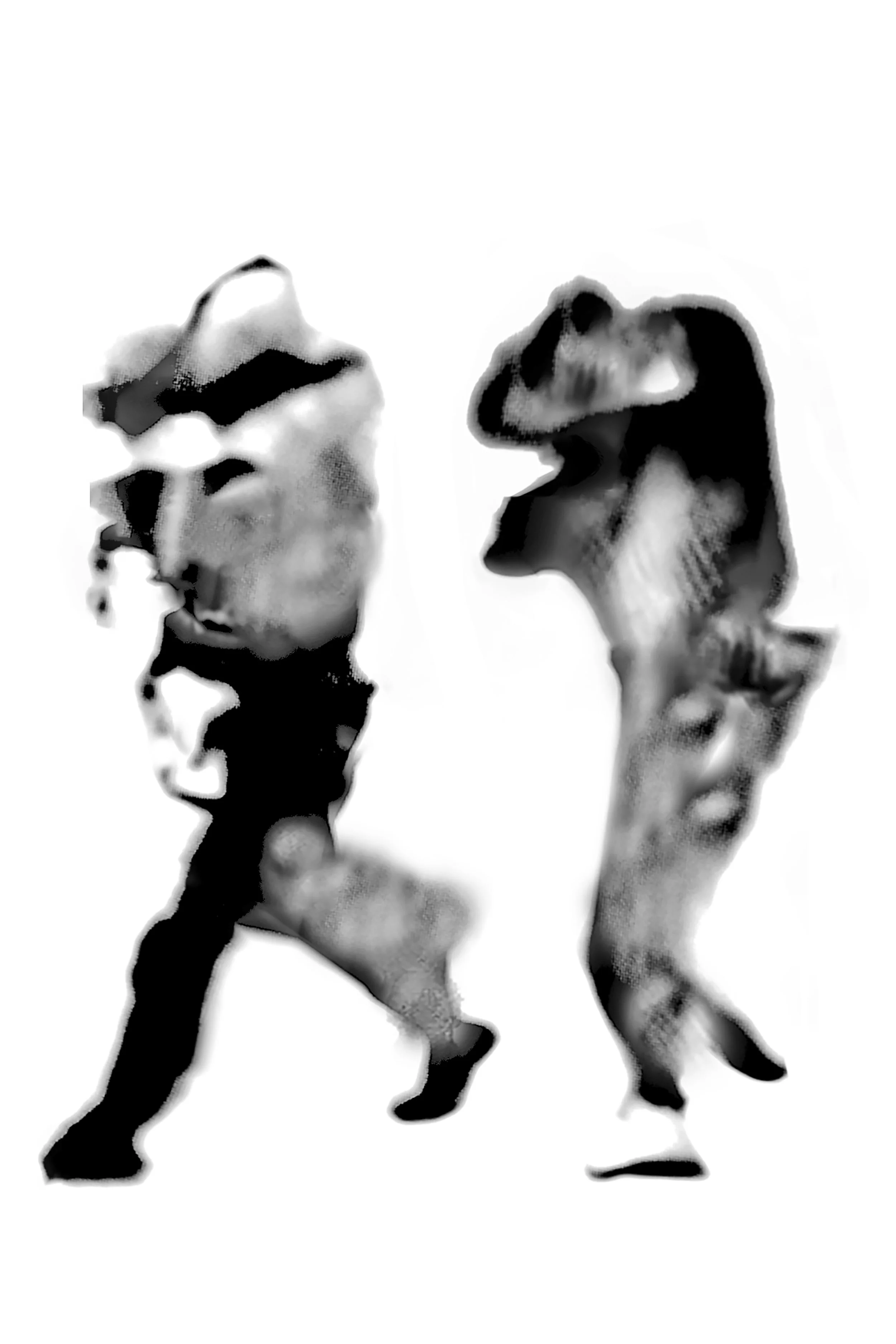
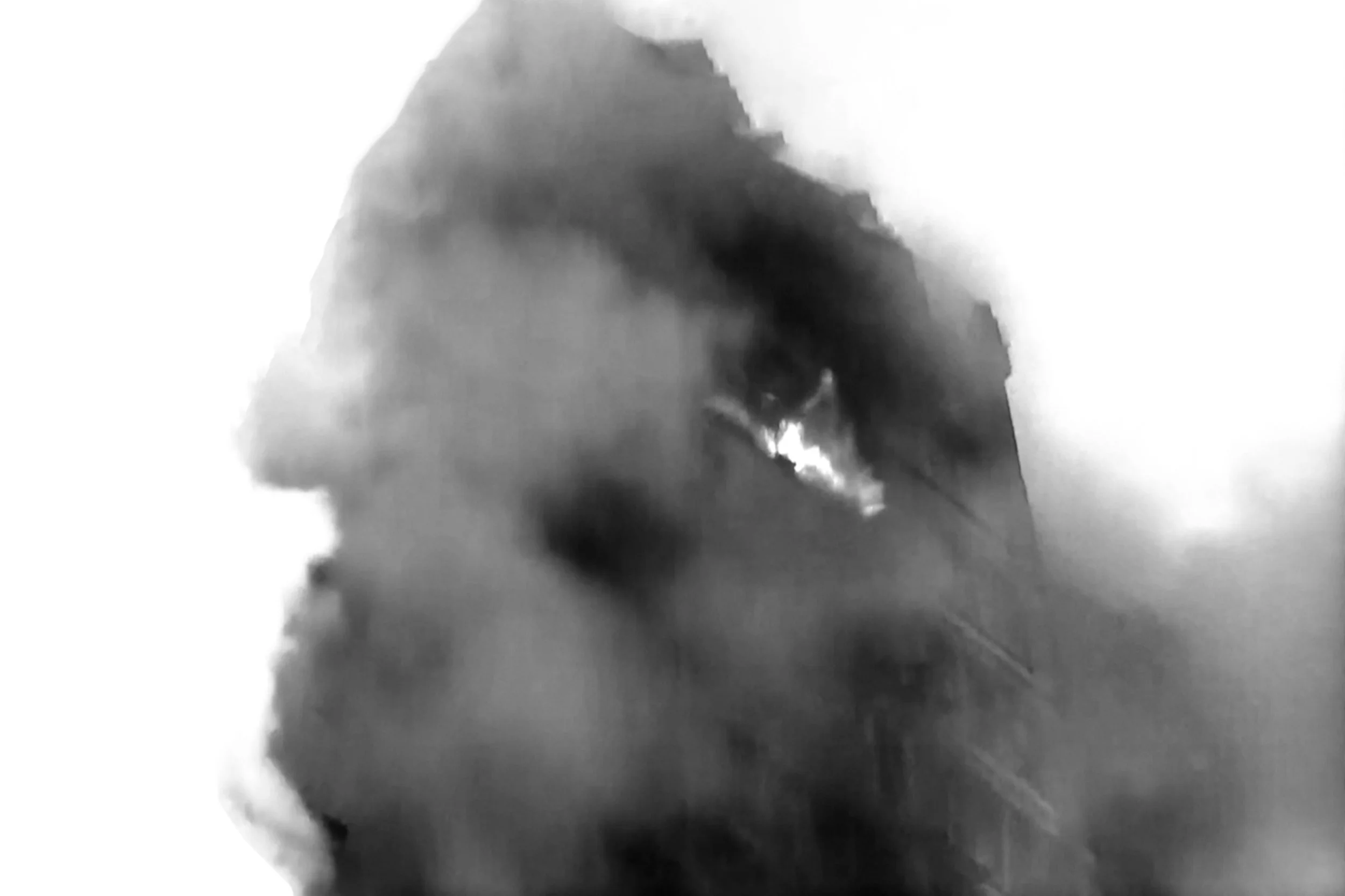
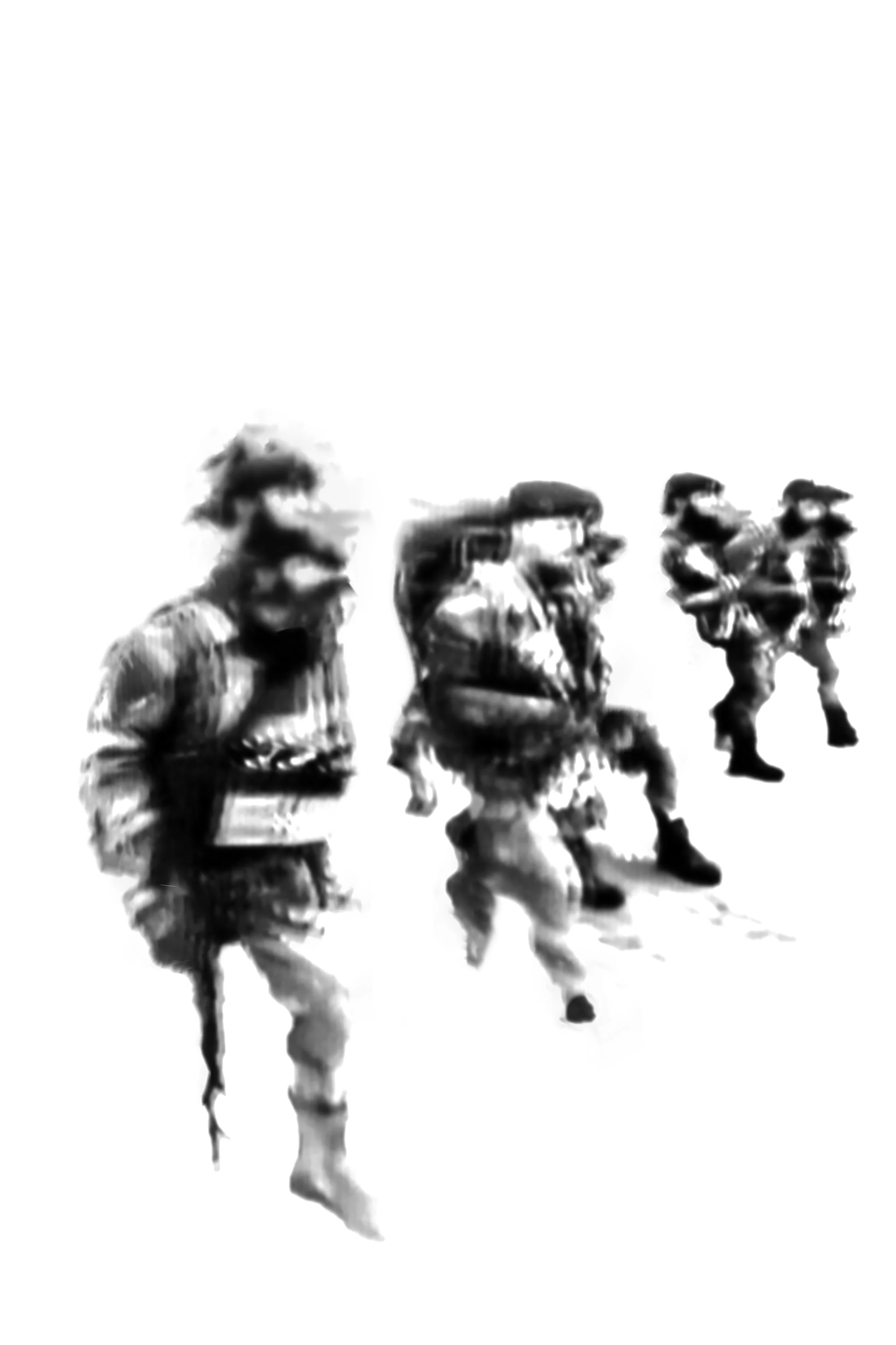
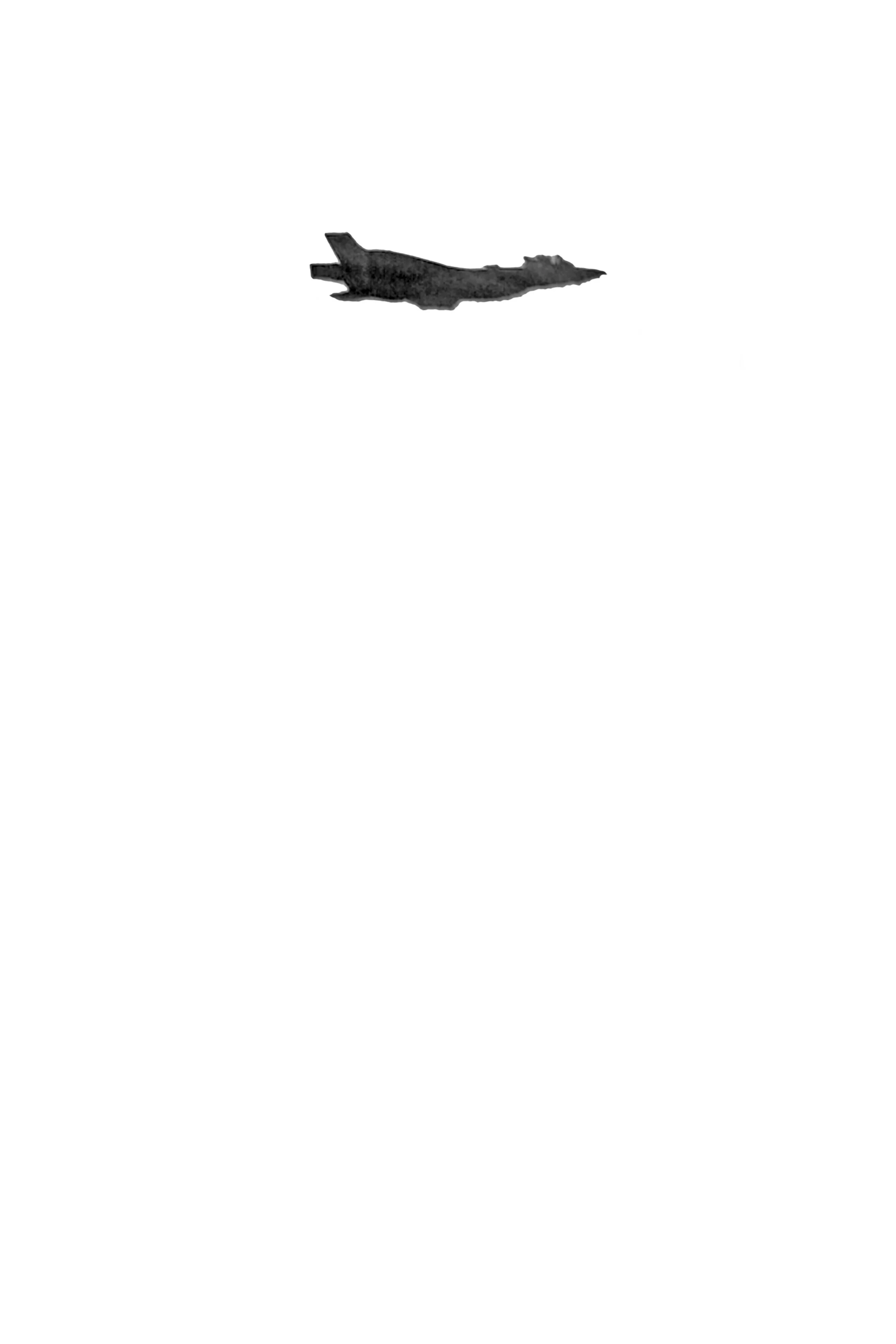
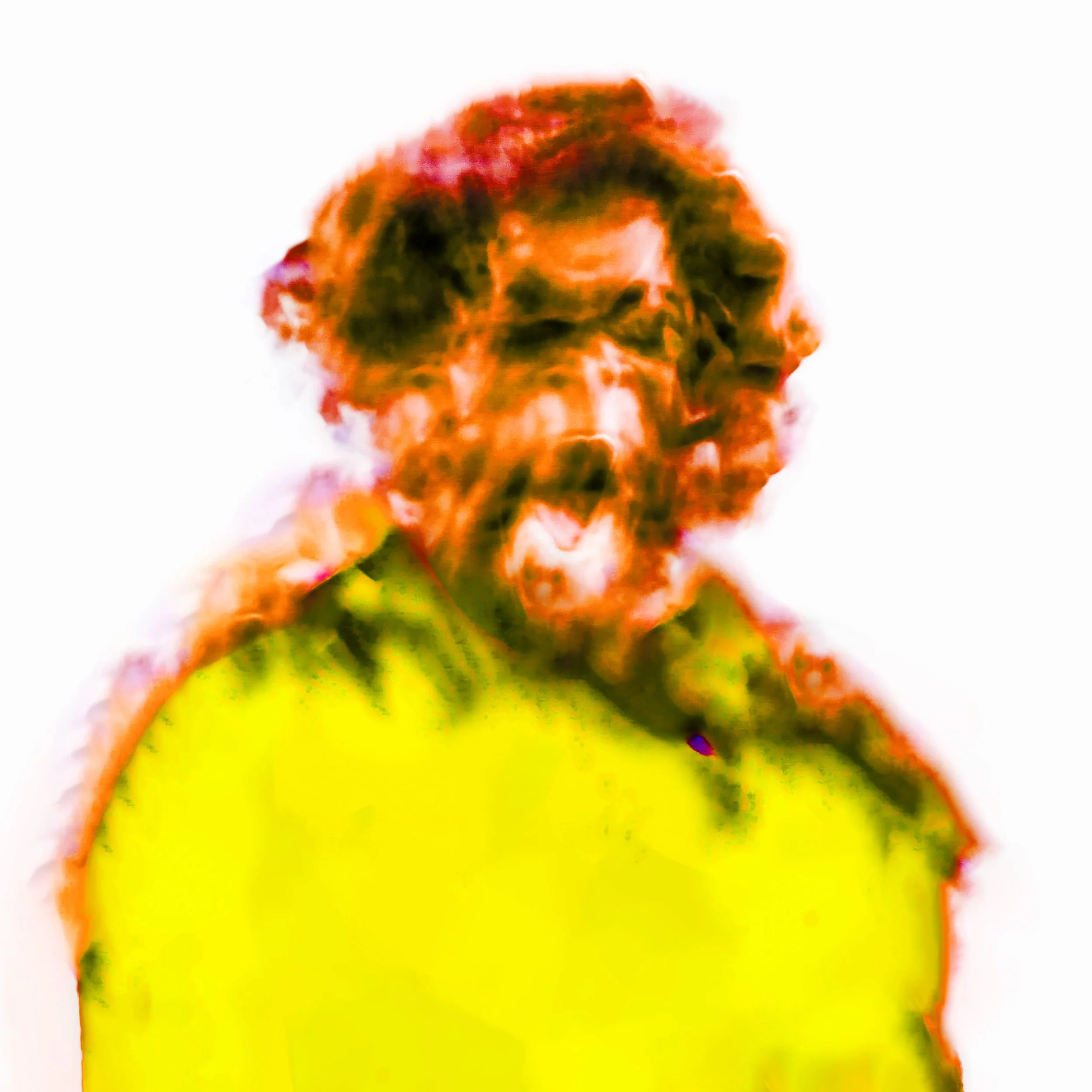
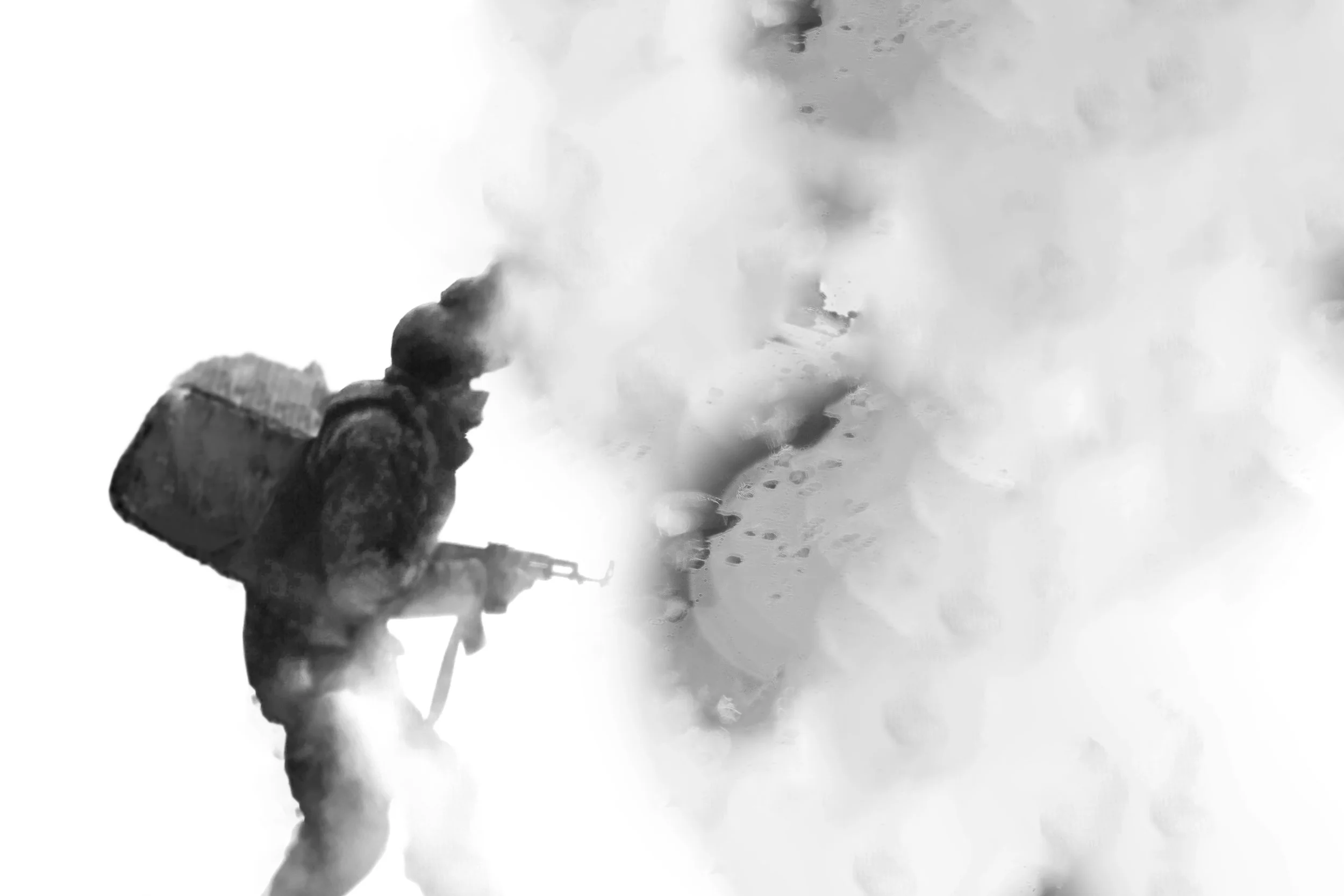
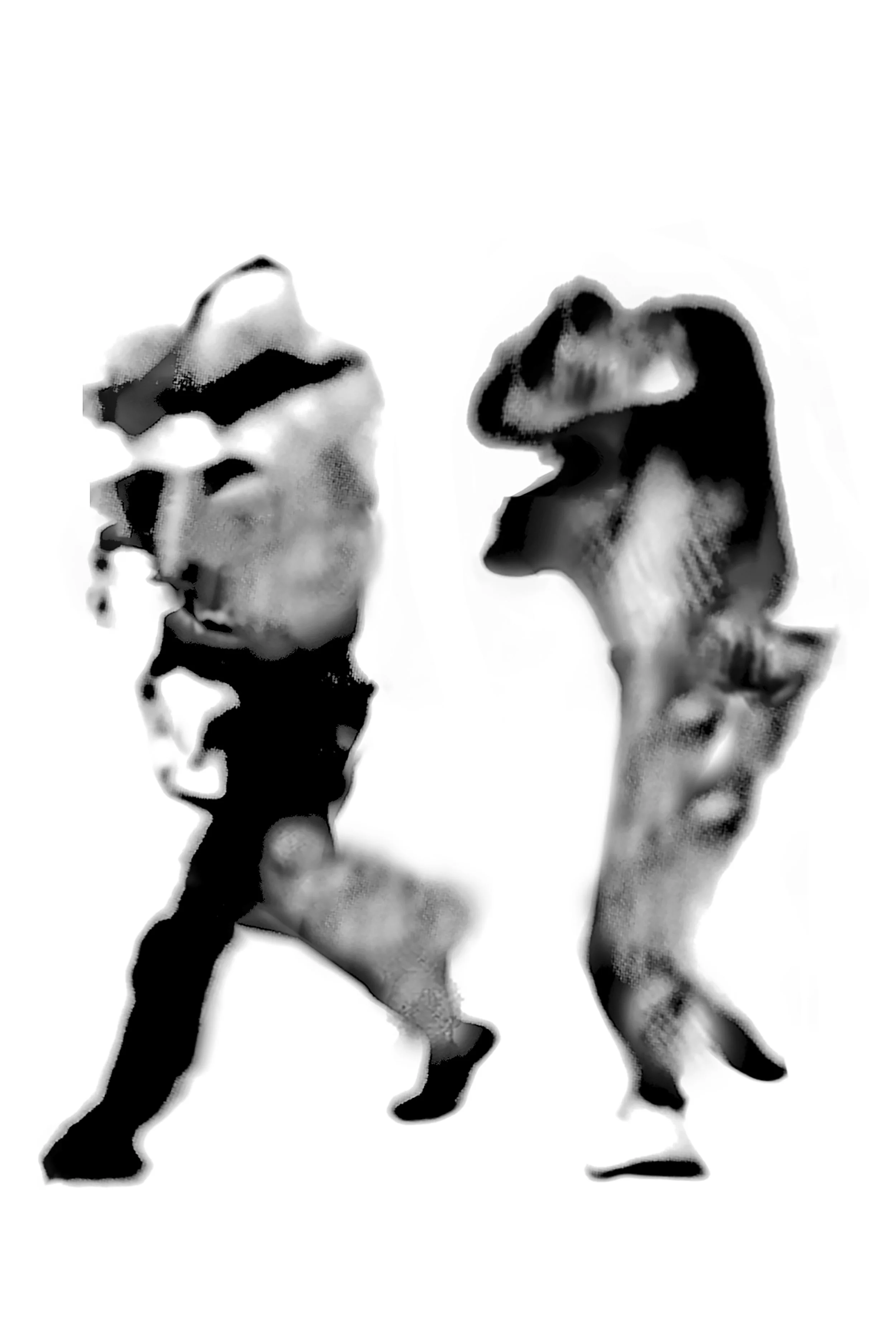
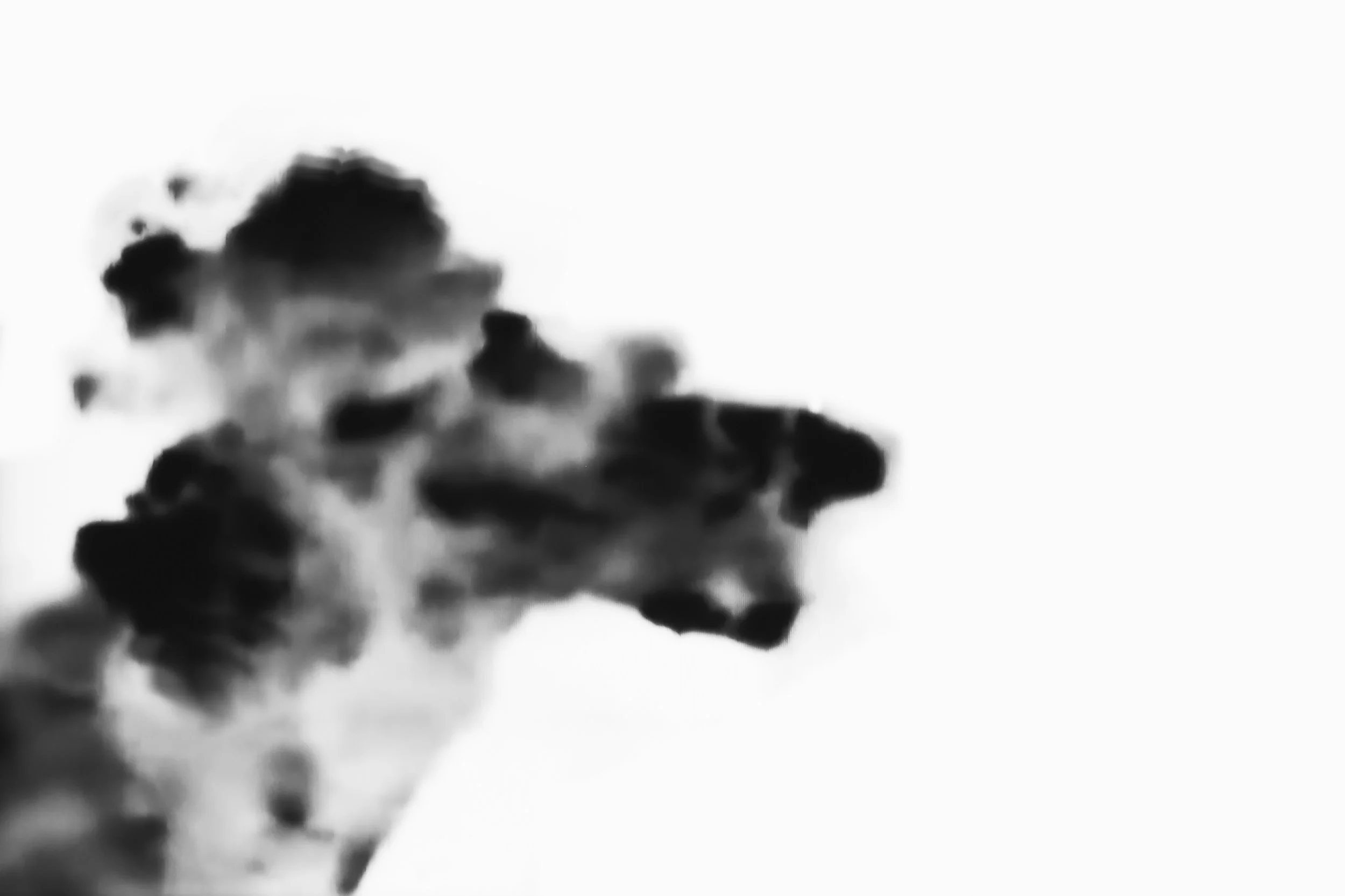
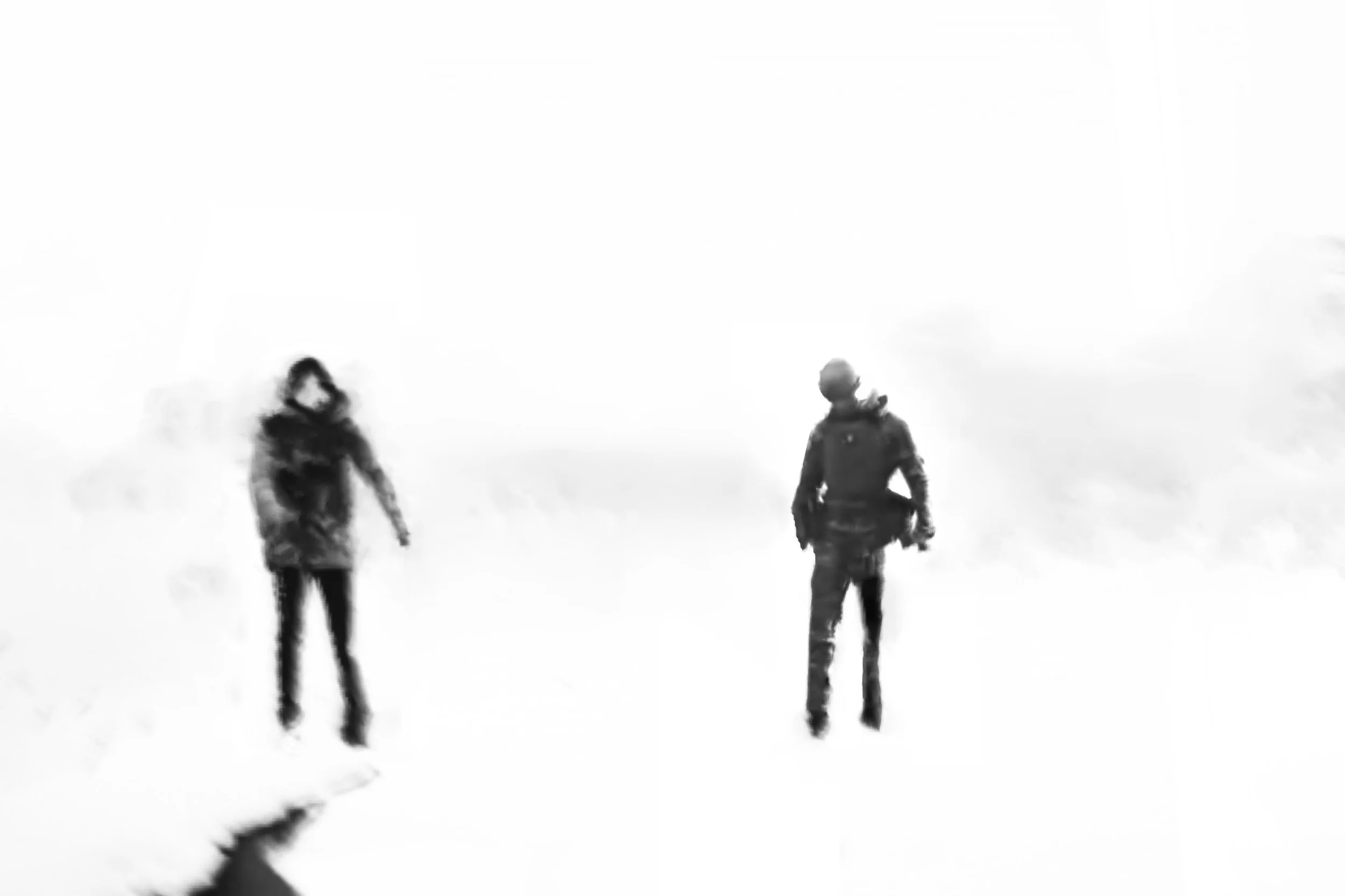
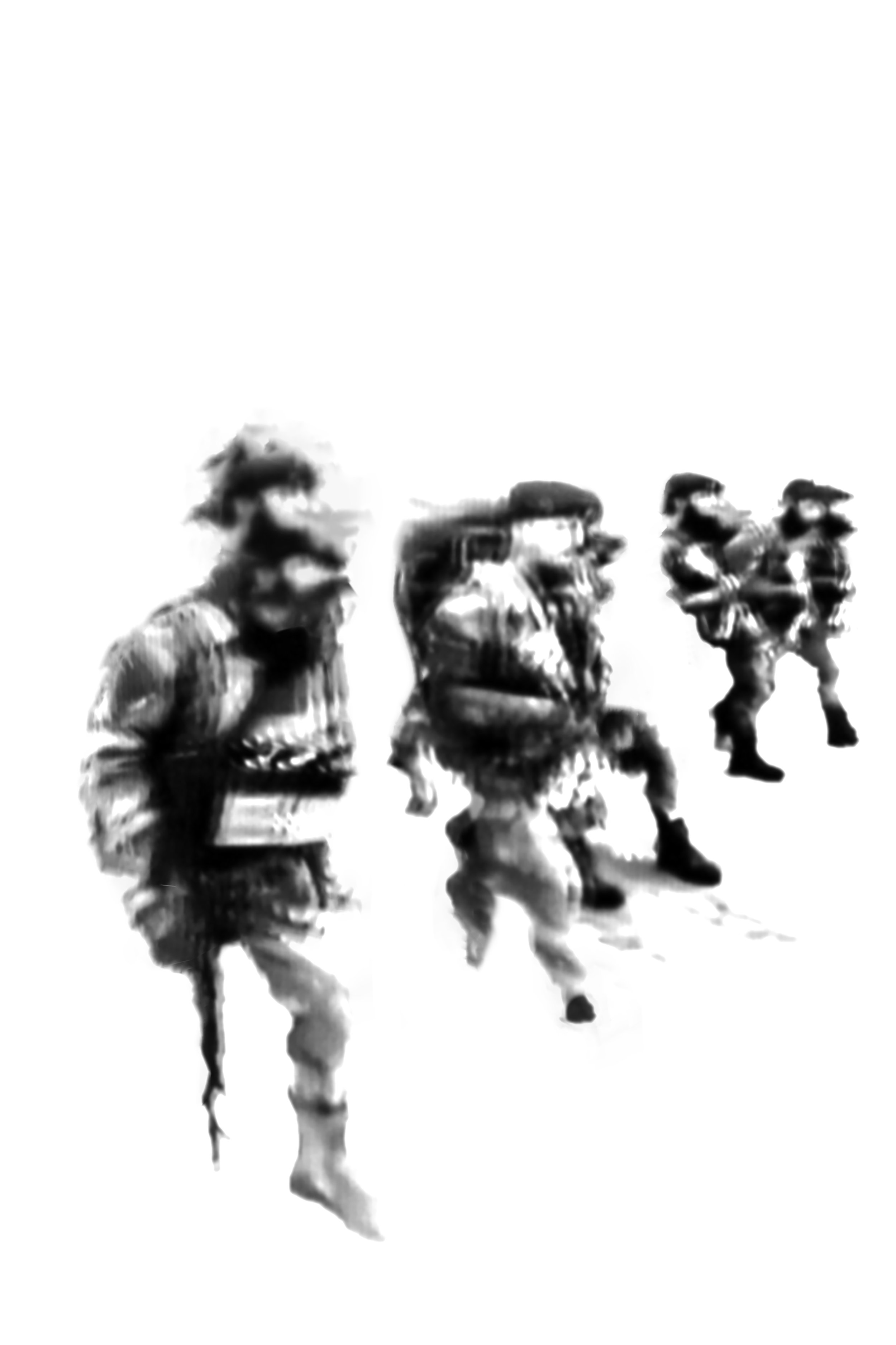
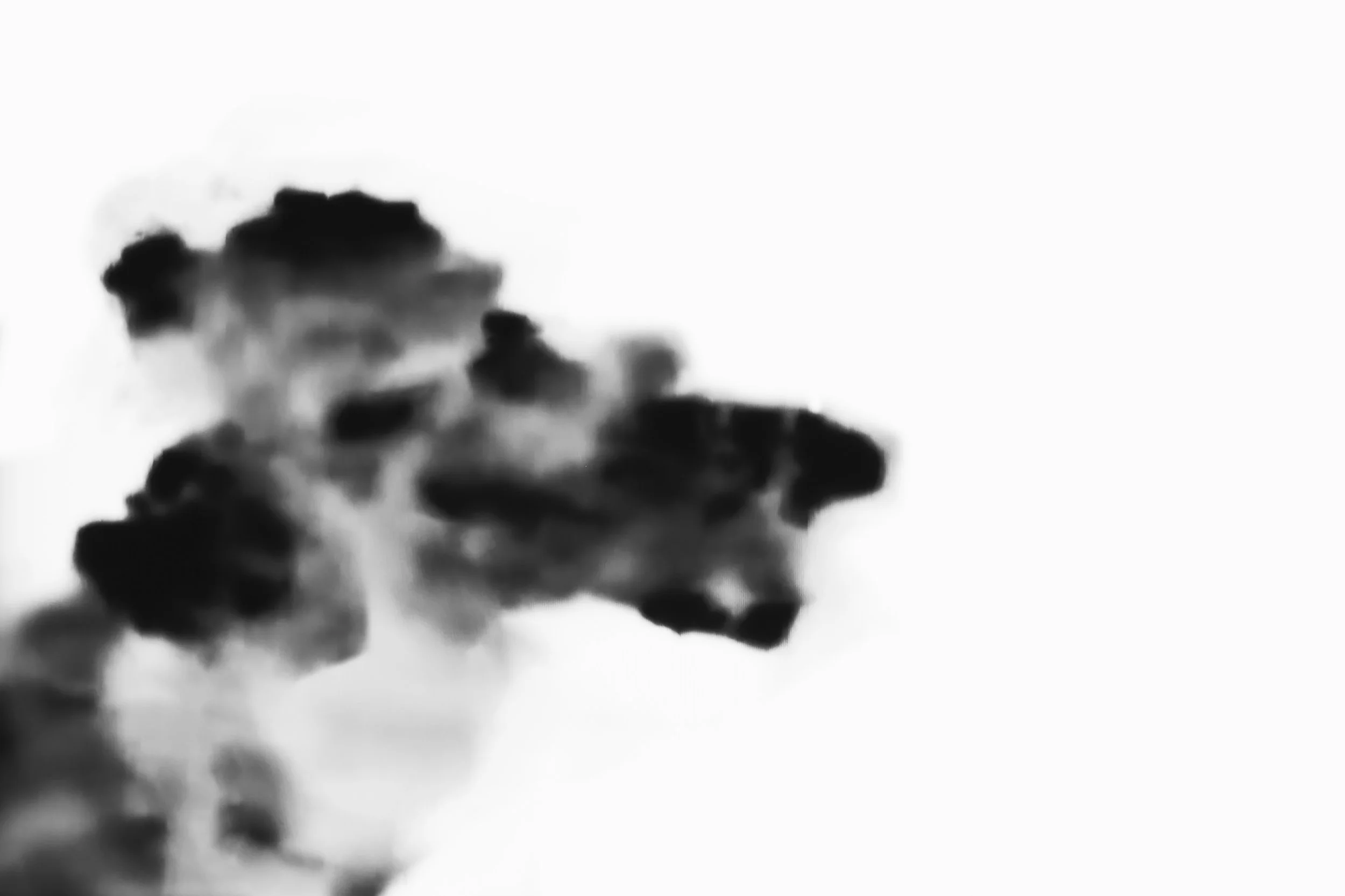
In Freiheit Freedom Воля, he works with images connected to the war in Ukraine and changes them through abstraction, distortion and deformation. Faces disappear, contours blur, and familiar scenes become harder to recognize. Instead of repeating images of war that viewers may already know too well, Gottmann wanted to reach something less immediate and more emotional.
For him, the difficult question was how far an image could be changed.
Over four years, he searched for a point where a photograph could lose its original clarity without losing its origin. Some images of destroyed buildings never worked for him, while others began to carry new meanings after transformation. The final book brings 41 images together around suffering, vulnerability, resilience and the loss of freedom.
How can an image move beyond its first, obvious meaning without becoming disconnected from what it originally showed? Gottmann’s answers offer one way to think about selection, transformation and knowing when an image has gone far enough.
The Book
Freiheit Freedom Воля is a photobook by German visual artist Gosbert Gottmann, published by Kehrer Verlag in 2026. The book reflects on suffering, violence and war through the experience of Ukraine during the Russian invasion. Gottmann works with found and media-based images, transforming them through abstraction, distortion and deformation. Faces dissolve, contours blur and identities become less clear, moving the images away from direct documentary representation toward a more emotional reading of loss, vulnerability, resilience and freedom.
The book includes 41 duotone images across 120 pages and is published in German, English and Ukrainian. It also contains texts by Gottmann, Jaroslaw Makarchuk and Marc Peschke, including personal accounts connected to the war. Rather than presenting the photographs as individual works, Gottmann arranged them as a sequence in which each image adds to the meaning of the next. (Kehrer Verlag, Amazon)
Beginnings: For more than 25 years, your work has engaged with suffering and exhaustion. What led you to turn to the war in Ukraine for Freiheit Freedom Воля? Did it feel, at first, like a continuation of your earlier work, or like something completely different?
It's a very complex question, and there's no simple answer. Turning to the images in Freedom wasn't simply a turn toward the suffering of war, it also draws on the past. Celina Lunsford described my book Étoile (2025) as “a biography of observations.” In that sense, the work on Freedom also felt like a continuation, or a further differentiation, of earlier bodies of work. A direct link can be found, for instance, in my 2004 book Warriors (Kehrer Verlag).
At the same time, Freedom carries an unavoidable sociopolitical relevance, an existential crisis threatening the system of freedom itself, which comes with the war in Ukraine. It would have been difficult for me not to connect that aspect to my artistic work. As the war drags on, the suspicion grows that this aspect isn't really being given enough attention by politics, meaning that freedom itself is under threat. Marc Peschke put it perfectly in his text for the book: “Freedom is the title of this book. It should be understood in this sense: to be free means to be human. To remain a human being, an individual.”
What you carried over from earlier projects: Your visual methods have changed a great deal from project to project. What did you consciously carry over from your earlier work into Freiheit Freedom Воля, and what did you know you had to leave behind?
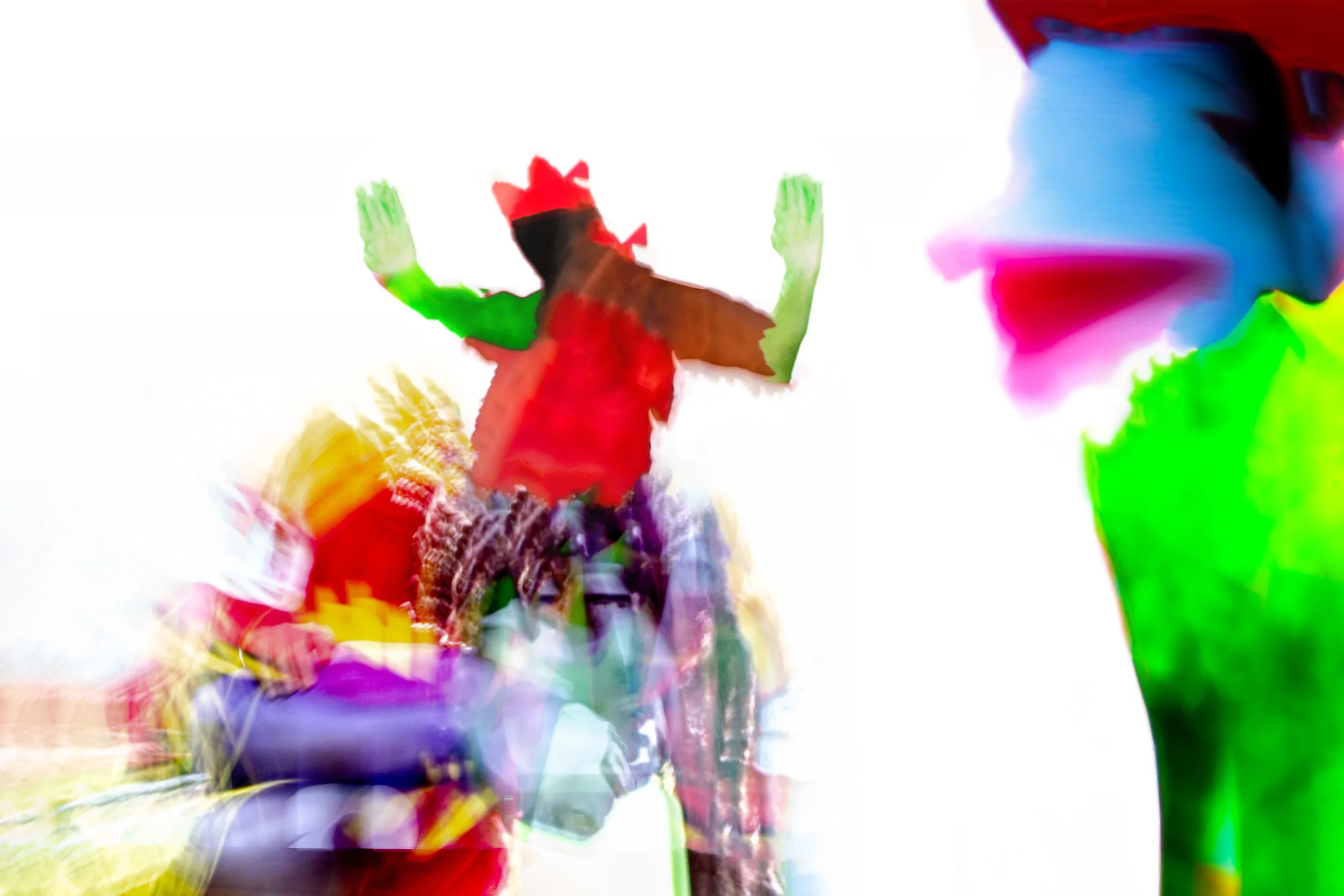
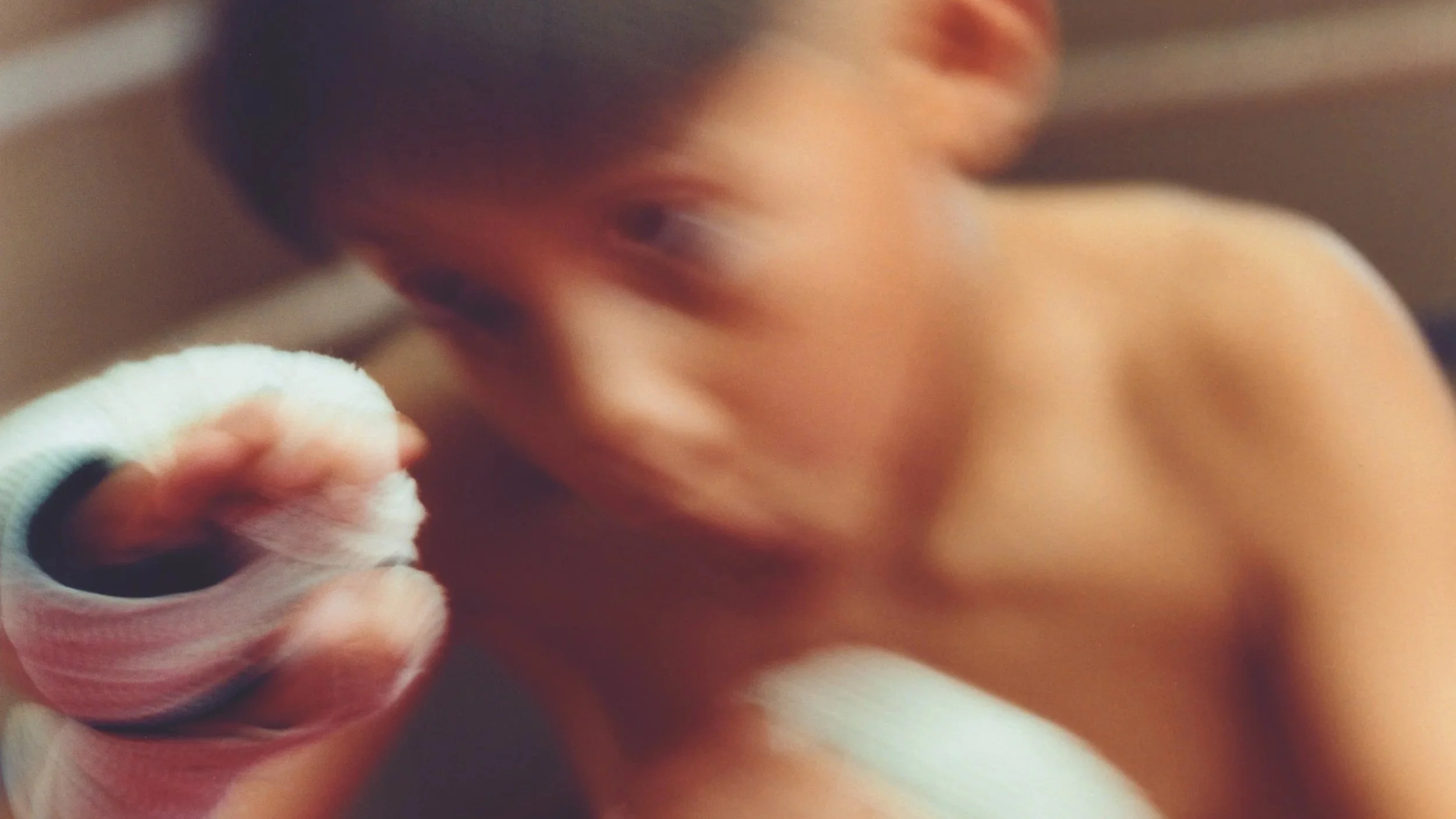
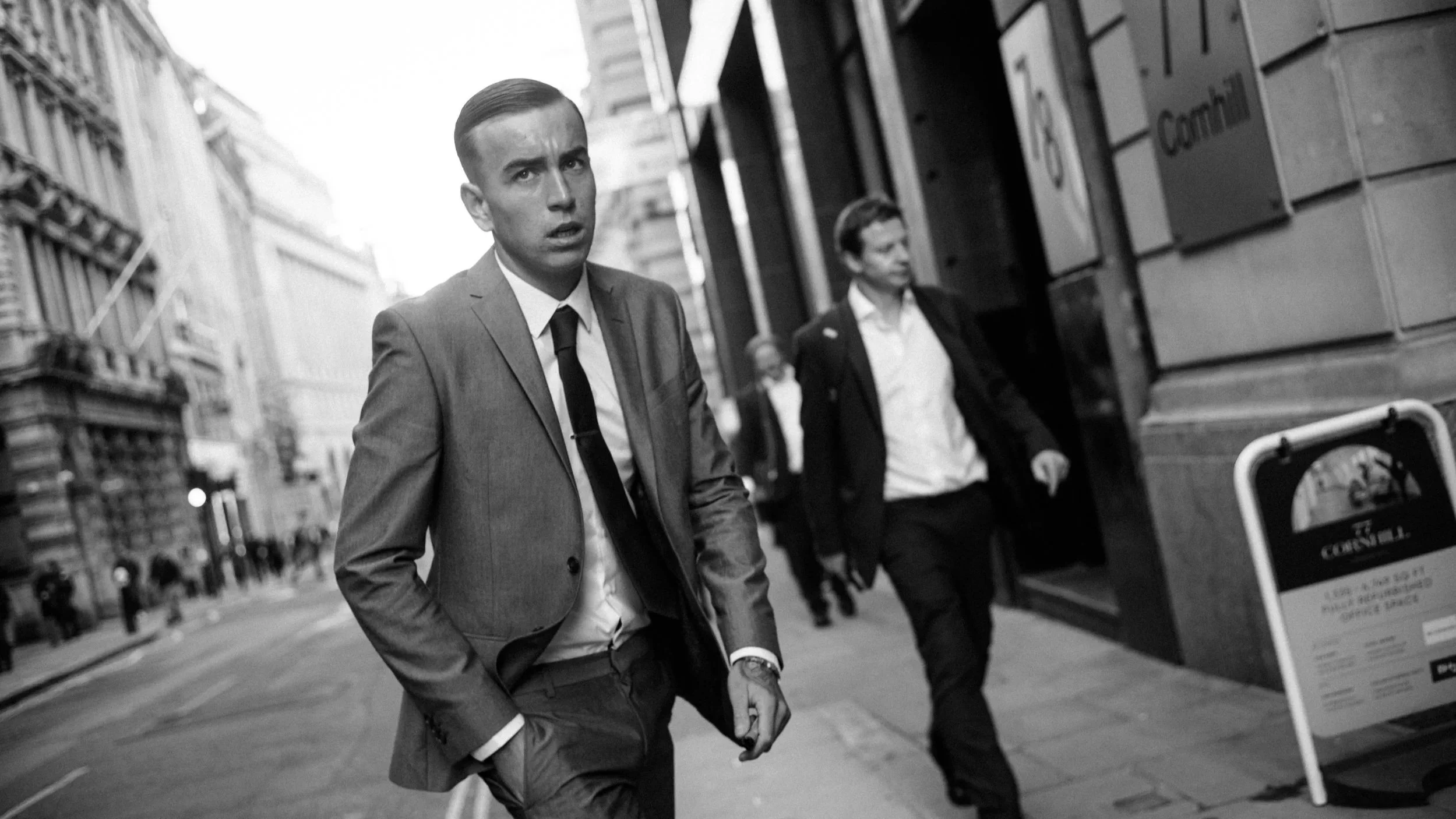
One of my first major series is called Marathon People. It dates back to the mid-1990s: runners photographed in a radical way, using flash. Suffering and fear seem inherent to their faces. These are very authentic moments, just fragments, with no significant retouching. Some time later, with the series Modern Sufferings (Kehrer Verlag, 2001), I began to vary the outward style. That's where an ongoing process of abstraction begins, one that runs through my work ever since, in Viewer, Stop Here, and in my most recent series, Vortex. So it only felt natural that the war images shown here would also work with visual disruption, distortion, abstraction, and deformation. What matters to me is finding a way to look through the surface, into a deeper layer, beyond the familiar images. That kind of look reveals emotion. That's how I find my own, very personal world of images.
Finding and changing the image: You work with images from different sources. When you're looking through photographs, video stills, or images from the media, what makes you stop at a particular image and think: I can work with this? And at what point did you begin to dissolve faces and blur identities? What could these altered images express that the original images couldn't, or rather, what were these altered images meant to express?
At its core, this is about empathy: for the people, for a country, for the idea of freedom. The book's title, Freiheit, initially stands in stark contrast to the images themselves. They show situations in which freedom is absent: the loss of safety, home, self-determination, or, in the most extreme case, life itself. The images show the absence of freedom and try to give that loss an emotional weight. But for me, freedom isn't only a personal concept. In the war of aggression against Ukraine, it's also about the freedom to determine one's own way of life.
Choosing and discarding an image: When you were going through photographs, video stills, and images from the media for Freedom, what made you pause on a particular image while discarding another, even before you had edited either of them? Was there something in the original image that told you it had the potential to survive the transformation?
There's no conclusive answer to that question, but I can try to approach it. I selected the images over several years, and through editing, stripped them of their original clarity. That's how a new pictorial statement emerged. Throughout this process, I followed my own sense of what the book's underlying tone should be. What I want to express is the vulnerability of freedom, the feeling of helplessness, loss, and suffering, but also resilience and resistance.
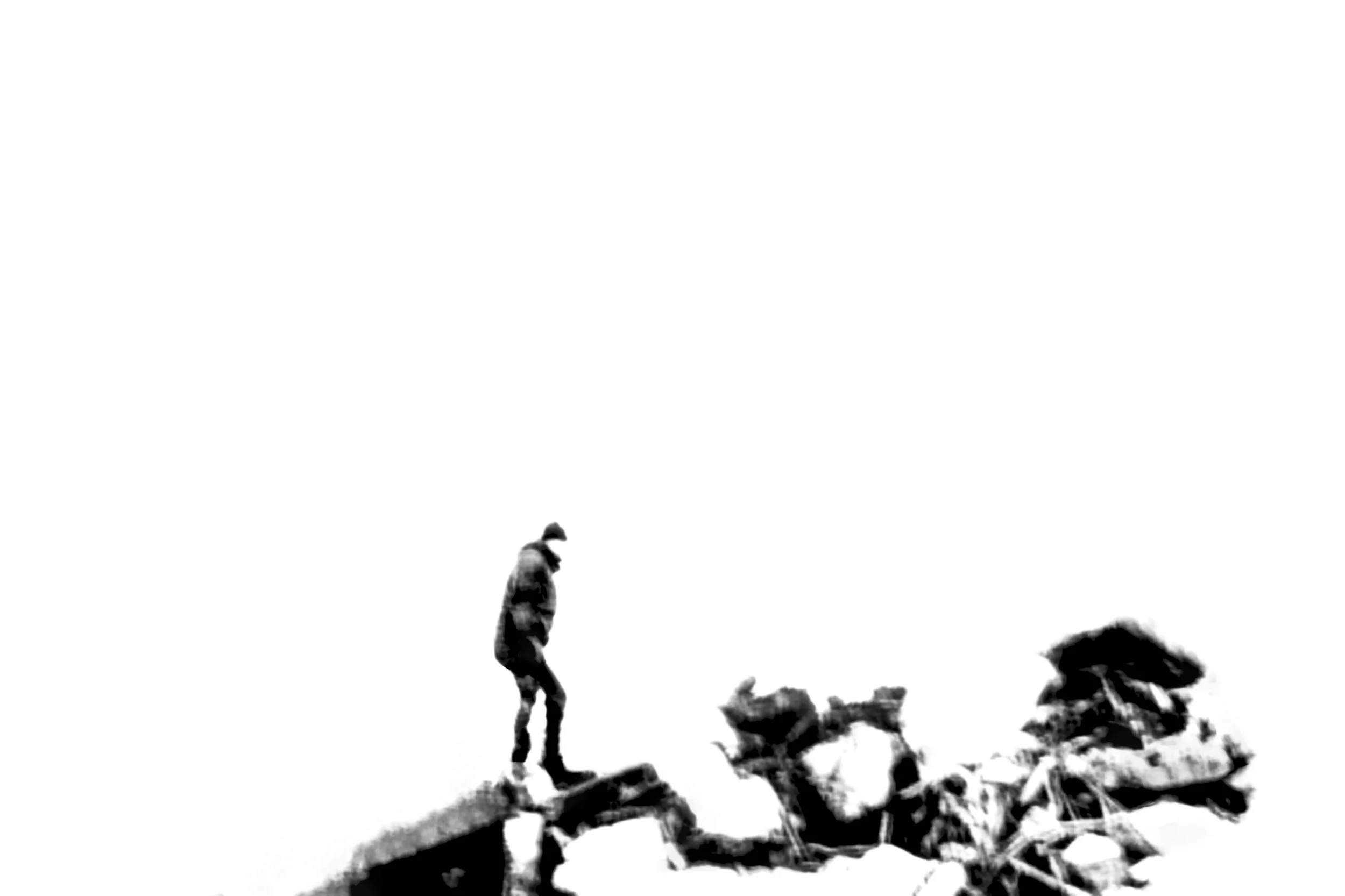
Here's an example. On page 34, a double-page spread shows a man who appears to be running across the rubble of a bombed building. Looking more closely, though, you can see that the man is running toward the outline of a fantastical creature formed by the debris. My editing of this image was inspired by the film The NeverEnding Story, specifically the scene where Bastian flies on Falkor. It's about the idea that willpower can preserve a country and its freedom.
Losing clarity without losing origin: Could you choose one photograph from Freedom and describe how you found the point where it lost its original clarity without losing its origin? What would have disappeared if you had pushed the transformation further?
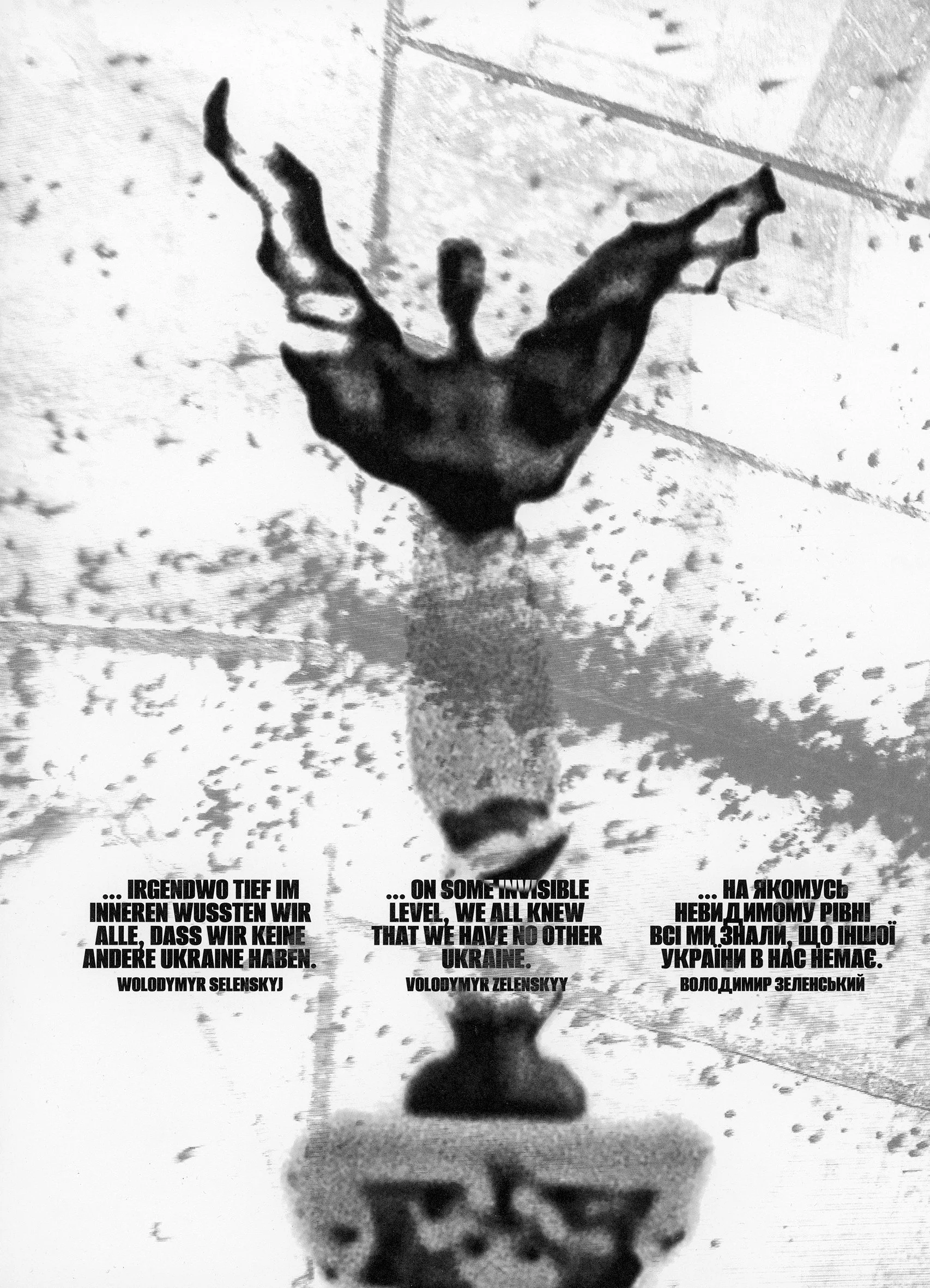
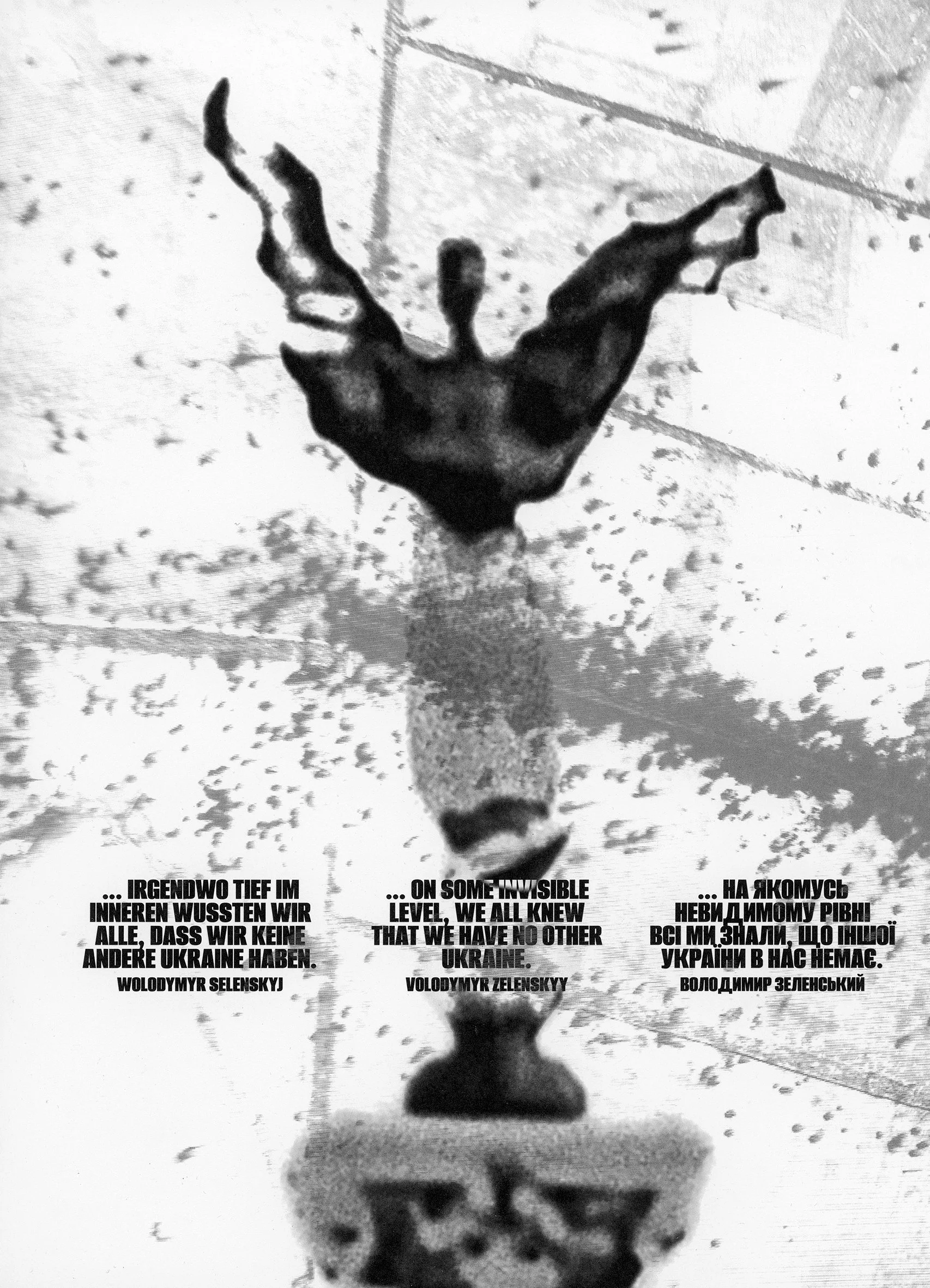
One example is the back cover. The image of the Independence Monument on Maidan is a symbol of the country's independence and freedom. Through the editing, it takes on qualities of dissolution, but its meaning is still clearly recognizable as such.
The title: Why did you choose the same word, freedom, in German, English, and Ukrainian for the title? What does this word allow you to express about these photographs?
From my very first thoughts about Freedom, it was clear to me that I wanted to work in three languages. That has to do with the different perspectives that come together in this work. The Ukrainian points to the place and to the people whose freedom is being directly attacked. The German also reflects my own position, the vantage point from which I look at the media images and at the war. The English opens the concept up into an international space.
Recognizing the limit: With such a strong visual method, how do you know when you've changed an image far enough? Was there ever a point where you realized you'd gone too far?
It's less a conscious, rational decision than an intuitive, emotional moment. Starting from the raw material, I try, through creative changes, to reach a state where the new image loses its original clarity but not its origin. At best, I find exactly the point where the image loses its quick legibility and opens up into something the viewer can complete or feel for themselves. It's a fragile balancing act, one that doesn't always succeed.
When an image doesn't work: Were there images you kept trying to change, again and again, but eventually had to accept simply didn't work? What were they missing?
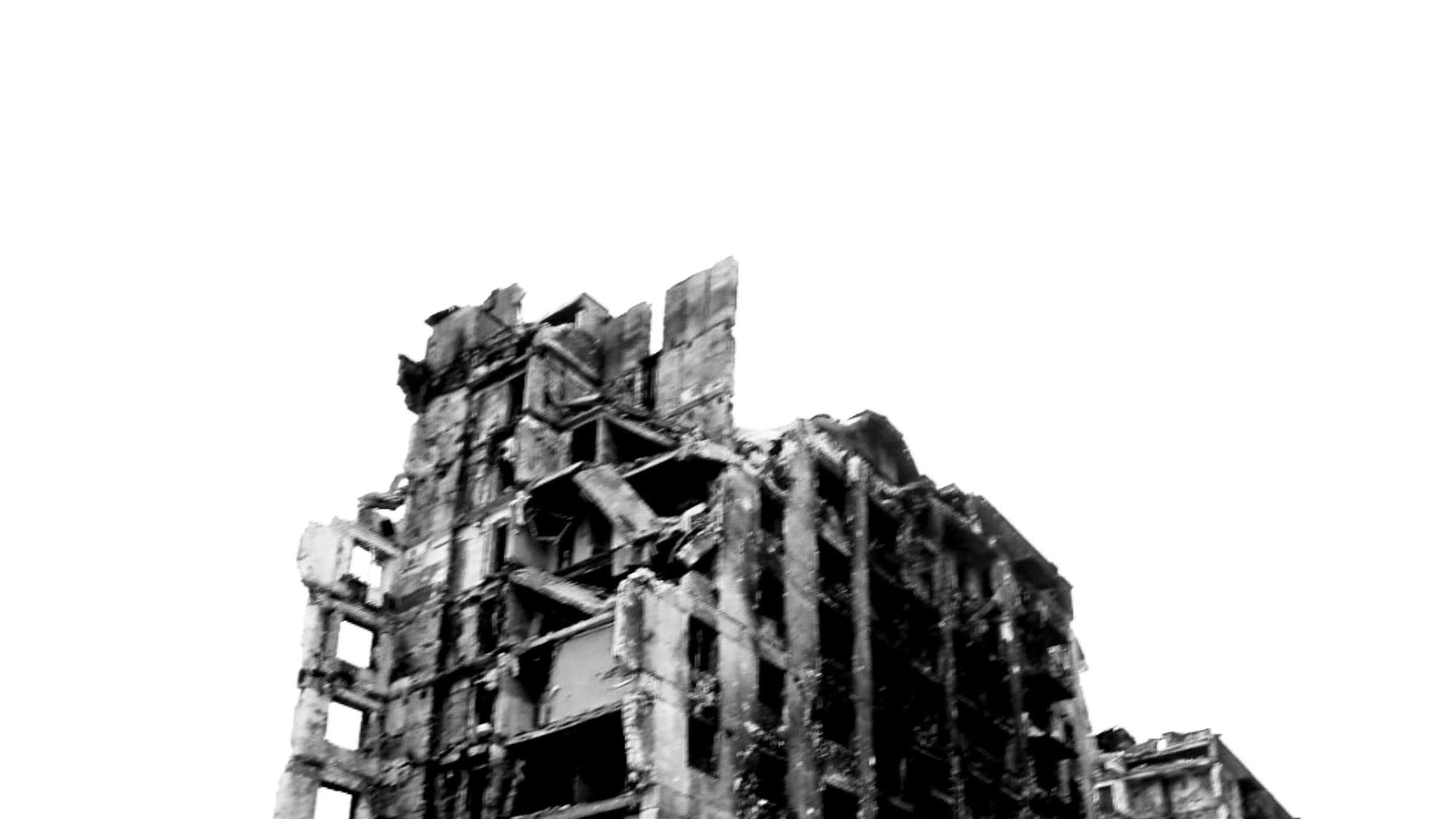
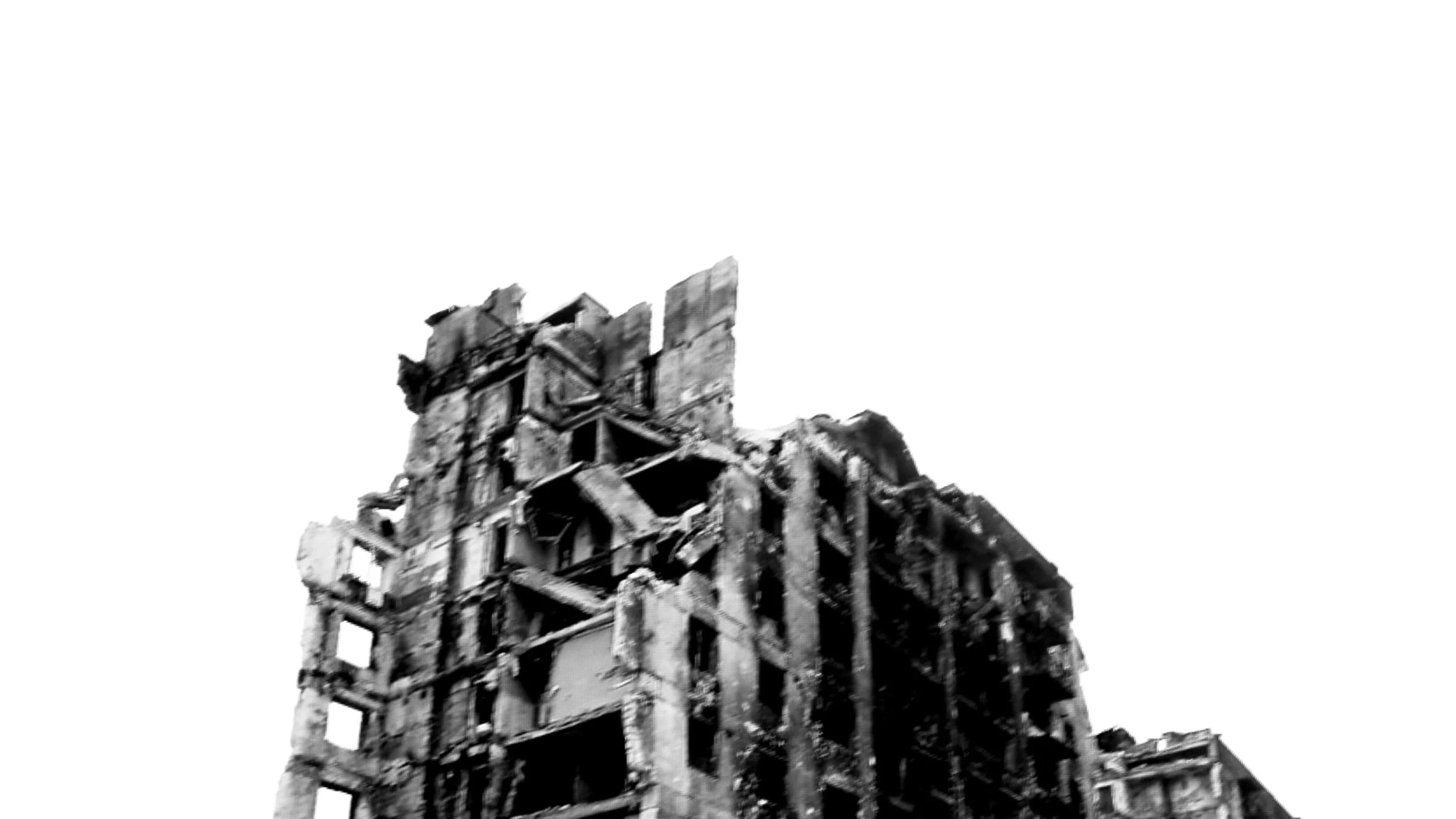
For me, these were primarily documentary images of buildings destroyed by bombs or drones. Such images are, without doubt, important for reporting. But with my work, I try to disrupt that automated, worn smooth, media gaze, and to trigger an unfamiliar emotional response in the viewer.
An image that couldn't be saved: Could you take one of the images of destroyed buildings that didn't work as an example, and describe what you actually tried with it before deciding it couldn't be saved? How did you know there was no point in trying any further?
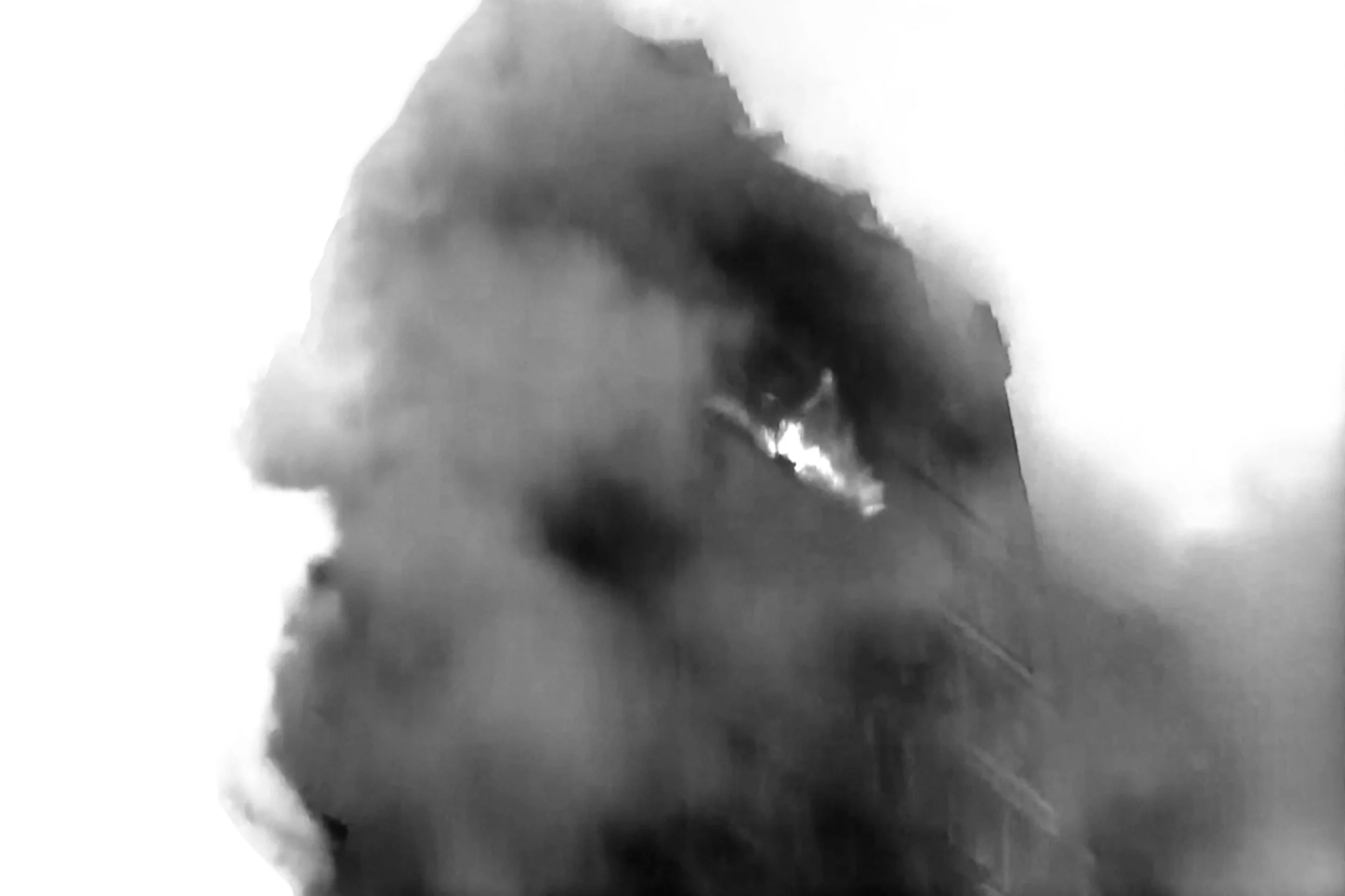
Unlike that example, showing the bombed building, I preferred the image on page 28. It opens up additional emotional layers. In this image, the visible outer reality is replaced by an inner vision.
Selection: Once you had developed the visual language of the project, how did you decide which images would make it into the final selection of 41? Did an image have to achieve something specific to earn its place in the book?
I don't see the final selection as a collection of my best individual works, but more as a kind of symphony. That also requires images that don't necessarily work well on their own. The hardest work happens in between, in setting the images in relation to each other. That way, the meaning of one image is completed by the next, and so on, building toward a composition.
Sequencing: How did you arrange the 41 images so that they build on one another, rather than simply repeating the same visual idea?
A certain system suggested itself here, one that followed the course of the war. Beyond that, it felt important to me to express the general feeling of the absence of freedom, and its many facets: the suffering of war, threat, vulnerability, destruction, the loss of individuality, isolation, loss of dignity, but also resilience.
That said, the images alone can't explain the suffering of war. So it mattered a great deal to me to support these aspects with the text work of Jaroslaw Markarchuk, two interviews with people affected by the war. The interviews Olena and Iryna shed light on the deep, palpable experiences of loss of two women in the war, giving the book a human depth. That gives the viewer the chance to deepen their own associations.
A necessary image: Can you name an example of a photograph you probably wouldn't have chosen as a standalone image, but which became necessary because of the photographs around it? What exactly happens between these images that made you decide to keep it in the sequence?
One example here is the image on page 12. Together with the few images before it, it's meant to convey a sense of the large scale invasion in the early days of the war.
What has changed:After working on Freiheit Freedom Воля, is there something in your way of working that you'll consciously carry into your next project, and something you'd consciously choose not to use again?
The work on Freiheit developed over four years. Other bodies of work emerged alongside it during that time, Vortex and Mastering the Chaos, for instance, in 2025/26. In that sense, the projects developed together, integratively. There was no conscious including or excluding. But what has always remained true was put well by Martin Clauer in Art magazine (2/05), a good twenty years ago now: “Artistically, at any rate, Gottmann has long been devoted to the core business of the human condition and to a subtle kind of sociopolitical photography.”
To discover more about this intriguing body of work and how you can acquire your own copy, you can find and purchase the book here. (Kehrer Verlag, Amazon)
More photography books?
We'd love to read your comments below, sharing your thoughts and insights on the artist's work. Looking forward to welcoming you back for our next [book spotlight]. See you then!
Gosbert Gottmann wanted war photographs that resisted easy reading. In Freiheit Freedom Воля, he works with images connected to the war in Ukraine and changes them through abstraction, distortion and deformation. Photography Book Spotlight