Welcome to this edition of [book spotlight]. Today, we look at Other Shore, by Osamu Matsuo (published by CLOCK Inc.). We'd love to read your comments below about these insights and ideas behind the artist's work.
Osamu Matsuo made Other Shore in his hometown, Sasebo.
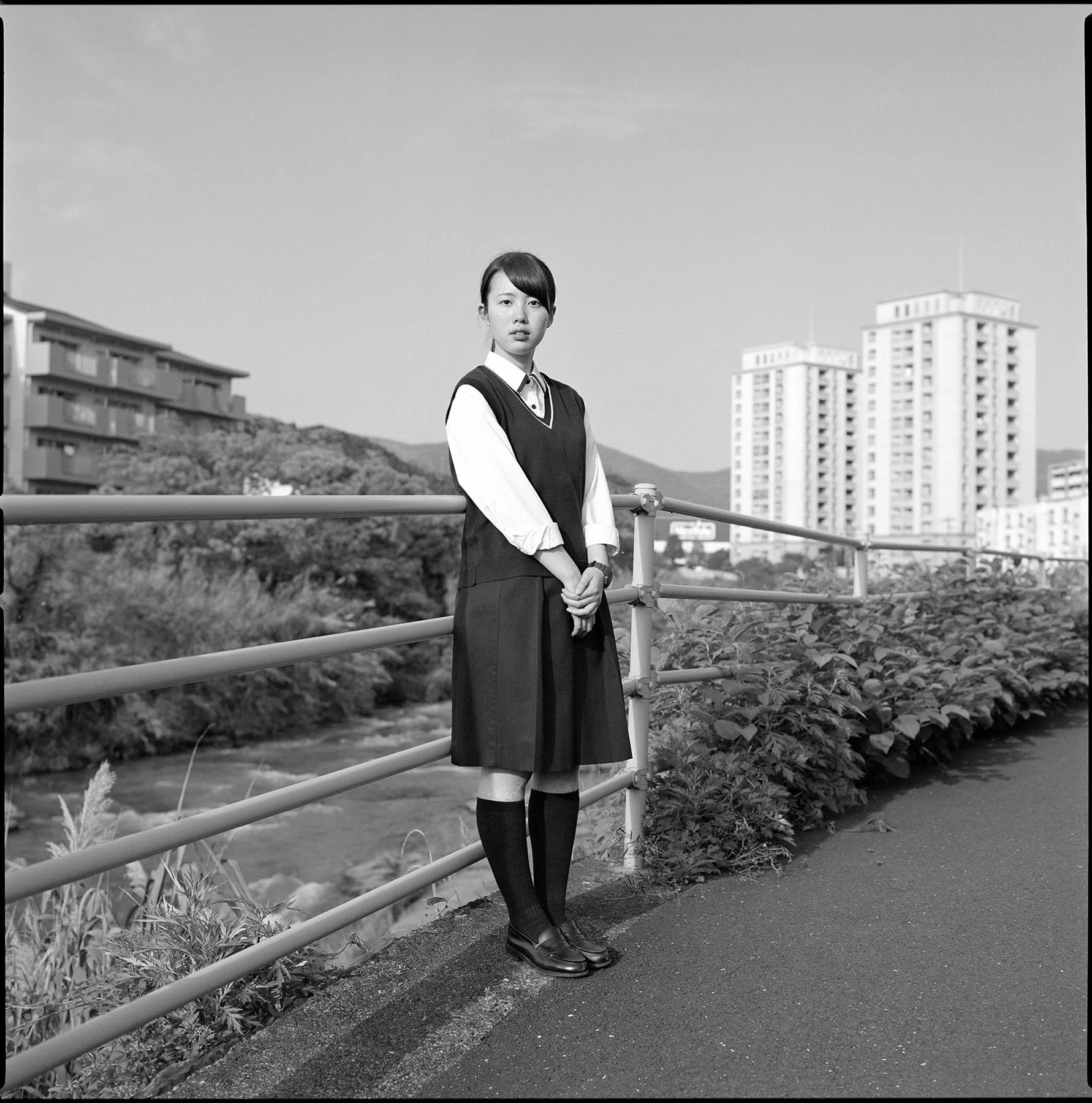
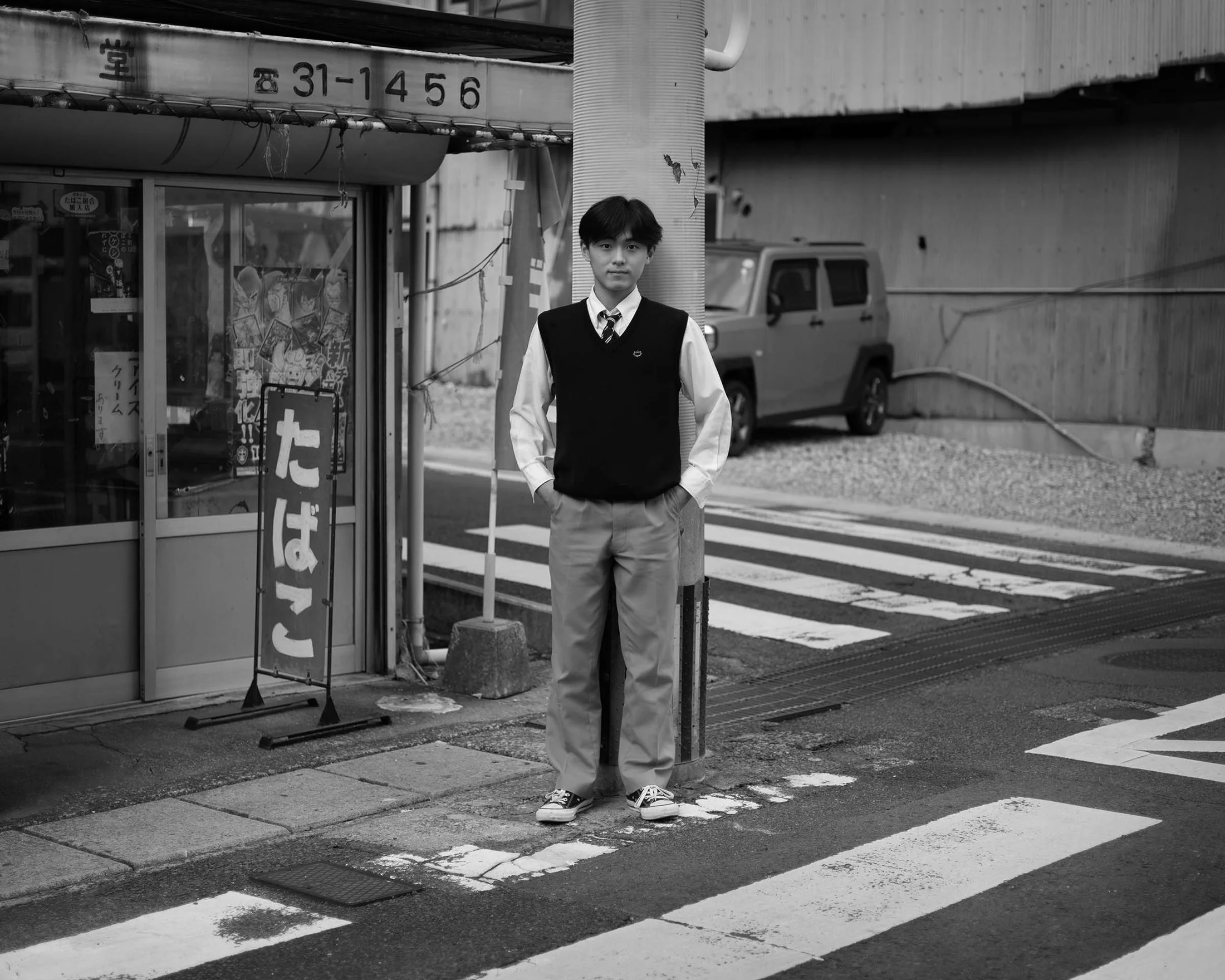
The photobook holds 78 black-and-white photographs of his friends and of the places around them, made between 2023 and 2026. Sasebo is a port town in western Japan, with a US Navy base and a shipyard. Matsuo photographed every person in the same way: the camera on a tripod at the same height and angle, the whole body in the frame and the person in the centre.
He wants readers to feel looked at by the people inside the photographs.
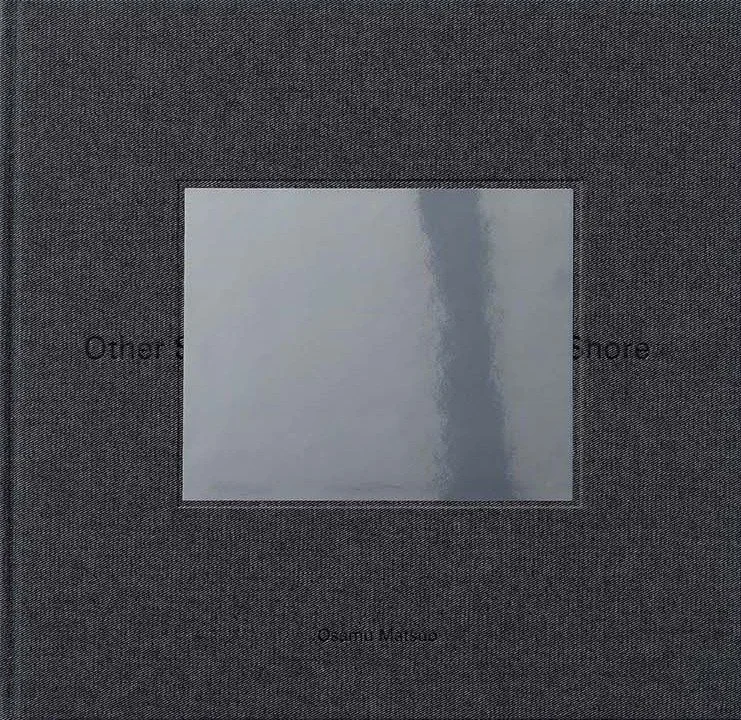
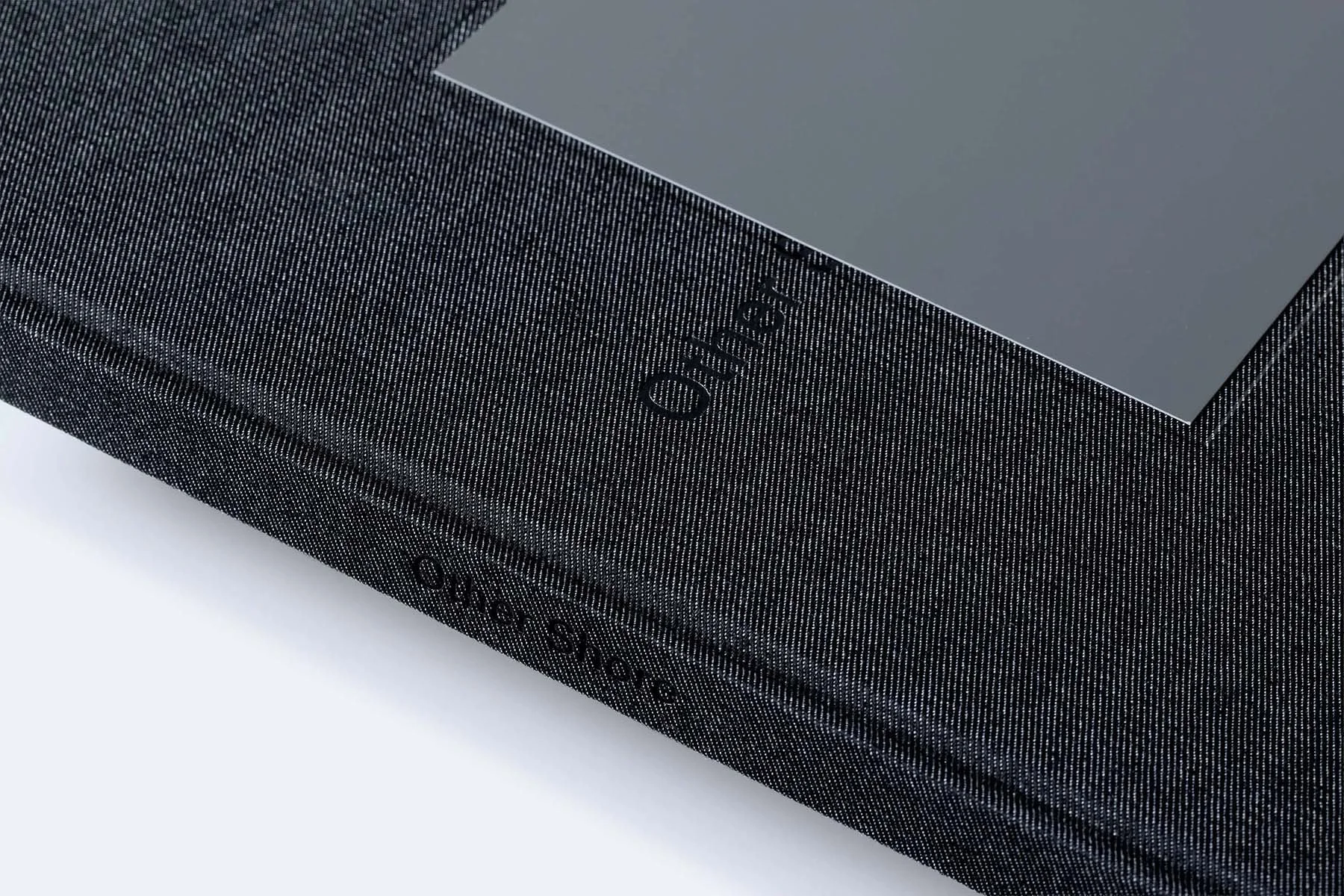
The book even has a mirror set into its cloth cover.
The mirror was the idea of the designer, Kazune Watanabe, so you see yourself before you open the book. Inside, the choices were just as strict. Matsuo did not photograph lively expressions, landscapes that could stand as symbols of the region, or pictures made better-looking by clever angles.
If you photograph your own hometown, his advice is simple: do not drown in your own nostalgia, and stand a little outside the circle. In the interview he also explains his fixed method, why he waits a few seconds of silence before each portrait, and why his essay comes at the end of the book.
The Book
Other Shore
CLOCK Inc. · 2026 · 144 pages
Other Shore contains 78 black-and-white photographs that Osamu Matsuo made between 2023 and 2026. It shows portraits of people around him and landscapes of Sasebo, the port town where he was born and raised. The book has no Japanese title. The words 向こう岸 and 彼岸 sit behind the title, but Matsuo chose not to use either.
The clothbound hardcover measures 29 by 28.3 cm and has a mirror plate set into the cover. It was designed by Kazune Watanabe of There There, and it ends with Matsuo’s essay “Premonition of Ruin,” printed in Japanese and English.
Start: The Sasebo Project began with Hills and Cranes in 2014, and you kept going back to Sasebo for many years. At what point did you realize the photos you started in 2023 needed to become their own book, Other Shore?
In 2017 I photographed seventeen-year-olds in Sasebo and made a book called 17. Part of the intention was to record young people bound to a particular time and place. But it was also an attempt at something else: to see whether seventeen-year-olds standing in the nostalgic landscape of Sasebo could leap over that time and place, acquire a kind of universality inside the photograph, and in doing so say something about what photography is.

The Book
17
STUH · 2018 · 192 pages · Hardcover
79 portraits of 17-year-olds, made in 2017 in the streets and alleys of Sasebo. It is the fourth book of the Sasebo Project, and the method Osamu Matsuo used for it became the base for Other Shore.
I work in two ways. In the first, I decide on a concept and then gather the people and landscapes it calls for, by a fixed method. In the second, I photograph as part of daily life and choose from those pictures afterwards to build a book.
Other Shore was made the first way. From 2018 I had wanted to take the method I established in 17 and apply it to a far wider range of friends and landscapes, to make a book that covered the whole world of Sasebo. COVID delayed the start a little.
So to answer directly: the idea was firm from 2018, and I began in 2023.
You said you gathered the people and landscapes by a fixed method, the one you established in 17. What exactly is that method, and which of its rules did you keep or change for Other Shore?
The camera is fixed on a tripod at the same height and the same angle every time, and the subject’s position is fixed at the centre.
Rather than moving around with the camera and contriving to make “a good photograph,” I believe that if you stand in front of a good subject, the photograph should become good of its own accord. It also serves to keep the reader’s viewpoint constant.
When the subject is a person, the whole body is in the frame. When you photograph a person’s whole body, the world inside the photograph becomes a place. A bust shot or a close-up, by contrast, becomes the photographer’s point of view. In this project I wanted to show that there is another world inside the square window of the photograph.
I changed almost nothing, but I moved from a square format to a horizontal one, so that the world could be taken in more objectively.
Title: The book moves between “this side” and “the other side” of the photograph. When you chose the title, which “other shore” did you think of first: Sasebo seen from Tokyo, the past, or the world inside a photograph?
One small correction first: the book has no Japanese title. It is Other Shore in both languages. 向こう岸 and 彼岸 are words that sit behind the title, but I chose not to use either as the title itself.
To answer the question: the world inside the photograph.
My work has always been bound up with the fundamental strangeness of photography as a medium:
the temporal paradox between inside and outside the photograph
looking at a photograph, and being looked at from within it
the ghostliness of a photograph: an image, and at the same time an object
Finding what to photograph: The book shows people close to you and scenes from Sasebo, a city with a US Navy base and shipyards. How did you decide what to photograph in a town you already know so well?
For the friends, I chose people with distinct characters, and chose them so that the book as a whole would present every kind of person. They are people I know well, but I selected them by asking which of them might acquire universality on the other side of the photograph.
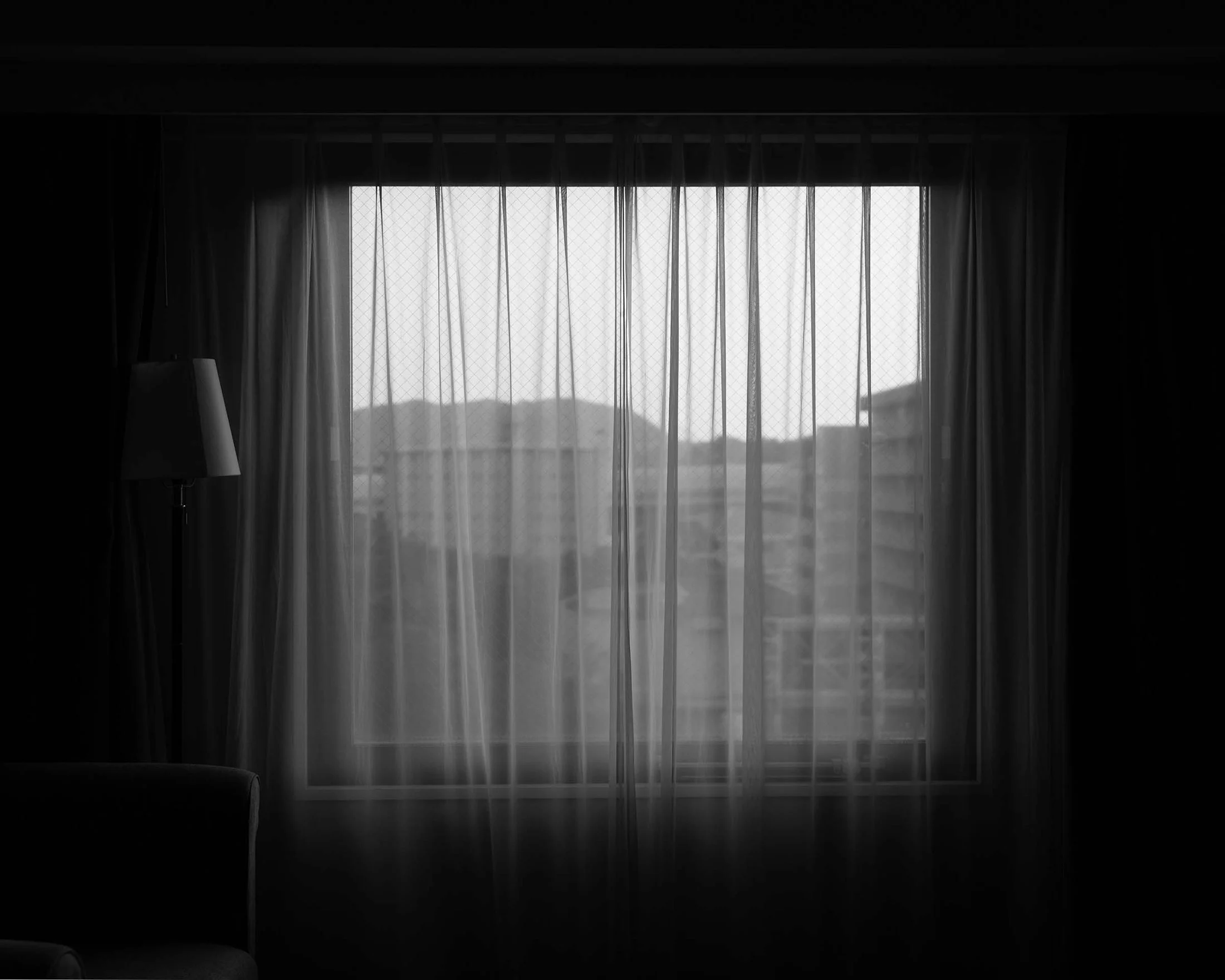
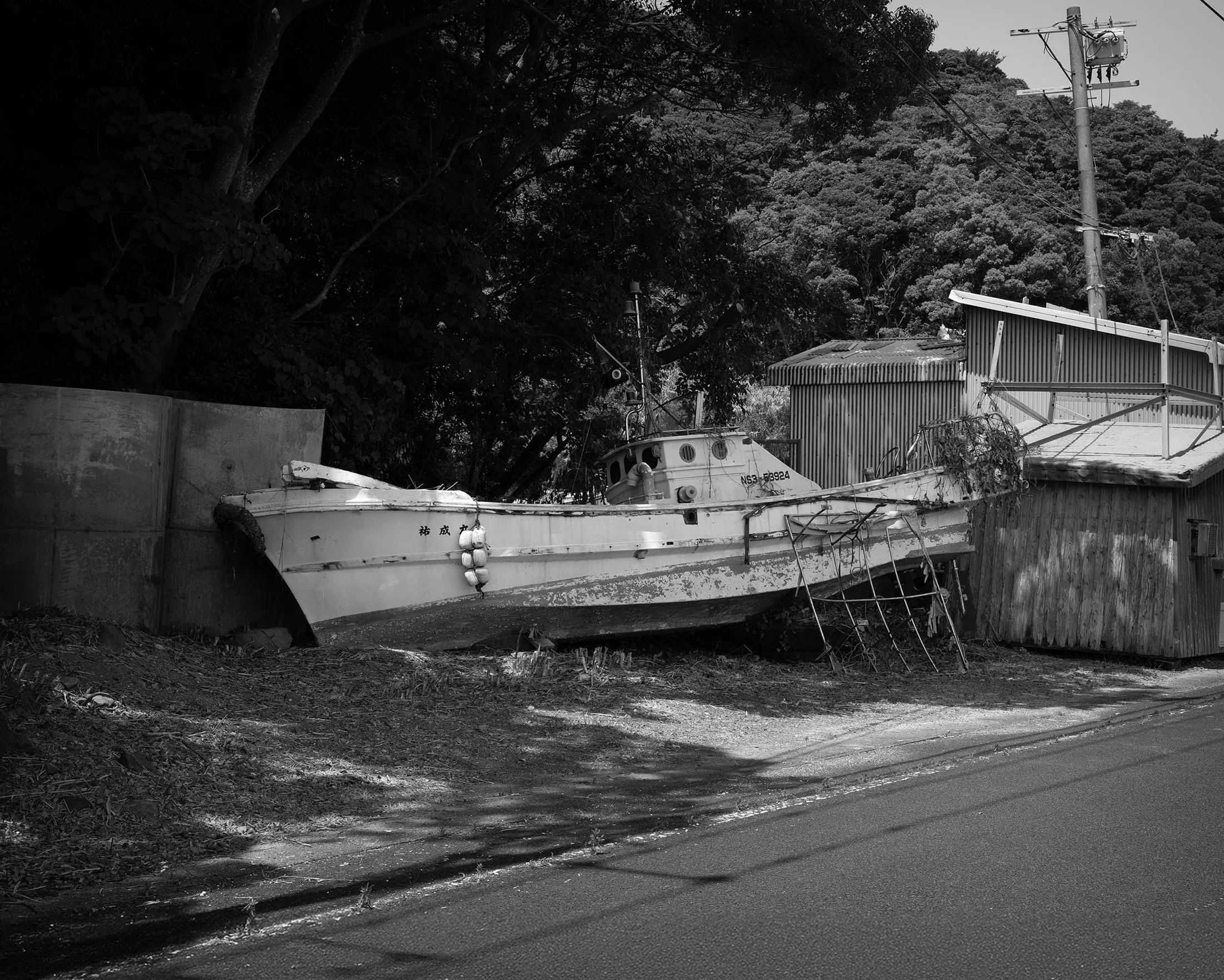
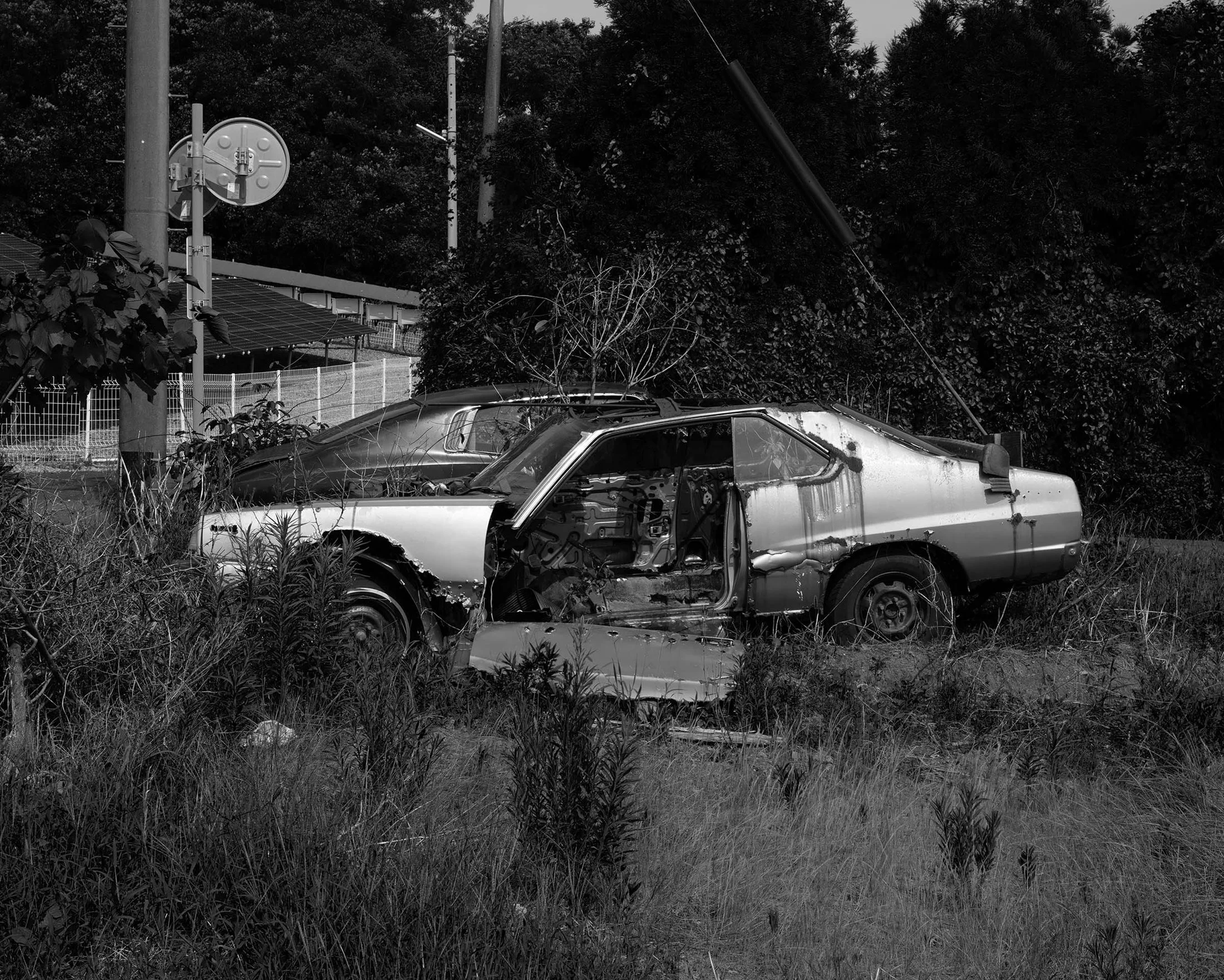
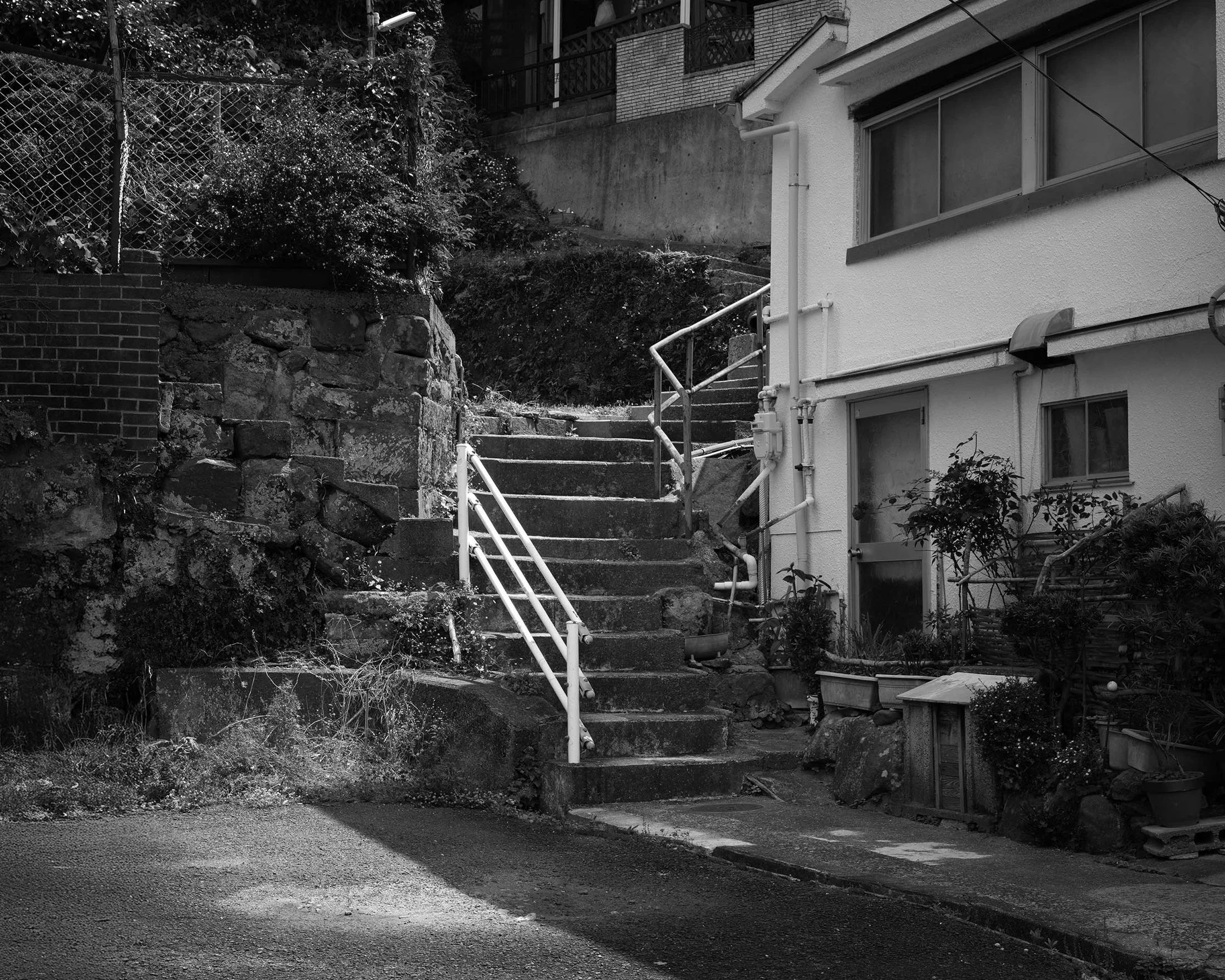
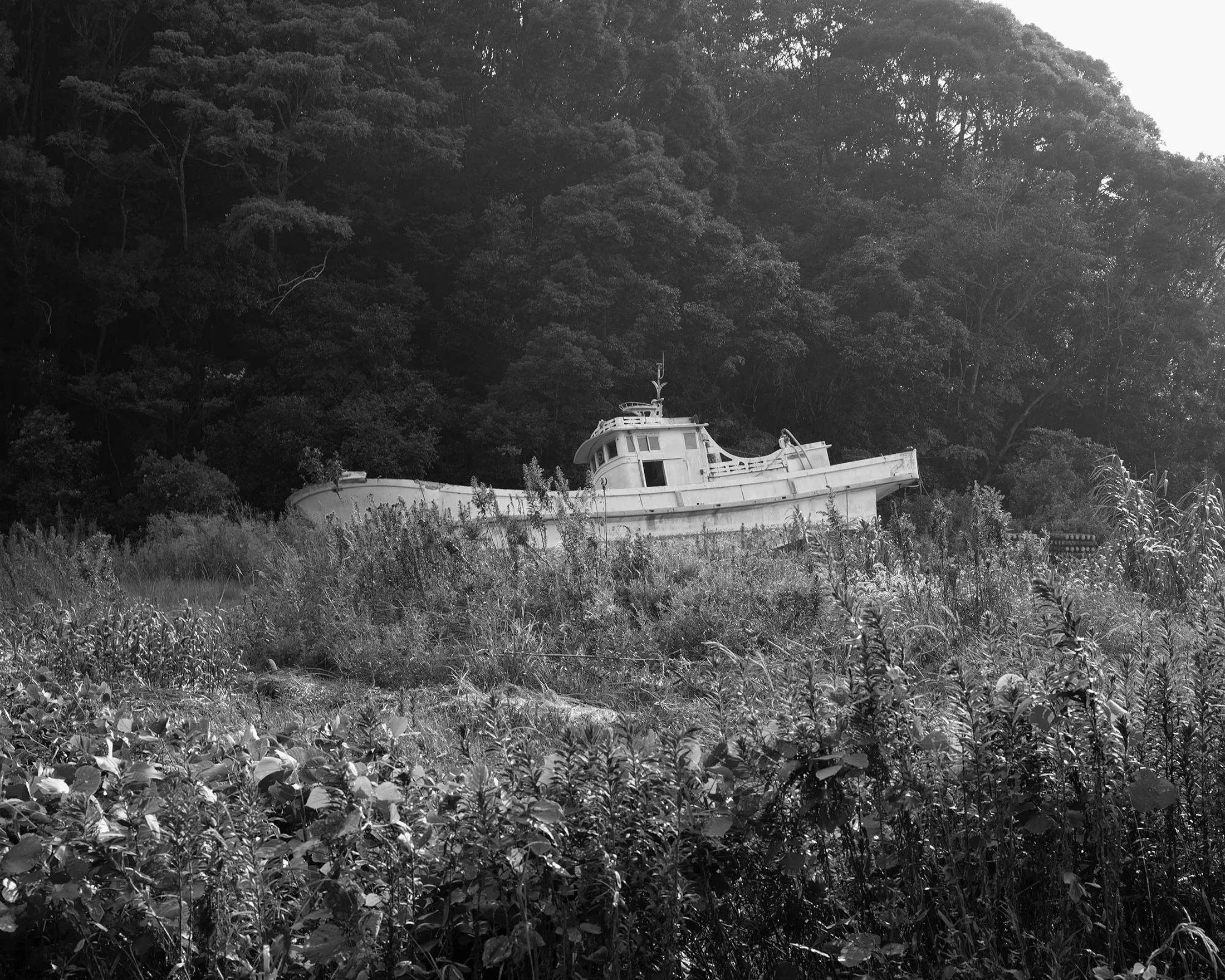
As for the landscapes, there are things I have always found myself photographing: boats hauled up on land, abandoned cars, staircases whose end you cannot see. Perhaps I am drawn to things that have finished their work, and to things that stand for the future, or for death. For this book I decided not to photograph many distant views, and to focus on these instead.
You chose your friends by asking which of them might acquire universality on the other side of the photograph. Can you give an example of someone you considered and left out, and what made the difference?
The ones I left out were people with contemporary haircuts and clothing. The same applies to places.
There are also many people I did photograph and then left out. I thought of this book as a single film, and selected so that the characters would not overlap with one another.
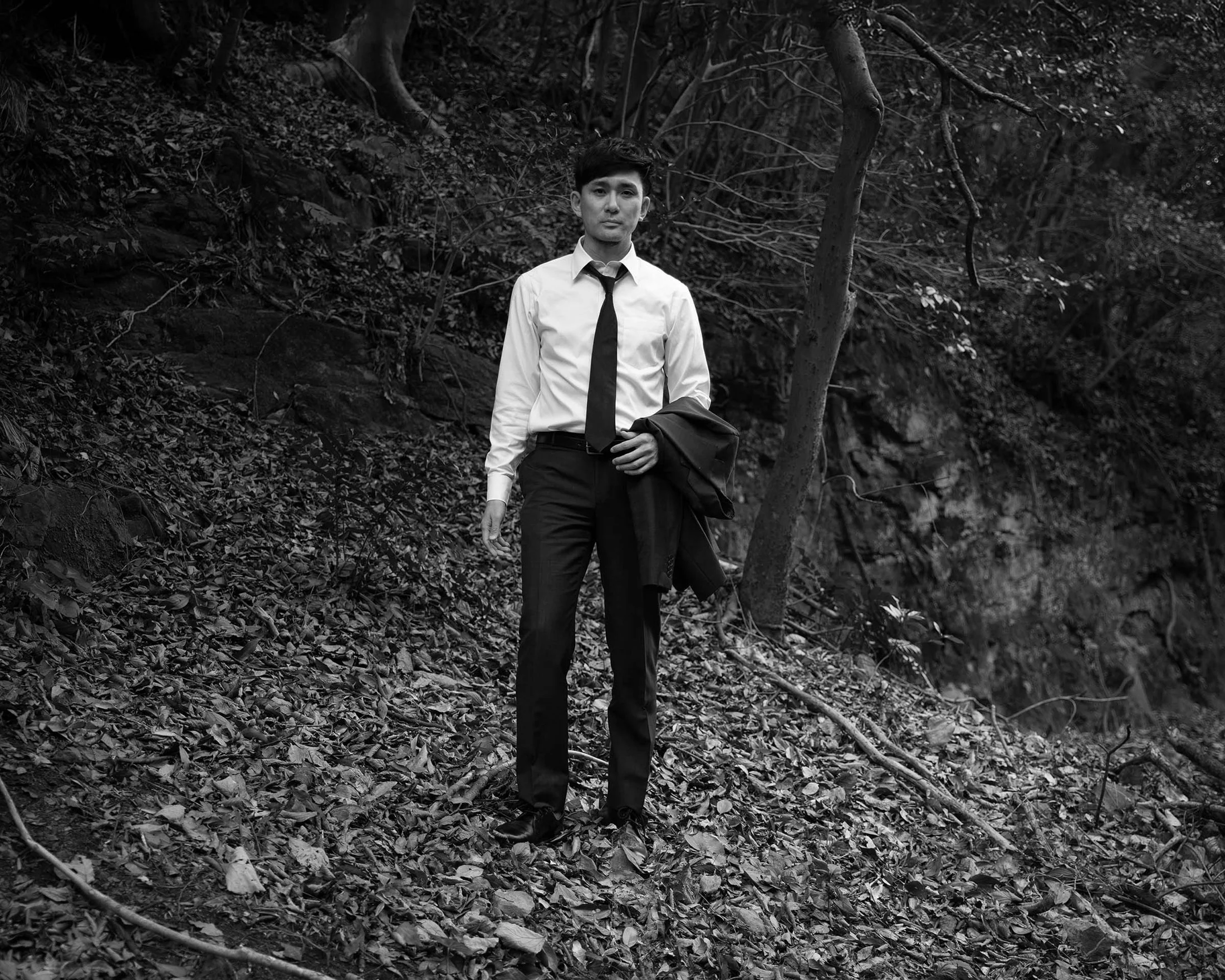
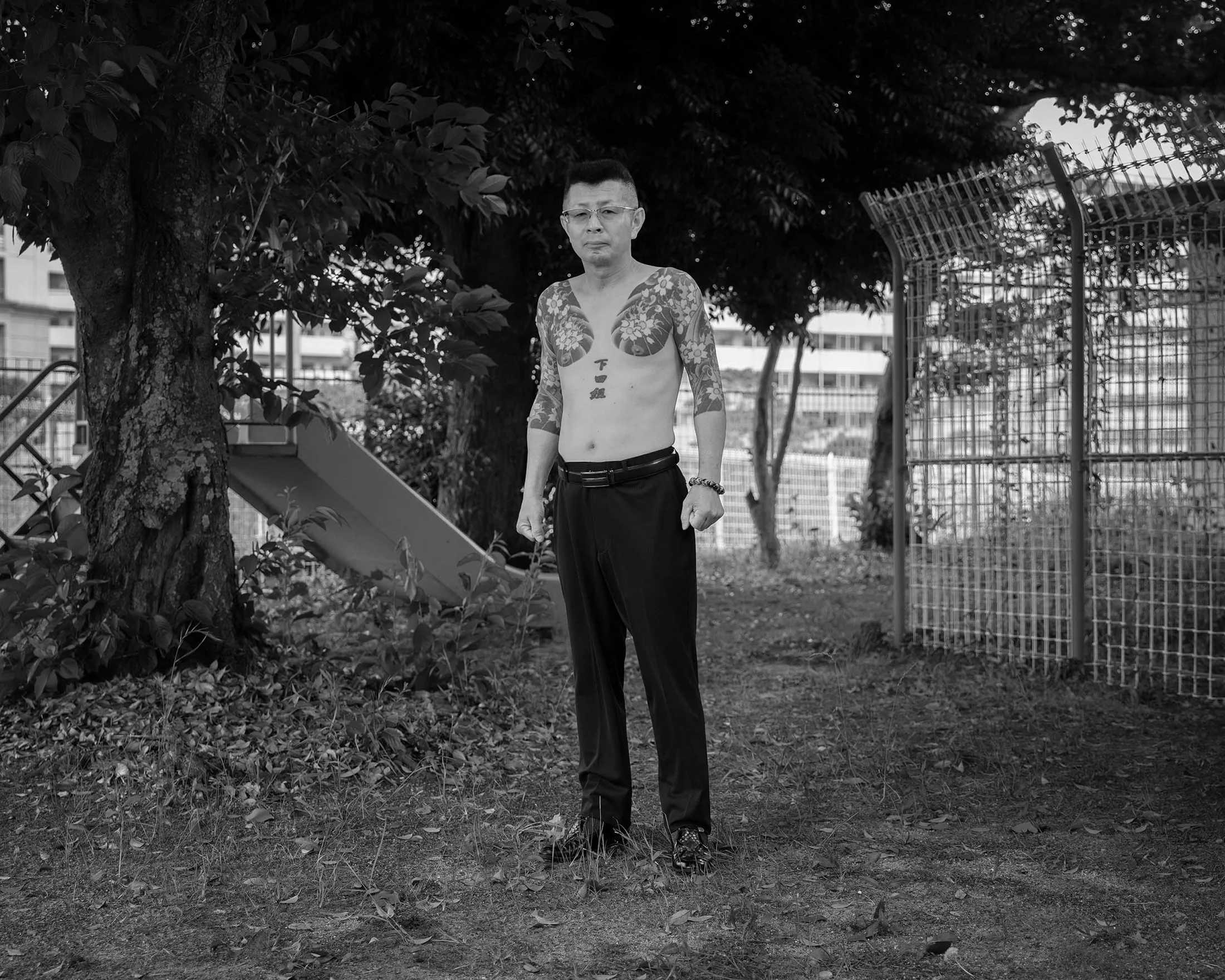
Key decision: The cloth cover has a mirror set into it, standing for the world on the other side. Where did the mirror come from, and what should a reader feel when they see themselves in it before they open the book?
The mirror was the idea of the book’s designer, Kazune Watanabe (There There).
The other side and this side are always a pair. Seen from the other side, this is the other side. I want readers to feel the exchange with the photograph (looking into the world inside it, or being looked at by the people within it) and to feel how fragile the world they are standing in is.
Working with people: For 17 you made portraits of young people you met on the streets of Sasebo, but Other Shore shows people close to you. How did photographing people you know change the way you worked with them in front of the camera?
It did not change.
In this project I was not working through intimacy but through the discomfort of two people facing each other across a camera. That was true of 17 as well.
Of course we talk and laugh before and after, but at the moment of photographing I deliberately let a silence open up, and wait for the instant when their spirit seems to slip away somewhere.
You said that at the moment of photographing you deliberately let a silence open up. How long do you usually wait, and what do you do during that time?
A few seconds. In any conversation, even one where people are laughing together, the talk falls away for a moment. I release the shutter at that moment. It is not only the expression: posture, and the way a person stands, work the same way. With some subjects the practised pose has to be stripped away first; with them it becomes a matter of waiting for them to drop their guard, but a few seconds of silence is usually enough for that too.
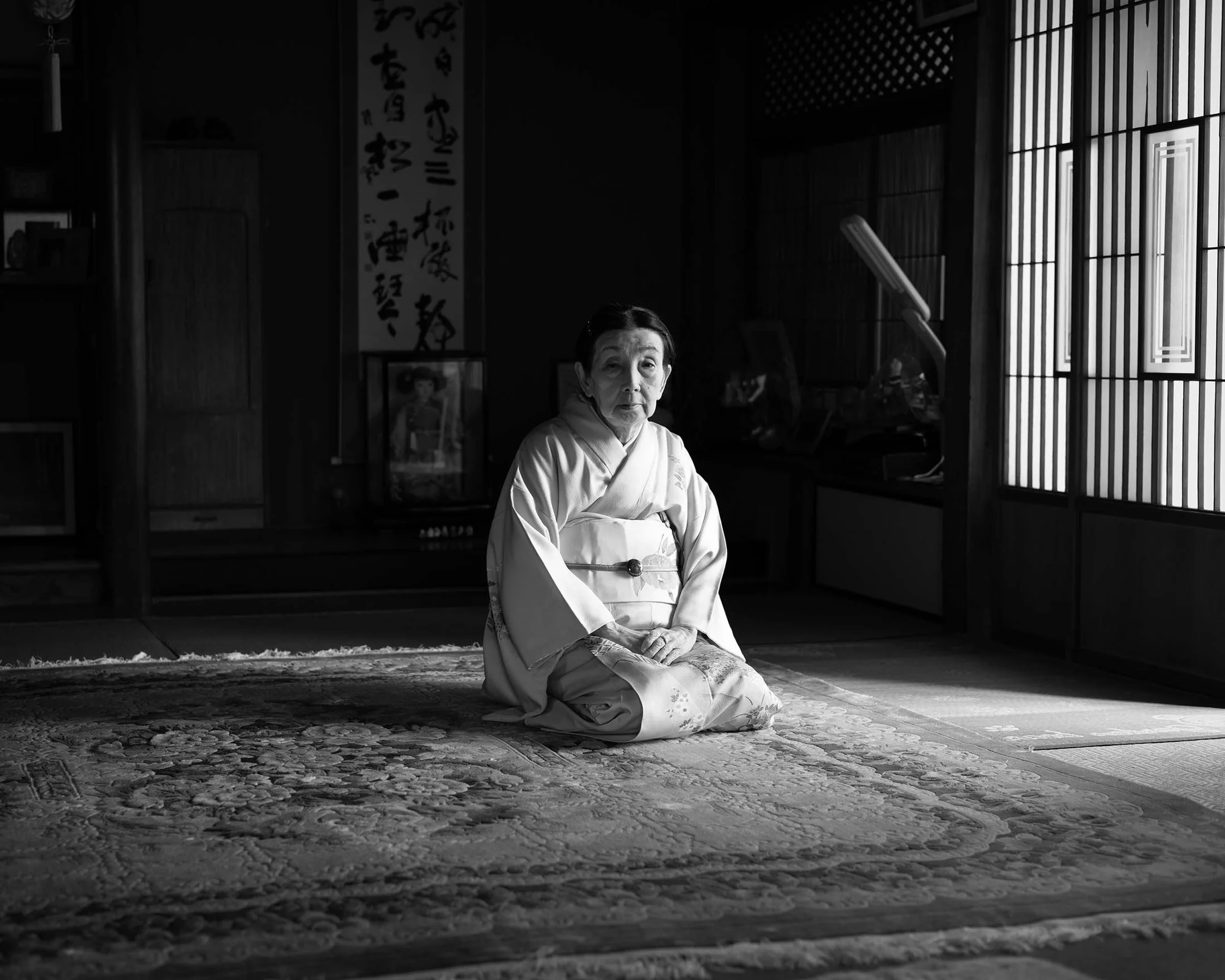
Unexpected discovery: The book’s text says that once the people are fixed in photographs, they become “people who might have existed.” At what point did you notice this happening in your photographs, and how did it feel?
It is less something I noticed in my own photographs than something I had felt looking at many photographs over the years, and those were the photographs I loved. I think of it as one of the properties of photography as a medium.
Editing: When you cut three years of work down to 78 pictures, did a “good photograph” and a “right photograph for this book” ever disagree? How did you decide between them?
They disagreed constantly, if by “a good photograph” we mean what is generally meant by that.
I excluded lively expressions, unusual landscapes that would stand as symbols of the region, and pictures made better-looking through clever angles or composition.
How do you recognise such a picture when you edit, and was it hard to leave out pictures you liked?
The exclusion happened at the shooting stage, not in the edit.
During the editing there were almost no frames of that kind. I never thought any of those elements were needed for this book, so I simply did not photograph them.
Sequencing: The book moves back and forth between past and present. How did you decide the order of the 78 photographs, and why did you place your essay at the end and not at the start?
What I thought about was whether a reader could become conscious of being looked at by the people inside the photographs. The photographs of landscapes and objects, inserted here and there, also serve as points where the reader’s attention is reset. Toward the latter half I placed photographs that push the relation between seeing and being seen (the other side of the photograph and this one) further still: a photograph of a camera, a photograph of my own hand.
I put the essay at the end because I wanted to direct the reader’s attention not toward understanding, but toward a way of looking.
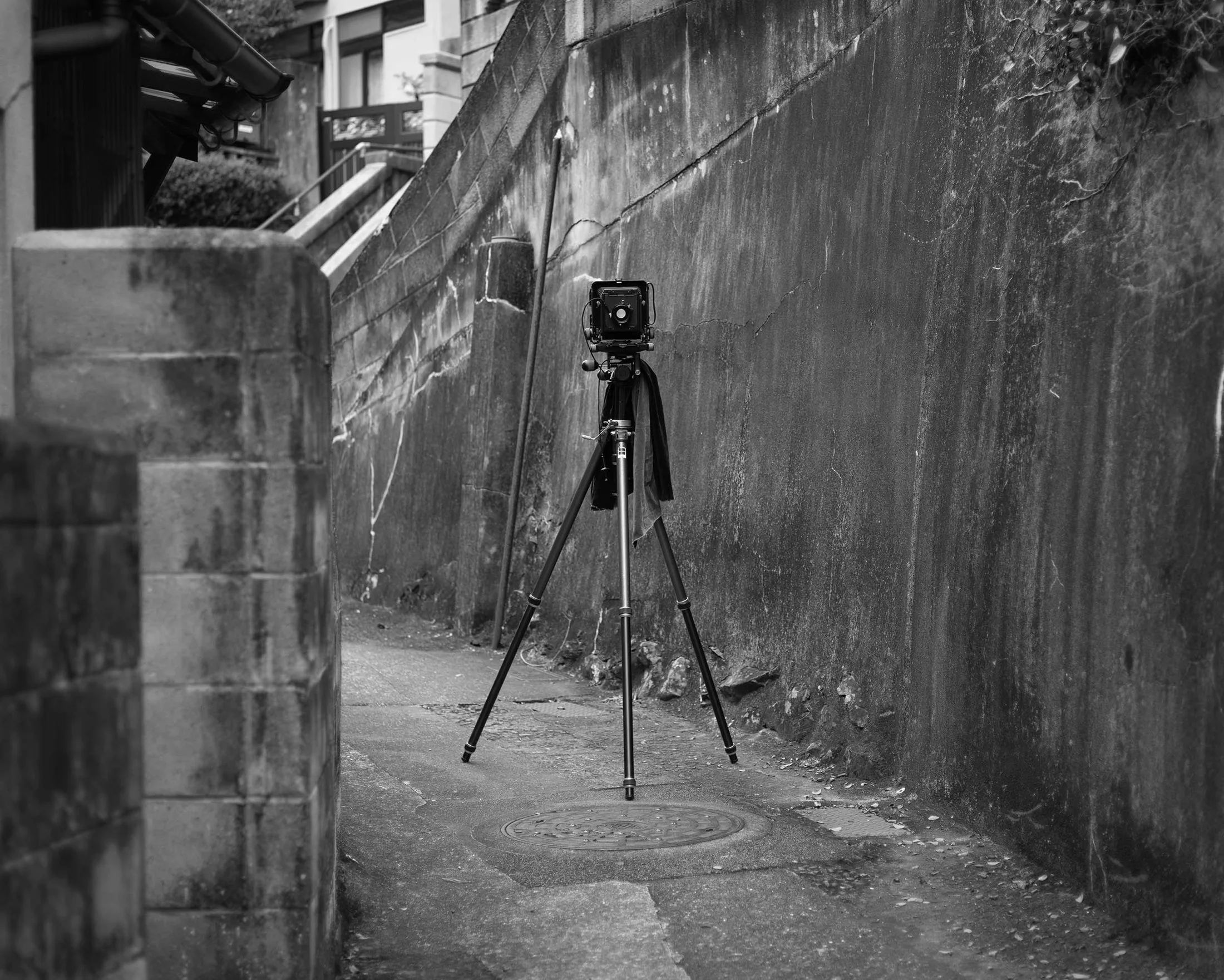
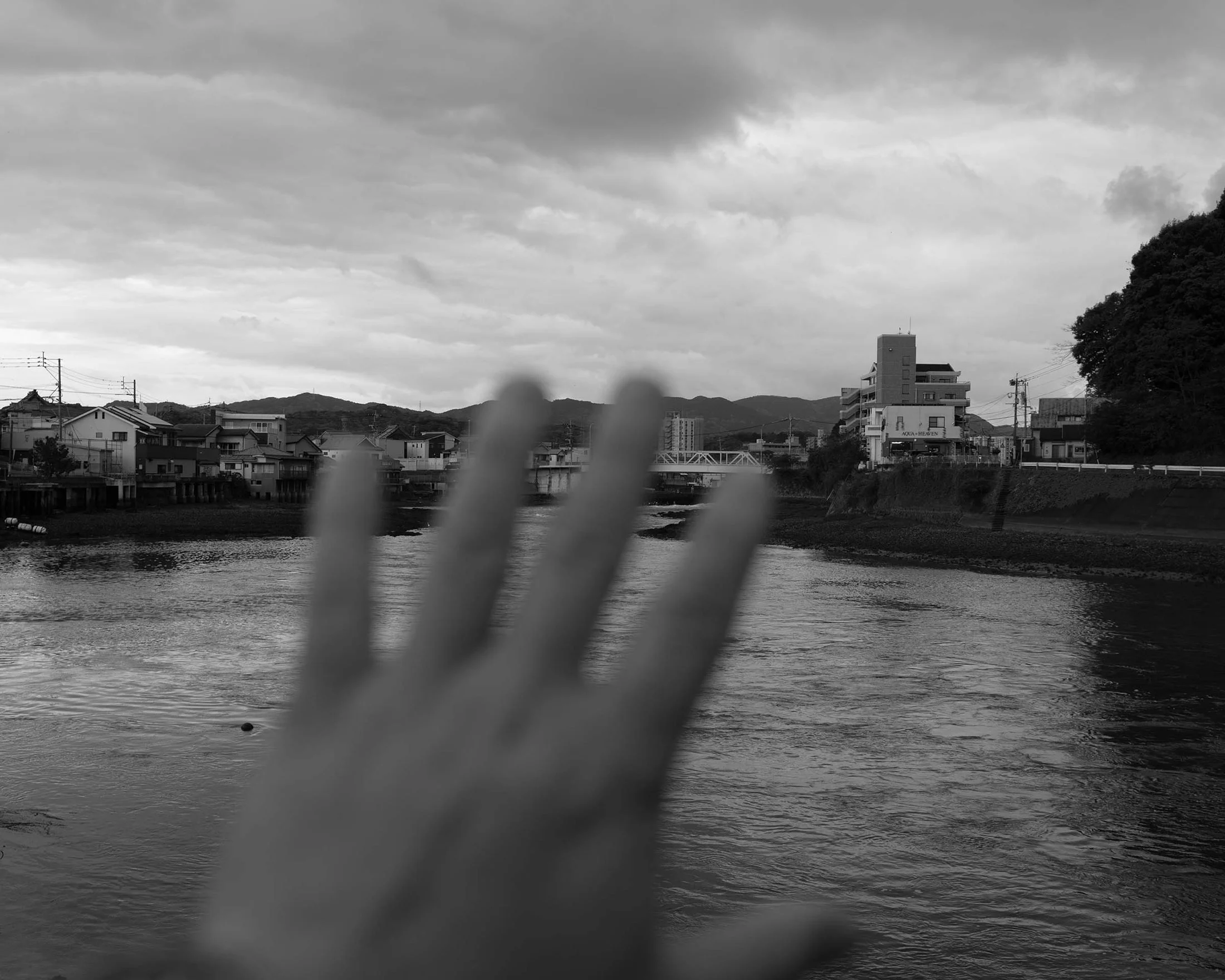
Lesson: Your closing essay is about a premonition of decline, and an earlier essay of yours was about being sensitive to the fragility of life. What did making Other Shore teach you about photography, and what is one lesson other photographers can use when they photograph their own hometown?
I have long felt that photographing is a small act of resistance against the fact that the people who matter to me, and I myself, will one day vanish. Making this book confirmed that again.
To photographers who photograph their own hometowns, I would say: do not drown in your own nostalgia. Nostalgia is the source of my work, but I never let myself soak in the feeling. Wherever you are, stand a little outside the circle. That, I think, is the photographer’s correct position.
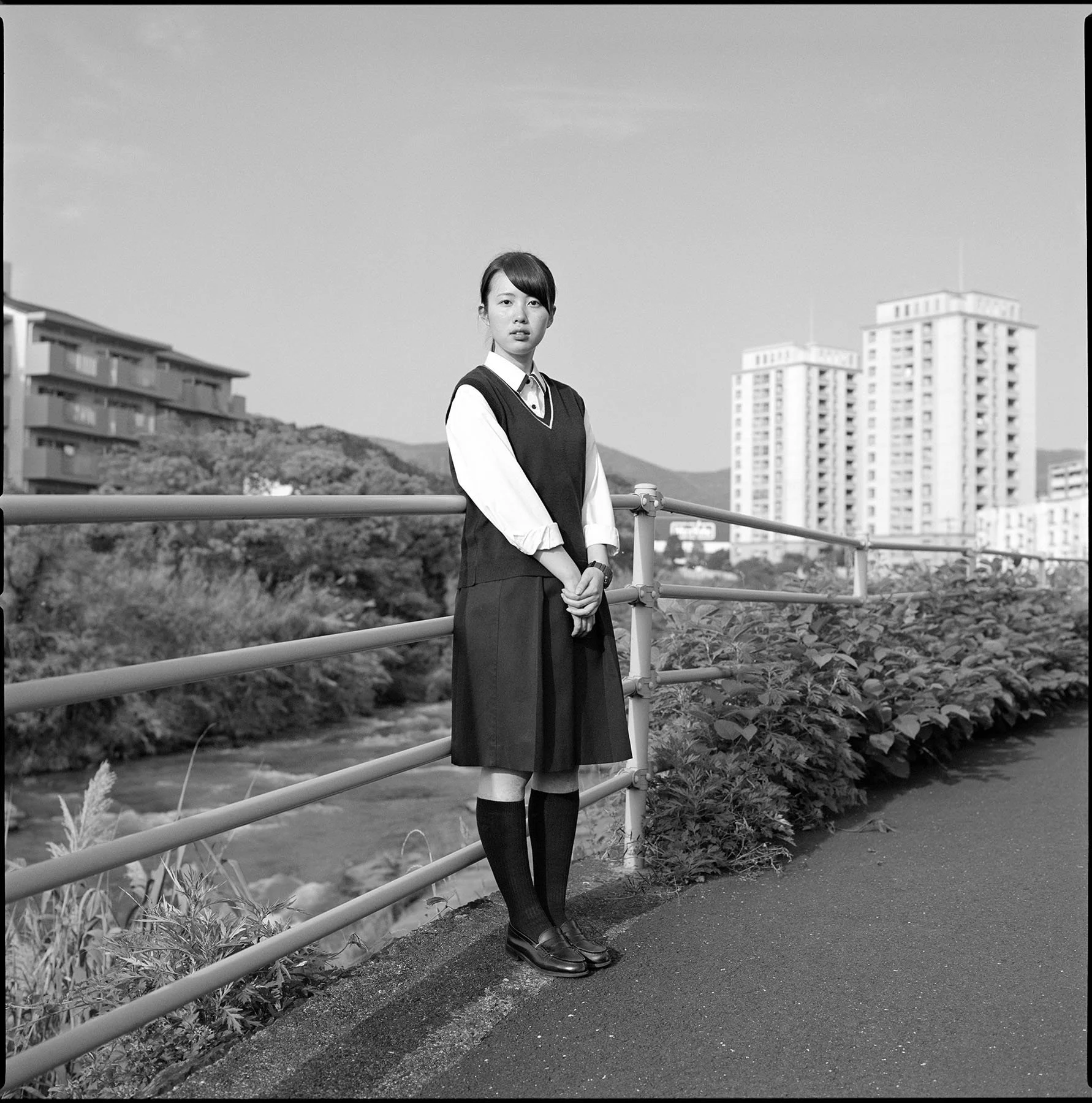
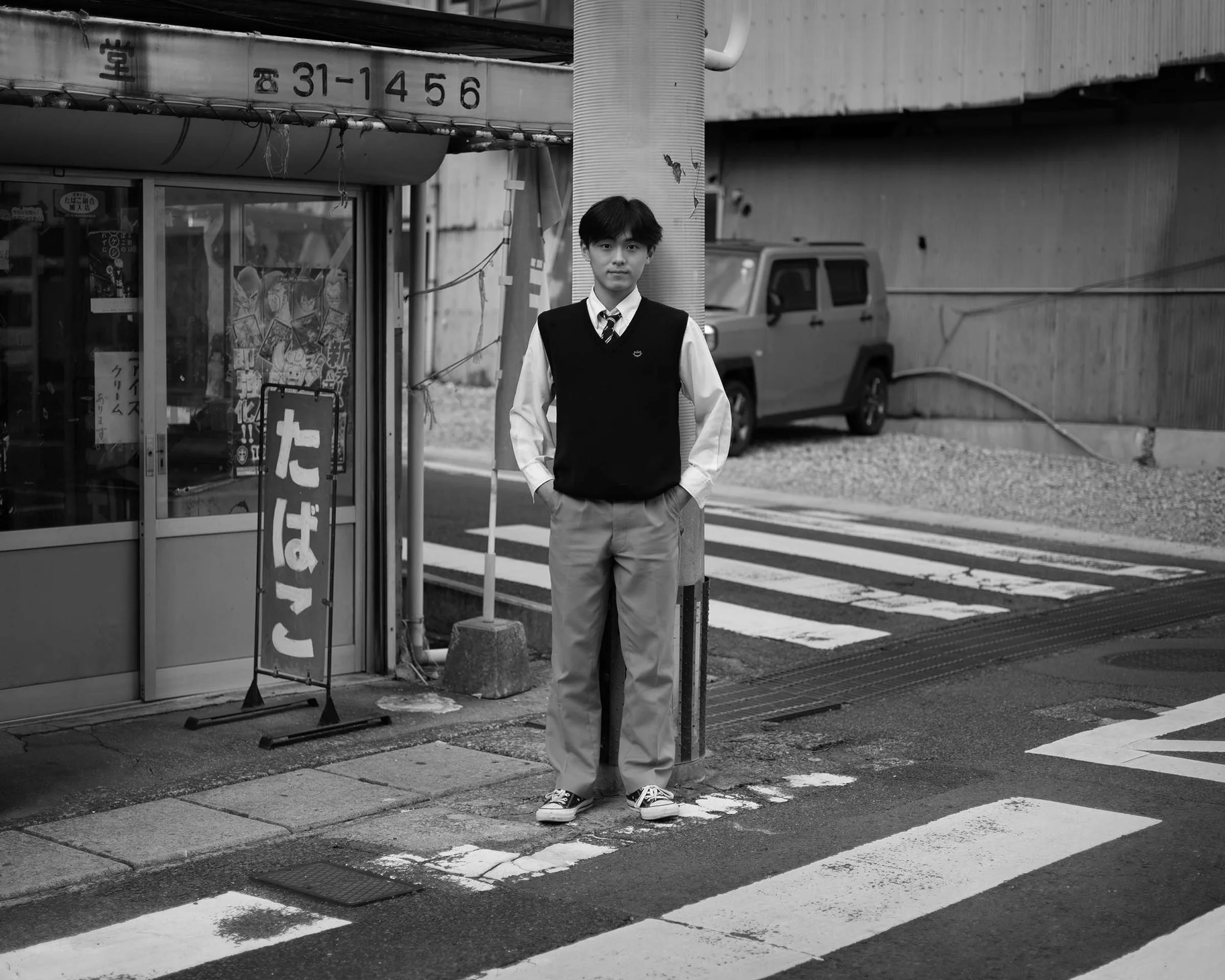
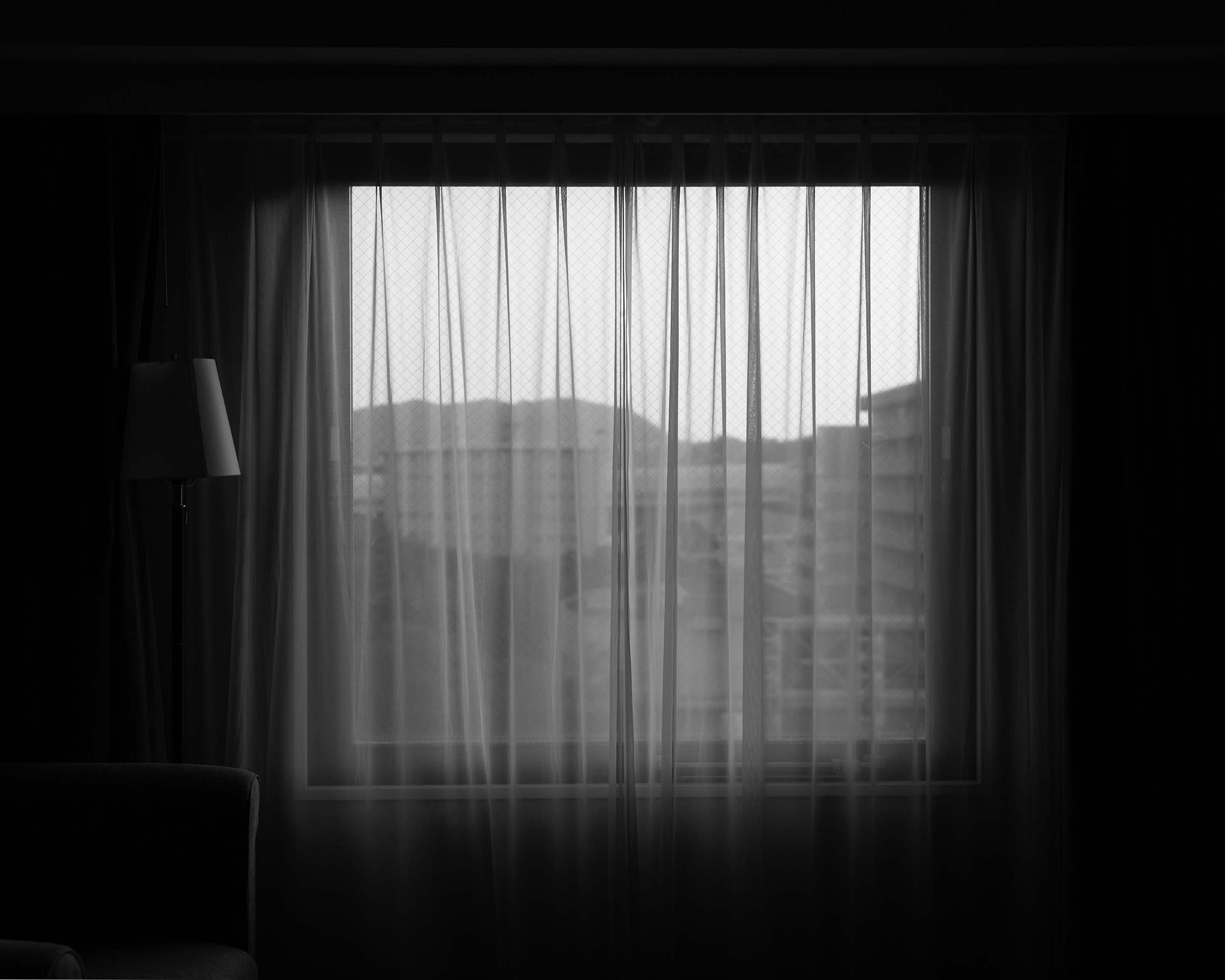
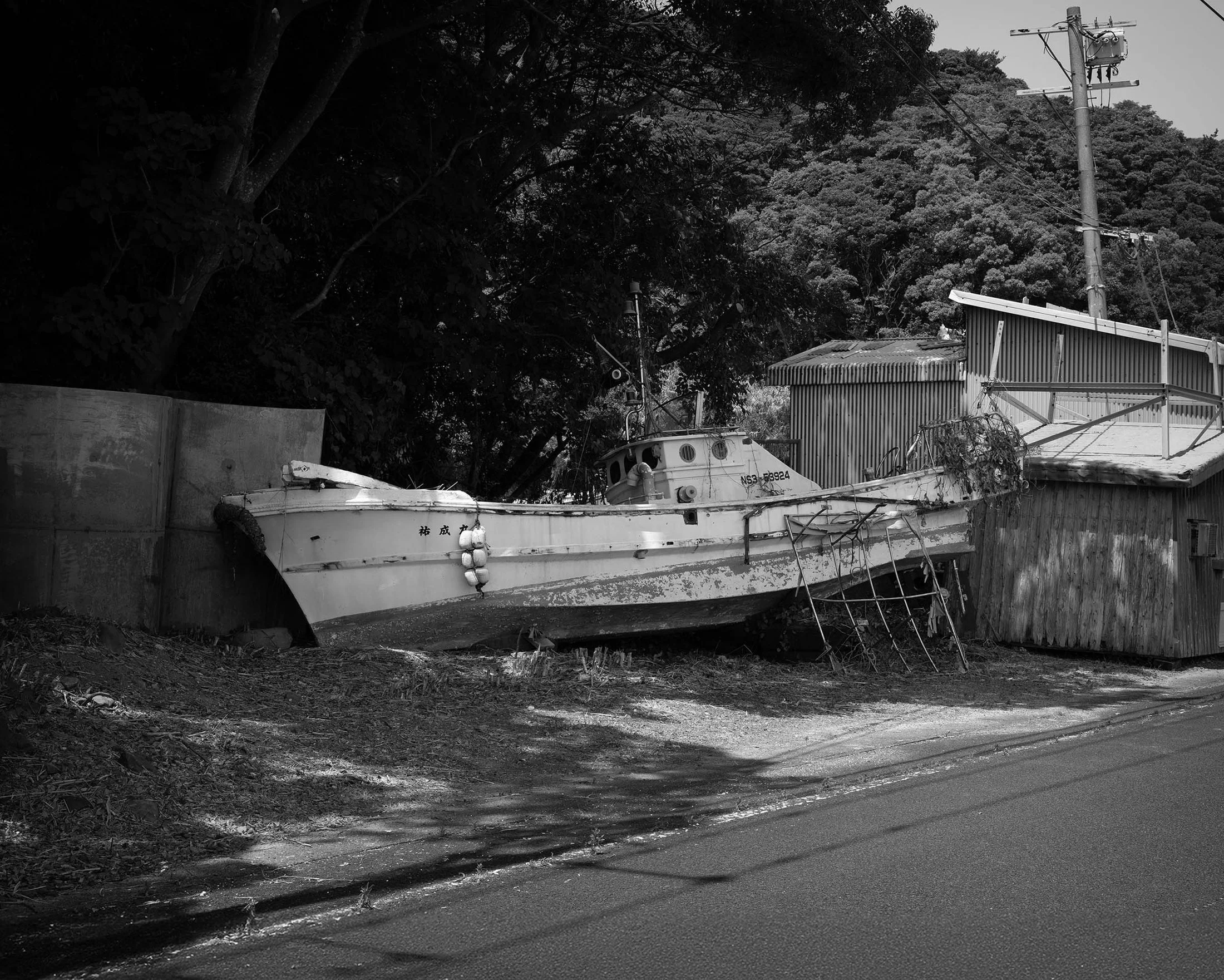
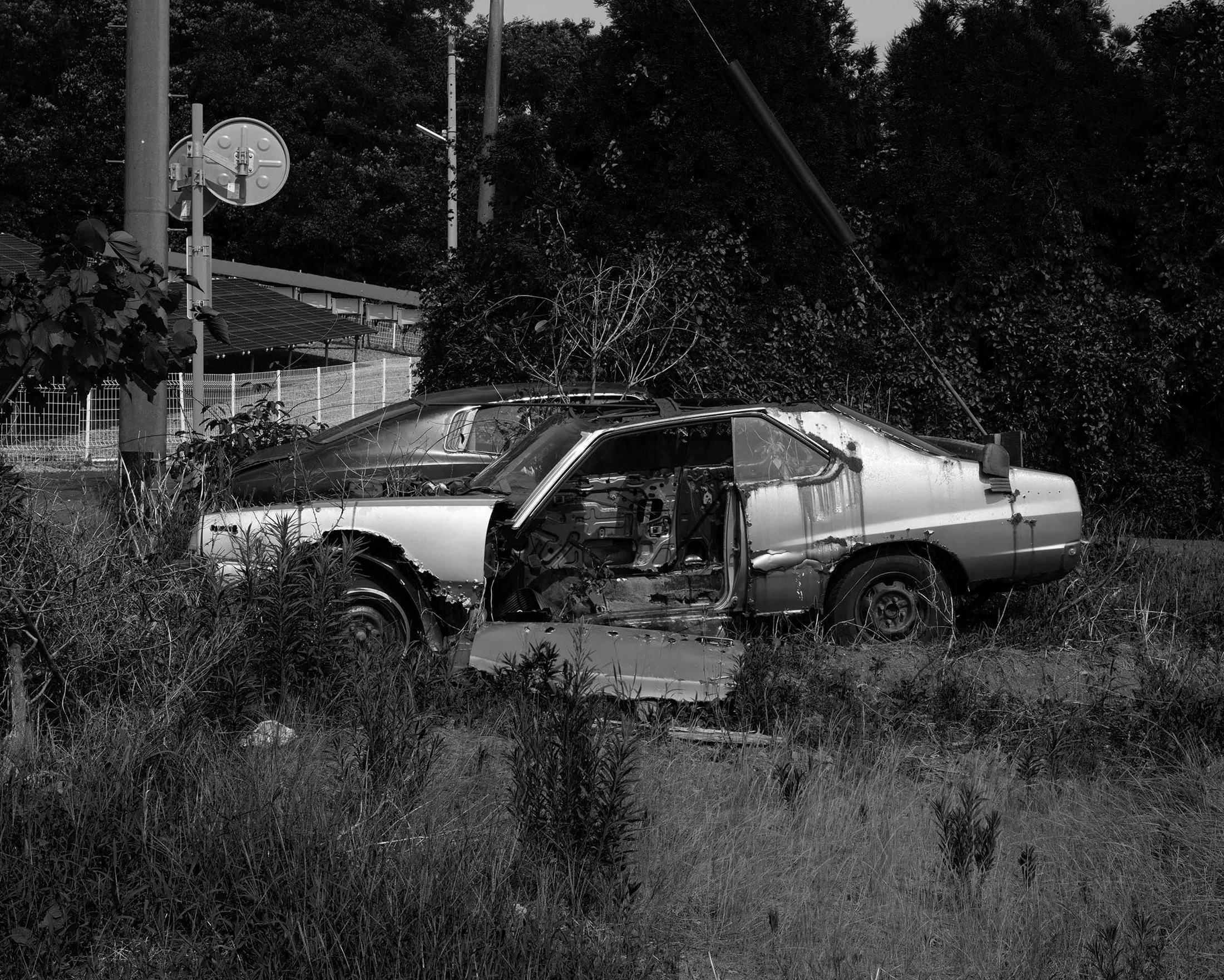
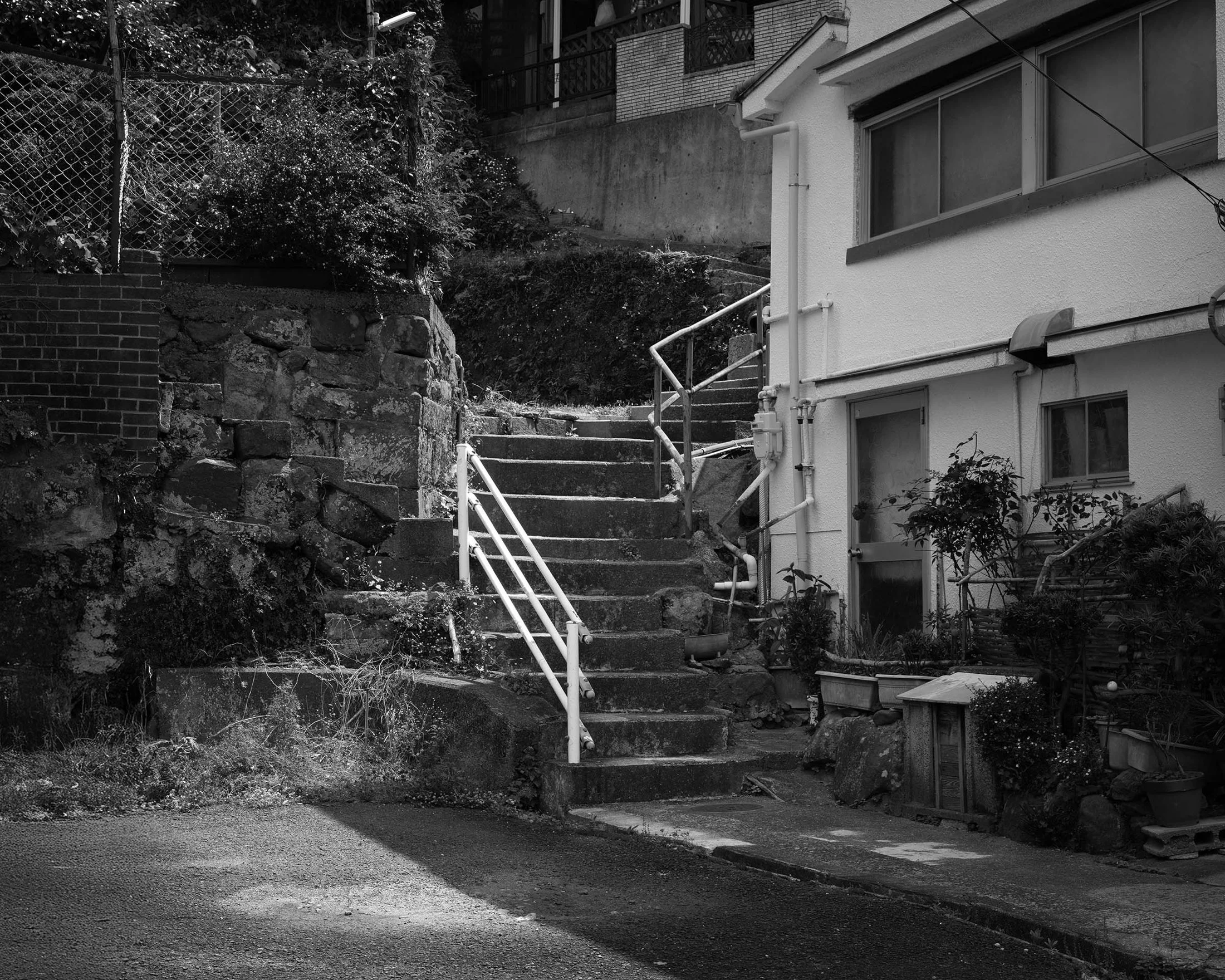
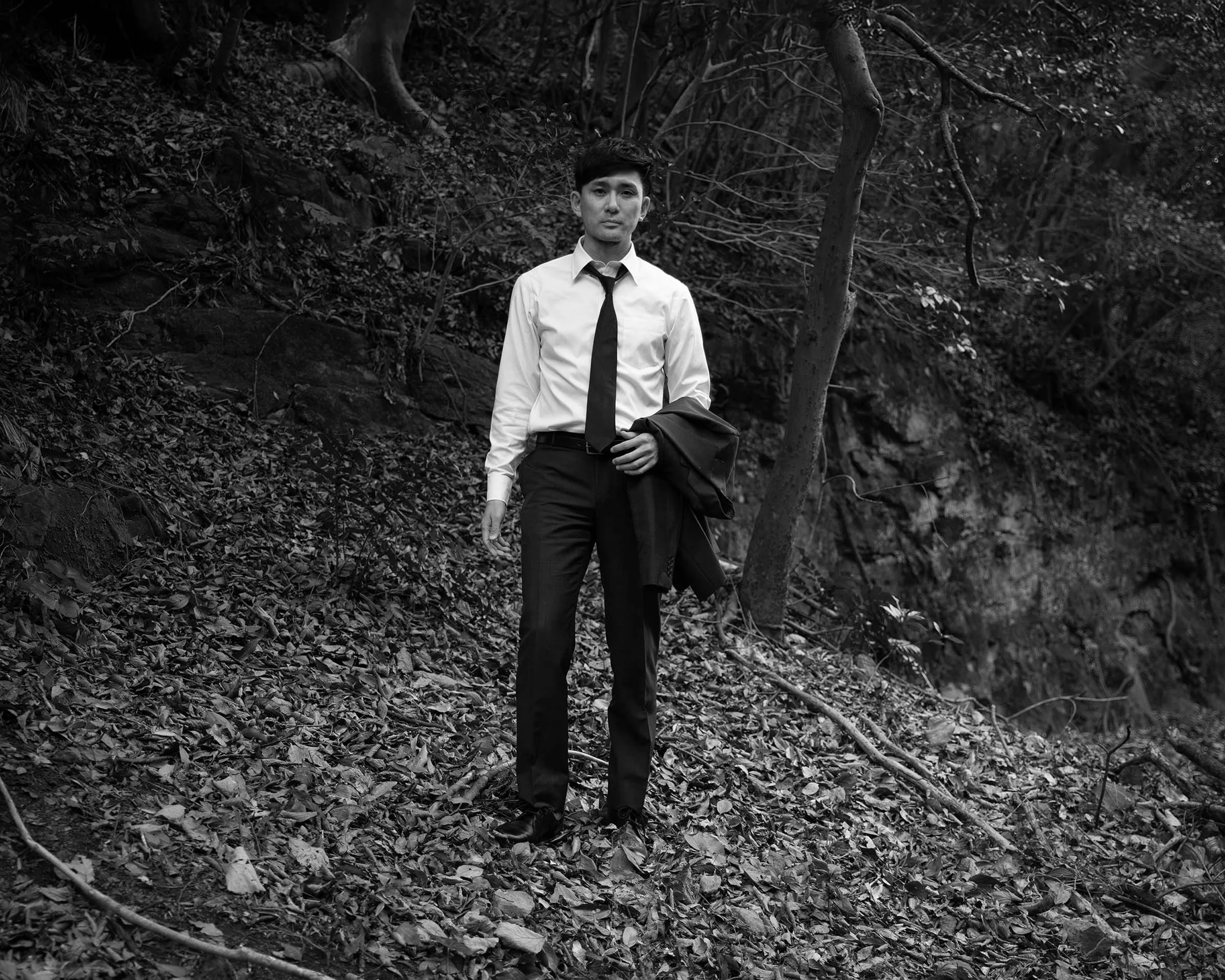
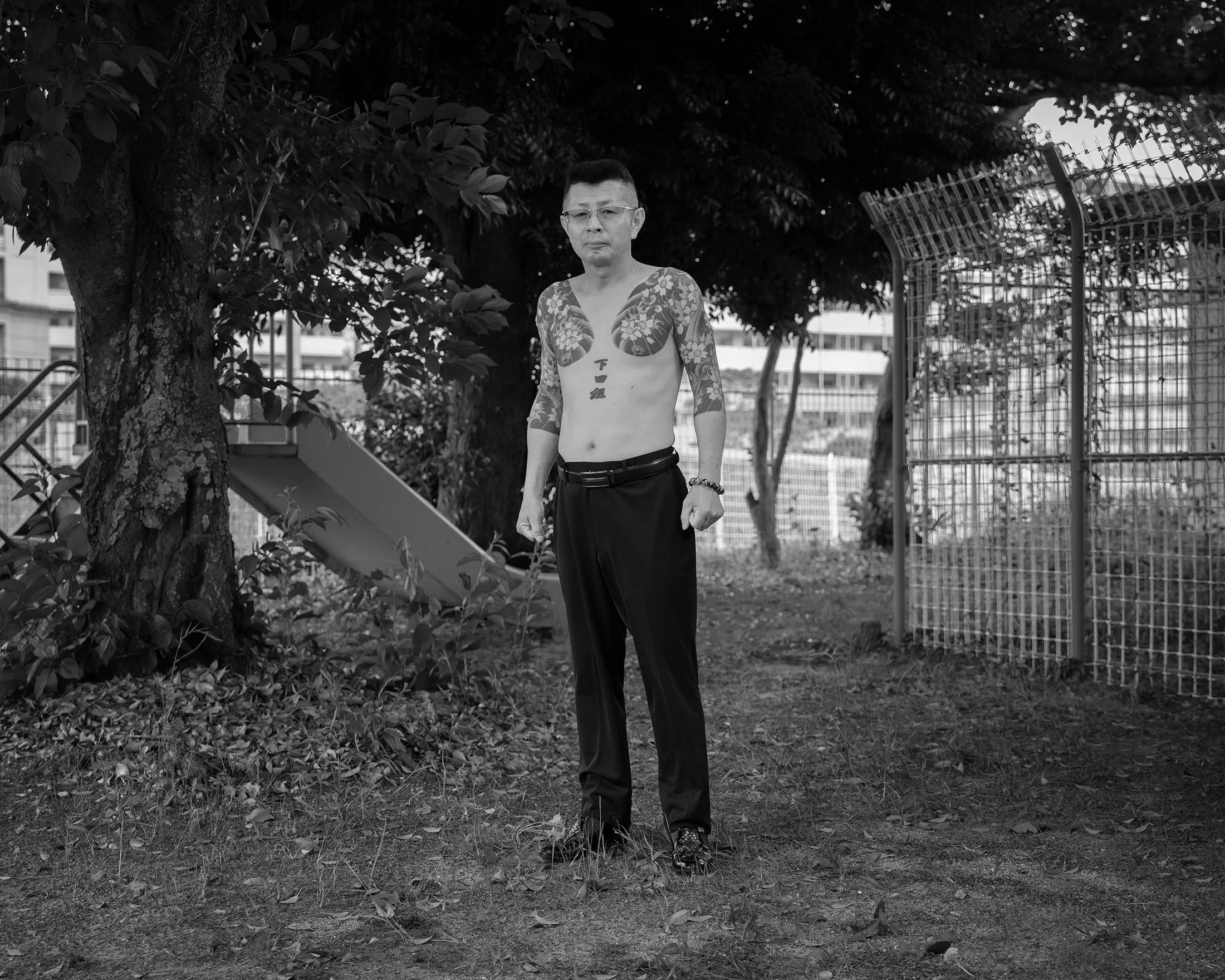
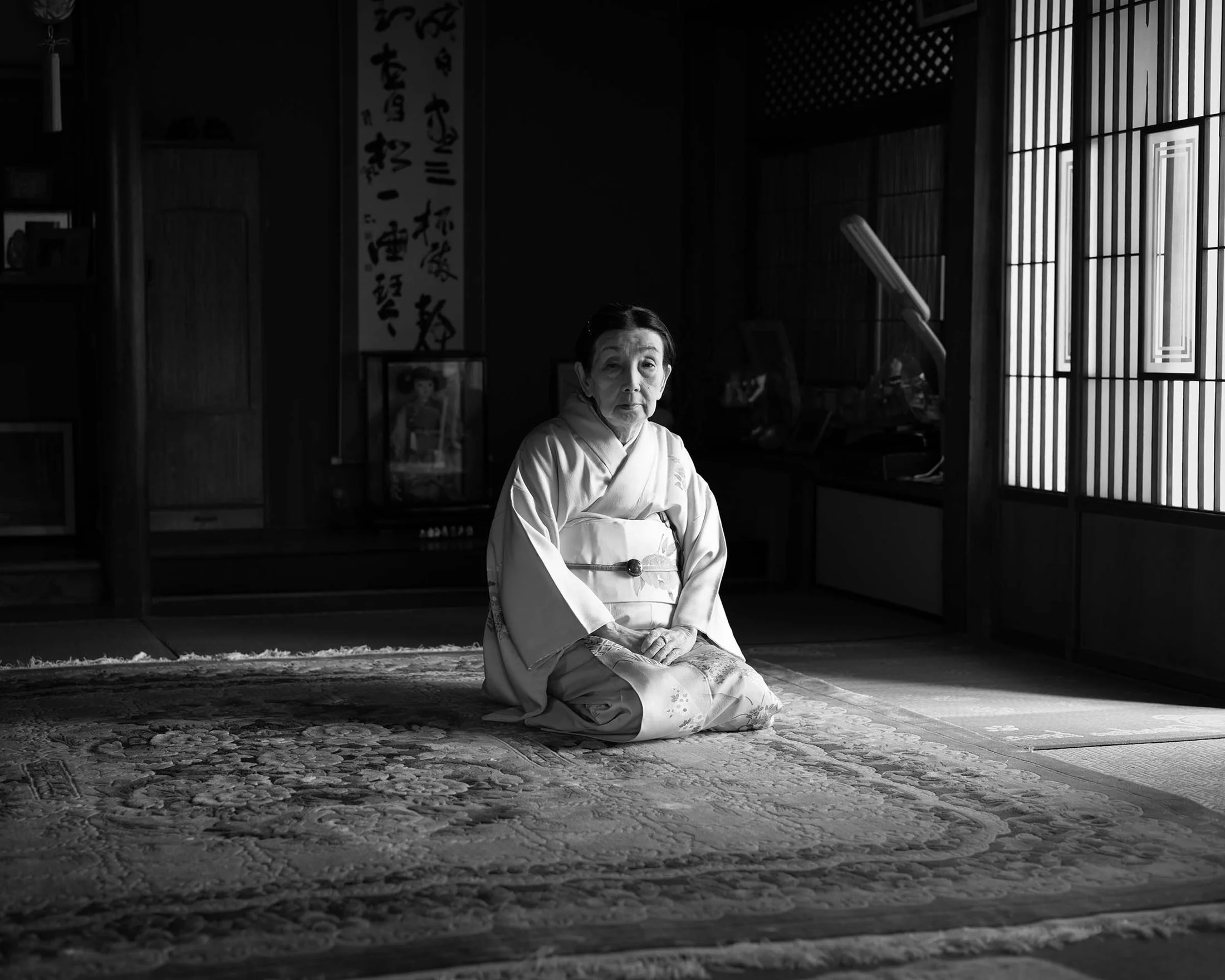
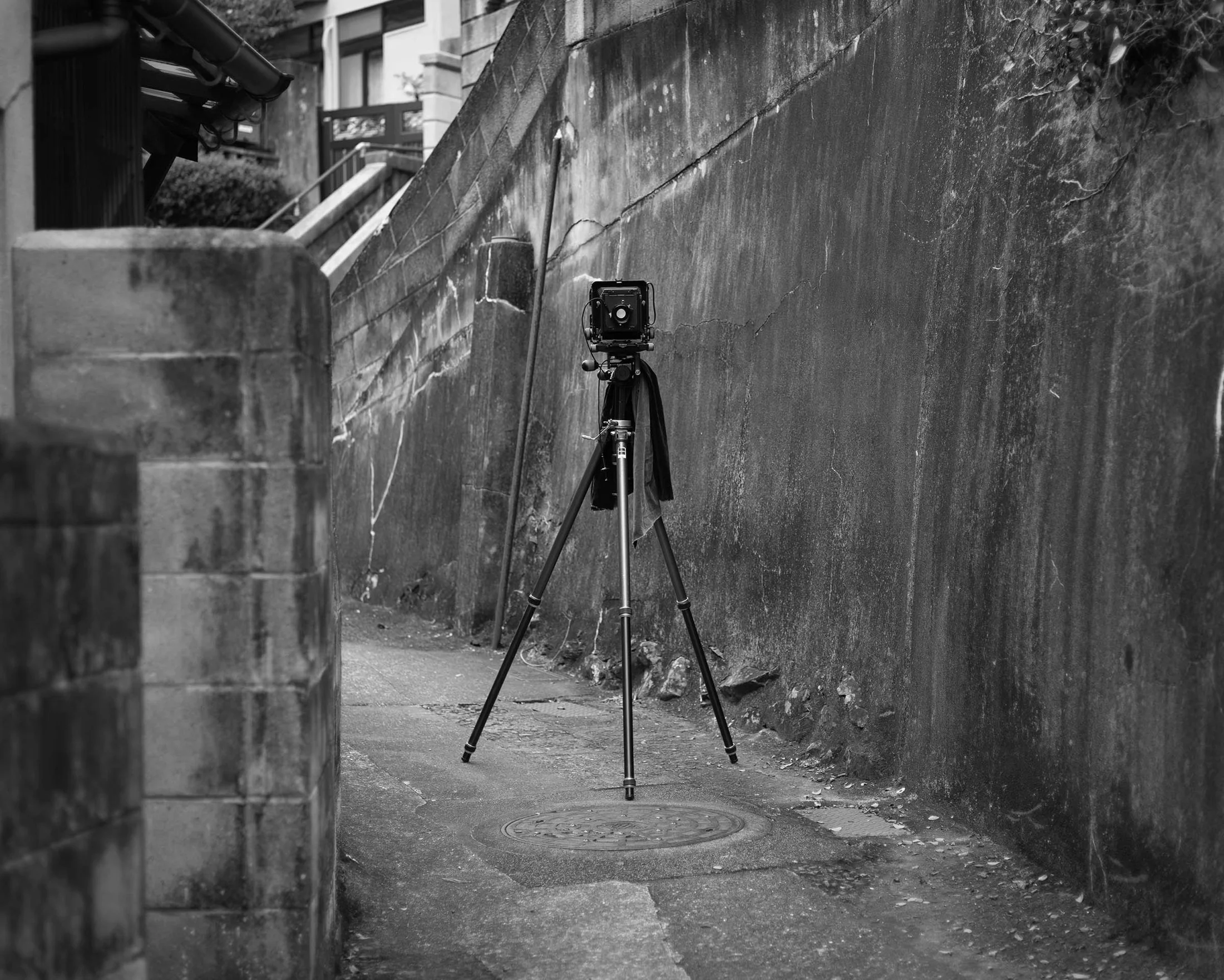
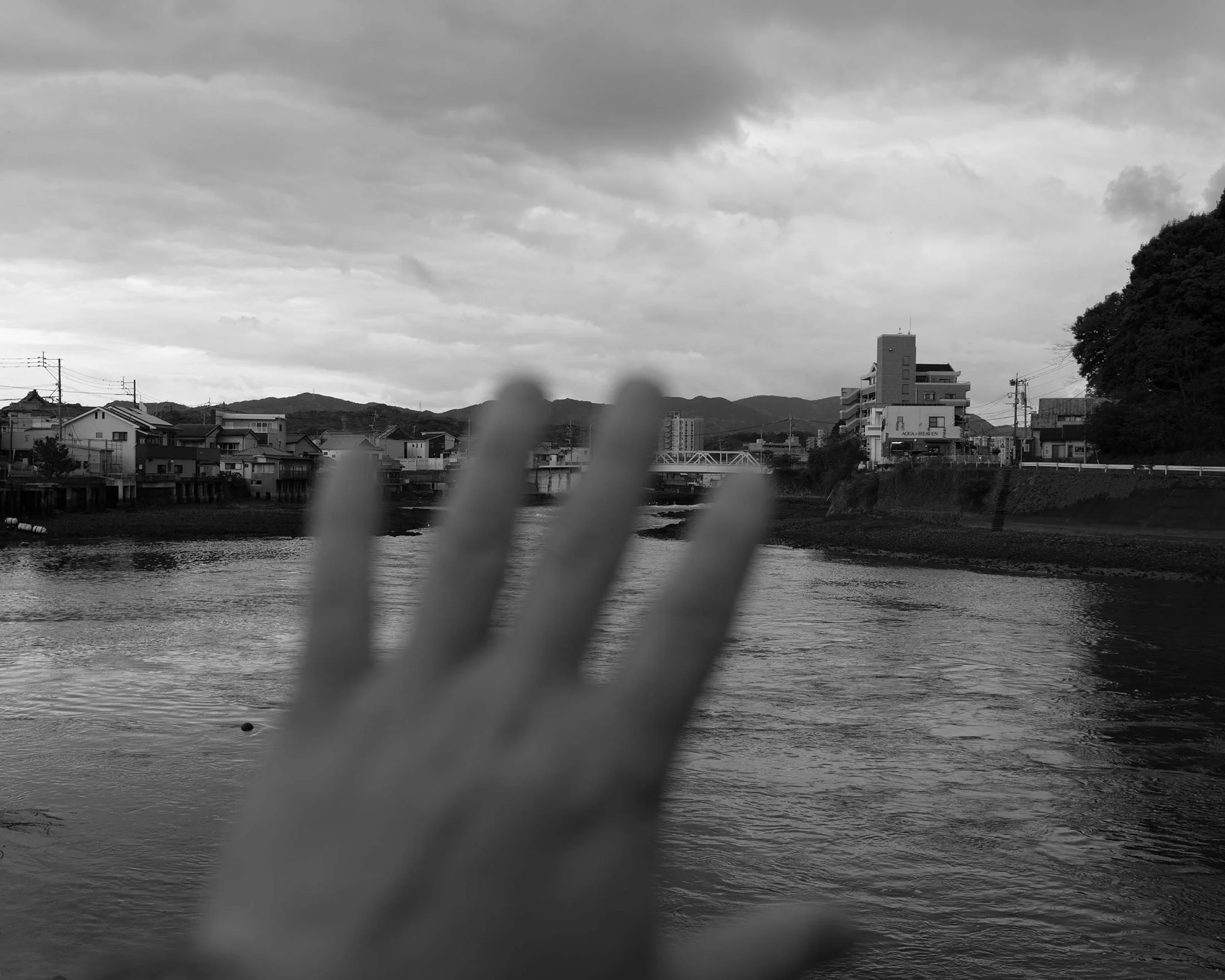
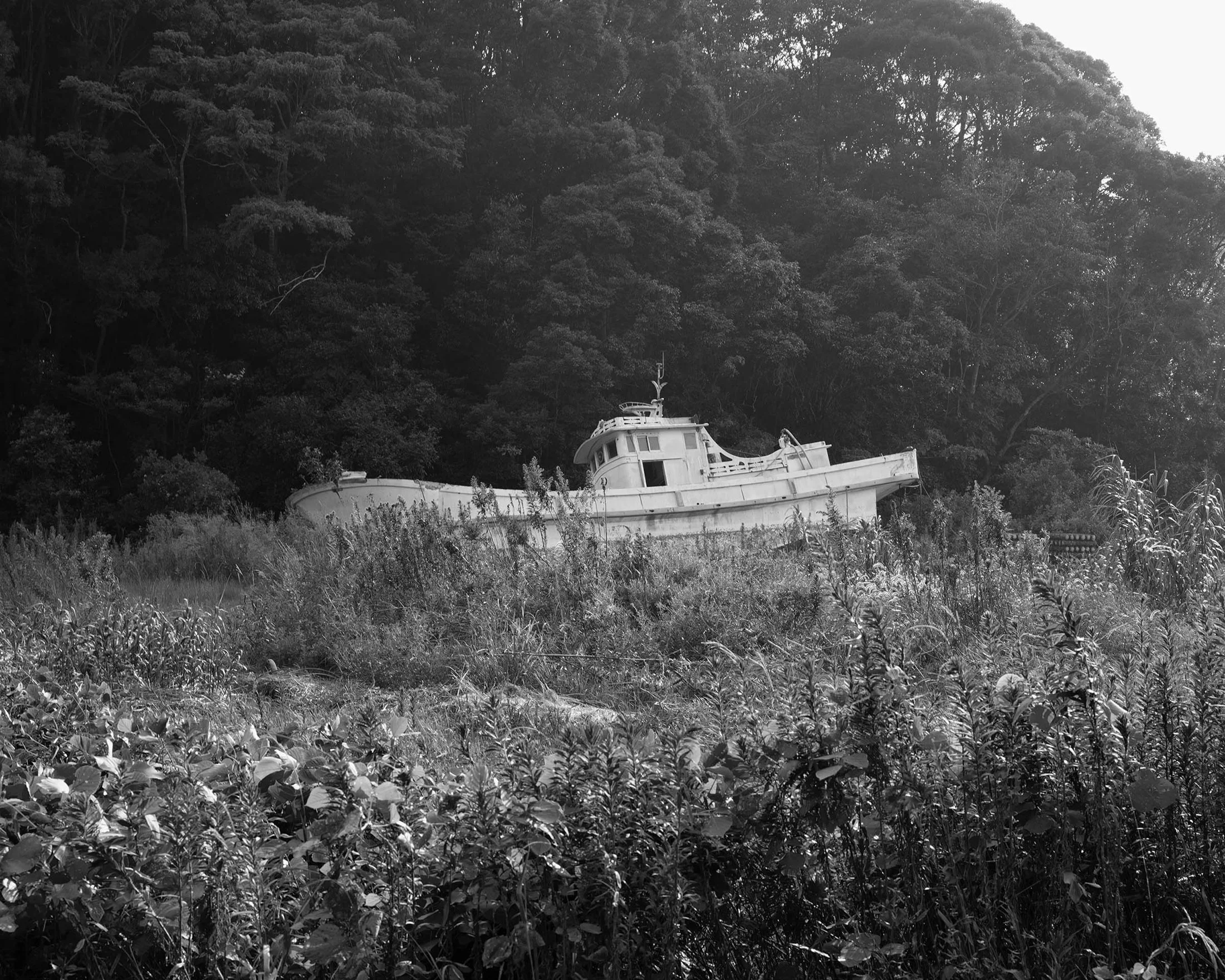
In Sasebo, Osamu Matsuo photographed every friend from a tripod, at the same height and angle, with the whole body in the frame. First he talks and laughs with them. A few seconds of quiet can take away the face people make for a camera.
“In any conversation, even one where people are laughing together, the talk falls away for a moment. I release the shutter at that moment.”Osamu Matsuo
We'd love to read your comments below, sharing your thoughts and insights on the artist's work. Looking forward to welcoming you back for our next [book spotlight]. See you then!
