Welcome to this edition of Interviews. Today, we look at the project Postcards from the Sublime, by Arthur Drooker. We'd love to read your comments below about these insights and ideas behind the artist's work.
Arthur Drooker photographed Monument Valley as tourists see it.
His series Postcards from the Sublime shows the famous buttes of the American West together with hotels, parking lots, tour vehicles and souvenir shops. He made it over two visits: three days in October 2025 and four days in May 2026. He first saw Monument Valley in 1985, on a bicycle trip, and knew it before that from John Ford’s Westerns.
Forty years later, he wanted to photograph the experience of being there as a tourist.
On his first morning, he kept the parked cars in the frame.
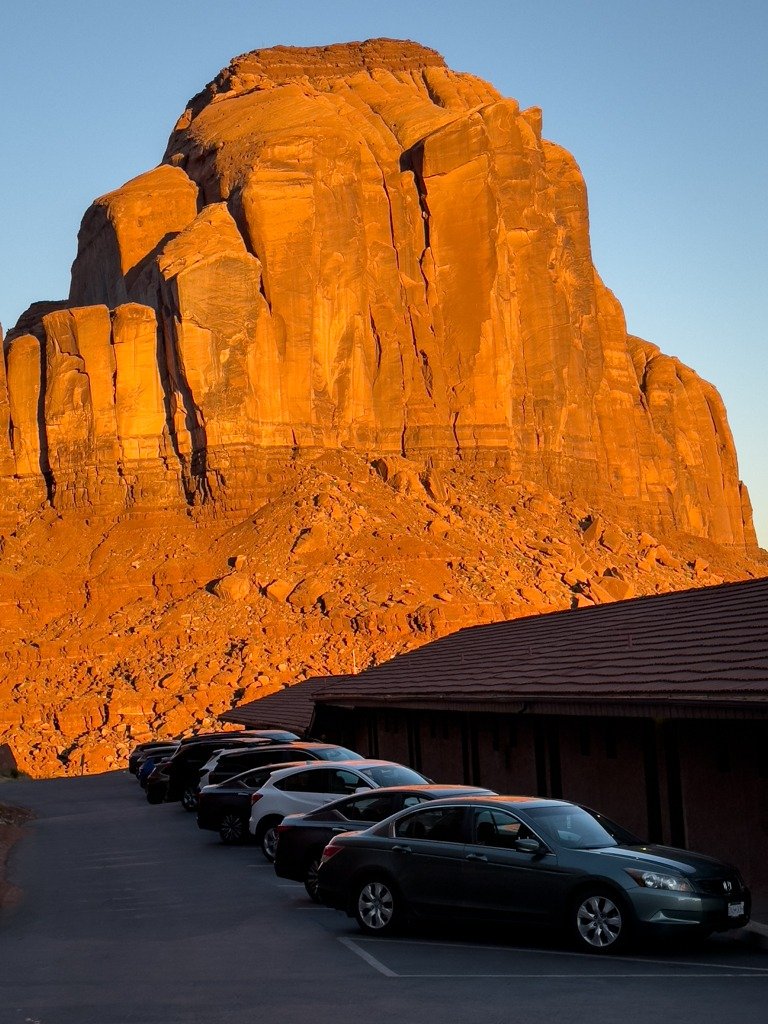
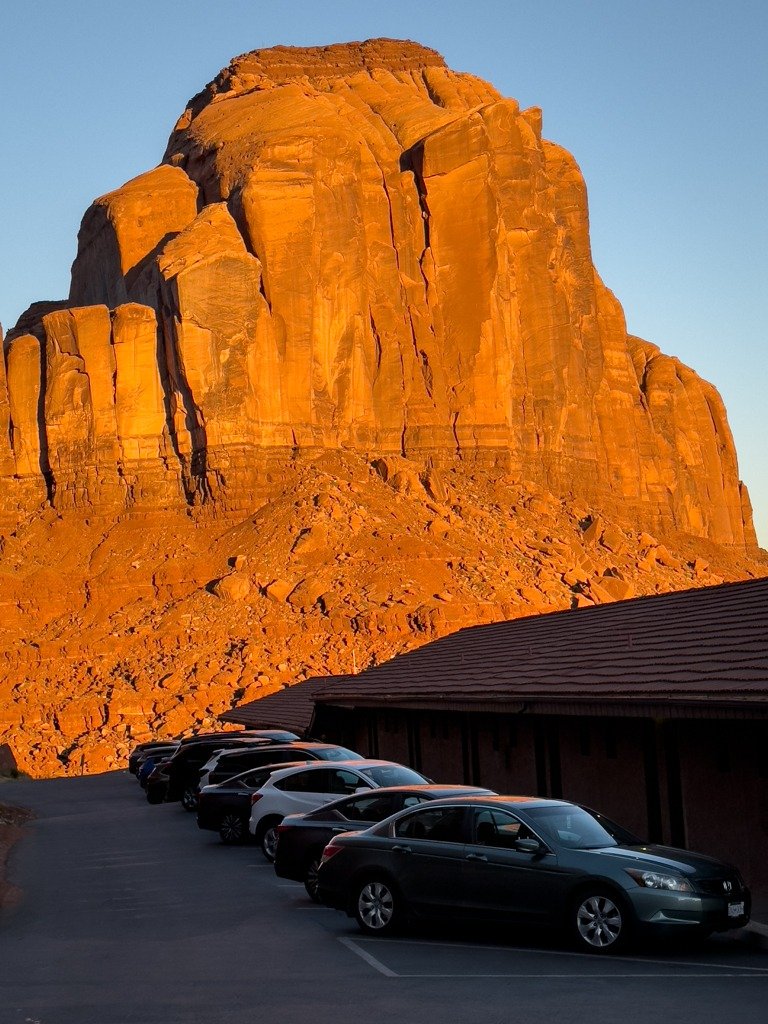
In “Do Not Disturb,” a butte glows in the sunrise while the cars and guest rooms below stay in cool shadow. Before this project, he would have framed the cars out. Monument Valley is also part of the Navajo Nation, and three photographs in the series show it as home, as sacred space and as a source of pride.
If you photograph a place everyone has already photographed, this conversation is about finding your own way in. Drooker explains what his earlier project Thirty-Six Views of the Golden Gate Bridge taught him, how he keeps a strong concept from blinding him, and why portfolio reviewers made him think the series could continue at Niagara Falls, Yellowstone and Yosemite.
The Project
Postcards from the Sublime
Monument Valley · 2025 and 2026
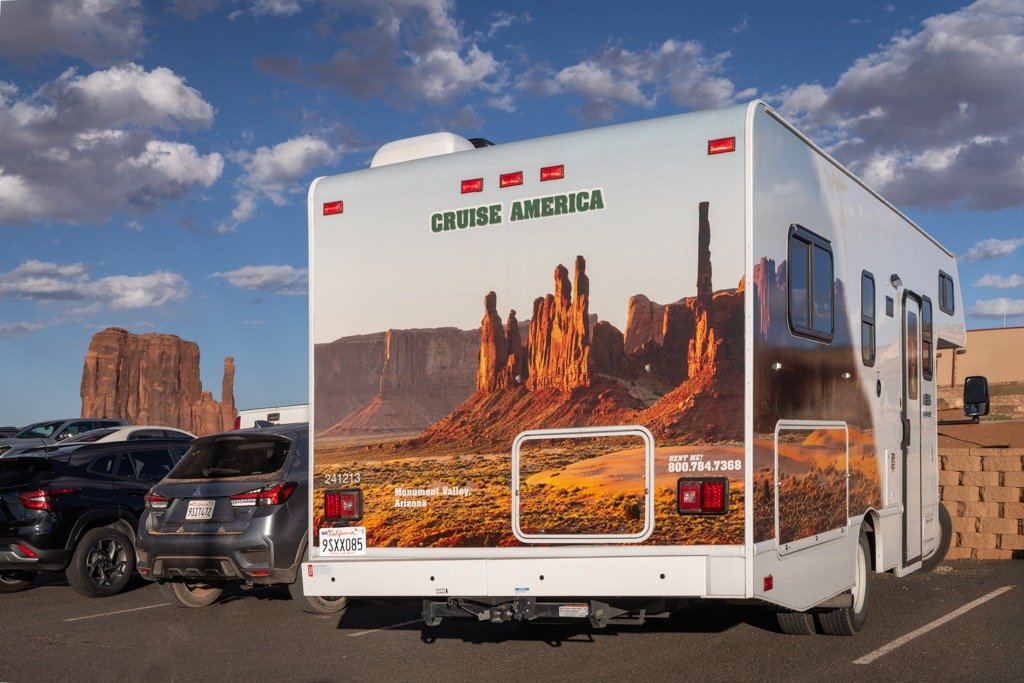
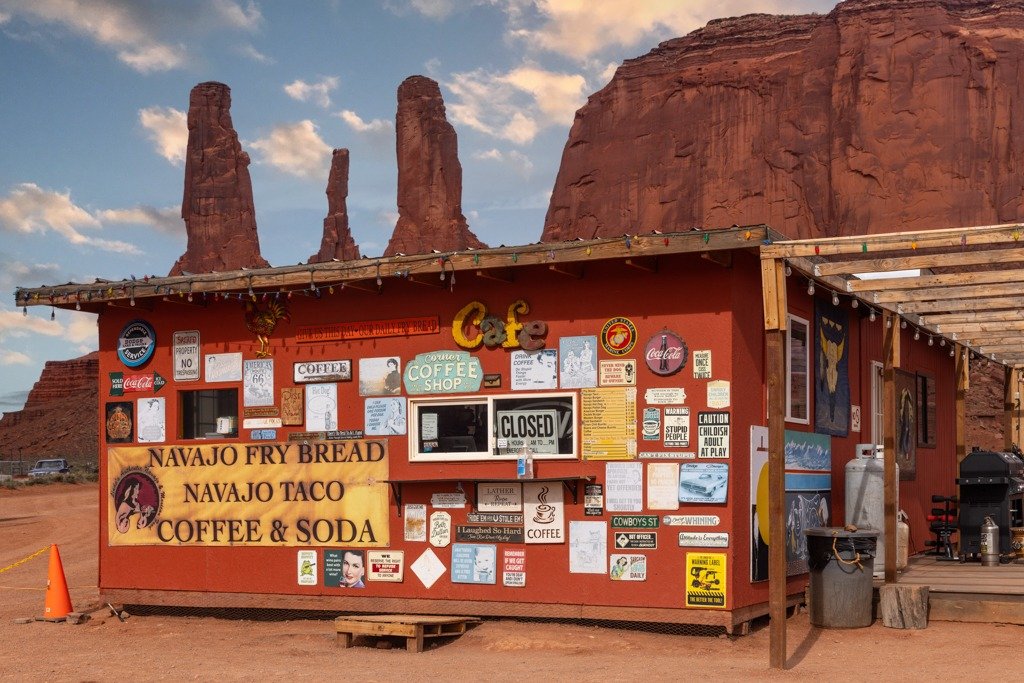
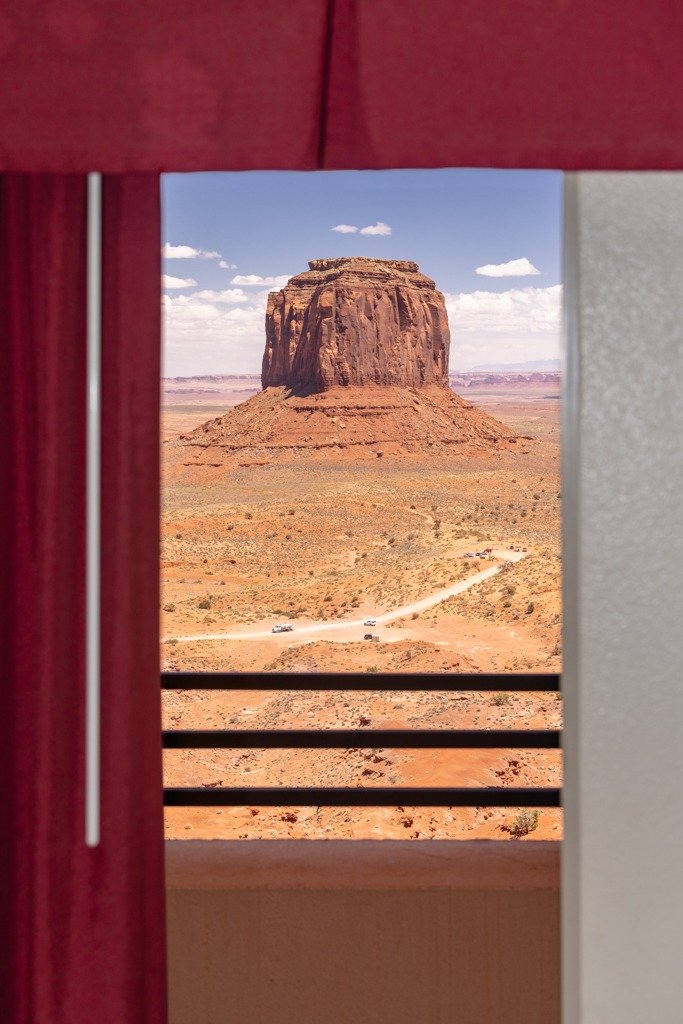
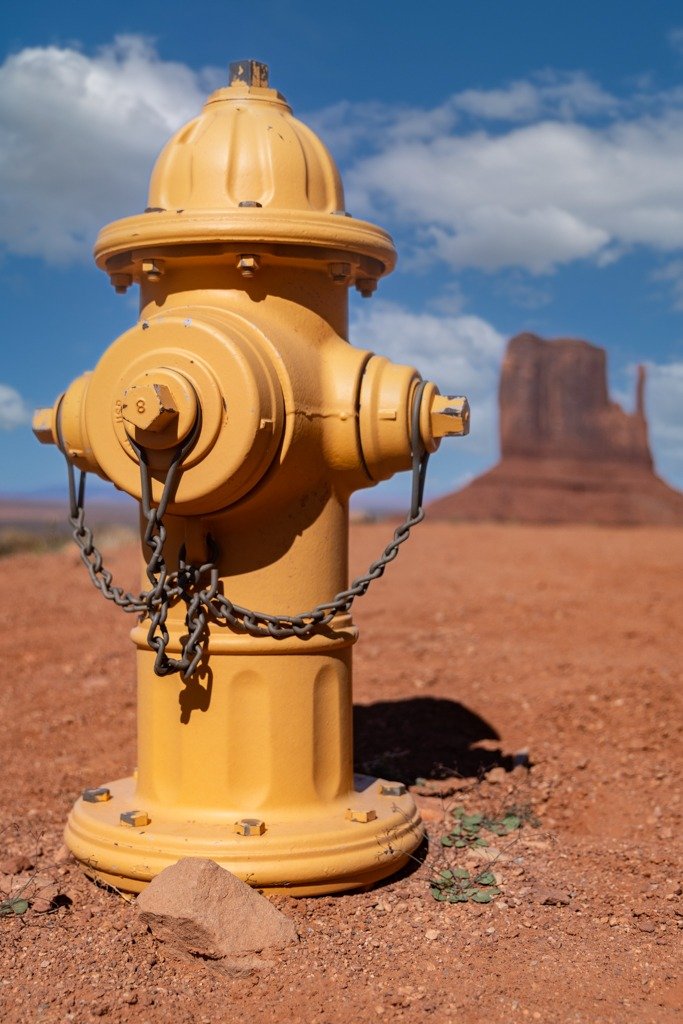
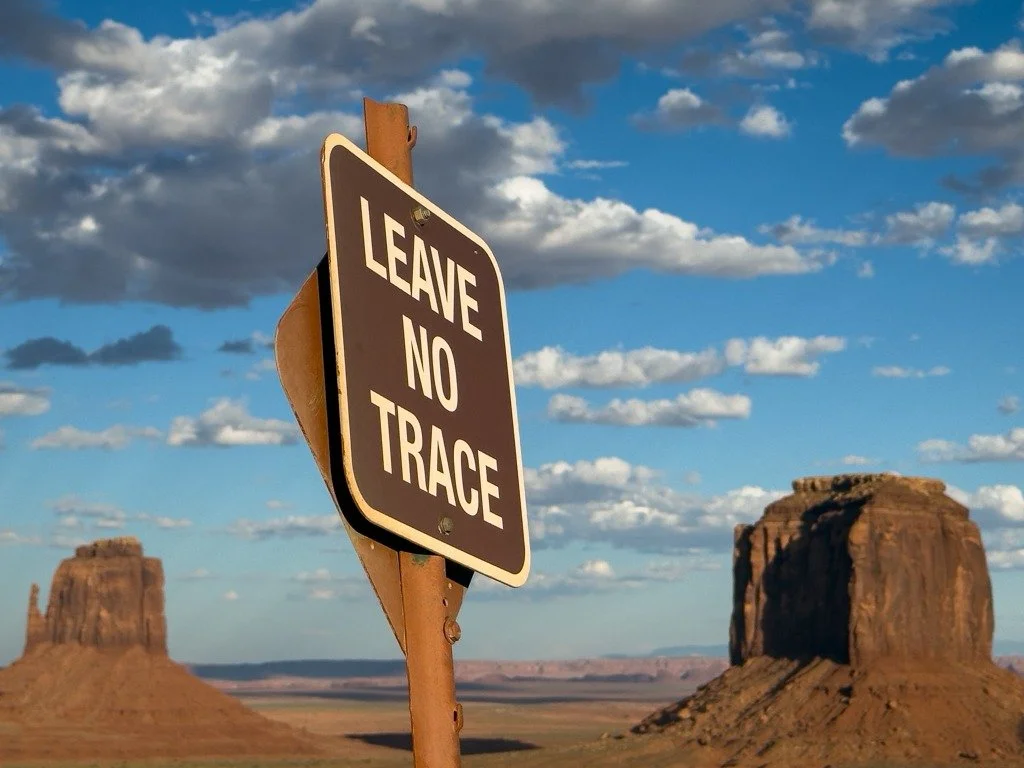
Postcards from the Sublime is a series of photographs that Arthur Drooker made in Monument Valley during visits in October 2025 and May 2026. It brings together the natural landscape and the infrastructure built for its visitors: hotels, parking lots, trading posts, tour vehicles and souvenir shops.
Drooker made a small softcover of the series, 48 pages and 8 by 10 inches, in ten copies as gifts for the people who helped him. Its cover shows the photograph “Common Ground.” He now plans to photograph other popular natural sites, and an expanded series could one day become a book.
Why Monument Valley: Why did you choose Monument Valley for this project?
I first visited Monument Valley in 1985 during a bicycle trip through the Four Corners region of the American Southwest. I knew Monument Valley from the classic American Westerns, particularly John Ford’s films starring John Wayne. Those movies helped popularize Monument Valley and establish it as the quintessential landscape of the American West.
That first visit was far too short, just a few hours, and I promised myself I’d return someday. Forty years later, in October 2025, a photographer friend invited me to join him on a trip to Monument Valley. I’d never traveled with another photographer to the same location and wasn’t sure how it would work out. But it turned out to be a great experience. He made beautiful traditional landscape photographs while I pursued something entirely different. Two photographers, one location, two distinct points of view.
Time on Location: How long did it take you to make the series?
I photographed Postcards from the Sublime over two visits to Monument Valley. The first visit lasted three days in early October 2025; the second visit lasted four days in May 2026.
Project Genesis: Why did you start Postcards from the Sublime?
Monument Valley has long attracted photographers, from Ansel Adams to ordinary tourists. As a result, we’re saturated with images of this iconic landscape of the American West. As a photographer, I had no desire to repeat what had already been done countless times. I wanted to make different photographs of Monument Valley, ones that captured the experience of being there as a tourist.
I was drawn to the juxtaposition of the magnificent natural landscape and the man-made infrastructure of tourism: hotels, parking lots, and souvenir shops. The tension between the two offered opportunities for photographs that were thought-provoking, dramatic, and sometimes humorous. It was another way of seeing something familiar, much as I’d attempted with Thirty-Six Views of the Golden Gate Bridge.
When the Subject Changed: Did you begin Postcards from the Sublime primarily with the visual problem of finding a different way to photograph Monument Valley, or were you already thinking about tourism and its impact on natural places?
My decision to photograph Monument Valley differently emerged as I researched the area before our trip. I watched YouTube videos made by tourists to familiarize myself with the place. Though amateurishly shot, these videos proved invaluable in revealing the relationship between the natural landscape and tourist infrastructure.
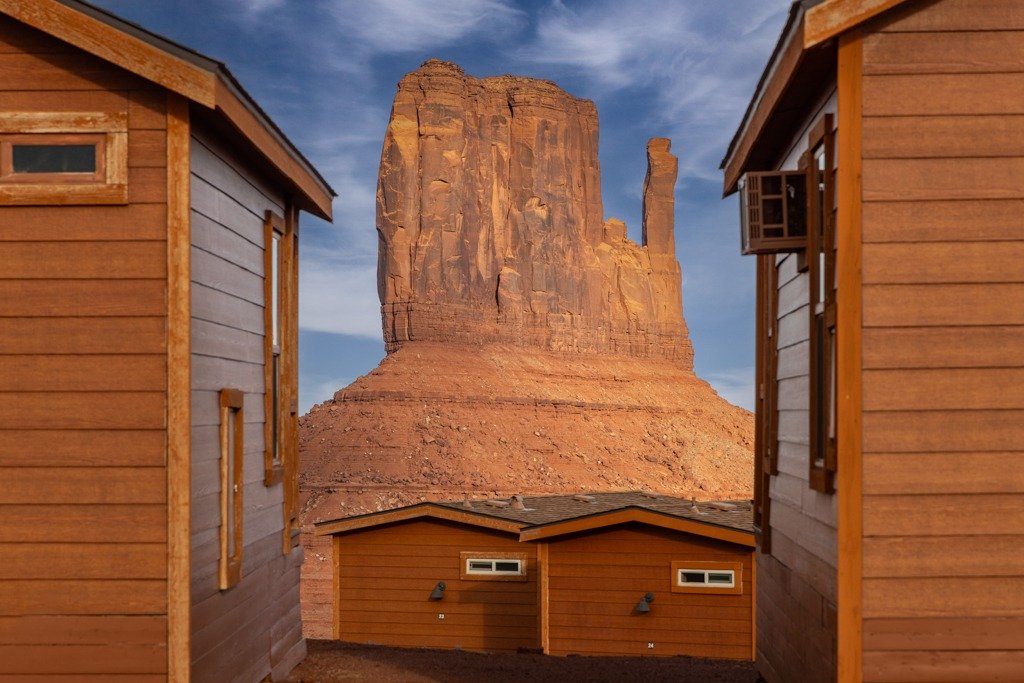
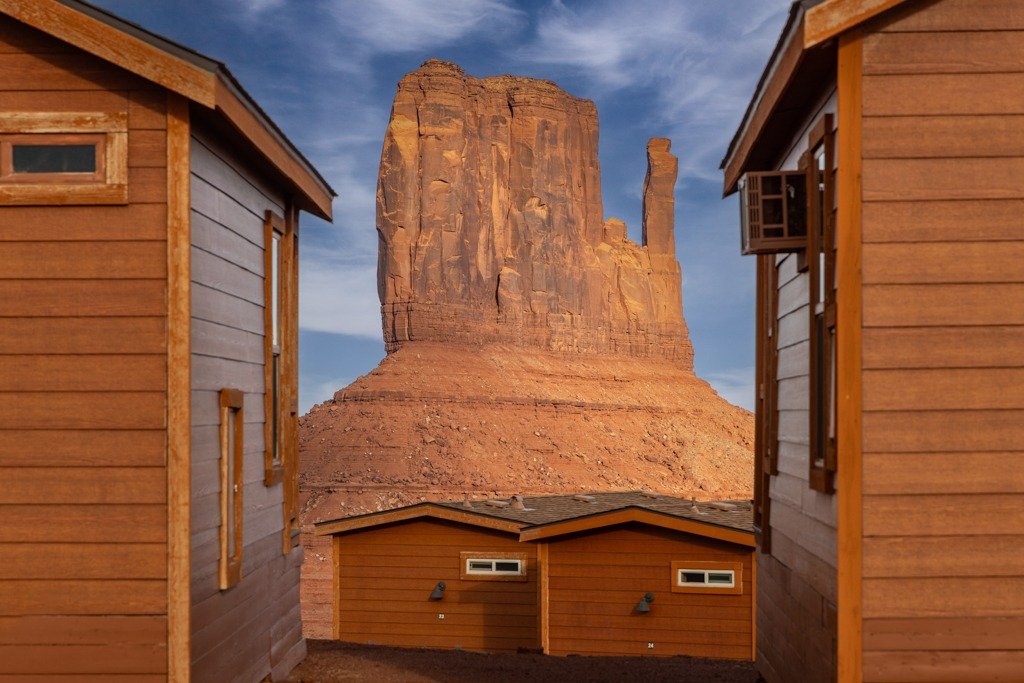
One video in particular crystallized my thinking. A tourist had casually filmed the drive to her cabin at the View Hotel, capturing a giant butte rising between the cabins. That image suggested exactly the kind of juxtaposition I wanted to explore: the ancient landscape framed by modern tourism. Inspired by that video, I made “Deep Time Share,” which remains one of my favorite photographs from Postcards from the Sublime.
What You Carried Forward: In our first interview, we talked about finding a different way to photograph a subject as familiar as the Golden Gate Bridge. When you arrived at Monument Valley, what did Thirty-Six Views teach you that was still useful, and what did you discover you had to do differently?
What Thirty-Six Views of the Golden Gate Bridge taught me was to look beyond the familiar image of a place and find something unexpected. The goal was to make people see something they thought they knew in a new way.
I brought that same approach to Monument Valley. Like the Golden Gate Bridge, it’s an iconic American landscape, one that people recognize even if they’ve never been there. And, like the bridge, it’s been photographed countless times. So the challenge was similar: How could I make photographs that offered a different way of seeing it?
But I quickly realized that Monument Valley called for a different approach. With the bridge, I was primarily interested in its form, structure, and relationship to its surroundings. At Monument Valley, I became just as interested in what people had added to the landscape as in the landscape itself. The hotels, parking lots, tour vehicles, trading posts, and souvenir shops weren’t distractions from the scenery. They were part of the story.
I began looking for moments when the ancient landscape and modern tourism came together in ways that were surprising, sometimes jarring, and occasionally humorous. Those juxtapositions became the heart of Postcards from the Sublime.
The two projects share the same impulse: to challenge the way we see familiar places. But while Thirty-Six Views was largely about finding new ways to look at an American icon, Postcards from the Sublime became a way of looking at how we experience one.
Landscape Versus Tourism: What is the difference between traditional landscape photography and tourism photography?
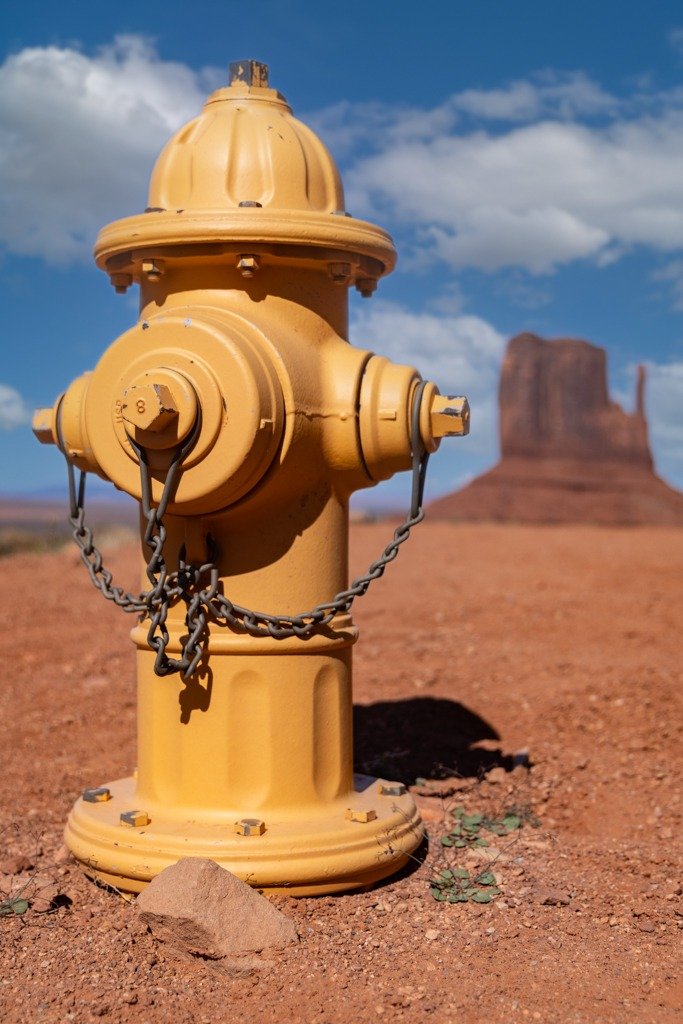
Traditional landscape photography typically emphasizes visual purity, with no human traces in the frame. Just the mountain, the canyon, the forest, or the waterfall, standing on its own. Tourism photography, on the other hand, requires taking a step or two back to include elements such as signs, parking lots, and refreshment stands that can create dramatic, sometimes humorous juxtapositions. I had been accustomed to photographing landscapes in the traditional way. With Postcards from the Sublime, I learned to take those steps back and embrace elements I previously would have excluded from the frame. What once seemed like visual clutter now became essential to the photograph.
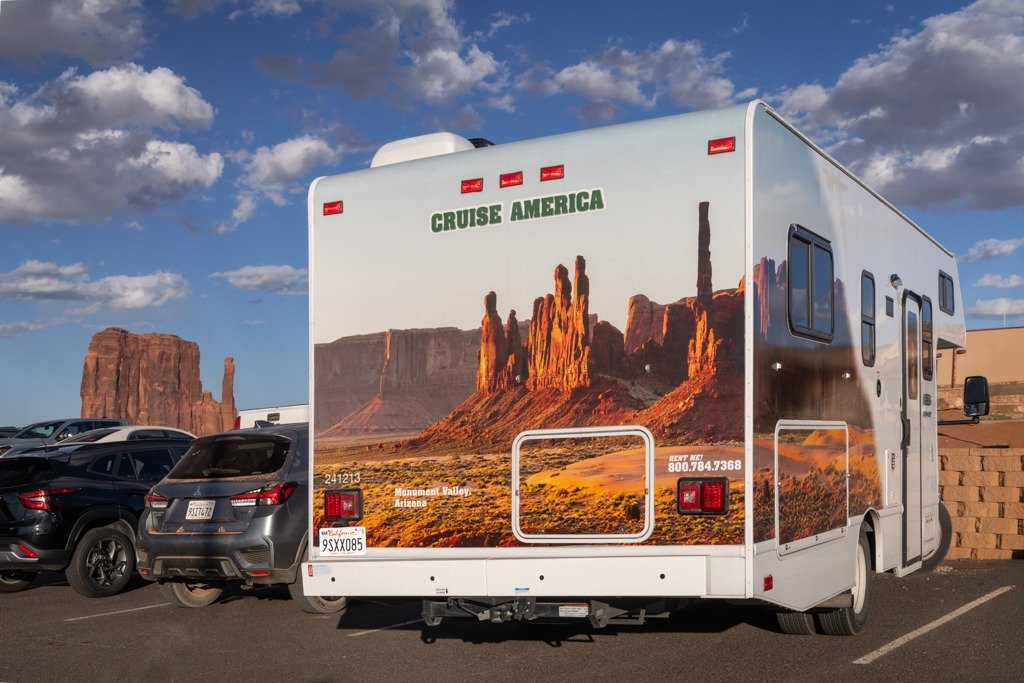
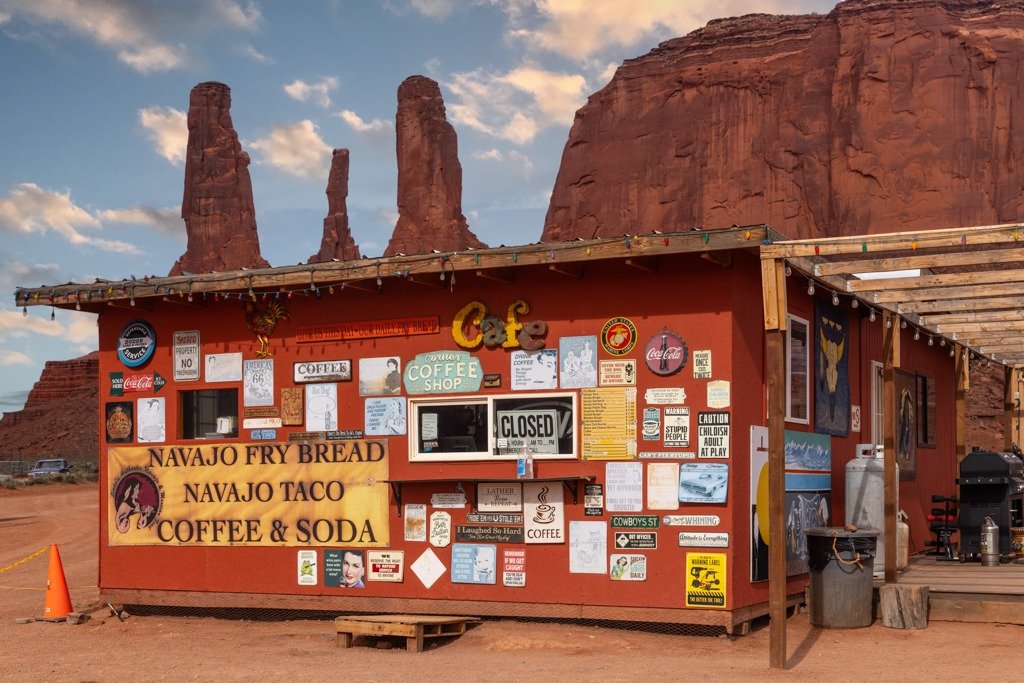
Taking a Step Back: Traditional landscape photography taught you to eliminate human traces, while Postcards from the Sublime required you to take a step or two back and include parking lots, signs, hotels, and other tourist infrastructure. Can you remember the first photograph where you realized that something you would previously have excluded was actually what made the picture work?
“Do Not Disturb,” the first photograph I made on my first morning in Monument Valley. It shows a butte looming over parked cars at Goulding’s Lodge. Normally, I would’ve framed the shot to exclude the cars and focus entirely on the butte. But this time, I realized that the cars were what made the picture interesting. They created exactly the kind of unexpected juxtaposition of the natural and man-made that I was looking for. The fact that the butte was bathed in the warm glow of sunrise while the cars and guest rooms remained in cool shadow only heightened the contrast.
The Picture You Almost Cleaned Up: Once you began looking for the collision between landscape and tourism, did you ever instinctively move to make a cleaner, more traditional landscape photograph before realizing that you were removing exactly what the project needed? What made you catch yourself?
By the time I arrived at Monument Valley, I already knew the kind of photographs I wanted to make, and they weren’t traditional landscapes. Still, when I found myself standing before a spectacular view, I sometimes felt the urge to photograph it in the conventional way. But I resisted. I kept reminding myself, “That shot has already been done. It’s not why you’re here.”
Concept as Anchor: How do you keep a strong concept from blinding you to other photographic possibilities?
I always try to keep an open mind when I’m on location. I see the concept as my anchor, something that gives me a clear sense of purpose without limiting what I might discover. If something catches my eye, even if it’s unrelated to the concept, I’ll photograph it anyway. Who knows? It might lead to an entirely new project. No regrets!
Two Photographers, One Place: You traveled to Monument Valley with another photographer who made traditional landscape photographs while you approached the same place very differently. Was there a moment when you both stopped at the same scene but saw two completely different photographs? What did that reveal to you about how much of a photograph comes from the place and how much comes from what the photographer is already looking for?
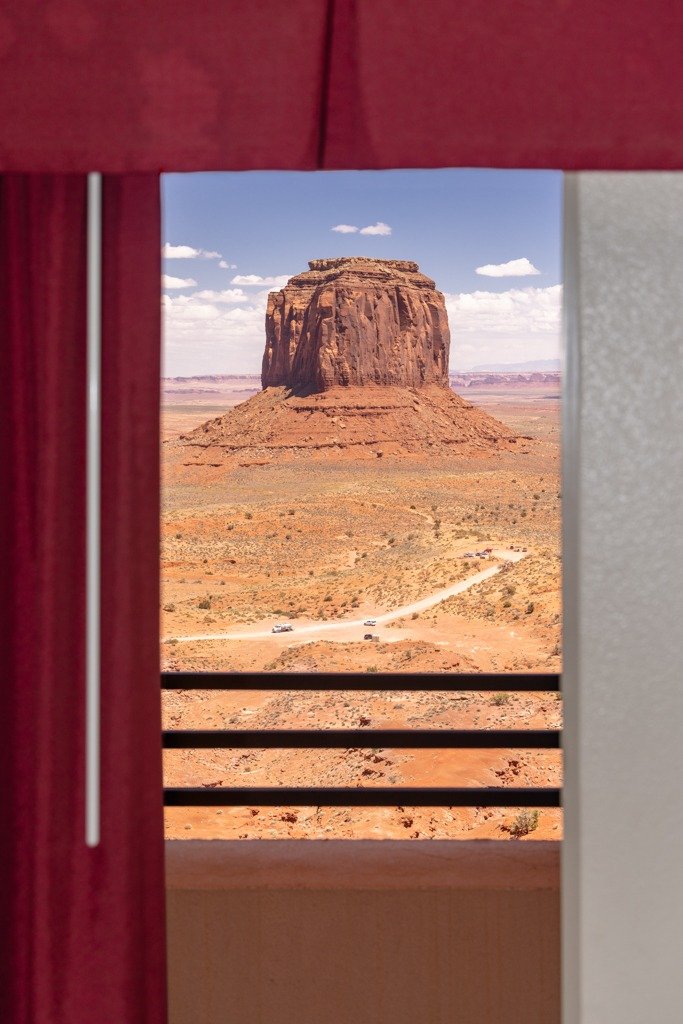
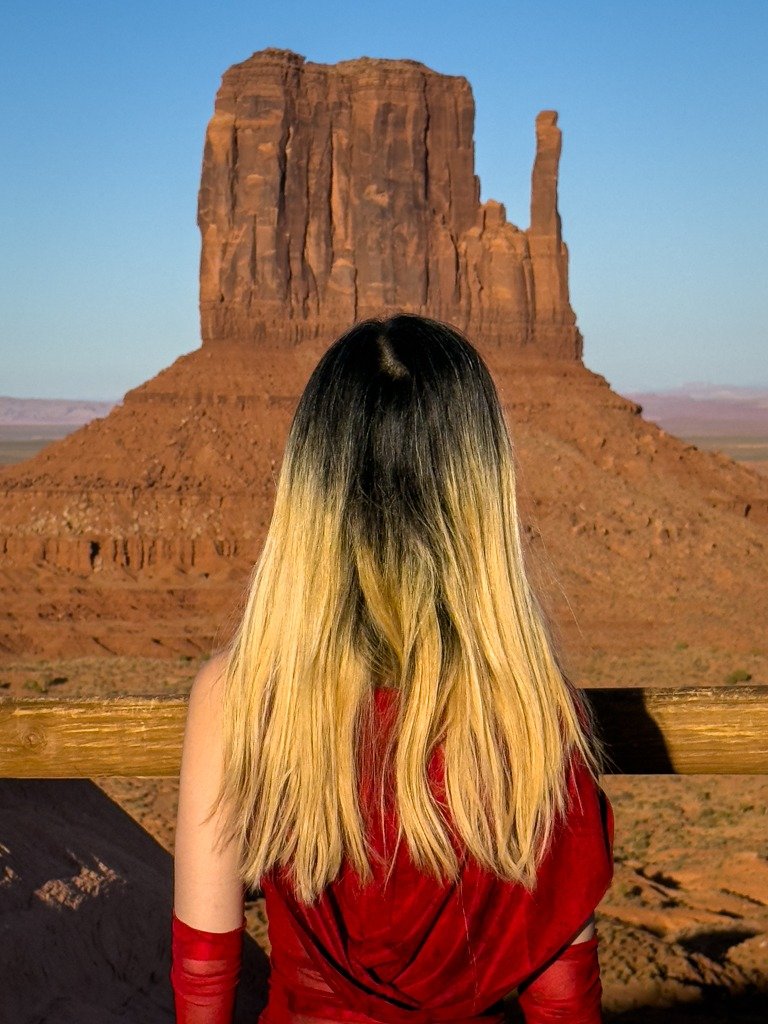
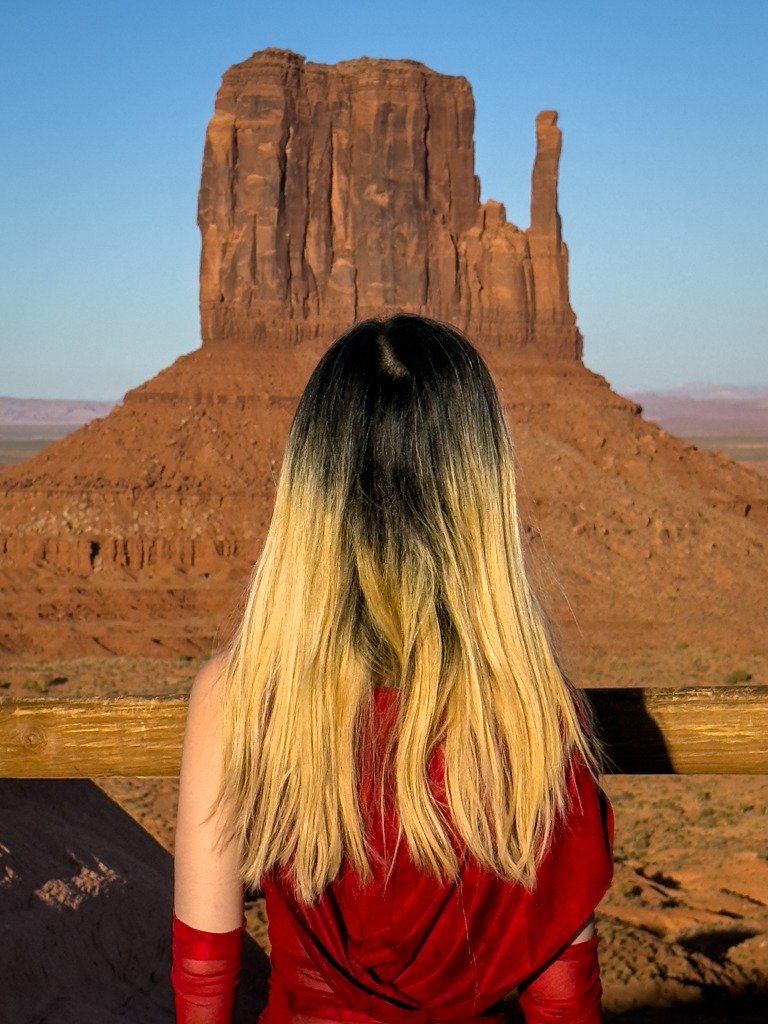
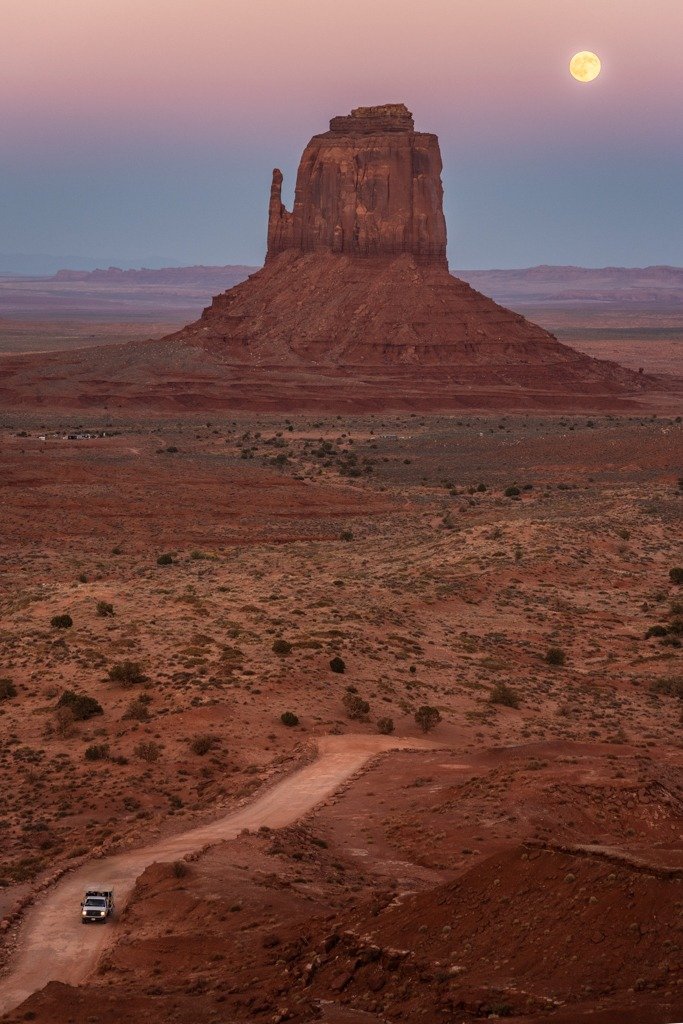
Like everyone who visits Monument Valley, we stopped at the viewing deck by the visitor center, which offers the classic view of the three buttes (East Mitten, West Mitten, and Merrick) that have come to symbolize Monument Valley. Here, my friend and I made two completely different photographs. He made a variation of one Ansel Adams took in 1958, while I made “Desert Colors,” a photograph taken from behind a tourist dressed in red, with blonde streaks dyed into her black hair, as she gazed at East Mitten.
These two very different photographs reveal how much our intentions shaped what we saw, even before we arrived at Monument Valley. That said, photographers can plan all they want, but once they’re on location, they have to be ready to adapt to the conditions they encounter.
Whose Landscape Is It: Monument Valley is not only an iconic American landscape and tourist destination, but part of the Navajo Nation and a place where people live. At what point did that distinction become important to the way you photographed the project?
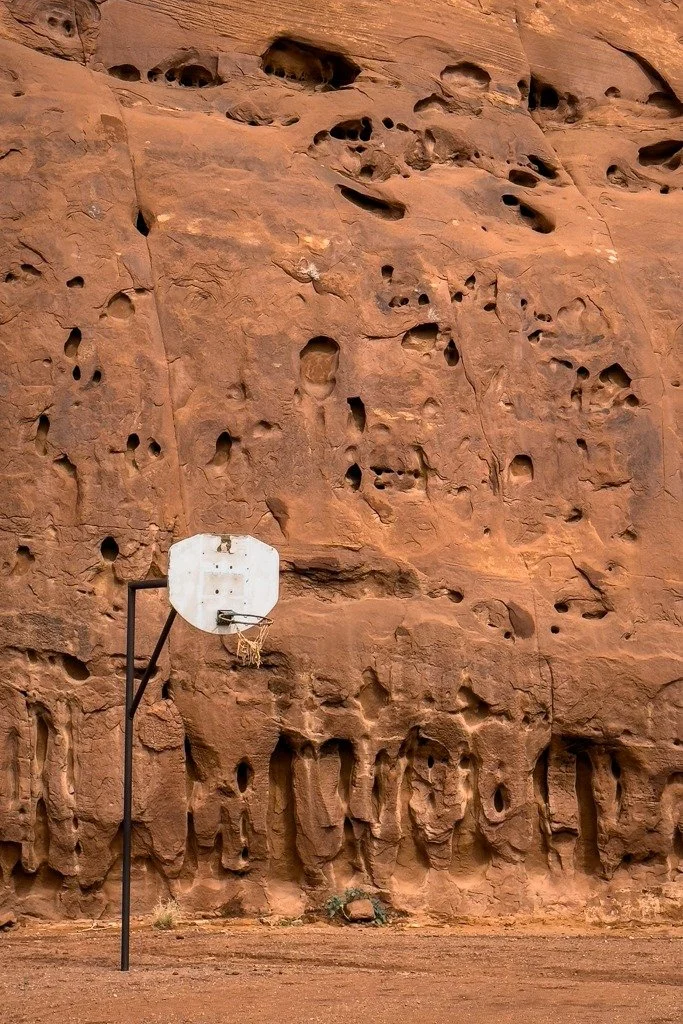
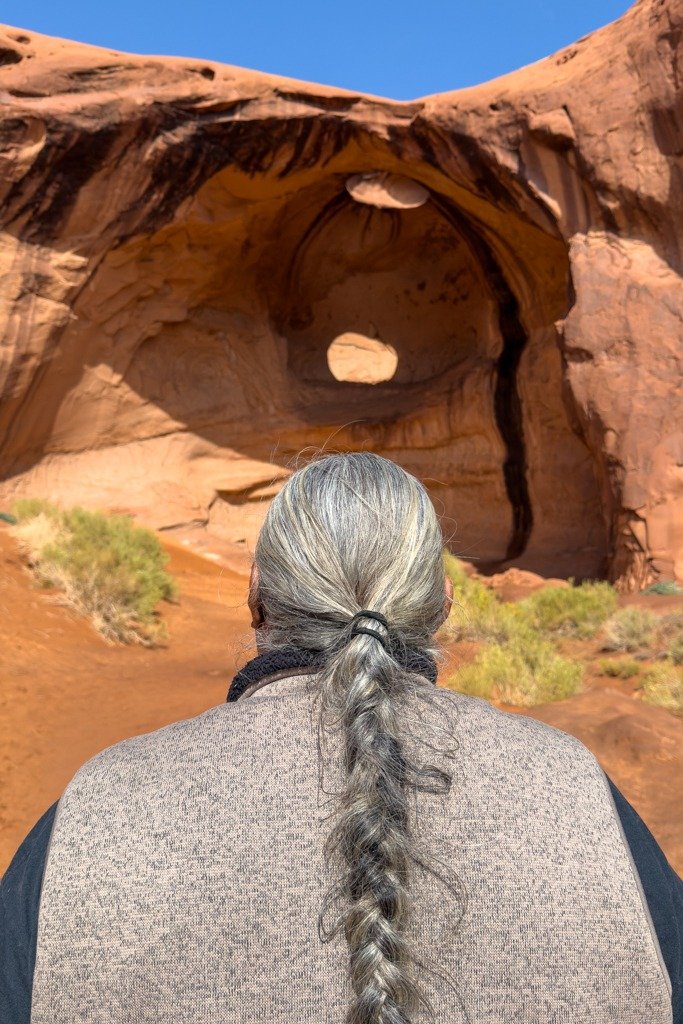
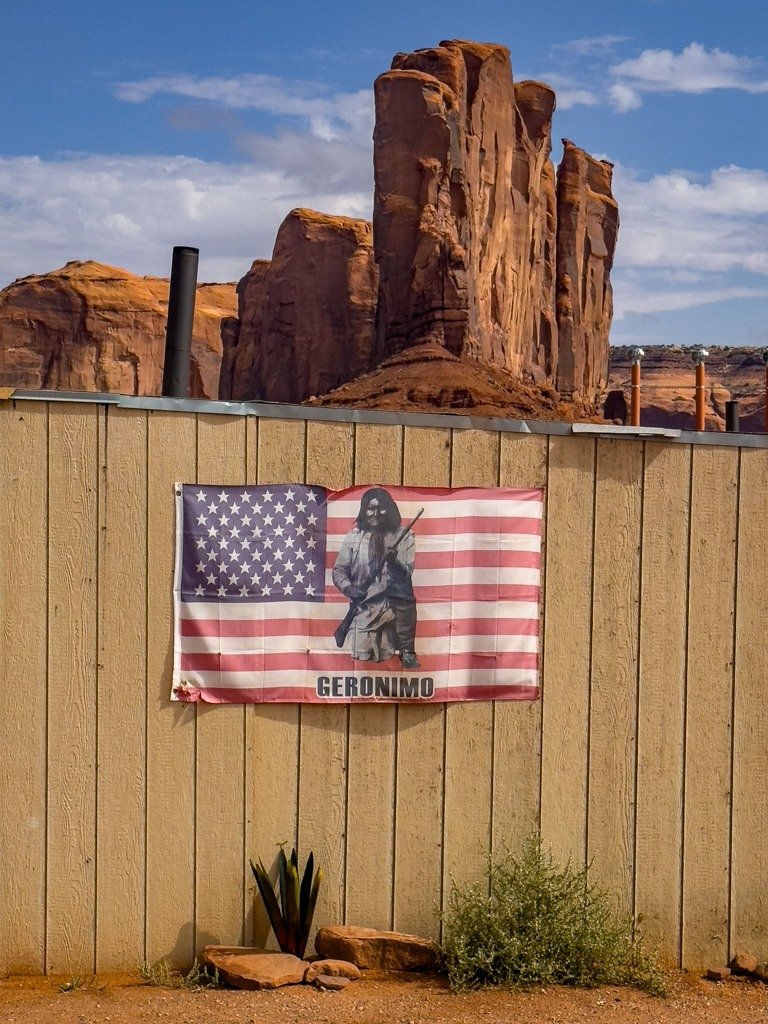
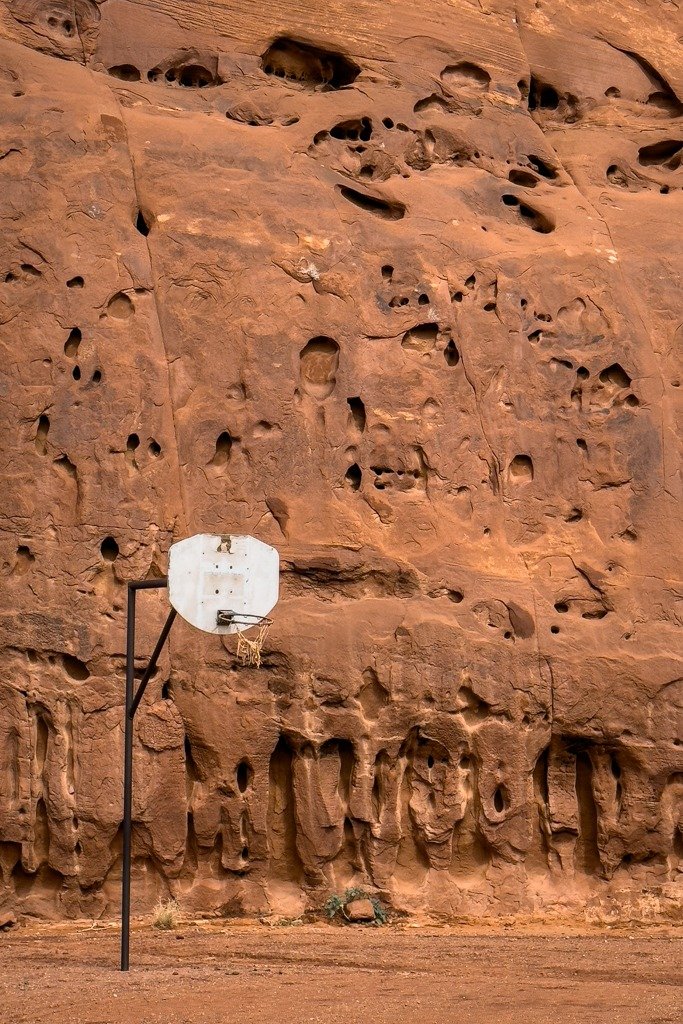
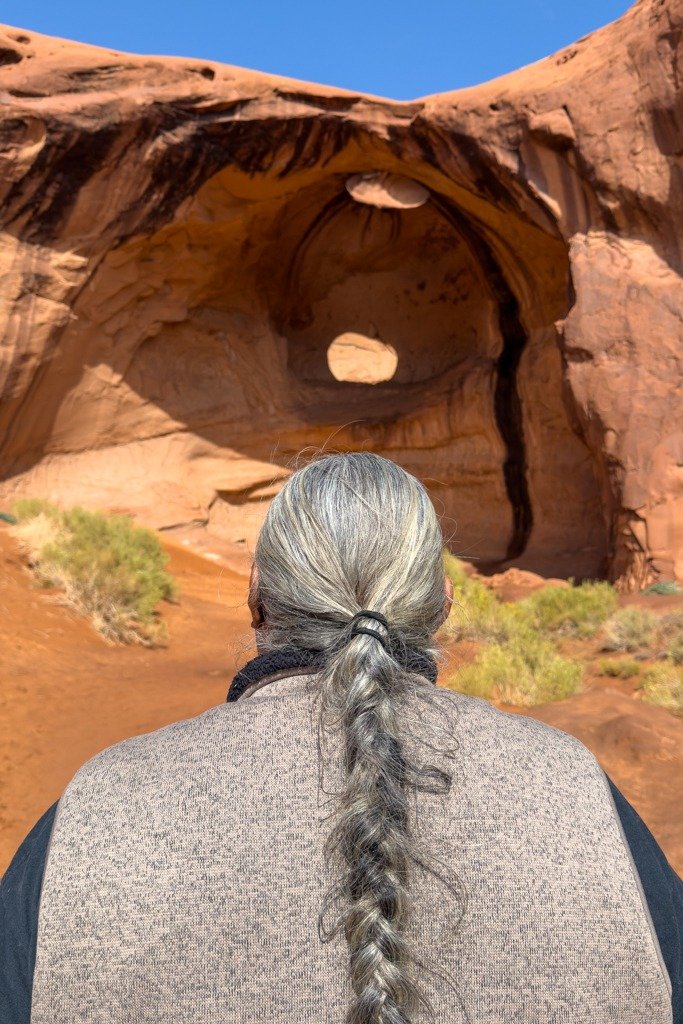
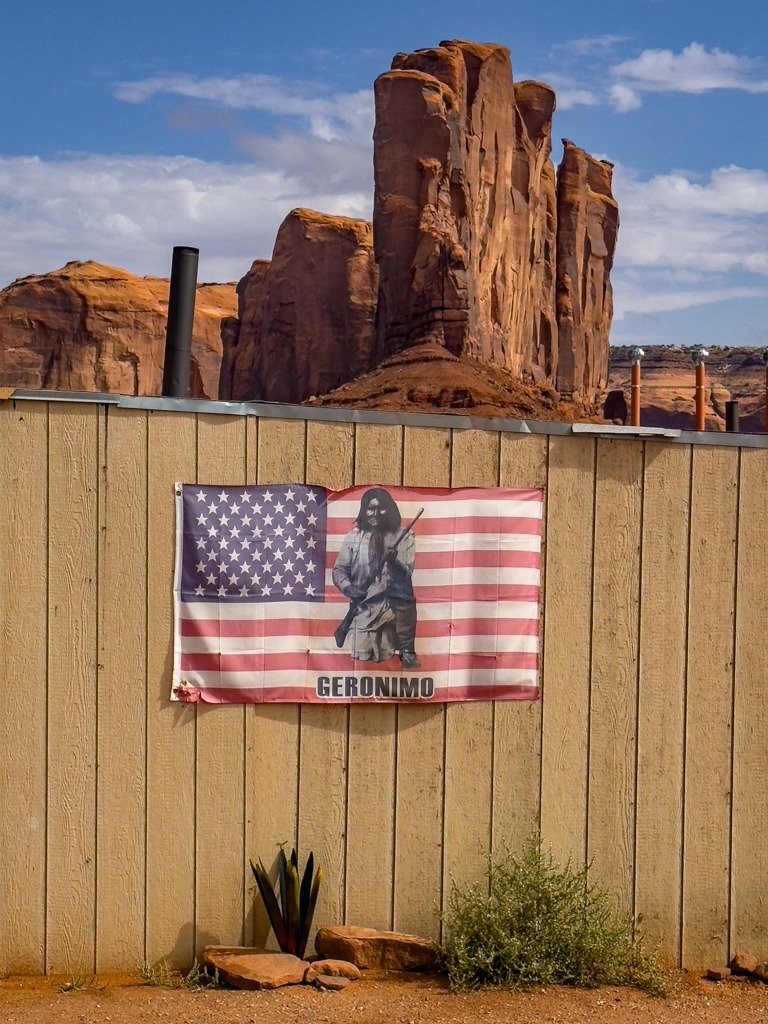
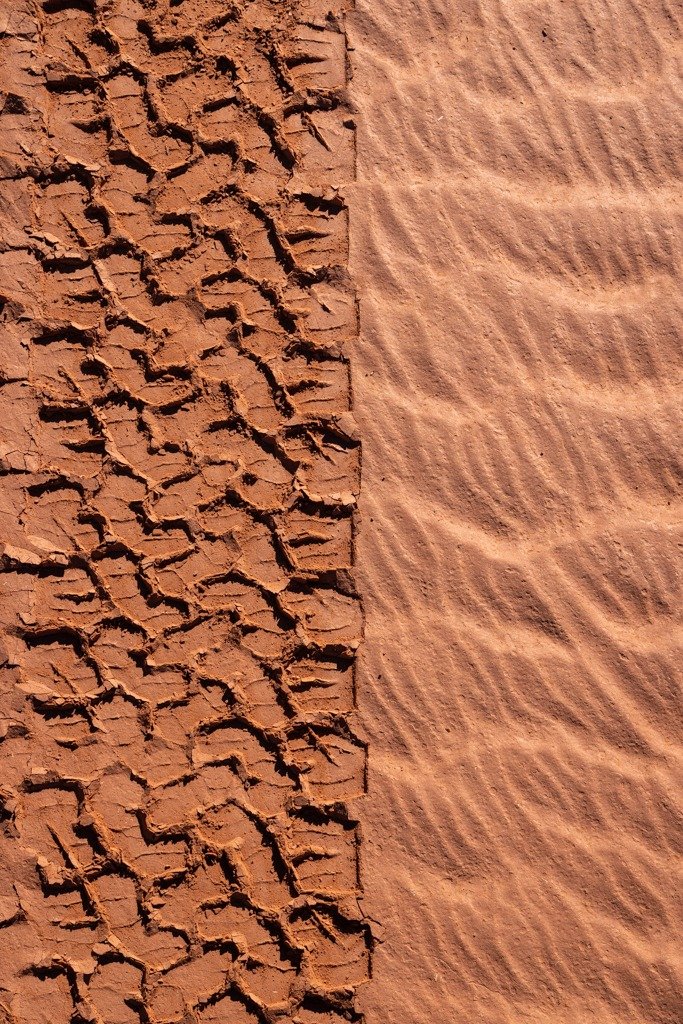
From the moment I arrived, that distinction was impossible to ignore. To overlook it photographically would have been a serious omission. I made three photographs that, to my eye, reflect different aspects of the Navajo people’s relationship with Monument Valley: as home (“Rez Ball”), as sacred space (“Big Ned at Big Hogan”), and as a source of pride (“Homeland”).
Not Yours to Make: Did recognizing that you were photographing someone’s homeland ever lead you to put the camera down or decide that a particular photograph was not yours to make?
The short answer is no. But there’s more to it than that. Having visited other Native American sites, I knew the importance of asking permission before photographing residents or their homes, just as I would with anyone else. The Navajo people living in Monument Valley are accustomed to tourists passing through, and those I encountered were generally willing to be photographed for a few dollars. Which is perfectly understandable.
What Comes Next: What do you want from this project?
To be determined. Jurors at a portfolio review encouraged me to expand the series to explore the juxtaposition of the man-made and natural at other popular sites, such as Niagara Falls, Yellowstone, and Yosemite. I intend to visit these places and see where the photographs lead me. If successful, the expanded series could result in a book and exhibitions. It could also contribute to a larger conversation about the impact of tourism on fragile natural environments and how we balance our desire to experience these places with the need to preserve them for future generations.
What the Reviewers Saw: Before receiving that feedback, did you consider Postcards from the Sublime a finished standalone series? What did the reviewers see in the work that made you begin thinking of Monument Valley as potentially the first chapter of something larger?
Before submitting Postcards from the Sublime to the Critical Mass portfolio review, I thought of it as a standalone series. I had briefly considered expanding it to include other natural wonders but rejected the idea, thinking I’d simply be repeating myself, photographing the same things (parking lots, refreshment stands, and souvenir shops) I’d encountered in Monument Valley. But the portfolio reviewers’ encouragement made me reconsider. Maybe what I’d been trying to avoid, repetition from one location to another, was actually the point. After all, these familiar features of tourism are part of how we’ve come to experience America’s natural wonders. Rather than avoid that repetition, perhaps I should embrace it. The similarities from place to place might prove just as revealing as the differences. So, Niagara Falls, Yosemite, and Yellowstone, here I come!
Testing the Larger Project: When you photograph Yellowstone or Yosemite next year, what would need to happen for you to believe that the larger project works rather than that you are simply repeating the Monument Valley formula in another location? And what would make you decide that the idea cannot be successfully expanded?
I’ll know the expanded series is working if I can make photographs that reveal similarities from place to place while capturing something unique about each location. True variations on a theme. That way, the series stays fresh and interesting, both for me and for viewers. If I find myself simply repeating what I did in Monument Valley without discovering anything new, I’ll know the idea isn’t working. The photographs themselves will determine whether the project deserves to expand. But I won’t know until I get out there and start photographing.
Repetition or Pattern: The reviewers made you realize that repetition across different tourist sites might be the point, yet simply repeating what you did at Monument Valley would mean the larger project isn’t working. Where do you think the line is between repetition that reveals a pattern and repetition that only produces another version of a photograph you already have?
I won’t know where that line is until I’m on location, seeing what’s there. Knowing myself, I suspect it will come down to a visceral reaction, a gut feeling about whether the photographs I’m making are simply repeating what I did at Monument Valley or are true variations that bring something new to the series.
That said, I can imagine how the distinctive character of each location might inspire different kinds of photographs. For example, the way tourists experience the wet and wild environment of Niagara Falls is bound to differ from how they experience Monument Valley’s dry, high-desert landscape. Those differences alone could lead to markedly different photographs.
What Survives Between Projects: Thirty-Six Views and Postcards from the Sublime both begin with places that have already been photographed countless times, yet the resulting projects look for different solutions. Looking across the two, is there one method of working you now recognize as something you want to carry into future projects?
What I’m carrying forward into future projects is a clear sense of purpose and a conscious desire to see things differently than they’re usually seen. I’m more committed to that than ever.
In the past, I sometimes felt limited by all the photographs that had already been made of a well-known place. What was left for me to photograph? But through Thirty-Six Views and Postcards from the Sublime, I’ve not only found new ways to photograph iconic places, I’ve also changed my relationship to the countless photographs that came before mine. Rather than seeing them as competition or constraints, I now see them as permission to explore. Instead of feeling limited, I feel liberated. And I think that sense of freedom and the energy it generates come through in my photographs.
In Monument Valley, Arthur Drooker kept the parked cars in the frame. Before this project, he would have framed them out. After photographing famous places in his own way, he sees all the earlier pictures of them differently. The pictures already made of a place can be a starting point instead of a wall.
“Rather than seeing them as competition or constraints, I now see them as permission to explore.”Arthur Drooker
