Welcome to this edition of Photography Critique. Today, Thorsten Overgaard looks at street photos from our readers. We’d love to read your comments below.
Thorsten Overgaard is a Danish-born, award-winning photographer, known for his writing about photography and Leica cameras.
He travels to many countries every year to photograph and to teach small workshops.
In this episode, he looks at 10 street photos sent in by our readers.
He explains how he edits a day of shooting, why a photo needs something to attach to, and why there is no rulebook for a great photo.
At the end, he tells the story behind his photo of a boy outside a bakery in Istanbul.
Harvest first, decide later
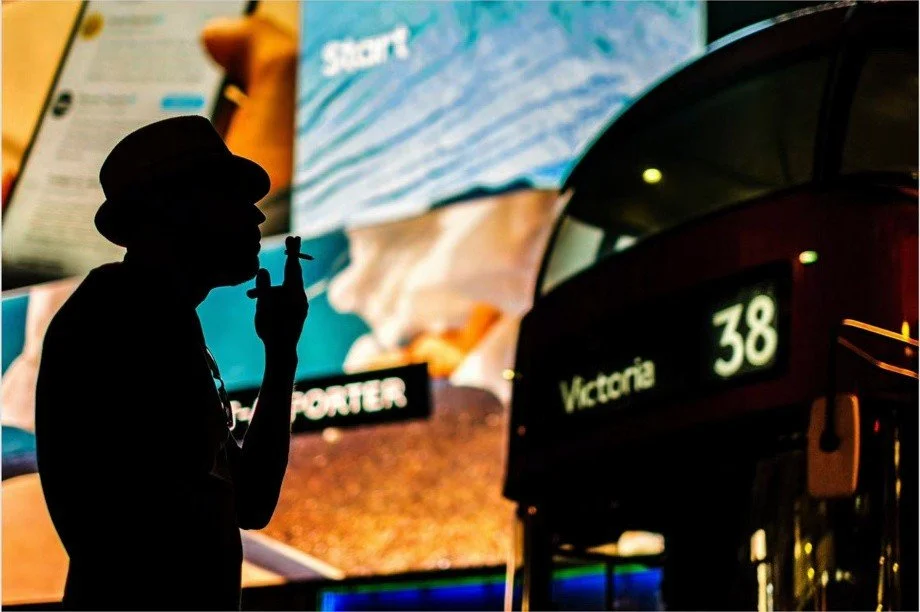
Thorsten Overgaard: I was intrigued, wondering what this was, and then slowly it came to me: this is London, because of the double-decker bus. I like it as an atmosphere photo. Some people would comment on the cigarette, but the hat and the cigarette go together. The billboard behind him doesn't compete with a second message. Often people try to cram more than one story into a photograph. This one stays simple: a man having a cigarette, in a hat and sunglasses, looking cool.
Martin Kaninsky: If you had taken this, would it be a keeper?
Thorsten Overgaard: Yes, though not a real standout. When I'm out shooting, I take somewhere between 100 and 300 photos, and when I get home I go through them in the order I took them. When something makes me think, this is something, I give it three stars, edit it in colour and usually in black and white too, and it goes into the archive. In that moment I don't decide whether it's amazing. I'm just harvesting what worked that day.
Later you put on a different hat, as an editor, putting together an article, a book, an advertisement. Then a photo is useful or not depending on what you need. This one is a bit abstract. Maybe one day it would be an album cover for jazzy electronic music. You can't always tell in the moment whether something is fantastic. It depends on what you'll need it for later.
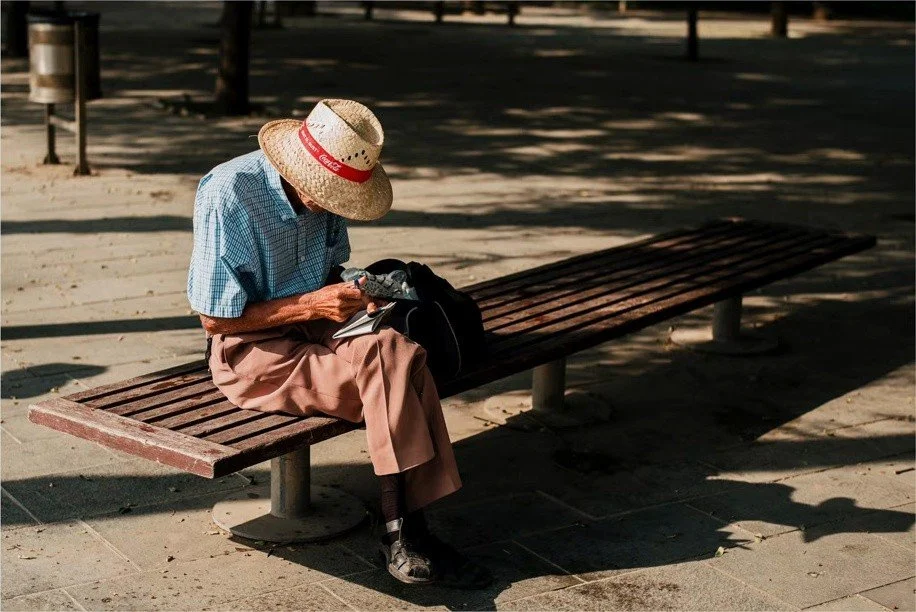
Thorsten Overgaard: I'd probably turn this into black and white. I like the atmosphere of solitude: someone sitting on a bench, writing notes or reading or just watching people. I'd push for fairly high contrast, and make the bin in the upper left less prominent. If I had taken it, I would have crouched down to show more of his face, maybe with a 50mm at f/1.4, so the background melts away and pulls you into his world.
I like quiet little photos like this, and that's not saying they're less important. Quite the opposite. It doesn't have to be smiling dogs and big obvious moments. Most of my own work is like this: nothing dramatic happens, but something happens when you look at it.
Something to attach to
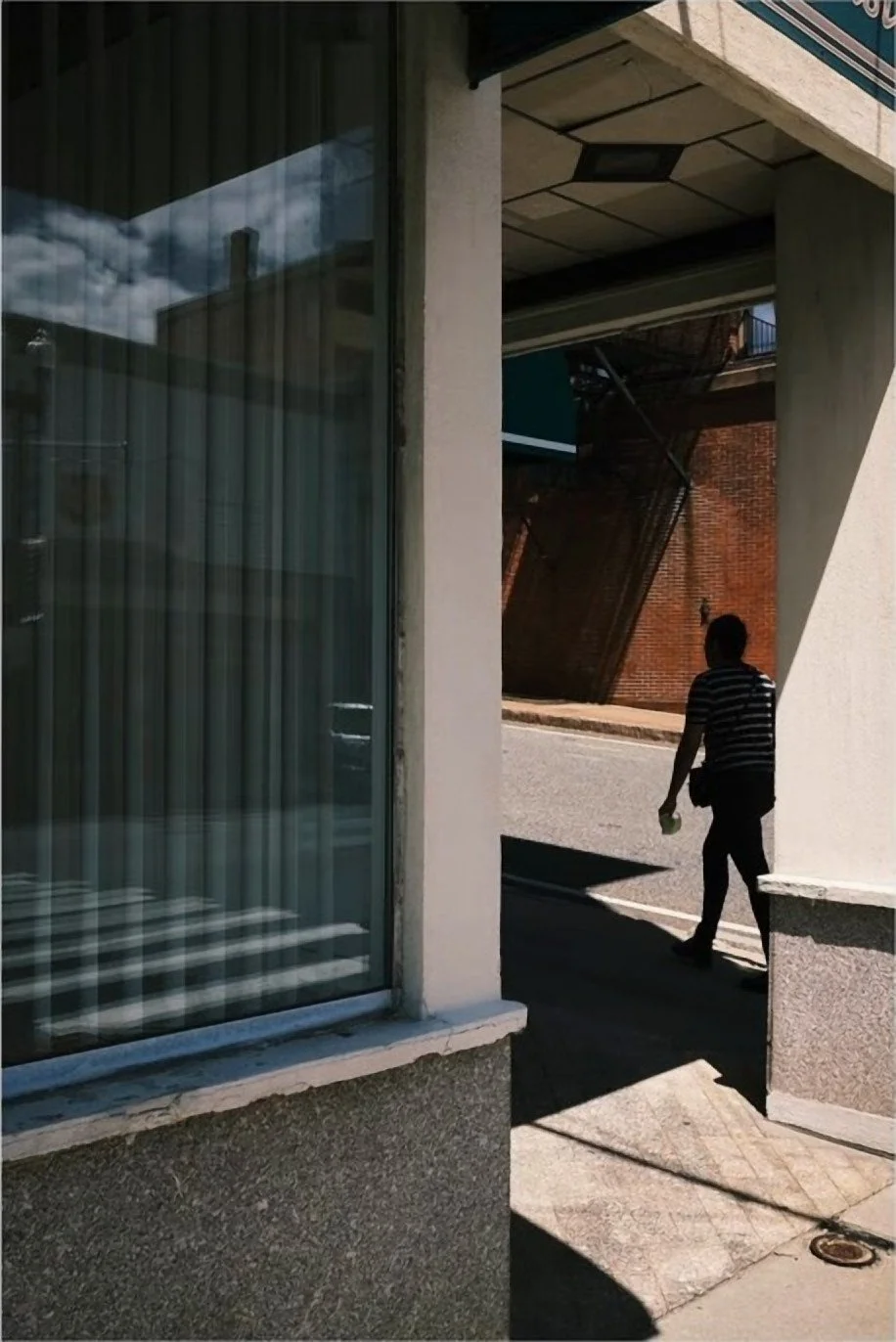
Thorsten Overgaard: This feels like a bit of a mess to me. There are warm tones on the red wall and in the sunlight, and a cold reflection in the window. If I could make the colours work together, it could work. But there's no real message or story. It doesn't make me want to be in that place.
If I had taken it, it would be because the location was great, with the line of shadow and the corner where people walk by. I might have stayed five or ten minutes to see who came: someone with a bicycle, two people in hats talking. As it is, the silhouette is too small and not important enough.
Martin Kaninsky: So the subject isn't interesting enough?
Thorsten Overgaard: It's more that a photo needs some kind of message. The great thing about photography is that you don't have to explain why you took a photo. People will love it for all sorts of reasons. With the man on the bench, the message is whatever the viewer takes from it: a pleasant break, a man content with a life well lived. With this one, I don't get anything that makes me want to look again. There's nothing to attach to. And editing has to be fast, the same instinct you use on the street: no, skip it, or yes, two minutes, into the archive.
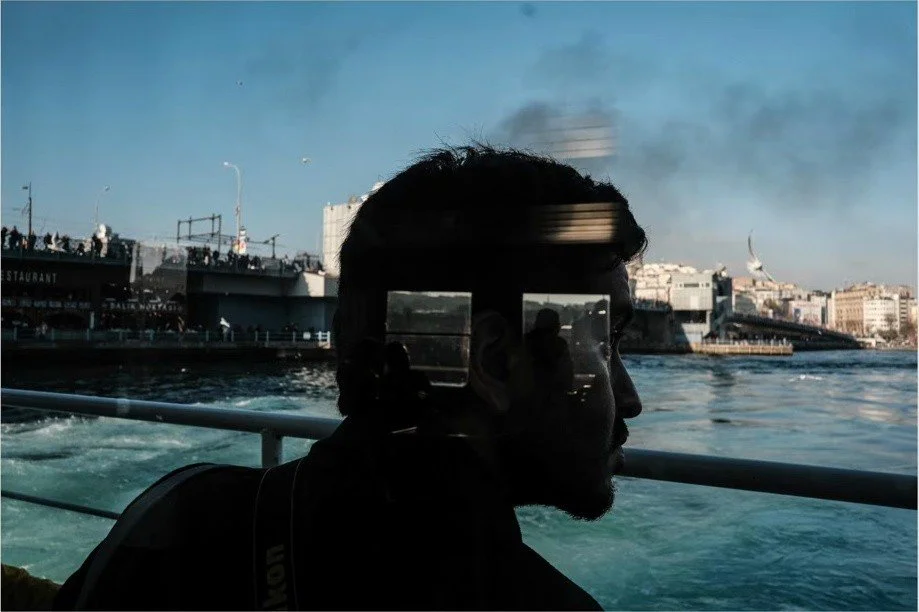
Thorsten Overgaard: There are elements I like: the silhouette, the close crop, the reflections. But it feels like a ferry in an unimportant place on an unimportant day, and the person doesn't seem to care what he's doing, so why should I?
News photos always come with a caption: taken in June, on this border, just as something happened. That changes everything. There could be a story like that behind this photo, but I don't get it from the image. I think a picture should tell its own story. A caption can answer when or who, but the photo should explain itself.
Trying too hard
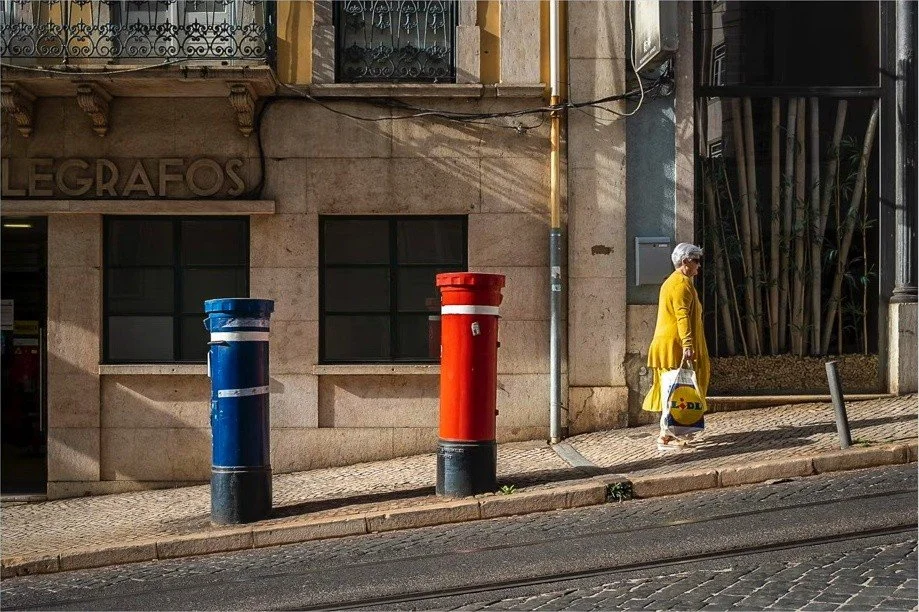
Thorsten Overgaard: I get it: there's a rhythm with the poles, the woman walking, the colours. But it feels a bit too obvious, trying too hard to make a point. You can imagine waiting and thinking, wow, a yellow person lined up perfectly, and then, so what?
Still, I would take it, straighten the lines, clean it up and put it in the archive. When you feel you should take a photo, take it, and don't overthink it in the moment. If you start thinking, this has been done before, you'll ruin it. A yellow person, a red person, someone with a dog on their shoulder might come by. You have to follow your intuition.
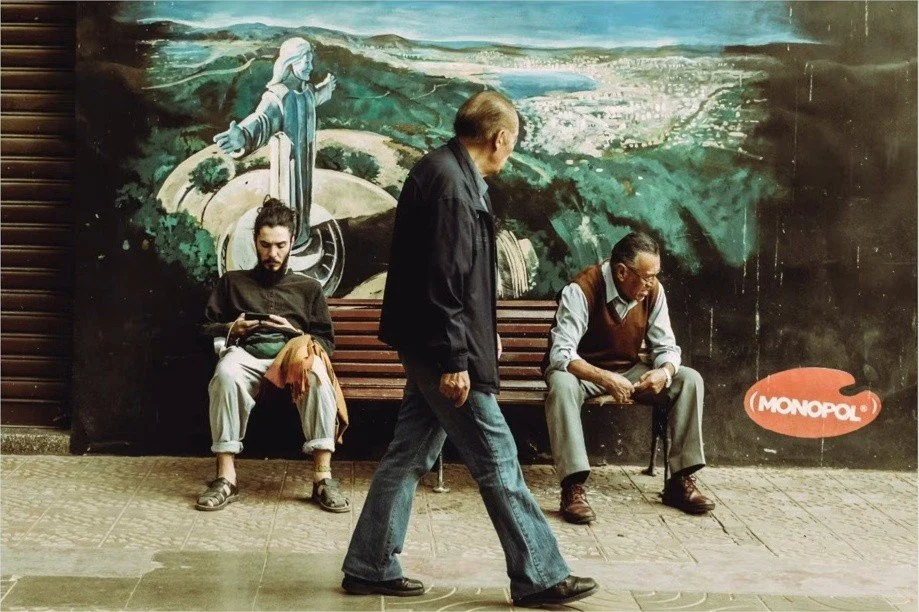
Thorsten Overgaard: Again, a little bit like trying too hard. If you kept only the man on the bench, with the image of Jesus and the city behind him, it could be an interesting photo that makes you think. As it is, the man looks hopeless, the walking person seems disconnected, and there's no contact between anyone. I'm not sure what I'm supposed to take from it, and once you bring Jesus into that, you're on shaky ground.
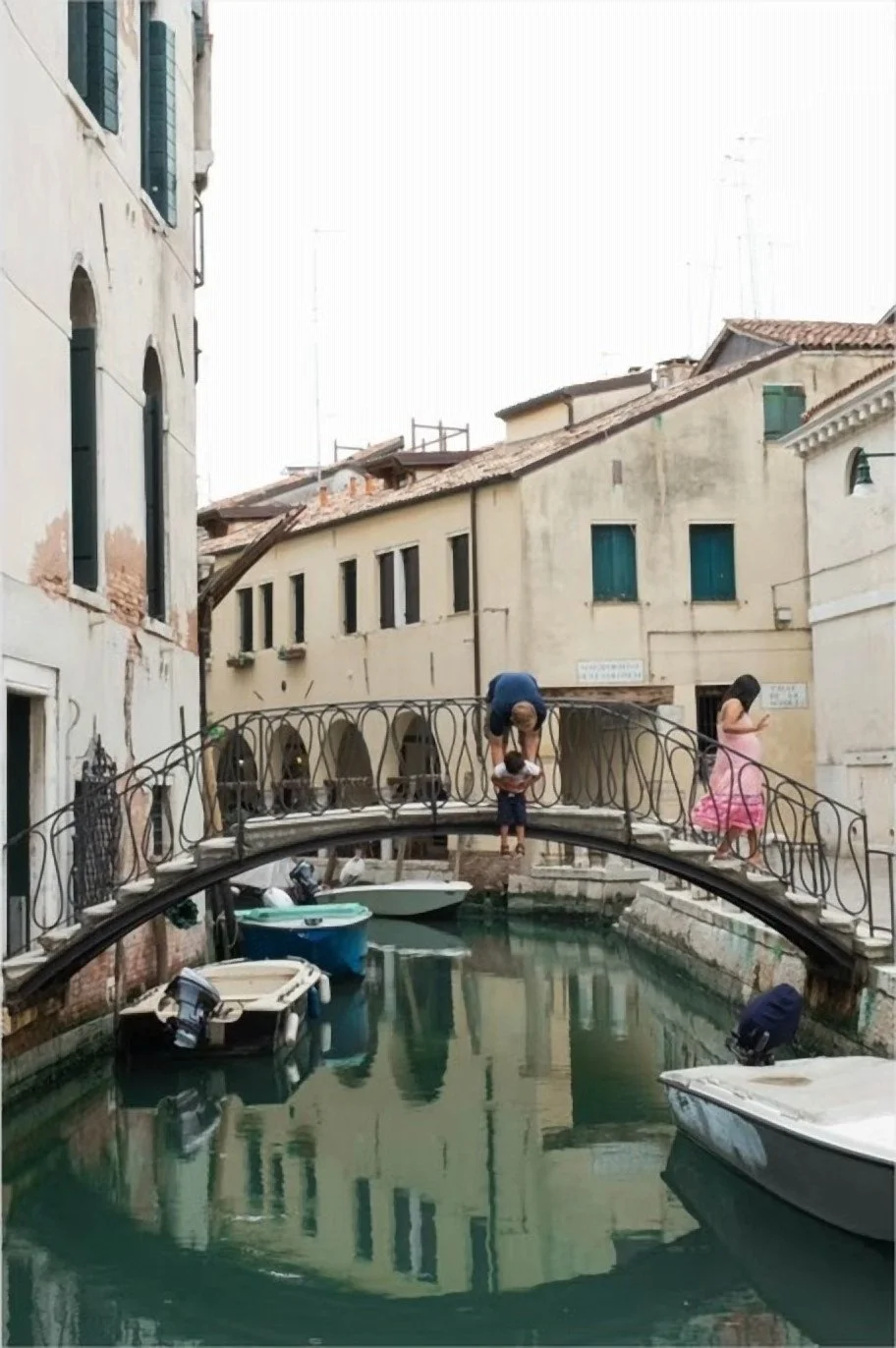
Thorsten Overgaard: It's a beautiful scene. You can imagine local life passing through it. What we actually have is a man holding what looks like his granddaughter out over the water, which is an odd thing to photograph and a foolish thing to do. It reads as mixed messages. And it's shot from too far away. If you wanted the moment, you'd be close, to see the child having the time of their life, and then you wouldn't need the background at all.
Martin Kaninsky: Would you take the photo at all?
Thorsten Overgaard: I don't photograph real life that way, to show someone, look at this idiot. For me, everything has to carry some sense of the aesthetic, some hope, without being literal about it. Somewhere in my photos there's a message: look what you can do with a camera, go out and shoot. This one doesn't communicate that to me.
Space you can use
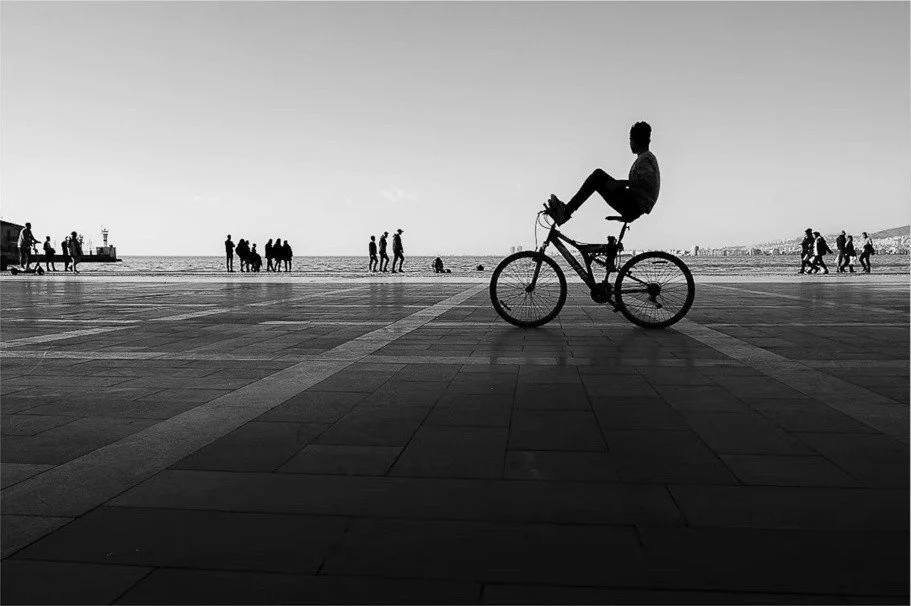
Thorsten Overgaard: I like this one. Clean lines, a silhouette, a story in the foreground and another in the background. People often use a wide-angle lens for everything, and things end up tiny. But a wide angle works well when you have a clear subject in front and a whole story behind: the waterfront, the city, people enjoying the sun, and this man on a bicycle, a bit of a show-off. It's pleasant to look at, very controlled in its lines, with the looseness of people doing their own thing.
Martin Kaninsky: Is there too much empty space?
Thorsten Overgaard: It depends what you want to do with it. I imagine it as a double-page spread in an in-flight magazine, with him on one side and a headline under the bike. Without that space, you couldn't do that. I'd keep it, and also export a square crop, or a tall crop of just him for a story. Technically there's nothing to fault. No tilted horizon, nothing off.
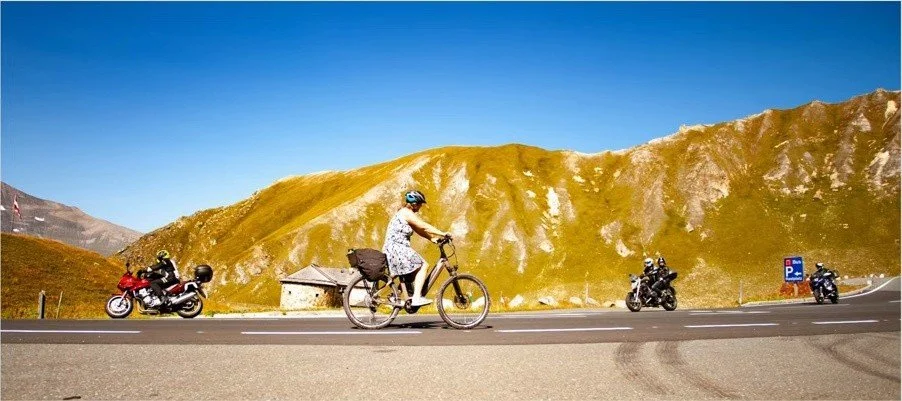
Thorsten Overgaard: The colours are a bit off, the mountains don't quite look believable. I'd go black and white. An old lady on a bicycle feels timeless, and it's funny that she's going uphill. The building behind her is tilted, so if you straighten the photo, she's climbing an even steeper hill. In black and white the sky would be more dramatic and the blue parking sign would disappear.
I like a photo to say something on its own, and to leave the meaning a bit open, so the viewer brings their own content to it. That's why I'm not fond of captions that tell you exactly what to think. You could have taken twenty other photos of the same moment and told a different story.
A record of its time
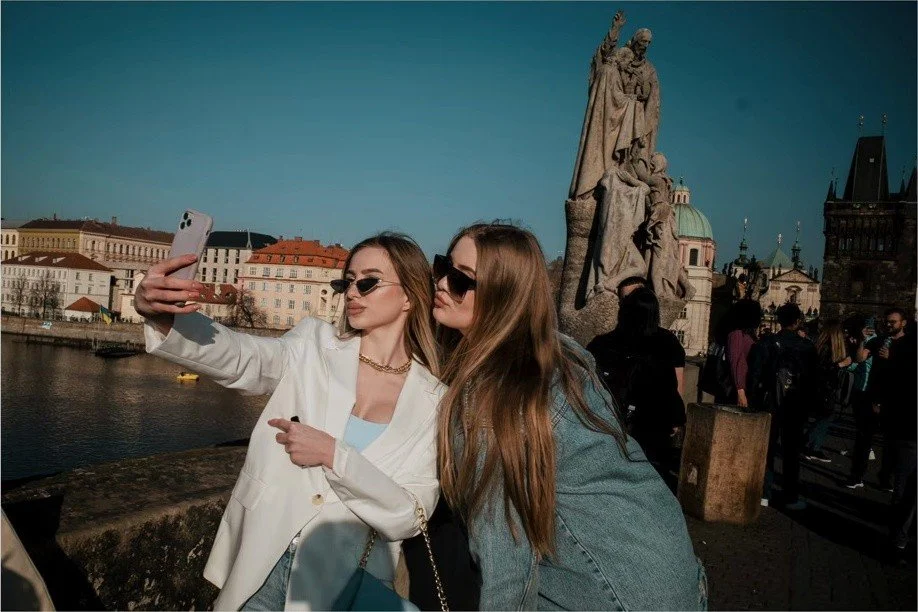
Thorsten Overgaard: I'd probably move a little to the left, so the phone is big in the foreground and the faces blurred behind it, keeping the statue and avoiding the clutter in the background. Then it reads as a clear statement: people taking selfies, putting on a face and sunglasses, sending it to friends, and going back to their ordinary lives.
Add fifty years to this photo and it tells a completely different story. It becomes a document of its time: how people dressed, what phones looked like, what people thought was cool. But it still has to work aesthetically, so I'd lose the man with the sunglasses on the right and the distracting background. It has to be taken, and you find out later what it's useful for. It will likely only become more valuable with time.
His own photo: the boy outside the bakery
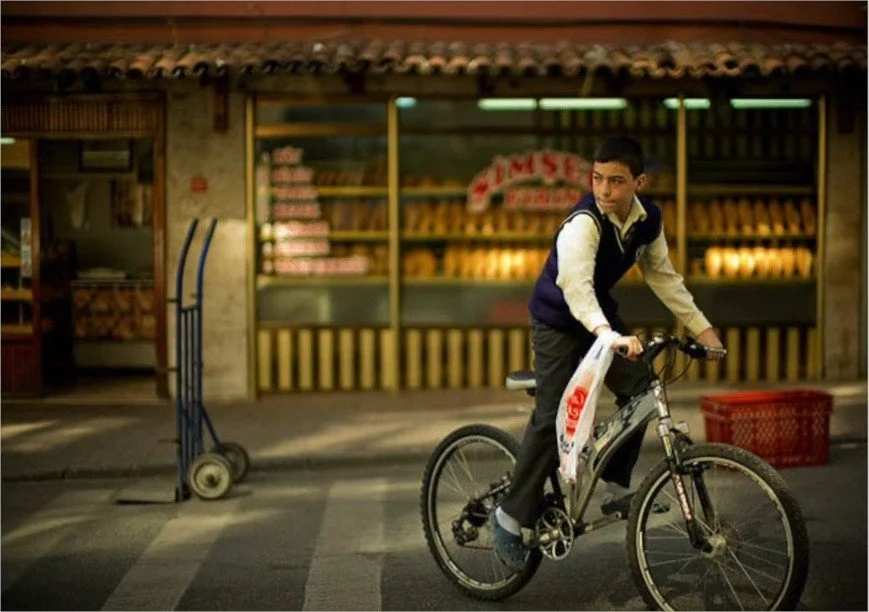
Thorsten Overgaard: This one is mine. I used it as the front cover of a book and for many illustrations, and it has had a great response. It's from Istanbul, late in the afternoon when it was getting hot. We had walked up through the hills, and then we came to this bakery with wonderful colours.
A boy came by on a bicycle, and I knew right away I needed that bicycle in the frame. But he rode straight into the bakery, so I thought I'd missed it. Then I realized, he works there, or he's picking up bread. Either way, he has to come back out and leave on the bicycle. So I stood across the street and waited. He came back out, and I got maybe three to six frames of him riding off. This one has the composition I wanted, with him to one side, looking back. I was focusing manually.
That story is part of what makes the photo work. Even if you miss someone going in, you might catch them coming out, or someone else might come along. You can feel there's a photo to be had: the light is beautiful, it even smells of bread. But you can't control the elements like a painter. Something has to happen. I stayed three or four minutes and moved on. At first this was one photo among about fifty from that trip.
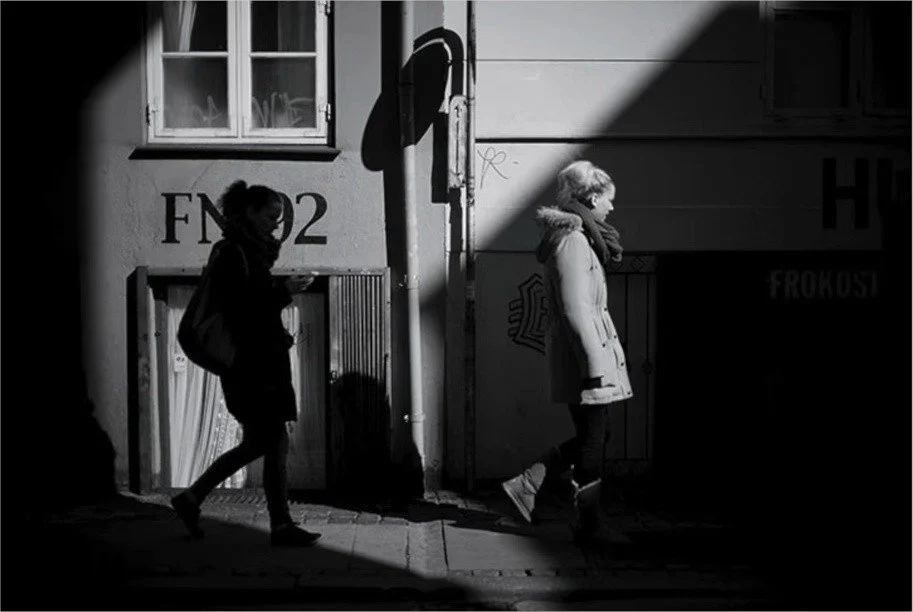
Thorsten Overgaard: Ultimately, photographs are what the viewer makes of them. Sometimes the photos you don't think much of are the ones everyone calls your best. One of my best-selling and most awarded books is Shadowland, and there's a photo in it that I don't find that exciting. It's not even really my style. Cartier-Bresson, I believe, disliked the famous photo of the jumping man, but it's the one he's remembered for. So you take the recognition and move on.
I don't think you should try to reverse-engineer a hit. I'm not going to make a series of bakeries with kids on bicycles. You make something unique because you recognize, in the moment, that this could be something, and you follow that instinct.
There's no rulebook for what makes a great photo. Even competitions sometimes apply formulas, and I completely disagree with that. Eight photographers can walk the same streets and come back with eight different photos. If it feels like a great photo to you, it is a great photo. It's that simple.
In Istanbul, Thorsten Overgaard saw a boy ride his bicycle straight into a bakery, and he thought he had missed the photo. Then he understood that the boy would have to leave again. He crossed the street, waited a few minutes, and took a handful of frames as the boy rode away. The picture later went on the cover of one of his books. A moment you missed is sometimes a moment that hasn't happened yet.
“Then I realized, he works there, or he's picking up bread. Either way, he has to come back out and leave on the bicycle.”Thorsten Overgaard
