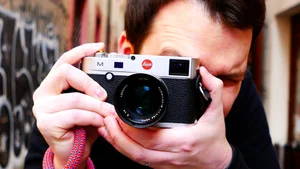
Welcome to this edition of Photography Critique. Today, Tatiana Hopper looks at street photos from our readers. We’d love to read your comments below.
Tatiana Hopper is a photographer and YouTuber.
She loves black and white, and she looks for the idea behind a picture as much as its form.
In this episode, she looks at 15 photos sent in by our readers.
She talks about fleeting moments, symmetry and reflections, and about photos that show seeing and being seen.
At the end, she sees one of her own photos, taken in Blackpool on twenty-five-year-old expired film.
Fleeting moments
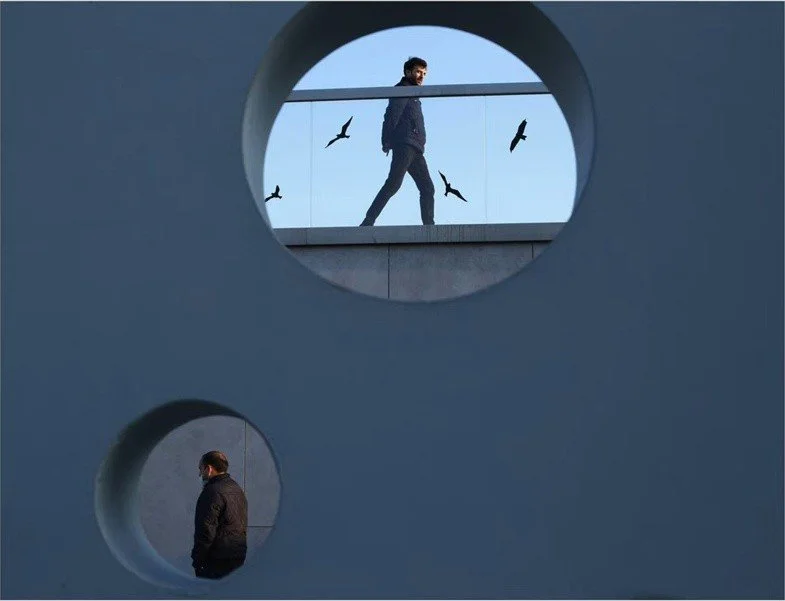
Tatiana Hopper: I really like this photo. There's an overall balance about it. It's one of those fleeting moments: you have to really be in the moment to capture it. The shapes and the lines are amazing, and I love that the two people are going in different directions. It's observational but also peaceful.
At first I thought, wow, birds flying, until I realized they are probably just stickers on the glass. But I still like the idea: the birds bring a sense of freedom, and the people are framed inside these shapes, almost trapped. It's like someone in a limbo between two spaces, at a frontier. It resonates with a lot of what I like to capture in my own work.
Martin Kaninsky: Is there something you would improve?
Tatiana Hopper: I don't really think so.
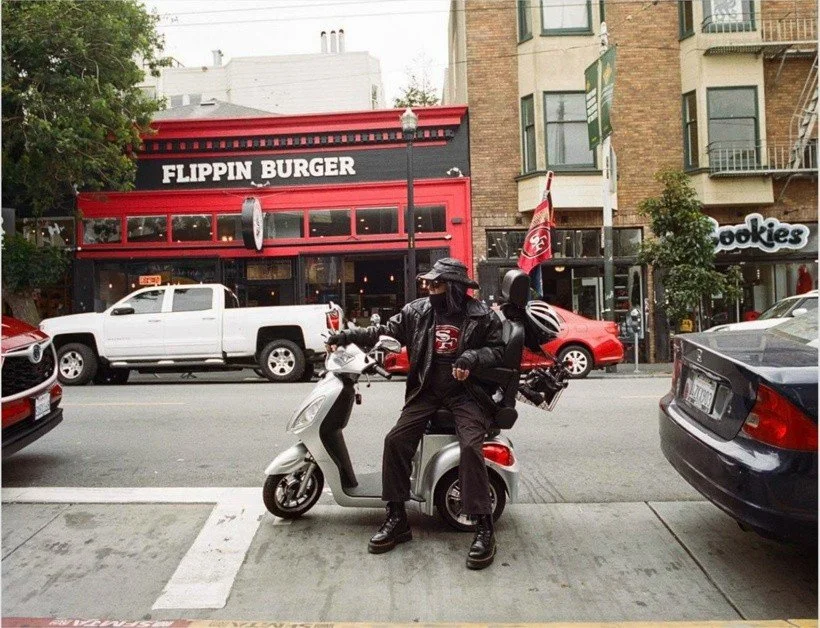
Tatiana Hopper: I like the colour. It's rare to have red and black in every single element: the building at the back, the cars on both sides of the man, a flag. It directs your eye. I like that he's not facing the camera, he's just minding his own business. On my channel I say a lot: seize the opportunity. And it makes me wonder about what's outside the frame, which makes a photo more interesting.
Martin Kaninsky: He's dressed for a rock concert, in a leather jacket, and he's sitting on a scooter. That's a funny contrast. But for me he is lost in the busy background. The composition is simple and flat, as if someone walked by, snapped it and walked away. I would get closer, or try different compositions around him, because he's a really good subject.
Tatiana Hopper: Yes. It feels like someone running through the moment and seizing it.
Humour and form
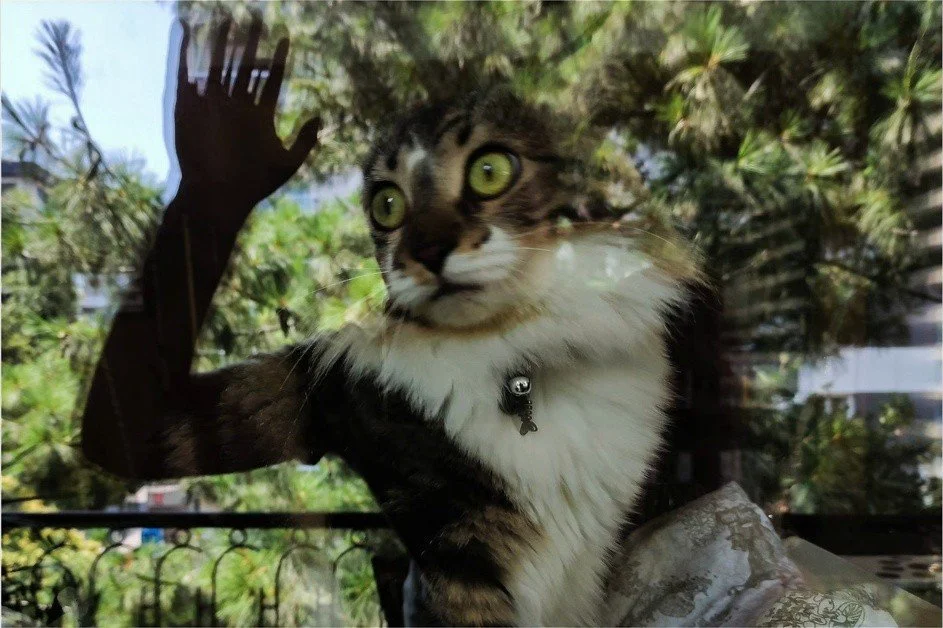
Tatiana Hopper: Obviously it's a funny one, and I don't mean that in a bad way. It's a self-portrait in a reflection, with a cat. It's not my favourite, but I love to find value in everything, and the value of this photo lies in its humour, and in the meme-like expression of the cat.
Martin Kaninsky: You see it, and you start to wonder how it was made, and then you realize the photographer is the one holding the hand. Simple, with a nice composition, and most of all a really good idea. Not hard to take, but hard to find.
Tatiana Hopper: For me, a photo is where your personality and your thoughts meet your subject. I can read a lot about this person from this photo. You have to be very creative and very attentive to detail to see this. It's not my personal taste, but that doesn't change its value. It's creative, smart and funny.
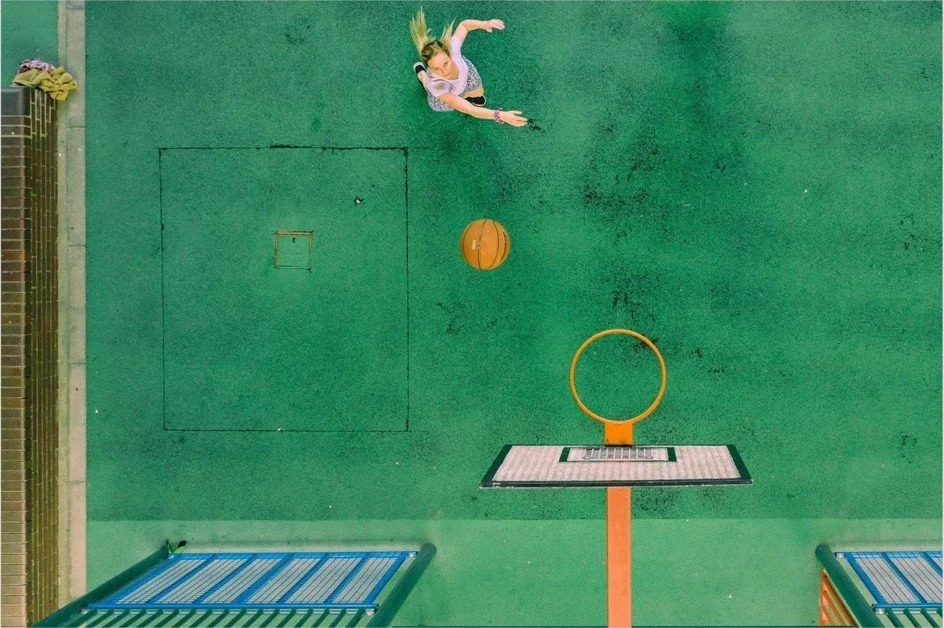
Tatiana Hopper: This one is very formal: shapes, lines, forms, very warm colours. It doesn't carry a deep theme, but I really like the symmetry, and I swear I don't have OCD. It's a kind of bird's-eye view, so you need an eye for this. I like the contrast between the squares and the round shapes of the ball and the hoop. And her movement follows the flow. That was a really good capture.
Martin Kaninsky: When I first saw it, I wondered if it was straightened in Lightroom, because it's very hard to get every line perfectly straight with any lens. It gave me the vibe of an advertisement on a billboard, a sports campaign.
Seeing and being seen
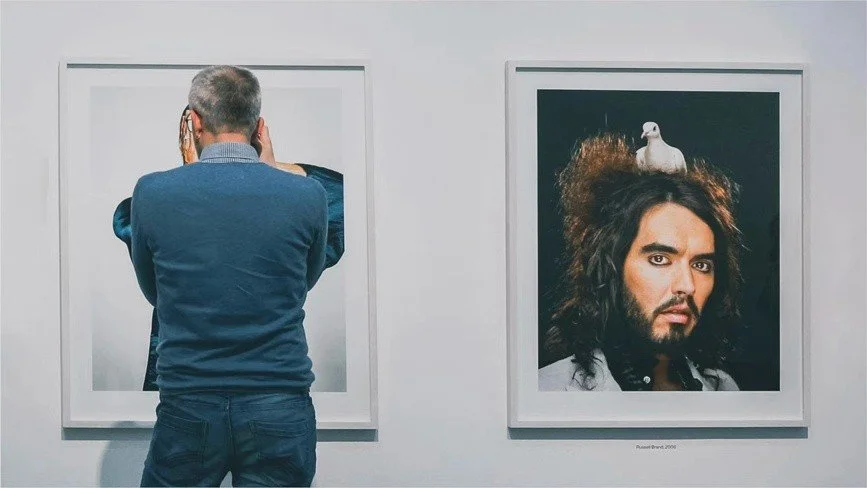
Tatiana Hopper: I have to be honest: to me this is a quite normal photo. But I like the idea that the man blends with what's in front of him, because his sweater is the same colour. He seems to be observing, or taking a photo. I'm assuming it's an exhibition. So you have the picture, someone seeing the picture, and someone seeing them seeing it. It's a loop. Vermeer has this idea of seeing and being seen in his paintings, and that's what this photo gives me.
Martin Kaninsky: I think the photographer wanted to trick us into asking whose hand is whose. If we had gone a little to the right and a little closer, he would blend more with the picture. The photographer was onto something, but missed by a few inches.
Tatiana Hopper: For me it's less about humour and more about the oddity of seeing and being seen. I think it would benefit from more of its surroundings: more of the exhibition, more people, and then this one man blending in. That's the oddity you want. In street photography, you have so much happening, and then one particular element that is the punctum, the odd thing about it.
Tone and atmosphere
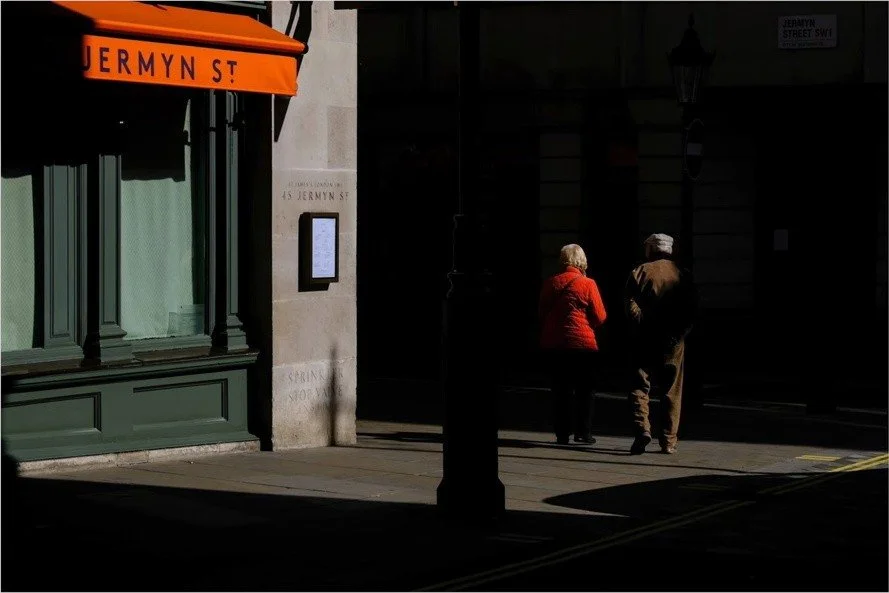
Tatiana Hopper: I wish I could walk down a street and see this all the time. The banner matches her jacket, and the tonality is beautiful, the contrast between darkness and light. It's visually balanced: two people, a street lamp, the building, a line. There's a sense of melancholy and loneliness, and a harmony about it.
Martin Kaninsky: I love the tonality too. The splash of yellow lines on the right is maybe a little distracting. Would it be better if they were facing us?
Tatiana Hopper: I disagree. That they're not looking at us is even better. It's about loneliness, a kind of alienation, an Edward Hopper kind of thing. I could see this as a painting. It reminds me of the painter Jack Vettriano. The yellow lines don't bother me, because I look straight at the subject: these two people.
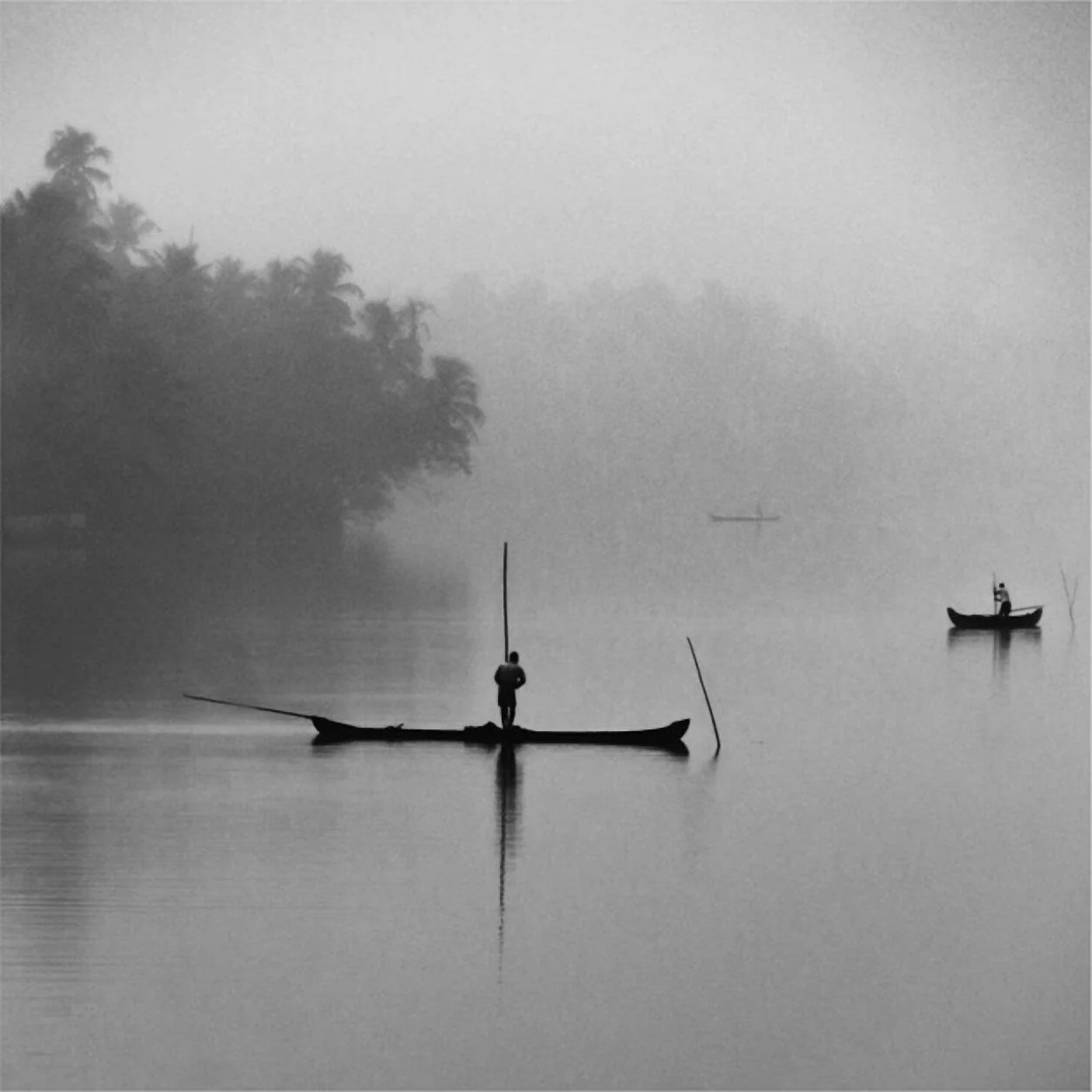
Tatiana Hopper: Black and white brings something very different to the table. It evokes a different time, it's more lyrical and poetic. This has some Fan Ho vibes. There's a foggy ambience, a reflection, a beautiful deep black on the main subject, and depth: a first boat, a second, maybe a third in the back.
The water is so calm and clear. There's no separation between the water, the fog and the sky, so it feels like you're floating. It's concrete and abstract at the same time. Because I'm such a big fan of black and white, I think this is one of the most perfect uses of black I've come across recently.
Martin Kaninsky: The square format makes me wonder if it's film, six by six. I also wonder whether the second boat was dodged in the edit, because a stick next to it is in the fog, but the boat isn't.
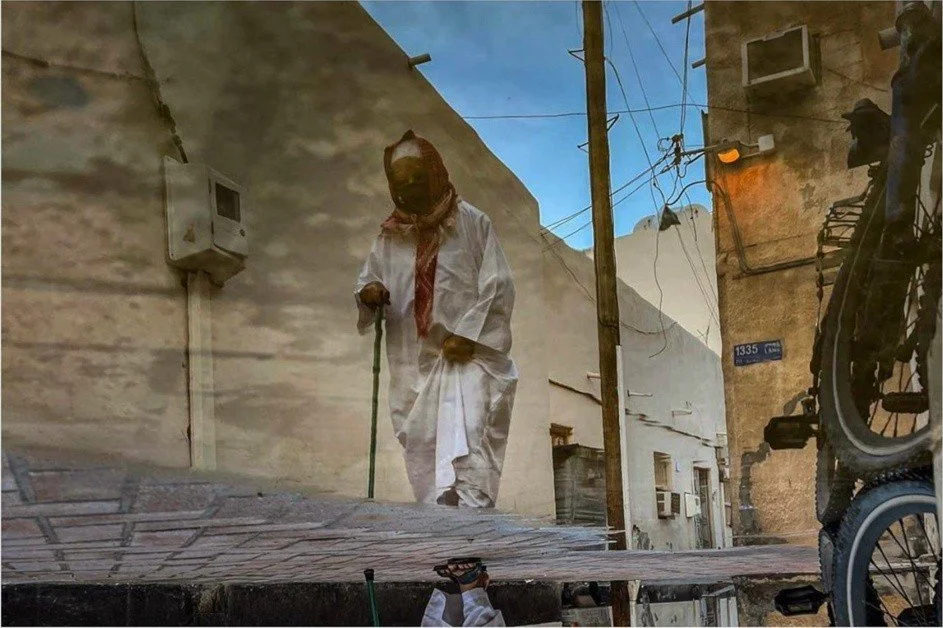
Tatiana Hopper: Oh my God, that is beautiful. I would have expected this photo to be the other way round. It's visually stunning, with a great eye for composition and detail, and it's such a moment. The line where the water meets the ground continues into the line of the building, so there's a flow through the whole photo.
The reflection has warmer tones and the ground is colder. For me it's like a dream in the reflection, and reality on the ground. It shows how important photography is: it holds on to a moment that is so fleeting.
Martin Kaninsky: The one thing I like less is the bicycle.
Tatiana Hopper: It doesn't bother me. The lines of the bike match the cables of the street lights running around the photo. I like that combination.
Contrast and context
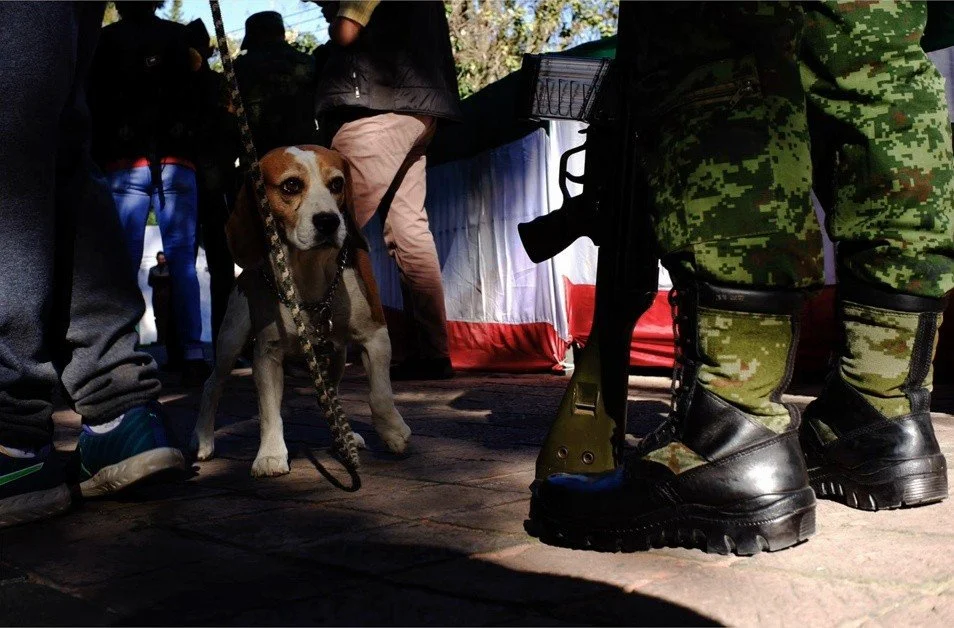
Tatiana Hopper: What strikes me straight away is the boots, the military, regimented feeling, and then the dog, which seems taken aback. The subject is the clash between something so cute and pure, a dog, man's best friend, and a gun. I'd love the colour to pop more, and I'd like to know the context.
Tatiana Hopper: Technically it's quite dark, maybe to isolate the subject. I like how the gun is perfectly visible against the white background.
Martin Kaninsky: The background is a little busy, and the blue is distracting. But I think the leash is actually quite ironic.
Tatiana Hopper: Yes, the leash. In the military you obey a lot of rules, and the dog is on a leash, kept close and controlled. There's a big contrast between them, but also something very similar. Maybe it's far-fetched, but I like it.
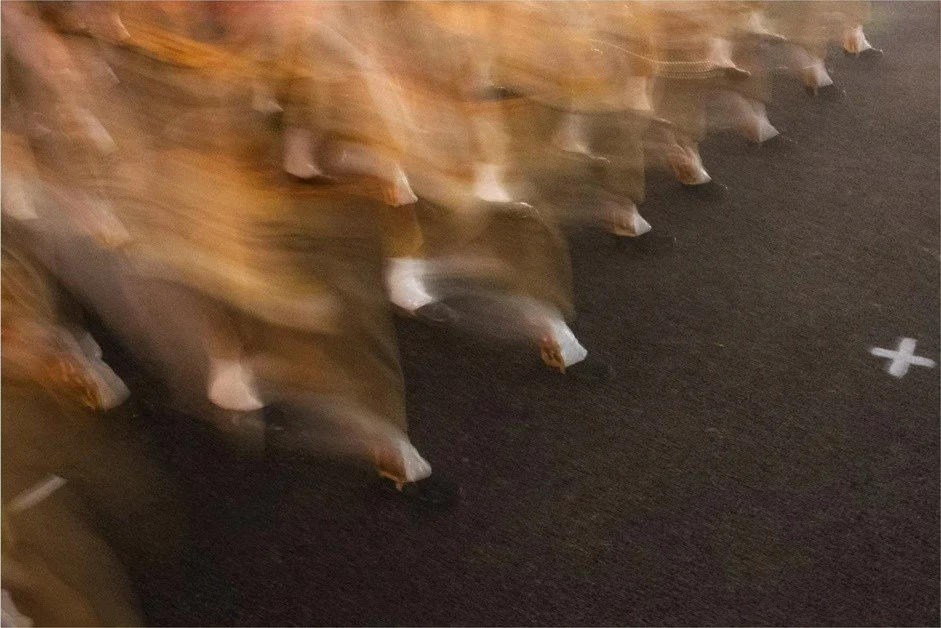
Tatiana Hopper: At first, in the thumbnail, I thought it was a bunch of boats at sea, because of the movement. Then I zoomed in and saw they were boots: a parade. It's very painting-like, with the motion, the blur and the colours. There are lots of people coming towards a place, and then a cross on the ground, which we associate with stopping. I like the diagonal from left to right. Maybe I wish the cross were a bit more inside the frame. But it's a very creative way to photograph a parade.
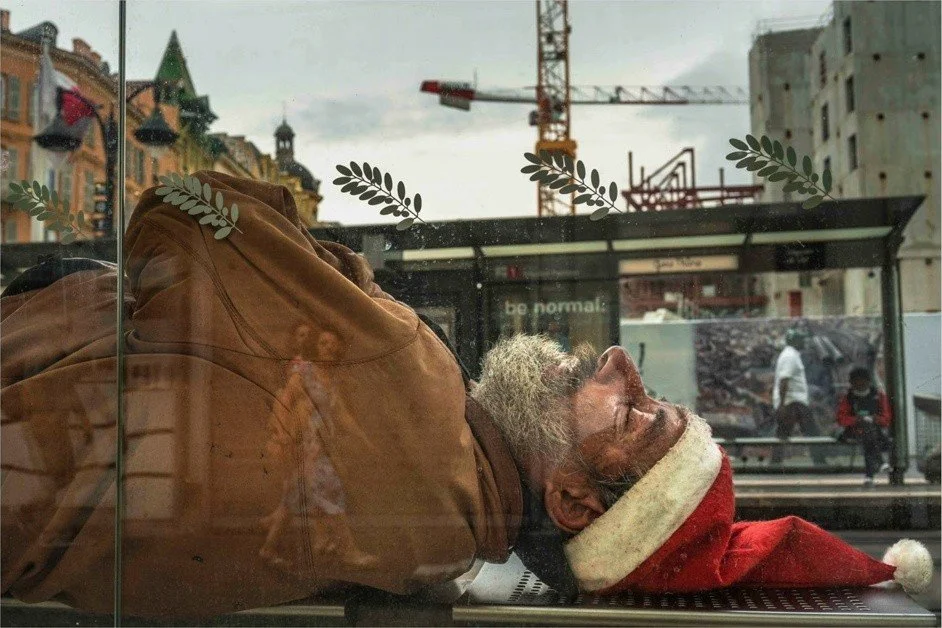
Tatiana Hopper: Another reflection. People are really tied to reflections in this episode. The women wear summer clothes, and this man wears a Santa hat. He's just there sleeping, and they look at him a little surprised.
Martin Kaninsky: That oddity is what you look for in street photography. Everything around him is noisy and full of life, and he's asleep. I only wish the perspective were a bit straighter.
Silhouettes, reflections and shapes
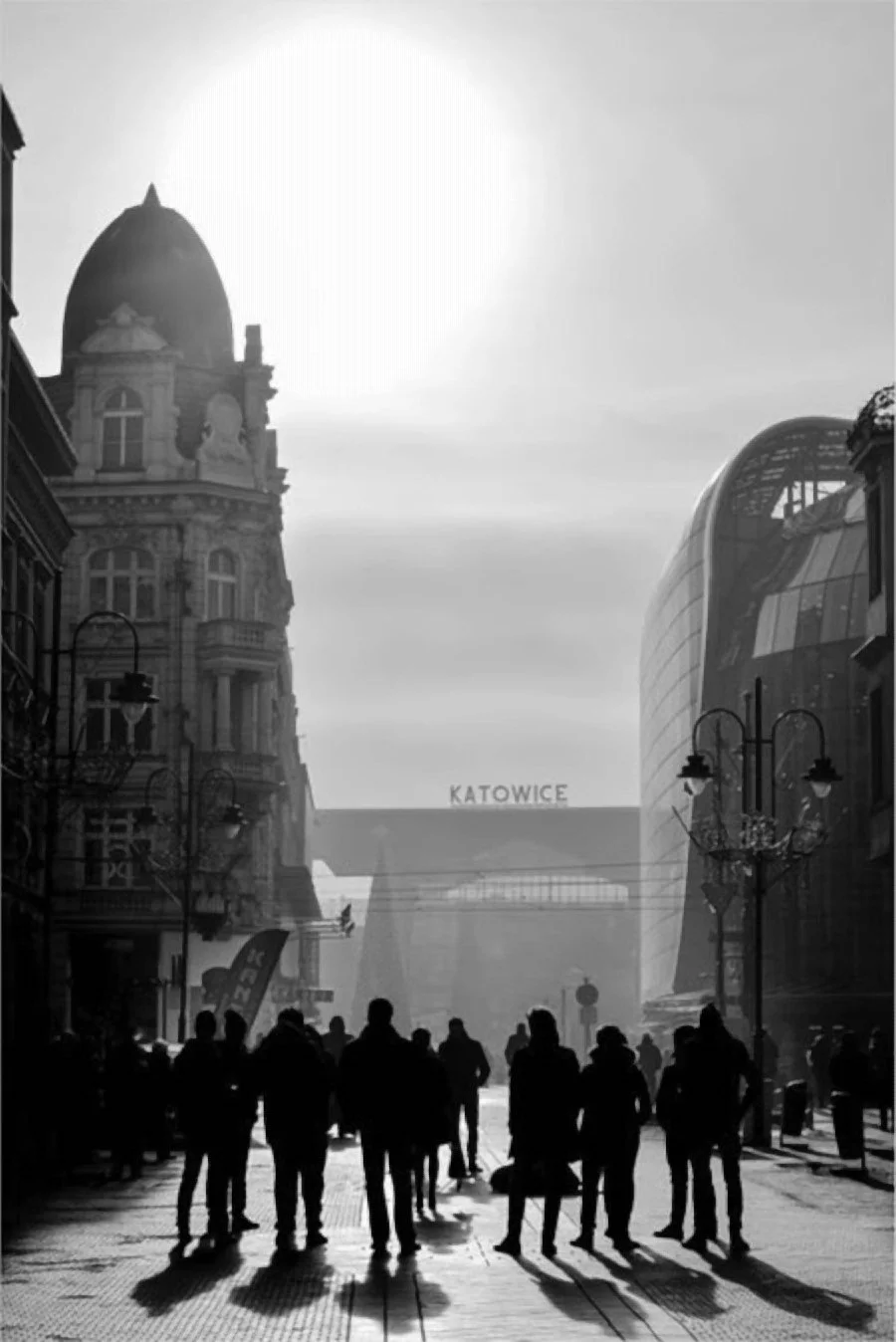
Tatiana Hopper: One of my favourite things in photos is silhouettes, people you don't really see, and the contrast between darkness and light. It's a straightforward composition. The buildings give depth, and the frame narrows your vision towards the people.
Martin Kaninsky: The shape of the figures is clear. I would maybe crop a little.
Tatiana Hopper: But you'd either cut the silhouettes at the bottom or the sun at the top. It would work better with a different aspect ratio, with less air on top, so the people are more centred and you see their shadows blending with the ground. That doesn't take away from the beautiful moment.
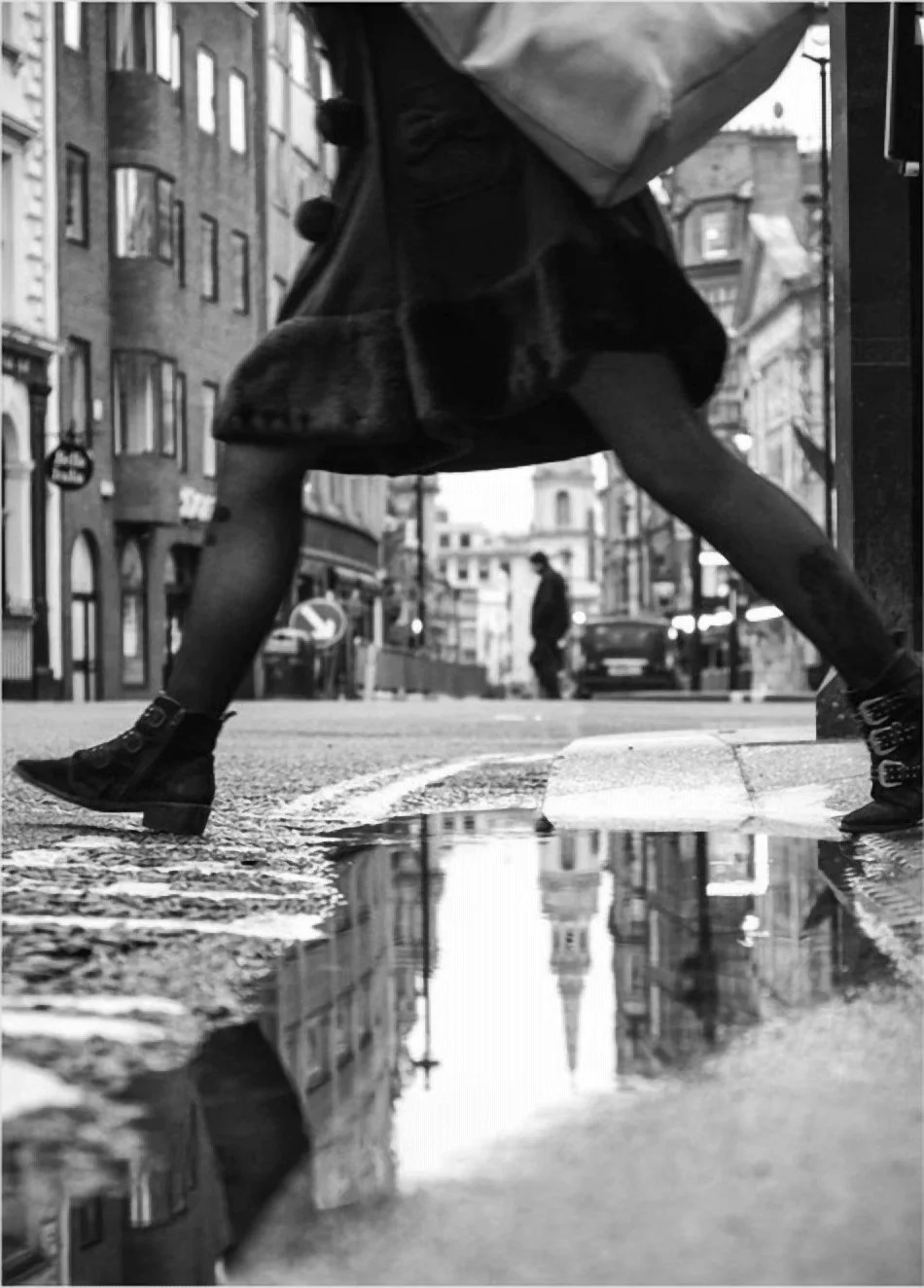
Tatiana Hopper: This reminds me straight away of Lisette Model. I love the composition. I like the idea of an upside-down world: her, and then a man walking underneath her legs in the reflection. The black and white takes you towards abstraction. In colour it wouldn't have the same power. The water flows from the left corner, she walks, he's in the background, and the tower in the reflection isn't cut off.
The only thing I'd wish is that the man had a posture echoing her shape. But you can't do anything about that, unless you stage it. And he's looking down, carrying something. Maybe that loneliness is part of it.
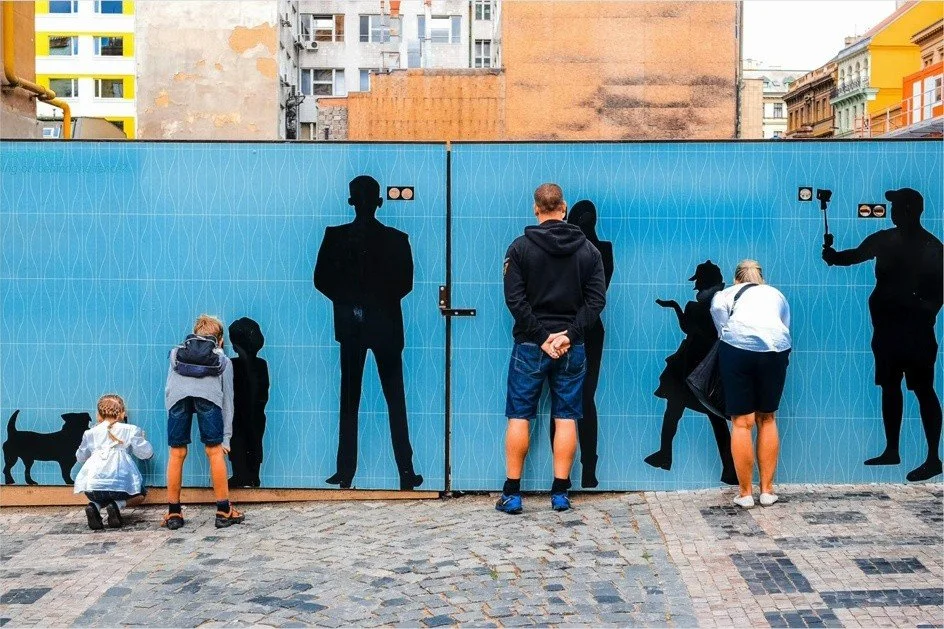
Tatiana Hopper: This is what I was talking about before. With more of the surroundings, the oddity works. They play with the shapes of the painted silhouettes, and there's more air to breathe. It's seeing and being seen again. The black shapes balance the weight of the real people. With the blue and yellow, it's a very happy, bright photo.
Martin Kaninsky: With a scene like this, you wait until the subjects line up, so it depends on who comes. But a lot of people take this kind of photo, because there aren't many ways to use painted silhouettes.
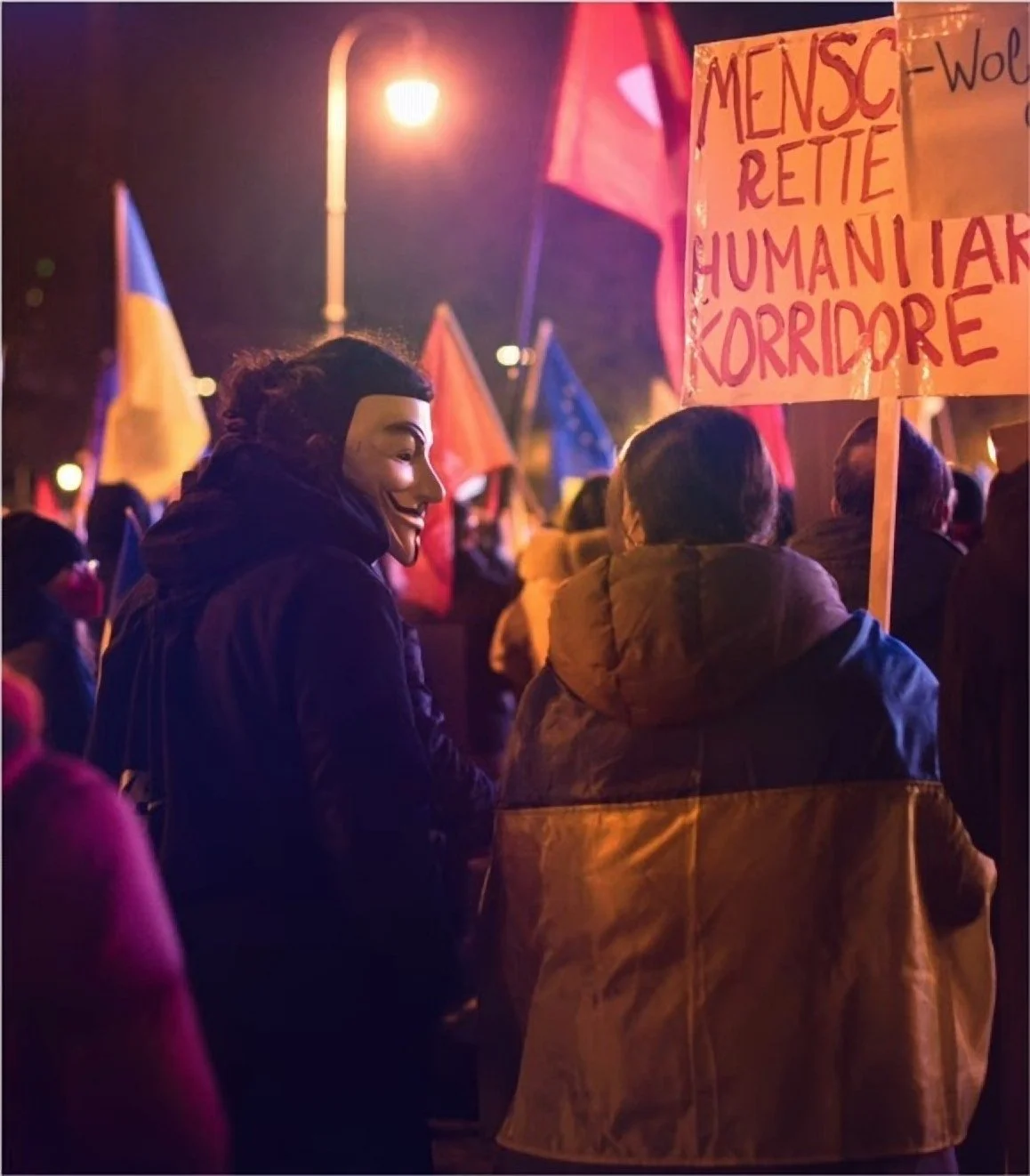
Martin Kaninsky: I really like this photo. The light at the top is a little bright in my eyes, but that's a small thing. I like the mask and the surroundings, and the subject is related to what is happening in Ukraine. I wish it had deeper shadows, so it would feel a bit cleaner.
Her own photo: Blackpool on expired film
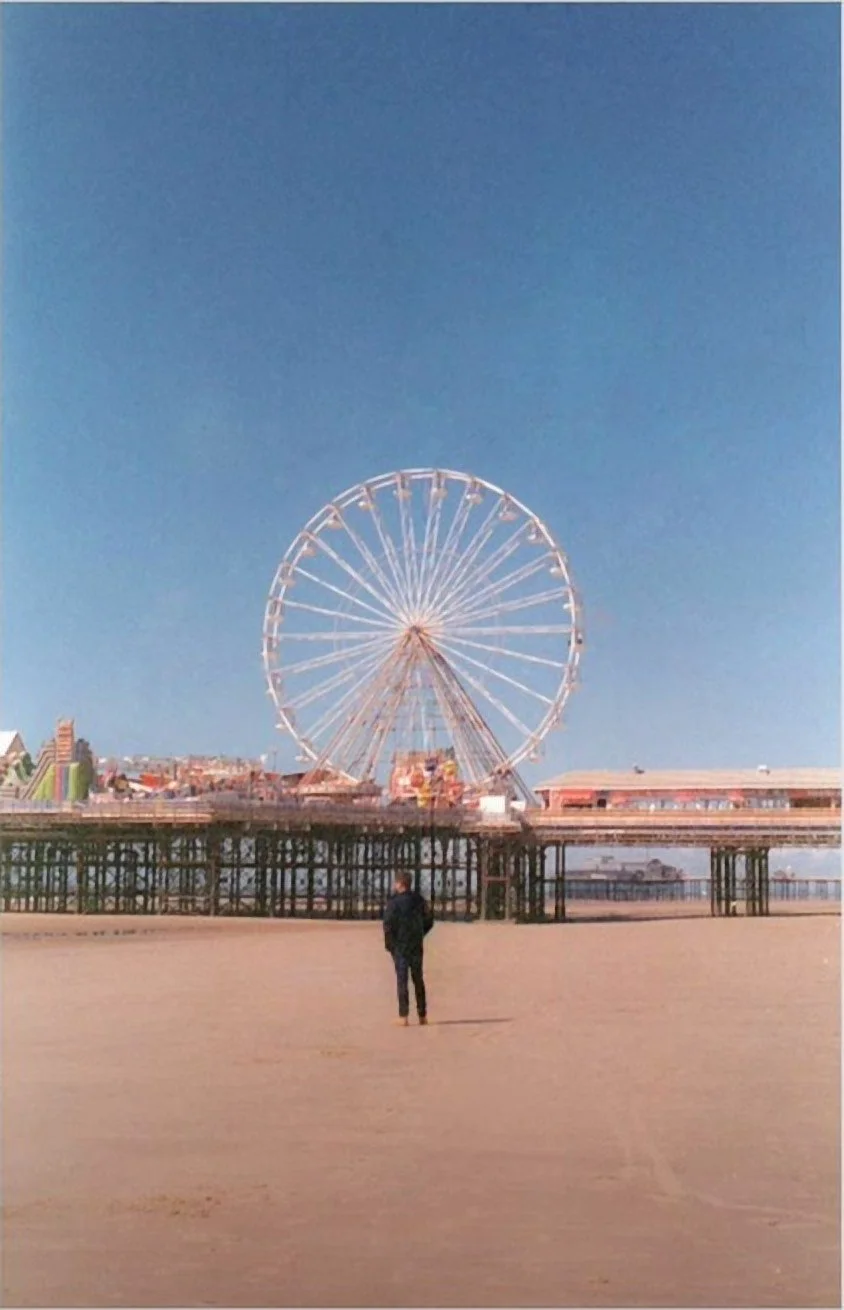
Tatiana Hopper: I don't recognize this photo at all, it's a good surprise. That's my cousin Michael. When I first developed and scanned it, I wished I had placed him differently, because he's a bit too dark against the background and gets lost. It was quite casual. He was standing like that, I said, don't move, and I took it.
It was taken in Blackpool, a seaside town known for its piers, with all the rides along them. It has a dreamy quality, with the Ferris wheel. I thought he could have been under the pier a bit more, or closer, so he'd separate from the beach. But then I thought that him blending into the environment gives it this old feel, and in the end I like it.
That old feel also comes from the film. It was twenty-five-year-old expired film, and a lot of the photos didn't work out. If I remember correctly, it was an Ilford colour film, which is very rare, because Ilford is known for black and white.
Tatiana Hopper looked at a photo of a man standing close to a portrait, at what looks like an exhibition, his clothes almost the same colour as the picture in front of him. The frame was tight, and the moment felt ordinary. She wished it showed more of the room, more people, more of the exhibition. An odd detail needs ordinary things around it, or there is nothing for it to stand out from.
“In street photography, you have so much happening, and then one particular element that is the punctum, the odd thing about it.”Tatiana Hopper