AT A GLANCE
- Known for
- Raising the Flag on Iwo Jima (1945), made for the Associated Press
- Works in
- Black and white news photography; war in the Pacific, then 35 years of San Francisco news
- Camera
- Speed Graphic press camera with 4x5 sheet film
- Also
- Covered Hollandia, Guam, Peleliu, Angaur and Iwo Jima for AP; named an honorary Marine in 1996
- Awards
- Pulitzer Prize for Photography (1945) · Navy Distinguished Public Service Award (after his death, 2006)
- Start with
- Uncommon Valor, Common Virtue (Berkley, 2006)
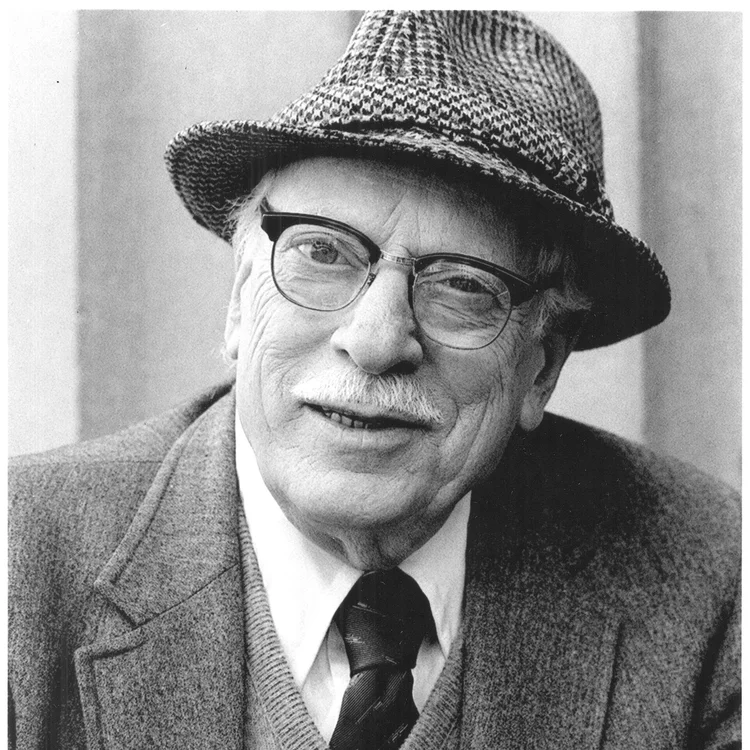
Joe Rosenthal was an American news photographer. On 23 February 1945, working for the Associated Press, he photographed six men raising the American flag on Mount Suribachi, on the island of Iwo Jima. The picture won the Pulitzer Prize. After the war he spent 35 years as a photographer for the San Francisco Chronicle.
The story
When the United States entered World War II, Joe Rosenthal wanted to be a military photographer. The Army turned him down. So did the Navy. His eyesight was too poor. Instead, the Associated Press sent him to the Pacific to photograph the war.
He had learned the trade in San Francisco. During the Depression he moved there from Washington, D.C., and lived with a brother while he looked for work. In 1930 he found a job with the Newspaper Enterprise Association. Two years later he joined the San Francisco News as a reporter and photographer.
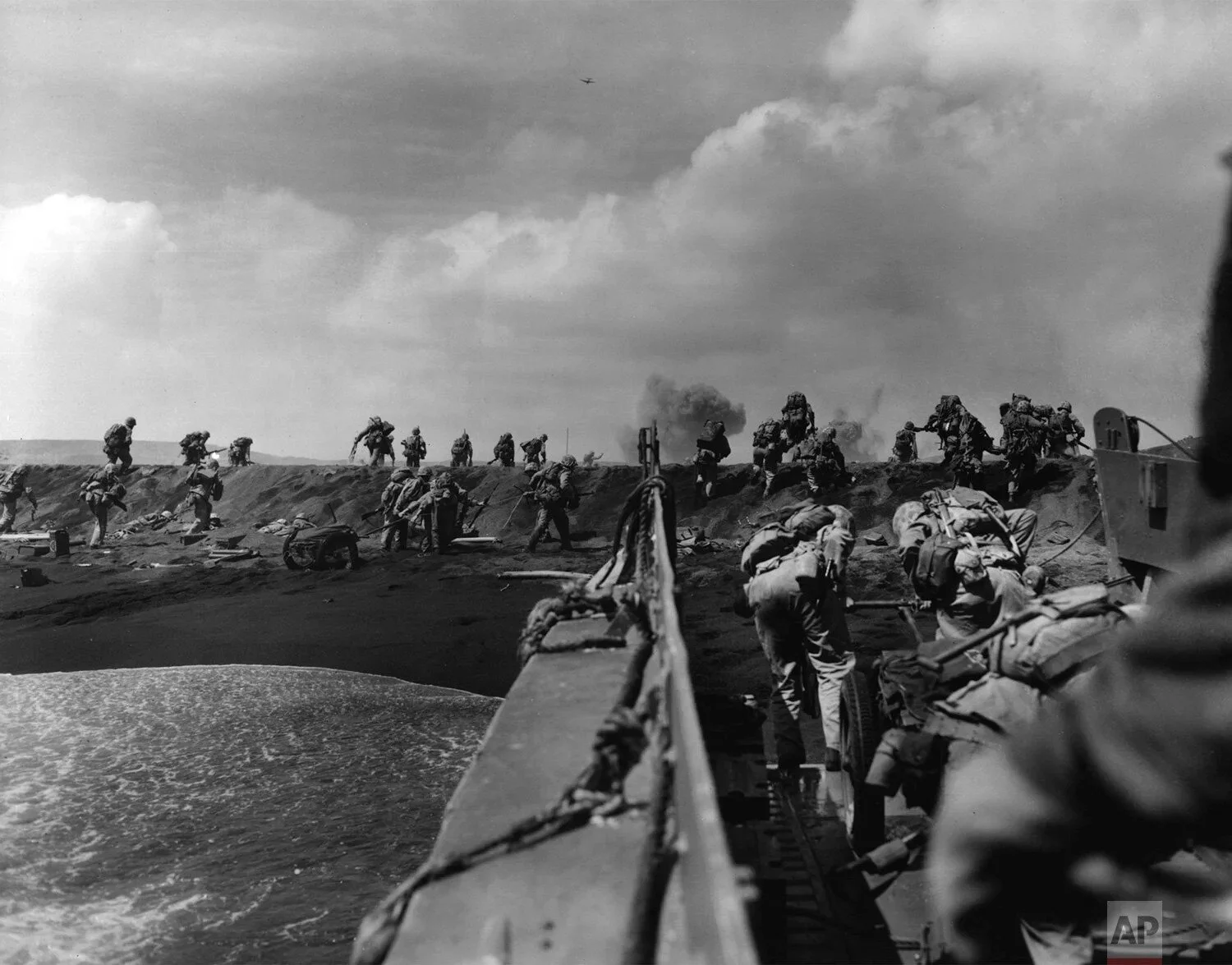
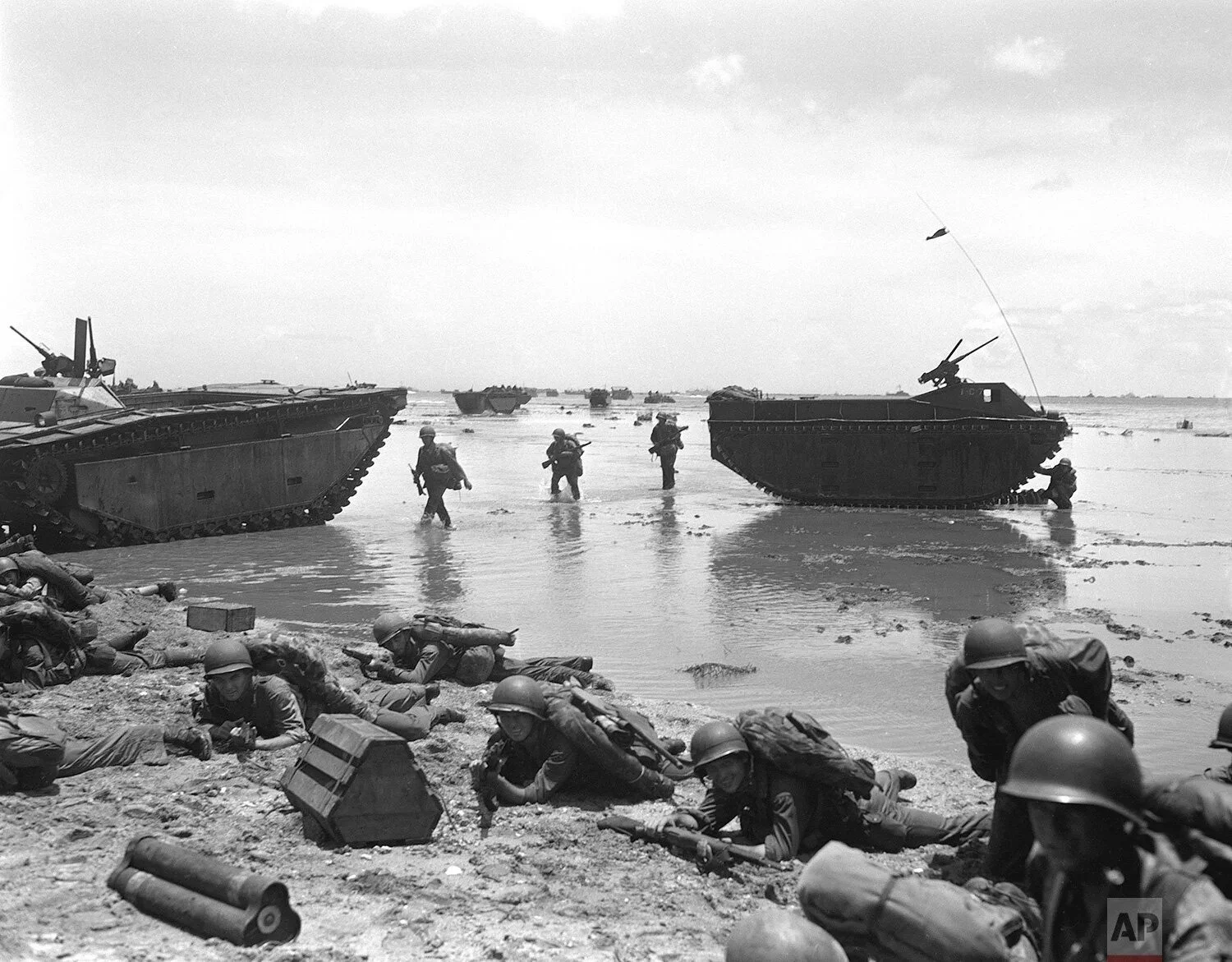
For AP he covered the landings at Hollandia, Guam, Peleliu and Angaur. On 19 February 1945 he waded ashore on Iwo Jima with the Marines, holding his camera above his head. Two Marines were killed next to him on the beach. “It was like walking through the rain and not getting wet,” he said later.
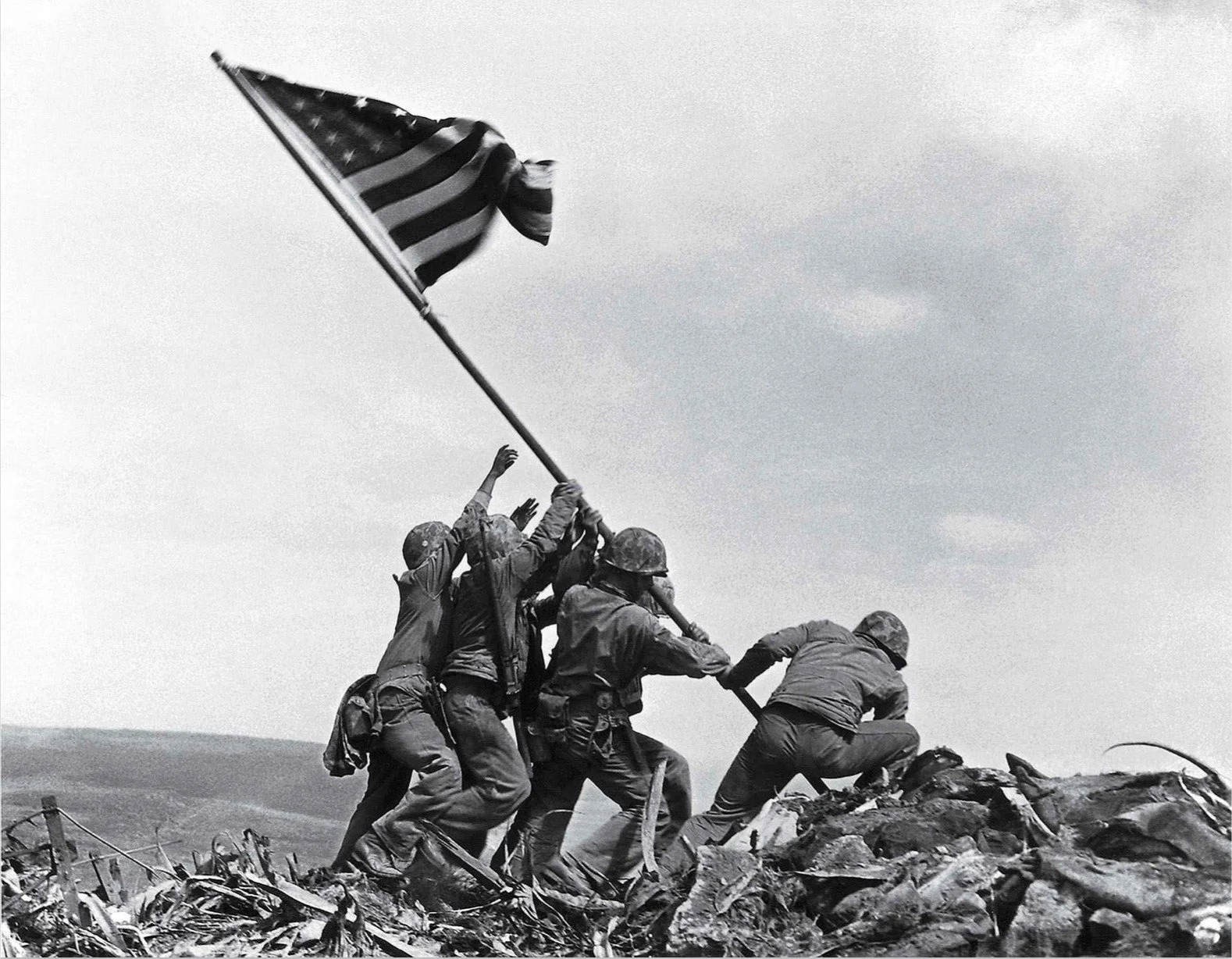
Four days later he climbed Mount Suribachi with his Speed Graphic. On the way, a Marine photographer told him the flag was already up. He went on anyway. At the top, men were getting ready to raise a second, larger flag. Rosenthal was only 5 feet 5 inches tall, so he piled up some stones and a sandbag and stood on them. Out of the corner of his eye he saw the flag start up. He swung his camera and pressed the shutter.
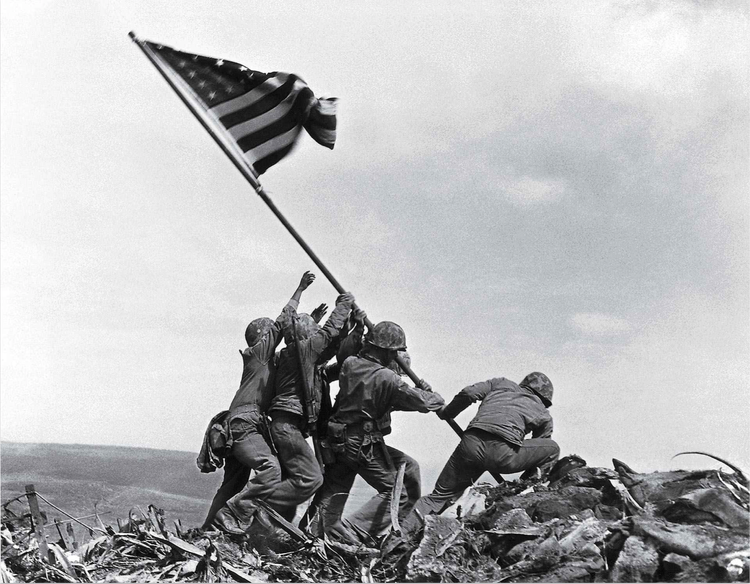
He did not know what he had. “When you take a picture like that, you don’t come away saying you got a great shot. You don’t know,” he wrote ten years later. The film went to Guam by plane. AP sent the picture to its member newspapers about 17 hours later, and it was on front pages across the country. It won the Pulitzer Prize in 1945. The full story of that day is in our article Raising the Flag on Iwo Jima.
Back home, he was famous almost overnight. “I, who had never been asked for an autograph in my life, was now being asked to sign dozens of these pictures,” he remembered. His daughter Anne says he printed thousands of copies over the next six decades and mailed one to each person who asked for it.
After the war he joined the San Francisco Chronicle. He stayed for 35 years, until he retired in 1981, and photographed the life of the city: famous people and ordinary days. But the flag picture went with him all his life, and he always gave the credit away. “To me it is not alone a snapshot of five Marines and a naval medical corpsman raising the flag,” he said. “It is the kids who took that island and got that flag there.”
The work
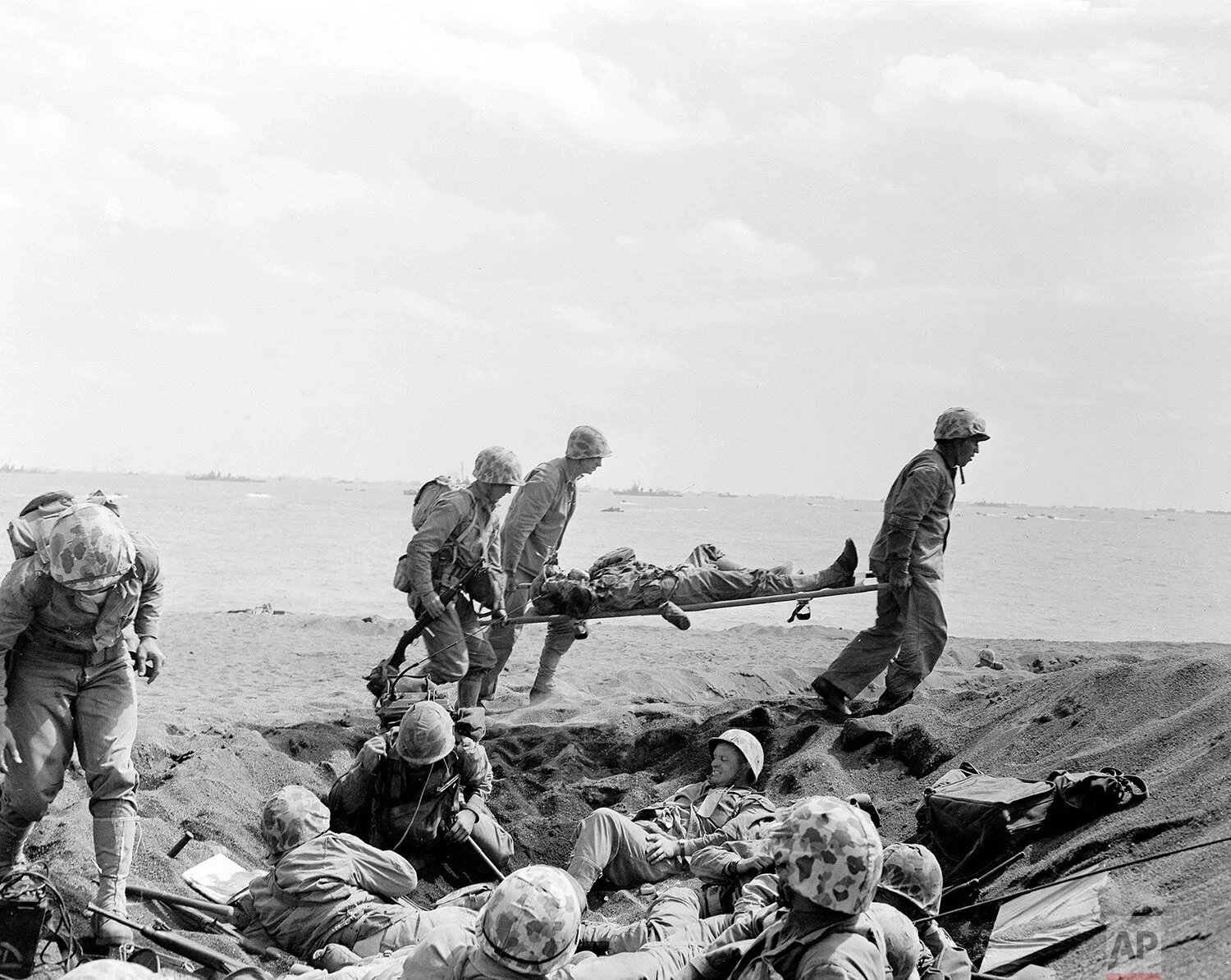
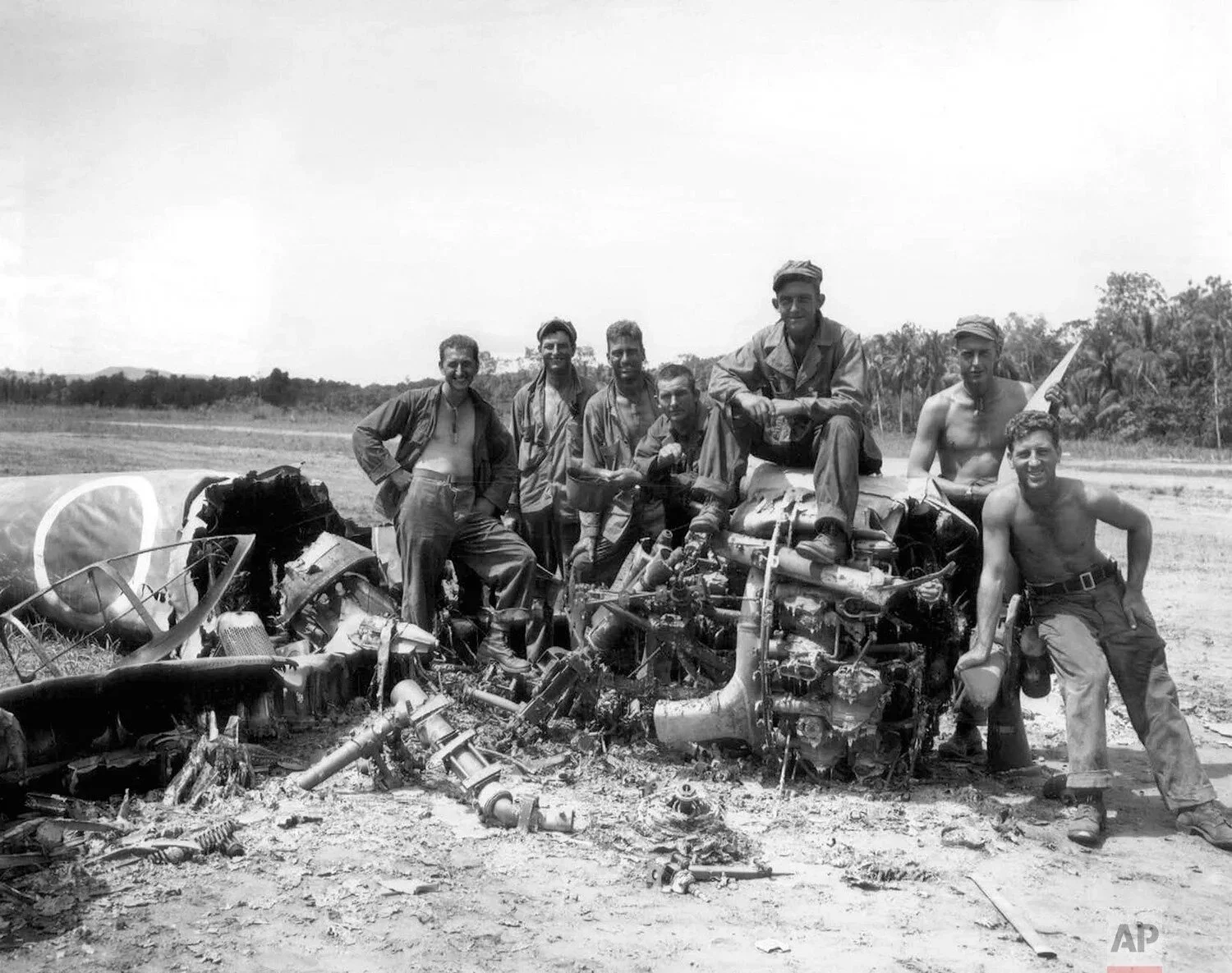
Rosenthal was a news photographer for more than 50 years, most of them in San Francisco. In the Pacific he worked for AP in the wartime still picture pool. His war pictures show landings, the wounded and the men around him, not only the famous flag.
He worked with a Speed Graphic and 4x5 sheet film, one picture at a time. After a day on the island he went back to the command ship and wrote captions for his film himself. The negative of the flag raising is kept in the AP Photo Library in New York.
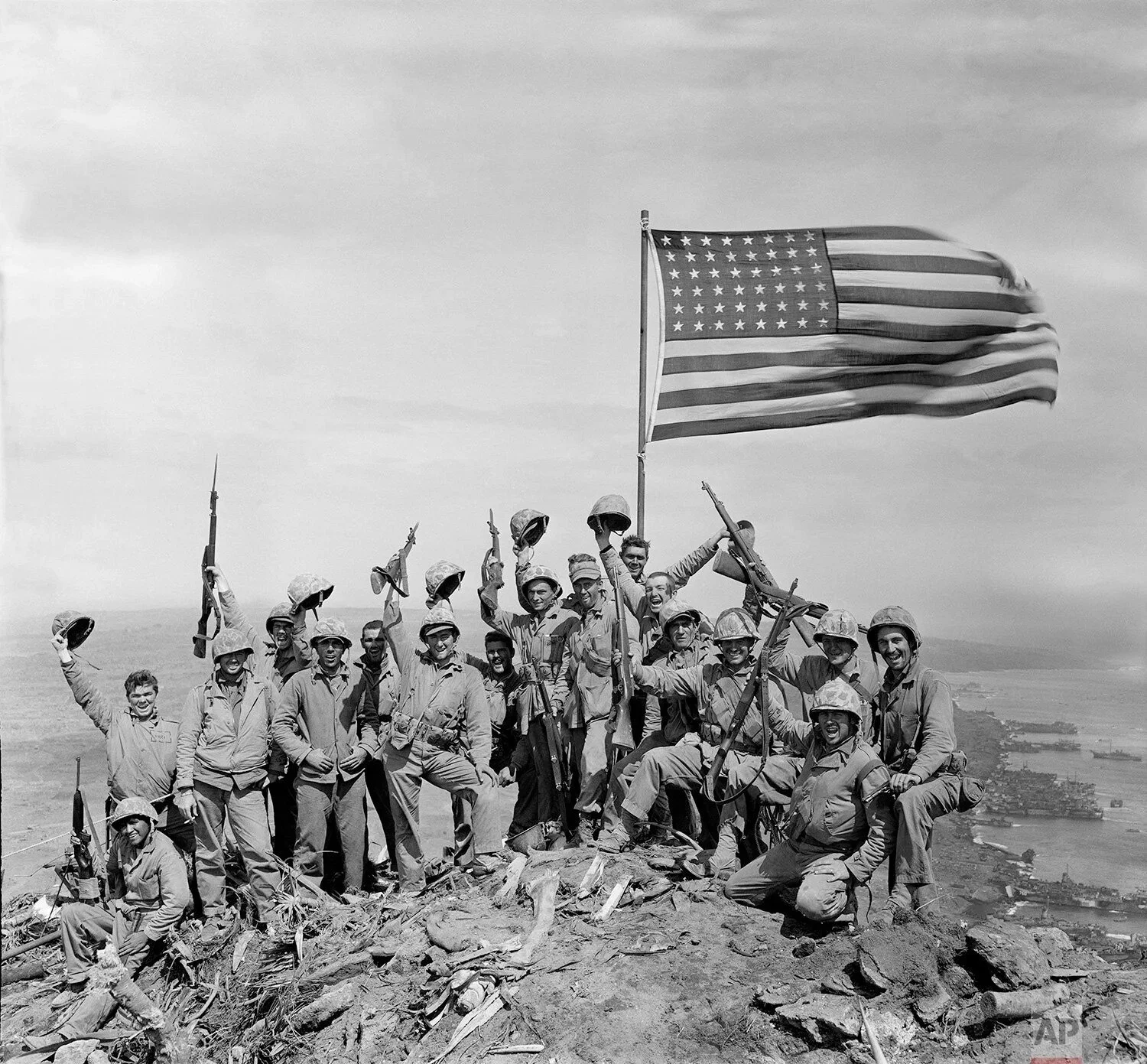
On Suribachi, after the flag went up, he also asked the Marines to gather under it and cheer. He called it the “gung ho” picture. Days later on Guam someone asked if he had posed his picture. Thinking of the group shot, he said “Sure.” For years after, he had to explain that the flag raising itself was not posed.
- 1911Born on 9 October in Washington, D.C.
- 1930Starts work for the Newspaper Enterprise Association in San Francisco
- 1932Joins the San Francisco News as a reporter and photographer
- 1944Covers the war in the Pacific for the Associated Press
- 1945Photographs the flag raising on Mount Suribachi, Iwo Jima, on 23 February
- 1945Wins the Pulitzer Prize for Photography
- 1981Retires from the San Francisco Chronicle after 35 years
- 1996Named an honorary Marine
- 2006Dies in Novato, California, on 20 August
Lessons
Go up anyway. A Marine photographer told Rosenthal the flag on Suribachi was already up. He kept climbing and arrived just as a second, larger flag was raised.
Make your own viewpoint. At 5 feet 5 inches he could not see over the slope, so he built a small pile of stones and a sandbag and stood on it.
Write down what you saw. After each day on Iwo Jima he wrote captions for his film on the command ship, so the editors knew what the pictures showed.
Try this: after your next event or walk, write a one-line caption for each of your best frames on the same day: who, what, where and when. Rosenthal did this every night on Iwo Jima.
Gear
Speed Graphic: the bulky press camera he carried up Mount Suribachi. He made the flag picture on 4x5 film at 1/400 of a second, with the lens set between f/8 and f/11.
Books
Uncommon Valor, Common Virtue (Berkley, 2006). Edited by Hal Buell. The book tells the story of the battle of Iwo Jima and of Rosenthal’s photograph of the flag raising. It follows his ten days on the island and has more than 120 archival photographs from the battle. A good first book for anyone who wants the whole story of the picture.
Flags of Our Fathers (Bantam, 2000). By James Bradley with Ron Powers. Bradley follows the men known as the six flag raisers, from their childhoods to the battle and the years after it. The book was a long bestseller and became a film by Clint Eastwood in 2006. Later research by the Marine Corps showed that Bradley’s father was not in the photograph, so read it together with the corrections of 2016 and 2019.
Shadow of Suribachi: Raising the Flags on Iwo Jima (Praeger, 1995). By historians Parker Bishop Albee Jr. and Keller Cushing Freeman, published for the 50th anniversary of the flag raisings. It gives a detailed account of both flags on Suribachi and the fighting around them. For readers who want the history in depth.
In his words
“What difference does it make who took the picture? I took it, but the Marines took Iwo Jima.”
“It was like walking through the rain and not getting wet.”
“When you take a picture like that, you don’t come away saying you got a great shot. You don’t know.”
“To me it is not alone a snapshot of five Marines and a naval medical corpsman raising the flag. It is the kids who took that island and got that flag there.”






The famous flag on Iwo Jima was the second one. On 23 February 1945, four days after US Marines landed on the Japanese island, a patrol raised a small American flag on top of Mount Suribachi.