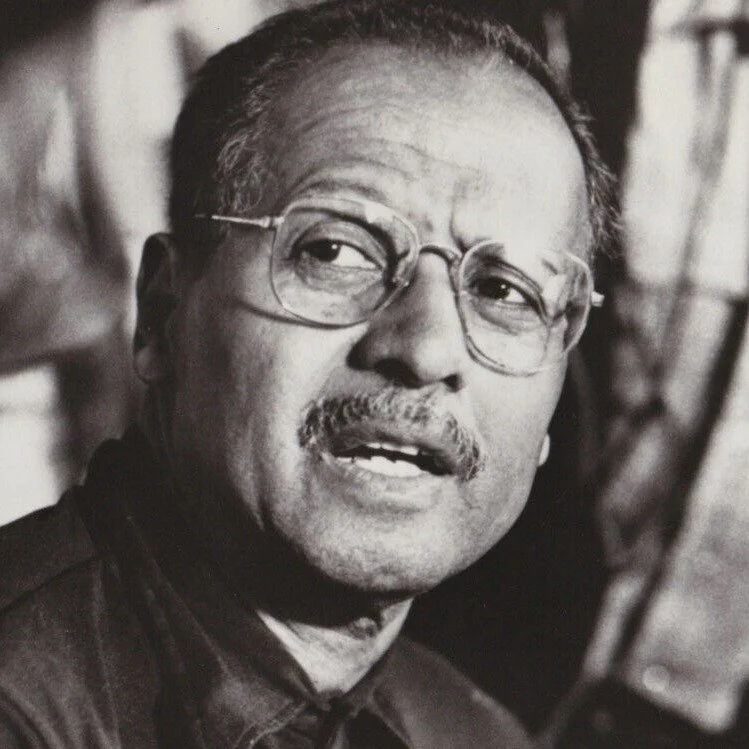
AT A GLANCE
- Known for
- Black and white pictures of everyday life in Harlem, portraits of jazz musicians, and the book The Sweet Flypaper of Life (1955), made with the poet Langston Hughes
- Works in
- Black and white silver gelatin prints that he made himself, with deep gray tones and a handheld 35mm camera
- Camera
- Handheld 35mm camera
- Taught
- Hunter College, City University of New York, from 1975
- Agency
- David Zwirner represents the Estate of Roy DeCarava
- Awards
- Guggenheim Fellowship (1952) · Master of Photography, International Center of Photography (1998) · National Medal of Arts (2006)
- Start with
- The Sweet Flypaper of Life (First Print Press, 2018)
- Links
Roy DeCarava (1919 to 2009) was an American photographer. He was born in Harlem, New York, and he photographed his city for about six decades. He is best known for his quiet black and white pictures of Harlem life and of jazz musicians. In 1952 he became the first African American photographer to win a Guggenheim Fellowship. In 1955 his book The Sweet Flypaper of Life, made with the poet Langston Hughes, made him known to many readers.
The story
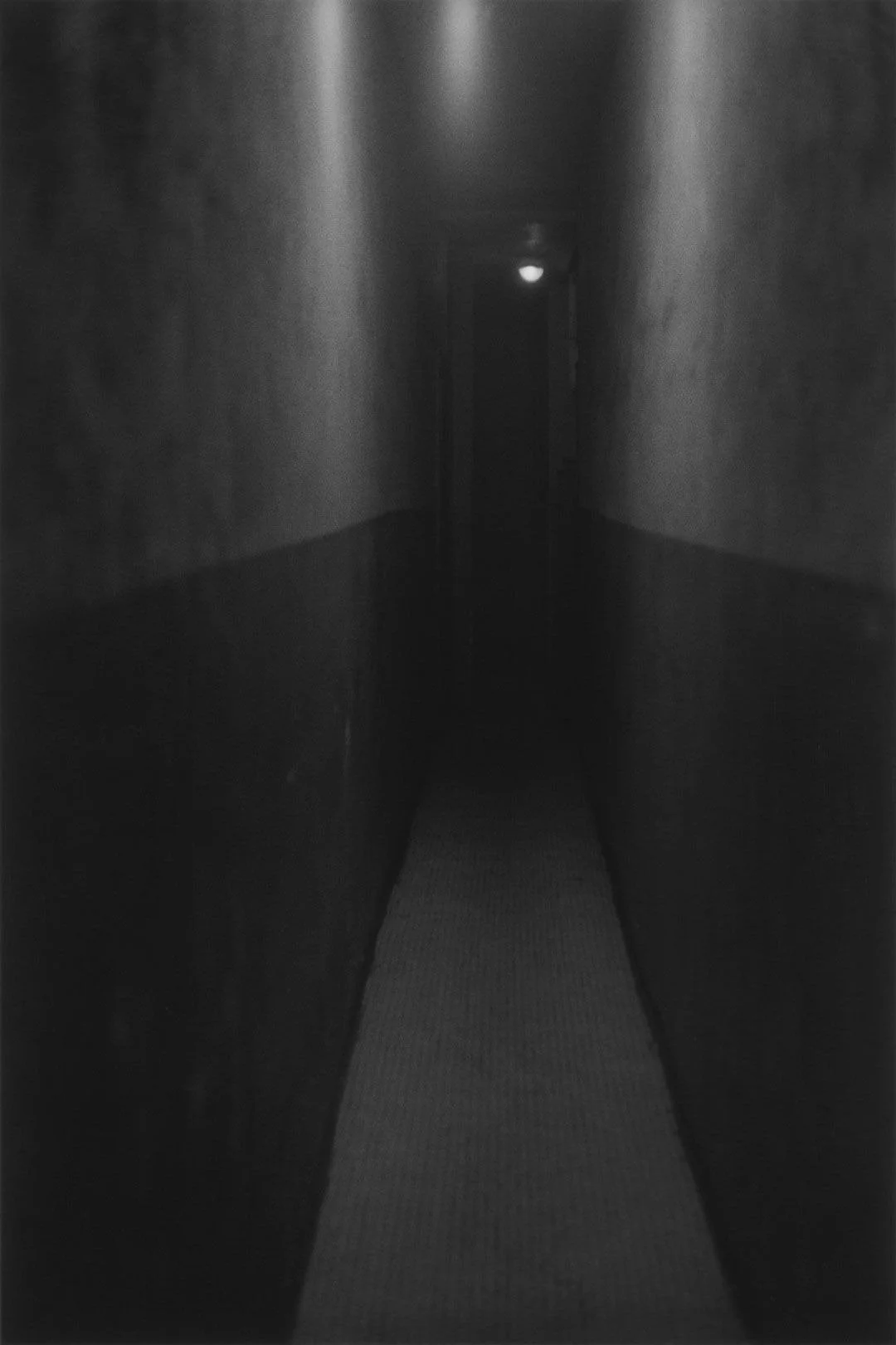
One day DeCarava saw a hallway that he could not forget. As he told it, “I went home on the subway and got my camera and tripod, which I rarely use.” The picture is dated 1953.
Why take so much trouble? He said the light in that hallway was special. “The ambience, the light in this hallway was so personal, so individual that any other kind of light would not have worked.” The place also took him back to childhood. “It’s about a hallway that I know I must have experienced as a child. Not just one hallway; it was all the hallways that I grew up in.”
DeCarava was born in Harlem on 9 December 1919. He was an only child, and his mother had come to New York from Jamaica. He began as a painter and a maker of silkscreen prints. At first he used a camera only to gather material for that work. In the late 1940s he left printmaking to focus on photography, and his first successful pictures are dated 1949.
But few people had seen pictures like his. In 1950 a painter named Mark Perper offered to show them in his small gallery on West 44th Street in New York. DeCarava crowded 160 prints into the room. A young photographer, Homer Page, told him to cut the show to about thirty prints. Page also introduced him to Edward Steichen, the head of photography at the Museum of Modern Art. Steichen bought three prints for the museum, at 50 dollars each.
Steichen’s support helped DeCarava win a Guggenheim Fellowship in 1952. He was the first African American photographer to receive one. The award let him leave his job for a year. In his proposal he wrote that he wanted to show “Not the famous and the well known, but the unknown and the unnamed.”
In the summer of 1954 DeCarava telephoned Langston Hughes. They knew each other only a little. DeCarava had tried and failed to find a publisher, so he arrived with no big hopes. But Hughes liked the pictures at once. “We have to get these published,” he said. Hughes chose and ordered the photographs, found a publisher in Simon and Schuster, and wrote the text. DeCarava was happy to leave the book in his hands. The Sweet Flypaper of Life appeared in November 1955 with 140 of his photographs.
Years later DeCarava told NPR what he had looked for in Harlem. “I was looking for humanity, I was looking for people. These are people. Before they’re black, they’re people.”
The work
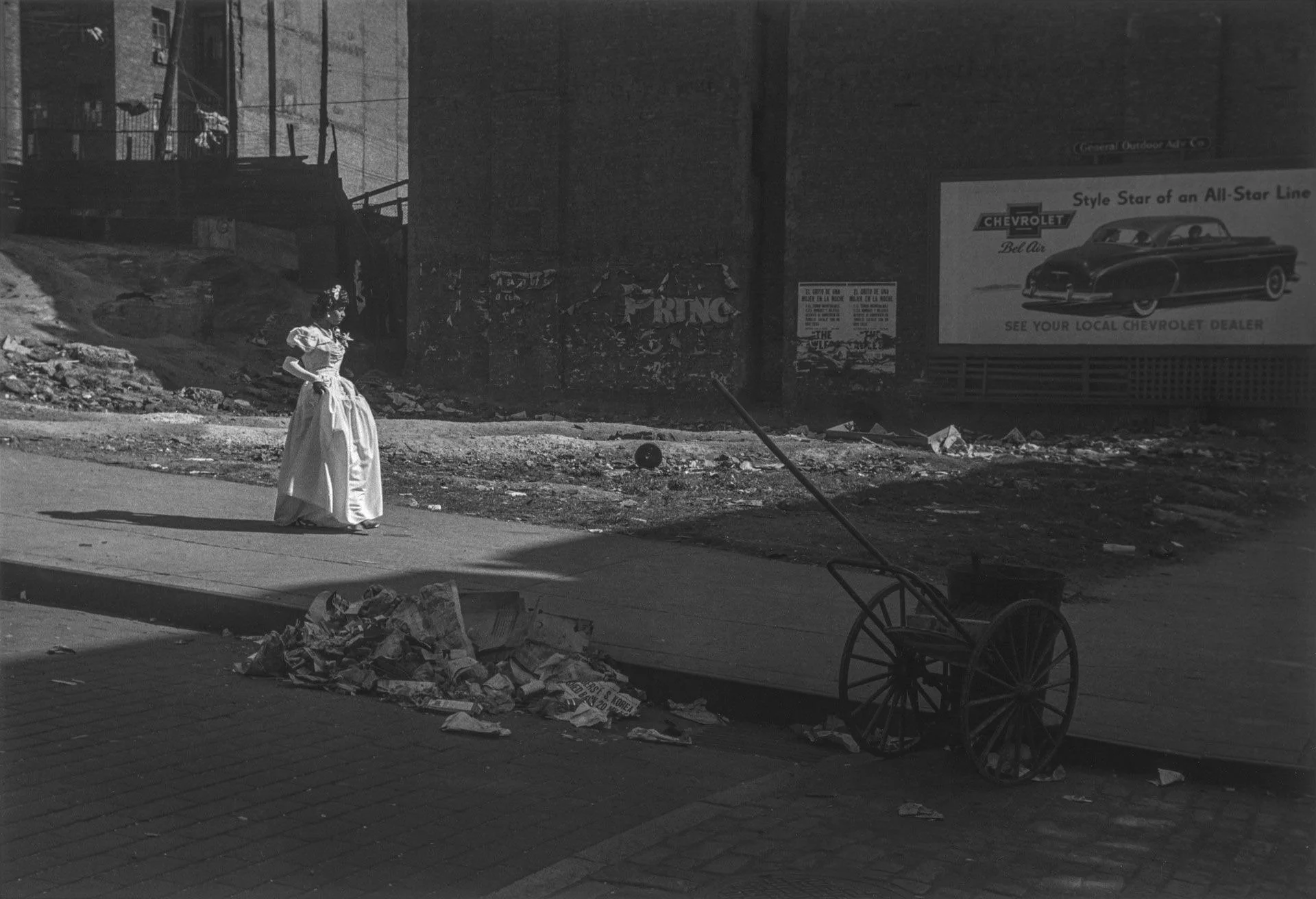
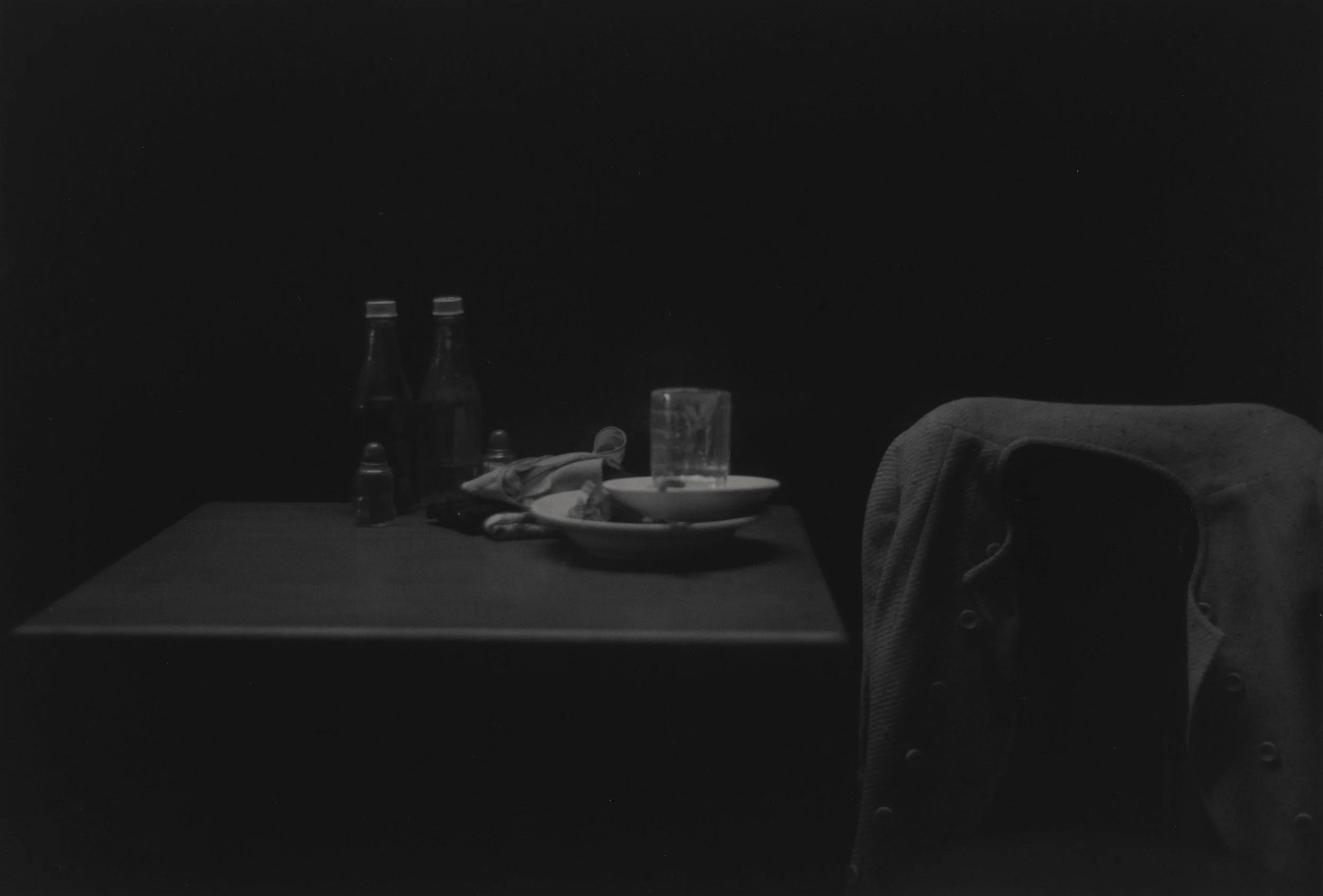
DeCarava worked with a handheld 35mm camera and walked the streets of his city. He made his own prints, and he loved the dark and middle grays. He said that his dark pictures are not about darkness but about light. In Graduation, 1949, a lone figure in a pale dress crosses a street where light and shadow meet. The picture appeared in The Sweet Flypaper of Life. In Catsup bottles, table and coat, 1952, no person is in the frame. The critic Andy Grundberg wrote in 1982 that such pictures “suggest human presence by emphasizing its absence.”
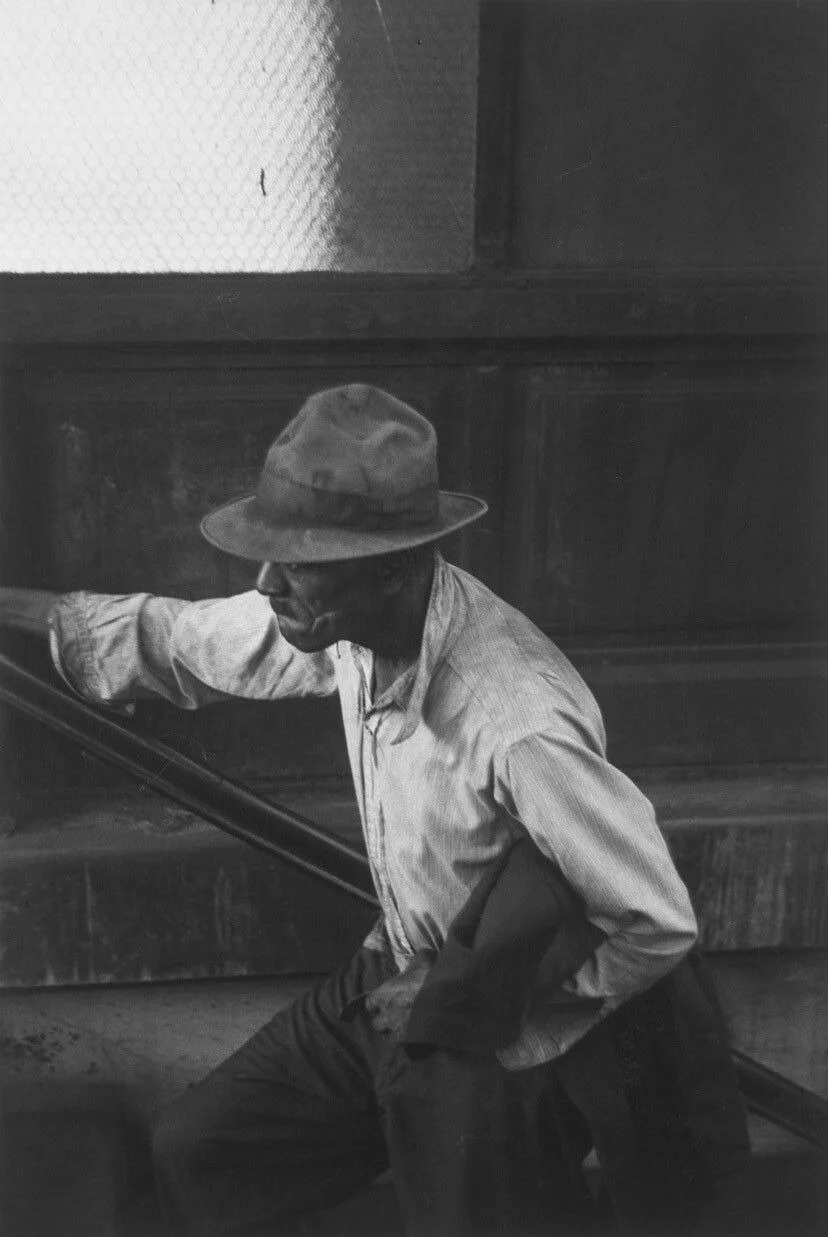
The subway was one of his early subjects, because he rode it to and from his job every day. Man coming up subway stairs, 1952 comes with a story that every street photographer knows. DeCarava had picked a good spot and had already used many frames. Then the right man appeared at the bottom of the stairs, and only one frame was left on the roll.
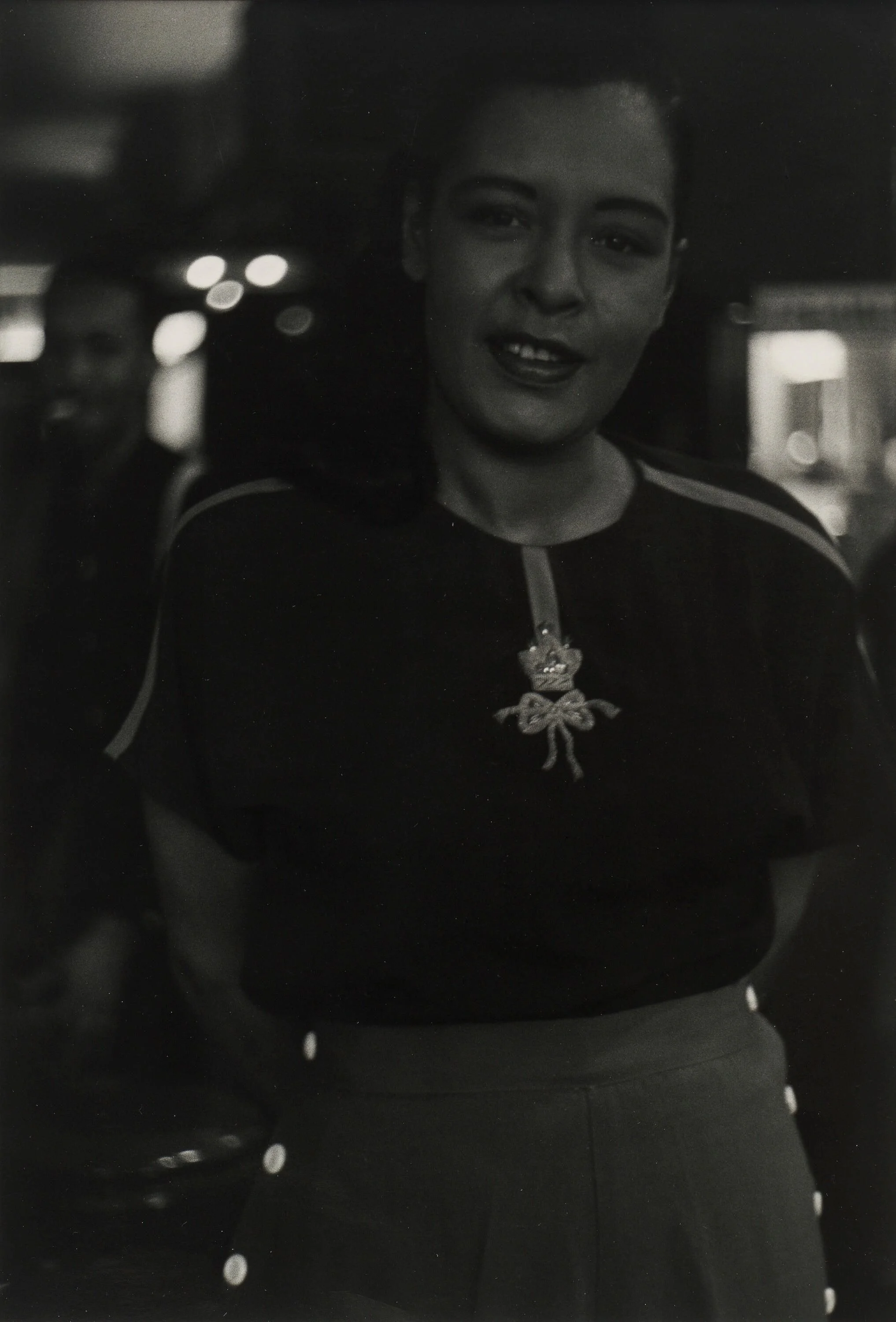
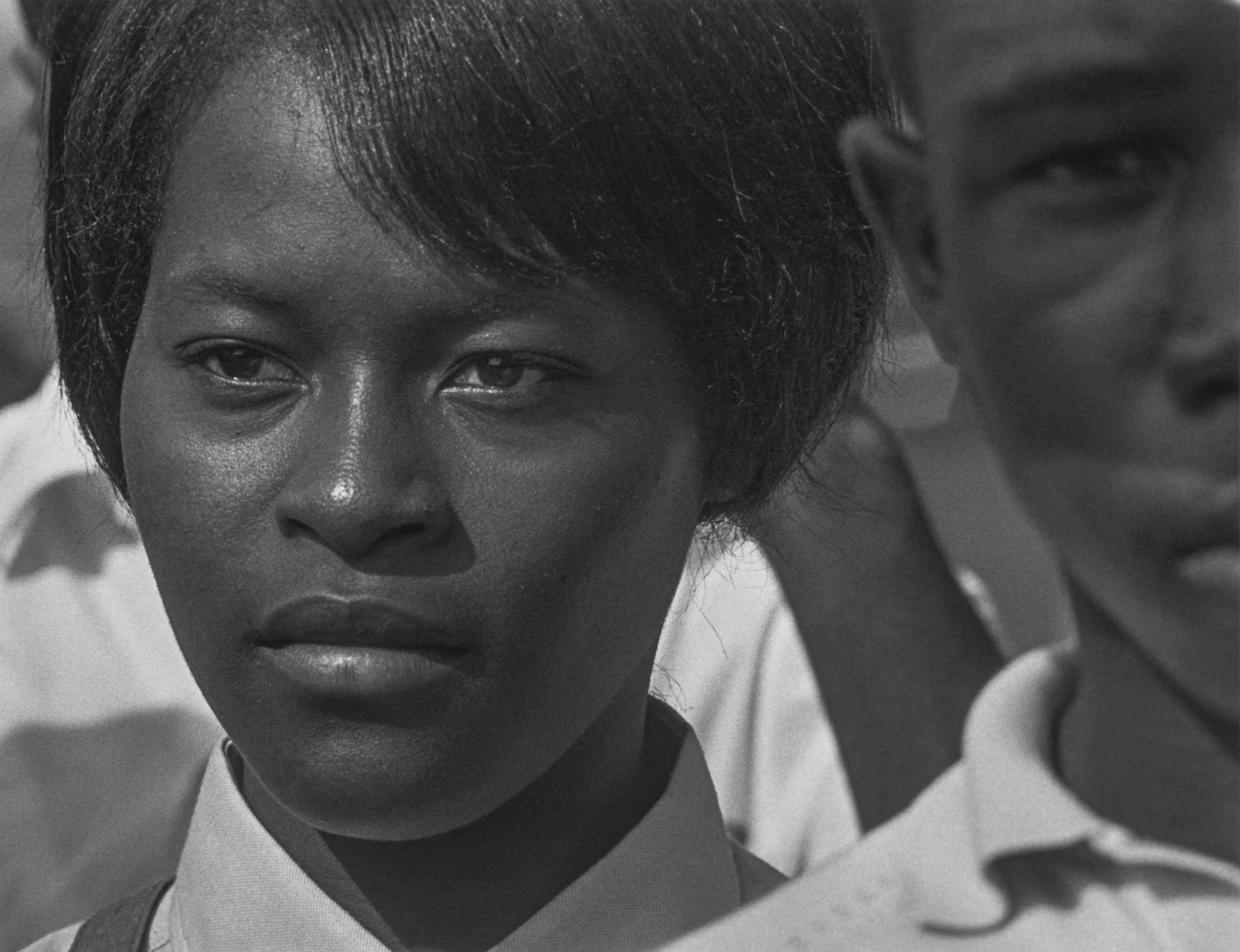
DeCarava also photographed jazz musicians, among them Billie Holiday, 1952. In 1956 he began a long series on jazz, which was shown in 1983 at the Studio Museum in Harlem as The Sound I Saw. In the early 1960s his pictures of garment workers and civil rights protests became bolder. Mississippi freedom marcher, Washington, D.C., 1963 is one of them. He taught photography at Hunter College from 1975 and received the National Medal of Arts in 2006.
- 1919Born in Harlem, New York
- 1950Shows his first photographs in a small gallery in New York, and Edward Steichen buys three prints for MoMA
- 1952Becomes the first African American photographer to win a Guggenheim Fellowship
- 1955Publishes The Sweet Flypaper of Life with Langston Hughes and opens A Photographer’s Gallery
- 1956Begins his long series of jazz photographs
- 1975Joins the faculty of Hunter College
- 1996The Museum of Modern Art shows a large retrospective of his work
- 2006Receives the National Medal of Arts
- 2009Dies in New York City, aged 89
In his words
“I do not want a documentary or sociological statement, I want a creative expression”
“I don’t believe one should be bound by having good light, which usually means plenty of light.”
“Photography should be what you want it to be, and it should serve your purpose. You should not be restricted or intimidated by the process, its theories, or its myths.”
“Truth is beautiful. And so my whole work is about what amounts to a reverence for life itself.”
“These are people. Before they’re black, they’re people.”
Photography, Reconsidered follows questions like this through the work of other photographers.
Gear
The sources do not name a camera model or film for DeCarava that two sources agree on, so none is listed here. These things are documented.
Handheld 35mm camera: David Zwirner says he worked with a handheld 35mm camera, which let him move easily through the city. The Museum of Modern Art says his first camera was an inexpensive 35mm model.
Tripod: DeCarava said he rarely used a tripod. He used one for Hallway because the light there was so special.
Silver gelatin prints made by himself: Zwirner says that, unlike most photographers of his day, he developed and printed his own images. The Museum of Modern Art notes that the prints in its 1996 book are gelatin silver prints. The MoMA catalogue says that after 1950 he taught himself to print more softly, in a narrower range of deep tones.
Books
The Sweet Flypaper of Life (First Print Press, 2018). This is the 2018 reissue of the 1955 book, with photographs by DeCarava, text by Langston Hughes and an afterword by Sherry Turner DeCarava. Hughes wrote the words of Sister Mary Bradley, a grandmother who tells the story of life in Harlem. It is a good first book for anyone who wants to see the work that made DeCarava known.
Roy DeCarava: A Retrospective (The Museum of Modern Art, 1996). Peter Galassi wrote the main essay, and Sherry Turner DeCarava added a second essay. The book has nearly two hundred plates from about fifty years of work, from Harlem life to jazz and civil rights pictures. It is for readers who want the full story of his career.
Roy DeCarava: the sound i saw (First Print Press/David Zwirner Books, 2019). This book has texts by Radiclani Clytus and Sherry Turner DeCarava. It shows jazz musicians such as John Coltrane, Duke Ellington and Billie Holiday next to scenes of everyday life in New York. DeCarava wrote that it is a book about people, about jazz and about things. It is for readers who love music and photography.
Roy DeCarava: Light Break (First Print Press/David Zwirner Books, 2019). Zoé Whitley wrote the preface, and Sherry Turner DeCarava wrote the introduction and the essay Celebration. The book shows a wide range of subjects, from people to trees and smoke, and looks at how he used light and tone. It is for readers who want to study his prints more closely.



Alex Muñoz is a street photographer in Japan and the YouTuber behind Alex on Streets.