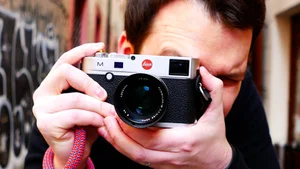
Award-Winning Photographer Critiques Your Photos: A Conversation with Thorsten von Overgaard
In this episode, award winning Danish photographer Thorsten von Overgaard joins me to critique a new batch of reader submitted photos. Along the way we talk about his editing workflow, what actually makes a photo work, and how the story behind an image can turn it into something iconic.
Check out Thorsten's website and YouTube channel ( @Magic Of Light ): Youtube: https://www.youtube.com/c/MagicOfLight_ThorstenOvergaard
Website: overgaard.dk
Instagram: @thorstenovergaard
Award-Winning Photographer Critiques Your Photos: A Conversation with Thorsten von Overgaard
In this episode, award winning Danish photographer Thorsten von Overgaard joins me to critique a new batch of reader submitted photos. Along the way we talk about his editing workflow, what actually makes a photo work, and how the story behind an image can turn it into something iconic.
Introduction
Welcome back. Today I'm here with photographer Thorsten Overgaard. Thank you for joining me today.
Thank you, it's a pleasure to be with you again. We did something like this about ten months ago, I think from Paris, though I was in Florida at the time.
So the idea is that you critique these photos as if they were your own, or as if they belonged to someone taking your workshop, or one of your clients. Just give me your opinion on the photographs I'm about to show you. So, what do you think about the first one?
@gettons
I was intrigued, wondering what this was, and then slowly it occurred to me: this is London, because of the double decker bus.
Well, that's funny how you say it's "a bit" of a double decker bus, since it's not that clear in the photo, but it shows how you connected with it.
Yeah, I like it as an atmosphere photo. I know that if I posted a photo like this, some people would comment on the cigarette, that's just something I'm aware of these days, people tend to jump on the smoking rather than the feeling of the photo. But I'd still go with it, the hat and the cigarette go together, and I like that the billboard in the background isn't interfering, there's no extra message competing with the main one. Often in photographs people try to cram in more than one story, and this one stays simple: it's just the atmosphere of a guy having a cigarette, wearing a hat and sunglasses, looking cool. I'd probably see it in black and white myself, though with the colors and the billboard behind him, it might actually work best in color.
If you'd taken this, would it be a keeper?
Yes, it would, though not a real standout.
How Thorsten edits his pictures
Here's how it works for me. Normally when I'm out shooting, I'll take somewhere between 100 and 300 photos, and when I get home I edit. I stress this a lot in my classes and my online workflow courses: I go through the photos in the exact sequence I took them, usually starting from the end of the day and working backward with the left arrow key. When I see something and think, wow, this is something, I give it three stars, edit it in color, then usually in black and white too, and it goes into the archive. During that process I don't actually think about whether it's an amazing photo or not, I'm just doing my job, harvesting whatever worked that day.
Only later do you see how people react. Sometimes a photo you didn't think much of gets a "wow, that's an awesome photo," and other times you're really proud of a shot, maybe you waited a long time for it, or the timing was perfect, or you had to wait for someone to leave the scene, and nobody cares about it at all. It doesn't really matter, it all goes into the archive. I don't have a strict hit rate in mind, whether it's ten, twenty, or thirty percent of what I shoot that day that I keep, it all goes in.
Later, you put on a different hat, as an editor, not editing the photo itself, but putting together a piece: an advertisement, a magazine article, a blog post, a video, something that needs illustrating. Every picture contributes some atmosphere, and often you're building a series of pictures that tell a story together, where no single photo needs to be spectacular on its own, it just needs to be part of that series. So this particular photo, I'd give it three stars, edit it, put it in the archive in both black and white and color, and see later when I need something with this kind of atmosphere. It's also a bit abstract, since at first glance you don't quite know what you're looking at, just a cigarette, a hand, a hat, a face, a wrist, something you have to piece together. Maybe one day I'd use it for an album cover for jazzy electronic music, that could be the moment. If I wanted an article specifically about London, this might not be the right photo, depending on what the story actually needs. So that's how I look at photos: you can't always tell in the moment whether something is a fantastic photo, it depends entirely on what you'll need it for later.
That's a great answer. Let's take a look at this picture.
Martin's photo
This is funny, because now that you've told me to look at these as if they were my own, I do look at this one that way. I'd probably turn it into black and white. What I like is the atmosphere of solitude, someone sitting and doing something on a bench, maybe writing notes, or reading, or just people watching.
I'd convert it to black and white, keep some of the gray tones, and push for a fairly high contrast look. In black and white, I'd want that trash bin in the upper left behind him to be less prominent, though it's not a huge issue. If I'd been the one taking it, I probably would have crouched down a little to show more of his face, and gotten rid of that bin. I'd also shoot it with something like a 50mm at f/1.4, to blow out the background, so even getting lower and seeing more of it, it would stay nicely blurred, almost pulling you into his world.
It could also work in color, say for a piece about being a tourist in Paris or somewhere similar. I like quiet little photos like this, and that's not me saying they're less important, quite the opposite. I really like photos where you look at them and get drawn into their atmosphere, and that's exactly what this one does. It doesn't have to be smiling dogs and big obvious moments, most of my own work is like this too, where nothing dramatic is really happening, but something happens when you actually look at it. That's the effect I go for.
Thank you. So now we have this photo.
@jhemming
Well, "no," and that's actually a Danish thing, we say "no" almost as a filler comment, it doesn't really mean no. This one feels like a bit of a mess to me, I'd have to work on the colors to make it pop more, there's the warm tones of the red wall and sunlight behind the silhouette, and then the cold reflection in the window, I'd want to see if I can make those work together, or otherwise convert it to black and white. Whatever I did with it, if I could lift the colors into something interesting, it could work, there are some nice colors here, but there's no real message or story. It doesn't make me want to be in that place, and the person looks a little hopeless and alone over there, though I don't think that's really the point of the photo either. So it feels a bit confusing.
If I'd taken this on the street myself, it would have been because I had an idea, like this being a great location, with the line of shadow and this corner where people walk by, maybe someone with a bicycle, or two people in hats talking for a moment. I might have stayed there five or ten minutes to see what I could capture, probably in black and white, and looked for something happening around this corner that would turn it into an interesting photo. As it stands, this silhouette is too small and not important enough, and without colors to build something from, there's basically nothing left, it's just: I took a photo.
So the subject isn't interesting enough?
It's more that photos need some kind of message, what's the point of it. The great thing about photography is that it's kind of worthless in the best sense, you're not obliged to explain why you took a photo, or what people should get out of it. You can take a photo you can't even explain yourself, and people will love it for all sorts of different reasons, or not, and that's fine, you're just communicating with whoever responds to your work. Take the photo we looked at before, the guy on the bench, what's the message there? Not a strong one, nothing about it being great or terrible to grow old. The message is whatever the viewer takes from it. You might feel it's a pleasant atmosphere, someone taking a break, thinking about a story he's writing, or just content with a life well lived, and it's very unlikely the photographer even had that in mind, maybe he took it for a completely different reason, but that's how it lands for me. And this one, I don't get anything pleasant from it that makes me want to look again, or use it in an article. There's nothing to attach to, unless I could really rework the colors and make it feel like a Kodachrome moment from the seventies, something that would make me feel something. As it is, it doesn't.
You can come up with all kinds of reasons why a photo doesn't work, but really, when you're editing, it has to be fast, the same instinct you use on the street when you feel something and take the shot. You don't overthink it in the edit either, you just go, no, skip it, or, yes, this could be something, spend two minutes on it, and it goes in the archive, maybe to be used later.
Alright, moving on.
@emirssevim
There are elements I like here, the silhouette, the close crop, the reflections, but I don't get much more from it than that. It feels like a ferry in some unimportant place on an unimportant day, and the person doesn't seem to know or care what he's doing, so why should I? I look for clues in the window reflections to see if anything interesting is happening there, but with this one, I'd just say, no, not really.
Sometimes photos work with a caption. Think of a wire photo, a news photo, I generally don't love those because they're so predictable, always some threat, some loss, some evil, someone alone and hopeless, but they do always have a description: taken in June 2021, on the border of this and that, just as somebody invaded the country, or the harbor exploded. That reframes everything completely. There could be a story like that behind this photo, but I don't get it from the image itself. Generally, I think a picture should communicate its own story. I don't love the idea that you have to explain the significance through a caption, it should explain itself, though of course sometimes you're curious when or who, and a caption can answer that without really adding to the photo itself, it's just something nice to know.
Alright, moving on.
@gileres
I get it, there's a rhythm here, with the poles and this lady walking, and the colors. But to me it feels too obvious, trying too hard to make a point that isn't really worth making. If I'd taken the photo, I'd have probably paused and thought it was a little contrived, but you never really know. I'd still take it, edit the colors, straighten the lines, make sure everything's clean, and put it in the archive to see if I could use it one day. And honestly, there is something here, you could imagine waiting and thinking, wow, I got a yellow person lining up perfectly, how great am I, and then, so what?
That's the trap: you never know what might happen instead. You could have a yellow person, a red person, a blue person, a green person just walk by, one of them with a dog on their shoulder, something completely unexpected. That's the kind of thing that actually happens, and it's why, when you feel like you should take the photo, you just take it, and don't overthink it in the moment, because if you start thinking, this is ridiculous, this has been done before, you'll ruin it. You have to follow your intuition. There's something unusual about these two matching colors, that's not something you see everywhere, and then a woman shows up in a matching color too, and the road rising in the background lines up just right, so it has to be taken. Maybe it becomes useful for something someday, who knows, it's a fun anecdote, not a photo that's going to change the world.
Alright, moving on.
Again, a little bit like trying too hard. If you removed the walking person and the person on the left, and just kept this guy sitting on the bench, it could actually be an interesting photo, one that makes you think about the significance of Jesus and the city behind him, and it would make you feel something.
As it is, what I get from it is a bit hopeless, the guy on the bench looks hopeless, the walking person seems disconnected, there's no real contact between anyone. I'm not sure what I'm supposed to take from it, I get more of a feeling that there's no connection between people, no hope, and once you bring Jesus into that, you're on shakier ground with what you're actually trying to say.
It's a bit like the last one: there's something written into it, like, wow, these two people sitting there is unusual, or it's a special enough scene that you think, let me see what I can make of it, and then someone walks by and you think, that's my cue, take the photo. In many ways it's the right instinct to take it, and even to archive and edit it, but I honestly don't know what I'd use it for.
Pointless, but let's take a look at this one. Is that Michael Jackson?
@raffaelliphotography
No. It's a beautiful scene, and you could imagine local life passing through it, or tourists doing something interesting. What we actually have is a man holding what looks like his granddaughter, not his own child, over the water, which is kind of an odd thing to want to photograph.
Coming back to message again: what's the message here? We've got a pretty bridge, reflections in the water, a nice building in the background, and with better light this could be genuinely beautiful. Then you have this disturbing element of a tourist, presumably, holding his grandchild out over the water, which is a foolish thing to do in any case, and it's not clear what he's even trying to achieve, it reads as mixed messages. It's also shot from too far away, if you wanted to capture anything here, you'd want to be close, to actually see them enjoying themselves, and at that point you don't even need the background or the water, you could just focus on the kid's face, if he's genuinely having the time of his life.
If you were there and saw this, would you take the photo, or just think, I'm too far away?
I wouldn't even take it just to show someone, look at this idiot. I don't photograph real life that way, like, look, five police cars stopping one car, who cares, life moves on. For me, everything has to carry some sense of the aesthetic, some hope, without being too literal about it, it has to make you want to take photos. I couldn't tell you exactly why that is, it's not something stated outright in any of my own photos, but somehow there's a message in there: look what you can do with a camera, this is fun, go out and shoot. This photo, of the man with his grandchild, doesn't communicate anything in that direction for me. I understand some people would stop and take it anyway, the way you'd photograph a funny poster on a wall, but it's not your poster, so who cares.
@okan.ozcan
Let's take a look at this one.
I like this one. It has clean lines, a silhouette, a story in the foreground and another in the background. You could crop in later to make the subject more prominent. Typically the issue with wide angle lenses is that people use them for everything and things end up tiny, which is why people assume they're only for landscapes. But I think a wide angle works well when you have a clear subject in the foreground along with a whole background story, and that's what's happening here: the waterfront, the harbor, the city, maybe hills or buildings across the water, people out enjoying the sunshine, and the main subject, this guy on the bicycle, who's a bit of a show off, but that's also just what you see in squares around the world, someone performing on a bike. He could even be standing still, for all I know.
Then you've got the crane in the background with its lines, which draws the eye, and if you wanted a stronger story you could crop in tighter so he's the dominant, central figure with the people just visible behind him, and that would work too. It's a great photo you could use for a lot of things, even though it doesn't tell a fully self-explanatory story, you're left wondering, is he performing, showing off, or standing like a statue? But visually it works really well for the eye, it's simply pleasant to look at, a bit like the Mona Lisa, which isn't even that exciting a painting, but is just pleasant. This has a lot of control in its lines and composition, and then this looseness of people just doing their own thing, which creates a nice contrast.
Do you think there's too much empty space?
It depends what you want to do with it. I look at a photo like this and imagine it as a double page spread in an in-flight magazine, where it fits perfectly with the gutter between the pages, him over on one side, headline text down below the bike, and it works beautifully. Without that space, you couldn't do that. So I'd keep the space, though I'd also export alternate crops, maybe a square version, or if you wanted it for an Instagram story, you could crop it tall, just him on the bike, and that could work as a nice vertical too. There's a lot of flexibility in it, and it's very well controlled and well made, nothing to fault technically, no tilted horizon, nothing off.
Moving on.
@amith_kadasur
This could work in color, but the colors are a bit off here, the mountains don't quite look believable. I'd probably go black and white, it feels almost timeless, this idea of an old lady on a bicycle taking you back in time, which is kind of funny given she's going uphill. You could also tilt the crop slightly, since the building behind her is tilted, so straightening the photo would mean she's actually climbing an even steeper hill.
In black and white the sky would feel more dramatic, and that blue parking sign on the right would basically disappear, since right now it draws attention. There are some fun elements for black and white: the tire tracks from a car on the right, giving a rhythm alongside the bike and the lady, four elements in total, and nothing too distracting in the background, since the parking sign will fade in monochrome. You could also crop it tighter, though you'd lose one of those elements.
It could just be a fun photo. Maybe it illustrates something like the challenges of country life, or people on bikes being tougher than people on motorbikes, I don't know, but that's the thing, you edit it, see it in beautiful black and white tones, everything coming together, and file it away wondering what you might use it for one day, maybe a story about driving through the hills, stopping for coffee in a small town at the top. Ideally I like a photo to say something on its own, which is part of why I'm not fond of news captions that spell out exactly what you're meant to think, because it's never really true, you could have taken twenty other photos of the same moment and told a different story. I like it better when the meaning stays a bit open, and the viewer brings their own content to it, but the elements themselves are things I'd want to preserve when editing.
Martin's photo — Prague 2022
So this photo, I'd probably shoot it differently myself, changing the angle, moving a little to the left so the phone was more prominent in the foreground with the faces blurred behind it, keeping the statue but avoiding all the people cluttering that little wooden stall in the background, to make it cleaner. Then it would read as a clear statement: people taking selfies, putting on a face and sunglasses, sending it off to friends to say, look how I live, and then going back to their ordinary lives. I don't know exactly what I'd use it for, but I've taken plenty like it myself, people squinting at their phones trying to find a map, people taking selfies with their teeth showing, whatever it is. It's a moment, but what kind of moment? If you added fifty years to this photo, it would tell a completely different story, becoming a document of its time, how people dressed, what phones looked like, what people thought was cool, the same way, fifty years from now, someone might look at a photo of a man going down on one knee to give a woman a flower at a cafe and think, that's how it was done back then, this is how it's done now. In that sense it's a recording of history.
Beyond that, it still has to work aesthetically, focused, with a composition that adds something. That means cropping or reframing to strengthen whatever the message is, here that would mean losing the guy with the sunglasses on the right and the distracting background behind him, since right now your eye gets pulled away from the main subjects to see what's back there. The buildings and the statue do add something, and other tourists doing the same thing could add to the story too, if you're willing to wait for it. But yes, it has to be taken, and you find out later what it's useful for, and it will likely only grow more valuable with time.
Alright, let's do the last one.
Thorsten's photo and the story behind that photo
Oh, this one, that's mine. I know I took this one. If I look at it now, and imagine it wasn't my photo, I'd notice the plastic bag he's holding and think, that's a little distracting, but I'd also see it as adding something, there's a nice arrangement of colors, something to it. Pretending I don't know the story, I might ask, what's the point of this, it's a nice photo, but what would you use it for? That's what's interesting: because I do know the story, and knowing it, and being able to tell it, becomes part of what makes a photo iconic, it's part of what the photo is.
So yes, I took this, edited it, used it as the front cover of a book, used it for various illustrations, and I know it's had a great response. It's from Istanbul, in Turkey, taken toward the end of the day, around three or four in the afternoon, when it was getting hot. We'd walked up through the hills, through streets that weren't especially full of things to photograph, but there was a nice atmosphere, a few interesting things along the way, and then we came to this bakery with these wonderful colors. Beautiful. Then this boy came by on a bicycle, and I knew right away I needed that bicycle in frame, but he rode straight into the bakery, so I thought I'd missed it. Then I realized, he works there, or he's picking up bread, either way he has to come back out and leave on the bicycle, so I positioned myself across the street, near some phone booths and locks, and waited. Sure enough, he came back out, and I got my photos. I don't think I got a single frame of him before he was on the bicycle, maybe three, five, six frames of him riding off, and this one has the composition I wanted, him over to one side, looking back, I had to adjust focus slightly as he moved since I was working with manual focus.
That story is really what makes the photo work, and makes it interesting enough to be used in articles or book chapters, illustrating the idea that even if you miss someone going in somewhere, you might catch them coming back out, or someone else entirely might come along in the meantime, a woman in a beautiful dress, an old couple in hats, twins, you never know. But you can feel there's something to be made there, the light is beautiful, it even smells like bread, which obviously doesn't come through in the photo, but you sense there's a photo to be had. When that boy showed up, I knew that was my cue. If it hadn't worked out, or if it hadn't been so hot, I might have stayed another ten or fifteen minutes to see who else came along, because there was clearly something about that bakery.
That's often how it goes: you feel there's something to be made in a scene, so you wait around, not knowing what's going to happen, hoping the light holds and no delivery truck parks in front of it. You're creating the photo, in a sense, but you can't fully control the elements, it's not like painting where you can just put down whatever you want, something actually has to happen. And you don't know at the time whether it will ever amount to anything, or become a masterpiece, you just have to be satisfied with what you got. I could have waited longer and maybe gotten the photo of a lifetime, but I decided that was enough, three or four minutes there, and moved on.
At first this was just one photo among maybe fifty others from that trip, part of a much larger archive, since I've made several trips to Istanbul, probably around three hundred photos total, and there was no way to know how important this particular one would turn out to be. Then people started responding to it, loving the colors, and once you have a story to attach to a photo, it becomes something you can use, for a book, cropped down to just the boy without the blue shape to the left, letting the rhythm and balance of him carry it. Then maybe someone emails wanting to buy a print, or a magazine wants to use it, and it takes on a life of its own, or it doesn't, and it's just a pretty photo that stays quietly in the archive.
Ultimately, photographs are what the viewer makes of them, that's the bottom line. As the photographer, your own photos can carry significance just for you, maybe there's a photo of your uncle with his Volvo that means the world to you because he was so happy to finally own that car, and other people might think it's a great photo without knowing or caring about your uncle at all, and that's fine, it just has meaning for a smaller audience, your family. And sometimes you have photos you personally don't think much of, that everyone else considers your best work. One of my best selling and most awarded books is Shadowland, and there's a photo in it that I honestly don't find that exciting, I get the point of it, but it's not even really my style.
Shadowlands
I think a lot of photographers run into this: you make something that really resonates with people, and it becomes the thing you're known for. Cartier-Bresson has his famous jumping man photograph, and I believe he actually disliked that photo, but it's the one he's remembered for, so you just take it, take the recognition, and move on. That's how I feel about that particular Shadowland photo, people say it's great, it probably does look wonderful on a wall, but I know it's not really my best work.
Thorsten's philosophy
As you keep working, you build up a whole range of photos: some feel like exactly what you set out to do, and in the full context of your body of work, they all make sense as part of your style, while others feel like, well, that happened too, but maybe it wasn't quite what I was trying to do. Either way, you go out with your camera, and when you feel there's a moment, you take the photo. Later, when you edit, you make a quick decision, is this something to put in the archive, or do I just leave it, you never delete anything, but if it's not archived properly, you'll never find it again.
Different situations call for different photographs too. If you're putting together an exhibition, that's a different set of images than what you'd use in a magazine, since plenty of photos work beautifully in print but nobody would want to buy a print of them to hang on their wall, and putting together a show means choosing photos that work together in that specific space and that people would actually want to own. Book illustrations are yet another category entirely. But fundamentally, what you're doing is creating moments that might have value in some context, maybe I'll put this one on a t-shirt someday, who knows if it sells a million, but there's something there.
In a way, that's the whole of photo critique boiled down: is there something here, or isn't there. Sometimes it's completely obvious, people crowd around your computer because something is clearly a hit, and you don't always know why, though you can analyze it afterward. I don't think you should try to reverse engineer it though, the way musicians or filmmakers sometimes try to recreate a past hit by copying its ingredients, that's not how it works. You make something unique because you recognize, in the moment, wow, this could be something, and you follow that instinct, whether it becomes a song or a photo. You can't really repeat it deliberately, you can only be yourself and trust your intuition, you don't just reuse the same formula. I'm not going to go recreate a whole series of bakeries with kids on bicycles holding plastic bags, that's missing the point entirely. It's the totality of the colors, the atmosphere, something about the specific scene that makes it work, and even without stating it outright, you sense it's somewhere exotic, an old fashioned bakery that isn't an American mall or something Scandinavian, it could be Jerusalem or anywhere like that, and that unspoken sense of place is part of the atmosphere too. You could even imagine showing more of the bread, which might add something further to the story.
Thank you, that was very thoughtful. It's very interesting that you also do workshops and write books, can you tell me more about that?
Workshops
Going back to the beginning: like probably everyone in this field, I felt photography was something I wanted to do, got my first camera, and became very absorbed in the technical side, lenses, the darkroom, film, back when you actually mixed your own film and built your own darkroom, I even built my own camera at one point. Then I stepped away from photography for a few years while working in advertising and internet ventures. When I eventually sold that business, one of the things I wanted to do was interview entrepreneurs, people starting their own companies, and I wanted the photographs accompanying those interviews to show something of the person's soul, which is really what brought me back into photography. I became fascinated with Leica lenses and cameras, and that's what I've used ever since.
From there I moved into working with magazines, some of the biggest newspapers and picture agencies in the world, including Associated Press. Somewhat sideways from that, I started getting asked to help people choose a camera, or teach them how to use one, since I apparently came across as quite competent on the technical side, and that's what led me into running workshops. I wanted to teach people the fundamentals, because I think photography is genuinely simple: this is aperture, this is shutter speed, here's how you get it right, that kind of thing. That eventually grew into a whole world of workshops, usually small groups of maybe seven or eight people, twelve at most, running for about three days at a time. They're actually not that technical in practice, more about inspiration, the lifestyle of carrying a camera everywhere, walking the city, taking photographs, and then, of course, what to do with what you've shot: editing, finishing the images, and getting them ready in an archive to actually be used.
I also write books, and do online classes, though I'm not big on live sessions, I don't enjoy that format much. I'll occasionally work one on one with someone over Skype or by phone if they want help with a project, but generally my classes are prerecorded, an ebook paired with video lessons, like one I have coming out now on street photography, not interactive in the sense of talking to me live on video, you just watch the videos and read the book.
What I'm genuinely proud of, both in the workshops and in the books, is that they inspire people to actually go take photos. It shouldn't be about my own photography, or about me, it should be about you, and somehow I've found a way to make that happen, someone reads four pages of my book and wants to go out and shoot, which is so much better than sitting at home reading and never taking a single photo. It's the same with the workshops, almost everyone who takes one ends up shooting a lot more afterward, with more confidence, and actually using those photos for something, printing them, giving them away, posting them. Over the last ten years I've taught a lot of people, and it's been genuinely impressive to see three of them go on to open their own galleries, which is a bit crazy, people out there putting their work in front of the world, opening a physical space so people can come see it. People usually find all of this through my website, where they end up losing days or weeks reading articles about Leica photography, and a lot of them end up buying a Leica too, that's just how it goes.
Different people like different photos
That's also why it's so interesting to see the range of reasons people take and love photos. I've had someone tell me they loved a photo because of two shapes that happened to look like triangles, and I completely get that, it's valid for them. If I showed that same photo to my mother, she'd probably just say, "that's nice." Someone likes the colors, someone else says it reminds them of their childhood, it's all completely individual. That's part of what I love about running workshops, you'll have eight photographers walking the exact same streets, and even when we think we're all photographing the same scene, everyone comes away with a different photo. It's individual people taking the photos, and it's individual people responding to them, judging them, buying them, deciding to use them for something, and that's the beauty of it.
I think you have to respect that there's no rulebook for what makes a great photo. Even photo competitions sometimes try to apply formulas for this or that, and I completely disagree with that approach. It comes down to whether you like the photo. When you're judging composition, you have to go with what you personally respond to, you can't just defer to what some university textbook says makes a photo good or bad. If it feels like a great photo to you, it is a great photo, it's genuinely that simple. That's how taste works, the same way we choose what juice to drink or what food to eat.
The end
Thank you so much for joining me today.
You're welcome, and I hope I haven't made too many enemies out of this.
I'm sure you're fine.
Alright.