Albes Fusha Photographed Albania’s Forgotten Monuments And Found A Different Kind Of Heroism
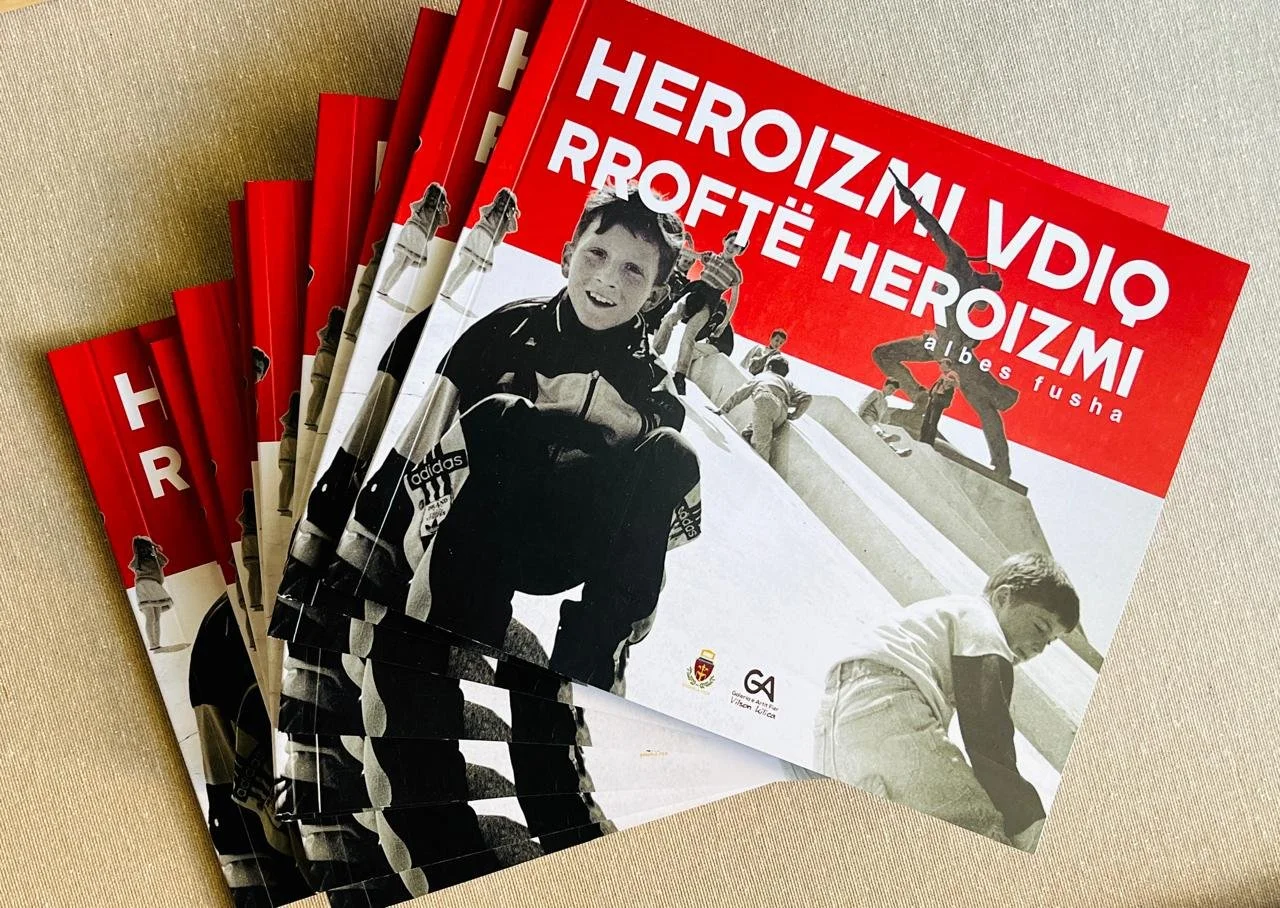
Welcome to this edition of [book spotlight]. Today, we uncover the layers of 'Heroism is Dead, Long Live Heroism' by Albes Fusha (published by Gallery of Arts in Fier). We'd love to read your comments below about these insights and ideas behind the artist's work.
These monuments are visible, but no longer central.
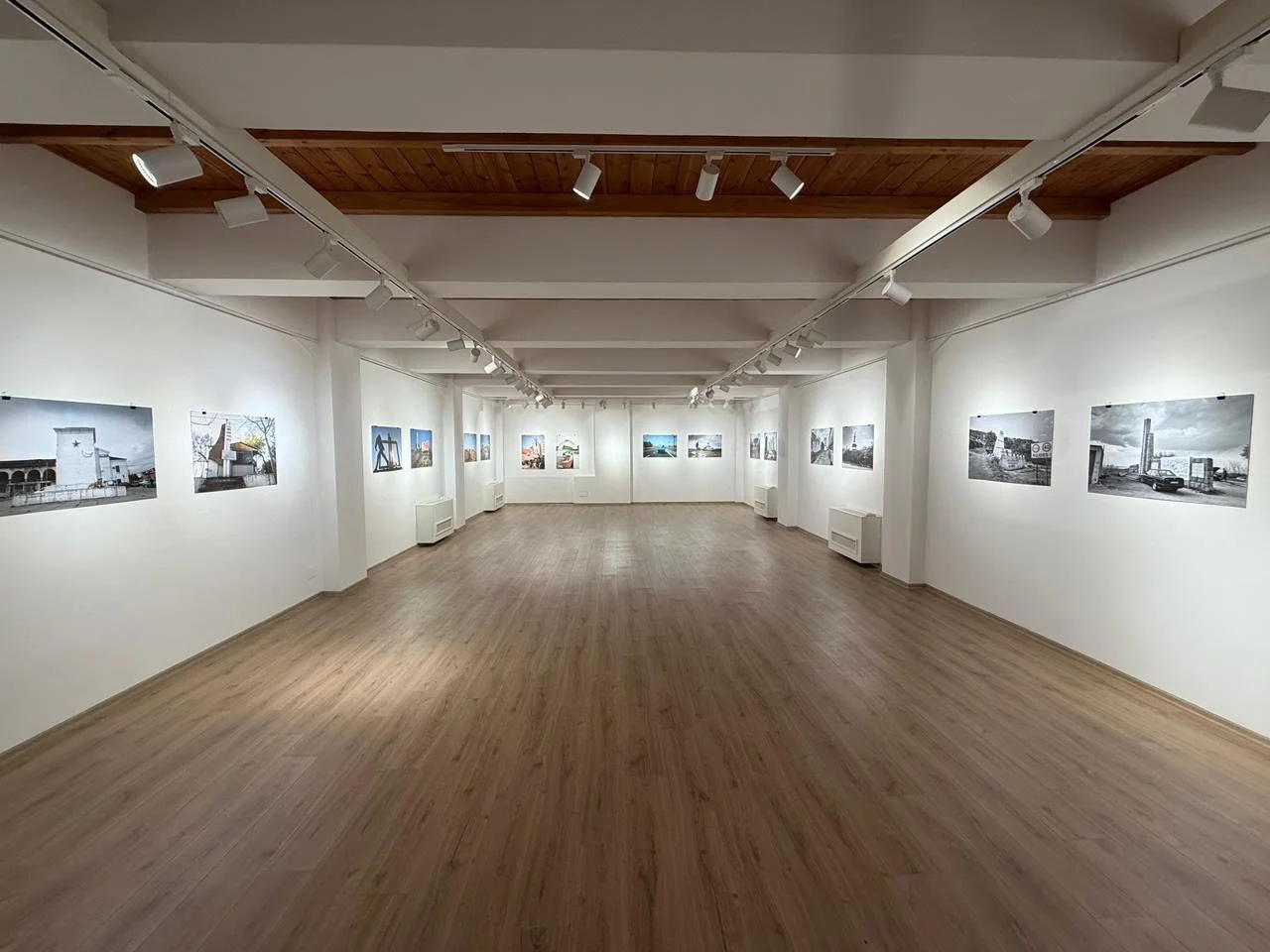
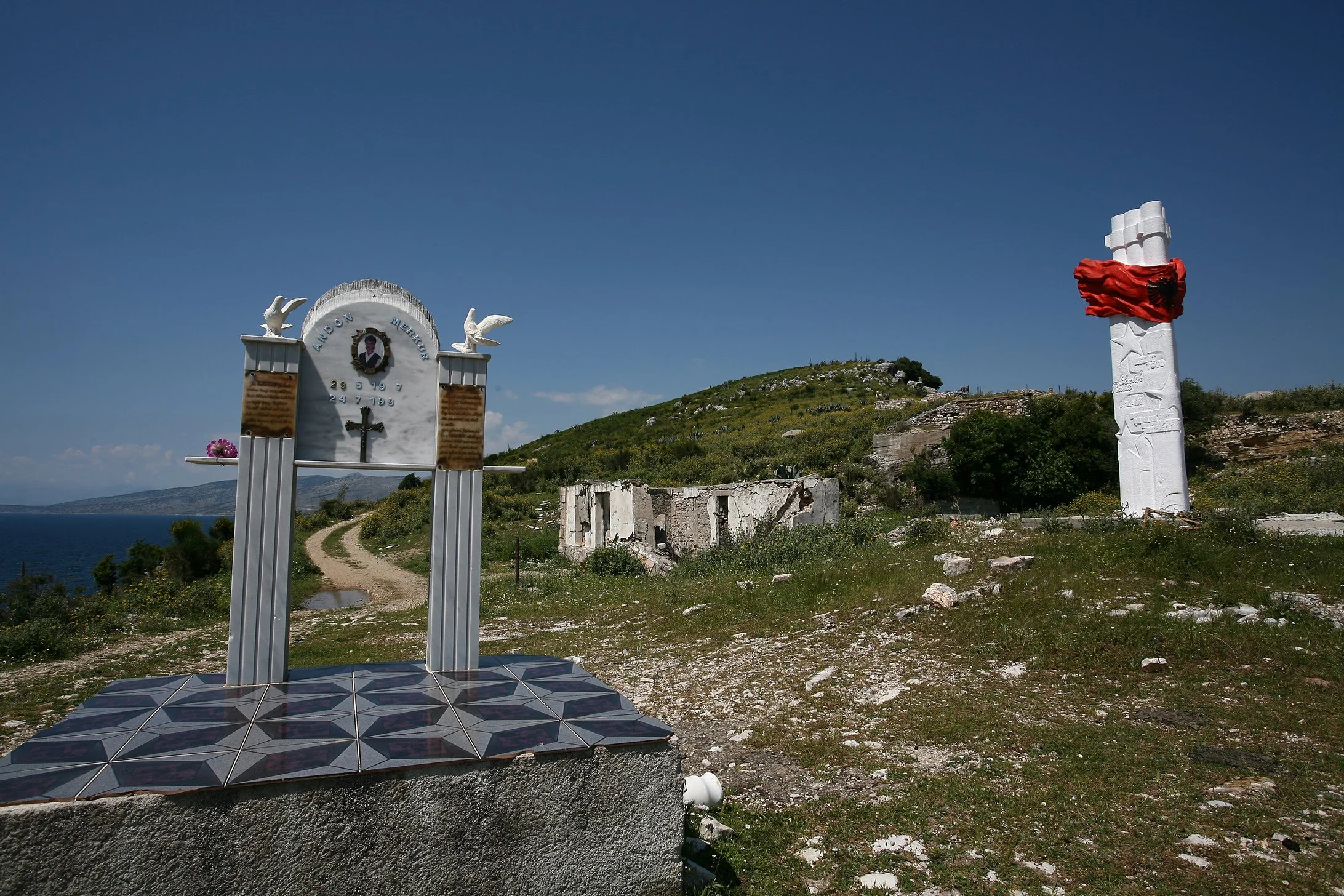
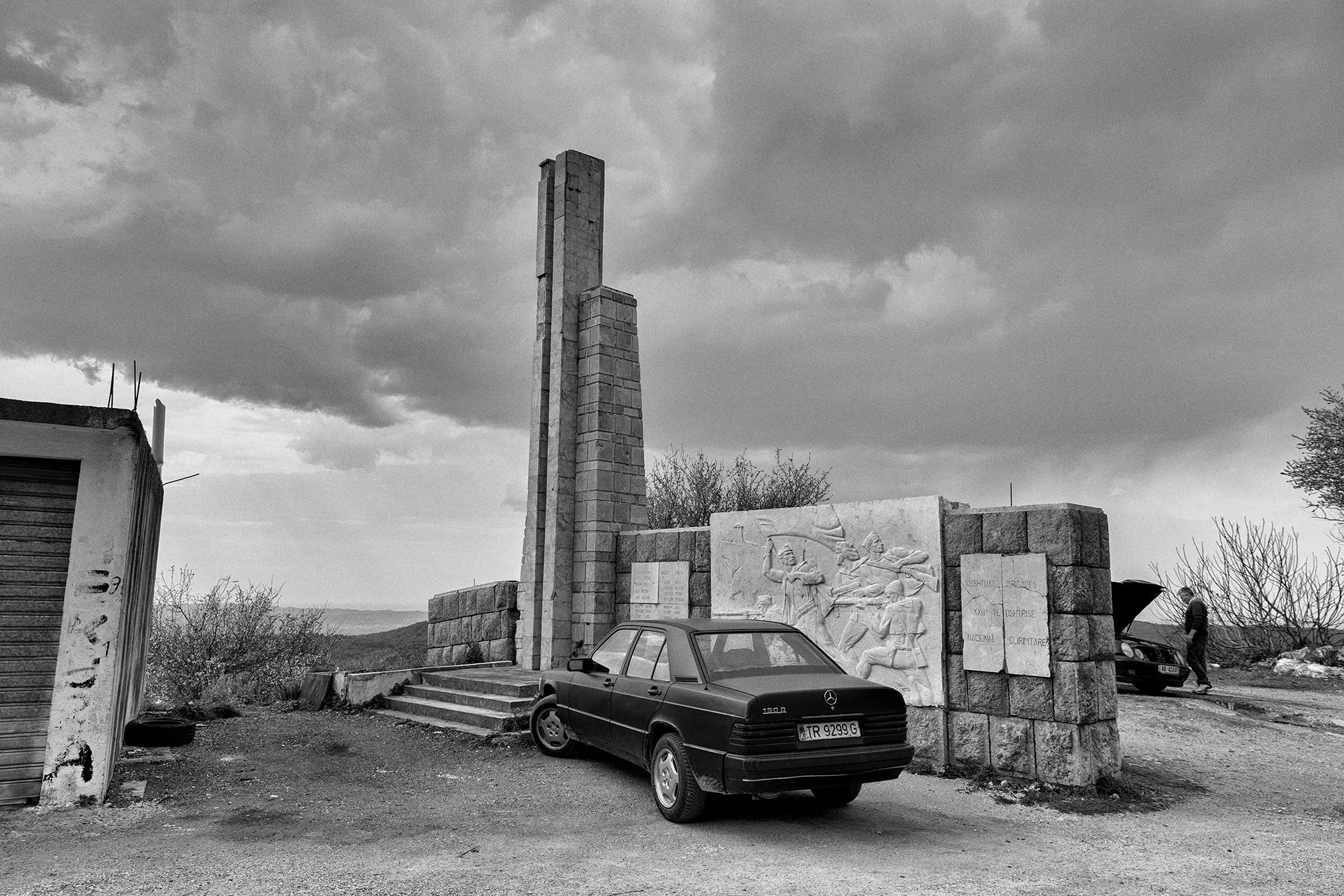
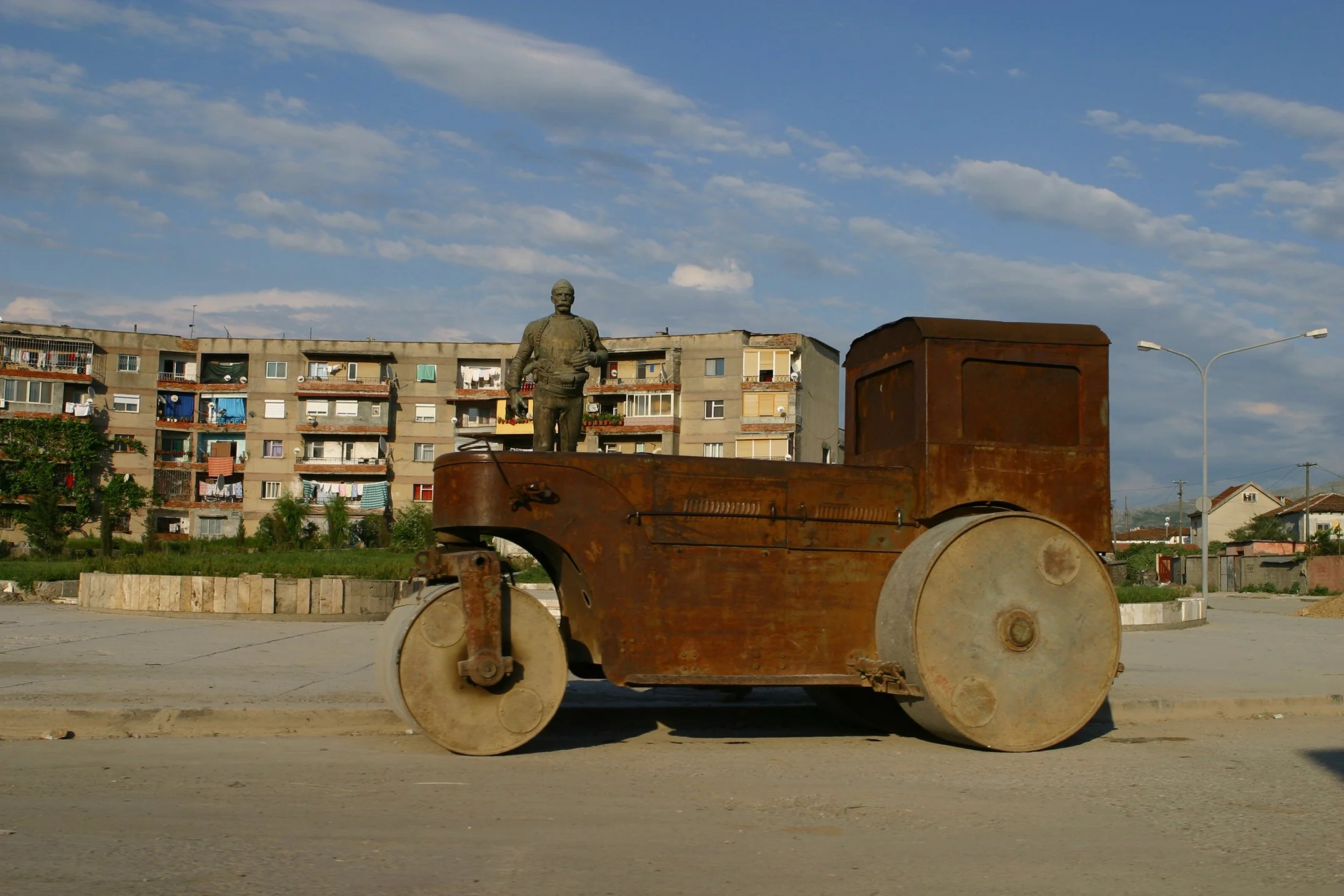
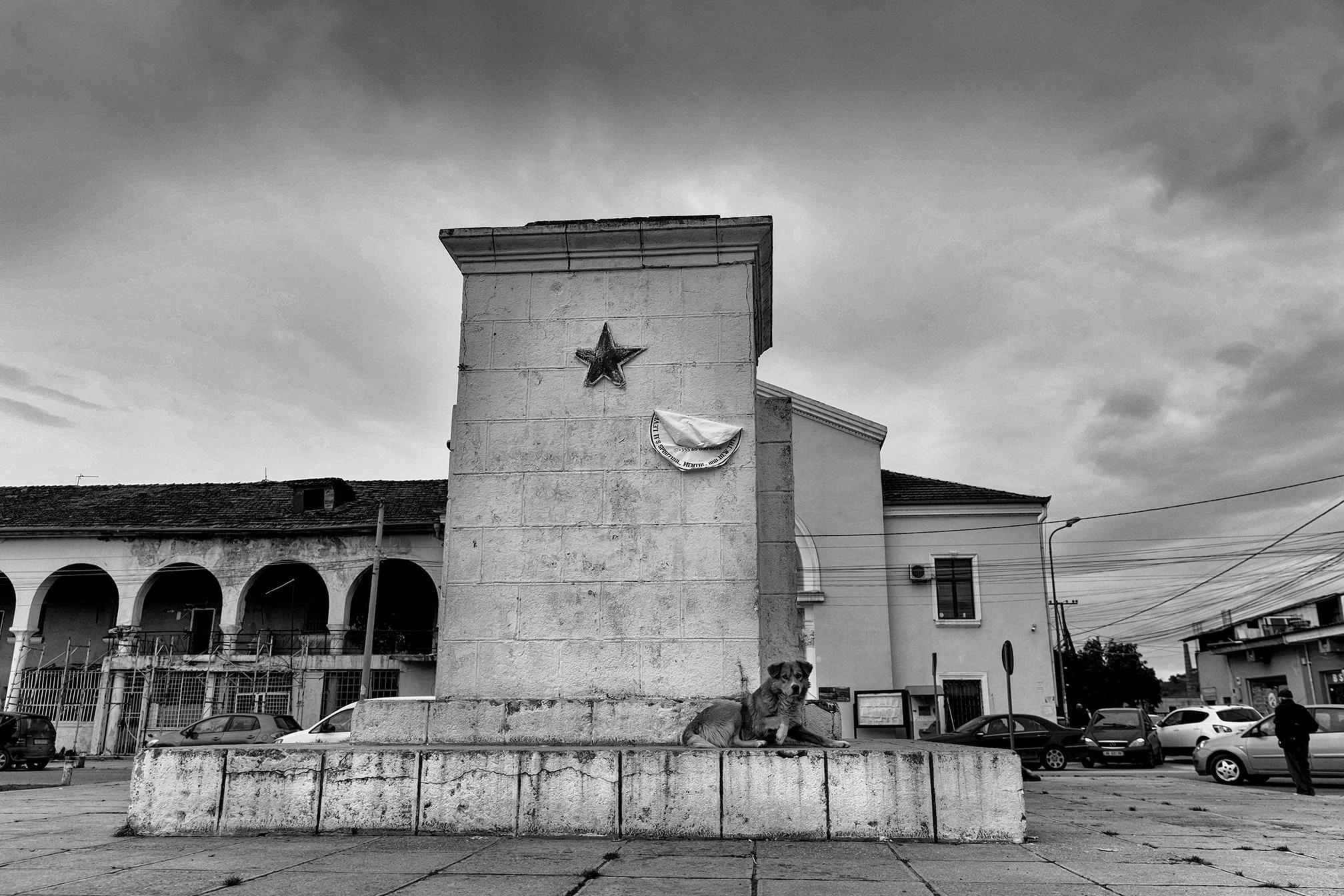
They still stand in Albania’s public spaces, but the attention around them has changed. In Heroism is Dead, Long Live Heroism, Albes Fusha photographs monuments once connected to heroism, sacrifice, and collective memory, now surrounded by beer ads, kiosks, car washes, construction materials, and ordinary daily life. The book looks at what remains when public symbols keep their physical place, but slowly lose their old emotional position.
Fusha is not photographing monuments as historical facts.
He is looking at the relationship that has formed around them over time. In the interview, he speaks about travelling through Albania, finding these situations by observation, editing the work over several years, and building a sequence where memory, neglect, commerce, survival, and daily life exist inside the same frame. The project does not say heroism has disappeared, but asks where it has moved.
This interview can help you notice when the meaning of a place is no longer held only by the object standing there, but also by what has grown around it. Fusha’s answers show how a photographer can turn small visual interruptions into a larger question about memory, attention, and the values a society still chooses to protect.
The Book
Heroism is Dead, Long Live Heroism by Albes Fusha looks at monuments in Albania that were once created to represent heroism, sacrifice, and collective memory. The book follows how these monuments still remain visible in public space, but now often stand beside beer advertisements, kiosks, car washes, construction materials, and the ordinary movement of daily life.
Rather than treating the monuments as historical documents, Fusha uses them to explore how the relationship between society and public memory changes over time. The work asks what happens when heroic symbols keep their physical form, but no longer hold the same emotional or symbolic position they once had.
Project origin: Your photographs show monuments that were once symbols of heroism but now seem almost forgotten in the everyday landscape. What first made you want to photograph this gap between what these structures meant and what they mean today?
What first led me to this project was a long-standing interest in how societies change what they pay attention to.
Over time, priorities shift, new realities emerge, and the place certain values occupy within public attention changes as well. While reflecting on this, I realised that monuments offered a particularly clear visual example of the phenomenon. Many of them were built to embody values such as heroism, sacrifice, and collective effort, and for a long time they functioned as visible public references to those ideas. Today they still exist, but they often no longer occupy the same place in people's everyday attention. What interested me was what this revealed about the changing place of certain values within society.
In that sense, the project does not suggest that heroism has disappeared. Rather, it suggests that heroism has changed location. New forms of effort, sacrifice, and commitment have entered the centre of public attention, while older forms remain visible through monuments and memorials. This is where the title "Heroism is Dead, Long Live Heroism" comes from.
Finding the subject: The project statement says the change happens not in the value itself but in the relationship people have with it over time. How do you recognise that moment in a photograph when a monument has clearly lost its central place?
I do not think there is a single moment that announces itself clearly. It is usually something much more subtle.
A monument that was originally designed to dominate a space suddenly shares that space with many other visual elements. Sometimes it is partially hidden, interrupted, or simply absorbed into the flow of everyday life.
I am interested in situations where the monument is present but no longer controls the image. The eye moves elsewhere first and only afterwards returns to it. When I encounter such a situation, I feel that the photograph is already there waiting to be recognised.
One photograph that worked: Can you describe one picture that perfectly fit the project and explain exactly why it worked?
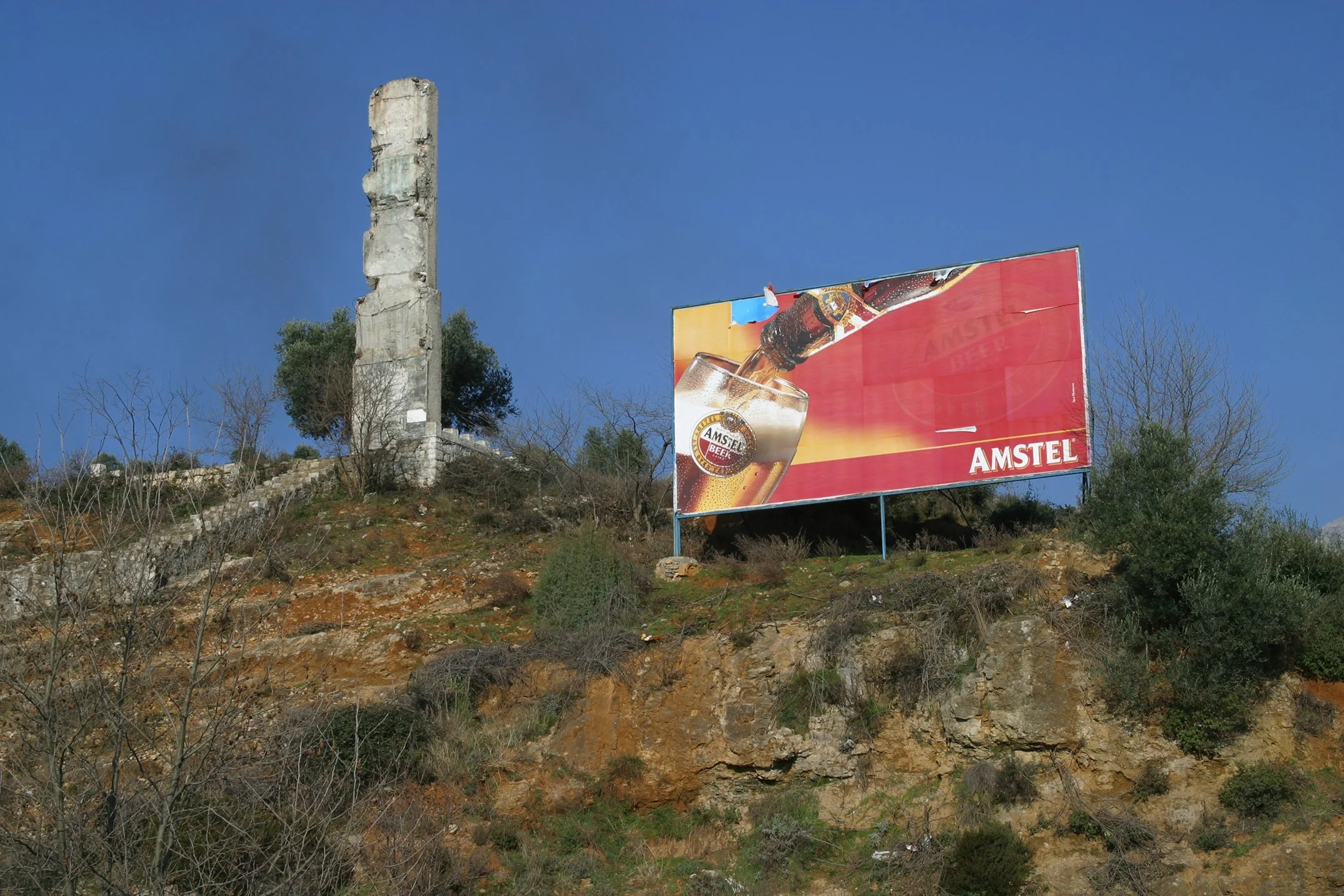
If I had to choose a single photograph, it would probably be the image of a damaged monument standing beside a large Amstel beer billboard.
The photograph worked because the relationship between the two elements was immediately visible and required no explanation. The monument and the billboard occupy a similar visual weight within the frame, yet the billboard becomes the strongest visual attraction within the image, creating a tension that can be read without any prior knowledge of the project.
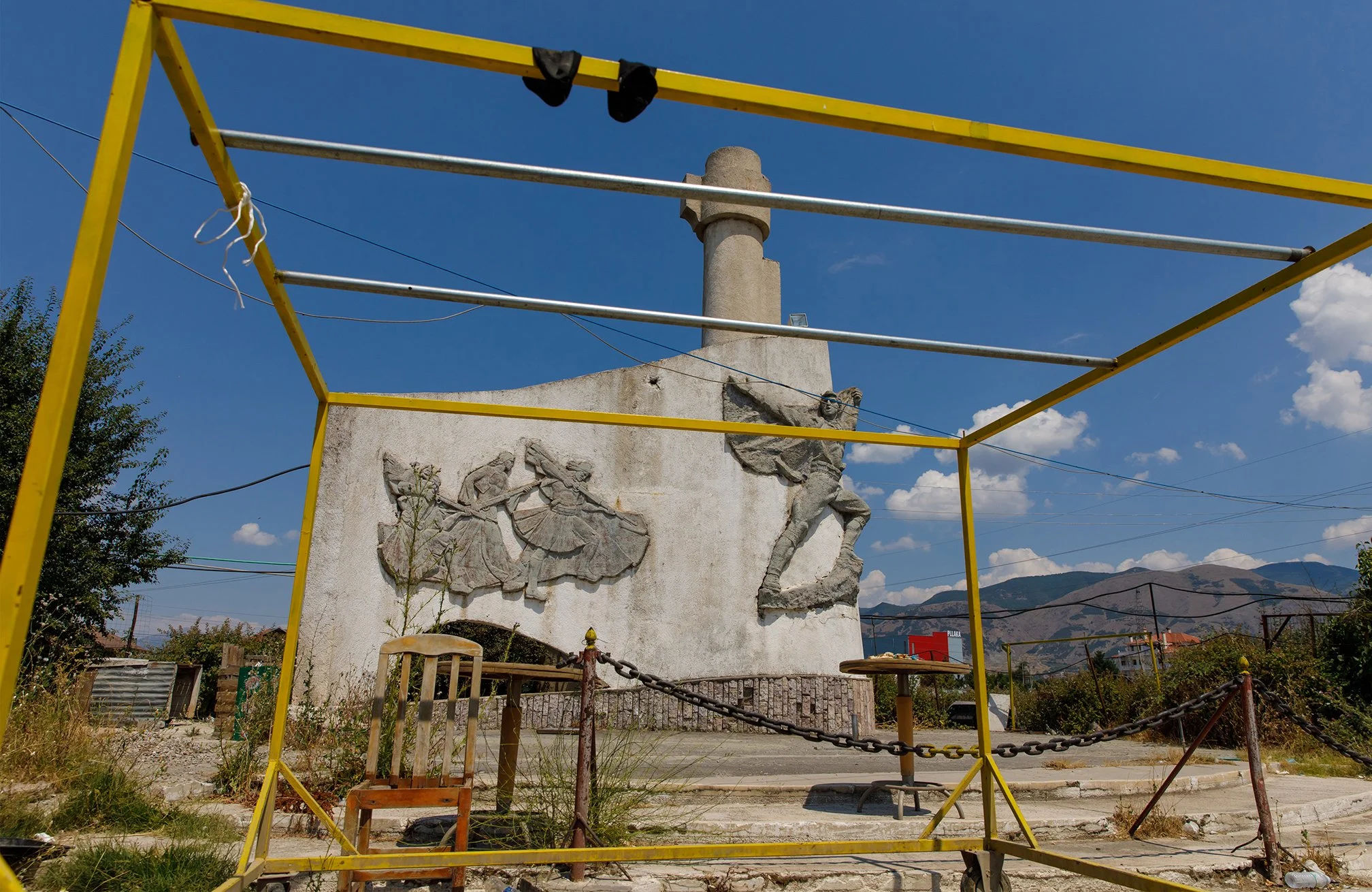
Similar situations appear throughout the project: people sitting and drinking beer in front of a monument, the structure of a car wash occupying the space before it, or a small cafe kiosk built directly against its base. In each case, the monument remains present, yet it shares its space with activities and structures that reflect the priorities of contemporary life.
For me, these images succeed because they give visual form to an abstract idea. Even without knowing the history of the monument or the context of the project, the viewer can sense that two different systems of value are sharing the same space.
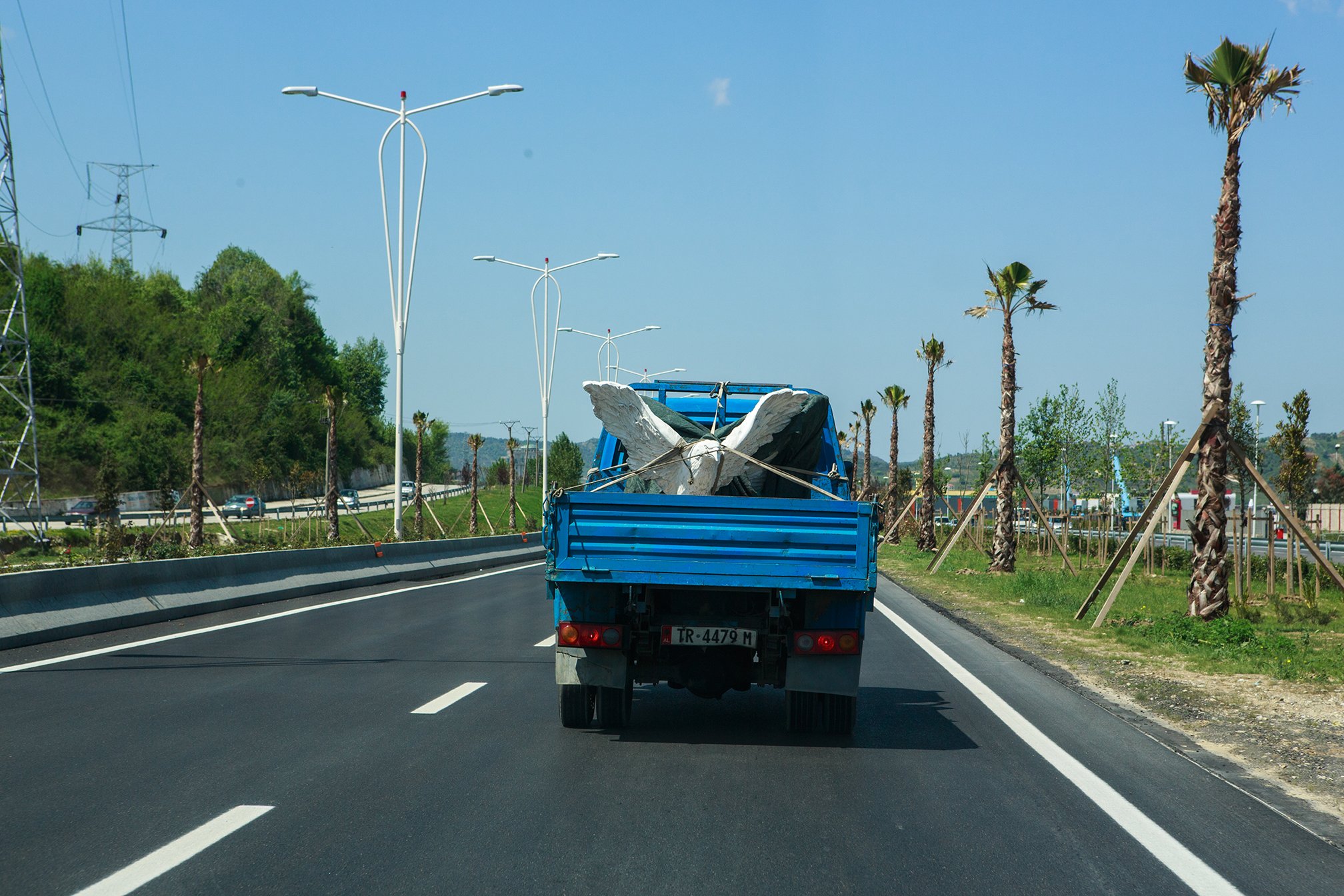
Visual approach: Many of your images place heroic symbols next to very ordinary things, like the winged sculpture on the back of a truck or the war relief framed by a yellow metal scaffold. Do you wait for those moments, or do you find them while moving through the landscape?
The situations themselves are never planned. They are discovered during my travels. What is planned is the idea behind the search. Once you have a clear theme in mind, you become more sensitive to situations that might otherwise pass unnoticed.
I am interested in the unexpected encounters that reality creates on its own. A monument may suddenly share the same visual space with a truck, a market, or a roadside advertisement. These combinations are not staged. They already exist. When I encounter such a situation, I feel that the photograph is already there waiting to be recognised.
Building the work: You developed this project over several years. Did your understanding of what you were photographing shift as time went on, and did that change which images you kept?
The central idea remained consistent throughout the project, so I would not say that my understanding changed in any fundamental way.
What changed was the level of precision with which I evaluated the photographs. Over time I became more demanding about what each image needed to contribute. An interesting situation alone was no longer enough; the photograph had to contribute to the larger conversation taking place throughout the project.
As a result, many images were eventually left out. The final body of work emerged less from individual photographs and more from the relationships established between them.
Rejected images: What kinds of monument photographs did you reject because the monument still controlled the image too much?
I was not trying to exclude monuments from the photographs, nor was I concerned that they remained visually dominant. The monument still occupies the centre of the image, but it no longer occupies the centre of attention in quite the same way. What interested me was not the monument itself, but the changing relationship between society and the values those monuments were built to represent.
The monuments are often still physically prominent, but the care once devoted to them has gradually faded. Many now exist within spaces marked by different priorities. Kiosks, bars, beer advertisements, car washes, construction materials, and improvised commercial structures occupy areas that were once maintained as places of remembrance and respect.
For me, these elements are not merely visual details. They reveal a shift in what society chooses to value and protect. The monuments were built to celebrate a particular form of heroism. Today, however, everyday concerns such as economic survival and practical needs have become more immediate and pressing.
Technical choices: The exhibition images mix colour and black-and-white photographs. How did you decide which treatment a particular image needed, and what does that choice carry for the viewer?
The decision was always made photograph by photograph.
Some images depended heavily on colour because colour itself was part of the meaning. In other cases, colour became a distraction and black-and-white allowed me to concentrate attention on form, structure, and relationships within the frame.
I do not see colour and black-and-white as opposing languages. They are simply different tools, and each photograph suggests which one it needs.
Collecting images: Were there specific regions or types of monuments you focused on, and how did you decide when you had enough material?
I did not begin with a list of monuments. The project developed gradually through my travels across Albania.
What mattered was never the monument itself, but the situation surrounding it. Some monuments are well known, others relatively anonymous, yet their historical importance was never the deciding factor.
I knew the work was complete when the photographs began to speak to one another and the project found its own internal coherence.
Sequence and edit: The project references Pierre Nora's idea that memory forms can survive even after the emotional connection fades. How did that idea guide you when choosing which photographs to keep and how to order them in the book?
Pierre Nora interested me because he writes about monuments and memorials as physical forms through which societies preserve memory and give permanence to certain values. What I found particularly relevant was the idea that these forms can continue to exist even when the relationship with them changes.
Many of the monuments in this project seem to exist within precisely that condition. They remain physically present, but their presence alone does not necessarily guarantee the same symbolic function they once had.
This idea influenced the sequencing of the book. Rather than organising the work chronologically, I looked for visual relationships, echoes, and contrasts that could gradually build a larger reflection. In this sense, Nora's ideas helped me think about the persistence of form, while the book itself explores the meanings that continue to be reinterpreted around it.
Visual relationships in the sequence: What visual relationships were most important in sequencing: scale, gesture, interruption, irony, or something else?
More than scale or gesture, what mattered most in the sequencing was how strongly each photograph reflected the central idea of the project. I found myself drawn to images in which coexistence and, at times, irony revealed themselves naturally within the frame.
As I edited the work, I paid particular attention to how different photographs contributed to the rhythm of the sequence. Some relationships were immediately visible, while others revealed themselves more gradually.
Priority was given to images that expressed this condition most clearly. Some photographs do so directly, while others are quieter and more nuanced. I wanted the viewer to discover these relationships gradually rather than feel that the same visual statement was being repeated from image to image.
For this reason, the sequence was not built around chronology or around specific monuments. Instead, it developed through recurring visual situations that, together, reinforced the central idea of the project.
Keeping the work alive: How did you avoid making the project feel like a repeated visual thesis instead of a living body of photographs?
I think every long-term project faces that risk.
The idea behind the work remained consistent, but I never expected every photograph to carry the same weight or perform the same role within the sequence. Some images are immediate, others require a slower reading. Some function through composition, others through detail, atmosphere, or visual surprise.
While editing, I became increasingly interested in variation rather than confirmation. If a photograph only repeated something that had already been said by another image, it became less important to the sequence. I was looking for photographs that could shift the pace, introduce a different mood, or open another way of looking at the work.
In that sense, the sequence was built as much through differences as through similarities. The photographs may belong to the same body of work, but they do not all speak with the same voice. That variety was essential in keeping the work alive.
Challenge: Photographing public monuments means working in open spaces where ordinary life keeps moving. What was the hardest thing to control, and what did you learn to leave to chance?
The hardest thing to control was reality itself.
Public space is unpredictable. People move, traffic changes, construction appears and disappears. Over time I realised that these interruptions were often the most important part of the photograph.
The project taught me to trust observation more than control. My role was not to organise reality but to recognise when reality had already organised something interesting on its own.
Taking it further: Do you think photography is the right tool for showing how collective memory fades, or does it risk making forgotten things look more poetic than they really are?
I am not sure I would describe the project as being about collective memory fading. For me, it is more about observing how different realities coexist within the same frame.
Photography felt like the right medium because it can hold several layers of meaning together without explaining them. A monument, a billboard, and everyday life can exist side by side and create their own dialogue.
As for poetry, I do not see it as something that distances us from reality. For me, the question is not whether a photograph is poetic, but whether it remains true to the idea it is trying to explore.
I hope the photographs encourage viewers to reflect on how societies shift their attention and how that changes the way certain values are recognised over time.
To discover more about this intriguing body of work and how you can acquire your own copy, you can find and purchase the book here. (Link not available yet)
More photography books?
We'd love to read your comments below, sharing your thoughts and insights on the artist's work. Looking forward to welcoming you back for our next [book spotlight]. See you then!
The street is boring until you learn what to notice. Most of the time, nothing special is happening. Photography Book Spotlight