João Linneu Photographed His Son’s NICU Stay. 10 Years Later, It Became A Book About Fear, Care, And Survival
Welcome to this edition of [book spotlight]. Today, we uncover the layers of 'JJ VFF VV,' by João Linneu (published by Void). We'd love to read your comments below about these insights and ideas behind the artist's work.
João Linneu photographed fear before he understood it.
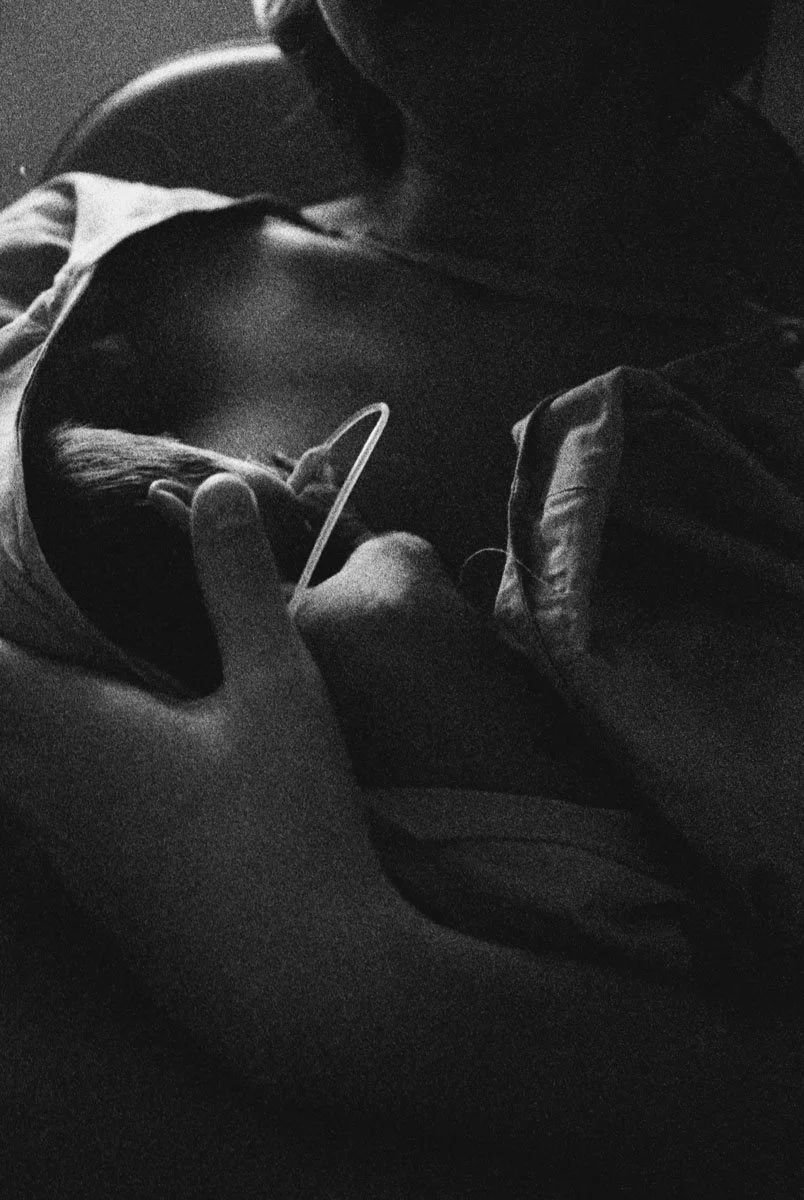
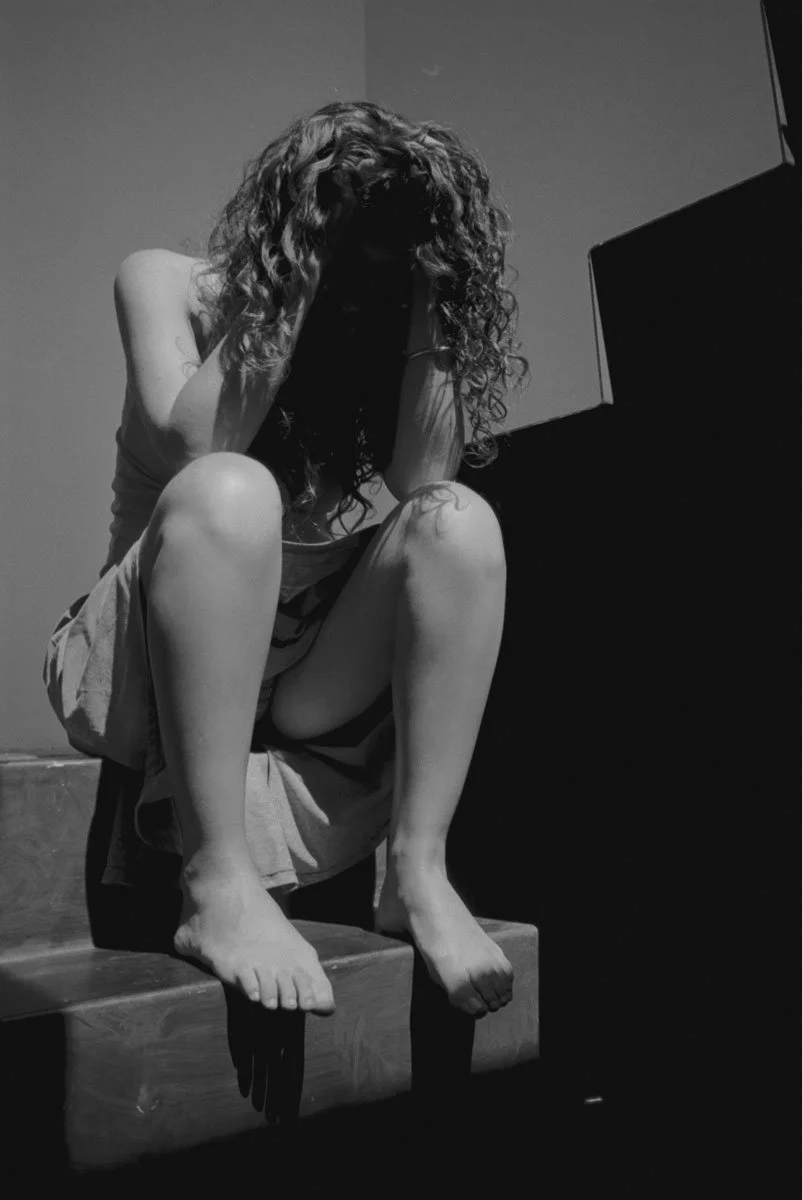
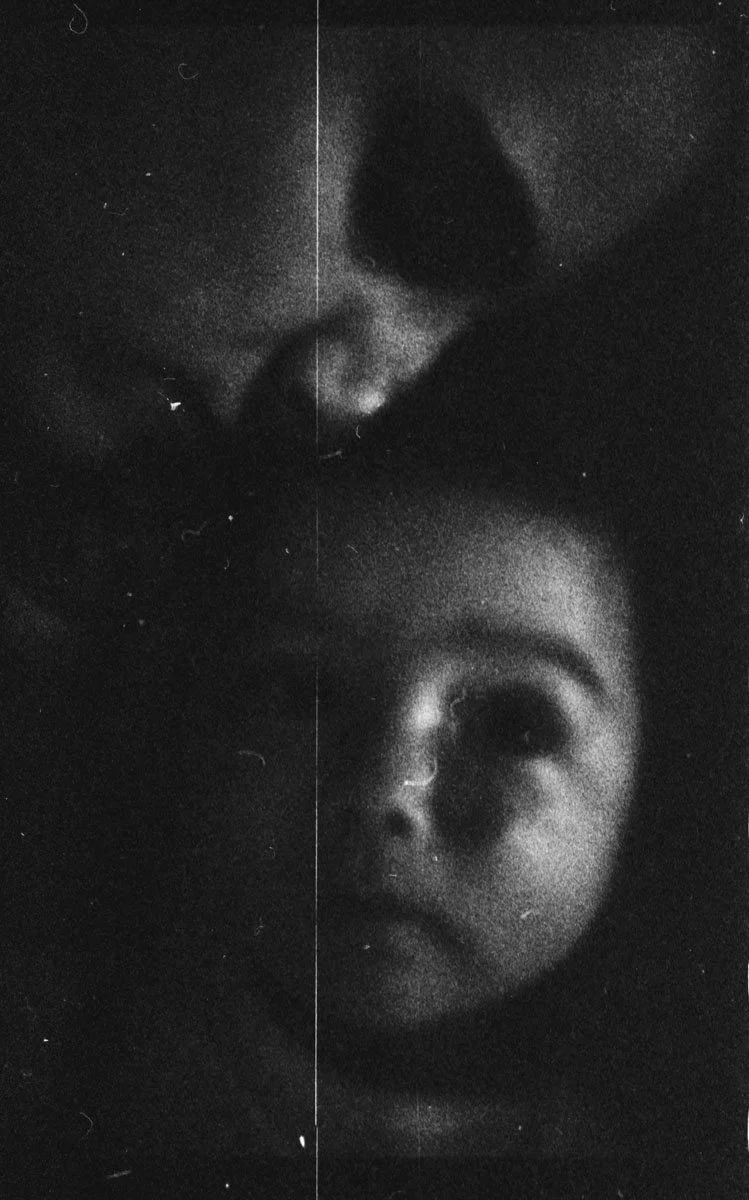
When his son Valentín was born at 31 weeks and 1 day, photography was not a project yet. The first days in the NICU (Neonatal Intensive Care Unit) were filled with uncertainty, hospital rules, limited visits, and the simple need to stay present. Only later did the camera become a way to face what was happening and keep a record of what the family was living through.
JJ VFF VV is a book made from care, control, and time.
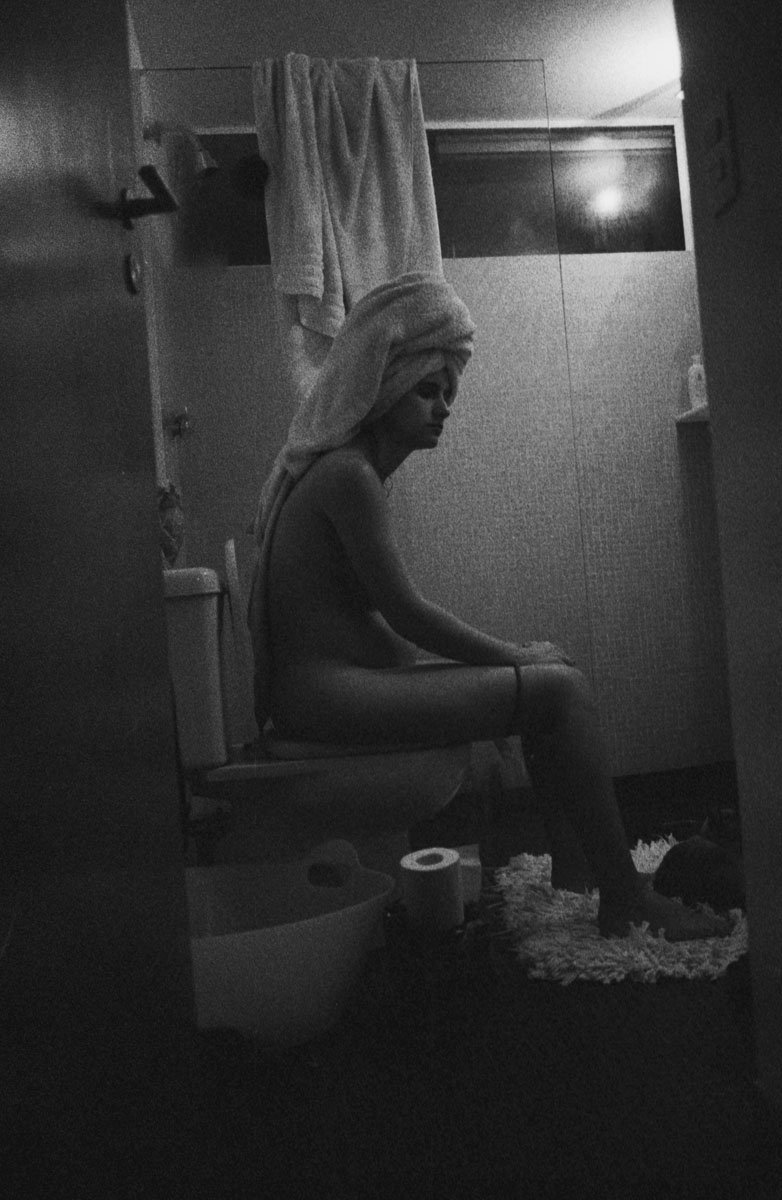
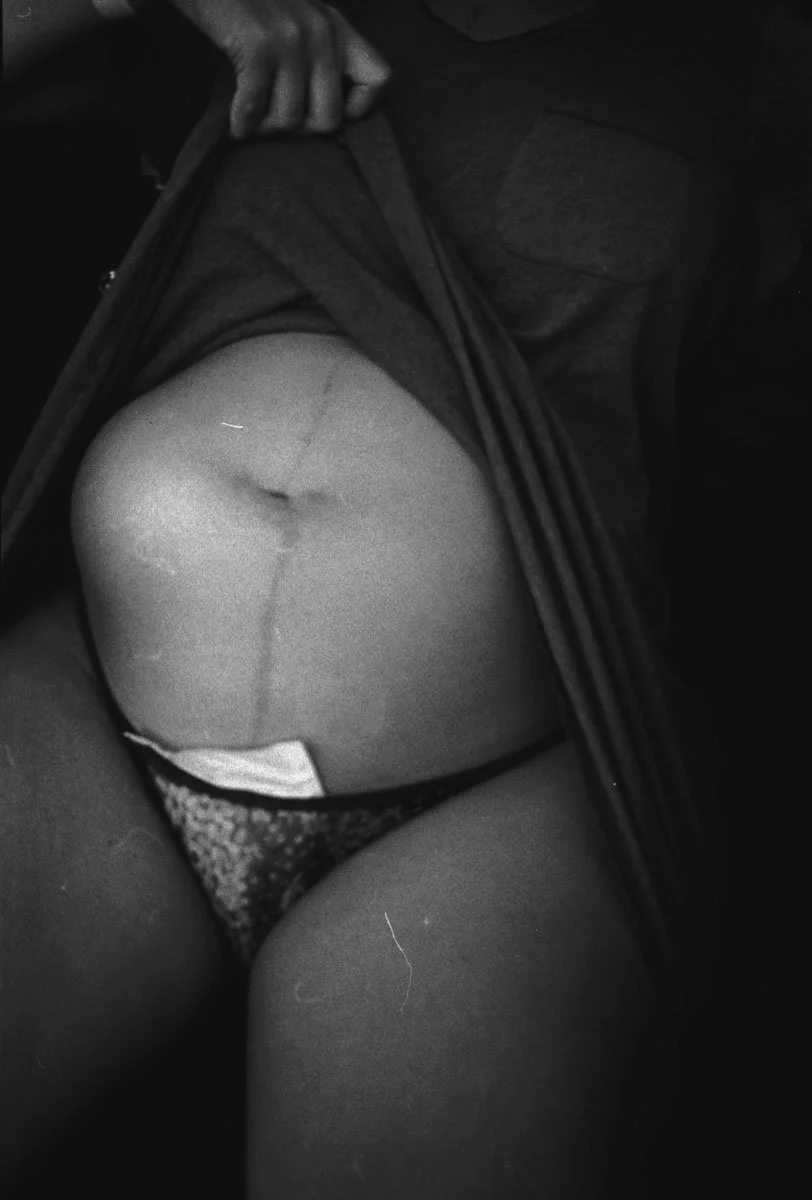
It brings together family photographs, medical records, hospital memories, São Paulo street images, and Valentín’s own drawing, which became the title and cover of the book. João Linneu waited 10 years before publishing it, partly because he wanted his son to understand the work and feel comfortable with its existence. In this interview, he speaks about fear, parenthood, hospital restrictions, collaboration with Fernanda Fajardo, and the difficult moment when a private archive becomes public.
Linneu explains why he kept the medical data factual, why the book follows time instead of drama, and why distance was needed before editing the material. JJ VFF VV offers a clear lesson: sometimes the strongest book is not made by adding emotion, but by giving the experience enough structure, patience, and respect.
The Book
JJ VFF VV by João Linneu is a deeply personal photobook about the premature birth of his son Valentín and the family’s experience inside the NICU. Made from photographs, medical records, hospital memories, city images, and Valentín’s own drawing, the book looks at fear, care, control, and the need to preserve a moment that was almost impossible to understand while it was happening. Linneu waited 10 years before publishing the work, giving the experience enough distance and giving Valentín time to understand the book himself. The result is a quiet but powerful family archive about survival, parenthood, and the fragile line between private memory and public testimony. (Void, Amazon)
Genesis: When Valentín was born at 31 weeks and 1 day, weighing 1520 grams, did you start photographing immediately, or did you need time before you could pick up a camera?
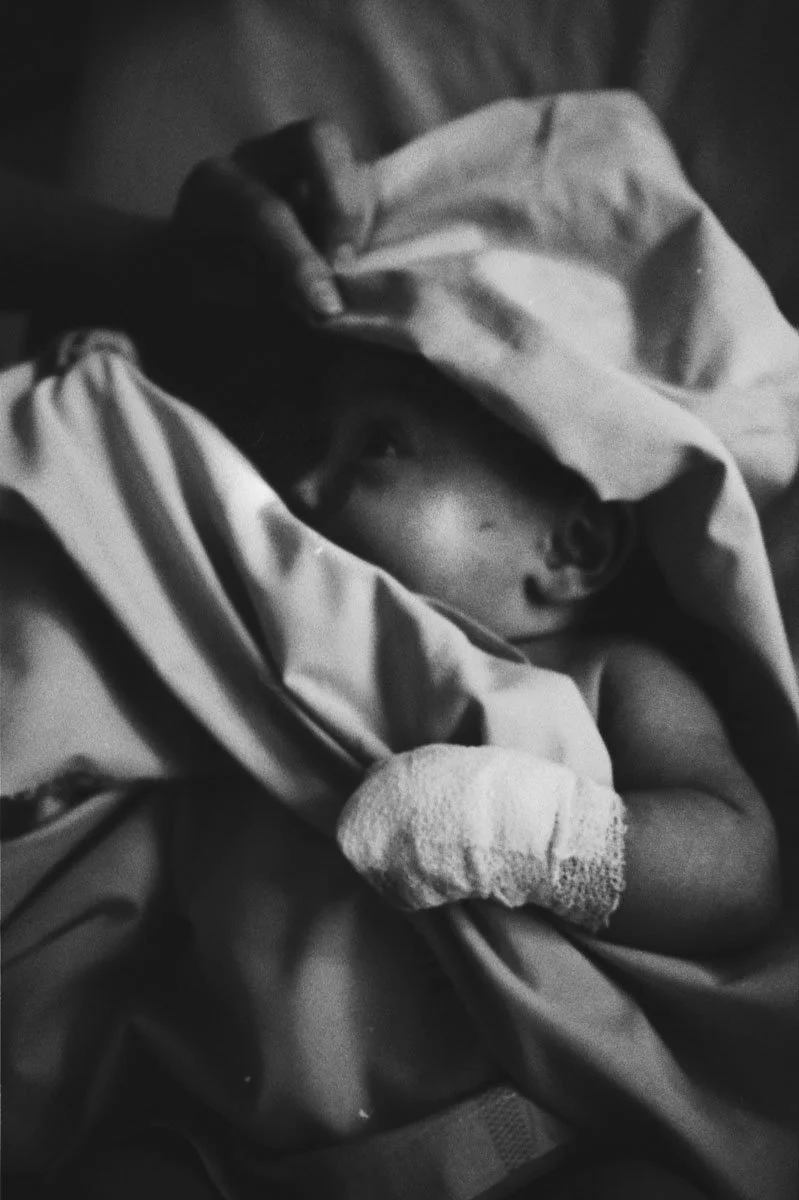
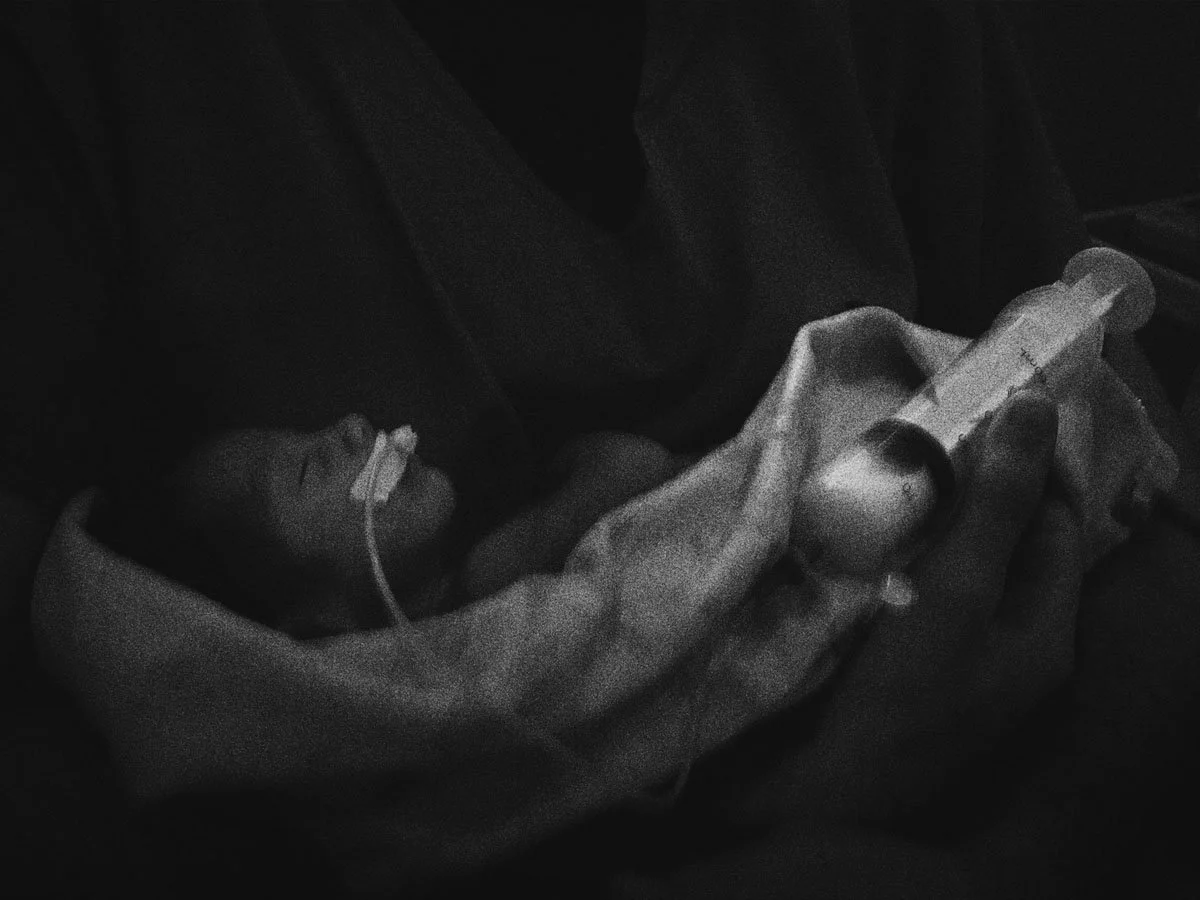
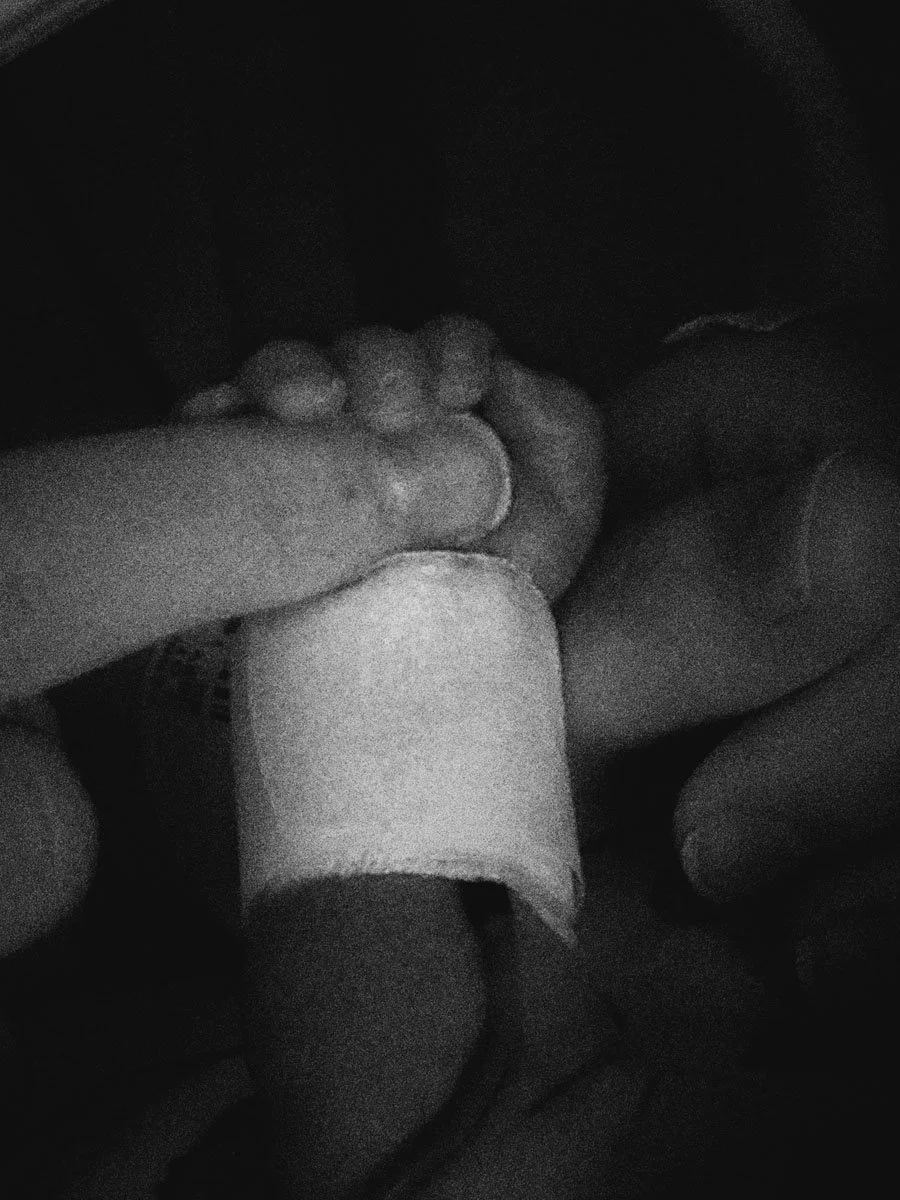
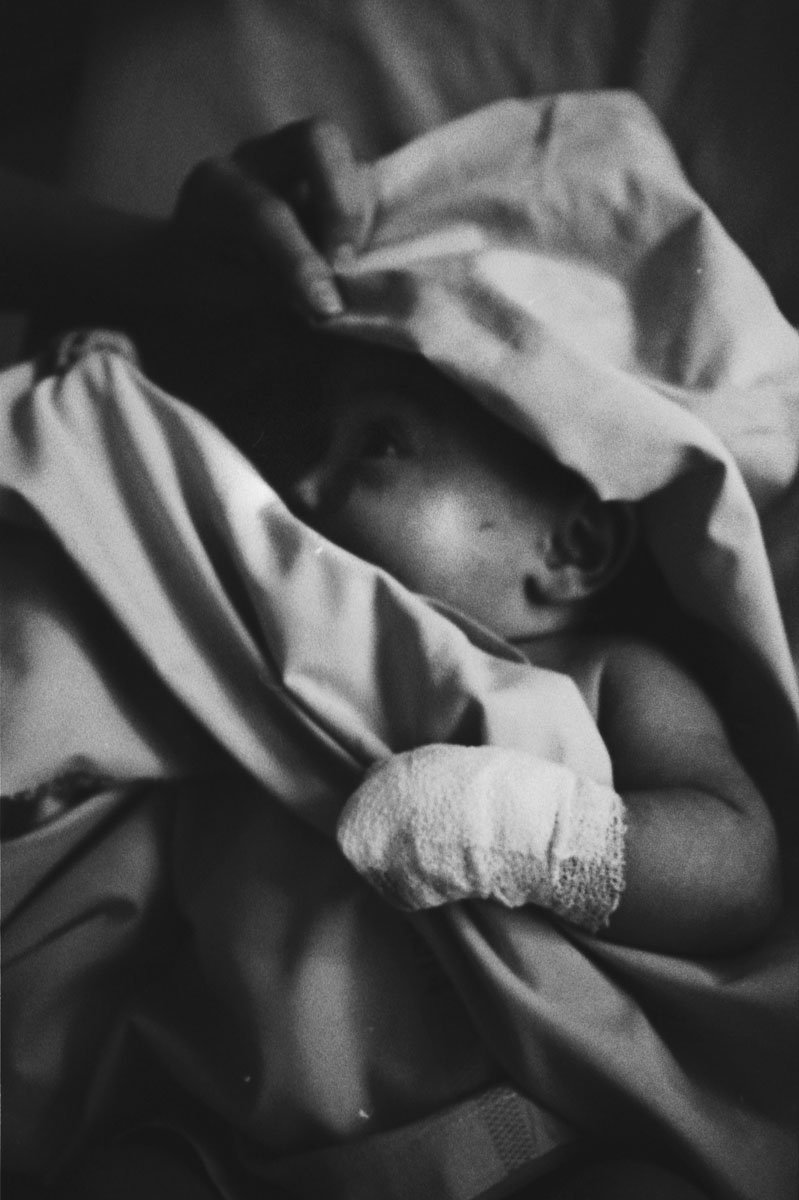
Valentín was born unexpectedly, in a period that I was photographing frantically. But the first week at the NICU (Neonatal Intensive Care Unit) was tough and full of uncertainties. I didn’t photograph in there. My mind and concerns were elsewhere during the very limited time I had with him (fathers had only three 45-minute visits a day). Furthermore, the hospital had a very strict rule about photographing one’s own kid. They allowed me to do one photo at the birth, though. Mostly because as soon as Valentín was born, he was rushed to the incubator, and the doctor, knowing that Fernanda didn’t see him, allowed me to do a photo for her. She would only meet him again the next morning. These first days were quite tough, and as much as I didn’t have the drive to shoot him initially, I have done many images of our lives during this particular period, which made it into the book. I don’t recall exactly, but it was only after a week or so, when all of that sank in, that I had the urge to photograph him.
Collaboration: The book credits Fernanda as a co-author and Valentín for the illustrations. How did you three decide, even implicitly, what this book would be?
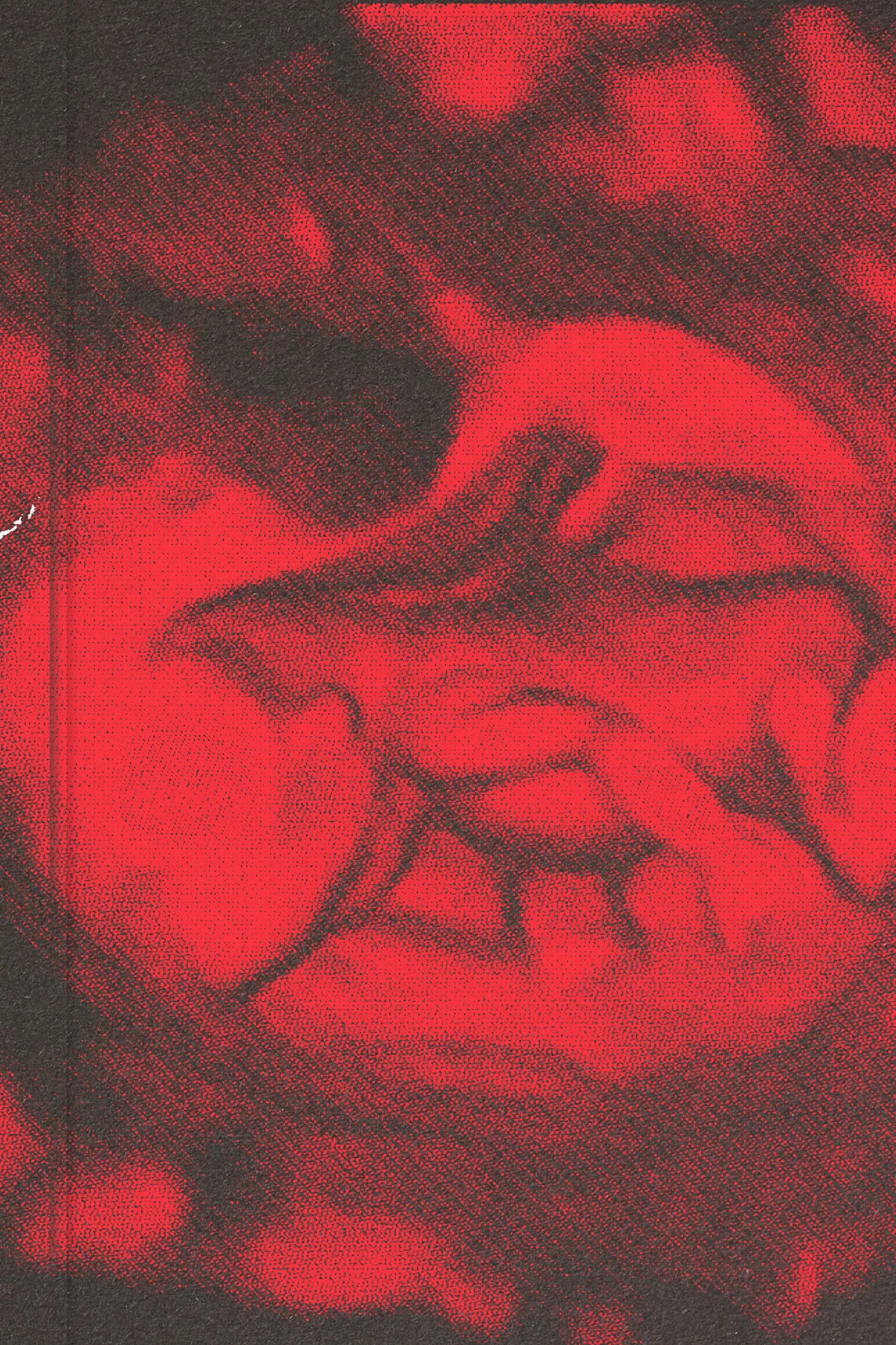
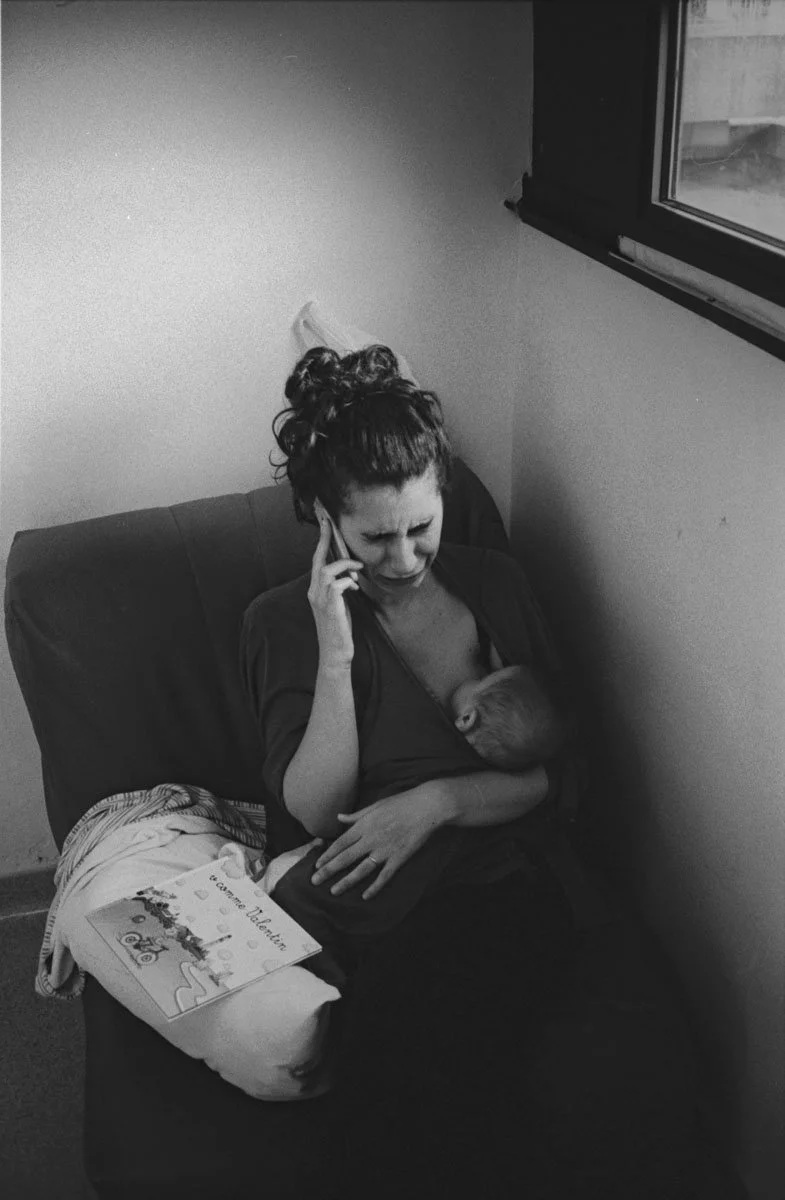
The book portrays a real-life performative act of three people trying to move life forward. For an incredibly long time, it was the three of us alone, doing whatever possible to keep each other strong and alive. This was a collaboration that made the book possible. However, in more practical terms, Fernanda was also a photographic collaborator. There are a few images done by her in the book. Most of the photos were taken with the point-and-shoot cameras that I had around. At times, Fernanda would grab them and take photos of me. Or, even, when she was hospitalised, she took with her one of these cameras, and a couple of rolls. Finally, Fernanda and I were sneaking some images from inside the NICU – we know who did a few of those, but for many, we don’t. In the end, there are a handful of her images in the book. And, much later, during Covid, back in 2020, I went to an art residency in Reykjavík (before moving here, definitely) for trying to make sense of the thousands of images I had preselected for an eventual book. Valentín, knowing I would be away for two months, drew a self-portrait with the words “JJ VFF VV” so I could remember him. This became both the cover and the title of the book.
Access: You were photographing inside the NICU while your child was in an incubator on CPAP. What did the camera give you in that situation that nothing else could?
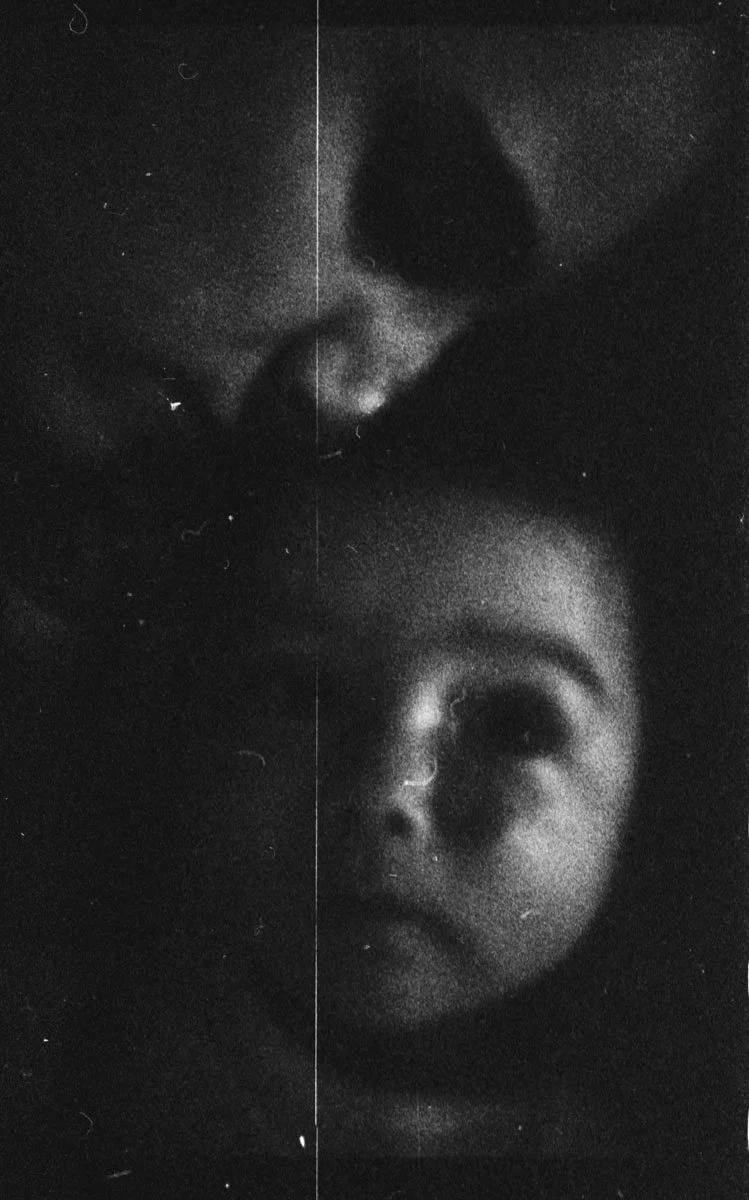
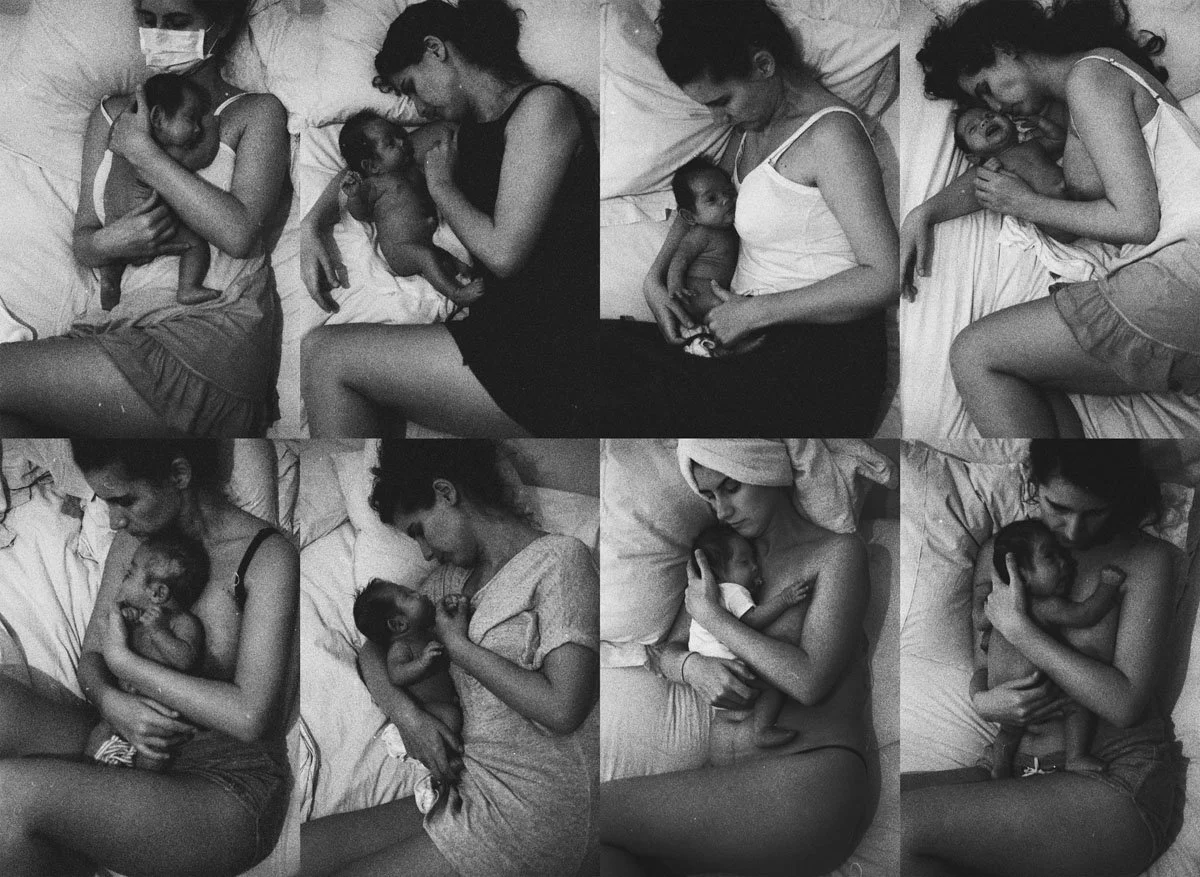
As I mentioned before, the hospital didn’t allow photos of our own kids. And this was infuriating. On one hand, they have the good intention of protecting the babies' right to privacy. But there was a big problem overlooked. We are culturally and commercially brainwashed to believe that a pregnancy is a magic ritual, and that a newborn baby is something akin to the ones from a Pampers advertisement. Coming daily, for months, to a neonatal intensive care unit teaches us that babies are not like what Pampers told us. Many were born with uncommon conditions (hydrocephalus, brittle bone disease, haemangioma, etc.), and I can’t stress how unprepared we are for the scenario that our baby might have something that differs from the expected. What we saw there were parents truly cherishing their kids. Proud that their babies are strong enough to be alive despite any adversity. Depriving these parents of treating their babies as any other, stripping their pride, is cruel. Especially if you think that many of these babies will never leave that ward, and their extended families would not have a register of their relatives.
This led me to write a letter to the NICU director addressing this sentiment and requesting permission to photograph Valentín. I mentioned how cruel it is to have a poster of a chubby blond, blue-eyed baby (in Brazil!), making “shush” in the same room as mothers holding hydrocephalus newborns. And if these mothers are not allowed to show their kids as any other, we will perpetuate the stigma of what a baby should look like.
I was allowed to come with a camera, only once a day, under the supervision of a nurse.
Long answer to say that the camera gave me a tool to stand up to this situation. Allowed me to be proud of Valentín and Fernanda’s strength.
The data log: The book includes a day-by-day medical record of the NICU stay, tracking weight, ward, tube, and breathing support for each date. Why was it important to include this data next to the photographs?
I kept that record for our own control. It was never intended to be part of an art project. The hospital that Valentín was in is not known for its hospitality and good doctor-patient communication. We were patronised a lot. And at some point, I realised that I should keep my own track of information and not rely on their reports. It only made it into the book because I wanted the reader to have enough context to understand, if they want, what the journey was. However, I didn’t want to write my own words for it. It would, undoubtedly, be either too dramatic, poetic, or romantic. And I wanted the book to be pH7. Just the facts. So, I gave facts and lists. I had this approach to the whole making of the book. Images are placed (almost) identically throughout the book. The sequence is also in chronological order.
The glossary: The back of the book translates all the medical terms into plain language. Was this for readers, or also for yourselves at the time?
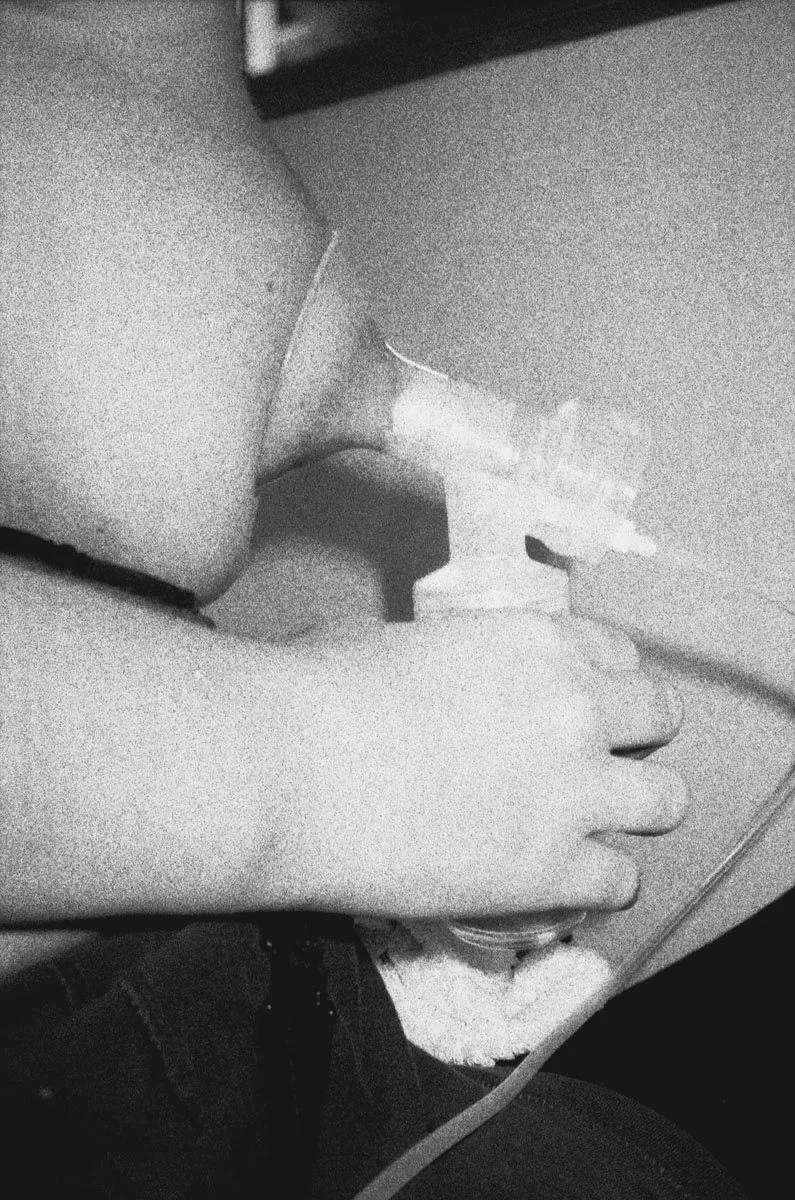
At the time, the feeling of uncertainty was so big that I had the need to control and keep track of things. You long for stability. I think this is the drive behind not only these lists, but also the photography I was doing at the time. It is a vain attempt to preserve what you are experiencing, the weird medical names you learned (without ever having wished for) and intertwined with them, books I was reading in the waiting room, songs we were singing to Valentín in the incubator, series that Fernanda was watching while milking for the orogastric tube, and so on. That list is a capsule of that moment in time, when we were locked inside this hostile environment, but still carrying our lives.
The book has quite several pages, so it can give the reader a perspective of the dimension of what we went through. For the same reason, I kept this list in the book. It gives an insight into all the holy mess that our lives were. It puts the reader in our headspace.
The HC list: You named every nurse, doctor, nutritionist, and caregiver who was part of this experience. What made that feel necessary for the book?
In the end, this is also another layer of context for the reader. But, honestly, it is mainly a tribute to those who supported us. This last list has “people”. Not only the staff, but everyone who surrounded us. Mothers, fathers, and babies we met, and even… Ernest Hemingway! He was good company. I probably read three of his books in that waiting room.
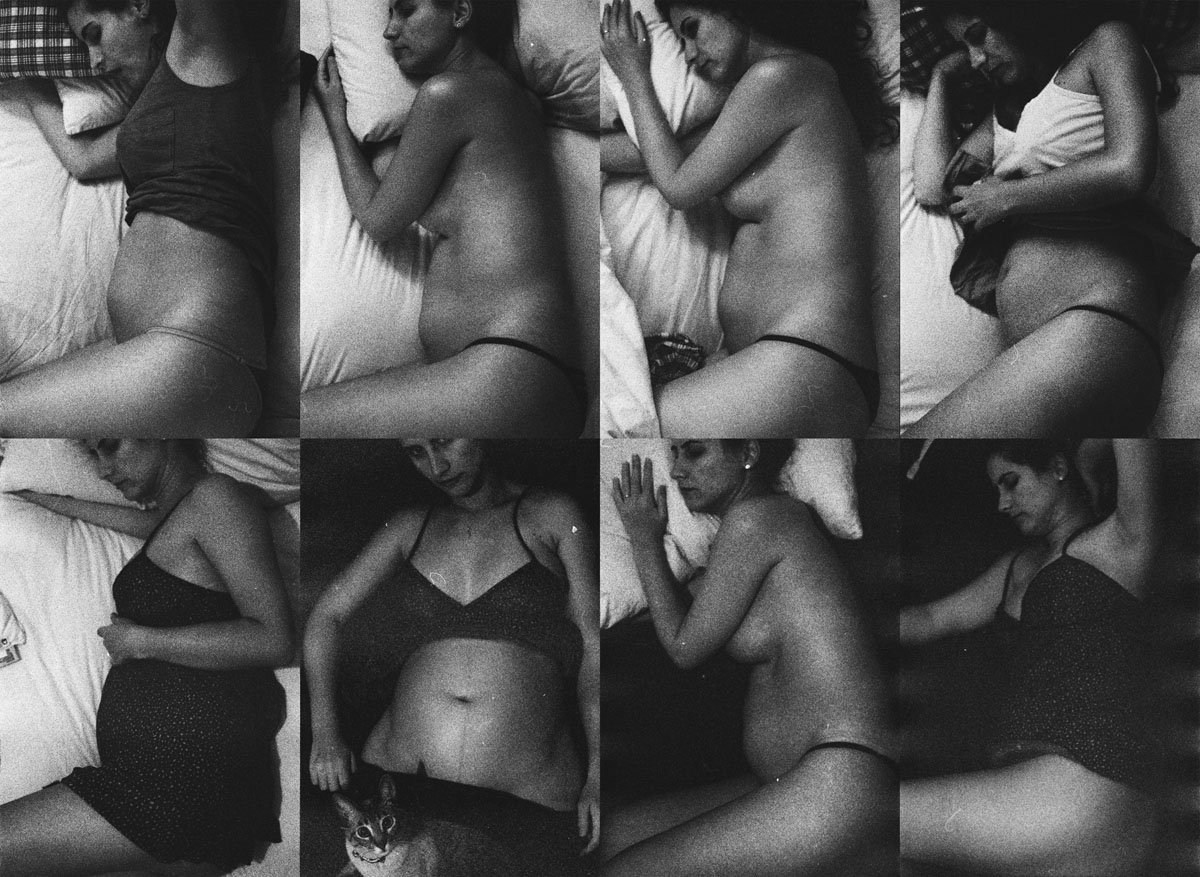
Sequencing: Some sections show eight photographs per page in a tight grid, and others give a single image the whole spread. How did you decide which images needed space and which needed to be seen together?
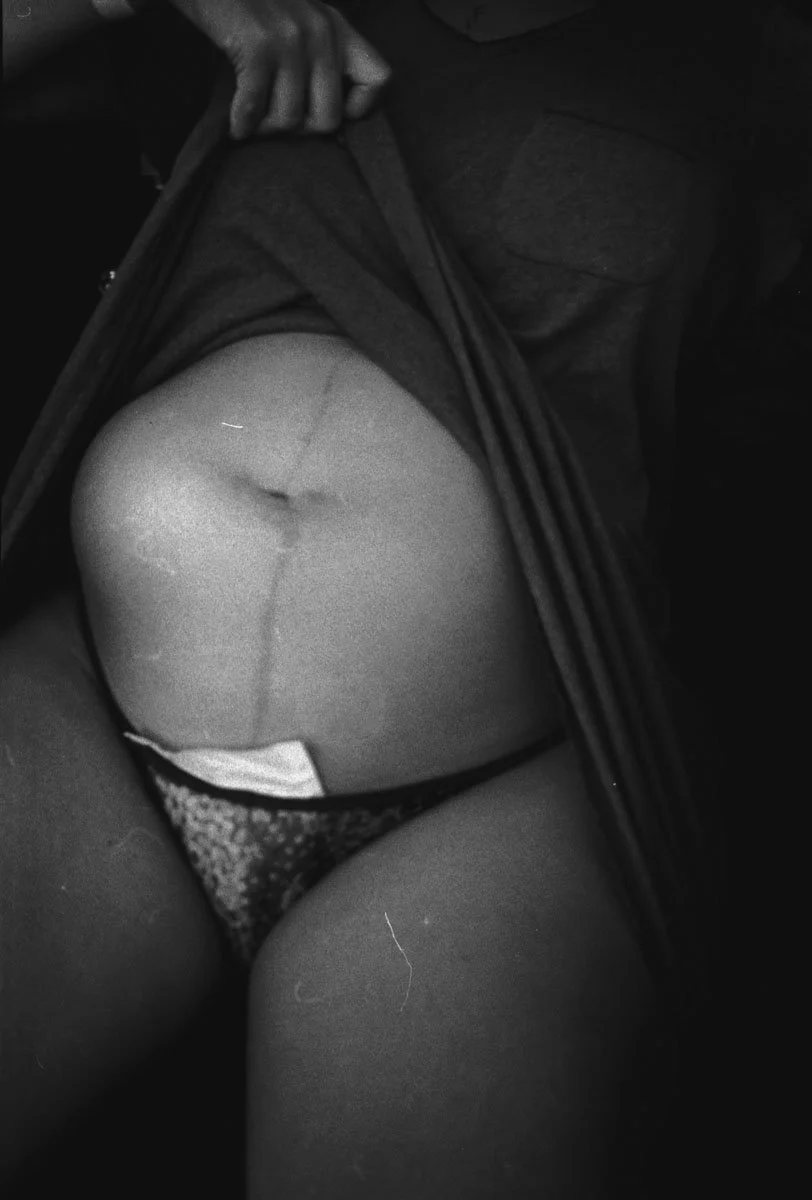
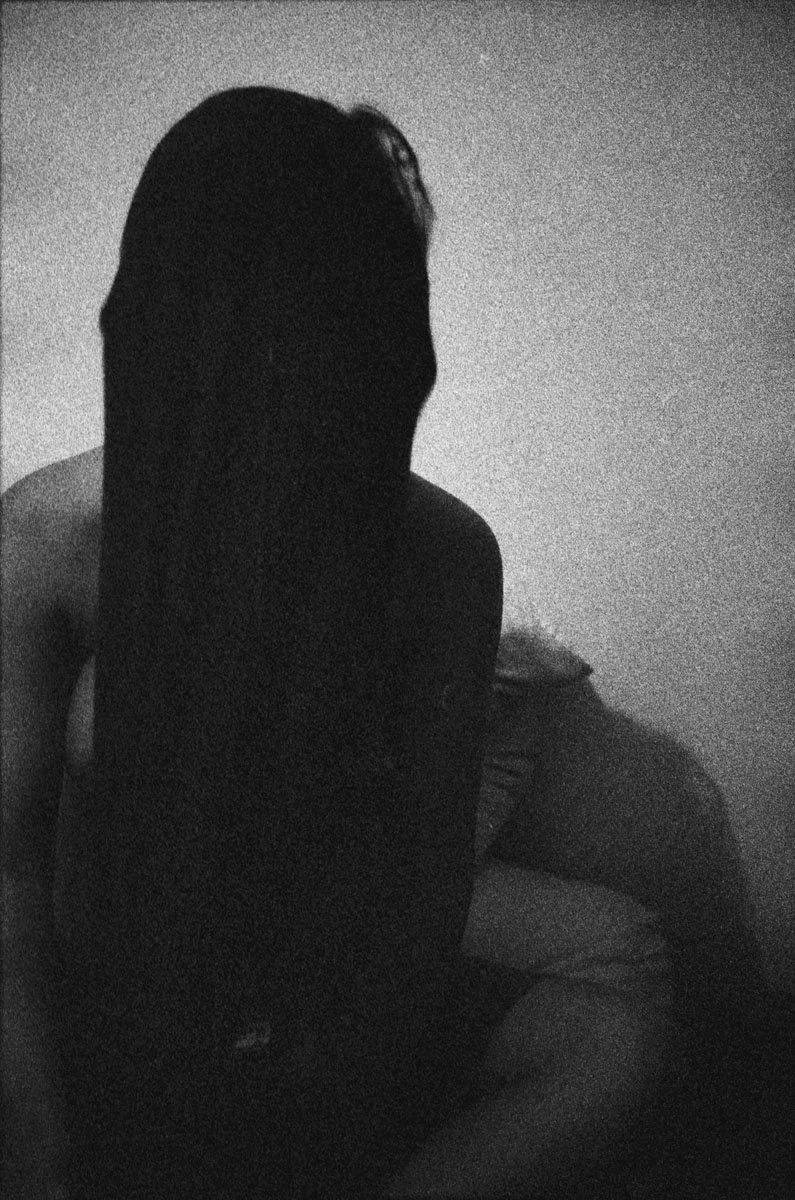
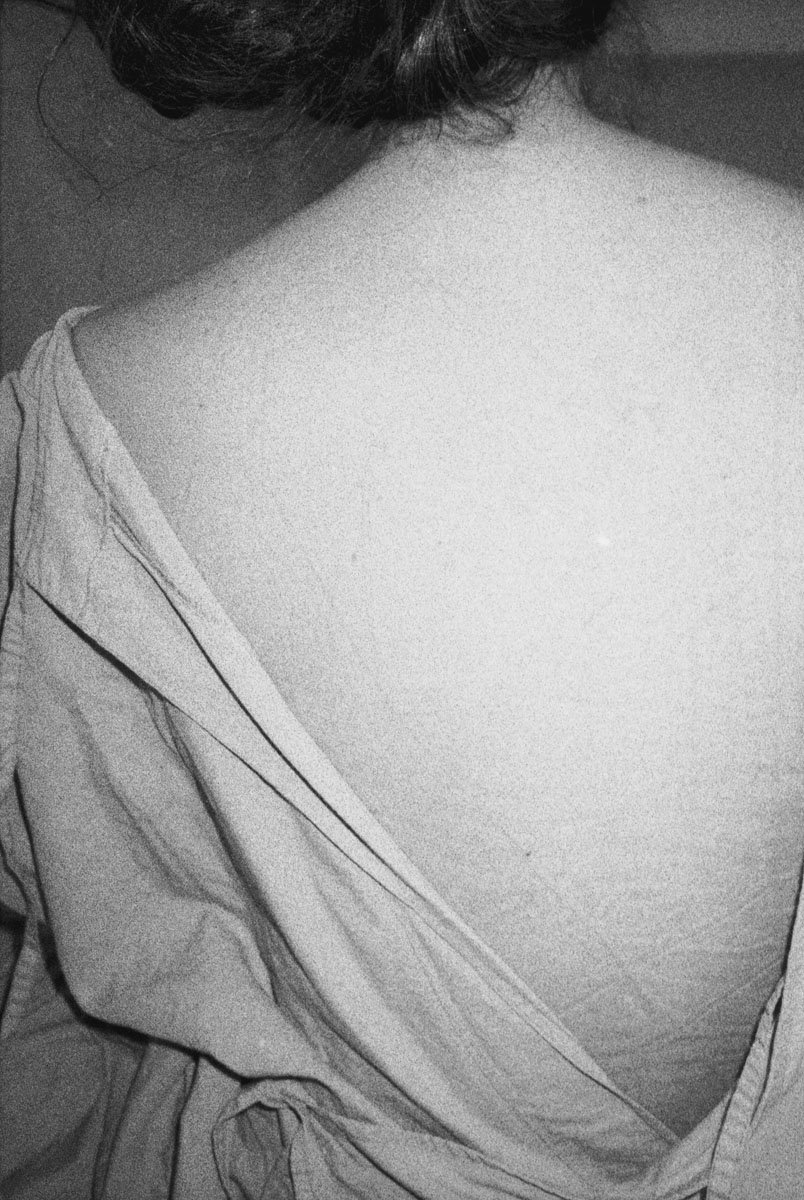
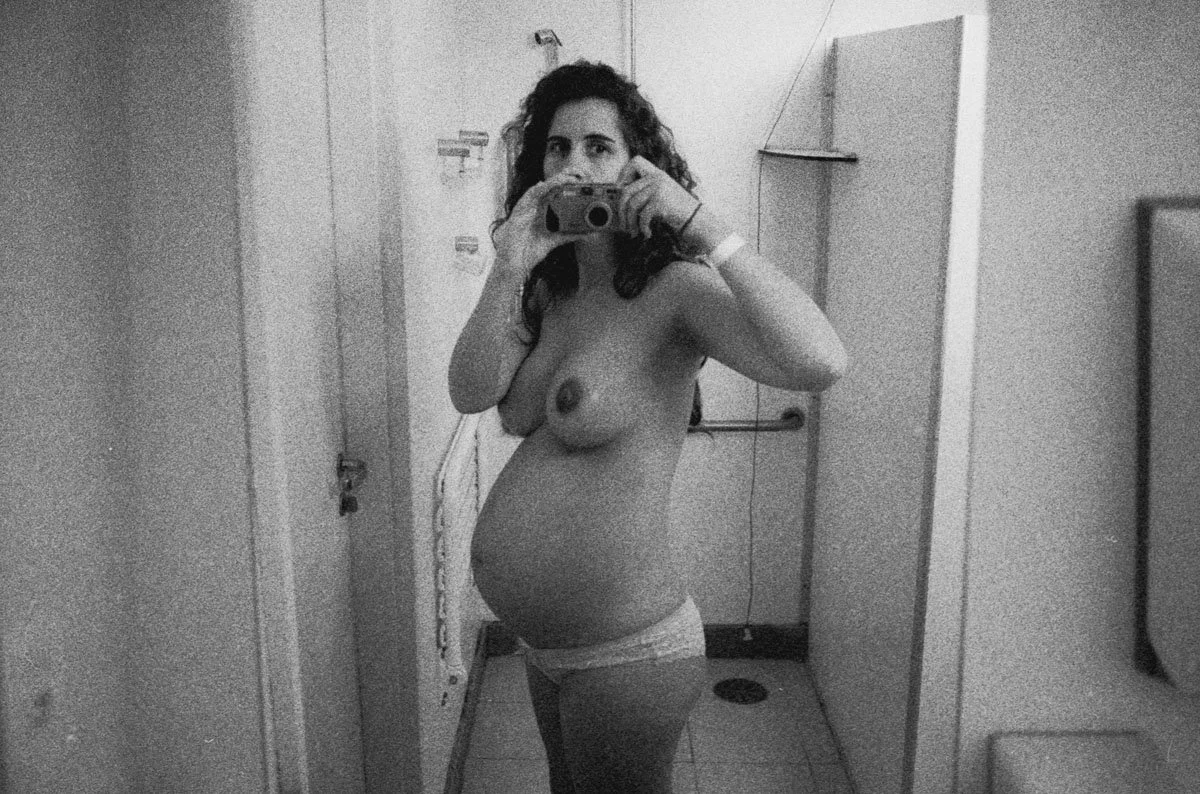
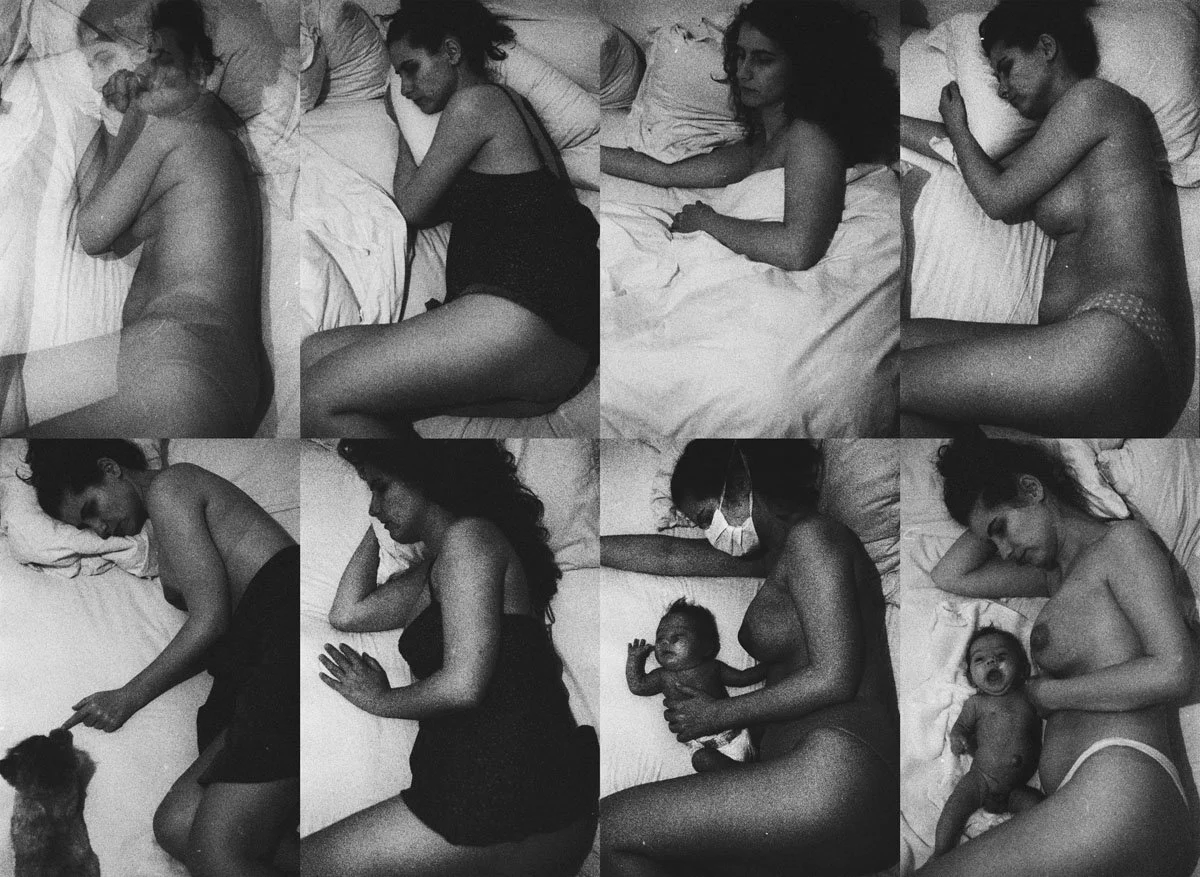
As I mentioned before, the book is ordered chronologically. The grids you mentioned are, ironically, what I thought would be a cute little pregnancy project (before things went south). When Fernanda found out she was expecting, I grabbed an old reflex camera, and once a day before sleep, I made one photo of her. This way, I would have nine months of photos of her belly growing. Nothing serious. The kind of silly thing someone that just found out that he will be a father wants to do. When doing the book, I decided that these photos could be used as a metronome. It sets the rhythm. Gives a sense of time passing and establishes moments, like when the bed is empty, because Fernanda is hospitalised.
The city: São Paulo appears alongside the domestic and hospital spaces. When you stepped outside during this time, what were you looking for?
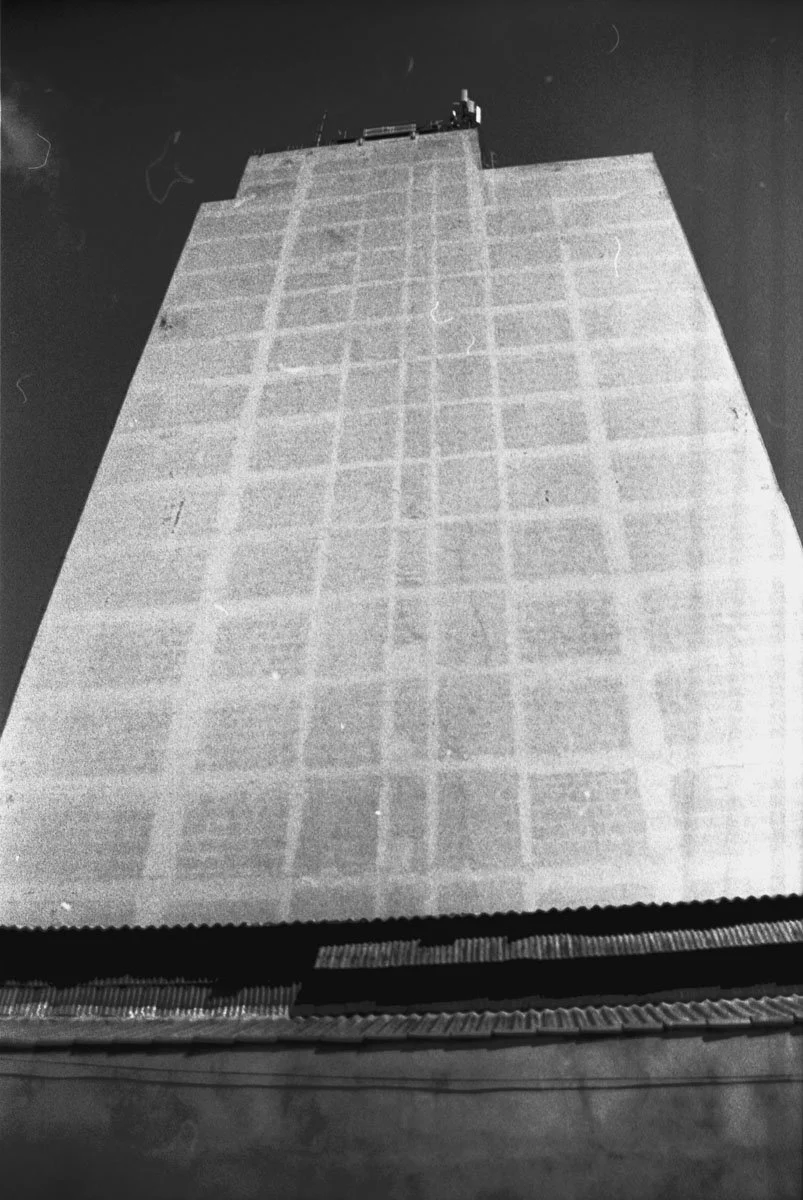
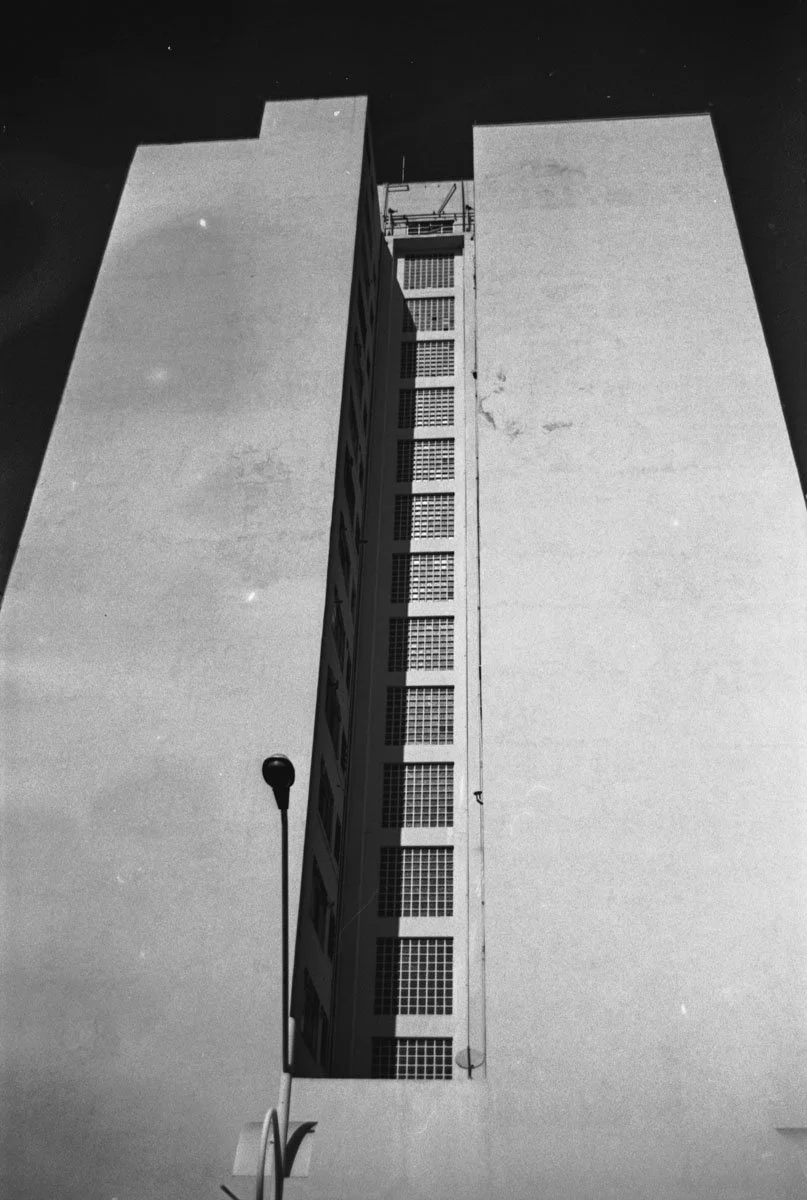
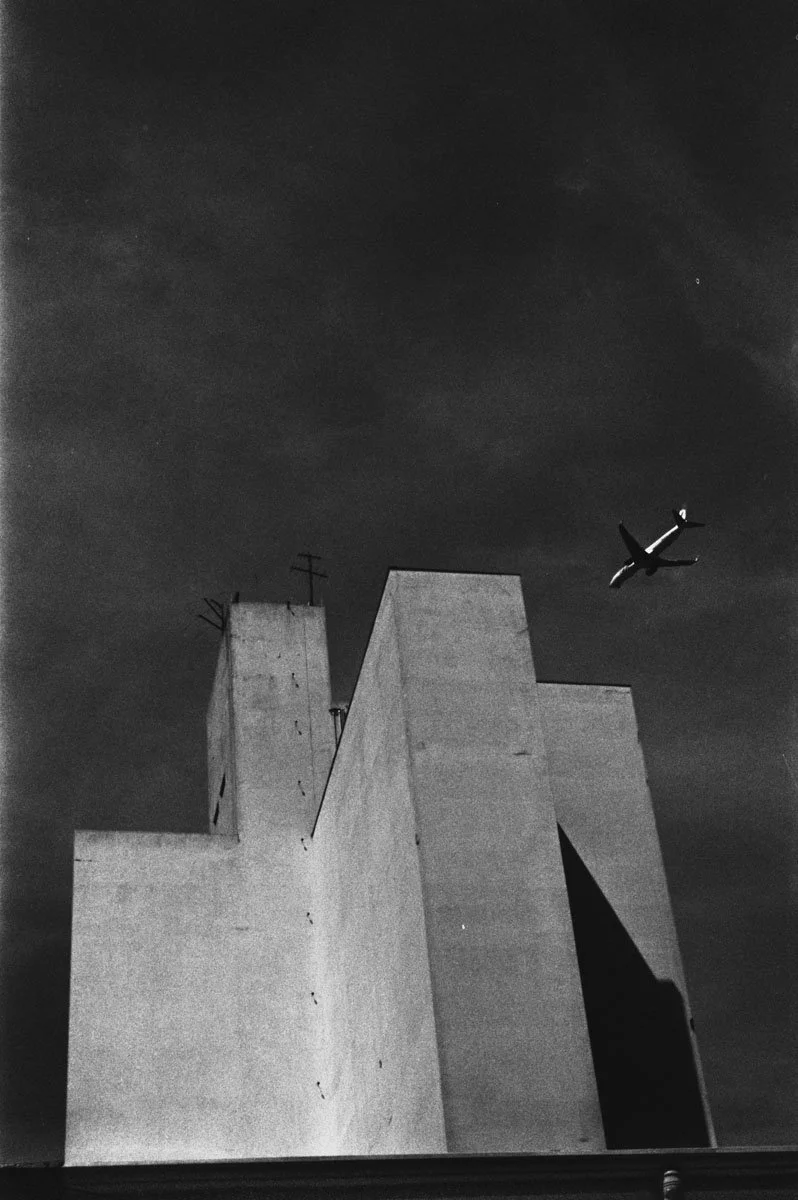
I was photographing blind façades of São Paulo for about seven years at that point. I am not from the city. I come from a much smaller town in the state’s countryside, and I never felt a sense of belonging in that huge metropolis. These blind façades are architectural aberrations that appear to me as the synthesis of São Paulo’s vices and chaos. I have mapped all blind façades I could find (about 3,000), and through the years, I photographed them. The ones seen in the book are just a small fraction of those. When Fernanda was hospitalised and could only be visited for one hour a day, I had to have my head elsewhere, and I used that time to wander the city to accomplish my goal of covering all the façades. It was, at that moment, very therapeutic.
Time: The book was made from an experience that happened more than ten years ago. What changed in the making of it between living it and turning it into a book now?
First of all, I wanted to give Valentín time to understand what the book is. Despite being quite a dark and heavy publication, we showed him a first draft when he was seven years old. He felt very proud of himself and his mother. However, it was very unclear if that was a transient feeling or not. I didn’t want to have a book printed, and having him regret its existence later on. He has lived with a dummy of this book at home ever since, and has seen it several times. His feelings never changed. Still proud of himself and Fernanda. I trust that his won’t change, and this empowered me to go ahead with its publication.
Then, on what changed… Grieving. You have to go through all the stages so you can look back at the work and have less emotional attachment. To be more objective when editing and designing. I am not sure this kind of work would benefit from being done while you are still in pain.
More photography books?
We'd love to read your comments below, sharing your thoughts and insights on the artist's work. Looking forward to welcoming you back for our next [book spotlight]. See you then!
Lee Espinoza reminded Darren Vargas of his late grandfather. The photographer met the boxing coach in 2025, five years after his grandfather Esmael died. Photography Book Spotlight