From Brief Encounters to Years of Returning: Robin de Puy on Photographing People
Robin de Puy photographs people she wants to know.
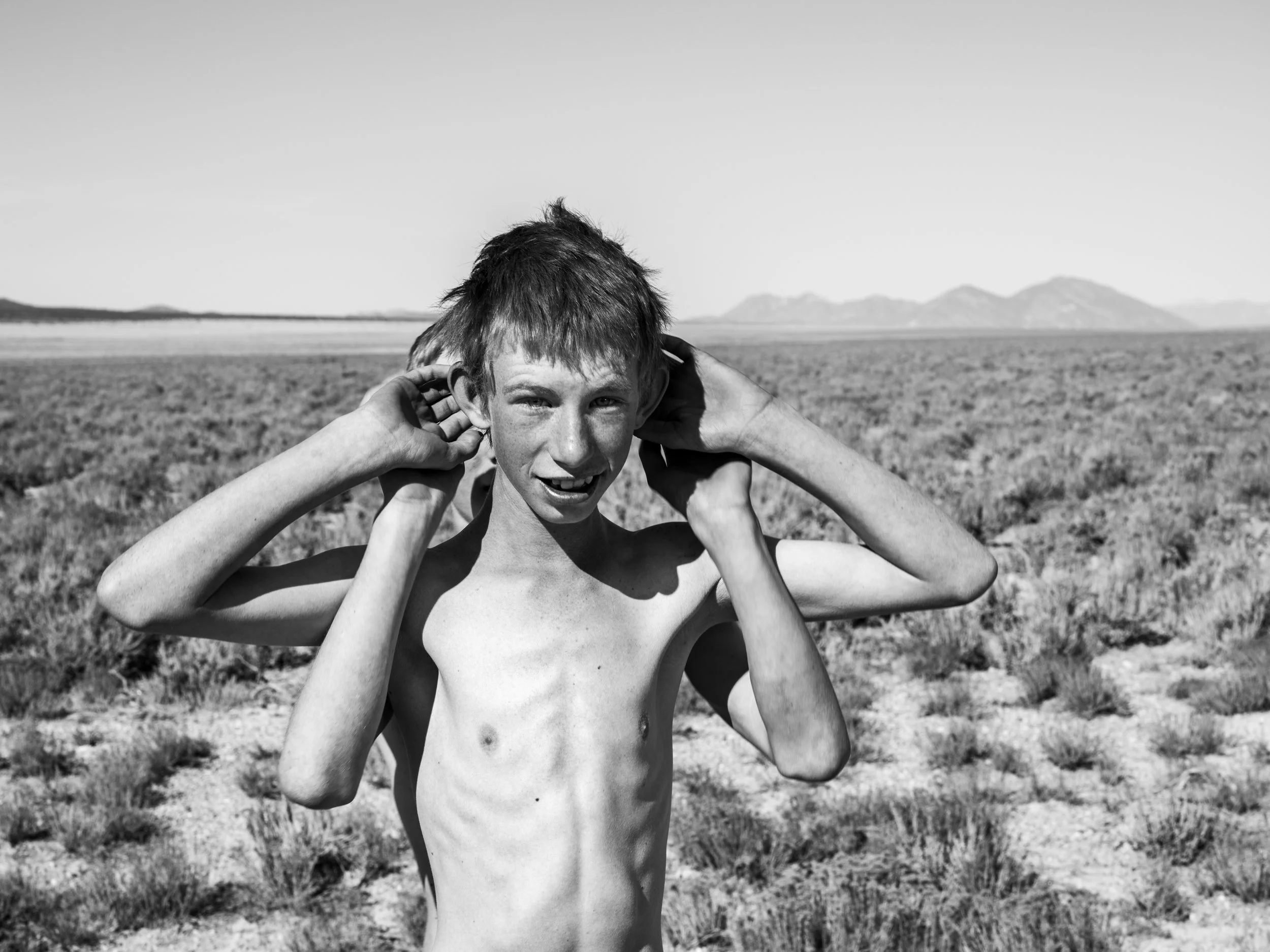
In her assignment work in the Netherlands, choosing who stood in front of her camera had largely been taken out of her hands. A motorbike trip across America in 2015 gave her that freedom again. She travelled without a fixed idea of the photographs she would make, stopping when someone caught her attention. One of those encounters was with Randy in Nevada, whom she has continued photographing for more than ten years.
AMERICAN grew from much shorter encounters.
De Puy often had only a few hours with someone, rather than years of return visits. She describes these meetings as open, intense moments in which people can tell their stories without being judged. With Randy, their long relationship has brought a different change: he now makes his own photographs, often nothing like hers. She still edits the work, but is working out how to bring his pictures and her portraits together.
De Puy explains how she directs a portrait, checks what a sequence is missing, and decides what should remain private. Her examples offer practical ways to think about when to return, when another medium is needed, and when to let a project develop beyond the photographs originally imagined.
The Projects
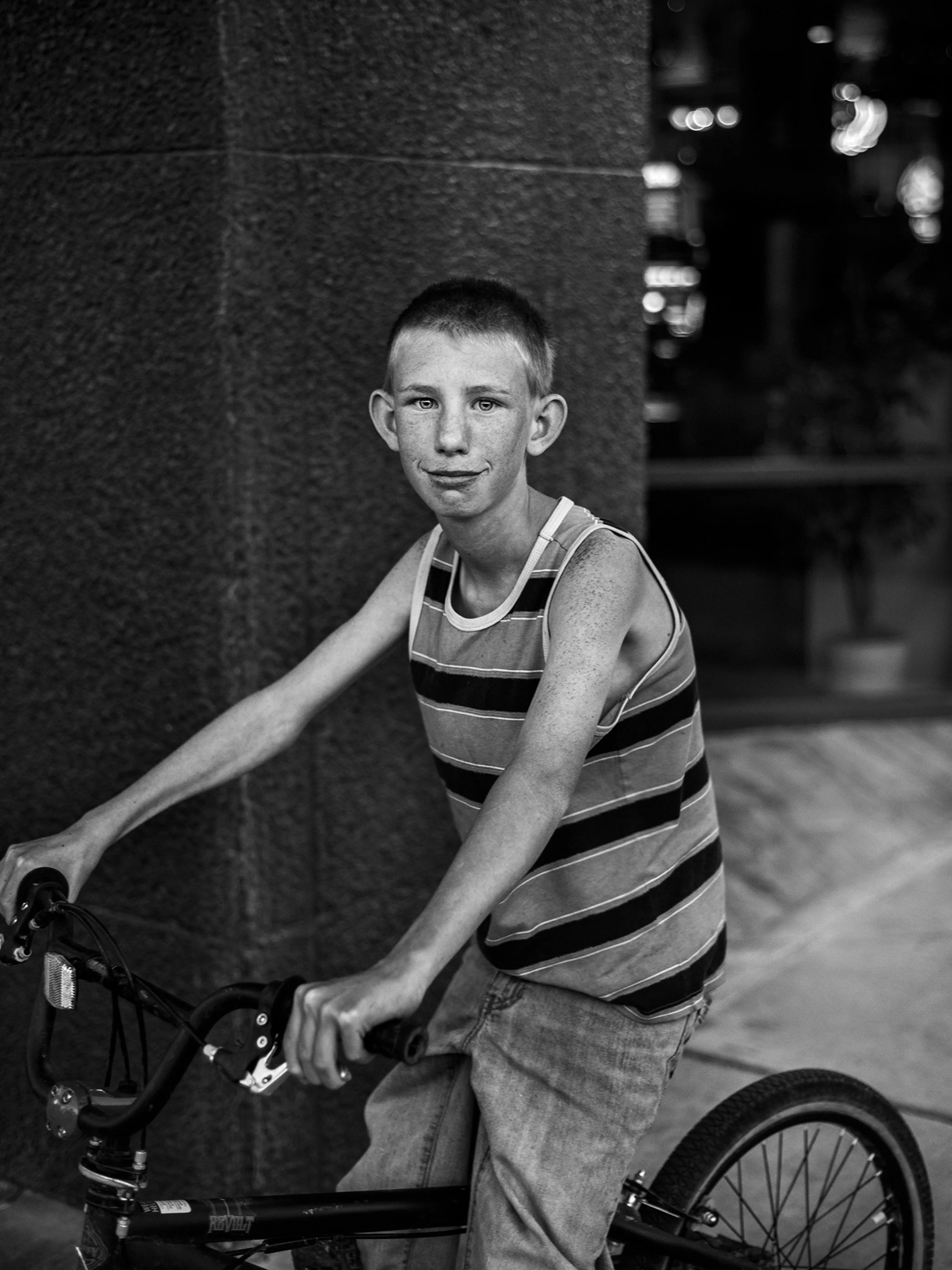
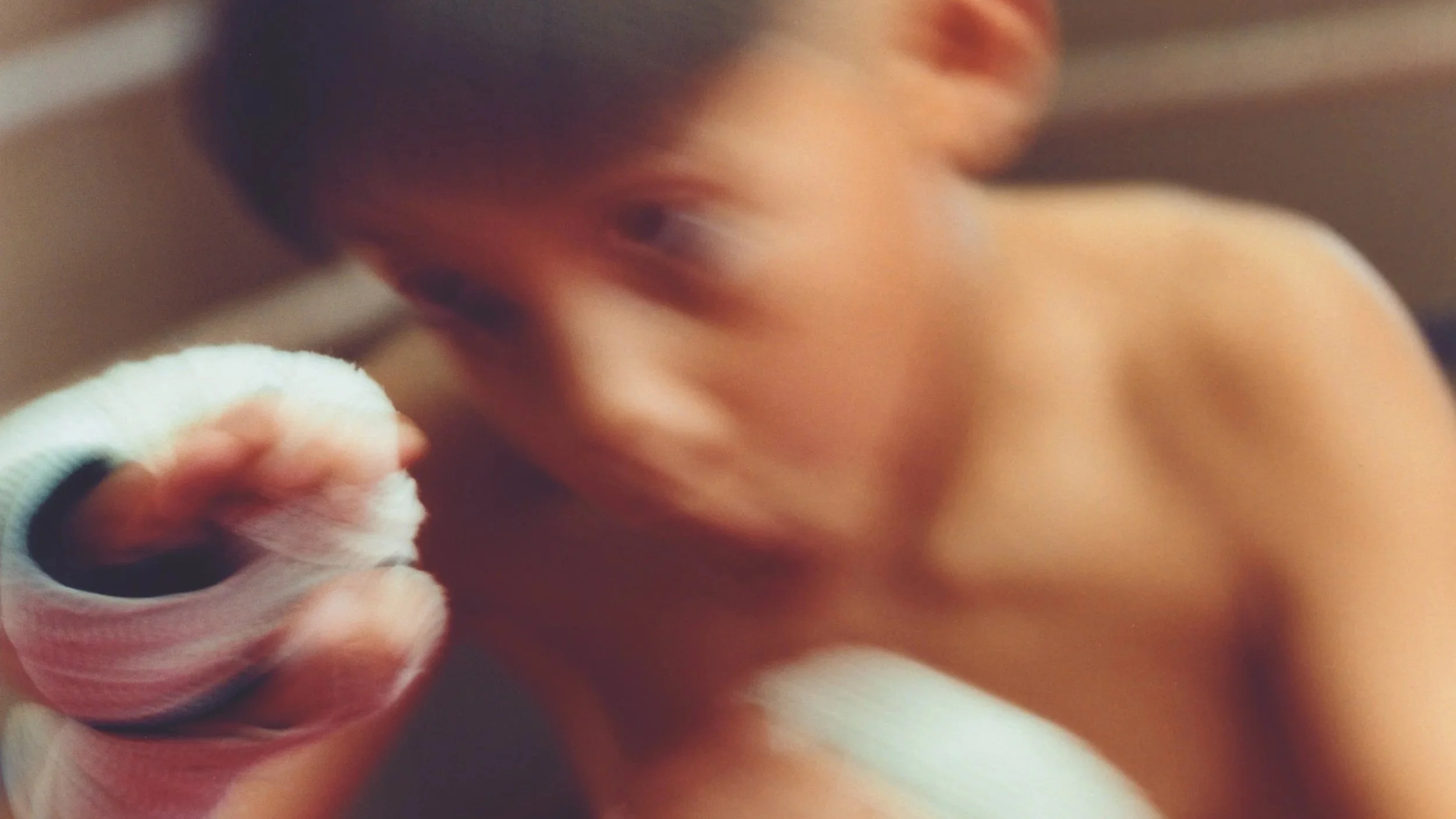
Robin de Puy met Randy during a 2015 road trip through the United States. She saw him riding a bicycle in Ely, Nevada, stopped to photograph him, and continued returning over the following years. The project grew into a book and an exhibition, with portraits and films recording their long relationship. Randy now makes photographs of his own, including self-portraits. De Puy is working out how his pictures and hers can become part of the same project.
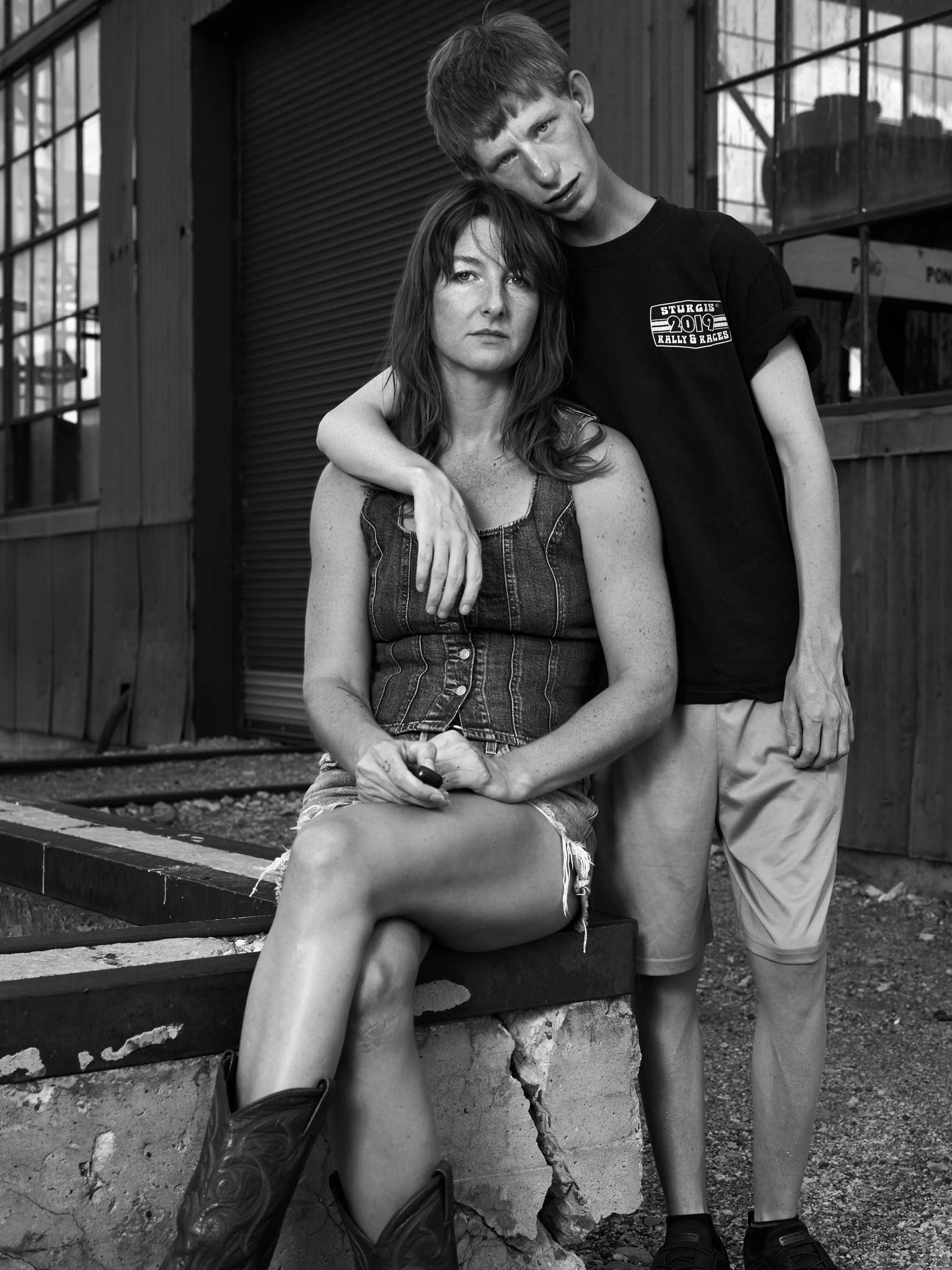
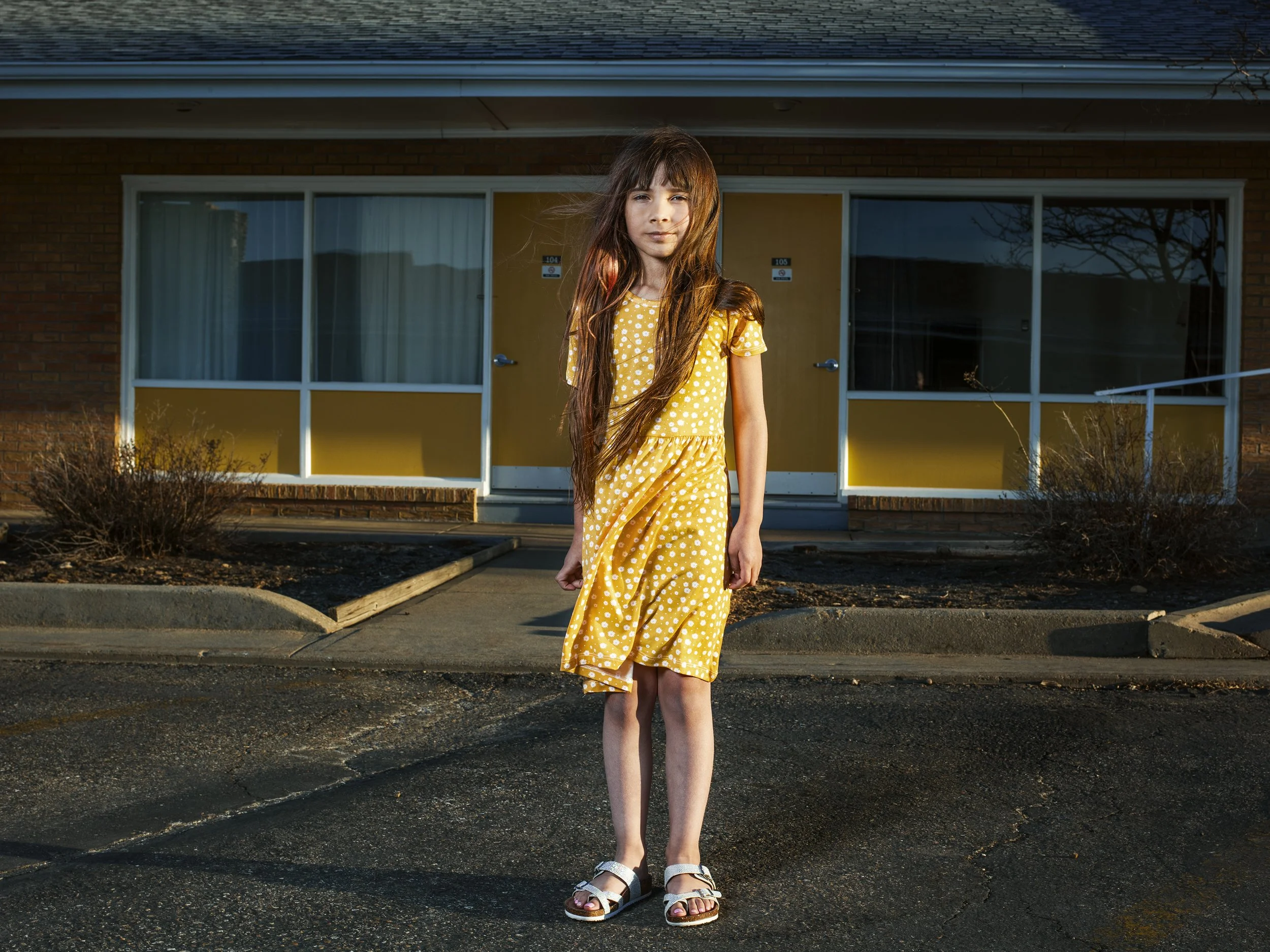
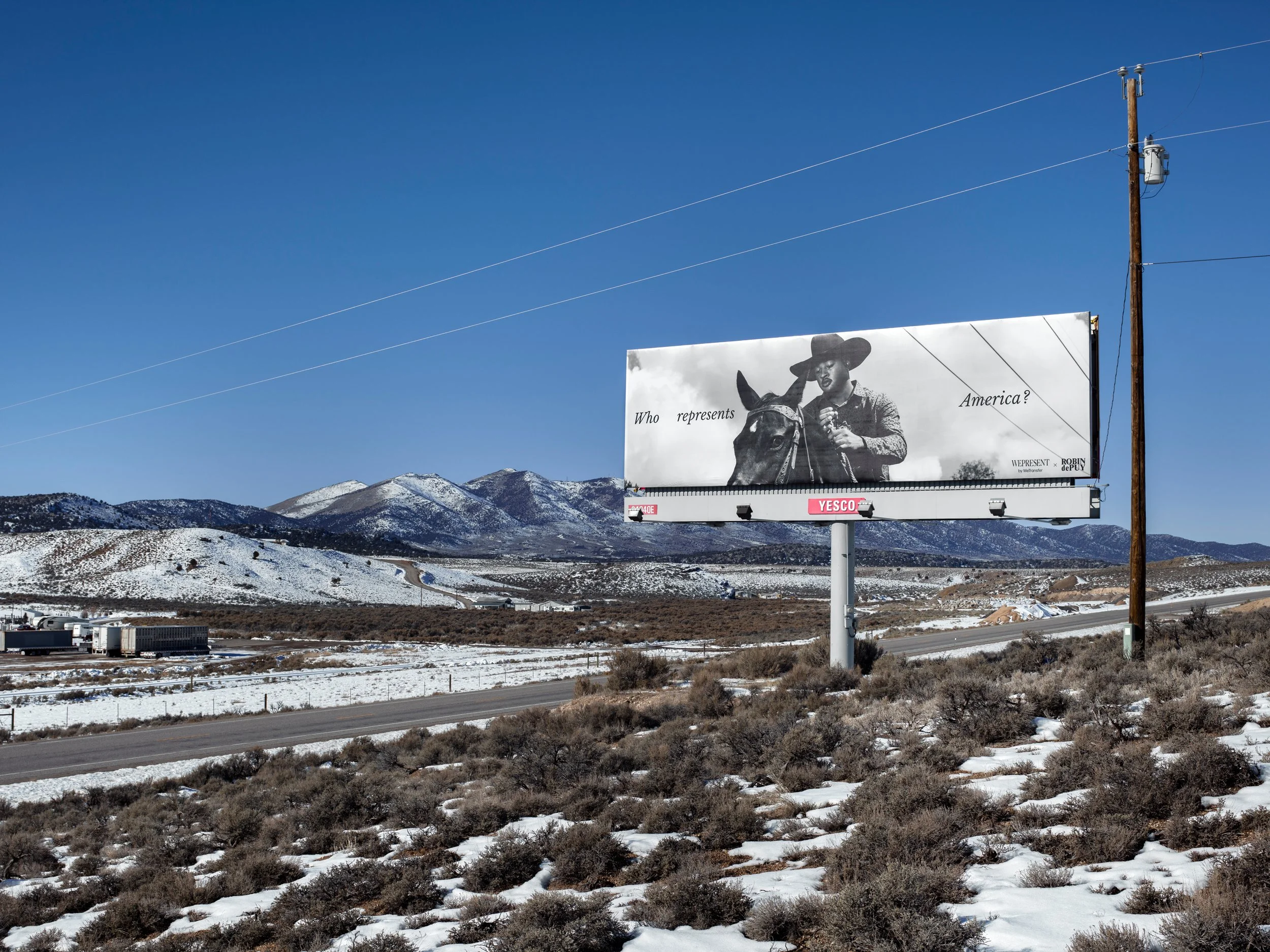
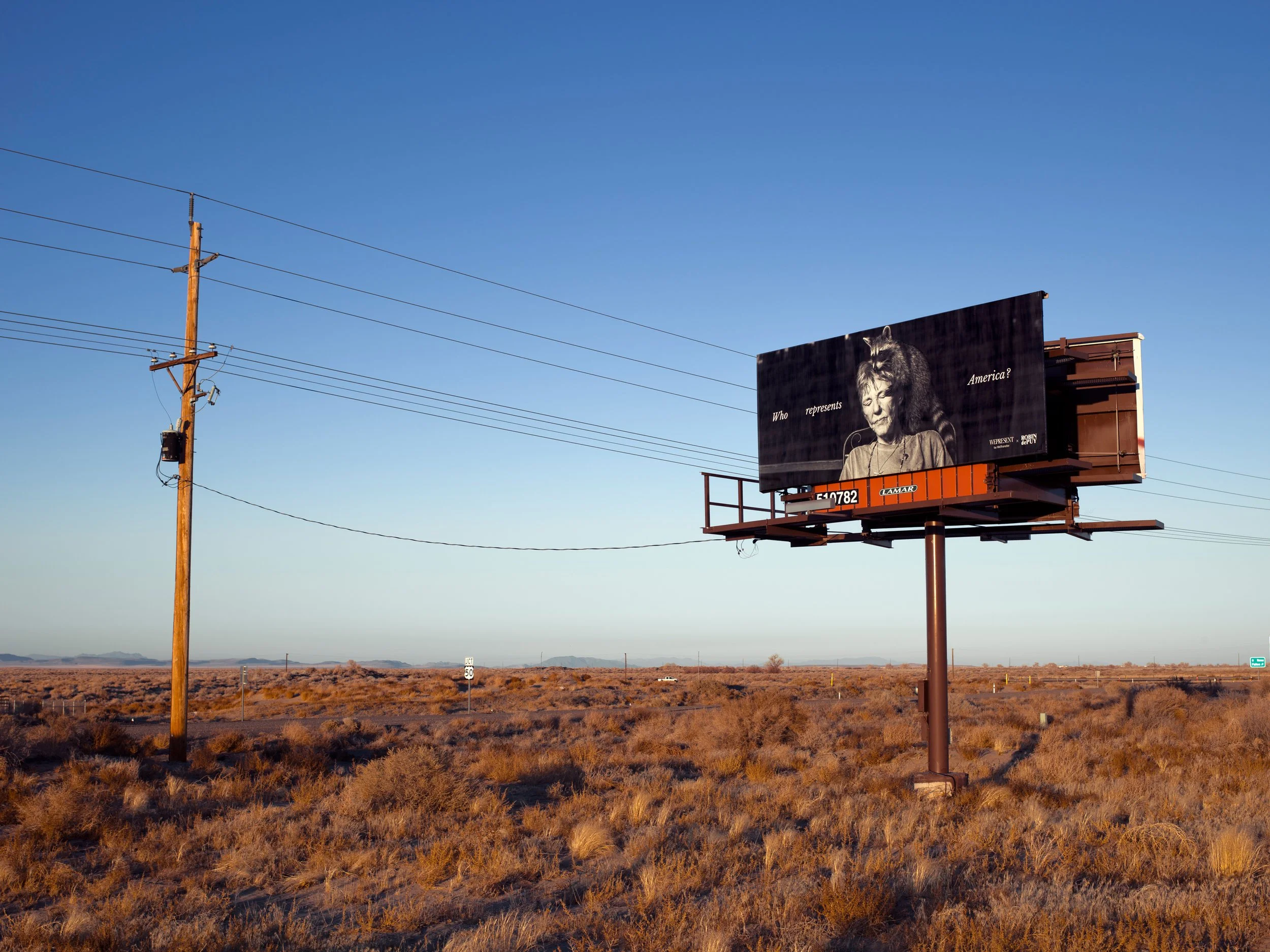
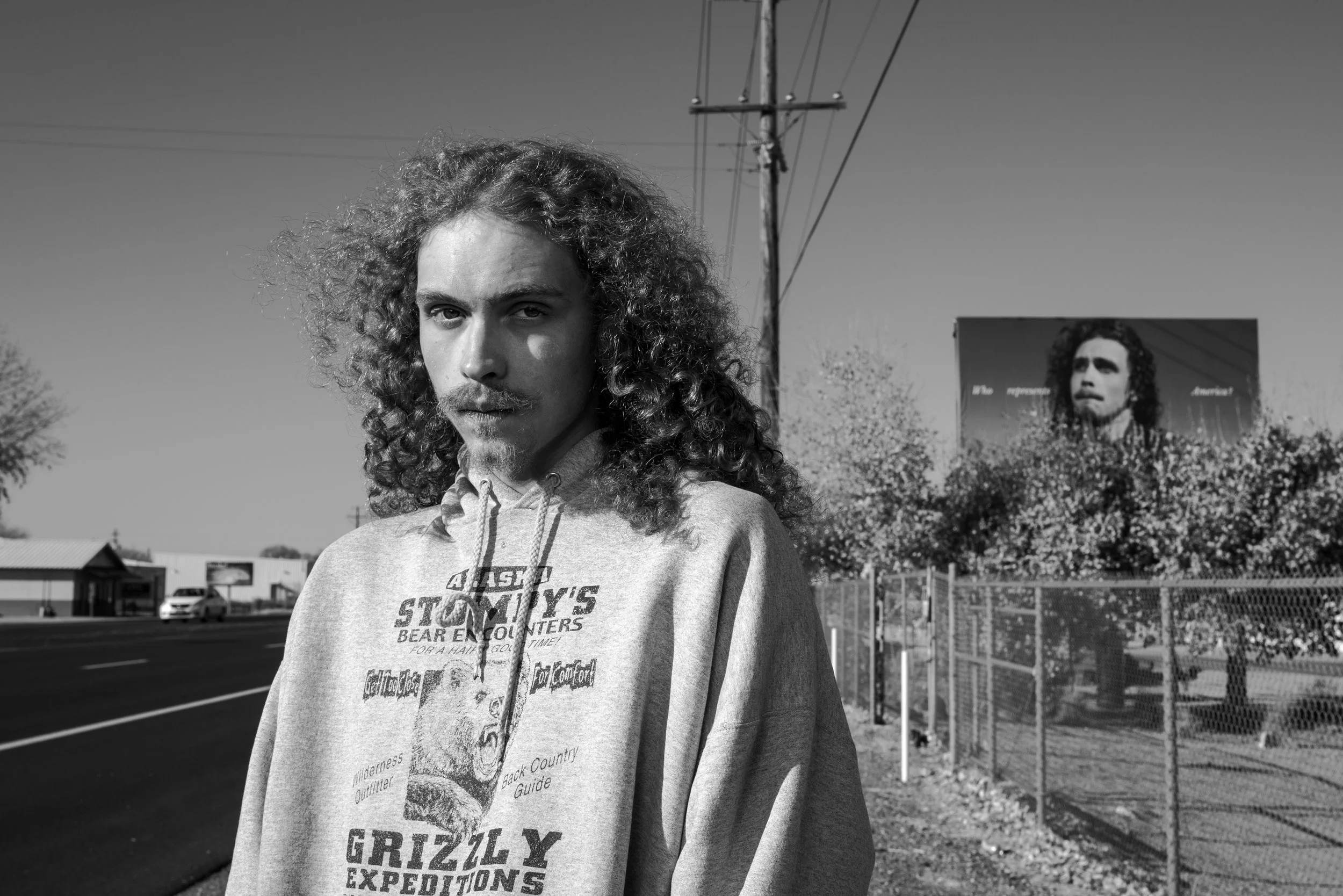
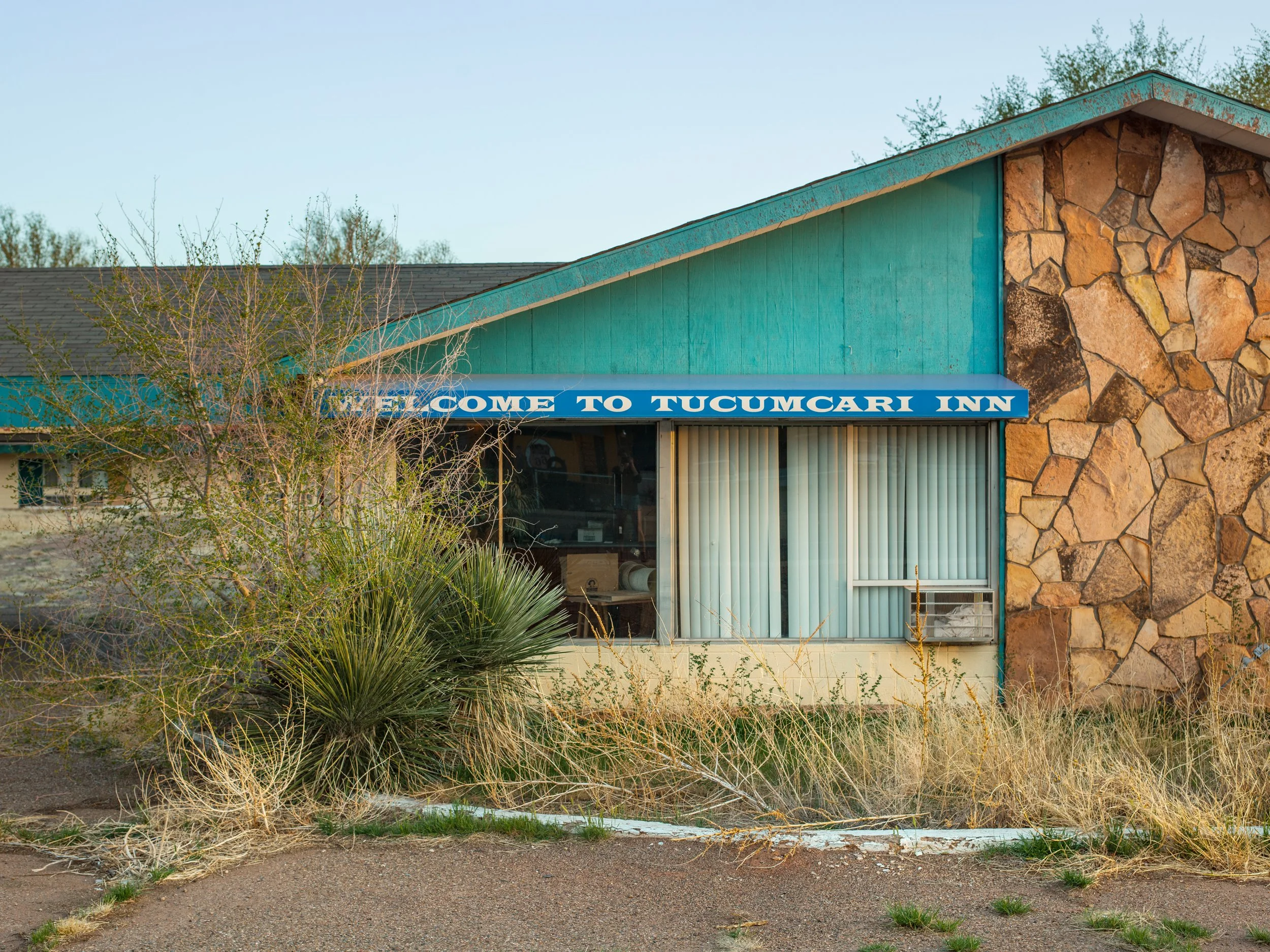
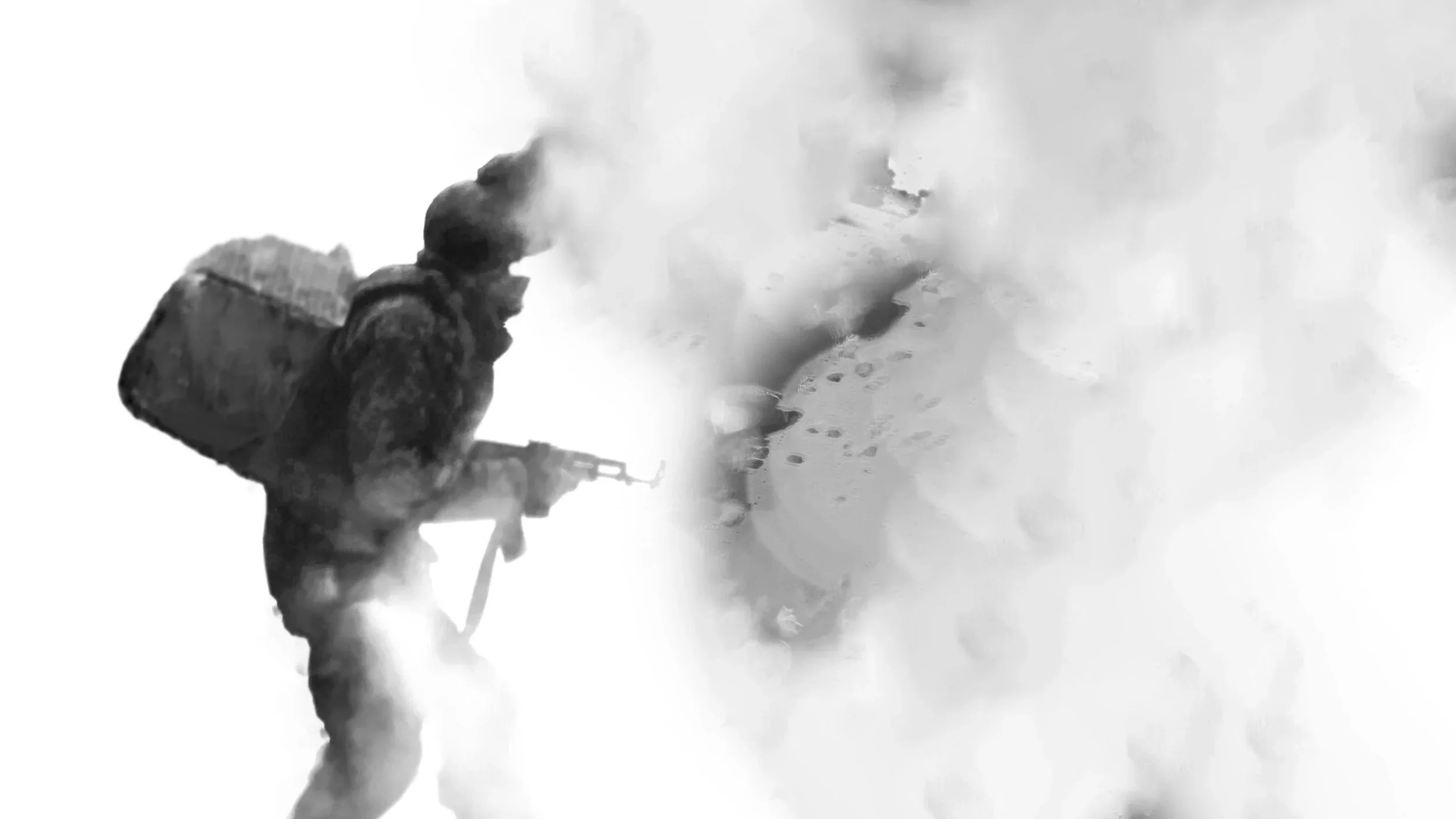
For AMERICAN, De Puy travelled across the United States between 2022 and 2024, meeting people she often had little time to know. The project brings photographs, film, audio, and text together in 25 stories about individuals, couples, and families. It was published as a book in 2024. De Puy later placed some of the portraits on billboards along Route 50 in Nevada, where people driving past would see each image for only a few seconds.
When you first travelled through America in 2015, what were you actually looking for photographically, before you knew that Randy would become such an important part of the journey?
I had travelled to New York several times before that, because a couple of the magazines that I wanted to work for were based there. I also felt I wanted a new experience, something different from what I'd been doing. I didn't particularly like New York itself, so I started thinking that maybe I could travel through the rest of America instead. That felt like a big decision, though, and it took me a few years before I finally told myself this was the time to step out of my comfort zone, to go somewhere that wasn't easy to simply turn around and go home from.
I also wanted to start riding a motorbike again (I did this for years, but had stopped, because I never had time), and I felt I had lost some of the playfulness in my work. I needed something that gave me room to just play a little. America seemed like a good place to start. I was sponsored by Harley Davidson and travelled through the country, photographing everyone I met along the way. That became my first real project, and eventually my first book.
I think that when I meet someone I'm genuinely drawn to, it's hard for me to keep my distance or let them go. Even now, whenever I travel to America, I still bring that first book with me, and I try to find people I photographed eleven years ago. It's still a very important theme in my work.
Did you begin with an idea of the kinds of people or photographs you were looking for, or did that emerge while travelling?
It emerged while I was travelling. Before that trip, I had done a lot of assignment work here in the Netherlands, and somewhere along the way, the most important part of my work, choosing who I photograph, had been taken out of my hands. I was lucky to have all those assignments, but they took away exactly that what was important to me: deciding who ends up in front of my camera. Doing this trip gave me full freedom to pick anyone and go back to the core of my work: who did I want to photograph, who did I want to spend time with, who did I want to talk to.
I think I had also grown bored with assignment work. I needed to produce so much work in such a short period of time, and yes I was capable of making a good quality portrait, but it no longer interested me. So, in America, I tried to strip away all the rules and play again, which is difficult once you already have a certain way of taking pictures. I tried to get rid of that and start over: what actually interested me, how I could play around with my camera, with myself, with the people I photographed, how I could interact with them. I really tried not to have any fixed ideas about how to start or how to photograph. I just hoped I'd be capable of experimenting a little.
You've described seeing Randy ride past you on a small bicycle and deciding to stop him. What exactly did you notice in those few seconds that made you want to photograph him?
I think this applies not only to Randy but to all my subjects: it's always a gut feeling. When you walk down the street, you're probably drawn to people who make you feel, I don't know, safe, or maybe even unsafe. You are drawn to a specific kind of person. It says something about who you are as a person and what you're drawn to. With Randy, I recognized something in him.
If you look at all the subjects in my first book, and in the books that followed, there's something that connects them that's difficult to put into words, but it's there, and it holds all of these portraits together. I think of it as a big family I feel connected to, and I had the same feeling with Randy. I was fascinated by him. I always compare Randy's gaze to a dog's excitement just before you throw a ball. He was excited, curious, a little anxious, everything together. I just liked him right away. Then we talked to his mother, I met his brothers, and everything started from there.
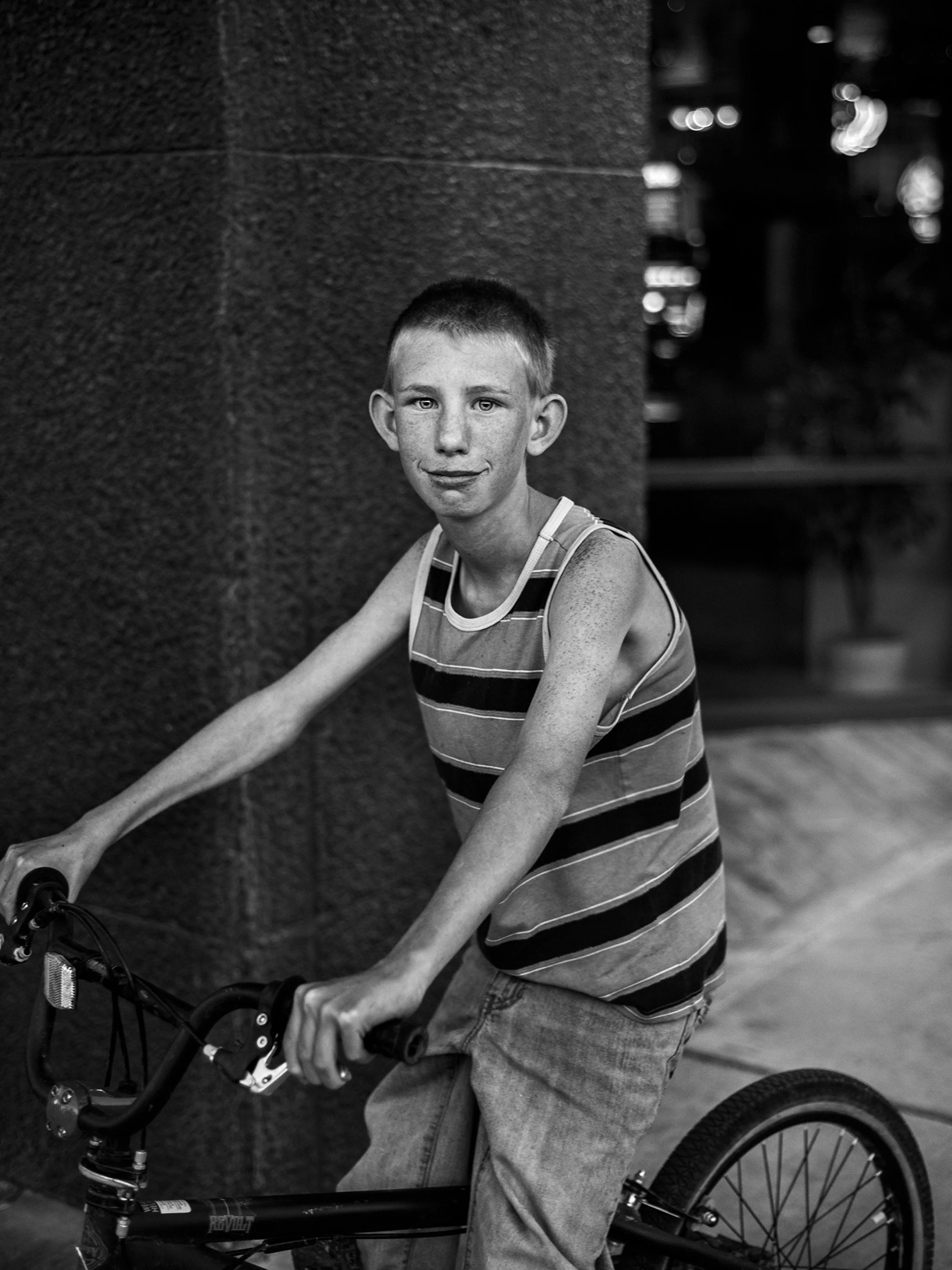
Before you approached him, did you already have some idea of the photograph you wanted to make?
In general, I'm drawn to different body shapes, to skin, to hair. I always compare it to sculpting: I sculpt the outside shape of a body, and then I focus on the gaze. I like to take all the environmental elements out and make as clean an image as possible. That's something I do with every image, not just this one. With Randy, I saw his face, his tiny body, his ears, his gaze, and I thought it didn't need anything more.
The very first picture I took of him was only for myself, because I was afraid his mother would not give me permission to photograph him. So I took a quick picture with my smaller camera while he was sitting on his bike, just so I'd have something for myself. Then his mother called me, and we could do a proper session. I photographed him with his brothers in front of a plain concrete wall. I removed everything from the background. The boys’ gazes were enough and didn’t need anything more.
During your first portrait session with Randy, you asked him to look into the camera but forgot to tell him he could blink, so he kept staring until tears came into his eyes. What did that moment teach you about directing someone in front of the camera?
To be honest, I think I'm pretty clear in how I direct people. I'm quite straightforward about what I need: little things like put your chin down a bit, open your mouth, don't press your lips together. But with Randy, the fact that he didn't blink was funny, for him too. He listens very carefully and does exactly what you ask him to do, just in an unusual way. Normally people don't even think about whether they blink or not, but he does.
He's taking pictures himself now, and I've been trying to teach him. He copies exactly what I do, in his own way. He has his own visual language, but when he photographs me, he treats me the same way I treat him. If I fold someone's fingers a certain way, he does the exact same thing. It's lovely to see how he connects with me and I connect with him. I think that's what happens when you really like someone: you recognize something of yourself in them, and you start to mirror each other.
Are there things you deliberately no longer ask people to do because you learned that they make the photograph feel too controlled?
I don't think I'm very anxious about asking too much or directing too much, because I don't see my work as strictly documentary. I do direct a lot within the frame: what someone is wearing, how a bike is positioned if they're sitting on one, where their hands are. I like to control almost everything in the image.
But it comes down to a gut feeling too. Sometimes I try something, and when I look at the image, I feel that it's not right, that it doesn't feel correct. In that case I just don't use it. If something feels too directed, or too anything, I don't use the image. I redo it, or I look for a better one.
Now that you've photographed him for more than ten years, can you think of a photograph you could make today that would have been impossible during your first visit? Is there an advantage to it, knowing your subject this well?
Honestly, I don't think there's an advantage. If anything, I think the more interesting question is how I can keep growing within this project. I've photographed him thousands of times, I have so many pictures of him already, and I still take more, but how do I get something new out of it? I had to really think about that. What I landed on is that there might be something in no longer seeing him only as a subject, because he isn't only a subject anymore, he's part of my life. Maybe I can lift him from being a subject to also being a creator. In what way does he create? Does he only copy me, or does he really have his own visual language? Is it something we create together, as a duo?
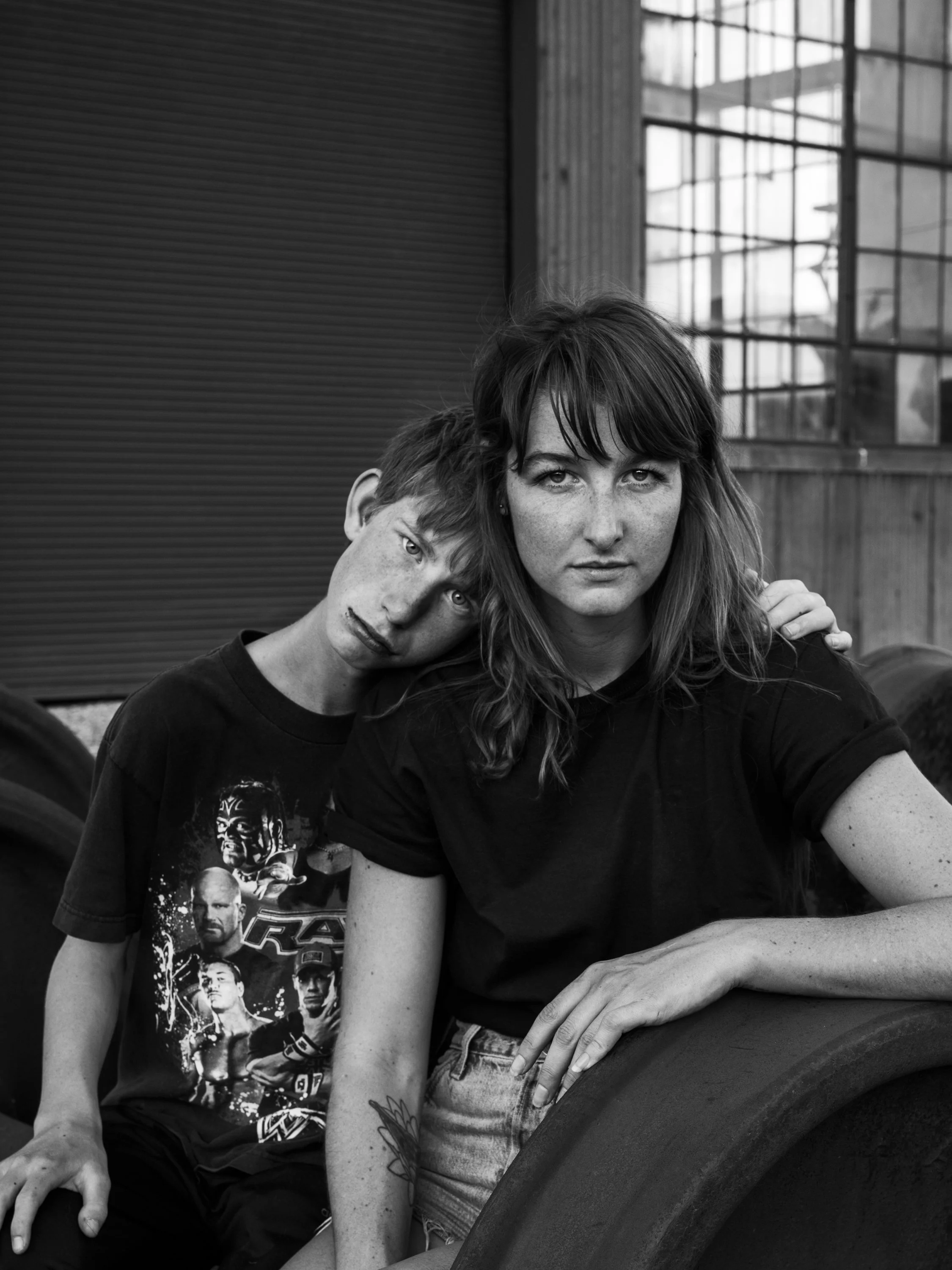
So when it comes to photographing Randy himself, I don't think there's an advantage in knowing him for ten plus years. If anything, I think it usually becomes harder. I'm not someone who, for example, photographs my own family here in the Netherlands. I'm not very good at that. I think being too close, too often, is actually a disadvantage.
But Randy is a special case. He's one of the few people who really isn't affected by a camera. You don't see him change when I pick mine up. He's just Randy, and he doesn't know how to be anyone else. I think that's very specific to him. As soon as most people have a camera pointed at them, they feel they need to be someone, or do something, or react to it. Randy is just Randy.
Randy had already become a book and an exhibition, something that could easily have marked the end of the project. Did you think from the start that this would be an ongoing series, or did it evolve naturally?
I think it's an ongoing thing. There are photographers who keep photographing the same person their whole lives. Ten years ago I couldn't have imagined that Randy would want to become a photographer himself and take pictures of his own. It's not just that he likes photographing things around him. He literally takes self-portraits because he wants to create his own images. He's used to being photographed, so that's what he's doing now: photographing himself.
I do like that. I know I already have an enormous amount of images and video material, and now I need to make something out of it, because Randy and I just did a trip together, from Nevada to New York City. That was his first real trip like that. I have a lot of material I need to organize and figure out how to publish, and then we'll see.
With all that material you've just brought home, do you ever put together a temporary version of the work at this stage, a sequence, a rough book, a wall edit, something that forces you to treat what you have as if it were complete?
Yes, I actually start doing that during the trip itself, just to keep things organized, because otherwise it's simply too much to handle. By the end of a trip I've already forgotten what I did at the beginning, since every day is so full of moments and emotions. So to keep my focus straight and know what I still need to do, I organize the images as I go, pick out the best ones, and put them together so I can see how they work as a whole: what's missing, what I need more of.
What are you looking for when you do that? Are you trying to understand what already works, or trying to discover what you still need to make?
Both. I try to find a language for it, a flow. I always think of it as if I were making a book: what would a good sequence be, how do things work together as you move through it? In this case, it was especially interesting because I was also trying to work out how Randy's pictures would influence mine, or the other way around, how the two would come together. For me, that's only possible once I've put everything together in one place. Like I said, it's a big puzzle.
Over those years, was there a direction you tried to take the work in that simply didn't work, and that you eventually abandoned rather than finding a solution for?
Yes. And not only with Randy, but with other kinds of projects too. Sometimes you try something, you do it, and you feel that this isn't it. But that's okay.
Do you have a specific example?
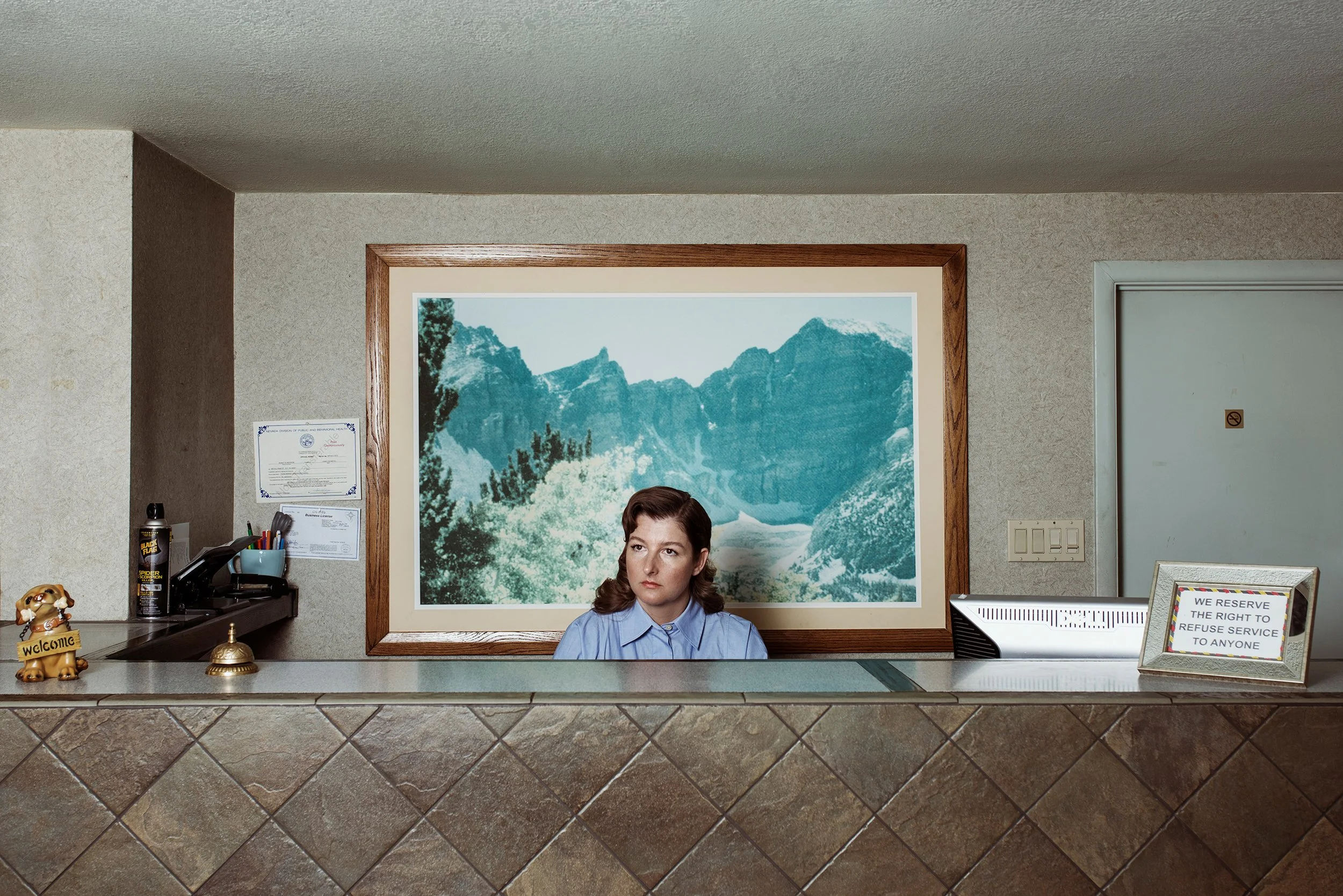
There was a different kind of project. I grew up in a hotel myself; my parents had a small hotel, and people from all over the world travelled to our little town and stayed there. I loved watching people arrive, and when I got older, I started working there myself, as a receptionist, as the cleaning lady, and at some point, when I was still fairly young, I was running the whole place.
I loved it, and it's in my DNA, so I thought I could take that part of my life and combine it with my photography because I'm fascinated, still am, by the motel industry in America. I turned myself into a receptionist in America and photographed myself in that role. I still like the idea, and I still have that work, but while I was doing it, I felt it wasn't turning into what I wanted it to be, so I stopped and left it on my computer for a couple of months.
Then I thought about what to do with it, and I realized it was too simple, too small. The motel industry is much bigger than that. Those ten self-portraits weren't telling the full story. So the whole thing I'd worked on fairly hard ended up sitting on my hard disk. I started it in 2020, so it's been sitting there for about six years. Only now do I finally feel I know how to work with it, and I finally have a plan for it.
I have a lot of ideas, and a lot of them end up nowhere. Sometimes an idea comes back years later and suddenly it fits, it's the right moment, the right place. And some ideas just don't go anywhere at all.
You made those self-portraits and then realized they were too simple and too small to tell the full story. What specifically could you see was missing when you looked at those photographs together?
Context. Some of the self-portraits are good, but the context was missing. There's so much to tell about motels: about the places where they were built, about the people who lived there, who stayed for a night or for years, about the decay you see in motels, about the fact that the middle class is disappearing. Motels are such a good metaphor for how America is doing. It's such a big subject that the portraits alone weren't enough.
So I kept them for myself and realized I needed to photograph and film the context too, so people would understand. Now I've turned it into a project where the receptionist is the guide. You watch America through the eyes of the receptionist, and through her eyes everything comes together: the people I met, the places I stayed, the motels themselves.
You mentioned that Randy has started making photographs of his own, and that you now photograph each other. He's no longer only the person being photographed. Are you still in charge of the story, or has some of that shifted to him, and has it affected the project?
Of course, it affects the project. It's new to me too, and I find it an interesting thing to experiment with. One day, Randy sent me a message saying his mother had given him a camera and that he was so happy, he was going to take pictures too. At first, I thought that was so cute and so cool. Then he sent me a self-portrait of himself on a swing, with a vape or a cigarette, I don't remember exactly, blowing out smoke. It was actually a really good self-portrait. I thought, he's copying what I taught him, or what he saw me doing, and I took that as a real compliment. It was also very interesting for the project, because I'd never had a subject copy my work like that.
We talked about it, and he said he really wanted to learn how to take pictures, so I started teaching him. People assumed that because I was teaching him, he'd start making these amazing, polished pictures, which is what I thought too, especially after seeing that first self-portrait. But then I saw he was taking six hundred pictures of everything around him, and none of it looked like my photography at all. That was an eye-opener, because of course he doesn't just take my pictures. That was a naive assumption on my part, that if I taught him to photograph, he would simply only repeat and copy me.
I had to rethink the whole thing. Of course, he's trying to copy me, or do things I do, but it's also entirely Randy. Randy has his own way of experiencing things and seeing what's around him. I had to really embrace the fact that a lot of his pictures are the opposite of mine. I'm a bit of a control freak; I try to control everything in an image, and Randy is far more free. There are no limits, no thoughts about how a piece of art should look or how something should fit in a frame. He's much more open in his approach, and that's the beauty of it.
But I had to work out how these images could be combined with mine, since we want this to be a joint project, and how these two visions could become one, in a way. That's still something I'm working through. He sends me images almost every day now, so many self-portraits, and it's really lovely to see them. I feel more at ease about it, like this can actually work, I can make something interesting out of it. But it's still a search: how do I edit all of this, how do I give him space to find his own visual language, while also being aware that I'm the one who edits, who builds a series, who combines the images? I talk with him about it, of course. His role has become much bigger than just being the subject, but it would be naive to say he has the same authority in that process that I do. He's just starting out in photography.
Has he ever disagreed with the way you photographed or represented him?
No, he never has. But we talk a lot about what I want to photograph and how I want to do this. The fact that Randy is so at ease with me taking all these pictures also means the responsibility of what I photograph and how I tell this story mainly falls on me. I feel I need to protect him, in a way, though that doesn't mean I want to be overprotective. There are things I simply don't photograph, because I feel they're not for the world, they belong to Randy, and they should stay safe with him. We talk about all of this, which matters a great deal to me, and to his mother and his brothers too. I think I have a very open, very trusting relationship with all of them. None of this would be possible otherwise.
I want to move a little from Randy to AMERICAN. The Randy project grew from returning to one person for more than ten years, while American required you to meet many people you barely knew. What changed in the way you photographed when you no longer had years to build a relationship?
I love people, that's how it started with Randy too. As soon as I see someone and get that gut feeling, I really want to know this person, I want to dive into their life, and I don't need weeks to do that. I like being able to dive into somebody's life while also having the freedom to step back out of it.
I think that's also an advantage for the person in front of my camera. There are no real consequences, as in: I am not your mom, teacher, boss that you have responsibilities with. I am there to listen and to create an image. You can be honest, you can tell your story, I won't judge you. It's a very open, intense moment that we share, and then we both go on with our lives, both richer in experience. With some people it's exactly that. With others I keep in touch, or I revisit them one, two, three, five years later. I really like that you can step into somebody's life and then step back out of it just as easily.
Was there something you learned with Randy that simply didn't work when you had only a short time with someone?
The difficult part of AMERICAN was that the project combined not just photography, but also text and film. Because I had very little time to do both, my husband, who works as the cameraman, and I sometimes had to decide on the spot whether to film something or photograph it, because there wasn't time for both. Sometimes I had to choose video over photography, which was hard, because photography is still my core medium. But sometimes the video needed something more, so we'd focus there instead. I think that was the hardest part of AMERICAN: having such a short window of time and constantly having to decide what mattered more.
In those first few minutes, when you only have a limited time with someone, what do you look for that tells you how you might photograph them?
It's really something intuitive. When I meet someone, I usually start with a portrait, because I need a beginning, and the beginning is almost always a picture, a portrait. After that, it depends. I've met people in a supermarket and asked them right there if they'd be open to a photo shoot, if I could meet them at their place. I never know quite what to expect. Sometimes you end up somewhere and think, this isn't especially interesting, and sometimes you end up somewhere and think, I could never have imagined this. It's a bit of luck too, I think.
How do you decide when a photograph is enough, and when a person's story needs another medium?
Sometimes time decides that for me. If I meet someone amazing, but they're only willing to give me five or ten minutes, then it's pretty clear we need to take a picture, maybe get a short video snippet of a nice movement, and that's it. Time is very decisive in that choice.
Other times, you go in with an idea, thinking this could be a short documentary, and as you talk to someone, you realize the story isn't as interesting as you'd hoped. You feel it. And sometimes the opposite happens: the day flies by and there is still plenty of things to photograph or film. Sometimes we end up being somewhere for days, because suddenly a subject or a story turns out to be way more interesting than we first expected.
Once you stopped travelling and had all the photographs, film, and text in front of you, did putting that material together reveal something you wished you had photographed but hadn't?
I think I always have the feeling that I haven't done enough, that something is missing. I catch myself thinking, I should have done this, I should have done that. I think that's part of my work, part of who I am. I'm never 100% satisfied, which is sometimes pretty annoying. But in my core I do know if something is good or not.
Did you ever go back and make something specifically because the edit showed it was missing?
Yes. With Randy, actually. Before the exhibition, I felt I really needed more of this or that, so I went back. I'm not scared to go back. That's something I always tell younger photographers starting out: it's not a bad thing if you feel you're missing something or need to redo it. Just do it. Don't keep working with something that feels like it's not enough, you can always go back. So yes, absolutely, if I felt something wasn't good enough, I went back.
Did you get what you wanted?
Yes and no. With American I didn't have the time or the money to go back the way I could with Randy, but I think it worked out well in the end.
Some of the portraits from American eventually appeared on large billboards. What happened to those photographs when they moved from a book or a screen into public space at that scale?
The reason I started American was the changing political climate in America. A lot of people in Europe, and even in America, had strong opinions. Everyone was saying, look at Americans, this is so bad, and so on. That hurt me in a way, because they're talking about my people too, about Randy, about a lot of friends and people I've photographed who I really love and who are dear to me. So, I wanted to make a series in which I wanted to focus on the people who actually live there: how they survive, what are their stories, their dreams. I wanted to focus on the people, not on the president, not on the people who are always in the media.
I'd always had this idea that it would be amazing to put these people on billboards, to show that these are the people who actually run America, these are the heroes. When I finished photographing everything for American, I had the chance to put some of the portraits on billboards, and I loved the idea of doing it along the loneliest road in America. I loved that metaphor, these billboards standing in empty landscapes. It felt even better to then bring the people back to see their own billboards, which I also did. It was my way of saying thank you to these people. In my eyes, they're the real heroes, and it felt like a way to celebrate them.
Was there a photograph that worked in the book or on screen but that you knew wouldn't work as a billboard?
Yes, a lot of them.
Why is that?
If you're driving and you pass a billboard, you only have a couple of seconds. You need an image that's clear, that's direct, without too many details, because that wouldn't work. It has to be an eye-catcher, that's the first thing.
You also have to find the right balance. You don't want to shock people if they're driving past and see one image for a second. In a book, you can read the text alongside a picture. Your first impression of an image might be that you don't like this person, but then you start reading, maybe you even look them up, watch a video, and you realise your assumption wasn't right. With a billboard, you don't have that time. So the image needs to be gentle, in a way, something that tickles your curiosity without being too harsh. We tried to pick open images, ones that would make people curious rather than push them away or feel too outspoken.
Looking across Randy, American, and the other work you've made, what part of your way of photographing people has survived every project? And is there something you've had to unlearn along the way?
From the beginning until now, I've always been very open and honest with people. When I photograph someone, they become part of who I am, and I think that's the only way to earn real trust. The moment I feel there's mistrust in the connection, I wouldn't even take the picture. It really matters to me that people understand what I do and feel that I respect them, respect their story.
I don't think I really understood what that meant when I was younger. It was something I did instinctively, without fully grasping it. Now, after more than twenty years as a photographer, especially in a time of social media where everyone has an opinion about everything, I can only publish stories that are intense and vulnerable if I'm sure things are good between me and the person in front of my camera.
As for what I've had to unlearn: I always hoped that if I met someone, they would trust me enough to feel whatever they felt around me, sadness, anxiety, whatever it was. But if I looked at myself, if I walked into a studio having a bad day, feeling sad, I'd usually try to hide it, come in smiling, act like everything was fine. In the moment I'm photographing someone, though, it's really important that they aren't hiding things either, because as soon as someone hides something, it becomes very difficult for me to make a good portrait or to connect with them.
I think what I had to unlearn was that instinct to always smile and say everything's fine. I became more comfortable showing how I actually felt, and I eventually realised that the way I treated my own emotions in that moment was something people would mirror back to me. That's really all that matters in that small moment: I don't want people to hide anything, and for that, I can't hide anything either. That's something that's been part of my work from the start, but it's also something I've had to learn to work with, and to feel more comfortable with over time.
More photography books and interviews?
We'd love to read your comments below, sharing your thoughts and insights on the artist's work. Looking forward to welcoming you back for our next [book spotlight]. See you then!
Robin de Puy could no longer make this project alone. She first photographed Randy in Ely, Nevada, during a 2015 road trip and kept returning to him for more than ten years. Interviews